Built for Scarcity: Why I Won’t Give My Son Everything He Wants

Standard

I’ve tried to give my son everything he needs to succeed. But that doesn’t mean I will give him everything he wants. There’s a reality in any pursuit: to be excellent, you’ll need to put in the work or delay gratification to reach your full potential. If a parent gives a child everything they want, there’s no incentive for them to learn and improve.

To a child, everything provided for them is a given, and every task required is an injustice. Why should they have to wash the dishes? The grumbling or attempts to negotiate last longer than the time it would take to finish the chore. And, honestly, the easy route is just to do it ourselves. But that deprives a child of the opportunity to learn all those transferable life skills—at the very least, to get a little practice being helpful rather than entitled.
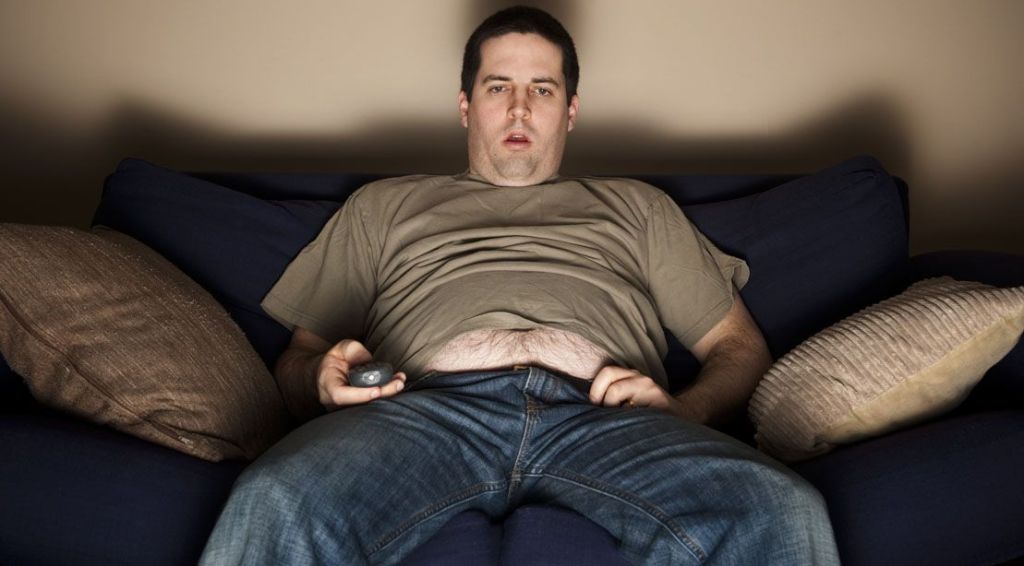
In the West we already have abundance and the result is atrophied muscles and dull minds.

If we shower children with abundance, they will never appreciate what is given nor ever be satisfied. It seems that no matter what we have, we always want more. If given the moon, we’ll want the other planets and the stars as well—and then we still won’t be happy with that. The greatest satisfaction comes through work and accomplishment. Playing video games all day or scrolling social-media feeds may trip reward centers, but it amounts to empty calories and can’t replace substance.

I’ve watched spontaneous interviews with very wealthy men, and nearly every one of them says that their abundance did not bring happiness. At least one admitted he was suicidal despite millions in assets. Our peak enjoyment in life comes when we invest time, effort, and resources and eventually reap the fruit of our labor. Sure, going to the gym may be difficult, but the endorphins are addicting and the muscles are a reward.

Built for Scarcity—Not Utopia

I watched a video about the problems with utopia, and the framing of capitalism as a system built for scarcity was correct. We would need a radically different way of ordering ourselves if the things we wanted just grew on trees. If you could have whatever you wanted without effort, why would you pay for anything or even care who owns it? My property rights only matter because it costs something to acquire or replace the things I own. If everything we wanted was free and completely abundant, we wouldn’t need to value it at all.

The presenter, who seemed intelligent enough, made a critical flaw while talking about providers of generative AI. He claimed that those charging for the service were creating artificial scarcity “because the code is open-source or whatever.” But this totally ignores the immense computing power that’s required—the powerful microchips, massive amounts of energy, and the staff needed to keep it all running. So no, that isn’t an example of abundance.

I’m used to naïve takes coming from the religious side, but it’s fascinating to see secular thinkers stumble over the very same things. Yet it touches directly on the human condition. We are not wired for abundance. Ultimately, even if we could reduce human labor to zero, our brains were created for scarcity, and when faced with unnatural abundance we don’t actually do very well.

Wall-E is probably the best depiction of a world of abundance that goes well.  It could go in many directions, unhealthy ease the better of the many scenarios.

Material wealth, to start with, is never a cure for boredom or lust. If anything, those who have all their physical needs met are often left with a void of purpose. Their abundance never creates fulfillment or a reason to be in the world. And some appetites are basically insatiable: a man can have all the sex he wants and still desire the one he cannot have. It is often the ultra-wealthy—those who have everything we imagine would make us happy—who are also the most perverse and dissatisfied.

It reminds me how young-earth creationist (YEC) types often portray entropy as purely negative when it is as necessary for life as order. Fertile soil, for example, contains organic compounds that come from dead plants and animals. This is part of a cycle—neither good nor bad—like the weather. The same forces that bring a spring shower can also leave behind a swath of destruction. Creativity itself often lives at the edge of order and disorder. You may not enjoy a messy room that needs cleaning, but without it your life would probably feel pointless.

Furthermore, social hierarchy would be the only game left if we completely removed the need for productivity and occupation. If AI replaced all jobs, the result might be material abundance, but not utopia. As the saying goes, “Idle hands are the devil’s workshop,” and some people with nothing to do will create drama. Boredom is good when it provokes us to create something new, but bad when the “new thing” is us causing trouble for others for lack of something else to do. It is better when we need to do something productive to survive, because we’re primed for it.

Consider how an overly sterile environment can trigger autoimmune disorders; similar problems would arise in a world where struggle was fully removed. It wouldn’t solve our environmental or energy problems—there would still have to be limits and rationing to keep from stripping the planet bare. Some people will never be content with the base level of property and possessions. There will still be scarcity even if human labor is no longer a cost. Advantages will still exist. At that point a new hierarchy will form—perhaps one based solely on beauty or charisma—where many have no path to “level up.”

In capitalism, while there’s an advantage to those who go first, there are multiple paths to success. Sure, there is cost-cutting at the expense of quality (see the Campbell’s Soup controversy), but there is also genuine efficiency and a system where nothing need go to waste. Bad actors create opportunities for others. If Enzo Ferrari hadn’t been a pompous jerk, we wouldn’t have Ford’s GT40 legacy or Lamborghini. Ferrari’s rude remarks were the provocation that pushed others to build cars capable of beating his. In a free market there is a profit motive to share rather than hoard. In a post-labor AI world where elites no longer need human workers or customers, would they have any incentive to distribute limited resources?

Abundance, Unearned, Robs Good Character

The video is correct that abundance won’t lead to utopia—yet it misses the deeper reason why. It isn’t just that we’d get bored or turn to status games (true as that is). The real problem is that abundance without cost quietly deletes the only proven mechanism we have for turning a human being into a person worth becoming. 

When everything is given for free, nothing is cherished.  When nothing is earned, nobody is grateful.  When no one is grateful, no one is generous.  When no one is generous, society stops being a community and it becomes a zoo with really nice cages: no material need unmet, the trough always full, and yet we are no different from a lion removed from its natural habitat.

That’s why I won’t hand my son the life he thinks he wants. I’ll give him everything he truly needs: enough security to take risks, enough scarcity to make victories sweet, enough resistance to grow muscle around his soul. I’ll let him wash the dishes, wait for the game he saved up to buy, lose the race he didn’t train hard enough for, feel the sting of “not yet” and the glory of “I finally did it”.

That feeling of a hard fought win cannot be artificially produced.  In a world where AI leads the way can there be human thriving?

Because the cruelest thing a parent can do isn’t to let a child struggle.  The cruelest thing is to raise him in a world so padded, so instantly gratifying, so artificially abundant that he never discovers the one truth every happy adult eventually learns: The joy was never in finally getting the thing.  The joy was in finally becoming the kind of person who could get it—and still know it wasn’t the point.

Scarcity isn’t the enemy of human flourishing.  It’s the narrow gate we have to squeeze through to find out who we actually are.  And I want my son on the other side of that gate—tired, scarred, proud, alive, and deeply, durably grateful—not because he was given the universe, but because he earned his small, yet irreplaceable and fully human corner of it.

BAY-BEE, Identity Language and Oppression Narratives

Standard

The nurse pronounced baby as “BEE-bee” in our prenatal class and it got me thinking of how language develops.  Words will shift to reflect their usage.  The meaning eventually match with the reality when we attempt to disguise unpleasantness in flowery speech or try moral inversion.  Cultural values will shine through and snap understanding back where it was prior to the manipulation.

How did “bAy-bee” become “BEE-bee”?  

The latter evolution in pronunciation is cuter and therefore a better representation of the subject matter.  The word never will change the thing it describes.  Yes, words influence our perception, they also change to reflect a new understanding of the things that we are describing.  For example, the word “baby” only changed in pronunciation for me when considering the little human now within my wife’s belly.  It was no longer an abstraction or vague category, but a tiny vulnerable ball of loveable life.

When we experience something firsthand it is harder to deny what it is.  We can use the terms detached and technical to distance ourselves from the emotional content.  Say that a baby is just a clump of cells or some kind of parasite—up until the moment when we finally hold it in our hands.  To keep up the charade after this would be delusional or psychopathic.  It is not human to see an infant as anything other than precious.  The political lexicon becomes irrelevant.

A Tangled Ball Of Words 

Words trigger emotions.  I was thinking of this as a tear formed while the instructor in a prenatal class described the ideal of “skin to skin” and a soothing environment.  Some of this reaction may be feeling the weight of my wife’s pregnancy.  But it also has a lot to do with my own identity as the “premie” and “fighter” who struggled for life.  Discussion of baby care today compared to what it was for me.  The thing is, while my experience certainly impacted my development, I don’t have memories of the trauma.  It probably only looms large as a part of my personal identity because my mom told me what I went through and reinforced it.  The I gave further shape and form to it by attributing many of my struggles to the events of my birth—everything from my delayed growth to difficulties with focus in school.

However, it is impossible to know, outside of creating a genetic clone, if I would have been much better off with a normal birth or with more human touch rather than being in a plastic box with ‘stimulating’ music.  This had some impact, no doubt, and yet there is the bigger psychological complex I’ve built on top of this named thing.  Like an irritant in an oyster, it provided a nucleus to attach all of my insecurities to and blame for my failures and shortcomings.  With a normal birth would I have been more like my more accomplished siblings and less a mess?

However, it is very easy to reverse cause and effect to give ourselves an excuse for our being lazy and taking of exceptions.  We become the label that we apply to ourselves as much as it truly describes us.  We act the part.  Things of identity, like race, sexuality, religion, are as much a construct or fantasy as they are facts.  We live up to our name to an extent.  My mom would often tell me that my name meant “strong-willed” and it might be one of those self- fulfilling prophecies.  If we tilt confirmation bias in a direction it isn’t a big surprise if our character develops that direction.  It is like strapping a young tree to influence where it grows.

In a sense, nobody is truly “born this way,” it is a statement discredits conditioning and culture too much. But the environment itself doesn’t make us where we are as much as those descriptive words that reverberate in our heads.  A child that is called “stupid” by a parent or teacher may spend many years trying to sort through their doubts.  My dad letting me look over his blue prints and then giving some affirmation when spotted an error made by the engineers is likely what led to my being confident in my abilities and a career in design.  Our reality is influenced by use of language.

These are just personal observations, but it is also backed up by other sources that put it more succinctly:

Language is not just a medium of communication; it’s a lens through which we view the world and a mold that shapes our identity. From shaping cultural perceptions to influencing personal identities, language’s role is pivotal in constructing our social and personal realities.

Language as a Mirror and Molder of Reality and Identity

Language is more than a mere tool for communication.

It’s a portal through which we perceive and interpret the world.

Imagine how our understanding of colors evolves when we learn names for shades we previously couldn’t distinguish.

With each new word we acquire, a facet of reality emerges from obscurity, offering us a richer tapestry of experiences.

The Dynamic Relationship Between Language and Reality

 Neither of those sources are academic or truly authoritative, but do say what I’m saying in a different way and thus useful so far as my goal here which is to provoke thought.  New use of language reframes the world.  It can amplify our efforts and transform society as more people begin to see the world through the lens we provided.  Memes do this, as do pounding of propaganda headlines, it is why “fact-checkers” exist—all to reinforce a particular narrative.

With so much power in our words there is plenty of reason for cunning and conniving people to exercise this for their own selfish ends. 

They take advantage of insecurities and level accusations to shame or confuse the innocent. 

Wordsmiths, they could turn a baby into a villain and murderer into a saint—beware. 

His talk is smooth as butter, yet war is in his heart; his words are more soothing than oil, yet they are drawn swords. 

(Psalms 55:21 NIV)

There are some use the guise of compassion to gain control.  Their promises are about attaining power.  They seek only to bind us and yet many people are blinded to these motives because their identity has been hijacked by these nefarious actors.

Categories Are Social Constructs 

The structures and constructs of language are entirely fabricated.  There is no person who is “black” or “white” by birth, no, rather these are categories we create, clans that we join, and always artificial divisions.  We are often grouped by others using various label words and internalize the divisions as being inseparable from our own experience, in that we identify with other “rednecks” or “blue-collar” types as those ‘like us’ and yet also *become* like that.  Nothing requires a rural person to use country slang or go buy a massive diesel pick-up truck, some of the markers of this lifestyle (chewing tobacco or dress) can impact opportunities.  This is about politics, not genetics.  It is about the strength of an identity group that helps us gain power for ourselves.  Being a victim of an “ism” is a lever, a social tool or means to build a coalition against others.  

The individual without these groups, that is denied the right to put their fist in the air in solidarity with others ‘like them’ is weakest and most disadvantaged in this game.  That is the irony of the “systems of oppression” language.  Those who describe this kind of problem are actually creating it more than they are simply observing.  In the same way that observation in quantum mechanics is an influence of reality (collapses the wave function), the ‘study’ of human interaction is an interaction and is a product of our bias as much as it has basis in reality.  Those who are concerned with the existing ideas (of racism, sexism, or heterosexism) steal attention (and thus disenfranchise) victims of systemic heightism and those who lack privileges in ways not discussed, defined or even recognized.  The individual is the most vulnerable, a minority of one, and frequently abused by recognized groups.  Bullies travel in big groups—victims are often alone.

This line of questions quoted below is most likely well-intended, but is exploitative:

1) “Language both mirrors reality and helps to structure it” (2). Explain and give an example.

2)Racism, sexism, heterosexism, and class privilege are all interlocking systems of oppression that ensure advantages for some and diminish opportunities for others, with their own history and logic and self-perpetuating relations of domination and subordination (3). Explain what this means. Do you agree/disagree? Why?

3)What are the economic impacts of constructing race, class, and gender?

Sandwiched between the lines of this effort to build awareness (indoctrinate) are a pile of assumptions that, in the end, only serve to darken these artificial dividing lines. 

It is rewarmed class warfare rhetoric, Marxism, and is basically designed to feed envy or feelings of being an other and disenfranchised.  No, this is not to say that prejudice or abuse is entirely a social construct.  What it is to say, rather, is that their worldview, segregated by these simple binaries, is too compartmentalized and minimizing of other factors.

There isn’t one group of oppressor and one group of oppressed. 

There is no hierarchy of victimhood. 

Everything depends on the context or situation.  A Jewish student that is harassed on a college campus because of the IDF dropping bombs on Gaza is not privileged in this moment even if they are ‘white’ and rich.  Nor is it anti-Semitic to characterize the decades long campaign against the Palestinian people as an ethnic cleansing.  Labeling terms like “terrorist” or “occupier,” while useful to an extent, rarely explain accurately and are dehumanizing ends of conversation.

The whole point of claiming the existence of “interlocking systems of oppression” is to make anyone who dares to question their narrow perspective a part of a monolithic enemy rather than an individual with life experience to be respected.  It is truly the educated left’s own version of a conspiracy theory where anything they don’t like is part of some invisible system that can teased out of the statistical categories they created to emphasize identities based on color and physical features.  If some in one of these groups lag behind then some other group must be at fault.

Building humanity requires the de-emphasis of meaningless boundaries and formation of bonds based on behavior.  Skin color is not synonymous with culture or the choices one makes that shape their outcomes.  Yes, we must identify mistreatment of people on the basis of appearance, but this isn’t black and white, nor is it oppression to apply the same standard to all.  Indeed, some people are treated unfairly, but many end up being marginalized for antisocial behavior and yet claim to be victims of oppression when the chickens come home to roost.

Call A Turd a Baby…

Bringing this full circle, the word “baby” is cute (and the pronunciation of the word is becoming cuter) because babies are cute.  The language of description is merging more and more with the reality adorableness that we perceive in a human child by our instincts.  Using the word “baby” to describe an adult does not make them cute.  Albeit pet names, used to convey fondness, do imdue the quality a bit or at least will hijack some of the sentiment that associated with babies.  However, this is something that can only be stretched so far before the absurdity is too obvious.  

In this regard language that is used in an attempt to counter popular perspective, or overrule accurate description, will eventually take on the meaning that it was supposed to erase.   The language police can only temporarily remove a stigma (albeit never long enough to make the effort worthwhile) and it is because the unpleasant reality will always bubble to the surface again.  In fact, “special needs” today probably carries more negative baggage than the use of the words slow or retarded in the past.  

Likewise when a person is accepted at the university or get your job simply as a result of the particular identity group they belong to rather than only on the basis of equal qualifications this leads to an asterisk with the accomplishment—even when equally earned.  New terms like “diversity hire” will spontaneously and organically come into existence as a result of need to delineate between identity and merit based.  These, sadly, are far more damaging stereotypes applied to minorities who are outstanding by their own right.

Just as one cannot relabel a turd as a baby and expect people to cradle it once the truth is revealed, one can’t just apply credentials or distinguished titles to someone thinking this will change a lack of qualifications.  It will only degrade the meaning of words and in the long-term will do nothing to solve the socio-economic divide. 

Calling someone a fisherman and giving them a pile of fish is not the same thing as teaching them how to fish.  You can’t simply declare reality as the left believes they can.  Turds are only cute when the term is used ironically to describe something truly cute.

What Do We Do with the Freaks?

Standard

I ran across two stories the other day, one of them about a mixed race man who looks like a female and another about a child with ‘werewolf syndrome’ who looks like the missing link—in both cases I thought about the negative attention this brings.  In the later case, given the current awareness push, a young man who looks very feminine faces presumptuous comments about his ‘transitioning’ and I wondered at what age this happy kid would realize that he was a genetic freak?  School children don’t need to be taught cruelty.

While I’m certainly not on board with the current “I identify as” phase, I also am not for alienating or adding to pain others have from being odd.  What I’m talking about is the exceptions who are the exceptions by no fault of their own.  Starting with those who are visibly different, dwarfs, albinos, Down Syndrome, conjoined twins, chimeras, Klinefelter syndrome (boys and men with extra X chromosomes), intersex people (born with ambiguous genitalia) or Turner syndrome.  There are many chromosomal abnormalities and many issues that do put some in a “none of the above” category that is apart from what is most common.

We accept that physical abnormalities exist, it is pretty much impossible to deny, but the controversy begins when someone who has all of the physical characteristics of a man demands that other people use a female pronoun to describe them or competes as a woman.  Genitals don’t tell me what goes on in someone’s head.  My wife says that I’m “like a woman” in how I am expressive and emotional.  My little sister was a “tomboy” growing up.  I suppose today that would be proof that we deserve special protection or rights?  How far can we tolerate people who do not meet expectations for their gender?

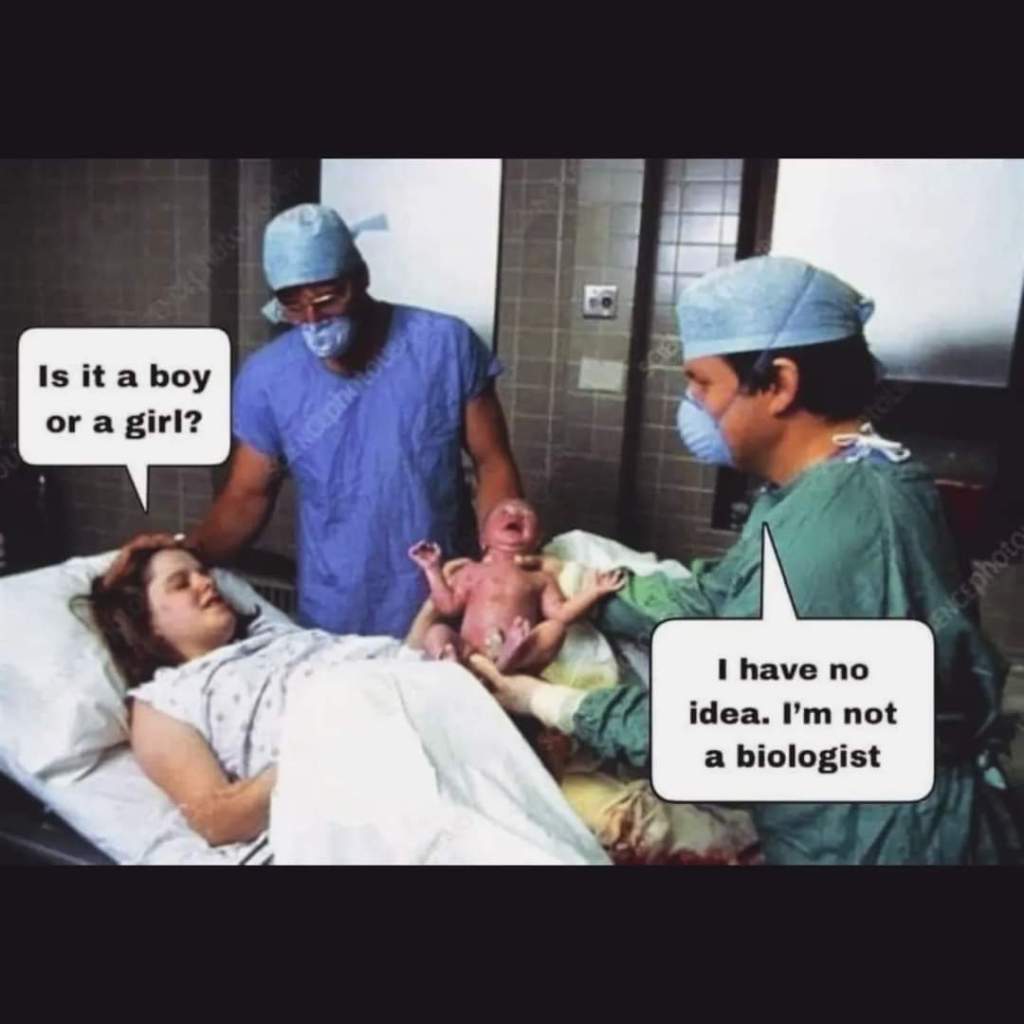
You don’t need a biologist to tell you that men tend to have a very distinct advantage over women in strength and size.  It is not fair or safe for women to be in competition with those born with an XY chromosome no matter how they identify.  I mean, isn’t that why women’s sports were created in the first place?

And, contrary to what the “Muh rights!  You can’t make me wear a stupid mask in your private establishment.” people think, it is perfectly okay for groups to exclude those who have willfully refused to conform to the established standards.  Try to walk into any church naked.  They probably won’t even let you get to your explanation about material making you itchy or how Biblical prophets ran around butt naked.  We set rules.  We define categories.  We decide if those with Swyer Syndrome are men or women.  Click the link and give me your own answer in the comments.

Include or exclude?

It is our cultural bent to be more inclusive of the exceptions.  We are taught that we must show empathy and understanding for those who are “born eunuchs” as part of Christian love.  Then again, the Gospels are a sort of square peg being fit in the round hole of Scripture and it is easy to comprehend why the ‘chosen people’ rejected Jesus given how he mingled with the impure.

Biblical Exclusion 

One reason why to be sympathetic towards those Jews who rejected the message of a teacher who ate with sinners is the Biblical tradition itself and the system it established to exclude those deemed defective:

The Lord said to Moses, “Say to Aaron: ‘For the generations to come none of your descendants who has a defect may come near to offer the food of his God.  No man who has any defect may come near: no man who is blind or lame, disfigured or deformed; no man with a crippled foot or hand, or who is a hunchback or a dwarf, or who has any eye defect, or who has festering or running sores or damaged testicles. No descendant of Aaron the priest who has any defect is to come near to present the food offerings to the Lord. He has a defect; he must not come near to offer the food of his God. He may eat the most holy food of his God, as well as the holy food; yet because of his defect, he must not go near the curtain or approach the altar, and so desecrate my sanctuary. I am the Lord, who makes them holy.’ ”

 (‭Leviticus 21:16-23 NIV‬)

And repeated:

No one who has been emasculated by crushing or cutting may enter the assembly of the Lord. No one born of a forbidden marriage nor any of their descendants may enter the assembly of the Lord, not even in the tenth generation. No Ammonite or Moabite or any of their descendants may enter the assembly of the Lord, not even in the tenth generation. 

(Deuteronomy ‭ 23:1-3 NIV)

Discrimination against the abnormal wasn’t only suggested or caught in a round about way be misinterpretation, but a command from God.  Talk about a kick in the nuts (or lack thereof) for those already suffering an undesirable condition.  Be born the ‘wrong’ ethnicity or suffer an unfortunate accident and you’re out.  Not much of this is actually explained, giving opportunity for apologists to explain around it, but Christian religion (along with modern science) has certainly taken things in a very different direction.

If a woman is ‘barren’ nowadays we try to treat the condition rather than assume it is a curse from God.  I mean, yes, the woman in the Philippines who had the hair covered son with ‘werewolf syndrome’ may believe that it had something to do with eating a cat during pregnancy, the popular notion of “you are what you eat” manifesting, but we’re not as likely to see it as punishment from God—we do not tend to attribute things blindness or misfortune to sin.  It is harder to exclude those who are imperfect when you realize it could’ve been you.

Any more than I need to know why Islam is different from Christianity, where someone was clearly copying some else’s notes, I’m not going to attempt to theologically explain the transition from Old to New Covenant.  It is clear enough that those who had lawfully been excluded, the leprose, lame and blind, Jesus healed.  The result of his ministry two millennia ago was a wave of tolerance that started with his Jewish converts.  Peter had his pigs in a blanket vision (while hungry out on the road) and now we eat bacon despite Biblical command:

About noon the following day as they were on their journey and approaching the city, Peter went up on the roof to pray. He became hungry and wanted something to eat, and while the meal was being prepared, he fell into a trance. He saw heaven opened and something like a large sheet being let down to earth by its four corners.  It contained all kinds of four-footed animals, as well as reptiles and birds. Then a voice told him, “Get up, Peter. Kill and eat.”  “Surely not, Lord!” Peter replied. “I have never eaten anything impure or unclean.” The voice spoke to him a second time, “Do not call anything impure that God has made clean.” This happened three times, and immediately the sheet was taken back to heaven. 

(‭Acts 10:9-16 NIV)

This, along with the Jerusalem Council, is a huge departure from Jewish Biblical religion and, again, it is no big surprise this new cult was rejected by the faithful.  Even today some observant Jews continue the tradition, like that Orthodox chaplain who declared loudly as he took a seat (next to me) on a crowded airliner with mixed races, “I’m a racist and don’t care what you think!”  My own cringe at this statement is born of an indoctrinated sensitivity, years of Christian influence, and not values arising naturally from thin air.  Or, rather at least not without a sheet to carry it down from heaven.

Bacon To Bisexuals

The other day I saw a post, from a Muslim friend, and it listed the problems with eating pork meat, their unique parasites, what pigs eat, etc.  Of course the winning comment was “but fried bacon is so delicious” and it basically for this reason why no Baptist will ever depart from pork consumption.  If it is pleasurable to us, we do it.  However, don’t dare use that reasoning with these same Biblical fundamentalists when it comes to things they’ve not be acculturated to.  And not at all to say that bisexuality is now in that big blanket of tolerance coming down.

No, it is just interesting to me how Biblical law is largely ignored except where it makes sense to us.  Don’t like tattoos?  Well then it is okay to misapply those laws that pertain to specific ancient pagan practices.  But if you like shellfish, then “freedom in Christ” exempts you from having to obey these outdated and irrelevant laws.  The energy in the room is completely different when it comes to the violations of Scripture we’re unaccustomed to or don’t apply to our own circumstances.  Sexual deviation is a whole can of worms that I’ll avoid until or at least until a good explanation of Swyer Syndrome is given to me.

One eyebrow raising moment, during a Bible study, while being brought into Orthodoxy, was when the topic of veiling (1 Corinthians 11) came up for discussion and how the old ethnic Russian priest dismissed it as being custom or cultural.  I never had the chance to ask him about the explicit quotes of Saint John Chrysostom on the topic.  But, like all things, what is important is a matter of our perspective.  The cradle Orthodox follow after the mainstream of Protestantism as much as anyone else, whereas the converts from Protestantism are more strict about preserving Orthodox tradition.  It’s amazing how culture influences our applications of Scripture.

All this to say that I don’t know where the precise dividing line is between pure and impure, acceptable or unacceptable.  But believe there is much more value in being merciful as our Father is merciful.  That is to apply the Golden Rule to those who struggle in ways that we can’t fathom or begin to understand.  Where it was once okay to stigmatize and treat left-handed people as second-class or evil we now accept them and think it is strange it was a problem for past generations.  There are many things that aren’t an identity we choose or a matter of “feel this way” (like a man who claims to be transracial) that require that us to show some grace.

“Ew, Brother Ew”

You’ve probably seen the meme.  A Muslim preacher lamenting those who abandon the Islamic practices of eating on the floor and growing a beard.  His comical expression of their disgust gets to the heart of what most of these religious do and don’t rules come from.  There is a continuum when it comes to gender and normalcy, taboos change, as do ideas of what real men do.  It’s funny to see how these standards have evolved over time.  From the time pulpits had spittoons to the current time of rainbow flags, we are not the same as our ancestors.

There are natural aversions.  We’re naturally disgusted by bodily fluids and it is for good reason.  Disease travels in blood, saliva and waste.  We are also attracted to beauty, the healthy form or good hygiene, this is about instinct and survival.  Sexual promiscuity is also risk as well.  So being grossed out can be beneficial if it protects us from negative outcomes.  However, this can malfunction, sort of like an autoimmune disorder, where we can overreact and exclude on the basis of things that aren’t a danger to us.  Bigotry and prejudice, like middle school fears of cooties, are often as sign of immaturity or lack of self-awareness.  Attributing every unfortunate condition to a moral failure is not sound judgment.

Just because something is strange or ugly to us is not a reason to recoil.  If a person is not trying to draw attention to themselves it is important to acknowledge their humanity rather than their odd appearance.  We didn’t choose to be ‘normal’ anymore than it was a decision they made to be different.  We do not need to pretend everyone is beautiful or affirm every exception as glorious.  There is healthy, there is deformity and disorder, we can love the person who overcomes or does not give up for their character.  It is possible for inner beauty to shine when we truly get to know the person rather than only see the outward appearance.

Path of [Least] Resistance…

Standard

One of my favorite players, while coaching ‘semi-pro’ was a guy named Jerry. The league knew him as this out-of-control and sort of dirty player. He would get wound up with his asthma attacks and get into verbal altercations on the field. But to me, despite his reputation as a loose cannon, he was actually more coachable than many on the team. The guy could’ve easily ripped my head off, he was a fairly large guy (playing defensive end) and a physical force on the field. However, in the few times when I did need to directly to intervene, he was surprisingly respectful. I mean, he would address me as “coach” and, every time, after a few mumbles, he would back down. He would even often apologize later.

Only once, with a little alcohol involved, did I catch a small glimpse of what was driving him. At the time, in his late forties or early fifties, he recalled how his own dad had pushed him. He was abusive and never satisfied. And football was the direction his dad was pushing him in. Jerry had D-1 offers as a younger man. Yet, ultimately, he walked away from the sport at that level and much to do with the pressure he had felt. Obviously, he was still very conflicted over all of this. He played as if a demon were biting at his ankles, a man on fire, and probably pushing a little too hard for a man his age. I’ve lost contact with him, not even sure if he lives in the area anymore, but his story is a cautionary tale for me as I try to navigate my son’s current involvement in athletic endeavors.

I love sports as a training ground for life. It is an opportunity for character development, to learn lessons about work and reward, teamwork, etc. I had my own regrets for having started competing only very late in high school and, therefore, have been very pleased that my own son wrestled over the winter and has been practicing for football season. He’s an amazing athlete for his age. He won his bracket in wrestling, his first year out, with a combination of will, natural strengths, and things learned from his coaches. It has not taken much encouragement to keep him going. He is an enthusiastic participant and seems to really enjoy himself with other kids his age. There have been a couple of times when he was upset and seemed ready to quit, but the next day he has always come back for more.

Desirous Distractions

Of the things I hate most, his tablet is probably in the top ten. We had successfully hidden it away (he didn’t miss it after a week or two) and yet brought it back out due to some current circumstances that make it better to keep him occupied. The result has been like an addict, or binge, where he would use the device non-stop if we allowed it. It turns him from an active and engaged kid, who loves to swim in the local pool and requires a ton of attention, to a slug barely moving for hours. It’s not healthy and that’s the reason why I’ve fought back against this and haven’t minced my words on this topic with him either. I’ve been glad that we had football practices to give that indisputable non-negotiable reason to separate him from the screen. However, the other day, after practice, he confessed that he wished that he didn’t play football so he could be on his tablet more!

One of my successes, so far, as a parent was to keep sports as his idea. Sure, I want him to play, I have done my part to facilitate his involvement as well, but I’ve mostly let him lead in what direction he wanted to go and was glad that his own desires lined up with my own. I’m sure my own hopes and expectations have found their way to influence, children likely know their parents better than their parents know them and generally want to please them. He knows that I’m a Penn State football fan and that, Charlie, the elementary wrestling coach was an old teammate. So it isn’t really surprising that he went down this path similar to my own. Still, I didn’t want to be one of those dads, the kind living vicariously through their son and putting undue stress on him. It does seem we’re too sports-obsessed, where youth leagues are year-round, there is this camp and that camp, which is driven by parents with glowing ambitions more than it is by the children themselves. I wouldn’t be all that surprised if many of these overworked and pushed too hard will quit. At the very least, it won’t be enjoyable.

The big question for me is what would I do if my son said “I don’t want to play anymore.” I’ve already assured him that not playing doesn’t mean he would get more time with his tablet and that he would probably be bored. And he seems to understand that he needs to finish what he started as far as the current season. Nevertheless, the chill I felt, all of my own dreams of watching him now threatened, could easily lead to my being more controlling. It is scary to me that a tablet, this path of least resistance, has so much appeal that he would sacrifice all for it. I’ve also had to question my own motives. Am I doing what is best for him? When I restrict access, when I push him to do things that make him uncomfortable, that’s the reason why I do. But as a parent, we really need to be careful not to project our own desires onto our children so much that they are stifled and not free to be themselves.

The Elusive Balance

My son would likely be completely happy if I just let him play on his tablet nonstop. Maybe he would eventually get over it on his own if we didn’t interfere? I mean, I doubt it. There are always new games to download and more distractions to occupy for hours and hours. And that’s my concern, that the hours he spends vegging out could be put to much better use. It would be negligence, on my part, to simply give him what he wants and never resist his short-sighted perspective. It is my job to develop him, to make him ready for life and sports are one of those tools used towards that end. I don’t want him to develop character, not to be a character in a video game. I want him to get exercise, experience the tactile and real world, and not just live in the fantasies that others created for him. I must resist him.

That said, football is also just a game. I don’t want to be that dad who ended up putting so much pressure on his son to be successful that it ruined our relationship and he quits in frustration. There is much more to life than statistics or the accomplishments that the world will notice. Yes, I would beam with pride if my son were to score a touchdown, be on a state championship team, and be good enough to compete at the next level. A college scholarship, of course, would be great. He doesn’t seem to be the type that will get that in the classroom, so why not encourage the path that he does have? Still, that is exactly the problem. I quickly get way out ahead of reality and with that could quickly destroy even my own enjoyment of the moment. He should, as a child, be involved because it is fun. Certainly, I must coach a little, put some restrictions here and incentives there, but ultimately he needs to choose.

I don’t want my son to go down the path of least resistance. I want him to be resilient, a leader, involved, pushing back, and growing his abilities rather than comfortable. I truly want him to be better than me in all regards. Or, at the very least, to be better for having had me be a part of his life. Sometimes this will require me to bump against his will, dig in my heels a bit, and not let him rest on his laurels or waste the opportunities he has. Other times I will need to step back, let him go his own way, learn at his own pace, and accept that his goals for life may not align with my own. The real struggle is the wisdom to know when to intervene and how. Hopefully, he knows my heart is oriented towards his good even if my execution is flawed. And, actually, I’m okay if we’re not always friends so long as what I’m offering him is a way to go beyond my own limits and reach his full potential as a man, that’s my reward.

A Rose By Any Other Name

Standard

It is hard to feel unique in a world of 7.75 billion people.  Due to mass media we are also more aware of this and also now have all of the best in the world there to compare ourselves to.  We see the best athletes, the most beautiful bodies, those with wealth and power day in and day out.

I am insignificant

At the same time, many young people did not have siblings to share the attention of their parents, only were given affirmation in their formative years, a participation trophy for showing up and—special as they are—don’t need to follow rules or ever answer to anyone.  

In other words, we have a generation with deep insecurities, worried about their place in the vast sea of humanity, and then also raised to be self-absorbed narcissists.  

Unlike the past generations, where you could be a big fish in a small pond, yet also needed to learn respect for boundaries and how to share or negotiate with others. 

Unlike the meritocracy of the past, where you needed real accomplishments to earn privileges or praise, we have conditioned young people to believe that their satisfaction should come without sacrifice or effort.

It is very little wonder why so many of them are unfulfilled, dissatisfied with life, and out there seeking cheap distinction.

Distinction—Cheap or Valuable

We all know names like Elon Musk, Serena Williams, or Ron DeSantis.  They are leaders in their realms of popular culture and sport, business or politics.  And we can probably agree that some of their success is an inheritance of genetics, good fortune or the opportunities granted them.

However, what they are doing, like them or not, is producing results and with this are being rewarded for the things they do.  They have outcompeted many, they distinguished themselves by showing up for work and by putting the time in.  It is for that reason their recognition is earned.  They do the things we care about and we make them famous for this unique resume.

Earlier this week I saw a story about Rose Namajunas, a diminutive female UFC fighter with a very big attitude that earned her the nickname “Thug Rose” in school, and how she’s being featured in a Victoria’s Secret ad campaign.  The message “all expressions, no definitions,” with the word “undefinable,” do certainly fit her outsized personality and the mean head kicks she can deliver, all the while being very emotional.

The point a marketing strategy is cynical, it is to tickle ears and encourage more consumption of a particular good or service.  Those who produced this advertising campaign did it trying to target a certain demographic in the hope of profit.  And that target is probably not those who will ever have the same work ethic and skills as Rose, but is those who crave the same notoriety and ‘undefinable’ uniqueness.

We all wish to be significant, to distinguish ourselves from the pack, to be appreciated and loved.  There are many who are looking for a shortcut or feel entitled to these things, they want the same acceptance, recognition and rewards as those at the top.  They buy expensive clothes, the latest smart phones or cars beyond their budget, all trying to gain attention through their appearance rather than actual character.  

There is hard-earned distinction and there is the cheap kind.  There is the content creator who shares of their substance and then the one who destroys things for clicks.  There is the pleasing gift of Abel and that unworthy offering of Cain.  There is that real fulfillment which comes from making contribution and then the imitation that is outwardly prideful, expresses itself loudly, while truly being an envious, bitter and impoverished soul.

Personal Pronouns and No-name Jerseys

Penn State football has a long tradition of not putting the names of players on jerseys and this is to reinforce the notion of selfless team effort over a bunch of individuals only in it for themselves.  

No name, all game

Success on the field and in life depends on our plugging in and sometimes putting aside our own preferences for the good of others.  We can get more done by working together, respecting the established system, rather than demand that everyone makes special accomodations for us.

Yes, there is a time for grievances.  We also should be a reasonable give and take so far as how individuals and the members of the group interact with each other.

And yet this idea that we should rewrite cultural conventions, negotiated over many centuries, simply so some ‘woke’ Karens can have power over others, is not a grievance I can ever honor.  It is not reasonable for a person to decide the pronouns that apply to them or force us to go along with their newly invented categories.  

We don’t need to be Amish, severely limiting individual expression to maintain community cohesion, but we also don’t want to keep on this path of total atomization either.  There’s a reason why the barn raising religion is able to flourish while the rest of us are headed for Babal, confusion and collapse.

Rose By Any Other Name

This morning, pondering how the categories of mental illness are a bit arbitrary and how much I dislike how these labels pigeonhole  people, there was the thought that my given name was the best possible diagnosis of me.  I mean, I’m Joel.  I don’t need a personal pronoun when I already have my own name and identity completely my own.  

Ironically, the same people who want to have new pronouns for themselves also seem to revel in their mental illness as well.  Anything to be different.  It is a sort of humble-brag, a title of distinction of our era, to talk about your PTSD or bi-polar disorder.  If you are the right person, if you can make yourself a part of the right identity group, then your self-declared victimhood will be treated as a virtue.

It goes beyond moral inversion.  People think that you can slap the right label on a person and it will make up for their deficiencies.  If only they were described right, if we would see their pink hair as an accomplishment, then they would love themselves.  Of course, this is a lie, people so into themselves are always a black hole and no amount of love given will fill their deep void.

It is the spirit of those who are content to remain nameless, who get their numbers called for what they do for the whole, that actually matters.  People will know what is great and what is not no matter what label is applied.  I can never forget what W.E.B Du Bois wrote to a student:

Do not at the outset of your career make the all too common error of mistaking names for things. Names are only conventional signs for identifying things. Things are the reality that counts. If a thing is despised, either because of ignorance or because it is despicable, you will not alter matters by changing its name.

The Name “Negro”

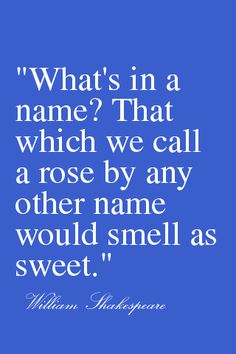
We can manipulate and massage language all we want, give people all the fancy titles they wish for, but in the end none of this word play can take away or lend to their value. If you want recognition contribute to the whole and your name will be known. Not to the whole world, but to those helped by your deeds. A rose called by any other name is still a rose.

What Is a Woman?

Standard

Put away those pink vagina hats, feminists, 2017 might as well be 17 BC, this is the current year, now wearing such a monstrous thing on your head is a clear sign of bigotry and transphobia.  How would those ‘women’ with penises feel?  A pussyhat is worse than a Confederate battle flag or MAGA hat and completely insensitive.

Transphobic sign from 2017?

A decade ago answering the question of what a woman is would be easy for most people.  My mom is a woman.  That’s what we call the part of mankind that is able to give birth: A womb-man.  

But, in the age of far-left ‘woke’ politics, this isn’t so easy anymore.  And this is the reason why, Ketanji Brown Jackson, a Supreme Court nominee, when asked, “Can you provide a definition for the word woman?” replied, “I can’t, not in this context, I’m not a biologist.”

Now, some are calling this question a trap, which it is.  It is a question intended to reveal the true character of Brown Jackson and it has.  Brown Jackson has shown herself as someone beholden to far-left extremism and unwilling to state a basic understanding that doesn’t need a biologist to get it right.

This is someone whom we are supposed to trust to make judgements on such matters, being interviewed for a job that is all about providing the final legal interpretations.  Will she also refuse to weigh in on the language of the law because she’s not one of the writers?  “I’m sorry, but I can’t rule on this, I didn’t write the Constitution.”

Alas, I think this is a selective lack of basic comprehension of what even children can figure out.  And we all know that it is not fair for a biological male to change his name, take some hormones, and then dominate women.  However, in the current ‘woke’ political paradigm one must pretend that a man competing as women is somehow stunning and brave.

The true irony of all this is that the pushers of the very same identity politics that moved Brown Jackson to the front of the line, which is completely about dividing people up into categories as a means to exploit their base tribal instincts, nominated someone who claims to suddenly be unable to distinguish women from men.

Man, I Feel Like A Women

And as far as the appeal to credentialism, I’m not sure any biologist would want to be declared to be transphobic and a bigot.  It would be a quick route to losing their job or funding, being cancelled, to risk offending the most powerful of marginalized.  Let’s hope this USA Today clip doesn’t represent a scientific community consensus or we’re in for a rough ride:


If this is indeed true, if there is “no sufficient way to clearly define what makes someone a woman,” then the solution to the alleged pay gap is to have more men identify as women, right?

If Jeff Bezos becomes Jen instead, would that be a huge victory for women?

Would it then be sexist to question the business practices of Amazon?

All of this is absurd.  A word that can’t be defined is meaningless.  We might as well remove it from the census form as it would be impractical to consult a biologist to help decide what gender we on a given day.  If it is that difficult to define woman, then we may all be women and who can say otherwise?  Who hasn’t sang along with Shania Twain, “Man, I feel like a woman”?

Transgenderism is truly a bigger threat to the special privileges of women than anything patriarchal.  It is essentially to say that the category does not exist, that anyone who identities as a woman can be a woman, and therefore all should have access to those spaces typically reserved for women.  Lia Thomas has arrived to erase the best efforts of women.

Loss of Meaning and Purpose

The one thing that is hard to define in this postmodern age, where a woman can’t even say what it actually means to be a woman, is our direction.  Even with the rejection of God and questioning of truth, a prior generation of academics and scientists could agree on basic definitions enough to advance.   

However, as this nihilistic deconstruction of meaning (and thus purpose) continued, as the very things that built civilization have become progressively eroded over time, it is become increasingly difficult to form a productive consensus.  If many can’t even be objective about gender and what it means to be a woman anymore, how will we decide anything if this goes further?

Language is becoming detached from the meaning.  This is a wedge driven by those perpetually stuck in dithering indecision, who are often insulated from real world consequences, who can afford to live in abstraction and denial.  But it is not sustainable, we can’t build strong and safe bridges while declaring engineering and mathematics to be racist. 

At some point there is reality, cold and harsh, that doesn’t care about our feelings.

Our elites are basically like those ridiculed for their debates about how many angels could dance on the head of a needle.  They have become totally impractical, useless as far as executive decision making and a real threat to social order.  Those unable to settle any matter definitively, let alone those truly more complex and nuanced, can’t build a future together.

It is a luxury, the ultimate privilege, to never have to define or decide anything and still be able to live.

The guy, trying to impress his date with his wokeness beside me, doesn’t actually live by the dogmas he is spouting, he can yammer on endlessly about his theories, but to sustain a relationship he’s going to have to make a commitment to something, eventually, or no woman will keep him around for long.

My Apologies For Not Being Flashy Enough, I Guess?

Standard

Years ago, in the parking lot of the Mennonite church, one of the cool youth guys told one of the pretty teenage girls to do something.  I’m not sure of the exact lead-in, he probably suggested it was impossible to do, but he instructed her to simultaneously grab her ankles and spell the word run three times.

To my horror, this young woman, my first real crush, in traditional Mennonite dress, voluntarily did exactly as he said.  She bent over, and with her dainty ankles in hand, actually spelled out “R-U-N, R-U-N, R-U-N!”

At the time I had regarded her as a completely innocent party and being exploited.  It has to do with this notion, especially popular in patriarchal purity cultures, that men are more sexually interested and women simply want emotional support.  Therefore it was not possible that she would consent to this sort of activity knowing what his actual intention was, right?

This heroic offense that, no doubt, my reserved conservative Mennonite male readers will likely take on her behalf is trust misplaced.

In retrospect, given the various activities that she would later quite willingly participate in, even after marriage, some that included the jokester from the story above, my own assessment of what was truly going on there has changed.  I mean, had he not been an athletic six-foot built, I’m pretty sure she would have decided to be a little more aware of his intentions.  But the reality is that she was enjoying the attention whether or not she knew exactly what game was being played.

Beauty and Godliness

Many men (and women) confuse feminine beauty for godly character.  One of those shattering realizations was that the virtue that I saw in conservative Mennonite women was one of mere outward appearance and not really an indication of their being truly different under the surface.  Sure, those of us raised in this culture are better trained, and our lusts are hidden under more layers of religious garb, but this demure and righteous front conceals passions that are no different from those found in all people.

In ‘worldly’ hookup culture, it is all about the physical.  It is blatantly superficial and makes no attempt at hiding this.  Sure it is discriminatory, sayings like “must be 5′-10″ or over to ride” are common, and only the hottest guys and girls are going to be especially successful, but it is also honest.  It is a meat market and that’s what you should expect going in.  

But, raised in the sub-culture that I was in, there was this idea that character mattered most and what was being sought after.  Some of us believed that.

My first crush, the girl in the account above, was someone that I had assumed was of impeccable character.  Compared to those high school girls, like those cheerleader friends who (while at McDonald’s sitting with this blushing Mennonite kid) had fun taking turns saying the word “penis” a little louder each time, she was a saint and basically sinless.  Or so I had thought.  However, as it turns out, those ‘bad’ girls went on to be faithful to their partners, and the girl that had left me feeling unworthy ended up being fondled by that R-U-N guy a few years down the road—despite both of them being married.

I had assumed that my crush was of better character because of my bias towards those who dressed and acted a particular way.  I had her, so pretty and pristine, high upon a pedestal.  She had no dirty thoughts like me.  She would love me for my heart rather than my stature or appearance.  And yet my doubts began to grow, she had become unapproachable to me, too good, too pure, and too perfect, how could someone with my stumbling words, painfully awkward, ever add up compared to this angelic being?  It is easy to see why my effort was doomed from the start and especially since she was as horny and completely carnally minded as any other young person her age.

Men, at least those in traditional cultures, want to defend the damsel in distress.  So, women, in turn, will play that part.  They are agreeable, they will accentuate their vulnerability and it is all part of the game to attract a mate.  Maintaining an appearance of ‘godliness’ is a part of this trying to be desirable in cultures where such things are valued.

And that’s not to say it is knowingly a pretense either.  It is simply how we frame the experience.  We don’t need to admit to the sexual motivations like the crass (yet wonderfully truthful) young ‘worldly’ women—like those schoolmates who had delightfully, with giggles, defied my own teenage expectations as far as propriety and appropriateness.  Us born into religious subcultures, especially a purity culture, confuse our merely following the rules for actual righteousness.  It is virtue signaling.  We hang onto that wonderful image because it is valuable, a social advantage, and yet are as superficial as our ‘worldly’ counterparts when it comes to the true motivation behind our choices.

I’ve learned since that I was lying to myself, this Mennonite girl was a complete knockout no matter how ‘modestly’ she dressed at that time.  That physical beauty most definitely played a part in my attraction and the virtue that had been projected onto her physical frame.  And, while being genuinely horrified during the parking lot incident, there was also that fascination about what was happening, a curiosity like how we can’t take our eyes off of a trainwreck.  Yes, I might have even enjoyed it in a weird way, so was I actually any better than the instigator?

Seeing Through My Own Projections

The “R-U-N” crush was never a saint to begin with.  I had projected my own ideas of her purity onto her, assumed that her inner composition matched her flawless exterior, and thus had turned her into more of an idol than a real person.  Not excusing her eventual infidelity and recent divorce, but would it really be any surprise if some do break under this pressure to perform and be her daddy’s perfect daughter?

My disappointment with things not being as they appeared to have long since worn off, I’ve come to accept that even the ‘good’ girls (even those who would never dare cheat on their husbands or even say anything out of turn) aren’t as spiritually oriented as their outward show would have many believe.  Their faith is often shallow and a means to stay relevant or appear righteous to their religious peers.  I mean, it isn’t all for show either, we’re always a mixed bag of motivation in even our best moments, but ultimately they are as flawed as anyone else and as oriented towards that strapping physique as much as their hook-up culture counterparts.

Still, it was this realization that left me feeling betrayed by my idealism and needing to let go of this falsehood of their loftiness compared to my own shortcomings.  They were no different from me—not better, not worse. 

This sinless young woman myth is as harmful and as completely patriarchal as the idea that a woman being ‘undefiled’ is her only value.  Being beautiful, and not being openly aggressive or disagreeable, does not make an outwardly well-behaved woman a better person.  And, truly, at this point, I would rather deal with the ‘slut’ that is real than the ‘saint’ that is only skin deep and fake.  It is much better to start with the baseline that all have sinned and fallen short of divine glory than to treat anyone as somehow above or beyond.  Religious women may not sin in the same ways or as openly as their male or secular counterparts, but they still do.

People certainly look at outward appearance, but Jesus said this concerning the deception of those who kept up appearances:

You are like whitewashed tombs, which look beautiful on the outside but on the inside are full of the bones of the dead and everything unclean. In the same way, on the outside you appear to people as righteous but on the inside you are full of hypocrisy and wickedness.

(Matthew 23:27b‭-‬28 NIV)

What I’ve found about myself and others raised in a culture with high expectations is that we tend to keep two sets of books.  One to keep up the prescribed cultural standard and impress our peers, and another hidden account book that contains our more carnal imaginations and base desires.  Pretty on the outside does not mean a pure heart.  It could simply be manipulation or a way to benefit from the protection provided to those who conform and do not have evidence of good character.

Character Is More Than Skin Deep

So, anyhow, once burned, twice shy, right?   And, having learned that exteriors do not always match interiors, when stumbled across Charlotte’s profile, and saw this shy and adorable-looking woman beautiful amongst the flowers, I asked:  “Are you as beautiful on the inside as you are on the outside?”

I know. 

Not much of a pick-up line, right?

Nevertheless, it was exactly the right question for someone struggling.  It signaled to her that I actually cared about more than her physical form and wanted to know about her as a whole person.  Of course, her beauty is indeed more than skin deep.  And, although she confesses that I’m a good person while she’s my “imperfect Bhest,” she’s golden.  Her humility alone, in realizing that she is flawed and admitting it, is proof of her beautiful godly character.  And, as our relationship progressed, it was her soul that I wanted to protect and not merely some projected cultural ideal.

Charlotte, for her part, is also well aware that I’m not the epitome of manliness.  She knows that I show my emotions, sees me as a little soft compared to those stoic Igorot men, and had to make some adjustments to my dress style in Taiwan so I didn’t look as much like a dweeb.  There’s very little pretense with her.  Maybe she’s more plainspoken being that English is a second language?  But it’s also cultural.  Or, rather, a lack of the cultural facade where people have learned to say the right things and yet lack actual substance.  She is refreshingly real and appreciates me for my character rather than care too much about my missing-in-action six-pack abs.  

I’m not flashy enough to attract the Tinder date nor the goody-two-shoes who conceals her carnal appetites under layers of sanctimonious bullshit.  And yet do have enough of something to keep from giving up on true love despite the painful distance and wait. I’m not her perfect Bhest, but I do love that she is more concerned with my faith than my physical perfection.

Raped — But Not Devalued

Standard

I was on the elevator down from the psych ward, having visited a friend in a bit of a rough patch and struck up a conversation with one of the other riders.

As it turned out, she was a psychologist, visiting a friend (not her patient) who was not doing so well.  This young man, now catatonic, had once had it all together. He was a standout athlete, had a girlfriend who was gorgeous, and then something happened that turned his world upside down.

What would take the feet out from under a strong and healthy male?

He was raped.  

While in the military, the Navy as I recall, he was forced by another man and this started his downward spiral.  It is not possible to know, having never gone through anything similar myself, what happened in this young man’s mind.  But one can imagine, if he had an identity and self-worth built around his ability to protect, being overpowered in this way would have to be absolutely devastating to him.

How could he provide security for a woman if he couldn’t even defend himself from an assault?

His relationship, his life, his will to live, crumbled.  This one experience, possibly over in minutes, probably not doing him lasting physical harm, broke him mentally and turned him into a shell.  I have no idea of what became of him.  Did he find a way to bounce back, form a new identity, move on from the trauma and overcome?  Or has he withered away into nothing?

More Common Than Thought

One of my first encounters with a victim of sexual abuse was in school.  A friend of mine, from elementary school all the way through high school, told me that he had been molested by his stepbrothers while living in Texas with his biological dad.  I had always felt bad for Justin. He was socially awkward and bullied by classmates, had a domineering mother, and came out of the closet later on as a teenager.

I’m also had some very close female friends that have told me about being raped.  Their stories are very similar.  A trusted male, often a boyfriend, talks them into a place where they are unable to escape his sexual aggression.  In all of these cases, to head off any assumptions, there was no alcohol involved.  They were good morally upright girls who were too trusting of a male ‘friend’ who stole their innocence and left them feeling completely broken.

Then there’s Adam, the school friend who took his life a few years ago, victimized as a child by a predator college professor.  His alcoholism and failed relationship no doubt, in part, linked to this experience.  I mean he let me in on this secret, and many years after it happened, so it was obviously still part of his thought process.

At one point in my life all of this was unthinkable.  I was in a home that offered stability and protection, with two good parents.  I’m sure there were things that I did not know about, but my community seemed mostly healthy and safe.  There was simply no reason for me to assume this sort of violating behavior was common.  So statistics about 1 out of 5 women being victims of rape seemed impossible.

It is truly understandable that many who were raised in sheltered homes are in denial of the extent of this problem.  It makes sense that they would try to explain it away as the promiscuous putting themselves in a compromised position.  It is probably a good thing when the reaction is disbelief. Most men aren’t rapists and would be horrified, like I was, if they heard a story firsthand from someone they love.

Boundaries and Consent

As part of my culture, and also my lingering shyness, it is difficult for me to so much as give a woman a hug.  It’s actually very frustrating to me, that I’m so awkward in this regard and would almost need to ask permission rather than simply make the read.  Why is this?  Well, it only seems right to respect another person’s space.  Intimacy is supposed to be reserved for special people, right?

It actually makes me livid to see even a boy too grabby with a girl too early, even if she seems to be enjoying it, because he’s treating her as an object.  And yet this sort of ‘confidence’ is often rewarded.  The women who think that every man is a rapist may have simply spent way too much time with men who do not respect their or any boundaries. 

And, yes, men who pressure with “if you love me you will…” are evil. 

Period.

Rape is a product of an entitled mind, a psychopath, someone who sees other people as something to be exploited for their pleasure.  Sure, maybe they can turn on the charm and blend into normal society, but their true character is revealed when there is nothing to stop them.  Be it in a back alley or her bedroom that he talked himself into while her parents were away, rapists exploit the vulnerable.

Incidentally, this is why I’m still in favor of at least one aspect of traditional courtship.  If a man can’t keep his hands off of your body for a few dates, if there is any unwanted pressure whatsoever to be physically involved, then maybe find someone who is interested in you rather than merely sexually attracted to your physical form.  If a man can’t commit to a relationship without sex, he certainly isn’t the type to commit after sex.

Lust and Self-control

In the animal kingdom there is no such thing as consent.  Often the strongest, most competitive, male gets to mate and by simply overpowering the female.  He runs on instinct, male hormones, testosterone, and is basically acting out his natural programming.  We don’t generally describe a buck “in the rut” as being a rapist because we do not see the animal as capable of complex moral reasoning.

And humans do have these similar underpinnings too.  Men, for the most part, are more aggressive, and women tend to be more submissive, agreeable, etc.  It is simply the substance we’re made of in the same way it is for any other animal.  We’re instinctive creatures that seek out, and imagine, the things we want.  But we also have a layer beyond this, a large frontal lobe in our brain, which gives us an extra capability for self-control.

Lust is often confused with simple desire for something.  Many in a strict religious upbringing, like my own, are made to feel extremely guilty for looking upon a fair maiden and finding her desirable.  But that’s not lust, that’s healthy sexual attraction and not a sin.  What is lust is when we dwell on something that’s not ours to take. That is a path that can lead to rape, as in this Biblical account:

Amnon became so obsessed with his sister Tamar that he made himself ill. She was a virgin, and it seemed impossible for him to do anything to her. […]
So Amnon lay down and pretended to be ill. When the king came to see him, Amnon said to him, “I would like my sister Tamar to come and make some special bread in my sight, so I may eat from her hand.” David sent word to Tamar at the palace: “Go to the house of your brother Amnon and prepare some food for him.” […] 
But when she took it to him to eat, he grabbed her and said, “Come to bed with me, my sister.” “No, my brother!” she said to him. “Don’t force me! Such a thing should not be done in Israel! Don’t do this wicked thing. What about me? Where could I get rid of my disgrace? And what about you? You would be like one of the wicked fools in Israel. Please speak to the king; he will not keep me from being married to you.” But he refused to listen to her, and since he was stronger than she, he raped her.

(2 Samuel 13:2‭, ‬6‭-‬7‭, ‬11‭-‬14 NIV)

Awful!

The sad part is that when Amnon’s lust was satiated, he discarded his half-sister (not biologically related) as if his sin were somehow her fault.  Incidentally, this violence did not go unavenged. Amnon was eventually killed by the victim’s brother, Absalom.  But this lack of self-control seemed to plague David’s house.

Considering what king David did to have another man’s wife, we could say “like father like son” to explain what happened here. 

Rabid Dogs Are Put Down

In the end, we all have sexual desires. Attraction is natural and not something to be ashamed about.  But, when this crosses over into lust, when we choose to dwell on something unattainable and scheme to have it through immoral means, that’s a choice and what separates us from animals.  The reprobate tries to hide behind their urges and impulses. 

If a dog can’t keep from biting we’ll put it down. 

Should a person with no self-control, who harms others because of their unwillingness to rein in their lusts, be treated any differently?

I know Jesus said, pertaining to those who harm the “little ones” (referring to those young in the faith, not necessarily children), that it would be better that a millstone be hung around the neck of those who do these things and they be cast into the sea.  He may not have been talking specifically about sexual abuse and yet, knowing what this sin does to those who have fallen prey, I’m quite certain it’s included.

Jesus never said, “if she’s wearing a skimpy outfit, then she shares some of the blame,” but he did say, in the context of lust, If your right eye causes you to stumble, gouge it out…” (Matthew 5:29a NIV) 

Good people do not create scapegoats.

Godly men do not blame women.

Your Body Is Not Your Worth

The more important message of this blog, and my main reason for writing it, is to tell those who have been through this kind of trauma this: Your rape is not a reflection of you or your value.

As one who fully appreciates the human form, especially that of the female body, and completely desires physical intimacy, it could be easy to treat our bodies as being one and the same as our being.  We show preference based upon stature, beauty, shape and other matters of outward appearance.   So it can feel as if this form we reside in is of greatest importance and, therefore, what happens to it a reflection of ourselves.

Women, traditionally, put value in their cleanliness or purity, men in their strength and ability to protect.  Our identity is often wrapped up in this external image.  Rape is an attack on the physical manifestation of these things and causes the victim to question their identity or value at a deeper level.  This is why, in mere moments, someone can be shattered.  They now see themselves as dirty or defiled, inadequate or weak, and thus of less value.

But the truth is that our human value has nothing to do with what others have done to our bodies and everything to do with how we choose to live.  

I’ve encountered toxic and nasty people, bitter, who have used the abuse they’ve experienced as an excuse to mistreat others.  I have also met those who have not been defeated, who are able to put the unpleasantness behind them, and even become a better person in the end.  This idea that we’re damaged goods or have lost our worth because of something that happened, through no fault of our own, is choosing to put our own value in our bodies.

Do not be afraid of those who kill the body but cannot kill the soul.

(Matthew 10:28a NIV)

There is so much more to our being than our physical form.  We might convince ourselves, based on the world’s obsession with the external, that our worth is in only these physical things.  But what matters, the real value we have, is our soul and that thing that can’t be touched. 

Age will eventually destroy our bodies. The tall youth will some day be hunched over, the strong man’s muscles will atrophy, wrinkles will spread on that angelic face.  The world abuses us, we will all likely face trauma even if not rape, and yet—if we know that value is something other than the physical—our worth will increase.

At the very least, no matter what anyone has done to your body, whether you were abused as a child, raped or whatever, I do not look at you as damaged or inferior. 

No, you are strong to keep going. There is a special beauty to a survivor that is not found in those sheltered.  And I believe there are more who agree with me than do not. 

Your value is in who you are and not what was done to you!

Are not five sparrows sold for two pennies? Yet not one of them is forgotten by God.
(Luke 12:6 NIV)

The Privilege Paradox—What Jesus Taught About Fairness

Standard

Remember that viral video, from a few years ago, that has a bunch of young people lined up in a field?  

As the music plays, we hear an announcer tell participants this is a race for a $100 bill and  then proceeds to list off statements that will allow some to advance.  If both parents married, if they had a father figure, if they had access to private education, if they never had their cell phone shut off or had to help their parents with bills, and the list goes on.

For those of us who have studied socioeconomic issues, and have long pointed to things like fatherless homes as being predictive of outcomes, this is no surprise.  In fact, fatherless homes have a stronger correlation with negative outcomes than race.  Many mass shooters come from broken homes.  We should be talking about such things.

However it seems many of my former religious peers, raised in conservative Mennonite cloisters, prior to watching this video, had been completely unaware of this ‘privilege’ of family structure.  Suddenly their ignorance had been revealed.  But, some, rather than simply ponder and reflect, used this new knowledge to bludgeon others and suggest that anything less than feeling deep shame equal to their own is somehow sinful.

One problem with being raised in a religious culture where indoctrination and conformity is preferred to open discussion is that many coming from this background are nearly incapable of critical thought.  A media presentation like this dazzles them and there’s no reason they can imagine to question the conclusions.  They see what they’re supposed to see, what was carefully edited and prepared for them to see, and what the lecturer tells them to believe.

The video, unfortunately, frames things in terms of race.  The one announcing even explicitly saying “if this was a fair race…some of these black dudes would smoke all of you.”

It’s ironic that this man plays on racial stereotype, the perceived athletic advantage that some have, while simultaneously making the case that privilege is about getting the money at the end of a race.  He undermines his own thesis.  If some young people, as a result of their athleticism, can get into a prestigious university, how is that not also privilege?  

More importantly, where does that leave those of us who neither had the athletic prowess nor the academic chops nor wealthy parents to provide for our education?

My father was absent, out on the road weeks at a time, I went to public school because my parents couldn’t afford the Mennonite school tuition, I never had a cell phone growing up and also eventually had to pay rent to my parents for the privilege of living under their roof, is that unfair?

Who is to say that a person raised in single parent home is truly at a disadvantage to someone with a learning disability?  

And is it actually true that those with non-athletic scholarships didn’t earn any of that reward through their own hard work?

A big problem with the presentation is how it frames privilege in a very narrow and misleading way.  The list of factors is extremely selective.  He never mentioned the many other disadvantages (or advantages) that can shape outcomes, things like physical stature or gender, affirmative action and health.  There is also no attempt to explain why these factors should be weighted as they are.  Ask different questions and the completion of the results may completely change.

Breaking Down Privilege 

The problem with the privilege narrative is not that it highlights the advantages that some have over others.  We all know that an athletic tall guy is more likely to dunk a basketball, and have a girlfriend, than the 5′-5″ tall perpetually last-picked dude.  All of the things listed in the video may very well have an impact on outcomes and yet there are so many other things people overcome that never got mentioned.

The message is right, in that we should be aware of the disadvantages others face, but does a disservice in framing privilege almost entirely in terms of race.  And, with that, feeds insecurities, builds upon division, encourages animosity or guilt—all without providing any actual solutions.

To get to solutions we need to break down the framing:

1) Not About Race

The irony of the “white privilege” claim is that, when we get to specifics, the advantages some have are often not actually about race.  

Fatherless homes, for example, have nothing to do with race and everything to do with the choices of a prior generation.  My dad took responsibility, he provided for his children, my mom remained loyal to him despite his shortcomings, and us children benefited.  

Do you know who else had that privilege?

The daughters of Michelle and Barack Obama.  

Not only that, Sasha and Malia, had access to private school, prestigious universities, and other opportunities that a working-class child (such as myself) could only ever dream about.  Sure, they may have similar skin color to Trayvon Martin, but that’s where the similarities end and to say otherwise is to be absurd.  The average blue collar white person has more in common with racial minorities than anyone in the ruling class.

My school friend, Adam Bartlett, the one who eventually killed himself and another man, was a victim of sexual abuse as a child.  Not only that, but he wasn’t all that athletic, wasn’t a great student, had nothing given to him by his parents, yet we’re supposed to believe that he had this thing called “white privilege” and was actually better off than the daughters of the President?

This idea that privilege is about color, that fatherless homes and poverty is a matter of race, is the very definition of prejudice.  It is a message bad for the racial minorities whom it both disempowers and discourages.  It is also wrong, an injustice, to the many people deemed privileged who face the exact same challenges and never get as much sympathy or help.

The truth is that statistics never tell us about individuals.  There are many born into poverty and poor conditions who do overcome their circumstances.  It has as much to do with attitude, the things we believe and are told to believe about ourselves, as anything else.  The very things that can be a disadvantage in one case can be motivation in the next.

2) Let’s Address Culture, Not Color!

If we’re truly interested in changing results then we need to talk about the elephant in the room.  Why do some children grow up in single parent homes, in poverty, while others do not?  More importantly, what can we do to prevent this from repeating?

Woke nationalism, a far-left Marxist political movement adjacent to this sort of privilege propaganda, would have people believe that more money (in form of reparations or government programs) is the solution to disparities in outcomes.  Rather than address the root cause of disparities, they blame-shift and promote acceptance of toxic behavior.  

Black Lives Matter, for example, doesn’t support the reestablishment of traditional families.  And, worse, many promoters of the “white privilege” narrative would have us believe that things like work ethic are somehow related to skin color.  They are explicitly encouraging the very things that the video would have us believe hold people back from success.

Just today, while writing this, a BLM leader in London, was shot in the head.  Her story not all that uncommon in the inner-city, where gang warfare and honor culture, a criminal underground, leads to many violent ends.  

Are we truly supposed to believe this is black culture?  

Should I celebrate that the majority of shootings in my little corner of the world are perpetrated by a rather small minority?

My answer is a hard N-O to both questions.

No, we should not accept fatherless homes as normal nor be an apologist for the honor culture that so often leads to violent outcomes.

No, skin color does not, should not, should NEVER determine our behavior.

Many things that are being framed in terms of race are actually cultural and a direct result of choices.  A man, no matter his color, does not need to murder his ex-wife because she is with another man, or shoot someone over a borrowed hat, there’s no excuse.  My little town does not need drive-by shootings, we don’t need more bodies dumped in remote locations.  And, yes, we need to ask why the ‘disrespect’ of a mask requirement was a considered a reason to murder a security guard, why a successful NFL athlete took a former friend to an industrial lot to execute him for talking to the wrong people.

It is culture, not color, that is shaping outcomes.  And to conflate color with culture is the very epitome of racial prejudice.  Seriously, saying that black people must act differently, must be more expressive, must prefer particular kinds of music, must talk a certain way, is the same kind of ridiculous thinking behind minstrel shows.  We should be beyond this, we should be judging by content of character rather than color of skin, stop promoting foolishness!

3) Life Is Not Competition

The most egregious presumption in the video is that life is a competition and ending up with more money is the goal.  Talk about spiritual rot posing as enlightenment!

Sure, your bank account may be somewhat a product of the home, community and culture that you were raised in.  Hunter Biden certainly has an advantage over me in terms of earning potential given his father’s high political profile.  And, trust me, it has very little to do with anything he’s done.  For sure, if he were the average Joe, if the 1994 Crime Bill applied to him, he might be in jail for a long list of crimes.  But that ‘privilege’ doesn’t mean he’s a success compared to me, does it?

Some extremely wealthy and visibly successful people are extremely unhappy with their lives.  No amount of access to private education, cell phones, health care, or whatever, is going to solve a feeling of inferiority or self-loathing.  And, if anything, more wealth in the hands of a disgruntled person will only enable them to do more evil.  I mean, was Hitler, a struggling artist and disenfranchised military veteran, improved by the power eventually given to him?

No, not at all.

This idea, in the video, that life is a competition, that more material wealth equates to success, is completely wrong and deserving of the severest rebuke.  What is truly shameful is that those religious folks sharing this message never once stopped to consider the metrics of success presented.  So much for the first being last and last being first, as Jesus taught, apparently to them life is all about the accumulation of stuff and political power.  

Sad.

Maybe if we would, instead of pitying and patronizing people, start preaching the truth, start telling dead beat parents, or anyone making excuses for themselves, to repent—then we would see positive change? 

But that would require us to see others as being our equals, capable of choosing good behavior.  It would require being unpopular and to stand at odds with the virtue signaling of the social elites.  Those who are honest about matters of culture, who confront woke nationalism and racist lies, they are the only people systemically oppressed.

Jesus Defies Privilege Narrative

No, matters of bad character and toxic culture are not fixed by more money, consider this parable:

“Again, it will be like a man going on a journey, who called his servants and entrusted his wealth to them. To one he gave five bags of gold, to another two bags, and to another one bag, each according to his ability. Then he went on his journey. The man who had received five bags of gold went at once and put his money to work and gained five bags more. So also, the one with two bags of gold gained two more. But the man who had received one bag went off, dug a hole in the ground and hid his master’s money. “After a long time the master of those servants returned and settled accounts with them. The man who had received five bags of gold brought the other five. ‘Master,’ he said, ‘you entrusted me with five bags of gold. See, I have gained five more.’ “His master replied, ‘Well done, good and faithful servant! You have been faithful with a few things; I will put you in charge of many things. Come and share your master’s happiness!’ “The man with two bags of gold also came. ‘Master,’ he said, ‘you entrusted me with two bags of gold; see, I have gained two more.’ “His master replied, ‘Well done, good and faithful servant! You have been faithful with a few things; I will put you in charge of many things. Come and share your master’s happiness!’ “Then the man who had received one bag of gold came. ‘Master,’ he said, ‘I knew that you are a hard man, harvesting where you have not sown and gathering where you have not scattered seed. So I was afraid and went out and hid your gold in the ground. See, here is what belongs to you.’ “His master replied, ‘You wicked, lazy servant! So you knew that I harvest where I have not sown and gather where I have not scattered seed? Well then, you should have put my money on deposit with the bankers, so that when I returned I would have received it back with interest. “ ‘So take the bag of gold from him and give it to the one who has ten bags. For whoever has will be given more, and they will have an abundance. Whoever does not have, even what they have will be taken from them. And throw that worthless servant outside, into the darkness, where there will be weeping and gnashing of teeth.’ 

(Matthew 25:14‭-‬30 NIV)

Of the parables that Jesus told, this one has to be one of the most harsh and counterintuitive.  I mean, who can blame this servant, given so little, for burying his talent?  

Was it fair that, before the investment phase even began, the “wicked” and “lazy” servant was already at a severe disadvantage?

While this parable affirms the idea that what we’re born with has little to do with what we’ve done.  However, it departs radically from the central notion of the video that success at the end of life is “nothing to do with what you’ve done.” 

This flies completely in the face of the social justice gospel and, frankly, everything that comes naturally to me.  As one who always felt like the servant given little and thus was fearful of God, this parable confounded me.  Didn’t the initial disadvantage, the unequal distribution of wealth, shape the outcome?

Are we now going to say that Jesus lacked understanding, compassion or sensitivity?

Should we cancel Jesus?

We could replace the wealth or talents of the parable with “privilege points” and not change the message.  Jesus who said, “to those much is given much will be required,” also said those who are given less by God should be appreciative and invest well rather than make excuses.  

In other words, if you have no father, you can wallow in the disadvantage or choose to invest in the next generation so they do not suffer as you did.  If you were excluded, as I was, on the basis of lacking stature and athletic abilities or other things not within your control, you can harbor the grievance, let it take over your life, or you can use it as motivation to do unto others what wasn’t done for you.

The reality is that Jesus was being far more compassionate in addressing the spiritual matter at the heart of many negative outcomes and ignoring questions of fairness.  Furthermore, life is not a competition for material gain, it is not about the rank we attain in society either, and to frame it in such a way only shows a complete lack of discernment.  The privilege narrative is not only racist to the core, it is also at odds with the Gospel of Jesus Christ.

Instead of chastising innocent people for their alleged color privilege, trying to burden them down with guilt.  Instead of telling some people that they lack the ability to be successful simply on the basis of their outward appearance or place they were born, which is a total lie.  We should love our neighbors, rebuke this notion that life is a competition for money, and call all to repentance.