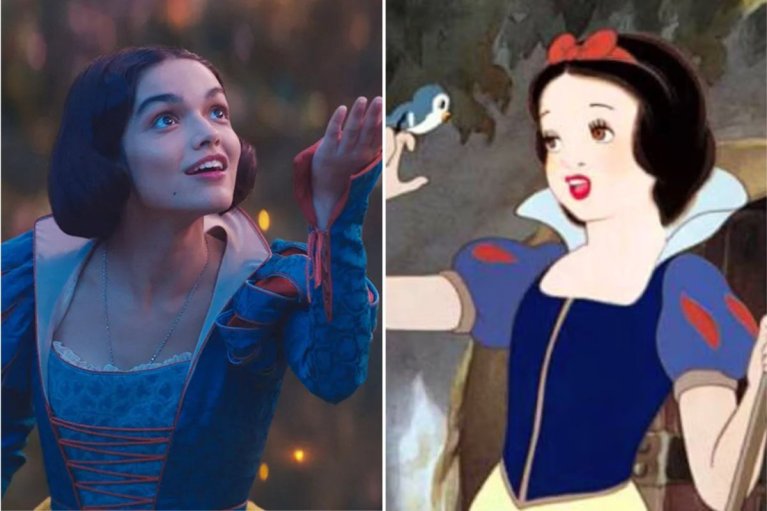
Snow Woke—Disney’s Female Empowerment Fairytale

Standard

Apparently the Snow White remake bombed at the box office. We could just go with the standard “get woke, go broke” traditionalist assessment. Rachel Zegler comes off as the female equivalent of Andrew Tate—as being angry, entitled, selfish and toxic—which isn’t appealing to a broad audience.

But, before we get into the remake, let’s talk a bit about the original Disney animation of the fairytale. The character deviates quite a bit from the Grimm version. For a start, the fair-skinned protagonist is half the age (7 rather than 14) and there’s no “true love’s kiss” in this original version. Furthermore, she’s a sort of blank slate archetype—not some ideal 1930s homemaker mothering a bunch of dwarfs. In short, the adaptation then was not completely true to the source material and created an image of feminity relevant to that time.

The Grimm version was darker in tone and featured a prince weirdly obsessed with a dead girl in a glass coffin. The dwarfs did not have distinct personalities. And Snow White awakened when the poisoned apple is dislodged from her throat when a servant carrying her coffin stumbles. And it was at this point the prince professes his love and proposes marriage—which she accepts.

The latest Disney live-action takes liberties in a very different direction. It is even less true to the original (other than elimination of the Disney romance) and reimagines Snow White being a sort of feminist militia leader who leads a bloodless insurrection against the usurping queen. But the “mirror mirror on the wall” remains and a poisoned apple—despite the heavy edit of the script where an empowered woman replaces the worn damsel in distress trope.

Why People Don’t Like Snow Woke

People enjoy new takes on old genres, like Shrek or Furiosa and also powerful female characters such as Ellen Ripley in Aliens, Sarah Connor in Terminator or even Katniss Everdeen in the Hunger Games.  They were relatable, we saw them develop, circumstances made them tough to survive, and audiences loved them.  What they don’t like is preachy dialogue or lack of any real character development. A Mary Sue, a hero with no weaknesses, is unrelatable. It is the problem with Superman and with the many woke adaptations of stories.

We like the image of a woman against the machine.

Christian movies have a tendency to be bad for the same reasons. They can come off a little campy or forced. Sure, it may work for drawing your ideological camp, but it isn’t a compelling story for the unindoctrinated or the broader audience. Which is not to say that movies about Christianity can’t be great for entertainment.  I love gritty true stories like that of Hacksaw Ridge or profound, like Silence, will have anyone at the edge of their seats—the key being relatable characters.

Zegler is a bit much. Totally insufferable in the eyes of some. And she plays a part that is equally annoying. The departure from the source material is just too rude. Sure, there is room for an update, but you would never reinvent Rambo as well adjusted pacifist in a mission to avoid too much sun exposure. Disney dumped the essence of the original and replaced it with another tired ’empowered woman’ cliché. You wonder if Zegler herself wrote the script with lines like, “I’m not waiting for anyone to save me” or groaner, “The fairest isn’t about beauty—it’s about justice!”
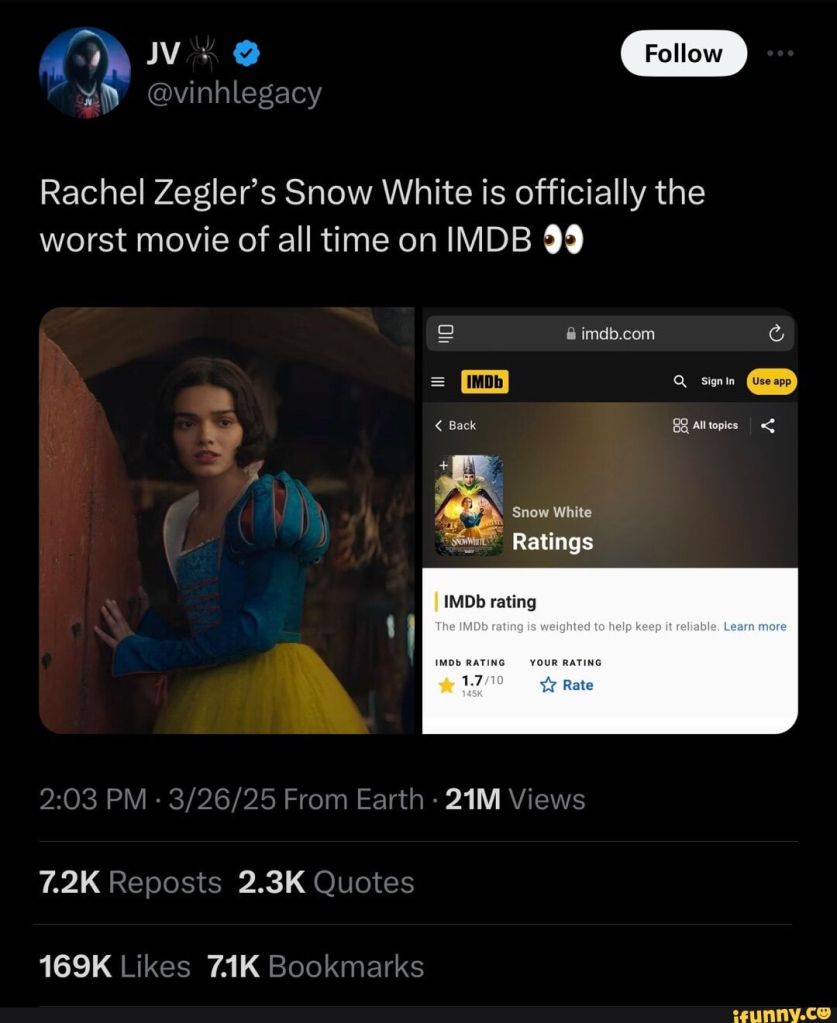
Ouch.

Oh well, at least even apologists for woke seem to understand that it is just bad. They did not even bother accusing the audience of being racist or misogynistic this time around.

Smash the Symbolism!

What is truly lost is the symbolic depth of the original tale. Snow White was beauty and purity contrasted with the vanity and evil of the obsessed queen. They gutted what made the Grimm tale a significant message about the triumph of innocence over the destructive power of pride. This, obviously, is too nuanced for a superficial sexual organ obsessed militant far-leftist to understand. The producers of the new film replaced purity of motive against cunning with a banal competition for power.

It’s not even moral inversion. They totally lost the point. It makes me think they lack any layers to their being. It’s all about their grievance and getting back at those they’ve scapegoated for their own misery. Like the evil queen, with all the power, they envy the beauty and peace of others and attempt to kill it with their poisoned apple. Snow Woke is the toxic fruit. Zegler is an icon of their privileged ‘diverse’ female with an entitled chip on her shoulder and not the slightest bit of appreciation for all the good men who made her ignorance possible.

This is not to say those who are fixated on the literal whiteness of the actress are any better. Grimm was not writing about racial supremacy anymore than woke supremecy, if anything the original story was about our transcending politics and Zegler would be perfectly suited for the role if she were able to embody that spirit. But our culture, in a desperate need of critique, it dichotomizes everything—divides the world into friend or foe, as if life is a zero-sum game and there is never anything to gain through fusion of opposites.

Zegler is as Puritanical (and Pharisaical) as a religious fundamentalist. She reframes a rescuing prince as a stalker and romance as weird. More rigid than a patriarch, more domineering than the system she is taught to loath. A preacher rather than an actual protagonist. Basically, a young idealist who wields her moral certainty with a convert’s passion, and yet stumbling into hypocrisy under scrutiny—reaping benefits of every institution she claims to reject.

The Female Power of Beauty, Gentleness and Grace

A few years ago, I was in the checkout line and suddenly noticed the cashier. She was beautiful, pale or ashen-faced, with hair that was jet black, pleasant smile and yet there was something uncanny valleyish about her appearance. I could not quite put my finger on it. But then she spoke. This would send a shiver through me. Never before did I have that sort of feeling simply by hearing someone talk. There was a certain quality to her voice that was almost child-like, soft, pure, and really threw me for a loop. And it occurred to me that this young woman was a real life Snow White.  I had not thought this would actually be attractive in person, but it had me momentarily smitten.

As it would turn out, in a later conversation, I learned she was mixed race, Filipino mom and dad of some kind of European descent, which is likely what gave her this stunningly feminine appearance. Now, no doubt this gentle exterior was cover over a tough and capable individual. She drove an old pickup truck and lived apart from her family with a sister, and may well have been a teenager or in her early twenties. In many ways she is like Zegler (who is herself a mix of Colombian and Polish heritage), but this real-life Snow White wielded her beauty, gentleness, and grace as a quiet strength that captivated without preaching, Zegler’s strident zeal turns a timeless tale into a soapbox, losing the feminine power of subtlety for a hollow shout of self-righteousness.

This is what outspoken angry feminists fail to grasp, forcefulness isn’t the only kind of power. My petite wife could never command me to do anything. I’m 50% bigger than her and have twice the upper body strength, I would shrug it off. But she does not need to force me to do anything. She overpowers me by other means. For example, early on, before we were married, she convinced me to stop drinking so much soda, she told me water is a symbol of her love “pure and clean” and when I drink it I could feel her love. I didn’t need to be told twice.

When I look at my baby daughter I would do anything for her. She’s so vulnerable—there is a strong desire to protect and defend her—I’m drawn, not compelled.

So what does female empowerment really mean?

Is it empowering to a fish to be out of the water?
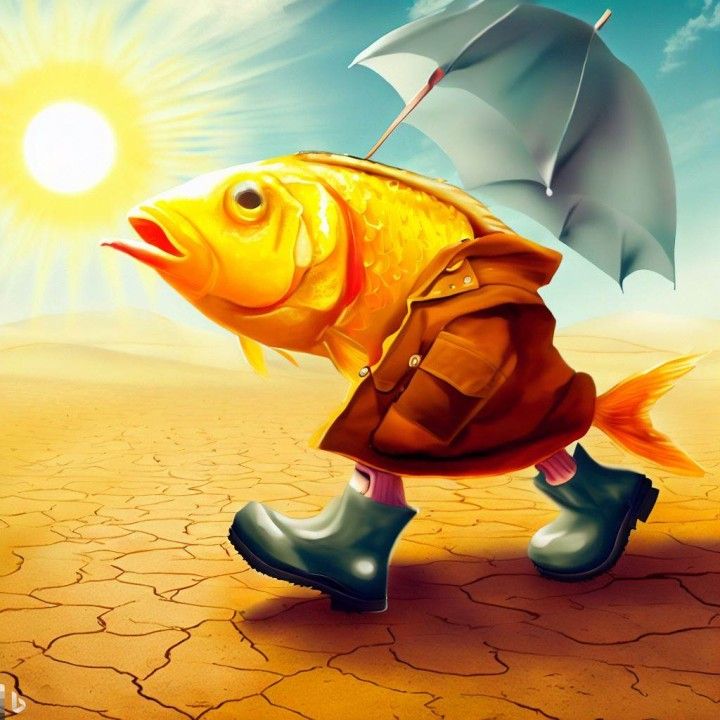
A visual representation of society telling individuals they need to be something else to be happy.

Humans are wired for their base biological and physical functions. Reproduction is a big part of this. It becomes clear after you see process through from courtship to baby in a carriage. Early in the pregnancy, given our financial goals, my wife had considered sending the yet to be both child to be raised by her mother. But as soon as the bundle of cuteness arrived, along with the appropriate hormones, it was never a question. Family is empowerment. My sacrifice, as a father, is more rewarding than the toys I could buy for myself as an independent bachelor.

We’re relational, not rational.

Therefore, the things we think will make us happy do not give us long-term fulfillment—the woke Zegler types are privileged, given preference as women or minorities, and yet always unhappy and looking at what others have and they do not. They are a paradox, enjoying female privilege—then miserable and wanting what men have.

It is toxic, it is their impurity of spirit, and it destroys their natural beauty and potential for true empowerment.

In all honesty, I don’t really have a problem with Zegler’s passion or outspokenness.  I guess I tend to prefer women with a real personality and feel she is right on the Gaza issue.  But what is wrong is that she’s not the right character to play what is supposed to be an embodiment of purity and the power of innocence against evil.  Snow White isn’t supposed to be Mockingjay or a story where physical force met with force—but of a different kind of power.

Ultimately, the 2025 Snow White stumbles not just as a film but as a misguided anthem, with Rachel Zegler’s shrill militancy drowning out the subtle power the Grimm tale once whispered. The original’s purity and even Disney’s 1937 grace knew strength isn’t loud—it’s captivating, like the cashier whose soft voice and uncanny beauty stopped me cold, a real-life Snow White wielding gentleness over force. My wife, too, overpowers me not with commands but with a love pure as water, turning a stubborn man into a willing protector, and just as our daughter’s vulnerability stirs my soul to shield her. Zegler’s remake, obsessed with preaching justice over enchantment, misses this: true feminine empowerment doesn’t need a megaphone or a militia—it’s the quiet, relational magic that binds us, a truth the poisoned apple of ‘Snow Woke’ chokes out, leaving a hollow echo where a fairytale’s heart once beat.

The Displaced Aggression Of Ruby Hamad  

Standard

As someone who prefers getting news from non-Western sources, I occasionally read Al Jazeera for some perspective, and that is how I came across an article, “Imane Khelif and Western delusions of white innocence” and had to hit back.  For the remainder of this blog, I will identify as a minority woman to obtain maximum victim points, and so I don’t need to pull my punches.

Editorials are often wild swings, some are so off-balance and contrived that they invite a counterpunch.  I had no idea who Ruby Hamad was.  But her profile reveals a Syrian-Lebanese woman obsessed with ‘white’ European women and how they are loved more than her.  She has made her name through her racist and misogynistic attacks on ‘white’ feminists.  It’s a little bit weird given how white she is.  But hatred is not always rational—she only has a platform because she helps ‘woke’ white leftists with their self-loathing.

In response to the recent outcry, about the two Olympic boxers who had previously failed their gender eligibility test, Hamad politicizes.  She rides on her favorite hobby horse—that being ‘white’ women—and she tries to reframe the discussion as being about the protection of ‘white’ women rather than a matter of maintaining integrity and fairness in the competition.

Now typically I’m sympathetic to those trying to break free of US hegemony and who are tired of their national stability and desire to self-govern being constantly undermined by US-led Western powers.  European colonizers are responsible for the current disorder in many parts of the world.  And, I also believe the Palestinian voice should be heard and that their innocent population should be protected by international law like any other occupied nation, and the killing of children and non-combatants in Gaza is horrendous.

Victims aren’t just Israeli — nor are ‘people of color’ the only ones who suffer injustice.

However, Hamad does exactly what those on the Zionist side do to Palestinians—with a broad swipe she tries to make all people in a place share guilt for what governments have done.  In essence, she has exactly the same attitude as Israeli spokespeople who claim that all in Gaza share in the blame for the Hamas incursion and—outraged that we care that Palestinian babies die—then turn the attention back to the suffering of their own people on October 7th. 

It is a whataboutism.  A deflection.  And doesn’t deal with the actual issue.

This does highlight one aspect of the controversy, that being the solidarity with the two athletes centers on racial or religious identity rather than their gender.  Those who most vehemently deny the complexity of the gender question are Arabs (or Taiwanese, in the case of Lin Yu-ting), which suggests their political partisanship and that the racial motivation is a projection that is entirely their own  Hamad believes that it must be about white women because this is how she thinks.  But it is really about how gender is defined to keep competition fair.

I guess Istanbul is now white?

Hamad flails in her attack.  She makes the row about the Italian boxer crying—which totally reinvents the chronology and ignores the reality of where it all started.  People had already been talking about the disqualifications of Khelif and Yu-ting, by the International Boxing Association because of failed gender tests.  It had nothing to do with how they looked, where they came from, or the race of the women pounded by them.  It is, rather, everything to do with alleged XY chromosomes and higher testosterone levels, and fairness to female athletes.

Guess which one is a woman of color?

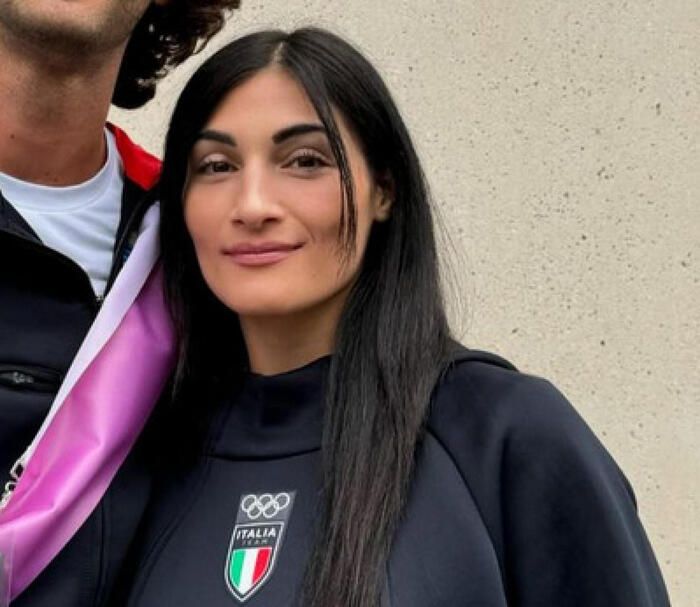
But the truth does not need to line up with her narrative.  An Italian woman, who has a darker complexion than Haman, is now made into the token example of “white woman tears” for being upset after a disappointing loss to a physically superior opponent.  Imagine that, someone who put an enormous amount of time into their sport, then forced to quit the fight after 46 seconds due to the strength of the blows that were landing, having very strong emotions…

Scandalous whiteness! 

Had silly Hamad spent 46 seconds thinking instead of trying to force the evidence to fit her own toxic ideology, you would have missed this rhetorical beat-down.

The biggest irony of this all is that Hamad is in complete alignment with the old imperial left—who, by far, are the most meddlesome of the political elements of the West both in the world and domestically with a constant barrage of moralizing emotive nonsense.  Like concern over ‘misgendering’ a trans ‘man’ who is competing as a woman and is born a woman at the same time they tell us we can’t question the gender on birth certificates or passports. 

The self-loathing face of white privilege.

It is truly only the privileged people who have the time to virtue signal and stir up division between people, the rest of us need to work and provide for our families—hoping these lunatics don’t start another war.

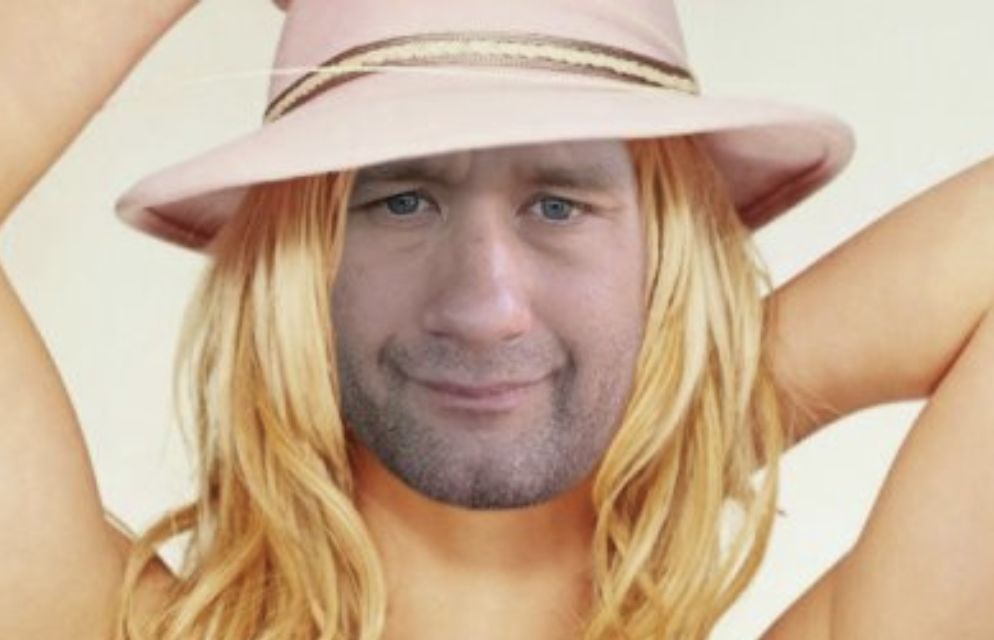
What makes this personal is I have a good friend who is Algerian and is one of the most beautifully feminine women I’ve ever met.  Had she not been a devout Muslim (who, unlike Khelif, wore the traditional dress which always included a Hajab) there may have been been good chance of a romantic relationship between us.  So this notion that European femininity is somehow different or more vulnerable is plain ridiculous.  Khelif is no more representative of Algerian or Arab femininity than I am Britney Spears.

Stunning and brave!

Ultimately this is all political.  Hamad does not care about boxing, certainly not things like safety or fairness.  She is just another myopic and mean-spirited partisan who only cares about injustice when it comes to her people.  She’ll never write an article about the Arab abuse of their foreign help (many of them vulnerable women of color) nor is she intellectually curious enough to know about the slave trade of Europeans (yes, many women) by Muslim Arabs who raided shipping and became enshrined in the anthem of the US Marine Corps: “To the shores of Tripoli.” 

Incidentally, the ‘Barbary’ pirates capturing US sailors for ransom led to the re-establishment of the Marines.  At the time, the US was not oriented towards global dominance and only started along that path of being a sea power because of this provocation.

Muslim Arabs, before they were conquered themselves, pillaged the Christian Middle East and subjugated all in their path.  No, this is to villainize them or say that ‘white’ is better.  What it is to say is that conquest is human and we’re all guilty of the best and the worst parts.  The only real difference between myself and the Hamad types is that I want to escape the tribalism of the past while she thrives on it.  I envision a world where everyone wins whereas she can only be happy when those who she declares “not white” rule.  She’s not truly anti-colonial, she is simply enraged that her own tribe lost the civilizational struggle to those she believes are inferiors.

In addition to this, she is like the angry PhD candidate, also from a Syrian background as I recall, and as vile as Hamad, who—despite a progressive feminist lean—was very racially prejudiced and to the point that she scorned me for my once having a black fiance—told me she would never go with a man who had been with a black woman.  This is what makes me amused when Hamad gestures towards the African American grievance.  Blacks may have been second class in the US, but they would be far worse off in the Arab world she represents.

The truth is that men beating women is as acceptable in Algeria as it is across Arab and Muslim regions.  I believe this is why intelligent women from these places have such cognitive dissonance.  They believe, on the one hand, this religious cultural identity makes them better.  But then, on the other hand, they’re also battered and afraid of the men in their own places.  They’re resentful.  They would love to be treated as a Western woman and protected.  This is why they want to see the women they envy to be hurt.  It is displaced aggression:

Displaced aggression is a statistically robust psychological phenomenon. It involves a specific form of attack prompted by rumination on anger-inducing experiences and/or revenge-related thoughts, which might lead to the expression of anger on innocent people. Often, victims of aggression will not seek to confront the actual source of aggression (the original provocateur), and instead bully subordinates in an effort to relieve themselves of the stress that they carry.

Incidentally, in a conversation with a black female neighbor, she described the toxic reality of the community she left and how much she loves to live amongst us ‘white’ rural people who encouraged her rather than trying to tear her down and ruthlessly compete.  Her mother, an alcoholic, used to deride her with the slur that she was ‘white’ for showing a little bit of ambition and self-respect.  This black woman wisely chose to bring her children to the safety of a community still governed by a culture of self-restraint and looking out for the vulnerable.

White women are targets of jealous rage.  Hamad would be better to acknowledge the true origin of her self-loathing and challenge the framing that makes her only care about the tears of those who look like her.

Hamad’s book “White Tears Brown Scars” is an attack on feminism and the West’s culture of protecting women.  She popularized the phrase “white women’s tears” as a way to downplay and dismiss the suffering and display of emotions by white women.  It is dehumanization.  Making her sexual rivals into manipulative animals that do not deserve our empathy or concern.  A license for calloused and cruel disregard in response to actual injustice.  What it really amounts to is an attempt to normalize the abuse of women who step out of line—which is allowed in the Islamic culture that produced Hamad. 

Ruby Hamad should clean up her own side of the street first before commenting on ours.

But I reject her, with her displaced aggression, because it is not okay for men to beat women—despite what her Syrian–Lebanese culture or the Quran says:

Men are in charge of women by [right of] what Allah has given one over the other and what they spend [for maintenance] from their wealth. So righteous women are devoutly obedient, guarding in [the husband’s] absence what Allah would have them guard. But those [wives] from whom you fear arrogance – [first] advise them; [then if they persist], forsake them in bed; and [finally], strike them. But if they obey you [once more], seek no means against them. Indeed, Allah is ever Exalted and Grand.

This is key to understanding the big difference in attitudes between Christian and Islamic traditions, I know the Old Testament treats women more as property of men—like the Quran—but the Gospel radically changed the conversation.  St Paul tells husbands to sacrifice themselves for their wives like Christ died for the Church. 

My wife tells me you couldn’t walk around in her home country like American women do, go out in revealing clothes, alone.  She claims men where she lives would take it as being an invitation for assault and they would likely find your body in the ditch.  If it is ‘white privilege’ or some form of imperialism for women to be able to stroll safely through their own community, then so be it.  I’m not going to apologize for valuing the tears of my wife, the woman I love, over Hamad’s bitterness about not being able to find a man like me.  I’m quite alright with a daughter who cries.

What Is a Woman?

Standard

Put away those pink vagina hats, feminists, 2017 might as well be 17 BC, this is the current year, now wearing such a monstrous thing on your head is a clear sign of bigotry and transphobia.  How would those ‘women’ with penises feel?  A pussyhat is worse than a Confederate battle flag or MAGA hat and completely insensitive.

Transphobic sign from 2017?

A decade ago answering the question of what a woman is would be easy for most people.  My mom is a woman.  That’s what we call the part of mankind that is able to give birth: A womb-man.  

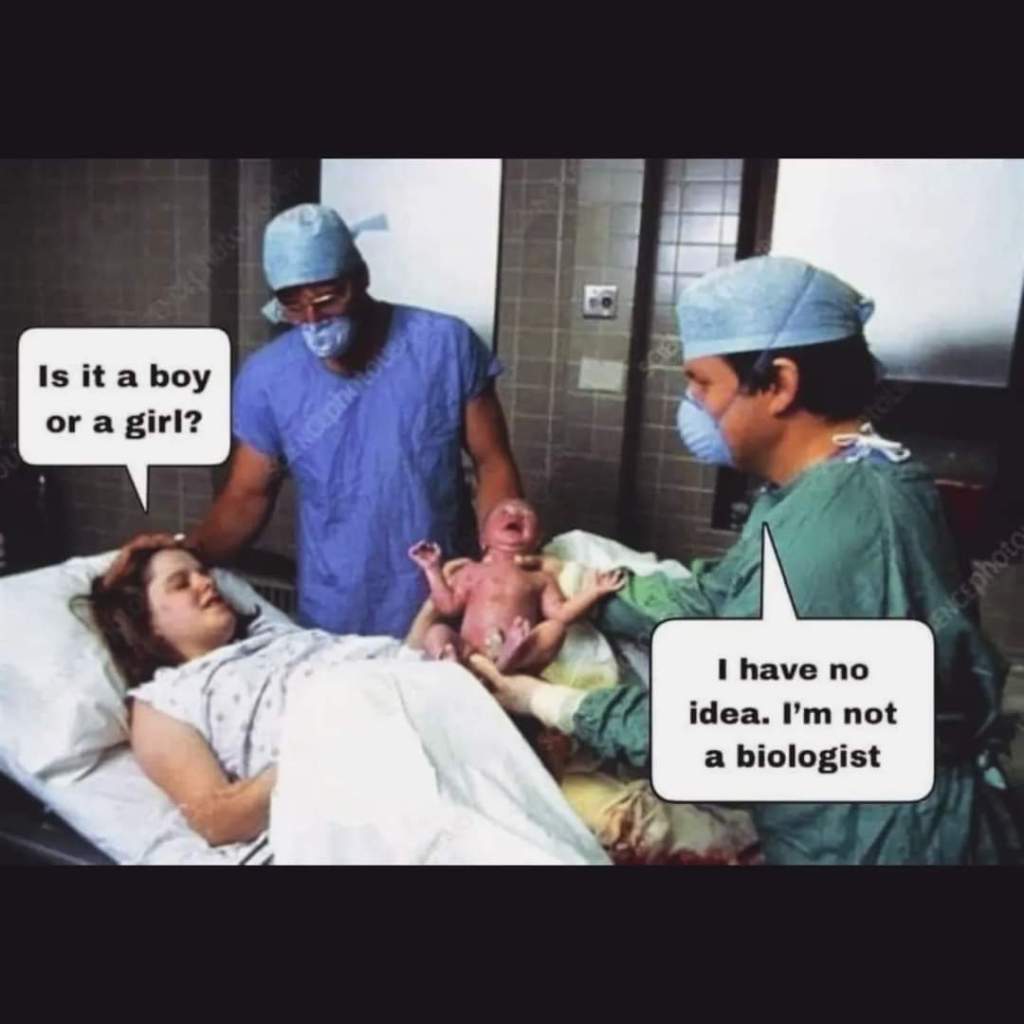
But, in the age of far-left ‘woke’ politics, this isn’t so easy anymore.  And this is the reason why, Ketanji Brown Jackson, a Supreme Court nominee, when asked, “Can you provide a definition for the word woman?” replied, “I can’t, not in this context, I’m not a biologist.”

Now, some are calling this question a trap, which it is.  It is a question intended to reveal the true character of Brown Jackson and it has.  Brown Jackson has shown herself as someone beholden to far-left extremism and unwilling to state a basic understanding that doesn’t need a biologist to get it right.

This is someone whom we are supposed to trust to make judgements on such matters, being interviewed for a job that is all about providing the final legal interpretations.  Will she also refuse to weigh in on the language of the law because she’s not one of the writers?  “I’m sorry, but I can’t rule on this, I didn’t write the Constitution.”

Alas, I think this is a selective lack of basic comprehension of what even children can figure out.  And we all know that it is not fair for a biological male to change his name, take some hormones, and then dominate women.  However, in the current ‘woke’ political paradigm one must pretend that a man competing as women is somehow stunning and brave.

The true irony of all this is that the pushers of the very same identity politics that moved Brown Jackson to the front of the line, which is completely about dividing people up into categories as a means to exploit their base tribal instincts, nominated someone who claims to suddenly be unable to distinguish women from men.

Man, I Feel Like A Women

And as far as the appeal to credentialism, I’m not sure any biologist would want to be declared to be transphobic and a bigot.  It would be a quick route to losing their job or funding, being cancelled, to risk offending the most powerful of marginalized.  Let’s hope this USA Today clip doesn’t represent a scientific community consensus or we’re in for a rough ride:


If this is indeed true, if there is “no sufficient way to clearly define what makes someone a woman,” then the solution to the alleged pay gap is to have more men identify as women, right?

If Jeff Bezos becomes Jen instead, would that be a huge victory for women?

Would it then be sexist to question the business practices of Amazon?

All of this is absurd.  A word that can’t be defined is meaningless.  We might as well remove it from the census form as it would be impractical to consult a biologist to help decide what gender we on a given day.  If it is that difficult to define woman, then we may all be women and who can say otherwise?  Who hasn’t sang along with Shania Twain, “Man, I feel like a woman”?

Transgenderism is truly a bigger threat to the special privileges of women than anything patriarchal.  It is essentially to say that the category does not exist, that anyone who identities as a woman can be a woman, and therefore all should have access to those spaces typically reserved for women.  Lia Thomas has arrived to erase the best efforts of women.

Loss of Meaning and Purpose

The one thing that is hard to define in this postmodern age, where a woman can’t even say what it actually means to be a woman, is our direction.  Even with the rejection of God and questioning of truth, a prior generation of academics and scientists could agree on basic definitions enough to advance.   

However, as this nihilistic deconstruction of meaning (and thus purpose) continued, as the very things that built civilization have become progressively eroded over time, it is become increasingly difficult to form a productive consensus.  If many can’t even be objective about gender and what it means to be a woman anymore, how will we decide anything if this goes further?

Language is becoming detached from the meaning.  This is a wedge driven by those perpetually stuck in dithering indecision, who are often insulated from real world consequences, who can afford to live in abstraction and denial.  But it is not sustainable, we can’t build strong and safe bridges while declaring engineering and mathematics to be racist. 

At some point there is reality, cold and harsh, that doesn’t care about our feelings.

Our elites are basically like those ridiculed for their debates about how many angels could dance on the head of a needle.  They have become totally impractical, useless as far as executive decision making and a real threat to social order.  Those unable to settle any matter definitively, let alone those truly more complex and nuanced, can’t build a future together.

It is a luxury, the ultimate privilege, to never have to define or decide anything and still be able to live.

The guy, trying to impress his date with his wokeness beside me, doesn’t actually live by the dogmas he is spouting, he can yammer on endlessly about his theories, but to sustain a relationship he’s going to have to make a commitment to something, eventually, or no woman will keep him around for long.

The Feminist Plot Twist

Standard

My grandma, a firstborn (and her mother as well), I’ll always remember her as my fierce defender, giving grandpa a sharp rebuke after I came in crying having crossed gardening implements with him while defending an unauthorized dam project. She wielded her matriarchal authority well, always able to stand up to grandpa as need be and yet never in a demeaning or inappropriate way.

My mother, also a firstborn in her family, was always willing and able to plot her own course. She sent us to public school, after stopping in at a local Elementary school and feeling comfortable with the staff there, which is unusual in conservative Mennonite circles where everyone else was fleeing to the safe spaces of parochial and home school alternatives. She taught us to think and now, as a grandma, has helped to start a medical clinic, which she currently manages.

My eldest sister, a firstborn, was a trailblazer. To pursue her childhood dream of being a medical doctor, faced a strong headwind of conservative Mennonite cultural ideas as to the appropriate role of women. She was always an overachiever, set the bar impossibly high for me, she was all-state violin, she finished in the top tier of her class and did this as the child of two high school dropouts. Her academic success continued throughout her university years and into medical school. She now runs a pediatric clinic for Amish children with genetic disorders.

My little sister continues to impress. She has always been her own person, able to hold her own with three older siblings, and has also progressed with her own education. She’s a registered nurse and, more recently, a certified midwife. Petite and pretty, as she is, she is quite capable of speaking her mind and has always kept me honest in any kind of intellectual discussion. She is both sensitive and practical, feminine and fearless or at least she’s not afraid of snakes like I am.

The point is, I have always been surrounded by strong and independent women. Sure, my grandma, my mother, and both sisters (at least through their time in school) all dressed according to conservative Mennonite religious/cultural tradition. But this outward appearance did not mean they were oppressed, the women in my life would never allow it, and that’s how it should be.

Women Should Be Given Special Protection

One of the results of feminist backlash against patriarchal abuse is the idea that the differences between men and women are entirely a social construct rather than something of nature. Of course, this is in defiance of science and things that are easily observed. Men and women are physically different, that’s how we make the distinction at birth, and also slightly different in our natural programming.

Sure, not every woman wants a pink ribbon in her hair. We’re all unique individuals. And, absolutely, women can do the same mental and basic physical tasks as men. Women can be engineers, men can be hairdressers, and there’s nothing at all wrong with those who go against gender stereotypes. But, generally, when women are allowed to be women, and men are allowed to be men, there are distinct tendencies that emerge.

There is social conditioning or expectations pertaining to gender and yet it isn’t all a construct. Consider the fact that female athletes suffer more injuries, like ACL tears, due to their physiology or hormonal differences. Men do tend to be physically bigger. Women are also capable of doing something that a man can’t do. Women are generally better at some things and men are better at other things. It’s just our biology at work.

For this reason, absolute equality is not ideal. Female athletes may complain about unequal pay and yet none would want to compete on an equal field against men. Men would completely dominate female sports. There is no woman out there that would be able to beat the most elite men for their positions in professional or even collegiate sports. Take the UPenn swimmer who now identifies as a woman, allowed to compete in the NCAA women’s competition despite being born with male genitalia and competing as a man only a few years ago, who is now crushing women’s records.

Even on hormones, male genetics is an unfair advantage.

And that’s exactly why we have separate leagues for men and women.

I haven’t heard anyone say that the very existence of the WNBA is patriarchal and should be abolished in the name of equality, have you?

Women should be given special accommodations. They do have to contend with a different set of circumstances from men and thus should therefore be privileged in some situations. That’s why we have separate sports leagues, restroom facilities, among other things, to allow fairer competition, greater safety, and simply more opportunity for women. Protecting women is a matter of survival for the species.

The ‘Birkenhead Drill’ (otherwise known as “women and children first“) refers back to a tragic incident in 1852. The H.M.S. Birkenhead, a Royal Navy troopship, was sailing around the horn of Africa with 634 souls on board and collided with uncharted rocks. It began to take on water and was doomed to sink. In the chaos, where it was discovered that many of the lifeboats on the ship were unusable, the seven women and thirteen children were loaded onto the few functional emergency craft and lowered into the sea.

Originally the idea would have been to allow the men to jump overboard. However, anticipating that this might imperil the boats in the water, the commanding officer ordered his troops to “stand fast” rather than jump in, which they did—as the ship split in two and went under the waves they stood like good soldiers. This act of self-sacrificial courage does not make sense in an economy where all are equal. Why should these men have been expected to give their own lives for sake of women and children?

But the answer is quite simple. Both the womb and youthfulness represent the greater potential for our species. It is simply for sake of our collective survival, so that there is a next-generation to follow, that in these dire circumstances men instinctively know who is most valuable (usually of their own clan) and act accordingly. And thus, when there is no other way, a handful of women and children do indeed become worth the lives of hundreds of men. It’s a privilege of being a woman.

Statistical Disparities and Oversimplification

I have a new coworker. Other than experience, his qualifications are similar to my own and we perform many of the same tasks. I’m not actually sure what he gets paid, although I do know that it is probably different from the compensation that I receive. It could be more, could be less.

If it would turn out that this new colleague gets paid more than I do could we assume the reason?

Is it because he is taller than me?

Statistics do show that taller men, amongst the many privileges they have, do earn more on average than shorter men. This would make my pay deficit seem like an open and shut case of height discrimination, right? Except, it is not. There is a multitude of reasons why one employee could receive better compensation than another. Maybe he put more hours in? Perhaps he is better at negotiating in the hiring process? I mean, his height could help, who knows? But it is not a certainty and we would have to look into more variables before drawing our conclusions.

Unfortunately, when it comes to similar disparities elsewhere, like the differences in outcomes between genders, many will neglect multi-variant analysis and lock onto the most simplistic explanation. Relevant to this blog, if there aren’t as many female scientists, or there appears to be a pay gap between men and women, then this must be some sort of systemic bias against women, right? I mean, what else could it possibly be?

Of course, the possibilities are endless. No two jobs or people are alike. Assuming gender discrimination also neglects the possibility that most women may (for a variety of good reasons) choose to work fewer hours, be less assertive, or interested in promotion on average, than men with the same titles. I mean, perhaps there is more to their life than earning a paycheck? And, for the same reason, the lifestyle, most men wouldn’t truly want to be a CEO. A more demanding higher paying job simply is not desirable to most people.

Besides, there are other ways to gain wealth that doesn’t involve punching a time card. We often hear how women earn less. And yet somehow, despite this, women also make more consumer decisions and spend more than men. How are both of these things possible? Well, simply, there are other ways of obtaining resources other than going to the office. The wives of Jeff Bezos and Bill Gates, for example, did not become wealthy by their own market innovations or CEO-level workaholism.

Statistics show that women earn more college degrees, is that a result of systemic anti-male discrimination?

Equal Opportunity, Not Outcomes

A woman who wants a career should not be hindered. I believe that all people should be free to pursue what they see as best for them. There are women who are brilliant mathematicians, engineers, and scientists, they should be allowed to pursue an education and compete for employment like a man. That’s truly equal opportunity and fair.

What’s not fair is when institutions begin lowering standards to meet diversity quotas. Not only does that cheat those who are actually qualified and had to meet the higher requirements, but it will also produce a stigma that disqualifies the achievement of even for those who truly did earn their positions. The sad irony of a “diversity hire” (when someone gets the job because of their genitalia, skin color, or anything else not actually related to the work needing to be done) is that it only reinforces the negative stereotypes.

Not everyone is cut out to be an Olympic gymnast. It would make no sense to replace Simone Biles with a slightly overweight middle-aged male and, for the same reason, it is absolutely absurd to lower physical standards for sake of opening spots for women who would not qualify otherwise. It is not fair to individuals nor beneficial to the collective society to give some a free pass. Equality of effort and qualifications is as important as equality of opportunity, but equality of outcomes is impossible. I’m never going to land a triple-twisting double somersault. Ever. And that’s not because the system is stacked against me.

Differences in ability should not be thought of as being less valuable. Some can dance, others can carry a rucksack for twelve miles, I’m pretty sure I’m not up to either task at the moment, but I am a good friend and decent writer. None of those things are worth much in terms of monetary wealth and yet all things fulfilling in their own way. So who decides what is or is not valuable again? And is money truly the measure of value?

Money and Masculine Qualities Are Overvalued

One of the biggest lies of our time is that value is something that is measured in dollars and cents. I mean, sure, we need money to buy stuff and therefore the ability to obtain this resource is important. And yet there are many extremely wealthy and completely unhappy people. A big bank account does not provide the security, nor the sense of purpose in this world, that many seem to believe it will.

For that reason, it is sad to me to see so many people, women in particular, who seem to think that the rat race is what life is truly about. Modern parents seem to have decided the things they can provide are more important than their time together and shunt their children to daycare. It is unnatural, dare I say unhealthy (in that it robs children of a safe space) to outsource the next generation to low-wage workers. How did we get to this point where we would rather put our best efforts in for corporations, and those who would replace us in a second, over our own future?

Somehow we have become convinced that masculine interests and abilities are superior. The one thing that women can do, that is carry a child in their womb, is treated as something unimportant or second-rate rather than as the most wonderful of things. Our forebears were wiser, they understood what “the hand that rocks the cradle is the hand the rules the world” and the incredible power of the nurturing mother. But, now, instead of men and women complementing each other, working to their own strengths, and being valued for unique their roles, we have them competing for the same spot.

Who sold us this bill of goods and why?

Without a doubt, women have faced patriarchal abuse and discrimination. But is the answer really to this really to measure success in terms of career and raw income earning potential? Is it really empowering women to tell them that their own unique abilities, as women, do not matter and political power is everything? I mean, it’s a lie. I have no deep love for any politician out there, not even those I’ve voted for, but have endless appreciation for my mother and would die for Charlotte. This idea that somehow money and political power are everything is cancer.

The Feminist Plot Twist

Feminism is a term invented by a man, Charles Fourier, trying to enlist women to his utopian socialist political cause. To use people politically, one divides them up into competing identity groups, feeds their discontentment, tells them they would be better-if [insert simplistic political solution to complex issue] and then can pretty much steer the resulting angry mob where ever they need it to be.

The problem with political ideologies is that they externalize responsibility for our happiness. In other words, it is an idea that if only an external obstacle, like the patriarchy, were removed (through political action) then we would finally have that wonderful life we hoped for. This is not empowering. Perpetual victimhood or continual discontentment due to external circumstances is the most debilitating of human conditions.

Women are less happy today than they were in the ‘patriarchal’ past.

Furthermore, it is always false hope, intentionally so, because the ‘revolution’ must always be ongoing, the war against “toxic masculinity” or whatever scary new Boogeyman they come up with can’t end. Your happiness is always in the future and completely depends on the leaders of the movement. The solution will always be out there. It is a promise to keep you pulling the ideological cart they’ve concocted and never leads to your true empowerment.

There will always be things unfair or outside of our control. I’m not a woman, I’ll never be a woman, but I do know that all my complaints about height discrimination and the invisible barrier to my own success never got me anywhere. And truly, once disappointment festered and self-pity took root, I could’ve had all the opportunity, all the money or power imaginable, everything that I had ever craved thinking it would bring fulfillment and still not found a source of happiness.

Contentment is an inner state, a spiritual manifestation, and not a matter of external circumstances. The problem with feminism is the problem with any political ideology and that is that it will never bring fulfillment or happiness. Women have gained voting rights, a higher percentage of women graduated college than men, and yet are more unhappy than ever despite this century of feminist progress.

Could it be that a truly empowered person (male or female) is one that doesn’t measure their own success by how they compare to others?

Could it be that fulfillment comes from losing ourselves, our competing identities, in the service of others, and something greater than our gender?

Contentment is strength, giving is empowered

The feminist plot twist is that the ideology serves those who don’t truly want strong women and merely use discontentment for their own political gain. Women are simply another pawn to thrown at their ideological enemies and only appreciated when they’re useful to their socialist masters. It is worse than patriarchalism because it has convinced many women that their unique abilities are worthless and being more like a man will bring happiness. It has not and will never empower women.

Let the Seed Fall!

Standard

Some might wonder why I have such a visceral reaction to wokeism.  I have written a few no holds barred blogs trying to warn people of what this is and where it invariably leads.  But each time I write it feels as if my concern is not well-explained.  I mean, I know some probably read and ask, “why is Joel attacking these well-intentioned people?”

However, I’m having a moment of clarity and therefore will try to expound on why it is absolutely necessary to shock people out of their stupor.  The reality is that wokeism (or grievance culture) and religious purity culture are two branches off of the same tree.  Both patriarchal conservative men and those angry pink-haired feminists are trying to create a world without suffering.  Both, tragically, create more problems than they solve.

First, what is purity culture?  

As I experienced it, in the conservative Mennonite context, it was a branch of Biblical fundamentalism (Protestantism) that had been grafted in to the Anabaptist tree.  It was a legalistic perspective.  The pure life was to avoid vice (no drinking, dancing, going to movies, etc) and remain completely a virgin until marriage.  It is not that the aim is entirely bad, but there was also a lack of grace accompanying this perspective.

In other words, there was no room for failure.  It a hellscape of unchecked perfectionist tendencies.  People who should be diagnosed as having obsessive compulsive disorder (OCD), along with other mental illness, viewed as being virtuous.  And the rest of us struggling to meet an unreasonable standard without the actual spiritual help we needed.  

For example, girls who thought they were ‘defiled’ for simply talking to a guy that they didn’t intend to marry.  And heaven forbid you did date and break-up.  Then you were damaged goods.  Cursed to walk the earth, like Cain, a stigma tattooed to your chest, a scarlet letter.  

To those steeped in this religious purity culture it was about saving the next generation.  It was a reaction to a world of promiscuity and failed commitments have produced far-reaching consequences.  And yet, while it does work for some, those who check all the right boxes, it permanently marginalize others and gives them no real road to redemption.  Divorced and remarried?  Tough luck, you’ll need to break up that successful loving family to become a Mennonite.

That’s the purity culture I know all too well and, for reasons I’ll get to later, have fully rejected as being unChrist-like and spiritually void.

Wokeism, despite the vast difference in appearance to what I’ve described above, is another subset of purity culture.  It is a reaction to the ‘privilege’ of those who better represent the cultural ideal.  It is another form of utopian idealism.  

Whereas the latter religious variety of purity culture believes that if their children only kiss one person, never experience the pain or disappointment of a break-up, then heaven will come to earth—the ‘woke, by contrast, believe that if everyone was forced to tolerate their ugliness and embrace their toxic grievance; if they could live free of further offense, then they would be fulfilled.  

Both forms of purity culture are offshoots of Western values.  They both see suffering as a flaw in the system and try to eradicate it through their own means.  And they do have their valid points.  No, the girl, the victim of sexual abuse, who (because of her loss of self-worth) goes from one guy to the next, should not be called a slut.  But, that said, nor should her unhealthy coping behavior be normalized.  Instead, we should stop seeing people as damaged goods because they failed to reach some sort of phony cultural ideal.

The truth is, the woke, as much as they attack whiteness.  Or the feminist who acts aggressively and looks to a career as being freedom.  The patriarchal father, as much as he claims to be protecting.  Are all the thing that they despise most.  Religious purity culture, sadly, is hypersexual in focus and produces conflicted men like Bill Gothard, Doug Philips and Josh Duggar.  Feminism amounts to a form of female self-loathing that unwittingly idealizes the male role.  And so-called social justice is simply a means to manipulate and enslave another group of people.

All of them assume that if a person could simply avoid pain and bad experience they would find their completeness.  All seek a kind of perfection outside of Christ and very quickly, despite their wonderful intentions, turn into a dystopian hell.  

What is wrong is this idea that pain us is less for our good than pleasure.  The religious, ignoring the lesson of Job, neglecting what Jesus said about the tower tower of Siloam or the man blind from birth, see suffering as a sign of God’s displeasure and a punishment.  Likewise, the woke want to be embraced without repentance, if they would simply be called clean then they could finally escape their terrible anguish, right?

The truth is, bad experience is part of life and as beneficial as the good.  Growing up in a single parent home can be an excuse or a motivation to do better.

This is what makes the story of Jesus so compelling.  Unlike us, he was completely innocent, his intentions were pure and should have been loved by all.  But, instead of embrace him, his own people saw him as a threat, he would undermine their system and perspective, show them for what they were, thus had to be eliminated.  That he was executed with criminals would seem like a humiliating defeat.  He suffered and died for what?

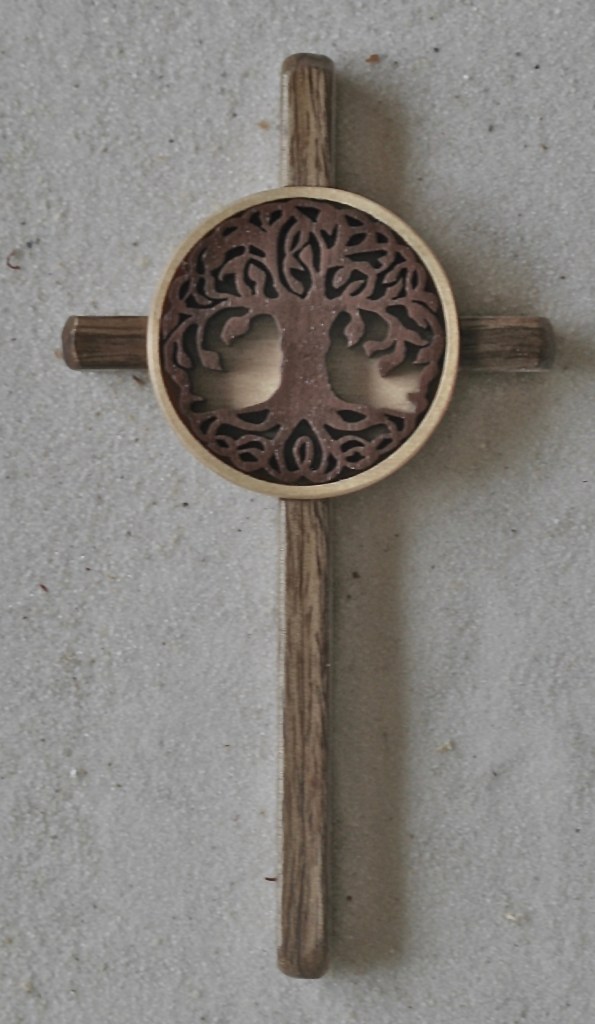
The tree of life.

However, it was in this suffering that salvation came.  Sure, the burden of the cross comes with anguish.  We would rather seek pleasure and avoid pain.  However, in Jesus, the cross is transformed from being a brutal instrument of death into a well of eternal life.  How?  It is in the same way that a seed falls to the ground, is buried and leads to new life.  

Why would we cling to the seed or refuse to let it be buried and prevent the tree?

The overprotectiveness of religious purity culture, the refusal to acknowledge our brokenness and need of transformation of wokeism, both try to find salvation by human means.  One seeks to impress God, like the rich young ruler or proud Pharisee, whereas the other (like Cain) demands that God accept their unworthy sacrifice and then murders their righteous brothers.  Both need Jesus.

The wonderful cross

In conclusion. We’re all damaged goods and can be made more beautiful than ever through repentance. Jesus can make our pain as much a joy as our pleasure.

Blessed Are the Meek

Standard

The word “gentleman” once described someone of noble birth, a man of the gentry, and thus one of good manners. Today the term is used for any man who is courteous, especially to women, and generally conducts himself well.

The alternative to gentleman?

I suppose it could be feral masculinity, an undomesticated man, a man who uses his superior strength only to his own personal advantage and is unconcerned about the good others?

But then again, a gentleman is not a man who is lacking in animal strength or incapable of doing selfish or violent and evil things. Rather, a gentleman is someone who decided not to be governed by their animal instincts and despite being strong enough to acquire what they want through force.

A young André the Giant

A gentleman is not someone without animal instincts and strength. Rather, a gentleman is a man of inner strength, one who uses this spiritual fortitude to hold back those urges to use his physical, intellectual or other carnal strength to dominate others.

The Dominion of the Weak

We live in absurd times, cartoonish actually, where self-designated victims use shame to leverage a social advantage and yet are not called out for this bullying behavior. The victimhood narrative, ironically, has become a tool of oppression and only works because most of the ‘privileged’ people are too polite to stand up to it.

In fact, gentlemanly behavior, like opening a door for someone else, can lead to accusations of oppression.

Umm, no?

And, that’s not to say that some gentlemanly behavior is inauthentic and merely a means of some men to manipulate women. Many have learned to “play nice” simply as a method of gaining advantage for themselves. Their polite public behavior is a social tool and their true colors come out when they finally get what they want. These are not true gentlemen, but are weak-minded opportunists in a gentlemanly guise.

It would be better that the fakers would dispense with the pretense. And, with the rise of feminism, many of these weak men do the same thing, giving up the mask of traditional gentlemanly behavior, and use the new guise of ‘woke’ politics instead. This “wokefishing” enables them to get in the pants of unsuspecting ‘progressive’ counterparts and has been the subject of some online outrage.

It is quite similar to those who use a false minority status, like Rachel Dolezal, Jessica Krug, and Elizabeth Warren, as a means to gain an economic or social advantage. Being oppressed is not what it once was. Identity politics is extremely lucrative for those able to exploit it. It actually means special treatment, a fast-tracked educational or political career without the normal merit based requirements.

In the current paradigm women and minorities enjoy both the benefits of traditional Christian cultural values, of care for the poor and protection of the week, while also browbeating those who provide those things. The odd part is that true toxic masculinity, cultures that objectify women and give them a decidedly second tier status, is now given a free pass by also claiming for themselves that coveted victimhood status.

President Trump can be cast as the victim. As can Vice-Presidential candidate, Kamala Harris, by those turning normal debate interruptions into some kind of affront to minority women. In both cases, by traditional standards, these personalities would be proving themselves unworthy of a leadership role. But when the oppressed rule a person can play victim and still exercise dominion over others.

Politics is a domain for the weak and shortsighted, not the meek and eternally minded…

The Meek Shall Inherit the Earth

For years my understanding of meekness was off a little. I may have taken it to be a sort of spiritualized synonym to weakness. In other words, a weak person who keeps their head low and accepts their place of inferior status. The word, in my religious upbringing, was often used in reference to women by those quoting Saint Peter:

Likewise, ye wives, be in subjection to your own husbands; that, if any obey not the word, they also may without the word be won by the conversation of the wives; While they behold your chaste conversation coupled with fear. Whose adorning let it not be that outward adorning of plaiting the hair, and of wearing of gold, or of putting on of apparel; But let it be the hidden man of the heart, in that which is not corruptible, even the ornament of a meek and quiet spirit, which is in the sight of God of great price.

(1 Peter 3:1‭-‬4 KJV)

To many in my past that passage is roughly translated as “do not stand up to patriarchal abuse or we will brand you as a Jezebel.” To them it is a woman’s place to accept a sort of secondary status and these truly weak men, like the first Adam, are constantly blaming woman for their own moral failures. They want the respect of a leader while simultaneously being unwilling to take responsibility or sacrifice themselves.

However, these phony self-serving patriarchs should have continued reading, meekness and falling under authority is not only for women, this is addressed to all:

But sanctify the Lord God in your hearts: and be ready always to give an answer to every man that asketh you a reason of the hope that is in you with meekness and fear: Having a good conscience; that, whereas they speak evil of you, as of evildoers, they may be ashamed that falsely accuse your good conversation in Christ.

(1 Peter 3:15‭-‬16 KJV)

A man who does not fall under authority, who does not lead with a meek and respectful spirit, no matter what he claims to be, is not a Christian leader. A Christian leader follows after the example of Christ Jesus who, in meekness, took the sins of the world on his own shoulders, suffered and died. He was willing to be mistreated and humiliated, not only for sake of his disciples, but also (and perhaps especially) for his abusers.

John Coffey (Michael Clarke Duncan), in “Green Mile,” a picture of meekness?

Only the truly strong can be meek. A weak person uses all means to gain political or social advantage, including a claimed inferior victim status, whereas the meek subject themselves willingly to the good of the other. A weak person uses their strength to dominate, the meek person uses their strength to serve and protect. In other words, to be meek means having strength or something to give. Meekness is a synonym for gentleness, not weakness, and a posture that one of strong faith chooses to take:

“Blessed are the meek: for they shall inherit the earth.”

Matthew 5:5