Perspectives, Not Truth: Why Our Moral Codes Are Always Incomplete

Standard

Everything we hear is an opinion, not a fact. Everything we see is a perspective, not the truth.

Marcus Aurelius

I will attempt to bring multiple threads together in this blog and the quote above is a good starting point. If there is objective reality it’s not going to be something possessed by one human. We do not know all circumstances nor can we vet and independently verify every fact we receive.  Or at least not without becoming totally hamstrung by the details. We put our trust in parties, traditions, systems, credentials and the logic which makes sense to us.

The deeper we dive into our physical reality the murkier it all gets. The world ‘above’ that we encounter feels concrete. But there is not a whole lot of substance to be found as we get beneath the surface. The rules that we discovered—of time and space—end up dissolving into a sea of probabilities and paradoxes at a quantum level that we don’t have an answer to. And this is the ‘concrete’ observable reality. We all see our own unique perspective, a slice, and build our model of the world from it.

But it is even murkier when we get to topics of social science. Morality and ethics, built often from what we believe is fact or truth, is more simply opinion and perspective than it can be hammered out in words everyone is able to agree on. Even for those who are of the same foundational religious assumptions—despite even having the same source texts—do not agree on matters of interpretation or application. So who is right? And who is wrong? How do we decide?

1) Patrick: We Don’t Need God To Be Moral

My cousin, Patrick, a taller, better looking and more educated version of myself, an independent thinker, and has departed from his missionary upbringing—gives this great little presentation: “Where Do You Get Your Morality?

His foundation for a moral value system is concepts of truth, freedom and love which he describes in the video. I find it to be compelling and compatible with my own basic views. Our cooperation is as natural as competition, it is what makes us human, and a conscience gives potential for better returns.

However, while I agree with his ideal, there is also reason why deception, tyranny and indifference are as common in the world—they are natural—and this is because it can give one person or tribe an advantage. Lies, scams, and political propaganda all exploit trust and can be a shortcut for gaining higher status or more access.

No, cheating doesn’t serve everyone. But the lion has no reason to regret taking down a slow gazelle. By removing the weak, sick, or injured, it inadvertently culls the less-fit genes from the herd, strengthening the prey population over time and even preventing overgrazing of the savannah. It’s just a raw service to ecosystem balance, much like a short seller who exposes those overvalued stocks, forcing the market corrections and greater efficiency—acts of pure self-interest yielding a broader good.


Herd cooperation or predator opportunism are different strategies, both 100% natural and amoral in their own context. I’m neither psychopath nor a cannibal, but I do suspect those who are those things would as readily rationalize their own drives and proclivities. Nature doesn’t come with a rulebook—only consequences.

I’m certainly not a fan of the “might makes right” way of thinking and that is because my morality and ethics originate from the perspective being disadvantaged. But I also understand why those who never struggled and who have the power to impose their own will without fear of facing any consequences often develop a different moral framework.

We need to be invested in the same moral and civilizational project. Or else logic, that works for only some who have the strength or propaganda tools, will rule by default. I don’t disagree with Patrick, but his core message caters to a high IQ and high empathy crowd—which does leave me wondering how we can bring everyone else on board?

2) Kirk: A Way To Focus Our Moral Efforts

Charlie Kirk wasn’t a significant figure to me before his death. It may be a generational thing or just a general lack of interest in the whole conservative influencer crowd. I feel dumber any time I listen to Steven Crowder and assumed Kirk was just another one of the partisan bomb throwers. But, from my exposure to his content since, I have gained some appreciation.

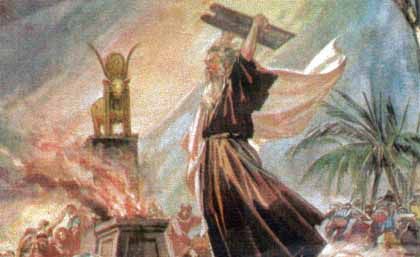
Arguing for the Ten Commandments has never been a priority for me. It’s a list with a context and not standalone. Nevertheless it is a starting point for a moral discussion and also one that it seems Charlie Kirk would go to frequently in his campus debates.  The two most difficult of these laws to explain to a religious skeptic are certainly the first two: “I am the Lord your God; Have no other gods before me and do not make idols.”

We generally agree on prohibition of murder and theft, or even adultery, but will disagree on one lawgiver and judge.

Why?

Well, it is simply because divine entity is abstract compared to things we have experienced—like the murder of a loved one or something being stolen from us. You just know this is wrong based on how it makes you feel. The belief in celestial being beyond human sight or comprehension just does not hit the same way as events we have observed. And it’s also the baggage the concept of a God carries in the current age. I mean, whose God?

It seems to be much easier just to agree the lowest common denominator: Don’t do bad things to other people.

But then we don’t. We justify killing others if it suits our political agenda, labeling people as bad for doing what we would do if facing a similar threat to our rights. If I’ve learned one thing it is that people always find creative ways to justify themselves while condemning the other side for even fighting back against an act of aggression.

Self-proclaimed good people do very bad things to good people. Like most people see themselves as above average drivers (not mathematically possible), we tend to distort things in favor of ourselves. Fundamental attribution error means we excuse our own compromises as a result of circumstances while we assume an immutable character flaw when others violate us. We might be half decent at applying morality to others—but exempt ourselves and our own.

So morality needs a focal point beyond us as individuals. There must be a universal or common good. Which might be the value of a theoretical ‘other’ who observes from a detached and perfectly unprejudiced point, the ideal judge. Not as a placeholder, but as the ultimate aim of humanity. One God. One truth. One justice. This as the answer to double standards, selective outrage and partisan bias. If we’re all seeking the same thing there is greater potential of harmony and social cohesion where all benefit.

At very least it would be good to promote an idea of an ultimate consequence giver that can’t be bought or bribed.

3) The Good, the Bad and the Aim for What Is Practically Impossible

The devil is always in the details. And the whole point of government is to mediate in this regard. Unfortunately, government, like all institutions, is merely a tool and tools are only as good as the hands that are making a use of them. A hammer is usually used to build things, but can also be used to bash in a skull. Likewise, we can come up with that moral system and yet even the best formed legal code or enforcement mechanism can be twisted—definitions beaten into what the current ruling regime needs.

The United States of America started with a declaration including the words “all men are created equal” and a Constitution with that starts: “We the people…” This is reflection of the Christian rejection of favoritism and St. Paul telling the faithful “there is no Jew or Greek” or erasing the supremacy claims of some. An elite declaring themselves to be exempted or specially chosen by God is not compatible with this vision. We never ask a chicken for consent what we take the eggs. We do not extend rights to those who we consider to be inferior to us or less than human. Human rights hinge on respect for the other that transcends politics.

That’s where the labels come in. If we call someone a Nazi, illegal, MAGAt, leftist or a Goyim we are saying that they are less than human and don’t deserve rights. This is the tribal and identity politics baseline. Those in the out-group are excluded for decency, their deaths celebrated as justice (even if there’s no due process) and we’ll excuse or privilege our own. All sides of the partisan divide do this—we create a reason to deny rights to others often using things like truth, freedom and love (Patrick’s foundation) as our justification: “Those terrorists hate our freedom and democracy, we must fight for those we love and our truth!”

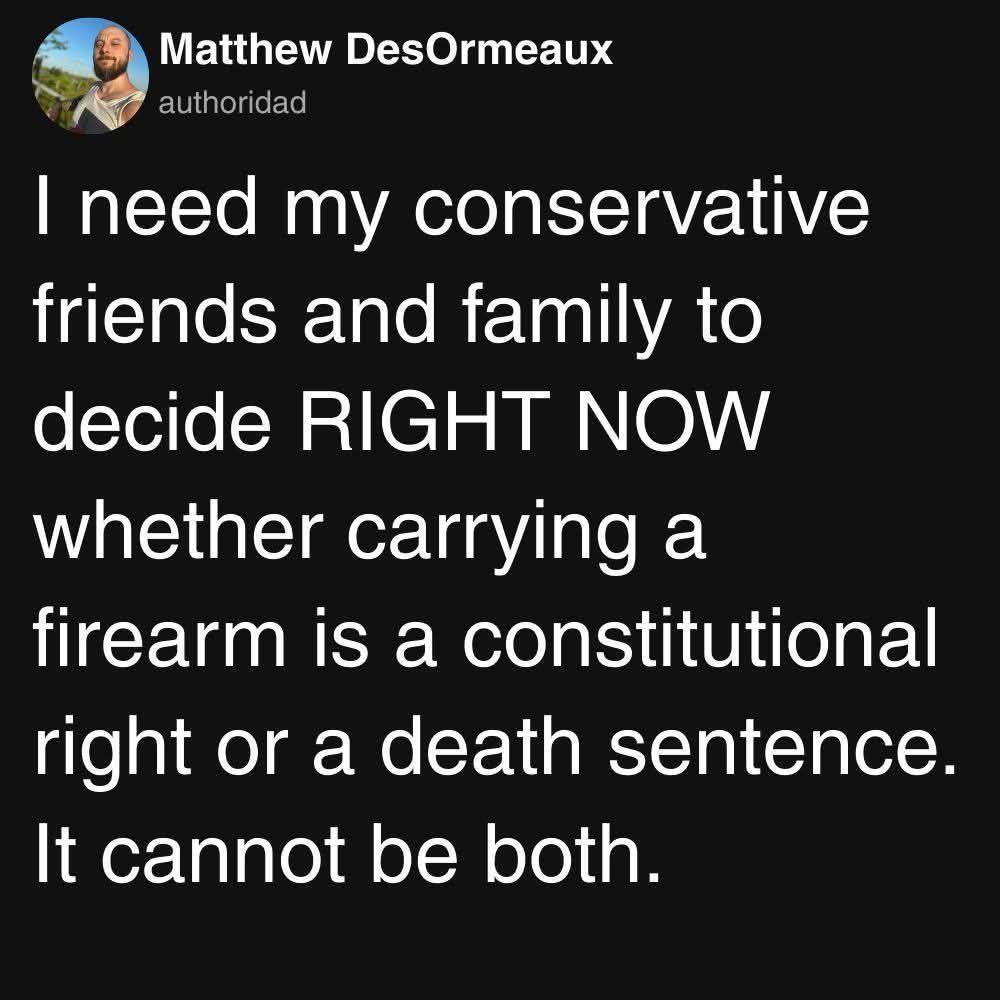
Bringing this to a practical level: Looking at Minneapolis, the ICE and anti-ICE activities, we have competing moral narratives and a different vision for application of American values. On one side of the debate you have those who say that “one is one too many” if an illegal immigrant kills a US citizen—then suddenly do not care when Federal agents shoot a fellow American. The defiant “don’t tread on me” opposition to mandates and masks during Covid somehow shifting to “comply or die!” On the other side you have those outraged about Kyle Rittenhouse and who have been traditionally opposed to the 2nd Amendment defending Alex Pretti while the Trump administration condemns a man for carrying a permitted firearm.
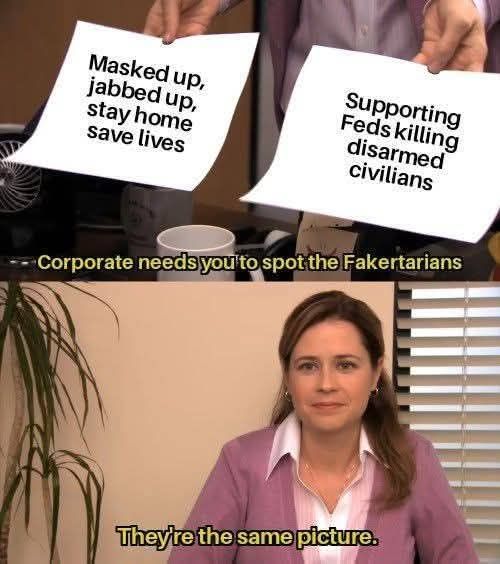

Judgment is for the other, it seems, rights for those who look like us or agree. It’s this inconsistent eye, the call for understanding of our own and grace for ourselves with the harsh penalties applied to those within the forever shifting lines of our out-group, that shows how our political perspectives cloud our moral judgment. The ‘sin’ is not the act itself, but whether or not the violation suits our broader agenda. This is why ‘Christian’ fundamentalists, who will preach the love of Jesus on Sunday, can be totally indifferent to the suffering of children with darker skin tones—their God is about national schemes not a universal good or a commonly applied moral standard.

The aim needs to be justice that is blind to who and only considers what was done. If pedophilia is excused for powerful people who run our government and economy, then it should be for those at the bottom as well. If the misdemeanor of crossing an invisible line is bad, a justification for suspension of due process for all Americans, then why is it okay to violate the sovereignty of Venezuela or Iran over claims of human rights abuse?

The US fought a war of independence, took the country for the British and yet has been acting as a dictator, installing kings, when it suits our neo-colonial elites.

That’s immoral.

We’re all immoral.

The moral code of Patrick, Charlie or myself is incomplete—because every moral code is incomplete when filtered through human eyes. We start from our different premises: Patrick’s secular triad of truth, freedom, and love; Kirk’s religious appeal to the Ten Commandments and a divine lawgiver as the only reliable check on self-deception; my own reluctant recognition that empathy and cooperation are real, yet fragile, against the raw arithmetic of power and advantage. Yet all of our approaches circle the same problem: without some external, impartial standard that transcends our biases, tribes, and self-justifications, our morality devolves into competing opinions dressed as facts—exactly as Aurelius observed.

We cannot fully escape the murk. Objective reality, if it exists, slips through our fingers like quantum probabilities—and moral truth fractures along lines of culture, experience, and interest. Even when we agree on broad principles (don’t murder, don’t steal), the application often splinters: whose life counts as being worthy of protection? Whose borders, laws, or children deserve a defense? And whose “justice” is merely revenge in better lighting?The temptation is cynicism—just declare all values relative, retreat to my own personal pragmatism, and then let might (or votes, or algorithms) sort the rest. But that is a path leads to the very outcomes we decry—dehumanization, selective outrage, and the erosion of the entire civilizational project that allows agnostic high-empathy and high-IQ arguments like Patrick’s to even exist. Yes, nature may be amoral, but us humans build societies by pretending otherwise, by our aiming higher than baser ‘animal’ instincts—reaching for God.

So perhaps the most honest conclusion is not to claim possession of the full truth, but to commit to pursuing it together—knowing we’ll never quite arrive. We definitely need focal points that force some accountability beyond ourselves: whether that’s a concept of one ultimate observer who sees without favoritism, or by a shared commitment to universal human dignity rooted in principle beyond biology or tribe, or simply just the hard-won habit of applying the same rules to our side as to the other. Blind justice isn’t natural or self-evident—it’s cultivated. Morality is an aim which requires vigilance against our own double standards, humility before the limits of our perspective, and courage to defend principles we claim even when they inconvenience us.

In the end, we don’t need perfect agreement on the source of morality to agree that inconsistency in application is poisonous.  What goes around will certainly come around and if we live by the sword we’ll die by it.  If we can at least hold each other (and ourselves) to a standard higher than “what works for my group right now,” preserve the space for mutually beneficial cooperation over cruel predation—a shared conscience over mere convenience. Anything less, and the gazelle never outruns the lion for long—and neither does the society which forgets why it tried.

From Tribal Vengeance to Universal Justice: In Pursuit of One Higher Standard 

Standard

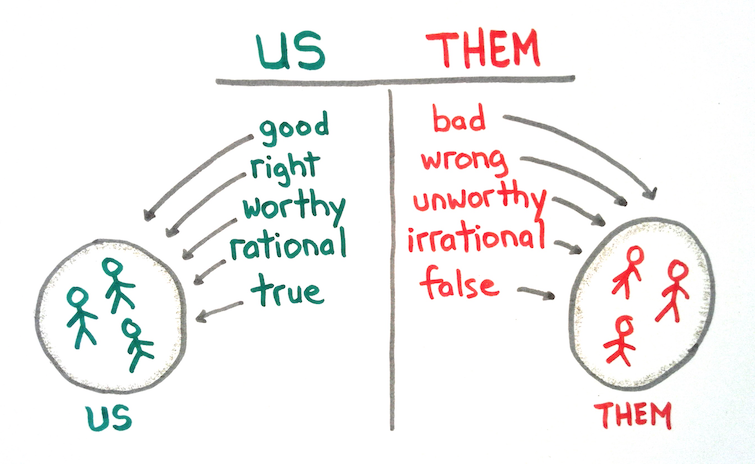
The default position for most people is some form of tribal ethic. If it is done to them or their own family by another tribe it is a horrendous and terrible crime. But, when only those in another tribe are hurt or if they are afraid that confronting the abuse will hurt their own tribal agenda—then suddenly the unforgivable becomes a “Who cares, everyone does it, why are you bringing that up again?”

Tribal ethics amount to doing only what is good for the tribe—usually sacrificing the rights of an individuals in the tribe and always denying the basic humanity of those outside of the tribe. Individual rights of those in the tribe are generally honored, but only so far as protecting them is useful to the collective and not as something that is absolute or immutable. If a few die for sake of the tribal order—are stoned to death for daring to pick up sticks on the Sabbath—that’s just how it is.

The Old Testament is full of this. Your own are completely free to enslave, rape or take from those outside the tribe and yet would be enraged if one of their own were treated in the same way—like when vengeance was taken by Dinah’s brothers who wiped out a whole city for sake of the family’s honor. If it were within the tribe the attitude would be quite a bit different. Under Moses law this was simply a matter of paying the price of the bride and not a death sentence. And it is clear that things morally abhorrent by a modern standard, like genocide, were done by the command of God.

Tribalism is a feature of politics, a natural or default condition, where we defend our own and demonize the other. To the left Charlie Kirk deserved to die for his sins of hate they claim were harmful to their woke collection of identities. The Evangeli-cons soak up the propaganda from Israel that paints children in Gaza as future terrorists. We protect the people most like us because and adjust our moral rules according to the situational and immediate needs of our tribe.

A Case For One Higher Universal Standard

But a Christian ethic is completely different from this. It says sin is sin.  Evil is evil no matter who is committing it or who it is against.

And, if anything, those who are in the church, who profess their faith in Jesus, should be held to a much higher standard. There is no room for favoritism (James 2:1, Romans 2:11) or carving out exemption for elites or even our friends and family. Jesus said to love our enemies (Matt 5:44, Luke 6:27) and even ‘hate’ our own family (Luke 14:26) if necessary to truly be his follower. Even our thoughts subjected to a standard of love and forbearance.

Jesus didn’t get hung on a cross for saying cutesy stuff that is easy to do. And I really do not expect anyone to live by that code. It requires actual faith and a true belief Jesus is what he said he was to make sacrificing ourselves for his ethic reasonable:

Do not repay anyone evil for evil. Be careful to do what is right in the eyes of everyone. If it is possible, as far as it depends on you, live at peace with everyone.  Do not take revenge, my dear friends, but leave room for God’s wrath, for it is written: “It is mine to avenge; I will repay,” says the Lord. On the contrary: “If your enemy is hungry, feed him; if he is thirsty, give him something to drink. In doing this, you will heap burning coals on his head.” Do not be overcome by evil, but overcome evil with good.

(Romans 12:17-21 NIV)

But even if you don’t truly believe in a future eternal reward or God, there is a reason why universal morality is better than our default tribalism. And that is an idea of what goes around comes around. Sure, you might not care about someone else’s daughter being sexually exploited by wealthy and powerful men—most especially if they are furthering your partisan political agenda—and yet we want to have a society where there’s justice or the injustice will eventually spread to us.

This is the big difference between my own understanding and the one that is far more popular: Good and evil never change on the basis of who is doing it or if I benefit. If it is wrong for the neighbor to kill my dog under most circumstances it is wrong for me to kill theirs. And if I (or one my own) start to act with impunity—are continually forgiven for things others are always condemned for—eventually this will piss off enough of the ‘others’ that they’ll dish out their version of justice against their abusers.

The Fallacy of Judeo-Christian Values

Evangeli-cons want the world to forgive for all their infractions and yet never forget if a victim fights back against their aggression. It is the very opposite of what Christ taught and anti-Christ. Jesus would likely warn us that how we judge we will be judged and the measure we use will be measured back to us. Which should make us tremble when we consider the slaughter and razing to the ground of Gaza using bombs we provided—there will be no call for mercy on the behalf of those who claim that young children are terrorists so they can kill them:

We are imposing a complete siege on Gaza. There will be no electricity, no food, no water, no fuel. Everything is closed. We are fighting human animals and we are acting accordingly.

October 13, 2023, Isaac Herzog, President

Just as it is clear that the right wing was right, today everyone says it is clear all Gazans must be annihilated… There is no logic in differentiating between uniformed [Hamas] and the rest of the inhabitants there.

September 2025, Moshe Saada, Likud MK

Every child born in Gaza is already a terrorist, from the moment of his birth.

January 15, 2024, Nissim Vaturi, Likud Deputy Speaker

And they were stating their genocidal intent long before October 7th:

Huwara needs to be wiped out. I think the State of Israel should do it… Water, electricity, and food must be cut off from the Gaza Strip. Those who do not die by bullets will die of hunger.

February 2023, Bezalel Smotrich, Finance Minister

This shows the absurdity of what is called Judeo-Christian values. Tribal logic says it is okay to kill man, woman and child of the rival so we can take the land for ourselves. Whereas Christian morality calls for all to be saved (1 Tim 2:4, 1 Pet 3:9) and erases the boundaries of tribal identities based on gender, race or social status. It is the polar opposite of having a chosen people with a license to take and kill. Jesus offended his ‘righteous’ ethnic audience by saying that a pagan had greater faith than all of Israel. To embrace this radical ethic is to reject the tribalism that fuels division and violence, choosing instead a universal justice that holds all accountable and protects all, not just the chosen few. Only by abandoning the hypocrisy of tribal loyalty can we hope to build a world where the measure of our judgment does not return to condemn us, but instead fosters a shared humanity that is grounded in love of Jesus.

A Fundamentally New Way of Thinking

The Christian ethic really is a total reversal of fundamental attribution error. It is easy to attribute what others do to us to a matter of their immutable character, they’re just evil and irredeemable, therefore do not need to be heard or understood. But for our own or ourselves we tend to blame only the circumstances and call it a mistake—one of those forgivable offenses. The reverse is to never make excuses for our own while also showing grace to those who offend us.

When someone cuts us off in traffic is it because they are a terrible driver? Or did they just have a bad moment? Or if we do the same, is it truly just an isolated incident or is our confirmation bias simply forgetting all of those times we transgressed with an “oops, sorry!” Reversing our fundamental attribution error is simply to apply grace we give to ourselves to others. It is, at the very least, to apply the same standard we do for ourselves as we do to others.

When a person of our own tribe does some kind of horrific deed, do we dismiss this as not representing us as a whole? Maybe we justify it? When the US Navy shot down Iran Air Flight 655 flying a routine route over the Strait of Hormuz, back in 1988, and killed all 290 on board—the US didn’t even apologize and, adding insult to injury, gave medals to the crew that did it! That is tribalism and is how fundamental attribution error works. If Iran did the same the US population would be calling for our military to turn the whole country into a smoldering ruin.

But the Gospel of Jesus Christ starts with a call for repentance. Repentance being an inward turn where we identify and confess our own faults rather than hide them behind rationalization or claims that our hand was forced by the other side. And, finally, after this deep introspection, we show the fruits of a changed spirit by showing the grace we have been shown to even those who we feel are most underserving. A true Christian will strive to love their worst enemies while also holding their own to a high standard.

If we want forgiveness of our sins we must show mercy and forgive others.

Evangeli-cons want all grace for themselves and yet give none to the enemies of their ‘Christian’ empire. They don’t want sins of some in their midst to count against them, they will deny the inconvenient violence of those on their side politically, but then make the whole left or all of Islam responsible for everything ever done by one of their own. It is a tribal ethic that has nothing to do with a Jesus of repentance. Or a spirit of grace to others that exists in those who understand their place before God.

The Greater Good Fallacy: Morality Without Excuses

Standard

Setting aside moral principle to serve a greater good means you have no moral principles.

Moral relativists love their hypotheticals: “What if you had a chance to travel back in time and kill baby Hitler?”

Once they can establish the answer as “yes” then pretty soon thereafter anyone who stands in their way is a Nazi. Or, in other words, the morality of “everyone I don’t like is literally Hitler” where you will basically become Hitler killing all of those baby Hitlers before they become Hitler—kill them all, you can’t be too careful!

It is ends justify the means morality that justifies, ultimately, the most heinous and horrible acts by one projecting a possible outcome as an excuse to violate another person—in some cases even before they drew a first breath.

For example, the Freakonomics case for abortion pointing to how inner-city crime rates dropped in correlation with black babies being killed—used as a moral justification.

Contrast this with Matthew 12:20, with Jesus: “He will not break a crushed blade of grass…”

This prejudice is behind every genocide or ethnic cleansing campaign. The excuse: “We don’t want to kill babies, but if we don’t ‘mow the grass‘ then they’ll grow up to kill us.” I mean, it’s not like that attitude will create a backlash or stir the anger of the population being cynically targeted for a trimming back, right?

Oh well, at least when you are starting at the very bottom, relying on self-defense by precrime judgment and a doctrine of preemption, there is no slippery slope to be concerned about: Morality becomes a race of who can eliminate their potential opponents most efficiently rather than a social contract between people trying to live peaceably with their neighbors.

(Im)Morality of the ‘God’s Plan’ Excuse…

One of the sidesteps of treating others with human decency is that it is all part of God’s plan. Biblical fundamentalists often use a similar kind of ends justify the means moral reasoning as the far-left—except they dress it up as faith and seeing the bigger perspective.

This is their excuse to be Biblical, but not Christian. The moment you raise a moral objection about anything they’ll find their loophole in Scripture: “Oh, yes, God said not to take innocent life, but He also told Israel to wipeout the Amalekites, so it is up to us to decide who gets slaughtered or saved.”

This is the God’s eye perspective Jesus addressed in Mark 7:10-12:

For Moses said, ‘Honor your father and mother,’ and, ‘Anyone who curses their father or mother is to be put to death.’ But you say that if anyone declares that what might have been used to help their father or mother is Corban (that is, devoted to God)—then you no longer let them do anything for their father or mother.

What the Biblical experts were doing was using one command to nullify another by a greater good moral reasoning. Of course they, in their own minds, were the more spiritual. They had convinced themselves that—by neglecting their duty to parents—they were seeing things from God’s eyes and just better than everyone else. But, in reality, this is rationalization and an excuse to be immoral.

Morality isn’t about taking the God’s eye view, it is about our practically applying the Golden Rule or the law of reciprocity described in the passages below:

For if you forgive other people when they sin against you, your heavenly Father will also forgive you. But if you do not forgive others their sins, your Father will not forgive your sins.

Matthew 6:14-15 NIV

“Do not judge, or you too will be judged. For in the same way you judge others, you will be judged, and with the measure you use, it will be measured to you. “Why do you look at the speck of sawdust in your brother’s eye and pay no attention to the plank in your own eye? How can you say to your brother, ‘Let me take the speck out of your eye,’ when all the time there is a plank in your own eye? You hypocrite, first take the plank out of your own eye, and then you will see clearly to remove the speck from your brother’s eye.

Matthew 7:1-5 NIV

Speak and act as those who are going to be judged by the law that gives freedom, because judgment without mercy will be shown to anyone who has not been merciful. Mercy triumphs over judgment.

James 2:12-13 NIV

See the pattern here?

What we put into the world is what we will receive back. If we do not show any mercy to those under our power, then we will not be shown mercy. And that’s the point behind the parable that Jesus told about a man forgiven a great debt—then goes out demanding repayment from the man who owed him.

Seeing things from God’s perspective—according to this—is to apply Micah 6:8:

He has shown you, O mortal, what is good. And what does the Lord require of you? To act justly and to love mercy and to walk humbly with your God.

There are no excuses to set aside normal morality for the sake of God’s plan.

There is no special exemption given for a chosen race of people either.

Throughout history the most evil of men have excused their atrocities using God’s will. It is the reasoning of the Crusader’s command, based on 2 Timothy 2:19, of “Kill them, for God knows his own.”

The ‘Christian’ West killed more innocent people in the Holy Lands than Islamists.

With that kind of thinking, everything will become justified as part of God’s plan if you zoom it out and, therefore, we can’t take a moral stand against anything. If it is God’s plan that babies are killed—then who are you to decry it as murder?

This is logic which can neutralize every moral stance or turn every evil deed into some kind of ultimate good—if you just see it from ‘God’s perspective’ it all becomes okay.  Of course, at that point, accepting this, there is no morality—once everything is relative to God’s will or the outcome that we call good.

It essentially replaces the Golden Rule with: “Do unto others as you would have them do unto you—except if you can explain away the abuse by some kind of greater good excuse.”

Act Justly, Love Mercy, That’s the Conclusion…

Moral relativism, whether cloaked in the guise of achieving a greater good or justified as part of God’s plan, erodes the foundation of true morality—the Golden Rule.

By excusing heinous acts through hypothetical necessities or our ‘divine’ rationalizations, we are becoming the very monsters we claim to oppose. True morality demands consistency: acting justly, loving mercy, and walking humbly, without excuses or every resorting to preemptive judgments or selective exemptions.

When we abandon moral principles for the sake of outcomes we desire or divine loopholes, we replace mutual respect or an opportunity for understanding with a race to eliminate every perceived threat, leaving no room for peace, forgiveness, or humanity.

The measure we use—whether it is mercy or judgment—will be measured back to us, and no appeal to a higher purpose can absolve us of that final reckoning.

Post script: Morality is staying in our lane and abiding by the rules. Playing God is running someone off the road for daring to cross into our lane. It is about our keeping the law—not our enforcing of it. And when we start to justify the abuse of others, as Biblical, then we turn into a violator. James 4:11 explains: “When you judge the law, you are not keeping it, but sitting in judgment on it.” The end result of exemption of ourselves using God’s plan as cover is a cycle of violence where all see themselves as righteous—even while doing incredible evil.

Morality as a Fluid Mess: Conditioning, Conflict, and the Mirage of Universality

Standard

We cling to morality like it’s a lighthouse in the fog—steady, universal, guiding us home. But it’s a lie. It’s a battered flag, flapping in whatever wind our tribe’s blowing, stitched from the yarns we’re spun by family, faith, or flag. Raised Mennonite, I drank in peace and love for the outsider as if they were carved in my bones—until I saw they weren’t. Nature doesn’t whisper “thou shalt not kill”; it shrugs while we slit throats or swipe bread when the need hits. History’s littered with it: Biblical Israel butchered Canaanites—whole towns, babies dashed on rocks—‘cause God handed them the deed (Deuteronomy 7:1-2), and the faithful sang psalms over the ashes. 

Fast-forward to 2025: Israel pounds Gaza, kids buried in rubble, and the justification’s “security”—Hamas tunnels, rockets, survival. Insiders nod; it’s moral, necessary. Morality’s no fixed star—it’s a mirror, reflecting who we’re with and what we want.Look around today, and it’s the same mess. Russia rolls tanks into Ukraine, March 2025 still grinding on, flattening Mariupol redux—schools, hospitals, grandmas in the crosshairs. Putin’s line: “denazification,” protecting Russian speakers, historical destiny. His people buy it, or enough do—state TV’s been marinating them in it for years. The West screams “war crimes!”—sanctions pile up, Zelensky’s a saint on X—but that’s the outsider’s perch. Kyiv’s got its own blood on the slate: shelling Donbas for a decade, shrugging at Russian-speaking dead. Both sides sanctify their kills; morality bends to the banner. Or take the U.S.: Trump loyalists storm Capitol Hill in ‘21, “stolen election!” on their lips, while Biden’s crew locks ‘em up, crowing “democracy!” Same act—violence for a cause—flips from treason to justice depending on the lens. It’s not universal; it’s us-versus-them, conditioned to the core.

Look around today, and it’s the same mess. Russia rolls tanks into Ukraine, March 2025 still grinding on, flattening Mariupol redux—schools, hospitals, grandmas in the crosshairs. Putin’s line: “denazification,” protecting Russian speakers, historical destiny. His people buy it, or enough do—state TV’s been marinating them in it for years. The West screams “war crimes!”—sanctions pile up, Zelensky’s a saint on X—but that’s the outsider’s perch. Kyiv’s got its own blood on the slate: shelling Donbas for a decade, shrugging at Russian-speaking dead. Both sides sanctify their kills; morality bends to the banner. Or take the U.S.: Trump loyalists storm Capitol Hill in ‘21, “stolen election!” on their lips, while Biden’s crew locks ‘em up, crowing “democracy!” Same act—violence for a cause—flips from treason to justice depending on the lens. It’s not universal; it’s us-versus-them, conditioned to the core.

Objections bubble up like clockwork. The optimists—call ‘em Pinker’s crowd (2011)—say genocide’s revulsion proves we’ve got a moral spine, empathy baked in from caveman days. Hunter-gatherers shared meat, Confucius preached kindness—see, we’re wired for good! But that’s a half-truth, and a flimsy one. Those old tribes cared for their own; strangers got the club. Same with today’s wars: Ukraine’s defenders weep for Bucha’s mass graves but gloss over their own artillery sins. Israel’s critics howl at Gaza’s death toll—over 40,000 by late 2024, per UN counts—yet Hamas rockets barely dent their outrage. Why? Fundamental attribution error: outsiders slap “evil” on the doer—Russia’s a monster, Israel’s a bully—while ignoring the stew they’re boiling in: encirclement fears, decades of tit-for-tat bombs. Insiders don’t see villainy; they see survival, righteousness, their conditioning kicking in. Evolution’s no saint—it’ll cheer cooperation or carnage, whichever keeps the clan breathing.

Objections bubble up like clockwork. The optimists—call ‘em Pinker’s crowd (2011)—say genocide’s revulsion proves we’ve got a moral spine, empathy baked in from caveman days. Hunter-gatherers shared meat, Confucius preached kindness—see, we’re wired for good! But that’s a half-truth, and a flimsy one. Those old tribes cared for their own; strangers got the club. Same with today’s wars: Ukraine’s defenders weep for Bucha’s mass graves but gloss over their own artillery sins. Israel’s critics howl at Gaza’s death toll—over 40,000 by late 2024, per UN counts—yet Hamas rockets barely dent their outrage. Why? Fundamental attribution error: outsiders slap “evil” on the doer—Russia’s a monster, Israel’s a bully—while ignoring the stew they’re boiling in: encirclement fears, decades of tit-for-tat bombs. Insiders don’t see villainy; they see survival, righteousness, their conditioning kicking in. Evolution’s no saint—it’ll cheer cooperation or carnage, whichever keeps the clan breathing.

Zoom out, and the pattern’s stark. Morality’s a tool, not a truth—always has been. Libertarians’ll shoot to guard their patch, Marxists’ll guillotine for the proletariat, U.S. elites’ll drone-strike weddings to keep oil flowing—all cloaked in principle, all serving their pack. Russia’s “special operation” is Ukraine’s genocide; Israel’s “self-defense” is Palestine’s ethnic cleansing. The outsider’s gasp—those viral X posts of Kyiv’s ruins or Rafah’s craters—ain’t proof of a moral bedrock; it’s just a rival script, misreading situation as sin. We’re not debating ethics to polish some eternal gem; we’re wrestling over whose story rules. Take the Houthi strikes in Yemen, 2025 heating up: U.S. bombs “terrorists,” Saudis cheer, while aid workers tally starved kids—same act, split morals. Conditioning calls the shots.

The rebuttal’s got one last kick: if morality’s so fluid, why bother refining it? They say it’s progress, not just haggling—reason taming our beastly side. But that’s wishful polish on a cracked hull. Ukraine’s Zelensky begs for NATO jets, Israel’s Netanyahu quotes scripture for settlers, Trumpers and progressives sling “fascist” like mud—reason’s just a megaphone for the tribe. Authenticity’s the only anchor: own the bias, ditch the sanctimonious dance. Russia’s generals don’t lose sleep over Bucha; Israel’s brass don’t flinch at Gaza’s toll—they’ve got their why, and it’s enough. Outsiders clutch pearls—#WarCrimes trending—because they’re not in the fight. Morality’s a fluid mess, shifting with the players, not a lighthouse. Stop pretending it’s more.

Stepping back from the fray—whether it’s Putin’s moves in Ukraine or Hamas’s salvos from Gaza—offers an authenticity that sidesteps the knee-jerk noise and stares down our own fundamental attribution error. Take Putin: some tag him as a ruthless tyrant, others see a strategist pushing back—NATO’s ring of bases and war games from Poland to the Baltics isn’t exactly a welcome mat, but Russia’s leveling cities isn’t a handshake either. Hamas gets the same split: outsiders call them terrorists, yet in Gaza—two million penned in, scrappy and stubborn—they’re fighting a chokehold, though rockets don’t win halos. My Mennonite roots nudge me to judge NATO’s chest-thumping ‘values’ or Hamas’s bloodshed, but I’ve got my own baggage—my folks kept the world at arm’s length too, just with hymns, not guns. Seeing that, owning how my lens twists the view, points a pragmatic way forward: not crowning heroes or villains, but cutting through the sanctimony—NATO’s not spotless, Gazans aren’t pawns, and I’m no referee, just a guy sorting his own slant in the mess.

Legalism: Knowing the Letter of the Law but Missing the Spirit

Standard

This is part two of a four part series on law, legalism, church authority and economia.

Ever get angry after being cut off in traffic?

I know I do.

Instantly I’m making judgments about that person’s lack of driving skills. How dare they interrupt my text messaging and topple the donut that was perched precariously on my lap!

However, later that same day, I’m cruising along in bumper to bumper traffic, my exit is coming up, I see an opportunity and take it. The guy behind me blows the horn, he obviously cannot appreciate my superior skills and that I had no other choice.

That, of course, is a composite of many true events out on the road. When I do something wrong, there’s always a good reason for it and if there isn’t a good reason—Well, nobody is perfect, everyone makes mistakes, right?

People believe they see things as they are.

We feel we are a fairly good judge of ourselves and others.

This trust in our own abilities is what enables us to navigate life. If we couldn’t judge up from down or left from right we would have no means to make a decision or progress in a direction. We are aiming creatures. We have two eyes pointed frontward, stereoscopic or “binocular” vision, so we can judge distance and aim correctly at a target down range. That is what our mind does, it prioritizes one thing over another, it is a sorting machine, we are built to judge and—unless sleeping or in a vegetative state—we are always making judgments.

Unfortunately, this forward facing vision gives us big blind spots. We can only see in one direction at a time. When we are locked in on a particular subject we can lose grasp of the bigger picture and possibilities outside of our range of vision. We are creatures with a finite mind and ability to comprehend. We need our judgment to navigate through life and yet our judgment is not perfect, we are short-sighted, biased and often inconsistent. We project into our environment. We judge people based on our presumptions about them and their motives.

We tend to justify or rationalize our own bad behavior, see our mistakes or the mistakes of those whom we love as being the result of circumstances, then turn around and mercilessly judge the faults of others as being serious character defects. This tendency—called fundamental attribution error—leads us to judge ourselves only by our own intentions and others only by their actions. It is extremely common, if not completely universal, and shows up constantly in political and religious debates. The other side is evil, corrupt and inexcusable—our own side is righteous, well-intended and misunderstood.

We don’t see things as they are, we see them as we are.

Truth be told, many people are not good at judging others as they imagine themselves to be and are wrong more they realize. Our memory is selective. On one hand, we sort out examples that go against our fundamental assumptions about reality and, on the other, we can easily recall those things that confirm our existing ideas. This confirmation bias, combined with fundamental attribution error and our many other cognitive limitations, unless humbly considered, will make us a very poor judge.

Legalism is a misuse of the law by those who do not understand the intent of the law.

The basic intent of the law is to create order out of chaos and yet law itself can become a source of confusion and conflict. The problem with any law is that it requires interpretation and understanding of the intent. This is why we have lawyers, judges, juries, and courts—to safeguard the intent of the civil law from abuse.

Legalism abuses the intent of the law.

Legalists incorrectly use the technicalities of language to find loopholes and carve out special exemptions for themselves. Legalists also apply their own interpretation of the law to others in a way that is harsh and often hypocritical. For them, the law is a tool to help them achieve their own personal or political ends.

That is not to say legalists are lacking in sincerity either, they are often diligent students of law, they have zealously committed the letter to memory and know the words inside and out. But what legalists lack is the spirit of the law and their knowledge is a hindrance to them.

#1) The rich man who relies on his own abilities rather than live in faith. (Matt. 19:16-30, Mark 10:17-31 and Luke 18:18-30) In this story, we are told of a young man who is wealthy and also very religiously devoted. He comes to Jesus, whom he addresses as “good teacher” and asks “what must I do to inherit eternal life?” Jesus, upon hearing this man’s diligence, tells him to sell all he has, to give the proceeds to the poor and then to follow him.

Sadly, and ironically, this account is often used by modern legalists to make a new religious formula rather than understand. This man was a legalist who succeeded in following the law and still lacked one thing and that thing being faith. There are a few who are able to keep the letter of the law and miss the intent of the law because of this. The intent of the law is so we depend on God for our salvation rather than our own works:

For all who rely on the works of the law are under a curse, as it is written: “Cursed is everyone who does not continue to do everything written in the Book of the Law.” Clearly no one who relies on the law is justified before God, because “the righteous will live by faith.” The law is not based on faith; on the contrary, it says, “The person who does these things will live by them.” Christ redeemed us from the curse of the law by becoming a curse for us, for it is written: “Cursed is everyone who is hung on a pole.” He redeemed us in order that the blessing given to Abraham might come to the Gentiles through Christ Jesus, so that by faith we might receive the promise of the Spirit. (Galatians 3:10‭-‬14 NIV)

The law is not there so we can believe we will impress God with our careful obedience. No, the intention of the law was to do the opposite—it was to remind us that we do not measure up to the righteousness of God and that we are therefore condemned to death. This rich young man had achieved the letter of the law, he had done everything that could be done through his own abilities, yet lacked the most important thing and that being faith in God. Jesus gave the answer to how we are saved: “What is impossible for man is possible for God.”

#2) The religious hypocrites who use the law to accuse others and are guilty themselves. (John 8:1-11) In our day we don’t take some sins as seriously as we do others. Many, for example, are condemning of homosexuality and yet do not seem to realize that there are many things that we take rather lightly that are sin and that all sin comes with the penalty of death. Such was the case in the following extraordinary account:

The teachers of the law and the Pharisees brought in a woman caught in adultery. They made her stand before the group and said to Jesus, “Teacher, this woman was caught in the act of adultery. In the Law Moses commanded us to stone such women. Now what do you say?” (John 8:3‭-‬5 NIV )

We are told they did this was intended as a trap for Jesus. Evidently they knew the compassion Jesus had for sinners and wanted to present an impossible dilemma: a) He follows the law, condemns her to death as is required and proves to be no better than them or b) he contradicts Moses, can be accused of rebellion against the law and be himself condemned under their law.

He avoids their trap:

But Jesus bent down and started to write on the ground with his finger. When they kept on questioning him, he straightened up and said to them, “Let any one of you who is without sin be the first to throw a stone at her.” Again he stooped down and wrote on the ground. At this, those who heard began to go away one at a time, the older ones first, until only Jesus was left, with the woman still standing there. Jesus straightened up and asked her, “Woman, where are they? Has no one condemned you?” “No one, sir,” she said. “Then neither do I condemn you,” Jesus declared. “Go now and leave your life of sin.” (John 8:6‭-‬11 NIV)

We have no indication of what Jesus wrote in the dirt. However, it is fairly obvious, it takes two to tango and yet we only have a woman standing accused—What happened to the man involved in the adultery? Why was no man brought with this adulterous woman?

It is also interesting that the only tool these men seemed to have was condemnation. Perhaps this is psychological projection? Maybe deep down they felt guilty and the reason they needed to find fault with Jesus and this woman is so they could feel better about themselves?

Whatever the case, we know that Jesus did not condemn this woman. This could be interpreted as Jesus saying that what she did doesn’t matter. But, he doesn’t say her sin doesn’t matter—he tells her to go and sin no more.

#3) Judas betrays Jesus with his legalistic use of compassion. (John 12:1-8, Matt. 26:6-13) If you want to see the ultimate expression of legalism, it is Judas (and other disciples) interrupting a beautiful act of worship to criticize and, in the process, throwing the words of Jesus back in his face:

Then Mary took about a pint of pure nard, an expensive perfume; she poured it on Jesus’ feet and wiped his feet with her hair. And the house was filled with the fragrance of the perfume. But one of his disciples, Judas Iscariot, who was later to betray him, objected, “Why wasn’t this perfume sold and the money given to the poor? It was worth a year’s wages.” He did not say this because he cared about the poor but because he was a thief; as keeper of the money bag, he used to help himself to what was put into it. “Leave her alone,” Jesus replied. “It was intended that she should save this perfume for the day of my burial. You will always have the poor among you, but you will not always have me.” (John 12:3‭-‬8 NIV)

It is interesting there are many who use the words of Jesus the same way as Judas. They use them to support a socialist political agenda or as a means to condemn any extravagant form of worship. They rationalize their condemnation of others using the words of Jesus and, despite completely missing the spirit of the law, are correct according to the letter of the law—but they completely lack the joy and life of the Spirit. They might hide their legalism in compassion for the poor or in concern for the kingdom of God and yet themselves are no better in their attitudes than the legal experts who put Jesus to death.

What is the true intent of the Biblical law?

To save us from ourselves.

Those who use the law to parse away their own guilt or as a bludgeon to use against those who do not add up to their own standards, even standards that are based in the law itself, have missed the point—we don’t add up and by our own efforts we never will.

Any person, when held up to a perfect standard, will fail by comparison. How can we, as finite and limited creatures, ever compare favorably to an infinite and limitless good? This is a reality that should humble us and fundamentally change how we treat other people.

It is fitting that the first step in Christianity is repentance. If one considers the severity of the law and that everyone stands condemned before God—and that just might change our perspective about that guy who just cut us off in traffic.

The Christian answer to legalism: “Judge not lest ye be judged.”

Legalism is applying the law to others in a way we, as individuals, were never ordained to do. Yes, we must make judgments for ourselves and should always promote what is good even if it offends. Yes, there are some things that are under the jurisdiction of civil authorities (Romans 13:1-7) and sin is to be addressed by the church. However, we are not given license to go out on our own as individuals passing judgment on others, quite the opposite:

Brothers and sisters, do not slander one another. Anyone who speaks against a brother or sister or judges them speaks against the law and judges it. When you judge the law, you are not keeping it, but sitting in judgment on it. There is only one Lawgiver and Judge, the one who is able to save and destroy. But you—who are you to judge your neighbor? (James 4:11‭-‬12 NIV)

Some religious experts, who argue the false dichotomy of faith versus works, might see James (above) as contradicting Paul’s emphasis on grace, but they can’t on this point:

You, then, why do you judge your brother or sister? Or why do you treat them with contempt? For we will all stand before God’s judgment seat. It is written: “‘As surely as I live,’ says the Lord, ‘every knee will bow before me; every tongue will acknowledge God.’” So then, each of us will give an account of ourselves to God. Therefore let us stop passing judgment on one another. Instead, make up your mind not to put any stumbling block or obstacle in the way of a brother or sister. (Romans 14:10‭-‬13 NIV)

Our true obligation to others is not to bring them condemnation—it is to be like Jesus and show them the love and grace we want God to show us.

The truer law is not that of the letter. It is the law of reciprocation. What we do to others or demand be done to them will be the same standard that is applied to us. In other words, if you live by the sword you will likewise die by it (Matt. 26:52) and if you judge others by the law you are putting yourself back under the curse of the law and will be required to do the impossible without God’s help—as Paul warned the Galatian church.

Jesus, when asked by a lawyer, says the entire law hangs on two commandments: He says to love God with all your heart and love your neighbor as yourself (Matt. 22:35-40, Mark 12:28-32) and this is some practical application:

For if you forgive other people when they sin against you, your heavenly Father will also forgive you. But if you do not forgive others their sins, your Father will not forgive your sins. (Matthew 6:14‭-‬15 NIV)

That is black and white. So is this:

“Do not judge, or you too will be judged. For in the same way you judge others, you will be judged, and with the measure you use, it will be measured to you. (Matthew 7:1‭-‬2 NIV)

The law is a means to end, to point us to our need for Jesus, and not an end in itself as many religious folks attempt to make it. The law itself can only bring condemnation and death because nobody is able to match the righteousness of God. The law is given, ultimately, not to condemn anyone—but rather so we can all know our own need of a savior and be saved.

Be perfect, not in legalism, but in mercy…

One of the starkest warnings Jesus gave (Matt. 18:21-35) was a parable about a man forgiven a debt impossible to pay and is shown great mercy by the king whom he owed. This same forgiven man turns around and demands a small sum owed him—throwing the offending party in jail. The end result is the king revoking the mercy he had shown and doing what the unmerciful man had done to the one who owned him a little. That is the response Jesus gave to how much we should forgive.

James further expounds:

If you really keep the royal law found in Scripture, “Love your neighbor as yourself,” you are doing right. But if you show favoritism, you sin and are convicted by the law as lawbreakers. For whoever keeps the whole law and yet stumbles at just one point is guilty of breaking all of it. For he who said, “You shall not commit adultery,” also said, “You shall not murder.” If you do not commit adultery but do commit murder, you have become a lawbreaker. Speak and act as those who are going to be judged by the law that gives freedom, because judgment without mercy will be shown to anyone who has not been merciful. Mercy triumphs over judgment. (James 2:8‭-‬13 NIV)

Merely showing favoritism is mentioned in the same breath as murder and adultery!

Presumably, given we should be one in Christ according to Galatians 3:28, that would include any kind of favoritism. In other words, sexism, racism, ageism, xenophobia, social elitism, or anything else used to justify the favorable treatment of some and unfavorable treatment of others, makes you condemned as much as the evilest men of history under the law. James says that a person is guilty of breaking the entire law if they show favoritism…

Who then can be saved?

It is interesting, especially in a discussion of legalism, to consider some of the discrepancies of language in Scripture. For example, one Gospel calls out only Judas for his judgmental attitude towards the woman pouring perfume while another says it was disciples (plural) and not just Judas. One Gospel account of the rich man has him calling Jesus “good teacher” while another omits this entirely and says he started by asking “what good thing must I do” instead. Perhaps the writers were a bit less concerned than we are with the legalistic details and more with the message?

There is also an inconsistency between what the Gospels tell us Jesus said at the end of the Sermon on the Mount. I quoted Matthew’s version in my last blog: “Be perfect, therefore, as your Father in heaven is perfect.” Which seems sort of vague and open to some interpretation. I mean, how does one compete with the perfection of God? However, in Luke 6:36, in the same context of love for enemies, we read: “Be merciful, just as your Father is merciful.” Combining the two different tellings, it seems what is being asked of us is to be perfect in mercy towards others and not perfect in some onerous legalistic manner.

We should turn our natural tendency to fundamental attribution error around. In other words, rather than judge those outside our own social group and show mercy to our own, we should judge ourselves (our own people) more harshly and leave the others to God. Or, in more practical terms, if someone cuts us off in traffic, rather than attribute his or her annoying act to an irredeemable character flaw, we should assume the best. And, if we cut someone else off, we should not excuse our own poor driving habits and take full responsibility instead.

If we want to be judged by God’s perfect law (and condemned) we should be legalistic.

If we want God’s mercy we should be merciful.

Conscience or Compromise?  The Courage of Desmond Doss…

Standard

There is a movie out about an unlikely war hero.  The man, Desmond Doss, was a Christian conscientious objector (or a conscientious cooperator according to his own description) who joined the army to save lives rather than take them.

Doss refused to pick up a rifle in training and for disobedience to orders to do so he was court-martialed.  But he stood his ground, he was allowed to go into combat without a weapon, and went unarmed as a medic.  His courageous effort to save lives earned him presidential honor.

Doss, unlike many in the church today, was unwilling to compromise for sake of convenience.  Many have compromised valuing their own temporal comfort over full obedience to the one who has control over eternity.  Many have compromised, voting for ‘the lessor of two evils’ and political expedience rather than take a courageous stand against the evil of both sides.

#1) The Apostate Church Does Not Overcome Evil With Good.

Jesus said…

“You have heard that it was said, ‘Eye for eye, and tooth for tooth.’  But I tell you, do not resist an evil person.  If anyone slaps you on the right cheek, turn to them the other cheek also.   And if anyone wants to sue you and take your shirt, hand over your coat as well.  If anyone forces you to go one mile, go with them two miles. Give to the one who asks you, and do not turn away from the one who wants to borrow from you.  You have heard that it was said, ‘Love your neighbor and hate your enemy.’  But I tell you, love your enemies and pray for those who persecute you, that you may be children of your Father in heaven.  He causes his sun to rise on the evil and the good, and sends rain on the righteous and the unrighteous.  If you love those who love you, what reward will you get?  Are not even the tax collectors doing that?  And if you greet only your own people, what are you doing more than others?  Do not even pagans do that?  Be perfect, therefore, as your heavenly Father is perfect.” (Matthew 5:38-48)

It is amazing to me that many claim to love Jesus and yet find all kinds of ways to make the plain teachings above not apply to their own situation.  They misuse other parts of Scripture to water down the words of Jesus and faithless hypothetical “what if” reasoning to justify around what is clearly stated.  I guess for them Biblical literalism only applies when it has no real practical value or real life consequences—like the creation narrative in the book of Genesis?

But, when Paul echoes Jesus and says we should “overcome evil with good” (Romans 12:21) I am doubtful that he is saying that we should do the same things evil people are doing while slapping a religious justification on it.  He’s actually telling us to be radically different, that we should care for our enemies as we would our own, and trust God will do justice.

Those in the apostate church do not trust God and therefore take matters into their own hands that are not assigned to them.  This is the beginning of their road to compromise, it is negotiating a deal with Devil to secure a temporal gain and exactly the temptation Jesus resisted when offered worldly power.

#2) The Apostate Church Is Focused On Judgement of Others Rather Than Self-examination.

Jesus said…

Do not judge, and you will not be judged. Do not condemn, and you will not be condemned. Forgive, and you will be forgiven. Give, and it will be given to you. A good measure, pressed down, shaken together and running over, will be poured into your lap. For with the measure you use, it will be measured to you. Can the blind lead the blind? Will they not both fall into a pit? The student is not above the teacher, but everyone who is fully trained will be like their teacher. Why do you look at the speck of sawdust in your brotherʼs eye and pay no attention to the plank in your own eye? How can you say to your brother, ‘Brother, let me take the speck out of your eye,’ when you yourself fail to see the plank in your own eye? You hypocrite, first take the plank out of your eye, and then you will see clearly to remove the speck from your brotherʼs eye.” (Luke 6:37-42)

If we ever could fully comprehend God’s perfection (and our own unworthiness by comparison) we would likely never judge anyone again.  Instead we would spend our days prostrate in prayer and thanking God for the amazing grace that saved a wretch like us.  Unfortunately we do not understand God’s grace and therefore struggle with smugness, sanctimony and self-righteous feelings.

We also tend to judge ourselves differently than we do others.  There is a tendency to justify our own behavior based in circumstances while treating the sins of others as a character flaw and an inexcusable choice for evil.  This tendency is called fundamental attribution error and the very opposite of what Jesus taught us to do.

We should never excuse our own compromise and then simultaneously pray “Father forgive them for they know not what they do” as Jesus did.  It is our job to show grace and in our doing so we are living in obedience to God who will show us grace.  Those in the apostate church do opposite of this and are harsh to outsiders while forgiving their own or themselves. 

#3) The Apostate Church Demonizes Opposition Rather Than Love As Christ Loved.

The apostate church has compromised and have broke spiritually blind despite their arrogance.  They therefore cannot love as Jesus did and do not understand this:

“Put on the full armor of God, so that you can take your stand against the devilʼs schemes. For our struggle is not against flesh and blood, but against the rulers, against the authorities, against the powers of this dark world and against the spiritual forces of evil in the heavenly realms.” (Ephesians 6:11-12)

A Christian should not be involved in the politics of those who demonize their opposition.  Some of the claims from this past election remind me the blood libel used to slander the Jews and create an irrational hatred of that whole people group.  When we turn other people into demons we justify our own unthinkable acts and often become as terrible as those we demonize.

Our flight is in a spiritual realm “not against flesh and blood” but the apostate church spiritualizes their own worldly perspective and demonizes those whom they are commanded to love.  Furthermore, our judgement again should be turned inward and towards our own, as Paul explains:

“I wrote to you in my letter not to associate with sexually immoral people—not at all meaning the people of this world who are immoral, or the greedy and swindlers, or idolaters. In that case you would have to leave this world. But now I am writing to you that you must not associate with anyone who claims to be a brother or sister but is sexually immoral or greedy, an idolater or slanderer, a drunkard or swindler. Do not even eat with such people.  What business is it of mine to judge those outside the church? Are you not to judge those inside? God will judge those outside. ‘Expel the wicked person from among you.'” (1 Corinthians 5:9-13)

Even in churches where political involvement is discouraged Paul’s words (above) are ignored and the judgement focused on those outside.  But we are told it is not our job to judge those outside our group—those outside are for God to judge.  Instead we are not to be associated with those who claim to be Christian yet live unrepentant in their immorality.

This in–group favoritism is common in the world, it is expressed in various forms of tribalism where people only see the faults of those outside their tribe, it is also a common feature of the apostate church, but it is the antithesis of what Jesus taught.  We must not associate ourselves with those who claim to be Christian and yet live in unrepentant sin.

#4) The Apostate Church Is Focused On the Worldly Kingdom.

Jesus said…

“My kingdom is not of this world. If it were, my servants would fight to prevent my arrest by the Jewish leaders. But now my kingdom is from another place.” (John 18:36)

The idea that a person must vote as a Christian duty is absurd.  Certainly there is a case for using the means we have influence the world in a positive direction and voting could be a means for doing that.  However, there is also a case for abstaining from politics and following after the example of Jesus who refused worldly power offered to him by Satan:

“The devil led him up to a high place and showed him in an instant all the kingdoms of the world. And he said to him, ‘I will give you all their authority and splendor; it has been given to me, and I can give it to anyone I want to. If you worship me, it will all be yours.'” (Luke 4:5-7)

Many seem to be willing to make a deal with the devil for much less than what was promised to Jesus.  Offer them a few Supreme Court Justices with assurances of their religious freedom and they’ll turn out in droves.  Never mind whether or not the one promising the world to us will deliver on their end of the bargain.

Have we forgotten that true men of faith would rather be in prison or a martyr than make the smallest comprise for worldly gain?

How has the church become so blinded by worldly political ambition?

It is disturbing to me is how some who profess Christ are actually shamelessly celebrating the election of a vulgar and unrepentant man as if it is a spiritual triumph.  It makes a mockery of our faith when we compromise out of fear, it is a spiritual poverty and should be repented rather than celebrated.  

Our lack of trust in God will make us losers even when we think we have won.  The ends do not justify the means.  We need less cowardly people who compromise for sake of temporal worldly gain—and more who make a courageous stand like Desmond Doss.

A Community Perspective of Mass Murder

Standard

Another well-armed angry young man goes on a murderous spree and again political ambulance chasers jockey to take advantage to win points for their pet projects.

President Obama used the recent massacre at an Oregon college as an opportunity to campaign for gun control measures that would not have prevented it.  Militant 2nd Amendment gun rights advocates responded with the tired ‘good guys with guns’ arguments and arming teachers as the solution.  Others ranted about correlations between pharmaceuticals and deranged minds.  (Well, duh?) 

Those using the issue for their various (political) causes seem to be vastly misunderstanding the actual issue.  Their response is a knee-jerk reaction rather than a careful analysis of fact and their canned solutions show the functional fixedness in their thinking.  There are too many assumptions that steer the current conversation and could be distracting us from addressing the real problem.

Many seem to assume that killers are simply incurable killers and we simply need to better secure ourselves (with more guns or gun control laws) against this inevitability of angry men.  But could a killer be stopped before they stockpile weapons and act out their violent fantasies against those who they blame for their unhappiness? 

Perhaps more guns, curbs of liberty and drugs (more or less) are not the solution to the real problem?

The root issue is that a young man made a choice to act violently.  He had reasons, rational or irrational, for the choice that should be understood.  (Note, I am not saying that the choice was justified, I believe murder is always immoral and a sin.)  We should acknowledge the choice as a choice and at least explore the possibility we can help those who are tempted by violence to choose rightly.

#1) Understand the Problem is a Person

I think often there is an urge to sanctimoniously distance ourselves from the bad actors of society.  Simply labelling the perpetrator of violence as a “thug” or “monster” or “animal” allows us to build emotional wall of separation between ourselves and evil deeds.  If we were to acknowledge the humanity of the person doing the evil act we would be tying our own humanity to the evil and in a sense making ourselves responsible.

image

Fundamental attribution error or correspondence bias is an assumption that another person’s behavior is all a product of their defective character.  (And, again, I do absolutely believe in personal accountability and responsibility for choices.)  But then, what it comes to our own bad choices we always have an external excuse or justification and blame circumstance for our choices.

Killers do what we do.  Killers often feel justified in what they do like we do because they were cheated or mistreated.  They take out their jealous rage against those who they blame for their unhappiness.  It is actually their humanity, the fact that they have emotions or just desire for significance—like we all do—that they act.  The difference is that they choose to turn to acts of violence rather than grace.

The answer to the perceived offenses we endure is not hate or vengeance and love for our enemies needs to be encouraged.  We need to fight against our own urge to be consumed totally by securing our own rights and love others as we would like to be loved.  We should distance ourselves from using their evil choices to justify our own.  We must love the hurting person behind the choice before they make it.

#2) Recognizing that Social Needs are Real

The elephant in the room is the vast changes in American culture and lifestyle that correlate with the trend of mass murder.  We are linked with more and more technology, but are actually less connected (in flesh) than generations prior.  Community has been replaced with increasing individualism and isolation.  It is not a change without consequence.

image

People are not good in isolation, people have social needs and can be damaged by lack of adequate human interaction.  Just a bit of research into solitary confinement or extreme cases of child neglect quickly show the psychological consequences are profound when social needs are not fully met for extended periods.

Perhaps the ideal of suburbia is not so ideal after all?  Suburban life is not extreme isolation.  But, in many cases, it is an environment deficient of social interaction—and especially in the case of single child homes.  A child without brothers or sisters and separated from regular intimate interaction with other people is probably going to feel a deficit.

The problem is exacerbated for those who are socially awkward or shy.  Some people are able to make friends everywhere, they are outgoing, easily put others at ease and popular.  Other people struggle getting past that initial barrier of first contact, they watch frustrated as others interact with ease and feel ignored.  Nobody wants to be marginalized.

We need to start recognizing that society and lifestyle do have a part to play in the choices of individuals.  We need fewer fenced in yards, fewer spiritually empty McMansions and more opportunity for inclusion for those who would otherwise be marginalized by their natural dispositions or disabilities.  We need less individualism and more community spirit.

#3 Bringing Outliers into our Community

There are some people who are probably gone beyond hope unreachable.  There are some who have a defect that makes them almost impossible to relate to and interact positively with. 

However, I do not believe that is the case in all cases or even most cases and we could do better at finding a place for those who need a place to belong.  There is no amount of entertainment or material wealth that can fill the void of purpose caused by social isolation.  We should not underestimate the role of community in shaping individual attitudes and mental health.

I see a solution in intentional community.  A friend recently posted a story about a preschool in a nursing home.  It was a beautiful example of the social needs of elderly being met by their inclusion with children.  That is the type of mindset that could be applied more broadly. 

image

But intentional community doesn’t need to start with a collective managed structural change like melding elderly and child care.  It can start with how we as individuals interact with the outliers among us.  It starts with our being aware that there are those who are marginalized and suffering from social isolation.  If we look for it we can be a help.

It takes a change in perspective.  Perhaps the weirdo is weird only because they have no friends to help them assimilate?  Are you willing to be that weird person’s friend and bring them into your circle of friends?  Forget mass killers even, what if we could prevent one suicide by being more proactive and inclusive?  What if we could make one person’s day better?

#4 Know the Individual Power You Wield

I believe many of us underestimate our own influence.  We turn to solutions like guns and laws because we feel too small to fight the demons of our culture without them.  We look for ‘silver bullet’ solutions (pardon the expression) and forget that people are complex social creatures.  One-size-fits-all solutions are not the best answer.

We need to fight back against evil, but not with superior firepower which is often misused or increased enablement of governments that often ends in abuse.  We need to overcome evil with good.  We need to fight isolation with inclusion, beat social awkwardness with understanding and prevent the seeds that lead to violence from ever taking root.

It takes a community of willing individuals to solve community problems.  Violence against the community is intended as an attack on the community and must therefore be addressed as a community.  But the community is not those we elect to represent us, the community is us and the problems of community require us as individuals to take part in being the solution.

Stop looking side to side or over your shoulder waiting for someone else to save society from its own destruction.  Instead use your own unique talents and abilities, search out the needs in your own community and fill them.  As the saying goes, an ounce of prevention is worth a pound of cure, and maybe even just a hug or smile can make a life changing difference.

#5 The Example of a Social Physician

Jesus was an advocate for unpopular people.  The religious people of his day criticized him for what they perceived as his lack of judgment for his inappropriate mingling with women and men who they saw as inferior.  Jesus turned the tables, he condemned the socially powerful and popular, he spoke for those marginalized by society.

There are many Gospel accounts like this…

“While Jesus was having dinner at Matthew’s house, many tax collectors and sinners came and ate with him and his disciples.  When the Pharisees saw this, they asked his disciples, “Why does your teacher eat with tax collectors and sinners?”  On hearing this, Jesus said, “It is not the healthy who need a doctor, but the sick.  But go and learn what this means: ‘I desire mercy, not sacrifice.’  For I have not come to call the righteous, but sinners.”  (Matthew 9:10-13)

We don’t like the IRS today, but tax collectors in Jesus day were traitors who had sided with the Roman occupation of Palestine and were hated by the Jews.  In the eyes of his accusers he was guilty by association.  How could a great man find company with traitors, prostitutes and other sinners?  But what is greatness without mercy to those who need it most? 

Jesus was greater because he was merciful to all people, even the least of society and we should follow the lead he offers.  We should be doctors of social ailments.  We do not excuse or offer justification for sin anymore than a doctor is an advocate for disease.  No, we, like a doctor, need to diagnose the true problem and provide the right cure.

We can exercise the same power to heal as Jesus did.  We have a choice to create a better society.  We can choose to respond to problems with love and not fear.  We need to be the solution in the same way as Jesus, by overcoming prejudice through self-sacrificial love and love for the enemies we face every day.

God bless.  Be strong.  Be a solution not a spectator.