Perspectives, Not Truth: Why Our Moral Codes Are Always Incomplete

Standard

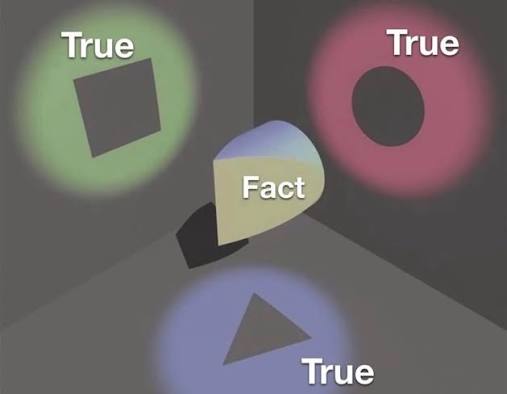
Everything we hear is an opinion, not a fact. Everything we see is a perspective, not the truth.

Marcus Aurelius

I will attempt to bring multiple threads together in this blog and the quote above is a good starting point. If there is objective reality it’s not going to be something possessed by one human. We do not know all circumstances nor can we vet and independently verify every fact we receive.  Or at least not without becoming totally hamstrung by the details. We put our trust in parties, traditions, systems, credentials and the logic which makes sense to us.

The deeper we dive into our physical reality the murkier it all gets. The world ‘above’ that we encounter feels concrete. But there is not a whole lot of substance to be found as we get beneath the surface. The rules that we discovered—of time and space—end up dissolving into a sea of probabilities and paradoxes at a quantum level that we don’t have an answer to. And this is the ‘concrete’ observable reality. We all see our own unique perspective, a slice, and build our model of the world from it.

But it is even murkier when we get to topics of social science. Morality and ethics, built often from what we believe is fact or truth, is more simply opinion and perspective than it can be hammered out in words everyone is able to agree on. Even for those who are of the same foundational religious assumptions—despite even having the same source texts—do not agree on matters of interpretation or application. So who is right? And who is wrong? How do we decide?

1) Patrick: We Don’t Need God To Be Moral

My cousin, Patrick, a taller, better looking and more educated version of myself, an independent thinker, and has departed from his missionary upbringing—gives this great little presentation: “Where Do You Get Your Morality?

His foundation for a moral value system is concepts of truth, freedom and love which he describes in the video. I find it to be compelling and compatible with my own basic views. Our cooperation is as natural as competition, it is what makes us human, and a conscience gives potential for better returns.

However, while I agree with his ideal, there is also reason why deception, tyranny and indifference are as common in the world—they are natural—and this is because it can give one person or tribe an advantage. Lies, scams, and political propaganda all exploit trust and can be a shortcut for gaining higher status or more access.

No, cheating doesn’t serve everyone. But the lion has no reason to regret taking down a slow gazelle. By removing the weak, sick, or injured, it inadvertently culls the less-fit genes from the herd, strengthening the prey population over time and even preventing overgrazing of the savannah. It’s just a raw service to ecosystem balance, much like a short seller who exposes those overvalued stocks, forcing the market corrections and greater efficiency—acts of pure self-interest yielding a broader good.


Herd cooperation or predator opportunism are different strategies, both 100% natural and amoral in their own context. I’m neither psychopath nor a cannibal, but I do suspect those who are those things would as readily rationalize their own drives and proclivities. Nature doesn’t come with a rulebook—only consequences.

I’m certainly not a fan of the “might makes right” way of thinking and that is because my morality and ethics originate from the perspective being disadvantaged. But I also understand why those who never struggled and who have the power to impose their own will without fear of facing any consequences often develop a different moral framework.

We need to be invested in the same moral and civilizational project. Or else logic, that works for only some who have the strength or propaganda tools, will rule by default. I don’t disagree with Patrick, but his core message caters to a high IQ and high empathy crowd—which does leave me wondering how we can bring everyone else on board?

2) Kirk: A Way To Focus Our Moral Efforts

Charlie Kirk wasn’t a significant figure to me before his death. It may be a generational thing or just a general lack of interest in the whole conservative influencer crowd. I feel dumber any time I listen to Steven Crowder and assumed Kirk was just another one of the partisan bomb throwers. But, from my exposure to his content since, I have gained some appreciation.


Arguing for the Ten Commandments has never been a priority for me. It’s a list with a context and not standalone. Nevertheless it is a starting point for a moral discussion and also one that it seems Charlie Kirk would go to frequently in his campus debates.  The two most difficult of these laws to explain to a religious skeptic are certainly the first two: “I am the Lord your God; Have no other gods before me and do not make idols.”

We generally agree on prohibition of murder and theft, or even adultery, but will disagree on one lawgiver and judge.

Why?

Well, it is simply because divine entity is abstract compared to things we have experienced—like the murder of a loved one or something being stolen from us. You just know this is wrong based on how it makes you feel. The belief in celestial being beyond human sight or comprehension just does not hit the same way as events we have observed. And it’s also the baggage the concept of a God carries in the current age. I mean, whose God?

It seems to be much easier just to agree the lowest common denominator: Don’t do bad things to other people.

But then we don’t. We justify killing others if it suits our political agenda, labeling people as bad for doing what we would do if facing a similar threat to our rights. If I’ve learned one thing it is that people always find creative ways to justify themselves while condemning the other side for even fighting back against an act of aggression.

Self-proclaimed good people do very bad things to good people. Like most people see themselves as above average drivers (not mathematically possible), we tend to distort things in favor of ourselves. Fundamental attribution error means we excuse our own compromises as a result of circumstances while we assume an immutable character flaw when others violate us. We might be half decent at applying morality to others—but exempt ourselves and our own.

So morality needs a focal point beyond us as individuals. There must be a universal or common good. Which might be the value of a theoretical ‘other’ who observes from a detached and perfectly unprejudiced point, the ideal judge. Not as a placeholder, but as the ultimate aim of humanity. One God. One truth. One justice. This as the answer to double standards, selective outrage and partisan bias. If we’re all seeking the same thing there is greater potential of harmony and social cohesion where all benefit.

At very least it would be good to promote an idea of an ultimate consequence giver that can’t be bought or bribed.

3) The Good, the Bad and the Aim for What Is Practically Impossible

The devil is always in the details. And the whole point of government is to mediate in this regard. Unfortunately, government, like all institutions, is merely a tool and tools are only as good as the hands that are making a use of them. A hammer is usually used to build things, but can also be used to bash in a skull. Likewise, we can come up with that moral system and yet even the best formed legal code or enforcement mechanism can be twisted—definitions beaten into what the current ruling regime needs.

The United States of America started with a declaration including the words “all men are created equal” and a Constitution with that starts: “We the people…” This is reflection of the Christian rejection of favoritism and St. Paul telling the faithful “there is no Jew or Greek” or erasing the supremacy claims of some. An elite declaring themselves to be exempted or specially chosen by God is not compatible with this vision. We never ask a chicken for consent what we take the eggs. We do not extend rights to those who we consider to be inferior to us or less than human. Human rights hinge on respect for the other that transcends politics.

That’s where the labels come in. If we call someone a Nazi, illegal, MAGAt, leftist or a Goyim we are saying that they are less than human and don’t deserve rights. This is the tribal and identity politics baseline. Those in the out-group are excluded for decency, their deaths celebrated as justice (even if there’s no due process) and we’ll excuse or privilege our own. All sides of the partisan divide do this—we create a reason to deny rights to others often using things like truth, freedom and love (Patrick’s foundation) as our justification: “Those terrorists hate our freedom and democracy, we must fight for those we love and our truth!”

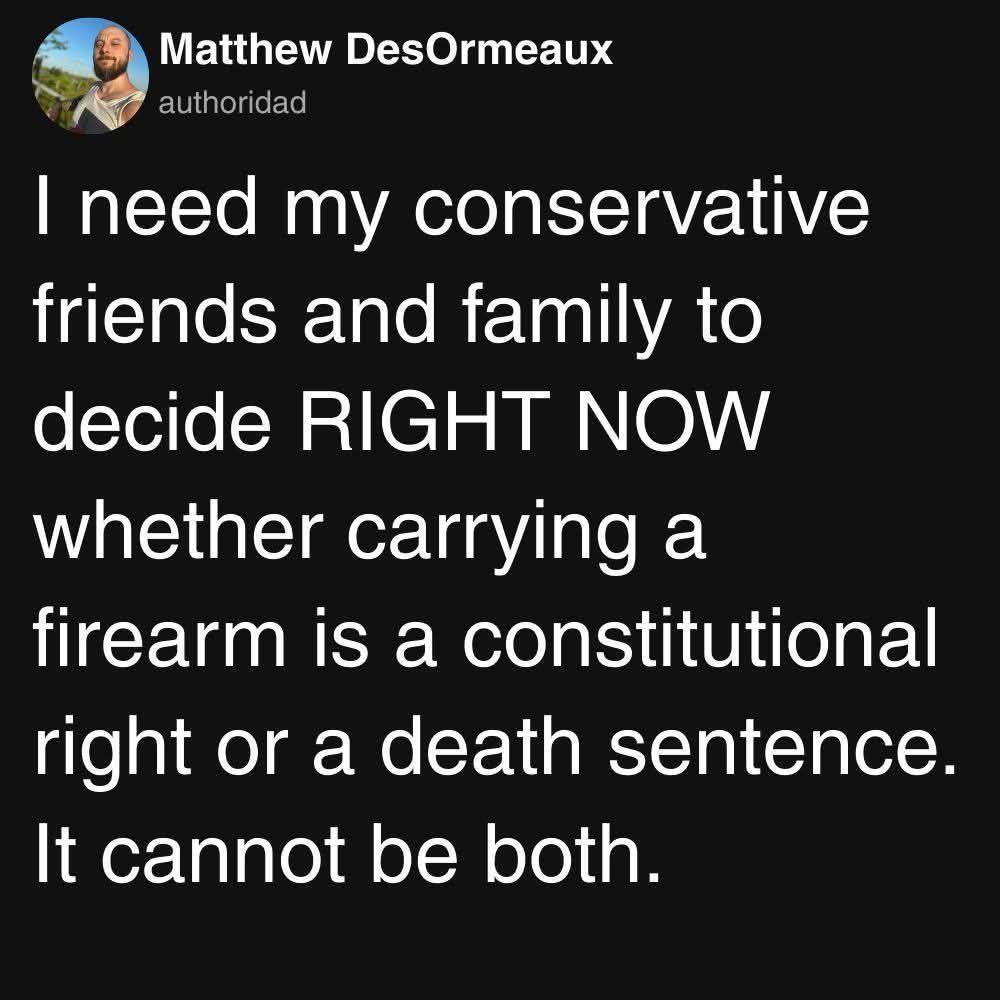
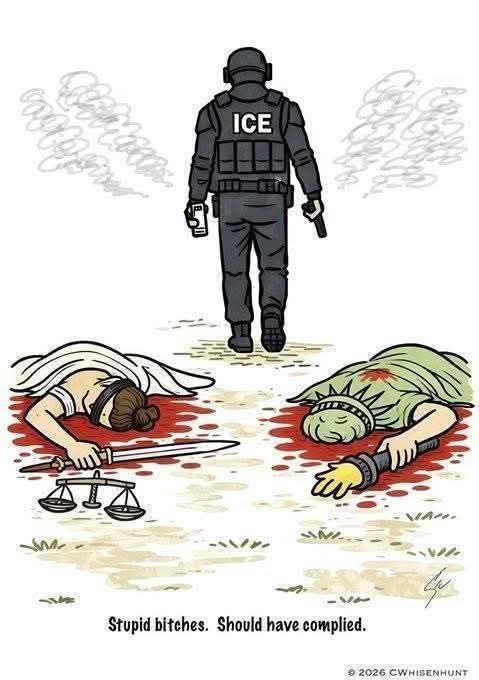
Bringing this to a practical level: Looking at Minneapolis, the ICE and anti-ICE activities, we have competing moral narratives and a different vision for application of American values. On one side of the debate you have those who say that “one is one too many” if an illegal immigrant kills a US citizen—then suddenly do not care when Federal agents shoot a fellow American. The defiant “don’t tread on me” opposition to mandates and masks during Covid somehow shifting to “comply or die!” On the other side you have those outraged about Kyle Rittenhouse and who have been traditionally opposed to the 2nd Amendment defending Alex Pretti while the Trump administration condemns a man for carrying a permitted firearm.
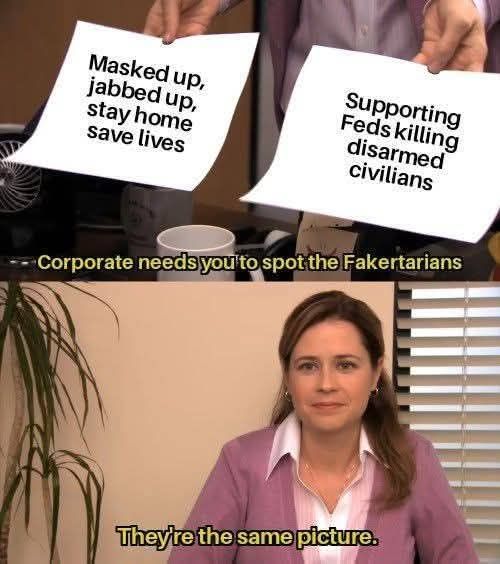

Judgment is for the other, it seems, rights for those who look like us or agree. It’s this inconsistent eye, the call for understanding of our own and grace for ourselves with the harsh penalties applied to those within the forever shifting lines of our out-group, that shows how our political perspectives cloud our moral judgment. The ‘sin’ is not the act itself, but whether or not the violation suits our broader agenda. This is why ‘Christian’ fundamentalists, who will preach the love of Jesus on Sunday, can be totally indifferent to the suffering of children with darker skin tones—their God is about national schemes not a universal good or a commonly applied moral standard.

The aim needs to be justice that is blind to who and only considers what was done. If pedophilia is excused for powerful people who run our government and economy, then it should be for those at the bottom as well. If the misdemeanor of crossing an invisible line is bad, a justification for suspension of due process for all Americans, then why is it okay to violate the sovereignty of Venezuela or Iran over claims of human rights abuse?

The US fought a war of independence, took the country for the British and yet has been acting as a dictator, installing kings, when it suits our neo-colonial elites.

That’s immoral.

We’re all immoral.

The moral code of Patrick, Charlie or myself is incomplete—because every moral code is incomplete when filtered through human eyes. We start from our different premises: Patrick’s secular triad of truth, freedom, and love; Kirk’s religious appeal to the Ten Commandments and a divine lawgiver as the only reliable check on self-deception; my own reluctant recognition that empathy and cooperation are real, yet fragile, against the raw arithmetic of power and advantage. Yet all of our approaches circle the same problem: without some external, impartial standard that transcends our biases, tribes, and self-justifications, our morality devolves into competing opinions dressed as facts—exactly as Aurelius observed.

We cannot fully escape the murk. Objective reality, if it exists, slips through our fingers like quantum probabilities—and moral truth fractures along lines of culture, experience, and interest. Even when we agree on broad principles (don’t murder, don’t steal), the application often splinters: whose life counts as being worthy of protection? Whose borders, laws, or children deserve a defense? And whose “justice” is merely revenge in better lighting?The temptation is cynicism—just declare all values relative, retreat to my own personal pragmatism, and then let might (or votes, or algorithms) sort the rest. But that is a path leads to the very outcomes we decry—dehumanization, selective outrage, and the erosion of the entire civilizational project that allows agnostic high-empathy and high-IQ arguments like Patrick’s to even exist. Yes, nature may be amoral, but us humans build societies by pretending otherwise, by our aiming higher than baser ‘animal’ instincts—reaching for God.

So perhaps the most honest conclusion is not to claim possession of the full truth, but to commit to pursuing it together—knowing we’ll never quite arrive. We definitely need focal points that force some accountability beyond ourselves: whether that’s a concept of one ultimate observer who sees without favoritism, or by a shared commitment to universal human dignity rooted in principle beyond biology or tribe, or simply just the hard-won habit of applying the same rules to our side as to the other. Blind justice isn’t natural or self-evident—it’s cultivated. Morality is an aim which requires vigilance against our own double standards, humility before the limits of our perspective, and courage to defend principles we claim even when they inconvenience us.

In the end, we don’t need perfect agreement on the source of morality to agree that inconsistency in application is poisonous.  What goes around will certainly come around and if we live by the sword we’ll die by it.  If we can at least hold each other (and ourselves) to a standard higher than “what works for my group right now,” preserve the space for mutually beneficial cooperation over cruel predation—a shared conscience over mere convenience. Anything less, and the gazelle never outruns the lion for long—and neither does the society which forgets why it tried.


Call Me Stephanie

Standard

Maybe you haven’t heard about the latest visual and verbal contrivance that has been bestowed upon us by the meme lords?

If not, White Boy Summer, has been making an appearance on my news feed, especially popular amongst the disenfranchised right of center males.  It is mostly in fun, a poke at the color tribe obsessed, that started with a post by Chet Hanx, and has since evolved into a sort of pushback campaign against divisive identity politics with some actual white supremacist types joining in on the action.  It is mostly just the typical alt-right silliness the feeds off far-left identity politics outrage.  

As for myself, I’m still principled enough, in my opposition to color identity politics, to not to join in.  No, that’s not at all to say I’m any better than those less idealistic and more open to this kind of humor.  However, I can’t help but believe this is exactly what far-left fringe elements of the political spectrum had in mind when they started to affix “white” or “black” to various terms.  Even as a joke it is reinforcing of their divisive narratives.

The Identity Politics Dilemma

That feedback loop is the insidious part of identity politics and tribalism.  When one group of people starts to gang up, then others need to do the same or risk fighting a mob alone.  A person doesn’t have to care one bit about skin color to not want to be the next Reginald Denny, a man beaten by four strangers because they hated people who looked like him.  So we go down this spiral of increasing mistrust and polarization often leading to an escalation of hostilities.

In my own life time I’ve watched the tension grow between ‘white’ and ‘black’ people.  It feels as if we have taken steps back, more people see relations deteriorating, most likely due largely to the intentionally divisive framing of news stories, and yet perception becomes reality as we react to this by being more conscious of color.  Those who push racial or other identity division do it cynically, as part of their divide and conquer strategy, winding the two sides up to play them off each other while they use the ensuring chaos to take more power.

White and black should not be identities.  It is superficial.  It confuses culture with color and goes directly against everything gained in the Civil Rights era.  I’m sorry, but a person only needs to be the slightest bit aware and marginally intelligent to realize that there are vast differences between individuals in these too generalized color categories.  As someone born into the working class and a small religious subculture, I probably have more in common with most racial minorities than I do the American mainstream.

Call Me Stephanie 

Stephanie is a wonderfully energetic and comedic person.  She’s the receptionist and all around badass, in heels, employee for the place where I go for physical therapy and friend.  Being my inquisitive self, knowing that she’s a cool person who laughs about her love for fried chicken, I had to ask her a little about what it is like for her (as a black woman) growing up in rural Pennsylvania.  

The most significant thing that came from that conversation was her answer to the annoying (yet well meaning) questions she fields about her preferences regarding her identity.  In other words, does she want to be called “black” or is “African-American” her preference?  To which her witty response is “call me Stephanie.”

As a conservative Mennonite kid in a public school, who also had to field dozens of such ‘micro-aggressions’ or ignorant assumptions that undermined my individuality, I wanted to give her a hug.  I also admire her for taking such things in stride.  I’ll admit, I have not always handled similar things as graciously and let people get under my skin rather than just blow them off as ignorant.  And for this reason I love Stephanie, she’s just a great person and all around good example.

To be honest, what she expressed is a big part of my own identity.  When classmates tried to pigeonhole, bringing up my then side parted hair as being “Mennonite” style, I would resist their categories and changed to a different hairstyle.  Despite my love for my strange religious denomination, I didn’t want to fit their stereotype for Mennonites and allow them to minimize my own uniqueness in the process.  I may have been Mennonite, but I was also Joel and had my own mind separate from their generalizations.

Stop Coloring Everything!

There are some who, unlike Stephanie, love to wallow in their assigned categories.  They both choose to be and then simultaneously resent being categorized.  In other words, if something bad happens to someone who is superficially like them they’ll tribalize around that person and yet also not own the many reasons for differences of outcomes that are less than politically expedient.

Why should a college educated, reasonably law-abiding and responsible person ever see a drug addict or convicted rapist as being their own peer or clan?

That’s what drives me crazy about all of this color division, those who truly have more in common with me or even enjoying privileges that I do not, are so easily bamboozled into believing that our many similarities are less important than the color of our skin.  The more troubling part being that to do that they have to ‘other’ me and not accept my own lived experience as equal to their’s.  It is the very definition of dehumanization and ends any possibility of finding common ground that transcends our most obvious (most truly meaningless) difference.

I mean, does my exterior veneer actually make my own suffering, my many losses and disappointments, any less valid than that of someone else?

It isn’t fragility to reject the divisive color framing intended to keep us at odds.  And, no, taking responsibility for our own future, two-parent homes and a work ethic are not indications of white privilege, rather it is the most probable and proven path out of poverty and laying the foundation for the success of future generations.  That’s the big lie of divisive color terms.  People, no matter their skin color, are not fundamentally different and those who try to convince us otherwise are only trying exploit our insecurities to keep us trapped under their games.

Collectivism, Individualism, and the Alternative…

Standard

There was nothing more irritating to the middle-school version of me than collective punishment of a class.  It was totally unfair, from the perspective of a well-behaved individual, for the teacher to punish the entire class because of the few who misbehaved and seemed a gross injustice.

However, from a teacher’s perspective, punishing classes as a collective whole was 1) easier than finding the individual culprits and 2) might convince students to police themselves.  And, while it is debatable whether or not this technique accomplishes the desired ends, it is something used in military training and for the purpose of teaching that the collective unit will rise and fall together in a combat situation.

We thrive in groups.  There is a reason why you buy your car from a manufacturer rather than build it yourself and that reason is they can do it more efficiently than you can.  It is something called “comparative advantage” (which basically means that some people are better at doing some tasks than we are) and is one of the reasons why trade is almost always mutually beneficial.  For the most ideal result (for both individuals and the collective) it is usually better that we specialize and cooperate.

In real-life we do depend on each other for survival.   Yes, you might be strong, independent, well-disciplined and as prepared as one can be for a crisis.  However, if your neighbors are not, when a crisis does arise it will likely be you against the group and you will probably lose that fight no matter how prepared you are.  And, at very least, even if you were to somehow escape, you would not thrive as an individual like you do in a developed economy where there is cooperation and trade.

So, whether we like it or not, regardless if it is just or not to introduce artificial group responsibility for the actions of others, even if there was no moral obligation to be our brother’s keeper, there is group accountability that arises naturally because of our interdependence and also an economic argument to make for some collective effort (or collectivism) and denial of the individual.  In other words, we are individually better when we take some concern for other individuals who make up our own collective group.

Where Collectivism Goes Wrong…

In the first part of my life most of my effort has been to fight back against collectivism.  In life, as in the classroom, I was usually well-behaved, worked hard, lived within my means, always paid my own bills on time, and expected others to do the same.  It has always seemed terribly unfair that others would expect me to pick up the tab for their irresponsible lifestyle.

What is worse is that many collectivists are not content to subsidize those who they deem to be deserving of help out of their own pockets and instead support the use of use of government to enforce their ideals—taxes are used for income redistribution and affirmative action laws created in an effort to promote equality of outcomes.  To me that is trying to solve one injustice by means of another injustice.  There is no virtue in forcing other people to give to others against their will.

Furthermore, at some point, forcing a responsible person to subsidize another person’s lifestyle is to punish their behavior and promote irresponsible behavior.  The problem with artificial collective responsibility is that it can remove the incentive for the individual to be responsible for themselves and leads to a downward spiral.

For example, poverty has not been eliminated since the “war on poverty” began in 1964.  In fact, the percentage of single parent homes—one of the significant predictors of poverty—has increased dramatically over the same period.  It is often very difficult, for those already in the welfare system, to escape their dependence when the benefits of not working are almost equal to the income they could earn otherwise.

And then there is this awful thing called “identity politics” where people are put into competitive groups according to their race, gender or economic status and then pitted against each other.  Basically the idea is to promote conflict (rather than cooperation) between various identity groups.  People, according to this kind of thinking, should be judged as a part of their collective groups rather than as individuals and unique.

What identity politics amounts to, in practical terms, is that there are those who are collectively punished for the sins of their collective identity (past or present) and then those who, as a collective group, are deemed to be victims and therefore entitled to a protected status.  Identity politics is to blame for terms like “white privilege” and also for the resurgence of white nationalism.  It should be no surprise to anyone that those who are collectively punished will, in turn, circle the wagons and start to collectively protect their own identity group.

Teachers who punish the whole class for the actions of a few individuals assume that the group will push back against those who misbehave.  Unfortunately, it could also promote the opposite and cause the well-behaved students to give up and even join in the misbehavior because they will be punished regardless.  Likewise, when labels like “racist” or “sexist” are applied to an entire identity group they often become counterproductive.  People who are categorizing and castigated as a group regardless of their individual role might as well misbehave a little.

Collectivism ultimately fails when it is disrespectful of individual rights and disregarding of differences between individuals.  The potential for abuse is severe when it is the collective group versus some individuals or even when collective groups fights against other groups.  It is what leads to pogroms and purges.  Collectivism is extremely dangerous ideology when it becomes an excuse to privilege some ethnic, national, racial, religious, social or political groups at the expense of others.

Where Individualism Goes Wrong…

Individualism, to many people, seems like the perfect alternative to collectivism.  It is part of the ideological DNA of the United States of America.  Truly one of the things that made America great was the special consideration for the individual and their “inalienable” rights.

These rights, purportedly “endowed by our creator” according the nation’s founding documents, have been enshrined into law and a government system designed as a bulwark against abuse of individuals.  Progress, at least in American terms, has been a matter of extending the umbrella of these individual rights to those previously disenfranchised and considered less than equal because of their gender, racial or ethnic group.  While we can never agree on the particulars, the general idea that “all men are created equal” and have rights to “Life, Liberty and the pursuit of Happiness” is something most do agree on.

Respect for individual rights has made this nation great because it freed individuals to do what they wanted to do.  Yes, the nation was imperfect in it’s founding and remains imperfect.  However, the American ideal seems to be right in many regards, it is something that likely contributed to the current prosperity this nation and is something that has likely helped to shape a better world.  It is hard to imagine the world being better under the totalitarianism represented by men like Stalin, Hitler and other dictators claiming to represent a collective good.

Unfortunately, respect for the individual turns into a bad thing when it becomes individualism.  It is true that many are able to provide food, clothing and shelter for themselves as an individual.  However, nobody can provide for their own social needs and many in the world today are socially starved.  The problem is particularly acute in the developed world where people are materially prosperous and can live under a delusion of their independence.  But the truth is that it is not healthy for most people to be free from meaningful human connections or to have no purpose bigger than themselves.

The deficiencies of individualistic American culture have became clearer to me after I left home.  Being single, out on the road, a completely free individual, often made me feel profoundly lonely and unfulfilled.  I felt imprisoned in my own mind.  My siblings had their own lives, my friends all seemed to marry then disappear, the local church was unable/unwilling to pick up the slack, and depression set in.   No man is an island—positive social interactions and having a place to belong is what keeps us sane.

My recent trip to the Philippines punctuated this point.  The people there generally have less material wealth than their American counterparts.  As a result people depend on each other—family members expected to provide for each other, children help their parents, and is more or less an organic form of collectivism.  I felt happier there, as one participating in family activities, than I did with all the possessions and properties I’ve aquired over the past few decades.

As if to provide contrast, on my way way back from the Philippines I was put up in a Marriott (when my flight to JFK was diverted to Atlanta because of weather) and was basically alone despite being one of the hundred passengers and crew in the motel.  My accommodations were luxurious, my stomach full of quality grub courtesy of Korean Air food vouchers, my unlimited data plan connected me back to social media and all the entertainment in the world, and still it felt like a time devoid of purpose.

People do not need to be a part of an identity group.  However, we do seem to find our own identity in our interactions with other people and within a group.  Solitude, while therapeutic and a chance for reflection as a choice, is a punishment when imposed upon us by circumstances beyond our control.  Individualism, at an extreme, results in solipsism and anti-social behavior—it is easy to imagine that the world is against you when too disconnected from other people.

Where Community Gets it Right…

“Community is a sign that love is possible in a materialistic world where people so often either ignore or fight each other. It is a sign that we don’t need a lot of money to be happy–in fact, the opposite.” (Jean Vanier)

Community can mean many things.  However, the word itself is a fusion of “common” with “unity” and most often describes a group individuals with a shared identity or interest.  In this context community is a collection of individuals who love and take an active role in each other’s lives.

I believe community is something that transcends the ideological extremes (and false dichotomy) of individualism and collectivism.  It is not a balance or tension between individual rights and the collective needs of a group.  It is rather a fusion of individual and collective concerns that is not a product of coercion or imposed as a legal obligation.  It is a place where differences become a strength rather than a point of contention and were grievances are addressed without becoming the group’s central theme.

A healthy community is focused on the highest common denominator of the group rather than on the lowest.  In other words, the goals of the individuals in the group are bigger than what is merely good for them or those who are most like them.  Those who make up the group are not forced to give up their personal autonomy to tyrannical collective process either.  Instead they are free to voluntarily use their individual strengths to the betterment of the group, willing to work towards the goal they share in common with the group, and without their personal needs being neglected.

Community is a Christian ideal.  It is centered on sharing an identity with Jesus and is following after his example.  It means being willing to suffer temporary personal loss for the external good of others.  It means loving social outcasts, reaching out to those marginalized in society and being a helping hand to those in need.  It means having an identity (both individually and collectively) greater than race, gender, economic status, nation, or religious affiliation.  It means a community formed by all those (past, present and future) united in a mystical common-union:

“Here there is no Gentile or Jew, circumcised or uncircumcised, barbarian, Scythian, slave or free, but Christ is all, and is in all.  Therefore, as God’s chosen people, holy and dearly loved, clothe yourselves with compassion, kindness, humility, gentleness and patience. Bear with each other and forgive one another if any of you has a grievance against someone. Forgive as the Lord forgave you. And over all these virtues put on love, which binds them all together in perfect unity. “ (Colossians 3:11‭-‬14 NIV)

Community is where individuals take responsibility for the collective group and the collective group takes responsibility for the individual.  Not because they have to, not because they fear punishment, but because they want to, they have an identity bigger than themselves and love each other as Jesus first loved them.

Jesus Always Trumps Politics

Standard

I overestimated. 

I had assumed my own conservative friends would spot a charlatan and choose a candidate with their own supposed values. 

Trump’s rise came as a surprise to many on the left.  However, the bigger surprise was probably for conservatives who are principled, conscientious and consistently liberty-minded.

Trump is everything conservatives have complained about in liberals.  He’s divisive like Barack Obama, a serial womanizer like Bill Clinton, arrogant like Al Gore and a waffler like John Kerry.  Yet somehow it is all okay when Trump does it? 

Why? 

Well, I suppose it is because Trump is one of ‘us’ and is ‘our’ guy…? 

Which, in translation, is tribalism or identity politics and the same thing conservatives have claimed to loath in liberals.  This loathsome behavior has now become acceptable to some self-described conservatives because it suits their political agenda.

When you can’t beat them join them?

Conservatives, in fear of being marginalized and feeling unheard by the political establishment, have abandoned traditional conservativism en-masse to follow their own audacious Pied Piper who promises to give them a voice again.

Conservatives can no longer blame liberals for dividing the nation with a man as divisive as Trump as their choice for leader.  They can no longer point a finger at Hollywood for promoting evil when they themselves pick an obscene and angry man to represent them.

No matter what the outcome of the election (Trump, Clinton, or other) it is safe to say that irrationality has won, tribalism has won, and we all together will lose.  Something once anathema to American greatness has now come to define us both right and left.

Trump’s ascendency as a ‘conservative’ is a watershed moment.  Now no side can claim moral high ground.  Conservatives are now as guilty of rank partisanship and hypocrisy as their rivals.  They fall for fear-mongering propaganda as quickly as anyone else.

So where do we go from here?

First we must identify the problem in us, not them.  Jesus said that before we judge others we must judge ourselves, because how we judge others is how we will be judged (Matt. 7:1-5) and this is something that should sober up any honest person conservative or liberal.

Both sides identify the same problems. 

Both see the divisiveness, bullying and irrationality of the other side.

But, can we see it in ourselves?  Have we actually heeded the warning of Jesus, seen our own hypocrisy and repented?

Or do we hold onto our imagined right to a sanctimonious judgmental and entitled attitude?  Do we think it is okay for our side to be divisive because they are?  Is it fine to be a bully when it suits our own agenda?  Can we abandon a rationality of self-sacrificial love and somehow save ourselves?

#1) Simple labels lead to more division and greater irrationality.

Trump wins using what Scott Adams (who makes a case why the billionaire celebrity will win) has explained as the “linguistic kill shot” or taking an opponent’s most notable attribute and redefining it in a memorable and negative way. 

The presidential characteristics of diplomacy and reasonableness embodied by Jeb Bush were turned into “weak” and “low energy” by Trump.  Ben Carson’s political outsider status, unique life story and calm demeanor were turned into comparison to a child molester and a cause for mistrust.  Ted Cruz, a skilled debater and political strategist, he demolished by calling into question his credibility.

Of course, this is not anything new, political partisans and activists have long tried to define their opponents in a negative way.  The language in the abortion debate, for example: Those in favor self-identify as “pro-choice” while those against call themselves “pro-life” and both imply the other side as against life or choice.  It presents an intentional oversimplification of a complex topic.  It is often language representative of a false dichotomy and strawman argument.

This was also the most frustrating part of the healthcare debate early in President Obama’s first term.  You were either for a massive new government intrusion into the healthcare industry or you were pigeonholed as a cold hearted and angry racist. 

It was not conducive of a constructive dialogue.  It marked the end of any chance for bipartisan cooperation and in many ways forced otherwise reasonable people to choose a side.  Many conservatives have apparently decided to embrace the labels rather than rise above them. 

Perhaps it is because there is enough truth to the accusations against conservatives?  It does seem, in retrospect, that some of the opposition to Obama’s policies may have been partially rooted in bigotry and prejudice.  This could be in need of correction.

Political correctness came to be for a reason.  Unfortunately, the purveyors of political correctness have not overcome the same tendencies that they identify in others.  They, like those whom they deride as racists and sexists, have resorted to their own forms of the same ugliness.

Trump has mastered this art of oversimplification of opponents.  He uses language that creates a negative image and the more the identifier is resisted the more it is reinforced at a subconscious level. 

Trump relies on irrational human tendency to judge ‘outsiders’ collectively.  This leads to more mistrust, creates deeper division and leads to more tribalism.

#2) More tribalism (or identity politics) will never make America great.

Trump promises to make America great again.  But in reality he represents a more advanced stage of the cancer destroying our strength as a nation.  Namely the problem is tribalism (or identity politics) and this is not helped more angry partisan rhetoric.

Just the other day I was told (by a left-leaning friend) it was “politically toxic” to get lunch at Chick-fil-A.  And on the other side we have Joshua (coffee cup controversy) Feuerstein and a less than meek spirited woman marching through Target (submissive man and family in tow) demanding people leave or be in league with the devil.

Tribalism blinds us to the sins of those with whom we identify with and leads to a vengeful self-perpetuating tit for tat cycle.  Both sides have convinced themselves the other side is getting what they deserve when the government encroaches on their freedom.  It might be described as revenge for what their tribe did to ours, but it is really just hatred and hypocrisy.

Democrats described conservatives of being unpatriotic for opposition to tax hikes and other liberal policies.  Now Trump supporters have turned tables and claim you aren’t a patriot unless you support their vile mouthed candidate.  This is utter nonsense, nevertheless it is believed by many on both sides—it keeps us divided, easily manipulated, and weak.

“If a kingdom is divided against itself, that kingdom cannot stand.  If a house is divided against itself, that house cannot stand.” (Mark 3:24-25)

Abraham Lincoln paraphrased that bit of Scripture in his House Divided speech to point out the double-mindedness of those seeking to be on both sides of the slavery issue.  Lincoln lost that round, nevertheless his point was well made and our own prideful hypocrisy today (on both sides) must be addressed or we will fall.

The tendency to demonize or marginalize those who disagree is expression of identity politics.  Rather than respect each other we are driven to mistrust.  Rather than build a common unity around our shared values, we are encouraged to divide into competing tribes of race, gender or religious affiliation.  The result is a predictable never-ending conflict where nobody ever wins and everyone comes out as loser.

We cannot promote divisiveness, demagoguery and disunity then claim to love a nation that values freedom.  We cannot expect tolerance for ourselves or our tribe while demanding others share our opinions and being completely intolerant of those who do not.

#3) The answer to abuse and bullying is not more abuse and bullying.

Every abuser feels justified.  Men, child molesters or rapists, will often blame immodesty of women and the innocent for their own sinful lusts.  Likewise looters and rioters feel their own violent outbursts against are excused because of police brutality or other historic injustices.

People bully and abuse others because it works.  It may even get Trump elected according to some.  It is easier to manipulate others into compliance with fear of violence than it is to convince them with a rational argument.  The civil conversation is over when the mob arrives shouting demands with torch and pitchfork in hand.

Trump has encouraged mob spirit in his political rallies.  His supporters gleefully cheer on rough treatment that they feel is justified and it is dangerous. 

For years conservatives have put up with the disruptions and disrespect for those expressing their perspective, so perhaps some of us think this makes it right for us to act out?

It might be cathartic to see some elbows thrown on behalf of our own perspective.  However, repaying evil with evil is a path to greater evil.  It is a positive feedback loop that produces greater evil with each cycle.  It is a march towards civil war and a path to our mutually assured destruction.

We can’t overcome evil with evil.  We must overcome evil with good (Rom. 12:21) and forgive.  Real moral leadership leads by example rather than use of reciprocal violence and political force.

Jesus trumps partisan politics.

Politics is about power.  Political leaders often use fear to motivate and threat of violence to manipulate those who stand against them, they feed discontentment rather than promote peace, but this is not the way of Jesus.

I’ve heard some exclaim: “We’re electing a president not a pastor!”

This is double mindedness.  Those who believe a thuggish leader is necessary to control their neighbors should not be surprised when the same rationale is used by their adversaries to subjugate them.  It is not reconcilable with Christian love.

Jesus is the answer or our profession of faith is a lie.  Jesus is the right example of leadership, is the only appropriate basis for measurement, or he’s not our Lord and Savior. 

And, furthermore, if the standard for leadership established by His example can’t be reconciled with politics, then I recommend those who claim to be Christian choose their master and remove themselves from the process entirely or admit their unbelief in Jesus.

A President is indeed like a pastor (read more if interested) to a nation.  His morality and ethics will is the example for the nation (or so that was the claim of conservatives in response to Clinton’s infidelity) and cannot be ignored.  We cannot separate the character of a person from their politics nor can we seperate our own personal morality from those whom we choose to represent us.

Politics, or at very least the politics of division, violence and tribalism, is antithetical to sincere profession of faith in Jesus.  Politics that leads by force rather than example is a direct contradiction to what Jesus taught.

“Go and do likewise.” (Luke 10:25-37)

That quote is the final answer given by Jesus to a legal expert (perhaps the equivalent of a Constitutional conservative today) who asked what he must do to inherit eternal life.  Jesus first ask what the law says, the man responds with a summary of the law—love God and love your neighbor.

But the expert, evidently unsatisfied, wanting to be justified, pushes for further definition and asks Jesus: “And who is my neighbor?”

It is at this point that Jesus tells a story of the ‘good Samaritan’ who treated an enemy (his political and ethnic or social rival) with loving care and respect.  Jesus does not answer the question of who is our neighbor, instead he answers how to be a good neighbor.

That is the way of Jesus.  We are to love our enemies, to lead others by showing them by example how we wish for them to treat us and through this overcome evil with good.  This brings unity and love rather than more fear and divisions.

If there is no candidate attempting to lead with Christian love?  Stay home election day and pray.  When given a choice between two corrupt and unrepentant people?  Choose neither! 

We should choose to transcend the tribal political warfare.  We can love our neighbors as faith requires without casting a ballot. 

So, when in doubt, choose Jesus and love your neighbor.