Abraham’s Righteousness vs. Caiaphas’s Calculus: Divergent Ethics in Modern Conflicts

Standard

Relating to a coworker about how hard it is for me to transmit certain values absent a cultural context, with how deeply ingrained they are as part of my religious upbringing, in pondering this reality it becomes easy to understand why so many people—myself included, at times—assume their own moral framework is universal, something everyone else must naturally share.

This moment of realization tied to a broader observation about value systems and how wildly different various religious traditions really are despite sharing some of the same foundational texts—they are fundamentally and irrevocably different. And yet because the texts overlap, some people mistakenly treat those systems as essentially similar—or even interchangeable—overlooking the profound divergences in interpretation, emphasis, or lived practice that centuries of distinct cultural evolution in these systems of thought have produced.

I plan to make three stops: one in the frame of contemporary Western thought, the next from the time of Jesus, and lastly with the patriarch Abraham. And with each of these stops explore how shared origin can mask strikingly divergent ethical worlds, and why recognizing those differences matters more than ever in our interconnected age.

Innocent Until Proven Guilty and the Blackstone Ratio

Wrongful convictions happen. We often assume, since someone was charged, that they must be guilty of something. I mean, why else would they be wearing that orange jumpsuit? But this impulse goes contrary to reality where cops plant evidence, people lie, and prejudice plays a role in judgment. 

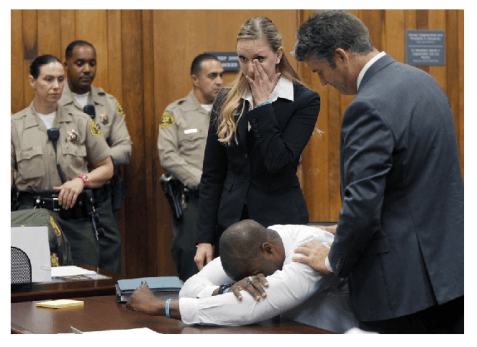
This was the case with Brian Banks—who had been accused of rape by a classmate who later, after his years in prison, confessed to fabricating the whole account. What a horrible predicament: your whole future blown up, a jury that only sees your guilt.

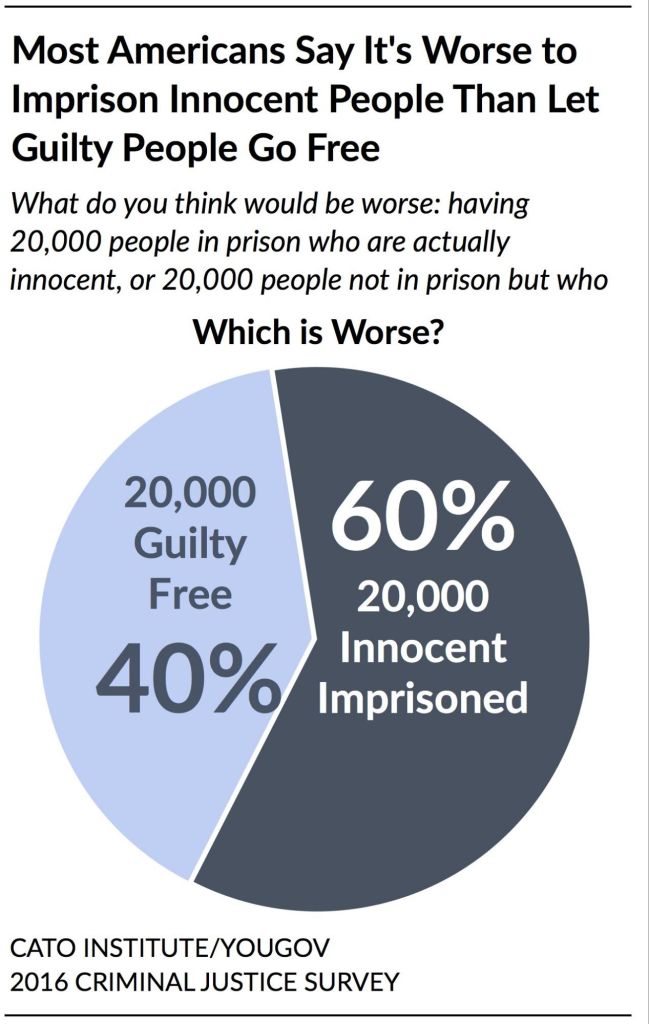
A jurist, Sir William Blackstone, understanding the imperfection of the justice system and that the ultimate goal of justice is to protect the innocent, proposed:

It is better that ten guilty persons escape than that one innocent suffer

This, the Blackstone ratio, is foundational to how things are at least supposed to work in the United States. Founding father Ben Franklin actually took the concept further by stating, “it is better 100 guilty Persons should escape than that one innocent Person should suffer.”  John Adams, while he defended the British soldiers charged with murder for their role in the Boston Massacre, argued the following:

We find, in the rules laid down by the greatest English Judges, who have been the brightest of mankind; We are to look upon it as more beneficial, that many guilty persons should escape unpunished, than one innocent person should suffer. The reason is, because it’s of more importance to community, that innocence should be protected, than it is, that guilt should be punished; for guilt and crimes are so frequent in the world, that all of them cannot be punished; and many times they happen in such a manner, that it is not of much consequence to the public, whether they are punished or not. But when innocence itself is brought to the bar and condemned, especially to die, the subject will exclaim, it is immaterial to me, whether I behave well or ill; for virtue itself is no security. And if such a sentiment as this should take place in the mind of the subject, there would be an end to all security whatsoever.

This commitment to the innocent reflects a strong emphasis on individual rights. It also seems rooted in the story most defining of Western religion, and that is the story of Jesus—falsely accused and put to death for the sake of political expediency. This has become the defining narrative and a reason to reflect on our judgment rather than react. It is why many principled conservatives are always uncomfortable with those trials in the court of public opinion where the state parades a prosecuted person and people assume this is proof of an airtight case.
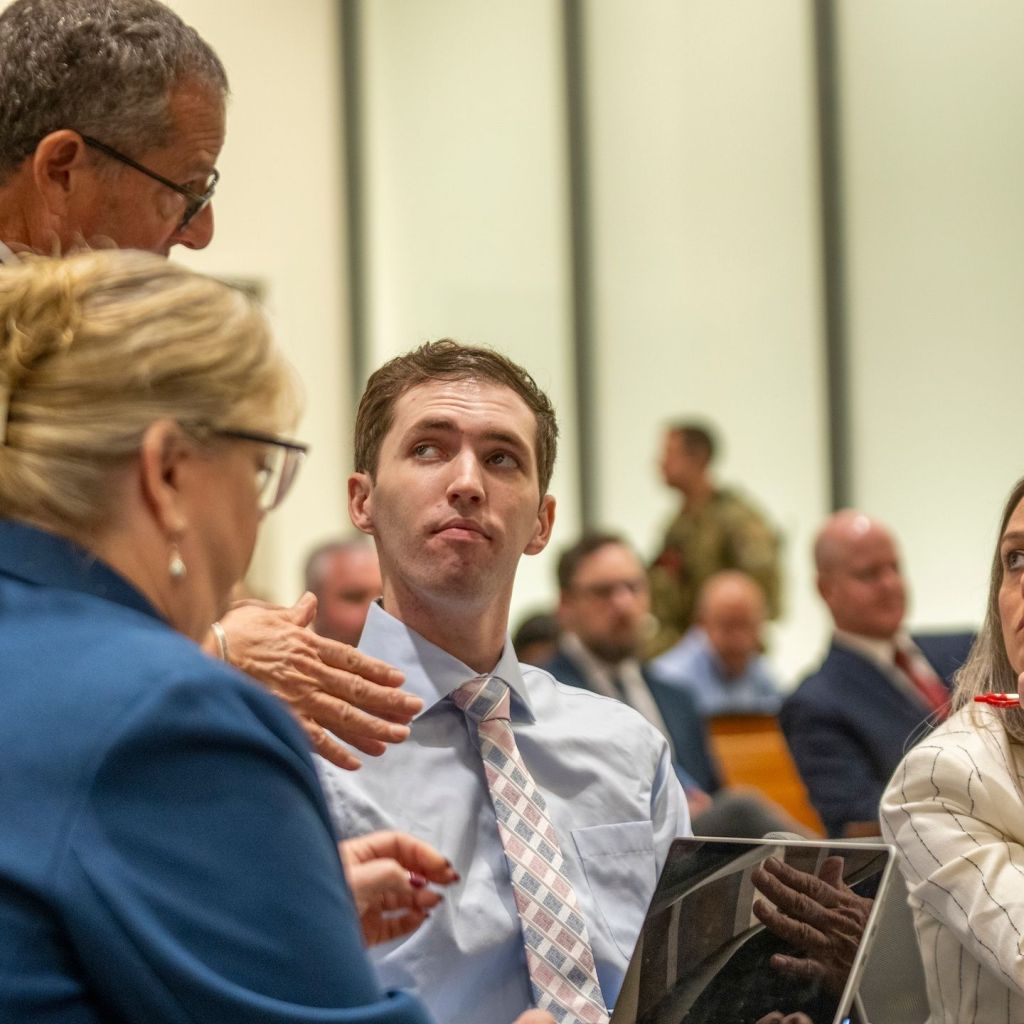
You look guilty just for being in a courtroom defending from an accusation.

Tyler Robinson currently stands accused of murdering Charlie Kirk. Some have decided his guilt to the extent of forgiving him prior to his even standing trial or being given the chance to defend himself—as if there’s just no way that anyone other than him could be involved. That’s not justice; that’s denying him a presumption of innocence and might be enabling others to escape accountability for their involvement. It is better that he go free than chance a wrongful conviction—that is just Christian.

Caiaphas’s Expediency Math: Killing One to Save All

At the completely opposite end of the spectrum from the Christian West is the example of the high priest who claimed the murder of an innocent man was necessary to save Israel from destruction:

Then one of them, named Caiaphas, who was high priest that year, spoke up, “You know nothing at all! You do not realize that it is better for you that one man die for the people than that the whole nation perish.”

 (John 11:49-50 NIV)

This may very well be the origin point of trolley problem moral reasoning, where a hypothetical situation is proposed in which an intervention will cost fewer lives. If we just switch the track, this fictional trolley only kills one rather than multiple people. And it seems very reasonable. Isn’t it better when more people survive?

Caiaphas reasoned it was better to kill one Jesus to save Israel.  But it didn’t work out that way. The entire nation—along with their temple and sacrificial system—was forever destroyed in 70 AD. The high priest’s moral reasoning was compromised and wrong. It did not save Israel to kill one man and may well have been part of what eventually led to the destruction of Jerusalem. Those who did not accept the way of Jesus continued, after his ministry ended, to kill his followers and resist their civil authorities. Had they taken one moment to reflect and reconsider their plan to kill their way to peace, they may have survived intact rather than be spread to the corners of the empire.
The problem with killing one—without a just cause, to secure the future—is that it usually doesn’t end there. Kill one and you’ll kill ten; if you kill ten, you’ll kill 100, until soon it is millions upon millions. We see this in the campaign against Gaza. Tens of thousands of children are slaughtered and this is being justified as a war against terror. The reality is that it may very well create the backlash that will make the Zionist project untenable as people see this notion of blood guilt and collective punishment as repulsive. This is not compatible with the Christian values of the West and will lead to our destruction if the escalation of war is not rejected.

The world is better when we don’t play God and use the expediency math. If you’re okay killing one innocent person, you’re now an enemy of all humanity. And if you are willing to kill one, then the second and third come much easier. Innocent life should always be protected—whether it is the life of Jesus, be it the “enemies'” children, or the  unborn. Pro-life means no excuses for the IDF that don’t equally apply to Hamas. If it is okay for the Zionist regime to kill scores of civilians as “collateral damage” for every militant killed—where even the Israelis admit the victims of their onslaught are 83% civilians—why mourn when it is just a handful in Bondi?

The best protection of innocent people, like your own, is to oppose all killing of innocent people no matter the color of their skin or the clothes they wear. If the IDF can kill a journalist claiming they are “Hamas with a camera” or “Hamas-affiliated,” then why is it wrong for Eli Schlanger, who has materially aided a genocide, to be targeted along with his associates? We need to reject this math of expediency no matter who is using it, or we can’t be upset when what goes around finally comes around.

Abraham’s Plea for Mercy: Sparing the Many for the Few Righteous

Now we can go way back, to the book of Genesis, where the world’s most powerful monotheistic religions find their foundation, and this man of faith named Abraham. We join him prior to the destruction of Sodom and have this interesting exchange:

Then the Lord said, “Shall I hide from Abraham what I am about to do?  Abraham will surely become a great and powerful nation, and all nations on earth will be blessed through him.  For I have chosen him, so that he will direct his children and his household after him to keep the way of the Lord by doing what is right and just, so that the Lord will bring about for Abraham what he has promised him.”  Then the Lord said, “The outcry against Sodom and Gomorrah is so great and their sin so grievous that I will go down and see if what they have done is as bad as the outcry that has reached me. If not, I will know.”  The men turned away and went toward Sodom, but Abraham remained standing before the Lord. Then Abraham approached him and said: “Will you sweep away the righteous with the wicked? 

(Genesis 18:17-23 NIV)

Abraham’s opening question, in the passage above, tells you a whole lot about his moral reasoning. But before that you basically have the old covenant explained in brief: The blessing that was being bestowed on Abraham had to do with “doing what is right and just” or not simply being a blood relative of him, which is something that Jesus and the Apostles explained over and over to those who saw their genetic tie to the patriarch as a sort of entitlement and did not act justly or mercifully as he did.

Continuing in the text, take time to contrast the expediency math of Caiaphas with the following:

What if there are fifty righteous people in the city? Will you really sweep it away and not spare the place for the sake of the fifty righteous people in it?  Far be it from you to do such a thing—to kill the righteous with the wicked, treating the righteous and the wicked alike. Far be it from you! Will not the Judge of all the earth do right?” The Lord said, “If I find fifty righteous people in the city of Sodom, I will spare the whole place for their sake.” Then Abraham spoke up again: “Now that I have been so bold as to speak to the Lord, though I am nothing but dust and ashes, what if the number of the righteous is five less than fifty? Will you destroy the whole city for lack of five people?” “If I find forty-five there,” he said, “I will not destroy it.” Once again he spoke to him, “What if only forty are found there?” He said, “For the sake of forty, I will not do it.” Then he said, “May the Lord not be angry, but let me speak. What if only thirty can be found there?” He answered, “I will not do it if I find thirty there.”  Abraham said, “Now that I have been so bold as to speak to the Lord, what if only twenty can be found there?” He said, “For the sake of twenty, I will not destroy it.” Then he said, “May the Lord not be angry, but let me speak just once more. What if only ten can be found there?” He answered, “For the sake of ten, I will not destroy it.”  When the Lord had finished speaking with Abraham, he left, and Abraham returned home.

(Genesis 18:24-33 NIV)

Abraham, after expressing his concern for the innocent, offers an opening bid at fifty righteous. Will God spare the entire wicked city for just fifty? And the first thing that is obvious is his humility, pleading with “I am nothing but dust and ashes” and showing his attitude before God. Second is that his orientation is toward the sparing of innocent life even if it means the evil people of the city of Sodom escape deserved judgment. This is in line with Blackstone’s ratio and in total opposition to Caiaphas, who argued to sacrifice rather than to protect the righteous one. Eventually Abraham concedes, and it makes more sense just to evacuate those righteous—nevertheless the righteous are not destroyed with the wicked.

So why is this account in Genesis?

Why is God engaged in a negotiation with a mere man?

The answer is that this anecdote is here for a reason, and that is to be instructive. The author of Genesis isn’t just telling us that Abraham was righteous—they’re giving us instruction on how to be righteous. To have the same disposition as Abraham, that’s the way to be a child of Abraham, and the path of righteousness that leads to the blessings through God’s promise. Chosen means you believe and obey the Lord. You can’t claim to be children of God, or of Abraham, if you truly share nothing in common with them in terms of your behavior or spirit. Genesis is telling us what that looks like in practice.

Christian Orientation Towards Mercy and Humanity is Truly Abrahamic.

In traversing these three moments—from courtrooms shaped by Christian reflection on an innocent’s crucifixion, to the high priest’s fateful expediency that failed to save his nation, and back to Abraham’s humble plea for mercy amid judgment—we uncover a profound reality: The orientation of the Christian perspective, underpinning American rights, is directly the opposite of the ideological lineage of Caiaphas.

The commitment, in faith, to protecting that one innocent life in a crowd of evil is to be a son or daughter of Abraham.  Those who do the opposite, who are willing to sacrifice the innocent for sake of expediency, carry none of the character of Abraham and cannot be the heirs of anything promised to him.  They must first repent of their sin—then they can be blessed, with all nations, through the one singular seed of Abraham (Gal 3:16) which is Christ Jesus.

Going back to the start and those ethics ingrained in us through a religiously derived culture and our assumptions, those who have rejected Christ and are completely willing to kill innocent people to accomplish ends are also going to manifest the other evil traits of Proverbs 6:16-19:

There are six things the Lord hates, seven that are detestable to him: haughty eyes, a lying tongue, hands that shed innocent blood, a heart that devises wicked schemes, feet that are quick to rush into evil, a false witness who pours out lies and a person who stirs up conflict in the community.

Those of us raised in an Anabaptist church got a strong dose of the Gospel according to Matthew and were taught that speech should be simple and truthful.  Let your yea be yes, and nay be nay is about truly honest conversation and credibility without relying on oaths.  We were told to have a peaceable spirit and merciful approach with all people—to be humble.  

This is an orientation that many of Christian faith may believe is universal.  Except it is not.  Ethno-supremacist pride is okay with those of certain ideologies, deception for sake of gaining an upper hand is looked at like a virtue, they look at their ability to trick you as proof they are superior, and sow the seeds of division covertly not to be caught—like this example:

In a covert operation during 2007–2008, Israeli Mossad agents impersonated CIA officers—using forged U.S. passports, American currency, and CIA credentials—to recruit members of the Pakistan-based Sunni militant group Jundallah for attacks inside Iran, including bombings and assassinations targeting Iranian officials and civilians, as part of a broader effort to destabilize Tehran’s regime amid nuclear tensions. The deception, conducted openly in places like London, aimed to frame the United States as the sponsor, exploiting Jundallah’s sectarian and separatist motives while providing plausible deniability for Israel; U.S. officials uncovered the ruse through internal investigations debunking earlier media reports of CIA involvement, leading to outrage in the Bush White House (with President Bush reportedly “going ballistic”), strained intelligence cooperation under Obama, and the eventual U.S. terrorist designation of Jundallah in 2010, though no public repercussions were imposed on Israel.

 (Overview above by Grok, read: False Flag)

Imagine having a friend who deliberately set you up for a fight against another person by telling them that you said something about them.  My son had a bully do this to him on the bus and this is exactly what so-called ‘greatest ally’ tried to do to the US.  For the Zionist regime, and Mossad, conducting the terror operation via a Pakistani proxy simply was not enough.  They wanted Iran to think the attacks originated with the US in order to provoke a reaction.  And this is how the world becomes a cesspool, all because the Iranians won’t stand idle while Palestinians are deprived of land and human rights.
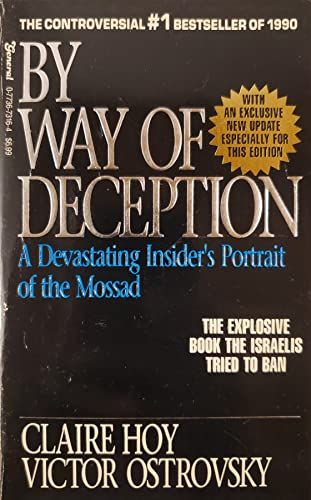
Deviousness is not exclusive to the children of Caiaphas.  But there’s no stops for those willing to kill innocent people for the sake of expediency.  And a partnership with them is only going to undermine the foundation of our civilization.  The US and ‘Christian’ West have already lost their moral reputation for this unholy alliance.  We need to repent and return to holding evil men accountable and protecting the innocent or all will be lost—we can’t exempt some from a standard of normal decency without also damaging all of Christendom.
The Madness of Nietzsche and Amish Mothers

Standard

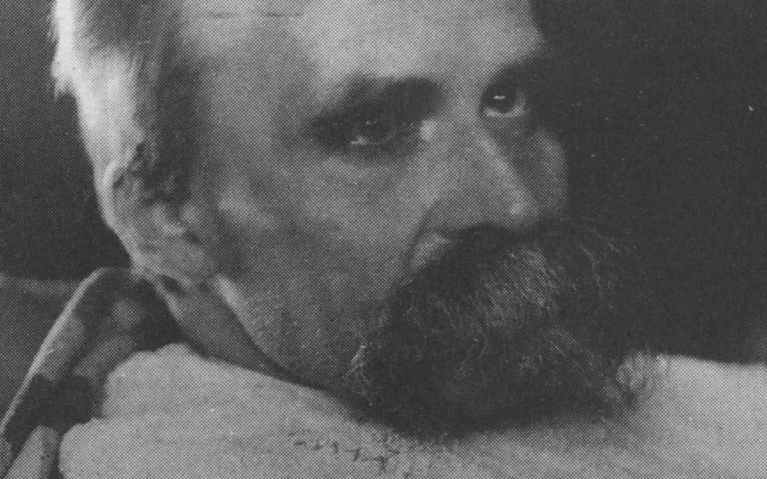
A religious fundamentalist might see Nietzsche’s “Madman” parable as an attack on faith. The German philosopher Friedrich Nietzsche’s mental decline and tragic end could seem like an obvious consequence. His bold claim that “God is dead” would naturally lead to madness, wouldn’t it?

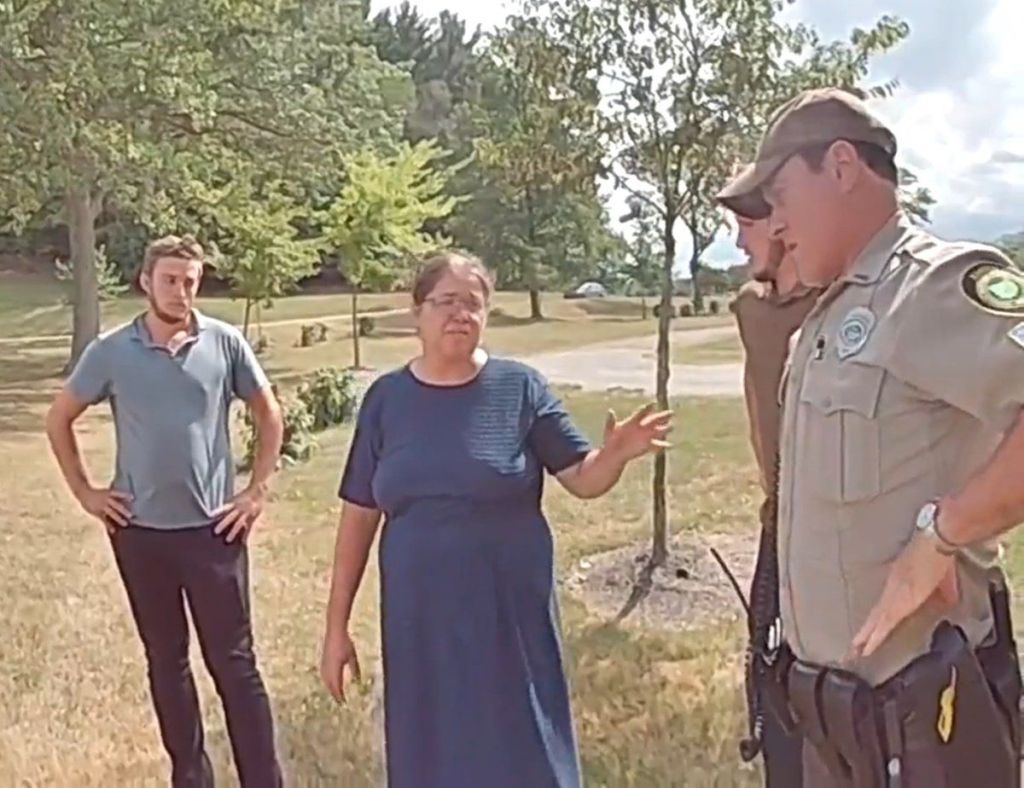
Recently, I came across the story of Ruth Miller, an Amish woman whose religious convictions led to an unthinkable act. In a state of spiritual delusion, she drove her 4-year-old son, Vincen, to a lake and “gave him to God” by throwing him into the water resulting in his drowning. This awful tragedy following immediately after the accidental drowning of her husband Marcus during a failed attempt to swim to a sandbar in an effort to prove his faith.

Both belief in God or disbelief really does not make a difference as far as our mental health. We can attribute beliefs to actions, like the divisive assumption—of black and white thinkers—that Decarlos Brown Jr. was motivated by racial animus. Or realize that our human psyche is capable of dangerous misfires no matter our skin color category or ideological affiliation. Black, Amish or Atheist, all can have psychological breaks from reality originating from family history or environmental factors.

In the case of Nietzsche, who suffered from a breakdown at the age of 44—while seeing a horse being flogged—the theories of why he declined range from neurosyphilis to the possibility of frontotemporal dementia and a brain tumor. It could be a combination of factors, and maybe the very thing that made him brilliant also part of his downfall?

Nietzsche had a busy and relentless mind, his “will to power” philosophy itself perhaps a way to cope with a world that didn’t align with what his cultural heritage told him. He had to take things to their ends, he was not content with the answers he was given and this tendency of his mind being rooted deep in the composition of his brain—progressive disease and circumstances finally pushing him over the edge into insanity?

Likewise, the Amish mother, a pious woman by appearances, didn’t process her religious teachings the same as others in her church and tradition. For better or for worse, most claim to take the Bible literally would never attempt to do the things that they’ve read in the book. In a modern context a parent who is willing to sacrifice a child to God is rightly considered mad. But for Abraham it was a proof of his righteousness:

By faith Abraham, when God tested him, offered Isaac as a sacrifice. He who had embraced the promises was about to sacrifice his one and only son, even though God had said to him, “It is through Isaac that your offspring will be reckoned.” Abraham reasoned that God could even raise the dead, and so in a manner of speaking he did receive Isaac back from death.

(Hebrews 11:17-19 NIV)

That’s one way to explain away an irrational act of Abraham tying up his child, and then putting him pyre to be a sacrifice to God. It is just plain madness otherwise. Is it really any wonder a delusional mind would follow this pattern in the Holy texts? I mean, truly, the crazier part is how we can read through this in Sunday school class without being a bit disturbed. Only when someone starts to act in this kind of ‘faith’ does anyone notice it is completely unacceptable.

Faith or lunacy?

But then we’re all mad. Half of us claim it is okay to dismember a living human being in the womb because their existence is a big inconvenience for an adult woman. While the other half thinks it is okay dismember a living human being in Gaza because of what Hamas did a couple of years ago. All seem willing to sacrifice little children in the ‘right’ circumstances. We’ll praise those who end the life of the innocent when this aligns with an imagined ideal outcome or future. We’ll all say the other is irrational and evil while justifying our own violence.

But, I digress, we should not blame the blackness of Decarlos Brown Jr. for his evil deed any more than the Amishness of Ruth Miller for what she did. The idea that we should not change our standards based on race should come with the general non-judgment based on race. Mental illness is mental illness, unbound by category. To judge actions without prejudice—based on race, faith, or even agnostic philosophy—requires us to comprehend the universal fragility of the human mind and our own susceptibility to delusion.

Snow Woke—Disney’s Female Empowerment Fairytale

Standard

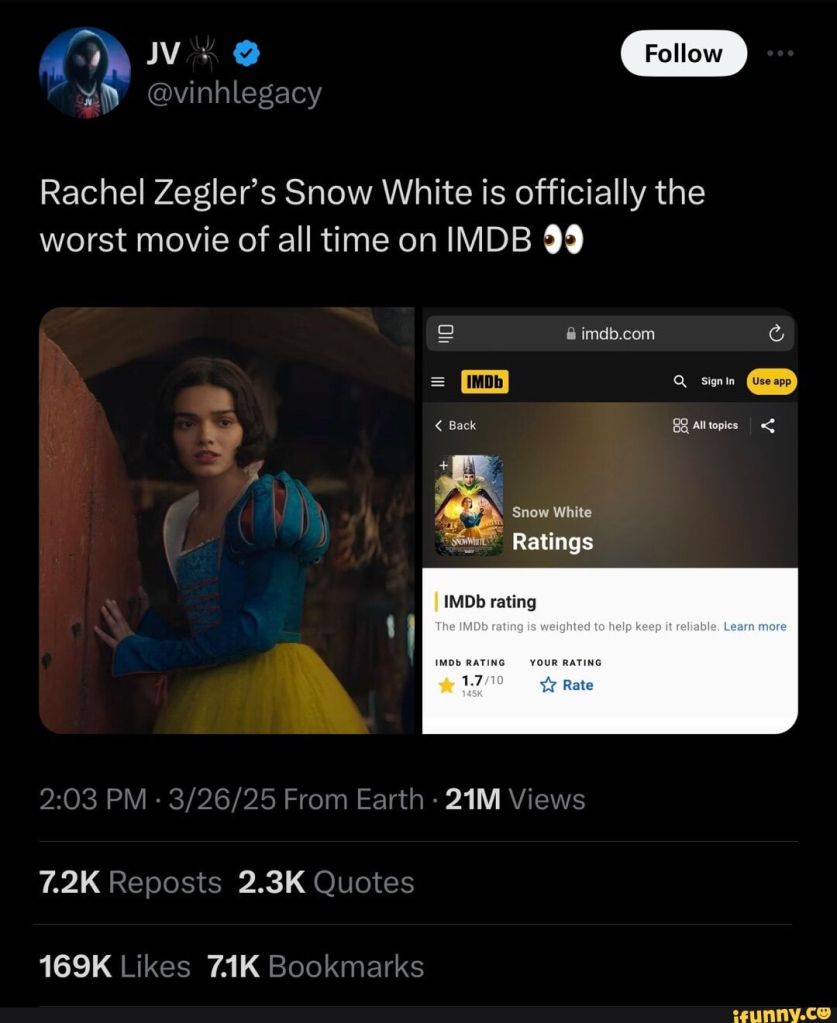
Apparently the Snow White remake bombed at the box office. We could just go with the standard “get woke, go broke” traditionalist assessment. Rachel Zegler comes off as the female equivalent of Andrew Tate—as being angry, entitled, selfish and toxic—which isn’t appealing to a broad audience.

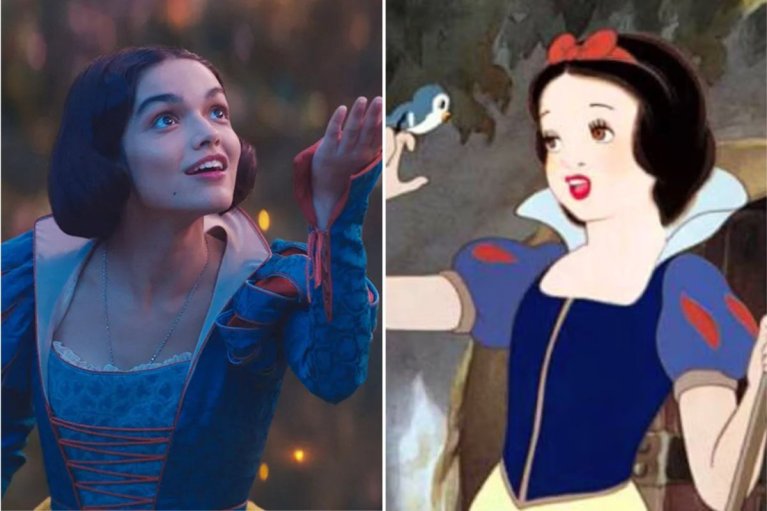
But, before we get into the remake, let’s talk a bit about the original Disney animation of the fairytale. The character deviates quite a bit from the Grimm version. For a start, the fair-skinned protagonist is half the age (7 rather than 14) and there’s no “true love’s kiss” in this original version. Furthermore, she’s a sort of blank slate archetype—not some ideal 1930s homemaker mothering a bunch of dwarfs. In short, the adaptation then was not completely true to the source material and created an image of feminity relevant to that time.

The Grimm version was darker in tone and featured a prince weirdly obsessed with a dead girl in a glass coffin. The dwarfs did not have distinct personalities. And Snow White awakened when the poisoned apple is dislodged from her throat when a servant carrying her coffin stumbles. And it was at this point the prince professes his love and proposes marriage—which she accepts.

The latest Disney live-action takes liberties in a very different direction. It is even less true to the original (other than elimination of the Disney romance) and reimagines Snow White being a sort of feminist militia leader who leads a bloodless insurrection against the usurping queen. But the “mirror mirror on the wall” remains and a poisoned apple—despite the heavy edit of the script where an empowered woman replaces the worn damsel in distress trope.

Why People Don’t Like Snow Woke

People enjoy new takes on old genres, like Shrek or Furiosa and also powerful female characters such as Ellen Ripley in Aliens, Sarah Connor in Terminator or even Katniss Everdeen in the Hunger Games.  They were relatable, we saw them develop, circumstances made them tough to survive, and audiences loved them.  What they don’t like is preachy dialogue or lack of any real character development. A Mary Sue, a hero with no weaknesses, is unrelatable. It is the problem with Superman and with the many woke adaptations of stories.

We like the image of a woman against the machine.

Christian movies have a tendency to be bad for the same reasons. They can come off a little campy or forced. Sure, it may work for drawing your ideological camp, but it isn’t a compelling story for the unindoctrinated or the broader audience. Which is not to say that movies about Christianity can’t be great for entertainment.  I love gritty true stories like that of Hacksaw Ridge or profound, like Silence, will have anyone at the edge of their seats—the key being relatable characters.

Zegler is a bit much. Totally insufferable in the eyes of some. And she plays a part that is equally annoying. The departure from the source material is just too rude. Sure, there is room for an update, but you would never reinvent Rambo as well adjusted pacifist in a mission to avoid too much sun exposure. Disney dumped the essence of the original and replaced it with another tired ’empowered woman’ cliché. You wonder if Zegler herself wrote the script with lines like, “I’m not waiting for anyone to save me” or groaner, “The fairest isn’t about beauty—it’s about justice!”

Ouch.

Oh well, at least even apologists for woke seem to understand that it is just bad. They did not even bother accusing the audience of being racist or misogynistic this time around.

Smash the Symbolism!

What is truly lost is the symbolic depth of the original tale. Snow White was beauty and purity contrasted with the vanity and evil of the obsessed queen. They gutted what made the Grimm tale a significant message about the triumph of innocence over the destructive power of pride. This, obviously, is too nuanced for a superficial sexual organ obsessed militant far-leftist to understand. The producers of the new film replaced purity of motive against cunning with a banal competition for power.

It’s not even moral inversion. They totally lost the point. It makes me think they lack any layers to their being. It’s all about their grievance and getting back at those they’ve scapegoated for their own misery. Like the evil queen, with all the power, they envy the beauty and peace of others and attempt to kill it with their poisoned apple. Snow Woke is the toxic fruit. Zegler is an icon of their privileged ‘diverse’ female with an entitled chip on her shoulder and not the slightest bit of appreciation for all the good men who made her ignorance possible.

This is not to say those who are fixated on the literal whiteness of the actress are any better. Grimm was not writing about racial supremacy anymore than woke supremecy, if anything the original story was about our transcending politics and Zegler would be perfectly suited for the role if she were able to embody that spirit. But our culture, in a desperate need of critique, it dichotomizes everything—divides the world into friend or foe, as if life is a zero-sum game and there is never anything to gain through fusion of opposites.

Zegler is as Puritanical (and Pharisaical) as a religious fundamentalist. She reframes a rescuing prince as a stalker and romance as weird. More rigid than a patriarch, more domineering than the system she is taught to loath. A preacher rather than an actual protagonist. Basically, a young idealist who wields her moral certainty with a convert’s passion, and yet stumbling into hypocrisy under scrutiny—reaping benefits of every institution she claims to reject.

The Female Power of Beauty, Gentleness and Grace

A few years ago, I was in the checkout line and suddenly noticed the cashier. She was beautiful, pale or ashen-faced, with hair that was jet black, pleasant smile and yet there was something uncanny valleyish about her appearance. I could not quite put my finger on it. But then she spoke. This would send a shiver through me. Never before did I have that sort of feeling simply by hearing someone talk. There was a certain quality to her voice that was almost child-like, soft, pure, and really threw me for a loop. And it occurred to me that this young woman was a real life Snow White.  I had not thought this would actually be attractive in person, but it had me momentarily smitten.

As it would turn out, in a later conversation, I learned she was mixed race, Filipino mom and dad of some kind of European descent, which is likely what gave her this stunningly feminine appearance. Now, no doubt this gentle exterior was cover over a tough and capable individual. She drove an old pickup truck and lived apart from her family with a sister, and may well have been a teenager or in her early twenties. In many ways she is like Zegler (who is herself a mix of Colombian and Polish heritage), but this real-life Snow White wielded her beauty, gentleness, and grace as a quiet strength that captivated without preaching, Zegler’s strident zeal turns a timeless tale into a soapbox, losing the feminine power of subtlety for a hollow shout of self-righteousness.

This is what outspoken angry feminists fail to grasp, forcefulness isn’t the only kind of power. My petite wife could never command me to do anything. I’m 50% bigger than her and have twice the upper body strength, I would shrug it off. But she does not need to force me to do anything. She overpowers me by other means. For example, early on, before we were married, she convinced me to stop drinking so much soda, she told me water is a symbol of her love “pure and clean” and when I drink it I could feel her love. I didn’t need to be told twice.

When I look at my baby daughter I would do anything for her. She’s so vulnerable—there is a strong desire to protect and defend her—I’m drawn, not compelled.

So what does female empowerment really mean?

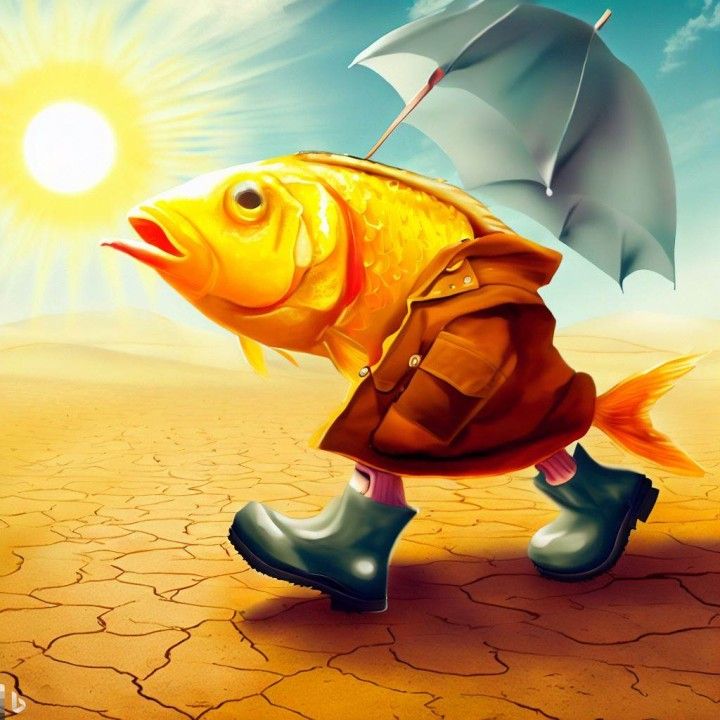
Is it empowering to a fish to be out of the water?

A visual representation of society telling individuals they need to be something else to be happy.

Humans are wired for their base biological and physical functions. Reproduction is a big part of this. It becomes clear after you see process through from courtship to baby in a carriage. Early in the pregnancy, given our financial goals, my wife had considered sending the yet to be both child to be raised by her mother. But as soon as the bundle of cuteness arrived, along with the appropriate hormones, it was never a question. Family is empowerment. My sacrifice, as a father, is more rewarding than the toys I could buy for myself as an independent bachelor.

We’re relational, not rational.

Therefore, the things we think will make us happy do not give us long-term fulfillment—the woke Zegler types are privileged, given preference as women or minorities, and yet always unhappy and looking at what others have and they do not. They are a paradox, enjoying female privilege—then miserable and wanting what men have.

It is toxic, it is their impurity of spirit, and it destroys their natural beauty and potential for true empowerment.

In all honesty, I don’t really have a problem with Zegler’s passion or outspokenness.  I guess I tend to prefer women with a real personality and feel she is right on the Gaza issue.  But what is wrong is that she’s not the right character to play what is supposed to be an embodiment of purity and the power of innocence against evil.  Snow White isn’t supposed to be Mockingjay or a story where physical force met with force—but of a different kind of power.

Ultimately, the 2025 Snow White stumbles not just as a film but as a misguided anthem, with Rachel Zegler’s shrill militancy drowning out the subtle power the Grimm tale once whispered. The original’s purity and even Disney’s 1937 grace knew strength isn’t loud—it’s captivating, like the cashier whose soft voice and uncanny beauty stopped me cold, a real-life Snow White wielding gentleness over force. My wife, too, overpowers me not with commands but with a love pure as water, turning a stubborn man into a willing protector, and just as our daughter’s vulnerability stirs my soul to shield her. Zegler’s remake, obsessed with preaching justice over enchantment, misses this: true feminine empowerment doesn’t need a megaphone or a militia—it’s the quiet, relational magic that binds us, a truth the poisoned apple of ‘Snow Woke’ chokes out, leaving a hollow echo where a fairytale’s heart once beat.

Closer Than Blood…?

Standard

Did you know that mothers actually have the blood of their children (born or unborn) in their veins?

It is astonishing, really, but motherhood isn’t actually a one-way relationship. It is symbiotic. The child provides their own blood for the benefit of their mothers. And once the child is born there’s the release of a hormone (Oxytocin) which leads to that special bonding and attachment that mothers have with their children.

Blood relatives can be our closest friends. We share some of the same genetic material and often intimate experiences as well. My siblings and cousins understand my humor, we think alike in many regards, and sometimes I wonder if I have any true friends that aren’t family. I certainly do not trust anyone, besides Charlotte, the same as I do my own relatives.

Don’t get me wrong either. I know many good people, some who might literally give me the shirt off of their back, and yet I’ve had so many friends like that who have faded out of my life.

The Quote…

The fraternity of Christ, is closer than the fraternity of blood.

St. Ambrose of Milan

Is a statement actual truth or wishful thinking?

This is what the body of Christ is supposed to be. A brotherhood, a group of people who carry burdens and cry together, who cheer each other on and encourage, who have real intimacy rather the superficial, make small talk, kind of relationship. The kind of familial investment that goes to bat for others in the Church, as St. Paul did speaking on behalf of Onesimus:

Therefore, although in Christ I could be bold and order you to do what you ought to do, yet I prefer to appeal to you on the basis of love. It is as none other than Paul—an old man and now also a prisoner of Christ Jesus— that I appeal to you for my son Onesimus, who became my son while I was in chains.

(Philemon 1:8‭-‬10 NIV)

When I read that quote of St Ambrose, a couple of days ago, it provoked me to reach out to someone that I love in that way and still did after a sort of falling out. It remains to be seen if that effort, to be a brother, will bear fruit or only widen the divide. But one thing is for certain, no matter how this goes, and that is that relationships that are “closer than blood” have not been my own experience yet.

Sure, the good church people will use weighty words like “brother” and “sister” to describe their relationships, but is it truly reality or is it a faux closeness like those social media scammers trying to exploit religious strangers for personal gain?

Maybe, in this time of social fragmentation and community disintegration, where many children are raised without both of their biological parents, we have lost some of the meaning of these words?

Community, for example, should mean living in close proximity and sharing in common. People used to work and worship with the people who lived in close proximity to them. Now I barely know my next-door neighbors and then drive thirty minutes to ‘fellowship’ for a couple of hours. And then there’s those who watch a sermon at home and make-believe that’s being part of the church. I mean, might as well take it all the way and spend the afternoon gardening, right?

Is It All Fake?

One of my memories, in the church I grew up in, was pastor Sam slapping down a transparency onto the overhead projector, and starting with his wonderful baritone, “You may notice we say brother and sister ’round here…” He was certainly sincere. A fatherly leader in a denomination that neglects such things. Once he caught a hint that I was a fan of high school football he would always ask me about the game. I have fond memories of the times spent in the Corderman’s living room even after leaving my Mennonite roots.

And yet not all there got the memo. We were more glorified acquaintances. Sure, we would smile, shake hands, and make small talk together. There was also that cultural and ethnic component that did give a kind of closeness. There were also those last vestiges of the Anabaptist barn-raising spirit. However, like those veils on the female heads or the foot-washing rituals, it all seemed to be mostly symbolic. A father might set his own son up in business, but no man in the church would ever think of doing the same for a non-family member in the congregation. It was superficial closeness.

Amish community spirit…

I’ve heard it explained before that religious groups hijack the language of family to create a false sense of closeness. At first, I had bristled at this suggestion. It felt like they were trying to discredit this special spiritual bond that people of like faith share. However, if we were close as family, let alone closer than blood, would we even need to use this familiar language? Wouldn’t it just be self-evident, like when Charlotte told me she would rather die with me than go on living without?

It is in that weird territory of language, like when some feel compelled to pray in old English as if this somehow reverences their prayers or those hypocrites that Jesus condemned for their love of important titles. One starts to be able to see through the pretense. There’s a vast difference between the man who treats you as a brother, offers protection, like big Tony Fisher did for me in school, and the people who use the right terms as a way to acquire resources or maintain status.

But, for me, those intuitions only came after being played a fool many times.

And perhaps I learned that lesson a little too well?

It’s Not You, It’s Me

I have trust issues.

And I’m not completely sure why.

It could have something to do with my premature birth and spending my first weeks in a plastic box rather than bonding with my mom. It could simply be a natural disposition. But I do know that I was the one child in my family who had separation anxiety and would go into panic mode if my mom would leave me for a moment to take out the trash. I was clingy and fearful.

Still, I was an extremely trusting person at one time, and long before I knew names like Jerry Sandusky or Jeriah Mast, when I lived in this sort of “Leave It To Beaver” world where people were true as their smiles and everything worked out in the end.

And that’s how childhood should be. Children may pretend, but they don’t put on masks in the same way as an adult and tend to be open about their intentions and accepting of even strangers. It is often easier to talk to eighteen-year-old girls than it is to have a conversation with those that are in their mid-twenties and that’s likely because the latter group understands that male attention usually means romantic interest. We become cagey as we become older, it is a way to protect ourselves from those who might do us harm or simply defile with their hopes of more than we’re willing to offer them.

For me, everything went downhill after puberty and with that gradual (often excruciatingly painful) loss of innocence. One of my earliest memories is walking hand in hand with my cousin when we were five years old. I don’t even talk to her anymore. She’s married to a privileged wackadoodle and didn’t appreciate my opinions of where his far-left politics will lead. Even if that weren’t the case, we probably wouldn’t be holding hands anymore even if we were on better terms. I mean, I would, because I still have fond memories, and yet I’m weird.

Anyhow, my own fear of rejection, a product of my purest hopes being smashed over and over again, has metastasized into disillusionment. I have a hard time trusting. I start to pull away when I sense the slightest bit of phoniness in another person. Call it despair, call it depression, I prefer to think of it as preserving what little sanity I have left, but I don’t want to have fake friendships anymore. I’m tired. Exhausted by it all, truthfully, and simply want to withdraw to the safety of not caring or concerning myself with those who are only going through the motions.

Impossible Expectations, Loving Our Dysfunctional Families

My expectations are impossible. But, then again, they should be. We are told, in Scripture, that with faith all things are possible. And, therefore, if someone declares otherwise, says that they can’t love or live as a Christian ought to live, it is because they lack faith.

Either that or it is all made up.

The thing that has most fed my own fear and doubt, is how people in the church don’t really act any different from people outside of it. In other words, if we don’t act like family then are we even Christians?

My Orthodox parish has a good number of converts and some older singles like me. There is a sort of closeness that came initially, as we traded stories about our experience, and it was very exciting for someone who had looked for depth elsewhere and had come out disappointed. However, there is this class, a sort of misfit club, of converts that is very similar to the Protestant fundamentalists of my past. They are really caught up in getting the Orthodox rituals right and somewhat neglecting as far as the meat of faith which is this self-sacrificial familial love.

My moon shot…

The thing is, I came into this damaged. I had shot for the moon, in faith, and somehow ended up in Williamsport, at Holy Cross, wondering what happened. My expectations were low and it wasn’t about the “smells and bells” to me. There was a combination of things that brought me, excellent theology, Fr. Anthony’s fatherly care, and a connection to the ancient Church. Since I knew no one local who was Orthodox, I went in simply seeking a place to worship and not expecting much. But I did meet many good people there, some who did embrace me as family, I’ll never forget that old woman (I can’t even recall who it was) who warmly told me “welcome home” after my Chrismation.

As with everything in faith, familial love is a work in progress and there are bound to be many failures along the way. At best, we’re a dysfunctional family, like many American families, caught up in our own lives, acting like Protestants when things don’t go our way, and not as truly full of love and grace as we are for our own blood. My want of perfection, and pursuit of the impossibility, must first and foremost mean that I love those who are difficult to love, love who let me down and abandon me, and let God judge those who do not meet my own expectations.

Therefore, as God’s chosen people, holy and dearly loved, clothe yourselves with compassion, kindness, humility, gentleness and patience. Bear with each other and forgive one another if any of you has a grievance against someone. Forgive as the Lord forgave you. And over all these virtues put on love, which binds them all together in perfect unity.

Colossians 3:12‭-‬14 NIV

What Is Love, Friendship, Humanity?

Still, the thought that plagues me most and probably always will is this question of if real love even exists at all. I’m not talking about those passing feelings of fondness we have for another person, but that spiritual bond and willingness to sacrifice ourselves for the good of others. As I’ve posited before, there is a selfish component to love. Not only those who say they “love” someone and then kill them in a jealous rage either. But it seems that it is impossible to love without getting something in return.

It is always nice when a server pays attention to me. I would certainly like to believe that they like me. And I’m guessing a few would actually enjoy spending time with me outside of work too. I’m a polite and considerate guy, I also tend to lay a heavier tip when there’s some conversation that comes along with the meal. I do, indeed, go out because staying home would be lonely and alone since it is simply too hard to coordinate plans with friends or I don’t know whom to ask. So I’ll pay for that time with another human. But it can also be unfulfilling. The relationship could have an element of truth and yet really it is centered on the economic transaction or they would be inviting me to hang out when they’re not on the clock.

There is a scene, in Blade Runner 2049, a science fiction thriller about what it means to be human, that illustrates the point. The story follows, K, a “replicant” (or bioengineered ‘human’), and his relationship with his girlfriend named Joi. Except she is not flesh and blood, not even human, but artificial intelligence, software on a computer, with a holographic projection. Still, despite this, the relationship is real. And, when the device containing her (their memories together that made the interaction meaningful) is crushed, he mourns. As the audience, you feel some pain. Yet, later, an interactive sign, with her likeness, uses the same pet name, and it is obvious that the original Joi was programmed to “fall in love” with anyone who wanted companionship.

The part that gets to me is how hormones and the positive feedback loop of emotions is, practically speaking, the same as programming. So how are the emotional responses we receive from others any more authentic than that of Joi?

What about our own friendships?

Why do we favor some people over others?

Do we love people or do we merely enjoy what benefits we get from them and that’s why we show such strong preference. Sure, there are some who are kinder and more willing to give attention to the unattractive or social outcasts. However, as far as real commitment, ongoing investment, we generally spare that for those most likely to produce a return. In other words, we love those who do what we want them to do, have something we want in terms of their physical form, intellect, or other abilities, or simply feel drawn to as a result of our coding and subconscious desires.

And then we expect people to stay at the level of friendship assigned to them. One sure way to make things awkward is to make an expression of love that is more intimate or deep than the level the other person wants. Asking a girl on a date is a good way to get put on her blocked list, to get an industrial strength cold shoulder, and even if she was seeming to enjoy the relationship up until then. Why? Well, maybe the ‘friendship’ was a social obligation more than anything authentic? You just know, when push comes to shove, most on your social media friends list aren’t going to be there for you, or at least not like blood relatives.

The Impossible Love

Still, I’m not comfortable with this mechanistic, bound by programming and mere product of circumstances, perspective. If love is not a choice, if we can only love those who are attractive, have resources we want, or are this sort of enjoyable reflection of ourselves, then we would not have agency or the ability to follow the commands to love God and our neighbors. Can we really do that? Do people ever go beyond and actually transcend themselves by loving those whom they would not naturally love?

I’m not sure, when I look at the Christian experiment, that I see much evidence of these relationships that are closer than blood. I mean, maybe, if we were willing to “fake it until we make it” then we would be able to overcome. Isn’t that what faith is really about, doing things that are uncomfortable, going against our own natural condition, or an exercise? I’m pretty sure my grandparents didn’t always feel like loving each other and yet going through the motions of a relationship, in those tough times, is how their love became such pure gold. Sixty years of marriage is impossible for many today because they’ve decided to be ruled by what is comfortable at the moment.

So when church people say they can’t love, and I’m talking about any kind of love, what they’re actually saying is that they don’t believe. It is agnosticism, denial of the humanity of another, and have refused to see the command of Christ as being actually true. When we decide we can’t love as we ought to love or pretend that we are loving while we truly are not, we are essentially making Scripture into a lie. At that point we are nothing but animals following after our programmed instincts and selfish desires. Do you truly love the body of Christ as much as you do your own blood?

I’m not there yet…

Assaults, Allegations and Justice For All

Standard

It was an open and shut case. A young woman reported that she had been drug into a stairwell at school and raped. The young man, seventeen, enters a guilty plea and is sentenced as an adult. He will serve five years behind bars, then five years of strict probation, and will need to register as a sex offender for the remainder of his life.

Justice served, right?

That’s the story of Brian Banks, a high school football star, accused of rape by his classmate, Wanetta Gibson, and threatened with forty years to life on the basis of her allegation. His legal counsel, despite Brian maintaining that he was innocent, feared a conviction and advised he go the route of a plea bargain—so that’s what the young man did.

He served his time. He had asked the California Innocence Project to take up his case, but they declined because there was a lack of evidence to prove his innocence. It seemed Brian would spend his entire life, denied opportunities, treated like a sexual predator, and unable to clear his name—all on the basis of her words. I mean who, besides his close friends and family, would believe him, that he had been falsely accused? Doesn’t every rapist claim to be innocent?

But then something extraordinary happened. His accuser, Wanetta, recanted her story (privately) and confessed that she had fabricated everything. Finally, Brian’s name was cleared. His accuser, who had won a 1.5 million dollar settlement against the school, was sued to recoup the money paided to her and has since failed to show for her court dates. Brian had a brief NFL career after this and is now an activist for those wrongly convinced.

The “only” who are falsely accused…

“The ruthless will vanish, the mockers will disappear, and all who have an eye for evil will be cut down— those who with a word make someone out to be guilty, who ensnare the defender in court and with false testimony deprive the innocent of justice.” (Isaiah 29:20‭-‬21 NIV)

There is an oft-repeated claim about the frequency of false accusations being “only” 2-10%. It is a number often used by those trying to downplay the possibility that a man is innocent.

But what is the basis for this number?

The number itself is an estimate. It is based on various studies, studies like one published in the Journal of Forensic Psychology from 2017, that compare numbers of claims deemed false or baseless after an investigation. They found that between the years 2006–2010, out of 87,000–90,000 accusations of rape a year, that around 4,400–5,100 of the reports were deemed false or baseless—that works out to roughly 5.55% of allegations being determined to be false.

However, what a study like that does not take into account is that some accusations of rape are entirely baseless despite an investigation that leads to a conviction. Brian’s case is a prime example, he was found guilty despite his innocence and only exonerated because the woman who accused him later recanted her tale. There could be many more men, convicted on the basis of a false accusation, who are never exonerated because their accuser never recants.

Brian’s story is extraordinary in that his accuser was caught in her lie. However, that’s not always the case. (Not to mention, he had already served five years.) There is really no way of knowing how many, convicted on the word of an accuser, may actually be innocent despite their entering a guilty plea and being convicted. So we really do not know how many accusations are false accusations based on convictions

But, more glaring than the possibility that the number of false accusations could be far higher, is the very reality that thousands of accusations per year are false.

That is, put another way, 4,400–5,100 lives (and potentially more) with their lives turned completely upside down by a false accusation. This could be your own father, brother, nephew or son. Thousands are accused, even imprisoned, and are actually completely innocent—that is an “only” that should slow us from rushing to judgment in the case of an allegation.

That said, not near all rapes and sexual assaults are reported.

“Speak up for those who cannot speak for themselves, for the rights of all who are destitute. Speak up and judge fairly; defend the rights of the poor and needy.” (Proverbs 31:8‭-‬9 NIV)

It is important, at this point, to note that there are many who are victims of crimes that were never reported. I personally know multiple cases of men and women who were sexually molested and/or raped and never reported the assault to authorities. They were abused by family members, grabbed in the groin by a coworker, raped by their boyfriend and there was no police report of the incidents. That too is a sad reality, a traumatic experience that many live with, that should not be ignored.

According to the Department of Justice, in a 2014 report, an estimated 34.8% incidents of sexual assaults are reported to authorities. That is to say that only 3 or 4 out of ten sexual assaults are ever properly investigated and adjudicated.

Now, that this is NOT to say that there is an equal number of rapists to those unreported incidents.

According to a report about repeat rape among “undetected” offenders, repeat rapists “average 5.8 rapes each” and thus the number of undetected rapists is only a fraction of the number of victims. In other words, only a small number of men account for the majority of the incidents and this is precisely why people should report criminal incidents—reporting in a timely manner will protect other people from repeat offenders.

It should come as no surprise, then, that someone who was raped would not report it at the time it happened. Likewise, it should not be a surprise that many rapists continue their life free of consequence for their actions. This is an unfortunate reality of the world we live in, it is the reason why we should always take allegations seriously even if they come out years and years after the assault is said to have happened. There are many unreported assaults, people come forward at different times for different reasons, and this is something to always be aware of in our analysis of reports.

We can (and should) take a clear stand against all forms of abuse.

There is a false choice out there. There are some who deny allegations on the basis of false reports. There are others who dismiss claims of innocence and downplay false allegations as insignificant on the basis of under-reporting statistics.

But we should not choose one or the other. It does the real victims of sexual assault no good to presume the guilt of a man simply on the basis of accusations. It also is wrong to side against an accuser because there are false accusations or they haven’t reported the event immediately after it happened.

We should never disregard an allegation off hand. We should never decide someone’s guilt or innocence by a mere claim or statistics. We can both take sexual abuse allegations seriously and also be reasonably skeptical of the accusations. When pressured to take the side of an accuser or the accused we should take neither side and take the side of justice instead. Every case is different. Every court is different. We must be wise.

Know your own bias and adjust your judgment accordingly!

Still, we all tend to see things from a biased perspective. In the case of Brian Banks, the prosecutor and other authorities believed he was guilty on the basis of the testimony of the young woman. These were well-educated people, people aware of bias, and yet they failed him. In many other cases, there is undo skepticism of those coming forward with allegations and denial of justice to victims of abuse. Both of these things must be guarded against. A person making an allegation should be heard and their story believed. An accused person should be presumed innocent until proven guilty and not be denied due process.

Ultimately, if an allegation falls within the statute of limitations, it is the responsibility of the police to investigate and the job of the courts to decide based on the evidence that they have. I prefer that we side with the evidence, that a charge must be proven beyond a reasonable doubt, and that defendants not be tried in the court of public opinion, perp-walked or treated as if guilty unless there is evidence that proves beyond a reasonable doubt:

“It is better that ten guilty persons escape than that one innocent suffer” (Sir William Blackstone)

Two wrongs never make a right. As much as we want justice for the victims of sexual abuse we should not neglect justice for those accused. It does the true victims no good to create another victim by locking up those falsely accused and truly innocent. We should not punish anyone for a crime that they did not commit and especially not as a result of our prejudice against their race, gender, religion or other a defining characteristic.

We need to be a voice for justice.

False accusations, from the Salem Witch Trials to Emmett Till and everything before or after, come because there is power in making them. An accusation can bring a confirmation hearing to a grinding halt, it can cause questions about a political rival’s character that didn’t exist before and mere words can destroy lives—therefore we must always stand for the rights of the accused.

That said, we must never deny the oppressed, we should have compassion for those abused and especially for abused who have remained silent for fear of not being believed or other reasons—therefore we must always be a voice for the abused.

May God give us wisdom!

What does Charleston say about us?

Standard

There are many who react to the church shooting at Charleston’s historic Emanuel A.M.R. Church by blaming availability of guns and decrying racism.

But one thing missing from the discussion, that is a victimhood mentality and the idea that all people of a particular race are guilty because of the acts of a few. 

When Dylann Storm Roof walked into the doors of that church he was armed with two ideas: 1) his tribe (white people, women, etc) were the victims, and 2) their tribe (black people) were collectively responsible for black rapists, perceived injustice, etc.

It was the ideas that this depraved young man harbored in his heart that were dangerous.  However, these ideas are not unique to him or just to unreasonable and angry white men.  These are ideas accepted accepted in mainstream thought that divides people into falsely dichotomous categories.

Who kills the innocent? We do!

Ideas that white is equal to privilege or black is equal to victimhood are equally dangerous.  When we feed the martyr complex and victimhood mentality we are giving license to those of an even more deranged mind to take it a step further. 

The problem with Roof and those like him (of all races, genders, etc) is not what they do—but that they feel justified to do it.  We can fret about availability of guns and a multitude of other factors, but until we address the heart issue we are only treating the symptoms.

We won’t stop a person bent on evil and destruction with more legislation.  If anything more law will only create the next inequity and give some other person reason to feel disenfranchised.  But what we do need is to unravel the false dichotomies and prejudice assumptions that fuel hatred.

Being on the ‘right’ side of history…

We are urged to be on the “right side of history” yet the problem is that everyone (including Roof) feels they are on the ‘right’ side and justified.  Jesus encountered this in the Pharisees who thought themselves better than other people and superior to their own ancestors:

“Woe to you, teachers of the law and Pharisees, you hypocrites!  You build tombs for the prophets and decorate the graves of the righteous.  And you say, ‘If we had lived in the days of our ancestors, we would not have taken part with them in shedding the blood of the prophets.’  So you testify against yourselves that you are the descendants of those who murdered the prophets.”  (Matthew 23:29-31)

There are many sanctimonious today who think they are superior to other people.  They may decry the injustices of the past, support punishment for those they hold responsible and blame, but they themselves often as guilty or more of similar abuse.

Is an anti-abortion activist who calls women entering a clinic names or murderers a provider any better than those they accuse? 

Is a person who labels others as “racist” or “homophobic” or “hateful” in response to a disagreement over opinion less abusive than a person who uses the n-word?

I say, no and no. 

The solution to hate is not to be hateful.  As Mahatma Gandhi wisely observed: “An eye for an an eye only leaves the whole world blind.”  What he observed is the same as when Jesus quipped that those who live by the sword will die by it (Matthew 26:52) or ‘what goes around comes around’ in essence.

We make a difference by being different…

Everyone has reason for their own abuses.  Many of the most abusive people in history believed they served a righteous cause.  Many people can identify the sins of other tribes or the prior generation, but few seem able to see their own abuses.  We prefer to keep the spotlight on those whom we perceive to be worse than us than we are interested in searching out the wickedness of our own hearts.

Ben Carson spoke well:

“You know, we have a war on women, race wars, income wars, age wars, religious wars. Anything you could imagine, we have a war on it… And we’re giving people a license to hate people who disagree with them.”

We need to stop arming ourselves with contempt and be committed to loving as we wish to be loved.  It is easy to love our own and hate others, but divine love seeks unity rather than encourage division.  It sacrifices self rather than perpetuate cycles of violence.  It brings grace to the fight even when vengeance feels justified.

Grace saves us…

It is the Spirit of love like that of Marcus Stanley, who was shot eight times but lived, and chose grace in response to hate:

“I don’t look at you with the eyes of hatred, or judge you by your appearance or race, but I look at you as a human being that made a horrible decision to take the lives of 9 living & breathing people. Children do not grow up with hatred in their hearts. In this world we are born color blind. Somewhere along the line, you were taught to hate people that are not like you, and that is truly tragic. You have accomplished nothing from this killing, but planting seeds of pain that will forever remain in the hearts of the families that lost their lives and countless hearts around our country.”

Let’s not fall victim to those who would divide us into categories, but instead seek the unity of all people only possible with a love that tears down walls, bridges divides and believes when others say it is impossible. 

May those seeds of Roof’s hate stay dead and the love of Jesus in Stanley’s gracious response grow in us.  The answer is not more or less guns nor petitions against flags and protest, it is less hate and more Jesus.

“Do not be overcome by evil, but overcome evil with good.”  (Romans 12:21)

A Mother’s Response: Forgiveness or Vengeance?

Standard

Dzhokhar Tsarnaev has been tried and found guilty of playing a role in the deadly Boston Marathon bombings. I have not studied the evidence against him, but a jury has decided that the evidence implicates him as being guilty of all charges and he awaits sentencing.

His mother, interviewed on WhatsApp, unleashed a tirade in response. She refuses to believe her son is guilty of anything, she alleges conspiracy and promises vengeance. If there’s truth to the saying about the apple not falling far from the tree, then one could wonder if her son wasn’t just following after her example.

An innocent man killed and forgiveness offered

Walter Scott was gunned down while trying to flee from a police officer. Clearly the use of deadly force was unwarranted and the officer who pulled the trigger has been charged with murder. It is a tragedy for two families and a grave injustice to one.

Scott’s mother has ever reason to be upset. Her son (besides being back on his child support) was innocent, had no trial, and was shot in the back. However, in a CNN interview, while clearly heartbroken, she would not take her interviewer’s bait and offered forgiveness.

Which mother more closely represents you?

The contrast is amazing. One is a picture of beauty and grace; a real taste of heaven on earth. The other seems to be painting a path that can only lead to indiscriminate violence and more destruction. One is a solution to the cycle of violence and a way to peace, but the other is fuel for hellfire.

The world will not be made better by those who take vengeance themselves. I hope more choose the way of forgiveness of even a terrible injustice. Choose love over hate.

“Do not take revenge, my dear friends…” (Romans 12:9a)

409

Standard

“There is a case for telling the truth; there is a case for avoiding the scandal; but there is no possible defense for the man who tells the scandal, but does not tell the truth.” G.K. Chesterton

A few years ago a man I respected greatly became the center of a media frenzy that ended his storied career as a coach and respected mentor.  The popular narrative at the time was that he had participated in a cover-up and sheltered a sexual predator.  It was an idea based in speculation rather than actual fact, there wasn’t even a semblance of due process before he was fired (literally in the dark of night) and yet with sanctimonious glee many presumed his guilt.  It was disturbing to watch for a person actually concerned with justice.

The man, Joe Vincent Paterno, had coached football at Penn State from 1966 to 2011 and during the time had amassed 409 victories.  But his biggest contribution was not on something recorded in the Sunday morning paper. What earned him a spot in the hearts of many who cared very little about football was his character and concern for bigger things.  He was loyal to the concept of student-athlete, was a trailblazer for civil rights once standing up to an opponent that requested some of his players not participate because of their skin color and practically built the university library through his donations.

Obviously none of the accolades one can list about him would excuse Paterno if he were truly guilty of what many had surmised.  But it is a record that should call us to question the narrative as presented and keep us from joining in a rush to judgment.  Well, the push back has begun and the facts seem to support a less damning verdict.  It is for that reason the NCAA has relented on the punitive measures they took against Paterno and that punished athletes who had nothing whatsoever to do with anything criminal or morally reprehensible.

Still, there are some blowhard moralizers who still refuse to ‘get it’ and insist on painting a whole community as willfully ignorant for not sharing in their own surmising and their own selective memory.  Among them sticking to the presumptuous early narrative is Keith Olbermann who blasted those who celebrate the restoration of a legacy that includes 409 wins.  His persistent to neglect fact in his prosecution of Paterno and Penn State fans the subject of an ‘open letter’ response…

>>>click here to read it<<<