Dismantling of the Penn State Colossus

Standard

Growing up, college sports, or even sports in general, were not part of my world. My father didn’t toss a football with me in the backyard or gather us around the TV for games—work was his recreation, and that was our normal. I had no reason to care. But something shifted later in high school, culminating in my going out for football my senior year, and I found myself very drawn to Penn State, captivated by the legacy of Joe Paterno and the blue-and-white pride that defined it.

In the years just prior to my tuned in, Penn State had soared to new heights, claiming two national championships and cementing its place as a powerhouse. For that fleeting moment, the Nittany Lions were the best in the gane. State College, just to the west of me, was the heart of this empire—a house that Paterno, a son of Italian immigrants from Brooklyn, had built. He was not just a coach; he was a living legend, embodying the loyalty, community, and tradition that made Penn State more than a football team—it was a shining symbol of our American values at their finest.

I didn’t love Paterno because he won every game. In fact, other than a Rose Bowl win, the program had definitely taken a half step back from the prominence of the 1980s. It was their “success with honor” mantra and Paterno’s commitment to the “kids” as part of his “Grand Experiment” philosophy that had attracted me. Paterno’s stated mission was not only to win on Saturday, but to build men through the game. At least according the brand, the win at all costs attitude was anathema. We are Penn State meant being at a higher standard on and off the field.

The Scandalous End of an Era

There are many good things that Paterno is rightfully remembered for. But history is not kind to those not true to their values and the legacy of “success with honor” is not what any of us wanted as fans from a distance. The man who lived in a very modest house adjacent to the campus—and had donated $4.2 million to the university library—was embroiled in a situation completely at odds with the character of his program. This, of course, being the horrific revelations about Jerry Sandusky—a former Paterno assistant—who was found guilty of sexual abuse of children and was for years according to the allegations.

Shock and denial are a natural response as a defense mechanism. Penn State fandom was more part of our identity where the “We are” was supposed to be a call to a certain moral code and standard. It was supposed to be about more W’s on Saturday and thus it was unthinkable that there was a sexual predator potentially being protected by the program. Those of us who accepted that it happened still wanted to minimize and keep it separate from the man who had preached excellence on and off the field. To this day this is something to be wrestled with—what did he really know and when?

My current stance is that Paterno prioritized the program over everything else. Similar to how religious institutions (like CAM or the Catholic church) too often try to deal with embarrassing issues internally—as a way to minimize fallout—there’s always the desire to save the ‘mission’ by undermining pursuit of the full truth or actual justice. In the end this little leaven of a moral compromise for sake will leaven the whole lump. However, expediency often trumps principles and the putting of reputation first started with Todd Hodne, in the 1970s, when the rapes of the prized Long Island football recruit began to be known. Paterno wanted to deal quietly with these kinds of ‘problems’ and it would blow up in his face at the end.

Hodne was a violent and vile predator.  Initially the rape allegations were hushed.

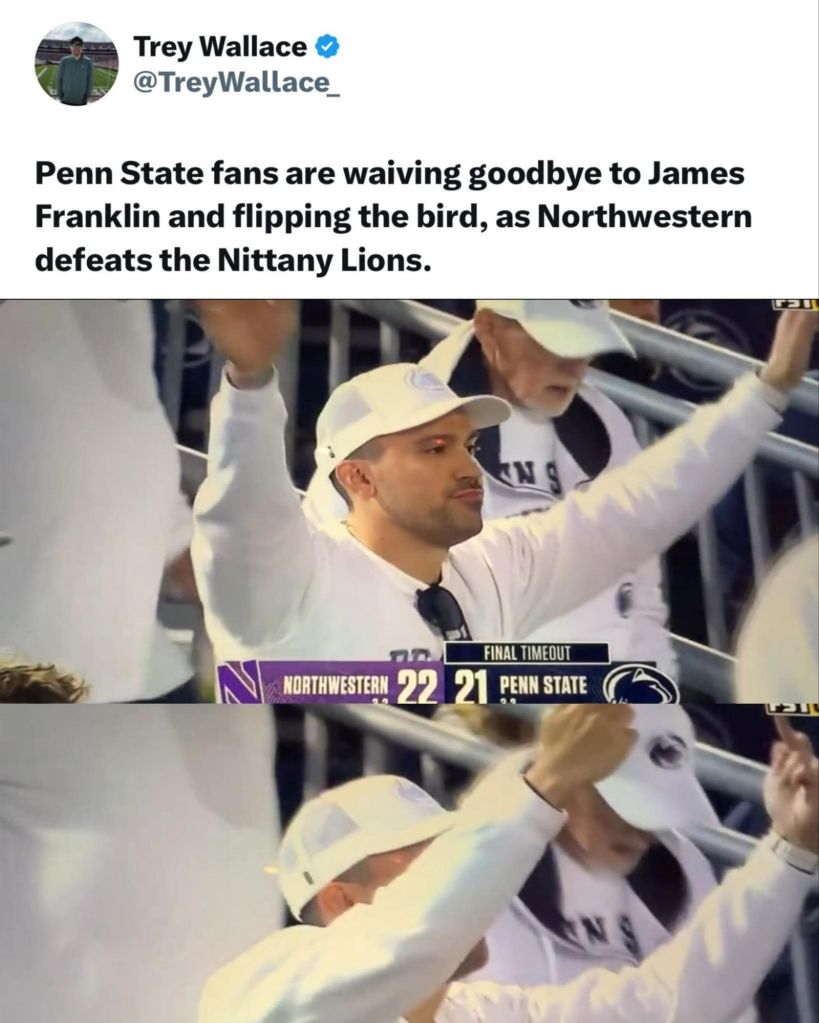
In my conversations with a cousin, who is a generation younger than me and far less of an idealist, my being completely appalled at fan behavior in the wake of coach Franklin’s collapse is silliness. He says the toxicity is everywhere and, basically, that I should not expect the Penn State football community to be exceptional. Even in response to my own posts on social media some of my friends believe that it is okay to make their vicious attacks against players and future prospects—because apparently sportsmanship is not a goal in the era of NIL money?  To me there has been something we have lost in our dignity and self-respect when we pile on young athletes and those who have invested far more than most in the bleachers ever did.

It feels like the culture has been hollowed out. An ethos has been lost. And my own disappointment with the sudden realization of the total absence of anything that actually distinguishes Penn State today, other than a few symbols and slogans, the final dismantling of the Paterno legacy that I’ve protected so long is complete. Why pretend? Integrity was neglected. And the thin veneer of The Grand Experiment philosophy has long ago worn away, we are not what we’ve claimed to be, we’re just another sports ball brand—class and character a mere facade.

Penn State peaked in the 1980s and has been in a ‘wilderness’ of ten win seasons since. 

Demystifying is the first step in dismantling the Colossus. With the transfer portal and NIL the era of loyalty and commitment to a higher ideal is over. But this shifting is one that goes beyond the football field or Penn State fan base. This is just a microcosm of the failure of the United States of being this “city on a hill” that was imagined by Puritan preacher John Winthrop. The “We are” is a localized flavor of American exceptionalism or the declaration of our unique quality and superiority over others. It is delusion.

It is also decay…

Reclaiming Lost American Values

The erosion of American values, particularly those intangible qualities that once defined community, loyalty, and collective spirit, is vividly reflected in the current state of college football, the influence of Name, Image, and Likeness (NIL) deals, and the broader societal shift toward prioritizing money over meaning. These three threads—Penn State’s football struggles, the commodification of college athletics, and the personal lesson of a child fixated on monetary rewards—converge to reveal a deeper cultural loss that is harder to pinpoint but profoundly felt.

At Penn State, the football program’s collapse mirrors a broader unraveling of shared purpose. The team’s 3-3 record in 2025, with losses to Northwestern, UCLA, and Oregon, has extinguished playoff hopes, compounded by the season-ending injury to quarterback Drew Allar. The program, once ranked #2, has been plagued by self-inflicted wounds—stupid penalties, turnovers, and a lack of team chemistry despite returning key players. The toxic “fire Franklin” narrative, fueled by fans and possibly amplified by wealthy alumni, has created a vicious cycle of negativity. This environment, where success is taken for granted and loyalty to coach James Franklin is eroded, reflects a loss of the communal spirit that once defined college football.

The fans’ inability to appreciate last year’s achievements, coupled with the pressure of high expectations, has turned a storied program into a cautionary tale of how a community’s values—patience, unity, and resilience—can erode under the weight of entitlement and short-term thinking. The prospect of rebuilding under new leadership may spark a recruiting bounce or an influx of NIL funds, but it also risks perpetuating a cycle where only wins and money matter, leaving little room for the intangible pride that once fueled rivalries like the one against Ohio State.

The field at Beaver Stadium is now “West Shore Home Field” after a large donation.  How long before Penn State’s no-name jerseys are replaced with corporate sponsors?

This shift is starkly evident in the rise of NIL, which has transformed college football from a bastion of amateurism into a billionaire’s playground. The purity of the sport, where loyalty to a program and the concept of the student-athlete once held sway, has been supplanted by a system where, as Mark Cuban’s “big number” donation to Indiana University athletics illustrates, wealth dictates outcomes. Fans no longer celebrate players who stay an extra year out of commitment; instead, they view them as paid mercenaries, unworthy of respect or admiration unless they deliver victories.

This also mirrors a broader societal decline in volunteerism and good sportsmanship—values that once rivaled capitalism in shaping America’s identity. The community spirit that made school sports a unifying force has been replaced by a transactional mindset, where loyalty is bought, not earned. This shift reflects a deeper cultural loss: the unquantifiable sense of duty to others or something greater than oneself, whether a team, a school, or a nation.

As the current system prioritizes individual profit over program or principle, it signals a collapse of the traditions that made college football a symbol of American unity, leaving behind a hollow pursuit of wins at any cost.

Now billionaires and corporations rule college athletics in the age of NIL.

This same erosion of values plays out on a personal level for me, where my tying my son’s chores to cash rewards has instilled a mindset in him that everything must have an immediate reward or monetary payoff. This mirrors the broader societal trend where wealth is the sole measure of success, undermining the concept of family as a unit bound by mutual care rather than financial transactions.

In cultures like the Philippines, where my wife is from, multigenerational support is just a given, but in America, the collapse of family unit and community has fueled reliance on pay based systems like elderly care, which often exploit the most vulnerable and leave little for future generations.

This shift away from communal responsibility toward an extreme individualism and personal profit reflects a loss of the intangible values—selflessness, duty, and shared burden—that once made America redeemable, if not great. And the rise of socialism, decried by conservatives, is less a cause than it is a symptom of this deficiency, as needy people seek external systems to replace the community support that has faded.

These threads—Penn State’s demoralized and debased fanbase, commodification of college sports through NIL in general, and my own struggle as a father of a teenager to instill non-monetary values—point to a broader cultural decay. The current loss of American values like loyalty, community, and tradition is not easily quantified, as they were woven into the fabric of what it meant to be American, and never before required definition or separate designation.

NIL, like the toxic fan culture or a child’s fixation on cash, is a symptom of a deeper disease: a society that prioritizes money and winning over the unmeasurable qualities that once held it together. This shift, felt more than seen, leaves us grappling with a question: if we cannot identify what we’ve lost, how can we hope to reclaim it?

Records Come and Go—Family Is Forever

After the Northwestern game, a third loss this year, Franklin waited until everyone else—including his daughter—had gone through the tunnel before he strode through. This is likely because he knew what awaited him—taunts and trash being hurled.

Father and daughter.  Franklin was determined to be a better father than his own.

In comparison to the stupid entitled clowns, Franklin is a class act. He is the father protecting his family. A standard bearer for Paterno (an Italian surname that means father) or at least the commendable part of the late coach’s legacy. I have seen some of the comments online, one claiming Franklin was arrogant because he had only answered one of their emails or something of similar entitled quality—as if he could just sit responding to every moron harassing him. But the players who played for him are unanimous in their support.

In fact, one of the saddest things I’ve seen is the current Penn State roster expressing their guilt over his firing for “not playing well enough” to please the raving lunatics. They didn’t fail Franklin, the fans failed them and the Penn State tradition.

The players taking responsibility is a sign of a relationship with a man who told them his demands of them as players start with love and end with love. In other words, this was a high pressure environment, expectations were high, and yet it was for their good that he challenged them to be better. And, truth be told, Franklin’s teams punch above their weight. He was a player’s coach and that is why Penn State is bleeding top recruits who were coming to State College for something different under his leadership.

The “fire Franklin” types love to talk about how he “couldn’t win the big game” and yet neglect to mention his teams were almost always coming in as the underdog and with less talent and depth than their top ranked rivals. Or, in basic English, he was coaching them up to the level of the elites. And this a testament to his philosophy that had built on the positive part of Paterno’s legacy—he valued the players for more than the wins or losses and they responded with loyalty and inspired football.

Nobody will ever say Franklin was the best game manager or play caller. But then the online critics keep going back to a couple plays a decade ago. A run on 4th and five against Ohio State or kicking a field goal in a 28-0 Michigan game ending the shutout. But ultimately they were one play from the national championship game last year and Franklin was third behind two other coaches from 2022–2024 with a 34-8 overall record during that span—trailing only Kirby Smart (Georgia, 39-5) and Ryan Day (Ohio State, 36-7) for wins. Good luck finding the guy who will top that after we cut the soul out of the program that drew the talent that we did have. Who will come to State College to be nitpicked and unappreciated?

I loved a family man arriving at Penn State and to see it end as it has just makes me think we don’t deserve what we have.

The toxic part of the Penn State fan base is transactional. They believe their watching a game entitles them to perfection execution and results. I mean, imagine that, a howling mass of ingratitude made of mostly grown men who are apparently that unhappy with how their own life went that everything now is a matter of wins on Saturday. Most did not go to The Pennsylvania State University nor do they have any real investment in any tradition of excellence—like that which was upheld by Franklin’s family approach.

Franklin deserved better. He was not a DEI hire. He is certainly not a terrible coach. It is his players—who carry on his legacy—that actually matter. Penn State football should never be about pleasing drunk Uncle Ricos who failed at life, it should continue to be oriented towards success in life. Truly the few Saturdays under the lights are not a measure of a man. Franklin’s tenure should be remembered as a battle against wider societal decay—where the development of moral character and the building of community are too often sacrificed for the fleeting victories or short-term financial gains.

Pattern recognition isn’t for everyone.
Twelve teams with the most National Championships

Both Nick Saban and Urban Meyer, who are legendary coaches, expressed their support for Franklin. And to think delusional Penn State fans believed that they could replace Franklin with one of these two (already past retirement age) by waving a little money in their faces. No, nobody is coming to State College to be unappreciated for producing one winning season after another. We will be lucky to find any successful coach who is tempted by the job—let alone replace all of those who decommitted or will transfer now that James Franklin is gone.

Values Beyond the Scoreboard

In this blog—Irregular Ideation—my struggle with the disconnect between stated values and the values they truly live out. People claim to believe one thing and yet live something else. I’ve dealt with this in the religious and romantic sphere, the disappointment, this false notion that virtue would always win over mere physical or economic superiority. Mennonites teach that the meek shall inherit the Earth or that the first shall be last—these being Christian concepts about the kingdom of Jesus. But the reality lived is always different from that ideal preached.

The reality is that everyone is in it to win it. Yes, even that sweet and submissive young woman doesn’t date no scrubs. Sure, maybe a pious individual will adjust some language or settle on one rather than playing the field, but ultimately they’re going for the status or strength and attractiveness everyone else in the world pursues. Some overestimate the market value they have, but even in love we are being self-sacrificial or altruistic. We’re motivated by hormones and sexual desires—often things we’re not even totally aware of behind our wall of moral rationalizations and narratives.

With denial of this is the delusion that good things will happen to good people. We tend to confuse physical beauty with virtue as it serves our own carnal desires to see them as one and the same. I mean, who wants to say the quiet part out loud by admitting they picked Joe over Bob because he was taller or had charisma? We may say things about nurturing or character traits but this is code for nice breasts and big biceps. So what I am getting at is that we dress all this stuff up as something it is not and revelation of what is underneath is not debasement—it simply exposes what always existed.

From Paterno trying to bury the truth about Todd Hodne to the firing of Franklin, the true ruthless nature of college football culture is revealed.

Beaver Stadium rises out of the valley floor, an edifice, a temple where sacrifices were made in the name of success.

Beaver Stadium rises up from the farm fields of Happy Valley, a monument to Pennsylvania pride, like the “city on a hill” of American exceptionalism. But success was not built on anything different here as it was anywhere else. What is buried is the reality it is always about aggression, financial gain, and wins. The Grand Experiment failed and Penn State had to be like everyone else if it wanted to reach the top. Furthermore, there is a sense in which every program becomes a sort of family or builds men—Paterno was only unique for highlighting this.

Are there values beyond the scoreboard?

Is it a zero-sum game?

Yes and no. Friedrich Neitzsche describes “slave morality” or a system of ethics that reverses what we naturally value and then says this denial of reality is virtue. Woke is a manifestation of this, where they attempt to turn the world on its head and celebrate obesity, ugliness, criminal behavior or lack of ambition—and create an artificial reality—rather than deal squarely with the world as it is. Body positive isn’t going to spare you health consequences if you’re obese. Fair or not we must at some point deal with the cards we’ve been dealt and rise above our station or accept what we are. Mutilation of yourself to be something you’re not ends as badly as well. There really are no shortcuts to success or Uno Reverse cards to play—it is what it is on the scoreboard that matters to the world in the end.

Ultimately we also have our limits. We need expectations to match our abilities or we’ll end up in a spiral—always chasing what is beyond our reach rather than just building on what we have. I’ve seen it many times, those who leave a consistent and reliable partner, thinking they’ll do better out in the market, only to find out that (yet never will admit) that their discontentment played a trick on them and they had it better before than after. Not everyone can be a National Champion every year—it just isn’t possible—but we can have a family or community that respects all members and seeks only their best rather than tear them down.

Symbolic?

So maybe Penn State football does need to be dismantled and rebuilt to be great again?

It could be that, like the children of Israel in the wilderness, we’ll need this generation to pass so our children can enter the promised land?

If the foundation laid has led to this ugly spirit of entitlement then it was flawed. We might need to decide if football is so important we will lose our humanity or the immeasurable qualities not displayed on a scoreboard—for a “big game” win that won’t matter in a year or two. What does it truly matter if we gain the and lost our soul?

A race to the lowest common denominator is the end of civilization. Despite my lament above, I don’t believe life is all about money, sex and power—which ever order they come in. I still believe my elderly grandma had a beauty that was unsurpassed and morality is not just a smokescreen for our failure to be the best. Maybe the impossibility for me is possibility for my children. I cannot stay disillusioned. But, like I did in finally leaving my religious roots, I may need to also bury that delusion of Penn State excellence both on and off the field.

Not the tradition that made Penn State great.

Maybe the failure of The Grand Experiment was all Paterno’s own personal failure? Or maybe the message never went beyond the young men who loved him like players love Franklin today. But the Colossus now lies in ruins making me wonder if it was ever great to begin with. They didn’t just fire Franklin—they pushed over what remained of an ideal for sportsmanship, they’ve fully demolished the mythology that so inspired me. A giant ‘moral’ idol is gone—will something real rise up in its place?

Law as a Tool, Not a Tyrant: Reclaiming the Spirit of Justice

Standard

There are many ways to get things wrong and one of those ways is to detach the law from its most foundational purpose.  That is a part of a legalistic mindset—which always will end up producing bad interpretation and misapplication of law.  

Law is not an entity separate unto itself or something stand alone.  It is a political tool, a guide or instrument for application of an agreed upon principle or cultural value, and application of the intended use requires a common set of assumptions to the creator.  It cannot float in space—never treated as an independent truth—it must be moored to a mission or the common good.

It’s the law!!!

I’ve been in conversations recently where some involved are in denial of the political nature of the law and treat it as if the words on a page somehow have their own life.  It is a misunderstanding of language.  There is nothing static or unassailable about any written code.  Everything depends on having an interpreter with values they are similar or basically the same as the originator of the law—the power of law, therefore, is in the interpretation and application.

When a person assumes that the law can speak for itself they’re delusional, they don’t grasp what law is or what it is for at a very basic level and end up using it to create a system of legalistic prescription rather than understand it through a practical lens.  They have essentially made dead words (applied in any way they want or are most familiar with) a focus rather than cutting through to the underlying principles that make correct application possible.  Their obsession over the letter of the law comes at the expense of following the spirit behind it.

Most people can’t read cursive let alone know what the founders truly intended.

This is what the Pharisees did and Jesus corrected.  He didn’t question the legality of his servants breaking Sabbath rules, rather he gave an example of when David did what was unlawful (only lawful for the priests) to show exceptional circumstances allowed a written law to be set aside.  It is at this point Jesus declared: “The Sabbath was made for man, not man for the Sabbath.” (Mark 2:27 NIV)  This is a higher principle not ever stated in the law but describes a purpose of the law that cannot be separated from the application.

Biblical law may not be relevant to matters of the US Constitution, but both the law of Moses and the law of the Constitution were established to safeguard a nation.  It was a law for the common good of the people and not something absolutely set in stone.  And, in fact, in the earliest days of the US, it was a matter of disagreement how much power should be in the judiciary—which led to the Judiciary Act of 1802 and to courts being dissolved by Thomas Jefferson.  

The point being is the law can’t be properly handled apart from the foundation it is built upon.  Law should serve the common good and needs a reset if it goes astray and ends up becoming a cumbersome burden that is in the way of pragmatic concerns.  Letter of the law people enforce a system for sake of the system alone—they claim the slightest deviation will destroy everything good and right—and end up with ridiculous results.

Don’t cross the street!

Suppose a child is told not to cross a street by their parent.  It is a busy highway and too risky for them to cross.  That’s the law and it is a good one.  However, if some unusual event were to happen, a real emergency, is it important that the child remain on their side of the road even at risk of death?

Those on the legalistic side would argue the law is what it is.  And that making a change based on this circumstance will only lead to more exceptions being made until nothing is left.  This is a slippery slope fallacy based on an assumption there is no authority that is higher than the law and that the system we is basically optimized.  But this idea that the current regime represents some perfect balance that should not ever be challenged is dumb.  There is nothing sacrosanct about the current business as usual.

A system of checks and balances requires some dispute and conflict.  Activist judges that obstruct the role of elected leaders— with an ever expanding definition of “due process” at our expense—hinder progress and might need to be checked.  

Worse yet, when the attention is selective.  It is nothing but loopholes for some and the lawfare for others.  Which is the irony of legalists.  They apply a withering standard for others while always finding exemptions for themselves—they may declare “nobody is above the law” and yet are always given an excuse when it is their turn.

There is a place for precedent or principle, tradition is a better guide than ideology, but then there is a time when a deterioration of values and good faith application bogs the country down and justice becomes slave to a system of perverse priorities.  It is when the application of law no longer serves the common good, but only the lawyers, corrupt prosecutors and jurists who all gain at our expense.  The legal experts claim to uphold the law and yet undermine public trust with their shenanigans that defy our values.

Lawless regimes

Law is a tool, and the hands wielding it are what matter more than what is written in it.  Words on a page are a weak defense when those tasked with applying them are evil or compromised.  A hammer can be used by a carpenter to build or by a criminal to kill and law is no different.  A nation of attorneys is potentially as lawless as country without a written law and enforcement mechanism—our moral constitution matters more than a jot and tittle legalism.

Jesus took on the legal system of his day and not to abolish the law.  No, he exposed the experts.  They strained on gnats while swallowing camels, missed the forest for the trees, and are like those today who will punish us with regulations while rewarding those who flout our laws.  We are shown no mercy while simultaneously the favorites of the political establishment need not worry about a day in court.  Law for thee, not for me.  It serves the elites, not the people.

Law is about setting boundaries and due process depends on the situation.  When the British invaded, in 1812, there was never a thought of applying the Bill of Rights for those who rose in defense of the nation.  In times of war the due process is pointing rifles at the invader.  And foreign gang members who crossed into this country illegally shouldn’t be allowed to abuse asylum laws.  Abraham Lincoln suspended the writ of habeas corpus or due process for citizens during the Civil War—a free ride home for non-citizens is a great deal compared to Union Army detention.

Lincoln was hated by Democrats for his use of executive power

Having dealt with the USCIS, I am not a big fan of paperwork and most especially not when they offhandedly reject your mother-in-law’s tourist visa (as they have done for years, see the time stamps) after all the fees are paid and a visit to the US embassy—and you can rest assured there is no grandstanding by US politicians about due process and assumed right to be in the country on the behalf of those who do it the right way. 

No law might be more fair than our currently convoluted regime—that does many times more to protect gang members than grandmas merely wanting to visit their children or grandchildren.  Sure, we can’t take lawful order for granted and we deal with this inconvenience for the sake of stability and security, but when we show excess concern for those who broke the law while then applying the letter to those trying to abide by it the law has become an immoral instrument and the current corrupt application of law should be set aside for a saner approach.

The perfect law is no law… 

In an ideal world there would be no laws, no borders, no governments.  Instead we would have a law written on hearts—where we voluntarily only do good for people based on internalized values—and have no need for legislation, enforcement or courts.  Borders would be unnecessary and airport screening an unthinkable invasive of personal space.   This is why we have a Bill of Rights to limit the power of government—more law tends to increase injustice rather than serve the common good. 

In the end, just as the Judiciary Act of 1802 sought to realign the law with the common good by curbing an overreaching judiciary, we must continually ensure that our laws remain tools for justice, tethered to their foundational purpose of serving us, not as rigid idols that enslave us to legalism.  We need to understand the limits of resources and get our priorities right.

Love Is Patriarchal

Standard

As I ponder my responsibilities, bringing a daughter into this world, my patriarchal protection is a given.

The West has been so successful at privileging women that many women do not comprehend the risks of true equal treatment. Feminism is only possible as a part of the patriarchal duty that men feel to protect women. What it amounts to is using male power to enforce standards that are friendly to women, that allow them to walk freely in the street in all manner of dress (or undress), and ignore the reality of what has existed outside the walls of patriarchalism.

Even the idea that sexual assault is a bad thing is an extension of patriarchalism where natural desire must be restrained by structures created by men. A buck in the rut doesn’t ask permission. Hormones direct it’s behavior and only the bigger male can ward off the advances it will make on a doe. It is a hierarchy that is built only on strength. Moral conscience is built off the idea that there’s a big man up there who cares about property rights; who says that a body belongs to someone and is therefore not ours for the taking simply because we desire it.

Yes, eventually this evolved into an idea of everyone owning themselves that we now assume is simply the universal truth. However, nothing in the animal kingdom suggests this is the case. The real world is often a brutal and unforgiving place. When a new group of male lions takes over a pride they will kill the cubs of the previous males. And human morality developed in a very similar manner. This was the default, whether the Psalmist’s fantasy about bashing the heads of an enemy’s infants against rocks or the book of Deuteronomy giving some rules for the treatment of war brides:

When you go to war against your enemies and the Lord your God hands them over to you and you take some of them prisoner, and if you see a beautiful woman among the captives, desire her, and want to take her as your wife, you are to bring her into your house. She is to shave her head, trim her nails, remove the clothes she was wearing when she was taken prisoner, live in your house, and mourn for her father and mother a full month. After that, you may have sexual relations with her and be her husband, and she will be your wife. Then if you are not satisfied with her, you are to let her go where she wants, but you must not sell her or treat her as merchandise, because you have humiliated her.

Deuteronomy 21:10-14

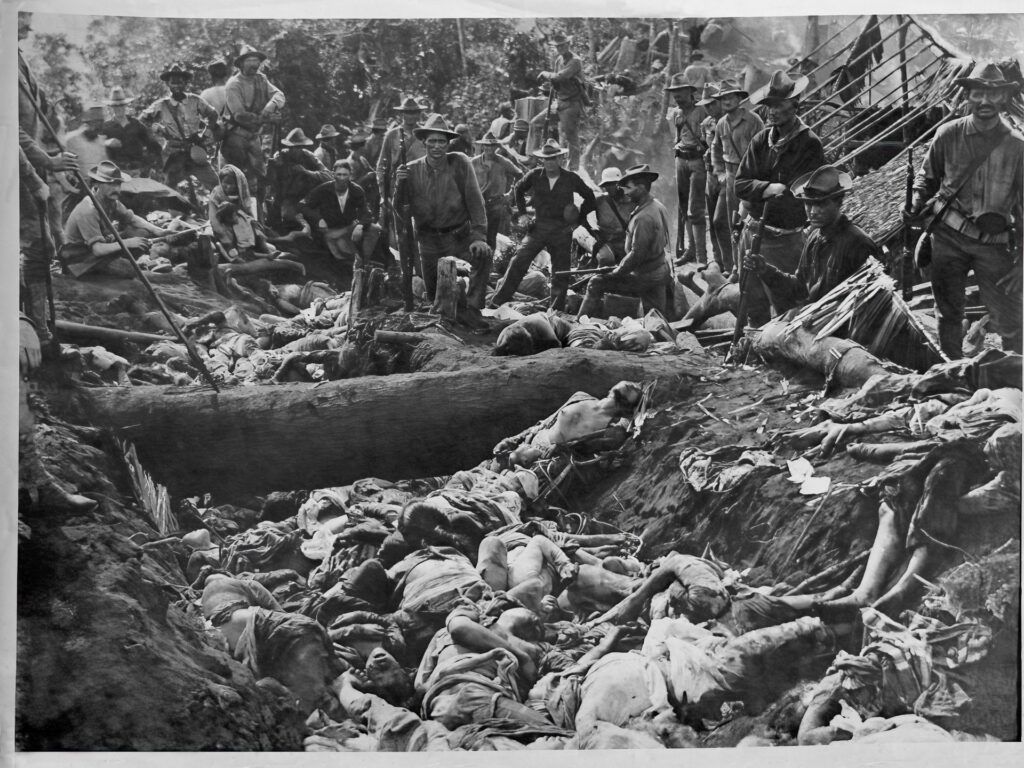
To our modern ears, this is horrendous. There is no asking for permission. And, other than saying to wait a month, the men were free to rape their captive females. But the reality is that this was a radical step in the direction of protecting women from physical violation. One hopes that this delay would’ve ensured a more compassionate and gentle approach rather than some blood-soaked orgy during the heat of battle and immediately after her male relatives were slaughtered. As grotesque as this seems, it was better for her to belong to one man (with some rights after he rejects her) than to be passed around as a mere sex object in the manner of a Japanese comfort woman:

CLAVERIA: (Through interpreter) A Japanese soldier got his bayonet and started peeling my father’s skin while saying, tell us the truth – your child is part of the guerrillas with the owners of that empty house.

MCCARTHY: As Claveria pleaded to let her father go, a soldier wrenched her arm. Birdlike, petite, Claveria strokes a badly set bone as she picks up the story of how she followed her mother’s screams up the stairs.

CLAVERIA: (Through interpreter) I saw my mother lying down with her skirt up, and there was a Japanese soldier on top of her. I ran. My two youngest siblings took little sticks and started hitting the soldiers. The Japanese soldiers then snatched away the sticks and bayoneted both of them.

MCCARTHY: They died. Claveria believes her parents were killed when the village was torched. Japanese soldiers hauled away two older sisters to a garrison and took Claveria to an infirmary for her injured arm. She does not recall how long she was there recovering, but she remembers a soldier named Terasaki. One day, he told Claveria she smelled, but she refused to take a bath, saying she had no change of clothes. Ordering her to wash, she says he gave her a uniform to put on.

CLAVERIA: (Through interpreter) I was to be taken to the garrison where my two sisters were. Before we reached the garrison, he raped me. I thought that I was going to die because I was in so much pain.

MCCARTHY: Terasaki would be the first of many Japanese soldiers to sexually assault Claveria, who was not even a teenager at the time. She was 12. She said her sister Meteria had been driven half mad by the trauma she’d experienced at the garrison. Claveria was shocked when she caught sight of her there.

CLAVERIA: (Through interpreter) She was burned with cigarette butts and boiled sweet potatoes. When one soldier after the next raped her, she put up a fight, but my sister was not brave. She refused because she was in so much agony from all the abuse.

MCCARTHY: Claveria believes her other kidnapped sister was moved to a different garrison. She was never seen again. Historians have estimated that at least 200,000 women were forced into sexual servitude during World War II, mostly in areas occupied by Japan, prominently Korea. The women were euphemistically called comfort women, and the organized system of comfort stations to supply soldiers sexual gratification ran from Seoul to Singapore. Writer Evelina Galang has documented women captured in the Philippines.

EVELINA GALANG: And these are women as young as 16 years old – really, some of them 8, 10 years old. In the Philippines, historians estimate that there were probably about a thousand women and girls taken and put into military sex slave camps.

Men can be monsters. Worse than animals. And, in many parts of the world, immodest dress is taken to be a sign she wants it. Morality does not hold back the aggression of the rapist. No, rather it is the role of other men to restrain evil. Women are protected by their fathers, by their husbands, and by institutions that represent these men. Political structures were created by men and are defended by men. Yes, even if women were granted the right to participate. E.g. even if Kamala Harris takes the patriarchal role—she is still acting in a patriarchal manner and will need the strength of men to impose her will.

There will not be a feminist left in Europe if Islamists take over. That is not to bash Islam or say they would kill off all women who did not submit. No, it is to say that feminism cannot exist outside of the Christian West. The notion of individual rights, that people can independently make their own decisions, cannot exist only on paper or it is impotent. It requires men willing to sacrifice themselves to preserve this egalitarian ideal for their wives and children. Self-sacrificial love is not natural nor a priority in every religious patriarchal structure. Feminists cannot exist in Islam because only the respect of patriarchal institutions gives them power.

The alternative to the current patriarchy is not the absence of patriarchy, men (or those who act like men) will always rule, but the real choice is what manner of rule we wish to live under. It really is survival of the fittest outside of the walls of civilization. Chants of “down with the patriarchy” are about as meaningless as shaking your fist at the wind. It misunderstands the world. It assumes that nature will simply obey our voice because we’re angry and believe rights can exist outside of the structures that guaranteed them for us. It is only in the absence of rule by men who care about more than their own sexual gratification that the value of this benevolent form of patriarchy is known.

“Whether by word of mouth or by letter…”

Standard

The US Constitution is a prime example of how the same words can be interpreted in many different ways. Sometimes this is just a way to get around the clear meaning and other times it is simply a problem with language. There are many cases, with this founding document of a nation, that it would be nice if we could have some further explanation. Sure, you can read some of what the writers and signers said elsewhere in order to try to fill in the blanks. But, in the end, without them here, we don’t truly know how they would respond to the demands of our modern economy, technology, and needs.

This only gets murkier when dealing with Scriptures written two millennia ago. Yes, every Bible-thumper and their brother thinks they have a clear understanding while everyone else is just making things more difficult than they really should be. I mean, “The Bible Says It, I Believe It, That Settles It,” right? And yet, if I were to answer that with, “do you bury your poo outside of your property, in a hole you dug with a trowel, as instructed in Deuteronomy?” I’m guessing that suddenly what the Bible says would become a bit less settled as those using this phrase made some sort of theological exemption and that’s okay, there are things in Scripture that aren’t perfectly clear without some further explanation.

But what is more intriguing to me is what is completely left out that would be so obvious to early Christians that it wouldn’t even be worth mentioning in the letters. As the saying goes, more is caught than taught, and sometimes the most important things never do get written out. In other words, if we were writing instructions on how to drive a car, we would probably assume that the person knows how to get into the vehicle or sit facing forward. However, from the Bible, do we know how the early church structured their services or generally lived? Would they even recognize us as Christians? The reality is that there are gaps that many today just fill in with assumptions and it is usually these different extra-Biblical assumptions that lead to many divisions.

In the Protestant world “extra-Biblical” is practically a curse word. How dare you ever have a rule, custom, or tradition that goes beyond the written text! That’s false religion or something! This is why Orthodoxy is often dismissed by those seeking to strip down Christianity to the Biblical bare bones. It is a special kind of ignorance.

A good illustration? In World War II there was a study of returning aircraft and the damage that they had to determine how to better prevent future losses. The Center for Naval Analyses concluded from this that the aircraft needed more protection in these most heavily damaged areas. However, Abraham Wald, a Hungarian mathematician, begged to differ. He reasoned that the aircraft returning had survived and those that had been hit in more critical areas did not. In other words, what needed to be done was the very opposite of what the others had concluded. They needed to better armor those areas that weren’t damaged in the returning aircraft. This tendency to misinterpret evidence, based on what we have rather than what is missing, is called “survivorship bias” and can lead to woefully incorrect ideas.

This is what the Bible says about what is written versus what is not:

So then, brothers and sisters, stand firm and hold fast to the teachings we passed on to you, whether by word of mouth or by letter.

(2 Thessalonians 2 NIV)

The “letter” is what we have received in Scripture. These are the books of the Bible, canonized by the Church and believed to be truly inspired writing for this reason. But the “word of mouth” is where things are more interesting. What of the Apostle’s teaching (or tradition according to the KJV) is not written in their letters and how do we know what is missing?

The Orthodox, of course, say that this is the tradition of the Church and tie their legitimacy to the fact that there is a line of secession going all the way back to the Apostles, by the laying of hands and ordinations, and this only makes sense. The Church (note, not an individual or even the institutions) is what keeps the spoken teachings of the Apostles preserved like it did the Bible, and also serves to provide the correct understanding of Scripture. Because we should know, as Peter warned, that the Bible does not provide its own interpretation: “[Paul’s] letters contain some things that are hard to understand, which ignorant and unstable people distort, as they do the other Scriptures, to their own destruction.” (2 Peter 3:16 NIV)

However, it isn’t just the non-Orthodox that fall victim to their own bias. There are parts of the Church tradition, whether spoken or written, that slip through the cracks. We all have blind spots. We all have our distortions of concepts and errant assumptions. The difference is, that the Orthodox, if they are truly seeking to be Orthodox, are at least making some effort to incorporate the sayings of the Fathers and have a grasp of those “word of mouth” traditions not necessarily ever expressed in Scripture. In doing this, in understanding how Christianity was practiced by the faithful throughout the centuries, it becomes that much harder to distort the words of the Bible.

In the end, Christianity is about Communion, not easy textbook answers, not following an instruction manual, not standing alone, but real relationships. The more important being that between ourselves and God. However, a relationship with God implies love for our brothers and sisters. It means we are rubbing elbows with other Christians and the Saints. As Fr. Anthony put it, in his fatherly council to me, “there are no Lone Rangers” in Christianity, we can’t put the words of Jesus to practice in solitude or isolation. It’s not in removing ourselves that we are purified, it is in our getting messy and involved in the life of the Church of imperfect people (like us) that we are changed. That is taking up our cross. That is the hard part of Christianity we would rather run from.

Learning never stops in relationships. Christ Jesus did not come so we could house church with the few other perfect people who have the proper understanding of a book according to us. Instead, the very act of Incarnation was God choosing to be around those undeserving and impure, to identify with them and their suffering, which should be the impulse of those filled with the Holy Spirit. It is the Spirit, St Paul tells us, that will bring “unity” and a “bond of peace” which should span centuries or the current divisions because: “There is one body and one Spirit, just as you were called to one hope when you were called; one Lord, one faith, one baptism; one God and Father of all, who is over all and through all and in all.” (Ephesians 4:4-6 NIV)

The Beauty Of Orthodox Faith

Standard

A thought occurred to me, while lamenting my persistent unorthodoxness, that eventually the point of any religious practice (with emphasis on practice) is to color outside of the lines a bit.  From art, to athletic endeavors, being spontaneous, unpredictable, and original, there is advantage in harnessing some of that creative chaos.  So ritual and rigorousness has taken a back seat to emotional expression.  Many call themselves ‘spiritual’ for their abandonment of church tradition.

However, an art teacher will tell you and a good writer knows, that there is no natural talent so good that it can’t benefit from studying the masters.  Before one can reinvent the wheel, it might be good to at least know what the wheel is and understand the basic function of the thing before improving upon it.  No basketball player does well to ignore all of the established fundamentals of their sport nor is it recommended that a weightlifter abandon good technique.  Doing things your own way can lead to injury, can limit potential and be a tremendous disadvantage.

Yes, some do “shoot from the hip” and still manage to score some points.  My own writing has improved from simply writing and not from having read every style manual written in the past few centuries.  And yet I would be remiss, as well as incredibly arrogant, to not give complete credit to the teachers, the many writers, the coiners of terms and all those who have contributed to the descriptive wealth of the English language.  And if my desire is to improve, then reading the greats, absorbing their knowledge of the craft, is only going to enhance my own creative efforts.

Only a fool would enter the ring relying only upon their natural and unimproved fighting abilities.  Absolutely, Mike Tyson would knock me out without having spent a day training, God gifted him with a heavy weight’s frame and musculature.  But, no boxer, no high level competitor, would last a minute against a person who studied form, who learned all they could from the best, practiced hours and came prepared.  It is religious devotion that pushes even the elite to the next level.

Jesus is the foundation of the church, that is true, yet this doesn’t mean we should strip it bare to the bedrock each generation.  Do we forget that Jesus himself, God in the flesh, was a practicing Jew for three decades before, while reading Isaiah 61, the prescribed text at the synagogue, announced “today this Scripture is fulfilled in your hearing.”  We know that Jesus would go on to push the boundaries, to correct and build upon the established religion, yet never claiming it was worthless.

What Is Orthodoxy?

This word “orthodox” refers to correctness.  

It is the same root used for terms like “orthopedic” or “orthodontist” and basically implies straightening out, correctness.

Orthodox, as the Orthodox Christian uses it, is an adjective and not a noun.  Orthodoxy is not a denomination.  No, it is an unbending pursuit, a desire to live out the fullness of the faith, it means uncompromised worship and devotion to Christ and the Church.

Unlike Protestantism, that has whittled away at tradition, the Orthodox continue to practice as Christians have for over a millennia.  We celebrate the liturgy of St John Chrysostom or St Basil and not because it is required to be a Christian, I’ve never heard those Orthodox proclaim those who profess Christ outside the tradition to be lost, yet we do see established tradition as a useful aid to the Christian.

Orthodoxy is built upon the foundation of Christ.  And yet it is not in denial of the history of the Church nor dismissive of the written and unwritten tradition that the Apostle Paul admonished the church of Thessaloniki to keep:

But we ought always to thank God for you, brothers and sisters loved by the Lord, because God chose you as firstfruits to be saved through the sanctifying work of the Spirit and through belief in the truth. He called you to this through our gospel, that you might share in the glory of our Lord Jesus Christ.  So then, brothers and sisters, stand firm and hold fast to the teachings (or traditions) we passed on to you, whether by word of mouth or by letter.

(2 Thessalonians 2:13‭-‬15 NIV)

The first thing noteworthy is that the church had a tradition and the second is that this tradition was passed down by the Apostles both in letter and spoken word.  But, more significantly, in the same context of keeping tradition, St Paul also speaks of things of the Spirit.  The idea that spiritual is odds with traditional is the great delusion of our time and trying to sustain one without the other is proving to be an overall failed experiment.  Tradition, passed down by the Church both in written and by “word of mouth” is for our spiritual benefit.

Orthodox tradition is about carrying forward the practices sustained, and that sustained, generations of the Church.  It pertains most particularly to the traditions of corporate worship.  And, like the tradition of Scripture itself, gives a voice (or vote) to the many faithful who have gone on before us:

“Tradition means giving votes to the most obscure of all classes, our ancestors. It is the democracy of the dead. Tradition refuses to submit to that arrogant oligarchy who merely happen to be walking around.”

(G. K. Chesterton “The Ethics of Elfland,” Orthodoxy)

To be Orthodox one must appreciate that the Church is bigger than their own individual perspective.  The Church is bigger than this generation.  Yes, we, the Church militant, are still in the the fight and yet undoing the contribution of the Church triumphant is foolishness.  It is a special kind of ignorance in an age where ‘progress’ too often means replacing an old church building with a Dollar General.

Christ is the foundation of the Church, but much has been built, from the Apostle’s time forward, that is beneficial to our spiritual growth and also very beautiful.

The Beauty of Orthodox Worship

There is something incredible about participating in a tradition of worship that has passed the test of time.  The basic form of Divine Liturgy has endured, despite the severe persecution of the Orthodox, and in to join in this is to join in the choir of all who have worshipped in this manner.  

To those who have never been to an Orthodox service, the first experience may feel foreign, especially if there is some ethnic flavor mixed in, and yet why would we expect the Church (which is universal throughout time) to be a reflection of our modern American culture?  Are we truly that arrogant to believe that our own practices, built from the clay of Modernism, is superior to the gold refined over the centuries?  We’re better than the entire Church spanning the millennia?

Before going further, consider for a moment that every Church has a liturgy, an order to the service, their own unique traditions, and there’s a reason for this.  Protestants, from revival meetings to special mother’s day services, have formed their own traditions to replace those more timeless.  I’ve heard about conservative Mennonite churches where at least one elder would insist that the ordained men enter in order of their respective ranks.  

And, lest my ‘contemporary’ friends see themselves as superior.  Not everyone is up front leading the service.

Order is good.  St. Paul spoke to this need for order in worship as an alternative to the chaos and confusion of everyone talking over each other.  We are creatures of habit, when brushing our teeth or taking a shower, rather than go through the wasted mental effort of finding a new way each time, we repeat a liturgy of a sort.  We can get more done when we finally cease these useless arguments over worship style and move on to things of more substance.

Before I had ever entered an Orthodox liturgical service, I (like most or many Protestant borns) would’ve believed it to be stuffy and boring.  I mean, how can something prewritten, predetermined, be as authentic or real as my own concept of worship?

However, upon reflection, considering the many times of Mennonite deacons begging for testimonies and prayer requests to a deafening silence or the same requests over and over again from the same people, the liturgical form that covers everything in prayer makes much more sense.  Every service the priest leads us in prayer, through a list that covers pretty much everything, and I’ll often think (and pray) for a specific reason while crossing myself to physically confirm my inner thoughts.

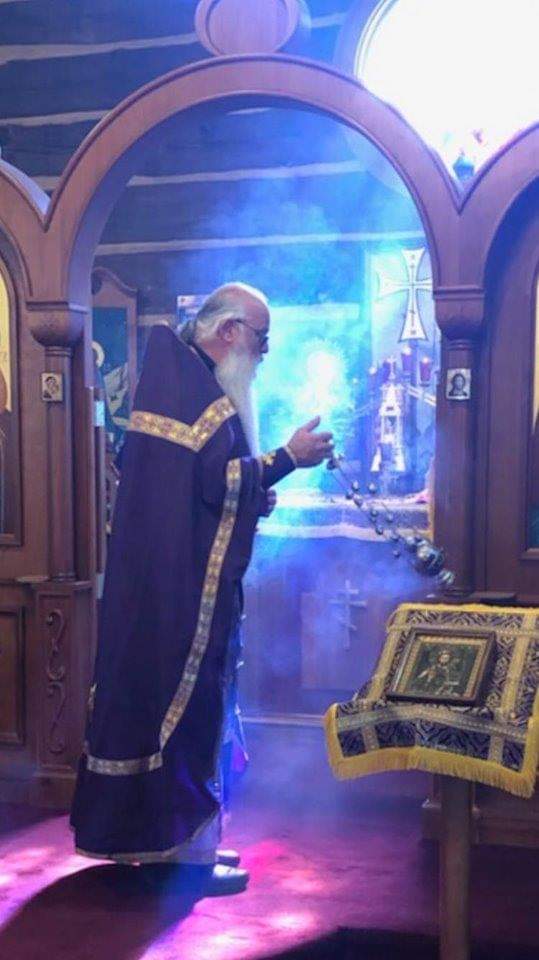
Which is the one beauty of Orthodox worship: It is immersive, involves all senses, we love the beauty of the house we share, our temple, that is divided in a similar way to the Biblical places of worship.  There is rich symbolism, incense rising as prayer (as is described in Scripture) and an altar, behind the Iconostasis, where the Communion is prepared.  Better yet, the entire service is participatory, a sort of call and response style, with the entire Divine Liturgy service centered around our partaking of the body and blood of Christ.

The second thing I have found, as beautiful, is that this repetition of Scripture in song is spiritually like the muscle memory formed from any other practice.  I can’t count the times when the music and words of a liturgical service will pop up during the week, either as a comfort or a challenge, and how these phrases have started to shape my perspective.  For example, “put not your trust in princess or sons of man in who there is no salvation.”  What a great reminder in this time when the institution of government seems to be failing, right?

Well worn pathways are not confining, they are freeing.  Why hack our way through the jungle of life, being ‘authentic’ in the way of every other person in this age who has lost both religion and depth, undisciplined, when there is a rich banquet of tradition to draw upon?  Does reciting the Lord’s Prayer over and over again ever take away from the meaning of the words or cause you to want to rewrite it for our own time?  I should pray not!  

No, we need good ritual in our life because it helps us to focus.  Everything in Orthodox worship is founded upon Scripture and a beautiful expression of obedience.  It has richness and depth, from the Lenten journey of fasting and reflection, to the icons, incense, vestments, altars, oil, candles, hymns, recitations and processions.  It connects is to centuries of the faithful, in our participation in the Church that they built together on the foundation of Christ and is wonderful.

Dismiss “smells and bells” all you want, but it is worshipful and beautiful.

In the end, as Father Seraphim reminds us often in his homilies, we are not saved by our church attendance, we can read Scripture, sing, give tithes and it all be for naught.  If there is no spiritual fruit this is all empty and utterly meaningless as far as salvation.  However, as St Paul speaks of the law being a guardian, the established prescription and pattern for worship, once catalyzed with sincere Christian faith, is an invaluable asset.  It may not be necessary for salvation, the repentant thief on the cross beside Jesus was never Baptized, and yet it does greatly enhance the life of the believer.

Lastly, Orthodox worship doesn’t take away from our ability to worship spontaneously, in the spur of the moment, like King David dancing as the Ark of the Covenant was being processed through the city of Jerusalem.  This is not an either/or thing nor have I found the tradition to be onerous or confining in the way one may fear coming out of a legalistic tradition.  There is a sort of casualness to our formality, an allowance for imperfection.  So simple even children participate.

Structure We Need To Thrive

Us creative types loath structure.  We like to color outside of the lines, right?  And yet, despite this umbrage, we often live as beneficiaries of the structure that others provide.  Many artists would starve, or be overrun, unable to do their work, outside the structure that others have diligently maintained for them.  And many would do better, even in their passionate pursuits, if they would acknowledge their need.  

The framework that Orthodoxy provides, likewise, for me has been that missing element that I didn’t even know that I needed.  This idea that tradition is somehow bad is corrosive, it is creating a generation desperate to find their place, suicidal, distorted and unfulfilled.  We are better when plugged in, when a part of something bigger than ourselves.  Tradition brings us together and Orthodoxy enhances rather than take away from worship.

As we Orthodox like to say…

“Come and see!”

When the Truth Threatens Our Way of Life

Standard

Recently I was asked what books were formative for me. Two books immediately came to mind. The first being F. Scott Fitzgerald’s classic, “The Great Gatsby,” a tragic tale of a man who got ever so close to his dreams that had haunted me since high school as it seemed to be a repeat story in my own life. The second book, written by Peter Hoover and far less known outside of a particular religious circle, compared modern-day Mennonites to their Anabaptist forebearers.

Hoover’s book, “The Secret of the Strength,” drew an interesting parallel between the disruptive and defiant (and, dare I say, irrational?) early Anabaptists and the Old Testament character of Samson. This exploration of the secret of their strength lay dormant in me for years, but eventually helped define my longing for more than the conservative Mennonite status quo (including the doubled down version of the same old Mennonite priorities rebranded as “Anabaptist” by some) and this put me on a collision course with the religious culture that had been my identity since birth.

Anyhow, my own religious radicalization aside, I’m fascinated by patterns and especially when it comes to Biblical types. These patterns and types can be easily missed by the casual reader and yet are unmistakable once discovered. And, if we look closely enough, we may even see ourselves and our own patterns in these various characters. As you read, consider your own life, what defines your experience? Are you defining the future with your faith that goes beyond the status quo or are you simply defending a way of life?

Two Men Who Threatened the Status Quo

One thing interesting about Samson is how his story so similar to that of Jesus. These two men, as different as they appear at first blush, have many intriguing parallels. Their births were announced by angels, they were sanctified in the womb, they were deliverers of Israel (old and new, respectively) and free their people of oppression, and the list goes on (click here if you want to learn more), but there is one parallel in particular that I would like to explore and that is how their religious peers responded to their exploits.

First up is the account of Samson and those who decided to confront this Hebrew Hercules:

Then three thousand men from Judah went down to the cave in the rock of Etam and said to Samson, “Don’t you realize that the Philistines are rulers over us? What have you done to us?” He answered, “I merely did to them what they did to me.” They said to him, “We’ve come to tie you up and hand you over to the Philistines.” (Judges 15:11-17a NIV)

Here we have Samson running roughshod over the Philistines. And yet, these three thousand men of Judah, rather than join him in overthrowing their oppressors, decided to capture Samson and turn him over to their enemies. By their faithless reasoning, Samson was a greater threat for “rocking the boat” than the occupiers who had corrupted them with ungodly fear and turned them into cowards.

This reasoning in regards to Samson closely mirrors the discussion about Jesus, in the Gospel of John, and the threat he represented to the established order:

Then the chief priests and the Pharisees called a meeting of the Sanhedrin. “What are we accomplishing?” they asked. “Here is this man performing many signs. If we let him go on like this, everyone will believe in him, and then the Romans will come and take away both our temple and our nation.” Then one of them, named Caiaphas, who was high priest that year, spoke up, “You know nothing at all! You do not realize that it is better for you that one man die for the people than that the whole nation perish.” (John 11:47-50 NIV)

The discussion above takes place directly after Jesus raised Lazarus from the dead. Can you imagine that? A man is literally bringing people back to life, they claim to believe in a God that defeated powerful Egypt, and yet their concern is with what the Romans may think?

The men who turned Samson over to Philistines and the leaders who conspired against Jesus were both guilty of moral cowardice. In both cases, the concern was about the fallout. They feared what others may think, anxiously fretting over the potential for negative repercussions, and that fear led to a moral compromise. The three thousand who went to capture Samson were willing to side with the enemy for sake of political expediency. Likewise, the religious leaders who would eventually have Jesus put to death were more willing to sacrifice a little truth for an imagined greater good.

Samson and Jesus both presented a dangerous threat to the status quo. These moral cowards, more imprisoned by their own inner fear than they were by external oppressors, reasoned that it was better to hand over the heroes of faith, the very men who offered both them and their people a path to salvation, rather than to risk losing their own lives or privileged positions.

We like to think about them as the bad guys. But be honest, what of your cherished positions or most treasured things would you willingly sacrifice without carefully considering the consequences? Would you truly put your own Issac on the altar, the one thing that you value most in the world, and trust God or would you cling to your own reasoning and come up with an excuse for moral compromise?

Good Stewardship or Love of Money and Moral Cowardice?

The failure of Christian Aid Ministries (CAM) to act appropriately in response to sexual abuse caused me to think anew about my own experience.

This organization is basically the flagship of the conservative Anabaptist missionary effort. It is one institution that represents all stripe of conservative Anabaptist more than any other—with their shared German work ethic and careful management of resources.

From early reports, the primary concern seemed about “good stewardship” as it pertained to finances. Faith that does the right thing no matter the cost, apparently, in these initial discussions, taking a back seat to the advice of a lawyer and protecting their image and material assets.

This sort of damage control approach is not unusual in worldly institutions. However, it feels completely out of place for an organization that is supposed to represent a religious tradition of those who would rather face torturous death than to compromise ever so slightly in their commitment.

Indeed, it was Jesus who said, “What good will it be for someone to gain the whole world, yet forfeit their soul?” (Matthew 16:26a) Does an approach focused on avoid liability, punctuated by fear of consequences, the response one would expect of a political campaign, really represent Jesus Christ?

Whatever happened to “let your communication be, Yea, yea; Nay, nay: for whatsoever is more than these cometh of evil” (Matt. 5:37 KJV) and simply telling the truth regardless of cost?

One defining characteristic of CAM’s response is that it is reasonable and not unlike that organization’s general approach to missions. Unlike the disciples, whom Jesus sent out with nothing besides the shirts on their backs and the Spirit of God, they go in on the power of their own resources. It is a reflection of modern-day Anabaptist culture. They are reasonable and rational, not at all radical. Sure, some of their youth might be risk-taking and adventurous, but as a reflection of modern thrill-seeking culture. However, when it comes to really taking a step out in faith, doing what is right even if it means giving up everything, most retreat back to their comfortable religious lifestyles and token sacrifices.

It is really no surprise, then, that there is a tendency towards moral cowardice and “circle the wagons” when a leader needs to step up and take personal responsibility for the mess. I mean, these are men with families, the reputation of something they’ve built over many years to protect, they have something to lose and it is perfectly reasonable that they may hesitate to be open in a way that could expose them legally. Don’t most of us act the same when it comes right down to it? Is there anyone in our time who would actually volunteer to be hung up by their thumbs. It is really easy to advocate doing the right thing when it comes at no personal cost.

So there is definitely some sympathy to be had for those three thousand men from Judah who decided to hand over Samson. It is also reasonable that the religious leaders would choose to sacrifice one man to spare their nation from potential Roman destruction. Samson and Jesus were a threat to the established order in the same way as those who bring hidden sins into the open in our own time. There are many today who would rather “kill the messenger” and bury the prophets so they can continue on as they always have and remain in denial of their own hypocrisy and faithlessness.

Finding Faith Where It Is Least Expected

My blogging over the past couple of years (although less so recently) has focused on the failure of the religious culture I was born into. But that had not been my intention for the start. My writing in this blog had started in anticipation, as a means to share how faith had triumphed within the conservative Mennonite culture.

However, that is not what happened.

What happened is that my friends, my family, and those whom I had admired most, decided to side with what was most rational and sane over my delusional hopes. My hope against hope could not overcome their cold calculation and cynicism. How could it be that people who claimed to take the Bible literally and that Jesus walked on water suddenly turn to statistics and rational arguments as an answer to my pursuit of impossibility and faith? Do they really believe that “all things are possible” as it says in the verses they recite?

They travel around the world, earnestly trying to convert others to their Mennonite understanding, and then revert to “it is what it is” fatalism and insist that hearts can’t change when something comes up that threatened their own status quo. It was this double-mindedness that tortured me for those few years—the impossibility herself recited, “with God all things are possible,” (the theme of my faithful pursuit of a beautiful vision that nobody else could see) while she walked past my discouraged husk one evening and, when I was about to give up, it actually gave me the reason to keep on in my quixotic pursuit of true expectations-defying faith in the Mennonite context.

In the end, I was betrayed, like Samson and Jesus, by those whom I most dearly loved. Also, like those two men, my own bride will come from outside of my birth religious culture. Samson, by divine plan, married a Philistine. Jesus married his bride, the Gentile church… because there was more faith found among them than where it would have been reasonably expected. Like Jesus finding no greater faith in Israel than that of a Roman Centurion, I had to go outside my denominational understanding to find a Christian tradition not mired in modern rationalism and fear of change. Mennonite love could not span prejudice and preference.

The Christian tradition I now am a part of, while not free of the problems of other churches, has provided a fresh (albeit ancient) perspective of faith and, despite the defamatory caricatures I’ve heard in warnings against them by ever defensive Biblical fundamentalist Protestants, have as much vibrancy to their worship and signs of true spiritual life as I’ve found anywhere else. In fact, if it wasn’t for one of them my faith would have foundered—crushed forever against that unforgiving brick wall of Mennonite cultural expectations.

Those Who Try To Keep Their Life…

Speak the truth and you will be maligned. Be truly radical and you will be resisted by all, treated as a threat by those who should be strong allies, betrayed by those whom you trusted as dear friends, and abandoned by the crowds seeking their own ease in your hour of most desperate need.

The same patterns and types exist today as they did in Biblical times, (albeit in a different form) and we need to choose to live in faith and for truth rather by our own understanding and in our own strength. We must stand strong even when those supposed to be our leaders shrink back in fear and urge reasonable compromise.

So, anyhow, whatever did become of Samson?

Samson, after getting an agreement from the fear-fueled Judeans that they wouldn’t kill him themselves, allowed them to restrain him to be brought to the Philistines:

So they bound him with two new ropes and led him up from the rock. As he approached Lehi, the Philistines came toward him shouting. The Spirit of the Lord came powerfully upon him. The ropes on his arms became like charred flax, and the bindings dropped from his hands. Finding a fresh jawbone of a donkey, he grabbed it and struck down a thousand men. (Judges 15:13b‭-‬15 NIV)

Samson, even in being handed over to the enemy by his supposed allies, saw an opportunity and seized upon it. He snatches victory from the jaws of defeat, literally, using a jawbone, and (filled with the Spirit) singlehandedly dispatches one thousand Philistines. Those men from Judah had to feel a bit silly after that, they had clearly picked the wrong side, the moral cowards that they were, and missed the opportunity to share in the victory with courageous Samson.

Likewise, had those who condemned Jesus to death been a bit more courageous, as a group, they might have saved their cherished temple and their beloved identity as a nation. Instead, through their faithless choice, they actually brought the “or else” of Malachi 4:6 upon themselves. The destruction of Jerusalem came as a direct result of the religious leaders picking their course of action based on fear of Rome rather than faith in God. However, the effort of these morally corrupt leaders to save their way of life by killing Jesus clearly did not pan out.

Faithless leaders end up destroying the way of life they so desperately try to preserve through their own diligent efforts. Religious cowards miss the chance for real and lasting success. As Jesus said, “Whoever tries to keep their life will lose it, and whoever loses their life will preserve it.” (Luke 17:33 NIV) That’s a paradox of faith and pattern of Scripture, those who courageously face down giants end up winning despite the odds against them and those whose cowardice leads to moral compromise end up losing everything in the end.

Jesus, like Samson, turned what appeared to be terrible defeat into a stunning victory and made fools of these religious experts who condemned him for going against their customs. Those who rejected Jesus, despite their rational calculations and reasonable compromises, lost everything they were fighting for and missed out on something much better than the lifestyle they clung to so bitterly in their faithless ignorance. They thought they were wise and were really only fools blinded by their own prejudices and preferences.

The good news is that it is never too late to repent, step out from underneath the false security of cultural conditioning and live in the light of the true substance of faith. Change is inevitable and death too. So, live recklessly, selfless, in love for those who need it most, as one with nothing to lose and everything to gain, because that is what praying “on earth as it is in heaven” is all about! Faith means leaving behind the prison of our fears and breaking the bonds of love-limiting expectations.

I Prefer Representatives, Sound Doctrine and the Holy Spirit Over False Choices

Standard

I was speaking with a friend a week or two ago (a conservative Mennonite searching for his place in the church) and he shared this quote:

“Doctrine is dead as a doorknob without the presence of the Holy Spirit in an individual’s life.” (Paul Washer)

That quote drop of a Calvinist commentator was annoying to me. It was annoying because it was shared in the context of a conversation about Orthodox worship and prayers. The clear implication being that established doctrine is somehow in conflict with spiritual life.

So, without hesitation, I asked my friend: “How do you know Washer’s doctrines (like the one you just quoted) are inspired by the Holy Spirit?”

My question was based on my own experience as one who had put his full confidence in the Holy Spirit and has since learned (the hard way) the need to be grounded in sound doctrine as well. In fact, it was my desire to follow the Spirit without compromise which had led to my pursuit of the impossibility, which led to my eventual disillusionment with the Mennonite denomination, which led me to the ancient faith of Orthodoxy and new spiritual life.

So, getting back to Washer’s quote, he presents a false choice between doctrine and the Holy Spirit. He, like many Protestant commentators, seems to equate established religious dogma with spiritual deadness. His quote suggests that we devalue church traditions (those pertaining to worship and prayer in the case of my friend) based in an assumption that what is new or spontaneous is somehow more authentic and real than something that has been passed down through many generations.

But is that truly the case?

Do we ever need to choose between established doctrine and authentic faith?

From what I can tell, church doctrine and real spiritual life originate from the same source (that source being the Holy Spirit) and thus we should not ever have to choose between the two. The traditions passed down by the church (including the canon of Scripture) and the Holy Spirit are never at odds. To deny the importance of church doctrines and tradition is basically to speak against the authority of Scripture:

“For the time will come when people will not put up with sound doctrine. Instead, to suit their own desires, they will gather around them a great number of teachers to say what their itching ears want to hear. They will turn their ears away from the truth and turn aside to myths.” (2 Timothy 4:3‭-‬4 NIV)

Nowhere in Scripture do I see sound doctrine being presented in contrast with living according to the Holy Spirit. However, I do see James tells us “faith without works is dead” (James 2:14-26) and also know, according to the Gospel (Matthew 7:22-24), that there will be those who have professed faith in Jesus, even worked miracles in his name, whom he will tell to depart because he never knew them and therefore authenticity of faith is about more than making a claim.

Thus I do question the basis for this commentator’s opinion and the many others out there of those who speak with a similar confidence about spiritual matters. By what authority do they speak? How do we know that they, along with their devoted followings, are not deceived? I mean these ‘spiritual’ commentators are often at complete odds with one another. Don’t believe me? Do a Google search “Paul Washer false teacher” and you’ll find dozens of articles denouncing him and his teachings.

So who is right? Who is wrong? How do we know?

My contempt for commentators…

My reaction to the Washer quote isn’t something unusual for me. I have a near-universal contempt for commentators and especially those who can’t at least ground their statements directly to something found in Scripture. And perhaps that strong aversion is because I have enough strong opinions of my own, more than my fill, and therefore seek something a little more grounded than mere opinions?

Not to be misunderstood, that’s not to say that I find no value in reading commentators. I do believe we can gain many valuable insights from listening to various men and women sharing their personal perspectives on spiritual issues.

But, that said, not all commentators are equal and anyone can say anything and our feelings (one way or another) about what someone says doesn’t make it any more or less true. There are likely false teachings that would resonate with any one of us and we should guard against being closed off to truth based on our emotions. We should remember that all religious groups are able to justify their own understanding of spiritual matters, many of them live morally upright lives, and can be very convincing to those who don’t know any different.

And, to be clear, I’m not just talking about those commentators who say “the Holy Spirit tells me thus and such” without offering any corroborating evidence from church history or Scripture. Being a Bible scholar or well-educated and intelligent does not make a person less susceptible to confirmation bias. No, if anything, being well-studied and smart brings a danger of pride and pride can prevent us from seeing our own biases and the many things we have missed in our studies.

Proof-texting, when a person soundbites Biblical texts at the cost of context, is a real problem for any commentator. That is why we have a multitude of denominations all claiming their authority comes from Scripture and, yet, can’t agree on some very basic issues. It isn’t that one side is more ignorant of the book than another nor that one side is less sincere about their profession of faith than another either—the problem is a lack of accountability to anything more than what feels right to us.

My own commentary on spiritual life…

Going back to Washer’s quote, I believe we can all agree that there is no life in the church or elsewhere without the Holy Spirit.

As the Orthodox pray on a regular basis:

“O Heavenly King, the Comforter, the Spirit of Truth, Who art everywhere and fillest all things; Treasury of Blessings, and Giver of Life – come and abide in us, and cleanse us from every impurity, and save our souls, O Good One.”

We know, from the creation narrative, that “the Spirit of God was hovering over the waters” (Genesis 1:2) and is also the “breath of life” (Genesis 2:7) that entered Adam. Life, both physical and spiritual, comes from the Holy Spirit, and we see this pattern throughout Scripture and even at the end of the Gospel when Jesus empowered the disciples to continue his ministry of forgiveness:

And with that he breathed on them and said, “Receive the Holy Spirit. If you forgive anyone’s sins, their sins are forgiven; if you do not forgive them, they are not forgiven.” (John 20:22‭-‬23 NIV)

Note how that parallels with the Genesis account where God breathes life into Adam. Note also that this being “breathed on” comes after the resurrection, after Jesus spent years teaching these men, and is what enabled them to fully understand what he had taught:

Then he opened their minds so they could understand the Scriptures. He told them, “This is what is written: The Messiah will suffer and rise from the dead on the third day, and repentance for the forgiveness of sins will be preached in his name to all nations, beginning at Jerusalem. You are witnesses of these things. I am going to send you what my Father has promised; but stay in the city until you have been clothed with power from on high. (Luke 24:45‭-‬49 NIV)

The disciples being “clothed with power from on high” (a step that should happen before we go out on our own commission) is something that happened in the book of Acts, on the day of Pentecost, when they received an outpouring of the Spirit and many came to believe in Jerusalem.

Truth, according to Paul’s commentary, in 1 Corinthians 2:6-16, is something revealed by the Holy Spirit. That is something that mirrors what Jesus said in his promise of a “Comforter” that would “guide you (his disciples) into all the truth” (John 16:13), and there is no way around it. All the Bible study and religious knowledge in the world cannot breath spiritual life into anyone.

All that said, sound doctrine and spiritual life are never at odds with each other. That it took a special outpouring of the Spirit before the disciples could understand what Jesus taught doesn’t make his prior effort useless. His teachings, if anything, provided substance, like the dust God formed up into a man in Genesis, and his breath the catalyst.

Furthermore, those waiting on the right feelings, or teachings that resonate with them and their own prior experience, will likely be like the rich young ruler who left disappointed after asking what he must do to be saved. Faith demands we go outside of our own comfort zone, that we go beyond our own understanding, preferences or calculations, and begin to walk before we have our eyes opened. In fact, the Spirit is something promised only to those who those who love Jesus and keep his commandments:

“If you love me, keep my commands. And I will ask the Father, and he will give you another advocate to help you and be with you forever—the Spirit of truth. […] “Anyone who loves me will obey my teaching. My Father will love them, and we will come to them and make our home with them. (John 14:15‭-‬17a‭, ‬23 NIV)

So, what comes first, belief and obedience to Jesus or is it the revelation of truth via the Holy Spirit that enables us to understand what we read?

That is a paradox and something that has always made me uncomfortable. Jesus appears to make obedience a prerequisite to spiritual revelation, which ran counter to my own intuition, and why I had always stressed the second half of the teaching rather than the first part. How could I know what is sound doctrine (as in the correct understanding of what Jesus taught enabling my obedience) without the Holy Spirit coming first?

My understanding was clouded by an individualistic filter…

One would think that I, as one raised in a church with Anabaptist heritage, would understand that interpretation of Scripture and establishing doctrine is something we do together, empowered by the Holy Spirit, as a church.

But somewhere along the line (somewhere between urban myths being shared from the pulpit and men like Bill Gothard being given a platform), I had lost trust in the ‘ordained’ leadership and other members to discern truth. And, as a result, I began to look beyond my religious peers for answers. Eventually, after an epiphany about faith, I began to find answers in Biblical passages that had once confounded me and became more confident in my own individual discernment through the Spirit.

However, that paradigm of understanding was incomplete and all came crashing down when my own individual ability to discern spiritual truth came into serious question.

It is easy to claim the Holy Spirit is leading you while you remain safe within the boat of religion. But true faith requires going beyond our own established range of possibilities, to let go of our own human logic and reason, and step out of the boat. I did that. I stepped out. I took a few steps across the waves and then was promptly overwhelmed by doubts—doubts that were, in part, a product of running headlong into the plans, prejudices and cynical calculations of those in the church whom I had still counted on to mirror my faith.

I had questions that I could not answer nor could be answered in the Mennonite context. I had lost faith in my Mennonite identity and Anabaptist heritage to provide reliable guidance. I felt I had been fooled, once again, misled by the desire to find meaning in my struggles and a delusional faith that the impossible would be made possible. I had nothing, besides an obligation to continue to fight for the hopes of my bhest, and needed answers.

Fortunately, I ran into a man, a fatherly figure, who did have answers that I needed and set me right again.

Fr. Anthony, an Orthodox priest, arrived in my life as if by divine appointment. He had the right attitude, asked the right questions, never said a disrespectful word about my Mennonite identity (offering praise for our “peace witness” instead) and could speak with an authority that was missing where I was coming from. There was no pressure. However, he always seemed to show up at the right time and was always able to explain things in a way that made sense to me.

The timing was right for me in the same way it was for the man St. Philip encountered on the road:

The Spirit told Philip, “Go to that chariot and stay near it.” Then Philip ran up to the chariot and heard the man reading Isaiah the prophet. “Do you understand what you are reading?” Philip asked. “How can I,” he said, “unless someone explains it to me?” So he invited Philip to come up and sit with him. (Acts 8:29‭-‬31 NIV)

In an individualistic understanding, this man (the eunuch) should’ve had all he needed to find salvation—I mean, according to what many Biblical fundamentalist commentators put forward, Scripture is basically self-explanatory and all we need to do is believe what we read, right?

But clearly, that is not the case.

The Bible itself tells us that somethings in it are difficult to understand (2 Peter 3:16) and this eunuch, an important and likely very intelligent person, could not discern for himself what was written in Isaiah.

The Holy Spirit did provide him with an interpretation, yet that interpretation came through a man named Philip. Philip did not speak his own “private interpretation” (2 Peter 1:20) as a mere commentator offering an opinion. He was a representative. He was a man both directed by the Spirit and also commissioned by the church in the book of Acts:

In those days when the number of disciples was increasing, the Hellenistic Jews among them complained against the Hebraic Jews because their widows were being overlooked in the daily distribution of food. So the Twelve gathered all the disciples together and said, “It would not be right for us to neglect the ministry of the word of God in order to wait on tables. Brothers and sisters, choose seven men from among you who are known to be full of the Spirit and wisdom. We will turn this responsibility over to them and will give our attention to prayer and the ministry of the word.”

This proposal pleased the whole group. They chose Stephen, a man full of faith and of the Holy Spirit; also Philip, Procorus, Nicanor, Timon, Parmenas, and Nicolas from Antioch, a convert to Judaism. They presented these men to the apostles, who prayed and laid their hands on them. (Acts 6:1-6)

Philip was chosen and ordained to be a representative of the apostles, the apostles who themselves were representatives of Christ. His authority to interpret Scripture went beyond being merely a product of his own religious studies. He was not simply a religious commentator spouting his own opinions. No, rather, he was ordained as a representative, as one judged to be “full of the Spirit and wisdom” by the church, and therefore had an authority greater than a mere commentator with an opinion.

My individualistic filter was wrong, I could not understand everything on my own, we still need those representatives who are sent:

How, then, can they call on the one they have not believed in? And how can they believe in the one of whom they have not heard? And how can they hear without someone preaching to them? And how can anyone preach unless they are sent? As it is written: “How beautiful are the feet of those who bring good news!” (Romans 10:14-15 NIV)

Why I prefer representatives…

Anyone can offer commentary, we hear ‘expert’ commentators tell us their opinions of sports, politics and the economy all the time. Some people prefer Paul Krugman, others Rush Limbaugh, and typically we choose those who confirm our existing biases to those who would challenge them. That is also true of Biblical commentators as well. We like those men whom we choose based on our own feelings, on what resonates with us or provide our itching ears with what we wish to hear. Unfortunately, commentators are not accountable to anything besides their own understanding and too often play to the prejudices of their particular audience.

A representative, by contrast, does not speak on their own authority and is ultimately accountable to the authority that sent, commisioned or ordained them.

For example, in a Republic, like the United States, we elect Representatives to speak on our behalf and represent our interests. There are also representatives of a corporation authorized to act on behalf of the collective group and must also answer to the other representatives of the group.

Jesus, likewise, came as a representative of the Father who sent him, on several occasions he tells his audience that he speaks on behalf of the Father and not by his own authority:

Not until halfway through the festival did Jesus go up to the temple courts and begin to teach. The Jews there were amazed and asked, “How did this man get such learning without having been taught?”

Jesus answered, “My teaching is not my own. It comes from the one who sent me. Anyone who chooses to do the will of God will find out whether my teaching comes from God or whether I speak on my own. Whoever speaks on their own does so to gain personal glory, but he who seeks the glory of the one who sent him is a man of truth; there is nothing false about him. (John 7:14-18 NIV)

Jesus is imploring his audience to test his credentials. He is saying that those who choose to do the will of God, by following his teachings, will find out if his words are true or not. In other words, his teachings are a testable hypothesis, established directly on the authority of the Father, and not just his opinions that can’t be verified one way or another. Jesus is not a commentator speaking by his own authority, but a representative, commissioned by the Holy Spirit (confirmed with a voice from heaven and dove descending upon him at his baptism) and spoke with the authority of the Father rather than his own.

The difference between a commentator and a representative is accountable to an authority beyond their own. If a representative goes beyond their commissioning they can be voted out or brought before a council and condemned. A commentator, on the other hand, only needs to be accountable to their own understanding and the whims of their particular audience—their authority rests on their own credentials rather than on a true commissioning by an authority already established.

Doesn’t the Holy Spirit make us representatives as well?

My answer to this question, with my shift in paradigm, has changed.

The answer is both yes and no.

Yes, in that we do, as individuals, receive authority from the Holy Spirit.

But, no, as far that authority giving us license to be free from accountability and operate apart from what has been established by Christ and his church.

The Holy Spirit, the true spiritual guide sent by the Father rather than a counterfeit spirit, should lead us into unity together rather than to divisions. The early church was full of commentators, some who claimed to have the authority of the Spirit or Scripture on their side, but the book of Acts shows us that not all commentators were equal and some had to be rebuked:

Then some of the believers who belonged to the party of the Pharisees stood up and said, “The Gentiles must be circumcised and required to keep the law of Moses.” The apostles and elders met to consider this question. After much discussion, Peter got up and addressed them: “Brothers, you know that some time ago God made a choice among you that the Gentiles might hear from my lips the message of the gospel and believe. God, who knows the heart, showed that he accepted them by giving the Holy Spirit to them, just as he did to us.

[…]

They chose Judas (called Barsabbas) and Silas, men who were leaders among the believers. With them they sent the following letter: The apostles and elders, your brothers, To the Gentile believers in Antioch, Syria and Cilicia: Greetings. We have heard that some went out from us without our authorization and disturbed you, troubling your minds by what they said… (Acts 15:5‭-‬8,22‭-‬24 NIV)

Heretical teachings in the church have always been sorted out by council and consensus.

Even St. Peter and St. Paul were accountable to the body of believers represented in this coming together of apostles and elders.

It is by this process we were even provided with a canon of Scripture: Councils, representatives of the church, decided what books belong in the Bible and which ones (while possibly still useful) did not meet the criteria of Orthodox teachings. Not every book, not every person, is equally authorized to speak on behalf of Christ and his church. The Holy Spirit does work in the life of the individual, but the Holy Spirit also speaks through the church and especially through those sent, ordained or commissioned by Christ and is church:

But we ought always to thank God for you, brothers and sisters loved by the Lord, because God chose you as firstfruits to be saved through the sanctifying work of the Spirit and through belief in the truth. He called you to this through our gospel, that you might share in the glory of our Lord Jesus Christ. So then, brothers and sisters, stand firm and hold fast to the teachings we passed on to you, whether by word of mouth or by letter. (2 Thessalonians 2:13‭-‬15 NIV)

We are told the church, empowered by the Holy Spirit, is “the pillar and foundation of the truth” (1 Timothy 3:15) and that is to say that the church does have authority over the individual as a representative of Christ. We really do need that—we really do need to be accountable to something more than our own ideas and/or interpretations—and should seek to hold fast to the teachings that have been passed by “word of mouth or by letter” of those who, through Christ and his church, have more authority than their own personal opinion.

Good commentary must be rooted in sound doctrine…

Anyone can claim to have the Holy Spirit, but not all who do are true representatives of Christ or his church, and we must use discernment. There have many heresies throughout the ages of those who felt they individually could discern truth without being accountable to anything besides their own religious knowledge and feelings of spiritual superiority to others. We need to be on the guard against their false teachings and also against being deceived by ourselves.

We are all very fortunate, we do not need to choose between the Holy Spirit and sound doctrine. This is a case where we can both have our cake and eat it. The church has preserved the teachings of Jesus, in traditions both written and spoken, as the basis for sound doctrine and that “breath of life” comes in our Communion together. We are not called to be “Lone Rangers” finding our own way, serving our own preferences, etc. We are called to be a part of the body of the church, representatives of the church past, present and future, this church:

And I tell you that you are Peter, and on this rock I will build my church, and the gates of Hades will not overcome it. I will give you the keys of the kingdom of heaven; whatever you bind on earth will be bound in heaven, and whatever you loose on earth will be loosed in heaven.” (Matthew 16:18‭-‬19 NIV)

The Unveiled Truth About 1 Corinthians 11:1-16

Standard

If you come from a conservative Mennonite background, like my own, you have likely heard many sermons stressing the importance of a woman covering her head. The headship veiling is one of those is simultaneously loved and hated topics. Many have become completely tired of hearing about it every other week and yet would, if challenged, defend the practice more vigorously than the incarnation or as if the salvation of the world depended on a few inches of fabric pinned to a female’s coiffed hair.

I’ll try not to beat a dead horse here. If you are tired of endless discussions and debates (or even church splits) over the size or style of veils, please hold your groans to the end, because I hope this is a fresh take on this all too familiar topic. But first I’ll get to the basics of the passage itself and what I believe 1 Corinthians 11:1-16 says about the veil based on both the text itself and also the historical understanding of the text according to early church leaders.

First the text:

Be imitators of me, as I am of Christ. I commend you because you remember me in everything and maintain the traditions even as I have delivered them to you. But I want you to understand that the head of every man is Christ, the head of a woman is her husband, and the head of Christ is God. Any man who prays or prophesies with his head covered dishonors his head, but any woman who prays or prophesies with her head unveiled dishonors her head—it is the same as if her head were shaven. For if a woman will not veil herself, then she should cut off her hair; but if it is disgraceful for a woman to be shorn or shaven, let her wear a veil. For a man ought not to cover his head, since he is the image and glory of God; but woman is the glory of man. (For man was not made from woman, but woman from man. Neither was man created for woman, but woman for man.) That is why a woman ought to have a veil on her head, because of the angels. (Nevertheless, in the Lord woman is not independent of man nor man of woman; for as woman was made from man, so man is now born of woman. And all things are from God.) Judge for yourselves; is it proper for a woman to pray to God with her head uncovered? Does not nature itself teach you that for a man to wear long hair is degrading to him, but if a woman has long hair, it is her pride? For her hair is given to her for a covering. If any one is disposed to be contentious, we recognize no other practice, nor do the churches of God. (1 Corinthians 11:1‭-‬16 RSV)

Now we need to answer the what is being said, why it is being said, and then, lastly, how it applies to us…

Does “her hair is given to her for a covering” mean that this passage is not truly about veiling?

Note, first off, this translation clears up the controversy over whether or not a woman’s hair is her covering. It uses the word “unveiled” where some other translations do not. This difference in words is reflective of the different Greek words used in the original manuscripts. In verse 5, for example, where it says that “any woman who prays or prophesies with her head unveiled dishonors her head,” uses a Greek word “akatakaluptos” (ἀκατακαλύπτῳ) whereas verse 15, “her hair is given to her for a covering,” uses a word “peribolaion” (περιβολαίου) instead—which suggests the translation above is more accurate than those translations which obscure those two different words.

That alone is not enough evidence to dismiss modern commentators who say that this passage is only about a covering of long hair and not a separate veil over a woman’s hair. I’m not a Greek language expert and certainly not enough to say with authority that the two words are not basically synonymous or that the distinction (between the hair covering and a veil) of the RSV translation is incorrect.

However, the logical argument against hair being the veil gives a very strong backing to my rudimentary analysis of the words that are used. That argument being the fact that a woman’s being “covered” is paralleled with a man being “uncovered” in the same context. If the covering was the hair then all men, in order to pray and prophesy without being in violation of this practice, would need to shave their heads. So, in other words, these modern commentators, to be consistent in their perspective that a woman’s hair is her covering, would need to also require that all men shave their heads and thus by shaving would be “uncovered” according to this hairy (or, perhaps, heretical?) logic.

Still, the strongest argument is how leaders in the early church understood the practice, and what had been the established practice in both Catholic and Protestant religious traditions, and what continues to be the practice of the Orthodox Christians in most parts of the world—including North America and Europe. It is only very recently (the past century) that this practice has been questioned and dropped by many professing Christians in the West. There is a long list of Christian commentators from the early church to this very day that pushed the practice. That list including St John Chrysostom (349-407 AD), whose liturgy the Orthodox still use, and wrote this concerning the veiling of women:

“[Christ] calls her to become one with Him: to come under his side and become flesh of His flesh and bone of His bone. […] The covering of the head with a veil symbolizes the reality of woman sheltered in the side of her Source and becoming one with Him. She becomes covered and hidden in her Divine Spouse.”

A beautiful picture.

So, why was the veil dropped in the West?

The knee-jerk response of many Biblical fundamentalists (at least those that don’t mock the practice, like Micheal Pearl) is to blame feminism. After all, the passage is about headship order, right? And clearly, it makes women subject to male authority in a way that is out of step with modern ideas. The passage describes women as being created for men, it says “the head of a woman is her husband,” and that certainly does not jive well with feminism, does it?

However, good men do not blame women. A man who takes his role of spiritual head seriously will take responsibility for those under his authority and will take a deeper, more introspective, look at the issue. Sure, in some cases there is shared blame for failure, it is hard to be a leader of someone who does not want to be led. However, could it be that feminism, at least that part that has taken root within the church, is directly related to a failure in male leadership? Could this be part of an attitude, first adopted by men in the West, that has now trickled down to women, their children, etc?

I’ve heard many red-faced pulpit-pounding sermons from men, speaking to itching (conservative) ears, decrying feminism, disrespect for authority, and pushing stricter dress standards. But it seems that in this hobby horse obsession with a few favorite verses (about veiling or female modesty in general) there is also something missed. The loss of the Christian veiling tradition, in my opinion, is merely a symptom of a greater disease. The issue isn’t the feminism of the past century, no, it is the abuses of men in authority and also the attitudes of men who refuse to submit to anyone besides themselves.

1) Being the “head” means being the better example, whether others follow it or not, and not making excuses.

The discussions of 1 Corinthians 11:1-16, that I recall in a conservative Mennonite setting, more often than not, revolved around female obligation and with scant (if any) mention of what it means to be a man under the headship of Christ. Sure, there might be something said, in passing, of how men should uncover their heads to pray, should not have long hair, etc. But the passage is generally treated as pertaining primarily to women and any look at what headship means for men (besides that brushing glance or blink and you’ll miss it mention) is conspicuously absent from the discussion.

Now, that said, I’ve known many disgruntled (and faithful veil wearing) females express their frustration with the legalistic extra-Biblical requirements or making suggestions about retaliatory legislation adding to the male dress code. (A wrong approach IMO) And, yes, I do acknowledge that popular women’s styles have evolved more dramatically in the past century than that of common men as well. However, very little attention is paid to the question of authority and submission that 1 Corinthians 11:1-16, that it is absolutely about male headship over women (not a comfortable topic) and, more significantly, is a passage about men falling under the authority of other men.

Anyhow, at this point, some independently-minded men might be ready to exit. Some who have endured corrupt church leadership, others who just plain don’t like accountability due to their own rebellious hearts, (or a combination of both, I’m not here to make a judgment call as far as that) and might not want to hear this. For those men, especially them, I urge you to hear me out. This may not tickle your ears like a message that, distilled down, amounts to blame shifting, denial of personal responsibility and/or need to be accountable. Nevertheless, it is a message that is completely Biblical and could serve the church far better than another rant about female immodesty or against feminism.

What does the passage say about men and headship?

Keep reading…

“Be imitators of me, as I am of Christ. “ (1 Corinthians 11:1)

St Paul, right off the bat, establishes his authority on Christ and instructs the reader to follow him as he follows after Christ. That statement (similar to his instruction to “imitate” him in 1 Corinthians 4:16) cuts two different ways. First, it suggests, rather than just take his word for it, we should check his authority against the example of Christ. Second, he is making an explicit claim of having authority himself, as the one writing the letter, as a church leader and one under the authority of Christ.

And, as if to emphasize his point, he continues with praise that they had submitted to his prior instructions (ie: “maintain the traditions even as I have delivered them”) and that they have remembered him. So, Paul, in his introduction to the topic of Christian headship, establishes himself as an authority over his audience, their head, and then goes on in the next verse:

“…the head of every man is Christ…” (1 Corinthians 11:3)

Some men today might read that (out of context) as being a contradiction to what Paul just said prior.

It is not.

Those who take it as an excuse to say “you’re not the boss of me” to church leaders, or to claim that they only need to be accountable to Christ (as their head) and refuse to submit to anyone else, are terribly mistaken. Because, while it is true that Christ is the ultimate head of the church and the one who will be our final judge, we are also told to submit to one another out of reverence for Christ in Ephesians 5:21.

And also this:

Obey your leaders and submit to them; for they are keeping watch over your souls, as men who will have to give account. Let them do this joyfully, and not sadly, for that would be of no advantage to you. (Hebrews 13:17 RSV)

It is, in fact, a theme in the letters of Paul and the apostles that we show our love for Christ in our love for each other, and we show our love for each other in our submission to each other and also in our obedience to church leaders. There is no evidence anywhere in Scripture that a man has authority based on only his own personal interpretation of things. There is, however, ample evidence that our obedience to Christ is found in our interactions with the church body and, in particular, our submission to the church elders and ordained as leaders over us.

The call Paul, a church leader, makes to the Corinthians is for the unity of the church:

I appeal to you, brethren, by the name of our Lord Jesus Christ, that all of you agree and that there be no dissensions among you, but that you be united in the same mind and the same judgment. For it has been reported to me by Chloe’s people that there is quarreling among you, my brethren. What I mean is that each one of you says, “I belong to Paul,” or “I belong to Apollos,” or “I belong to Cephas,” or “I belong to Christ.” (1 Corinthians 1:10‭-‬12 RSV)

Did you ever stop to consider why Paul may have included “I belong to Christ” in this listing?

Isn’t belonging to Christ the goal of Christianity?

Yes, but…

I believe the point being made is that some men use Christ (or rather their own personal interpretation of his teachings) as an excuse for their own unsubmissive attitudes, as a means to escape accountability to others and to create divisions within the church. In other words, these men refuse to truly fall under the headship of Christ because they refuse to fall under the authority that he established in the church (the collective body of believers together) and thus they are truly living in rebellion despite the obedience that they profess. Truly belonging to Christ means seeking unity with the church and living in submission.

It should be remembered that 1 Corinthians 11 is part of a collection of pastoral letters. These letters were compiled, along with the Gospels, by the church and thus their own authority is derived from the authority of the church. We don’t follow after one man nor do we live by our own individual understanding of a book. But there is a spiritual power given to the church collectively, an authority exercised by church leaders, and found where two or three gathers in the name of Jesus. The headship of Christ and submitting to the authority of his church might not be exactly the same thing—nevertheless the two are very closely related and both have authority over individual men.

Finally, Paul rests his case for headship:

If any one is disposed to be contentious, we recognize no other practice, nor do the churches of God. (1 Corinthians 11:16)

That is an appeal, not to the authority of Scripture, not to Christ directly or the Spirit either. It is rather an appeal to the authority of church leaders (ie: “we”) and the “churches of God” as a collective entity. Paul establishes his case for headship squarely on the authority of church leaders and on the consensus of the church. Yes, in arguing for the veil, he does make appeals to nature, the creation narrative, angels, etc. However, he starts and ends with the notion that the church and leaders in the church (and himself specifically) collectively hold authority over individual men and that is significant in a discussion of headship.

2) The rejection of church authority in favor of individual interpretations of Scripture has undermined Christian headship.

Headship is where the Protestant experiment has gone very very bad. Sure, we can agree that this rejection of church authority was the result of corrupt leadership in Rome and I can’t say it was unjustified. When one of the five patriarchates of the church decides to be unaccountable to the rest and elevates themselves as the sole arbiter of truth, it is no surprise when others under that leadership protest and eventually do the same. And that is the clear pattern that has emerged in the West. The pattern has been more and more rejection of accountability and ever-increasing division in the church—which goes completely against the message of love, submission, and unity that leaders, like Paul, preached.

Sadly, there are many, in the Western church today day, who are “disposed to be contentious” and it started with men. It started with men who had a legitimate complaint with the authority over them and has grown, like a cancerous tumor, into a complete rejection of Christian authority or any claim to headship other than their own. Is it a big surprise when women have begun to follow this lead and declare their own understanding of Scripture or Christ alone to be their only head?

Whatever the case, men who do not fall under established authority themselves have no business demanding that their wife or children be subject to them.

It is incumbent on men to lead by example.

Men must submit to each other and submit to their elders in the faith (past and present) before they ask anything of anyone else. If we get that right, if we lead with our own submissive example, then everything underneath our own spiritual authority will fall into place. Truly, only men who have made themselves subject to Christ and his church, men who can themselves be led, are fit to lead.

But, when we give ourselves license to do as we think is right in our own eyes, to live only by our own interpretations, then we should not be surprised when others follow our lead and disregard our headship over them.

Feminism is not a product of female rebellion so much as it is the result of male abuses of their own authority and their unChrist-like attitudes. As the saying goes, more is caught than taught and continuing rebellion against established authority will have far-reaching consequences.

“Why Don’t Mennonites Pay Taxes?” And Other Similar Questions…

Standard

Growing up conservative Mennonite and going to a public school opened me up to many questions about my religion. However, while these inquiries were presented in form of a question, they often came off as statements:

“Hey, don’t Mennonites have horse and buggies, where’s yours?”

“Why don’t Mennonites pay taxes?”

Understand, this wasn’t intended as obnoxious, this was in elementary school and these classmates were genuinely curious. They were trying to take what they knew about Mennonites (or thought they knew) with what they observed in me and reconcile the two. I suppose these could be called “micro-aggressions” according to the currently popular terms, but I prefer a more gracious explanation.

Still, while I prefer to be gracious, the presumptions still annoyed me. This exposure might explain my sometimes strong visceral reaction to being pigeonholed in a debate. It might also have contributed to my desire to be a non-conformist in a culture that took pride in being non-conformed and did things a little different from other Mennonites. I’ve always wanted the right to speak for myself and for that reason have tried to give others the same respect and let them speak for themselves.

Anyhow, I’m pretty sure that any conservative Mennonite who spent time outside of their own religious cloister has experienced much of the same thing. The people asking if they are Amish, those inquiring if they ever considered the possibility there is no God, etc. And presumably, this would make us more careful not to do the same others. But that’s not always the case, as I’ve discovered…

Oh No, Not Again!!!

Since becoming Orthodox I’ve encountered the same kind of presumptions in a different form. This time, rather than public school peers, it is Mennonite family and friends. And it is not that I mind the questions either, but when someone starts with “I know a Catholic…” it reminds of those who cannot distinguish conservative Mennonites from Amish or Old Order Mennonites.

So I’ll start with that one…

“Aren’t Orthodox basically Catholics?”

Yes and no.

The word “Catholic” means universal. In the words of St Paul, there is “one body” (Rom 12:5, 1 Cor 10:17, 12:20, Eph 2:16, 4:4, etc.) and that is what universal or catholic means when applied to the Church. There may be multiple denominations, differences, and divisions within the Church, but there is only one universal Christian body of believers and that is what Catholic means. So, yes, all Orthodox Christians believe in a Catholic church, in that they believe there is only one universal Christian Church—that is what Biblical tradition tells us and that is what we must believe is true.

However, no, despite some similarities, we are not *Roman* Catholic. The early church had five patriarchs, one in Jerusalem, one in Alexandria, one in Antioch, one in Constantinople and another in Rome. These were geographic centers and separate jurisdictions of the early church and all were basically in agreement. However, in a similar fashion to how Amish split from other Anabaptists, there was a “Great Schism” in 1054 between the four patriarchs of the “East” and the Roman “West” over a variety of issues—including Rome’s unilateral addition to the creed (called the “filioque“) and the elevation of Papal power.

The Roman side veered towards more authority being granted to “Peter’s seat” in Rome. The Orthodox, by contrast, put more emphasis on maintaining Church tradition both written and spoken (or Orthodoxy) and hold that Peter was the “first among equals” rather than the “Vicar of Christ” in the way that the Romans do. This is a very significant difference of perspective, yet Orthodox and Roman Catholics do recognize each other at some level despite not being in Communion together. Both the Orthodox East and Roman West are Catholic in the sense they are parts of the universal Church, but they are not the same.

“Do Orthodox worship Mary?”

One of the first things a non-Orthodox will notice when entering an Orthodox sanctuary is the many pictures. These are called “icons” (after the Greek word for “image”) and are a visual representation of various saints, scenes, etc. This is a Christian tradition back to depictions in the Catacombs, there are icons of many virtuous Biblical characters, and of those most prominently displayed are those of Jesus and Mary the mother of Jesus. There is also mention of Mary, the mother of Jesus, “with the saints” throughout the divine liturgy and special honor is given to her.

However, Mary, while venerated (or honored) as the mother of our Lord, is never worshipped by an Orthodox Christian. Worship is only for the Trinity (Father, Son, and Holy Spirit) and all others are honored for their various roles. Mary’s role is more significant because her body was quite literally the ark of the new covenant. That is why Mary knew, early on, that “all generations will call me blessed” (Luke 1:48) and why Elizabeth (who were are told was “filled with the Holy Spirit”) loudly proclaims: “Blessed are you among women, and blessed is the child you will bear!” Nowhere in Scripture do we have a similar proclamation made and it is only right that the mother of Jesus is recognized by us in the same manner that she is by Elizabeth.

For Jesus to be fully man he needed a mother and his mother was Mary and that is why we celebrate her role. But that honor is not worship. In Chrismation, one has to make agree and make clear that their recognition of Mary and the saints in form of icons is “not unto idolatry” but for sake of “contemplation” and so that “we may increase in piety, and emulation of the deeds of the holy persons represented.” It is no more idolatry to venerate Mary and the saints than it is to have pictures of your grandparents on the wall or to speak of your own mother glowingly on Mother’s day or to treat your own children or spouse differently than other people. There is a vast difference between honor and worship.

“Why aren’t there Orthodox missionaries?”

This one caught me off guard. First off, every Orthodox Christian is (borrowing the words of Charles Spurgeon) “either a missionary or an imposter” and by this, I mean every member of the body of Christ is sent into the world as his representative. Sure, not every Christian is sent abroad in the manner of Hudson Taylor, but every Christian is called to be an ambassador for Christ (2 Cor. 5:20) and should do this wherever they are in the world. Secondly, Orthodox Christians, from St Paul onward have journeyed physically to spread the Gospel to the four corners of the world. Again, not all traveled to far away places, but every Orthodox believer is a missionary and there are no exceptions.

Some of the confusion of my Mennonite friends (who more or less proclaimed that Orthodox lack missionaries) could a product of Evangelical Protestantism and the influence this movement has had on defining their current practice. It seems many under that influence see missionary service as an activity that Christians do rather than an all-encompassing lifestyle. In other words, according to this mindset, one is only a missionary when shoving a tract in the face of an unsuspecting passerby or when they go with a group to do a project in a country that could use jobs more than donated labor. And yet, while that may be a part of what missionary work entails, this too is how we are to proclaim the good news:

“Slaves, obey your earthly masters in everything; and do it, not only when their eye is on you and to curry their favor, but with sincerity of heart and reverence for the Lord. Whatever you do, work at it with all your heart, as working for the Lord, not for human masters, since you know that you will receive an inheritance from the Lord as a reward. It is the Lord Christ you are serving.” (Colossians 3:22‭-‬24 NIV)

And, as far as Orthodox being missionaries in the forms more celebrated, there are many powerful examples of wonderworkers and martyrs for the faith. Orthodox don’t just travel to tropical paradises, do fun projects, and then jet back home again (back to their privileged lifestyles) after a few days or couple years. No, the Orthodox live in some of the most hostile places for a Christian to live and many have become the truest witness of Christ—they have died as martyrs for their faith, in this century as much as any other, and not only in the history books. It was not Protestant missionaries or Evangelicals being brutalized and beheaded by ISIS.

Furthermore, having entertained (very briefly) proselytizers of a sect widely viewed as heretical (even by Protestants) and having considered the words of Jesus about missionaries that make their converts twice as damned as themselves (Matt. 23:15) or those who will cry “Lord, Lord, have we not” when standing condemned in front of Him (Matt. 7:21-23) and listing their missionary works as if that is their salvation, there is something to be said for correct teachings and practice. The Orthodox, while all over the world (including Africa, where a baptism of 556 took place), seem to be more concerned with quiet and sincere obedience than they are with loud and proud professions.

“I’ve heard Orthodox don’t believe in being ‘born again’ experience, is this true?”

Conservative Mennonites, like other Evangelicals, tend to put much stock in a “born again” salvation experience. They take a phrase out of an analogy Jesus used (while speaking to Nicodemus in John 3:1-20) to explain spiritual transformation that must take place before someone can enter the kingdom of God. He likens being born of the Spirit to the wind, it is something mysterious, and then foretells his dying on the cross by likening it to the brass serpent Moses raised in the wilderness that healed those who looked upon it. And, yes, there is an experience, at the foot of the cross, for those who look up to Jesus and cry out for God’s mercy to them as a sinner.

However, salvation is not simply saying something and having an emotional experience attached or a once and done event, there’s so much more. We are told in the letters of St. Paul to “work out your salvation with fear and trembling” (Phil. 2:12) and then also that we are saved by grace “through faith” and as a “gift from God” (Eph. 2:1-10) rather than by our righteous works, which (with many other Biblical texts) could seem to present a contradictory view of salvation—splitting Protestants into competing camps of works versus faith, eternal security versus potentially losing our salvation, or Calvinist and Armenian. Meanwhile, Orthodox Christians avoid this debate entirely with a view of salvation that transcends easy categorization. We are saved, being saved, and will be saved so long as we continue to believe.

The Orthodox see salvation as a direction, not just a destination, as an intentional alignment with God’s perfect will and the choice we make daily in following after Jesus. In other words, salvation is less about declaring oneself to be “born again” or a singular event in time that we look back on and more about taking up our cross. Salvation is not a mere once-and-done transaction for them, it is a continuous relationship and being in Communion together with the body of Christ. So, yes, we should all be “born of the Spirit” and yet we should also be connected to the vine (John 15:1-8) or we will die as spiritual babies and never bear the fruit of salvation. Ultimately salvation is not a past event or a promised future reward, it is something we choose every day in our being faithful to God and living out the commitment to love each other.

“If we make every effort to avoid death of the body, still more should it be our endeavor to avoid death of the soul. There is no obstacle for a man who wants to be saved other than negligence and laziness of soul.”

+ St. Anthony the Great, “On the Character of Men and on the Virtuous Life: One Hundred and Seventy Texts,” Text 45, The Philokalia: The Complete Text (Vol. 1)

“I know an Orthodox and…”

It is one of the most annoying statements. Annoying because it is usually followed by some sort of negative characterization which they then use their anecdote to generalize about the entire two millennia of Orthodox Christianity and a church made up of hundreds of millions of people. It is a statement many Mennonites have encountered as well, which makes it all the more annoying when the same thing in slightly different form comes from the mouth of a Mennonite. I recall a time, broke down while driving truck, when the service technician (who didn’t know I was Mennonite) went on a long rant about some Mennonites he knew and how hypocritical Mennonites are, etc. Of course, his criticisms weren’t entirely incorrect nor are many of those leveled against the Orthodox (we don’t claim to be a church of perfect people) and yet they were definitely unfair to use as a basis to judge the entire group.

This tendency to remember their worse examples and our own best is a human universal. It is something called in-group-out-group-bias which means we tend to recall good examples of our own group (minimizing our bad) and bad examples of other groups (minimizing their good) or, in a word, favoritism. But this is especially true where the perfect church myth is prevalent or there is a lack of contemplation, introspection, and ownership. The smaller a group is, the easier it is to imagine that you are not like those others—those who do not live up to your own personal standards—and forget that a judgmental, divisive and prideful spirit is as sinful as anything else. Pointing out the faults of others is never a good defense. We should recall the story Jesus told about the confident religious elitist who thought only of his own righteousness in comparison to others and the humble man who begged only for mercy in his prayer:

To some who were confident of their own righteousness and looked down on everyone else, Jesus told this parable: “Two men went up to the temple to pray, one a Pharisee and the other a tax collector. The Pharisee stood by himself and prayed: ‘God, I thank you that I am not like other people—robbers, evildoers, adulterers—or even like this tax collector. I fast twice a week and give a tenth of all I get.’ “But the tax collector stood at a distance. He would not even look up to heaven, but beat his breast and said, ‘God, have mercy on me, a sinner.’ “I tell you that this man, rather than the other, went home justified before God. For all those who exalt themselves will be humbled, and those who humble themselves will be exalted.” (Luke 18:9-14)

So, anyhow, maybe you know an Orthodox Christian and can only recall bad things about them. But I probably know a few more and can tell you that they are just as sincere as any conservative Mennonite or other Evangelical I’ve met. Maybe you know some Orthodox who do not live to your own religious standards or can point to a historical blemish or two from a thousand years ago? Well, I’ll raise you one pedophile ordained by a Mennonite church in the past decade (here’s a list of some other Mennonite sexual abusers, if that’s not enough) and the Münster rebellion. Every denominational group has their less than celebrated moments and members, I can assure you of that. And if a group is too small to have a history of mistakes, that is not a great strength, it is a weakness, it only means they are more vulnerable. So “let he who is without sin cast the first stone” or maybe we should just take the advice of Jesus to be humble about ourselves and understand our own continual need of God’s mercy?

The Orthodox do not run from their history by starting a new denomination (or ‘non-denominational’ group) every time there’s a failure, they have their greater and lesser examples like every other group. But one thing that can be said is that they have maintained their unity centered on Christ and keeping the traditions of the Church from the time of the Apostles to the present moment. Fr Anthony, the Antiochian priest who served during my Chrismation, can trace his ordination all the way back to Peter and the first Gentile church, the church of Antioch (Acts 11:19-30) where believers were first called Christian. There is a great wealth of history to draw from, some cautionary tales, and many who were faithful until the end. Like the church that Paul preached to, the Church today is by no means perfect and yet, as Jesus promised, the “gates of hell” have not prevailed against the Church he founded.

For all of my non-Orthodox friends, the door is open, all people are welcomed, and there are good answers to questions for those who have them. There is truly a wonderful diversity within Orthodoxy, and a beauty of traditions—traditions packed with deep meaning—that span thousands of years. This is not something that one can begin to summarize in a blog post. There are volumes written and many more yet to be written about the Church.

But the best way to start learning about Orthodoxy is first-hand—to come and see.

Is There Room for Both Primitive and Historical Churches?

Standard

Recently I had breakfast with an earnest young Mennonite man to hear a presentation on behalf of an organization that helps to educate pastors in India. My overall impression was good, they focused on empowerment of local leaders rather than creating dependencies, and it seemed a cause worthy of my support.

Part of the goal for this organization was to ground these new converts, who often are opposed and even persecuted by everyone, and establish them with correct doctrines. In many ways it is a ministry similar to that of Peter and Paul in the book of Acts. It is exciting to see that there is a primitive church established on the miracles Jesus promised.

However, and perhaps unfortunately, this organization and many others, while they do indeed serve in a way that I can appreciate, also promote their own theological perspective. It is founded and maintained by those who are themselves disconnected from the established tradition of the church and could likewise benefit from the council of their elders.

The Appeal and the Problems with Primitivism…

When we see new converts struggle in some foreign land we can easily see the need for increased understanding and structure.

Sadly, while we see their need, we often do not comprehend our own need.

For many years, as a child of Protestantism, I believed that my own sect had as complete an understanding of Christianity as there is and that I was individually able to discern truth. As I’ve grown into adulthood I started to become more aware of inaccurate teachings and my own fallibility as an individual.

I was raised in a denomination that promotes their own idea of primitivism. In other words, many in the church of my youth believe very sincerely that they are the spiritual successors of early Anabaptists and also the early church. Basically we assumed, based in where we were born or in our own personal interpretation, that we held a corner on the truth.

This, sadly, is a belief established on confirmation bias. It is the intellectual equivalent of comfort food and keeps many from digging a little deeper. To think the ground that you stand on is sacred because you’re standing on it is a terribly arrogant position. This often ends up like this:

I wrote to the church, but Diotrephes, who loves to be first, will not welcome us. So when I come, I will call attention to what he is doing, spreading malicious nonsense about us. Not satisfied with that, he even refuses to welcome other believers. He also stops those who want to do so and puts them out of the church. (3 John 1:9‭-‬10 NIV)

Primitivistic groups are experts at finding the evidence in favor of their perspective and pointing out the faults in other groups. They, like Diotrephes, exclude those who do not agree with them. And that is the biggest problem with primitivistic church groups, they do not all teach the same things, some are extremely heretical, and yet all believe they represent the real unadulterated truth and keep out all who disagree.

What is the Historical Christian Response to Primitivism?

Not all primitivism is bad. A person must start their journey of faith somewhere and a basic conceptual understanding of the foundations of Christianity is a good start. Note how Jesus corrects the disciples for trying to silence those who were working miracles in his name and yet were not connected directly to his ministry with the disciples:

“Master,” said John, “we saw someone driving out demons in your name and we tried to stop him, because he is not one of us.” “Do not stop him,” Jesus said, “for whoever is not against you is for you.” (Luke 9:49‭-‬50 NIV)

Jesus appears to endorse those working the miracles because they are correct in their basic understanding and doing his work. But that’s not to say we should be content to leave others ignorant and unconnected. I’m reminded of when Paul encountered some primitive believers:

While Apollos was at Corinth, Paul took the road through the interior and arrived at Ephesus. There he found some disciples and asked them, “Did you receive the Holy Spirit when you believed?” They answered, “No, we have not even heard that there is a Holy Spirit.” So Paul asked, “Then what baptism did you receive?” “John’s baptism,” they replied. Paul said, “John’s baptism was a baptism of repentance. He told the people to believe in the one coming after him, that is, in Jesus.” On hearing this, they were baptized in the name of the Lord Jesus. (Acts 19:1‭-‬5 NIV)

It is the duty of a Christian elder to disciple and instruct the young in the faith and increase their understanding of the truth in the same way Paul did. Those who are of the right Christian perspective will appreciate the help and encouragement of an elder. They have the attitude encapsulated in the words of Peter:

In the same way, you who are younger, submit yourselves to your elders. All of you, clothe yourselves with humility toward one another, because, “God opposes the proud but shows favor to the humble.” (1 Peter 5:5 NIV)

We, like those new believers in India who are eager to be taught, need to take the same attitude towards learning from those who represent the historical church. There is an established church. There is a true orthodoxy of Christian faith and practice. We, those born into a more primitive setting in particular, would be remiss not to submit to our own elders and especially when we tell others to follow our own teachings.

Leave Those Who Are Both Primitive and Proud…

There is only one option with those who are proud and unsubmissive like Diotrephes, we must leave them because their pride blinds them. We must follow the advice of Jesus when dealing with those promoting false religion:

Leave them; they are blind guides. If the blind lead the blind, both will fall into a pit. (Matthew 15:14 NIV )

There is extreme danger in relying on those who know little more than you do and who refuse to be accountable to anyone besides themselves. There are many denominations and parachurch organizations that fit that description. All have their subscribers who sip the same poisoned Kool-Aid (sometimes literally in the case of Jim Jones) and dismiss perspectives outside of their own.

We should rebuke the rebellious and those who deceive:

For there are many rebellious people, full of meaningless talk and deception, especially those of the circumcision group. They must be silenced, because they are disrupting whole households by teaching things they ought not to teach—and that for the sake of dishonest gain. (Titus 1:10‭-‬11 NIV)

Many denominations (and non-denominational groups) keep their independence for sake of being free of accountablility to others and having control in their own hands. This kind of purity based on personal preference has been the foundational principal for many cult groups and is a corrupt foundation even when it doesn’t end in a Münster Rebellion or mass suicide.

If you are part of a small group that teaches that they are the most authentic church (or excludes other Christians from fellowship who do not follow their litany of man-made regulations) be very wary. There are many people very confident in themselves, who think they have all the answers, who see themselves as pure—and are deceived by their pride.

Being Reconnected with the Historical Church…

My biggest temptation, when leaving the Mennonite denomination, was to do what many other Protestants do when disappointed with their denomination and that is to go start the “Perfect Church of Joel” or basically a new pure and primitive sect. That, of course, was a foolish impulse. Any church founded by me, while possibly strong in some areas, would also share my weaknesses and blindspots.

The impulse a “pure” church is a product of arrogance, a focus on the shortcomings of others rather than on our own, and ignorance of the historic church. The early church, believe it or not, was not exactly pristine of free from problems. Read through the Gospels, the book of Acts and Paul’s letters, there is controversy, there is disagreement and failure.

However, despite their quarrels and shortcomings, keeping unity was the refrain:

I appeal to you, brothers and sisters, in the name of our Lord Jesus Christ, that all of you agree with one another in what you say and that there be no divisions among you, but that you be perfectly united in mind and thought.(1 Corinthians 1:10 NIV)

Be completely humble and gentle; be patient, bearing with one another in love. Make every effort to keep the unity of the Spirit through the bond of peace. There is one body and one Spirit, just as you were called to one hope when you were called; one Lord, one faith, one baptism; one God and Father of all, who is over all and through all and in all. (Ephesians 4:2‭-‬6 NIV )

Finally, brothers and sisters, rejoice! Strive for full restoration, encourage one another, be of one mind, live in peace. And the God of love and peace will be with you. (2 Corinthians 13:11 NIV )

Unity of the church is a Christian imperative. Perfection on our own Mennonite, Lutheran, Mormon, Methodist or other denominational/separatist/sectarian terms is not.

There is truly no pure church, all are made of people who are imperfect, but there is a historically grounded church, one with a better claim on apostolic succession than any other, that keeps the traditions passed by word of mouth or letter, and is focused completely on Jesus Christ.

Unity should not be on our own terms. It is the responsibility of the younger to submit to the elder (according to Peter) and this is a teaching that can apply to both individuals and entire denominational structures. Those in primitive churches, therefore, as individuals or collectively, should make it their perogative to connect and be unified with the historic church.

My finding my place in the Orthodox Christian tradition was not an easy transition. It required me to think beyond my own individual preferences and perfectionistic impulses. It required me to submit to an understanding in many ways different from my own, I’ve had to sacrifice some of my primitivism, and seek unity in Christ rather than unity on my own terms.