My wife and I were taking advantage of the spring weather, out on a walk together, baby in stroller, when a voice from behind us interrupted our stride:
“Excuse me, miss, why do you walk with your hands behind your back?”
Apparently, according to this inquirer, my wife was walking with her hands clasped together behind her and it made him curious. And, after he said it, I immediately knew what he meant, I had seen her do this before and now considered that it wasn’t a common thing for American women to do.
My wife—other than to answer the man with his New Jersey accent that it is something common with older people from her place—had no good answer.
She told me later it was something she recalls her grandma doing and was not something she ever gave much conscious thought to until he stopped us. It was just what felt natural or right to her—a mannerism that the Igorot women of certain age and good reputation simply did.
The best explanation I have found is that this is social signalling in Asian culture. It is an image of authority and composure. And it could mean my wife feels confident, does not need to be in a rush or has earned the right to be contemplative, non-defensive and like a respected elder in her native culture.
Whatever it is, it isn’t deliberate or something she tried to do, it had just naturally came to her.
Mennonite Matriarchs and Mirroring Behaviors
What piqued my further interest was a parallel conversation, led by Dorcas Smucker (a popular conservative Mennonite blogger), trying to figure out why her female religious peers cross their arms in front of them while standing.
The answers ranged from comfort to having no pockets in their traditional dress—or a resting position. Others say it is a defensive posture or a symptom of women ashamed of their feminity or trying to hide themselves. However, I have also noticed, in office meetings, my male coworkers—all of us from Amish or Mennonite background—sit around the table with their arms crossed. The room is a bit cool. Maybe that’s all it is?
I’m guessing this has very little to do with what is projected onto it by those who often seem to see the broader American culture as some kind of benchmark for normal.
Yes, it is the case that those of us born into this religious subculture tend to be self-conscious about what we wear and appearance. I knew I was odd, at a public school, wearing long pants during the heat of August, and had classmates who would remind me of my being Mennonite. But is it the cause every mannerism?
Chimpanzees also cross their arms. But it is described as just being a neutral relaxed position or simply a way to rest and relieve muscle strain. The crossed arms as being a defensive posture has fallen out of favor with experts. Could there be some post hoc rationalizing in how we explain human body language?
Mirroring behavior provides a more plausible explanation. This is to say we will just imitate the postures or mannerisms of others in our group without a thought. This is called “chameleon effect” and part of the way we build rapport or trust. It is part of our sense of belonging within a community. It’s wired in our brain—the “mirror neurons” which fire off both when we perform a particular action as well as when we see someone else doing the same thing. Nobody has to tell us to do it.
This is deliberate. Whereas mirroring is subconscious.This hand gesture is very common all throughout the Philippines. The “I’m good looking” pose. Click here for more gestures.
So what is likely, whether those Mennonite arms crossed or Igorot elders walking with their hands clasped behind, is that these postures are about a cultural identity and unconscious process where we copy those whom we respect in the group or just what we have seen thus accept as normal. It is social glue—in the same way my cousin picked up her Southern drawl after marrying a Virginia boy. This is similar to how we yawn when other people do. It’s just an instinct.
Social Glue in Religious Ritual Too
What’s interesting is that religions attempt to capitalize on this by forced mirroring that becomes unconscious. The extended hand, the greeting a non-relative as “brother” and all ritual is about building an artificial bond that makes us feel like we belong. It’s in the silly cliché phrases, they’re part of that “hedge of protection” around community identity, and just social connection that makes us feel comfortable.
Common in the East.The “Four Olds” (old ideas, old culture, old customs, and old habits) of the Cultural Revolution didn’t reach Chairman Mao. His hands are still in the traditional Asian authority position.
However, this can also make life very difficult for those outside coming in. An outsider that tries to go through the same motions will very likely look forced—like a mask or performance rather than genuine. This “false signal” could be taken as mockery and give off an uncanny valley feel that makes people suspicious or uncomfortable. Not to mention it is hard for the person trying to keep up the appearance as well. Like the time when I awkwardly did a full prostration rather than the requested bow from the priest for that part of an Orthodox service.
And yet, off the insecurities most contemptible, it is this need to explain or apologize for what was programmed into us by our culture. Hands in contemplative clasp behind our back while we walk or an assuring restful self-hug, we need not ever feel awkward about our mannerisms and physical pose simply because it is unique to our own subset of humankind. It is an unfortunate side-effect of modern pluralism and exposure is we’re left second guessing our status rather than just being a part of the social fabric.
We don’t need to defend or pathologize this.
At the same time, like physical posture, culture is built on religion and our moral assumptions are simply inherited. So there is a place for careful deliberation and more intentionality in what we do. And by understanding how new generations absorb through a process of socialization osmosis rather than verbally through instruction. If more is caught than taught; if many things are learned through unconscious mirroring—then we need to practice much more than we ever preach.
Setting aside moral principle to serve a greater good means you have no moral principles.
Moral relativists love their hypotheticals: “What if you had a chance to travel back in time and kill baby Hitler?”
Once they can establish the answer as “yes” then pretty soon thereafter anyone who stands in their way is a Nazi. Or, in other words, the morality of “everyone I don’t like is literally Hitler” where you will basically become Hitler killing all of those baby Hitlers before they become Hitler—kill them all, you can’t be too careful!
It is ends justify the means morality that justifies, ultimately, the most heinous and horrible acts by one projecting a possible outcome as an excuse to violate another person—in some cases even before they drew a first breath.
For example, the Freakonomics case for abortion pointing to how inner-city crime rates dropped in correlation with black babies being killed—used as a moral justification.
Contrast this with Matthew 12:20, with Jesus: “He will not break a crushed blade of grass…”
This prejudice is behind every genocide or ethnic cleansing campaign. The excuse: “We don’t want to kill babies, but if we don’t ‘mow the grass‘ then they’ll grow up to kill us.” I mean, it’s not like that attitude will create a backlash or stir the anger of the population being cynically targeted for a trimming back, right?
Oh well, at least when you are starting at the very bottom, relying on self-defense by precrime judgment and a doctrine of preemption, there is no slippery slope to be concerned about: Morality becomes a race of who can eliminate their potential opponents most efficiently rather than a social contract between people trying to live peaceably with their neighbors.
(Im)Morality of the ‘God’s Plan’ Excuse…
One of the sidesteps of treating others with human decency is that it is all part of God’s plan. Biblical fundamentalists often use a similar kind of ends justify the means moral reasoning as the far-left—except they dress it up as faith and seeing the bigger perspective.
This is their excuse to be Biblical, but not Christian. The moment you raise a moral objection about anything they’ll find their loophole in Scripture: “Oh, yes, God said not to take innocent life, but He also told Israel to wipeout the Amalekites, so it is up to us to decide who gets slaughtered or saved.”
This is the God’s eye perspective Jesus addressed in Mark 7:10-12:
For Moses said, ‘Honor your father and mother,’ and, ‘Anyone who curses their father or mother is to be put to death.’ But you say that if anyone declares that what might have been used to help their father or mother is Corban (that is, devoted to God)—then you no longer let them do anything for their father or mother.
What the Biblical experts were doing was using one command to nullify another by a greater good moral reasoning. Of course they, in their own minds, were the more spiritual. They had convinced themselves that—by neglecting their duty to parents—they were seeing things from God’s eyes and just better than everyone else. But, in reality, this is rationalization and an excuse to be immoral.
Morality isn’t about taking the God’s eye view, it is about our practically applying the Golden Rule or the law of reciprocity described in the passages below:
For if you forgive other people when they sin against you, your heavenly Father will also forgive you. But if you do not forgive others their sins, your Father will not forgive your sins.
Matthew 6:14-15 NIV
“Do not judge, or you too will be judged. For in the same way you judge others, you will be judged, and with the measure you use, it will be measured to you. “Why do you look at the speck of sawdust in your brother’s eye and pay no attention to the plank in your own eye? How can you say to your brother, ‘Let me take the speck out of your eye,’ when all the time there is a plank in your own eye? You hypocrite, first take the plank out of your own eye, and then you will see clearly to remove the speck from your brother’s eye.
Matthew 7:1-5 NIV
Speak and act as those who are going to be judged by the law that gives freedom, because judgment without mercy will be shown to anyone who has not been merciful. Mercy triumphs over judgment.
James 2:12-13 NIV
See the pattern here?
What we put into the world is what we will receive back. If we do not show any mercy to those under our power, then we will not be shown mercy. And that’s the point behind the parable that Jesus told about a man forgiven a great debt—then goes out demanding repayment from the man who owed him.
Seeing things from God’s perspective—according to this—is to apply Micah 6:8:
He has shown you, O mortal, what is good. And what does the Lord require of you? To act justly and to love mercy and to walk humbly with your God.
There are no excuses to set aside normal morality for the sake of God’s plan.
There is no special exemption given for a chosen race of people either.
Throughout history the most evil of men have excused their atrocities using God’s will. It is the reasoning of the Crusader’s command, based on 2 Timothy 2:19, of “Kill them, for God knows his own.”
The ‘Christian’ West killed more innocent people in the Holy Lands than Islamists.
With that kind of thinking, everything will become justified as part of God’s plan if you zoom it out and, therefore, we can’t take a moral stand against anything. If it is God’s plan that babies are killed—then who are you to decry it as murder?
This is logic which can neutralize every moral stance or turn every evil deed into some kind of ultimate good—if you just see it from ‘God’s perspective’ it all becomes okay. Of course, at that point, accepting this, there is no morality—once everything is relative to God’s will or the outcome that we call good.
It essentially replaces the Golden Rule with: “Do unto others as you would have them do unto you—except if you can explain away the abuse by some kind of greater good excuse.”
Act Justly, Love Mercy, That’s the Conclusion…
Moral relativism, whether cloaked in the guise of achieving a greater good or justified as part of God’s plan, erodes the foundation of true morality—the Golden Rule.
By excusing heinous acts through hypothetical necessities or our ‘divine’ rationalizations, we are becoming the very monsters we claim to oppose. True morality demands consistency: acting justly, loving mercy, and walking humbly, without excuses or every resorting to preemptive judgments or selective exemptions.
When we abandon moral principles for the sake of outcomes we desire or divine loopholes, we replace mutual respect or an opportunity for understanding with a race to eliminate every perceived threat, leaving no room for peace, forgiveness, or humanity.
The measure we use—whether it is mercy or judgment—will be measured back to us, and no appeal to a higher purpose can absolve us of that final reckoning.
When we cut someone off it is a mistake, when they do it to us—we go ballistic.
Post script: Morality is staying in our lane and abiding by the rules. Playing God is running someone off the road for daring to cross into our lane. It is about our keeping the law—not our enforcing of it. And when we start to justify the abuse of others, as Biblical, then we turn into a violator. James 4:11 explains: “When you judge the law, you are not keeping it, but sitting in judgment on it.” The end result of exemption of ourselves using God’s plan as cover is a cycle of violence where all see themselves as righteous—even while doing incredible evil.
The deliberate killing of children—whether through abortion or in conflict zones like Gaza—is often defended by opposing ideological camps using eerily similar logic.
Both sides, whether progressives celebrating abortion or conservatives excusing the civilian deaths in Gaza, rely on hiding their atrocities under a thick blanket of dehumanizing language, while using speculative reasoning to justify their positions.
I’ve walked away from online friendships over this hypocrisy: “progressive” friends who are vegetarian and biology-savvy yet loudly cheer for abortion, or those self-proclaimed Christians who shrug off thousands deaths of Palestinian kids as mere “collateral damage” and a normal part of war.
This blog dives into how both sides use the same flawed reasoning, spotlighting the Freakonomics future peace case for abortion, and argues why it’s always wrong to kill a child—no matter the excuse—and why we must stop playing God.
Dehumanizing Through Words
Words are powerful, and both groups wield them to hide the truth. Abortion advocates use terms like “fetus” or “reproductive choice” to make the act sound clinical, distancing themselves from the reality of ending a human life. I’ve seen friends who’d cry over a harmed insects dismiss a fetus as a “clump of cells,” despite knowing it’s a developing human.
Pro-abortion folks may do as the pro-genocide folks do and say that this is AI-generated. But their denial doesn’t change the truth.
Similarly, those defending the killing of kids in Gaza call it “counter-terrorism” or frame it as a response to October 7th, glossing over decades of Zionist violence against those who are indigenous to Palestine. This linguistic sleight-of-hand—whether medical jargon or military euphemisms—strips away the humanity of the victims, making it easier to stomach the brutality.
The Freakonomics Trap: Justifying Death with What-Ifs
The Freakonomics argument, laid out by Steven Levitt and Stephen Dubner, is a prime example of how this reasoning works.
They claimed legalizing abortion after Roe v. Wade cut crime rates in the ‘90s by reducing “unwanted” kids who might’ve grown up to be criminals. It’s a cold, numbers-driven pitch: kill now to prevent hypothetical future problems. This mirrors the logic of those who justify dead kids in Gaza as a necessary cost to stop future terrorists.
Others, like US Senator Lindsey Graham, have suggested nuking Gaza, stating, “Give Israel the bombs they need to end the war that they can’t afford to lose.” Israeli leaders on i24NEWS have echoed this, calling for the extermination of everyone in Gaza, including babies, as “every child, every baby in Gaza is an enemy.” These statements reveal a chilling willingness to annihilate children based on speculative fears, just as Freakonomics justifies abortion by imagining future criminals.
They’re not sleeping. They were targeted for elimination.
Both hinge on a false dilemma: either kill now or face catastrophic consequences later. This binary ignores alternatives, like the IRA peace process in Northern Ireland, where dialogue and systemic change brought decades of conflict to a halt without resorting to mass killing. Peacebuilding, not extermination, addressed the root causes while preserving lives.
Why Consequentialism Fails
This kind of thinking—called consequentialism—puts outcomes over principles. It assumes a kid in the womb or a warzone is a potential threat, not a person with potential. But life doesn’t work that way.
Plenty of people born into poverty or conflict grow up to do great things. The Freakonomics logic ignores that, just like the idea that a Gaza kid will inevitably become a terrorist.
Plus, it’s unfair to punish a child for what they might do or for what adults—like their parents or community leaders—have done. A fetus isn’t responsible for its mom’s situation, just as a Palestinian kid isn’t to blame for Hamas. Killing them shifts the burden of adult failures onto the innocent.
Do we truly want to live in a Minority Report world where governments choose who lives or dies based on predictive algorithms?
The Sanctity of Life Over Playing God
Every major ethical tradition, religious or secular, values human life, especially the most vulnerable. Kids, born or unborn, embody that vulnerability.
When we justify their deaths with fancy words or stats, we’re opening a dangerous door. History shows where this leads—think Holocaust or Rwanda, where dehumanization fueled mass killing.
The Freakonomics case and Gaza justifications risk the same moral rot, treating some lives as disposable.
Our job isn’t to play God, deciding who’s worthy of life based on our fears or predictions. It’s to act with justice and protect the defenseless, not to end their lives to fix society’s problems.
Wrapping It Up
The hypocrisy of cheering abortion while mourning other forms of life, or calling yourself Christian while excusing dead kids in Gaza, reveals a shared flaw—believing their creative semantics or future self-defense reasoning can remove the stain of their sin.
The Freakonomics argument and genocidal rhetoric from figures like Feiglin and Graham both reduce children to pawns in a bigger game, ignoring their inherent dignity. It’s always wrong to kill a child—whether for an adult’s choices or a fear of what they might become.
Instead of playing God with false dilemmas, we need to follow examples of taking a third option—like the IRA peace process—and focus on real solutions: respect for a legitimate grievance over stolen land and diplomacy, in support of moms and investment in communities.
Only by valuing every life can we build a world that’s just and safe for future generations.
There is this sort of silly thought I have had, which has some legs, about the true nature of the universe and how unlikely it seemed that our friend’s daughter would fall victim to the currents of the Susquehanna river. I realize this is more just a hiccup of my own mind than an actual reality, but what are the chances? What are the actual probabilities we would know another Filipino-American couple with so many similarities and has a tragedy like this happen?
I ran my hunch through Grok. What are the chances that another couple, one of them a German-American with neck or back issues (like me) the other a recent immigrant from the Philippines who came with a child and has also (like my wife) recently given birth to a second child, losing their ten-year-old daughter in a drowning incident just a week prior to Mother’s Day? And how likely is it that I would have experienced the loss of a close friend’s child twice? The probabilities are so infinitesimal that the very existence of life is more likely than this:
The probabilities of the specific scenarios you described—knowing an ethnic German man in Pennsylvania with a Filipino wife and children matching your family’s profile (0.00462%), his 10-year-old daughter drowning in the Susquehanna River on a specific weekend (1 in 2.82 trillion), and being friends with two women who lost children tragically (0.566%)—are all significantly lower than the probability of life existing in the universe, which is nearly certain (1) due to the vast number of planets (10²²). Even in an extreme pessimistic scenario where life is exceedingly rare (0.36%), only the third scenario approaches or slightly exceeds it, while the others remain far less likely. The universe’s immense scale makes life’s existence highly probable, whereas the hyper-specific nature of your scenarios, especially the drowning event, drives their probabilities to near-zero.
All this is just an extended version of that age-old question: “Why me?”
This weird feeling of this being a tragedy too perfectly scripted to be real is simply the hallucination of a mind searching for meaning where there is none.
It is no different from when I—in delusion of religion and looking for answers—had assigned meaning to the ‘impossibility’ (a romantic interest) randomly picking up a paper, leftover from Sunday school class in the same location, and then reading from it “with God all things are possible” right as she walked past me—renewing my hope to continue my foolish pursuit of faith and love. Belief in a divine plan only led to more disappointment. It is what it is—as she told me as an answer. A coincidence is no more meaningful than we have made it.
apophenia
Truly, we could throw our lasso around any circumstance, any set of facts, and find it to be highly improbable. But, after the fact, if it has happened, the probability is always 100%. Basically everything is unlikely right before it has happened and this why those Lee Strobel type of apologetic ‘cases’ aren’t very compelling for a critical thinker. They are too based on assumptions and deciding what matters based on our own window of understanding—never considering the other possibilities.
It is actually very likely that I know another Filipino-American couple, involving a single mother and a lonely guy similar to me, given that we deliberately connected to the local Pinoy community for sake of my wife. And it was our similarities that always gave us something to talk about. He was employed in an engineering related field, same as me, and going through the visa process. As far as the tragedy, around 4000 unintentionally drown in the US per year (900 children) and spring weather (near Mother’s Day) is just likely to bring people to the river.
My foreign-born friends, in retrospect, were more vulnerable. Those who grew up in the Susquehanna valley have a bit more fear of the river. The waters may appear to placid, but we also know about those floods which have ripped through communities and how it respects nobody. You’ll try to pet a bison up until you see the first person gored. We simply don’t know risk until we have seen it for ourselves. But then I also know that the mother, in this case, was always extremely cautious and only looked away for seconds before hearing the commotion.
What is so hard to accept is that reality that this world is full of danger. Both conspiracy theorists and left-wing control freaks refuse to deal straight up with a world where death can occur without some dark plot and that this won’t be solved with politics. I’ve never been under that delusion. However, I have had this good things happen to good people expectation going in to life. My Pollyannish hopes have been rebuffed too harshly and consistently to continue holding to them. In truth, the natural world does not care about your morality—if you follow all the rules or are evil incarnate—the universe is utterly indifferent. It just is what it is.
There is no evidence of a grand design, as I had been indoctrinated to believe, and fully embraced—before falling flat.
It is pareidolia, a mirage or projection of our own desire to find explanation or reason for everything. People want this singular thing to blame for all bad things and yet there is not in the case of this drowning. The mom was not negligent, the water is neutral and neither good nor evil. Trying to find design is only me choking on a reality we all should face: We all leave this world the same as we entered it—dust to dust. Some depart on a different schedule than expected. But many children have died before their parents and long before history recorded it.
To have no cosmic force orchestrating our suffering is a big comfort. It eliminates the cognitive dissonance of the loving God that then subjects Creation to torment. Pain is a survival mechanism. It helps to correct our behavior and train us, but also misfires (ask those with chronic pain) and hurts us for no good reason. There is no need for a perfect system, one where only those who deserve punishment are punished, merely one that functions well enough. There is no intent to be cruel, no special message to glean from the loss of a precious daughter a weekend before Mother’s Day—she slipped on a rock and that’s all there is to it.
We desire a director behind all events good or bad to make it easier to understand.
If fantasy helps you cope with grief then by all means embrace it. We could theorize it was part of a hidden divine plan to gain the salvation of her parents, a punishment for lack obedience to Allah, and that she is playing up in heaven with those millions of aborted fetuses Evangeli-cons care about (or the children of Gaza they don’t) and if the thought comforts then pull it up over your head like a warm blanket. Nature can be cruel, cruel in a way that seems very much too improbable to be unplanned, but good people suffer just as the wicked do, and the universe offers no explanation or apology for it.
It was November 29, 1900, and fans filled the stadium in San Francisco for the annual Thanksgiving Day game between California Golden Bears and Stanford Cardinal. Some, not wanting to pay the entry fee (one dollar then, $40 in today’s money), climbed on a nearby glass factory roof to get their view of the action on the field.
The newly built factory roof collapsed about twenty minutes into the game. One hundred people fell as it gave way and plunged four stories down—many landing on the 500° F oven below. It was a horrific scene. Young people being cooked alive. What happened? The building roof wasn’t designed to hold a mass of spectators. It failed. Those who had climbed up were oblivious or did not have enough concern for the stress they were adding to the structure.
This tragedy wasn’t just a failure of design; it revealed a deeper misconception that buildings should be invincible, a myth that shapes our reactions to collapses even today. It goes further than engineering or physical buildings as well. Our models of reality are oversimplified at best and flat-out wrong in too many cases.
There is a common misconception and an unrealistic expectation about structures—many people seem to assume they are like blocks of granite. From those who believe that every building collapse is a conspiracy to those who think every failure demands stricter government regulations, the myth of an indestructible building continues due to a lack of understanding of engineering and the limitations.
Design Limits Are Not Defects
One key misunderstanding is design limits. Engineering is not about making a building too strong to ever fail. Unless we’re talking about the Great Pyramids, it’s all about trying to meet certain established parameters. An engineered building is designed to meet the expected conditions as defined by regional building codes. If the wind, snow, or loads exceed the designated standards, then there will likely be a collapse.
Earlier this year, after a heavy snowfall in upstate New York, many buildings had their roofs cave in (including this fire hall) because the weight of the snow was that much greater than the design weight. Sure, most engineers build an extra safety margin into their components, but eventually these limits are too far exceeded and you’ll end up with a tangled mess. This is why there are sideline roof shoveling businesses in these places where large snow accumulations are a regular occurrence.
Sure, code could force people to build to a much higher standard, making a collapse due to snow load virtually impossible. But this would increase the costs so much that it would price many people out of building a new house or barn. Engineering is all about compromise, more precisely about making the right compromises given the expected conditions. Yes, there is a case for making adjustments based on observation or after studies, but ultimately we build for what will work most of the time.
More Is Not Always Better
In the aftermath of the earthquake that had struck Myanmar and neighboring Thailand, there was a comment made to me in a chat hoping for more layers of regulation. This is a sentiment, in the specific context of rapid development of Bangkok, that seems more reflexive than reflective. It is a progressive impulse to believe that more interventions and rules are the answer.
The collapse of an unfinished tower in Bangkok, during the earthquake, sparks questions about building codes. Was it missing sheer walls? Did the contractor rush to ‘top it off’ quickly? I want to know what the investigation finds.
But, for me, as someone who works in the construction industry and has occasionally needed to sift through these layers, I could not disagree more. Sure, better regulations may be needed. However, legalism doesn’t work in building standards any better than it does in churches. Sure, you need a code of some kind. And yet onerous regulation will add to the cost of construction, not necessarily improving the end results, and only making new housing less accessible.
It is, at best, the same trade-off discussion we can have about self-driving cars and the need for LIDAR. Sure, this expensive laser ranging system may marginally improve the results, but at what cost? Self-driving cars with cameras alone are already safer than human drivers. Keeping these systems at a price that is affordable will save more lives than pricing them out of reach for average people. It is, therefore, optimal to rollout the less expensive and safer tech even if it could be slightly improved.
At worst there is only more expense and no benefit to more layers of red tape. The real problem with rules is that they are written in language that needs interpretation. Unlike a classroom theoretical setting, in the real world you can’t just memorize the correct answers and pass the test. The ability to make a judgment call is far more important than adding to the pile of regulations. More rules can mean the more confusion and the truly critical matters get lost in the mess.
I see it over and over again, when different customers send the same job for a quote and all of them interpreting the engineering specifications their own way. It is the tire swing cartoon, a funny illustration of when the customer wants something simple and yet the whole process distorts the basic concept until it is unrecognizable. That is where my mind goes when we talk about adding layers. Is it increasing our safety or merely adding more points of failure?
This one stuck with me and should be standard equipment in every design department. I first saw it as a child while visiting the engineering department of the construction company my dad worked for.
Some of it is just that some people are plain better at their jobs than others with the very same credentials. I am impressed by some engineers, architects, contractors, and code officers—not so much by others. I’m willing to bet the intuition of some Amish builders is probably more trustworthy than a team of engineering students’ textbook knowledge, full of theory, with no real or practical world experience. In the end any system is only ever as good as the users.
Theory Is Not Reality
My work relies on truss design software. I enter information and it does those boring calculations. When I started, I assumed that it was more sophisticated than it really is. I thought every load was accounted for and nothing assumed. But very soon the limits of this tool started to reveal themselves. It is only as accurate or true to reality as the engineers and developers behind it—and on the abilities of the user (me) understanding the gaps in the program.
When it comes to mental models—the kind of physics involved in engineering—only a few people seem able to conceptualize the force vectors. Things like triangulation, or compression and tension loads, are simply something I get. Maybe from my years of being around construction or that curiosity I had, as a child, that made me want to learn what holds a stone arch up or why there are those cables running through that concrete bridge deck. My model was built off of this childhood of building Lincoln Log towers (arranging them vertically) and occasionally making mini earthquakes.
I’m exasperated by this expectation that people have for skyscrapers to be indestructible or to topple over in the same manner of a tree—as if they’re a solid object. It also seems that the big difference between static and dynamic loads is lost on most people. They don’t understand why a building could start to pancake, one floor smashing the next, or how twisting due to extreme heat could undermine the structural integrity of a building without ever melting the steel. Of course this has to do with their beliefs or mistrusts that are not related to engineering—nevertheless it shows their completely deficient understanding of how the science works.
The concept in their head is off, their brain modeling is inaccurate, and their resolution may be so low they simply can’t grasp what the reality is. You try to explain basic things and their eyes glaze over—sort of like when Pvt. John Bowers tried to explain why the plants need water, and not the electrolytes in Brawndo, in the movie Idiocracy. Ignorant people will scoff before they accept a view different from their model of the world. The theory they believe rules over all evidence or better explanation.
On the other side are those who trust every established system without understanding it. They “believe science” and see more as an answer to every question. More rules, a larger enforcement apparatus, faith in their experts, without any feel for the problems encountered by the professionals or those in the field. If they had, they would question much more than they do. Human judgment is still at the base of it all. Or at least that is what the lead engineer told me while we discussed the limits of software and the need to be smarter than the tool.
Not even AI can give us the right balance of efficiency in design versus safety factor or what should be written in the code. It may be a better reflection of our own collective intelligence than any individual, but our own limits to see the world how it actually is are not erased by the machines we create. We are amplified, never eliminated, by the tools we create. So we’ll be stuck wrestling with our myths and theories until we take a final breath—only our flaws are indestructible.
Models of a Messy World
If truss software taught me anything, it’s that no model nails reality perfectly—not beams, not buildings, not life. We lean on these frameworks anyway, because the world’s too wild to face without a map. But just like those fans on that San Francisco roof in 1900, we often climb onto flimsy assumptions, mistaking them for solid ground. The myth of an indestructible building is just one piece of a bigger distortion: we think our mental models—of faith, of power, of people—are unshakable truths, when they’re really sketches, some sharper than others, of a reality we’ll never fully pin down.
Misconceptions can have deadly consequences.
Take religion. For some, it’s a cathedral of certainty, every verse a load-bearing beam explaining why the world spins. Others see it as a rickety scaffold, patched together to dodge hard questions. Both are models—ways to grapple with life’s big “why.” Politics is messier still. It’s like designing a city where everyone’s got their own codebook. One side swears by tight regulations, convinced they’ll keep the streets safe. Another group demands open plans, betting that freedom builds stronger foundations. Both sides act like their own ideological model is bulletproof, shouting past each other while the ground shifts—economies wobble, climates change, and people clash.
Then there’s prejudice, the shoddiest model of all. It’s like sizing up a beam by its color instead of its strength. Prejudice, always a shortcut to save us from the effort of real thought, fails because it’s static, blind to the dynamic load of human individuals. Good perception, like good engineering, adjusts to what’s real, not what’s assumed.
All these—religion, politics, prejudice—come down to how we see. Perception’s the lens we grind to make sense of the blur. Some folks polish it daily, questioning what they’re fed. Others let it cloud over, stuck on a picture that feels safe but warps the view. I think of those fans in 1900, not asking if the roof could hold them. They didn’t mean harm—they just saw what they wanted: a free seat, a clear view. We do the same, building lives on models we don’t test, whether it’s a god we trust, a vote we cast, or a snap judgment we make. The distortion isn’t just in thinking buildings won’t fall—it’s in believing our way of seeing the world is indestructible.
What makes a model reliable? Not that it’s right—none are. It’s that it bends without breaking, learns from cracks, holds up when life piles on the weight. In construction, we double-check measurements because we know plans lie. In life, we’d do well to double-check our certainties—about the divine, the ballot, the stranger next door. The San Francisco collapse wasn’t just about a roof giving way; it was about people trusting a picture that didn’t match the world. We’re still climbing those roofs, chasing clear views on shaky frames. Maybe the only thing we can build to last is a habit of asking: what’s holding this up? And what happens when it falls?
Up until a few years ago, I basically trusted the medical establishment. Sure, even then I would question—like I do with everything else—and then make my own analysis the risks, costs and benefits. My mom’s rule of thumb “everything in moderation” seems to be reasonable in most circumstances. But I’ve grown more skeptical and not because I believe there is a conspiracy to make us all unhealthy either. I just think hubris can be blinding and institutions compromised.
So when it came time to decide whether or not to vaccinate my newborn daughter, my feelings were mixed. She is too precious to gamble. It is my job to protect her. And for that reason I needed to take another look at the question of childhood vaccines. This is my analysis as someone who is not trained in biology, I’m not a medical professional or an expert in any way, shape or form. This is merely the thought process of a concerned father wanting to do what is right and didn’t like the answers he was getting from those ‘credible’ sources.
So join me in a critical look at the topic of childhood vaccines and some things that raised my eyebrows as far as the science, some ethical questions raised recently and the online testimonials versus professional advice. It would take a book to properly cover a topic of this magnitude, but this is an overview and give some reasons for the decision I’ve made. This is a reach into the barrel to examine a few apples and get a little better picture of what else we may find upon further review.
Science: Ingestion… Injection… What Difference Does It Make?
One of my “does their own research” friends reposted a chart posted by Physicians for Informed Consent (PIC) showing the safe amounts of aluminum versus the amount injected with the hepB vaccine—according to their post, 250mcg is an amount 75x more than what is considered safe to be in the bloodstream of a 7.3lb infant. That sounds bad. But this information does beg a few questions.
First, why is aluminum toxic over a certain amount?
Second, does an injection go into the bloodstream?
And, third, why is this in the shot?
What was disconcerting is when I went CDC and WebMD sites and found that they were making an inaccurate comparison. In their defense of aluminum in vaccines they made a case based on the safe amounts to ingest and yet vaccines are injected. This is that kind of presentation that would leads fact-checkers to declare it misleading if it was in a Trump speech. Maybe my neighbor with the “believe science” placard in their yard isn’t going to notice this sleight of hand, but I certainly did. It certainly didn’t assure me much about their actual authority when they tried to pass to different means of entering the body as one and the same.
Oh, but it does…
However, the PIC information is equally as misleading. And they know it. The post is talking about safe amounts of aluminum in the bloodstream. And yet vaccines are not injected directly into blood vessels. No, the shot goes into soft tissue and the aluminum is slowly dissolved from there. So clearly it is not aiding a mission of informed consent anymore than the drug company sponsored content. It’s just propaganda. It is put out to feed the confirmation bias of anti-vaxxers and muddies the waters. The freaked out #protectyourkids mothers are not going to ask further questions.
The bigger question is what aluminum does in large amounts. Words like “toxic” can be tossed around in the same manner of Nazi or racist. But slapping a label of something does not make it accurate description nor is it equal to comprehension of the topic. The same authority establishing a “safe” versus “unsafe” levels of aluminum also tells us to get vaccinated. The whole point of adding aluminum is as an adjuvant, it is supposed to provoke an immune response and only is bad when it begins to build up—typically it is just expelled from the body without doing any damage.
Practically speaking one would need to be an expert on toxicology to truly know what ‘the science’ is and give informed consent, the rest of us are merely picking which side we want to trust. For me, I lean towards the consensus over the outliers, what it means is generally not ranking a relatively group—like PIC—over the larger group of physicians (who have children themselves) and believe that the benefits of vaccines outweigh the risks. Yes, professionals have blindspots, they are more married to the system too as bigger beneficiaries, but they’re also smart people trying to help and heal.
Ethics: Myth of the Abstaining Amish and Abortion Cells
One of those claims that come up over and over again online is that Amish are healthier because they don’t get the vaccines. Given what I know, working with Amish, I’ll put this somewhere between “96% of statistics are made up on the spot” and “Amish don’t pay taxes,” because it is just plain untrue. Back in 2011 my sister, a medical doctor, worked on a survey of 1000 Amish people and their attitudes towards vaccines. 85% of those surveyed had vaccinated at least some of their children. Sure, Amish lag behind the general population, and uptake varies as they’re not a monolith, and attitudes have likely shifted in the post-Covid era, but they aren’t totally abstinent—just hesitant.
To get into the complexity of the picture, in my brief survey of my office co-workers (I work for an Amish-owned company) there was an interesting anecdote. Apparently, his mother contracted measles while she was carrying one of his older sisters. The result were complications and his sister’s lifelong health issues. Needless to say, his mom became more in favor of vaccines after this and that has been the story for some time. The discomfort of subjecting our children to shots looms larger until we get a first-hand experience with the actual disease. A day or two of soreness and high temperatures is better than measles, polio, or other preventable diseases. The ethics shift towards the risk of intervention.
Speaking of ethics, another coworker—not Amish—piped up about how vaccines use aborted fetuses. This is technically true in the case of some vaccines, I’ll let Grok give a brief explanation:
Certain vaccines—like those for rubella, chickenpox, and some hepatitis strains—rely on cell lines originally derived from fetal tissue decades ago. These aren’t “aborted embryos” in the sense of fresh tissue being scooped up and tossed into a vat. Instead, we’re talking about two specific cell lines: WI-38 and MRC-5. WI-38 came from a fetus aborted in the 1960s in Sweden (elective, legal termination), and MRC-5 from a similar case in the UK. Scientists took lung cells from those fetuses, grew them in labs, and kept them replicating ever since. These cell lines are immortalized—meaning they’ve been dividing for generations, far removed from the original source.
Why use them? Viruses for vaccines (like rubella or varicella) often need human cells to grow, and these lines are stable, well-studied, and safe for producing big batches. The cells aren’t in the vaccine itself—they’re like a factory. The virus is grown in them, then harvested, purified, and processed so the final shot has no fetal cells, just the viral bits needed to trigger immunity. Think of it like using yeast to make beer—the yeast doesn’t end up in your bottle.
This longer explanation does not have the same punch as “they use aborted fetuses to make vaccines.” But, for me, it answers the ethical question. This use of these two cell lines to save lives is basically equivalent to planting of a flower garden over the grave of a murder victim. I’m no more guilty of that than I am for the land under my feet being soaked in the blood of conquered people. It is just what is. What was done is done and refusing to use vaccines derived from those cell lines is not going to restore the life that was taken. I have more of a problem with the characterization of this being too vague to give proper understanding.
The soil under our feet is soaked in blood, but not an ethical dilemma to put to good use.
In the end, both sides of this debate peddle their myths, misinformation and deception, calling those mRNA Covid jabs “safe and effective” one of those establishment lines that fell flat in the test of time. But, for me the ethics of putting my children at risk of preventable disease outweighs misgivings about something done over 50 years ago. We can’t bring back those killed, but we can make their lives worthwhile and honor the legacy they’ve created for us. My opinion would be vastly different if they were still harvesting fetal tissue to grow viruses.
It is more important that we are honest than we win a debate. There’s no excuse for the repeated and easily debunked claims about Amish or aborted cells to be shared. Those in the “do their own research” crowd need to do better. When I see people share videos made by a chiropractor, in a lab coat, going only by doctor, it makes me question their judgement more than anything else. Being an expert in doing bone adjustments is one thing, biology is completely another. People aren’t very good about picking their sources, let alone producing coherent ethics.
Tragedy Testimonials Versus Professional Recommendations
Another thing I’ve come across, on social media, is that case of a child that died very shortly after the vaccine was administered. The grieving parents, one of them a nurse, disagree with the autopsy report, that cited SIDS, and put blame on the shots. First off, the pain of losing a child is beyond anything else I’ve ever experienced (you can read my personal account, “The Day My Little Hope Died“) and always will leave many questions for those left behind. Second, in this case, it may feel better to externalize blame.
I’ll admit, I was a little put off by my medical provider (a Physician’s Assistant) who just brushed off my concerns about too much—too soon. This is my little darling, and it is my job to protect her, so at least entertain my anxieties a little. So that part where of her worry about her son’s sickness prior to getting a dose of vaccines being dismissed does resonate. That doctor should have shown a little more respect for a mother’s intuition and a nurse’s instincts. That said, we’re only getting one side of the story and from the perspective of someone not really in a good state of mind.
Just taking the testimonial at face value—not verifying any of the claims—they give a clue about what really happened with their own choice of words:
Melissa, who worked remotely, heard the baby fussing around 6:15 p.m. Her husband went in to check on him. He readjusted him, and rubbed his back as Fathers do. Baby Sawyer fell back to sleep.
When we were in the hospital for the birth of our daughter, before we took her home, they pounded it into our heads not to put loose items in her crib with her and never to allow her to sleep belly down. This is about SIDS (Sudden Infant Death Syndrome) when a perfectly healthy baby is put to bed, often laying on their belly, suffers from positional asphyxia and dies. Infants are completely helpless, they can’t readjust their position if their airway is somehow restricted and they could be gone in a matter of minutes.
So that particular paragraph really jumped out at me. I’m very sensitive to how people structure their thoughts, the phrases, and I have even identified a false accuser once only on the basis of the use of words that were conveyed through another person in a paraphrase. When I saw “as Fathers do” it came off as a slightly defensive posture—most especially next to “rubbed his back” in the context of a sleeping infant. One hand they’re being as honest as they are able to be in the circumstances. On the other hand they’ve just given corroborating evidence for the official autopsy report.
They can be forgiven for their blame game. It is hard enough to lose a child, but totally unthinkable to believe something you did may have contributed. When Sanyiah died I stopped speaking to two of my siblings (not that they noticed as busy as they were) for a year or two. Why? Well, they both were not at the funeral, in my mind they did not care enough about the little people in their lives (that meaning my ex-fiance who had personal ties to them) and were, in a round about way, part of the problem that caused the child’s death.
The real reason my anger was taken out on them, however, was that psychological need we have to find a scapegoat. And Melissa, rather than pile on her husband, which won’t help, has pointed somewhere else instead—which is better than their negative feelings being turned in on the marriage. It is a way of coping with tragedy. As far as testimonials go, three of my cousins had a seizure disorder, one of them died and two of them are severely disabled. After their issues with the first child, they decided not to vaccinate. But this made no difference in the end. The impulse to blame intervention is strong, yet correlation isn’t causation and often the truth is messier than those simple narratives we prefer.
In the case of baby Sawyer, it doesn’t have to be one thing or another. The risk factors for SIDS include both second hand smoke and overheating. It seems quite possible a bunch of vaccines, on top of being already sick, and then possibly being on their belly, all contributed to the end result. Medical professionals face big liabilities if they are at fault. There is a tendency to circle the wagons or become tight lipped rather than speculate when million dollar lawsuits can be the result. So maybe in a perfect world vaccines would be a bigger part of the SIDS discussion?
Still, aluminum in the bloodstream does not cause suffocation and 34 hours later is not description of a biological mechanism that links the injection to the outcome.
A Respectful Conclusion, My Final Risk Analysis…
No parent ever wants to be responsible for the suffering or death of their child. When I see my daughter’s eyes looking up at me it melts my heart. She already has me totally wrapped around her finger and I would not do anything that put her at an unnecessary risk. There is a temptation to take the “If it isn’t broke don’t fix it” approach to vaccines or basically do nothing. At least this way an intervention you signed off on didn’t directly cause the harm. Without the nudge of the doctor’s office I might fall off the schedule they have simply because it feels better.
But the body of evidence points to benefits that outweigh the risks. That is to say there are risks, vaccine injury is real, but there are risks to everything we do or don’t do. Would anyone have stepped on board the Titanic if they knew the icy ordeal that awaited them in the middle of the night? In 2022, motor vehicle accidents took the lives of 42,514 people. And yet we don’t see emotional testimonials online about the “mistake” it was to drive to Kansas or trying to caution us against this dangerous activity. This is because we have normalized the risk and tune it out—that and we think that only the bad drivers die when any of us could.
What could be improved is a little respect all around.
First off, this advice applies to the medical establishment. From Fauci on down there has been this attitude of near contempt for those who question their authority. A prime example is the statement of Dr Fauci when faced with scrutiny:
So it’s easy to criticize, but they’re really criticizing science because I represent science. That’s dangerous. To me, that’s more dangerous than the slings and the arrows that get thrown at me. I’m not going to be around here forever, but science is going to be here forever. And if you damage science, you are doing something very detrimental to society long after I leave. And that’s what I worry about.
Beyond hybris. Beyond martyr complex and a misdiagnosis of the situation. No, Fauci, you cannot say “I am the law” like a rouge police officer. That’s not science, that is just a delusion. Sure, it sucks to be questioned in your own area of expertise. I think this is why some physicians do sometimes gloss over concerns of patients. But this is what damages the credibility of the institutions of science more than anything else. When the top doctor confuses “the science” with his own position he’s dangerous.
Okay, you smug, and dangerous, SOB.
Second, those of us self-educated people, who have not gone through that rigorous process of medical school or taken any kind of advanced biology course should remain humble. No, my lack of proper terminology does not make me an idiot. Nor should a nurse and mother’s concerns about her sick baby getting shots be dismissed. But “did your own research,” while in the lobby of the chiropractor, does not make you an expert or unbiased.
In the end, no parent wants to gamble with their child’s life. Staring into my daughter’s trusting eyes, I feel the weight of that responsibility—and the pull to do nothing, to avoid any chance of harm through action. Yet, after sifting through the science, wrestling with ethical dilemmas, and listening to both heartbreaking stories and professional guidance, I’ve landed on this: the evidence tilts toward vaccines’ benefits outweighing their risks. It’s not a perfect system—vaccine injuries happen, and the medical establishment could stand to listen better—but the data holds up against the diseases they prevent. We all deserve more humility and respect in this conversation, from doctors to doubters like me. For my little girl, I’m choosing the path that keeps her safest, not just from needles, but from what they guard against.
Hit me up in the comments section below with your most powerful arguments for or against childhood vaccines.
On December 4, 2024, a shadowy figure, in a dark hoodie, waited for his opportunity, ran across the street, and then fired three shots. A married father of two stumbled to the ground as his killer fled the scene. Brian Thompson, the CEO of UnitedHealthcare was murdered and his killer allegedly a 26-year-old, disgruntled by botched a neck surgery that had left him in pain and disabled.
As father of two, husband of one, who had severe neck issues, and surgery, I had a lot of empathy for both men. Very clearly this was an act of misdirected rage. The killer, like most of us, wanted someone to blame for their life falling apart and a very wealthy insurance company chief executive made a convenient target, made a scapegoat, for a system that is broken at multiple levels.
When I was initially injured, in my twenties, I went to Dr. Rajjoub, he was known as one of the leading neurosurgeons in the area from what my mom found and we sat waiting in his office for a long time. When we finally got to the exam room, the doctor was very brisk, “physical therapy.”
My parents and I sat with our jaws open. And my mom, a bit faster on her feet, stammered a protest.
Rajjoub broke his stride. And he explained, very briefly, that better surgery options, like disk replacements, were on their way and I should wait. And amazingly enough, a little physical therapy would get me back on my feet again. He was right.
Fast-forward to a couple of years ago and a decade or so after this conversation and my neck pain was back with a vengeance. And this time physical therapy, after an ill-advised trip to a chiropractor, would not produce sufficient results. I knew with the numbness and loss of strength, the window of opportunity was beginning to close, there would need to be surgery soon or I may never be restored to full use of my right arm.
So I got an appointment with a specialist, at our local hospital, explained the history and my current symptoms. This neurosurgeon agreed that it was time to go under the knife and we began to discuss the particulars of the procedure he would do. What he would describe is a neck fusion. They bond a few vertebrae together, around the injury area, to bring some stability and restore the gap for the pinched nerve to travel through.
I was underwhelmed. I didn’t wait this long to get an inferior surgery. So, once again, I enlisted the help of my mom. And the goal was to find an alternative option who would do a replacement rather than a fusion. We ended up contacting Virginia Spine Institute and I was soon talking to a young energetic Bucknell graduate. We exchanged stories about my home town, and common experience at the local watering hole, before we got down to the business at hand.
One of the items to consider, going in, was that this medical group was out-of-network, my insurance would likely reimburse for a little and yet not nearly the whole cost. But, given I only have one neck to spare, and that VSI seemed state of the art—I went with my gut and bit the bullet.
The results were phenomenal.
My veteran physical therapist was totally amazed at the speed of my progress.
As if to confirm my decision, already on my way back to work, I went through the drive thru at Dunkin a few days after the surgery, still wearing the neck collar as precaution, and had a brief exchange with the cashier who gave an account of her own experience with neck surgery. She had the fusion, was still dealing with chronic pain, and validated every concern that I had with the outdated practice.
An activity not doctor recommended.
So why did she, and the killer of Thompson, have a surgery that should be discarded to the annals of medical history?
There are multiple contributing factors, as always, insurance companies slow in their acceptance of change, surgeons who don’t want to get trained in a whole different way of doing things when they have mortgage to pay plenty of work, but truly at the heart of it all is the FDA moving at a turtle’s pace. The agency has lagged well behind counterparts in Europe and who knows why. There is no Big Fusion industry lobby to blame as far as I can tell. So what’s the hold up?
This approval process really underlines the misplaced faith many have in government agencies. While Europeans were getting a far better option, literally for decades, those of us under the protective care of a Federal regulatory bureau, suffered the ‘cure’ barely an improvement on the disease. And really need to ask the question why. Why can the FDA work fast to approve a pharmaceutical and yet not to ban dangerous red dyes?
The answer is likely a combination of lack of political will and bureaucracy. The real problem is this notion these institutions are all science and not political or biased.
It is tempting to just call it incompetence (or cook up some cockamamie theory) but it is more than that. We do fusion surgery rather than risk replacements and that is because what is established seems less risky than a newer procedure. There is probably a big assumption that because an opinion exists there is no need to move quickly. And then an agency is made of people. It is not some monolith constructed of pure unadulterated science. No, it is rather like where you work, an institution that is really only ever as good as the management.
Many smart people work at the FDA. But it is not their job to make sure that the latest technology gets to the consumer. They do their assigned tasks. And thus some items may fall through the cracks.
The most tragic part of Thompson’s murder is that it targeted someone who was doing their job and working within conditions set by the industry and the government. This idea that removing a profit motive will just magically fix everything is wrong. What is truly needed is a major disruption of status quo for regulatory agencies. There is really nothing sacrosanct or unquestionable that the FDA does. Science needs scrutinized, the experts miss things and have their own private motives.
Furthermore, the rising cost of healthcare doesn’t have one singular cause. The left wants to explain everything bad as being a result of evil capitalism, whereas the right always wants a secret plot to destroy the health of America, but the reality is much more complex and not nearly as exciting as these two ideologically driven fantasies. It is simply the limits of system and cost of the technology in many cases, coupled with a crippling burden of compliance.
There is a big reason why the small medical practices are disappearing, swallowed up by giant politically connected and bureaucratic nightmares. There is also a reason why, in the age of the ACA requirements, insurance companies must push back against waste of invested resources. We’re all caught in a tangled ball of competing interests and may need our Alexander to take a sword to this gigantic seemingly unsolvable knot.
Isn’t Socialism wonderful?
This is why I’m willing to give new Health Secretary Robert Kennedy Jr. a chance. We need reform and we needed it yesterday, it is decades overdue like the eventual approval of the disk replacement surgery that has allowed my return to an active and fulfilled life. And, if you don’t like it, then maybe you should try Canada where healthcare is free, if you can get through the line. Amazing how nobody blames public health officials—until you get one who goes against the status quo they claim to hate.
The battery electric vehicle (EV) versus the internal combustion engine (ICE) powered debate is one of the most irrational of our time. On both sides of the discussion, you have those frothing-at-the-mouth types who attack the moment you disagree. And this is exactly the response that I got after I had casually mentioned that ICE is 1/3 the cost under a click-bait post…
Model Y starts at $43,990 FYI.
One just called me ignorant, but others tried to make an argument, including this response:
I’m trying to figure out what car cost 1/3 of the price of a Tesla🤔🤔? The long range Model 3 (the one you want for a roadtrip) is $42,500 – $7500 tax credit is $35,000. This is not factoring in gas savings. Please tell me what new car is availability for under $12,000 (that’s the 1/3 cost of a Tesla you mentioned)?
Fair enough question.
Note, I never said new, but assuming that I did…
Believe it or not, and even in this inflationary age, there are still reliable sedans that come in under $20,000. Starting with a Mitsubishi Mirage G4 ($18,500), the Kia Rio ($17,875), and the Nissan Versa ($17,075), the lowest-priced option is half of even the subsidized price of the Tesla base model.
But you can’t exclude the subsidy from the cost of the EV, the government doesn’t have a magic wand to create value and we all end up paying for their expenditures in our taxes or by inflation due to money printing. And it only begins with that “tax credit” (so-called) given directly to privileged people who can afford a new luxury car.
What is the true cost of subsidies?
According to a study by the Texas Public Policy Foundation, the cost to us is nearly $50,000 for every EV produced:
Federal and state subsidies and regulatory credits for EVs totaled nearly $22 billion in 2021, or nearly $50,000 per EV, socializing the true cost of these vehicles to taxpayers, utility ratepayers, and owners of gasoline vehicles
Tens of billions of dollars have been spent trying to make EVs viable, and yet still the average cost of these vehicles is $65,000, compared to $48,000 for ICE. Why haven’t these subsidies leveled the playing field? It is simply the fact that batteries require tons of extra material and a much more complex process to produce.
So we can at least double that visible “tax credit” subsidy and already the true cost of an EV is close to three times a comparable ICE sedan.
We could stop there—the 1/3 number reached—but let’s continue…
What is the true cost of production?
The cost of a vehicle isn’t just the window sticker price or the money that it takes to manufacture. The bigger question—given the reason many say we should switch to EVs is about emissions—is what the increased environmental impact is of producing the batteries that go into these cars. Is this a trade-off we are willing to make?
Lithium batteries are costly, they require an enormous amount of water and also leave a toxic legacy that will grow exponentially as EV is adopted. Is it worth this cost to only marginally reduce carbon emissions? That is to say, around 17-30% less emissions according to European Energy Agency?
Sure, it could get better with a heavy investment in electrical generation and transmission—yet that is another huge cost financially and environmentally…
What is the cost of infrastructure demand?
This is where the conversation is the most interesting. We have the refining capacity and distribution network already built for ICE vehicles. Gasoline and diesel fuel have the advantage of being energy-dense and can be moved around using the existing highways. But what about EVs?
There is an illusion that comes with plugging something in. The load we put on the system is invisible. But there is no magic to it. Electricity is something that must be produced somewhere and then transmitted to the charging stations. If everyone adopted EV technology the grid would collapse.
We’re currently nowhere even near what it would take in capacity to convert everyone to EV. The easiest route to more electrical generation is to go anuclear. So how many new nuclear power plants would it take? Well, if we use miles driven and the number of cars on the road today, then we would need to build 250 additional nuclear power plants as big as the largest plant in the US, and the supporting infrastructure to keep up with this demand.
So are you willing to have a Palo Verde in your own backyard?
It cost 5.9 billion dollars to build one in 1988 (the equivalent of 13.9 billion in 2023) and we needed to start building 250 of them yesterday. The solar and wind equivalent would be even more costly to build and maintain.
The costs would be astronomical and that’s just considering only passenger vehicles. Switching Class 8 trucks would take even more of these massive power plants and spending—the cost of switching would be insane. Not to mention you would need more trucks to do the same work as you did with diesel. And remember, every dime that we spend on this mass EV conversion could go to health care or education instead.
Can you now see how extremely costly EVs will become as they are adopted?
But it does not end there…
Why is the cost of wear items greater?
Batteries are heavy and weight is the enemy of “wear items” like brakes or tires—which is not to mention the additional damage to the highway infrastructure.
EV tires wear 20% faster than comparable ICE vehicles. That is a cost out of your own pocket and also a concern for the environment. And do not forget, to be safe you’ll need those heavy-duty EV-specific tires. Sure, maybe this is not a very big problem for those who can already afford the premium cost of a new EV? However, for that waitress struggling to make ends meet she will have to make the choice between safety and home utilities.
Next up is excess road wear. Big trucks are obviously the leading cause of damage to roads. However, EV proliferation will start to cause problems for existing infrastructure:
A 6,000-pound vehicle causes more than five times as much road damage as a 4,000-pound sedan. A GMC Hummer EV, which weighs 9,063 pounds, will cause 116 times as much road damage as a Honda Civic, weighing 2,762 pounds.
The article cited above isn’t about EVs yet does apply given it is about the vehicle weight. Even the Model 3 is a whopping 3,862 to 4,054 lbs. Sure, one vehicle is not going to do a whole lot by itself, but the volume over time will significantly impact bridges and parking garages that were designed for lighter ICE vehicles. This EV vehicle weight bloat caused by batteries will require very costly upgrades to prevent catastrophic failures—like the Ann Street Building Collapse:
Speaking of disasters. With EV there is potential for a thermal runaway or reaction that can’t be stopped—like an ICE fire—by simply denying the source of oxygen. This hazard will result in more damage to road surfaces, more time spent in traffic jams after incidents, and additional toxic emissions. This is a cost to be seriously considered with all of the others.
Cost of time, capability, and resale value…
Many of the costs and drawbacks of EVs are hidden under a pile of subsidies or are moved upstream like the emissions—out of sight out of mind.
But what cannot be ignored is performance in terms of range. Time is by far our most valuable resource and nobody wants to spend hours in a place they don’t want to be because their vehicle battery is drained.
As far as capabilities, even EV trucks are useless for towing, both the Tesla Cybertruck and the Ford Lightning—both costing around $100,000 in the higher trim levels—aren’t so good at doing typical truck things. Sure, they produce a ton of low-end torque and are very fast. But the F-150 EV only went 90 miles pulling a camper and the Tesla only fared a little better.
7000lb luxury land yachts
And finally, we need to talk about plunging resale values. For a while EV was a novelty, the “way of the future” every suburban geek needed to virtue signal. But it appears that this is now starting to fade and reality is starting to take over again—46% of EV owners in the US plan to ditch EV to return back to ICE—and many will not recoup their cost because the floor is dropping out for used EVs:
A recent study from iSeeCars.com showed the average price of a 1- to 5-year-old used EV in the U.S. fell 31.8% over the past 12 months, equating to a value loss of $14,418. In comparison, the average price for a comparably aged internal combustion engine vehicle fell just 3.6%.
ICE costs less to build, but the hybrid will likely emerge as the winner for being the best of both worlds. It has range like ICE, and torque like an EV, while also keeping its value and not requiring vast new expenditures to upgrade the electrical infrastructure. If costs are reflected in the market hybrid will come out victorious in the end. Some can afford EVs today, but only because others are absorbing more than half of the real costs.
As a footnote, I’m not opposed to EVs nor do I think they are destined to go extinct. If resale values continue to drop I would even consider owning one. The whole point of this article is simply to give a bit of pushback against the Pollyannaish sentiments that would lead to an ill-advised mandate. There would be an enormous cost, and opportunity cost, that would come with this. Just the fact that EVs need massive subsidies to be sold should tell us enough. If it isn’t viable in the market it isn’t viable.
In November, as the world tunes in to know who will be elected president, my wife and I will anticipate something else.
We expect a baby girl, our first child together and second that Charlotte has brought into the world. It has been my joy to raise our son, but having this miracle of life unfold before my eyes is still a powerful experience. How a moment of intimacy can create such potential is just completely amazing.
There is no greater role in the world than a woman who takes her pregnancy to term, motherhood is simply the most important job there is. In a century nobody will care about who won the popular vote or their policies. Truly, short of a civilization ending nuclear war, they’ll remember Trump like we remember Taft or Harris as we recall all the many noteworthy accomplishments of the Harding administration. But old folks then will remember their mothers.
The most powerful position in the world is not one with four year terms. A President can reallocate resources, make things more or less difficult, wage war and destroy, but only mothers produce new life.
Early in our relationship, when marriage had become a possibility, Charlotte was excited about the prospect of a mixed baby. That is a combination of my German genetics “long nose” with her own. But as months waiting turned into years that initial enthusiasm had wore off and, by the time she arrived, it was all about financial goals. We couldn’t afford a baby—we could barely keep up with rising costs due to inflation!
Besides that, we are both getting old. The world seems less stable now than ever, my own skepticism has grown and I’ve become untethered from assumptions that brought me easy answers in the past. Our son was already here, we weren’t bringing a new life into the mess. So maybe it was better that we didn’t bring a child into this to suffer the hardships and pain that we have?
I’ll also admit that my wife, despite having given birth once, had a flat belly and that is completely desirable. We all want to hang onto our youthful appearance. Men tend to prefer women that are in shape or pleasing for aesthetic reasons. Why ruin that?
However, a bottle of wine and nature have won against rational concerns. No, those anxieties about how to raise a child in this environment did not go away and, for the first time ever, abortion entered my mind as an escape of this enormous responsibility. This could all just go away with a ‘medical procedure’ and nobody would need to know, right? Of course, that momentary reflection was swallowed up by excitement.
No, we don’t know how all of the details will work out. Our hopes of moving Charlotte’s mom here didn’t pan (only the parents of US citizens can be petitioned) and we’ll have to adapt as we go. We have no regrets, the kicks we feel now soon to give way to cries in the night, diaper changes and all of those steps of development. But in the end this is the only legacy we will leave to the world—the only future we have.
Preparations are underway for the inaugural moment when this winner against the odds will emerge. We want our daughter to have the very best introduction to the world we can provide—a safe and stimulating environment. We’re stocking up on diapers and bottles, have a crib and car seat that can double as a stroller, friends and family will celebrate—the anticipation builds!
Social media provocateurs love to push popular controversies to generate clicks on their sites and get those heated comments sections. The question about the gender of two boxers in the female category of the competition was that perfect story. It was not straight up or settled, but generated a lot of strong opinions on both sides.
For myself, it is fairly evident that these two boxers do have a competitive advantage or they would not have won in their respective divisions. I mean, that’s not even a matter of dispute. An advantage is how anyone wins an athletic contest and it doesn’t mean they cheated. However, when not only one but two people with the same extremely rare and potentially enhanced condition—both get the gold? What are the odds?
Only one out of 500,000 people in the world go to the Olympics. But, of course, nothing is ever that simple. Those who live in small countries, like Algeria or Taiwan, have a far greater chance of representing their home countries simply because there are fewer people to fill the same spots. And then not everyone in the world is competing to be in the Olympics. Most of us don’t try out. It is sort of like my being sixth while wrestling in the Eastern National AAUs—many superior to me simply didn’t make the trip.
But to go to Paris and beat everyone? There is a reason why we give precious medals to those who do. It is one thing to be that PhD who identified as a breakdancer and ended up scoring zero, it is quite another to get on the podium. There were 124 boxers in the female category, divided into six different weight classes, and went through three qualification tournaments. This is certainly not an easy road. The champion is one out of every woman in the world who can make that weight and is into boxing.
There is speculation that those two boxers who had been disqualified from IBA fights due to failed gender tests—and masculine appearance—is they may have a disorder called Swyer syndrome. This isn’t a fact, but it would explain why they would have been declared women at birth and always identified as women. Those with this very rare condition have a male Y chromosome despite their female sexual hardware and offer no male advantage.
However, it is also possible that the two have Androgen Insensitivity Syndrome, which impacts 2-5 out of 100,000 females, which means they would have characteristics of a female outwardly but also have male testes that are undescended. Severe AIS wouldn’t confer an athletic advantage, according to the sources I’ve read, and yet that does not tell us anything about milder cases.
Some press reports have mentioned 5alpha-reductase type 2 deficiency. This rare syndrome is best reported in the Güevedoces in the Dominican Republic. Affected XY individuals are apparently female at birth because they can’t activate sufficient testosterone to the much more potent dihydrotestosterone to masculine in utero and thus appear female (the default gender in the absence of masculinising hormones). However, they have testes in what appear to be labia. At puberty, the testes produce much more testosterone sufficient to activate receptors and masculinise the child. Such subtleties are beyond the capacity of most regulatory bodies to accommodate.
The chances of two women with these rare chromosomal disorders somehow making it to the Olympics would be incredibly low. For example, Swyer Syndrome is around 1 in 80,000 births. So multiply those odds by the chances of getting to the Olympics and then take that times two. The number is incredibly large. There is a far greater chance of being struck by lightning. If the XY chromosome is present in these two—along with higher testosterone levels—the fact they dominated the field, given what coaches have said, should be considered proof of a potential unfair advantage.
Sources Please Vs. What We See
Much of the smirking response of mid-wit “sources please” types—who simply went along with the ‘official’ International Olympic Committee (IOC) narrative—comes down to many of the slightly dimwitted “I see what I see” types misidentification of the issue as being about transgenderism. When the real issue is whether or not these athletes have intersex characteristics and thus an unfair advantage in female competition.
Yes, the right is too reactionary. However, not without cause, they know too well how the NCAA and corporate media denied that Lia Thomas had an unfair advantage as one born a man and still having a penis as well as the rest of a man’s hardware. And they correctly see that these two Olympic boxing competitors have a masculine appearance. They had incorrectly assumed that this was just another case of a man cheating his way to the top by pretending to be a woman.
However, that misunderstanding of some is being used as a strawman of the real issue, the real argument is source versus source. Specifically, the fact that these two athletes were disqualified by the International Boxing Association (IBA) for having male XY chromosomes. These laboratory tests took place in Turkey and India So, despite the attempts, by bigots, to smear the IBA as being corrupt for ties to Russia. But the reality is that no organization is totally without political ties and there’s a reason why the IOC has never banned the US for our military aggression around the world.
So it really comes down to who we want to believe. The IOC rests its entire claim of gender, on legal documents, passports, and birth certificates, provided by the country of origin, and says this gender assignment makes the boxers women. By contrast, the IBA cites biological science and test results and tells us these two ‘women’ have XY chromosomes. Right off the bat, the criteria of the IBA are science and laboratories whereas the IOC is relying on political entities. Should we follow the science or believe those appealing to non-scientific evidence?
At this point, the mid-wits completely lose the plot and rely on their confirmation bias rather than logical deduction. They’ll simply refuse to acknowledge the obvious, that the official IOC criteria to determine eligibility is entirely inadequate for solving this riddle; that the IBA at least has what appears to be scientific evidence, and thus this is a question to be answered in the lab rather than the court of public opinion—so they double down on their insults trying to deflect from the real issue.
But, in the end, this isn’t about science, what we see, statistics, or sources. No, it is about partisan politics that blind many somewhat intelligent adults to what even a child could see. It exposes those “sources please” mid-wits as just another level of ignorance. And social conservatives could help themselves a whole lot by not jumping the gun and not oversimplifying complex issues. Both sides are guilty of false dichotomies and believing misinformation. Lastly, those who are suggesting that I-man Khelif is representative of Algerian femininity are guilty of the bigotry of low expectations.




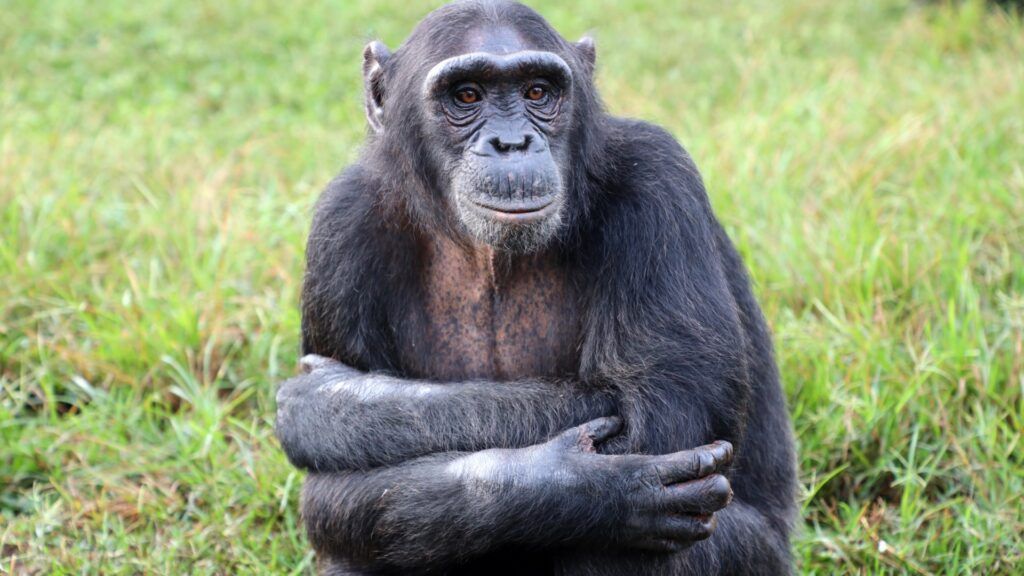






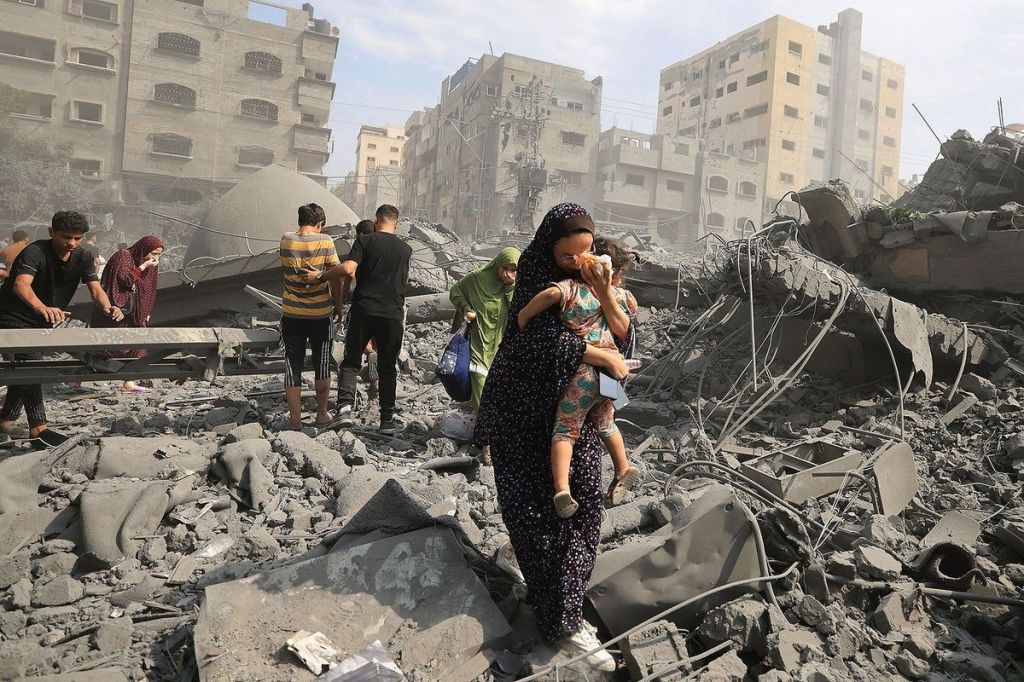








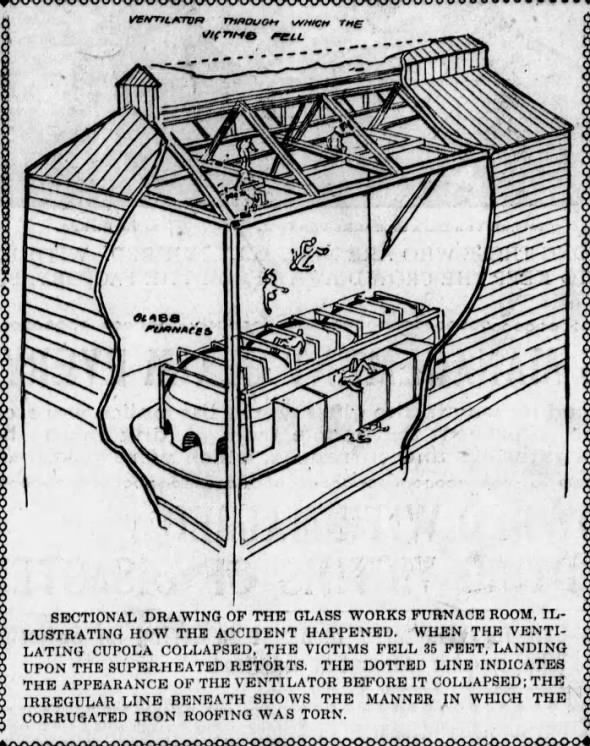


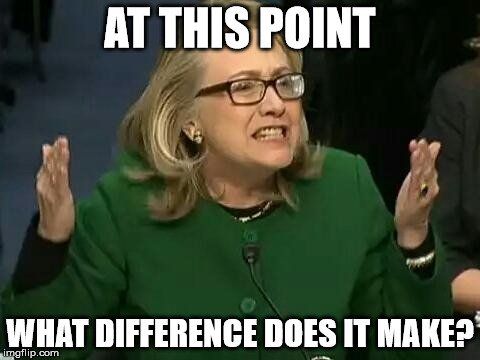



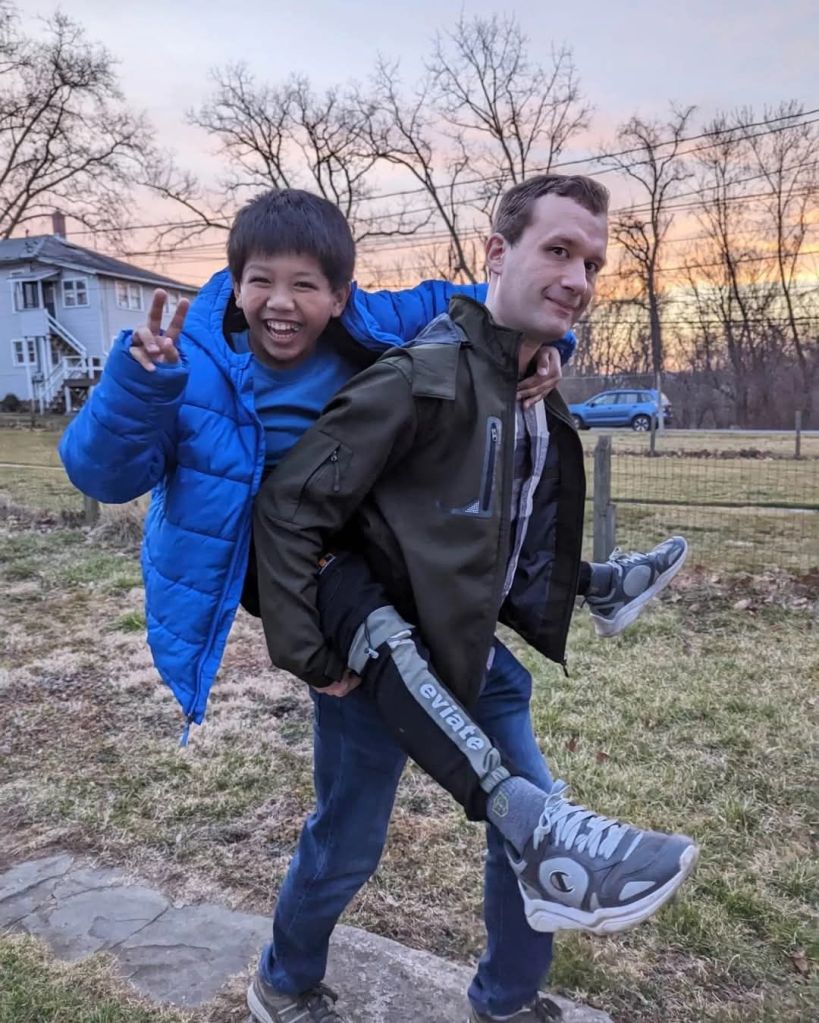
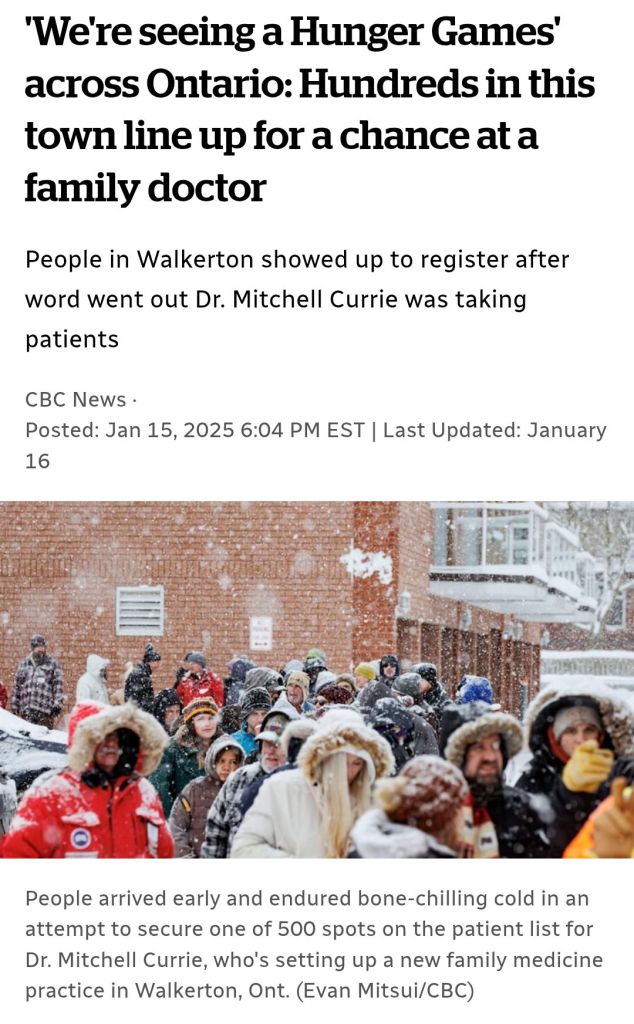











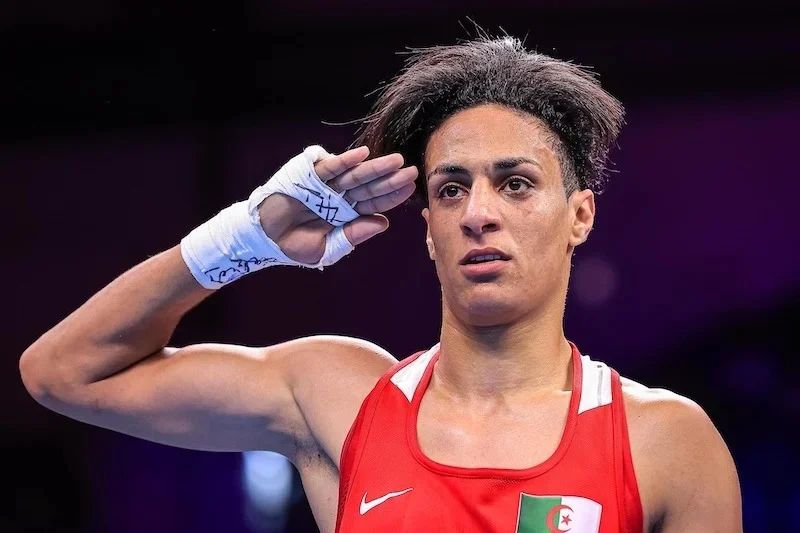


 Irregular Ideation