Some might wonder why I have such a visceral reaction to wokeism. I have written a few no holds barred blogs trying to warn people of what this is and where it invariably leads. But each time I write it feels as if my concern is not well-explained. I mean, I know some probably read and ask, “why is Joel attacking these well-intentioned people?”
However, I’m having a moment of clarity and therefore will try to expound on why it is absolutely necessary to shock people out of their stupor. The reality is that wokeism (or grievance culture) and religious purity culture are two branches off of the same tree. Both patriarchal conservative men and those angry pink-haired feminists are trying to create a world without suffering. Both, tragically, create more problems than they solve.
First, what is purity culture?
As I experienced it, in the conservative Mennonite context, it was a branch of Biblical fundamentalism (Protestantism) that had been grafted in to the Anabaptist tree. It was a legalistic perspective. The pure life was to avoid vice (no drinking, dancing, going to movies, etc) and remain completely a virgin until marriage. It is not that the aim is entirely bad, but there was also a lack of grace accompanying this perspective.
In other words, there was no room for failure. It a hellscape of unchecked perfectionist tendencies. People who should be diagnosed as having obsessive compulsive disorder (OCD), along with other mental illness, viewed as being virtuous. And the rest of us struggling to meet an unreasonable standard without the actual spiritual help we needed.
For example, girls who thought they were ‘defiled’ for simply talking to a guy that they didn’t intend to marry. And heaven forbid you did date and break-up. Then you were damaged goods. Cursed to walk the earth, like Cain, a stigma tattooed to your chest, a scarlet letter.
To those steeped in this religious purity culture it was about saving the next generation. It was a reaction to a world of promiscuity and failed commitments have produced far-reaching consequences. And yet, while it does work for some, those who check all the right boxes, it permanently marginalize others and gives them no real road to redemption. Divorced and remarried? Tough luck, you’ll need to break up that successful loving family to become a Mennonite.
That’s the purity culture I know all too well and, for reasons I’ll get to later, have fully rejected as being unChrist-like and spiritually void.
Wokeism, despite the vast difference in appearance to what I’ve described above, is another subset of purity culture. It is a reaction to the ‘privilege’ of those who better represent the cultural ideal. It is another form of utopian idealism.
Whereas the latter religious variety of purity culture believes that if their children only kiss one person, never experience the pain or disappointment of a break-up, then heaven will come to earth—the ‘woke, by contrast, believe that if everyone was forced to tolerate their ugliness and embrace their toxic grievance; if they could live free of further offense, then they would be fulfilled.
Both forms of purity culture are offshoots of Western values. They both see suffering as a flaw in the system and try to eradicate it through their own means. And they do have their valid points. No, the girl, the victim of sexual abuse, who (because of her loss of self-worth) goes from one guy to the next, should not be called a slut. But, that said, nor should her unhealthy coping behavior be normalized. Instead, we should stop seeing people as damaged goods because they failed to reach some sort of phony cultural ideal.
The truth is, the woke, as much as they attack whiteness. Or the feminist who acts aggressively and looks to a career as being freedom. The patriarchal father, as much as he claims to be protecting. Are all the thing that they despise most. Religious purity culture, sadly, is hypersexual in focus and produces conflicted men like Bill Gothard, Doug Philips and Josh Duggar. Feminism amounts to a form of female self-loathing that unwittingly idealizes the male role. And so-called social justice is simply a means to manipulate and enslave another group of people.
All of them assume that if a person could simply avoid pain and bad experience they would find their completeness. All seek a kind of perfection outside of Christ and very quickly, despite their wonderful intentions, turn into a dystopian hell.
What is wrong is this idea that pain us is less for our good than pleasure. The religious, ignoring the lesson of Job, neglecting what Jesus said about the tower tower of Siloam or the man blind from birth, see suffering as a sign of God’s displeasure and a punishment. Likewise, the woke want to be embraced without repentance, if they would simply be called clean then they could finally escape their terrible anguish, right?
The truth is, bad experience is part of life and as beneficial as the good. Growing up in a single parent home can be an excuse or a motivation to do better.
This is what makes the story of Jesus so compelling. Unlike us, he was completely innocent, his intentions were pure and should have been loved by all. But, instead of embrace him, his own people saw him as a threat, he would undermine their system and perspective, show them for what they were, thus had to be eliminated. That he was executed with criminals would seem like a humiliating defeat. He suffered and died for what?
The tree of life.
However, it was in this suffering that salvation came. Sure, the burden of the cross comes with anguish. We would rather seek pleasure and avoid pain. However, in Jesus, the cross is transformed from being a brutal instrument of death into a well of eternal life. How? It is in the same way that a seed falls to the ground, is buried and leads to new life.
Why would we cling to the seed or refuse to let it be buried and prevent the tree?
The overprotectiveness of religious purity culture, the refusal to acknowledge our brokenness and need of transformation of wokeism, both try to find salvation by human means. One seeks to impress God, like the rich young ruler or proud Pharisee, whereas the other (like Cain) demands that God accept their unworthy sacrifice and then murders their righteous brothers. Both need Jesus.
The wonderful cross
In conclusion. We’re all damaged goods and can be made more beautiful than ever through repentance. Jesus can make our pain as much a joy as our pleasure.
Adam is a friend of mine. We have gone out to eat on multiple occasions since being introduced. He’s a bit eccentric, he carries a notebook everywhere, has humor that doesn’t quite hit the mark, spiritual rather than religious, dresses a little like an old-school hippie and is sort of alt-right conspiracy-minded.
Adam is also depressed and a broken record. Time and time again he goes back to his relationship with his father and wants some sort of validation that he never does receive. His father, his opposite politically, left when he was a child, seems to have some mental issues of his own and can be very degrading when things don’t go his way. It is quite evident that the sins of the father have visited upon the son.
I have urged Adam to move on, told him that his biological father will never give him what he so desperately wants, and have suggested that he do as I have done when let down. Namely, I have told him to come to Holy Cross. The Orthodox have fatherly figures who represent the Heavenly Father for the fatherless.
Unfortunately, Adam, despite his desperation, is stuck on doing things his own way. From the first time we met until now there is a wall of resistance that goes up against Christian religion and even what seems like an inability to understand simple explanations. For example, I used the illustration of Naaman having to dip in the river Jordan to be healed, thought I had explained well, and got nothing but a blank look of his being genuinely perplexed.
There’s truly not much hope for Adam until he is able to let go of his disappointments and hope of some sort of resolution on his own terms. And, quite frankly, even if his dad would miraculously transform into the father he envisions as ideal, that would not fix what broken in Adam. He will try drugs, he asks for my “fellowship” with him, but absolutely refuses to dip in those healing waters of the Church.
It’s sad because his repeatedly going back to this makes me feel as if I’m wasting time on a lost cause. I mean, it’s hard not to do that inner “here we go again” eye roll when there seems to be no progress. And it does certainly work on my patience too. But there’s one big reason why I do not write him off entirely. What is that reason? Well, maybe because I’m not all that different from him.
My Own Skipping Record
In the days of vinyl records there was nothing more annoying than the skip. It was what happened when the record had been mishandled and the surface grooves scratched. The needle would travel down the groove, reach the scratched area, and jump back into the prior groove. The result is that the music abruptly stops and makes an unpleasant transition over and over again.
Being stuck in a rut is not fun. Ending up in the same place no matter how hard you try will exhaust the strongest person. Worse, when others try to help pull a mired soul out, and the stuck person goes sideways rather than forward, many will leave concluding that they do not want to be helped. And sometimes that is indeed the case. Some do enjoy the pity party attention and are simply a drain of resources that could be used for those who truly want out.
Those who have read my blogs over the past few years have probably started (long ago) to wonder if any progress has been truly made. And, believe me, some days I do wonder myself as I give a slightly different angle on the same themes over and over again. I mean, you get it. I had some really big expectations and ended up really disappointed at the end. So move on already, right?
And the truth is, I have in many regards. I’m not the same person as I was a year ago. I have gained confidence, continue to attend to my responsibilities, and the feelings of loss grow less intense with each repeat cycle. That said, the recent setbacks, the physical pain, along with the unresolved situation with Charlotte, can very quickly lead to that spiral back into those past hurts. There was no real resolution or closure there, to survive I simply pivoted to new hopes.
Completing the transition, out of the wilderness of broken glass to my new promised land, means seeing a fulfilment of the impossibly. That means Charlotte being here. Until that moment when we meet in the airport terminal, her safely on US soil, there will be that cloud of uncertainty hanging over me. It does cause me to skip at times, to go back to those feelings of helplessness and worries that my hopes are still entirely delusion.
I choose to believe. But not because it is easy to believe.
As the man with the sick son who came to Jesus, “I believe; help my unbelief!”
Do You Want To Be Healed?
A year or two ago, this was the text for the Homily one Sunday morning:
One who was there had been an invalid for thirty-eight years. When Jesus saw him lying there and learned that he had been in this condition for a long time, he asked him, “Do you want to get well?” “Sir,” the invalid replied, “I have no one to help me into the pool when the water is stirred. While I am trying to get in, someone else goes down ahead of me.” Then Jesus said to him, “Get up! Pick up your mat and walk.”
(John 5:5-8 NIV)
It really struck me, more than ever before while hearing this passage, that Jesus asks the man if he wants to be healed. Imagine that, a man, waiting for nearly forty years, nobody helping this unfortunate man into this healing pool. He, like Adam, like myself before the pursuit of the impossibly, had been waiting on rescue by the means that he could understand. His days must’ve passed an increasing nightmare of his own paralysis and being surrounded by other hurting people more concerned with their own needs.
Jesus asks, almost as if knowing the man’s will to be healed is permission. And the incredible part? After hearing the man’s complaint about no help, simply commands him “get up” and the man does. His faith set him free.
That in contrast with this:
Jesus left there and went to his hometown, accompanied by his disciples. When the Sabbath came, he began to teach in the synagogue, and many who heard him were amazed. “Where did this man get these things?” they asked. “What’s this wisdom that has been given him? What are these remarkable miracles he is performing? Isn’t this the carpenter? Isn’t this Mary’s son and the brother of James, Joseph, Judas and Simon? Aren’t his sisters here with us?” And they took offense at him. Jesus said to them, “A prophet is not without honor except in his own town, among his relatives and in his own home.” He could not do any miracles there, except lay his hands on a few sick people and heal them.
(Mark 6:1-5 NIV)
The disbelief of those who knew Jesus as merely a man, the carpenters son, limited what he was able to do. Spiritual healing is, and has always been, a matter of our own choice. So many of us insist on doing things our own way, we refuse to dip in our muddy Jordan rivers because of pride, we wait on rescue believing that our salvation comes from other people, yet all we need is to look up in faith and then healing is possible.
No, this does not mean we will be spared physical ailment or live forever in our current form. Even Lazarus, raised from the dead, passed from this life. But we can be made spiritually whole. That is why I keep writing, maybe I sound like a broken record, maybe this is too much for many people who stopped reading this blog long ago, still I write so that my most faithful friends may someday also share in my joy having known of my sorrows.
The readers of this Irregular Ideation most likely noticed that I was down and struggling a bit. No doubt the prayers of my family and good friends have been heard. While the neck and other issues linger, there has been a break in the form of some good news that has brought with it that glimmer of hope again.
These cycles of mood and emotional swings have been something that I’ve pondered. Despite there being events that are involved, there is also this sort of rhythm and inevitability to these things. The phase “what goes up must come down” comes to mind. Sure, I’m probably on the more neurotic end of things, with higher highs and lower lows. But most people, no matter how good or bad their life is compares to others, seem able to identify with these ebbs and flows.
I mean, we have that time before coffee in the morning then that time after where the brightest of the world returns. There are those the weekly slow starts “a case of the Mondays” contrast with that euphoria of Fridays. Then the longer cycling patterns tired to holidays or weather. Has anyone else had encounters with SAD or Seasonal Effective Disorder? Descriptions like “terrible twos” or “the midlife crisis” exist for a reason. Is the “sophomore slump” real? I think so.
And there does seem to be a preordained nature to this all, like the seasons or how the sun rises and sets.
This kind of constant change is confirmed in Scripture:
There is a time for everything, and a season for every activity under the heavens: a time to be born and a time to die, a time to plant and a time to uproot, a time to kill and a time to heal, a time to tear down and a time to build, a time to weep and a time to laugh, a time to mourn and a time to dance, a time to scatter stones and a time to gather them, a time to embrace and a time to refrain from embracing, a time to search and a time to give up, a time to keep and a time to throw away, a time to tear and a time to mend, a time to be silent and a time to speak, a time to love and a time to hate, a time for war and a time for peace.
(Ecclesiastes 3:1-8 NIV)
To me this is both beautiful and terrifying at the same time. The woman who brought a man such joy in their youth may make him all the more lonely when the season of death and seperation comes. The attributes that make a nation rise in prominence, say a focus on equality, can be the very thing that brings about their collapse once it finally does reach the top.
Not to say that any of this is meted out evenly across board either, some do have it easier or a higher baseline mood and others not as fortunate, nevertheless there are patterns.
Bigger dreams lead to bigger despair. But a harder struggle can also lead to greater joy and a more wonderful triumph for the faithful than those who lived for their own comfort. There is balance, there is growth, larger and smaller patterns, a predictability that seems could be modeled. How it plays out across groups of people is also a fascination of mine.
My own thought is that we could probably remove the triggering events and still end up with the same patterns in the end.
In other words, there would have been a world war even if the Archduke Franz Ferdinand had not been assassinated, my disenchantment with the Mennonite denomination would have eventually boiled over even if not for the same specific reasons, and Elon Musk’s Twitter account isn’t the reason the crypto market dropped from those all time highs either.
First, Let Me Talk About Stocks…
If cycles of human emotion could be mapped out, the stock market might be the place to start. The euphoria of a “bull” market and seeming endless pessimism of a “bear” market show how our emotions, collectively, shape the direction or mood of the market. But it is more than just random noise, it is a complex dance of feelings and facts, that produces the ‘right’ price in the end. It can often be algorithmically predicted.
A little story, for example, of how it works: I have bought and sold Dogecoin over the past few months. My first purchase, in December, at a cost of $1000 then, would have been worth hundreds of thousands at the peak. I sold it for a small gain. But later, as not to miss out, I bought in again, and saw my portfolio balloon when the “meme coin” finally caught fire. However, over the past few months, things haven’t been too good and the price was going down and down.
At first I had complete resolve. The smart investor holds, I did my due diligence, this is only a correction cycle and things will reverse soon. But eventually the pressure broke me. I decided that it was time to save what was left of my gains and move to something that would produce a better return. I thought this down trend would continue indefinitely or at least go lower—give me a better buy-in price later, right?
I’ll show you where I sold around 80% of my Doge…
Oh well, I think I’ll be able to get more later.
Yup. I picked the very bottom of the downward trend. Even knowing that cryptos have gone through similar corrective phases in the past before continuing their upward climb, and even telling my coworkers that Bitcoin (despite the plunge) would end the year above $70,000, I fell victim to fear, uncertainty and doubt precisely at the wrong time. I had waited for two months to see that trend reversal, at the bottom, and would have gotten it had I held on for another couple more weeks.
But more than to talk about my missed opportunities, I’m interested in that larger cycle of the market and how human emotions (in an aggregate) create this clear pattern. Many people want to blame events, like a Tweet from Elon Musk or what have you, for their change in fortunes. However, while we could see these events as being triggers, it seems the larger patterns are something more or less baked in.
Elon Musk speaks as Doge sells
Dogecoin, for example, could not continue straight up forever. Smart investors, who know the adage, “buy the rumor, sell the news,” started to sell before Musk’s SNL appearance. And the sell-offs came with mentions both good and bad. It was not the autistic billionaire businessman’s fault that so many people decided on that moment to cash in nor that others began to panic sell as the price dipped. It was all predictable, part of some sort of fractal meta-pattern, can be modeled (like this), and would have happened (triggered by something else) regardless.
Smart investors learn to zoom at, look at the longer trend, rather than let the emotions of a bad day get to them. Cryptos, despite their recent dip, have remained in an ascending pattern with the recent lows still higher than the high of the prior cycle, which is why the smart money (unlike your’s truly) continues to buy the dip and HODL (Hold On for Dear Life) rather than give up. Most people miss on big gains because they’re impatient.
Despite Recent Lows, An Upwardly Building Pattern Prevails…
It was after my most recent dip in mood that I realized something. In my prior lows over the years, as a Mennonite, I would still go to church for the fellowship and yet would not sing if the words didn’t feel authentic coming from my mouth.
But this past time, despite my feeling low, I still showed up to sing and did because (despite my pain and depressed mood) someone had to carry my part in the choir. Music was my worship, spiritual combat, rather about how I felt. This time I soldiered through the liturgy, toothache, emotional turmoil, and all. I left immediately after the service, rather than do the social ‘coffee hour’ thing, because I was miserable.
It might seem to be virtuous to only show up or sing when the feelings are there and yet it is hardly sustainable. If I only showed up for my job when I was in the mood or having a good day, my paycheck would be small to nonexistent. Many marriages end in divorce because the ‘love’ therein depends on their feelings in the moment and is not an actual commitment to love through better or worse.
So, in short, this duty-driven devotion, rather than being led by emotions, is actually progress. It was not simply another dive into the same dumps as before. No, I have changed, improved, from the “be true to yourself” advice to doing my job, for the good of others (including my choir director), gutting it out. Two steps forward, one step back, will eventually get you where you need to be.
There is a sense in which it was always a choice whether or not to participate. But my character development? That seems like something guided, the result of years of small nudges in the right direction, and not something that I can take credit for. In other words, I’m becoming what I was meant to be, having been placed in the right time and circumstances.
Despite Individual Progress, Are We Becoming Weaker?
That’s not to say that this kind of building pattern cannot work in reverse. When we consider our “first-world problems” in comparison to what people face in Afghanistan, it would appear that we are becoming collectively weaker rather than use the past generations boost. We use our opportunity to “stand on the shoulders of giants” to bellyache about ‘oppression’ because other people are not forced to pay for our lifestyle choices.
To put things into perspective?
Charlotte, my Igorot bhest, as the daughter of a subsistence farmer in the mountainous Benguet province, was sent away to assist her grandmother. She describes her childhood as being her “grandma’s water pump,” carrying heavy buckets to keep the garden watered. The work was so hard that she would cry and wonder why she was even born. That’s pretty much how my grandparents or great-grandparents lived, they did complain and probably because there was nobody to listen. Everyone struggled, physically, and became strong enough to survive.
Not Charlotte. But how many in the world work.
Compare that to my generation, where we were mostly spared hard physical labor, yet find plenty of reason to cry injustice. We have gone from “sticks and stones may break my bones, but words can never hurt me,” to triggered because an Amish kid stares at us. Being looked at too long a micro-aggression, I’ve heard. My own endless existential crisis another example and there are many other cases, in my generation, of oversensitive and dark struggles of those truly privileged compared to their hardworking parents.
While past generations in my religious upbringing may blame their insecurities on the standards and not being appreciated by their workaholic father or whatever, the latest generation can’t even eat peanut butter without breaking into hives. It isn’t their fault either, they’ve been coddled and protected from birth, their parents worked overtime to make sure that they felt heard and connected. Now, rather than see their discontentment coming from having to follow ‘legalistic’ church standards, our youth will struggle with questions of whether or not they’ve somehow been mis-gendered at birth.
There is little doubt that our sterile environment is likely contributing to the vast increase in autoimmune disorders and allergies. Whereas previous generations fell to disease, endured actual physical hardship and wondering where the next meal would come from, girls married as teenagers, we now have people distressed that someone used the ‘wrong’ pronoun…
However, in a sense, over the generations it is the same struggle in different form. No matter how improved things become, whether we get that go cart we dreamed about every day or not, there will always be another circumstance to blame our own feelings of not belonging on. The more challenges we remove for our children, the less capable they become. No longer comfortable in their own skin. We blame different externalities for our despair, yet maybe it is something genetic, internal and inevitable?
How Civilizations Rise And Fall
There have been various descriptions of how civilizations rise and fall, one example below:
Many Americans see that we’re on the decline and that our fall from world prominence is now as inevitable as the sun going down. And, given that many great empires have come and gone, this is not a big surprise. How could a nation of immigrants, people who left the oppression of the old world, traveled across the treacherous Atlantic and conquered a continent, who understood sacrifice, lead to a generation so entitled, unappreciative, self-loathing and suicidal?
It is easy to paint a very bleak picture. But then, gripes about the next generation are as old as human civilization and this doesn’t always mean a collapse is imminent. Yes, there is change. Top hats have gone out of fashion and will likely never make a return, trends come and go. There have been times of great social upheaval, like the American Civil War, followed by periods of relative calm. Those who lived through the Great Depression, the World Wars or Cold War all had their anxieties about the end being near, only for that “great peace” and fall of the Soviet Union to follow.
What feels like the end, under fresh leadership, could be the start of a new epoch. Take the fall of Rome. Sure, the Mediterranean empire fragmented, yet the common thread of Western civilization has remained to this day and is arguably stronger than ever. Yeah, the British Empire may no longer rule the seas, but their rebellious American sons and daughters have become even more powerful than any empire ever. So maybe after a painful declining corrective phase there will be a revival or rebirth?
Our survival depends on our optimism. We must assume that each pullback will lead to the next increase in amplitude. No, that doesn’t mean this is easy, doubt and despair require far less effort than hope and faith; failure is always possible even with the best efforts, but humanity has made it through many bad moments—moments many times worse than any of us will likely experience in our own lifetimes.
One of my favorite love stories, the BBC adaptation of a Victorian era novel, North & South, features two very strong and compelling characters.
The first, Margaret Hale, the cherub-faced daughter of an English clergyman, is forced to move to the industrial North after her father’s resignation over a matter of conscience. The other is John Thornton, a mill-owner, a handsome man with piercing eyes, brooding and intense, and interest in the demure young woman.
Things started fairly well. But, that doesn’t last as the differences in their perspectives becomes clear. Margaret, compassionate and having lived a sheltered life, interprets the actions of John in a negative light and pulls away after witnessing his harshness towards an employee caught smoking. What she sees as just cruelty was actually Thornton’s concern for the safety and wellness of his workers given the extreme risk of fire.
It is in the last and final act where there’s a scene where the tension between the two finally disappears. Throughout the middle-act Thornton’s truly good character is slowly revealed. And, Margaret, having returned South, has reconsidered her own idealistic notions, now sees the merits to living in Milton, and decided to return North again. Meanwhile, John is going South, the two cross paths at a station near the midpoint and cue the music.
North & South
There is this wonderful part of the soundtrack in this climatic station scene, Northbound Train (listen here), that so perfectly accompanied the moment. It is understated and elegant, reflective, that builds in waves to crescendo and then slips away as wistfully as it came. Thornton’s steadfast devotion is finally rewarded with a kiss and happily ever after begins despite the painful struggle to get there.
When the Story Goes South…
During my pursuit of the impossibly (a preacher’s daughter, like Margaret) this story brought a little hope with the similarities to my own. It wasn’t that we were so terribly different in our desires as it was she never heard me. Her conclusions formed before the conversation even began. She had pronounced “you’re thirty years old living in Milton” (the actual name of the town) meaning, in translation, that I would hinder her big plans. And could not understand it was her boldness and ability to get out that attracted me.
My thesis then was that a composite of our unique strengths, seemingly incompatible, bound together by Christian love, would exceed what those of similar abilities could accomplish. My thinking outside the box combined with her represention of the Mennonite standard. And, while I’m never good at getting things started (hence being stuck in Milton) I’m extremely loyal and willing to sacrifice for the team. I knew my age and life experience was an asset. But she could not see my value.
Still, for the year or so following her initial rejection I believed. What a wonderful story we would have when all was said and done, right?
Anyhow, that music, Northbound Train, had seemed like the perfect bridal march. Partly in innocent faith, partly to bolster my failing confidence against the deluge of rational fears, this image of the impossibly walking the church aisle dressed in white. As would be the case in real life, tears would stream down my cheeks as the nightmare of the past decade was replaced by this wonderful dream of marital companionship and completeness.
The strong emotions that came with that gentle harp being replaced with one violin and then two, have now disappeared. The music is still beautiful, but my feelings of numbness have long replaced that panging desire for a well-defined conclusion to over a decade of struggle. What I got instead was a world more complex. The cynicism that I had fought tooth and nail was confirmed.
The sunshine through the clouds, endings sweet and perfect are not for everyone. And the reason we tell such lovely tales is probably because they’re so uncommon, the exception, and not the rule. Sure, we can see ourselves as the characters. But the impossibly will likely go on seeing me as the villain in her movie, her conventional guy as the hero, and has never once shared in my fairytale that love would prevail over our differences.
As Far As the East is From the West
It is hard to believe that nearly another decade has passed and I’m still alone. I’ve moved from Milton, left the religion of my childhood behind, even traveled to the complete opposite side of the world twice, and have changed from that guy perpetually unsure of how to find direction. No, I’m not a missionary, but I do genuinely love people and probably accomplish more of actual value than those duty-bound Evangelical types who see ‘the lost’ as their get-into-heaven projects.
More importantly, I’ve found another impossibly, a beautiful Filipina flower, a little lost sheep when I found her (struggling abroad, in Taiwan, to support her son back home) and now the one who keeps me strong despite our torturous wait. Unlike the Mennonite impossibility, we do not share a cultural or ethnic identity, our lives have been very different, yet we have our simple and devoted love in common—which has been just enough to sustain us through these past years.
East & West
However, after all I’ve been through, holding on to hope is hard. Could my visions of her arrival at the airport, on American soil, with Y-dran in tow, also be a delusion?
It has been over two years and eight months since we’ve held each other that one last time before we parted ways in Taoyuan International Airport. I had known the immigration process would be difficult, but could not have anticipated the pandemic and travel bans that make it nearly impossible to be with Charlotte. It really does start to bring those worries that I might be cursed to the forefront again and sometimes the despair does win.
The eternal optimism of youth wiped away by the rejection of the Mennonite ideal, now facing my rational fears and the fact that I’ve been hoping longer than Jacob worked for Rachel and without so much as a Leah in between, I can now fully identify with the wife of Job, “Are you still trying to maintain your integrity? Curse God and die.” The frustration is real. How long does one go on dreaming? When is it justified to wither away into bones, with life never to return again?
As far as the East is from the West is an expression, in Psalms 103:12, used to describe an impossible distance that cannot be bridged. And it could seem that, despite the abiding love of my bhest to encourage me onwards, I’ve jumped straight from the frying pan into the fire. We have had a bit of good news since I’ve last published a blog here, the USCIS approved the application, and yet will this impossibly ever become possible?
I see the successful couples. So lovely together. To them it feels preordained, meant to be, a dream come true. For me, on the outside looking in, there is now more uncertainty than certainty, not everyone gets that music at the end.
I’ve always been a sort of magical thinker, my hopes always far outpacing my realities, and to the point that sometimes when my dreams would finally come true the pleasure had already been exhausted.
I had so wanted a go cart growing up. On the school bus ride home my mind would start to wander into the fantasy realm. I would picture a shiny new go cart, like the ones in the catalog, waiting for me at the end of the driveway and would actually be disappointed when it did not end up being true when we would finally pull up to to my stop.
That’s not to say that I didn’t love the old go cart that my dad would finally weld up, using a rusted frame as a starting point, and an old lawnmower engine. Anything with four wheels, that ran on gasoline, that could be slid around corners, definitely scratched that itch. Still, my vivid world of make-believe did not always end with any fulfillment.
In my adulthood this tendency to be way out ahead of myself did not get any better. I’ve cried, on more than one occasion, thinking of my beautiful bride walking towards me up the aisle. And not in sadness either, it was in bliss having momentarily put myself in that wonderful place. Of course, given that I never even so much as went on one date with this young woman, I pretty much ruined that music.
The world between my ears can be a paradise. A place where there’s such thing as innocent love and anything is actually possible. I used this as an escape. My school years spent doodling and hoping for some kind of rescue from the mundanity of the classroom.
These visions were often grandiose. A child scaled B-17 would land in the school yard. I would run out to meet my faithful crew as the teacher and 5th grade class would watch in disbelief, stunned, as we revved the engines and were on our way to the nation (later a planet with two suns) that I benevolently ruled along with my brother Kyle and cousin Mel.
Truly, I had always thought that Kyle and I would always be together, build a house with a chimney in the center, like the ruins that I saw on a Civil War battlefield. I’m not sure why, but it didn’t seem possible then (despite our fights) that we ever be separated, let alone hours apart, and I really can’t claim to have gotten over that disappointment yet. He moved on, it seems that I could not.
And I have lived a sort of Peter Pan existence. Holding on, hoping that some day the love that had eluded me, child-like and innocent, would finally magically arrive to rescue me from my torment for having failed to achieve. I long overstayed the youth group. Until I had my happily ever after, what choice did I have? Get old by myself and alone?
Unfortunately, hope is not a strategy and I lacked the necessary social tools to approach an attractive young woman—let alone convince her to date me.
Years would go by, where I would convince myself, “this time will be different,” and end up leaving the church retreat no closer to my goals and disappointed. These beautiful wonderful thought going in would slowly morph into a nightmarish reality as opportunity would pass me by and I would be left with only my profound loneliness again.
It was only in my mid thirties that this optimism would crack and the pattern of hope followed by disappointment would finally overwhelm me. Brimming with outsized expectations, I would arrive at the weekend, and suddenly shut down. The wheels came off, I would collapse into the nearest couch, curl up, unable to push myself to try again—eventually ending up a sobbing mess.
The pressure had become too much. The difference between my hopes and reality too insurmountable.
Sure, I could entertain my delusions, the right one was going to finally arrive, we would look at our feet, shy at first, we would talk, she would smile at my earnest thoughts, I would finally be at ease and soon enough we would be walking hand in hand out the back of a church. But the chances of that were as good as Gatsby somehow being able to turn back the hands of time and Daisy would be his.
My collapse from exhaustion came at the tail end of decades of forced optimism and sweeping aside my rational fears. I did not want a world where my being 5′-8″ tall and rather unathletic disqualified me. Love, to me, especially pertaining to my female religious counterparts, was supposed to be something transcendent. Unfortunately, what I got instead was a brick wall of rejection.
Life is especially cruel to those with a high ideal. If I were less able to see the marvelous maybe I could have more easily moved on to more practical aims. But I could never get my head out of the clouds nor was I willing to acknowledge the harsh truth about romance. The young women were also chasing their version of perfection and that perfect man wasn’t me.
Somehow, despite a mind that could span universes, I ended up being thirty years old living in Milton and thus ineligible for that kind of love. How does a dreamer, still holding to those childish notions of escape, ever recover from that terrible pronouncement?
They don’t.
It wears me out thinking about it.
It makes me think of another novel and protagonist, Ethan Frome, an injured ruin of a man. His house reduced in size as he limped, painfully, through what remained of his life. Not even granted the merciful end to his suffering of that suicide pack those many years before. Perhaps my life would have been better had my secret world been a little more stark, desolate and devoid of life?
The irony is that these moralizing finger-waggers, blinded by their arrogance like those self-righteous religious elites whom Jesus mocked in Matthew 23 (“If we had lived in the days of our ancestors, we would not have taken part with them in shedding the blood…”), are unwittingly aligning themselves with the modern variant of fascism. Their simple minds apparently cannot comprehend that the same evil, to avoid detection, can be dressed differently and that this time it is their turn to enable the tyrants and true fascists.
History repeats?
Real Fascists Please Stand Up
Fascism is a hard word to define, many dictionary definitions are insufficient or too narrow and do not give a sufficient description. The following quote (from an article, “What Is Fascism?”) gives a better picture of what the term is referring to and why some of us see this emerging in the current corporate and government institutional regime:
Mussolini coined the term “fascism” in 1919. The word “fascism” comes from the Italian “fascio,” meaning a bundle or group, and is considered a term for a militant brotherhood. The word “fasces” means an ax tightly bound with sticks, an image that became a symbol of the fascist movement, according to the History Department at King’s College in Wilkes-Barre, Pennsylvania.
How is fascism defined? Robert Paxton, a professor emeritus of social science at Columbia University in New York, who is widely considered the father of fascism studies, told Live Science that fascism is “a form of political practice distinctive to the 20th century that arouses popular enthusiasm by sophisticated propaganda techniques.
Two common themes of fascism that Paxton lists “anti-liberalism, rejecting individual rights, civil liberties, free enterprise and democracy,” also “exclusion of certain groups, often through violence,” and I’ll add that fascists have tended to have an obsession with what they consider to be impurities. A particular German leader saw certain groups as being vectors of disease and thus justified their elimination.
So, the two primary elements of fascism, distilling this down, are this obsession with contaminates and the merger (or bundling) of power. The only real difference between fascism and Socialism is that the latter had been more concerned with class distinctions and the prior with racial difference. But, in the modern era, when the ‘Socialist’ left regularly uses skin color to divide people, and seem fine using corporate power to advance their social agenda, and are the masters of propaganda, it is basically a distinction without a difference.
Sure, they can call themselves “anti-fascists” or “Antifa” and claim that they’re only assaulting Nazis. But, come on people, a guy at the mall can wear a red suit, black boots, and call himself Santa—he’s still not going to come down your chimney with Christmas goodies. And look who is behind most of the violence across this country in the past few years.
Hint: It is not those individuals, totally unarmed, many of them military veterans, who entered the Capital Building on January 6th.
Not defending that either, they should be held accountable, but the difference is that these rioters do not have the corporate media shilling for them nor free reign of the college campus with their demands or sympathetic prosecutors who look the other way at their criminal behavior.
Like it or not, Trump supporters are not anti-democratic, not in the least, and simply wanted allegations of fraud and abuse to be heard. I mean, isn’t it is a little strange that the most well-armed part of our population would go into January 6th planning to take over the government and forget their entire arsenal at home? If it truly was an “insurrection,” as our totally fair and unbiased political establishment would have us believe, why did they not bring any weapons with them?
Night after night a Federal building, a court house, was attacked by far-leftists in Portland. In Seattle we had a whole section of the city taken over and declared an “autonomous zone” in defiance of the government. Over two billion dollars of damages, dozens murdered, in a summer of violence that our corporate media called “mostly peaceful protests” and yet we’re only talking about the wrongness of this one outburst? Propaganda much?
Funny how January 6th was not called an unguided ‘mostly peaceful’ Capital Building tour, why is that?
But I do digress.
Fascism is “anti-liberalism, rejecting individual rights, civil liberties, free enterprise and democracy,” and basically Marxism on steroids. In other words, fascism is authoritarian, collectivist, my tribe versus yours, willing to close private business (or churches) and undermine the democratic process to achieve their ends. So, ask yourself, who was asking for mail-in ballots that are an invitation for fraud banned in most countries? Who is asking for collective judgment (or pardon) of people based only on their skin color? Who was creating the dictatorial mandates, in name of keeping us pure of disease, at the expense of our freedom?
Those Who Defend “Papers Please” Are Fascists
My reason for writing this is the response to the meme below by some exceedingly ignorant people from my own Mennonite tribe:
Ironic…
The first response, a virtue signal about those dying in India, a total whataboutism, was completely insensitive to those suffering under the current nonsense. I’m pretty sure this smug individual won’t bother to watch this video nor ever question approved content they spew on social media. They can’t, they were raised in and remain in a religious cloister that taught them, “go along with the group” and “do as your told.” They might eventually drop the cultural costume some day, and yet they have not demonstrated any ability in our brief conversation to think independently or beyond the narrative being pushed.
No, they “believe science,” which is actually only an appeal to an authority they themselves do not posses, and ignore the mounting evidence that the ‘vaccines’ are totally ineffective. They will continue to think of themselves as well-informed, smarter than their cautioning peers, despite the fact that the six-foot social distancing rule was bogus, as was the focus on surfaces and mask mandate. This coming from someone who had N95 masks back in January of 2020 and while the ‘experts’ were still saying that we should be more concerned about the seasonal flu. Masks make a negligible difference if any at all. There is no proof otherwise.
So now that we’re talking about vaccine passports and literally forcing people to get an injection that has little or not value, that should not be necessary for those who have natural immunity through infection, and comes with the unknown long-term risks of any experimental new product, they still don’t see the problem?
I’m sorry, but only a fascist would be okay with this, because only a fascist is okay with “exclusion of certain groups” and take no heed of the individual rights or civil liberties of those who wish only to travel freely without harassment. To see the religious elites of the Mennonites not only tolerate, but enthusiastically endorse such policies, should send a chill up the spine of those moderate or apolitical in their ranks. These ‘educated’ nitwits don’t seem to get that the Nazi party came to power and won Germans over with the good they were doing—the Holocaust came later.
What makes me a forever tortured soul is that I’m standing on the knife’s edge. On one side my ideal, my hopes, dreams and faith. On the other side my rationality, my anxiety, my knowledge and fears.
The current cultural paradigm tells me the prior things are built upon social construct, the latter upon science. They have first deconstructed meaning and purpose, now moved on to trying to even erase categories built upon biology, constantly destroying the rule by highlighting the exception.
The problem with me is that I’m not able to dismiss one or the other. In many regards I am a postmodern thinker, having rejected modernism, and yet not in the way of those out to destroy every religious tradition or cultural institution.
My own understanding is that social structures, like family, gender distinction or nation, do exist for a reason. Sure, they should not be an excuse for injustice or unfair exclusion. However, those who only see these things in negative terms or as unnecessary are severely mistaken.
There are things that can’t be viewed under a microscope that are as needed for human thriving as oxygen or water. Sure, it is easy to dismiss religion as superstition or redefine terms to suit the current demands of outliers.
But being unable to appreciate the balance of forces that keep a bridge from falling doesn’t mean that someone can keep removing structural members without consequences.
While being a critic of abuses by these institutions of culture and religion, my point has never been to destroy them. Sure, it is not acceptable, for example, that the word “modesty” in the Bible is misused to blame women for male lusts, nevertheless tearing down all expectations is an abuse as bad or worse.
Perhaps there are benefits to promoting healthy masculinity or a distinct feminine role?
Those trying to erase all difference in the name of equality are the most controlling and unpleasant people. In the name of tolerance, they are literally at war with everyone present and past trying to preserve an identity they cherish. They worship the exception while making life miserable for everyone else.
That’s where I differ from the ‘woke’ and the virtue signaling masses that empower their tyrannical edicts. Sure, I believe in recognizing disadvantages of some and making wrongs right. But that’s not what social justice is truly about. It advertises itself as being a solution, yet is only the same evil of intolerance in a new more ‘colorful’ form.
Still, I am not capable of being fully engulfed by the teachings of Christianity either. I tend to be philosophically in alignment rather than spiritually and that’s because I’m continually dismissing my own experience as invalid. I mean, so what if I got the warm fuzzies at a church service, right? I’ve also experienced euphoria on Adderall. Been manipulated by music, a rousing speech or what have you.
I can identify fully with H.P. Lovecraft:
“We all know that any emotional bias — irrespective of truth or falsity — can be implanted by suggestion in the emotions of the young, hence the inherited traditions of an orthodox community are absolutely without evidential value…. If religion were true, its followers would not try to bludgeon their young into an artificial conformity; but would merely insist on their unbending quest for truth, irrespective of artificial backgrounds or practical consequences. With such an honest and inflexible openness to evidence, they could not fail to receive any real truth which might be manifesting itself around them. The fact that religionists do not follow this honourable course, but cheat at their game by invoking juvenile quasi-hypnosis, is enough to destroy their pretensions in my eyes even if their absurdity were not manifest in every other direction.”
But this writer of horror, who lived in his own existential crisis hell, does not seem like an example to follow. What is the point of being ‘rational’ if it keeps one in a state of constant dread about how insignificant and out of control they are? Is this holding to an agnostic and meaningless interpretation actually intelligence or simply another form of ignorance?
I vote the latter.
Command of language, the ability to pull together a vast amount of information and sift science from superstition, these are things seen as signs of intelligence. And certainly they are measures of a particular kind of capability of mind. But, as a person can be knowledgeable and unwise, saying things that bring us pleasure or purpose are not real is simply ignorant.
Serotonin is as real as the stars in the sky, the feelings this hormone produces are no different from light. It would be stupid to argue that light waves are less important because they lack mass. Likewise, to say that the spiritual is non-existent, because it cannot be weighed or otherwise measured, is not brilliance either. Lack of appreciation or ability to comprehend things of emotional value is not intellectual strength.
Nevertheless, there is a sense in which seeing behind the veil changes things, there are things that can’t be unseen. And those Lovecraftian monsters do exist even if only in the mind of the author.
My own experience, unfortunately, has left me untethered from the comfortable and floating in space. My sincerest hopes rejected as being delusion by the very people who I had thought would appreciate such things. It is difficult to cling to the belief that “with faith all things are possible” when your former pastor’s daughter, encouraged by him, supposedly missionary minded, tells you she can’t love.
It is that disconnect between profession and action that keeps me still precariously balanced on bloodied feet.
Orthodoxy has brought me a firmer foundation than the ever shifting sands of Protestant theology and practice. It is certainly more ancient and authentic than the alternatives. Still, that loss of identity and innocence, that process of degradation of my child-like faith over time, makes restoration of my soul seem as possible as a return to my mother’s womb. How to become less cynical again?
I do envy the simpletons who can ignore such things. They suffer without swaying in the belief that God is in control. Wouldn’t we all live that way if we could?
At some point doesn’t logic dictate we take the advice of Job’s wife, curse God and die, rather than continue to push through the pain against all odds?
This blog site, Irregular Ideation, was a product of my dilemma. That is what to do when the happily ever after and meant to be fairy tales are insufficient to get us beyond our fears. What does happen when those teeth of quiet desperation and endless angst finally gnaw through what remains of the moral foundation. The eternal abyss opens beneath our feet, the inscription over our heads: “Abandon all hope, ye who enter here.”
Fr. Anthony, the spiritual mentor that met me in my time of need, boiled it down to a choice, either we choose to live a life of meaning or we do not. Charlotte, my bhest, has also urged me to be strong and that likewise suggests that we decide what is worth the effort. But none of that makes the choice easy or pain free. Adam and Eve never lost that awareness that biting from the forbidden fruit of knowledge gave them, the thistles of doubt and despair still remain.
It is both assuring and terrifying that the most notable characters in Scripture were tormented. Elijah, having witnessed literal fire from heaven, fled terrified into the wilderness because a wicked queen threatened him. John the Baptist, suffering in prison, sent his disciples to ask Jesus, “Are you the one who is to come, or should we expect someone else?” (Matthew 11:3 NIV) And Jesus himself, in angish, speaking of his coming trials, prayed “take this cup away, and on the cross felt forsaken or abandoned by God.
St. Paul, with his undisclosed “thorn in his side,” suggested a division within, the ‘spirit’ being willing while the ‘flesh’ is weak. The book of Psalms and other Biblical poetry, a great comfort to many today, suggests the writers were experiencing travails and torment. In no way were these ignorant people living a life of bliss. They were fully aware, they had their moments of failure, and choose to keep going on in faith despite this all.
As my parish priest reminds us, “If you ain’t struggling you ain’t Orthodox.”
So while my life would be so much easier if I could be agnostic and accept that we’re all products of random chance, biological robots plotting a predetermined course, that everything is about sex and power. But I don’t give in to that existential dread and will stand against those who, with seeming sadistic pleasure, tear at the foundation of meaning and purpose.
I’m tortured soul because I am able to both see the fullness of beauty and also stare into the void of emptiness. I live with keen awareness that many have died, clinging to breath and hope, thinking their salvation was right around the corner. It could all be for naught. Still, I fight. I’m not in control, I never will be, and long for that final peace when my journey is complete. For now, though, I’ll dance on this blade, my persistent uncertainty on one side and strong desire for God on the other.
I can pretty much rationalize around any moral boundaries, maybe eventually embrace a life of self-indulgence and not giving a crap about those whom I’ve stepped on to gain a small advantage. I could, more easily, give in to self-pity or be overwhelmed by cruelty and give up. Lord have mercy! Still, something within, not even sure how to define it, pushes me to endure through hardships.
At some level it makes no sense, why must we go through hell to get to heaven?
It doesn’t make sense.
But then neither does my existence. How did I come to be? If my life is finite and time stretches infinity in both directions, there is essentially zero chance of being on this moment right now. So our existence is not rational nor that we extrapolate, from our pleasure and our pain, that there is something greater. Maybe belief in the divine realm, where all is made right, is merely a survival mechanism—so why then do we question it?
And so it goes on. There is no growth without pain, not triumph without suffering, our moments of glory would not be such a pleasure if there was nothing required to attain. So why not extend this pattern and conclude that our torment, if righteous, will be rewarded…
A picture I snuck of my grandpa, Uriah and myself…while contemplating life…
The past few weeks have been painful. I had a bad toothache on top of my chronic neck issues. Sleeping and eating became extremely difficult. Like a city that still hasn’t been able to repair the flood walls after the last devastating storm, it did not take much time before waves of despair washed over me.
Yes, I knew that eventually this round of suffering would likely end. Antibiotics did finally do their thing for the infected root after a few days of excruciating pain. But I’m also more keenly aware than ever of my own deteriorating condition. I have gone to the gym faithfully for years, live a generally healthy life, and yet it is all simply a matter of time before I’ll succumb to old age.
It’s been a rough year, maybe even a rough decade, as the strong have fallen and yet another romance seems to be up against impossible odds. The death of Uriah, despite my best efforts to prepare for the outcome of the terrible prognosis he received, is still difficult. And now the unexpected circumstances of the pandemic are a real threat to my most successful relationship.
It has been over two and half years, early January of 2019, since Charlotte and I have been physically together. I had visited her over the holidays two years in a row and might have done the same had a contractor, remodeling my house, not overstayed their welcome. So, thinking the immigration process would soon be underway, I had promised Charlotte that I would visit the next year if she was not here.
Unfortunately, as December of 2020 approached, it soon became very clear that I would not be able to keep my word. Travel into the Philippines, for a foreigner like me, had been banned. It was, to say the least, a huge disappointment. And, obviously, having not come through, my own credibility also took a huge hit. Sure, I could not have known, but then how do you assure of anything in times like these?
I’m still not allowed to visit my love and there’s no end in sight to our wait. The Philippines is unusually strict as far as allowing noncitizens into the country and the immigration process, already arduous, has slowed to a crawl in the current pandemic era. In any year prior to 2020 there’s a good chance that we would be buying plane tickets right now for her and her son. Now everything is uncertain.
It is torture. What has remained of my hopes is being severely tested. Sure, the first step of the K-1 Visa process may soon be underway (we submitted our paperwork at the start of the year) yet the US Citizenship and Immigration Services (USCIS) hasn’t even started to review it. The estimated start of processing is 6 to 8 months, we’re on month 8, and they could deny our application. And that’s just the start, then it moves on to the US Department of State.
Very recently I’ve heard that the Embassy in Manila isn’t even doing the interviews right now and, if true, this would mean a tremendous backlog of cases. They’ll likely force Charlotte and Y-dran (her son) to get the experimental vaccine or at least make it exceedingly hard otherwise. I’m not completely comfortable with that and yet what choice does one have? They basically have us over the barrel. Even with full compliance we’re looking at possible years of additional waiting.
It is so completely unnecessary that Y-dran has to wait even longer to have a father in his life, so absolutely unfair that Charlotte’s patience continues to be punished with one more year of waiting, and that’s not to mention my own distress trying to decide what is best considering the circumstances. It seems every path I try to ease our suffering is met with a new obstacle.
Just today, as I further explored our options to visit or meet somewhere, I found the ticket prices for my go-to airline have about tripled from last time that I looked and are pretty much prohibitively expensive. I do not even mention that sort of thing to her right now because it is too depressing too talk about. Maybe I’ll do a GoFundMe to raise funds if there is actually an option for us to see each other.
At this point nothing else in my life matters besides my obligation to Charlotte and Y-dran. If it weren’t letting them down, it would be easy to jump off of a bridge given the current outlook. I’ve been stuck in this nightmare of having my most sincere romantic hopes be dashed by things unforeseeable for decades. I’ve already endured complications that extended our seperation for years and now this.
Charlotte and Y-dran.
Prior to the pandemic we would likely have everything processed by now and would be purchasing tickets. Now it is perhaps foolish to believe that we’ll ever be together or at least not for many years. Which, given our current ages, and the ticking biological clock, could mean that we never have children. At the very least, I’ll be even older and in less favorable condition than I am now, which is a very hard pill to swallow for both of us.
I’ll admit that my resolve is being strained to the max. Given my physical battles and my history of seeing everything possible go wrong in pursuit of happily ever after, there is this nagging fear that the past couple of years have been wasted on a lost cause and that I’ve dragged down to other people with my own delusional faith. I know Charlotte could find another man. Am I selfish to hold on? How long do you keep dreaming before giving up?
The problem is, if I give up, I’ve given up on life and love—I have let cynicism win.
Then again, it does feel that the odds are stacked up against us. Why would this all happen right now, when we already had such a tough journey? We’re up against the world, a cold-hearted system that doesn’t care about our story nor our love. Those making these decisions, processing our paperwork, can hold out indefinitely without feeling an ounce of our pain. We’re not giving up although maybe we have picked a battle that can’t be won.
Simone Biles, arguably the best female US gymnast ever, decided to quit the competition at the Tokyo Olympics. This decision was as celebrated as if she had won gold and that caused some conservative friends to protest. The bulk of the criticism having to do with the glowing coverage of this choice. But then there was a lot that was aimed at her personally, calling her a deserter, “an entitled, weak, brat,” and part of the “participation trophy” behavior.
While I won’t call what she did stunning or brave, I will also withhold any sort of hard judgment concerning her. Maybe it was the right decision? If she isn’t feeling up to the task then it might be good to allow the next one up to fill the spot on the team?
Given that it was leaked, back in 2016, that Biles uses Adderall, a common stimulant used to treat ADHD, and banned by the Olympics, it is little wonder she is out of sorts. That’s a strong drug, in the methylamphetamine class, and going off of it could severely hamper a person mentally. Many people (conservatives, in particular) do not understand how much their mood and level of ambition are predetermined. During my brief stint using Adderall, I learned a lot about how easy it is to get things done when you have complete focus The withdrawal is something fierce too. For me it left a dead inside, can’t get out of my own way, feeling when in withdrawal.
So, rather than an indictment of Biles, this may be a concern about how we deal with life in the United States. Whereas previous generations and most people in the world cope without drugs, the US is very drug dependent. The US, in fact, is the world leader in prescription drug usage. The US produces and uses about 85% of the world’s methylphenidate. Rather than overcome by internal means, learning coping skills, or building mental strength by simply getting up and after it, we are relying on the take a little pill solution to problems.
Then again, we can’t know if Biles would ever be competing at this level without Adderall. But we do know that she has had many things to overcome. She has worked very hard to get to where she is. She has endured a childhood of hunger and sexual abuse too. This is why I’m not going to join anyone in calling her weak or anything else. Unless someone has competed at the highest levels of gymnastics and knows a little of the commitment and strength it takes, then it may be best to leave judgment to those who have been there and done that.
That said, the question of whether we are getting mentally weaker is worth looking into, but first another athlete’s story…
A hard-hitting and short career
Joey Julius stormed onto the college football scene with his big boot and his hit stick tackles.
Kickers are not generally known for their toughness. It is typical that they hang back and play safety on the kick coverage. It is expected that they might try to run the play out of bounds or go for a feeble attempt at the runner’s ankles.
Moment before impact
But that wasn’t Julius. He was a big boy, 260lbs, and very quickly became a Penn State fan favorite with his ferocious coverage team collusions. He was a walk-on and seemed to be ready to entertain for years to come. Yet, right as his fame rose, he disappeared.
It certainly was disappointing for me, as a fan, to see this exciting and unique player off of the roster. And, of course, I had to ask why. For me being able to start for a college football team would be an amazing privilege and never something I would pass up. However, as one who saw my own cousin, a 6′-8″ 320lb lineman, confident as he was going in, get bogged down with injuries and the pressure of college life, end up off the team after one season, I understood that it isn’t an easy thing to be an athlete at that level.
As it turns out, Julius, despite his new celebrity, still struggled with body image issues and binge eating disorder. For all his success on the field, and the acceptance it brought, he felt he was not as he was supposed to be, was overcome by anxiety, depression, and suicidal ideation.
As for toughness?
I know for certain, at least at my own size and strength, I wouldn’t run full speed into a division one athlete. So it would be hard to call Julius a weakling. As with Biles dropping out, their fame and athletic pursuits, our want of entertainment, all come secondary to their well-being and only they know what is right for them.
I wish him well.
My own story of quitting early…
I was picked to be on the church council late last year. My congregation is small, yet a serious responsibility and, in my mind, an honor. I had planned to serve out my full-term and was even a little excited. It was the first time I would serve in a leadership position. I had not been so much as a youth officer in my old denomination and it did bother me a little. That said, I’ve never sought out mundane administrative duties, so being overlooked for the role wasn’t that big of a deal either. Nevertheless, I took the reminders of Father Seraphim to heart, that we were to be an example to the rest of the church, and that would eventually lead to me resigning my post.
I would love to see myself as being mentally strong and might be in some regards. However, the death of Uriah had taken an emotional toll and I really was not feeling up to the task of being a council member. I was simply not putting in the kind of energy that I thought would be right for the position and started to have second thoughts after the first couple of meetings. So I shared these thoughts privately with sub-deacon Anthony, who graciously responded, but then decided to continue the course. However, that resolve did not last long. The next meeting, for whatever reason, I was just feeling very discombobulated and even angry, it didn’t make any sense. It was at that point that I decided to send Father a message to ask if it was okay to resign and he accepted.
It was embarrassing to me.
As Jesus said, concerning discipleship:
Suppose one of you wants to build a tower. Won’t you first sit down and estimate the cost to see if you have enough money to complete it? For if you lay the foundation and are not able to finish it, everyone who sees it will ridicule you, saying, ‘This person began to build and wasn’t able to finish.’ “Or suppose a king is about to go to war against another king. Won’t he first sit down and consider whether he is able with ten thousand men to oppose the one coming against him with twenty thousand? If he is not able, he will send a delegation while the other is still a long way off and will ask for terms of peace. In the same way, those of you who do not give up everything you have cannot be my disciples.
(Luke 14:28-33 NIV)
Yes, perhaps the death, after a year hoping for a miracle, presented an extenuating circumstance. But then everyone on the council has their own crap to deal with and some of them possibly more than me. With a combination of perfectionism with some laziness, I had taken the easy way out. Sure, it was good that I took my job seriously enough that underperformance was an issue. And I knew when I agreed to the position that I wasn’t going to be a flawless participant. Furthermore, I don’t quit my day job because of a bad day or even months of struggle. So maybe it was all simply an excuse as soon as things got tough?
I do know this, my replacement on council is an elderly fellow who probably should be enjoying his retirement rather than pick up the pieces for this me-first generation.
Is weakness a choice?
There is a character issue to be considered. I’m the guy who can show up to work, in absolute agony, head ready to explode from an infected tooth, because someone has to do the job.
Diminished capabilities or not, I understand that my participation in the group effort makes a difference and also that my paycheck depends on showing up. In other words, maybe my quitting council was a sort of self-indulgence, or willing fragility, rather than an absolute reflection of my true ability to complete the task?
Sounds harsh.
But then it is part and parcel of my generation’s ‘authenticity’ at all costs mindset. We cast this as being strength, the “you do you” mantra is repeated often. Still, it is also likely costing our greater potential when we choose to quit because of feelings of inadequacy or our lack of mental fortitude. The idea of “fake it until you make it” does not exist because other generations had it easier than we do. This learned helplessness, while comfortable, is essentially a self-fulfilling prophecy and keeps many people from ever reaching their full potential.
The name Jim Thorpe comes to mind. This Olympic athlete, the first of Native American heritage to win gold, was an incredible story of mental toughness. While in competition, having had his shoes stolen, he found a mismatched pair of shoes in the garbage—used an extra sock on one foot to make it work—and went on to win a couple of gold metals in this hasty arrangement. This is a man who had every excuse to give up. Have you ever try to run, let alone compete at the highest level, in shoes that don’t fit?
The true GOAT
It would be worthwhile to read up on Thorpe, compare what he endured to the stories of Biles, Julius, and my own, then draw some conclusions. Perhaps the reality is that we could and we simply didn’t? In other words, we made a choice, picked an easier path, and missed an opportunity for growth?
My grittier moments…
I’ve had many setbacks in my life. I started struggling for breath, as a preemie, was a slow developer physically and late bloomer otherwise. Opportunities were often behind me before I even realized I should be seeking them.
I don’t recall, it was relayed to me, but apparently an elementary school teacher had told my mom about an incident, during a math test, where I jumped up beside my desk and screamed. Why that shy child would make such an outburst? Well, probably because I was so frustrated, trying so hard to focus, full of anxiety, and was barely able to do the work.
Obviously, like my eldest sister who blazed her path, I was driven. But, unlike my sibling, who could put her mind to something and do it, I would be overcome with my perfectionism and eventually defeated in various pursuits by my fear and doubt. The most crushing of those being my inability to pull myself together when things became uncertain in romantic hopes.
That’s not to say that my sheer will and determination gained me nothing. As a 112lb senior, I started and finished a season of football. I’ve comeback, on a couple of occasions, from injuries that might have caused some to put an end to their fitness regime. I had even walked in faith, against the odds, to pursue the impossibly, to the point that I became mentally ill and had nothing left to give. I’m still here.
At times I hated whatever made me want to keep going despite these setbacks. My mind, like Job’s wife, telling me “curse God and die.”
Fortunately, unlike many in this age that loves victimhood, I had a mom who would not let me slack off or quit. Sure, she could never do the work for me. But she could have easily nurtured me to death by catering to her poor Joel. I was a trouble child, especially as a teen, a tortured soul, someone always stuck in the mud, spinning his wheels as dreams sped away and vanished over the horizon. I didn’t actually know how to grow up or be independent. I would still be living at home had my mom allowed it. She didn’t.
Nobody is born ready to soar, not even a bird!
The idea of a home mortgage had terrified me. Could I make the payments? What if I could not pay it back? It was too much for me to do voluntarily, without that push, because I didn’t have the mental strength. And yet, when the time came, when I finally did sign the papers, not only did I pay off the loan, I actually paid it off in half of the time!
Incidentally, it was this that made me more confident when facing the impossibly, that Mennonite female interest to end all, and also totally upended me when she said, “you’re thirty years old living in Milton.” In one sentence she had destroyed the meaning of the entire struggle up to that point.
Nevertheless, even then, when I stopped eating and holed up in that cracker box house, wishing to die. It was my parents, especially my mom, who continued to push. Yes, there was comfort and consolation, time given for me to grieve, rest and collect myself again, yet never coddling or agreement with my despair.
It is absolutely terrifying for me to imagine what I may have become had I quit the first time things required digging deeper. I mean, I would have likely died in that plexiglass box—the isolette—had I not been a fighter, had my physician uncle given up, etc.
Not to mention had my mom decided pregnancy was too much for her or my grandparents lacked the commitment of marriage.
Life is tough.
We would not get very far if we make quitting when things don’t go our way into a habit. That is why we should be concerned about the new turn towards making heroes out of those who do not finish. Sure, there are reasons to quit, to avoid injury or whatever, but when it is simply an excuse for not putting forth effort? That’s a problem.
Build strength—Do not coddle weakness
Our culture, sadly, is coddling many to their own detriment. Many young adults live as overgrown children, unfulfilled, because they’re encouraged to be mentally weak and their needs are being provided. By contrast, I’ve seen an Amish toddler herd cows, Chinese toddlers can cook meals, and humans have an amazing ability to rise to the challenge.
It is a sad day when we go from honoring strength, that hard work it requires to achieve greatness, to celebration of weakness. It is basically a suicide pact, a death spiral, and makes thriving impossible. By telling people that they’re unable, that quitting is okay, we are doing them a lifetime of harm. We are currently at a crisis point it is not sustainable to go the direction we are going.
We need more heroes like Jim Thorpe now more than ever. The future of our species depends on it. However, this mental toughness, it doesn’t start (or end) with elite athletes on the world stage. It means having the courage to get up and go again, despite our feelings, and repeat as many times as necessary until we’re able to overcome. There is no pill, no magic solution, only learning not to make excuses and push on.
The God-and-country religious belief system is the low-hanging fruit of compromised Christian types. These types, a branch off of Protestant fundamentalism, are easily identified and frequently lampooned by the cultural elites in this era of deconstruction and ‘woke’ self-loathing. It is highlighted, aptly, in this picture and the accompanying caption:
Guns, God and Old Glory
Sadly, many of us have an “uncle or aunt” in our lives who non-ironically post things like this on social media… thinking they are doing something good by obliviously spewing compromised civil religion thinking—that it is anywhere close to authentic Christianity.
This, of course, is correct. Jesus was not an American and civic religion is not the Christianity of the New Testament. Those of this category are pretty much putting Uncle Sam in equal standing with the son of God or, at the very least, blending two very different things in a way that only lowers the more significant of the two. It would sort of be like saying “I love my wife, and chocolate chip cookies!”
These are people similar to Peter in this passage and elsewhere:
From that time on Jesus began to explain to his disciples that he must go to Jerusalem and suffer many things at the hands of the elders, the chief priests and the teachers of the law, and that he must be killed and on the third day be raised to life. Peter took him aside and began to rebuke him. “Never, Lord!” he said. “This shall never happen to you!” Jesus turned and said to Peter, “Get behind me, Satan! You are a stumbling block to me; you do not have in mind the concerns of God, but merely human concerns.” Then Jesus said to his disciples, “Whoever wants to be my disciple must deny themselves and take up their cross and follow me.”
(Matthew 16:21-24 NIV)
Peter, like all of the true disciples, had been oriented towards a worldly kingdom led by Christ. This is why he swung his sword to defend Jesus from being arrested by the corrupt religious authorities. He was misguided, yes, but also sincere and truly loyal to Christ despite his vastly incorrect understanding of the Gospel. Eventually he became the example of self-sacrificial love and led the church before his death as a martyr—crucified upside down on a Roman cross.
It is not my place to question the salvation of anyone. However, I will say that if anyone puts their faith in their nation for salvation they will be sorely disappointed in the end and many are learning this hard lesson as institutions fail them. As Scripture says, “put not your faith in princess or mortal men in whom there is no salvation.” Great leaders come and go, nations rise and fall, but there is one Lord and Savior of all who reigns supreme from everlasting to everlasting. Amen.
The More Sinister Betrayal of Christ
However, now that we covered the easily ridiculed simpletons, let’s move on to the more sophisticated. There are many critical of this latter type, who also profess to be Christian, and yet themselves are tools for a form of nationalism. Indeed, the rulers of our time are not those embarrassing older relatives called out on social media. No, it is those who reject all religion—Christianity most especially—or at least do until it is useful for manipulation.
Unlike the God-and-country religious types, who wear their cartoonish devotion to consumer Jesus on their sleeves, the subscribers to ‘woke’ nationalism position themselves in opposition to traditional American iconography, recast the stars and stripes as a symbol of oppression, and present love for country as being some form of fascist. The church of “social justice” being merely a branch of this popular political movement.
The irony being that they themselves, the ‘woke’ nationalist, are more in alignment with corporations and machinery of the national politics than those whom they most frequently condemn. Nine out of ten times, those using the word “Christian nationalism” act in alignment with the most violent (and excused by elites) elements in our time, have worked for the government in some capacity, and then, with prissy indignation, blast their working poor “blue collar” neighbors.
This ‘woke’ nationalism is the current civil religion of the Democrat party elites and establishment Republicans alike. The evangelists being the supposedly edgy late night hosts and corporate media. Their dogmas enforced via Big Tech monopolies with doctrines reinforced by their paid shill fact-checkers. Those at the top of this hierarchy mock Christianity and find more in common with Karl Marx than they do Jesus Christ. But they are happy for the help of the religious useful idiots.
Indeed, like Zionism takes eyes off of Christ to the nation-state of Israel, this woke nationalism also takes the eyes off Jesus and places it on those designated victims of oppression. Sure, they can claim that this as part of their obligation to the Kingdom of God—a fulfillment of the Christian mission prophesied by Isaiah 61:1: “He has sent me to bind up the brokenhearted, to proclaim freedom for the captives and release from darkness for the prisoners.” Unfortunately it is anything but that.
Posted, and apparently unironically, in the Socialism subReddit
No, woke nationalism, along with most of neo-Anabaptism, is the modern-day equivalent of Judas throwing the words of Jesus in his face. Under the facade of correct language and noble sounding intent, these are a scornful and nasty people who attack those who are actually most vulnerable in this present time. They, like Judas, use the words of Jesus as a means to attack even the good-faith efforts of others:
Then Mary took about a pint of pure nard, an expensive perfume; she poured it on Jesus’ feet and wiped his feet with her hair. And the house was filled with the fragrance of the perfume. But one of his disciples, Judas Iscariot, who was later to betray him, objected, “Why wasn’t this perfume sold and the money given to the poor? It was worth a year’s wages.” He did not say this because he cared about the poor but because he was a thief; as keeper of the money bag, he used to help himself to what was put into it. “Leave her alone,” Jesus replied. “It was intended that she should save this perfume for the day of my burial. You will always have the poor among you, but you will not always have me.”
(John 12:3-8 NIV)
Judas pitted the words of Jesus against him. Unlike Peter, who once unwisely rebuked Jesus, the betrayer spoke in arrogance. He, like Satan twisting Scripture to tempt Jesus, was malicious and a hypocrite (stealing from the collective pursue) under his phony virtue-signaling about the poor. Sure, Peter was also oriented towards a worldly kingdom, and yet Judas seemingly had a lust for power that he thought would be fulfilled in Jesus.
Who does this today?
How about the kind who attack those using the expression “thoughts and prayers” in response to tragedy?
Or maybe those who made their wealth at taxpayer expense writing Tweets targeting the projects and achievements of others couching this in concern for the poor?
The word of God is powerful and I believe that there is good reason why we have the detailed account of Judas attacking the worshipful act of this woman. It is to highlight the toxic mentality of those who can quote the words of Jesus when it is politically (or otherwise useful) and yet have a heart far from God. We are told that the Pharisees diligently studied Scripture. But they did it for personal advantage over others and to attain rank in their social or religious circle.
The reason that I have spent far more time trying to expose woke nationalism, as opposed to other forms of civic religion, is because it is both the more dominant force right now and also the most blatantly anti-Christian. Despite the clever packaging as being opposition to racism or concern for the poor, woke nationalism is all about political power and having absolute control over others.
These are people who can’t love their own literal neighbors and somehow delude themselves to thinking themselves saviors of the oppressed. They don’t merely misunderstand and mischaracterize Christ as the God-and-country religious types. No, they believe that they are essentially His equal and twist His words to their political ends while imagining themselves to be better than everyone else.
They are out saving the world and can’t even save themselves.



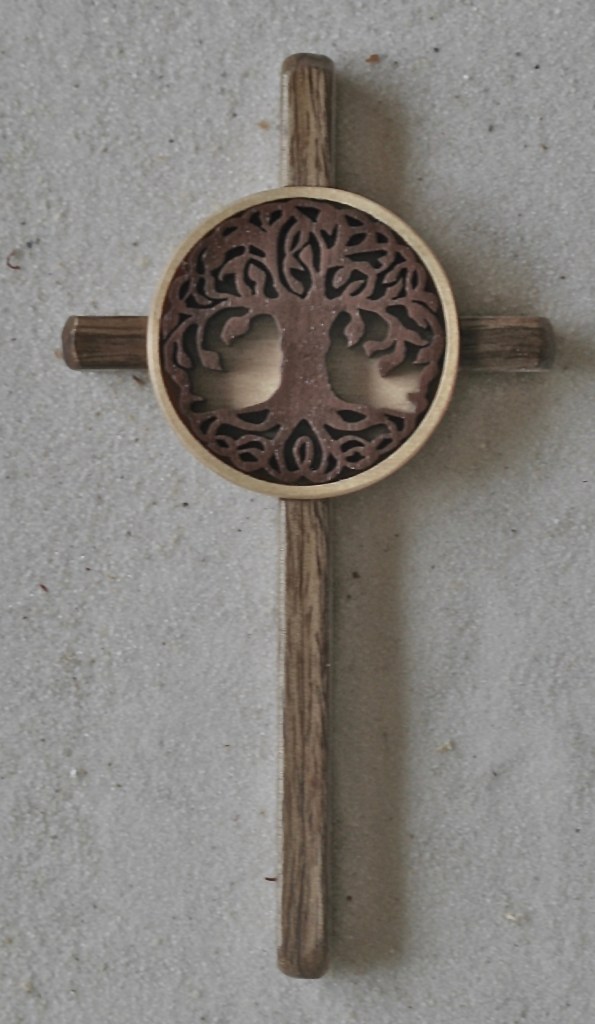

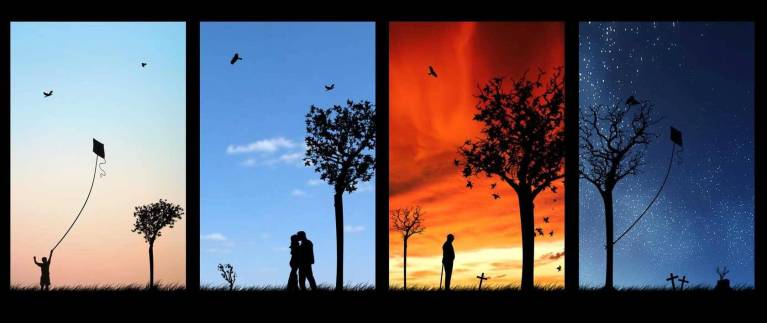
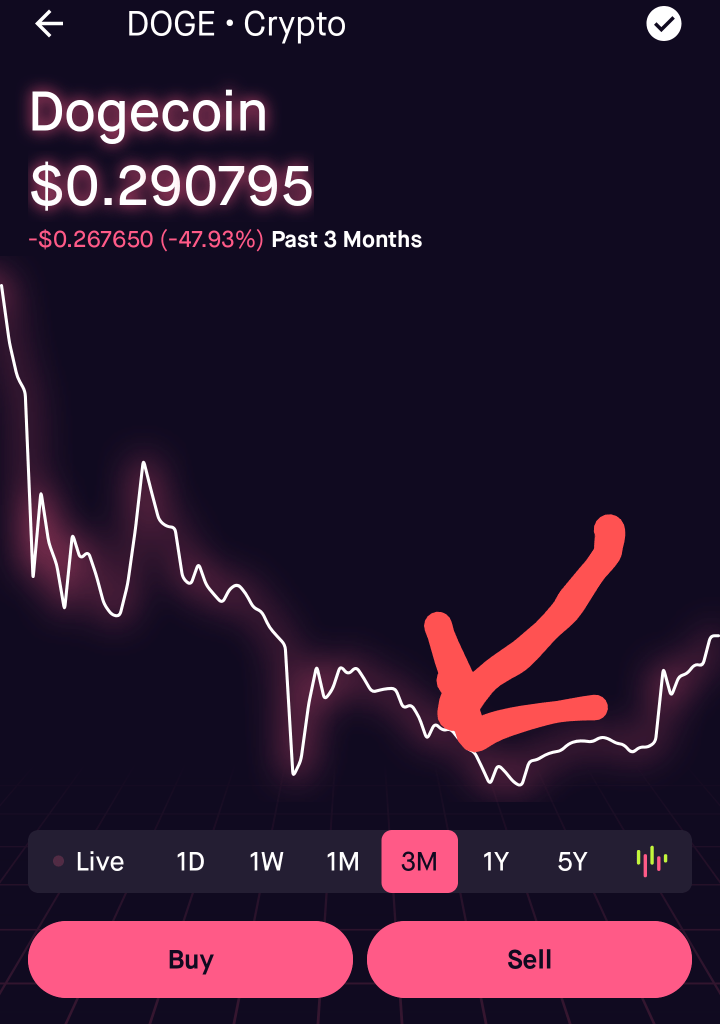





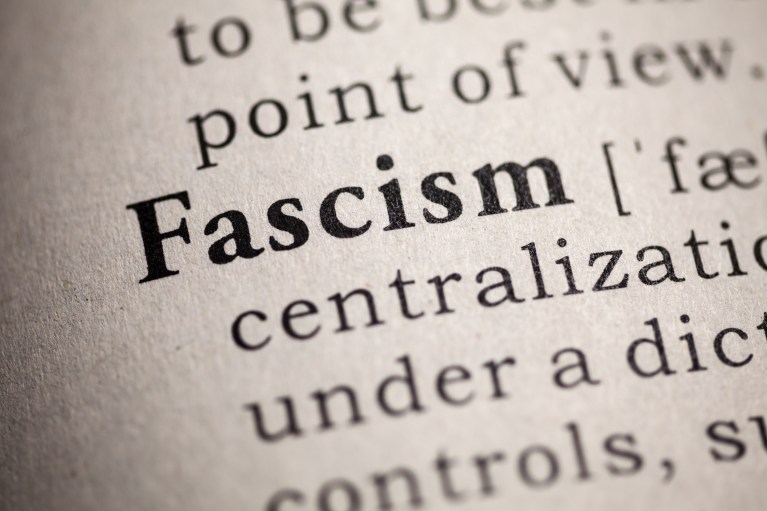

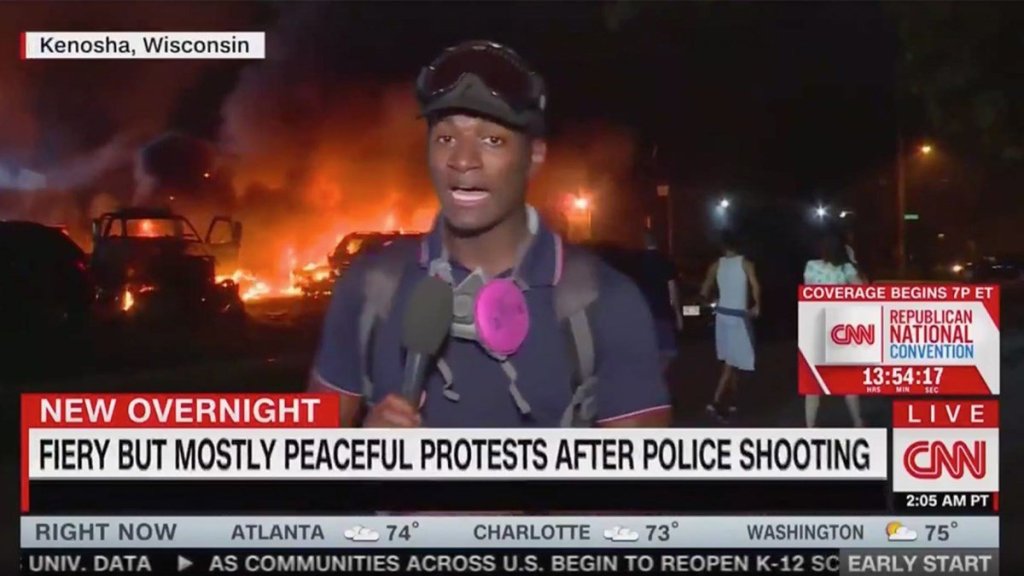
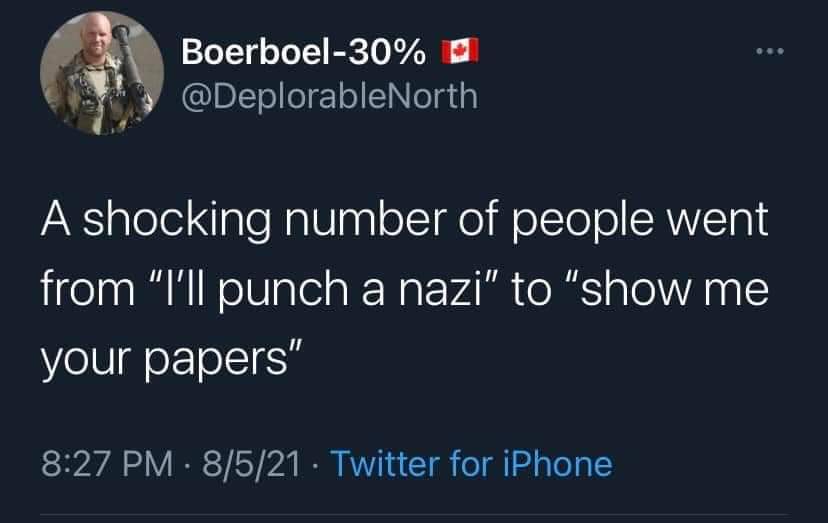
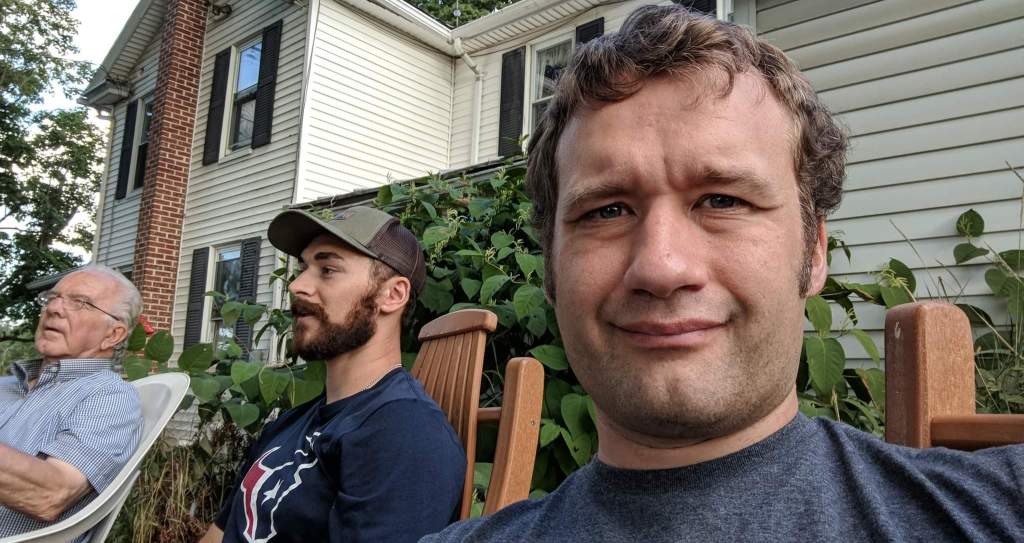








 Irregular Ideation