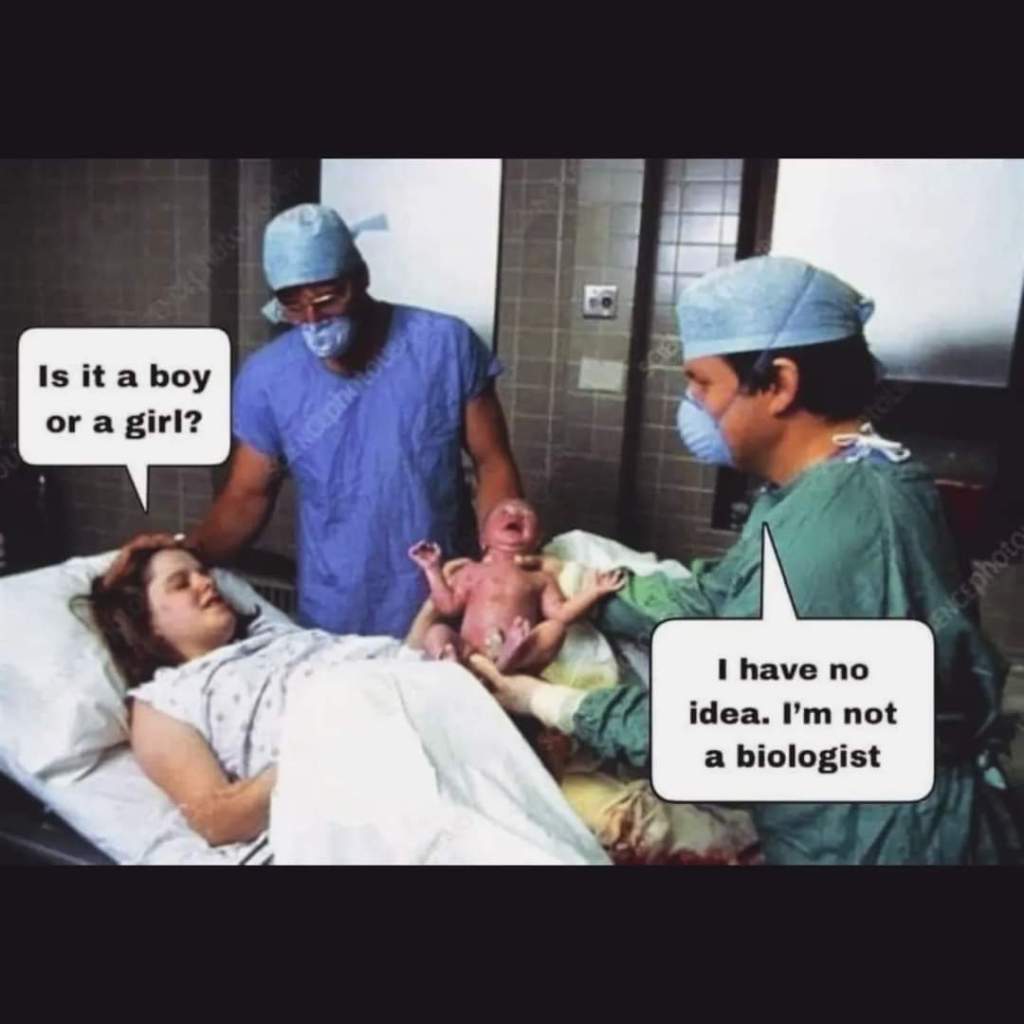
BAY-BEE, Identity Language and Oppression Narratives

Standard

The nurse pronounced baby as “BEE-bee” in our prenatal class and it got me thinking of how language develops.  Words will shift to reflect their usage.  The meaning eventually match with the reality when we attempt to disguise unpleasantness in flowery speech or try moral inversion.  Cultural values will shine through and snap understanding back where it was prior to the manipulation.

How did “bAy-bee” become “BEE-bee”?  

The latter evolution in pronunciation is cuter and therefore a better representation of the subject matter.  The word never will change the thing it describes.  Yes, words influence our perception, they also change to reflect a new understanding of the things that we are describing.  For example, the word “baby” only changed in pronunciation for me when considering the little human now within my wife’s belly.  It was no longer an abstraction or vague category, but a tiny vulnerable ball of loveable life.

When we experience something firsthand it is harder to deny what it is.  We can use the terms detached and technical to distance ourselves from the emotional content.  Say that a baby is just a clump of cells or some kind of parasite—up until the moment when we finally hold it in our hands.  To keep up the charade after this would be delusional or psychopathic.  It is not human to see an infant as anything other than precious.  The political lexicon becomes irrelevant.

A Tangled Ball Of Words 

Words trigger emotions.  I was thinking of this as a tear formed while the instructor in a prenatal class described the ideal of “skin to skin” and a soothing environment.  Some of this reaction may be feeling the weight of my wife’s pregnancy.  But it also has a lot to do with my own identity as the “premie” and “fighter” who struggled for life.  Discussion of baby care today compared to what it was for me.  The thing is, while my experience certainly impacted my development, I don’t have memories of the trauma.  It probably only looms large as a part of my personal identity because my mom told me what I went through and reinforced it.  The I gave further shape and form to it by attributing many of my struggles to the events of my birth—everything from my delayed growth to difficulties with focus in school.

However, it is impossible to know, outside of creating a genetic clone, if I would have been much better off with a normal birth or with more human touch rather than being in a plastic box with ‘stimulating’ music.  This had some impact, no doubt, and yet there is the bigger psychological complex I’ve built on top of this named thing.  Like an irritant in an oyster, it provided a nucleus to attach all of my insecurities to and blame for my failures and shortcomings.  With a normal birth would I have been more like my more accomplished siblings and less a mess?

However, it is very easy to reverse cause and effect to give ourselves an excuse for our being lazy and taking of exceptions.  We become the label that we apply to ourselves as much as it truly describes us.  We act the part.  Things of identity, like race, sexuality, religion, are as much a construct or fantasy as they are facts.  We live up to our name to an extent.  My mom would often tell me that my name meant “strong-willed” and it might be one of those self- fulfilling prophecies.  If we tilt confirmation bias in a direction it isn’t a big surprise if our character develops that direction.  It is like strapping a young tree to influence where it grows.

In a sense, nobody is truly “born this way,” it is a statement discredits conditioning and culture too much. But the environment itself doesn’t make us where we are as much as those descriptive words that reverberate in our heads.  A child that is called “stupid” by a parent or teacher may spend many years trying to sort through their doubts.  My dad letting me look over his blue prints and then giving some affirmation when spotted an error made by the engineers is likely what led to my being confident in my abilities and a career in design.  Our reality is influenced by use of language.

These are just personal observations, but it is also backed up by other sources that put it more succinctly:

Language is not just a medium of communication; it’s a lens through which we view the world and a mold that shapes our identity. From shaping cultural perceptions to influencing personal identities, language’s role is pivotal in constructing our social and personal realities.

Language as a Mirror and Molder of Reality and Identity

Language is more than a mere tool for communication.

It’s a portal through which we perceive and interpret the world.

Imagine how our understanding of colors evolves when we learn names for shades we previously couldn’t distinguish.

With each new word we acquire, a facet of reality emerges from obscurity, offering us a richer tapestry of experiences.

The Dynamic Relationship Between Language and Reality

 Neither of those sources are academic or truly authoritative, but do say what I’m saying in a different way and thus useful so far as my goal here which is to provoke thought.  New use of language reframes the world.  It can amplify our efforts and transform society as more people begin to see the world through the lens we provided.  Memes do this, as do pounding of propaganda headlines, it is why “fact-checkers” exist—all to reinforce a particular narrative.

With so much power in our words there is plenty of reason for cunning and conniving people to exercise this for their own selfish ends. 

They take advantage of insecurities and level accusations to shame or confuse the innocent. 

Wordsmiths, they could turn a baby into a villain and murderer into a saint—beware. 

His talk is smooth as butter, yet war is in his heart; his words are more soothing than oil, yet they are drawn swords. 

(Psalms 55:21 NIV)

There are some use the guise of compassion to gain control.  Their promises are about attaining power.  They seek only to bind us and yet many people are blinded to these motives because their identity has been hijacked by these nefarious actors.

Categories Are Social Constructs 

The structures and constructs of language are entirely fabricated.  There is no person who is “black” or “white” by birth, no, rather these are categories we create, clans that we join, and always artificial divisions.  We are often grouped by others using various label words and internalize the divisions as being inseparable from our own experience, in that we identify with other “rednecks” or “blue-collar” types as those ‘like us’ and yet also *become* like that.  Nothing requires a rural person to use country slang or go buy a massive diesel pick-up truck, some of the markers of this lifestyle (chewing tobacco or dress) can impact opportunities.  This is about politics, not genetics.  It is about the strength of an identity group that helps us gain power for ourselves.  Being a victim of an “ism” is a lever, a social tool or means to build a coalition against others.  

The individual without these groups, that is denied the right to put their fist in the air in solidarity with others ‘like them’ is weakest and most disadvantaged in this game.  That is the irony of the “systems of oppression” language.  Those who describe this kind of problem are actually creating it more than they are simply observing.  In the same way that observation in quantum mechanics is an influence of reality (collapses the wave function), the ‘study’ of human interaction is an interaction and is a product of our bias as much as it has basis in reality.  Those who are concerned with the existing ideas (of racism, sexism, or heterosexism) steal attention (and thus disenfranchise) victims of systemic heightism and those who lack privileges in ways not discussed, defined or even recognized.  The individual is the most vulnerable, a minority of one, and frequently abused by recognized groups.  Bullies travel in big groups—victims are often alone.

This line of questions quoted below is most likely well-intended, but is exploitative:

1) “Language both mirrors reality and helps to structure it” (2). Explain and give an example.

2)Racism, sexism, heterosexism, and class privilege are all interlocking systems of oppression that ensure advantages for some and diminish opportunities for others, with their own history and logic and self-perpetuating relations of domination and subordination (3). Explain what this means. Do you agree/disagree? Why?

3)What are the economic impacts of constructing race, class, and gender?

Sandwiched between the lines of this effort to build awareness (indoctrinate) are a pile of assumptions that, in the end, only serve to darken these artificial dividing lines. 

It is rewarmed class warfare rhetoric, Marxism, and is basically designed to feed envy or feelings of being an other and disenfranchised.  No, this is not to say that prejudice or abuse is entirely a social construct.  What it is to say, rather, is that their worldview, segregated by these simple binaries, is too compartmentalized and minimizing of other factors.

There isn’t one group of oppressor and one group of oppressed. 

There is no hierarchy of victimhood. 

Everything depends on the context or situation.  A Jewish student that is harassed on a college campus because of the IDF dropping bombs on Gaza is not privileged in this moment even if they are ‘white’ and rich.  Nor is it anti-Semitic to characterize the decades long campaign against the Palestinian people as an ethnic cleansing.  Labeling terms like “terrorist” or “occupier,” while useful to an extent, rarely explain accurately and are dehumanizing ends of conversation.

The whole point of claiming the existence of “interlocking systems of oppression” is to make anyone who dares to question their narrow perspective a part of a monolithic enemy rather than an individual with life experience to be respected.  It is truly the educated left’s own version of a conspiracy theory where anything they don’t like is part of some invisible system that can teased out of the statistical categories they created to emphasize identities based on color and physical features.  If some in one of these groups lag behind then some other group must be at fault.

Building humanity requires the de-emphasis of meaningless boundaries and formation of bonds based on behavior.  Skin color is not synonymous with culture or the choices one makes that shape their outcomes.  Yes, we must identify mistreatment of people on the basis of appearance, but this isn’t black and white, nor is it oppression to apply the same standard to all.  Indeed, some people are treated unfairly, but many end up being marginalized for antisocial behavior and yet claim to be victims of oppression when the chickens come home to roost.

Call A Turd a Baby…

Bringing this full circle, the word “baby” is cute (and the pronunciation of the word is becoming cuter) because babies are cute.  The language of description is merging more and more with the reality adorableness that we perceive in a human child by our instincts.  Using the word “baby” to describe an adult does not make them cute.  Albeit pet names, used to convey fondness, do imdue the quality a bit or at least will hijack some of the sentiment that associated with babies.  However, this is something that can only be stretched so far before the absurdity is too obvious.  

In this regard language that is used in an attempt to counter popular perspective, or overrule accurate description, will eventually take on the meaning that it was supposed to erase.   The language police can only temporarily remove a stigma (albeit never long enough to make the effort worthwhile) and it is because the unpleasant reality will always bubble to the surface again.  In fact, “special needs” today probably carries more negative baggage than the use of the words slow or retarded in the past.  

Likewise when a person is accepted at the university or get your job simply as a result of the particular identity group they belong to rather than only on the basis of equal qualifications this leads to an asterisk with the accomplishment—even when equally earned.  New terms like “diversity hire” will spontaneously and organically come into existence as a result of need to delineate between identity and merit based.  These, sadly, are far more damaging stereotypes applied to minorities who are outstanding by their own right.

Just as one cannot relabel a turd as a baby and expect people to cradle it once the truth is revealed, one can’t just apply credentials or distinguished titles to someone thinking this will change a lack of qualifications.  It will only degrade the meaning of words and in the long-term will do nothing to solve the socio-economic divide. 

Calling someone a fisherman and giving them a pile of fish is not the same thing as teaching them how to fish.  You can’t simply declare reality as the left believes they can.  Turds are only cute when the term is used ironically to describe something truly cute.

What Is a Woman?

Standard

Put away those pink vagina hats, feminists, 2017 might as well be 17 BC, this is the current year, now wearing such a monstrous thing on your head is a clear sign of bigotry and transphobia.  How would those ‘women’ with penises feel?  A pussyhat is worse than a Confederate battle flag or MAGA hat and completely insensitive.

Transphobic sign from 2017?

A decade ago answering the question of what a woman is would be easy for most people.  My mom is a woman.  That’s what we call the part of mankind that is able to give birth: A womb-man.  

But, in the age of far-left ‘woke’ politics, this isn’t so easy anymore.  And this is the reason why, Ketanji Brown Jackson, a Supreme Court nominee, when asked, “Can you provide a definition for the word woman?” replied, “I can’t, not in this context, I’m not a biologist.”

Now, some are calling this question a trap, which it is.  It is a question intended to reveal the true character of Brown Jackson and it has.  Brown Jackson has shown herself as someone beholden to far-left extremism and unwilling to state a basic understanding that doesn’t need a biologist to get it right.

This is someone whom we are supposed to trust to make judgements on such matters, being interviewed for a job that is all about providing the final legal interpretations.  Will she also refuse to weigh in on the language of the law because she’s not one of the writers?  “I’m sorry, but I can’t rule on this, I didn’t write the Constitution.”

Alas, I think this is a selective lack of basic comprehension of what even children can figure out.  And we all know that it is not fair for a biological male to change his name, take some hormones, and then dominate women.  However, in the current ‘woke’ political paradigm one must pretend that a man competing as women is somehow stunning and brave.

The true irony of all this is that the pushers of the very same identity politics that moved Brown Jackson to the front of the line, which is completely about dividing people up into categories as a means to exploit their base tribal instincts, nominated someone who claims to suddenly be unable to distinguish women from men.

Man, I Feel Like A Women

And as far as the appeal to credentialism, I’m not sure any biologist would want to be declared to be transphobic and a bigot.  It would be a quick route to losing their job or funding, being cancelled, to risk offending the most powerful of marginalized.  Let’s hope this USA Today clip doesn’t represent a scientific community consensus or we’re in for a rough ride:


If this is indeed true, if there is “no sufficient way to clearly define what makes someone a woman,” then the solution to the alleged pay gap is to have more men identify as women, right?

If Jeff Bezos becomes Jen instead, would that be a huge victory for women?

Would it then be sexist to question the business practices of Amazon?

All of this is absurd.  A word that can’t be defined is meaningless.  We might as well remove it from the census form as it would be impractical to consult a biologist to help decide what gender we on a given day.  If it is that difficult to define woman, then we may all be women and who can say otherwise?  Who hasn’t sang along with Shania Twain, “Man, I feel like a woman”?

Transgenderism is truly a bigger threat to the special privileges of women than anything patriarchal.  It is essentially to say that the category does not exist, that anyone who identities as a woman can be a woman, and therefore all should have access to those spaces typically reserved for women.  Lia Thomas has arrived to erase the best efforts of women.

Loss of Meaning and Purpose

The one thing that is hard to define in this postmodern age, where a woman can’t even say what it actually means to be a woman, is our direction.  Even with the rejection of God and questioning of truth, a prior generation of academics and scientists could agree on basic definitions enough to advance.   

However, as this nihilistic deconstruction of meaning (and thus purpose) continued, as the very things that built civilization have become progressively eroded over time, it is become increasingly difficult to form a productive consensus.  If many can’t even be objective about gender and what it means to be a woman anymore, how will we decide anything if this goes further?

Language is becoming detached from the meaning.  This is a wedge driven by those perpetually stuck in dithering indecision, who are often insulated from real world consequences, who can afford to live in abstraction and denial.  But it is not sustainable, we can’t build strong and safe bridges while declaring engineering and mathematics to be racist. 

At some point there is reality, cold and harsh, that doesn’t care about our feelings.

Our elites are basically like those ridiculed for their debates about how many angels could dance on the head of a needle.  They have become totally impractical, useless as far as executive decision making and a real threat to social order.  Those unable to settle any matter definitively, let alone those truly more complex and nuanced, can’t build a future together.

It is a luxury, the ultimate privilege, to never have to define or decide anything and still be able to live.

The guy, trying to impress his date with his wokeness beside me, doesn’t actually live by the dogmas he is spouting, he can yammer on endlessly about his theories, but to sustain a relationship he’s going to have to make a commitment to something, eventually, or no woman will keep him around for long.

Breaking Down Identities

Standard

The other day I was filling out a survey and came to the questions about my race and gender.  I paused for a second, “what am I today?”  And decided to select what applied to me in that moment, which is the answer that I would typically use when asked those questions, and yet continued to ponder this question of identities.

I understand why these categories exist, we do have tendencies and traits as a part of a demographic group.  Generalities and stereotypes certainly do have some basis in reality and I won’t deny that.  However, what makes me bristle a bit is what this grouping too often does to relationships across category lines.  It is divisive, it robs us our uniqueness as individuals and also puts us at odds with those deemed to be different from us.

It is too black and white.  Too simplistic and encourages a distorted picture of reality in emphasizing that one similarity we share in common (or one difference we have) over everything else.  The labels themselves are even dumb.  I’m not actually white.  My skin is a shade of brown.  Furthermore, I probably only ever started identifying as white because someone told me to fill in that box as a child and I mindlessly complied.  

The idea of “whiteness” is a social construct and has come to mean much more than it ever did before.  Now some claim that everything from work ethic and politeness to mathematics is somehow a part of being white.  Which is appalling ignorance, unexcusable, given the contributions of people of all skin shades and cultural backgrounds to civilization as we know it.  All people should be offended by that nonsense.

I had a classmate, a Jamaican immigrant, brilliant at math, well-spoken, very polite, the son of an engineer or university professor as I recall.  And, by the current color obsessed paradigm, he’s more ‘white’ than I am.  It is a backhanded insult to the many, like him, who have natural talents that don’t fit within the narrow categories or grievance culture narratives of the racially prejudiced left.

Which is the crux of the matter.  I hate these categories because they lie.  As Mark Twain quipped, “there are lies, damn lies, and statistics.”  Sure one color group may, collectively, produce more elite athletes, another more classical musicians, and another mathematicians.  But those group statistics tell you absolutely nothing about individuals nor why some individuals achieved these outcomes.

Much being attributed to color is actually culture.  In Europe, in Africa, in Asia, and America, there are as many cultures as their are shades of skin color.  Some European regions are known for their industriousness and superior engineering, others for their laid-back attitude and art.  The same is true of Asian cultures.  The same is true of African people.  So how do we know color has anything to do with these differences?

The two biggest lies of our time…

1) The myth that skin color is synonymous with culture.

2) The myth that group statistics determine individual outcomes. 

Yes, there may be some statistical correlations between certain behaviors and skin color categories.  But that doesn’t mean that what applies to one of a certain category applies to all.  For example, many women love pink, but that doesn’t mean the most or even many women are fond of that color.  My younger sister defies many of those sort of feminine associated things, she’s not afraid of any critter, has reptiles for pets, and that does not make her less of a woman than those who freak out at the sight of a spider.

Correlation is not equal to causation.  And the late George Floyd has more in common with me, as a working class schlub, than he does with the Harvard educated, son of a privileged WASP mother, who calls himself Barack Obama.  It’s true.  Look it up.  One half of Obama’s lineage is as Yankee as you can get, a great great […] grandfather being the first to build a gristmill in the State of New Jersey, back in the 1600s, later elected to the state Congress.

It is a complete farce that a coal cracker kid, raised in rural West Virginia, is advantaged over a college educated “person of color” working as a Wall Street broker.  Nah, I’ve been around, I know how the cultural elites sneer at ‘deplorables’ and work overtime to make sure that they know their place.  Class privilege is often misidentified as color privilege and misidentified by the very people who benefit most from spreading out the blame for their own sins.

The son or daughter of an immigrant wage-slave has more in common with the ‘black’ category than the trust fund babies of any color pointing the crooked finger.  This is what grates me the most.  In the real world blacks and whites work together.  Out on the road, hauling commodities for the man, I swung the sledgehammer as much as that ‘black’ fellow beside me.  

So do I really need my prissy, Che Guevara T-shirt wearing sociology professor cousin, son of a doctor, who could somehow afford to travel the world taking photos while I worked for $7.50 an hour, lecturing me on things that I don’t understand as a white male?

No, no I do not!

Those who associate certain outcomes or behaviors with certain colors of skin, who only ever see skin color in their analysis, are the true racists.  There is a stronger correlation between fatherless homes and negative outcomes than there is between skin color and negative outcomes.  In other words, things commonly categorized as a color privilege is more strongly correlated with family structure.  

Look into mass shooters.  

Not at all excusing their violence, but many of them were estranged from their fathers, struggled to fit in, and it is hard not to see this as being an insignificant factor in their outcomes.

Think about that when discussion of privilege comes up.

Unfortunately, there is not much to be gained as far as political power in a “the fatherless unite!” campaign.  Racial division, by contrast, is an easy sell.  Skin color, indeed, is the low hanging fruit of human difference.  Tribalism comes naturally, all you need to do is convince people that they are somehow fundamentally different because of something superficial and their confirmation bias will do the rest of the work for you.

Breaking the Bonds of Designated Identities

I’m not going to minimize the importance of life experience and family inheritance in shaping our identities.  I was born into a conservative Mennonite home and that identity was very important to me.  In public school it made me a religious minority, subjected me to many inquiries, what would now be called micro-aggressions, and some bullying later in life too.

The strange part is that, while being the Mennonite kid amongst my school peers, I never really felt like I fit in with my ethic church peers either.  After years of rejections, both in romantic endeavors and even as far as filling offices or missionary opportunities.  Finding my place, complete acceptance, within the Mennonite culture had eventually become an obsession.  I desperately wanted to be the good Mennonite for reasons that I can’t fully explain.

That pursuit came to an end with a young woman who declared, “I can’t love you the way that you want to be loved.”  

Mercifully, over the same time, a truly fatherly figure, Fr. Anthony, an Antiochian priest and college professor, took me under his wing to help me through this collapse of my Mennonite identity that had left me with a meaningless existence and suicidal.

I had to break from my ethnic and religious identity because I had no other choice.  It was not pleasant.  I loved, and still do love, many parts of the Mennonite culture.  My parents are wonderful.  My church was not one of those Pharisaical nightmares all too common in that denomination.  But, as Fr Anthony offered, maybe I had simply “outgrown” the tradition.

And, truly, in Christ, we are all called to a higher common identity:

So in Christ Jesus you are all children of God through faith, for all of you who were baptized into Christ have clothed yourselves with Christ. There is neither Jew nor Gentile, neither slave nor free, nor is there male and female, for you are all one in Christ Jesus. If you belong to Christ, then you are Abraham’s seed, and heirs according to the promise.

(Galatians 3:26‭-‬29 NIV)

St. Paul, in the context of the tumultuous days of the early church, spent much time addressing the many competing identities within the church.  He took on the religious elitists, bluntly telling them to castrate themselves in one letter, and spoke up for those being excluded on a class or ethnic basis.  That’s what he’s doing in the passage above, emphasizing that in Christ we can all be “children of God” and share one identity together.

The astounding part is that the church then, like the church now, still struggles on this point.  Even in the conservative Mennonite church, where we were basically all from the same ethic and cultural background, there were definitely tiers of acceptance.  Some simply check more of the ‘right’ boxes, are more popular, find the beautiful adoring wife, have all the opportunities, work their way up the ranks quickly and others not so much.  In short, the words to the Galatians are as relevant now as were then.

Christian Identity Makes Difference Beautiful

One of Mennonite cultural distinctives that I had rejected early on is that of uniformity as a part of Anabaptist non-conformity teaching.  My own church wasn’t nearly as strict as some.  But there is an undercurrent, undeniably, that if a girl talks more than average she’s a “flirt” or a motorhead guy with a nice car was somehow materialistic compared to a wealthy business owner with three farms.  Pity the artistic types in those churches more traditional than mine.

By contrast, an Orthodox Christian friend, gave this wonderful description:  The church is like a garden, full of different plants and plants, all watered by the same source.

That is the ideal.  

Unity in Christ is not about erasing all differences.  Galatians 3:28 is not turning us into an androgynous ‘multi-cultural’ blob of completely equal outcomes.  Jesus was not a Communist.  Having “all things in common” was not about forced wealth redistribution or reparations.  Certainly not about getting mine.  Rather it was about bringing our diversity of talents and abilities, bonded together as the body and blood of Christ, to the church.

Diversity can be a strength.  Not talking about superficial skin deep token ‘diversity’ achieved through quotas either.  Instead, what I love is those of many colors, many backgrounds and classes, working voluntarily towards a common goal, having found a shared identity that transcends all others and allows the entire group to reach full potential.  Competing identities keep us in conflict, but through Christ we could create the most beautiful harmonies.

In the end we must free ourselves from identities that keep us at war with each other.  However, that is not something we do ourselves. There are many misguided efforts.  Many are embracing divisive political ideologies, like critical race theory, that will only produce more hate and mistrust.  Condemning “whiteness” or heaping praise on “people of color” and otherwise playing favorites on those currently deemed to be victims is never going to do anything besides add to the confusion.  

Only in Christ, in repentance, in faith, can our differences in gender, culture, color or class be something beautiful. 

What does Charleston say about us?

Standard

There are many who react to the church shooting at Charleston’s historic Emanuel A.M.R. Church by blaming availability of guns and decrying racism.

But one thing missing from the discussion, that is a victimhood mentality and the idea that all people of a particular race are guilty because of the acts of a few. 

When Dylann Storm Roof walked into the doors of that church he was armed with two ideas: 1) his tribe (white people, women, etc) were the victims, and 2) their tribe (black people) were collectively responsible for black rapists, perceived injustice, etc.

It was the ideas that this depraved young man harbored in his heart that were dangerous.  However, these ideas are not unique to him or just to unreasonable and angry white men.  These are ideas accepted accepted in mainstream thought that divides people into falsely dichotomous categories.

Who kills the innocent? We do!

Ideas that white is equal to privilege or black is equal to victimhood are equally dangerous.  When we feed the martyr complex and victimhood mentality we are giving license to those of an even more deranged mind to take it a step further. 

The problem with Roof and those like him (of all races, genders, etc) is not what they do—but that they feel justified to do it.  We can fret about availability of guns and a multitude of other factors, but until we address the heart issue we are only treating the symptoms.

We won’t stop a person bent on evil and destruction with more legislation.  If anything more law will only create the next inequity and give some other person reason to feel disenfranchised.  But what we do need is to unravel the false dichotomies and prejudice assumptions that fuel hatred.

Being on the ‘right’ side of history…

We are urged to be on the “right side of history” yet the problem is that everyone (including Roof) feels they are on the ‘right’ side and justified.  Jesus encountered this in the Pharisees who thought themselves better than other people and superior to their own ancestors:

“Woe to you, teachers of the law and Pharisees, you hypocrites!  You build tombs for the prophets and decorate the graves of the righteous.  And you say, ‘If we had lived in the days of our ancestors, we would not have taken part with them in shedding the blood of the prophets.’  So you testify against yourselves that you are the descendants of those who murdered the prophets.”  (Matthew 23:29-31)

There are many sanctimonious today who think they are superior to other people.  They may decry the injustices of the past, support punishment for those they hold responsible and blame, but they themselves often as guilty or more of similar abuse.

Is an anti-abortion activist who calls women entering a clinic names or murderers a provider any better than those they accuse? 

Is a person who labels others as “racist” or “homophobic” or “hateful” in response to a disagreement over opinion less abusive than a person who uses the n-word?

I say, no and no. 

The solution to hate is not to be hateful.  As Mahatma Gandhi wisely observed: “An eye for an an eye only leaves the whole world blind.”  What he observed is the same as when Jesus quipped that those who live by the sword will die by it (Matthew 26:52) or ‘what goes around comes around’ in essence.

We make a difference by being different…

Everyone has reason for their own abuses.  Many of the most abusive people in history believed they served a righteous cause.  Many people can identify the sins of other tribes or the prior generation, but few seem able to see their own abuses.  We prefer to keep the spotlight on those whom we perceive to be worse than us than we are interested in searching out the wickedness of our own hearts.

Ben Carson spoke well:

“You know, we have a war on women, race wars, income wars, age wars, religious wars. Anything you could imagine, we have a war on it… And we’re giving people a license to hate people who disagree with them.”

We need to stop arming ourselves with contempt and be committed to loving as we wish to be loved.  It is easy to love our own and hate others, but divine love seeks unity rather than encourage division.  It sacrifices self rather than perpetuate cycles of violence.  It brings grace to the fight even when vengeance feels justified.

Grace saves us…

It is the Spirit of love like that of Marcus Stanley, who was shot eight times but lived, and chose grace in response to hate:

“I don’t look at you with the eyes of hatred, or judge you by your appearance or race, but I look at you as a human being that made a horrible decision to take the lives of 9 living & breathing people. Children do not grow up with hatred in their hearts. In this world we are born color blind. Somewhere along the line, you were taught to hate people that are not like you, and that is truly tragic. You have accomplished nothing from this killing, but planting seeds of pain that will forever remain in the hearts of the families that lost their lives and countless hearts around our country.”

Let’s not fall victim to those who would divide us into categories, but instead seek the unity of all people only possible with a love that tears down walls, bridges divides and believes when others say it is impossible. 

May those seeds of Roof’s hate stay dead and the love of Jesus in Stanley’s gracious response grow in us.  The answer is not more or less guns nor petitions against flags and protest, it is less hate and more Jesus.

“Do not be overcome by evil, but overcome evil with good.”  (Romans 12:21)