
Snow Woke—Disney’s Female Empowerment Fairytale

Standard

Apparently the Snow White remake bombed at the box office. We could just go with the standard “get woke, go broke” traditionalist assessment. Rachel Zegler comes off as the female equivalent of Andrew Tate—as being angry, entitled, selfish and toxic—which isn’t appealing to a broad audience.

But, before we get into the remake, let’s talk a bit about the original Disney animation of the fairytale. The character deviates quite a bit from the Grimm version. For a start, the fair-skinned protagonist is half the age (7 rather than 14) and there’s no “true love’s kiss” in this original version. Furthermore, she’s a sort of blank slate archetype—not some ideal 1930s homemaker mothering a bunch of dwarfs. In short, the adaptation then was not completely true to the source material and created an image of feminity relevant to that time.

The Grimm version was darker in tone and featured a prince weirdly obsessed with a dead girl in a glass coffin. The dwarfs did not have distinct personalities. And Snow White awakened when the poisoned apple is dislodged from her throat when a servant carrying her coffin stumbles. And it was at this point the prince professes his love and proposes marriage—which she accepts.

The latest Disney live-action takes liberties in a very different direction. It is even less true to the original (other than elimination of the Disney romance) and reimagines Snow White being a sort of feminist militia leader who leads a bloodless insurrection against the usurping queen. But the “mirror mirror on the wall” remains and a poisoned apple—despite the heavy edit of the script where an empowered woman replaces the worn damsel in distress trope.

Why People Don’t Like Snow Woke

People enjoy new takes on old genres, like Shrek or Furiosa and also powerful female characters such as Ellen Ripley in Aliens, Sarah Connor in Terminator or even Katniss Everdeen in the Hunger Games.  They were relatable, we saw them develop, circumstances made them tough to survive, and audiences loved them.  What they don’t like is preachy dialogue or lack of any real character development. A Mary Sue, a hero with no weaknesses, is unrelatable. It is the problem with Superman and with the many woke adaptations of stories.

We like the image of a woman against the machine.

Christian movies have a tendency to be bad for the same reasons. They can come off a little campy or forced. Sure, it may work for drawing your ideological camp, but it isn’t a compelling story for the unindoctrinated or the broader audience. Which is not to say that movies about Christianity can’t be great for entertainment.  I love gritty true stories like that of Hacksaw Ridge or profound, like Silence, will have anyone at the edge of their seats—the key being relatable characters.

Zegler is a bit much. Totally insufferable in the eyes of some. And she plays a part that is equally annoying. The departure from the source material is just too rude. Sure, there is room for an update, but you would never reinvent Rambo as well adjusted pacifist in a mission to avoid too much sun exposure. Disney dumped the essence of the original and replaced it with another tired ’empowered woman’ cliché. You wonder if Zegler herself wrote the script with lines like, “I’m not waiting for anyone to save me” or groaner, “The fairest isn’t about beauty—it’s about justice!”
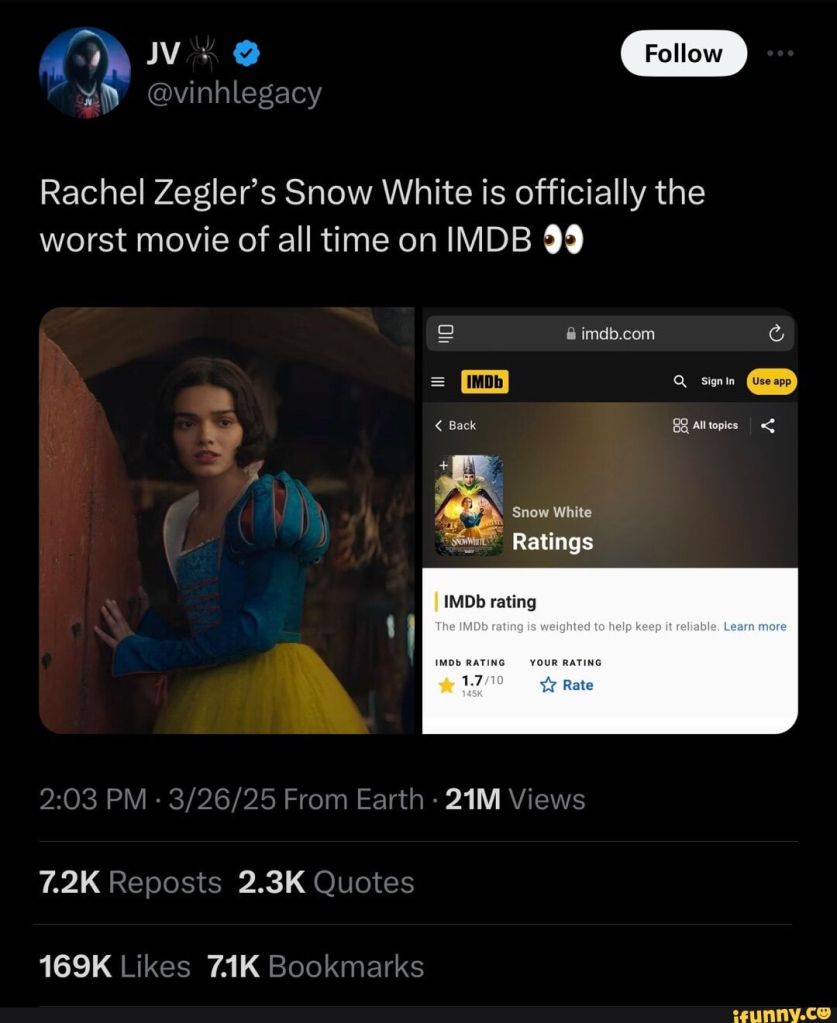
Ouch.

Oh well, at least even apologists for woke seem to understand that it is just bad. They did not even bother accusing the audience of being racist or misogynistic this time around.

Smash the Symbolism!

What is truly lost is the symbolic depth of the original tale. Snow White was beauty and purity contrasted with the vanity and evil of the obsessed queen. They gutted what made the Grimm tale a significant message about the triumph of innocence over the destructive power of pride. This, obviously, is too nuanced for a superficial sexual organ obsessed militant far-leftist to understand. The producers of the new film replaced purity of motive against cunning with a banal competition for power.

It’s not even moral inversion. They totally lost the point. It makes me think they lack any layers to their being. It’s all about their grievance and getting back at those they’ve scapegoated for their own misery. Like the evil queen, with all the power, they envy the beauty and peace of others and attempt to kill it with their poisoned apple. Snow Woke is the toxic fruit. Zegler is an icon of their privileged ‘diverse’ female with an entitled chip on her shoulder and not the slightest bit of appreciation for all the good men who made her ignorance possible.

This is not to say those who are fixated on the literal whiteness of the actress are any better. Grimm was not writing about racial supremacy anymore than woke supremecy, if anything the original story was about our transcending politics and Zegler would be perfectly suited for the role if she were able to embody that spirit. But our culture, in a desperate need of critique, it dichotomizes everything—divides the world into friend or foe, as if life is a zero-sum game and there is never anything to gain through fusion of opposites.

Zegler is as Puritanical (and Pharisaical) as a religious fundamentalist. She reframes a rescuing prince as a stalker and romance as weird. More rigid than a patriarch, more domineering than the system she is taught to loath. A preacher rather than an actual protagonist. Basically, a young idealist who wields her moral certainty with a convert’s passion, and yet stumbling into hypocrisy under scrutiny—reaping benefits of every institution she claims to reject.

The Female Power of Beauty, Gentleness and Grace

A few years ago, I was in the checkout line and suddenly noticed the cashier. She was beautiful, pale or ashen-faced, with hair that was jet black, pleasant smile and yet there was something uncanny valleyish about her appearance. I could not quite put my finger on it. But then she spoke. This would send a shiver through me. Never before did I have that sort of feeling simply by hearing someone talk. There was a certain quality to her voice that was almost child-like, soft, pure, and really threw me for a loop. And it occurred to me that this young woman was a real life Snow White.  I had not thought this would actually be attractive in person, but it had me momentarily smitten.

As it would turn out, in a later conversation, I learned she was mixed race, Filipino mom and dad of some kind of European descent, which is likely what gave her this stunningly feminine appearance. Now, no doubt this gentle exterior was cover over a tough and capable individual. She drove an old pickup truck and lived apart from her family with a sister, and may well have been a teenager or in her early twenties. In many ways she is like Zegler (who is herself a mix of Colombian and Polish heritage), but this real-life Snow White wielded her beauty, gentleness, and grace as a quiet strength that captivated without preaching, Zegler’s strident zeal turns a timeless tale into a soapbox, losing the feminine power of subtlety for a hollow shout of self-righteousness.

This is what outspoken angry feminists fail to grasp, forcefulness isn’t the only kind of power. My petite wife could never command me to do anything. I’m 50% bigger than her and have twice the upper body strength, I would shrug it off. But she does not need to force me to do anything. She overpowers me by other means. For example, early on, before we were married, she convinced me to stop drinking so much soda, she told me water is a symbol of her love “pure and clean” and when I drink it I could feel her love. I didn’t need to be told twice.

When I look at my baby daughter I would do anything for her. She’s so vulnerable—there is a strong desire to protect and defend her—I’m drawn, not compelled.

So what does female empowerment really mean?

Is it empowering to a fish to be out of the water?

A visual representation of society telling individuals they need to be something else to be happy.

Humans are wired for their base biological and physical functions. Reproduction is a big part of this. It becomes clear after you see process through from courtship to baby in a carriage. Early in the pregnancy, given our financial goals, my wife had considered sending the yet to be both child to be raised by her mother. But as soon as the bundle of cuteness arrived, along with the appropriate hormones, it was never a question. Family is empowerment. My sacrifice, as a father, is more rewarding than the toys I could buy for myself as an independent bachelor.

We’re relational, not rational.

Therefore, the things we think will make us happy do not give us long-term fulfillment—the woke Zegler types are privileged, given preference as women or minorities, and yet always unhappy and looking at what others have and they do not. They are a paradox, enjoying female privilege—then miserable and wanting what men have.

It is toxic, it is their impurity of spirit, and it destroys their natural beauty and potential for true empowerment.

In all honesty, I don’t really have a problem with Zegler’s passion or outspokenness.  I guess I tend to prefer women with a real personality and feel she is right on the Gaza issue.  But what is wrong is that she’s not the right character to play what is supposed to be an embodiment of purity and the power of innocence against evil.  Snow White isn’t supposed to be Mockingjay or a story where physical force met with force—but of a different kind of power.

Ultimately, the 2025 Snow White stumbles not just as a film but as a misguided anthem, with Rachel Zegler’s shrill militancy drowning out the subtle power the Grimm tale once whispered. The original’s purity and even Disney’s 1937 grace knew strength isn’t loud—it’s captivating, like the cashier whose soft voice and uncanny beauty stopped me cold, a real-life Snow White wielding gentleness over force. My wife, too, overpowers me not with commands but with a love pure as water, turning a stubborn man into a willing protector, and just as our daughter’s vulnerability stirs my soul to shield her. Zegler’s remake, obsessed with preaching justice over enchantment, misses this: true feminine empowerment doesn’t need a megaphone or a militia—it’s the quiet, relational magic that binds us, a truth the poisoned apple of ‘Snow Woke’ chokes out, leaving a hollow echo where a fairytale’s heart once beat.
Never Meet Your Heros

Standard

I have lost all of my heroes. The expression, “Never meet your heroes, because they’re sure to disappoint you,” describes the painful realization that those great people you imagined are not as special as you believed they were.  It could be the letdown a friend had when he heard Matt Walsh speak.  It could be a family that learned their eldest brother was cheating on his wife for many years and was not some image of virtue.  For me it was a process and a very long grinding away of faith in these figures.

I was never one for human idols.  I never put posters of celebrity faces on my bedroom wall and would never be as impressed with figures like Ravi Zacharias as some of my friends.  It wasn’t a religious thing nor something just to be ornery.  I simply didn’t have a feeling of awe about these personalities that were mid.  The people I most admired tended to be local—my blue collar dad, my missionary cousin, or that perfect girl I would marry some day.  But time has removed all from the pedestals.

Those women of my youth would end up as the cheating wife or more interested in status than my sincerity.  My dad no longer looks like that man I remember who could carry me on his shoulders (with me hanging on for death life) up a silo ladder, and that zealousness of the ‘compassionate’ types tends to morph into a noxious ideological alignment that is really anything but they profess.  They say that they want the Kingdom, but have replaced faith in God with fraudulent human institutions.

And I’m not just talking about the apologists for CAM in the wake of the Jeriah Mast and years of coverup aftermath.  “Oh, but this is an organization that does such good!”  What I’m talking about is something fully revealed since the DOGE ax has fallen on USAID.  I grew up believing in the strict separation of church and state—that a colonial expansion of Christianity was tainted and this at completely odds with the teachings of Jesus about His kingdom not being of this world.  

My views have certainly evolved—having left my religious cloister—but I’m still appalled by the thoughtlessness of people who I had once thought were smart and uncompromised.

Banality of Evil: When Ends Justify the Means 

The Anabaptists, after the disaster of Münster, had committed to a quiet life of separation.  It is why those in Old Order groups have refused participation in Social Security and other kinds of government benefits.  Mutual aid should be voluntary and Christian charity is not obtained through coercion.  Sure, the power of the state is alluring, that temptation (driven by our ego) to rule over others because we know what is best or they are undeserving of the resources they have—I have had many of those “if I were king” moments—but there is no stopping point when you fail to resist the siren song.

Left-wing politics always clothe themselves in a kind of compassion.  Surely you will not oppose helping these children, right?  And I am pragmatic to the extent I’m glad starving children are fed by any means.  But opening the Pandora’s box of leftist means is always a slippery-slope to more use of state power and, inevitably, to leftist utopian cost-benefit analysis where everyone who opposes us is a literal Nazi and, therefore, we’re justified to stop them with violence.  When coercion is allowed as a means of obtaining the ends we desire there is no stopping point.

The worst form of evil has good intentions.  It is that of those who imagine themselves as the hero of their own narrative and thus allowed to bend the rules.  This explains the extreme narcissism of Luigi Mangione who saw himself as a worthy judge of a father of two and a husband to a practicing physical therapist.  There was no need for this leftist murderer to look inward, he had completely externalized evil and turned other men into caricature representatives of truly complex multi-faceted problems.  When the ends can justify the means we’ll justify any means.

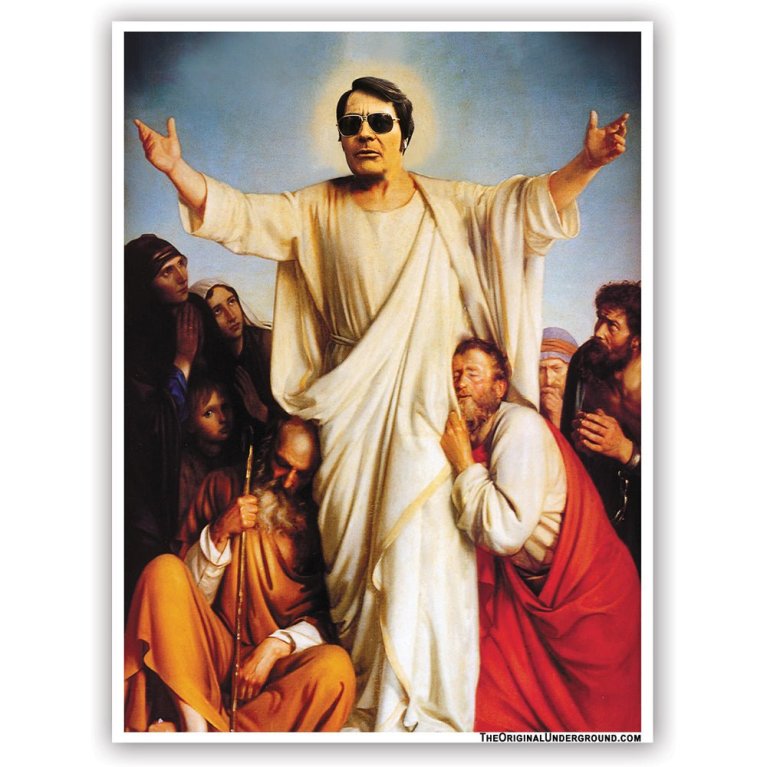
Pastor Jim Jones preaches his counterfeit Gospel before being abandoned by the US government and having to free his cult from bondage with some poison laced Kool-aid.

Seeing someone I thought was a Christian missionary lament how the United States had “abandoned” them was a reminder of how the great have fallen.  There was not a shred of gratitude expressed towards the American taxpayers who financed them nor acknowledgement of the misappropriation of funds that has wearied voters to foreign aid.  But more stunning to me was unholy alliance between this person of faith and agencies of US imperialism.  Since when has the love of Jesus become an extension of the US regime abroad?  Are they of the kingdom, as they proclaim, or agents of empire?

USAID, despite the name, is certainly not a charitable organization and was formed in 1961, at the height of the Cold War, with an aim of promoting the interests of the US political regime.  That’s fine.  But it has long ago gone off the rails even as far as what it was originally imagined.  The Soviet Union had fallen and the Federal agency created to oppose it morphed from something most would support into a beacon of wokeness—pushing transgenderism and abortion.

Break the Yoke of Fraudulence 

The reason why USAID is being dismantled is because we can’t sort the legitimate from illegitimate function of the agency.  Sure, it may help people in need, but funding it also is enabling of evil and maintained through a system of coercion we call taxes.  Anything good that it did can be done through other means.  This functional fixedness of those who depend of government, especially on the part of those professing Christ, makes me wonder where their faith lies and what their actual mission is.

The merger of a Christian charitable cause with government doesn’t purify government—it taints the witness:

Do not be yoked together with unbelievers. For what do righteousness and wickedness have in common? Or what fellowship can light have with darkness?  What harmony is there between Christ and Belial?  Or what does a believer have in common with an unbeliever?  What agreement is there between the temple of God and idols? For we are the temple of the living God. As God has said: “I will live with them and walk among them, and I will be their God, and they will be my people.” Therefore, “Come out from them and be separate, says the Lord. Touch no unclean thing, and I will receive you.” (2 Corinthians 6:14-17 NIV)

The accusations of “Christian nationalism” against those who want a government that performs basic functions were always just a smear by those in alliance with imperialism and Godless globalism.  While I’m not a fan of God and country, at least the flag waving religious patriot knows there is a difference between their Christian mission and secular state.  The left, by contrast, confuses these categories and would have social program replace true charity and community aid.  In one case you have those who may tend to overreverence nation, but in the other there are those who truly represent empire and yet tell us they their only  citizenship is the kingdom of heaven.

The truth is that the ‘Christian’ left is simply the left merely wearing the words of Christ as a disguise for ideological agenda.  Those decrying the reduction of empire and return to responsible governance never said thank you to those funding their do-gooderism.  It was, for them, all about holding those “chief seats in the synagogue” and their own glory as humanitarians.  They may speak against Trump, but then have never uttered a word against the waste, fraud and abuse that has made these broad sweeping cuts popular with common people.

The true Christian spirit is that of a Federal employee who told me about the enormous amount of inefficiency and waste in his own agency and—while making no profession of faith—supports the effort of DOGE knowing it may impact his employment.  That, to me, is someone who understands self-sacrifial love more than someone feeding the poor on another person’s dime and then going to social media to complain when their funds are cut.  They’re grandstanding.  While my Federal employee friend is a truly humble public servant who is grateful and not biting the hand that feeds him.

None of this to say this “abandoned” former hero of mine is a bad person.  They clearly are using their abilities to help other people in desperate need.  I applaud that.  And yet their public statement betrays.  There is an attitude or spirit there that is different from Christ.  I would much rather they just be a secular humanist—subscribed to partisan leftist politics—and own it.  They should just admit that they’ve abandoned faith in Jesus and are looking for a worldly system.  Judas Iscariot is the patron saint of faithless social justice, guilt trips and envy—when you betray your calling just own it.

Philosophical Candidates

Standard

Remember, as a child, those day-dreams of a life unrestricted by parental control, where it would be video games all night, ice cream, pizza, and soda all day?  What is amazing is upon reaching adulthood the thought of this lifestyle is disgusting.  First off, it would be horribly unhealthy—in the sense that those who indulge bulge.  Second, a party every day is totally unsustainable, someone has to do the work to keep the lights on and put food on the table.

Many people become more conservative as they mature and start to realize the value of the limitations they once spurned.  Yes, an adult will modify what was taught to them by their parents and community.  And some grew up in social environments where there was not much worthy to be preserved.  But to totally throw away everything inherited from prior generations is a terrible mistake.  Only an ideological extremist believes stripping it all bare is necessary and good.  It is wiser to build on what works.

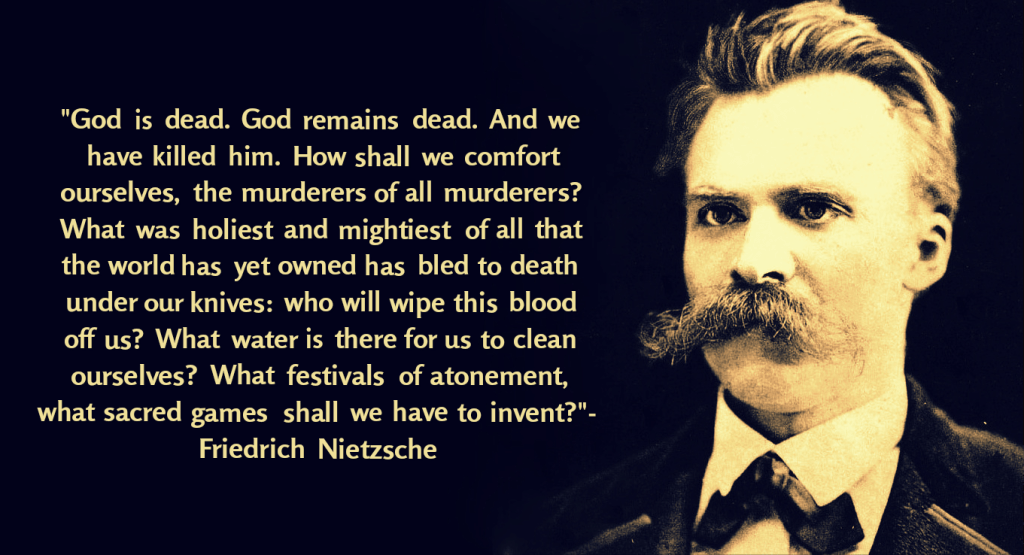
That is not to say that the tradition passed down can’t become stifling and overbearing or limiting our potential either.  There must be a bit of flexibility, some Oikonomia, or means to adapt the rules as the need arises.  However, the opposite ditch, of discarding everything and starting from scratch very quickly becomes chaotic, everyone does what is right in their own eyes, and it soon requires authoritarian measures to enforce the vision.  This is the thing Nietzsche warned about—our morality is not self-evident and we should think long and hard about those monsters that we will release with our neglect.

This wasn’t a sacrilege, it was a lament of what happens when you yank the foundational rug out from under a moral system.

Cultural revolution, while always promising to upend systems of oppression and usher in a new utopian age, ends up being worse than what it is replaced.  Yes, “All animals are equal” may be the founding cry, but is very soon after modified by opportunists who sadly are now unrestrained by those institutions despised and yet there for a reason.  The only good thing is that this out-of-balance off-kilter, ‘we know better than all who came before’ attitude, tends to implode on itself if given time.  The Soviet Union only lasted as long as it did because of Christian ethics within the population.

Two Visions For Our Future 

Recently, with the decline of Joe Biden and a failed assassination attempt against his rival, the Democrats decided it was time to make a change up top.  It is her time now—that is to say Vice President Kamala Harris—and there is plenty that could be said about her career thus far, but there is one peculiar repeat statement she has made that really deserves our attention:

“What can be, unburdened by what has been.”

This strange little mantra has been widely panned by the right.  This is more Kamala word salad, they chortle, and yet—while she does sometimes explain things like a school teacher talking to a kindergartener—it is not gibberish.  This is something Harris has apparently put some thought into and is something with a meaning that we should try to unpack.

What does it really mean to be unburdened by what has been?

I’m not going to sinisterize.

Most on the left I know have a glowing hope for the future and could never imagine that their philosophy could lead to Gulags.  I do not believe Harris intends it this way, but it does hint heavily of Marxist thought where we are to be liberated or emancipated from all that came before.  On the surface, this is an inviting thought.  Imagine a world with no abuse, no poor, everyone has their needs provided and has complete freedom.  This would be wonderful—and this is what every cookie-cutter college leftist has in mind as the end product of their efforts.

So how does the unburdening begin?  Well, it already has.  If you have been paying a bit of attention, everything normal is now being called fascist.  Believe that women exist as a category and isn’t something a man can ‘transition’ to?  Fascist!  Maybe you like the nuclear family and see it as a praiseworthy social convention?  Fascist!  How about a border where there is reasonable control over who is allowed in and who is kept out?  That makes you literally Hitler!  And Harris has embraced this side of the debate, she announced her pronouns and the nature of her politics.

None of this is to say that Harris is a terrible person.  I simply don’t want a leader unbound to existing ethics or any standard of decency, or who can write off Constitutional law as being a “what has been”  product of wealthy white men with some of them slave owners and thus should be discarded.  Sure, it may be a document with flaws, and could possibly use more amendments too, but it is better than nothing and represents the will of the people who signed onto this national project to this very day—white, black, Native, or immigrant alike.

What was established is for our benefit.  It is no more a burden than a wool coat in the blistering cold.  To think that we know more than every other generation that came before us, that science and technology have made us into gods, is delusional. 

Furthermore, the left’s unboundness means they do not care about precedents (except as a tool to restrict their rule-obeying opponents and the ends justify the means.  And they mean well.  They plan to fight injustice.  But this script has played out many times before and is the very thing that tradition is a bulwark against.  At the very least those who believe what “has been” has value will hesitate and consider before they destroy the foundations of civilization.

Make America Great Again

Donald Trump rolled out his red hats and MAGA slogan in his 2016 campaign.  The message was simple, a repeat of Ronald Reagan’s “Let’s make America great again” encouraging answer to the total economic disaster of the Carter years.  As he said, in the 1980 Republican convention:

For those without job opportunities, we’ll stimulate new opportunities, particularly in the inner cities where they live. For those who’ve abandoned hope, we’ll restore hope and we’ll welcome them into a great national crusade to make America great again.

Trump knows a good brand and borrowed it from the best Republican leader since a guy named Abraham Lincoln.  The progressives lost their minds.  They dug up the one time it was used by the KKK.  And couldn’t decide to condemn with “America was never great” or be offended because “America is already great and how dare Trump suggest anything otherwise!”  If you were playing a game of “wrong answers only” this harsh criticism of MAGA as white supremacy would make a bit of sense.  

MAGA is not hateful.

When the left says, “Do you know who else said make America great again?” and then goes on to associate this benign statement with all manner of evil, they’re poisoning the well.  There is zero reason to interpret this slogan as Trump’s desire to bring back Jim Crow or the racial policies that were once championed by Democrats.  But this does whip the left into a frenzy and it keeps them from deviating and making an independent decision whom to vote for based on the actual positions of candidates.

What does Trump mean by “make America great again”?

Trump is a businessman, his interests are mostly economic, rebuilding our industrial base, bringing back gainful employment for blue-collar workers lower taxes, and less red tape standing in the way of entrepreneurial spirit.  My wife, who opened a store in her home country, complains that the US is not a free country and is appalled by the many layers of taxes and requirements.  This is what dooms many to working for “the man” or corporations that can afford compliance costs while drowning their competitors with cheap imported foreign goods.

The legalism of US law would make a Pharisee uncomfortable.

From a 2016 Trump campaign speech on jobs and the economy:

Jobs can stop leaving our country, and start pouring in. Failing schools can become flourishing schools. Crumbling roads and bridges can become gleaming new infrastructure. Inner cities can experience a flood of new jobs and investment. And rising crime can give way to safe and prosperous communities.

Had Trump’s first term not been sabotaged by COVID and blue state shutdowns, there is no doubt this would have been fulfilled.  In fact, by the third year of his presidency the minority unemployment rate reached record lows.  Even NPR, while downplaying it, could not deny these numbers Trump touted were real.  Biden’s only success comes from not rolling back those tariffs the fear-mongering media had so roundly criticized.  It is strange how the success and failure of policies is determined only by who is employing them, isn’t it?

No, Trump’s not woke.  He believes in hiring based on qualifications.  He doesn’t want to continue world policing and the massive expansion of government programs.  This is why he is the enemy of those who derive all of their power from the administrative state and sap our resources.  He is keenly aware that a free flow of cheap labor, while it helps elites who want nannies and landscaping at a discount, pulls down wages for those who do not come from wealth.  Even a Senator named Barack Obama understood this:

If this huge influx of mostly low-skill workers provides some benefits to the economy as a whole—especially by keeping our workforce young, in contrast to an increasingly geriatric Europe and Japan—it also threatens to depress further the wages of blue-collar Americans and put strains on an already overburdened safety net.

Make America Great Again is not about a swerve in the direction of Nazism or some new form of ethno-nationalism.  It is about restoring the economic conditions that had allowed our grandparents to buy their home and a car on a single income.  Back in 2015, Bernie Sanders had blamed open borders on a right-wing conspiracy, that will make everyone poorer, but now the left is saying that normal border security is racist.  What changed?  Why are these Democrat policies, like the immigrant cages during the Obama administration, demonized under Trump?

Compassion means disincentivizing illegal crossings where human trafficking is a concern requiring sorting facilities.

It is really disorienting for those who soak propaganda like a sponge.  They never see that Democrats did this full 180 on multiple issues where they had been right.  Trump is right about the border.  It should be the top priority.  Just the Fentanyl overdoses alone are a reason.  I’ve lost a former high school classmate and football teammate this way— 83,000 Americans died in 2022 alone—and it had ironically played as much role in the death of George Floyd as a knee on his shoulder.  Why do we even talk about that dozen killed in a school shooting or Ukraine in light of this?

Reform, Not Revolution 

Progressives tear at the fabric of civilization without understanding the consequences of their actions.  They believe that the erasure of history, destruction of monuments, or the degrading of religion (see Paris Olympics) is a path to a better future.  But this amounts to cultural vandalism and is ignorance of the positive contribution of these religiously created values we’ve internalized.  There is truly nothing that is written on the substrate of the universe that says slavery is wrong or that genocide is evil—the stopping point to “unburdened by what has been” is a return to animalistic impulse.

By design, not accident.

The frontal lobe of the brain is developed by the myths and moralities that progressives do everything in their power to destroy with ridicule and sacrilege.  And it will inevitably go much further than anticipated.  We rarely have enough appreciation for what we have been given.  Everything is taken for granted until it is gone.  And when there is a vacuum that is left to fill, and the ‘demons’ waiting in the wings will come rushing in:

When an impure spirit comes out of a person, it goes through arid places seeking rest and does not find it.  Then it says, ‘I will return to the house I left.’ When it arrives, it finds the house unoccupied, swept clean and put in order.  Then it goes and takes with it seven other spirits more wicked than itself, and they go in and live there. And the final condition of that person is worse than the first. That is how it will be with this wicked generation. (Matthew 12:43-45 NIV)

Christianity led to equal rights in the West, the abolition movement, is a product of St Paul advocating for Onesimus or telling the Galatian church, “There is neither Jew nor Greek, there is neither slave nor free, there is neither male nor female; for you are all one in Christ Jesus.”  The left assumes the values it has are universal.  They see only the faults without giving credit.  

“You will not surely die!”

The progressive left, by contrast, denies all limits and conventions.  Their “can be” may seem good at first glance.  But is opening Pandora’s box, it is releasing what previous generations have built social structures to contain and could end up being more like a trip on Event Horizon.  America has been good and bad, had moments of greatness and failure.  We should tune the ideal it was founded on, not tear it down to start all over again.  There is much to conserve in “what is” with an eye to improvement.  Veer not too far to the right or left.

At least with Trump, morally corrupt as he may be, he comprehends that our inheritance is not a burden. For him, there is something that can be recovered “again” from the past generations even if those lessons were not perfectly applied to him.  He’s a grandpa, he has seen trends come and go, old enough not to care about what is currently popular.  Trump may have some narcissistic traits, at least that is the character he plays on television to the roar of the WWE crowd—but he isn’t trying to be God.

Love Is Transactional

Standard

A frequent complaint of Western men (who were burned) in a relationship with a Filipino woman is that she was only ever interested in his money and not truly in love.  I mean, it couldn’t possibly be that he was an entitled and whiny beach who expected her undying adoration while producing minimal returns, right?  She was supposed to love them like their dear mother who had let them live in the basement rent free for thirty years!

And you think I’m exaggerating.

Part of the problem (which is not a problem for those who understand the arrangement) is age-gap.  My wife and I have a difference in age that is normal or within several years of each other.  But frequently there is a gap of decades in these pairings and these men marrying women that are young enough to be their daughter (or granddaughter) don’t seem to get that she didn’t marry him for his charm or charisma.  She is hoping for a bit of financial security and her happiness will depend on his ability to deliver.

Many are aghast that Bill Belichick, 73 years old, would dare to enter into a romantic relationship with a 23 year old Jordan Hudson.  They say what business does a man his age have to date this young woman?  Isn’t it exploitative, an illegitimate relationship?  But they hate it because it exposes the reality of love.  Sure, the young cheerleader and old coach is extreme on the age scale.  And yet how is it any different from a 5′ tall 100lb female who picks a 220lb 6′ male rather than a guy that is her own size?

Is this gross?

Women Instinctively Marry Up

We all love those “living on a prayer” stories about two people surviving together against the odds.  And certainly there is an element of this type of spirit that we will needed to sustain love through thick and thin.   But, as my wife put plainly in our discussion of this, “You can’t live on just love.”  The practical is not as glamorous, we prefer not to see the crude mechanics that are always working beneath the surface.  And yet a man must deliver if he wants to have her adoration for more than the first year of marriage.

We don’t hear anything about Joseph when Jesus was an adult.  He’s already out of the picture.  And it is probably because he was older (maybe a widower) when he married Mary, a teenager, and died.  Traditionally an older and thus more established man was considered to be safer.  He already had his land and house.  He could provide support for her children and had a reputation going before him that younger men did not.  Why take a chance on an unknown commodity when there’s man who can afford to care for his new bride?

And despite the egalitarian push in the West women still want to marry up. High earning educated women do not lose this tendency towards hypergamy.  Sure, maybe they will settle for less, but prefer the man who can provide more.  This, incidentally, is why my pursuit of the impossibly failed, as she put, “You’re thirty years old living in Milton.”  Or, in other words, I lacked the size of ambition and type of social status she was into.  And, shallow as it sounds, this is just the honest truth.  Men marry youth and beauty, women marry size, strength and status.  

Potential Drives Attraction

Young women marry the poor young man’s potential, but all want financial security and physical protection.  While men, no matter how old or pious, appreciate women who of fertile age.  Men marry her potential to bear children.  This is reproductive instinct.  Even if both parties in a sexual relationship are not consciously interested in offspring—this is what drives their behavior.

He provides, she nurtures.

While the Belichick and Hudson pairing did raise my eyebrows and likely would not be possible if he wasn’t worth 70 million.  I’m also guessing they do have a few points of compatibility.  It is possible, you perverts, that they really do enjoy logic that much and have stimulating intellectual intercourse.  In the end, it doesn’t matter if your ideal says otherwise, you’ll always need to give something in order to get—nobody is going to fall in love with you for simply existing.  

Whether it is paid in cash up front or in IOUs of our future potential, we all must pay the bride’s dowry or move on.  If you’re old or ugly it is going to take a lot of money for her (and her family) to make her interested.  Only the young men can win by promising her the moon.  Of a certain age and you will need to deliver those goods up front.  

Hide this reality under layers of your storybook romantic fantasies and feelings of meant to be—love is transactional.

“You Idiot!”

Standard

As Grady’s ears laid back and he launched, I knew it was already too late.  CJ had thrown the ball not thinking about the cable that we had attached to the harness on the German Shepherd.  The words slipped “you idiot,” as the slack very quickly disappeared with each eager bound, none of this could be reversed as the K-9 finally reached the end of the line and was abruptly jerked off his feet.

As the bewildered pooch collected himself, my choice of words continued to reverberate in my mind.  I had just pronounced a serious epithet against my son.  I’m doubtful he had weighed my use of that language as heavily as I did.  However, when I later apologized to him, he also admitted that he doesn’t always think things through.  My own impulse a few days earlier, upon seeing the picture of this handsome pup, had led to this moment and now I was wondering if we were truly ready for this kind of responsibility?

Disruptive Force

Despite my being warned about the breed by several friends, we decided to drive the four hours to meet Grady and basically planned to take him if there were no glaring issues to convince us otherwise.  I wanted a dog that would offer protection to my family when I was away from home and also could match the energy of an eleven-year-old boy.  I knew it would be disruptive.  I had long avoided pet ownership because I did not feel that I could ever provide enough attention.  But now this care and training obligation would be spread out to the three of us, right?

Grady was indeed very energetic and friendly too, or at least he was once we got past his initial trepidation.  But was also bigger than I had imagined.  His nose and eyes were level with the kitchen countertop.  And could do a lot of damage fast, as we soon learned after we had left him tied (rather than crated) and in a bout of separation anxiety he decided to lay waste to the cucumber plants.  That was a definitive moment, in his short time with us, that left a dilemma.  What do we do with him when we leave the house since he can’t be trusted not to go into tornado mode?

The Real Costs

Dogs are a time-consuming liability and we knew this going in.  For us, we had avoided the purchase price and yet still had to drive the four hours to pick Grady up and then stock up on items he would need.  Dog food isn’t cheap.  We needed a good crate, the cable, a water dish, a food dispenser, and a couple of toys as well.  But the real costs of having a large pet would be much greater.  He would need to be licensed.  And heaven forbid that they ever get sick or injured.  Someone has to pay for that beautiful veterinary clinic!

It is no wonder many Americans struggle to survive.  The family pet, while it does provide companionship and therapy to some, rivals boats and race cars as far as endless money pits go.  And, unlike fishing or hunting gear, is also a threat to your leather couch.  You’ll pay a premium for rent.  But the real problem is that every suggestion people gave us for correcting Grady’s undesirable habits would take more of our money.  Don’t want him in a crate?  Get a kennel.  Oh, obedience school is great for discipline issues and keep the dog sitter on speed dial!

I couldn’t afford the additional expense right now.  But the cost I really could not afford is the time it was taking from my family to give the dog attention.  Grady paced from one of us to the next, wanting to be played with and we would rather be left to our own devices.  I felt guilty about this neglect.  My son was already overwhelmed (to the point of tears) cleaning mounds of manure and Charlotte is ready to start working soon this won’t have time to spend with the dog either.  So what happens when we’re all at work or school during the day?  Is it fair to leave a large animal penned in a small cage?

Anxiety Embodied

I’m sure, over a period of weeks or months some kind of routine would emerge.  Grady would learn some rules and calm down as he became a little more comfortable in his surroundings.  However, there was still that undeniable reality that this creature, lovely as he is, was going to bring a level of disorder and chaos.  He was an embodiment of the anxiety that runs around in my brain, and a source of additional stress that outweighed the benefits.  We would need to plan the rest of our lives around him, worried about what he was doing at home, finding a caregiver if we wanted to travel, and my plate is already full enough.

All this had been anticipated.  And, after the flower pot incident, the honeymoon period was already over.  It’s just one thing to think about possibilities and another to wonder if it is wrong to leave a howling dog crated all night downstairs.  This only really added to my problems, he created more work for my wife and son, and every dollar I spent on him is another that isn’t available for those more pressing needs.  And his rescuer, who had stipulated he be indoors most of the time, had offered to take him back if need be.

Sunday morning brought the last straw that finally broke the camel’s back.  I had gotten out of bed early and took Grady out to the yard to give him an opportunity to relieve his bowels and bladder.  After he did, and I considered the light drizzle, I decided he should come in with me.  I was just thinking about how this would be in the wintertime, preparing some coffee, when a commotion erupted from the front room.  CJ announced, “Grady pooped on the carpet again!”  That was a third strike, the third time he took a dump inside the house in the four days with us, and I finally had enough.

“The Dog Days Are Over” 

There was a lot to love about Grady.  Those hilarious heavy sighs after he would give up on us and flop on the floor.  The way he laid his ears back and tugged us down the sidewalk out on walks.  I wish I could have seen him at the park with CJ when they both played together in the creek.  We all liked the oaf, all except the family cat which was banished to the front porch for her own safety, and it was sad to have to return him.

But, as if to confirm the decision, as we sat in the restaurant free of an obligation having cut our losses an hour prior, the song came on “the dog days are over.”

We weren’t ready, or at least not for a Grady, and at least I’m relieved to have the routine return to normal.  Once the vomit is cleaned off the back seat of my car life can go on as it did.  I knew the moment I used the words “you idiot,” my frontal lobe was too overwhelmed to restrain this bark, that I was probably in over my head.  My son is owed my care and focus, and my wife and I need our quality alone time as well, it just does not make sense to divide my attention in more directions.  

I suppose one is only an idiot if they can’t admit their mistakes and make necessary changes?

Worse Than An Unbeliever

Standard

But if any provide not for his own, and specially for those of his own house, he hath denied the faith, and is worse than an infidel.

(1 Timothy 5 KJV)

I had to think about that verse when reading an article about terrible dating advice given out by an Evangelical superstar shared by a friend. The article itself may be a bit unfair, in that we can rip quotes from a book and make almost any point we want. But I do believe that it raises an important point. A man who does not provide for their own family (and wife) is worse than an unbeliever.

There are so many highly motivated religious men that should never be married. As cited in the article, St Paul gave this advice:

I would like you to be free from concern. An unmarried man is concerned about the Lord’s affairs—how he can please the Lord. But a married man is concerned about the affairs of this world—how he can please his wife—and his interests are divided.

(1 Corinthians 7:32-34 NIV)

In Orthodoxy, a priest must be married prior to ordination or remain single. Bishops are unmarried. This, I believe, is to help prevent conflicts of interest and so they remain ministry focused. Of course, if someone is so completely ‘sold out for Christ’ then they should not marry at all. And yet there are some who seem to want both the pleasure of marriage and also credit for their ‘missionary’ devotion. In other words, they neglect their responsibilities at home because they must be seeking their own personal vision. They want to have their cake and eat it too. Someone is getting shortchanged:

He must manage his own family well and see that his children obey him, and he must do so in a manner worthy of full respect. (If anyone does not know how to manage his own family, how can he take care of God’s church?)

(1 Timothy 3:4-5 NIV)

Red flags should go up when a church leader’s children do not respect their authority or leadership. It reminds me of the pastor that I knew, all of his children seem to be sexual addicts at a young age, they were totally wild, and most not in the church anymore. But, when this man was approached about stepping down or even taking a sabbatical, he would always find justification for not doing what Scripture clearly instructs. He reasoned that his leaving the pulpit would mean Satan win, and yet I’ll have you know that Satan won because he refused to repent or be humbled.

No, that is not to say a parent is completely responsible for the choices of their children either. However, there is influence there. And, if his example wasn’t working at home, why would he be so sure that it was beneficial to the church? He should have obeyed the word of God, that he would preach of so vigorously, and focused on the salvation of himself and his own children.

Being Truly Devoted To God

For those married being truly devoted to God means caring for those entrusted to us. The King James translation of 1 Timothy 5 may be use “he” and yet other translations do not. When men and women are too focused on career or climbing the social hierarchy, even if it appears righteous, they are betraying Christ. Even to neglect care of our elderly parents is in opposition to the word of God:

Then some Pharisees and teachers of the law came to Jesus from Jerusalem and asked, “Why do your disciples break the tradition of the elders? They don’t wash their hands before they eat!” Jesus replied, “And why do you break the command of God for the sake of your tradition? For God said, ‘Honor your father and mother’ a and ‘Anyone who curses their father or mother is to be put to death.’ But you say that if anyone declares that what might have been used to help their father or mother is ‘devoted to God,’ they are not to ‘honor their father or mother’ with it. Thus you nullify the word of God for the sake of your tradition.

(Matthew 15:1-5 NIV)

This rebuke reminds me of a man that was always so devoted to beautifying the parish. An Orthodox of Orthodox, by appearances, and yet had emotionally and otherwise neglected his home. In fact, he had once bought a Christmas tree for the church and, meanwhile, left his wife fending for herself to decorate their home. I know this may seem insignificant. Still, it reflected some seriously screwed up priorities and, while his hidden infidelity was a disappointment, it was also not a big surprise. A righteous man should, first and foremost, be the priest of his own home.

So, in conclusion, devotion to the cause of Christ that results in a man who does not devote himself first to the needs of his own family is false devotion. It is the same spirit of the Pharisees (passage above) who would set aside care for their elderly parents and use it for a visible religious purpose. They would claim these resources were ‘devoted to God’ and yet God had told them to honor their parents first and foremost. In the end they were only virtue signaling and deceiving themselves, but Jesus was not fooled.

Closer Than Blood…?

Standard

Did you know that mothers actually have the blood of their children (born or unborn) in their veins?

It is astonishing, really, but motherhood isn’t actually a one-way relationship. It is symbiotic. The child provides their own blood for the benefit of their mothers. And once the child is born there’s the release of a hormone (Oxytocin) which leads to that special bonding and attachment that mothers have with their children.

Blood relatives can be our closest friends. We share some of the same genetic material and often intimate experiences as well. My siblings and cousins understand my humor, we think alike in many regards, and sometimes I wonder if I have any true friends that aren’t family. I certainly do not trust anyone, besides Charlotte, the same as I do my own relatives.

Don’t get me wrong either. I know many good people, some who might literally give me the shirt off of their back, and yet I’ve had so many friends like that who have faded out of my life.

The Quote…

The fraternity of Christ, is closer than the fraternity of blood.

St. Ambrose of Milan

Is a statement actual truth or wishful thinking?

This is what the body of Christ is supposed to be. A brotherhood, a group of people who carry burdens and cry together, who cheer each other on and encourage, who have real intimacy rather the superficial, make small talk, kind of relationship. The kind of familial investment that goes to bat for others in the Church, as St. Paul did speaking on behalf of Onesimus:

Therefore, although in Christ I could be bold and order you to do what you ought to do, yet I prefer to appeal to you on the basis of love. It is as none other than Paul—an old man and now also a prisoner of Christ Jesus— that I appeal to you for my son Onesimus, who became my son while I was in chains.

(Philemon 1:8‭-‬10 NIV)

When I read that quote of St Ambrose, a couple of days ago, it provoked me to reach out to someone that I love in that way and still did after a sort of falling out. It remains to be seen if that effort, to be a brother, will bear fruit or only widen the divide. But one thing is for certain, no matter how this goes, and that is that relationships that are “closer than blood” have not been my own experience yet.

Sure, the good church people will use weighty words like “brother” and “sister” to describe their relationships, but is it truly reality or is it a faux closeness like those social media scammers trying to exploit religious strangers for personal gain?

Maybe, in this time of social fragmentation and community disintegration, where many children are raised without both of their biological parents, we have lost some of the meaning of these words?

Community, for example, should mean living in close proximity and sharing in common. People used to work and worship with the people who lived in close proximity to them. Now I barely know my next-door neighbors and then drive thirty minutes to ‘fellowship’ for a couple of hours. And then there’s those who watch a sermon at home and make-believe that’s being part of the church. I mean, might as well take it all the way and spend the afternoon gardening, right?

Is It All Fake?

One of my memories, in the church I grew up in, was pastor Sam slapping down a transparency onto the overhead projector, and starting with his wonderful baritone, “You may notice we say brother and sister ’round here…” He was certainly sincere. A fatherly leader in a denomination that neglects such things. Once he caught a hint that I was a fan of high school football he would always ask me about the game. I have fond memories of the times spent in the Corderman’s living room even after leaving my Mennonite roots.

And yet not all there got the memo. We were more glorified acquaintances. Sure, we would smile, shake hands, and make small talk together. There was also that cultural and ethnic component that did give a kind of closeness. There were also those last vestiges of the Anabaptist barn-raising spirit. However, like those veils on the female heads or the foot-washing rituals, it all seemed to be mostly symbolic. A father might set his own son up in business, but no man in the church would ever think of doing the same for a non-family member in the congregation. It was superficial closeness.

Amish community spirit…

I’ve heard it explained before that religious groups hijack the language of family to create a false sense of closeness. At first, I had bristled at this suggestion. It felt like they were trying to discredit this special spiritual bond that people of like faith share. However, if we were close as family, let alone closer than blood, would we even need to use this familiar language? Wouldn’t it just be self-evident, like when Charlotte told me she would rather die with me than go on living without?

It is in that weird territory of language, like when some feel compelled to pray in old English as if this somehow reverences their prayers or those hypocrites that Jesus condemned for their love of important titles. One starts to be able to see through the pretense. There’s a vast difference between the man who treats you as a brother, offers protection, like big Tony Fisher did for me in school, and the people who use the right terms as a way to acquire resources or maintain status.

But, for me, those intuitions only came after being played a fool many times.

And perhaps I learned that lesson a little too well?

It’s Not You, It’s Me

I have trust issues.

And I’m not completely sure why.

It could have something to do with my premature birth and spending my first weeks in a plastic box rather than bonding with my mom. It could simply be a natural disposition. But I do know that I was the one child in my family who had separation anxiety and would go into panic mode if my mom would leave me for a moment to take out the trash. I was clingy and fearful.

Still, I was an extremely trusting person at one time, and long before I knew names like Jerry Sandusky or Jeriah Mast, when I lived in this sort of “Leave It To Beaver” world where people were true as their smiles and everything worked out in the end.

And that’s how childhood should be. Children may pretend, but they don’t put on masks in the same way as an adult and tend to be open about their intentions and accepting of even strangers. It is often easier to talk to eighteen-year-old girls than it is to have a conversation with those that are in their mid-twenties and that’s likely because the latter group understands that male attention usually means romantic interest. We become cagey as we become older, it is a way to protect ourselves from those who might do us harm or simply defile with their hopes of more than we’re willing to offer them.

For me, everything went downhill after puberty and with that gradual (often excruciatingly painful) loss of innocence. One of my earliest memories is walking hand in hand with my cousin when we were five years old. I don’t even talk to her anymore. She’s married to a privileged wackadoodle and didn’t appreciate my opinions of where his far-left politics will lead. Even if that weren’t the case, we probably wouldn’t be holding hands anymore even if we were on better terms. I mean, I would, because I still have fond memories, and yet I’m weird.

Anyhow, my own fear of rejection, a product of my purest hopes being smashed over and over again, has metastasized into disillusionment. I have a hard time trusting. I start to pull away when I sense the slightest bit of phoniness in another person. Call it despair, call it depression, I prefer to think of it as preserving what little sanity I have left, but I don’t want to have fake friendships anymore. I’m tired. Exhausted by it all, truthfully, and simply want to withdraw to the safety of not caring or concerning myself with those who are only going through the motions.

Impossible Expectations, Loving Our Dysfunctional Families

My expectations are impossible. But, then again, they should be. We are told, in Scripture, that with faith all things are possible. And, therefore, if someone declares otherwise, says that they can’t love or live as a Christian ought to live, it is because they lack faith.

Either that or it is all made up.

The thing that has most fed my own fear and doubt, is how people in the church don’t really act any different from people outside of it. In other words, if we don’t act like family then are we even Christians?

My Orthodox parish has a good number of converts and some older singles like me. There is a sort of closeness that came initially, as we traded stories about our experience, and it was very exciting for someone who had looked for depth elsewhere and had come out disappointed. However, there is this class, a sort of misfit club, of converts that is very similar to the Protestant fundamentalists of my past. They are really caught up in getting the Orthodox rituals right and somewhat neglecting as far as the meat of faith which is this self-sacrificial familial love.

My moon shot…

The thing is, I came into this damaged. I had shot for the moon, in faith, and somehow ended up in Williamsport, at Holy Cross, wondering what happened. My expectations were low and it wasn’t about the “smells and bells” to me. There was a combination of things that brought me, excellent theology, Fr. Anthony’s fatherly care, and a connection to the ancient Church. Since I knew no one local who was Orthodox, I went in simply seeking a place to worship and not expecting much. But I did meet many good people there, some who did embrace me as family, I’ll never forget that old woman (I can’t even recall who it was) who warmly told me “welcome home” after my Chrismation.

As with everything in faith, familial love is a work in progress and there are bound to be many failures along the way. At best, we’re a dysfunctional family, like many American families, caught up in our own lives, acting like Protestants when things don’t go our way, and not as truly full of love and grace as we are for our own blood. My want of perfection, and pursuit of the impossibility, must first and foremost mean that I love those who are difficult to love, love who let me down and abandon me, and let God judge those who do not meet my own expectations.

Therefore, as God’s chosen people, holy and dearly loved, clothe yourselves with compassion, kindness, humility, gentleness and patience. Bear with each other and forgive one another if any of you has a grievance against someone. Forgive as the Lord forgave you. And over all these virtues put on love, which binds them all together in perfect unity.

Colossians 3:12‭-‬14 NIV

What Is Love, Friendship, Humanity?

Still, the thought that plagues me most and probably always will is this question of if real love even exists at all. I’m not talking about those passing feelings of fondness we have for another person, but that spiritual bond and willingness to sacrifice ourselves for the good of others. As I’ve posited before, there is a selfish component to love. Not only those who say they “love” someone and then kill them in a jealous rage either. But it seems that it is impossible to love without getting something in return.

It is always nice when a server pays attention to me. I would certainly like to believe that they like me. And I’m guessing a few would actually enjoy spending time with me outside of work too. I’m a polite and considerate guy, I also tend to lay a heavier tip when there’s some conversation that comes along with the meal. I do, indeed, go out because staying home would be lonely and alone since it is simply too hard to coordinate plans with friends or I don’t know whom to ask. So I’ll pay for that time with another human. But it can also be unfulfilling. The relationship could have an element of truth and yet really it is centered on the economic transaction or they would be inviting me to hang out when they’re not on the clock.

There is a scene, in Blade Runner 2049, a science fiction thriller about what it means to be human, that illustrates the point. The story follows, K, a “replicant” (or bioengineered ‘human’), and his relationship with his girlfriend named Joi. Except she is not flesh and blood, not even human, but artificial intelligence, software on a computer, with a holographic projection. Still, despite this, the relationship is real. And, when the device containing her (their memories together that made the interaction meaningful) is crushed, he mourns. As the audience, you feel some pain. Yet, later, an interactive sign, with her likeness, uses the same pet name, and it is obvious that the original Joi was programmed to “fall in love” with anyone who wanted companionship.

The part that gets to me is how hormones and the positive feedback loop of emotions is, practically speaking, the same as programming. So how are the emotional responses we receive from others any more authentic than that of Joi?

What about our own friendships?

Why do we favor some people over others?

Do we love people or do we merely enjoy what benefits we get from them and that’s why we show such strong preference. Sure, there are some who are kinder and more willing to give attention to the unattractive or social outcasts. However, as far as real commitment, ongoing investment, we generally spare that for those most likely to produce a return. In other words, we love those who do what we want them to do, have something we want in terms of their physical form, intellect, or other abilities, or simply feel drawn to as a result of our coding and subconscious desires.

And then we expect people to stay at the level of friendship assigned to them. One sure way to make things awkward is to make an expression of love that is more intimate or deep than the level the other person wants. Asking a girl on a date is a good way to get put on her blocked list, to get an industrial strength cold shoulder, and even if she was seeming to enjoy the relationship up until then. Why? Well, maybe the ‘friendship’ was a social obligation more than anything authentic? You just know, when push comes to shove, most on your social media friends list aren’t going to be there for you, or at least not like blood relatives.

The Impossible Love

Still, I’m not comfortable with this mechanistic, bound by programming and mere product of circumstances, perspective. If love is not a choice, if we can only love those who are attractive, have resources we want, or are this sort of enjoyable reflection of ourselves, then we would not have agency or the ability to follow the commands to love God and our neighbors. Can we really do that? Do people ever go beyond and actually transcend themselves by loving those whom they would not naturally love?

I’m not sure, when I look at the Christian experiment, that I see much evidence of these relationships that are closer than blood. I mean, maybe, if we were willing to “fake it until we make it” then we would be able to overcome. Isn’t that what faith is really about, doing things that are uncomfortable, going against our own natural condition, or an exercise? I’m pretty sure my grandparents didn’t always feel like loving each other and yet going through the motions of a relationship, in those tough times, is how their love became such pure gold. Sixty years of marriage is impossible for many today because they’ve decided to be ruled by what is comfortable at the moment.

So when church people say they can’t love, and I’m talking about any kind of love, what they’re actually saying is that they don’t believe. It is agnosticism, denial of the humanity of another, and have refused to see the command of Christ as being actually true. When we decide we can’t love as we ought to love or pretend that we are loving while we truly are not, we are essentially making Scripture into a lie. At that point we are nothing but animals following after our programmed instincts and selfish desires. Do you truly love the body of Christ as much as you do your own blood?

I’m not there yet…

A Mixed Bag of Medical Results

Standard

Part of my personal myth is that I was a “miracle baby,” spared from a very early demise by the medical intervention of nurses and physicians, including my uncle Elam, a pediatrician, who hand pumped air into my lungs while being transported to Geisinger Medical Center.  

I had been born premature, suffered from a condition called Hyaline Membrane Disease due to my underdeveloped lungs, suffered a collapsed lung due to my hard breathing, and likely would have died without the advanced care that I received.  I was a fighter, for sure, but my survival would depend on the skilled intervention of medical professionals.

My mother would tell me that story and also use it to remind me that God had a special purpose for my life.  But what she didn’t tell me, until much later, is that my early trauma was actually caused by her doctor who induced labor. 

Oopsies.

My Medical Family

My mother had aspired to be a nurse.  Even worked in a nursing home prior to marrying my dad.  But life, including my sister and your’s truly, changed her plans. 

However, as often is the case, these dreams of parents are sometimes fulfilled by the next generation and sometimes double.  Both of my sisters are employed in the medical field and eventually even my mom found her way into a doctor’s office before eventually playing an instrumental role in the opening of Compassion Parochial Clinic.

My own role in all of this was to be my eldest sister Olivia’s first patient.  Using her Fisher Price Medical Bag, she would check and treat my various imaginary ailments, and had her mind set on being a pediatrician like her well-respected uncle.  And, after graduating high school, then acquiring a biology degree, she continued her education at Albert Einstein College of Medicine on Bronx, NY.

In fact, l feel that I may deserve a partial credit for having attended a lecture on the heart.  Although, I may have missed the second half due to a terrible bout of drowsiness and was not the only one sleeping.  Although, as a courtesy, I will not say whether or not my sister had succumbed.

Anyhow, my younger sister Lilian also picked a medical career, eventually became an RN, continued her education, and is now working on her licensing as a midwife.  Her passion is welcoming babies into the world and is someone with a personality well suited for the job.

All of that to say that this exposure causes me to have deep respect those in this profession.  One way to get on my bad list very quickly is to suggest that those in the medical field are only in it for the money and would deliberately keep people sick to cash in.  Sure, there are bad eggs in every profession, some terrible doctors, but my sisters (like many of their colleagues) are there to help people get well.

That said, having family in medicine also removes some of the aura.  My sisters are far more qualified to give opinions on medical issues than I am and yet they also are still human. 

Doctors make mistakes, they’re fallible like the rest of us, with blindspots and bias.  Plus they’re used to having totally ignorant people, who “did their own research,” challenge them on things they’ve spent years of their life studying, and can become tired of answering these inane statements—appear arrogant.

Physician: “Heal Thyself…”

People have very high expectations in regards to modern medicine.  We’re supposed to go to the doctor and be completely healed. 

But the reality is quite different from that.  Once you get past the buzzing technology and laboratory developed chemical cures, the sterile well lit halls of institutions, our actual abilities are still quite primitive.  Science may have given us better bandaid solutions than were available to our ancestors, yet there really aren’t that many miracles to be had.

My own expectations have lowered considerably after two injuries requiring expert examinations.  

The first, diagnosed as Degenerative Disc Disease, brought me to the office of the renowned neurosurgeon, Dr. Rajjoub.  I had terrible pain, loss of strength and feeling on my right side, my neck was really bad from what my family doctor saw on the MRI.  My parents, after we waited what seemed hours, finally were escorted into the examination room and were full of anticipation.

Having done our own research, knowing the seriousness of my injury, it was quite certain that I would be under the knife soon.  They would open things up, remove the bad, and fix me up better than new!  

The physician strode into the room.  He looked over the charts and images with intensity and then, without hesitation, “physical therapy” and started to turn towards the door.  Stunned, my mom, speaking for the three of us, our mouths agape, “Wait, what?!?”  It was as if he just told a blind man to rub mud in his eyes and was simply going to leave.  He explained further, telling us about the risks of the procedures, how my neck movement would be limited after, and restated his recommendation.

Dr. Rajjoub was right.  After weeks of therapy and further exercise at home, I was able to regain feeling and the use of my right arm.  Sure, I occasionally have painful flare ups and may need the surgery some day, but the doctor had given me the right answer even if it was not the one that I wanted to hear at the time.  Modern medicine has advanced, yet it is our body that still does most of the healing.

A Comical Contradiction

After tearing my ACL I met with an orthopedic surgeon to discuss the options available.  Still active, I expressed my desire to get back in the game and he responded by recommending surgery.  They grafted a part of my hamstring tendon in where the ACL had been and I spent the next few months becoming good friends with Rob and Bob at Keystone Care Physical Therapy and impressing the old folks there with my vertical leap.

Unfortunately, after a year of intense rehab, I was playing basketball and reinjured the repaired knee.  So I went back to the orthopedic surgeon for a consultation and his advice?  He suggested that maybe I slow down a bit, that I was no spring chicken anymore (a paraphrase) and should probably avoid strenuous activities.  Excuse me?!?  I had thought I went through the surgery and physical therapy so that I could actually use the limb, right???

But that’s typical of a doctor’s advice.  He was trying to minimize the risk of my reinjuring my knee, to cover his own butt, and could I really expect him to say anything otherwise?  To tell me to go full throttle again?  I can understand why he would urge my caution.  And still I can’t deny being disappointed.  My thought had been that this surgery would allow me to pick up where I had left off and instead I got a cease and desist notice.

The Undiagnosed Nightmare

I’ve reconnected with an old school friend.  I rode the bus with him for many years and we shared a first name. 

It is quite astounding, actually, how we got reconnected.  That being a story for another time.  But one thing memorable about this old classmate is how he was always complaining about pain in his feet.  At a younger age I had thought of him as being weak or a whiner.  He had been diagnosed as being flat-footed.  

However, it was a little clearer that there was something more seriously wrong when, in middle school, a fall, after a playful shove in the hall, resulted in a broken hip.

Anyhow, at our one-on-one reunion he would let me in on his the true source of his suffering and something that the medical professionals had missed.  Something that doctors had initially told him was all in his head, that the genetic department of an area research hospital refused to even test,  turned out to be Fabry’s Disease, a rare genetic disorder where the body is unable to produce a particular enzyme, which means the body is unable digest certain proteins, and is a death sentence if not properly treated.

He had gone through hell.  A breeze on his skin felt like torture.  They had treated him with addictive painkillers that basically turned him into a junkie.  And his proper diagnosis came from an uncle who read a story about someone with similar symptoms, a revelation that prompted my friend to demand the diagnostic tests for the genetic disorder and only then did he finally receive the necessary treatment.  The medical system had both failed and saved him.

The Miracle Hoped For…

Then there’s my cousin Uriah.  Nothing, not the most advanced treatment in the world, could save him.  The prognosis was never good, Synovial Sarcoma, but I held on to the hope that some new cure might come along, some miracle might happen, and he would survive.

It was hard to watch.  First after one round of him taking poison, called chemotherapy and the only thing that will keep the corrupted human cells called cancer from growing, they decided that he would need to sacrifice his leg.  This Uriah and his family did everything they could, he received top notch medical care at Walter Reed and elsewhere.  But there was not much that could be done for him.

The limitations of modern medicine is a bitter pill.  And those seeking ‘alternatives’ do not fare any better if diagnosed with an aggressive form of cancer.  I know many strong-willed individuals, in partial denial of the graveness of their condition, who traveled to places like Mexico for some kind of breakthrough treatment and suffered the same fate.  Better technology may come along soon and yet disease and death is as natural as health and life.

There is a myth, popular in some circles, that if a person eats right and exercises they will be rewarded with long life.  Uriah was one of the most fit and disciplined people I know, there was nothing he could have done better, he was dealt a bad card.

Having Correct Expectations

We see the headlines, “The third-leading cause of death most doctors don’t want you to know about,” discussing medical mistakes, like this one:

“In 2002 James lost his 19-year-old son after he collapsed while running. He had been diagnosed with a heart arrhythmia by a cardiologist a few weeks prior and was released from the hospital with instructions not to drive for 24 hours.

“His death certificate said he died of a heart arrhythmia,” he said, but my son really died as a result of “uninformed, careless, and unethical care by cardiologists.” He explained: “If you have a patient with heart arrhythmias of a certain level and low potassium, you need to replace the potassium, and they did not. And they didn’t tell him he shouldn’t go back to running.” Communication errors, he said, are “unfortunately very common.”

What is left out of this story is that a century ago he would have simply died from the arrhythmia. 

In fact, only half a century ago my great-grandfather died, a middle-aged man, of a heart attack because there were no surgeries widely available. 

So, truly, modern medicine is a victim of it’s own success, things have improved so much from the time when many people died of many diseases, even at a young age, that we now expect perfection.  Our ancestors, not too long ago, would have no treatment options, whereas we demand answers when the treatment fails.

Those who expect too much will be the most sorely disappointed.  Those who expect to be saved from suffering by science will some day be faced with a harsh reality and, likewise, those who believe that there’s a cure for cancer being withheld are equally delusional.  This idea that we have complete control, that there should somehow be a cure for everything, is a product of our success in medicine and also ignorance of what this success actually means.  

Sure, some of us, like my grandpa, may have died on multiple occasions had it not been for medical advancements like Penicillin, prostrate surgery and pacemakers.  But, even now, with the great progress we’ve made, we’re still all eventually going to wear out.  Our bodies have a shelf life and all the intervention in the world isn’t going to do much to change that.  Eat healthy, exercise enough, avoid getting hit by a truck, and you might see eighty years, maybe more if you have good genetics.  But we won’t live forever.

So, before we become too critical, rather than only dwell on the failures, we should look at the advancement and appreciate the success.  Results will always be a mixed bag, even those who have received the very best care, men like Steve Jobs, do not live forever nor will you.  Even Lazarus, brought back to life by Jesus, eventually died.  And my friend, the one with the missed diagnosis, would long ago have joined Lazarus had it not been for modern medicine.

Conflict Builds Character: A Family Conversation About Race

Standard

My own family situation was unique. As many good Mennonites do, my aunts and uncles, like my grandmother, adopted and there was no child left behind. Of course what this meant is there was some additional shades of color at family reunions and it had always seemed like this wonderful idyllic thing. And it certainly did help in the regard that it gave some children the privilege of a stable home and also likely helped us other cousins to humanize those of different color from our own.

But with this also came a negative side. Believe it or not, good little Mennonite children can also be vicious racists, being of a different skin color did indeed make that a focal point of conflict and I wonder how many seeds were planted then that fed insecurities that we all deal with and yet would be felt especially acutely by those adopted? My own feelings of not belonging did not have that one focal point, that specific thing that could be identified as a source, and yet I was still the “black sheep” regardless.

Still, I had the opportunity to talk to another self-identified “black sheep” of his family, my cousin Isaac, who like me, had a foot in two different cultures. He would spend most of the year with his white family in rural Pennsylvania, his parents my first cousins, and would also spend time with his black family in the inner-city of Philadelphia during the summer. Of course this gives him a very unique perspective on racial issues and definitely a voice worth listening to. So, when we started to argue about recent events, both of us talking past each other, he called and this is the result.

My Voice Doesn’t Matter

Taking a step back, Isaac and I are a different generation. I’ve been struggling, over the past few years, with feelings of betrayal for having embraced the ideal of racial equality and all that nonsense (which isn’t actually nonsense) about judging each other by the content of character rather than the color of their skin. Racism always seemed silly to me. What did it really matter what skin a person wore so long as they treated me decently, right? And that’s just how I would assume that most rational and sane people think. Unfortunately things are more complicated than that and that is what is creating conflict across this great nation.

My grievance started years ago, with something that I witnessed over and over again and maybe is best captured in a story from my school years when a mother, black, got on to the bus and screamed in the face of our bus driver, calling him “racist” and “redneck,” nasty things. Why? Well, he had had the audacity to apply the same standard, established for the safety of her children as much as all of us, but apparently the only thing she could see was that this white man (now beet red) was somehow mistreating her perfect darling angels for trying to impose a little order. The rest of us sat in stunned silence, the poor farmer working for a pittance was not a sophisticated man nor equipped for this kind of conflict nor were the rest of us.

That was one of many similar incidents where us polite people had to simply keep our mouths shut as some other folks got a free pass for their misbehavior. Polite culture means we avoided causing a scene, that we look the other way when the impolite people fight and basically do whatever it takes to avoid conflict. Conflict over the slightest perceived insult was the realm of bullies and other insecure people. We did not wish to be browbeat and berated ourselves. Our own grievances with this mistreatment would be mocked and belittled anyways, so we kept our heads low and did whatever it took to accommodate those less polite.

A few years, during the Obama presidency, many took issue with the massive expansion of government called by the misnomer Affordable Care Act. Of course, as a consistent fiscal conservative and one keenly aware of the costs, along with unintended consequences, of expanded government power, I was opposed. Many Americans did peacefully protest and yet, almost immediately, they were branded as racist by the media. I was appalled. But at least a black friend, a progressive, with a good education, would treat my own concerns as valid, right? It ended up being one of the most disappointing conversation of my life. A man, who already intimidated me for his advantages, dismissed my points with personal insults.

It was in that conversation and several others, after Obama’s call for dialogue about race, that I found out my own voice and experience didn’t matter in this ‘conversation’ about race. If I did not accept everything on their terms then I wasn’t understanding or lacked in empathy, which is absurd and definitely not terms that I would ever agree with in any other discussion. Nevertheless, it was what was, my skin color automatically disqualified my opinion, my attempts at consistently applied principles didn’t apply to their grievance, and I’ve always left feeling unheard. That’s the experience for many who don’t go 100% along with the protest narrative. Our voice didn’t matter.

A Time When Silence Is No Longer An Option

Over the past few years I’ve become a professional (yet hopefully harmless) agitator. After years of being a polite person or at least trying, wanting to go along with the Mennonite program, and finally it had just become too much. I had been told I was respected, affirmed in many ways, followed the rules, mostly, or to the best of my abilities and felt the other side of this social contract wasn’t holding up their own end of the commitment. My grievance had become too much to bear any longer and thus began my blogging here. It eventually boiled over and led me to leave my Mennonite tribal identity behind or at least to the extent that is possible.

But this emancipation was not complete. There was one topic, given past experience and potential loss of friends, that I avoided as much as possible. The politics of race, meaning the discussion of things related to measuring out justice and governance, is a third rail for those who wish to think outside of the established and acceptable narrative. As oppressed as some claim to be, the oppressed sure do dominate conversation, they have governors breaking their own shutdown orders to march, celebrities speaking out in solidarity and big corporations affirming their message without any word about the accompanying violence. If only I could be so oppressed.

It was with cities burning, small owners being beaten for defending their livelihoods, with my polite friends seeing “animals” and a growing number people dying in the violence, that I decided to take off my own filter and say enough is enough!

Everyone up to President Trump himself had acknowledged the injustice of George Floyd’s death. We had an opportunity for solidarity against police brutality, the officer was charged, and yet, after what seemed like a full validation of the concern, the protests only picked up steam. I might be a polite person, who avoids conflict when possible, but I don’t want to be beaten to death on account of my skin color more than anyone else and certainly was not going to wait untill the violence had reach my own doorstep to speak out. No, nobody asked me to mediate or broker a conversation. I knew that those on the ‘other side’ would likely tune me out, maybe even unfriend or unfollow me, and started my own form of protest.

The racially divisive narrative was a lie. Police brutality is a problem. The death of George Floyd is, by all appearances, an injustice. I have no problem with those who, on their own time and dime, without violating the rights of others, wish to protest. I know well the reality of racism, both historically and in the current year. And yet to frame everything of what happened in Minnesota in terms of race simply ignores reality and this sort of assumption about what happened will lead to anything but justice. If we were allowed to have an intelligent discussion on matters of race, if I had a partner in that discussion willing to see another perspective, I could explain.

The Call

Anyhow, it was in the midst of speaking out that someone with connection to me since childhood decided to speak back. That being my cousin Isaac. And it went predictably, online, as one would expect, I was “missing the point” and this first round came to a stalemate, with us moral posturing and might have ended there had Isaac not reached out with a phone call. It didn’t feel, at the end of an hour or so, that we agreed on too much. We had our times of animation, talking over each other, and emotion. But the reality is that we accomplished far more in our willingness to engage and so I did want to summarize a little of what I saw as significant, what I heard, where we agreed and where as diverged.

1) Not About George Floyd

The one thing that Issac and I seemed to agree on is that that this was not about only the death of George Floyd. In his view, this is about racial unjustice and draws upon his own experience of finding out what it means to be black as a teenager. He spoke of the fear that black (presumably men in particular) have in their encounters with police, the profiling he suspects when entering into white communities and some of the racist language he has encountered.

The circumstances surrounding Floyd’s death, that being his violent criminal record, his being on drugs and passing forged currency were inconsequential in his opinion. And I agree that this doesn’t make any difference as far as the guilt or innocent of Derek Chauven and the other officers. But where I diverge from Isaac is where he claims this death makes him equally vulnerable, as a black man, whereas I believe that criminal behavior and repeat negative encounters with law enforcement are going to dramatically increase the chances of dying at the hands of police.

So we agreed that it is not about George Floyd. But I see the only reason that we are talking about this case, as a nation, is because of Floyd is black and not because of the injustice.

2) Black Lives Is Not About Black Lives, But All Lives?

Isaac took issue with me saying that this was all about black tribal identity and racial solidarity, but was actually about police brutality and justice for all people. But, while saying this, he also defended the “Black Lives Matter” description and claimed it was a movement to respect all lives.

However, if this were truly the case, I postulated, why do we only have protests, riots and looting when it is a black man involved?

Why didn’t millions of Black Lives Matter protestors take to the streets and demand instantaneous prosecution of the black officer, Mohamed Noor, who shot and killed Justine Damond, an unarmed 40-year-old white woman in July of 2017?

Why did I never hear about the final desperate calls of a young man named Tony Timpa? “You’re gonna kill me!” “You’re gonna kill me!” “You’re gonna kill me!”

Timpa cried out thirty times, as officers pinned his shoulders, knees and neck down, and joked over his body as he slipped away in 2017? Why no outrage over the officers only being charged with misdemeanors and then having those charges dropped?

Could it be because Timpa was white?

And, finally, why did it not matter when Daniel Shaver, a 26 year old man on a business trip, in 2016, was shot five times, while crawling in compliance with police demands and having committed no crime?

His killer was acquitted, even briefly reinstated as a police officer just so he could receive a pension and nothing burned. Nobody said much of anything.

Why?

I know what my own answers to that series of questions is. My answer is that these deaths did not fit a racially divisive narrative. If this were truly about making all lives matter and police brutality, then these three cases would be an excellent opportunity to bring many people into the fold. No, that doesn’t mean that Isaac is insincere, not at all, but I do think the “Black Lives Matter” moniker is alienating and, frankly, insulting to those of us who have spent our lives treating everyone of all colors and creeds as if their lives mattered.

So, my point is if this truly is about police reforms, not racial tribalism or divisive political posturing, why not find descriptive language that matches that intention? Why not “All Male Lives Matter,” since most who are killed by police happen to be men, mostly white men, not women? Or maybe “Police Brutality Must Stop,” a title that would describe the actual mission if it is about change and reform of police violence? The point is that words also matter and I would much sooner jump on board a movement that didn’t falsely present the issue.

Isaac would likely disagree with everything I just said, that’s his right.

3) Isaac Wants Change, I Do Too

The real crux of the matter comes down to a difference of perspective. Isaac (who has friends who are in law enforcement) sees a “broken criminal justice system” and wants a change. I agree that there needs to be improvement, but also that there’s an elephant in the room not often talked about and that being that we aren’t actually being honest in our discussion about race or getting to those things that lead to more violent encounters with police. And that’s not blame-shifting, we can both hold police officers accountable and also get to some of those root issues shaping black outcomes as well, but there first needs to be some acknowledgement of that difference.

As things currently stand, polite people are forbidden to talk about things like black on black crime, we are not supposed to notice when public officials, journalists and activists downplay the ongoing murder and mayhem in the name of justice. We are not supposed to believe our own eyes when we see people, many of them black, with armfuls of stolen merchandise. Sure this may be a small minority, but let’s not pretend that this is only a few “white supremacist” infiltrators. It is time to stop this racism of lower expectations and have zero tolerance for using one injustice to excuse another. Again, that would restore some credibility and help accomplish the stated goals of the protests.

And we need to talk about this double standard. The polite people are fed up with being treated like second-class citizens and silenced based on their skin color. They are tired of being villainized or ridiculed for their peaceful protests of other forms of government oppression, equated to terrorists, when actual terrorism is being ignored and criminals lionized. We need to talk about this because even polite people won’t respect those who do respect them. If the goal is to eventually achieve equality (which is my own hope) then the pandering and patronizing must end. To achieve the change we need to be the change and to be the change we need to treat others as we wish to be treated.

Ironically, I believe some of the reason why many white people tune out is because they don’t feel heard themselves. Many, like me, feel unappreciated in a system that expects them to be polite people and then celebrates when their minority counterparts act out. It’s almost as if the minstrel shows have etched in this expectation that the black folk are supposed to sing, dance and keep us entertained, riot occasionally, that black people are unable to control themselves or their emotions and thus can be exempted if they are more aggressive, etc. But this is utter nonsense, there are many sober and serious black people, many emotional and expressive white people.

I do agree with Isaac, we should not hold police to a different standard than anyone else, they must be held accountable for their actions like anybody else, and I support the push for reforms. Where we seem to diverge the most is our perception of what’s important to consider. He would prefer a more narrow focus, on the problem of police brutality, where I am more interested in doing more to address the cultural issues that lead to negative outcomes and would improve the image of black men in particular.

4) I Want Appreciation, And As An Individual

It is not fair that Isaac, as intelligent and well-rounded as an individual that he is, gets lumped in with the crimes of any other black man or is even the defined in any way by his skin color. Likewise, I don’t want to be judged or held personally accountable for sins I’ve never committed as some are trying to do. It is absolutely absurd to me that some white people are out literally kissing the boots of black men. Please stop this insanity! Let’s just all learn to appreciate each others as equally individuals, okay? Fight prejudice in all forms.

I would also rather we start from a position of appreciation for the criminal justice system that we do have. It is far from perfect and yet I know first hand what happens where it doesn’t exist. The killers of uncle Roland, in the Philippines, despite many leads, have not been brought to justice and that’s simply because there’s not the law enforcement resources to bring to bear. It is extremely easy to criticize any system and yet we should also study what is working and why as well. The key to fixing or improving any system is having an intimate knowledge of how it works or why it was designed in a particular way.

I think that’s where Isaac and I differ the most, and also why we must talk, he wants change while I’m geared for caution and constraint. He protests for justice, now, immediately and on his own terms, while I ruminate about foundational principles and think about past incidents of mob rule. Neither of us are right or wrong in our approach. I understand his orientation towards action. He probably gets more done while I brood and ponder philosophies. We make perfect sparing partners. He knows enough about me to keep me honest and I know enough about him to do the same.

I appreciate that Isaac, while passionate, did not attempt to pigeonhole and treated me with respect, like an equal. As Scripture says, “iron sharpens iron” and I felt quite evenly matched. It was definitely a conflict, yet I never felt threatened, as I have in other similar attempts at honest dialogue and efforts to bring the racial divide. We ended up expressing our love for each other, something that I don’t think we’ve even done before given there is a whole multitude of cousins on my dad’s side, and the whole experience was cathartic for someone like me who cares deeply and often feels helpless to change anything given the complexity of everything.

It also inspired me to write this and help get our combined perspectives (albeit obviously biased towards my own perspective) out there for your consideration. But the more important take away is that we not ignore uncomfortable topics, that we not shout each other down rather than hear, that we engage in there types of true conversations, with two sides given, and find our common ground. I feel strongly that God brought Isaac and I together for a reason and the reason is to be that bridge between people. But Isaac deserves most of the credit, he didn’t fire shots and run, he was willing to engage in a meaningful dialogue.

Going Full Circle, I’ve Decided to Start a House Church…

Standard

Life is full of strange and unexpected twists.

Upon leaving the denomination of my birth, I had joked that my two choices were to a) start “The Perfect Church of Joel” or b) become Orthodox. But, since I lacked the ambition and other qualifications for being a cult leader, the latter was my only option, and became Orthodox.

However, now, only a year and a half after my Chrismation, and due to circumstances that are beyond my control, I am currently in the planning stages of a house church.

Yes, I realize that this might come as a big surprise to many of you, it could appear like a complete one-eighty and reeks of instability, but it is a necessary step.

I know, I’ve always questioned this new house church trend where a few Protestant fundamentalist separatists, willful people who can’t agree with anyone about anything, people who claim to be copying the early church and decide they are better off doing church themselves.

Sheer arrogance, right?

I mean, the Amish do this too, I suppose, in that they do not have designated church buildings and meet in homes. Yet, they do it in a completely different spirit, they maintain a real community beyond their own immediate family and are truly accountable to an orthodox tradition that transcends them as individuals.

So how did I go completely from one end of the spectrum, from a church with two millennia of history, with ornate architecture and a strong emphasis on Communion, in a universal sense, to deciding that I need to start a church in my own home?

My Journey to the House Church…

Okay, before I give Fr. Seraphim a heart attack, I have no plans on leaving the Holy Cross family in Williamsport. None whatsoever. In fact, my decision to start a house church has everything to do with Orthodox tradition and my beginning to comprehend the reason behind a particular practice—that practice being an iconstasis.

Orthodox churches have an iconstasis, it is basically a wall with images of Jesus, Mary, various saints, and angels situated between the nave (where the congregation is gathered) and the altar where the bread and wine are consecrated. It is a reflection of how the Jerusalem temple was laid out, where the “Holy of Holies” was separated by a veil, and is symbolic of the connection between heaven and the “Holy Place” of the nave.

I had been contemplating how to incorporate an “icon corner” in my new home (a place on an East wall of an Orthodox home designated for prayer and worship) when I found out that this is also called an iconstasis.

Interesting…

As it turns out, this prayer corner in Orthodox homes harkens back to the real house churches of the early church. Every Christian home is supposed to be a microcosm of the Church, a wedding being basically equivalent to an ordination service, the parents acting as the clergy, and the children being the laity of this house church. The designated area for prayer and worship in the home mirrors that of the parish church building and early house churches.

As an aside, it is necessary to note, given currently popular notions pertaining to corporate worship in modern times, that the idea of a house church being a sort of informal affair is entirely wrong. In the early church, when meeting in houses, according to first-hand account, the priests and bishops were in a room east of the laymen (and women, who sat separately) with the deacon guarding the door and keeping the congregation in line. It was an orderly liturgical service and not a free-for-all. And, likewise, worship at home today should still be similarly structured.

The Very Protestant Problem of Division

Growing up, as a Mennonite, we would have “family devotions” and prayer before meals. This was always informal, where we were, and never really patterned as a church service. It was not called or considered a house church. Church for me then was the assembling together of the body of Christ on Sundays and on other days of the week—and that church service was a semi-formal affair, with a definite form and structure.

In decades since my childhood, at least in the conservative Mennonite circles that I ran in, it has become more and more commonplace to skip corporate worship services, on occasion, and to “have church” with just the youth, family members on a weekend retreat or what have you. There are some who have taken it a step further and ceased their mixing with non-biological brothers and sisters, and cousins (or the otherwise impure) altogether and replaced it with a casual around-the-campfire or lounging-in-the-living-room kind of house church affair that can last at least as long as their biological children lack access to transportation and a means to escape the inflated ego of their parents.

The trendline in Protestant denominations is abundantly and woefully clear. There has been a steady march away from any established order, any authority besides one’s own opinion, and Protestantism has played a key role in this development. What started as an attempt at reformation has ended as a fracturing of the Western church into thousands of competing and often very contradictory entities. From the dwindling Fred Phelps types on one side to the growing “woke” crowd on the other, it is very little wonder that this form of Christianity has led many to abandon the enterprise of faith altogether.

There is no need for a Jerusalem council in the current climate. No, in this denominational chaos, there is no longer a need to even practice a Christian love that is willing to work through differences, no reason to submit or show deference to anyone, you just stay home or start a new even smaller, more pure and perfect group and move on.

It is a classic purity spiral, it is a result of people heading their own opinions over the urging of St Paul:

Make every effort to keep the unity of the Spirit through the bond of peace. There is one body and one Spirit, just as you were called to one hope when you were called; one Lord, one faith, one baptism; one God and Father of all, who is over all and through all and in all. (Ephesians 4:3‭-‬6 NIV)

There isn’t much effort towards that end anymore, is there?

The Protestant house church, often billed as a return to the early church, is merely the next step in the direction of individualism and it is little wonder when children raised in such an environment continue down this path of division in search of a new purity on their own terms. Many will find congregations that require less of them, others will join the growing ranks of “nones” who simply stay at home Sundays, but some of the more ambitious will attempt to recreate a perfect church in their own image.

The Church That Spans Dichotomies

Fortunately, there are other options from the dichotomies of Protestantism. As it turns out, Christians do not need to choose between participation in the universal church (by attending services in a church building with other spiritual brothers and sisters in Christ) and having a “house church” primarily biological relatives, former denominational cohorts, and close friends.

There is a solution to this paradox where you can both have your cake and eat it too: You can (and should) have a house church with your families, but can (and should) also maintain the unity of the faith and be in Communion with the Church body that transcends denominationalism and has an unbroken chain of ordinations back to the time of the Apostles.

In Orthodox Christianity, every man is a priest and his wife co-ordained as the leaders of their own church/home, that is what their marriage implies. But there are also priests over priests, and everyone (man and woman alike) is still accountable to the “priesthood of all believers” (which is to say the Church) and must submit to each other, especially the elder, as St Paul instructs:

Have confidence in your leaders and submit to their authority, because they keep watch over you as those who must give an account. Do this so that their work will be a joy, not a burden, for that would be of no benefit to you. (Hebrews 13:17 NIV)

It is impossible to obey that teaching above while being your own boss.

I’m under no delusion about the Orthodox hierarchy, there are problems there like anything else people are involved. I do not submit to their perfection. I do, however, submit in Christian love, to honor my Lord, and in knowing my own unworthiness. I have no need to be the priest, at least not until God ordains it through his Church, but do see an urgent need for all Christians to submit one to another as we are told many times in Scripture.

You can have a house church and be Orthodox. In fact, you should have a house church if you are Orthodox and that is historically well-established.

But you simply cannot be Orthodox or truly Christian and refuse to acknowledge that the church is bigger than you and your own comprehension or ideas.

Orthodoxy, once again, simultaneously occupies both sides of an argument in both strongly encouraging home church while also—at the same time—rejecting the spirit of Diotrephes of those who acknowledge no authority besides their own and set about to create a new pure church in their own image.