What Are the Practical Implications of Consciousness?

Standard

Have you ever pondered the complete impossibility of your existence as a finite conscious being?

Think about it.

What are the chances of your arriving at this precise moment of time given the infinite possibilities before and after?

Our existence seems finite.  We have vague memory of our beginnings as a sentient creature.  We were given a month, date and year of our birth; our first conscious moments arrived at some point in time before that (during the 24th and 28th week of gestation) in our mother’s womb.  All indications point to a beginning to our conscious existence and all things with a beginning will eventually end—or at least that is the pattern we can observe in everything in the universe.  (Well, everything besides death and taxes, both of those things apparently permanent fixtures…)

But, if we are finite, and time stretches infinitely in both directions from the point of our existence in this present moment, how did we end up here?  Why is it not a million, billion or quadrillion quadrillion years before or after this moment of now?  There is infinite possibility of it being any moment but now and yet inexplicably here we are contemplating our existence together.  How?

I believe the answer could be a matter of perception.  While it is true that what we perceive is our reality—there is a vast difference between our individual perception and reality as a whole.  For starters, as finite beings, we can only perceive an infinitesimally small portion of the universe we live in and can’t truly imagine anything beyond it.  And, beyond that, our perception is often skewed and distorted in ways we are unable to see ourselves.

One thing we do not perceive correctly is the reality that we are inexorably linked to the universe.  From our own perspective of consciousness we are something separatean individualand apart from everything else in the universe.  However, we did not just materialize out of thin air, every part of us was part of the universe long before it became part of us and will probably continue to exist long after our physical bodies die and become worm food.  Despite our perception of being something outside of the universe looking in, somehow a unique entity in our mind, we are still one with the universe and can’t be separated from it.

An immaterial soul, a part of us separate from the material universe and undetectable, is not required to explain our consciousness.  There is sufficient evidence to suggest that human consciousness is an emergent property of electrical activity in our brain.  And still, no matter how much science can explain, there’s a great mystery to our existence, as finite beings, at this time and place.

Timelessness and the divinity of Christ

At risk of being labeled heretic (not that anyone has the right to do that, especially not a Protestant armed with only their own opinion of the Bible and a denominational bias) I will postulate an idea about our consciousness and what it means.

Remember how Jesus turned the “you are gods” of Psalm 82:6 into a defense for his own claim of divinity?

Here’s the reference:

“We are not stoning you for any good work,” they replied, “but for blasphemy, because you, a mere man, claim to be God.”

Jesus answered them, “Is it not written in your Law, ‘I have said you are “gods”’?  If he called them ‘gods,’ to whom the word of God came—and Scripture cannot be set aside—what about the one whom the Father set apart as his very own and sent into the world? Why then do you accuse me of blasphemy because I said, ‘I am God’s Son’? (John 10:33‭-‬36 NIV)

The interesting thing about the passage Jesus quotes is how it applies to us.  If Jesus is using this verse as a defense of his own divinity, then what does that make us?  Does receiving the word of God (via the Spirit) give us the right to claim divinity as well?

There seems to be no other logical conclusion besides our being in some way divine.  We are told elsewhere that “those led by the Spirit of God are the children of God” (Romans 8:14-17) and “heirs of God and co-heirs with Christ,” which is an astonishing claim.  It means that, through adoption, we are and will be fully divine, like Christ.

And this gets even more bizarre when you consider the further implications.  We exist in time.  However, God exists at the beginning and ending of time simultaneously and thus is outside of time as we perceive it.  Therefore, when we complete this process of divinization (or theosis) described throughout Scripture and become one with God, in timeless eternity will we save ourselves before we even existed?

Maybe predestination is our choice?

Only God knows…

So, what does divinization have to do with consciousness?

To exist in eternity future, a timeless infinite future, then one also pre-exist time.  In fact, words like “past” or “present” or “future” do not exist in a timeless reality.  Something that exists as both infinite and eternal can be (without contradiction) at all points (of space and time) while, at the same time, also at none.

Our linear perception of time comes from a limited perspective of reality and is a perspective that falls apart at the edges of our universe.  At the quantum level things become irrational from a time-based perspective; quantum particles borrow energy from the future, they are somehow entangled together across vast swaths of space, and this all strongly suggests there is something “off” about our intuitions.

Consciousness, on one hand, is an emergent property of our physical brain.  But it also seems to be more than that or how could we be experiencing the present moment given the infinite possibilities?  Time defines our conscious experience and yet our consciousness of time allows us to contemplate timelessness.

To follow after Jesus, take on the divine nature and be “children of God” requires that some part of our being must exist beyond time.  The question is, if this is true, do we even exist as a separate consciousness or are we already part of something bigger and divine?

Could our conscious mind, like the individual neurons in a brain that have no awareness of the whole mind, also be individually unaware of our own part in a larger consciousness?

Are we in some mysterious way already timeless and divine?

Are we gods?

My Favorite Children’s Books

Standard

Growing up it was easy to take books for granted.  Books were always a part of my life as a child and nothing seemed unusual about having them readily available.  But, as an adult looking back, it seems that those books played a significant role in my development and were a privilege of a good home.

My favorite books from childhood also reveal much about my personality and interests later in life.  It is hard to know exactly how much difference books made in creating what I’ve become.  However, it isn’t difficult for me to know which books have sentimental value and contained lessons that I still remember today.

So, without further ado, here’s my list…

1) The Poky Little Puppy

When my mom used to sing “where in the world is my poky little puppy” I knew who that was.  Of my siblings, I am probably the most likely to get lost chasing after butterflies of thought and fall behind the crowd.  I was curious, a late bloomer, the family slowpoke, head in the clouds, and could truly identify with a little puppy in a Golden Book.  I’ve plotted my own course in life, both for better and for worse, and that book about being last was the first that came to mind.

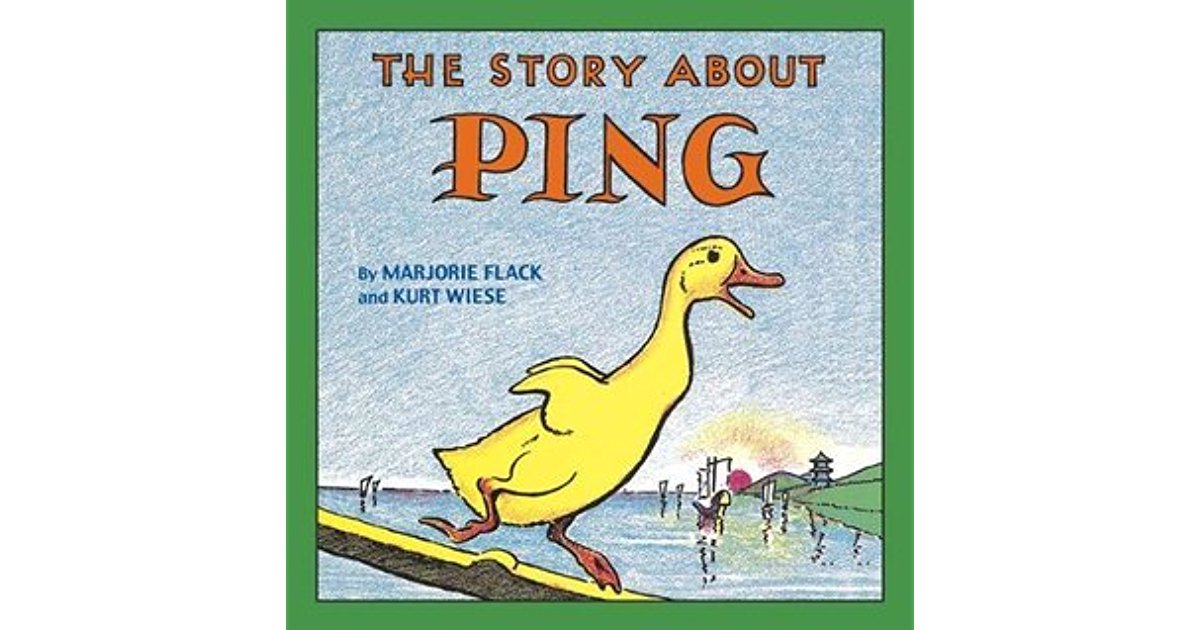
2) The Story About Ping

This, another book about being last, is also a favorite.  It was a book at my grandma’s house about a duck that hides to avoid punishment, nearly is made dinner while out wandering alone, and returns to face punishment. (Reminds me of a time as a child when I ran and hid to avoid the consequences for throwing something at my sister Olivia and sending her off in tears.  I came out of hiding to face the music only after my parents threatened to leave without me.  I was so gullible.)  This book had a good lesson about punctuality and also piqued my interest in a culture different from mine.

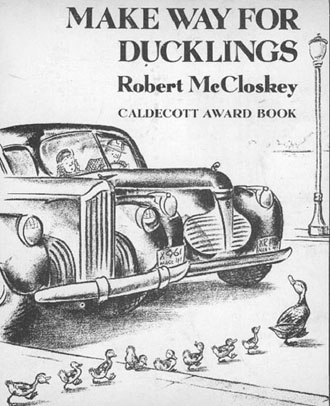
3) Make Way For Ducklings

Okay, what’s not to like about a family of ducks?  I think as a child it was good for illustrating the dangers in the world beyond and also that there are people, like the policemen who stopped traffic, who are willing to help.  (Wait, now why do I suddenly feel manipulated by this story?)  I believe one of my gifts is situational awareness.  It is important to find those ducks out of water around us and return them to safety again.

4) Blueberries for Sal

This book, as well as Make Way For Ducklings, is the creation of Robert McCloskey and noteworthy to me for the artwork.  Sure, the story about a day picking blueberries and a mother mixup involving a bear cub and human child is entertaining enough.  However, I remember my appreciation for the drawing style even at a very young age.  I also like blueberries.

5) Choo Choo The Runaway Engine

Before there was Thomas the Tank Engine, there was another little engine that ran away named Choo Choo.  I’m not sure why steam engines are so fascinating to children, but I know that I loved all manner of machine and the railroad age still captures my imagination today.  This book by Virginia Lee Burton is the first of three of her books that made the cut for my list.

The next…

6) Mike Mulligan and His Steam Shovel

This book about man, machine, and loyalty to the end.  I remember my empathy for Mike and his steam shovel, Mary Ann, as they face off with the big modern (and soulless) competition.  It is a book that captures many of my lifelong values.  I love underdogs and determination against the odds.  It seems also that loyalty is more and more uncommon in this age when bigger and newer is often considered better.  I love the creative and unexpected solution at the end of this book about change.

7) The Little House

Of the three books by Burton, this one probably hits me closer to the heart.  Change and the passage of time take their toll on this little house.  My feeling like an old soul probably started with the nostalgia this book inspired.  I pitied that little house, once so happy, later run down and forgotten.  I guess someone like me, who always had to struggle keeping up and understanding the longing to be loved, wanted that lonely old house in a crowded city to be happy again.

Some runners up…

Are You My Mother?

Horton Hears a Who

Freight Train

The Lorax

The Wump World

The Giving Tree

Curious George

And, last to make my list…

8) The Way Things Work

This comical book from later in my childhood explained everything from faucets to fission reactors.  What better for a child who asked why constantly than a book answering how?  I believe it was a gift to my brother Kyle one Christmas, but it was shared between us boys and definitely one of my favorite books.  It was a silly book of mammoth proportions.  Wooly mammoths, to be precise, and one of several by David Macaulay (check out Cathedral, Castle, and Colosseum) that contained beautiful drawings, great explanations and wonderful detail.

There’s one other book that I can’t recall a title for nor can I remember the exact story.  It was a book with an elevated rail line and corner stores reminiscent of Brooklyn or Queens near the turn of the century.  It would come back to me later in life while making one of my frequent trips to New York City.  What amazed me is how the Big Apple has retained some of that same character.  Apparently the city that never stops has time for a little nostalgia lane too.

What are your favorite children’s books?

The Confidence Conundrum

Standard

“Be confident!”  

Two words and some of the most unhelpful advice ever given.

Telling someone to be confident is like telling a depressed person to be happy or a short person to be tall.  A person who lacks in confidence does not know how to be confident or else they would already be confident.  Building confidence takes more effort than making a bold pronouncement upon someone.

People do not simply choose to be shy, unsure, uncertain, doubtful, confused, hesitant, timid, anxious or fearful.  No, those things are a product of life experiences and emotions that are all very real.  A confident person making a perfunctory statement does nothing to change the reality of a person who lacks confidence.

That said, confidence is desirable and something to be shared.  

Unfortunately, people who are confident often do not have reason to be introspective about it.  When you feel good about life there is not much need to know why or question it, there is only reason to be what you already are and enjoy the benefits.

Confidence is both a natural disposition and also something gained through positive experience.  Parents instill confidence in children through example or by helping them to overcome their fears and learn from failures rather than dwell in them.  Confident and successful parents seem to produce confident and successful children.

Confidence goes hand in hand with success, it frees a person to take the plunge rather than waste time in needless deliberation and makes them more attractive.  But, there is a sort of causality dilemma, in that confidence often leads to success while success builds confidence and without one the other becomes more difficult to maintain.

When confidence doesn’t produce success, it leads an intelligent person to doubt.  And with doubt comes less desire to risk effort and that results in even less opportunity for success, which often leads to even less success and even less confidence.  Pretty soon things can spiral downward into the pit of despair without a clear way out.

So, how do we help someone who lacks confidence gain it?

If you want a person to be confident then you must give them reason to be confident and good enough reason to overcome whatever reasons they have to lack confidence. To be helpful one must directly address root causes and not dismiss the realities that created the condition as silly or irrelevant.

What people need is T.IM.E.

Help must be practical.  Encouraging words don’t cut it.  Words, no matter how confident you are in saying them, are only words and do nothing to counteract the real life experience or emotional baggage of someone who has only known failure.  What is helpful, perhaps the only thing that does help in some cases, is meaningful long-term investment in the other person.

Loss of confidence happens over a lifetime, it comes as a result of traumatic experience or neglectful treatment, thus expecting a person to “snap out of it” because you say so is delusional at best and an excuse to be indifferent at worse.  There is more to be done than simple encouragement and that means an investment of time.

Here are three simple steps…

1) Take time to listen.  Confidence goes hand in hand with success, but success can lead to arrogance and unwillingness to hear first.  Many people want to “fix” another person without taking time to actually listen and assess the need.  This could mean many months or only a moment depending on the need.  It takes relating to the other person at their own level, earning their trust, without being in a rush or speaking in judgment of their situation.  Half the problem could be the lack of someone who will actually hear them out and care.  So listen empathically and try to identify with the other person emotionally.  Weep with them, laugh with them, eat with them and imagine with them.

2) IMagine a solution.  Without confidence, our ability to envision a better future dwindles and dies.  A successful person can easily take their ability to see a bright future for granted and yet a person who has continually failed does not share their rosy vision.  The first step towards any solution, therefore, is to think about it, to break the problem down into steps and help the other person mentally develop their path towards success.  After that comes execution of the plan.

3) Empower them.  This is where the rubber meets the road and is probably what is most lacking in our age of dog-eat-dog individualism.  Sure, there are many willing to spew their unhelpful advice and unasked-for judgments, but there are very few willing to partner in the success of another person and by this I mean make a substantive investment.  No, this does not mean a handout done in pity or religious obligation either, but an investment that physically and materially shows our confidence in the person who needs it.  Your willingness to partner together with them in a solution will, by itself, help build their confidence.

Anyhow, some final notes…

This is not a method or formula.  Each person and every situation is different.  Sometimes all that is needed is encouragement (more than saying “be confident”) which could mean something as little as a phone call.  While other times a lifelong commitment may be required.  It will likely require creativity, facilitating the right connections, and making recommendations.  

The goal is to get the person what they need to get on their feet and going in the right direction.  It also means getting out of the way and not being controlling or expecting anything in return besides enjoying their success with them.

Nobody is self-made.  If you are confident and successful, there are reasons why that go beyond your own abilities.  We did not pick our own home, communities, height, intelligence, personalities or luck.  We cannot take full credit for anything we have accomplished in our life.  This is reason to be humble and helpful.

If you are confident then share what you have been given with those who have little or less than you do.  Show your hope in their future with truth of action and not only your confidently spoken (but empty) words, be their heart…


There Is No Such Thing As Selfless Love

Standard

I had an idea of a supernatural love.  It was a love that would overcome differences in ambition, personality, experience, etc.  I had imagined a spiritual bonding of two people united only in their faith, going against their natural preferences and depending fully on God.

My pursuit of this greater love came as a result of what I had considered a spiritual experience and my desire to do God’s will.  I had a comfortable life and no real desire to disrupt my secure existence, but I sought to be uncomfortable and decided to step out in faith to pursue what was impossibility to me.

After a journey of a few years (and going against the flow of advice of people who claim to have faith yet live as if agnostic) I’ve realized something about love.  First, love is not supernatural, there is nothing inexplicable about love, and my chasing after more was a waste of time.  Second, we only love when we gain from it.

Not even Jesus loved selflessly…

Altruism, or selfless love, is an idea that doesn’t work in the real world and is not even a Christian ideal.

Jesus didn’t love altrustically.  Jesus loved as an investment, in a hope that he could gain followers, and with the intent to build a kingdom where he would be Lord.  He encouraged others to love as he did as a means of gaining his favor and inheriting eternal life.  Eternal life is a really big incentive.

All sustainable love is either a repayment for something already done or delayed gratification in hopes of future gain.  We love because we owe a debt or in anticipation of receiving a return on investment.  Yes, in some love relationships there is no balance sheet kept (because it would be cumbersome and ruin the mood) and yet all love is, at some level, about self-gratification.

We cannot live separate from our own desires.  Not even Jesus had an endless supply of unconditional love for those who went against his teachings, we see that expressed in his words of condemnation in Matthew 23, and his abiding love was only shown to those who continually submitted to his will.

Now, it can be argued that this demand of submissive love is only for our own good, as in a parent’s chastisement of their child in order to get the best from them, and yet ultimately the proposition was to love me or else you die.  That isn’t altruism nor is it extraordinary or inexplicable.

What love is and is not…

Love is a feeling of pleasure we get.  This feeling is a product of brain chemistry—the result of natural chemical substances, such as oxycotin, that underlie our emotional experiences and all human behavior.  Love is something involuntary, a natural attachment we get towards something or someone attractive to us.  Love requires no special spiritual explanation.

When a Mennonite woman told me she couldn’t love me as I wished to be loved it was true.  What I was hoping for was a supernatural love, the kind that is impossible by human standards, and only possible with faith in God.  I figured that two faithful people, equally in pursuit of God’s will, would be able to overcome their own differences and ambitions.

However, what I didn’t realize, despite my sincere feelings and delusion of faith, is that my love for her was nothing special or supernatural.  Sure, I believed it was something of God and was deeply offended when people would suggest I was driven by sexual desire.  Yet, at some subconscious level, it was all completely natural and my confirmations from God all hallucination.

What made it seem bigger was what it represented as far as acceptance in my birth culture.  There are first and second tier Mennonites.  The father and family that this young woman belonged to was squarely in the first tier.  They are popular, connected and sought after because of the pleasant feelings they produce in other Mennonites.

In reality, other than my being a second tier Mennonite and therefore not as pleasurable to her senses, I’m no different from the young man who did finally meet her criteria.  The only real difference is that he will be able to continue on in his delusion.  He can go on seeing her love as something supernatural and proof of God’s​ perfect plan.

Perhaps some day he will be oblivious (like her dad) and share, to a crowd of those craving love, that his dear wife made him who he is?

Love and conservative Mennonite idealism…

All that sounds pretty negative and depressing considering the high ideals that I had for love.

I believe we prefer to frame our love as a divine mystery because it makes us feel better about ourselves.  Who really wants to think of themselves as governed by their biological impulses and base desires?

And still, when we divorce ourselves from the reality of who and what we are, we do more harm than good.  The religious culture I was born into created many unrealistic expectations in me and this idealism has played a large part in my recent disappointments.

It was actually the father (of the girl that rejected my love) who had advised me against a relationship with a faithful woman outside the Mennonite denomination citing our cultural differences.  And, truth be told, it was advice that resonated only because I shared his ideals and was seeking after a perfect little Mennonite world like his.

Unfortunately that is the bad advice many Mennonite young people have taken and, in their uncompromising​ impractical pursuit of some kind of supernatural experience, they miss out on the best opportunities for love they may ever have.

One example is the attractive single woman who asked me to blog about how to fend off unwanted suitors.  This same girl later publically expressed her deep longing for children, as if she had no opportunity to make that happen, and yet she will go on rejecting the possibilities that exist because she is unwilling to compromise her own ideals for love.

It is sad that unrealistic ideals prevent so many Mennonite young people from taking those first steps that allow love to grow and why so many are choosing singleness over sacrifice—which is a trend will continue so long as we reject what is suitable to chase after our own grandiose delusions.

We can’t develop feelings because we are too carefully “guarding our hearts” to truly love people who don’t meet our own personal standards.  That is probably why we will never be very effective as missionaries.

The love I have found…

Over the past couple years, while in pursuit of a Mennonite ideal, I had opportunity to lower my barriers and be friends with people who didn’t meet Mennonite standards.

I have found true love in the crowd of misfits on the edge and outside of the Mennonite denomination.  I loved those who, like me, were lonely and in need of a friend.  As a result I feel I’ve gained more than I have in all my years amongst my spoiled and self-congratualtory religious peers.

The family of misfits I’ve gained might not know the right things to say and do to appear righteous, but they have a heart similar to my own.  My new friends, unlike my pretty-on-the-outside religious peers, are like me in the ways that really matter and that is why I love them.

Most Mennonites, like other religious fundamentalists, will not make a lifetime commitment to those whom they consider less than themselves and are not at all like the Jesus they claim to follow after.  They can’t love me because I am not like them and I’ve given up wasting my time with them because there are many others who do appreciate what I have to offer.

The irony is that I probably have more and deeper connections formed through social media than many who have had their face on a prayer card and spend thousands to fly around the world.  In fact, I pick up the pieces for the fly-by missionaries who seem motivated by passion for adventure more than compassion for people.  We could do more staying home using social media and MoneyGram.

We really only love ourselves. We love only the people who we can identify with and can only patronize those who we do not. This is why Mennonites are bad missionaries, their love (beyond their own clique) is often disingenuous or out of religious duty rather than true humility and real identity with the downtrodden, their love for the outsider is a fly-in-fly-out superficial kind.

I have found my twin, a special person who doesn’t meet a Mennonite standard and yet mirrors me in her simple devotion to love.  It is not supernatural or mysterious, nor is it adorned with the typical triumphalism of those who always get everything they want, but it is genuine.

Jesus Assails Unhelpful Religious Elites (Matthew 23:1-4)

Standard

I’ve always respected my father as a leader.  I consider it a privilege to have his example of Christian leadership in my life.  He’s a man who leads by example.  He does his best to get the job done right and always treats those under him with respect.

We all interact with leaders.  Many direct from behind by telling others what to do rather than leading by example.  We know of the parents who demand that their children do as they say and then do not live up to their own standards.  We know about politicians and celebrities who lecture about social responsibility while living in mansions.

Jesus is a man who led by example.

Jesus never asked anyone to do anything for him that he would not do for them.  He asked only, “Follow me” and then provided his example as a means to lead those he called to salvation.

For this, Jesus was also a threat to the established religious and social order.  There are always those who are privileged by the established regimes and governing institutions.

A hierarchical system serves those at the top.

And yet Jesus (after sending a rich young ruler away disappointed) promises his followers in his kingdom that the current roles would be reversed:

Truly I tell you, at the renewal of all things, when the Son of Man sits on his glorious throne, you who have followed me will also sit on twelve thrones, judging the twelve tribes of Israel.  And everyone who has left houses or brothers or sisters or father or mother or wife or children or fields for my sake will receive a hundred times as much and will inherit eternal life.  But many who are first will be last, and many who are last will be first. (Matthew 19:28‭-‬30)

Jesus repeats this maxim, “The last will be first, and the first will be last,” at the end a parable in the next chapter.  In the parable, there are workers in the vineyard show up early and then cry “unfair” when those who show up later receive the same compensation.

That is not a message the religious elites and privileged classes want to hear.

I mean, they (and their ancestors) put their time in, and therefore they deserve the place of recognition and respect.  Follow the rules, earn the prize.  God was obviously blessing them for their careful religious devotion… right?

Then here comes this agitator, this Jesus, who dares to challenge and rebuke them.  Not only that, this provoker, he tells them the tables will be turned, roles will be reversed and their kingdom will be left desolate.

Jesus begins his sermon in Matthew 23 by taking direct aim at the unhelpful religious elites.

The text…

Then Jesus said to the crowds and to his disciples: “The teachers of the law and the Pharisees sit in Moses’ seat.  So you must be careful to do everything they tell you. But do not do what they do, for they do not practice what they preach. They tie up heavy, cumbersome loads and put them on other people’s shoulders, but they themselves are not willing to lift a finger to move them.” (Matthew 23:1‭-‬4)

There is a derisive tone to those words.  In one line Jesus tells his audience that they must respect those in the position of power and then in the next, he describes those who hold those positions of power in a way that could be considered disrespectful.

I do not take the advice Jesus gave to, “be careful to do everything they tell you,” as an endorsement of the rules.  I believe it is simply an acknowledgment of the real power they held.  To “sit in Moses’ seat” meant they could have you killed and that is pretty good reason to pay attention.

These religious elites, who saw themselves as better than everyone else, did not “practice what they preach”, according to Jesus.  They heaped on a “cumbersome loads” of standards and yet were not living up to what they preached.

This could mean a simple double standard: one set of rules for themselves and a different set for other people.  It might also indicate that they loved the “letter of the law” more than the Author of the law.

I believe it is the latter.

The “experts of the law and Pharisees,” we are told, “diligently” studied the Scriptures, thinking that in their to devotion to them they had eternal life (John 5:39) and the rich young ruler also claimed to have kept the commandments from boyhood.  There is every indication that these were devout and sincere people.

However, where the Pharisees went wrong was in what they prioritized.

Jesus prioritized people over the letter of the law.

Read Mark 2:3-283:1-6.

When a man was forgiven and healed, the Pharisees were more concerned with their interpretation of blasphemy laws than they were in the miracle.

The Pharisees were more concerned with looking righteous in the eyes of their religious peers than they were in the well-being of those of lower position who needed healing and salvation.

In questioning why the disciples of Jesus did not fast along with everyone else, there was a lack of understanding that unique circumstances can demand a departure from the normal religious routine.

Regarding the Sabbath they saw a rigid true-for-all-time black and white standard, but Jesus reminds them of when David’s servants violated the Sabbath and points to the humanitarian intent behind the law.

Jesus, in his anger against the legalistic thinking of the religious elites, heals a man on the Sabbath.  For this defiance of their tradition they began to plot how to kill him.

The law of the Pharisees is described as a “heavy” and “cumbersome load” by Jesus.  But, in describing his own way, Jesus says, “My yoke is easy and my burden is light.”

While the religious elites would not risk contamination (as depicted in the story of the Good Samaritan) and were “not willing to lift a finger” to move the burdens they put on others, those who followed after Jesus were instructed:

Carry each other’s burdens, and in this way you will fulfill the law of Christ. (Galatians 6:2)

The self-righteous elites were about preserving their status and image by following a religious code and demanding others live up to it, while Jesus led by his example self-sacrifice and urged his followers to prioritize love for others over their tradition.

The letter of the law is indifferent to the real needs of people.  The law is uncompromising and cruel.  It does not care about the impossible burdens it placed on those less privileged and powerful.  The law condemns all people to death.

The Spirit, on the other hand, is a comfort and helper in our time of need; he brings grace to those who will receive it.  A true follower of Jesus walks according to the Spirit (Romans 8, Galatians 5) and will help to carry burdens and bring newness of life.

Jesus speaks against the attitudes of Mennonite religious elites today.

I’m fortunate in that I’ve been spared the worst that the Mennonite religious culture has to offer.  Yet, a lighter dose of the same wrong attitudes does surface from time to time.

My own experience with the uglier side of the denomination is pretty tame compared to what others have experienced.  In the conference I’m a part of (Keystone), we didn’t have the control-freak bishops playing “religious policeman” and constantly adding to the rules or micromanaging and excommunicating people who don’t fit the mold.

However, we do have the complacent unhelpful attitudes of those Jesus rebuked and the same resistance to change.  Many will only help in their religiously prescribed ways (words of encouragement, offered prayers, etc) but do not offer much burden-carrying outside the range of our established protocol.

Mennonite employers will often use their position to privilege themselves, nobly willing to move heaven and earth for their own families, but too often at the expense of employees and their families.  I know first-hand accounts of men who work less than bankers hours (for good pay) while expecting those under them to pick up the slack.

There can also be the attitude that those who aren’t as successful as we are did not try hard enough or otherwise “deserve” it.  We too often hold those raised outside of our communities to a standard we are only able to achieve because of our home and heritage.  We expect others to rise to our own level when we should be bringing ourselves down to theirs.

To follow Jesus means to give up our special privileges for the good and welfare of others.  It means to humble ourselves and lead the way he did in when he left heavenly glory to live and die for us.  We too must step down to meet people where they are and help them to carry their burdens.

Follow my example, as I follow the example of Christ. (1 Corinthians 11:1)

That is how to be a Christian leader.

Taking on Matthew 23 and the Uncomfortable Topic of Hypocrisy

Standard

Several years ago, my church designated the fifth Sunday of the month as an opportunity for laymen to preach.  I passed on the invitation when my name came up.  I did not feel qualified to speak and therefore decided not to embarrass myself or bore an audience with my scattered thoughts.

Much has changed since then.  A couple years ago (upon realizing that I could no longer use the excuse of being younger than Jesus when he started his ministry) I decided to start saying “yes” when called upon.  And, surprisingly enough, I did survive my attempts at teaching and giving devotions.  In fact, I did well-enough that I started to think about what I would preach, given the chance.

What sermon would I preach?

I’ve heard dozens of sermons parsing 1 Corinthians 11.  Modesty (the word “modest” only found once in Scripture) has been a frequently preached on topic as well.  Biblical proof-texts pertaining to our doctrinal hobbyhorses make their regular appearances—I’m pretty sure my Mennonite readership is quite familiar with the “Sermon on the Mount” in Matthew.

I’ve heard many “fire and brimstone” messages about the danger of television, rock music, sports and “worldly” entertainment.  Where I come from there is no shortage of sensational stories and titillating tales included in the message.  Even the occasional myths about wells to hell and erroneous silver dollar arguments get mixed in to spice things up a bit when the pulpit-pounding theatrics aren’t good enough.

However, amongst those numerous messages I’ve heard from across many pulpits, there is one particular Biblical text that I cannot recall a sermon being preached on.

That text being Matthew 23, the chapter where Jesus levels seven accusations against the religious elites of that time, a sermon full of unpleasant words and bitter reproach that culminates into prophecy about Jerusalem’s destruction and the ending of that age.

I have long pondered why this significant portion of Scripture (mirrored in the six woes of Luke 11:37-54) is so often neglected.

It could be confirmation bias.  It is very easy to only see evidence that confirms our existing worldview (or “cherry picking“) and ignore evidence to the contrary.  Perhaps it is preoccupation with defending the current tradition that distracts us from a sermon about the hypocrisy of other religious people?  We’d rather dismiss that as irrelevant to our own time and unimportant.

Or…does it hit too close to home?

In a denomination known to split over religious minutia a discussion of personal hypocrisy might be a sore subject.  When I read it, the parallels between the attitudes of those Jesus called out and some I’ve witnessed in our circles today are clearly recognizable.  So the passage might simply be avoided as an uncomfortable topic.

Anyhow, as one not striving to follow the path of least resistance, and as one who believes that faithfulness includes challenging the complacent, I would choose Matthew 23 for a sermon text and explain how the message Jesus gave then still applies to us today.

Blogging—today’s medium for delivering a message to a broader audience.

I felt called to be a minister of the gospel at a young age.  Back then, I had thought that meant being ordained or or serving as a missionary overseas.  Both of those things have become more and more unlikely as I’ve aged.  I do not tow the denominational line, so to speak, therefore my chances of ordaination or being sent to represent a Mennonite organization are about nil.

I may never have the opportunity to preach in a Mennonite church given my current trajectory.  But life is strange.  This thing called blogging did not exist until the mid 90s nor did social media and now it does.  My writing here reaches a larger audience than ordained Mennonite men do on Sunday mornings and that’s something I could not have imagined as a child.

So, I’ve decided to do a series of blogs on Matthew 23.  I want to be faithful with the platform I’ve been given, and I believe that you are here reading because the message is relevant to you.  My hope is that this encouragement to go beyond our own religious comfort zones is received as intended.

Part 1: Jesus Assails Unhelpful Religious Elites (Matthew 23:1-4)

Part 2: What Is True Distinction? (Matthew 23:6-12)

Part 3: Missionaries From Hell? (Matthew 23:13-15)

Part 4: Too Focused To Be Faithful (Matthew 23:16-24)

Part 5: Would Our Non-conformity Impress Jesus? (Matthew 23:25-28)

Part 6: Are You Better Than A Pharisee? (Matthew 23:29-32)

Part 7: Jesus Longs for His People (Matthew 23:37-39)

What Is Your Mennonite Marriageability Rating?

Link

Once upon a time I had a fairy-tale perspective of romance.  I believed in meeting the “right one” then “falling in love” and then living “happily ever after.” 

This is the Disney kind of love that keeps many young women bogged down in princess syndrome because they’re waiting for a knight in shining armor.  It is also why young men only pursue their ideals. 

It is totally faithless.

Instead of loving a person, we are caught up in our unspoken lists of attributes and unrealistic ideals.  Those who do find what they want will likely be disappointed once they marry and find out that not everything is as it appeared.

We might claim to love unconditionally and yet anyone claiming to be totally altruistic is a liar.  We love for what we get or what we hope to get and might as well be honest about it.  Much of what gets us hooked then hitched is superficial and our secret judgement probably should be openly examined.

I’ve decided to come up with a scorecard—both for fun and for introspection about the items listed.  How do you rate against ideals of the Mennonite culture?  Have you ever judged anyone based on any of the things mentioned below?

So, anyhow, without further ado, here’s a marriageability rating scorecard for conservative Mennonites.  

1) Appearance: Be cute or go home!

God may judge by the heart, but we tend to judge by appearance.  Many confuse outward beauty with virtue and stature with strength of character.  Being overweight, poorly dressed or unkempt will certainly count against you.  Sorry if you are not naturally stunning, but take solace in the fact that most of us aren’t and it hasn’t killed us yet.

  • +15 if you are a girl of average height and size to petite.
  • +15 if you are a guy over 5′-10″ tall and don’t look gawky.
  • +15 if you are a guy described as “handsome” by someone other than your mom or sisters.
  • +15 if you are physically fit or considered well-proportioned according to prevailing cultural standards.
  • +15 if you are a girl who gets more than 75 likes when you update your profile picture.
  • +5 if you are a guy with a pickup truck or Jeep.
  • -10 if you have been turned down or have never been asked for a date.

2) Ability: Wow!  Did you see that?

We might claim to value things like character and integrity over athleticism or charisma.  Unfortunately we don’t really have a way to quantify abstractions (like courage or perseverance against the odds) and yet do take notice of something we see clearly like a volleyball spike or a great singing voice.  There are no participation awards and moral victories in this category; it is win or lose, all of nothing, etc.

  • +15 if you have ever been picked to sing a solo.
  • +15 if you articulate well, make people laugh and people seek you out or gather around you.
  • +15 if you have ever played on a championship team and made a solid contribution.
  • +15 if you can play an instrument well enough to keep an audience.
  • +10 for going on a chorus tour more than once or being asked to sing at a wedding.
  • +5 if you are a notable artist, writer, etc.
  • +5 if you are a girl and bagged a buck. (-10 if you are a guy who has not)
  • +5 if you can sincerely parrot accepted Mennonite ideas.
  • -5 for actual intelligence.

3) Ancestory: Who are your parents again? 

One thing off the radar is the importance of pedigree.  Being from the right family can cover over a multitude of sins and being from the wrong family can mean nothing you do is ever going to be good enough.  There is a Mennonite pecking order, there are various tiers we can be classified in, and people rarely marry outside of their own family caste.

  • +20 if you are a pastor or missionary kid.
  • +15 if your dad is a successful businessman.
  • +15 if your mom was asked out by five or more guys before settling on your dad.
  • +10 if you have a common Mennonite surname.
  • +5 if you can play the Mennonite game.
  • -5 if your parents aren’t Mennonite.
  • -10 if you aren’t Mennonite.

4) Ambitions: God has led me to be important…

The Millennial generation is said to value traveling and experiences.  One of the privileges of American affluence is the lack of concern about things like shelter, clothing or food.  It took actual faith for those truly called to go out in the past.  However, today it only takes a fat wallet or an adventure seeking heart.  You can go for a few years and then come back to be knighted as a pastor or regarded as someone special.

  • +15 if you have the luxury of world travel without needing to truly count the cost.
  • +10 if your ambitions make you popular in the Mennonite religious culture.
  • +10 if you describe what you want to do as God’s leading.
  • +5 if your dad is a college graduate or taught a Bible school/seminar class.
  • +5 if you have over a half dozen siblings.
  • +5 if you or your dad is a pilot.

5) Activities: Doing the cool things that people notice.

I had thought it would be wrong to go to Bible school or a missionary trip in order to find a spouse and it would be taboo to admit that you did.  But the correlation is real.  Many conservative Mennonites *do* find their spouse this way and then use some kind of convoluted logic that assumes people who do these kinds of activities are more sincere because they do—never mind that the real reason many of them do these things is to be more marketable. 

  • +15 if you regularly play Rook and Settlers of Catan or think Spike Ball is awesome.
  • +10 if you have convinced yourself that short-term missionary trips and going to Bible school is a sign of spiritual depth.
  • +10 if you homeschooled and somehow avoided social awkwardness.
  • +5 if you think Christian schooling helped you be a better person.
  • +5 if your face was ever on a prayer card.
  • -5 for every break up.

6) Age: Over thirty?  Forgetaboutit…

It is no big secret that the American culture is youth obsessed.  Mennonites are no exception to this and are perhaps even more guilty of ageism than their secular counterparts.  There are many who might even be so bold (or arrogant) as to tell older singles that it might be God’s will that they remain single.  Nevermind the Bible would indicate age as an asset rather than a liability—that is one part of the book that is dismissed as irrelevant in our times.

  • +5 if you are between the age of 18-25
  • -10 if you are single by the age of thirty and not a sought-after person.
  • -1 for every additional year you are over thirty.

Can you outrank the writer?

Add up your totals and then comment your Mennonite marriageability rating if you dare. 

I come out around 20 points and expect to be easily surpassed by most of my conservative Mennonite peers. 

Of course this is not scientific or based in surveys, so don’t take it too seriously. 

However, I’m guessing that you will be more successful in getting hitched if you find a person at your eligibility rating level. 

Props to those of you who are able to overachieve.

The End of the Run

Standard

It is my last day on the job with Northern Tier Transportation and, appropriately enough, I’m stuck at Mt Pocono waiting on a load.  This week has been a proper end to eight years of hauling commodities.  It ended where it began.

For the first few months driving I had been making a regular run of ‘midds’ (wheat middlings) down from a flour mill in Mt Pocono to Cooperative Milling in Gettysburg.  

That regular trek up and down the foggy interstate 81 through Harrisburg, sometimes stopping at Cracker Barrel or Perkins, abruptly stopped.  It had been steady work for months and then circumstances forced a change.  

That has been the pattern.  We establish a regular ritual, rates change, and it is on to something else.  Nothing lasts forever in the trucking industry.

But the past couple weeks I’ve been to Gettysburg again for the first time in years.

This week I had two runs to Gettysburg.

A trip down memory lane.

The quirky guy with a mustache who once unloaded me has since retired.  However, there are some things that have remained unchanged, like the driver ahead of me and his complaints about the lack of urgency.  Hourly mill workers and truck drivers have a different time perspective.  We need to get unloaded or else we might get stuck waiting overnight if delayed.  They clock out go home at the end of their day regardless.

I also said goodbye to Brenda.  I will miss my hour long chats with her while getting loaded with poultry meal in Moorefield West Virginia—I have been been there twice a week with consistency over the past year.  She took over (after the prior load out guy left his wife and ran off with a female truck driver) and knew how to get things done.  I was impressed by her management compared to her predecessor.  I hardly ever had to wait.  We quickly became good friends and her encouragement has meant so much for my confidence.

Anyhow, last night I had anticipated this.  Mt Pocono is unpredictable and there was inclement weather on the way.  However, it was already late when I unloaded, I was out of hours, and so I left for my last load into the snow early this morning instead.

It was not too bad on the road besides other drivers.  I was impatient because a minute too long could mean getting to the mill after rather than before another truck and add an extra hour or two added to my work day.

It is Mt Pocono where I learned “hurry up and wait” or a phrase truckers use to describe the contradictions too common to the industry.  In other words, the times when your dispatcher tells you to be there yesterday and then (after moving heaven and earth to get there) you arrive ahead of schedule only to end up waiting hours.  I call it “Camp Pocono” because I’ve spent many hours here waiting on product.

The wait also means that I will need to find a way to clear my tarp (at a place that prohibits any reasonable way of accomplishing that task) and that is not something that I’m looking forward to.  Had there not been a line, with hours to wait as they make feed, I would not have to imperil myself by crawling across the canvas with a broom.  I will not miss that.

Overall my experience has been good.  I appreciate my boss, Ernie, for his putting up with my high expectations.  I respect him for what he has built over the time I’ve been driving for him.  He went from one truck and trailer when I started to a decent sized company today.  I am glad to have contributed to his success and appreciate all he has done for me.

Well, I’m probably going to be here until 5:00pm.  There’s a restaurant at the top of the hill and I’m a frequent customer.  It is good exercise.  I don’t get to choose where I am and would rather be home (a little over an hour away) than here, but I plan to make the most of my time.  It is time for some lunch.  Into the snow I go.

God bless!

Caution: Mennonite In Transition

Standard

A couple years ago, upon realizing my life was going nowhere in a hurry and not wanting to settle for mediocrity, I called out for God’s help.  I wanted a truly abundant life, I knew that I was wholly inadequate to bring about the necessary changes to make that reality (God knows I’ve tried) so I begged for the impossible be done.

I have seen many dreams die in my life because of fear of failure, inexplicably poor timing, etc.  I was well-aware of the cliché definition of insanity (doing the same thing over and over again and expecting a different result) but could not seem to break from the patterns of life that limited my potential.  I was what I was and deeply dissatisfied with that.  

There was an undefined something that always seemed to crush my higher ambitions.

I could not beat an enemy that could not be defined.  So I told God in no uncertain terms that I would literally crawl on hands and knees across a wilderness of broken glass to be made right.  Throwing every bit of faith I could muster, like a gambler going all in with a desperate last gasp effort, I prayed “make the impossible possible for me” and then concluded my morning prayer.

It was an hour or two after that when I hopped out of my truck and went down writhing in pain.  My knee buckled under me.  In that moment what had been diagnosed as an MCL sprain became a full ACL tear and I knew that the implications were huge.  I would be unable to perform the duties of my job and with that was facing financial uncertainty.

Still, despite excruciating pain, I was serene and confident.

God had answered.

Or so I hoped.

“It is what it is…”

My faith crumbled against that awful reality.

“You are thirty years old living in Milton.”

It was true and the implications clear enough.

I was a stick in the mud, already past my prime by the standards of some, and certainly not the adventure her heart was set upon.  I simultaneously loved her brutal honesty and hated the harshness of judgment.  My worst fear realized.

I had no defense.

When we finally parted ways I was lost in a haze.  The rug yanked out from under me.  My sputtering attempts to articulate my own heart had no effect on her whatsoever.  Blissful hopes were mercilessly cut down by an otherwise nurturing soul.

My conversation with her end with my mouth involuntarily echoing her “it is what it is” plea and with that accepting the rationality of fatalism that had long dogged me.

A continuing cruel loneliness now seemed inevitable.  I had tried many times before, taken my hits, always got back up again by believing next time would be better—that something greater would come from my suffering rejection.  But this time I could not delude myself with hope.

My faith had lost the day—my hope against hope had failed—and now a terrible fate of a despairingly cold and isolated life was upon me.

My mind, a place normally full of noise and activity, went totally blank as if unable to comprehend any of it.  I was in shock about what had transpired and numb.  

I wandered off aimlessly.  

Into the wilderness of South Dakota.  

Into the dark of night.  

Into oblivion.

The storm brewing in overhead seemed to perfectly mirror the log-jam of conflicted thoughts and swirl of deep emotions.

My delusion of hope that a young ambitious woman might find me desirable enough to consider a romantic relationship was shattered into a million fragments.  My failure to achieve now clung to me like an unforgivable sin.  Very soon I awoke from my stupor into an inescapable nightmare of reality.

The uneasy calm broke when Johnny and Brian somehow found me.  The rain, which had coincidentally held to precisely the moment they carried me to the shelter of an awaiting truck cab, began to pour down in torrents and so did my tears.

Escaping reality was impossible.

Doing battle with the it…

Most people nowadays pursue career first and romance second.  But I had these things in reverse order.  I prioritized relationship and postponed all else.

My reasoning was that it would be better to form life ambitions and goals together as a couple rather than apart.  And I might have pulled it off had I been a bit less socially awkward.  Unfortunately I had this vexing tendency to freeze up as soon as my interest was piqued and thus my early romantic pursuits failed miserably.

Years were frittered away with unfulfilled dreams, chasing one false hope after another and waiting for opportunities that never came.

Not to say that I did nothing of value in that time either.  I gained life experience, slowly built confidence in my abilities, learned to live independently, and gained perspective.

However, it was hard not to feel a failure.

There seemed to be this mysterious “it” that always kept my best efforts from panning out and nobody had the answers for this that I craved.

I’ve heard all the cliché advice I could ever stomach.  One person says try harder and the next will say you’re trying too hard.  One tells you “you’re intimidating” and the next says you lack confidence.  You’re basically wrong no matter what you do.

The same one who says they want someone “mature” rejects your offer and then dates a teenager whom she later marries.  It is incredibly confusing when the same person who says you’ll make a “great husband” refuses to even consider a date.

It is impossible to define exactly what the “it” is.  It was a ball of anxieties, that inexplicably poor timing, a curse of a jealous enemy, the lack of true community and help.

It was many things and yet nothing at all.

It was an invisible monster that chased me throughout my life.  It was the glass wall that seperated me from those who were more able to conquer the obstacles in their way and achieve their goals.  It was my doing too little too late or too much too early.  It was my always being close to the mark and yet never hitting it.

The “it” is not something external to be vanquished.  It is everything from my formative years up until the present moment that I’ve experienced or thought.  It is my home, my genetic and cultural inheritance, the good and bad together intertwined and inseparable as part of my own character.

The “it” is a sum total of what defines me as a person.  

It was inescapable.

It is me.

It is what we make it…

Her certainty about her own direction was why she was so attractive to me.  It was never my plan to grow old in Milton.

However, she seemed to believe that her personal ambitions were something that made us incompatible.  To me our lack of similar résumé was not a disqualification, I saw our differences as an asset, considering her strengths as being complimentary rather than contradictory to mine, but she disagreed.

She was my last remaining escape plan.

I did not eat in the days after because I had no desire to continue as I had and seemingly had no escape.  I wanted to die and would rather starve than keep feeding myself with more false hopes.

I cried, “I have no vision!”

I so desperately wanted free of a mind seemingly incapable of focus.  I had seemed to do fine in a structure.  I was a diligent worker, a loyal friend, responsible and dedicated.  But leave me too free to choose my own path and I would dither indefinitely in indecision.

God provided just enough reason to get me out of bed.  I cleaned up, composed myself a bit, ate the cup of yogurt and glass of water mom provided.  I faced her again, my elusive hope against hope, and then in the weeks following I went under the knife to have the torn ligament replaced with a graft and after that began the months of rehabilitation.  My goal to come back stronger than before and physically I did.

What also happened in my time off of work was a book (written but shelved pending further review) and this blog.  I’ve found some answers in blogging.  Writing my experiences and recording some of my thoughts has seemed to help provide some direction.  The more vulnerable I’ve become the more friends and opportunities to serve I’ve seemed to gain.

Why am I Mennonite?

I have never been the Mennonite golden boy.

I’ve never had the swooning attention of the favorites who better represent the ideals of Mennonite culture.  I’ve always done things a little different.  I was who I was and gave up on being anything besides that.  But still, I longed to gain acceptance in the Mennonite culture.

In Mennonite culture marriage is acceptance and not all are.  Yes, sure, we’ll let most anyone be a member so long as they complete the required steps, but marriage is where the reality of a two tiered system becomes very evident.  There are the kids born in the right homes, the ones able to do all the things that make them popular within their cultural context and marriageable, and then there are those of us who don’t fit the mold.

She represents a direction that I thought my life should go in.  Her Mennonite idealism, her simplicity of role or purpose in life, represented something deep within my own heart and desirable.

However, many who have read my blogs question this and ask… “why are you still Mennonite?”

It is question that I dislike.

I’m Mennonite because I like being Mennonite.

We have such a neat and tidy cloistered existence.  We have beautiful families.  We are the happy Hobbits living in the Shire of Middle-earth.  Everything we do is safe.  Even our missionaries typically go out to all the corners of the world yet never leave the protection of their religious confines.

It has been suggested to me recently that I have “out grown” the tradition.  That is the question that I have wrestled with as of late.  

Can one actually out grow their home?  

I’m running out of arguments why to stay in a denomination that is more about conforming to cultural expectations than transformation of mind and living a life of true faith.

It is hard not to notice that most of the help on my journey came from those leaving the Mennonite tradition or outside of it.  The support I’ve gotten from those within has been grudgingly or something that needed extracted and done as mere religious duty.  I hear brotherly love spoke of by Mennonites, but it seems more relic or ritual than actually reality.  The real brotherhood I’ve experienced, the genuine Christian love, comes from beyond my own Mennonite tradition.

Does a man of faith belong with those who shrug “it is what it is” rather than risk a small step into unfamiliar territory?

Should I have any part with those who eagerly travel over land and sea to win a single convert and yet would never go in a direction they don’t understand?

Still there is a strong urge to remain a part.

I’ve always thought all voices were needed in the conversation and the including mine.  If everyone capable of challenging the cultural status quo leaves it would create even more tunnel vision and further imbalance.  My strengths, rejected or not, would be of benefit to those who think they have all the answers and are confident about the tradition they received.  

Composites make a stronger material than their component parts—shouldn’t the bond of love be able to do the same with two dissimilar people?

Decisions, decisions…

There is a time to wait and there is a time to take decisive action.  I have given up many opportunities for placing my hopes within the context of my Mennonite culture and gone many years without seriously considering the alternatives.

Mennonite is my cultural identity.  Despite my many idiosyncrasies, I’ve always been Mennonite at heart and somewhat proud of my ethnic and religious heritage.  How does one unbind and divorce themselves from their cherished past?

Impossible, right?

It is not like I haven’t ventured out before in search of what I might find only to return again as if drawn by an invisible force that grew stronger the further away I got from whoopie pies and covering strings.  But things do change and there could be a force stronger than that which always pulled me back.

When I asked God to make the impossible possible for me, I had a personal vision that included remaining Mennonite and the young woman that I knew was an impossibility as far as worldly logic is concerned.  But it now seems possible that my vision then was too narrow and that I should look beyond to the other options available.

Being Mennonite is not the be all end all.  God calls us to go beyond the limits we set for ourselves or those set for us by our cultures and that is my intention.  It doesn’t matter what my religious peers or even my blood relatives think—Jesus called us to follow Him and leave our fears, insecurities and inadequacies behind us.

Maybe impossibility made possible for me is something I never anticipated?

That is what have I learned since that day tearing my ACL, in recovery from yet another slap of rejection, and from the battle with the “it” which drove me to extremes in search of answers.  I learned that I do not have all the answers and don’t need all the answers before I am able to step out in faith.

Please pray…

There are many things that will soon come to a head for me and most I am unable to talk openly about at this time.  Many of these things being pivotal life changing decisions that must be made.  What happens in the next couple months will determine many things.

Your prayers to help me through this transitional time are very appreciated.  Pray that the impossible is made possible.

When Love Remains — A Guest Blog By Linda Stoltzfus

Standard

This is my first guest post.  It is written by my mom (a person who encouraged my writing) and resonated deeply with me.  It is something my mother shared recently about her own mother’s decline in health and I asked permission to share here.  I felt it was something relevant and worthwhile for those who have faced or are facing similar circumstances.  A story about memory loss and love…

Sitting on the couch my mom reaches for her phone. She snaps it open and stares at the face that greets her. The man who has been at her side for over sixty years stares back.  Her fingers haltingly push the button that calls him.  It rings and I hear his voice answering.

She pauses; words no longer come easily for her.  But I know what she will say.  She will ask him to come back into the house.

As I reach for the phone I reassure her that Dad has just gone out for a walk and he will be back in time for supper.  She seems to understand, but I know that as soon as I leave the room she will be trying to call him again.  Her mind can no longer retain anything that was said a minute or two ago.  She wants her husband, my dad, to be by her side night and day.  He has become her memory and her security in this foggy world of hers.

My mother has been given the diagnosis of dementia likely caused by Alzheimer’s.  At the age of eighty this isn’t really that unusual.  According to the Alzheimer’s Association, one in nine people over 65 has Alzheimer’s disease.  One of three senior citizens will die with Alzheimer’s or another type of dementia.

My Mom has beautiful eyes: big, bright and blue.  She had lovely long hair which never turned gray and kept its blonde streaks into her seventies.  She would faithfully wash it once a week, often using whipped egg whites as conditioner.  It was her pride and glory.  When she was diagnosed with Non-Hodgins Lymphoma, I believe the most severe blow was that treatment would cause her to lose her hair.  But to live she had no choice.  The cancer was stage four and her swollen lymph nodes were giving her a lot of pain.

Except for her hair loss, she tolerated the heavy duty cocktail of chemo drugs rather well.  It was with much relief that after her last treatment she was pronounced cancer free.  However, she seemed to becoming more and more confused.  Her once sharp memory wasn’t there and she constantly wanted pain pills for some ache somewhere.

Instead of getting her strength back she wanted to do nothing but curl up on the couch. She began refusing to shower, or even comb the hair which had begun to grow back.  Having to leave the house and attend any activity with people made her extremely anxious.  My dad desperately held on to the hope that she was still recovering from the cancer.  He insisted that once her strength came back things would get better.  But after cognitive memory testing by the doctor, it became obvious that she was showing signs of dementia.

I was aware of symptoms of dementia and saw the effects it had on my grandmother and the toil it took on my aunt as her caretaker, but they lived several hours away and our contact was minimal.  The reality is much harder when you deal with it day to day.

Dementia is often misunderstood as being something all old people have; however it is actually a part of different diseases.  Alzheimer’s is the one that often comes first to mind but mini strokes, vascular issues, Lewy’s disease, Parkinson’s and even brain trauma can lead to the diagnosis of dementia.   My mother has been diagnosed with Parkinson’s but the doctors seem to think the cause of her dementia is Alzheimer’s.

Today when I look into my mother’s eyes they look back at me empty of emotion.  Occasionally she surprises us with a smile, and for a brief moment I see them light up.  But most of the time, they remain dead to her surroundings.  Her face seems fixed into some sort of mask of confusion.  During her calm times her eyes stare blankly into the distance.  When agitated she has the look of a distressed child.

It is now supper time and my mother makes her slow trek to the kitchen gripping her walker for support.  I pull out her chair and she sits down.  I hand her some napkins which she seems to enjoy folding. It is one of the few things she still can do.

My dad comes into the house, and with his usual style, asks Mom how she is feeling.  Although he hasn’t had a positive answer from her concerning her health for months, he seems to retain some sort of illusive idea that it may yet happen.

He deeply misses his soulmate.  They were unusual by today’s standards.  There was no independence in their relationship: they did everything together and it seemed to work for them.  Dad enjoyed driving and Mom did the navigating.  Dad liked watching people while Mom did the grocery shopping.  They both enjoyed going out for fast food, Burger King was a favorite, and they preferred eating in the car together rather than inside.

Mom always made sure Dad had three meals a day and that his needs were well taken care of.  However, that all changed with her cancer diagnosis.  She hasn’t cooked since.  Today we all take turns making sure they have a cooked meal each day.

At the supper table, I try to bring back some sort of connection by talking about my birth fifty some years ago. Mom is still able to recall my date of birth but she isn’t sure how old she is or even what day or year it is.

One of the frustrating things about dementia is the way it plays with your emotions.  One minute the person can be reciting a date or event in perfect order but then a moment later have no idea who they just talked to or what was said.  A person with dementia has good and bad days just as any normal person does.  This puts caretakers on an emotional seesaw, since the good days make you want to believe that the person is getting better.

The first thing that comes to mind when you hear the word dementia is loss of memory.  Of course this is true but we all experience some loss of memories throughout the years.  The disease or injury that causes dementia is much more complicated than simply forgetting something.  It takes many cranial connections to make a decision, to recall how to turn on a stove, know the steps in taking a shower.  Once this processing is damaged, or gone, a person becomes more and more limited.  They need someone to give them step by step directions for each and every process of the day.

Today is one of Mom’s good days.  She seems relaxed, when several of her younger grandchildren show up, she smiles.  Instead of lying on her couch she remains sitting watching the activity.   She motions to me.  I can see that she wants to say something but her voice is subdued, and hard to hear.  I move next to her.

“Do we have any smarties?” she asks me.  It is her favorite treat for the children.

I check the dish she keeps next to her bedside.  It has several pieces and I give her the dish.  Her face lights up as she hands them to the children, and for a short time I see my mom back.

My mom’s biggest goal in life was to take care of her husband and family. She faithfully raised seven children and celebrated the birth of each 30 grandchildren and 20 some great-grandchildren.

My mom enjoyed listening to music, reading and going to church and social activities.  Now she no longer wants to attend any type of social activity and refuses to have any music playing around her.  She can’t focus to read.  Although still able to read the words the comprehension is no longer there.  She has always been a follower of Christ with strong convictions but now no longer prays before a meal unless my Dad reminds her.

One of the cruelest things of dementia is the loss of the personality of the person you love. The disease has robbed her and us of some of the most precious parts of the human relationship.

In exception of one thing:  unending love. My mom is surrounded by agape love.  For sixty years my dad has been with her and is committed to being there until the end.  Although he has taken on the role of caretaker, his love for her remains the same.

Each of her four daughters is involved in her care, making sure her daily needs are being met.  Her daughters in laws have faithfully been making meals for several years with even some of her grandchildren helping out.  We all play different roles motivated by love.

One evening as I sat next to my mom who was lying on the couch with her eyes closed, seemingly sleeping, she reached out her hand and put it in mine.  She then took her other hand and laid it on top.  A wave of warmth spread over me. I haven’t felt that kind of emotional connection from her in a long time.

In that simple gesture, I knew that in spite of her confused state Mom was feeling loved.  In return she was offering the one thing she could still give back: affirmation of her love.  No disease can ever take that away.