We hear it all of the time, from the political far-left, that Jesus was a Socialist. While I believe it is mostly a schoolyard taunt, from those who are basically irreligious, the claim itself is worthy to be examined. Was Jesus, through his focus on the poor, downtrodden and marginalized, basically in agreement with the politics of Karl Marx and the Socialist far-left?
Was Jesus a Socialist?
There is a valid critique of American love of money and consumerism. This obsession with material gain is repackaged as the false “health and wealth” Gospel, that is preached by some who could be classified as being Evangelicals, and should be rebuked. It is also very disturbing when those who profess Christ seem to care more about the bottom line than the welfare of those whom they employ. All of this goes against the true Gospel of Jesus Christ.
So, in seeing the sins of those who enjoy the prosperity of Capitalism and how there is a lack of care for the poor, as is clearly a part of what Jesus taught, some see Socialism as the solution. Socialism, using the most basic definition, is redistribution of wealth and could sound a lot like Christian charity to those who only have a few Biblical proof-texts or nominal understanding of the Gospel.
But there are key differences that make it impossible to reconcile true Christianity and Socialism. Yes, some of the practical ends may be similar, but the means and driving philosophy are entirely opposed. Here’s an outline of some of the differences:
1) Jesus Yields Power, Socialists Demand It
Jesus, during his temptation, was offered the kingdoms of the world. He could have taken over all world governments and then installed a redistributive regime, so all the poor had their needs provided and there would finally be justice. And yet He rejected the offer, and instead Jesus picked the way of the cross and lived the example of self-sacrificial love. This is a very stark contrast to Socialism, where promoters of this leftist ideology feel entitled to power and will take to the streets to protest and demand what they think they should have.
Jesus was meek, and this is what He told his followers about those seeking to control others:
Jesus called them together and said, “You know that the rulers of the Gentiles Lord it over them, and their high officials exercise authority over them. Not so with you. Instead, whoever wants to become great among you must be your servant, and whoever wants to be first must be your slave— just as the Son of Man did not come to be served, but to serve, and to give his life as a ransom for many.”
(Matthew 20:25-28 NIV)
Socialists seek political power, and the ability to bend others to their will, but Jesus taught that empowerment comes by giving up our rights and serving others.
2) Jesus Taught Personal Responsibility, Not Collective Action
Every verse quoted in support of Socialism is directed at the individual. In other words, when Jesus said “sell all and give to the poor” he was speaking to specific individuals and not endorsing a collective movement to take from others to provide for the poor. His words are not about creating a system or using state power to compel others. Socialism, by contrast, is all about coercion and using the power of the collective to force others into compliance.
Everything Jesus taught is for his followers to do personally, for our own salvation, not so we can go around Lording over and guilt-tripping others:
“Then the King will say to those on his right, ‘Come, you who are blessed by my Father; take your inheritance, the kingdom prepared for you since the creation of the world. For I was hungry and you gave me something to eat, I was thirsty and you gave me something to drink, I was a stranger and you invited me in, I needed clothes and you clothed me, I was sick and you looked after me, I was in prison and you came to visit me.’ “Then the righteous will answer him, ‘Lord, when did we see you hungry and feed you, or thirsty and give you something to drink? When did we see you a stranger and invite you in, or needing clothes and clothe you? When did we see you sick or in prison and go to visit you?’ “The King will reply, ‘Truly I tell you, whatever you did for one of the least of these brothers and sisters of mine, you did for me.’
(Matthew 25:34-40 NIV)
In the passage above there is no mention of what is done on our behalf, instead, it is all about who we invited in, and who we personally provided for and visited. In Socialism, these tasks are delegated, turned into systems or state programs, and established by force of law. But in Christianity giving to others is always for us to do voluntarily, as willing individuals, and coordinated by the Church never the secular state.
3) Christianity Is About Community, Not Mandates
Christianity is Communal, a community of faith. Socialism is about forcing people to give of themselves through taxation and threats. A community is voluntary, never forced, and the Christian community is centered on the Church rather than the government. Yes, early Christians gave to help each other, some even had “all things in common,” as we read in Acts. But this was never a requirement. The real point is not about money either. No, according to Jesus, are supposed to leave everything behind in pursuit of Him:
And everyone who has left houses or brothers or sisters or father or mother or wife or children or fields for my sake will receive a hundred times as much and will inherit eternal life. But many who are first will be last, and many who are last will be first.
(Matthew 19:29-30 NIV)
Christianity means giving up everything, not just our wealth, to follow after Christ and build His kingdom. Christianity is about a family of faith, a community centered on Christ. The welfare state, by contrast, has destroyed families and made many dependent rather than free. As with the passage above, Christianity is about being ready for eternity, whereas Socialism is all about what we can gain for ourselves in the here and now.
4) Kingdom Focus, Not Utopian Idealism
The first to distort the point of the Gospel message were the disciples themselves, they had pictured a Messiah that would overthrow their Roman rulers and give them power over their abusers. They wanted a worldly kingdom and thought they would soon rule over their enemies. But Jesus subverted all of these national socialist ambitions. He wasn’t there to eliminate poverty, or to challenge the political and economic regime, but rather there to point people toward true worship:
While Jesus was in Bethany in the home of Simon the Leper, a woman came to him with an alabaster jar of very expensive perfume, which she poured on his head as he was reclining at the table. When the disciples [led by Judas according to the Gospel of John] saw this, they were indignant. “Why this waste?” they asked. “This perfume could have been sold at a high price and the money given to the poor.” Aware of this, Jesus said to them, “Why are you bothering this woman? She has done a beautiful thing to me. The poor you will always have with you, but you will not always have me. When she poured this perfume on my body, she did it to prepare me for burial. Truly I tell you, wherever this gospel is preached throughout the world, what she has done will also be told, in memory of her.”
(Matthew 26:6-13 NIV)
Socialism is humanist. It is motivated by this desire to create a perfect world through the use of political power. But Jesus said that poverty can’t be eliminated and he rejected the utilitarian impulses of the disciples (led by the thief named Judas) who had twisted the teachings of Jesus about giving to the poor. Jesus answered their indignation over waste by recentering on worship. Our giving is to point people to God. Socialists, on the other hand, worship the state.
5) Socialism Is Motivated by Envy, Christianity by Love
The most valid claim against Capitalism is that it is all about money and greed. People present Socialism as being an alternative and yet it really is only a different form of the same thing. Socialism is about power and envy, as much as Capitalism is about self-interest. But, unlike Capitalism, where the means of production are attained by work or negotiation, Socialism is always maintained through the use of coercion and force. So, although the rich Capitalist may be guilty of many sins, it is a corruption of the free market to take from others by deception or fraud, whereas you can’t have Socialism without manipulations and violence.
A person can own Capital and be Christian, but they can’t be full of jealousy, envy, or judgment towards others:
The acts of the flesh are obvious: sexual immorality, impurity and debauchery; idolatry and witchcraft; hatred, discord, jealousy, fits of rage, selfish ambition, dissensions, factions and envy; drunkenness, orgies, and the like. I warn you, as I did before, that those who live like this will not inherit the kingdom of God.
(Galatians 5:19-21 NIV)
Sure, like Judas who hid his true motivation under concern for the poor, Socialists are very skilled at selling their own desire for the things others have as a virtue. But the reality is that it is not our job to decide who else is greedy or has too much, as St Paul asks his readers, “who are we to judge another man’s servant?” Judgment is for God. Which is what was so terribly wrong with how Judas had used the words of Jesus as a way to condemn and he used them to condemn a woman more righteous than he was.
Capitalism isn’t Christian. However, property rights are, as is workers keeping the wages they’ve earned and this protection of private wealth is what the commandment against theft is about. Sure, it is the job of a Christian to give to the poor and needy, but profit for labor is not greed nor is it a sin for one person to have more than others do. Socialism, on the other hand, is incompatible. Yes, a Christian can live as a slave to the secular state, but it is not Christian to use government power to compel people to give their property to you to redistribute.
The Difference Is Direction
The left confuses Christian compassion for the poor with a political system. This could be cynical, simply to persuade the nominal Christians to their side or it could be entirely genuine. Either way, despite this similar starting point as Christianity, Socialism is headed in a completely opposite direction and is all about worldly power rather than the love of Jesus that transcends.
Jesus was not Capitalist or Socialist, he was none of the above, apolitical, and all about building a kingdom that is not of this world. Trying to pigeonhole Jesus as a Socialist entirely misses the point of the Gospel. Jesus, while tempted to overthrow the oppressor, did not choose to do this. He picked love instead, to love even the Romans, and this was to reject the Zealots, like Judas, who were motivated by the dream of having political power in their own hands.
It is the direction or orientation of Socialism that is wrong. Christianity teaches us to care for the poor, yes, but Jesus also said we must love our enemies and pray for those who persecute us. That is revolutionary, but in a completely different way from the divisive power and social order-obsessed philosophy of Marx and Engles. Christianity is about bridging gaps through voluntary self-sacrifice and forgiveness, Socialism widens gaps and always stirs conflict for the gain of some over others.
Christianity is about pointing people to a heavenly kingdom, where money and power don’t matter anymore, therefore we give voluntarily to show people this alternative. Socialism is completely focused on this world only and fighting over who should rule who. But Christianity is about laying down our lives and investing in something greater than politics, power, or privilege. One is heading towards the lowest common denominator, taking what we can, while the other is giving all and aiming to transcend all.
Thinking, as I’m sipping my coffee at Dunkin, a Saturday habit, we build civilization as part of the urge to reduce variables and the effort of living. The thought started during my pre-waking slumber: We work, build shelters and store resources, create complex networks, to try to decrease unpredictability and the end result is that I don’t need to worry about my source of caffeine.
This orderly environment we create is ideal for raising children. It is a nest. Or at least at some levels. Where we, like birds, weave a structure out of chaos in order to keep our offspring safe from predators and ourselves protected a world that can be unkind to the unprepared. Squirrels scurry around, in the fall, gathering up things to keep for food over the hard winter months. Our own species, likewise, is as instinctively forward thinking and creates systems to ease the strain.
The human endeavor, towards these ends of producing stability and abundance, has been so successful that many can go their entire lives not appreciating it.
We’re so well-off, in the developed world, that our impoverished are obese rather than hungry and many now think that healthcare (a service provided by others) is a right. we live in such unprecedented luxury and ease, even the poor can afford a lifestyle that many ancient kings would envy and yet feel so entitled to everything that we will shoot up the McDonald’s drive thru if we can’t get our bacon:
Evidently, being in civilization doesn’t make someone civilized.
Anyhow, other than entitlement and lack of appreciation, another product of civilization is boredom and fat. In the absence of wars we created sport and without hard work, to keep from physical deterioration, we go to the gym. It is truly bizarre, when you think about it, that we go out and seek the very anxieties that our ancestors built civilization to escape. We are adrenaline junkies, doing intentionally dangerous things for the fix, we want to have unpredictable outcomes.
All of this really does make everything about our existence a weird paradox. As soon we achieve a little bit of stability and peace we become restless. That’s what convinces me that we are as much nature, made for the world we are in, as we are not. That feeling that we somehow do not belong in this place with death and sorrow is what has motivated our progress. It is less about our own being otherworldly and more what has enabled us to survive this universe that would kill us the moment we grew complacent.
This, incidentally, is the one thing that many people do not grasp about entropy, we tend to see decay and deterioration as being only a bad thing. I mean, we fight it. If someone walks into the house with muddy boots it is upsetting and spurs action. But, without this tendency to disorder, without this repeated need to clean up on aisle five, would we even have a reason to live? As much as we hate disorder, it is this continual struggle against it that gives us meaning and purpose.
Pursuing the used car section, I happened upon an ad for an AMG Mercedes for a very good price. “This would be worth checking into,” I send a message and end up arranging the meet up.
So I travel two hours and, sure enough, there it is black and beautiful, the three pointed star on the hood. I’m excited. The interior is immaculate, leather, that perfect German fit and finish. It was loaded, with all of those features one would expect from a modern luxury vehicle.
“Okay, let’s take it for a spin,” I exclaim, anxious to see how this beast performs on the road. “Oh, you want to actually drive it?” My host asks. I wasn’t sure if he was going to throw me the keys or perplexed. So I answer, “Yeah, I want to see how it runs, could we go around the block?”
“This is a Mercedes Benz C-class sedan,” the response comes, “you either accept what it is or stop wasting my time.” At this point I’m a little stunned, taking a test drive isn’t that unreasonable. “I’m serious about this,” I respond, “could we at least start it up, hear how it runs?”
At this point the seller seems to be a little confused. “The battery is strong,” he says, as reaches for the radio knob, “surround sound,” turning up the volume. “Oh, that’s great!” Still trying to maintain my positive demeanor despite my increasing uncertainty, “could I look under the hood?”
“I don’t understand why you’re asking that,” the owner of the car retorts, “are you saying that you’re not satisfied with the heated seats and navigation system?”
“Well, I’m looking for reliable transportation,” I pause, “you know, to get from point A to point B.” And then add, “the door locks and other doodads certainly matter to me, but I really want to make sure that the drivetrain is solid before I commit to anything. That’s why I want to see how it drives or at least hear how it runs and look under the hood, can we do that?”
“The body on this car is immaculate, no dents or scratches. There is not an AMG this pristine, for this price, anywhere. So are you interested or not?”
“Okay, so here’s what I’m looking for,” I say, becoming more forceful, “I want a fully functional vehicle, something with a solid drivetrain.” I stop, then add, “I can pay cash, I I just need to be sure that the engine runs well enough and the car can move.”
Now getting red in the face, my counterpart responds angrily, “Oh, I see what this is really about, you’re jealous, you are on the attack against my Mercedes-Benz out of your own feelings of inadequacy, because you couldn’t handle the payments for a car like this! You make it about the engine and the driveability of the car as an excuse for being unwilling to pay the price for a luxury sedan!”
I laugh, a bit nervously, assuming this man must be joking as bizarre as the rant is and yet not entirely sure that given his serious expression. “I guess I just thought it was normal,” pausing to think, “to take a test drive and see under the hood.” And adding, “No offense, but most people are going to want to know this before making a commitment, is there a reason why you’re being so cagey about this?”
“How dare you judge me!” Comes the retort, and he continues, “Fine, it has no engine, but you’re being so negative! It’s obvious that you are unable to appreciate the bells and whistles, too completely obsessed with only one small component of what makes a great vehicle, so entirely unsophisticated!”
At this point, being unable to take the man seriously anymore, I hurry to make my exit without further drama, “Thanks for letting me look, so I’ll let you know if I’m interested.” As I turn to get in my vehicle and leave he mutters “go to hell.”
There was a 1980s cult film about a man who finds a pair of sunglasses which allows him to see subliminal messages in mass media. In this science fiction movie, “They Live,” the protagonist learns that world is run by aliens, along with human collaborators, who use billboards and television to control the population. The protagonist, now that he is awakened to this truth, goes on a mission to free people.
I’m not sure that I’ve ever watched the entire movie. It was before my time. But, from the bits and pieces that I’ve seen, it is basically a commentary on our mind-numbing American consumerism and political propaganda. It is trying to show how mass media is used by social elites to manipulate and manage people.
Anyhow, for a moment, yesterday, I thought somehow I had landed in that movie and posted the following on social media to describe the experience:
“Was out on the road today and saw a billboard with the word “Obey” in large print. I thought, for a moment, that I was in the 1980s movie, “They Live,” in which the protagonist finds special glasses that allow him to see what really is. In the film the world is controlled by aliens who manipulate people to conform. As it turns out this was not my new vision that could see through the propaganda, but was a Christian Aid Ministries (Mennonite) evangelism effort aimed at professing Christians that do not live to their standards.”
Now, given that much of my friends list is still conservative Mennonite, who live mostly in their own religious cloister, I knew the risk of some missing the meaning and intended humor of the cultural reference. However, what I had not expected was the personal attacks against me and bizarre accusations of bashing CAM for stating the plain truth. What led to this severe reaction? Apparently, that last sentence, that this message was “aimed at professing Christians that do not live their standards,” which offended.
Standards are a sore subject for conservative Mennonites and most especially for the neo-Anabaptist types. Perhaps, had I used the word “doctrines” the howls of protest may have been more muted. Why? Well, the word “standards” is often associated with that multitude of extra-Biblical rules that some argue aren’t a matter of salvation and yet, despite this claim, are somehow important enough to be the cause of their countless church splits. But the bizarre part is that I didn’t say anything about their extra-Biblical standards and that’s what made the boisterous denials so interesting.
What does “Real Christians” actually mean?
The billboard proclaimed “Real Christians OBEY Jesus’ teachings,” citing Luke 6:46 as a reference. At face value that is the goal of all Christians, to obey Jesus, right? But it is this qualifying word “real” that indicates this is a loaded statement and more than just a reminder to be good Christians. The writer doesn’t want you to just be any kind of Christian. No, they want you to be a “real Christians” and quite obviously, unless this writer is at odds with themselves, it means to be like them.
There’s nothing wrong with that sentiment, St. Paul urged, “follow me as I follow Christ,” (1 Corinthians 11:1) and that would certainly mean to be a part of the same church body as him. It shouldn’t be a big controversy, when a Mennonite puts up a sign saying to be a “real Christian” they mean to be more like them, an Anabaptist. This would not even be a question if a billboard, with a similar message, were put up by a Mormon or Jehovah’s Witness organization. So it is beyond disingenuous to insist that this use of “real Christian” has nothing to do with being more like Mennonites.
As someone who has spent decades of their own life amongst conservative Mennonites and other Anabaptist types, this notion that “we’re the real Christian” oozes out. And, more precisely, when they say “obey Jesus” what this ultimately means is agreeing with their Mennonite ‘doctrines’ of “non-conformity” and “non-resistance.” To them, this is just Biblical teaching, the clear extension of the commands of Jesus and, therefore, the most essential part of what it means to be real Christians.
So why deny it?
Why do some get up in arms over someone speaking this truth?
Why not be Mennonite and own it?
The real issue goes deeper. Mennonites, for various reasons, do not like to be identified as Mennonites. The term turns them into an ethnic tribe or mere subculture rather than the purer form. Whereas they would rather see themselves as simply being the only genuine Christians. The Holdeman Mennonites, calling themselves the Church of God in Christ, were more forthright in this regard and believed themselves to be the only true church. Other Mennonites aren’t as bold as to outright say that they’re the remnant church, but also do not fully embrace their common denominational label either.
The worst of the deniers try to discard the word “Mennonite” completely, despite this being their religious, cultural, and ethnic heritage. Modify the veil a little, ditch the capedress for another style of conservative dress, change the language, and suddenly they’re now the more authentic ‘Anabaptist’ who arrived at this particular emphasis by their own study of Scripture. This faux conversion is something born of insecurity from knowing that their own religious form is inherited. And yet, despite this, holding to a dogma of “Believer’s baptism” that causes cognitive dissonance if their being Mennonite isn’t completely a choice.
There’s also another possible reason why someone might deny their religious heritage and that is to fool their potential converts. In other words, a bait-and-switch tactic: 1) Tell inquirers that the group is all about following the example of Jesus, 2) shower them with attention and get them invested in the local fellowship, then 3) slowly shoulder them with those expectations that aren’t explicitly stated and yet required to be in Communion with them. This way they can use the established emotional connection as a tool for manipulation to later bring the new person into full compliance.
Let’s talk about those Mennonite doctrines…
What was most striking, and absolutely disturbing, about this recent encounter on social media, was how completely willing some were to question my faith and even to bear false witness to my face. For my infraction of saying that Mennonites are what they are, that they generally promote keeping their standards as being the definition of what it means to be a true Christian—for being an ex-Mennonite—one of their number went as far as to question if I was even a brother in Christ.
This, of course, is the grandest of ironies and starkly illustrates the disconnect between what adherents claim versus the reality of the practice.
First, they (two or more) wrongly interpreted my post as bashing CAM. But, instead of show love or turning the other cheek (as would be truly obeying what Jesus, right?), they attacked me personally and lied. Rather than address me directly and honestly, they would attempt to knock down strawman versions of what I said and pigeonhole me. Which is another reason why I don’t buy into the Mennonite ‘doctrine’ of non-resistant. It seems almost entirely about avoiding military service, giving them something to hold over other believers, and not all that practical or sincere.
In response to this empty non-resistance, it would be better to be the Roman Centurion that Jesus commended for his “great faith” than be the person who is a “conscientious objector” as a matter of cultural inheritance or convenience. It is noteworthy that Jesus, in the “Sermon on the Mount,” says not a word about wars between nations or about police doing their work, the examples given are what amount to insults and it seems to be about how we respond to our own personal enemies. So how this gets reversed, as part of Mennonite ‘doctrine,’ is strange.
And, so far as “non-conformity,” taken from St Paul’s “be not conformed to the world,” (Romans 12) the rest of the context does not at all support the most common ‘Anabaptist’ interpretation or application. In that context, there is no mention of clothing or style, but rather what this means is summed up in the second half of the verse where he says “but be ye transformed by the renewing of your mind.” He goes on in the chapter to define this further, describing what this looks like in practice. It is about looking intentionally different or in-your-face billboards.
The Truth sets free!
The fictional “They Live” speaks of the reality that is hidden beneath political messaging and commercial advertising. It is almost routine now that the name of a new piece of legislation or branch of government is nearly the opposite of what it does. For example, the Defense Department leads the absolutely most aggressive military in the world. The Inflation Reduction Act has nothing to do with reducing inflation and will likely only increase costs as all subsidies tend to do. The ‘right’ words are always manipulation and cover their agenda.
But the reality is, most of us, and especially those brought up in a religious home and community, have great difficulty telling the truth. No, it is not that we set out to lie or mislead people, rather it is we have difficulty fully comprehending how corrupted our own hearts can be. We tend to see ourselves as being righteous and forget that even our Sunday best is filthy rags by comparison to true Holiness. We do not realize how much we are bound to our own confirmation bias and prejudices. This could be why Jesus said we leave behind even our families to follow Him:
“If anyone comes to me and does not hate father and mother, wife and children, brothers and sisters—yes, even their own life—such a person cannot be my disciple." (Luke 14:26 NIV)
Taken literally this would be a contradiction with the many admonitions to love found in Scripture and the Gospels. I’m pretty sure the “hate” means to not be encumbered by or unable to see beyond our own heritage and most familiar to us. This means accepting that we may ourselves have an incorrect understanding of the Biblical texts. When Jesus spoke of those who cry “Lord Lord,” he isn’t speaking to those other “nominal Christians,” but to those who are sure that they represent His truth and do not.
Jesus said, in John 8:32, “the truth will set you free.” And, for this reason, it would be far better that Mennonite-borns embrace, rather than deny, the influence of their culture and tradition so far as the Christ that they are able to see. In doing this, in our understanding that what we received in doctrine or practice is not plain unadulterated Christianity, there is a far greater possibility of discovering our own blindspots and growing in faith. It is more comfortable to assume that we’re the real Christians. It is much harder to deal with our pride and repent.
Want to say “does not respond well to authority” without saying it? Just post a meme proclaiming yourself as a lion and decrying others as sheeple. Of course, the popular origin of this lion meme was a Trump retweet of the quote, “It is better to live a day as a lion than 100 years as a sheep.” The irony being that these ‘lions’ who have used the phrase since are still following someone’s lead.
The reality is, even in this current age of individualism, we are social creatures and are more often responding to the pressure of the crowd than thinking for ourselves. The ideas that motivate us, the narratives and interpretive overlays that we embrace, these aren’t things that we created in our own minds. But rather we have inherited many base assumptions from our homes or communities and will continue to be influenced our entire life.
And, speaking of influence, there was a review of Downfall, a movie about the last days of Adolf Hitler, that got me thinking about leadership. For obvious reasons, this is viewed from a negative light in regard to the Nazi dictator. The faith of the German people in their government is what enabled the atrocities of the regime. Viewing a flawed human being (or any collection of human authorities) as God is something very dangerous.
I’ve written frequently warning against the mob spirit and peer pressure. We should learn how to think for ourselves, make our own decisions, or we may be swept up in the latest propaganda campaign and used for immoral ends.
However, I also had to think that this unique ability of humans to organize around one charismatic personality is also the strength of our species and has given us a great competitive advantage over the strongest individuals. Our hunter-gather ancestors were only able to take down larger animals for food or to protect the themselves from deadly predators by working together. This took leadership, it required someone to be the point man of the group or coordinator of the collective effort.
So, sure, as the video says, “those full of doubts are desperate to follow those who are sure of themselves,” and “view them as shortcuts to prosperity,” yet this urge to fall in behind the Alpha is not always such a bad thing and is actually key to our success in building civilizations. A great leader can empower and get more from the group than the sum of the individual parts. I see this in John, the co-owner and true boss man at my company, without his infectious ambition and decisive confidence I can’t see us being near where we are.
The truth is that there are extraordinary men, there are those who do better embody the collective hopes of their people and thus are granted a right to rule. One only needs to consider the story of David, a lowly shepherd boy, who faced down the giant Goliath and through his courage inspired the armies of Israel to defeat the Philistines. Of course, this is not only a role for men either, the confidence of Deborah (Judges 4) or faithful example of Joan of Arc is what led to the decisive victories of their people over occupiers and oppressors.
People Need Leadership, Not Lords
We can talk about the ideal and imagine a world where everyone is completely able to take initiative, where order is always 100% voluntary and there is no need of authority or a leadership position. That is the design of the Israelite tribes before they demanded a king to rule over them. But even then, in that sort of anarchist system, there were judges that were appointed by Moses to arbitrate disputes and Moses, for his Divine call and standing up to Pharaoh, was the defacto leader of his people.
Every human is flawed. Moses fled into the wilderness after killing an Egyptian and, despite hearing from God, needed Aaron to speak for him. King David, the great warrior leader he was, had a loyal companion, Uriah sent to die in battle in order to cover for his adultery with Bathsheba. The temptation of every person given power over other people is to use it to their own personal advantage rather than for the good of the group. That is why the children of Israel were given this stern warning before appointing a ruler:
Samuel told all the words of the Lord to the people who were asking him for a king. He said, “This is what the king who will reign over you will claim as his rights: He will take your sons and make them serve with his chariots and horses, and they will run in front of his chariots. Some he will assign to be commanders of thousands and commanders of fifties, and others to plow his ground and reap his harvest, and still others to make weapons of war and equipment for his chariots. He will take your daughters to be perfumers and cooks and bakers. He will take the best of your fields and vineyards and olive groves and give them to his attendants. He will take a tenth of your grain and of your vintage and give it to his officials and attendants. Your male and female servants and the best of your cattle and donkeys he will take for his own use. He will take a tenth of your flocks, and you yourselves will become his slaves. When that day comes, you will cry out for relief from the king you have chosen, but the Lord will not answer you in that day.” But the people refused to listen to Samuel. “No!” they said. “We want a king over us. Then we will be like all the other nations, with a king to lead us and to go out before us and fight our battles.”
(1 Samuel 8:10-20 NIV)
Sounds familiar, doesn’t it?
We don’t have kings today, but we do have an all-powerful political class, that is mostly exempted from the laws they apply to us, who never met a new tax they do not like, and always willing to send our children to die to defend their own bloated ego or for the financial gain of the ruling class. Sure, call it ‘democracy’ as you vote for Tweedledee or Tweedledumb, but neither team red nor team blue actually represent you. We’re ruled not even by these visibly elected, but by special interests and those behind the scenes who pull the purse strings.
And therein lies the difference between the good leaders and the bad. The shepherd leader fills the role for the good of the flock, even willing to sacrifice themselves for the life of their sheep. The corrupt leader uses their power and authority as a means to dominate those who are under them. A good leader serves as an example, they encourage and try to get the best out of those looking to them for guidance. The evil politician, on the other hand, delights in creating dependency and keeping others subject to their whims.
In the end, no man is actually worthy to lead of their own authority and it is only through understanding our own place before God, that we ourselves are not God, that we can ever fill the role. Self-belief and narcissism, with a little psychopathy, is often what will get a person to the top spot. But humility and faith, valuing all individuals enough to go find the one lost sheep, that is the mark of a Godly leader. The only person fit to lead is one who is willing to submit to those who have authority over them.
The delusion of the Protestant independent spirit is that every man (or woman) and their Bible becomes their own king. This “you’re not the boss of me” attitude, in response to flawed leadership or simply as rebellion, is precisely why the church is becoming increasingly impotent. The Church, at least the one that Christ founded, had those given the authority to bind and loose, a council to decide important matters and those who acted as fathers. This hierarchy was never comprised of those faultless. No, what made them worthy, and the only thing that makes any of us worthy, is being clothed in the righteousness of the one Great Shepherd.
We need sheep who know they are sheep and shepherds, appointed to feed the flocks, like Peter:
When they had finished eating, Jesus said to Simon Peter, “Simon son of John, do you love me more than these?” “Yes, Lord,” he said, “you know that I love you.” Jesus said, “Feed my lambs.” Again Jesus said, “Simon son of John, do you love me?” He answered, “Yes, Lord, you know that I love you.” Jesus said, “Take care of my sheep.” The third time he said to him, “Simon son of John, do you love me?” Peter was hurt because Jesus asked him the third time, “Do you love me?” He said, “Lord, you know all things; you know that I love you.” Jesus said, “Feed my sheep.
(John 21:15-17 NIV)
In my own spiritual journey, after my own Bible-based authority failed me, God provided me with a man who would end his emails with the phrase “your unworthy priest” and is truly that. Fr Anthony is a very well-educated man, a college professor, and one who could easily flaunt his credentials as a means to humiliate some like me. But what has given him true authority, in my eyes, is how he humbly serves as a true example of Christian leadership.
He is a shepherd and the Church really needs more who are like him.
What happens when working-class investors combine forces to take on the Wall Street elites? Well, the collapse of Melvin Capital, as a start, and much more to come if retail ‘Apes’ have their way. It’s amazing, for as much as we hear that AMC stock is a losing bet, retail investors buying (and HODLing) shares are sure upsetting many in the corporate media who claim we’re somehow ruining the market.
The burnishers of our financial institutions, the smart and privileged people that they are, love to look down their noses at the common people. This article, “Planet of the AMC Apes: Biggest Market Enemy Isn’t Citadel,” highlights an attitude and contempt, using words like “cult” and”mania” and “conspiracy theory” to describe the Ape movement. We’re the “dumb money” who are mindless following the crowd, governed wholly by our emotions, unlike them.
And there’s an extent to which this is a valid criticism. Many who see the markets as a get-rich scheme, that they will become instant millionaires for buying the latest digital token, will be sorely disappointed. It takes patience and conviction, the ability to overcome our fears when the price drops, as well as good due diligence, to make money in the market. Those who have YOLO’d their life savings into Luna are feeling some real pain as the price of that cryptocurrency fell through the floor.
But this idea that only some are fit to make important decisions, or that the elites are not distorting things for their own personal gain, is laughable. The whole idea of hedge funds being allowed to short a stock into oblivion just seems wrong and especially when they are out trying to manipulate retail investors with bearish valuations, FUD articles—deploying bots to shill or bash. This is not to mention the dark pool abuse. You can smell the fraud, yet we’re bad for calling it out as what it is?
The thing is, most retail investors, like me, entered the market thinking that it was free and fair. We didn’t understand how short selling worked or how much happened behind the scenes at the behest of the so-called market makers. We’re just finally now aware of what they do to distort. We rebelled by taking an opposite position to their own in companies they were trying to bankrupt. And now they’re angry for being bested in their own game.
Who knew my just liking a stock could be such an awful thing?
The true reality is that it is not about the money anymore for those who are buying meme stocks. Of course, yes, we would all be happy to see a huge profit for our efforts. But the real goal is to take on the lack of transparency and ability of the hedge funds to rob millions through cynical means. It is not a free or fair market when some are allowed to use algorithms to manipulate or withhold orders to set the price where it benefits them. It is also evident that there is naked shorting—that is to say they ‘create’ fake shares to sell and artificially drop the price to scare retail get out at a loss or illegal dilution.
The average Joe is tired of taking a beating by elites who sold them out over and over again. From outsourcing, globalism, open borders, and the resultant stagnant wages, to “too big to fail” and bank bailouts at the taxpayer’s expense, they don’t actually care about pension funds, and we’re just fed up with a rigged game and corruption. Fighting this status quo is something that is worth risking my hard-earned cash for. Money comes and goes, but bringing some justice into the system is worthwhile.
As far as Apes being stupid. Sure, there are dumb individuals and, absolutely, we need the meme silliness to keep us focused on the goal and laughing rather than worried. And yet, to counter what the wealthy elites have at their disposal, there is the wisdom of the crowds and a sort of collective intelligence that is greater than the sum total of the parts. This is not Tulip mania, this is a short squeeze play and together we’re simply Wall Street’s biggest Whale investor doing what they would do.
In the end, as a final thought, there are many things more important than money in the world and I try to remain mindful of this:
But godliness with contentment is great gain. For we brought nothing into the world, and we can take nothing out of it. But if we have food and clothing, we will be content with that. Those who want to get rich fall into temptation and a trap and into many foolish and harmful desires that plunge people into ruin and destruction. For the love of money is a root of all kinds of evil. Some people, eager for money, have wandered from the faith and pierced themselves with many griefs.
I try not to get too political here. However, it is sometimes unavoidable, like those times when a prominent politician misuses the words of Jesus to justify spending 40 billion dollars so Ukraine has enough bombs. The verse used, Mathew 25:35, “when I was hungry you fed me,” out of the mouth of a multi-millionaire, comes off as slimy. It very closely resembles how Judas used words about caring for the poor as part of his scheme to line his own pockets. And, make no mistake about it, phony compassion is the favorite tool of the most shameless exploiters of our time. They are wolves in sheep’s clothing and love power more than truth.
Some of us are old enough to remember the playground taunt, “Sticks and stones may break my bones, but words can never hurt me.” That denial of the power of words, of course, was merely to disempower a bully and quite a bit more effective than crying for mommy in most circumstances.
In this age of online censorship and newly invented categories of offense, it is difficult to even claim that words have absolutely no impact on us. Being called a “racist” or “domestic terrorist” does matter, it can come with serious social consequences and be used as a pretext for punishment of political opponents. No laughing matter.
We are governed by words. If we see a red sign emblazoned with the letters S-T-O-P, we tend to comply (at least partially) without much thought. And, whether you want to comply or not, because of written laws, you’ll end up giving the IRS a significant portion of your income. Words can and do hurt your wallet, they limit opportunity and shape outcomes.
We are steered, employed by others to their own ends, by use of description, framing and narratives. For example, whether a deadly conflict is described as being a “military intervention” (Yemen) or as an “invasion” and “aggression” (Ukraine) has little to do with substantive difference and everything to do with how propagandists wish us to perceive the event.
Context provided, what is or is not reported, changes the moral equation.
Those who control social media platforms understand the power of words. They know that awareness is induced through language and that narrative matters. This is why they have taken such interest in curtailing speech and the dissemination of information. Even if corrupted by partisanship, many of them likely see this as their responsibility or a moral obligation.
This deal is dangerous for our democracy. Billionaires like Elon Musk play by a different set of rules than everyone else, accumulating power for their own gain. We need a wealth tax and strong rules to hold Big Tech accountable.
Strange how now she speaks up about potential “dangerous to democracy,” but not when Big Tech was using the pretense of their “community standards” to ban content creators, including a former President, for challenging their ideological agenda and narratives. Sure, they always could conjure their excuses or hide behind “Twitter is a private business, if you don’t like it start your own internet,” disingenuously while suing individuals who defied their demands, but now the truth comes out, suddenly it is all about democracy:
Credentialism much? I guess we should trust the privileged elites who trust the corporate system instead?
To those of us who have faced algorithmic demotion and punitive measures for our wrong-think, doing things like posting the actual flag of Ukraine’s Azov battalion or a quote of Hitler praising censorship intended as ironic, there is appreciation for Musk as a free speech advocate. To those who use the word “democracy” as an excuse to trample rights, this represents an enormous threat to the ability to control narrative.
For those of us who have been paying close attention and involved, we know why Yahoo News, along with other far-leftist run online publishers, have shutdown their comment sections. Sure, they may say this was to prevent misinformation, but the reality is that there would often be factual rebuttals or additional context that would undermine the narrative of the article. It was always about control, not protection.
The war of words is as important as that which involves tanks, bombs and guns. It was propaganda and censorship, as much as physical means, that enabled Nazis to put Jews in camps. This is why Russo-phobia, the demonization and cancelation of a whole ethinic group, over things the the US-led imperial left, is so troubling. President Obama was not accused of war crimes for a brutal AC-130 attack on an Afghan hospital, despite the dozens of verified casualties, why is that?
It is, of course, how the story is presented that makes all of the difference. If a writer wants a leader to appear incompetent they might use the words like “bungled” as the description. If they wish to spin it as positive they’ll say “setbacks” and dwell on framing the cause as righteous instead. Those who want the public to support one side of the Ukrainian conflict will downplay or even completely ignore important context, like NATO expansion, the violent overthrow of Ukraine’s democratically elected government in 2014, and merciless shelling of the Donbass region.
And this is why Musk promising to restore freedom of speech on Twitter is such a big deal and especially to the current power brokers. The military-industrial complex, which owns the corporate media and many of our politicians, stands to lose billions in revenue if they can’t convince the gullible masses that Vladimir Putin is literally Hitler for leading a US-style “regime change” effort in his own neighborhood.
I mean, how will US political families, like the quid pro quo Biden’s, continue to make their millions in kickbacks (Burisma/Hunter scandal) if Ukrainian’s energy is back under Russian control again?
This is why they’ll fight tooth and nail to keep the presentation of the story as one-sided as possible. They do not want us to hear the facts that may cause questions. They only want us to have their prepacked stawman “don’t say gay” version of their enemies, presented by the late-night funnyman for ridicule, rather than allow a truly informed debate.
Unlike many, the ignorant who accept narratives at face value, the elites with government and corporate power understand that the world is run by ideas. It is how wars are won.
Put away those pink vagina hats, feminists, 2017 might as well be 17 BC, this is the current year, now wearing such a monstrous thing on your head is a clear sign of bigotry and transphobia. How would those ‘women’ with penises feel? A pussyhat is worse than a Confederate battle flag or MAGA hat and completely insensitive.
Transphobic sign from 2017?
A decade ago answering the question of what a woman is would be easy for most people. My mom is a woman. That’s what we call the part of mankind that is able to give birth: A womb-man.
But, in the age of far-left ‘woke’ politics, this isn’t so easy anymore. And this is the reason why, Ketanji Brown Jackson, a Supreme Court nominee, when asked, “Can you provide a definition for the word woman?” replied, “I can’t, not in this context, I’m not a biologist.”
Now, some are calling this question a trap, which it is. It is a question intended to reveal the true character of Brown Jackson and it has. Brown Jackson has shown herself as someone beholden to far-left extremism and unwilling to state a basic understanding that doesn’t need a biologist to get it right.
This is someone whom we are supposed to trust to make judgements on such matters, being interviewed for a job that is all about providing the final legal interpretations. Will she also refuse to weigh in on the language of the law because she’s not one of the writers? “I’m sorry, but I can’t rule on this, I didn’t write the Constitution.”
Alas, I think this is a selective lack of basic comprehension of what even children can figure out. And we all know that it is not fair for a biological male to change his name, take some hormones, and then dominate women. However, in the current ‘woke’ political paradigm one must pretend that a man competing as women is somehow stunning and brave.
The true irony of all this is that the pushers of the very same identity politics that moved Brown Jackson to the front of the line, which is completely about dividing people up into categories as a means to exploit their base tribal instincts, nominated someone who claims to suddenly be unable to distinguish women from men.
Man, I Feel Like A Women
And as far as the appeal to credentialism, I’m not sure any biologist would want to be declared to be transphobic and a bigot. It would be a quick route to losing their job or funding, being cancelled, to risk offending the most powerful of marginalized. Let’s hope this USA Today clip doesn’t represent a scientific community consensus or we’re in for a rough ride:
If this is indeed true, if there is “no sufficient way to clearly define what makes someone a woman,” then the solution to the alleged pay gap is to have more men identify as women, right?
If Jeff Bezos becomes Jen instead, would that be a huge victory for women?
Would it then be sexist to question the business practices of Amazon?
All of this is absurd. A word that can’t be defined is meaningless. We might as well remove it from the census form as it would be impractical to consult a biologist to help decide what gender we on a given day. If it is that difficult to define woman, then we may all be women and who can say otherwise? Who hasn’t sang along with Shania Twain, “Man, I feel like a woman”?
Transgenderism is truly a bigger threat to the special privileges of women than anything patriarchal. It is essentially to say that the category does not exist, that anyone who identities as a woman can be a woman, and therefore all should have access to those spaces typically reserved for women. Lia Thomas has arrived to erase the best efforts of women.
Loss of Meaning and Purpose
The one thing that is hard to define in this postmodern age, where a woman can’t even say what it actually means to be a woman, is our direction. Even with the rejection of God and questioning of truth, a prior generation of academics and scientists could agree on basic definitions enough to advance.
However, as this nihilistic deconstruction of meaning (and thus purpose) continued, as the very things that built civilization have become progressively eroded over time, it is become increasingly difficult to form a productive consensus. If many can’t even be objective about gender and what it means to be a woman anymore, how will we decide anything if this goes further?
Language is becoming detached from the meaning. This is a wedge driven by those perpetually stuck in dithering indecision, who are often insulated from real world consequences, who can afford to live in abstraction and denial. But it is not sustainable, we can’t build strong and safe bridges while declaring engineering and mathematics to be racist.
At some point there is reality, cold and harsh, that doesn’t care about our feelings.
Our elites are basically like those ridiculed for their debates about how many angels could dance on the head of a needle. They have become totally impractical, useless as far as executive decision making and a real threat to social order. Those unable to settle any matter definitively, let alone those truly more complex and nuanced, can’t build a future together.
It is a luxury, the ultimate privilege, to never have to define or decide anything and still be able to live.
The guy, trying to impress his date with his wokeness beside me, doesn’t actually live by the dogmas he is spouting, he can yammer on endlessly about his theories, but to sustain a relationship he’s going to have to make a commitment to something, eventually, or no woman will keep him around for long.
Conflict is everywhere, anywhere there are two are more gathered there is potential for conflict. We currently watch the lingering hostilities between the West and Russia unfold into open war in Ukraine, between people of a common Kyivan Rus’ religious and cultural heritage. The reasons are complex (watch this video for a deeper dive) and beyond the scope here.
Nevertheless, the same things that cause wars between nations also lead to schism and splits in the church, and despite the exhortation of St. Paul to make every effort to maintain unity:
Be completely humble and gentle; be patient, bearing with one another in love. Make every effort to keep the unity of the Spirit through the bond of peace. There is one body and one Spirit, just as you were called to one hope when you were called; one Lord, one faith, one baptism; one God and Father of all, who is over all and through all and in all.
(Ephesians 4:2-4 NIV)
If we would ask most who profess Christ, they would probably agree that the Church should be united, there should not be rifts or denominations, yet that’s probably where the agreement would end. The body of believers has split hundreds of different ways, over matters of theology, history, structure, worship style, politics, or personalities.
But, before we get to the broader conflicts and division within Christianity, I’ll confess that I’m currently in my own conflict. This is why I am both the right and the wrong person to write about this topic. I am the wrong person because the impasse has not been resolved yet despite a small gesture on the part of the other person. My anger has exasperated the issue. And yet I’m also still wanting to find peace with this other person and honest resolution.
Conflict is Nothing New or Unexpected
If an enemy were insulting me, I could endure it; if a foe were rising against me, I could hide. But it is you, a man like myself, my companion, my close friend, with whom I once enjoyed sweet fellowship at the house of God, as we walked about among the worshipers.
(Psalms 55:12-14 NIV)
I believe we can all identify with the text above. We expect an enemy to do us harm and will find ways to maintain distance. However, when someone that we trust acts in a deliberately hurtful way, exploiting our vulnerabilities, the betrayal of a friend is the worst kind of pain. It is hard to come back to the table when someone professing Christ, who worshipped with us, seemingly close in spirit, totally destroys our trust.
That said, restoration of what is broken is part and parcel of Christianity. Indeed, we’re told that if we can’t forgive a person who owes us, then we will not be forgiven by God. (Matthew 6:4,5) This is something that Jesus expounded on in the parable of the unforgiving servant, a man who begs for mercy for a vast sum of money he owed, is forgiven, and then turns around to demand from a fellow servant.
And yet, no teaching of Jesus should be taken out of context either. Jesus was not, I repeat, was not telling us to sweep sin under a rug or not hold people accountable for their abuses. This certainly was not unilateral and unconditional forgiveness without repentance:
“If your brother or sister sins, go and point out their fault, just between the two of you. If they listen to you, you have won them over. But if they will not listen, take one or two others along, so that ‘every matter may be established by the testimony of two or three witnesses.’ If they still refuse to listen, tell it to the church; and if they refuse to listen even to the church, treat them as you would a pagan or a tax collector. (Matthew 18:15-17 NIV)
So many conflicts within the Church could be solved if we would go directly to the other person who had caused our offense. This process above is prescriptive and may keep a mere misunderstanding from blowing up into something that leads to separation or divides a congregation. First, before consulting anyone else, we should try to settle the issue amongst ourselves. Then, if that doesn’t work, it is time to seek the counsel of others and confront together. And, if that fails, if they refuse collective council, we should part ways.
It is similar to this explicit command from St. Paul:
I wrote to you in my letter not to associate with sexually immoral people—not at all meaning the people of this world who are immoral, or the greedy and swindlers, or idolaters. In that case you would have to leave this world. But now I am writing to you that you must not associate with anyone who claims to be a brother or sister but is sexually immoral or greedy, an idolater or slanderer, a drunkard or swindler. Do not even eat with such people. What business is it of mine to judge those outside the church? Are you not to judge those inside? God will judge those outside. “Expel the wicked person from among you.”
(1 Corinthians 5:9-13 NIV)
Forgiveness is not the same thing as tolerance for unrepentant sin. The church cannot be a hospital if we let the infection of sin to spread, like a superbug, untreated and ignored. The antiseptic is to confront the issue, to give opportunity for confession and repentance to begin the healing process. But, if the limb refuses treatment, then (as an absolute last resort) it must be amputated to save the body, as St. Paul had asked rhetorically in the lead up to the verses above: “Don’t you know that a little yeast leavens the whole batch of dough?”
In cases of actual unrepentant sin, conflict is entirely appropriate. The church cannot be allowed to become an incubator for sin. The toxicity can quickly spread and destroy the fellowship and health of a congregation. It takes proactive pastoral involvement, like that of St. Paul, to keep things from spiraling out of control. Yes, we should pray about all things. Sure, we should not judge without mercy and willingness to forgive the repentant. Still, we must confront sin, endure the discomfort of effective conflict resolution, and not simply resign to fate.
Not All Separation is Sin
Too many seem to skip over the book of Acts and miss the opportunity to see how Christianity played out in the early church:
Some time later Paul said to Barnabas, “Let us go back and visit the believers in all the towns where we preached the word of the Lord and see how they are doing.” Barnabas wanted to take John, also called Mark, with them, but Paul did not think it wise to take him, because he had deserted them in Pamphylia and had not continued with them in the work. They had such a sharp disagreement that they parted company. Barnabas took Mark and sailed for Cyprus, but Paul chose Silas and left, commended by the believers to the grace of the Lord.
(Acts 15:36-40 NIV)
This seemed like an amicable separation between Paul and Barnabas. Nevertheless, it was an unresolved conflict and they parted ways over it. There is no indication that either of the men was harboring an unforgiving spirit or in the wrong for this and, in the end, it probably helped the Gospel to reach more people than if they had stuck together. That is why with my own current conflict I may simply move on rather than make an effort to settle things. It is sometimes not worth the energy to continue with someone that does not see things the way we do.
Going separate ways, rather than trying to push through a conflict, may serve a greater purpose. At the very least, as with Abraham and Lot who parted ways over the turf wars between their respective herdsmen, we’ll gain a little peace. The key is that we don’t harbor ill-will or bring any hostilities with us Note that Paul and Barnabas did not go out and start competing church groups. They stayed within the same body of faith, carried on the same tradition, and simply moved in a different direction.
Is Ecumenicalism the Answer?
A church unified in teaching and mission should be the desire of all Christians. Some achieve this by declaring themselves the remnant and carrying on the great tradition of Diotrephes who turned away even the Apostles:
I wrote to the church, but Diotrephes, who loves to be first, will not welcome us. So when I come, I will call attention to what he is doing, spreading malicious nonsense about us. Not satisfied with that, he even refuses to welcome other believers. He also stops those who want to do so and puts them out of the church.
(3 John 1:9-10 NIV)
Declaring yourself to be the true church and everyone else imposters is certainly convenient and yet not really employing be completely humble. I mean, sure, when I was Mennonite I wanted a church unity built around the doctrines that I was taught. It is easy to assume that the ground that we stand on is sacred simply because we’re standing on it. However, that is not an attitude or spirit that will ever overcome our existing conflicts.
Many are tempted to see ecumenicalism as the better alternative. Let’s all just give up on the particulars, find our common ground in Jesus, sing kumbaya while holding hands together, and move on, right?
But this is a race to the lowest common denominator, we would need to throw out almost everything to reach some kind of consensus. We would end up with a vague picture of the real Jesus and only end up creating one more faction. That’s the grand irony of universalist, non-denominational or ecumenical efforts, they never do actually solve the divisions and only end up creating another group of those willing to compromise for sake of creating a kind of unity that doesn’t really amount to much.
Pope Francis greets Ecumenical Patriarch Bartholomew of Constantinople outside the Basilica of St. Nicholas in Bari, Italy, July 7. The pope met leaders of Christian churches in the Middle East for an ecumenical day of prayer for peace in the region. (CNS photo/Vatican Media) See POPE-ECUMENICAL-ENCOUNTER-BARI July 9, 2018.
Eccumenticalism tends to be a denial of the reasons why the conflicts exist. It glosses over serious differences in theology and practice. It appeals to a “can’t we all just get along” sentiment, it is modeled off of the democratic process that many in our time embrace rather than the Gospel, and is not the way of the early church.
How Did the Early Church Settle Disputes?
The early church was not conflict-free. And had a fair amount of heretical teachings and false prophets that needed to be addressed. But one of the big disputes was between the Judiazers, those of Jewish background who wished to impose Jewish law on all new converts, and those who did not see this as necessary:
Certain people came down from Judea to Antioch and were teaching the believers: “Unless you are circumcised, according to the custom taught by Moses, you cannot be saved.” This brought Paul and Barnabas into sharp dispute and debate with them. So Paul and Barnabas were appointed, along with some other believers, to go up to Jerusalem to see the apostles and elders about this question. The church sent them on their way, and as they traveled through Phoenicia and Samaria, they told how the Gentiles had been converted. This news made all the believers very glad. When they came to Jerusalem, they were welcomed by the church and the apostles and elders, to whom they reported everything God had done through them. Then some of the believers who belonged to the party of the Pharisees stood up and said, “The Gentiles must be circumcised and required to keep the law of Moses.” The apostles and elders met to consider this question. After much discussion, Peter got up and addressed them: “Brothers, you know that some time ago God made a choice among you that the Gentiles might hear from my lips the message of the gospel and believe. God, who knows the heart, showed that he accepted them by giving the Holy Spirit to them, just as he did to us. He did not discriminate between us and them, for he purified their hearts by faith. Now then, why do you try to test God by putting on the necks of Gentiles a yoke that neither we nor our ancestors have been able to bear? No! We believe it is through the grace of our Lord Jesus that we are saved, just as they are.” The whole assembly became silent as they listened to Barnabas and Paul telling about the signs and wonders God had done among the Gentiles through them. When they finished, James spoke up. “Brothers,” he said, “listen to me. Simon has described to us how God first intervened to choose a people for his name from the Gentiles. The words of the prophets are in agreement with this, as it is written: “ ‘After this I will return and rebuild David’s fallen tent. Its ruins I will rebuild, and I will restore it, that the rest of mankind may seek the Lord, even all the Gentiles who bear my name, says the Lord, who does these things’— things known from long ago. “It is my judgment, therefore, that we should not make it difficult for the Gentiles who are turning to God.
(Acts 15:1-19 NIV)
This conflict was not solved by democracy or popular vote. No, it was decided by a council of elders and Apostles, who then told the rest of the Church what the right approach would be. It also went against a strict interpretation and application of Scripture. It was both hierarchical and required submission. We might not like that this dispute was decided from the top down. We can question the authority of this council or those that followed after, nevertheless, this was how conflicts over theology and practice were settled.
The Embrace of the Apostles Peter and Paul, Cretan school, Angelos Akotantos, 1st half 15th century
This is the strength of Orthodoxy; Orthodoxy centers on the Orthodoxy rather than hierarchy and that does mean the tradition of the Apostles, passed on “by word of mouth or by letter,” (2 Thess. 2:15) a canon of teachings (including Scripture) that have been established as authentic through councils of the Church, and has been held fast by the faithful throughout the centuries.
So Orthodoxy is the Answer to Conflict?
Many Orthodox Christians will tout their unbroken lineage all that way back to the Apostles. Our way of worship goes back over a millennium, the liturgy of St. John Chrysostom celebrated from the 5th Century on and is unrivaled in terms of the beauty of the content and structure. We are the ancient Church tradition and, indeed, Holy Communion is a mystical experience when in the presence of all those through the centuries who have participated. Such unity!
We’ll talk about the Great Schism and do some of that necessary handwringing about the literally thousands of divisions within Protestantism. I mean, judge for yourself, is there any civilization more divided against itself than the West? Even Roman Catholicism, with its progressive Pope and sex abuse scandals, is quite at odds with itself despite having a defined hierarchical structure.
Had I entered Orthodoxy with blind idealism, expecting the perfect church, I would probably have left even before getting started. The Orthodox may have the richest of Christian traditions, it is certainly a treasure trove for those who appreciate history and want to participate in a Christianity recognizable to those in the early Church. There is also a defined hierarchy to settle disputes. I mean, what could possibly go wrong? And yet the same conflicts of personalities and politics happen here as much as anywhere else.
Pretty much simultaneous to my entering the fold, the Ukrainian Schism took place. The gist of the dispute was that the Archbishop of Constantinople and Ecumenical Patriarch Bartholomew decided unilaterally to grant autocephaly (or independence) to the Ukrainian church. The problem was that this overstepped canonical law and violated the jurisdiction of the Moscow Patriarchate. For sake of context, Bartholomew is pretty much the patriarch of a city that no longer exists, is supported by American churches, and is acting outside of his authority in a way reminiscent of the very Papal abuse that led to the Great Schism between East and West in 1054.
And then there were those families that left my own parish, led by a homeschooling mom from a Protestant background, who made some vicious (and completely unfounded, I was on the council and reviewed the books) accusations against the new priest. This woman, one of those pious and outwardly perfect types, the kind that can fool all of the frivolous old ladies, sends up all of the red flags of a classic manipulator. Things didn’t go her way and, therefore, that was proof of abuse and fraud. I tried to be her friend. I don’t completely connect with our new priest myself, and yet she’s way out of line.
Of course, I come from a Mennonite background, where no dispute is too petty to divide over. We would part ways over hairstyles.
The most disappointing fissure, however, other than my own personal conflict with someone that I thought was a real friend, is that between Abbott Tryphon and Ancient Faith Ministries. Tryphon, a convert to Orthodoxy, is a great writer and a favorite of my parish priest. I follow him on social media. He had a falling out with Ancient Faith over his more overtly political content. Of course, the accusations fly between sides, some say that one side has been compromised, has connections to this industry, or that, while the other would say it was over someone getting too entangled in worldly politics.
In other words, both sides are making essentially the same claim about the other and it probably does stem from both sides holding slightly different partisan perspectives. I can understand the perspectives that both sides have. I do not see worldly politics as being a good mix with the Gospel of Jesus Christ and yet I also see that a prophetic voice must speak to the issues relevant to the time. Still, Tryphon, though very eloquent, seems the more butt-hurt of the two parties and even alienated some of his own audience with his lashing out.
I would actually side against Tryphon, based on his visible conduct, if it weren’t for one thing and that thing being that I’m just like him when hurt. He’s a passionate man, someone who speaks with conviction, a bit black and white, and completely like me.
Division Makes Us All Weak
There is no religious system or culture that can prevent conflicts. We can go through all of the correct motions, speak all of the right words, have a perfect understanding of Christianity at a theoretical level, and yet totally fail to resolve conflicts.
Returning to the passage from Ephesians, from the start of the blog, the “make every effort to keep the unity of the Spirit through the bond of peace” is preceded by “Be completely humble and gentle; be patient, bearing with one another in love.” That’s the hard part. When hurt or offended we don’t want to wait, we want to speak out rashly and let them feel a little of our own anguish.
And yet St Paul does not tell us to bury our grievances in the name of keeping unity and peace either:
Then we will no longer be infants, tossed back and forth by the waves, and blown here and there by every wind of teaching and by the cunning and craftiness of people in their deceitful scheming. Instead, speaking the truth in love, we will grow to become in every respect the mature body of him who is the head, that is, Christ. From him the whole body, joined and held together by every supporting ligament, grows and builds itself up in love, as each part does its work.
(Ephesians 4-14-16 NIV)
We should not lose our sensitivity:
So I tell you this, and insist on it in the Lord, that you must no longer live as the Gentiles do, in the futility of their thinking. They are darkened in their understanding and separated from the life of God because of the ignorance that is in them due to the hardening of their hearts. Having lost all sensitivity, they have given themselves over to sensuality so as to indulge in every kind of impurity, and they are full of greed. That, however, is not the way of life you learned when you heard about Christ and were taught in him in accordance with the truth that is in Jesus. You were taught, with regard to your former way of life, to put off your old self, which is being corrupted by its deceitful desires; to be made new in the attitude of your minds; and to put on the new self, created to be like God in true righteousness and holiness. Therefore each of you must put off falsehood and speak truthfully to your neighbor, for we are all members of one body.
(Ephesians 4:17-25 NIV)
Instead, we need to find a way to navigate through conflicts, to speak truthfully and reject falsehood, while still being completely gentle, humble, and patient at the same time. It is both prayerful and proactive. The potential growth of the church is stunted both by those aggressively confrontational and overly passive in their approach. Again, what good is a hospital that only ever talks about infection without ever treating it? Likewise, who would go to a hospital where they a browbeaten and belittled constantly?
Having the right spirit is the start to resolving (or even completely avoiding) conflicts. There is a need for open and direct communication. We should also not let things stretch out too long, where we let things stew, as Ephesians 4:26-27 says: “In your anger do not sin”: Do not let the sun go down while you are still angry, and do not give the devil a foothold.” The more that I think about something the more upset I can become. I tend to soften up very quickly when face-to-face with someone, it is harder to hold on to the grievance.
Oh No, Here We Go Again!
When I entered Orthodoxy, trying to put the deep disappointments behind me, and already having the romance question answered by Charlotte, I was determined to remain friendly, and yet aloof and impersonal enough not to get hurt. The people were nice at the small parish, a good mix of ages, coffee hour conversations could go deep and I very quickly warmed up to most of the regular attenders.
In the intervening years, there has been some change and conflict. The long-serving Fr. Dan, who helped to build the parish, retired (his last service my Chrismation) and the search was on for a new rector. Unfortunately, not everyone was happy with the choice and almost immediately set to undermine the new priest. I tried to steer clear of those politics, choosing to remain faithful to the parish community despite my own personality conflicts with the burly bearded Harley riding Baptist convert. He’s a gruff man with a golden heart.
It was in the midst of the pandemic, after that initial quarantine phase in the spring of 2020, that a new person started to attend. She looked like someone who could be cradle Orthodox, with dark curly hair, and her veil with a long dress reminded me of the traditional Mennonite style that I loved. So I pretty much had to introduce myself and make them feel welcomed. I can’t really remember how that went, she was reserved and a little standoffish, and yet Orthodoxy provided a bond that allowed us to develop what seemed to be an authentic brotherly and sisterly relationship.
We spent a fair amount of time talking about our long-distance love interests, we became a sort of two-person support group for those waiting on their significant other to arrive, comforting and encouraging each other, and I found the greatest joy when her tall handsome man arrived one evening for vespers. I was so excited, in fact, that I offered to play the part of the photographer to make sure that this moment was captured.
I didn’t realize then that this would be the high point of the relationship. Uriah’s death meant I needed some space to process and mourn. I pulled back. And pulled back even more after a sarcastic remark was directed at me. It wasn’t meanspirited or meant to hurt, but I simply didn’t have the emotional armor for it and decided to let her be with her new nihilistic Ortho-bro Millennial buddies. A church isn’t supposed to be a social club or clique of cool kids snickering at everyone else, I could find more neutral company until I got my feet under me again, and that’s what I did.
It was mutual avoidance at this point. I wanted space, she never really loved me anyway (later revealing that our friendship was fake when I did try to reconcile) and this was fine.
However, eventually, this arrangement started to wear thin for me. It seemed dishonest or out of sorts with the loving claims we made with our mouths during worship together. It was too reminiscent of those cold shoulders Mennonite girls give when they want the pudgy less than hygienic misfit to get the hint and not Christian. So I did what I thought I do well, wrote an email, shelved that one, and wrote another less emotionally charged version that I sent.
Unfortunately, the signals that I got back were not conciliatory and some of the comments seemed to be very intentionally aimed at my known vulnerabilities, I was falsely accused of being romantically interested (100% not the case) and pretty much had everything thrown back in my face. It was at this point some of my past started to bubble back up, seeing her would trigger severe discomfort and a flight reflex. She did gesture to try to make it right and try I have not seen much evidence of a change of heart either.
Rather than reconcile with me directly and be honest, she seems determined to maintain the distance by getting intermediaries involved. And my initial anxiety attacks have morphed into intense feelings of anger from what feels like a betrayal and lies. I don’t trust her anymore and I don’t trust anyone to mediate. I can’t see platitudes or empty motions as being a way forward and would rather stick to the avoidance strategy. So the one triumph for true brotherhood in Christ ends in a messy quagmire.
It’s Not You, It’s Me
“We have met the enemy and he is us.”
The truth is that my interpersonal conflict, like all in the Church, is a problem with me as much (or more) than it is them. I have trust issues and an impossible ideal, the initial estrangement was my fault, she has her own baggage to deal with and is now moving to protect herself from me. In her mind, and in the mind of her allies, I am the unstable and manipulative party in this conflict. She is, no doubt, being encouraged to write me off and move on. I’ve given her reason (like telling her “stay away from me”) to never talk to me again.
So, what is my reason for spilling my guts in a blog once again?
Maybe so that someone reading can offer a solution or that those who are prayer warriors can help by begging God to remove those blinders from our eyes and free us from the bindings of fear. I had initially loved this person because they appeared to be sincere and that (during a sermon about martyrs and contemplating my own weakness of faith) I decided it would be worth dying beside her rather than leaving her to face death alone. It is tragic that we should end up dying now in opposition to each other due to our past. Please pray for me, a sinner, that I can learn humility and live a life of repentance.
This brings me to the final point and another reason why I’m sharing this openly: We cannot solve those broader schisms and divisions within the Church if we can’t even love those who are right in front of us enough to lower our defensive posture or give a second chance to those undeserving. Healing, within the body of Christ, can only be accomplished by working locally to resolve our own conflicts with humility, gentleness, and patience. We cannot conquer the world for the Kingdom when we’re at war with ourselves.
Furthermore, it takes being at peace with who we are as individuals, petty, unworthy, afraid and broken, to solve our own inner conflicts, before we’re going to do much good in our communities. My own insecurities, no doubt, are what cloud my judgment and lead to the wrong kind of response. The Gordian knot that I project onto this situation is less an external reality and more a reflection of my internal state. I am frustrated with my lack of progress. I did find great comfort in this friend who is complex and conflicted like me.
Now my true character has been revealed. I’m not this wonderful even-keeled guy. My emotions do get the best of me. I’m not at peace with myself all of the time and sometimes do look outward for a resolution to this inner battle. Unfortunately, looking to others for security and stability, will leave us further hurt. They have their baggage too, they respond wrong, misunderstand, misrepresent, manipulate, lie and will otherwise disappoint. That’s why spiritual healing has to start with me—with getting my own conflicted heart right.









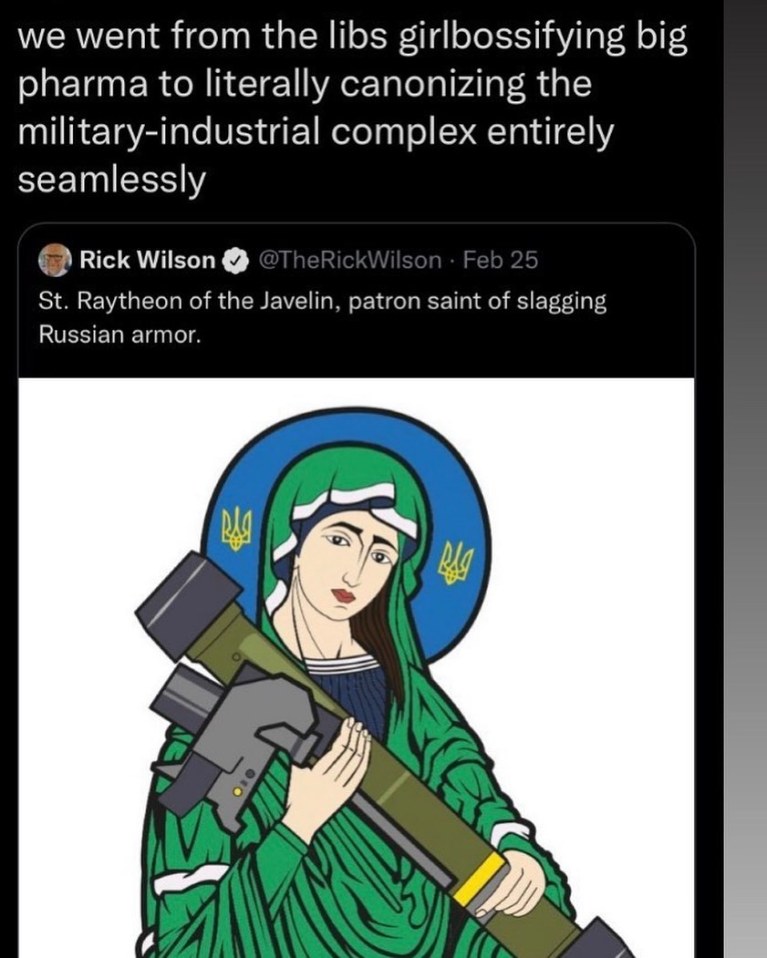

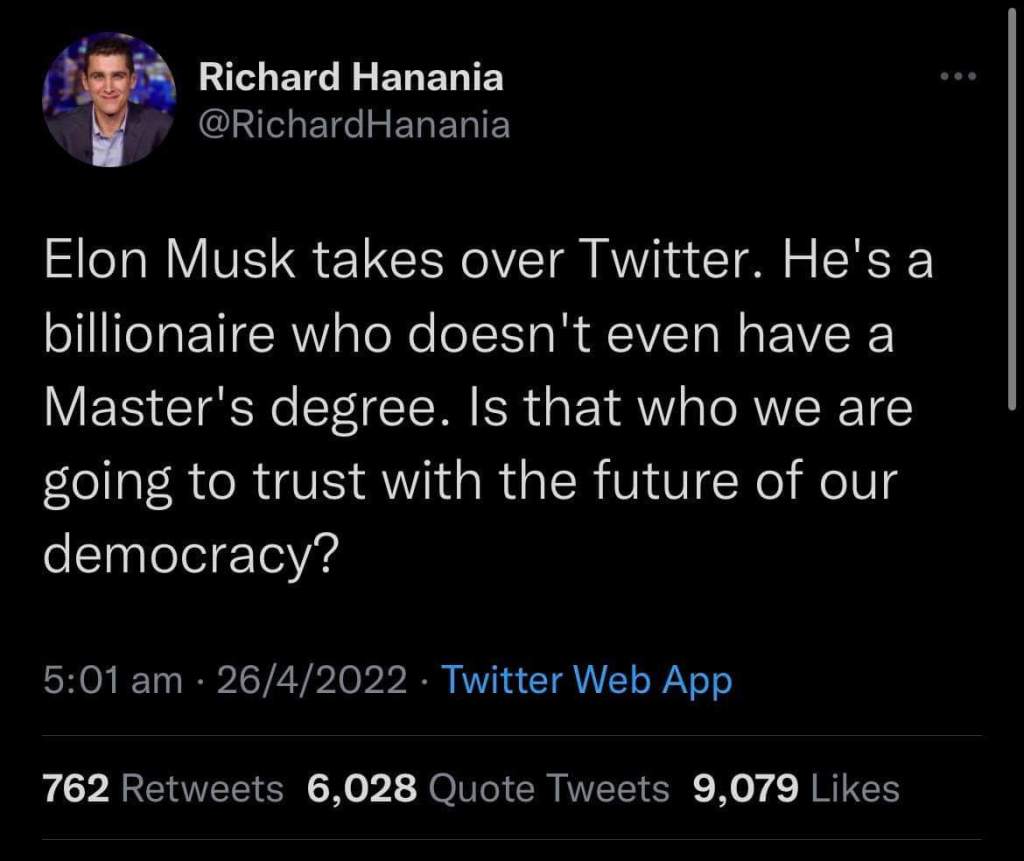







 Irregular Ideation