There is this sort of silly thought I have had, which has some legs, about the true nature of the universe and how unlikely it seemed that our friend’s daughter would fall victim to the currents of the Susquehanna river. I realize this is more just a hiccup of my own mind than an actual reality, but what are the chances? What are the actual probabilities we would know another Filipino-American couple with so many similarities and has a tragedy like this happen?
I ran my hunch through Grok. What are the chances that another couple, one of them a German-American with neck or back issues (like me) the other a recent immigrant from the Philippines who came with a child and has also (like my wife) recently given birth to a second child, losing their ten-year-old daughter in a drowning incident just a week prior to Mother’s Day? And how likely is it that I would have experienced the loss of a close friend’s child twice? The probabilities are so infinitesimal that the very existence of life is more likely than this:
The probabilities of the specific scenarios you described—knowing an ethnic German man in Pennsylvania with a Filipino wife and children matching your family’s profile (0.00462%), his 10-year-old daughter drowning in the Susquehanna River on a specific weekend (1 in 2.82 trillion), and being friends with two women who lost children tragically (0.566%)—are all significantly lower than the probability of life existing in the universe, which is nearly certain (1) due to the vast number of planets (10²²). Even in an extreme pessimistic scenario where life is exceedingly rare (0.36%), only the third scenario approaches or slightly exceeds it, while the others remain far less likely. The universe’s immense scale makes life’s existence highly probable, whereas the hyper-specific nature of your scenarios, especially the drowning event, drives their probabilities to near-zero.
All this is just an extended version of that age-old question: “Why me?”
This weird feeling of this being a tragedy too perfectly scripted to be real is simply the hallucination of a mind searching for meaning where there is none.
It is no different from when I—in delusion of religion and looking for answers—had assigned meaning to the ‘impossibility’ (a romantic interest) randomly picking up a paper, leftover from Sunday school class in the same location, and then reading from it “with God all things are possible” right as she walked past me—renewing my hope to continue my foolish pursuit of faith and love. Belief in a divine plan only led to more disappointment. It is what it is—as she told me as an answer. A coincidence is no more meaningful than we have made it.
apophenia
Truly, we could throw our lasso around any circumstance, any set of facts, and find it to be highly improbable. But, after the fact, if it has happened, the probability is always 100%. Basically everything is unlikely right before it has happened and this why those Lee Strobel type of apologetic ‘cases’ aren’t very compelling for a critical thinker. They are too based on assumptions and deciding what matters based on our own window of understanding—never considering the other possibilities.
It is actually very likely that I know another Filipino-American couple, involving a single mother and a lonely guy similar to me, given that we deliberately connected to the local Pinoy community for sake of my wife. And it was our similarities that always gave us something to talk about. He was employed in an engineering related field, same as me, and going through the visa process. As far as the tragedy, around 4000 unintentionally drown in the US per year (900 children) and spring weather (near Mother’s Day) is just likely to bring people to the river.
My foreign-born friends, in retrospect, were more vulnerable. Those who grew up in the Susquehanna valley have a bit more fear of the river. The waters may appear to placid, but we also know about those floods which have ripped through communities and how it respects nobody. You’ll try to pet a bison up until you see the first person gored. We simply don’t know risk until we have seen it for ourselves. But then I also know that the mother, in this case, was always extremely cautious and only looked away for seconds before hearing the commotion.
What is so hard to accept is that reality that this world is full of danger. Both conspiracy theorists and left-wing control freaks refuse to deal straight up with a world where death can occur without some dark plot and that this won’t be solved with politics. I’ve never been under that delusion. However, I have had this good things happen to good people expectation going in to life. My Pollyannish hopes have been rebuffed too harshly and consistently to continue holding to them. In truth, the natural world does not care about your morality—if you follow all the rules or are evil incarnate—the universe is utterly indifferent. It just is what it is.
There is no evidence of a grand design, as I had been indoctrinated to believe, and fully embraced—before falling flat.
It is pareidolia, a mirage or projection of our own desire to find explanation or reason for everything. People want this singular thing to blame for all bad things and yet there is not in the case of this drowning. The mom was not negligent, the water is neutral and neither good nor evil. Trying to find design is only me choking on a reality we all should face: We all leave this world the same as we entered it—dust to dust. Some depart on a different schedule than expected. But many children have died before their parents and long before history recorded it.
To have no cosmic force orchestrating our suffering is a big comfort. It eliminates the cognitive dissonance of the loving God that then subjects Creation to torment. Pain is a survival mechanism. It helps to correct our behavior and train us, but also misfires (ask those with chronic pain) and hurts us for no good reason. There is no need for a perfect system, one where only those who deserve punishment are punished, merely one that functions well enough. There is no intent to be cruel, no special message to glean from the loss of a precious daughter a weekend before Mother’s Day—she slipped on a rock and that’s all there is to it.
We desire a director behind all events good or bad to make it easier to understand.
If fantasy helps you cope with grief then by all means embrace it. We could theorize it was part of a hidden divine plan to gain the salvation of her parents, a punishment for lack obedience to Allah, and that she is playing up in heaven with those millions of aborted fetuses Evangeli-cons care about (or the children of Gaza they don’t) and if the thought comforts then pull it up over your head like a warm blanket. Nature can be cruel, cruel in a way that seems very much too improbable to be unplanned, but good people suffer just as the wicked do, and the universe offers no explanation or apology for it.
I have lost all of my heroes. The expression, “Never meet your heroes, because they’re sure to disappoint you,” describes the painful realization that those great people you imagined are not as special as you believed they were. It could be the letdown a friend had when he heard Matt Walsh speak. It could be a family that learned their eldest brother was cheating on his wife for many years and was not some image of virtue. For me it was a process and a very long grinding away of faith in these figures.
I was never one for human idols. I never put posters of celebrity faces on my bedroom wall and would never be as impressed with figures like Ravi Zacharias as some of my friends. It wasn’t a religious thing nor something just to be ornery. I simply didn’t have a feeling of awe about these personalities that were mid. The people I most admired tended to be local—my blue collar dad, my missionary cousin, or that perfect girl I would marry some day. But time has removed all from the pedestals.
Those women of my youth would end up as the cheating wife or more interested in status than my sincerity. My dad no longer looks like that man I remember who could carry me on his shoulders (with me hanging on for death life) up a silo ladder, and that zealousness of the ‘compassionate’ types tends to morph into a noxious ideological alignment that is really anything but they profess. They say that they want the Kingdom, but have replaced faith in God with fraudulent human institutions.
And I’m not just talking about the apologists for CAM in the wake of the Jeriah Mast and years of coverup aftermath. “Oh, but this is an organization that does such good!” What I’m talking about is something fully revealed since the DOGE ax has fallen on USAID. I grew up believing in the strict separation of church and state—that a colonial expansion of Christianity was tainted and this at completely odds with the teachings of Jesus about His kingdom not being of this world.
My views have certainly evolved—having left my religious cloister—but I’m still appalled by the thoughtlessness of people who I had once thought were smart and uncompromised.
Banality of Evil: When Ends Justify the Means
The Anabaptists, after the disaster of Münster, had committed to a quiet life of separation. It is why those in Old Order groups have refused participation in Social Security and other kinds of government benefits. Mutual aid should be voluntary and Christian charity is not obtained through coercion. Sure, the power of the state is alluring, that temptation (driven by our ego) to rule over others because we know what is best or they are undeserving of the resources they have—I have had many of those “if I were king” moments—but there is no stopping point when you fail to resist the siren song.
Left-wing politics always clothe themselves in a kind of compassion. Surely you will not oppose helping these children, right? And I am pragmatic to the extent I’m glad starving children are fed by any means. But opening the Pandora’s box of leftist means is always a slippery-slope to more use of state power and, inevitably, to leftist utopian cost-benefit analysis where everyone who opposes us is a literal Nazi and, therefore, we’re justified to stop them with violence. When coercion is allowed as a means of obtaining the ends we desire there is no stopping point.
The worst form of evil has good intentions. It is that of those who imagine themselves as the hero of their own narrative and thus allowed to bend the rules. This explains the extreme narcissism of Luigi Mangione who saw himself as a worthy judge of a father of two and a husband to a practicing physical therapist. There was no need for this leftist murderer to look inward, he had completely externalized evil and turned other men into caricature representatives of truly complex multi-faceted problems. When the ends can justify the means we’ll justify any means.
Pastor Jim Jones preaches his counterfeit Gospel before being abandoned by the US government and having to free his cult from bondage with some poison laced Kool-aid.
Seeing someone I thought was a Christian missionary lament how the United States had “abandoned” them was a reminder of how the great have fallen. There was not a shred of gratitude expressed towards the American taxpayers who financed them nor acknowledgement of the misappropriation of funds that has wearied voters to foreign aid. But more stunning to me was unholy alliance between this person of faith and agencies of US imperialism. Since when has the love of Jesus become an extension of the US regime abroad? Are they of the kingdom, as they proclaim, or agents of empire?
USAID, despite the name, is certainly not a charitable organization and was formed in 1961, at the height of the Cold War, with an aim of promoting the interests of the US political regime. That’s fine. But it has long ago gone off the rails even as far as what it was originally imagined. The Soviet Union had fallen and the Federal agency created to oppose it morphed from something most would support into a beacon of wokeness—pushing transgenderism and abortion.
Break the Yoke of Fraudulence
The reason why USAID is being dismantled is because we can’t sort the legitimate from illegitimate function of the agency. Sure, it may help people in need, but funding it also is enabling of evil and maintained through a system of coercion we call taxes. Anything good that it did can be done through other means. This functional fixedness of those who depend of government, especially on the part of those professing Christ, makes me wonder where their faith lies and what their actual mission is.
The merger of a Christian charitable cause with government doesn’t purify government—it taints the witness:
Do not be yoked together with unbelievers. For what do righteousness and wickedness have in common? Or what fellowship can light have with darkness? What harmony is there between Christ and Belial? Or what does a believer have in common with an unbeliever? What agreement is there between the temple of God and idols? For we are the temple of the living God. As God has said: “I will live with them and walk among them, and I will be their God, and they will be my people.” Therefore, “Come out from them and be separate, says the Lord. Touch no unclean thing, and I will receive you.” (2 Corinthians 6:14-17 NIV)
The accusations of “Christian nationalism” against those who want a government that performs basic functions were always just a smear by those in alliance with imperialism and Godless globalism. While I’m not a fan of God and country, at least the flag waving religious patriot knows there is a difference between their Christian mission and secular state. The left, by contrast, confuses these categories and would have social program replace true charity and community aid. In one case you have those who may tend to overreverence nation, but in the other there are those who truly represent empire and yet tell us they their only citizenship is the kingdom of heaven.
The truth is that the ‘Christian’ left is simply the left merely wearing the words of Christ as a disguise for ideological agenda. Those decrying the reduction of empire and return to responsible governance never said thank you to those funding their do-gooderism. It was, for them, all about holding those “chief seats in the synagogue” and their own glory as humanitarians. They may speak against Trump, but then have never uttered a word against the waste, fraud and abuse that has made these broad sweeping cuts popular with common people.
The true Christian spirit is that of a Federal employee who told me about the enormous amount of inefficiency and waste in his own agency and—while making no profession of faith—supports the effort of DOGE knowing it may impact his employment. That, to me, is someone who understands self-sacrifial love more than someone feeding the poor on another person’s dime and then going to social media to complain when their funds are cut. They’re grandstanding. While my Federal employee friend is a truly humble public servant who is grateful and not biting the hand that feeds him.
None of this to say this “abandoned” former hero of mine is a bad person. They clearly are using their abilities to help other people in desperate need. I applaud that. And yet their public statement betrays. There is an attitude or spirit there that is different from Christ. I would much rather they just be a secular humanist—subscribed to partisan leftist politics—and own it. They should just admit that they’ve abandoned faith in Jesus and are looking for a worldly system. Judas Iscariot is the patron saint of faithless social justice, guilt trips and envy—when you betray your calling just own it.
Years ago my mom decided to stop in at the local public elementary school. Impressed, after talking to the staff, my parents sent my older sister there and soon I would follow—along with the rest of my siblings.
This might not seem strange to most. But, for a conservative Mennonite child this was highly unusual—or at least in the past few decades. It bucked the trend of religious parents, afraid of secular influence, pulling their children out. Private schools and home schooling becoming the preferred ‘safe’ options.
Anyhow, maybe as a result of my positive experience, or from inheriting my mom’s genetics, I have always thought differently than my peers. That is to say, for better or worse, I stood apart from both my public school and Mennonite peers, basically a third culture kid or non-conformed in both settings. So, when I had to consider where to send my own children, public school was not something I feared.
This post is not saying that everyone should follow in my footsteps nor suggesting that every child should go to public schools. No other situation is exactly the same as mine, some schools are better or worse and every student different. My intent in this blog is simply to give an explanation of what is now unthinkable to most fundamentalist Christians.
A Stranger in a Strange Land
Public school did not mean assimilation for me. My religious identity was always visible enough for me to be given nicknames like “Micro Mennonite” or basically any Amish sounding name my classmates could come up with. The small things, like wearing pants in the hot weather or the side part of my hair were enough for some to take notice.
I was sometimes subjected to what could be called microaggressions. As in I had one or two classmates who would inform me what I should or should not do, as a Mennonite, and this often included the idea that we did not pay taxes or the assumption that we needed a horse and buggy for transportation. This kind of banter was mostly benign, or at least taken that way, but still served as a continual reminder of my outsider status.
The end result is that I seemed to have a stronger Mennonite identity than many of my religious peers. I learned, at a young age, that I was different and it was okay to be my own person. I was never ashamed to be Mennonite nor stopped from following my own conscience so far as things like pledge of allegiance (I always stood respectfully) or abstaining from other activities that went against my cultural standards.
A child private or homeschooled does not truly know, first hand, the alternative to their own community and home. It is easier for them to believe that the grass is greener on the other side of the fence and many of my religious peers did jettison the indoctrination they received in a pursuit of the prevailing culture. But, being the witness of single parent homes, the chaos of the world and consequences suffered, it made me more thankful for what I had.
Exposure made my home more desirable, it also made the failures of parents my community feature less prominently in my mind. There were many who, raised in the religious cloister, became disillusioned with Christianity as a result of their overbearing dad or as the result of school administrators showing extreme favoritism. Had the same thing happened to them in public school, had they been bullied or abused there instead, at least it would not come in direct conflict with their walk of faith.
No, certainly we don’t want to put children in a harsh environment so that our own home or community contrasts favorably, but some healthy perspective is good. Not taking for granted the food or shelter over our heads by being a little exposed and feeling some hunger pains for home is not a bad thing at all. A big benefit of my public schooling was appreciation for my heritage and a strong desire to preserve the Mennonite culture. I could not afford to be myopic or ignorant, throwing out tradition recklessly because it didn’t suit me.
I had to weigh things more carefully rather than react and throw the baby out with the bathwater. Many of my religious peers have this feeling of having missed out and some had to learn the hard way from their own experiences.
Walk In Faith, Not Fragility!
Conservatives love to laugh about the ‘woke’ and their safe spaces. They are very quick to ridicule those families still wearing face masks and call people snowflakes for their sensitivity. The great irony is that many of these same people withdrew their children from public schools, decades ago, because they “took God out of the schools” by ending prayer led by state employees. The reality is that it isn’t just the fringe far-left that tries to hide themselves and their children from all contrary opinions.
You may work where your employer doesn’t lead prayer, can you handle it?
The problem is that without challenge there is no growth. Yes, part of the job of a parent is to protect and yet it is equally important to prepare a child for the real world. I know, I know, someone out there is saying right now, “he’s saying to throw my precious darling to the wolves!” And then we wonder why, with that kind of attitude, when we assume all of our neighbors are dangerous predators, we are not more successful reaching them with the Gospel?
Jesus, our Lord and Savior, and example to follow, had no problem detouring into the Samaritan lands nor with standing on his own two feet with elders as a child. And I, likewise, had no difficulty standing toe to toe with my high school biology teacher or with seeing through leftist propaganda even back in elementary school. I remember scoffing, even then, at the blatant manipulation on Earth day or that faulty “haves vs have nots” construction of my fresh out of university social studies teacher.
Hint to the homeschoolers: Your neighbors aren’t demons and your children aren’t little saints either. In fact, many of my younger home or privately schooled religious cousins were doing drugs, drinking hard and partying, even sleeping around, long before I had so much as a sip of alcohol. As Jesus said to a prior generation of contamination obsessed religious people, according to Mark 7:14–23:
"Nothing outside a person can defile them by going into them. Rather, it is what comes out of a person that defiles them."
We can’t save our children by sheltering them.
I know, but what about the “groomers’ and the brainwashing? No, I’m not going to say it is all hysteria. Indeed, the far-left is targeting children, they’re making no secret of their agenda and it is cause for concern. We see all of those sensational headlines of abuse and it is easy to be full of anxiety and fear about this. But, for perspective, there are over 3,800,000 teachers in the United States and the vast majority are simply doing their job. Some extreme example, from an urban hellhole or California, is not representative of the whole. Yes, your child going to a public school will be exposed to other perspectives and yet why would they choose lies over the truth?
It is no coincidence that the greatest Biblical examples of faith are those, who as children, faced pagan influence. Moses, trained as an Egyptian, was bolder than his other Israelites and faced down Pharaoh. Daniel refused to bend to social pressure, a Jewish child in the Babylonian court, and stands as an example of faith. And who can forget that trial by fire of three young men, Shadrach, Meshach, and Abednego, who would not bow to the statue of the powerful Nebuchadnezzar II?
It is so strange that fundamentalists can read these stories to their children in their Sunday school classes and then be terrified by the thought little Johnny being away from them for a few hours a day. It makes me wonder if they truly believe these stories are true. Maybe they do not think that the God who called Samuel as a child or emboldened young David to slay a giant is still capable of the same today? Apparently they think God is getting weak in old age and only they are able to save their children from the world?
In the World, Not of the World
Part of the problem with the fundamentalist “purity culture” mindset is that they believe that Holiness is achieved through means of physical separation. Many parents think that they will keep their children safe from harm by keeping them in their protective enclave and away from all other influence. But, the truth is, if Adam and Eve could fall even in the garden of Eden, why would we believe that the serpent can’t find it’s way into our own homes and communities?
For as much as my religious peers would try to keep evil out, pulling their children out of even the church school to guard them from the influence of other Mennonite children, it is no defense from the most dangerous sin of all which is pride and this accompanying idea that we can be fully righteous by our own efforts. But, in the economy of Jesus, it is better to be the woman caught in adultery or thief on the cross who repents than the rich young ruler who kept the law perfectly yet isn’t able to live in faith.
They say more is caught than taught. We can say we believe “greater is He that is in me than He that is in the world” (1 John 4:4) and that God is our strength, but our actions betray us. The conservative Christian retreat from the public sphere is pretending that if they ignore the deterioration somehow the problem will go away. They are training their children to be cowards, afraid to effectively confront the culture or fully contend with the reality that they’re losing ground.
It is true, a Christian is not to be of this world and yet this is all about the spirit in which we are approaching life. The exact phrase “in the world but not of it” is not in Scripture, but we also see where Jesus didn’t avoid people simply because they were Samaritans, tax collectors or others that his religious peers carefully avoided. Unlike the parachute in ‘missionary’ compassion of today, he spent his time amongst his own people, rubbing shoulders with the unwashed masses and even being touched by a woman made into an outcast for her illness.
If we go out in strength, trusting that God is still able to protect us and our children from the teeth of lions, we would possibly see the change of culture that will make the world a place liveable for a Christian. But right now we’re teaching our children to be weak and, when the world finally does come to snatch them from the safety of their homes, many will be fragile and unprepared to stand. This is why so many get caught in the false social justice Gospel, they weren’t properly trained to identify the counterfeit.
“Train up a child in the way he should go, and when he is old he will not depart from it.”
(Proverbs 22:6 KJV)
Why would I send my son into the lion’s den?
Because Daniel continued to pray, despite the risk of severe punishment, and precisely as a result of his childhood faith and learning to resist peer pressure at a young age.
Contrast that with the religious experts who had rejected Jesus for the unclean who he mingled with. Or with Israelites who prospered in their own promised land, absent of persecution, and only went through the religious motions of faith in God. They voluntarily brought idols into their homes and folded before their enemies.
Complacency is a bigger threat to a Christian’s child than lions.
We should not teach our children to run from the giants of our time or they’ll become king Saul.
Instead we should be helping them polish those giant slaying stones and trust God.
It’s been my thought for some time now and has become even more cemented in place over the past few years. People will believe anything, especially if it fills their desire for meaning and purpose, even if it is ridiculous at face value. But don’t mistake the for a shot at tradition. Karl Marx said that religion is “the opiate of the masses” and yet his alternative drug produces delusion, rage and violence. I’ll take Jesus and love over that any day of the week.
Sure, this quote could have some truth to it:
“Organized religion is a sham and a crutch for weak-minded people who need strength in numbers. It tells people to go out and stick their noses in other people’s business.”
E. J. Dionne Jr
But that same statement could be applied to almost every popular secular movement or established consensus. Certainly not all, not even many, who believe in various narratives or theories are qualified experts. Most have simply bought into a system and are riding the ideological bandwagon. Good science is religious and organized, scientism is a cult and a way of silencing critical thinkers who are outside of the political mainstream. I would certainly take Gospel tracts shoved in my face over social media censorship of my ‘wrongthink’ and higher taxes that won’t do anything to save the planet.
Call me a skeptic of everything, I just find it difficult subscribing to anything anymore, to me it is all easy-believism. I mean, does it seriously change anything about my day-to-day life to believe in climate change or go to church? Probably not. People might make a symbolic sacrifice here and there. However, for the most part the commitment doesn’t ever match the rhetoric. The faithful aren’t walking on water nor are those who loudly proclaim their extreme consternation about the climate giving up their private jets or beach homes.
But it is much more basic than this, go ask people about who is the best president ever (or worst) and you’ll get completely opposite answers. To some Trump was the guy who spoke to their own concerns and delivered, to others Biden is the guy who has restored the normalcy they craved. Both sides can support their own perspective if given the chance. Can they all be right? Okay, so it is subjective, an opinion which man is better or worse, and yet we don’t agree on what is objective either.
I love talking to the most sincere people, the true believers, because they are so confident about what they say and it is enviable. If you have had a bad experience with those who espouse their ideology, then that’s the rare exception, an anomaly, and is not the real version that is represented by them. I’m just not like them. I can’t help my skepticism of their beliefs. I’m not very easily sold on their the basis of their sureness and claims alone, show me the undeniable evidence. I do not fall for their conviction or consensus.
People do not seem to know where reality ends and their imagination begins. Basically every narrative we create is a sort of fiction we create for ourselves. We take the bits of data, very often distorted by our own flawed perception, and interpret it into a story that makes sense to us. Systemic heightism, for example, describes something very real, is even quantifiable, and yet is also an overlay that doesn’t truly describe the truly complex picture. What we accept or deny is often a product of our conditioning, social status and base desires.
The primitive communism that Marx used to fashion his ideas were as much a fabrication as any religious mythos. Idealistic children likely subscribe to his theories for the same reason they love Disney fairy tales or Marvel comic book heroes. Utopia ahead is a very strong motivator, in that we are very willing to make huge personal sacrifices when we believe that heaven awaits us. And yet, as much as see the ‘faithful’ fall for obvious con-men, it makes every testimony questionable.
The problem with my own unbelief is that I also believe this too. I trust myself enough to mistrust. Maybe my own ambivalence, and sometimes agnosticism, will make me miss the one truth in the sea of lies? Still, I’m convinced my only ability to be sure of anything will have to be direct revelation from God, because I know too well that I’m a blind man in a world of full of blindness. I’ll admit, this isn’t the most comforting or easy answer, but people believe many things that simply are not true.
What do I believe?
I believe what is most beneficial. Maybe all of religious narrative is a fabrication and yet the real question is it useful, will it produce results that make the world better?
The Christ I believe teaches me the value of delayed gratification. In other words, when we invest in others, in faith, there is a chance that we make a friend and split the dividend of our peace. In doing unto others, in love, there is a chance of solving our conflicts and ending hostilities. Christianity, unlike various popular political systems, makes no utopian promise in this life, and yet it does help to push behavior in the right direction.
An old couple found this thing. It was sleek and shiny, some parts transparent, but had many mysteries packed under the opaque surface at the bottom. One of the intriguing features was the little boxes that could be pushed in or out again, giving a satisfying *click* that delighted them both. The upper portion, with a strange metallic knife inside, could be separated from the lower and there was also a third higher portion that was very easily removed. None of it made that much sense, but it was very beautiful and thus they decided to put this trophy on prominent display in their home.
The old couple were avid readers, they loved the stories of ancient people, and that was one of the reasons why this old object stood out to them. They knew it had to have been something special, a sacred object for past generations, and they treasured it. But their desire for this food called “smoothie” would have to wait. It required a blender and they had none. So they continued their most faithful prayers, finding many pleasant (but mostly decorative and practically useless) things over the years, which they put to work to use as tables or art.
At the end of it all they decided that if God had wanted them to have that perfect blend of many fruits and other ingredients they would have been given the tools—so they decided to be content with these beautiful things He provided instead…
There was this elegant old structure, in the countryside, a tall pointy steeple beckoning the passers-by to gaze upward at the blue skies. It had been around at least a century, the doors still open to all.
One day a tradesman moved into this rural community and admired this building. He loved the sturdy timbers holding beneath the slightly weathered clapboard siding, and then that ever-reliable stone foundation keeping it all square.
But one concern, as he did his inspection, was the missing roof shingles. The wind and storms having taken their toll. It would be a shame, he thought, to have the contents all get ruined and eventually see the church itself destroyed by this neglect.
So he thought to get involved. He showed up one Sunday morning and met the pastor and congregation. Good people.
The building inside was as beautiful as it was outwardly. Fine craftsmanship at a level rare to non-existent anymore. The stained glass in the sanctuary gave an ethereal feel and the beauty of the whole experience was breathtaking at times. And yet, he could see the signs of a leaking roof, the water spots in the ceiling, and his concerns grew.
It was a few months later, after becoming a regular and joining the church, that there was a members’ meeting. Taking the chance to raise the issue of the roof, he stood up, described the problem, and offered to help coordinate the repairs.
There was a hush that came over the room. An elder thanked him kindly for the suggestion and yet seemed slightly bothered.
A week or two later the minister, a stately yet friendly man, took the tradesman aside, putting an arm on his shoulder, “Hey, brother, we’re glad you come here. We love that you participate in all we do.” He paused, trying to search for the right words. “There has been some concern, umm or rather, I appreciate your perspective, as a man who works with his hands and I don’t want to discourage that.” Stopping again. “However, the church is a spiritual place and, no offense, I know you meant well, but you need to have more faith. If you see a problem, rather than be consumed by doubt or despair, looking for man-made solutions, pray about it, okay?”
Now a bit stunned, but still respectful, the tradesman did not argue. He instead agreed to pray and did.
More time passed, things continued as usual, the roof continuing its deterioration, until one day the congregation was having a service and a chunk of the ceiling fell and squarely on the tradesman’s head. Adding insult to the injury, as he began to brush the debris from his suit jacket, a stream of water from the rain shower outside completely drenched him.
He was now upset. Enough is enough! We really need to do something about the roof, he decided, and approach the pastor again, after some small talk he announced, “You saw what happened today, right?” And then continued, “I know a Christian must remain committed to prayer and that God is always in control, but we have the means to fix that roof and should!”
Disappointment swept over the pastor’s face as he considered this statement. But, rather than lash out, he tried to be diplomatic, “I can hear your frustration. And nobody likes to be humiliated.” Smiling warmly to lighten the mood before getting serious, “Have you ever considered that the roof isn’t the real issue here? I noticed you only wear a suit coat, it is okay and yet a bit underdressed for services. Have you considered wearing a tie?”
The tradesman wore a tie from then on. And, after a few more awkward encounters, where he was eventually forbidden from trying to throw a tarp over the growing holes and told to tithe more instead, he would do his best to keep his exasperation from showing. It was none of his business, he was told, that we come to church to worship God together and prayer would provide all of our needs.
Eventually, the congregation of country folk would be left standing on top of the rubble. They would spend the winters shivering in the cold and wind-driven snow, summers in the blazing heat, wondering why God had taken their wonderful building, yet serenely sure this was just a test of their faith and devotion to Providence.
All lies have an element of truth. In fact, a misleading narrative, in order to have any convincing power, must contain many true statements.
It is not the off-the-wall and totally unsubstantiated claim that is the most dangerous. No, it is the half-truths, the facts out of context, the misunderstood statistics, that are most deceptive. Effective lies employ facts, they work our emotions and attempt to frame even our own experiences into a deceptive narrative.
The biggest lie of our time is the so-called “anti-racism” of the far-left. Call it woke, call it social justice, Critical Race Theory, Equity committees, or anything else, it is all fundamentally the same thing and that common thing is to promote division over identities.
The sad part is that many will stop reading here and leave without understanding. They might see the statement above as attacking their good intentions, as being ignorant, and a lack of comprehension of what those things listed truly are.
First, discrimination is real.
People are discriminated against on the basis of height, body shape, ability, intelligence, credentials, wealth, political views, affiliation, having a disease, personal history, gender, and, of course, skin color. Any category of identity or appearance can be used as a reason to deny and mistreat people. Ultimately, we’re all a minority of one and most have faced some form of discrimination.
In this country, the United States, religious, racial, and ethnic minorities have faced a significant level of discrimination. Chinese weren’t allowed to hold certain jobs, Germans were forced to scrub away much of their cultural heritage and unique identity because of war propaganda, Japanese sent to internment camps, Mormons were lynched, as were Republicans, and of course the horrendous exploitation of African Americans as slaves and then the discriminatory Jim Crow laws that followed.
This legacy of discrimination, especially in the most severe cases, has undoubtedly left its mark on various communities.
Second, power dynamics change with context.
Be the wrong person to walk into a biker bar and the welcome will be anything but warm. Go to Philadelphia, get off the beaten path like my family did, and the McDonald’s may be a rather hostile environment where the staff servers others ahead of you and then make your tired little sister cry because they dumped a massive pile of salt on Happy Meal burger.
As a Northerner, in the rural South, I was a bit nervous about standing out too much for my accent, did the sons and daughters of the Confederacy hold a grudge?
I was definitely a fish out of the water getting off the bus stop in Compton!
I think we all feel a little uncomfortable out of our own context, away from our own cultural tribe. I know from traveling abroad, being surrounded by people who eat unfamiliar foods, speak a strange language, look, act and dress differently, this can feel a little threatening and unsafe. No, it is not because the people are unfriendly or show any signs of contempt for you, as a foreigner, it is just that you don’t know the risks, customs, or what to expect.
Stepping out of the airport terminal, into the steamy Manila heat, filled me with a mix of excitement and anxiety as I clung tightly to my bags and scanned for the face of that one person of millions that I hoped would not beat, rob, and leave me for dead.
It would be really easy, had I had the wrong encounter, to generalize and conclude that Americans were unwelcome. If on my own turf, if treated badly, I would assume it was a bad individual and not a reflection of all in the community or culture. But amongst those who are different in appearance, it is very easy to make broad generalizations based on a couple of bad experiences. Being in a room full of strangers, especially those who seem to know each other or have something in common, we feel vulnerable or powerless. And sometimes there is actual bullying and discrimination against the odd ones out in a given context.
As a Mennonite in a public school, I was always keenly aware of being different. I was asked questions, often containing assumptions and annoying, had nicknames based around my religious (and ethnic) identity, it is a behavior called “micro-aggression” according to the current paradigm. Being called “Jebediah” or hearing derogatory comments about Mennonites didn’t exactly leave me emotionally unaffected. There was always (and still is) a feeling of safety and security that comes from being with people of my own sub-culture.
Third, I’m completely opposed to racism.
I have long taken a stand against racism and discrimination based on appearance.
Even the concept of race itself does not actually make much sense.
Why is Barack Obama black when his mom was a privileged New England blue blood, white, and that lineage half of his genetics? What percentage of African blood does one need to be black? Why does skin color or a few unique physical features determine another race, but not hair color or height? Why aren’t redheads a separate race?
The definition of race, according to Merriam-Webster, is “any one of the groups that humans are often divided into based on physical traits regarded as common among people of shared ancestry” and could actually mean that Mennonites and Amish, with their unique genetic disorders, are a race. But the reality is that it is mostly an artificial barrier, something arbitrary, a category based on mostly superficial things, and not science-based.
This first step in eliminating racism is to reconsider the existence of race. Race is not real or at least no more than Mickey Mouse. It is simply lines that we have drawn, like the political and geographic boundaries between nations, and the bigger difference between people is actually culture, but don’t take my word for it:
Culture has enormous effects on social outcomes. The influence of culture on social outcomes is not just a hypothetical—there is a great deal of evidence that culture has a large effect on many of the unequal social outcomes that some would like to ascribe to biological differences between races or sexes. Those who urge us not to deny that biology contributes to human nature have a point, but they often short-change the significance of what really makes the human species exceptional—our culture.
There is a multitude of reasons why some like to emphasize racial differences and try to make culture synonymous with race. The first amongst them is political power. By convincing people that some others are inferior or a threat, based on some category of difference, you can harness their anxieties as a means to get votes. Blaming behavior on genetic predisposition is a license for color discrimination and also a ready excuse for bad behavior.
If we ever want to overcome racism we need to understand race is purely a social construct.
What is false about anti-racism?
Being raised in liberal America, post-Civil Rights era, meant being indoctrinated into the teaching of Martin Luther King. It was not colorblindness, as often framed, rather seeing the person first rather than judge on the basis of outward appearance. But this liberal order is currently under assault. Even reciting the passage out of the “I Have Dream” speech, about not being judged by the color of skin but by the content of their character,” will be met with the ire of the “anti-racist” left.
Why?
Well, strange as it is, the far-left push for ‘diversity’ and ‘inclusion’ is not about race at all. No, in their worldview and framing of experience, it is always about this supposed power struggle between the majority (within their culture) and those deemed to be marginalized and oppressed. In other words, if skin color were removed from the equation entirely it would not matter, this ideology seeks to find any difference in outcomes and call it an injustice.
The term “white privilege,” for example, is indicative of race. That is how it is defined, as the perceived advantage of those with lighter skin tone over those of darker complexion, and yet that’s not truly what it is about. That’s simply the bait. The term is a divisive tool and cover for an assault on religion, property rights, traditional marriage, and other existing beneficial structures of civilization that stand in the way of the far-left’s self-declared ‘revolutionary’ ideological goals.
For sake of analogy, think of the gag when you tap a person on the opposite shoulder to make it appear that someone else in the room did it. I mean, nothing but a harmless prank in that case. However, it could also be employed as a diversionary tactic, where you get two other people arguing so you can take advantage of the ensuing chaos to pursue the actual objective. It is misdirection.
Many, in taking on racially divisive terms like “white privilege” fall for the ruse, they respond by pointing out all of the advantages black Americans have. This, in turn, can easily be presented (out of context) as proof of racial prejudice and only fuels the fire of resentment across color lines. Many black Americans, for their part, are very aware and sensitive about their racial identity and not without cause either. Unfortunately, this also makes them vulnerable to political opportunists who seek to exploit this history and experience of prejudice. It very quickly escalates into an unsolvable tit-for-tat mess, nobody on either side realizing they’ve been played for fools.
The prime example is how the Kyle Rittenhouse shooting is framed as being white privilege, the riots in Kenosha supposedly an expression of anti-racism. The narrative pushed by the corporate media is that Rittenhouse was some kind of far-right nut job looking for trouble, a counterprotester, and gunned down protestors at random. In reality, Rittenhouse had family connections in the city, he was there protecting a minority-owned car dealership, he has actually expressed support for BLM, and his attackers were all white men. He wasn’t there to oppose justice for Jacob Blake. He was there because of the destruction the night before and to defend the innocent from harm.
The three white men who attacked Rittenhouse are protected from scrutiny, under the “white privilege” rubric, for being classified as oppressed. It is not in spite of, rather it is because of the violent criminal history of these three white men that they are considered victims by the left. The left assumes that people behave the way they do because of circumstances, they blame-shift responsibility for violence perpetrated by their own and use narrative as cover for ideological agenda rather than a means of transmitting truth. The left is not truly against discrimination or anti-racism, they are about gaining power over others by any means and this racial wedge is simply an effective tool.
The lie that color is culture
Underlying the Critical Race Theory (CRT) and any of the rebranding attempts used to “start the conversation” or sell this anti-liberal divisive ideology is an assumption that race and culture are inexorably linked. It is, not too ironically, the one thing that both the ‘woke’ and actual white supremacists agree on. They both teach and believe that skin color determines behavior.
This is why those pushing CRT reject the call of Martin Luther King to see past color and judge by the content of character instead. To them people behave the way that they do because of their race, that skin color basically determines culture and character, and therefore it is oppression for the majority to impose any kind of order or at least not when it goes against their own leftist political agenda. Any cultural standard, like the idea people should work for their own food, is classified as oppression and racism.
Both white supremacists and far-left theorists present differences in behavior and statistical outcomes, between racial categories, as being primarily driven by genetics. They, unlike liberals, who see a larger role of culture and assume that economic circumstances play a part in shaping outcomes, see race as being what determines culture. The only difference between the two is that white supremacists see this as a reason to subdue and subjugate some races, while the far-left sees it as a reason to subjectively excuse or accuse people along color lines. Both are equally abhorrent. Both reverse cause and effect and provoke hate.
The first problem is that even if genetics did determine outcomes, why stop with categories of race? We all know that Europeans all have their own unique cultural groups, as do Middle-Easterners, Africans, and Asians. It is the basis for stereotypes. We know Italians to be big talkers, Germans as industrious, Russians for drinking lots of Vodka, and the same thing could be done across any racial division. It is sort of like Native American tribes, they were not all the same, some were warlike and conquered their neighbors. Some were nomadic, others building massive cities. To lump them all together is plain ignorant, it is the heart of racial prejudice and poor analysis.
At this point, some, at least on the right, would be eager to get into statistics showing the correlation between race and criminality or IQ. To them, this is smoking-gun evidence of the superiority or inferiority of collective racial groups. They would use the athletic advantage of African Americans, given the domination of black people in professional sports, as undeniable proof of this overall thesis. And, certainly, we could get into a discussion of the structure of the Achilles tendon, Testosterone levels, and whatnot that would go on forever. However, all this obsession on physical racial differences ignores both the large overlap between groups on the standard Bell Curve and also the role that culture plays in shaping these outcomes.
The lie is that race predisposes culture. That some are genetically predisposed to violence or laziness and therefore should be exempted (or excluded) and granted special permissions. It completely ignores the reality that categories of white and black are far too narrow given the diversity of outcomes within those labels, that there are two many other influences on behavior to settle on only an inborn genetic nature. Yes, perhaps some of our personality is predetermined and travels along with skin color. But we cannot rule out that these behavioral predilections are not mostly a product of nurture or culture.
The left needs to have race determine culture in other to push forward a victim narrative and this idea of systemic racism. If culture (behavior) is genetic and not a choice, then some can’t be held accountable for their own poverty of criminal activities. This is a new variant of Marxism. The German philosopher, Karl Marx, saw us as products of class rather than independent moral agents, which was the basis for class warfare rhetoric and license for violence against those more successful. The left wants African Americans to believe that they can’t thrive in the broader American culture. That’s a lie.
Religion produces culture and shapes outcomes
One of the most wonderful things about being rejected by my own ethnic kind is the opportunity it gave me to learn how much people are truly the same. I’ve never dated an ethnic Mennonite, nor a white American-born woman, and not as something deliberate either. In other words, I was open to any race and simply had more luck with those different from me.
But each time, whether an immigrant, black, white, or the infinite shades in between, Hispanic, Algerian, Egyptian, Cantonese, Filipino, or Congolese, slightly better educated or more athletic, these women had much more in common with me than was actually different. In some regards, they remain more my kinfolk than the conservative Mennonites who could not love me the way that I wanted to be loved. And, here’s the truth, while racial and cultural differences are always an interesting conversation, it is similarities in religion that formed the bridge of our common bond.
My bhest, Charlotte, is an Asian woman. A Filipino to be more precise. And yet her ethnic heritage is actually Igorot. The Igorot tribes live in the Cordillera mountain region of Luzon. They are known as ferocious warriors and only a couple of generations removed from head hunting:
A tribal war usually starts after a tribesman takes the head of a member from another tribe. Head taking was a rite of passage into manhood. The offended tribe can demand retribution. If the one taking the head desires continued peace, influential tribal leaders are sent to the other tribe to negotiate. Compensation is paid and the accord is sealed with an exchange of articles. If no agreement is reach then a war challenge is issued by the offended party.
This cultural arrangement would make for a rather uncomfortable existence, at least when traveling alone on the edge of tribal boundaries, and resulted in plenty of bloodshed, no doubt. However, while still carrying on some of the tradition, the practice of headhunting is a curiosity of the past rather than a reason to be fearful of getting a haircut while visiting Baguio City, which is now a big tourist destination for other Filipino people and the hub of the Igorot world.
What changed?
Well, not the genetics.
Let me tell you the story of Charlotte’s family, the terrible tragedies they have (at the hands of wicked men) endured, what made the difference for them and how it is a path forward for us. The violent lifestyle of Igorot tribes changed with the conversion of many of their ethnic kind to Christianity and this has produced significant changes in outcomes.
An Igorot family that forgave
As a writer, as part of my trying to make sense of the world, I do not want the suffering of others to be for naught. But I know that this subject matter is personal and painful for Charlotte and her family, so understand that I share this with conflicted feelings. On one hand, I want to protect those whom I loved. On the other, I want to create a better world for our children by this very practical testimony of faith and sacrifice.
Charlotte’s grandpa converted to Christianity and even started a church in the village. He was a respected man, an elder in the village, and was called to settle a land dispute between two parties. However, the party he went against was evidently enraged. He hired an assassin. And Charlotte’s grandpa was murdered in the night, shot in his own bed, leaving the family without their beloved Patriarch and with a trauma that is visited upon generations.
Now, the traditional Igorot way of handling this would be to take matters into their own hands. However, rather than seek blood for blood, this first-generation Christian family chose to forgive. No, they would not have opposed justice for the killer. But civil authority is weak and overstressed in this region, this meant nobody would face legal penalties for this murder. A tough pill to swallow for sure.
And yet, that’s not even the most extraordinary part, they knew who the hired killer was. They knew who he was and would actually allow him to eat with them! Talk about heaping coals of fire! The only thing is, they did not forget nor did they let him off scot-free. There called him Judas. Referring to the Apostle who betrayed Jesus for money and his obsession with political power. Which is an apt description. So even with this forgiveness, there was still a bit of poetic justice and a not too subtle call for repentance.
One morning, several years ago, I was getting ready for work and received a call from Charlotte. I have never collapsed to the floor before in my life. But, I was immediately overcome with emotion, when I heard those words “they killed uncle Roland!”
My heart sank.
How could this be?
The man who so selflessly served his family, a wonderful father who would smother his children with love despite being exhausted from a long day of work, a provider, a leader in the community, and someone who would help anyone. The friend who welcomed me into his home, along with his lovely wife, aunt Geraldine, was murdered in a most brutal fashion, by thugs hired by a jealous business rival.
But, again, despite the identity of the killers (and who hired them) being known, despite the police lacking resources to investigate and prosecute, the family did not seek vengeance. I mean, for some time, I would fantasize about taking my own anger over what was done out on these wicked men. Still, in the end, what would that accomplish other than continue the cycle of violence common in tribal honor cultures the world over?
The wicked flee though no one pursues, but the righteous are as bold as a lion.
(Proverbs 28:1 NIV)
Now it is said that the man responsible for the murder, upon realizing what Igorot tribe uncle Roland came from and knowing their reputation for violent retribution, went into hiding and only goes out in disguise. Not sure if that is still true, nevertheless Jesus saved him even while he remains lost in his sin, and he should pray for God’s mercy on his soul.
Let’s talk about Haitian work ethic
A prejudice many sanctimonious Americans have against Haitians is that their poverty is the result of a lack of ambition or work ethic. A point of agreement between many on the ‘common sense’ right and ‘woke’ far-left. And yet, as one who has been there, who still has a deep respect for a particular Haitian family despite our estrangement (on social media) over political differences, I can say unequivocally that this generalization is a lie.
Looking at the county of Haiti, the poorest in our hemisphere, it would be easy to assume that this is entirely a reflection of the people. And, indeed, corruption does abound, there is something reflected of the character of a people in a nation and the fatalistic Voodoo religion likely does play a role. But what a lot of people do not realize is that there are a lot of good people stuck in a feedback loop and, once broken free of the cycles of poverty and violence, could be extremely successful.
First, I think of that Haitian man, in Port Au Prince, heaving a truck body on his back. That is many things, but it is not lazy or lack of work ethic. The amount of determination and strength this took, for such little compensation when he finally got it to the metal scrap yard at the port, required extraordinary motivation. I had to think about my own complaints, making tens of thousands out on the road, and how this man would be both able to do my job and probably be much more grateful as well.
Second, that young man who showed up outside the church us Mennonite ‘missionaries’ were painting as part of our well-meaning desire to serve others. This young Haitian man, thin and possibly malnourished, confirmed one of my fears prior to going on this youth group trip. He, with pleading eyes, begged, “I can paint!” We could have employed him and a crew of Haitians, with American supervisors if need be, for a year with the money that went towards our airline tickets. He was willing to work, but lacked opportunity due to circumstances completely out of his control.
Third, let’s talk about my Haitian immigrant friends. All of them have gone further with their education, have worked their tails off, and have proven themselves to be real go-getters. Beyond that, they have always been hospitable to me and I have many fond memories from the time with them in Brooklyn or elsewhere. Their agreement with divisive racial politics aside, I see them as people of great moral character and more than my equal in many regards.
You stick the child of a hard-working American in “little Africa” in Haiti and there’s a very high probability that they will not live a comfortable life in suburbia. In Haiti, there is a sort of systemic oppression. The elites in that country squandered opportunities for their people. The political gridlock and misguided charitable efforts produce poverty, and the culture as well. Yeah, duh, people in such a chaotic environment are likely to score lower on a standardized intelligence test or even give in to despair. Just like children from fatherless homes (white or black) are often disadvantaged. The differences in outcomes are a matter of culture or circumstances and not of race.
Furthermore, if you look at Appalachia or Coal Region, or any blue-collar town where the industry has left, the results are often no different. These “deplorables” are not privileged people and have more in common with inner-city minorities than the social elites who sneer at them. (I mean, take this UC Berkeley professor putting his anti-rural bigotry on full display.) The customs and costumes vary and yet the actual substance does not. Black or white matters less than frequently believed. No, work ethic has nothing to do with skin color, nor does faithfulness in romantic relationships nor propensity for violence.
There is little doubt that our genetics do have an impact on our outcomes. Being bigger and stronger, smarter or more attractive, is at least somewhat predetermined. It is not all nurture.
Still, race is a construct. People certainly are not predisposed to culture on the basis of the race category they are placed in. Behavior is a choice. No, we do not choose our cultural conditioning, the neighborhood we were both into, and a vast number of factors that help to shape outcomes. We are judged by our appearance. But this does not mean we should.
Lies can shape outcomes. If we are told, over and over again, that this one distinguishing characteristic is of primary importance, we start to believe it. My being 5′-8″ tall, for example. This is a definite disadvantage, there is prejudice against men of shorter stature, statistics show this clearly, but dwelling on this only compounds the problem. Things like short-man syndrome or insecurity only increase the disadvantage. Isn’t it better to tell people to be confident?
That is what is so troublesome about the racial narrative of the far-left. It encourages people to believe that race determines culture. This is part of their broader push to blame bad behavior on circumstances and undesirable outcomes on oppression. But the real crime is that they’re robbing individuals of their agency and saying that we cannot transcend or change our stripes. It is essentially anti-Christian and racist at the core. If a person is what they are because it skin color then prejudice and discrimination is justified. This is not the way forward.
Racism is the idea that we are fundamentally different because of skin color, that culture and behavior are determined by race. It is a framework, a lens, that discards any evidence to the contrary or, worse, attempts to delegitimize the people that go against the narrative. This happened in the segregationist South. It was almost worse for white people who stood against the racism there. But it is happening now, where racial minorities who stand up to the political far-left are the biggest targets of ridicule and hate.
If a ‘black’ person has a job and is a productive citizen, the racist left attacks this success as internalized racism. If a ‘white’ person enjoys other cultures, they are vilified for appropriation and accused of theft.
The ‘woke’ left must guard these color lines or their divisive political ‘theory’ falls apart.
The reality is that behavior is not inexorably tied to skin color. Culture is behavior and evolves. Loud and obnoxious or reserved and shy, it could be a result of social contagion and cultural conditioning more than something genetically preprogrammed. What is called ‘black’ culture today will change. The mainstream American culture has also dramatically been remade over and over again. We don’t have duels to settle ‘gentlemanly’ disputes, petticoats have long gone out of style, my German identity has largely been assimilated into the melting pot and my children will have values slightly different from my own. The same is true in Africa, Asia, South America, and elsewhere.
The reason why the left seeks to break cultural cohesion, with CRT indoctrination (or wherever it will be renamed now that it is being scrutinized) and conflating race with culture is that a coalition of minorities is more powerful than those who would represent the cultural norm. Think about it. Most of us think we are unique, most of us could frame our “lived experience” as being disadvantaged. Much of this, in actuality, is an illusion of our own knowing our own struggles and not knowing what others have faced. Oppression narrative frames this as being a matter of only some identities, not a shared human experience as it truly is. We’re all a minority of one that must negotiate within the broader social space. Culture can unite. It can bridge differences in racial or other identities.
The left wants morality to be subjective. There is no good or evil in their perspective. There’s only what is politically expedient to them, a means to obtain power and control for themselves or those like them. Every system designed to create equity will eventually only end up unfairly advantaging a different group of people. Allow pedophiles to follow their passions, like everyone else, and children will be exploited. They will destroy liberal institutions, in the name of helping those marginalized, and only ever make us all subject to their own dictatorial whims without solving any injustice in the end.
I have little doubt that many seeking “social justice” or “equity” are good and sincerely caring people. But they are participating in a divisive framing of things that will only lead to more injustice. The term “white privilege” promotes prejudice and anti-racism is truly hyper-racism. Their critique aimed at structures of civilization, like marriage, religion, property rights, will only result in more insecurity and hurt.
The Christian alternative to race obsession
The church, not an equity committee, is supposed to be the center of community and healing. We can’t solve a spiritual problem with a political solution. We can’t fix the world without addressing our own hearts first.
CRT is a cheap counterfeit for the Gospel. It encourages us to externalize blame rather than repent of our own sin and let God judge others. Rather than project our own guilt on others, or accuse, decide who has too much, is racist or whatever, this is the Christian ethic:
Brothers and sisters, do not slander one another. Anyone who speaks against a brother or sister or judges them speaks against the law and judges it. When you judge the law, you are not keeping it, but sitting in judgment on it. There is only one Lawgiver and Judge, the one who is able to save and destroy. But you—who are you to judge your neighbor?
(James 4:11-12 NIV)
Politics is a competitive affair. It is a constant battle for position. And one of the cheats to gain power is to rile people up and use them as pawns to take out those who stand in the way of their agenda. This is done through vicious accusations and evil surmises. It is the very opposite of what James instructs, which is to focus on our own behavior rather than judge others.
The Gospel is about creating a joint identity that overcomes our differences:
So in Christ Jesus you are all children of God through faith, for all of you who were baptized into Christ have clothed yourselves with Christ. There is neither Jew nor Gentile, neither slave nor free, nor is there male and female, for you are all one in Christ Jesus. If you belong to Christ, then you are Abraham’s seed, and heirs according to the promise.
(Galatians 3:26-29 NIV)
Christian culture is for all identities. The salvation Christ brings is free to all and thus can’t be appropriated.
There is no such thing as the “social justice” Gospel. Our ‘equity’ does not come from political action. It comes from Christ and loving those whom He loves. Unlike the political alternative, this is a positive focus, us using our love to build humbly rather than destroy with accusations:
You, my brothers and sisters, were called to be free. But do not use your freedom to indulge the flesh; rather, serve one another humbly in love. For the entire law is fulfilled in keeping this one command: “Love your neighbor as yourself.” If you bite and devour each other, watch out or you will be destroyed by each other.
(Galatians 5:13-15 NIV)
Proverbs 6 calls “a person who stirs up conflict in the community” detestable to God. It is because these contests are limiting our collective potential and destructive.
Orthodox Christianity is about looking inward rather than outward. It is about finding a common union in Christ rather than dwelling on differences. It promotes leadership through self-sacrificial love rather than by political power and change that comes through personal repentance rather than reforming systems, this is the way:
It is worth noticing that, after acquiring spiritual understanding, the defects and faults of one’s neighbor begin to seem very slight and insignificant, as redeemed by the Savior and easily cured by repentance—those very faults and defects which seemed to the carnal understanding so big and serious. Evidently the carnal mind, being itself a plank, gives them this huge significance. The carnal mind sees in others sins that are not there at all.
(St. Ignatius Brianchaninov, The Arena)
The other day, I had a ‘woke’ online acquaintance (presumably, someone who still goes to church) respond to something I wrote with a proclamation about racism existing. The weird part was that my post had nothing to do with race whatsoever and was simply me venting my frustrations with a multitude of things including the slow progress of Charlotte’s immigration. For whatever reason, he saw race and pounced on the opportunity to promote his racially divisive worldview. As in the quote, people obsessed with a particular narrative “see in others sins that are not there at all” and are truly only projecting their own sins.
We must first correct the beam in our own eyes before we can see clearly to help others with the splinters we perceive in their eyes. If we want spiritual transformation and social change we need to shed our own judgemental black and white thinking first. The path out of this sinful delusion of racism and divisive race obsession is repentance.
Some might wonder why I have such a visceral reaction to wokeism. I have written a few no holds barred blogs trying to warn people of what this is and where it invariably leads. But each time I write it feels as if my concern is not well-explained. I mean, I know some probably read and ask, “why is Joel attacking these well-intentioned people?”
However, I’m having a moment of clarity and therefore will try to expound on why it is absolutely necessary to shock people out of their stupor. The reality is that wokeism (or grievance culture) and religious purity culture are two branches off of the same tree. Both patriarchal conservative men and those angry pink-haired feminists are trying to create a world without suffering. Both, tragically, create more problems than they solve.
First, what is purity culture?
As I experienced it, in the conservative Mennonite context, it was a branch of Biblical fundamentalism (Protestantism) that had been grafted in to the Anabaptist tree. It was a legalistic perspective. The pure life was to avoid vice (no drinking, dancing, going to movies, etc) and remain completely a virgin until marriage. It is not that the aim is entirely bad, but there was also a lack of grace accompanying this perspective.
In other words, there was no room for failure. It a hellscape of unchecked perfectionist tendencies. People who should be diagnosed as having obsessive compulsive disorder (OCD), along with other mental illness, viewed as being virtuous. And the rest of us struggling to meet an unreasonable standard without the actual spiritual help we needed.
For example, girls who thought they were ‘defiled’ for simply talking to a guy that they didn’t intend to marry. And heaven forbid you did date and break-up. Then you were damaged goods. Cursed to walk the earth, like Cain, a stigma tattooed to your chest, a scarlet letter.
To those steeped in this religious purity culture it was about saving the next generation. It was a reaction to a world of promiscuity and failed commitments have produced far-reaching consequences. And yet, while it does work for some, those who check all the right boxes, it permanently marginalize others and gives them no real road to redemption. Divorced and remarried? Tough luck, you’ll need to break up that successful loving family to become a Mennonite.
That’s the purity culture I know all too well and, for reasons I’ll get to later, have fully rejected as being unChrist-like and spiritually void.
Wokeism, despite the vast difference in appearance to what I’ve described above, is another subset of purity culture. It is a reaction to the ‘privilege’ of those who better represent the cultural ideal. It is another form of utopian idealism.
Whereas the latter religious variety of purity culture believes that if their children only kiss one person, never experience the pain or disappointment of a break-up, then heaven will come to earth—the ‘woke, by contrast, believe that if everyone was forced to tolerate their ugliness and embrace their toxic grievance; if they could live free of further offense, then they would be fulfilled.
Both forms of purity culture are offshoots of Western values. They both see suffering as a flaw in the system and try to eradicate it through their own means. And they do have their valid points. No, the girl, the victim of sexual abuse, who (because of her loss of self-worth) goes from one guy to the next, should not be called a slut. But, that said, nor should her unhealthy coping behavior be normalized. Instead, we should stop seeing people as damaged goods because they failed to reach some sort of phony cultural ideal.
The truth is, the woke, as much as they attack whiteness. Or the feminist who acts aggressively and looks to a career as being freedom. The patriarchal father, as much as he claims to be protecting. Are all the thing that they despise most. Religious purity culture, sadly, is hypersexual in focus and produces conflicted men like Bill Gothard, Doug Philips and Josh Duggar. Feminism amounts to a form of female self-loathing that unwittingly idealizes the male role. And so-called social justice is simply a means to manipulate and enslave another group of people.
All of them assume that if a person could simply avoid pain and bad experience they would find their completeness. All seek a kind of perfection outside of Christ and very quickly, despite their wonderful intentions, turn into a dystopian hell.
What is wrong is this idea that pain us is less for our good than pleasure. The religious, ignoring the lesson of Job, neglecting what Jesus said about the tower tower of Siloam or the man blind from birth, see suffering as a sign of God’s displeasure and a punishment. Likewise, the woke want to be embraced without repentance, if they would simply be called clean then they could finally escape their terrible anguish, right?
The truth is, bad experience is part of life and as beneficial as the good. Growing up in a single parent home can be an excuse or a motivation to do better.
This is what makes the story of Jesus so compelling. Unlike us, he was completely innocent, his intentions were pure and should have been loved by all. But, instead of embrace him, his own people saw him as a threat, he would undermine their system and perspective, show them for what they were, thus had to be eliminated. That he was executed with criminals would seem like a humiliating defeat. He suffered and died for what?
The tree of life.
However, it was in this suffering that salvation came. Sure, the burden of the cross comes with anguish. We would rather seek pleasure and avoid pain. However, in Jesus, the cross is transformed from being a brutal instrument of death into a well of eternal life. How? It is in the same way that a seed falls to the ground, is buried and leads to new life.
Why would we cling to the seed or refuse to let it be buried and prevent the tree?
The overprotectiveness of religious purity culture, the refusal to acknowledge our brokenness and need of transformation of wokeism, both try to find salvation by human means. One seeks to impress God, like the rich young ruler or proud Pharisee, whereas the other (like Cain) demands that God accept their unworthy sacrifice and then murders their righteous brothers. Both need Jesus.
The wonderful cross
In conclusion. We’re all damaged goods and can be made more beautiful than ever through repentance. Jesus can make our pain as much a joy as our pleasure.
One of my favorite love stories, the BBC adaptation of a Victorian era novel, North & South, features two very strong and compelling characters.
The first, Margaret Hale, the cherub-faced daughter of an English clergyman, is forced to move to the industrial North after her father’s resignation over a matter of conscience. The other is John Thornton, a mill-owner, a handsome man with piercing eyes, brooding and intense, and interest in the demure young woman.
Things started fairly well. But, that doesn’t last as the differences in their perspectives becomes clear. Margaret, compassionate and having lived a sheltered life, interprets the actions of John in a negative light and pulls away after witnessing his harshness towards an employee caught smoking. What she sees as just cruelty was actually Thornton’s concern for the safety and wellness of his workers given the extreme risk of fire.
It is in the last and final act where there’s a scene where the tension between the two finally disappears. Throughout the middle-act Thornton’s truly good character is slowly revealed. And, Margaret, having returned South, has reconsidered her own idealistic notions, now sees the merits to living in Milton, and decided to return North again. Meanwhile, John is going South, the two cross paths at a station near the midpoint and cue the music.
North & South
There is this wonderful part of the soundtrack in this climatic station scene, Northbound Train (listen here), that so perfectly accompanied the moment. It is understated and elegant, reflective, that builds in waves to crescendo and then slips away as wistfully as it came. Thornton’s steadfast devotion is finally rewarded with a kiss and happily ever after begins despite the painful struggle to get there.
When the Story Goes South…
During my pursuit of the impossibly (a preacher’s daughter, like Margaret) this story brought a little hope with the similarities to my own. It wasn’t that we were so terribly different in our desires as it was she never heard me. Her conclusions formed before the conversation even began. She had pronounced “you’re thirty years old living in Milton” (the actual name of the town) meaning, in translation, that I would hinder her big plans. And could not understand it was her boldness and ability to get out that attracted me.
My thesis then was that a composite of our unique strengths, seemingly incompatible, bound together by Christian love, would exceed what those of similar abilities could accomplish. My thinking outside the box combined with her represention of the Mennonite standard. And, while I’m never good at getting things started (hence being stuck in Milton) I’m extremely loyal and willing to sacrifice for the team. I knew my age and life experience was an asset. But she could not see my value.
Still, for the year or so following her initial rejection I believed. What a wonderful story we would have when all was said and done, right?
Anyhow, that music, Northbound Train, had seemed like the perfect bridal march. Partly in innocent faith, partly to bolster my failing confidence against the deluge of rational fears, this image of the impossibly walking the church aisle dressed in white. As would be the case in real life, tears would stream down my cheeks as the nightmare of the past decade was replaced by this wonderful dream of marital companionship and completeness.
The strong emotions that came with that gentle harp being replaced with one violin and then two, have now disappeared. The music is still beautiful, but my feelings of numbness have long replaced that panging desire for a well-defined conclusion to over a decade of struggle. What I got instead was a world more complex. The cynicism that I had fought tooth and nail was confirmed.
The sunshine through the clouds, endings sweet and perfect are not for everyone. And the reason we tell such lovely tales is probably because they’re so uncommon, the exception, and not the rule. Sure, we can see ourselves as the characters. But the impossibly will likely go on seeing me as the villain in her movie, her conventional guy as the hero, and has never once shared in my fairytale that love would prevail over our differences.
As Far As the East is From the West
It is hard to believe that nearly another decade has passed and I’m still alone. I’ve moved from Milton, left the religion of my childhood behind, even traveled to the complete opposite side of the world twice, and have changed from that guy perpetually unsure of how to find direction. No, I’m not a missionary, but I do genuinely love people and probably accomplish more of actual value than those duty-bound Evangelical types who see ‘the lost’ as their get-into-heaven projects.
More importantly, I’ve found another impossibly, a beautiful Filipina flower, a little lost sheep when I found her (struggling abroad, in Taiwan, to support her son back home) and now the one who keeps me strong despite our torturous wait. Unlike the Mennonite impossibility, we do not share a cultural or ethnic identity, our lives have been very different, yet we have our simple and devoted love in common—which has been just enough to sustain us through these past years.
East & West
However, after all I’ve been through, holding on to hope is hard. Could my visions of her arrival at the airport, on American soil, with Y-dran in tow, also be a delusion?
It has been over two years and eight months since we’ve held each other that one last time before we parted ways in Taoyuan International Airport. I had known the immigration process would be difficult, but could not have anticipated the pandemic and travel bans that make it nearly impossible to be with Charlotte. It really does start to bring those worries that I might be cursed to the forefront again and sometimes the despair does win.
The eternal optimism of youth wiped away by the rejection of the Mennonite ideal, now facing my rational fears and the fact that I’ve been hoping longer than Jacob worked for Rachel and without so much as a Leah in between, I can now fully identify with the wife of Job, “Are you still trying to maintain your integrity? Curse God and die.” The frustration is real. How long does one go on dreaming? When is it justified to wither away into bones, with life never to return again?
As far as the East is from the West is an expression, in Psalms 103:12, used to describe an impossible distance that cannot be bridged. And it could seem that, despite the abiding love of my bhest to encourage me onwards, I’ve jumped straight from the frying pan into the fire. We have had a bit of good news since I’ve last published a blog here, the USCIS approved the application, and yet will this impossibly ever become possible?
I see the successful couples. So lovely together. To them it feels preordained, meant to be, a dream come true. For me, on the outside looking in, there is now more uncertainty than certainty, not everyone gets that music at the end.
Many of us are defined by the hurts we have experienced. Truly, how we interact today, the anxieties we have, are often a product of something in our past, injustice or injury, that has warped our perceptions.
For many years of my life, I felt unloveable.
I had gotten off to a bad start in the romantic realm. After some failed efforts, stinging rejections, my confidence fell off a cliff, I would self-sabotage even when I had chances and spiraled even further into fear and doubt. With every “not interested” answer came increased feelings of shame and the stigma of being someone not good enough for even a first date.
I still apologize, sometimes, or actually more all the time, when asking to have dinner with a woman.
Why?
Well, not because I’m a terrible person. I’ve always been a good friend and respectful of boundaries. I have much to offer even in terms of platonic relationships and have proven myself in this regard over and over again. But still, because of the value others have assigned to me, I look at myself as possibly being a burden to the person I’m asking and that hesitancy can become a self-fulfilling prophecy because it makes the person being asked uncomfortable.
If you see yourself as being worthless it shouldn’t be a big surprise when other people agree.
Breaking free of these cycles can feel impossible when stuck in them. The most frustrating advice I’ve ever received was “be confident” as if I was simply choosing to see myself as garbage for no reason whatsoever. I mean, I had been confident enough to express interest, even overcome the oppression of my social anxieties, only to be swatted down one more time by young women who had their eyes set on 5′-10″ or over.
Of course my plight, as a shy person on the shorter end of male stature, was not at all helped by the conservative Mennonite culture that had been overcome by purity culture teachings. Young people had it drilled into them that dating that didn’t lead to marriage equated to defilement. So, if you didn’t have the superficial tools, there was really no means of building a relationship or mutual respect that could lead to a deeper commitment.
The Letters We Are Forced To Wear
The Scarlet Letter, a novel written by Nathaniel Hawthorne, published in 1850, is set in the 1600s, in the Puritan Massachusetts Bay Colony, and follows a woman, named Hester Prynne, who—through an out of wedlock pregnancy—was found guilty of adultery and is forced to wear a scarlet letter “A” for her sin. It contrasts her plight to that of the child’s father, the town’s minister, whom she protects with her silence and lives in constant fear of being exposed for his concealed sin.
Like Hester, some of us wear our shortcomings more visibly than others. Those who obviously lack something according to the prevailing social standard, whether exposed to public scorn and ridicule or simply excluded from institutions and driven to the margins, are forced to deal with feelings of humiliation. Of course, that’s not to say that those who appear to be outwardly pure and undefiled are free of pain, those with less visible faults often live with a tremendous fear of being discovered and guilt.
We all want to be accepted and yet have those letters to wear. It could be that we’re typecasted, “oh, that’s George, always big talker!” We have heard the labels, the declarations, “she’s a flirt” or “he’s desperate,” and sometimes it is hard to know if it is that person or the group making that reality what it is. It is not all completely negative, it could be “they’re meant to be” or any statement that builds an expectation, but it certainly can keep a person confined and limits potential.
Once you fill a particular role, in the minds of the group, it is often difficult to break beyond it.
For example, my biggest fear, when I took a job driving truck, was that I would be branded a “truck driver” and thus not eligible for other work. My concerns were fulfilled, years later, when I talked to a business owner friend about my desire to get off the road and they offered that maybe I could drive a truck for them.
These kinds of things aren’t necessarily even spoken. But we know there are those individuals or that don’t quite live up to the ideal of the group, who have a blemish visible or invisible, and are tolerated more than embraced. In some ways, it would be better if our chests could be emblazoned with these symbols of shame, that we could be told exactly you get told by an eligible young woman “you’ll make a great husband someday” and yet nobody (including her) seems to want that greatness.
However, not all of this is imposed. Some of this punishment, if not most of it, is self-inflicted.
Shamed No More
The most brilliant theme of The Scarlet Letter is that that this symbol of shame is transformed over the course of the novel. This letter intended to stigmatize eventually becomes a badge of honor for the protagonist and something she wears willingly rather than because she must. The letter “A” because of Hester’s diligent work, her charity, and listening to those lower social status, comes to mean “able” or “angel” as the story progresses. She, for her proven virtue, becomes well-respected as humble and wise.
My own life journey, with the investment of love and care of a few, has begun to take that turn as well.
I have begun to realize that my romantic failures were a reflection of a broken courtship culture and not my own lacking. Because of the drip drip drip of Charlotte’s confidence in me, I have become stronger. Not only that, but as a result of my struggle, I also have deep compassion for those who suffer and a desire to free them from the bonds of their insecurities. Now, even when snubbed, because I know who I am and don’t depend on this external definition of what I am for security, I barely care. It is on them, not me. I know I’m a good friend and focus my effort on those who appreciate what I offer.
The reality is that I’ve become a different person. I behave differently than I did when ruled by my anxieties and thus have become more attractive.
No, that doesn’t make what others did to push a person down a dead-end road any more right. The love of Christ should compel us to invest in the salvation of others and especially to help those who want to be helped. Things like slavery and denial of rights to people on the basis of outward appearance certainly do hurt and hinder. And yet, there’s also a way to live beyond our typecasting. to not be confined by the expectations of others, and transcend our circumstances.
For me, there was never that final triumph nor day of reckoning with those who hurt me. My hopes were shattered. My identity crushed. Those who caused my torment continued along their merry way and probably not with a second thought of how their attitudes impacted me. They never did listen to me when I tried to escape from the box they had put me in. But, nonetheless, I did emerge.
The Scarlet Letters others forced us to wear may remain emblazoned on our chest. However, we do not need to accept the meaning others have created for the symbol. In the novel, Hester’s daughter, Pearl, became upset when her mother didn’t wear the letter. For Pearl, the letter represented something other than shame. It represented her loving mother, not sin. That was a seed and very likely helped Hester to see her value beyond the opinions of the judgmental townsfolk. And, eventually, what Hester became changed the meaning of the symbol even for those around her.
Our Perfection Is Not Purity
One of the inspirations for writing this blog was a conversation about matters of sexuality and shame. My contention that the suffering of sexual abuse victims is a product of social expectations, as much as it is about the violation itself, and would be far less painful if we put less weight on perfection in terms of being ‘pure’ in a physical manner.
That’s where the shame comes in. It comes from this idea that by being physically violated, or even touched consentingly by another person, we have somehow become worth less as a person than we were prior. Of course, this is nonsense. Our value does not come from physical purity, a person who was raped is no less beautiful or virtuous even if she does now feel differently about themselves as result. It is this, this change in belief about oneself, that lingers long after the assault and is the real cause of suffering. We are conditioned to see those who have been through this as damaged or defiled.
And that’s not to say that the assault does not do real lasting harm beyond what is physical either. No, rather that a rape survivor is going to be re-traumatized hearing a sermon about saving yourself for marriage. It is going to add to their fears of being disadvantaged and may actually stigmatize them when they really should be loved and treasured. That’s what purity culture does, it heaps shame on those who themselves may have done nothing wrong and often forgives those who should be held accountable.
While holding sexual abusers accountable, like we would anyone who takes what isn’t theirs to take, maybe we should also take on this idea that someone is forever tainted because of sexual intercourse and therefore a perpetual victim?
It isn’t the abusers that define the worth of a person as being their virginity nor is it the abuser who assigns the value to what happened. No, we do that. And one of the reasons why sexual abuse is so painful for those who were raised in a purity culture is because they are convinced that their own value is somehow decreased because of something that happened to them.
Jesus, even in dealing with those who had willfully sinned sexually, was completely gentle.
Why?
Well, it is because Jesus valued the individual for more than their physical ‘purity’ and past behavior. Yes, he told the woman at the well, “go and sin no more,” but he did that for her sake. Her lifestyle was not good for her and, unlike the proud religious elites who can admit no wrong, she was already humble enough to know her own shortcomings and want the change.
So, if Jesus could forgive those who sinned of their own volition, why should those who were violated by the sin of another feel as if they are somehow damaged goods?
If we actually believe that our righteousness comes from being clothed in Christ, made perfect in him, then why do we place so much value on the physical and the past?
To be clothed in Christ means that our negative experiences can be redefined. No longer should the sins of the past (our own or by others) define who we are. Instead, we are new creatures. No, these things we have gone through are not removed, yet they can be redeemed and no longer a burden of shame that we carry, no longer a cause for self-pity or self-loathing, because our perfection does not come from our own abilities. Our purity comes from the inside, through spiritual transformation, and no longer by the reputation others give us or regrets we have.
The Symbolism of the Cross
When Jesus was stripped naked, his flesh cruelly shredded by scourgings, battered and bruised, finally mocked under a sign “king of the Jews” while he suffered unimaginable anguish, the whole process was intended to humiliate and shame.
He did not deserve the mistreatment nor was it a pleasant experience. It was the sin of others that put him there. It was a cross and a horrendous image of despair and death. There nothing worthy of celebration in that. But even this, intended to destroy him, could not.
Most of us, put through similar abuse, may curse God or at the very least we would not be in the mood to forgive those who torment us.
Jesus, by contrast, did not let the circumstances define his character. What they did to him was not a reflection of him nor could it be to his shame. And, most importantly, they could not keep him in the grave as much as they tried.
As a result, the cross, this symbol of their hatred and abuse, has now become something we can look to for healing. It is in the cross of Christ that we can see our worth as being more than what the crowd yells, more even than our broken physical body, and to have faith in God’s perfect justice.
Those ensnared in the world of sin and death, whether victims of abuse, self-declared advocates for victims or the abuser, cannot accept the message of the cross. It is foolishness to them. They are slaves of their twisted passions, prisoners of the past and bound to their own reasonings. And, for the victims who harbor grievance, their answer to being mistreated is always the same as what they feel was done to them. They want to take the marker of shame off of themselves and place it on those who harmed them.
But the message of the cross is that even shame itself can be defeated by the grace of God. Those clothed in His righteousness no longer have need to rank above their peers, no longer live for the acceptance of other people, and live for something altogether different from what many others strive for. No, rather than shrink in fear or fall into self-pity, they see their cross as something that is purifying, as the proving ground of their faith, and opportunity to serve.
If something as awful as the cross can be redefined to become a story of salvation, those letters we wear can also be changed in meaning and redeemed. We can be the Hester, in our own story, the one who proved that her character was about more than that one act those many years ago. In the end she was the better person, for what she went through, than those who had looked at her in judgment.




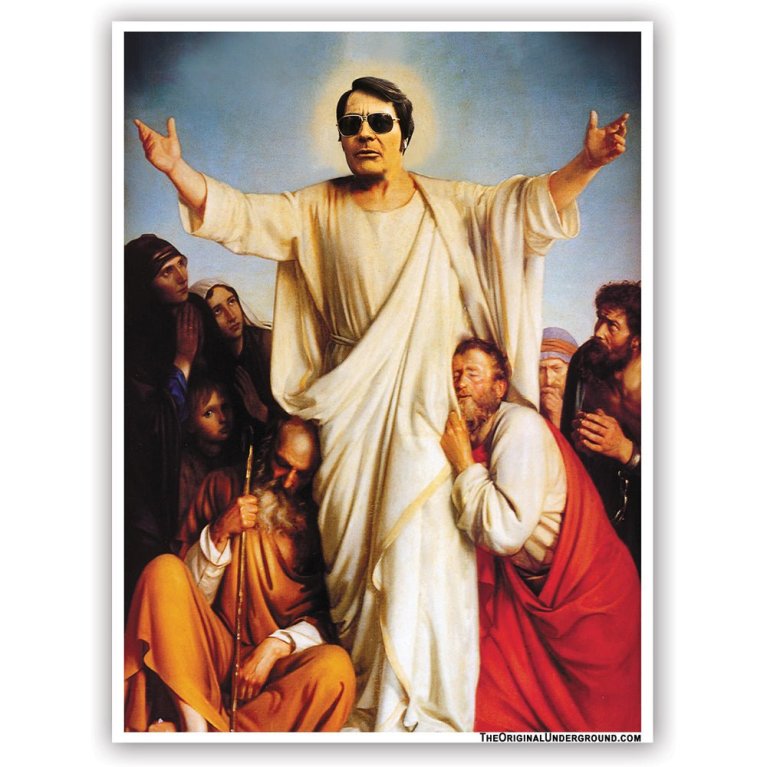















 Irregular Ideation