9/11 In Retrospect—Collapse of the New World Order

Standard

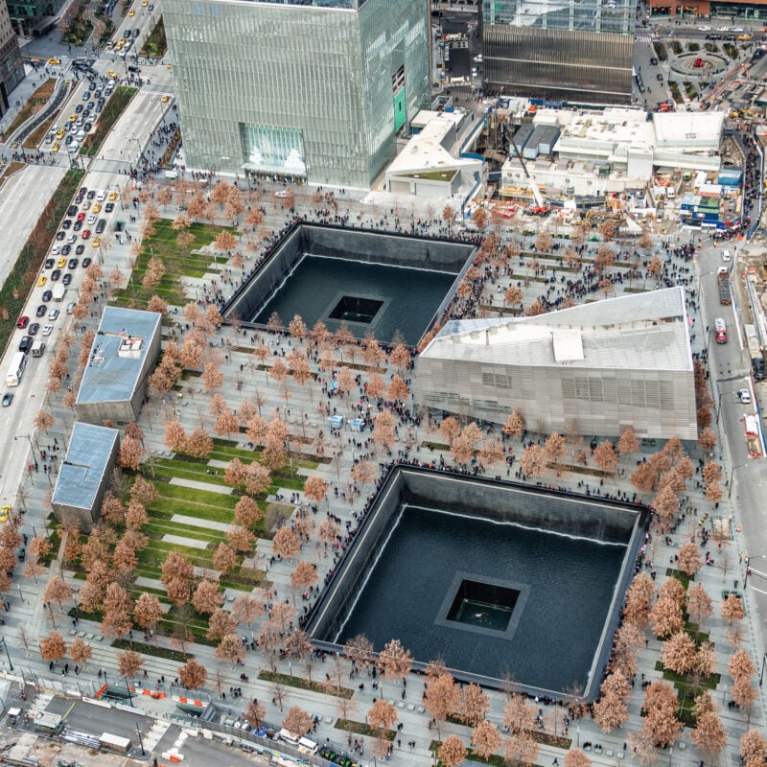
Visiting the site of the Twin Towers again has revealed how much my perspective of the has changed over the past few decades since the attacks.  The World Trade Centers, built in the 1970s, had once dominated the Financial District of Manhattan and represented both the pinnacle of engineering and the economic might of the American empire. 

Like the Pentagon struck the same day, they were symbols of American dominance.  Pillars of a system that, prior to that sunny September day, had seemed invulnerable.  The United States had won the Cold War, demonstrated unrivaled military might in the Gulf War (all but erasing the bitter aftertaste of Vietnam) and the 1990s felt almost as if it was the ‘end of history‘ with the final victory of liberal democracy over the world.

The NYC skyline is impressive even today, yet that September day the delusion of being untouchable had been wiped away and the trust of the system has continued to degrade as more are seeing the truth:  

1) Our government can’t keep us safe.  Many forget now that 9/11 was not the first attack on the World Center twins.  In 1993 a truck bomb had been detonated in the parking garage of the South Tower and could’ve taken down the towers had it been better placed.  But despite this, despite the billions we spent on intelligence agencies, the US had missed multiple opportunities to take down Osama Bin Laden.  All of our military strength was useless against a small group of dedicated men using box cutters and airliners.

2) They made us bleed.  While many around the world were horrified at the images, there were others who danced with glee as shock and awe covered Manhattan in dust.  It was a propaganda coup for those who opposed US hegemony as much as anything else, it proved that there could be repercussions for our policing and globalist policies.  Sure we would go on to kill Bin Laden.  But he more than accomplished his goal.  Not only did he bring down the towers, and strike the Pentagon, but he also goaded us into spending trillions on a fruitless war on terror.

But, beyond this, in the past twenty years, I have gone from being an apologist for the second invasion of Iraq to now being very deeply disillusioned.  And I’m not alone.  The world is no longer what it was in the 1990s where the US leads the way to a new age.  Rather many are starting to see through the shiny facade and realize that the system in its current form serves a few at the top.  But our banks, our government, and corporations routinely conspire to rob us.  There is no free market or true representatives of the people, it is a rigged game and the ‘house’ always wins.

Walking past Wall Street I remarked “This is the heart of the beast” and it is.  The money flowing through this place is the lifeblood of a nation, the very center of the current world order, and what enables the endless wars of our political regime.  The towers were not random targets.  Nor was the attack because they hate freedom and democracy, but rather it was a response to the imposition of US policies on their countries and the never-ending presence of our military in their own backyard to serve US economic interests that they resented. 

As wrong as it was to murder 2,977 people, this ‘collateral damage’ has long been a part of war, many Americans have no moral qualms about nuking the cities of Hiroshima or Nagasaki, and the US has killed hundreds of thousands of non-combatants.  So why is it such an outrage if others in the world employ a similar total war strategy against us?

If America once represented an ideal, that is fading due to relentless attacks by the left and the growing disillusionment of everyone else.  There has been a transition, over the last few decades in particular, from the time when athletes would wrap themselves in the flag to this time it has become controversial and even contemptible.  Even conservatives no longer trust national institutions and have embraced a myriad of conspiracy theories—including many about the 9/11 attacks.

Personally, I do not believe that the official narrative is entirely a lie.  I believe a group of men, funded by Al Qaeda, hijacked four fuel-laden airliners, two of them were flown into the towers, one struck the Pentagon and a fourth crashed into a field in Pennsylvania.  I do not see a need for a controlled demolition to explain why the buildings collapsed.  No this is not to say that our government didn’t know more prior, opportunistically exploit or even facilitate the attacks.  There’s simply a better explanation of everything that happened that day and since.

The fragility of our world order

As a young person everything that was had this feeling of permanence.  My parents and other adults were fixtures in my life.  It all felt robust and unchangeable.  But as time went on, grandparents passed away, trends came and went, seasons changed and I began to learn that nothing is forever.  Even concrete will degrade in strength and eventually, it will crumble away into dust.  Institutions are no different, they tend to have a lifecycle, at the very least require constant maintenance, and all these systems we rely upon to create order in our world are surprisingly fragile.

The New York City skyline has a robustness of appearance.  It is built off of the bedrock, the skyscrapers seemingly carved out of a single piece of polished granite.  This is by design.  The architects and engineers who built these monolithic-looking structures do want them to feel secure and safe.  And, for the most part, or under typical conditions, it is true—they are reliable.

However, they’re not indestructible.  

The Word Trade Centers, while massive and certainly marvels of engineering, under that shiny metal and glass veneer, were as flimsy as a stack of cards.  What made them great also created unique vulnerabilities.  Unlike the Empire State Building, a grid of I-beams and tapers in towards the top, the enormous twins had a center trunk section with long clear spanning trusses that were supported by the outer ‘skin’ of the buildings.  This had given them a large and unobstructed office space.  This was practical, but in retrospect became a fatal flaw in their design.

The WTC design was innovative, unusually lightweight construction with wide open floor spaces supported by trusses.

The impact of the airliners removed some of the structure.  No, this was not enough to cause a collapse, yet this was enough to add strain and reduce the load-carrying capacity of the buildings. The towers, despite getting hit by aircraft larger than the 124-ton Boeing 707, had exceeded expectations and absorbed the impact.  It was only after fires raged, out of control, that the heat had reduced the tensile strength of the steel enough that the floor trusses would deflect and could no longer hold the upper floors—at which point the top of the buildings began to fall into the lower—smashing one floor at a time until nothing but a cloud of dust and pile of rubble remained.

The popular meme “Jet fuel can’t melt steel” is clearly ignorant of the reality that you do not need to turn steel into liquid before it will fail.  An inferno of jet fuel mixed with office materials is more than enough to weaken a structure to the breaking point.  There is no need to explain this as controlled demolition or building 7, where there was damage to the structure, fires burning on ten floors, and the sprinkler systems disabled due to water main breaks.  

Still, many Americans have a huge problem accepting that these symbols of our strength could be taken down by a handful of zealots with box cutters.  It makes us feel insecure.  We want it to be more.  And thus it must be some kind of massive concerted effort, with an enormous cover-up, right?

This is, ultimately, a form of denial. 

Most Americans know that manufacturing jobs have been continually outsourced. But many do not fully comprehend the economic reasons why the US has gone from the nation that won WW2 with industrial power to the current situation nor how much they have benefitted. It is the status of the US Dollar as the world reserve currency and the Petrodollar arrangement that give US consumers the edge. Basically, in order to buy their oil from Saudi Arabia, other countries around the world needed to get their hands on our money and for this reason would sell us goods they produced at a bargain price.

The manufacturing backbone no longer exists.

The “new world order” George HW Bush hypothesized was never to be.  Bin Laden had answered and won on multiple fronts.  He caused us to question our own American identity, whether our leaders actually represent our good, and if their endless wars truly benefit us—which they don’t.  More importantly, he penetrated the illusion of permanence and strength that kept us blindly pulling the weight of empire for our masters.  Even 9/11 truthers, in their rejection of the official narrative, are part of this new anxiety undermining the tower of world dominance built in the post-WW2 era.

After two more wars where only the defense contractors and their political proxies came out as victors, after bailouts for the “too big too fail” and current institutional protection of the hedge fund billionaires against retail ‘Ape’ insurgents, more are waking up.  How the elites and political establishment gang up on populists, like Donald Trump or Bernie Sanders—brazenly rigging the DNC primary in 2015 and the Big Tech election interference this past cycle—has damaged faith in the democratic process.  And, lastly, having endured the Covid lockdowns, more question the notion of us being exceptionally free people.

Even if enough Americans remain under the spell and continue to support the collapsing regime, the rest of the world (at least beyond Western Europe and Australia) is not fooled by our propaganda.  After decades of BS and bullying, like those WMDs never found, many are rejecting the monopolar order and ready to work on plan B.  China, India, Middle-Eastern and African nations do not want to be perpetually subject to US economic threats and warfare.  And, after the Ukrainian sanctions, they’re taking steps to protect their own sovereignty against this imperial aggression.  BRICS is here and the supremacy of the Petrodollar, which is what has enabled the half-century US reign, is being challenged.

The pillars upon which the US economic might was built are now shaking and yet nobody seems to be focused on shoring up this foundation. The tower sways, but hubris blinds those who could prevent the collapse.

From confidence to doubt…

Bin Laden knew his 9/11 attacks would lead to massive overreach.  He understood that the arrogance of our leaders would lead to a flailing angry response.  No, the attacks were not enough to bring it all down but they did put the cracks in the base of this order and the future is no longer as certain as it was prior to that moment of horror and disbelief—when a bustling city and the most powerful country in the world was brought to a standstill. 

Those feelings of horror and helplessness and disbelief remain, like those abyss-like holes in the ground where the towers once stood.  We have all seen the writing on the wall.  The party may have continued, on the surface, but something has fundamentally changed underneath it all, the ground has shifted—as has our perception of our own untouchable position in the world.

History is not an end, the new world order is starting to look as frail as those geriatrics who rule us afraid to die and desperately cling to their power.   

The juggernaut of the US-led world order, which had briefly appeared to be an impenetrable fortress, is now unraveling and all it took is a little push.

Forget Gas Stoves—Why Are Pets Legal?

Standard

The Biden administration has recently floated the idea of banning all gas stoves.  Richard Trumka Jr., son of the powerful union boss of the same name and nepotistic selection for Commissioner of the CPSC, has made this proposal and cited potential long-term health issues (due to using them in homes without proper ventilation) as the reason.  Very quickly, in the typical hive mind far-left fashion, various state governors have followed suit and very soon we can expect that Democrats will once again be limiting consumer choices.

When qualifications are more about favors to political cronies than expertise.

This move is more driven by the current climate change ideological cult than actual concern for people.  And the climate change hysteria is primarily driven by political propaganda rather than true science.  All of which has an underlying goal of giving more power and control to a few billionaires (who meet in Davos annually) and own many of our elected (or selected) leaders.

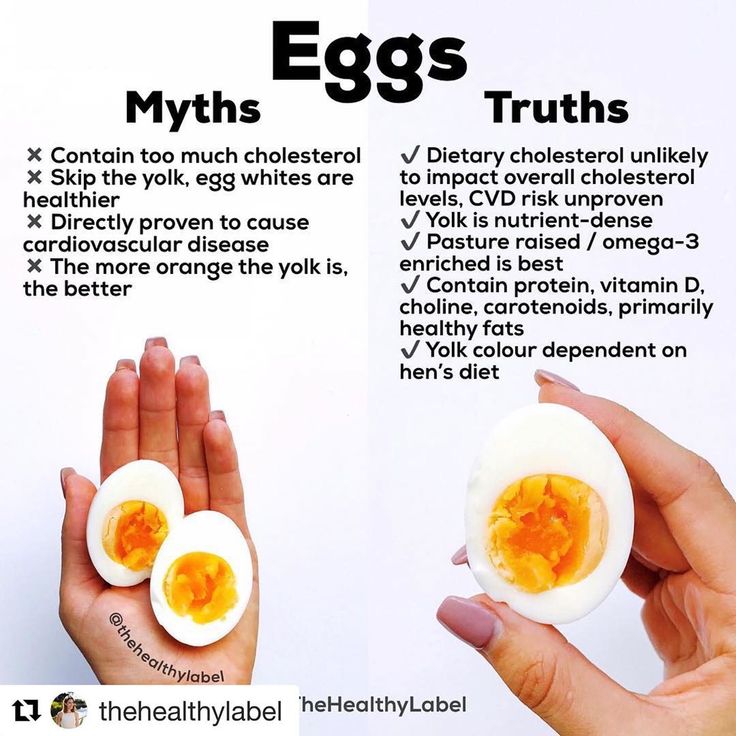
Another hidden reason for why now could be to lower gas prices to make exports to Europe viable.  Currently the billionaire owned world government, centered in the US and Western Europe, is at war with Russia and must keep gas dependent countries, like Germany, from total economic collapse due to untenable energy costs.  This would be manipulation similar to how the Lyndon B. Johnson administration deceptively used cholesterol warnings as an answer to an egg shortage and price inflation.

Eggs: Then and now

However, as a thought experiment: If we were to assume this is honestly about public health and climate change, not some cynical move motivated by geopolitics and commodities markets, why start with gas stoves?

Why not start with pets instead?

In this progressive age of believe science and consumer protection, can we really continue to ignore the well-established risks associated with pet ownership and especially the health risks to children?

Cull the Biological Menace: Save the Children!

Anyone who has had to clean cat poo deposited on the living room carpet has learned a hard lesson.  As cuddly and cute as these furballs seem to be, they are basically walking, sneezing, crapping, and puking biohazard containers. 

At risk of a fact-check claiming that cats also vomit on tile and linoleum.

The Chinese, during the Covid pandemic, knowing that pets were vectors of human disease, euthanized scores of dogs and cats as part of their pragmatic response to the pandemic.  And it just makes sense.  Pets are super-spreaders, next to impossible to mask properly, being exposed to their feces and urine can be dangerous, and that alone is a reason to ban these incubators of deadly disease.

A person who, as a result of exposure to cat excrement, has suffered from Toxoplasmosis, will think twice about having a pet in their home. 

Then there’s the issue of animals attacking humans.  It is terrifying to be out on a peaceful walk and suddenly be set upon by a snarling beast and knowing how many die from dog attacks.  The President’s own dog has bitten several people, and this is okay?  Dogs alone account for 4.5 million bites a year and many of the victims are our most vulnerable.  Think of the children! 

If we are to save grandma by wearing masks and getting mRNA injections, why allow these disease carrying clumps of cells (with claws and teeth) that serve no practical purpose and fit the definition of a parasite?

Add to all of that the unnecessary carbon footprint of Fido and Fifi.  Feeding and watering millions upon millions of animals used for human entertainment comes at an enormous environmental cost.  Many popular pets are fed with meats, which is especially burdensome, and will accelerate global cooling warming very scary climate change.  We must do the right thing for the planet!

And, more importantly, why are we allowing this obvious menace to continue when there are alternatives?

Pet Reform: The Green Answer

In the spirit of progressive politics and Democrat party paternalism, l propose that we introduce common sense pet reform and ban all emissions producing pets and replace them with purring and barking electronic animals.  There would be no need for kitty litter or toxic carpet cleaner after the transition.   The green alternatives could be programmed to only knock over household items at a safe predetermined rate and will attack only those who our wise and tolerant revolutionary leaders call Nazis.

Only shoots insurrections wearing MAGA hats, not a threat to humans.

Think of how many lives may be changed or improved by removing this pet-stilence!

It would protect children from pet allergies, dangerous infections, cat-induced insanity (could this impact female voting patterns?), and prevent spread of other serious diseases.  Just the elimination of bites leading to emergency room visits alone would justify this as a cost-saving measure.  During the Covid pandemic we were told that saving only one life justified every new mandate.  Has that ethical math changed?

If it antivaxx to oppose boosters that have only been tested on eight mice or dare to resist the products coming from a corporation staffed by those who make a very bold display of their questionable ethics to a date, then it is extremely anti-science to be in favor of pet ownership.  I mean, how many more studies do we need for these Neanderthals who think animal ownership is a right to understand, right? 

Is there a reasonable argument against banning pets?

Who Determines Acceptable Risk and How?

The point, of course, is that we accept the health risks of pets.  Why?  Well, many have decided that the intangible benefits of a living companion outweigh the risk to their own health and also that of the general public.  Sure, we do have leash laws and liabilities assessed when people who have pets do not take proper precautions. 

And no doubt pet ownership will be the next stop for the climate change alarmists, like the very privileged Greta Thunberg, when their handlers tell them this is the scientific consensus.   I mean, they’re already taking steps against farm animals and telling us to eat bugs as an alternative, do you think they’ll stop there?  Not a chance, if they get their way on gas stoves, soon pets will be only for elites.  These professional Karens, the petty administrative tyrants running this country, can’t be satisfied ever.  There’s no reasonable compromise with them.

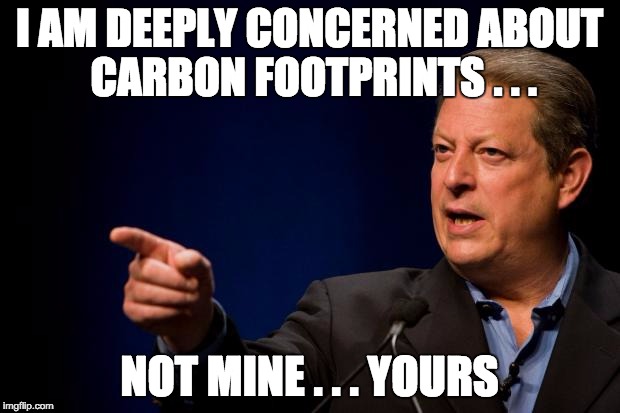
These bans in American politics stem from a Puritanical impulse.  It is the very same thing that was behind the Prohibition, this desire to control, often sold with some kind of apocalypse tied to it as justification.  Where it was once Johnathan Edwards preaching “Sinners in the Hands of an Angry God,” the early American sermon delivered in a monotone, it is Albert Gore’s “An Inconvenient Truth” for this new secular version of the same old cult religion.  We all must do our penance and pay the ministers of this new era—it is hard work to keep the population in line and in perpetual fear of destruction. 

Al Gore knows as much about science as a Televangelist knows about theology…

Banning gas stoves isn’t driven by science anymore than witch-hunts or eugenics. Sure, it is rationalized by their own beliefs about cherry-picked data and the purported implications. But water can be made to look awful if a person wants to make that case. It is the midwits, with rudimentary understanding of all things, that have this mistaken idea that life can be free of all risk, completely safe, and strive for perfect pure solutions. They accept the ‘experts’ opinion uncritically as if it is Gospel and become the “sources please” zealots which make truly intelligent conversation impossible.

Risk can’t be eliminated. Removing one risk only ever creates another. That is the real problem with complex systems. Poke in one place, to fix this problem, and the unintended consequences of a prescribed solution can vastly outweigh the benefits. The noxious invisible gas that is more a threat than nitrogen dioxide is the ceaseless and incurable arrogance of those who think it is their job to save the world or manage the lives of others. We cannot risk anymore of what remains of our freedom to please their whims, they will consume it all in the name of protection.

Of all tyrannies, a tyranny sincerely exercised for the good of its victims may be the most oppressive. It would be better to live under robber barons than under omnipotent moral busybodies. The robber baron’s cruelty may sometimes sleep, his cupidity may at some point be satiated; but those who torment us for our own good will torment us without end for they do so with the approval of their own conscience.

C. S. Lewis

Politicians have long abused science as a means to gain power for themselves. It is what had, a century ago, inspired notions of superior race and now is what arms a new generation of young activists—indoctrinated by leftist parents, mass media and their government funded schools. It is no different from any other moral panic where critical thinking made someone an enemy of the sanctimonious mob.

Do Not Muzzle the Ox or Canadian Truck Drivers

Standard

When a convoy of trucks descended upon Ottawa to protest the imposition of mandates, Justin Trudeau, the ever so prim and polished Canadian Prime Minister took to the screen to disparage the effort as a “small fringe minority” with “unacceptable views.”

If that sounds like a school teacher scolding a class of 8th graders, that is because teaching was Trudeau’s former occupation before being elected to office on the basis of his good looks, smooth speech, and all-around nice guy appearance. There is a certain demographic that swooned after this young charismatic figure, despite his far-left disposition.

Of course, what works in the classroom doesn’t necessarily make the best approach for leading a diverse nation. A teacher is an authoritarian, they rule over the children either buy their superior knowledge or simply by the hierarchical structure needed to keep order in a school. But that’s not how a liberal democracy with elected representatives is supposed to work.

It is not Trudeau’s job to decide what views are and are not acceptable. And that is the very tone that is starting to provoke a response. People are getting tired of politicians, with no moral authority (see: Trudeau in blackface) or real expertise forcing them to comply and lecturing them about what views are or are not acceptable.

It is fitting that a chaotic sea of truck drivers has risen up to challenge this would-be dictator. Ironically, 90% of the drivers are already in compliance according to Newsweek, and yet they are standing up for their rights as Canadians and saying “enough is enough” after two years of being pushed around by those who have long ago overstepped their mandate to govern.

What Makes A Truck Driver Special?

There is some truth to the idea that truckers are on the fringe. The word “fringe” carries a negative connotation when used in a political context, but is defined generally as “the border or outer edges of an area or group.”

Truckers are strong and independent people who face brutal extremes so that those within the borders of their effort are protected.

Like feminine traits (like compassion and nurturing) are ideal for careers like nursing or teaching, it takes a rugged masculine individual to go out and brave all weather and conditions. Truckers occupy that space between order and disorder. They deal with mud, freezing cold and ice, long hours. They can be out weeks at a time, sleeping in a box behind the cab, living in a solitary space so that everyone else can have their comfortable lives.

It doesn’t matter how you feel when there is work to be done. A trucker’s life is pass or fail. Either you clear the snow off the dump trailer tarp and get loaded or you don’t get home. There is no one to hold your hand, nobody out on the edge in this wilderness cares that you’re offended. You’re on your own, buddy, and better be able to deal with loneliness, make your own decisions, overcome the disorder, and find a way to get moving again.

At the same time, a trucker, a real trucker, is not just a dumb brute holding a steering wheel. They need to understand the machinery that they operate, how to properly secure and balance their loads, how to predict their trip and make their appointment times, many are small business owners and need to keep up with the onerous compliance regime imposed upon them.

Professional truckers are some of the most meticulous and detailed people when it comes to their work and their vehicles. Many spend their free time shining the rims, their weekends doing maintenance work, and are extremely skilled.

One skill truckers have is the ability to think for themselves. They form their own opinions and aren’t going to be pushed around by the popular narratives and certainly not by some coward who will not face them while still collecting a check at taxpayers’ expense.

Meanwhile, truckers go out on the road every week to keep the economy going and support their families, facing adversity on the open road and now in front of the parlament, it is costing them a great amount of money to stand up for freedom.

Which is the true form of a truck driver: They are self-sacrificial.

The Contrast Of Fringe Minorities

Political elites and truck drivers occupy opposite sides of society and only one of them is essential. Truckers could survive, on their own, without Trudeau to lead them and may actually do better without the expense of bloated governments bearing down on their shoulders. The elites, on the other hand, would not be able to live their lifestyle without the workers.

For years, especially the past two, the privileged elites, with their access to political power and ability to broadcast their opinions, have encroached more and more on the freedoms of their fellow citizens. Even before the outbreak of disease they always had a ready excuse why their influence and control should be expanded. They will have us believe that they “follow the science” and represent the expert opinions, that they are more qualified.

And yet, these people at the topmost fringe of the social hierarchy often are far removed from the practical implications of their policies. They may say things like “we’re in this together” and pretend to be one of the people when that is convenient to their ends, yet they never do suffer to the extent that those at the bottom do. In fact, there are many pictures of politicians, who issued strict restrictions, not following their own rules.

It would be one thing if they had faithfully led by example, refused to travel and go out themselves, or at least did not hypocritically attack leaders who allowed freedom while they indulged themselves, but it was always “rules for thee and not for me.” They scared and coerced everyone else into compliance, economically ruinous policies for small businesses while being totally exempted from the pain they inflicted.

The truckers, by contrast, simply did their job, rain or shine, deadly virus or not, delivering the goods that are necessary for civilization to exist. And for this, they are mocked, falsely (and bizarrely) characterized as being racist or sexist for standing up to the rich powerful corporate and state actors. I mean, maybe the media thinks that we don’t see the Sikhs or Native people cheering on and joining their fellow Canadians?

How anyone continues to see these fusspot fakes as being credible is beyond me. But then many are divorced from the harsh realities beyond the safe spaces that others provide for them. Unlike truckers, they are controlled by fear, suffer from a kind of Stockholm syndrome where they believe that those exploiting them (for political or other gains) are their protectors.

The elites are the fringe in Canada. The majority of their countrymen want the restrictions to end and thus, spiritually, are on the side of the truckers rather than Trudeau. Sure, many have been misled by corporate media and mischaracterizations of the trucker convoy by those trying to cast this protest in a negative light. But more are starting to see through the blinders of partisanship and propaganda, they should go meet the friendly truckers.

Do Not Muzzle The Ox

St. Paul, on several occasions, makes reference to Deuteronomy 25:4, the law of Moses: “Do not muzzle an ox while it is treading out the grain.” He uses it in the context of being allowed to work for pay and applies it as a general principle. So much for strict literalism and lawyerly application, right?

The ox treading out the grain is used as an analogy of a worker. It is wrong to deny the ox some of the fruit of their labor and it is also wrong to deny a person their fair wages. It makes sense, we should treat those working for our benefit with appreciation and respect.

Sure, a draft animal might not be the smartest creature. But it does deserve what it is due.

And, speaking of muzzles being removed and speaking out against unjust beating, remember the comical story of Balaam’s donkey, where self-important Balaam has a conflict with his transportation. The donkey, seeing an angel with a sword in hand unseen to Balaam, refused to continue down the path and for this suffers abuse. This happens three times before God finally allows the ‘dumb’ animal to speak:

Then the Lord opened the donkey’s mouth, and it said to Balaam, “What have I done to you to make you beat me these three times?

”Balaam answered the donkey, “You have made a fool of me! If only I had a sword in my hand, I would kill you right now.”

The donkey said to Balaam, “Am I not your own donkey, which you have always ridden, to this day? Have I been in the habit of doing this to you?”

“No,” he said.

Then the Lord opened Balaam’s eyes, and he saw the angel of the Lord standing in the road with his sword drawn. So he bowed low and fell facedown.

(Numbers 22:28-31 NIV)

The hilarious part is that the donkey starts to talk back against the abuse and yet that’s not enough for arrogant Balaam to stop and reconsider.

The donkey, like our trucker friends, reminds his rider that he has been completely reliable up until that point, never complained or caused problems, and was refusing to continue for reasons that his master could not see.

Balaam had spiritual blindness, too caught up in his own dignity, assuming his own superiority to the animal, and was very fortunate to not be killed. The Bible is full of stories about tyrants who refused to listen to the people under their rule and suffered severe consequences.

In a time of mask mandates and slanderous lies against the working class ‘deplorables’ it seems fitting that those of spiritual vision stand up together with the Canadian truck drivers.

May the walls of this modern Jericho come down with the honking of many horns.

The End Times — Same As All Times

Standard

There are many desperately trying to push back against the march of progress.  I’ve seen the Ted Kaczynski’s (aka “the Unibomber”) Manifesto popping up lately because of how his predictions are coming true.  Even those at the cutting edge of the current technological revolution, men like Elon Musk, are terrified of the implications of this rapid change.

Things like transhumanism, cashless society, social credit scores, next level automation and artificial intelligence are upon us.  The internet, this once free space, that reduced the friction of communication and allowed the masses to bypass the established gatekeepers of information, is now enabling a new generation of tyrants with power that their predecessors couldn’t have even begun to imagine.  

There is a feeling of helplessness against this faceless emerging (and present) threat, we know that they work behind the scenes to control the narrative.  The NSA, Big Tech corporations, existing institutions, they’re all competing for their place at the top of this new order, often colluding and conspiring when their goals align.  To them we’re ants, pawns to be manipulated and moved.

It is inevitable.  Removing a few key players may be a speed bump.  However, nothing short of an asteroid hitting the planet and mass extinction will stop this transition.  To resist is to be like the Luddites who thought destroying a few industrial looms would preserve their trade.  Their movement was destined to be steamrolled by the invisible hand of market realities.  It would be easier to stop a freight train by standing in it’s path than to stop this.

That is what the conspiracy theorists and end time prognosticators get most wrong, they see this wind of change as being directed by a particular group of people, a few elites and celebrities, when it is truly a spirit of our time that even they themselves are participating in.  I mean, how many posts do you need to read on Facebook decrying what it does to hijack our minds before the universe explodes because of the massive irony?  We can’t help ourselves.

Even the Amish, who are way ahead of the curve as far as identifying the social danger of technology, cannot resist that sirens song and love their smart phones as much as anyone else.  And they’re the experts at banning technology they’ve decided is bad for their communities and way of life.  If they cannot collectively stop this influence, with their strong religious tradition, what chance do we have to hold back this flood of change?

Still some delude themselves, they believe they’re going to run into the hills and escape this onslaught.  I’m thinking of the Rod Dreher types who believe that they will somehow be able to remove themselves, this isn’t the Eastern Roman Empire we’re dealing with.  There is no place to hide, no place on this planet out of reach, maybe you’ll fall through the cracks or fly beneath the radar and yet I doubt it.

What we are seeing is the merger of something extremely old with some brand new means.  There have always been those with an insatiable lust for power and control, those like the men of Sodom who believed that they should have access to Lot’s angelic guests.  It will never be enough for them to rule their own domain.  They will use the new technology to search out anyone who would resist them.  They get off on your resistance and now have new tools.

The thing about the Biblical antichrist is that it is first and foremost a spirit.  You can’t keep it out by walls or physical distance, we can see the manifestations, but we do not battle against flesh and blood.  No, it is a war with isms, systems that deny Christ and put try to order the world without God.  This always comes in such a glowing colorful and exciting form, but under this cover it is the same perversion of beauty and love.

The world isn’t ever going back to that of our childhood or parents and grandparents.  For better or worse, the only constant in life is change.  Yes, the pace now seems greater than ever, we are certainly finding ourselves with fewer places to hide.  The surveillance state has never been stronger, privacy is a thing of the past, the new tools we use too complicated for most of us to understand and only give us an illusion of control.

Alas, all the things we face today are new forms of the same evils that have existed from the beginning of civilization.  The only difference is that now it is on a global scale, with more sophisticated means and ability for centralized administration.  The fake news, propaganda and misinformation is more subtle and convincing than ever.  It all comes at us so fast anymore.  It is easy to become disillusioned and demoralized, but we can’t let the giants defeat us.

There has always been an ebb and flow, the rise and fall of empires and epochs.  The most cunning have always found ways to consolidate power and exercise control over the masses through various means.  The times we live in could easily be compared to the “bread and circuses” of the Roman Empire.  Now we have Netflix and the welfare state, enough entertainment and ease to keep us subdued.  Maybe this is the time when the types who desire complete supremacy finally win?

We must pick our battles.  There is probably not much you are going to do against the weight of the wealthiest most calculated and powerful of our time.  What will be will be.  Freedom and equal rights have pretty much always been a fantasy to keep us from being trouble to the elites. Most of us are slaves via debt.  Step out of line, be the slightest threat to their rule, and they’ll put you in your place.

Practical Solutions for Filipino Farmers and Market Fluctuations

Standard

Problem: Small scale Filipino farmers plant not knowing what the price will be by the time the crop is ready for harvest. When the price drops due to oversupply of vegetables the farmers barely make enough and sometimes even end up dumping their crops because the cost of transportation is greater than the value of the vegetables.

The problem is three-fold. First, it is the inability of farmers to see the whole picture of who is planting what crops, which results in overproduction and then drives market prices down. Second, it is a problem of markets being mostly local, with little to no access to other markets, this keeps prices lower. Third, there is not enough coordination between domestic farmers and government agencies that control the importation of agricultural goods.

Solution: The Department of Agriculture (Philippines) needs to study the market to find out what amount of vegetable production is needed. Once they establish a baseline, then they should come up with a voluntary program that will aid farmers in deciding what crops to plant today based on their projections of future demand.

The Department of Agriculture (Philippines) could issue a quota voucher to farmers, who had enrolled in the program, to plant crops based on the projections and granting them certain protections for if the market price does drop. In other words, if there is a market need for a particular amount of green beans then the agency could issue a proportional number of vouchers. This, assuming import controls, would stabilize the markets and prices. And, if the market price dropped anyways, abiding by the voucher system would entitle the farmer to some compensation.

Another way to get better prices for isolated farmers is to facilitate the connection to a broader market. Access to markets beyond the local region is one way to increase the value of crops produced and also to stabilize price fluctuations. Government contracted transportation and distribution could be a part of this or it could be entirely put out to bids with private contractors. The transportation costs to be offset by the better prices in the destination market, the farmer would get the voucher guarantee price and the rest would go to the transportation contractor.

This sort of analysis and organization could also be done independently of the government. But it would take a significant investment. The national government would be in a better position to facilitate this than a private entity of limited resources. That said, universities could help to develop the models of the agricultural markets necessary to determine how many vouchers should be issued for each kind of crop. It would need to be a collaborative effort. Maybe with the help of transportation cooperatives between these small-scale farmers?

And one key is to incorporate the local ‘grassroots’ input, as well, as a strictly top-down central planning agency would likely fail. Central planning generally doesn’t work and especially not when it removes the autonomy of individuals to act in their own self-interest or allow choice. Participantion would need to be voluntary and incentives market-based rather than artificial. Ideally it would be self-sustaining and entirely funded by the beneficiaries.

Finally, yes, protectionism may be bad in excess, as in North Korea. However, any country that wishes to maintain domestic industry and jobs must moderate foreign imports. Haitian farmers learned this lesson the hard way when cheap, subsidized, rice exports from the United States destroyed their already meager profits and forced more of them to compete for the limited opportunities for employment in the cities. So it is incumbent, on the government of the Philippines, to control agricultural imports for the benefit of domestic producers.

Anyhow, some ideas.

The King (Government) Can’t Save You… (The Long Delayed Part 2 To “The People Want A King)

Standard

Originally, a few years ago, I had planned a multi-part series, “The People Want A King,” to discuss the establishment of rulers in the Biblical narrative and make it applicable to our own times. The short version is that God gave his people a king, while warning them of the costs, because they wanted to be like other nations.

The costs were great…

  • Kings demanded more and more for themselves.
  • The centralization of power from many to few only increased the magnitude of corruption without providing a solution.
  • And, ultimately, the king could not provide the protection the people had sought when they established the throne.

People then, like people now, wanted an authority figure, someone to lead them and take responsibility for their lives. They ended up with nothing but trouble: Higher taxes, more wars for the glory of the crown, and a growing number of rules that applied to them but never the ruler. Even the good kings did horrendous things with the power that had been entrusted to them and our modern-day governments not much different in that regard.

Despite this, most people can’t even imagine a world without governments and many still look to leaders to act as a wise fatherly figure in times of crisis. Some would even like the government to play a nurturing role, they fantasize about this motherly figure that gives them everything and asks nothing but love in return. It seems that a majority of people believe that government leaders (or at least those of their own political party) are imbued with special powers of discernment and serve a role that can’t be questioned.

“Put not your trust in princes, in a son of man, in whom there is no salvation.”

(Psalm 146:3)

Christians are told on multiple occasions to pray for and respect civil authorities. We are told by St. Paul that the punishment of evil is for our good and therefore we should not resist. But that said, this idea that government leaders, the representatives of bureaus and bureaucracies, have some sort of god-like infallibility and superior wisdom is plain wrong. We cannot trust them to save us any more than anyone else. And if we learn anything from their mistakes we should know:

The Myth of Special Knowledge or Abilities

For the amount of faith that some seem to have in our institutions, you may think that our leaders have a near-perfect batting average. It does not take long to compile a list of huge government blunders and starting with the handling of Covid-19. The virus wasn’t even on the radar of many of our elected officials before things got bad in Italy and when they finally did respond they did in a manner that did not make sense.

For example, state governments forced nursing homes to take Covid-19 patients. They literally took Covid-19 directly to our most vulnerable populations, where 2/3rds of the deaths in my state have occurred. And, simultaneously, they prevented those least threatened by the disease from working or going to school—which resulted in an uptick of overdoses and suicides. This also at the same time Pennsylvania Health Secretary, Dr. Levine, was removed their own 95-year-old mom from a personal care home.

So, take your pick, gross incompetence, or plain evil, either way, state officials responded the exact opposite of what would actually make sense, in a way that would actually maximize the harm done, and these are the people we trust with our collective welfare?

And then there is the not so small matter of shutting down rest areas in a time when truck drivers, always essential, were as essential as ever. You would think that if the goal were to stop the spread of the virus you would want your road warriors to have clean and easily accessible restroom facilities, along with a safe place to sleep. But, to this day, many rest areas remain closed and those open have dingy unheated porta-potties rather than open their regular restrooms to travelers. In a time when health and hygiene is supposedly our focus, they have forced unsanitary and stressful conditions on essential workers. Even after being confronted on this, they continue to persist with this asinine policy with absolutely no regard for the well-being of truckers.

Sure, this could be a mistake. There certainly is no reason to assume that there is some sort of malicious intention here. But it does demonstrate that they lack a special power of discernment over the rest of us. It should make us consider that maybe their whole perspective is wrong. I mean, if their judgment of small matters is so poor, why should we take their word on large matters?

Could it be that those who were elected for their charisma and/or party affiliation and are not truly qualified to lead anything?

Could it be that various government officials were appointed for political reasons, made their careers in places where job performance didn’t actually matter too much, and are incompetent?

Yes, government leaders can get caught up in hype and hysteria just like the rest of us. No, neither they nor their advisors have a special power of discernment. This reality may be disconcerting to those who want a benevolent dictator to tell them what to do, nevertheless, it is true.

The same leaders who nonsensically force truckers to use the least sanitary option could also be blissfully unaware of the severe (and deadlier) economic impact they are inflicting on us. The same leaders who forced nursing homes to take Covid-19 patients, evidently knowing the likely outcome, could be completely calloused to the pain that they are inflicting on you.

Myth That Only Government Can Do Great Things

There are many who are skeptical of government and yet default to the idea that we need to provide us with various services. I mean, who would build the roads if it wasn’t for PennDOT, right?

Of course, never mind that PennDOT doesn’t build roads, they take our money through taxes and then subcontract the actual building to private companies. The reason for this is very simple: The government can never match private for-profit enterprises for efficient use of resources because there is simply no incentive to do so. Therefore, due to this disconnect, when the government does do anything themselves it is insanely expensive and prone to failure.

Government funded and ready for launch!

A prime example, from a century ago, was the competition between Samuel Pierpoint Langley and two brothers from Ohio, Orville and Wilber Wright, to build the first powered flying machine. Langley, funded by the government and fawned over by the media, he had all the right connections and credentials, but his overwrought design ended up in the Potomac River. The Wrights, by contrast, had little to no attention, didn’t even have high school diplomas, ran a bicycle sales and repair business, and beat Langley to powered flight with a very low budget and simple design. But, despite this, it is Langley’s name that graces an Army airbase, the CIA headquarters, and a NASA center.

Oopsies!

Speaking of NASA, the agency has, at great taxpayer expense, done some amazing things. We take for granted the satellites in orbit, the trips to the moon and back, along with the many things this government agency had pioneered that have since become integrated into our own lives. Could one person ever rival these great accomplishments?

The answer is yes.

The answer is that Elon Musk, with SpaceX, can do everything NASA is doing and at a far lower price. It costs a fraction of what the government spent historically for Space X to launch:

“Between 1970 and 2000, the cost to launch a kilogram to space remained fairly steady, with an average of US$18,500 per kilogram. When the space shuttle was in operation, it could launch a payload of 27,500 kilograms for $1.5 billion, or $54,500 per kilogram. For a SpaceX Falcon 9, the rocket used to access the ISS, the cost is just $2,720 per kilogram.”

But it isn’t just space flight that is made easier and less expensive through private innovation. No, at a time when the US Postal Service, a government entity that is supposed to be self-sustaining, can barely make ends meet, there is Jeff Bezos and Amazon making a tremendous profit while delivering tons of products. Sure, Amazon uses the Postal Service, and yet the lack of ability of the government enterprise to modernize and adapt to the current market conditions that is proving to be a fatal flaw. As they beg for another taxpayer bailout, Bezos and others will continue to prove that the same task can be done better and with lower overhead costs.

The idea that there is any worthwhile project that is beyond the reach of the brilliant innovators of the present, without it being financed directly by the government, is completely bogus. Yes, certainly, unlike the Wright Brothers, the Musks and Bezos of this generation do take every tax break or advantage offered to them by government. But you could eliminate all of that entanglement and they would still do it better than any government agency at a fraction of the cost. The government never actually does great things. No, at best it is only ever a middleman that hires people or companies, supposedly on our behalf, that does the great things.

Myth That Only Government Can Keep Us Safe

If you look at the big problems of the past couple of decades that may require government sized intervention, from the 9/11 attacks to the viral outbreak originating in Wuhan, there is a disturbing pattern that emerges. Not only did this super expensive security apparatus not stop the various events and keep us safe, but it may also have actually been the cause of these events due to their prior interventions.

There likely would not be the Islamic Republic of Iran today had it not been for the CIA’s meddling in the domestic politics of Iran. Osama Bin Laden had been an ally in our government’s proxy war against the Soviet Union before he became a threat that cost trillions. Our top US health advisor, across multiple US administrations, Dr. Anthony Fauci, is linked to the organization that funded bat and coronavirus research in a lab in none other than (drumroll, please) Wuhan, China.

No, this is not a conspiracy theory, I’m not even convinced it was malicious in intent in any of the cases above. I agree with Hanlon’s Razor, “Never attribute to malice that which is adequately explained by stupidity.” But, regardless, there is certainly a strong case to make that high-ranking government officials do not comprehend the consequences of their actions, do not account for the blowback, and their solutions often create bigger problems.

Are you sure you want the same people who created the problem, in the first place, to manage the response as well?

Maybe it is time for a second opinion…

And then there is the inconvenient truth that many in government are the actual criminals!

Well, not that those truly guilty are ever prosecuted by the same standards applied to us or others of lower political status. Case and point: General Flynn was criminally prosecuted for what amounts to a perjury trap and in the context of an investigation that had no legal basis, to begin with, but a certain prominent US politician lied under oath to Congress and never faced any real threat of punishment.

No, we are no better today than in the time of kings when it comes to equal justice. Those with real power (usually the combination of media and government agencies sympathetic) are never held accountable or to nearly the same standard that is applied to the average person. Even in Pennsylvania, where nursing homes were forced by the state government to take Covid-19 patients, guess who is being investigated by the state Attorney General for the resultant deaths? If you guessed the governor’s administration that ordered the sick into the nursing homes, then you would be wrong. Nope, instead, they will investigate the nursing homes, which is a typical “smokescreen” strategy or means to distract from those who truly should be held accountable.

The Myth of the Significant Party Difference

One of the most persistent and most blinding myths of politics is that the two parties represent something vastly different. If you are one of those Obama fanboys who still believes that his administration was scandal-free even now, because he says so, even after the “Fast and Furious” gun-running scandal, after weaponization of the IRS against political rivals, and actually believe he didn’t know anything about the Watergate-esque spying under his watch, then you are a complete tool. Likewise, if you see Trump as being a saint because he says some Christian things and posed with some pastors, then you are an insufferable fool.

The real difference between the two men is that Obama is and expects to be catered to as one who can wax eloquent in a manner that sends shivers down the legs of other social elites, while Trump is a populist who knows how to work a crowd and is old (or rich) enough not to care what the talking heads think. If you don’t see Obama as being as narcissistic and corrupt as Trump then you probably also side against Biden’s accuser, with a corroborated allegation of sexual assault, while screaming #believewomen only a couple years ago because that is what you were told to do. Trump might be a bully, an unapologetic Twitter troll, but Obama is the popular snob who snickers behind the backs of those of lower status while knowing how to work the system in his own favor.

The only reason that I find Trump tolerable is that he offends who aren’t accustomed to being called out and is the underdog in the fight. The fact that Trump is loathed by the corporate media and political establishment, both Republicans and Democrats, is enough reason to like him. Most Trump ‘scandals’ amount to little more than elaborate misinformation campaigns. For example, when Trump suggested hydroxychloroquine had promise as a treatment option for Covid-19, something many doctors agree with, this was equated to telling people to drink poison and is still being ridiculed. Why? Well, because Trump said it and they hate him with a blinding passion. They would probably rather die than acknowledge that Trump is right.

But, in the end, I do not see Trump as a savior any more than any other politician. Sure, I am glad that he’s a challenge to the status quo. It’s fun to see his rivals become unglued and expose themselves as being as nasty under the thin veneer of their fancier, more sophisticated, language. However, the idea that any particular political party or person has all the right answers, or that Trump can be trusted with power more than anyone else, is balderdash. Trump should be mistrusted. He is as fallible as anyone else. My only complaint is that those attacking him, often for overtly political reasons, never face the same level of scrutiny nor are ever held accountable for their abuses.

The Myth of Having to Be Pro- or Anti-government

After writing all of that one might assume that I’m anti-government. I’m not. I believe that governments exist for a reason and abolishing them would not result in harmonious perfection. The same evils that plague government leaders would not simply go away because we eliminate the government and there is a moral order enforced by the state even if we do not fully agree with it. Sure, we may not like that a State Trooper gives us a speeding ticket and yet most of us are appreciative when a murderer is brought to justice in a way that we couldn’t do individually for ourselves.

In the Philippines, where the central state is relatively weak and law enforcement resources stretched thin, murderers often face no consequences. I know this from having experienced it first hand, the men who murdered uncle Roland are still free despite strong leads because the police there do not have the ability to follow up. By contrast, in the United States, even with the smallest leads, government investigators were able to find the killer of Sasha Krause recently and Marco Kauffman before that. That closure provided doesn’t bring back those loved ones taken away, but it certainly does help to take a killer off of the street and to provide some deterrence against others who would do evil.

If the United States government were to disband the relief from the tyranny we know would be extremely temporary and the peace short-lived as something would come in to fill the vacuum. A disorganized band of anarchists will do very little to stop even a Mexican cartel, let alone the People’s Republic of China, or anyone else who decided to take advantage. The peaceable folk who enjoy prosperity under the umbrella of government protection would either need to lose their disposition or learn to appreciate the taxation without representation of armed thugs who take whatever they want, including the innocence of their daughters, without ever needing to face consequences. We would be foolish not to consider the benefits of our imperfect order over the likely alternatives.

But, that said, I’m under no delusion as far as the righteousness of our social elites and governing authorities. They are as flawed and lacking in good discernment anyone else and often too often greedy for more power by any means.

Anyhow, I had sat on this post for a couple of weeks because I didn’t know how to finish. The tragic circumstances of George Floyd’s death, while in the hands of the Minneapolis Police, underscores the point of this blog quite well. No matter how intentioned or carefully formed, there is no escaping the reality that governments aren’t any better than the people that populate their nations. There is simply no escape for this reality, that no government in history or currently existing can save us from ourselves. The only hope for perfect justice is through faith in the kingdom where the fears, prejudice and greed, lust for power and lawlessness, are finally defeated in the hearts of men. Where we can govern ourselves according to the example of Jesus Christ.

Fear Is Contagious. Fear Is Deadlier Than Coronavirus.

Standard

Spanish flu of 1918 was unusual, amongst modern influenza outbreaks, because it killed young and otherwise healthy people.  One of the possible reasons for this is an immune reaction called “cytokine storm” in which overreaction of a bodily system leads to a cascade of other failures and eventually to death.  I’ll let my friends who are medical professionals correct me on the details, but that is the basic idea and sufficient explanation to set the stage for this blog post.

The Herd Reacts…

The psychology of human behavior, in particularly how it pertains to people in groups, is a fascinating study.  We are social creatures and because of this our own response to anything can be easily influenced by the reaction of group.  If one person or several, who are considered credible by the group, start to do something new, it won’t be very long before there are many others copying them.  That is how fads and fashions are born, that is why religious people conform, we want to share in the credibility of the credible by doing what they are doing.  We do this unconsciously, like the contagious yawn, and can help explain what happened last week.

All of the cancelations of the past few days may very well come down to the actions of one man.  Rudy Gobert, days before becoming the first NBA athlete to positive for the Covid-19 virus, decided it would be funny to deliberately touch all the mics and recording devices in a news conference.  This led to the NBA suspending their seasons and, like Mrs O’Leary’s cow kicking over the lantern starting the Great Chicago Fire in 1871, one man’s caviler attitude could very well have triggered the response of the NBA and the long list of other cancelations that soon followed.

It goes like this: The NBA canceled because 1) a few of their players tested positive, 2) they realized they were no longer in control of the situation, and 3) they could possibly be held liable if the death of someone’s grandpa could be traced back to one of their sporting events.  So, in the name of public safety and all things good and right, they decided to approach this unknown risk by abruptly ending their season.  This, in turn, very likely influenced other leagues to follow suit for fear of their own inaction, despite knowledge of risk, becoming a heyday for trial lawyers everywhere or simply a public relations disaster.

The more leagues and events that cancelled, the more others felt pressured to do the same.  Sure, this was something rationally justified, the idea of “flattening the curve” or slowing the spread of a disease by “social distancing” soon became common parlance, and yet the spread of this idea to start canceling events seems also to be very much like the simultaneous run on toilet paper.  Anxiety disorder is something I know a little about and, while I’ve never been tempted to hoard toilet paper, it certainly has gotten in the way of my better judgement. 

So is the reaction to Covid-19 wholly rational or was it post hoc rationalization and basically a collective panic attack?

Nothing To Fear But Fear Itself…

I have a friend who was an Air Force medic during the First Gulf War.  He told me an anecdote you’ll never hear reported in the news, a behavior that doesn’t make any rational sense and yet is something he encountered a few times in the lead up to combat in Iraq. 

Apparently some of the young soldiers were so keyed up and anxious that they couldn’t take the pressure of the wait anymore, they would find a place where they had a little privacy (the porta-potties as I recall) and take their own life using the firearm issued to them.

It makes absolutely no sense.  Why would someone, facing the danger of death, be so anxious that they would actually kill themselves?

In times of crisis people want to do something, anything, to lose that feeling of powerlessness.  That is probably the reason why many people have recently started to stock up on things that really would not help them.  That is why young soldiers, concerned about losing their life, took their own life rather than continue to wait in fear.  Fear often leads to an irrational response.  And our most educated and elite, given responsibility to make decisions, are not immune to this kind of irrational “do something” impulse either.  Our leaders are capable of panic as much as any of us.

It reminds me of the story of Easy Company, told in the series “Band of Brothers,” where the Company Commander, 1st Lieutenant Norman S. Dike Jr. (or “Foxhole Norman”), was portrayed as being frozen by combat and unable to make a decision.  He had obviously been talented enough to rise up through the ranks and become an officer, but apparently he lacked the calm and collectedness to be an effective leader outside of a controlled predictable environment.  He had to be replaced by a more common and practical man, with the right instincts to get the job done:

During the assault on Foy, Dike had ordered a platoon to go on a flanking mission around the rear of the town. During their charge, he ordered them to take cover. His subordinates informed him they were going to get killed because they were sitting ducks.  At the same time, Captain Richard Winters, former commander of Easy Company and the Battalion executive officer, tried radioing him to tell him the same thing. Having no idea how to control the situation, Dike froze. Carwood Lipton, at that time the company’s first sergeant, later put it: “He fell apart.” He was relieved during fighting at Foy by First Lieutenant Ronald Speirs under orders from Captain Winters, then moved on to become an aide to Maxwell Taylor, 101st Airborne Division.”

Military Wiki, Norman Dike

Could it be those whom have power in our institutions are men (and women) of similar caliber to Dike?  Smart, capable of working their way up through the established system, and yet lacking the courage necessary to lead society through uncharted waters?  Some of them freeze in fear, others overreact in their anxieties, while others (seeing the bigger picture) are more more able to make good decisions and navigate the stressful circumstances of the present moment.  Running the NBA or being at the top of a government agency does not mean that a person is qualified to manage a crisis and in some cases those in those positions are probably going to make matters worse rather than better.

Self-sabatoge, Fear-based Overreaction and Titanic Failures…

It is really hard to know, actually, in a politically polarized time, when many are willing to cut off their nose to spite their face, what is a real crisis and what is merely an opportunity to try to undermine a political opponent.  In fact, there are some in this country who seem quite willing to destroy the economy in a desperate bid to get their power back and a few who even seemed to cheer the plunge in the markets.  When some see personal benefit in feeding hysteria and panic, it is hard to know who too trust when clearly not everyone is on the same team anymore.  

But that said, I would tend to see the fear as being real and the reaction a sincere effort to prevent the worst case scenario from happening.  It was easy, as Covid-19, ravaged China, to deny the severity of the situation.  For one, the Chinese government is not the most trustworthy source of information (add to the that they had every reason to minimize the outbreak as not to scare away investment dollars) and, two, it is very easy to dimiss China as a them rather one of us.  The real wakeup call was Italy, a country clearly on par with our own in terms of medicine, and how quickly a few isolated cases suddenly exploded.  And, unlike China, where the government kept a tight lid on information, the truth was allowed to escape.

What has happened since I see as being similar to when a driver dozes off, wakes up while crossing the rumble strips, and reactively jerks the wheel.  Their immediate reaction may spare them a trip into the trees, but it could also be an over-reaction that takes them head-on into an incoming tractor trailer.  It could be too little too late.  There are those right now who call the idea of “flattening the curve” a “deadly delusion” an that only complete containment strategy will make a difference.  But then I begin to wonder has the opportunity to save those most vulnerable been missed a month or so ago when we failed to close our borders when it was clear that China was dealing with something unprecedented in our own times?

They say had the HMS Titanic ran straight into the iceberg, rather than barely grazed it, some would’ve died from the violent collision and yet the ship would likely haved stayed afloat.  It is also strong possibility that they could have avoided a collision with the iceberg altogether if they had only used the rudder rather than try to reverse the engines.  The Titanic, unlike many ships of the period, had two outer propellers run off piston engines and one in the center that was powered by a turbine.  The outer propellers could be reversed quickly, the inner could not, and the result of their attempt to reverse being turbulence over the rudder which made the magnificent ship unresponsive.

Sometimes I wonder if it is too late to spare the lives that will be lost if we slam headlong into Covid-19 and let be what will be.  Yes, people will die.  But people will die regardless and crippling the economy may only add to the death count.  Don’t get me wrong, I believe cancelling unnecessary activities and avoiding large group gatherings is a precaution worth taking, as is practicing good hygiene, washing hands, wearing masks and self-quarantine.  However, I would also argue that wrecking the economy will only make matters far worse and must also be avoided at all necessary costs.

In my own mind there is a vast space between paralyzing fear or irrational over-reaction and blinding arrogance.  We can and should be getting prepared, but with deliberate calm.  We are at war, the strength of our enemy is not fully known, we must not recklessly expose our vulnerable flanks, we dare never freeze in fear.  It would be wise to buy some time, to allow better countermeasures to be deployed and that does mean social distancing, less travel, more cleanliness, and really what should be common sense.

What Is Coming?

Despite our best effort, war is coming. We can expect that in the coming weeks that case numbers will jump dramatically and, not only that, but ICU beds will begin to fill at an alarming rate.  We could see abandoned shopping centers and malls converted into makeshift hospitals.  We will probably see some “wartime medicine” or triage, where those most likely to survive are given access to treatment over those who have only a slim chance are basically left to die, so snap out of your dismissive stupor and conspiratorial denial now or you will not be prepared for the battle of the coming days.  

That is the truth. 

We are emotional beings, not wholly rational. 

We make poor decisions, both collectively and individually, that can turn a dire circumstance into an absolute disaster.

If you are seeing this only in terms of politics, who gets blamed or who benefits, you are the problem more than the virus.  If you have filled your cart with toilet paper because suddenly you feel vulnerable and don’t know what to do, stop thinking only about yourself and stop feeding into the anxieties of others.  It is time to buckle down, put aside partisan differences, selfish ambitions, and act together as one nation again.

In the end, remember, like the case of many who caught Spanish flu and died because of their strong (yet unhelpful) response, overreaction can be more deadly than the actual threat.  We cannot bring the economy to a grinding halt out of fear, instead we must thread the needle with a prudent and properly measured reaction.  There is no point in stopping the virus by killing the patient.  We should pray that our leaders are given extraordinarily wisdom and calm for this unprecedented event.

God bless!

Cautionary Tales About Pigeons, Sparrows and Ideological Extremes

Standard

For those who still remember Paul Harvey and miss his “and now you know the rest of the story” delivery style, Lance Geiger will scratch the itch. His episodes, on “The History Guy” YouTube channel, have been my entertainment in the morning before work and enjoy the storytelling adventure before his “forgotten history that deserves to be remembered” wrap-up at the end.

His show is not political. But two of the episodes sparked my thinking about the danger of ideological extremes and the need for checks and balances. One story an example of the central planning gone seriously awry, the other about the unfortunate consequences of technological development combined with market forces, and both stories involve the extinction or near extinction of a species of birds.

Socialized Sparrows and Starvation

The first video, “When China went to war with sparrows” is about the “Four Pests Campaign” that was part of the “Great Leap Forward” from 1958 to 1962. The idea was to eliminate certain types of critters as a way to increase hygiene and reduce disease. The targets, mosquitoes, rodents, flies, and sparrows, were picked by the Socialist regime of Mao Zedong. Claiming that “birds are the public animals of capitalism,” armed with a population bound to statist fervor, they dramatically reduced the numbers of sparrows.

The end result of this sparrow control campaign was an ecological disaster. As it turns out, holding to Marxist ideals does not make a person an expert on economic development or biological science, and this deliberate elimination of sparrows came with some very serious consequences. This misguided policy is believed to be a leading cause of the Great Chinese Famine, a catastrophe that cost between 15 to 45 million human deaths and was abandoned when Chinese authorities, on the advice of an actual ornithologist, finally realized their terrible mistake.

Che Guevara T-shirt wearing, professional far-leftist ‘rabble-rousers’ may celebrate “people power” when it aligns with their personal prejudices. They often sit smugly and sanctimonious, on their intellectual ivory towers, confusing their book acquired knowledge and ideological indoctrination for wisdom. But given real power these people are dangerous. Mao Zedong, the well-educated son of a wealthy farmer, was not an idiot or especially ignorant. But the masses he controlled (with his anti-Capitalist rhetoric) amplified his mistakes, caused great suffering and claimed many innocent lives.

Sparrows, as it turns out, help to control locust populations. These bugs, now unrestrained by the sparrows, quickly proliferated and went on a crop-destroying rampage. This, along with the reckless use of pesticides and poisons by the Chinese government, was all well-intentioned. Likewise, there are many Socialist policies, championed in the past century in this country, that have failed us as miserably and yet continue to be touted as solutions. Unlike Mao, however, our crop of ‘progressives’ more often doubles down on their mistake, hiding behind their ever more convoluted logic, rather than ever reconsider.

Capitalized Pigeons and Profitable Purges

The second video, “How the extinction of a species affected whiskey production,” deals with the plight of the passenger pigeon. This North American species was once so numerous that the flocks would blot out the sun was hunted to extinction, the last of the birds dying September 1, 1915.

Native Americans had hunted passenger pigeons as they were plentiful and a good source of protein. But, because of the limits of their technology and smaller population size, never put a dent in the numbers of pigeons. But this would all change with the newly arrived settlers from Europe. Trains, telegraphs, and gunpowder enabled more people to join the hunt at pigeon nesting grounds. One well-aimed blast from a two barrelled shotgun could kill as many as 61 birds and tens of thousands were slaughtered with great ease.

The real compounding factor was not the hunters, not the tools that they used, but was rather the money and markets that gave them motivation. Unlike in times past where it only made sense to hunt for only enough to sustain your own family or village, the railroads made it possible to ship vast quantities of the fowl meat to city markets back East. The apparent plentifulness of the birds masked the severe drop in their numbers and the cheap source of protein (or profit) they provided ensured the hunts would continue.

That is not to say that nobody was aware of the decline of the species. There were indeed attempts to reign in the slaughter in the mid-1800s. But these conservationist efforts never gained enough traction to make a difference, the legislation introduced too little too late, and extinction followed.

It would be easy to say this plunder of natural resources was a product of greed. But, insomuch as greed is a selfish excess, that is not an accurate diagnosis of the problem. If it were greedy or selfish for one to merely act in their own self-interest then we would all be equally guilty for breathing. The real problem is that no individual accounted for more than their own harvest. There was not nearly enough consideration for the big picture and market forces took care of the rest.

In a Capitalistic system, productive behavior rewarded. That reward is distributed to those who have the ability and motivation to work. But, without anything to hold this motivation in check, a mass of humanity can quickly become like a swarm of locust devouring everything in its path. The beauty of the Capitalistic system is that it allows people to do more to advance their own self-interests and that is also the downfall of Capitalism as well.

What Is the Moral to the Story?

“Are not two sparrows sold for a penny? Yet not one of them will fall to the ground outside your Father’s care.” (Matthew 10:29 NIV)

Perhaps if God cares about the sparrows we should as well?

In the two stories economic systems that could not be more different and produced nearly the same results. Both cases demonstrate the power of a mass of people and remind me of the demotivational poster in my bedroom (gifted from my awesome little sister) featuring a circle of skydivers and the text: “Idiocy: Never underestimate the power of stupid people in large groups.”

The poster, a satirical take on motivational posters, is meant as tongue in cheek humor and not to be taken too serious.

Nevertheless, as there is truth to every joke, the useful message is that it is prudent to stand apart from the crowd, to resist conformity and ask questions. Had enough people questioned the party propaganda or the collective actions of their profit-seeking neighbors the death of millions of Chinese and the extinction of passenger pigeons could have been avoided.

These accounts of pigeons and sparrows are also cautionary tales about two opposite ideological extremes. In Socialism the stupid decisions of a small group of people can be vastly magnified by the subjugated masses. In Capitalism the masses, motivated by profit and market forces, can become a source of terrible devastation. The central planning of collectivists and the lack thereof in individualistic and free-market systems both come with their own unique manifestations of the same risk.

It is worthwhile to note that the unchecked power of the central state, in the path century, is responsible for more deaths (due to wars, genocides, famines, etc) than any one person or group of people motivated by profit. Government policies, often favoring big corporations or particular individuals, at very least contribute as much to the problem as individual desire to profit and are, in fact, responsible for some of the worst man-made ecological disasters in modern times.

However, the properly restrained state can provide a good counterbalance to market forces, to keep the masses from acting like a runaway train unaware of the destruction at the end of the tracks and offers some necessary protection for endangered species. It is for our own long-term good that there are limits to our freedoms.

In the end, I’m not for unrestrained Capitalism anymore than I am for unrestrained government power. As much as possible I prefer to let people make their own choices and therefore, for that reason, shade towards free markets—which, when not interfered with by governments through subsidies or social programs, are the most democratic institution known to men. It is better to allow mistakes to be corrected at a lower level through bankruptcy and individual loss. That said, the extinction of the passenger pigeon speaks to the need for a collective consciousness to hold back our self-interested impulses.

Much destruction can be caused by taking a good thing too far or not keeping it properly restrained by other equally valid principles and concerns. Do not repeat the mistakes of these competing ideological extremes and their equal potential for economically or ecologically disastrous results. Remember the sparrows. Remember the pigeons.

Why Did Judas Betray Jesus?

Standard

Judas is the most tragic characters of the Gospel account. Here was a man who was in the inner circle of those who had (at least outwardly) forsaken all and followed after Jesus. He was as close to Jesus as one could physically be, no doubt had done everything required of him, how did this man go from a chosen disciple to betrayer? And, more importantly, how do we avoid this same terrible end ourselves?

The Gospel accounts do not leave us without a clue as far as the motives of Judas:

Then Mary took about a pint of pure nard, an expensive perfume; she poured it on Jesus’ feet and wiped his feet with her hair. And the house was filled with the fragrance of the perfume. But one of his disciples, Judas Iscariot, who was later to betray him, objected, “Why wasn’t this perfume sold and the money given to the poor? It was worth a year’s wages.” He did not say this because he cared about the poor but because he was a thief; as keeper of the money bag, he used to help himself to what was put into it. (John 12:3‭-‬6 NIV)

Judas, in his sanctimonious rebuke of this woman’s extravagant display of worship, appears to be speaking up for the poor. But John slams Judas, saying he didn’t actually care about the poor, that he was really just a thief and stealing from the common purse.

We also know that Judas would soon betray Jesus for some silver coins.

Most thieves have justified themselves in some way and I’m doubtful that Judas saw his own motives in the same unflattering terms used by John and the other disciples. Judas probably had good intentions, at least some of the time, and probably saw himself as justified in what he did.

Moreover, Judas likely did not see himself as a villain at all. In fact, he was that devastated, upon realizing that his betrayal would lead to the death of Jesus, that he took his own life. There would be no reason for his suicide if his plan was to see Jesus killed. Nobody kills themselves because things went as they wanted them to go.

Why did Judas follow Jesus as long as he did?

There is plenty of reason to believe that Judas was like any of the other disciples and initially captivated by Jesus. However, he, like the other disciples, was likely looking for a political leader who would end Roman oppression and bring about an era of social justice or make Isreal great again. That is, after all, how the Jewish Messiah was described in Scripture:

A shoot will come up from the stump of Jesse; from his roots a Branch will bear fruit. The Spirit of the Lord will rest on him—the Spirit of wisdom and of understanding, the Spirit of counsel and of might, the Spirit of the knowledge and fear of the Lord—and he will delight in the fear of the Lord . He will not judge by what he sees with his eyes, or decide by what he hears with his ears; but with righteousness he will judge the needy, with justice he will give decisions for the poor of the earth. He will strike the earth with the rod of his mouth; with the breath of his lips he will slay the wicked. Righteousness will be his belt and faithfulness the sash around his waist. (Isaiah 11:1‭-‬5 NIV)

It is also, very literally, what Jesus told them:

Truly I tell you, at the renewal of all things, when the Son of Man sits on his glorious throne, you who have followed me will also sit on twelve thrones, judging the twelve tribes of Israel. (Matthew 19:28 NIV)

The disciples followed after Jesus expecting to be rulers with him in kingdom soon to be established, where they would be able to bring an end to injustice and right all the wrongs in the world. They were Biblical literalists, that is what Jesus told them, and therefore that is what they anticipated would be the ultimate reward for their devotion.

These guys were not Sunday school teachers, they weren’t there to play church either, rather they were a bunch of sword-carrying radicals who followed Jesus thinking they would see the overthrow of Rome. They, like revolutionaries today, were motivated by political power and utopian idealism, that’s why they were so willing to give everything up to follow Jesus.

Judas was no different from the other disciples in this regard.

Why did Judas sell Jesus out at the end?

It is really easy to get behind a message of peace and justice—especially when you are promised a position of power.

Up until a certain point what Jesus said sounded like populist rhetoric. He spoke to the common people against the ruling elites. News of his miracles spread and got people excited. He gave the downtrodden hope that justice would reign. It is little wonder that the crowds of disenfranchised Jewish nationalists began to swell.

It is all fun when it is about affordable healthcare, free bread, and fish. People always like a vague message of hope and change. Promise them that their nation will be made great again and they’ll flock to you. Even today there are many willing to sacrifice their time and effort for political campaigns making similar promises. People will line up for a handout.

However, when Jesus began to talk strange, telling them to drink his blood and eat his flesh, we are told, “from this time many of his disciples turned back and no longer followed him.” (John 6:66 NIV) And, I mean, who can blame them? Jesus, when they started to get weirded out, only doubled down on this claim. It does not surprise that many began to express their doubts nor that this is when we start to hear more about a coming betrayal.

Judas, whether motivated by impatience or disillusionment with a leader going off the rails, seems to have sought to force the hand of Jesus. It could be he was also a bit upset having been shut down by Jesus for a point that seems very reasonable on the surface. Why, after everything Jesus had said, would they not sell the expensive perfume?

Of course, we also know that his motives were not as pure as his sanctimonious words would suggest. If Judas were honest, he was following Jesus primarily for the benefits he anticipated and just wanted more money in the bag he carried. It is, therefore, a tragically ironic twist that he received payment for his betrayal, despite not asking for it, and suddenly lost appetite for it at the end.

Why do people betray Jesus today?

Many who go to church and claim to love Jesus are truly his betrayers. They, like Judas, talk the talk, they may share their consternation for the state of the world, give up material possessions, and seem very spiritual and sincere. But beneath this righteous facade is a rotten core. Sure, they might say that they love Jesus, they may have even deceived themselves about their own corrupted motives, yet their real motivation is social standing, monetary gain, political power.

How do you know if you or someone else is a Judas?

Here are some of the tells…

#1) A Judas spreads gossip and backstabs…

A few years ago, when I most desperately need allies, I got wind of a rumor being spread about me. A young man, who would always be nice to my face, claimed to have overheard me saying something absolutely ridiculous. His claim was utter unadulterated nonsense and had the potential to be very damaging to my reputation.

Fortunately, not everyone took his word for it. A true friend asked me “did you say…” and gave me an opportunity to respond. I confronted this ‘brother’ (always so sweet to my face) for his backstabbing and got a quick apology as I recall. However, they did not seem too remorseful. In fact, while saying sorry to me, they went off on the person who came to me with the slander—which led to a second, slightly more animated, confrontation.

Gossip spreads like wildfire in many churches, it is easy to share salacious tidbits about other people, that may or may not be true, and sometimes a thrill that comes with it. Those who ply this trade often use the guise of friendship to obtain information and then piously disseminate their tales as prayer requests or concern. However, like Judas, the reality is that they are backstabbers and truly motivated by hidden jealousy or desire for social gain at the expense of others.

Gossip is a betrayal of Jesus. It is a kiss of Judas. It is a sin listed with murder and hate for God.

#2) A Judas engages in shady business…

Jesus told his followers to “let your yes be yes” (Matt. 5:37) and to “give back to Ceaser what is Ceaser’s” (Matt. 22:21), but that does not stop many professing Christians from telling lies or trying to game the system in their favor. In fact, I’ve been severely disappointed in a few business transactions, with people trained to know better, where the other side reneged on their word.

In the worse cases, I’ve elected to take the approach of Psalms 26:4: “I do not sit with the deceitful, nor do I associate with hypocrites.”

Everyone works for a profit and there is absolutely nothing wrong with trying to get the most bang for your buck either. However, there comes a point where being shrewd in business crosses over into screwing other people over and goes from saving money to being a sin. Sadly, many faithful church attendees do not only flirt with this line, but they are so fully engaged in their lust for monetary gain that their word means nothing—they actually prefer making money over their commitment to Christian love.

This is a betrayal that takes many different forms, from the televangelist trying to exploit the vulnerable to the person who is miserly in regards to compensating employees, conveniently forgets a verbal agreement when another offer comes in, and otherwise can’t be trusted unless the terms are put in writing. And then there is the tax fraud, those who feel they have a special right to avoid payment and engage in questionable accounting practices to save a few dollars. Sure, a person should not pay more than they owe and yet it is very sad many have given Christians a bad reputation.

A handshake should not be necessary for a Christian to keep their word, let alone a legal contract, and stinginess in business is not a virtue. Jesus told us to give freely, to give the shirt off our back along with our coat if asked, and it certainly is not easy to truly live this out. However, if you can’t be a man of your word on Monday, then you are wasting your time going to church on Sunday morning. If making money is your primary objective during the week and justifies doing almost anything to win, then you have betrayed Jesus—you cannot serve two masters.

#3) A Judas believes that the ends justify the means…

One of the most egregious errors of the disciples, including Judas, was to assume that Jesus came to establish a worldly kingdom where they would rule with him. Their confusion about this left the disciples feeling devastated as Jesus hung on the cross. It could be the very thing that led Judas to betray Jesus as well.

Judas could’ve been attracted to Jesus because of his greed. He saw an opportunity to fleece the crowds (and his fellow disciples) and eventually decided to cash in. However, that seems more of a bond villain explanation and would leave most of us off the hook. More likely is that Judas was motivated (at least in part) by a political ideal, became a bit disgruntled with what he saw as slow progress, and intended to force the hand of Jesus.

Many today are like Judas. They see the objective as being a worldly utopian ideal. They attempt to use the teachings of Jesus as some sort of political roadmap. They seek to use the government to enforce Christian morality and subjugate their neighbors. To them, Jesus preached “social justice” or some other political machination and believe that any means of accomplishing their ends is acceptable. They weaponize Bible verses to gain an edge on political opponents, they constantly confuse the duties of church and state and their unloving attitudes turn many off to the Gospel of Jesus Christ.

But Jesus did not come to advance an ideological agenda nor to establish a new political order. His message was one of personal repentance and led by showing an example of self-sacrifice. He said, “my kingdom is not of this world” (John 18:36 NIV) and did not resist the unjust leaders even knowing it would cost him his life. He did not demand that his rights be respected nor did he ever urge his followers to become political activists.

Furthermore, Jesus, in his answering the indignation of Judas pertaining to the woman’s extravagant display, by saying, “The poor you will always have with you, but you will not always have me” (Matt 26:11) is making a statement about his purpose. He did not come to right every wrong nor to overthrow those who oppressed his people through force, but rather he came to show God’s love and bring salvation from sin to the world.

Jesus may have used physical means, like miraculous healings, and had real compassion for all human needs, but his goal was always to prove who be was and promote spiritual ends. This is where many fail to comprehend. Some cynically use the teachings of Jesus cynically to advance their political agenda, whereas others very sincerely attempt to use politics to try to advance a Christian agenda, but both are examples of an “ends justify the means” logic and completely anti-Christian.

Christian ends are never severed through means of violence. Political ideologies—all justifications for use of government coercion—may pose as love, moral virtue, and application of Christian teachings, they are often packaged insidiously and hard to detect. However, like Judas on his high horse about the woman’s worship, it is only ever counterfeit—Christians moral ends never ever justify immoral means.

It makes little difference whether someone uses Jesus to advance political ends or uses political means to try and obtain Christian ends—both are a betrayal.

A something other kingdom…

In the end, what Judas and the other disciples lacked was comprehension and faith. Whether Peter swinging a sword at those arresting Jesus before fleeing and denying him, to Thomas doubting even after hearing the good news of the resurrection, the disciples grossly underestimated who Jesus was and sold themselves very short in the process.

Many who profess Christ today are no different than the disciples. They are motivated by things that really do not matter and may, in fact, put eternity in peril in the same way that Esau sold his birthright for a pot of stew. Lifelong church members, baptized at birth or a young age, will be held to a higher level of accountability than their unbelieving neighbors, and could end up crying “Lord, Lord” and told to depart at the final judgement. We need to decide now if sharing juicy bit of slander or a few dollars saved by means of dishonesty is worth our soul.

There are many more fearful, who have this idea that the trials we face today are unprecedented, who disobey Jesus because they do not see him as powerful enough to save them—like he did those Hebrew boys who faced down death when the fires of Babylonian tyranny burned hot. To them, to those always peddling doom amd fretting about the collapse of Western Civilization, maybe consider this story out of war-torn Syria: “Christianity grows in Syrian town once besieged by Islamic State.

Does it matter if the world as we know it burns and Christ triumphs?

Even in betrayal Jesus brought glory to God in a way nobody expected—he defeated death by death, the grave could not hold him, and he rose again on the third day as he had promised to those who could not comprehend. It is because of that I will to forgive those who have betrayed my trust. Yes, they should be called out. Yes, they should repent and confess their sins as well. But the resurrection changes everything, those who truly believe are able to forgive all offenses—because to do otherwise is to be a betrayer of Christ.

Redemption In An Age Of Unjust Outrage—Should People Be Given Second Chances?

Standard

President Trump’s State of the Union address was very well received and perhaps some of the reason for that being his call for redemption. Two of the special guests had been incarcerated during the Clinton administration (when things like “mandatory minimums” and “three strikes,” often disproportionately impacting minorities, became Federal law) and have been recently given their freedom.

The first mentioned was Alice Johnson who had been convicted in 1996 for her involvement in a cocaine trafficking organization (apparently not the CIA), sentenced to life in prison, and having their sentence commuted by the Trump administration:

Inspired by stories like Alice’s, my Administration worked closely with members of both parties to sign the First Step Act into law. This legislation reformed sentencing laws that have wrongly and disproportionately harmed the African-American community. The First Step Act gives non-violent offenders the chance to re-enter society as productive, law-abiding citizens. Now, States across the country are following our lead. America is a Nation that believes in redemption.

The second guest mentioned, in relation to this redemption theme, was a man named Matthew Charles. Charles, with a face that beamed with gratitude, had been sentenced to 35 years in 1996 for selling crack cocaine in 1996 and became the first prisoner released under the “First Step Act” signed into law recently by Trump.

Like the President or not, this kind of criminal justice reform—after decades of excessive punishments—is something worthy of our praise. It is a first step back towards what once made America great and that being the opportunity to move on from our past failures, both individual or collective, and pursue a better tomorrow together.

Grievance Culture Never Forgives

Unfortunately, while legislative reforms are important, the President can’t undo a cultural progression away from Christian ideas of redemption and towards that of eternal grievance. Those sentenced by an outrage mob in the “court of public opinion” cannot face their accusers, they are denied any form of due process and are rarely, if ever, pardoned.

Media fueled public shaming campaigns, often at the behest of social justice warriors or their sympathizers, have destroyed careers mid-flight over a bad joke on Twitter—who can forget Justine Sacco’s sardonic quip about Africa, AIDS and race? One moment she was an anonymous leftist speaking cryptically about her white privilege to a small circle of friends and the next she is an international pariah for an allegedly racist remark.

Then there is Austen Heinz, the socially awkward genetic researcher and entrepreneur, who was driven to suicide by a bullying campaign led by Huffington Post, Daily Mail, BuzzFeed and other clickbait media sources.

His crime? He mentioned, off-the-cuff, some potential to change feminine scents, which was characterized as being “misogynistic” and “sexist” in one sensational story after another. Who knows what amazing breakthroughs someone as brilliant as Heinz could’ve produced in his lifetime had it not been cut tragically short by those who profit by pushing identity politics and division?

That’s not to say that there is no pushback against this sort of abuse. The wrongly accused boys from Covington Catholic High School are being represented in defamation lawsuits after suffering harassment and threats as a result of a media campaign, involving celebrities and other public figures, to shame them. One of the vicious commentators, Kathy Griffen, who called for their identities to be revealed and falsely accused them of using Nazis signs.

To Forgive Or Not To Forgive?

Of course who can forget the Brett Kavanaugh hearings or ignore the current uproar in Virginia over a photo in Democrat Governor Ralph Northam’s medical school yearbook showing a man in blackface with a Klansman?

And that’s not to mention the two sexual assault allegations that surfaced since then against Virginia’s Lt Governor, Justin Fairfax, and a Duke basketball player. Reportedly Fairfax used his knowledge of a young woman’s prior rape allegation being quashed by university officials as a means to victimize her again since he believed she would be unlikely to report as a result of her prior experience.

In all of these cases the evidence and allegations are different. They all should be addressed on their individual merits and in the correct venues. But all are also in the realm of politics and from many years ago, which really does significantly complicate matters. Who or what many believe seems to become more of a matter of whose ideological team you are on or the potential political fallout more than the actual veracity of the claims being made.

Political campaigns have long relied on digging up comments, years old, served up out of context, is simply how the game has been played. That said, that doesn’t take away from the seriousness of the more serious allegations, it is one thing to accuse someone of being a racist, sexist, or liar (largely subjective judgements) and quite another to be accuse them of rape. The latter accusation is either objective reality or it is not, potentially criminal behavior, and definitely reflective of a serious character flaw if true.

Still, with the lessor offenses or with unsubstantiated allegations, at what point do we forgive “human frailty” (as the Wall Street Journal puts it), remember that “all have sinned and fallen short of the glory of God” (Romans 2:10), “judge not lest ye be judged” (Matthew 7:2), and move on? Should we ever treat human failure (real or alleged) like a permanent stain, a reason to always be suspicious of a person, or an irredeemable blemish? I would say no, based on the references provided above, but then…

Maybe Forgiveness Is Only For Some…?

One of the problems with how forgiveness is often used is that is used as a license for our friends and political/religious/tribal peers while simultaneously denying the same privilege to others. This is why a perceived smirk can become a national outrage while actual violence in malls is dismissed as “teenage boredom” and largely ignored.

I’ve long been against collective punishment for individual sins. I’m part of that generation who had Martin Luther King’s “content of character” rather than “color of skin” speech drilled into them and have always made a sincere effort to put that axiom urging judgment based on individual merit to practice. But I’ve found that this steadfast conclusion makes me a relic in the time of intersectionality, group shaming, unforgivable guilt for some and permanent victim status for others.

Perhaps this current generation is a correction to the overly optimistic outlook of my own?

Stereotypes are not entirely baseless, statistics do bear out differences in attitudes, behavior, and outcomes of groups, which could be proof of systemic oppression or simply our own cultural and biological inheritance. There is a reason why many professional athletes are typically of one demographic and chess players are of another, it has to do with discrimination and yet is discrimination based on ability despite coinciding with differences in race or gender. So it is conceivable, as well, that some groups are more likely to become school shooters and for others to me more generally violent as well.

There is a time for generalization…

For there are many rebellious people, full of meaningless talk and deception, especially those of the circumcision group. They must be silenced, because they are disrupting whole households by teaching things they ought not to teach—and that for the sake of dishonest gain. One of Crete’s own prophets has said it: “Cretans are always liars, evil brutes, lazy gluttons.” This saying is true. Therefore rebuke them sharply, so that they will be sound in the faith and will pay no attention to Jewish myths or to the merely human commands of those who reject the truth. (Titus 1:10‭-‬14 NIV)

There may indeed be tendencies of groups that should be called out. That said, I doubt very much that St Paul, in the passage above, is making a case for unforgivingness or collective punishment. No, I’m quite certain that he, as one who once persecuted and killed Christians before his dramatic conversion, understood very much the need for redemption or he himself would forever be condemned. Had he been held to the same standard of today he would likely be completely disqualified from leadership and certainly never embraced as a brother by those whom he harmed.

Forgiveness Is For Those Who Repent.

One of those other problematic teachings that I’ve frequently encountered (particularly in my Mennonite religious culture) is this idea that forgiveness should be bestowed upon all people regardless of what they do or how often. This is based in a misapplication of Christian examples in a way that too often provides shelter for repeat sexual abusers and others who have learned how to game the system.

This idea that forgiveness removes any sort of accountability for sin is dead wrong. Sure, Zaccheaus needed to be forgiven for his taking advantage of people as a tax collector, but he also needed to repent of his sin and repentance required taking responsibility (financial or otherwise) for the wrong he had done.

In other words, had Zaccheaus been a child-molester simply admitting the sin or even an “I’m so sorry” speech is not enough, he would need to also face the civil penalties for his actions and also the social consequences as well.

The plea of Jesus on the cross, “Father forgive them for they know not what they do,” was not permission for those in the crowd chanting “crucify him” to go on murdering innocent people or an escape from need for repentance. Those in that outraged mob who called for his death would eventually need to repent and face the consequences of their sins like everyone else.

Forgiveness does not absolve a person from need to repent. Yes, there are times when we need to forgive those who have offended us without them repenting, we should always give a second chance (even 70 x 7 chances) to those who do truly repent (ie: have confessed and also paid the penalties for their sin), but this idea that forgiveness means complete freedom from consequences or removes the need to repent fully is not at all Christian—repentance is a requirement.

So, yes, we must forgive as we want to be forgiven and we should also not hold a grudge against those who have wronged us, but there is no indication that those who do not repent will be forgiven by God and we owe it to them to tell them the truth. Furthermore, according to 1 Corinthians 5:1-12, we should not even associate with a person who calls themselves a Christian and continues to live in unrepentant sin.

So, returning to the question initially asked…

Should People Be Given Second Chances?

The answer is both yes and no.

Forgiveness is something conditional. Jesus called for repentance, saying “go and sin no more” to a woman whom he forgave, and using a parable of a man forgiven a great debt who did not forgive to illustrate the point that forgiveness can be revoked for the unrepentant.

Second chances are for those who acknowledge their error (and repent) or can’t be found guilty of wrongdoing after the matter has been addressed in the appropriate manner.

There should also be allowance for growth—people do mature and change. There should also be some tolerance given to all people, because nobody is perfect, we all have our flaws, and would probably look pretty bad if our lives were put under the microscope of the outrage mobs. However, this tolerance and allowance should not only be for those who are on our team.

For example, we cannot say that blackface is the unpardonable sin of racism in one case and then play it off as a “coming of age ritual” (it certainly wasn’t for me) because our own guy got caught. We can’t treat a boy’s expression as a “facecrime” (thank you, George Orwell) worthy of national contempt while totally ignoring the grown men yelling homophobic and bigoted things (or worse, describe their hateful and intentionally provocative slurs as “preaching about the Bible and oppression” (*ahem* CNN) while simultaneously heaping condemnation on a boy for wearing a MAGA hat and an awkward smile.

That said, I would expect more from a fellow Christian, raised in a good home and under good instruction, than I would from some random dude on the street. Jesus did say that more will be expected from those who are given more (Luke 12:48) and that may mean we hold some to a higher standard. And yet we should also be aware that our own judgment is clouded by prejudice, that we don’t see everything a person is going through or the disadvantages they’ve faced in their lives, and therefore should err on the side of forbearance in all cases.

So there is no simple answers.

I do believe that our culture, due to social media, click-bait stories and a progressive decline in moral values, has veered dangerously away from forgiveness and redemption. We should definitely think twice before joining an outrage mob, we also need to do whatever it takes to keep partisan politics and tribal identities from perverting our judgment, and we should always give as many second chances to others as we would want for ourselves.

No matter your politics, you very well could be the next less-than-perfect person turned into an unforgivable villain by the mob, so keep that in mind next time you see a sensational headline, read a poorly concieved Tweet or watch a video clip without context.