The King (Government) Can’t Save You… (The Long Delayed Part 2 To “The People Want A King)

Standard

Originally, a few years ago, I had planned a multi-part series, “The People Want A King,” to discuss the establishment of rulers in the Biblical narrative and make it applicable to our own times. The short version is that God gave his people a king, while warning them of the costs, because they wanted to be like other nations.

The costs were great…

  • Kings demanded more and more for themselves.
  • The centralization of power from many to few only increased the magnitude of corruption without providing a solution.
  • And, ultimately, the king could not provide the protection the people had sought when they established the throne.

People then, like people now, wanted an authority figure, someone to lead them and take responsibility for their lives. They ended up with nothing but trouble: Higher taxes, more wars for the glory of the crown, and a growing number of rules that applied to them but never the ruler. Even the good kings did horrendous things with the power that had been entrusted to them and our modern-day governments not much different in that regard.

Despite this, most people can’t even imagine a world without governments and many still look to leaders to act as a wise fatherly figure in times of crisis. Some would even like the government to play a nurturing role, they fantasize about this motherly figure that gives them everything and asks nothing but love in return. It seems that a majority of people believe that government leaders (or at least those of their own political party) are imbued with special powers of discernment and serve a role that can’t be questioned.

“Put not your trust in princes, in a son of man, in whom there is no salvation.”

(Psalm 146:3)

Christians are told on multiple occasions to pray for and respect civil authorities. We are told by St. Paul that the punishment of evil is for our good and therefore we should not resist. But that said, this idea that government leaders, the representatives of bureaus and bureaucracies, have some sort of god-like infallibility and superior wisdom is plain wrong. We cannot trust them to save us any more than anyone else. And if we learn anything from their mistakes we should know:

The Myth of Special Knowledge or Abilities

For the amount of faith that some seem to have in our institutions, you may think that our leaders have a near-perfect batting average. It does not take long to compile a list of huge government blunders and starting with the handling of Covid-19. The virus wasn’t even on the radar of many of our elected officials before things got bad in Italy and when they finally did respond they did in a manner that did not make sense.

For example, state governments forced nursing homes to take Covid-19 patients. They literally took Covid-19 directly to our most vulnerable populations, where 2/3rds of the deaths in my state have occurred. And, simultaneously, they prevented those least threatened by the disease from working or going to school—which resulted in an uptick of overdoses and suicides. This also at the same time Pennsylvania Health Secretary, Dr. Levine, was removed their own 95-year-old mom from a personal care home.

So, take your pick, gross incompetence, or plain evil, either way, state officials responded the exact opposite of what would actually make sense, in a way that would actually maximize the harm done, and these are the people we trust with our collective welfare?

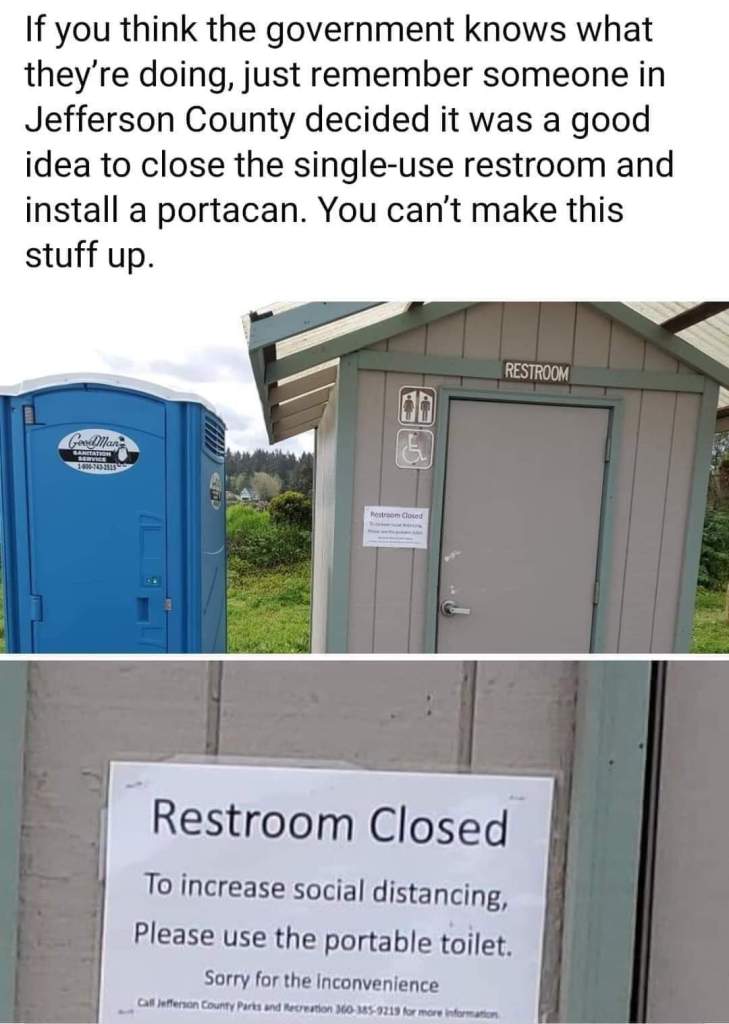
And then there is the not so small matter of shutting down rest areas in a time when truck drivers, always essential, were as essential as ever. You would think that if the goal were to stop the spread of the virus you would want your road warriors to have clean and easily accessible restroom facilities, along with a safe place to sleep. But, to this day, many rest areas remain closed and those open have dingy unheated porta-potties rather than open their regular restrooms to travelers. In a time when health and hygiene is supposedly our focus, they have forced unsanitary and stressful conditions on essential workers. Even after being confronted on this, they continue to persist with this asinine policy with absolutely no regard for the well-being of truckers.

Sure, this could be a mistake. There certainly is no reason to assume that there is some sort of malicious intention here. But it does demonstrate that they lack a special power of discernment over the rest of us. It should make us consider that maybe their whole perspective is wrong. I mean, if their judgment of small matters is so poor, why should we take their word on large matters?
Could it be that those who were elected for their charisma and/or party affiliation and are not truly qualified to lead anything?

Could it be that various government officials were appointed for political reasons, made their careers in places where job performance didn’t actually matter too much, and are incompetent?

Yes, government leaders can get caught up in hype and hysteria just like the rest of us. No, neither they nor their advisors have a special power of discernment. This reality may be disconcerting to those who want a benevolent dictator to tell them what to do, nevertheless, it is true.

The same leaders who nonsensically force truckers to use the least sanitary option could also be blissfully unaware of the severe (and deadlier) economic impact they are inflicting on us. The same leaders who forced nursing homes to take Covid-19 patients, evidently knowing the likely outcome, could be completely calloused to the pain that they are inflicting on you.

Myth That Only Government Can Do Great Things

There are many who are skeptical of government and yet default to the idea that we need to provide us with various services. I mean, who would build the roads if it wasn’t for PennDOT, right?

Of course, never mind that PennDOT doesn’t build roads, they take our money through taxes and then subcontract the actual building to private companies. The reason for this is very simple: The government can never match private for-profit enterprises for efficient use of resources because there is simply no incentive to do so. Therefore, due to this disconnect, when the government does do anything themselves it is insanely expensive and prone to failure.

Government funded and ready for launch!

A prime example, from a century ago, was the competition between Samuel Pierpoint Langley and two brothers from Ohio, Orville and Wilber Wright, to build the first powered flying machine. Langley, funded by the government and fawned over by the media, he had all the right connections and credentials, but his overwrought design ended up in the Potomac River. The Wrights, by contrast, had little to no attention, didn’t even have high school diplomas, ran a bicycle sales and repair business, and beat Langley to powered flight with a very low budget and simple design. But, despite this, it is Langley’s name that graces an Army airbase, the CIA headquarters, and a NASA center.

Oopsies!

Speaking of NASA, the agency has, at great taxpayer expense, done some amazing things. We take for granted the satellites in orbit, the trips to the moon and back, along with the many things this government agency had pioneered that have since become integrated into our own lives. Could one person ever rival these great accomplishments?

The answer is yes.

The answer is that Elon Musk, with SpaceX, can do everything NASA is doing and at a far lower price. It costs a fraction of what the government spent historically for Space X to launch:

“Between 1970 and 2000, the cost to launch a kilogram to space remained fairly steady, with an average of US$18,500 per kilogram. When the space shuttle was in operation, it could launch a payload of 27,500 kilograms for $1.5 billion, or $54,500 per kilogram. For a SpaceX Falcon 9, the rocket used to access the ISS, the cost is just $2,720 per kilogram.”

But it isn’t just space flight that is made easier and less expensive through private innovation. No, at a time when the US Postal Service, a government entity that is supposed to be self-sustaining, can barely make ends meet, there is Jeff Bezos and Amazon making a tremendous profit while delivering tons of products. Sure, Amazon uses the Postal Service, and yet the lack of ability of the government enterprise to modernize and adapt to the current market conditions that is proving to be a fatal flaw. As they beg for another taxpayer bailout, Bezos and others will continue to prove that the same task can be done better and with lower overhead costs.

The idea that there is any worthwhile project that is beyond the reach of the brilliant innovators of the present, without it being financed directly by the government, is completely bogus. Yes, certainly, unlike the Wright Brothers, the Musks and Bezos of this generation do take every tax break or advantage offered to them by government. But you could eliminate all of that entanglement and they would still do it better than any government agency at a fraction of the cost. The government never actually does great things. No, at best it is only ever a middleman that hires people or companies, supposedly on our behalf, that does the great things.

Myth That Only Government Can Keep Us Safe

If you look at the big problems of the past couple of decades that may require government sized intervention, from the 9/11 attacks to the viral outbreak originating in Wuhan, there is a disturbing pattern that emerges. Not only did this super expensive security apparatus not stop the various events and keep us safe, but it may also have actually been the cause of these events due to their prior interventions.

There likely would not be the Islamic Republic of Iran today had it not been for the CIA’s meddling in the domestic politics of Iran. Osama Bin Laden had been an ally in our government’s proxy war against the Soviet Union before he became a threat that cost trillions. Our top US health advisor, across multiple US administrations, Dr. Anthony Fauci, is linked to the organization that funded bat and coronavirus research in a lab in none other than (drumroll, please) Wuhan, China.

No, this is not a conspiracy theory, I’m not even convinced it was malicious in intent in any of the cases above. I agree with Hanlon’s Razor, “Never attribute to malice that which is adequately explained by stupidity.” But, regardless, there is certainly a strong case to make that high-ranking government officials do not comprehend the consequences of their actions, do not account for the blowback, and their solutions often create bigger problems.

Are you sure you want the same people who created the problem, in the first place, to manage the response as well?

Maybe it is time for a second opinion…

And then there is the inconvenient truth that many in government are the actual criminals!

Well, not that those truly guilty are ever prosecuted by the same standards applied to us or others of lower political status. Case and point: General Flynn was criminally prosecuted for what amounts to a perjury trap and in the context of an investigation that had no legal basis, to begin with, but a certain prominent US politician lied under oath to Congress and never faced any real threat of punishment.

No, we are no better today than in the time of kings when it comes to equal justice. Those with real power (usually the combination of media and government agencies sympathetic) are never held accountable or to nearly the same standard that is applied to the average person. Even in Pennsylvania, where nursing homes were forced by the state government to take Covid-19 patients, guess who is being investigated by the state Attorney General for the resultant deaths? If you guessed the governor’s administration that ordered the sick into the nursing homes, then you would be wrong. Nope, instead, they will investigate the nursing homes, which is a typical “smokescreen” strategy or means to distract from those who truly should be held accountable.

The Myth of the Significant Party Difference

One of the most persistent and most blinding myths of politics is that the two parties represent something vastly different. If you are one of those Obama fanboys who still believes that his administration was scandal-free even now, because he says so, even after the “Fast and Furious” gun-running scandal, after weaponization of the IRS against political rivals, and actually believe he didn’t know anything about the Watergate-esque spying under his watch, then you are a complete tool. Likewise, if you see Trump as being a saint because he says some Christian things and posed with some pastors, then you are an insufferable fool.

The real difference between the two men is that Obama is and expects to be catered to as one who can wax eloquent in a manner that sends shivers down the legs of other social elites, while Trump is a populist who knows how to work a crowd and is old (or rich) enough not to care what the talking heads think. If you don’t see Obama as being as narcissistic and corrupt as Trump then you probably also side against Biden’s accuser, with a corroborated allegation of sexual assault, while screaming #believewomen only a couple years ago because that is what you were told to do. Trump might be a bully, an unapologetic Twitter troll, but Obama is the popular snob who snickers behind the backs of those of lower status while knowing how to work the system in his own favor.

The only reason that I find Trump tolerable is that he offends who aren’t accustomed to being called out and is the underdog in the fight. The fact that Trump is loathed by the corporate media and political establishment, both Republicans and Democrats, is enough reason to like him. Most Trump ‘scandals’ amount to little more than elaborate misinformation campaigns. For example, when Trump suggested hydroxychloroquine had promise as a treatment option for Covid-19, something many doctors agree with, this was equated to telling people to drink poison and is still being ridiculed. Why? Well, because Trump said it and they hate him with a blinding passion. They would probably rather die than acknowledge that Trump is right.

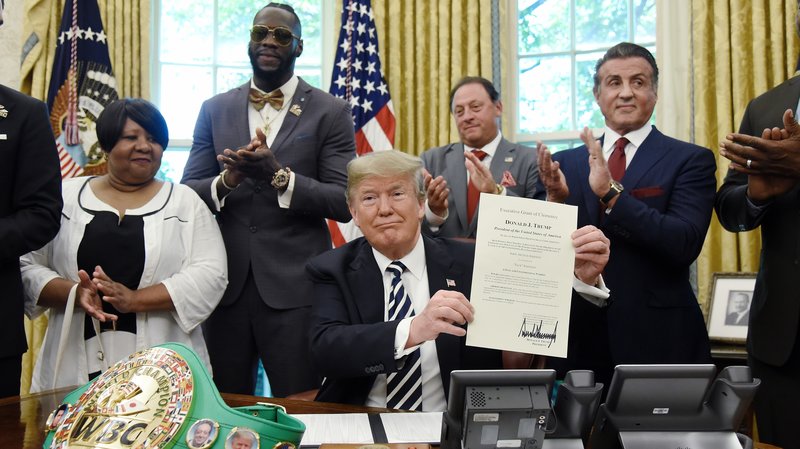
But, in the end, I do not see Trump as a savior any more than any other politician. Sure, I am glad that he’s a challenge to the status quo. It’s fun to see his rivals become unglued and expose themselves as being as nasty under the thin veneer of their fancier, more sophisticated, language. However, the idea that any particular political party or person has all the right answers, or that Trump can be trusted with power more than anyone else, is balderdash. Trump should be mistrusted. He is as fallible as anyone else. My only complaint is that those attacking him, often for overtly political reasons, never face the same level of scrutiny nor are ever held accountable for their abuses.

The Myth of Having to Be Pro- or Anti-government

After writing all of that one might assume that I’m anti-government. I’m not. I believe that governments exist for a reason and abolishing them would not result in harmonious perfection. The same evils that plague government leaders would not simply go away because we eliminate the government and there is a moral order enforced by the state even if we do not fully agree with it. Sure, we may not like that a State Trooper gives us a speeding ticket and yet most of us are appreciative when a murderer is brought to justice in a way that we couldn’t do individually for ourselves.

In the Philippines, where the central state is relatively weak and law enforcement resources stretched thin, murderers often face no consequences. I know this from having experienced it first hand, the men who murdered uncle Roland are still free despite strong leads because the police there do not have the ability to follow up. By contrast, in the United States, even with the smallest leads, government investigators were able to find the killer of Sasha Krause recently and Marco Kauffman before that. That closure provided doesn’t bring back those loved ones taken away, but it certainly does help to take a killer off of the street and to provide some deterrence against others who would do evil.

If the United States government were to disband the relief from the tyranny we know would be extremely temporary and the peace short-lived as something would come in to fill the vacuum. A disorganized band of anarchists will do very little to stop even a Mexican cartel, let alone the People’s Republic of China, or anyone else who decided to take advantage. The peaceable folk who enjoy prosperity under the umbrella of government protection would either need to lose their disposition or learn to appreciate the taxation without representation of armed thugs who take whatever they want, including the innocence of their daughters, without ever needing to face consequences. We would be foolish not to consider the benefits of our imperfect order over the likely alternatives.

But, that said, I’m under no delusion as far as the righteousness of our social elites and governing authorities. They are as flawed and lacking in good discernment anyone else and often too often greedy for more power by any means.

Anyhow, I had sat on this post for a couple of weeks because I didn’t know how to finish. The tragic circumstances of George Floyd’s death, while in the hands of the Minneapolis Police, underscores the point of this blog quite well. No matter how intentioned or carefully formed, there is no escaping the reality that governments aren’t any better than the people that populate their nations. There is simply no escape for this reality, that no government in history or currently existing can save us from ourselves. The only hope for perfect justice is through faith in the kingdom where the fears, prejudice and greed, lust for power and lawlessness, are finally defeated in the hearts of men. Where we can govern ourselves according to the example of Jesus Christ.

Blinding Obsession — The Rise of the Covid Karen

Standard

I’ll admit, it went through me when I heard that my brother had the clear symptoms of a Covid-19 infection. Sure, it was far enough along that the deadliness of the disease wasn’t so statistically foreboding anymore. But emotionally there was a certain significance that was given to this and a bit of dread as well. What if this loss of taste developed into serious respiratory issues? My brother or one of his family members, who had been at home with him during the shutdown, could die.

My brother is fine. He was never formally diagnosed with the virus, they would not test him given that his symptoms were not life-threatening or severe and he could ride it out at home. The probabilities were always in his favor as a relatively young person in good health. However, my own anxieties, despite my own understanding that the risk of him dying was not that much greater than it ever was for him or other members of my family, were something of interest to the more rational half of my consciousness. Why would I worry at all when the threat really wasn’t that great?

It is one of those quirks of human psychology, I suppose, that we can go from not knowing a person at all to being totally obsessed, wondering how we ever live our life without, “text me when you are home safe,” with them. Likewise, when something ‘novel’ comes into our lives, be it a new video game or an unknown virus, we can’t get our mind off of it. We are fascinated with this unknown commodity, whether we want to protect it (as in a new love interest) or protect ourselves from it, our thoughts will go there over and over again. It can be consuming, it can be blinding as well.

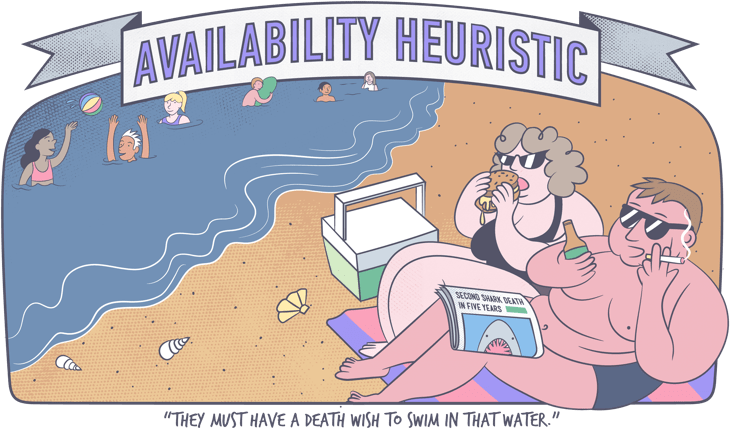
Fear of Covid-19 has much to do with availability heuristic or the tendency people have to judge the likelihood of an event based on how readily they can recall said event. This is what makes anecdotes so powerful. Some stories of young, otherwise healthy, people getting a disease and dying will feature far more prominently in our minds than the dozens lost in car accidents. I have a good friend who had a friend my age die and knows of another. The media has fed into this bias by highlighting the suffering of some. It feels likely enough and yet here’s the reality of the situation:

“To put things in perspective, the virus is now known to have an infection fatality rate for most people under 65 that is no more dangerous than driving 13 to 101 miles per day. Even by conservative estimates, the odds of COVID-19 death are roughly in line with existing baseline odds of dying in any given year.”

How Fear, Groupthink Drove Unnecessary Global Lockdowns

That is not to minimalize the threat. I know a couple of cases of people who have become seriously ill due to Covid-19 and, yes, many people have died who would’ve otherwise lived. The virus can be quite contagious in certain conditions, it can send a relatively young person to the hospital, I believe that many more will fall ill and some of them will die.

But, the thing is, our outsized focus on this virus is to minimize the many other risks equal or greater in consequence brought on by our response. It is deeply troubling to me that so many people seem so completely unable to comprehend the strong possibility that, with our saving people from the specter of Covid-19 and obsession on one risk out of many, we are ultimately killing more people by suicides, drug overdoses, neglected cancer screenings (along with other medical procedures being postponed) and starvation.

Why is it selfish for a young economically vulnerable person to work, to put food on their tables, and not selfish for you to order them home in a vain attempt to save grandma?

Furthermore, going back to my momentary fear of losing my brother, there was always a far greater risk to my brother’s life from him driving to come visit than from the infection. Why don’t I call him every fifteen minutes to make sure he’s wearing his seat belt? If physical safety was the only concern, then what would posses me to encourage him to take up flying years ago or to join him in the cockpit years later? It makes no logical sense for me to have a terrible fear of a virus that kills a small percentage of the infected while accepting or even encouraging more dangerous activities.

Rise of the Covid Crazed Karens

Many imagine a zombie apocalypse: The living dead, creatures of human flesh and yet no longer human anymore. Well, we are living in such times. The zombies are here and they are here to rob you of life with their devouring fears. And, unlike the fantasy horror movies, these are zombies that you aren’t allowed to shoot. But beware, if you decide not to comply with their screeching demands and choose to live as a free person, they may make real on their threat to shoot you.

Think I’m exaggerating?

Think again.

Dr. Jennifer Rager-Kay, a gun control activist and school board member, not too far down the road from me. Decided that it was completely okay and rational to threaten to kill people for refusing to wear masks around her or her family. Dr Rager-Kay (aka “Karen”) was in such a lathered up panic about a virus that has a very low probability of death that she was actually willing to murder. Makes one think of the expression, “Physician, heal thyself.” This woman is obviously smart enough to make it through medical school, but seems woefully lacking in rationality and ability to keep things in perspective.

Now, in defense of Karens everywhere, most are content to only steal away your life by imposing their “new normal” and won’t actually shoot you.

However, they all have a sort of nurture gone bad, the assessment of their own importance that is shared by hall monitors everywhere. Possessed by their lack of contol or relative insignificance an a complex and unpredictable world, they wield their petty authority over their neighbors given to them by state snitch lines, wag their sanctimonious fingers at anyone who doesn’t meet their own standard, and are completely willing to imprison you for your own good. They stopped thinking months ago when their minds were reprogrammed, infected by fearful anecdotes, their cognitive function addled by scary projections, never considering new evidence, and they are now mindless zombies stuck on repeat, “Covid bad, must stop Covid!”

Of course, Covid Crazed Karens are not only women nor only the meddlesome troublemakers of memes, there are many man and people in positions of real political power who are willing to kill you for your own good and seem even to have some sort of sadistic satisfaction watching people squirm under their smoothering care. If only you would start thinking their way, sacrifice your all for their misguided public safety crusade, then everything would be just fine. You see, they think like a psychopath, that your suffering is only a result of your defiance against their wise council, that it would not be tyranny if you would simply submit to their lawless edicts.

You must be broken, like Winston in Orwell’s 1984, who after torture finally becomes a zombie to the cult of the totalitarian state:

“Years it had taken him to learn what kind of smile was hidden beneath the dark moustache. O cruel, needless misunderstanding! O stubborn, self-willed exile from the loving breast! Two gin-scented tears trickled down the sides of his nose. But it was all right, everything was all right, the struggle was finished. He had won the victory over himself. He loved Big Brother.”

George Orwell, 1984

We may not have Big Brother. But we do have Karen watching and her fear-driven lust for control over you won’t be satiated once Covid-19 has passed. No, you are already being conditioned, you will accept her “new normal” or you will die. And, if you don’t die from the virus be sure she will punish you severely for her being wrong. A Karen is never wrong, being wrong does not compute with her one track mind, and she will kill you, if need be, to prove the point. The zombie apocalypse is upon us and these privileged elites are out for the blood of you ignorant and unwashed common folk.

But Covid Karen is not the only threat, Denial Deranged Darnell, well he’ll tell you masks don’t work because he once had a fart that stained his underwear and, with pride, he will tell you how he survived his entire life never once wearing a seat belt, that he actually drives better drunk, and you can’t tell him ’nuffin! Watch out for him as well, he may not have the power of government on his side, but he has already killed a security guard in Detroit and wounded a Waffle House cook in Aurora, Colorado, for the “disrespect” of mask policies. He thinks carrying a firearm to a protest makes him tough. No wonder so many Karens think the masses need to be controlled!

Tools, Fools and Messy Middlers…

Standard

A couple of weeks ago I had a decent start to a blog on this topic and then Evernote, my usually reliable mobile word processor of choice, decided to send my work into the sea of forever-lost things. My hope was to describe something that I’ve noticed for years and has become even more pronounced in my mind as I observe the Covid-19 pandemic response.

Before I get started, and so nobody is unduly offended or thinks this explanation is personally directed at them—it is not. I wrote most of this before the latest round of conspiracy theory videos and adding this part later because some reading might assume that my commentary has something to do with that—which it does not. 

Any similarity between my words here and a particular person’s response to the pandemic (over the course of recent days) is purely coincidental.

If the shoe doesn’t fit, don’t wear it!

That out of the way, the first two categories of Covid response that I’ve observed represent the extremes. These two groups are the louder less rational of the three. The tools have the power of institutions behind them, the system is stacked in their favor and they feel special. The fools, on the other hand, are the unappreciated, those mocked as “deplorables” by political elites, and are being increasingly rebellious against the belittling authorities. The rest of us are in the middle somewhere, rejecting both extremes, seeing a little of both sides, and independently make up their own minds.

Anyhow, I have to be careful which group that I start with because once people who tend towards one group recognize themselves in my writing they might stop reading and dismiss me as being the much-loathed ‘other’ extreme. But, since there’s definitely a difference of tolerance for ideas (other than their own) in the one group, as compared to the other, I’ll start with the fools. They are used to taking a beating and will be more likely to hear me out than the tools.

So, fools, you’re up…

The “You’re Not the Boss of Me” Fool

They say to compliment a person before you lay on the insults and so I’ll stay true to that format by noting that the fools are more likely to be in that “essential worker” category as those who are willing to get their hands dirty for everyone else. They are mechanics, farmers, cooks, garbage collectors, contractors, and factory workers. These people might not be able to articulate themselves very well, yet they do know when they are getting the shaft and have been getting the shaft for quite some time. It is only right to mistrust the tools that have sold them out.

I’ll admit, I have sympathy for the fools, they are nose to the grindstone workers, won’t hesitate to help without asking for a dime, and are basically the bedrock of this nation. They are also the ones who suffer the most due to imported labor and outsourcing over the past few decades. They have seen their wages flattened and opportunities dry up. Smarmy politicians, with beautiful polish, told them how much they cared, that new jobs would come and then never delivered. In 2016 these people (some who voted for Obama and don’t care about political affiliation) came out for Trump in very large numbers because he spoke a language they, as the blue-collar workers, could appreciate.

The fools, despite lacking a four-year degree, are not dumb and have “street smarts” that allow them to see things that their intellectual tool counterparts do not see. That said, they are as blind by their own biases much as anyone else and are quick to spread conspiracy theories that validate their mistrust for authority figures. And that is exactly what they think about this Covid global pandemic, they aren’t sick themselves, they don’t know anyone who is sick, they don’t see the hospital parking lots full and therefore the shutdowns must be some sort of nefarious scheme. Of course, who can blame them? Only a month or two ago the same corporate media was telling us that the virus in Wuhan was nothing to worry about, that we should be more concerned with the seasonal flu, etc.

The fools are right in that they are mistreated by the elites. They are also right to question the official narrative. I mean, let’s be real here, politicians do lie (both parties) and members of the media most certainly do have political agendas as well. At some point, and very often for good reason, the fools have become disenchanted with the establishment and sometimes they simply take this too far. They reject even common-sense recommendations, like wearing masks, because they a) don’t like being told what to do and b) they read some meme put out by some random internet user who agrees with them. A fool could be dying in an ICU bed, gasping for their last breath, and still in denial of the severity of a pandemic.

“The way of fools seems right to them, but the wise listen to advice.”

(Proverbs 12:15 NIV)

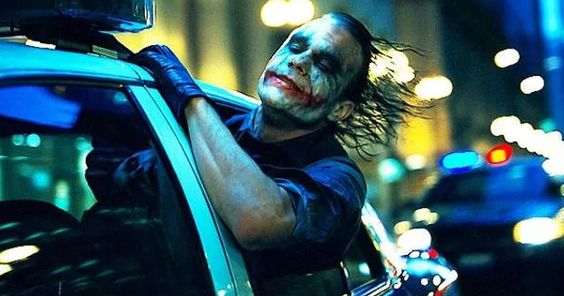
The fools are like Joker, they are agents of chaos that arise in response to an unjust order and challenge Batman (a tool of the system) to take off his mask so everyone can see who he really is. Perhaps the Dark Knight would look a bit less heroic, as one of the primary beneficiaries of the system he is defending, once his pretense of moral purity was removed?

The problem with the fools, is that they are like the crazy zealots before the fall of Jerusalem (eventually destroyed by their own infighting, which is what happens when the inmates run the asylum) or the Anabaptist “Tailor King” who led a rebellion in Münster, they are able to expose the corruption of the system and yet unfit to lead themselves. The fools, useful as they are, were made to perform the mundane (yet essential) tasks and would perform them well, without protest, if their efforts were properly appreciated by their betters in government and the social hierarchy, they deserve to be heard as much as anyone else. But I do implore the fools, read the account of Josephus about the fall of Jerusalem, consider the end of the Münster Rebellion, become wise to your own foolishness!

For the waywardness of the simple will kill them, and the complacency of fools will destroy them; but whoever listens to me will live in safety and be at ease, without fear of harm.

(Proverbs 1:32‭-‬33 NIV)

Humility is the first step to wisdom. It is knowing your place before God and respecting those whom God has ordained as his servants. Rebellion against all authority, except one’s own understanding or that which one agrees with, is a path to destruction. A fool remains a fool so long as they are so arrogant as to believe that they, some blue-collar yokel who can barely spell “college” on a good day, knows more than those who have spent their entire lives studying a topic and have become respected in their field enough to serve Presidents of both parties. Sure, the experts get things wrong, but so do the fools and often (as the victims of Dunning-Kruger effect) more than they’ll ever be able to realize and would be smart to stay humble.

The “I’m Too Smart To Hear You” Tool

The tools took their guidance counselor’s advice, they believe in the fiction of “settled science” and have an undying trust in their institutions. They are basically fools, but with a larger vocabulary and a much more blinding subservience to the system that they have bought into. Now, in defense of tools, many are in the professional class, they are teachers, professors, nurses, doctors, and lawyers, often people on the government payroll, and deserve credit for being able to navigate their way through the ranks. Unlike the fools, who could not make it through a college-level class, the tools are masters at learning what they are supposed to learn.

However, despite their snobbery towards those of a lower social order, the tools are often no better than the fools whom they ridicule and are simply parrots using bigger words. A month or two back, when the corporate media (and NPR) was telling them that the seasonal flu was a bigger threat than Covid, they snickered at us dolts making our own alternative judgment of the facts and getting prepared. And now, when the same media tells them that the sky is falling and we must close everything forever, these tools soak it up like a sponge and then go lecture their neighbor, out mowing his lawn, for breathing the fresh spring air. Or call the snitch line set up by other tools. I mean, how dare he defy the experts! Of course, they themselves, like the media they consume, aren’t actually the experts and should probably question the experts as much as they do Trump.

Oh, and did I mention that the tools absolutely hate Trump?

To the tools Barack Obama was the pinnacle of the Presidency, they swooned as he read the teleprompter in his “clean” and “articulate” (thank you Joe) professorial tone. He could have spoken complete nonsense and they still would have been breathless about how ‘presidential’ he sounded. Then, in walks the brash billionaire, a Twitter troll, who uses crude unsophisticated blue-collar language and has a kind of humor that they can’t comprehend. The tools are horrified by Trump. He falls outside of their understanding of the world, an anomaly, and they believe that he is a fool because he is not like them and that’s what the media tools tell them. But the reality is that they hate Trump because he exposes their system for what it is, his mere existence creates cognitive dissonance for them and therefore he must be destroyed so they can go back to their religious faith in their system.

This is why, when President Trump, makes some off the cuff suggestion, something even the fools know to take with a grain of salt, they take him completely literally and (to the amusement of everyone else) have a conniption fit. Even if he muses something completely reasonable or worthy of consideration, such as his mention of hydroxychloroquine as a potential lifesaving treatment, they are desperate to prove him wrong and show the rest of us how intelligent they are. How dare he! It has side-effects, don’t you know! People might drink fishbowl cleaner! They are the rightful rulers, after all, they took AP Biology in high school, and the fools need to be put back in their place!

It has gotten absurd to the point that even when one of their own, a Democrat lawmaker from Detroit, gives the President’s advice credit for their recovery from a deadly disease the tools feel the need to punish that non-conforming person. When everyone else hears Trump use colloquial terms to describe the true goal of any medical intervention, to disinfect, they freak out and claim that he said the equivalent of “drink bleach” and then wonder why the fools aren’t taking them seriously anymore. They are not the bastions of rationality and pure goodness they see themselves as. No, they are tools for those more powerful, their reward for compliance is the right to exploit their lessors and thus they are as corrupt as their masters.

Every self-righteous tool in the universe is going to go nuts for me saying this, nevertheless, if they hear me out they’ll know it is true. Trump, like Sampson who was an unruly and disruptive character married to a foreign woman, is a type of Christ. Obviously, although I need to say it in case there are still some tools left reading at this point, Trump does not have a moral character worth our emulating and he should never be regarded as being our Savior. But how the tools of our day oppose him as an uncanny similarity to how Christ was opposed by the social elites (and underlings of the Romans) of his day.

For example, read the account of a man healed by Jesus in the Gospel of John (read the whole account here) and how the Pharisee tools weren’t having it:

They brought to the Pharisees the man who had been blind. Now the day on which Jesus had made the mud and opened the man’s eyes was a Sabbath. Therefore the Pharisees also asked him how he had received his sight. “He put mud on my eyes,” the man replied, “and I washed, and now I see.” Some of the Pharisees said, “This man is not from God, for he does not keep the Sabbath.” But others asked, “How can a sinner perform such signs?” So they were divided. Then they turned again to the blind man, “What have you to say about him? It was your eyes he opened.” The man replied, “He is a prophet.” They still did not believe that he had been blind and had received his sight until they sent for the man’s parents. “Is this your son?” they asked. “Is this the one you say was born blind? How is it that now he can see?” “We know he is our son,” the parents answered, “and we know he was born blind. But how he can see now, or who opened his eyes, we don’t know. Ask him. He is of age; he will speak for himself.” His parents said this because they were afraid of the Jewish leaders, who already had decided that anyone who acknowledged that Jesus was the Messiah would be put out of the synagogue. That was why his parents said, “He is of age; ask him.” A second time they summoned the man who had been blind. “Give glory to God by telling the truth,” they said. “We know this man is a sinner.” He replied, “Whether he is a sinner or not, I don’t know. One thing I do know. I was blind but now I see!” Then they asked him, “What did he do to you? How did he open your eyes?” He answered, “I have told you already and you did not listen. Why do you want to hear it again? Do you want to become his disciples too?” Then they hurled insults at him and said, “You are this fellow’s disciple! We are disciples of Moses! We know that God spoke to Moses, but as for this fellow, we don’t even know where he comes from.” The man answered, “Now that is remarkable! You don’t know where he comes from, yet he opened my eyes. We know that God does not listen to sinners. He listens to the godly person who does his will. Nobody has ever heard of opening the eyes of a man born blind. If this man were not from God, he could do nothing.” To this they replied, “You were steeped in sin at birth; how dare you lecture us!” And they threw him out.

(John 9:13‭-‬34 NIV)

Obviously what this man was telling them didn’t comport with their own religious ideology or preconceived understanding of the world. Instead of celebrating with the blind man who was healed, they sought to discredit him so they would not need to acknowledge the truth of their own spiritual blindness. Jesus was a threat to their system, he was turning everything they knew (or thought they knew) on its head and was a very real threat to their own prestige. They, like the safety-conscious leaders who had it out for Sampson, muttered amongst themselves about how Jesus was a threat to their way of life and obsessed on finding a way to destroy a man who held a mirror to their own narcissism and true cowardliness.

Still don’t see the parallel?

Try this…

The chief priests and the whole Sanhedrin were looking for evidence against Jesus so that they could put him to death, but they did not find any. Many testified falsely against him, but their statements did not agree. Then some stood up and gave this false testimony against him: “We heard him say, ‘I will destroy this temple made with human hands and in three days will build another, not made with hands.’ ” Yet even then their testimony did not agree.

(Mark 14:55‭-‬59 NIV)

They misrepresented what Jesus actually said. Yes, certainly, he had recently talked about the destruction of the temple. But he was making a metaphorical reference to himself, something they could have or even should have known and probably did secretly know, and yet they were simply blinded by their agenda and irrational hatred of a man who defied their system.

Sounds familiar, doesn’t it?

Trump is no Jesus, neither was Sampson. But all three of those characters could expose the tools for what they really are.

The tools think they are smart because they follow the rules and are given the privilege of maintaining the system that subjects the fools. They enthusiastically latch onto anything their own masters (academic institutions, government agencies, corporate media, etc) tell them and yet refuse to acknowledge the reality that is right before their own eyes. Tools, as slaves to the system that created them, hate innovators and those who challenge their own status quo. Under their eloquent and silky words is a metastisized spirit of entitlement and a nastiness worse than that of the blunt and unsophisticated language of the fools whom they self-righteously condemn.

They are like the enemy spoken of by David:

His talk is smooth as butter, yet war is in his heart; his words are more soothing than oil, yet they are drawn swords.

(Psalms 55:21 NIV)

I think we’re all familiar with those who, pardon the expression, think their own shit don’t stink. The tools see their own motives as being pure as the wind-driven snow and beyond reproach. They even act as if they are patrons for those whom they claim to be disadvantaged, pushing social justice and identity politics to further their own advantage. It is not true love or compassion, if it was they would show equal concern and offer an open ear to those who weren’t as useful for furthering their own ideological agenda. In actuality, the tools are simply better at hiding or rationalizing their own toxic attitudes. They are as prone to confirmation bias as anyone else, blind to their own inconsistencies, and the least woke people of the planet despite their self-gratifying delusion of the superiority of their perspective.

Tools are tools because unlike the other fools (which they also are despite their intellectual advantages) they are quite unaware of the flaws of the system that they worship. They do not even realize that they are an apparatchik, an instrument manipulated, and are way too willing to do whatever they are told without asking enough questions. These are the people who know nothing outside of their own specialties and then will arrogantly lecture someone for deviating too far from the narrative-based in their own independent observation. It’s as if they do not realize that every advancement that they now enjoy and take for granted didn’t come as the result of someone silly enough to try something new and different.

The “Can’t We Just Get along” Messy Middlers

Okay, if you have put up with me this long, here’s the big reveal: Most people are not complete fools or totally tools and instead reside in the murky middle ground between the extremes.

Most of us didn’t go fill ten carts with toilet paper nor would we call a snitch line (other than to prank the authoritarian control freaks on the other end) and are willing to wear a face mask while also able to question the wisdom of months of economic lock down. We don’t worship at the feet of any politician (certainly not Trump’s) and yet are able to cooperate with those who are the authorities over us. We are always skeptical of the official narrative, realizing that those forming it are fallible humans and often with agendas, but without turning to conspiracy theories.

Speaking for myself, my own worldview has been shattered enough times that there is very little smugness left about the power of my own reasoning or the authority of my own opinions. I mean, I still have an opinion and can’t really claim to be all that humble either, but one might say that I’ve been broken by the School of Hard Knocks. I’m smart enough to know that I’m basically average, certainly not extraordinary enough to call myself an expert at anything and yet not a blithering idiot or at least I’m not an idiot who lacks in enough words to express his perspective. I’m also too contrarian to be a tool. I zig when too many people are zagging. I think this puts me somewhere in the middle.

The middlers are those of us who readily agreed to concepts like “flattening the curve” and giving our medical professionals time to gear up. That made sense. There were shortages of masks and other protective equipment. We didn’t know what we were up against given misinformation coming out of China. So we took the precautions that were recommended. That said, when “flatten the curve” morphed into “stop the spread” and months-long shutdowns—while the most dire of prediction models proved false—many who are in the middle have begun to grow uneasy about the growing economic consequences, note the arbitrariness of the rules (crowded Walmart is okay, but beach and park is not?) and rightfully wonder if this strategy was well thought out.

No, middlers aren’t necessarily ready to join the fools in their protests. Or, if some of the middlers did, they at least wore masks or protested from safety of their vehicles. However, middlers are also seemingly more able than the tools to see a broader perspective than that of the tools (like those celebrities who tell us “please stay at home” and apparently think that we make our decisions based on their pontifications) and can think for themselves. The middlers, unlike the tools, aren’t consigned to the established dogma nor do they foolishly reject anything they themselves cannot comprehend. Whereas fools are too stupid and tools, seeking expert consensus, too lacking in their own judgment.  The middlers are the true critical thinkers, the Elon Musk types who defy everything, and those who are more capable of creating advancements in science, technology, and medicine.

The middle is messy, especially in a world that has become increasingly complex and socially fragmented, where truth has become secondary to position and our institutions have failed to deliver as promised. Us middlers, like the decent people in Jeruselum before the fall, get caught in the crossfire. The zealous fools think we are “sheeple” for not joining their revolution of idiots. Meanwhile, the tools dismiss us as fools, with an indignant snort, because we dare to suggest that there’s another way to look at the facts and go against the narrative that they now accept as Gospel truth—until their masters tell them to believe something else. The middlers get that even experts and government agencies get things wrong, that experts don’t always agree and that’s not always a conspiracy or nefarious plot, it is just the reality of the world we are in.

It is hard to be in the middle. We suffer the excesses inflicted upon us by both extremes. We put up with the condescending tools and try to ignore the obnoxious fools. We aren’t always right ourselves, finding the truth can be a messy business, and being caught between two sides fighting for narrative control can be exhausting. It takes more work to maintain independence in a world that has become increasingly polarized. It means vigorously standing up to both sides of a false dichotomy and then also recognizing our own potential blind spots as well. We have been tools and fools ourselves, on occasion, and must therefore stay humble.

The Dangerous Lie of Shut Down or Die

Standard

False dichotomies pop up everywhere in the political discourse. You are either pro-life or you are a raging homicidal baby-killing feminist monster and, alternatively, you are either pro-choice or you are “at war with women” and would turn the world into “The Handmaid’s Tale” if ever given the chance. Of course, both sides of that dichotomy are grossly misrepresenting those on the other side. Some of the most vocal proponents of pro-life that I know are of the female gender, would rather not have their lives ruled by men or be treated like baby-making slaves. Likewise, many on the pro-choice side are intelligent and compassionate people who follow a different dogma as far as what does or does not constitute a separate human life.

Where you stand on the recent Covid-19 forced closures probably has much more to do with your politics than it does with your personal level of scientific sophistication. Sure, there are many, blinded by their own confirmation bias, who see everything they believe as being scientifically based and rational, but that is to be in denial of the role that their own emotions play in their judgment. The decision to shut down the economy due to the virus had has much to do with fear as fact. How do I know? Well, there weren’t a whole lot of reliable facts to go on when the decisions were being made. We had models, yes, but models are only as reliable as the data entered and the accuracy of the assumptions that they contain. Their predictions are not facts. What likely had a big influence is the scary stories coming from Italy and the lack of good information from China.

The Changing Understanding of Covid-19

I had been in favor of the shutdowns, initially, to give time to make a more accurate assessment of the actual threat and also to give time for our medical professionals to gear up amidst global shortages of personal protective equipment. Sure, many Americans are of the pigheaded mentality that they will drive eighty miles per hour into a blinding fog bank and then have massive pileups as a testament to their inability to slow down for anything. But it is only prudent to enter into a potentially deadly new situation, with many unknowns, with an abundance of caution. The arrival of Covid-19 onto the world scene was such a circumstance. The idea of social distancing to “flatten the curve” made sense at the time.

However, as a couple of weeks morphed into a month or more and the language of state politicians mysteriously shifted from slowing the spread (as we were told was the reason for the shutdowns) to trying to stop it entirely, while at the same time the there was growing evidence that the virus was not as deadly as first thought, was likely here earlier than had been previously known and may have actually reached the peak (unflattened before the shutdown measures had been implemented) in some places, I kept waiting for decision-makers to shift their policies according to the actual evidence. But they did not. Frozen by fear or too stubborn to revisit their previous decisions (or maybe even wanting to punish those opposed to their lockdowns and show who is boss, who knows?) there was no change. They were determined to plow ahead with their prior decision based on bad data, economic consequences be damned, so wear your masks, go to Walmart like good little citizens and shut up.

We all have an idealogical team we are pulling for, whether we realize it or not, and it can cloud our perspective of an issue. Sure, you might believe that your ignorance of virology is “common sense” (which, unfortunately, is probably common and yet good sense is not always common) and refuse to take reasonable precautions. Or you might think your own opinion (and that of the experts whom you agree with) is some kind of “scientific consensus” and an irrefutable fact. But the reality is that you might just be too arrogant (in your little knowledge or, rather, knowing just enough to be dangerous) to understand that there could be perspectives greater than your own. The frustrating part for me was always being caught between the false choices put out by those on either side of the political debate. Those calling the virus a hoax, dismissing the effectiveness of masks, and being generally ignorant only armed those pushing for control with a false moral imperative to double-down on their shutdown or die mantra.

Covid-19, while certainly deadly for many and even if those terrifying early estimates of a 2-4% death rate had held true, is nowhere near the Spanish flu. The real number, given growing evidence gathered by antibodies testing and from various ships where everyone was tested, shows a true death rate closer to 0.5% which isn’t too different from the seasonal flu over the course of an average year. Yes, it did certainly stretch our medical resources thin, and likely would’ve with or without the shutdowns, yet there is little evidence to show that our economic self-sabotage actually saved lives. No, if anything, we may have simply destroyed opportunity for those most vulnerable here and around the world for no real gain. It is quite possible, even probable, that more will die as a result of the forced shutdowns than were saved. In the end, the decision to shut down the economy was never a question of shut down or die. For many, it may very well be shut down and die.

False dichotomies are dangerous. They are lies. This polarization of our many choices can come with tragic results.

Economic Shutdowns Also Kill People

In my many discussions about Covid-19 I’ve run into many reoccurring and economically illiterate sentiments, like this one: “I’m sorry but I can’t believe I’m reading this. No compassion for human life and suffering?” That in response to a well-written article weighing the benefits against the costs of the economic shutdown. Apparently, in this person’s emotion soaked and one-dimensional brain, the only way you can show compassion for human life and suffering is to keep people caged in their homes and unable to feed themselves?

As a starting point, there was never a scenario where there could be zero deaths from Covid-19. That ship had sailed long ago, in China, when the authorities there continued to let people from the epicenter travel around the world (although not domestically) and sailed when many Western leaders were more concerned with things like “xenophobia” than the virus. Maybe had Europe joined the Trump administration in banning travel from the source of the outbreak there may have been a chance of containing it. But it was already too late by the time concern about the virus and death tolls had finally exceeded worries about political correctness and virtue signaling about race. Places like New York City and Los Angeles were going to see tens of thousands dead regardless of what was done at that juncture.

When the shutdowns began, in earnest, the virus was already deeply entrenched. The first verified case in France, for example, has been recently discovered to have been back in December already and much earlier than initially thought. It had likely spreading while some politicians here were still encouraging people to crowd the streets of Chinatown and was definitely being passed around while Italian leaders were telling people to hug Chinese people (from Wuhan, no less) in a misguided effort to prove they weren’t racist. The die had been cast and we were in for a wild ride.

But what we did have a choice over is how we responded to the threat. Certainly, the virus had not reached us all, and we could not know (without significant testing) if the peak of infections was a couple of weeks out or still months ahead. If the virus had reached relatively few of us and the death rates were already skyrocketing then the most desperate measures were completely justified even if it cost some lives. On the other hand, if the virus had already been in circulation for months and the hospitals weren’t already jampacked, there was very little to be gained and plenty to be lost from sweeping anti-economic measures. Those with strong social networks and a fat wallet, like the Hollywood celebrities urging us plebes to stay at home while they sip martinis in their hot tub, might not get it, but there are serious consequences to economic shutdowns even if you do not personally experience them.

For those who still think that there’s no harm done by shutting down (simply because they are amongst the privileged less affected and able to put food on their own tables), keep reading.

This idea that the economy is about Wall Street and stock portfolios is complete and utter nonsense. The concern many have about the shutdown has nothing to do with the fiction you hold of Scrooge McDuck swimming in his vault full of gold coins and perpetually worried about losing his wealth. Not at all. First, no billionaire (other than the Hollywood fantasy villain version) actually has moldy money, billionaires are billionaires because they make good investments and their investments are often in life-sustaining industries, like healthcare. Second, most of the economy is Y-O-U. The economy is, simply put, our transactions together, the labor we use to produce things of value to trade with others for our wants and basic necessities.

That out of the way…

Domestic Abuse, Drug Overdoses, and Suicide Rates

Shutdowns have consequences and the consequences are often much more devastating for those most vulnerable. I think often of my waitress and waiter friends, people in the restaurant industry, who have suddenly without warning had their entire income stream dry up by the executive fiat of someone who gets their paycheck via the state treasury or through an accumulation of assets. Sure, Trump and Congress have taken action to offset some of these losses by direct payments, unemployment compensation has been extended to many who might not otherwise qualify and yet that will do nothing for those permanently unemployed.

For many in the world, in the same way that Covid-19 is deadly to those with comorbidities, an economic shutdown is (or will be) that proverbial straw that broke the camel’s back. Sure, you can say that the guy devastated by the bills piling up and his bank account drying up, his business being shuttered, should see the bigger perspective. But that is no different from saying that we should not care about Covid-19 deaths because those most impacted were dying anyway and that their comorbidities actually killed them. The fact that not everyone is as financially healthy as you are or as emotionally able to weather the storm caused by the shutdown doesn’t undo the damage done to those who are more vulnerable.

The socio-economic cost of the shutdowns should be factored into the decision as much as the potential gain. Sure, there is a possibility (although it is not proven) that the shutdowns may spare a few that would otherwise have perished from the virus and accompanying complications. But there is definitely an uptick in things such as domestic violence and child abuse that comes with forcing weak and emotionally vulnerable people to stay confined together, away from their sources of stress relief and friends, for months. Believe it or not, not everyone shares your advantages in mental health, not everyone can keep doing their work via Zoom, we aren’t equal in this together as some will proclaim, some are isolated alone, and with only their suicidal ideations to keep them company for the duration.

And, for those of you looking down your noses in condemnation of the shutdown protestors at state capitals, thinking that your own rationality and compassion is what is guiding you, think again. True compassion would have some sympathy for those who are suffering from the economic consequences of the hasty and arbitrarily enforced shutdowns. Unlike you, they might not be able to afford to shelter in place for months at a time. The truth might be that you, in your fearful overreaction to Covid-19, simply do not care enough about their livelihoods being ripped out from under them and are too ignorant of the economic consequences, the increase in domestic abuse, drug overdoses, and suicides that accompany economically dire circumstances.

It is certainly no more dangerous to do a couple of laps around a state capital, than it is to go to Home Depot, Walmart, or the grocery store. I suspect the real issue some have has to do with political affiliations. It is a moral superiority contest between them and those who decided that the risk of government overreach and economic ruin is greater than the virus. Some would rather live in denial of the serious economic consequences they’ve imposed on others, ignore the evidence of the suffering caused by their selfish demands for safety at all costs (to their neighbors), and maintain their dangerous tunnel vision?

Of course, who knows, in the current political climate, maybe some would rather the protestors killed themselves than peacefully vent their pent up frustrations?

But this is far bigger than domestic politics…

Economic Downturns, Food Shortages, and Starvation

The most troubling and continuing consequences of the imposed shutdowns is the impact it is having on the agricultural industry and food supply chain. It was very early on when the stories started to cross my newsfeed about small farmers, in the Philippines, being forced to dump their produce. If one understood the labor that it took (most Americans can’t even imagine), that these farmers would give up their meager profits, it is hard to understand. But that is what happens when the market is closed down, there is no refrigerated warehouse to store their vegetables until things reopen again. And, sure, some of it is distributed to their neighbors, and yet the real demand comes from the cities. So the cities are cut off from their suppliers and the poor farmers from their buyers and only source of income.

Vegetables dumped in Benguet

I’ve realized recently that many people can’t understand logistics even at the most basic level and see the actions of agricultural producers here as being greedy or suspicious. When I mentioned how producers were culling herds due to processing plants being closed over Covid-19 concerns and the possibility of people starving, I had a guy respond with the following, “If we don’t want people to starve let’s start by distributing this food that is being wantonly destroyed by the factory farms.” His ‘solution’ may seem reasonable at first glance. I mean, why not? But then you have to considfer that these big producers would not just throw away their profits. They aren’t that stupid. And if they can’t process this protein then you can be 100% sure that government or anyone else is going to replace their production capacity. They are the specialists.

Sure, like in rural parts of the Philippines, the neighbors to these massive barns will get all the pork or poultry they will ever need. However, that’s nibbling around the edges of the problem. The real reason we have these “factory farms” is not to supply Union County and the surrounding communities. No, not at all! The real market for this meat is the big cities. So, while it is great that some rural neighbors get to fill their freezers at a below-market price, that is going to do very little for the needs of those downstream and cut off from their food source. A couple of “community gardens” in Brooklyn can’t offset the literal tons of beef, pork, and vegetables that are imported into that city every day. Don’t get me wrong, I love a ‘feel good’ story as much as the next guy, but this isn’t an issue that will be solved by a couple of generous farmers.

The abrupt shutdowns and closures are causing incredible bottlenecks that cannot be easily resolved overnight. Closing down schools and restaurants, for example, meant that all of the food in that pipeline, packaged for that kind of usage, was now jammed up. There are some grocery stores now selling meats that were originally intended for restaurants. But the retooling cannot happen like the flip of a switch. That is why some dairy processors, what specialized in supplying schools, had to dump their milk at the same time grocery shelves had run dry of the staple. That is why potatoes are piled up to rot in Idaho. When networks within the supply chain break down, when the market is majorly disrupted without warning, there are shortages in some places and over-supplies in other places.

Those big animal operations need to keep moving things along, the whole process can’t be held up for long before there are major problems, finished pigs need to be moved along or there is no room for the feeder pigs to go. Sure, they can change the feed to try to keep the finished pigs at a particular weight for a period of time. But eventually, something as to give. That is why there are piles of dead pigs a hundred feet long, going to waste, and soon enough the shelves will run empty as well. It will seem strange. Many won’t understand how it is possible, but it is happening and it is happening like a slow-motion train wreck.

That all said, I’m not afraid for myself or most Americans. We might miss out on a steak or pork chop. We will likely pay a little more for our food in the coming months. However, my real concern is for those in the many places around the world where people work hand to mouth. The rickshaw driver in Mumbai can’t afford to pay more for his family’s food and especially not after being locked in his own house for months. The person in a Manila slum, already living on “pagpag” (a Taglog term meaning “garbage chicken” or literally food pulled from the trash) will not do well when others are fighting over the disappearing scraps as food becomes scarce. Many in the world live on a very small ration, meat is a luxury to them, and now have been deprived of their income in a desperate fight against a virus that may not even be stopped by their sacrifice.

Making the Right Trade-offs…

There is no question about the seriousness of Covid-19. I have a close friend in NYC who lost two friends. They were both my age and died in their own homes. It is not a virus that should be laughed off or treated as no big deal. Tens of thousands have died and tens of thousands more will likely die and in a relatively short period of time. Sure, many of these people may have had comorbidities and yet they would very likely have been with us for many more years had they not had their encounter with this deadly virus.

It is possible that some could be saved from Covid-19 through the shutdowns. There is no solid evidence that this is the case. Nevertheless it is possible. That said, it is also possible that our efforts only prolonged or even worsen the pandemic by preventing “herd immunity” from ever happening, which means we could suffer more deaths from Covid-19 and also the experience the hardships of the economic shutdown.

Whatever the case, the “shut down or die” mythology needs to be confronted. Those looking for a perfect solution here are living in fantasy land. The hope that a vaccine will be developed quickly and then become widely available is (sorry, anti-vaxxer conspiracy theorists) basically a Hollywood fiction. We still don’t have a vaccine for SARS or MERS and may never have a vaccine for Covid-19. So, this idea that we can just hunker down and wait this out is not realistic. Sure, I would be glad to be proven wrong, it is possible, but there are also huge trade-offs to our waiting that need to be discussed.

Speaking of trade-offs: According to ASIRT, 1.35 million people die in car accidents every year (over 38,000 in the US) and an additional 20-50 million are injured (4.4 million US), some with permanent disabilities as a result. This, unlike Covid-19, is a ‘pandemic’ that disproportionally impacts the young and with no pre-existing health conditions. We could, quite easily, in the name of safety, ban all automobiles and save far more lives in a couple of years than the shutdowns ever would. Of course, we would never do that, we have valued the freedom of movement and economic advantages over the risk of serious injury or death. I suppose people feel more in control behind the wheel, but if we were really in control of the outcome of our trip then nobody would leave home knowing that they would get into a fatal car crash, would they?

Based on what we now know about the virus and death rates we should not have shut down the to the extent that we did. We may have saved a little on the front end, compared to Sweden who remained open, and yet will very likely end up in the same place as far as Covid-19 and far worse off in terms of the economic consequences. My fear is that many more will perish as a result of the shutdowns than from the virus. Millions of the world’s young and most vulnerable are suffering right now, as I write this, and could die of starvation. A good analysis must weigh all factors. We cannot be zoned in so much on one problem and only one solution that we cannot see any others. The virus from China is bad, but the panicky response of governments around the world may have made it many times worse.

Fear Is Contagious. Fear Is Deadlier Than Coronavirus.

Standard

Spanish flu of 1918 was unusual, amongst modern influenza outbreaks, because it killed young and otherwise healthy people.  One of the possible reasons for this is an immune reaction called “cytokine storm” in which overreaction of a bodily system leads to a cascade of other failures and eventually to death.  I’ll let my friends who are medical professionals correct me on the details, but that is the basic idea and sufficient explanation to set the stage for this blog post.

The Herd Reacts…

The psychology of human behavior, in particularly how it pertains to people in groups, is a fascinating study.  We are social creatures and because of this our own response to anything can be easily influenced by the reaction of group.  If one person or several, who are considered credible by the group, start to do something new, it won’t be very long before there are many others copying them.  That is how fads and fashions are born, that is why religious people conform, we want to share in the credibility of the credible by doing what they are doing.  We do this unconsciously, like the contagious yawn, and can help explain what happened last week.

All of the cancelations of the past few days may very well come down to the actions of one man.  Rudy Gobert, days before becoming the first NBA athlete to positive for the Covid-19 virus, decided it would be funny to deliberately touch all the mics and recording devices in a news conference.  This led to the NBA suspending their seasons and, like Mrs O’Leary’s cow kicking over the lantern starting the Great Chicago Fire in 1871, one man’s caviler attitude could very well have triggered the response of the NBA and the long list of other cancelations that soon followed.

It goes like this: The NBA canceled because 1) a few of their players tested positive, 2) they realized they were no longer in control of the situation, and 3) they could possibly be held liable if the death of someone’s grandpa could be traced back to one of their sporting events.  So, in the name of public safety and all things good and right, they decided to approach this unknown risk by abruptly ending their season.  This, in turn, very likely influenced other leagues to follow suit for fear of their own inaction, despite knowledge of risk, becoming a heyday for trial lawyers everywhere or simply a public relations disaster.

The more leagues and events that cancelled, the more others felt pressured to do the same.  Sure, this was something rationally justified, the idea of “flattening the curve” or slowing the spread of a disease by “social distancing” soon became common parlance, and yet the spread of this idea to start canceling events seems also to be very much like the simultaneous run on toilet paper.  Anxiety disorder is something I know a little about and, while I’ve never been tempted to hoard toilet paper, it certainly has gotten in the way of my better judgement. 

So is the reaction to Covid-19 wholly rational or was it post hoc rationalization and basically a collective panic attack?

Nothing To Fear But Fear Itself…

I have a friend who was an Air Force medic during the First Gulf War.  He told me an anecdote you’ll never hear reported in the news, a behavior that doesn’t make any rational sense and yet is something he encountered a few times in the lead up to combat in Iraq. 

Apparently some of the young soldiers were so keyed up and anxious that they couldn’t take the pressure of the wait anymore, they would find a place where they had a little privacy (the porta-potties as I recall) and take their own life using the firearm issued to them.

It makes absolutely no sense.  Why would someone, facing the danger of death, be so anxious that they would actually kill themselves?

In times of crisis people want to do something, anything, to lose that feeling of powerlessness.  That is probably the reason why many people have recently started to stock up on things that really would not help them.  That is why young soldiers, concerned about losing their life, took their own life rather than continue to wait in fear.  Fear often leads to an irrational response.  And our most educated and elite, given responsibility to make decisions, are not immune to this kind of irrational “do something” impulse either.  Our leaders are capable of panic as much as any of us.

It reminds me of the story of Easy Company, told in the series “Band of Brothers,” where the Company Commander, 1st Lieutenant Norman S. Dike Jr. (or “Foxhole Norman”), was portrayed as being frozen by combat and unable to make a decision.  He had obviously been talented enough to rise up through the ranks and become an officer, but apparently he lacked the calm and collectedness to be an effective leader outside of a controlled predictable environment.  He had to be replaced by a more common and practical man, with the right instincts to get the job done:

During the assault on Foy, Dike had ordered a platoon to go on a flanking mission around the rear of the town. During their charge, he ordered them to take cover. His subordinates informed him they were going to get killed because they were sitting ducks.  At the same time, Captain Richard Winters, former commander of Easy Company and the Battalion executive officer, tried radioing him to tell him the same thing. Having no idea how to control the situation, Dike froze. Carwood Lipton, at that time the company’s first sergeant, later put it: “He fell apart.” He was relieved during fighting at Foy by First Lieutenant Ronald Speirs under orders from Captain Winters, then moved on to become an aide to Maxwell Taylor, 101st Airborne Division.”

Military Wiki, Norman Dike

Could it be those whom have power in our institutions are men (and women) of similar caliber to Dike?  Smart, capable of working their way up through the established system, and yet lacking the courage necessary to lead society through uncharted waters?  Some of them freeze in fear, others overreact in their anxieties, while others (seeing the bigger picture) are more more able to make good decisions and navigate the stressful circumstances of the present moment.  Running the NBA or being at the top of a government agency does not mean that a person is qualified to manage a crisis and in some cases those in those positions are probably going to make matters worse rather than better.

Self-sabatoge, Fear-based Overreaction and Titanic Failures…

It is really hard to know, actually, in a politically polarized time, when many are willing to cut off their nose to spite their face, what is a real crisis and what is merely an opportunity to try to undermine a political opponent.  In fact, there are some in this country who seem quite willing to destroy the economy in a desperate bid to get their power back and a few who even seemed to cheer the plunge in the markets.  When some see personal benefit in feeding hysteria and panic, it is hard to know who too trust when clearly not everyone is on the same team anymore.  

But that said, I would tend to see the fear as being real and the reaction a sincere effort to prevent the worst case scenario from happening.  It was easy, as Covid-19, ravaged China, to deny the severity of the situation.  For one, the Chinese government is not the most trustworthy source of information (add to the that they had every reason to minimize the outbreak as not to scare away investment dollars) and, two, it is very easy to dimiss China as a them rather one of us.  The real wakeup call was Italy, a country clearly on par with our own in terms of medicine, and how quickly a few isolated cases suddenly exploded.  And, unlike China, where the government kept a tight lid on information, the truth was allowed to escape.

What has happened since I see as being similar to when a driver dozes off, wakes up while crossing the rumble strips, and reactively jerks the wheel.  Their immediate reaction may spare them a trip into the trees, but it could also be an over-reaction that takes them head-on into an incoming tractor trailer.  It could be too little too late.  There are those right now who call the idea of “flattening the curve” a “deadly delusion” an that only complete containment strategy will make a difference.  But then I begin to wonder has the opportunity to save those most vulnerable been missed a month or so ago when we failed to close our borders when it was clear that China was dealing with something unprecedented in our own times?

They say had the HMS Titanic ran straight into the iceberg, rather than barely grazed it, some would’ve died from the violent collision and yet the ship would likely haved stayed afloat.  It is also strong possibility that they could have avoided a collision with the iceberg altogether if they had only used the rudder rather than try to reverse the engines.  The Titanic, unlike many ships of the period, had two outer propellers run off piston engines and one in the center that was powered by a turbine.  The outer propellers could be reversed quickly, the inner could not, and the result of their attempt to reverse being turbulence over the rudder which made the magnificent ship unresponsive.

Sometimes I wonder if it is too late to spare the lives that will be lost if we slam headlong into Covid-19 and let be what will be.  Yes, people will die.  But people will die regardless and crippling the economy may only add to the death count.  Don’t get me wrong, I believe cancelling unnecessary activities and avoiding large group gatherings is a precaution worth taking, as is practicing good hygiene, washing hands, wearing masks and self-quarantine.  However, I would also argue that wrecking the economy will only make matters far worse and must also be avoided at all necessary costs.

In my own mind there is a vast space between paralyzing fear or irrational over-reaction and blinding arrogance.  We can and should be getting prepared, but with deliberate calm.  We are at war, the strength of our enemy is not fully known, we must not recklessly expose our vulnerable flanks, we dare never freeze in fear.  It would be wise to buy some time, to allow better countermeasures to be deployed and that does mean social distancing, less travel, more cleanliness, and really what should be common sense.

What Is Coming?

Despite our best effort, war is coming. We can expect that in the coming weeks that case numbers will jump dramatically and, not only that, but ICU beds will begin to fill at an alarming rate.  We could see abandoned shopping centers and malls converted into makeshift hospitals.  We will probably see some “wartime medicine” or triage, where those most likely to survive are given access to treatment over those who have only a slim chance are basically left to die, so snap out of your dismissive stupor and conspiratorial denial now or you will not be prepared for the battle of the coming days.  

That is the truth. 

We are emotional beings, not wholly rational. 

We make poor decisions, both collectively and individually, that can turn a dire circumstance into an absolute disaster.

If you are seeing this only in terms of politics, who gets blamed or who benefits, you are the problem more than the virus.  If you have filled your cart with toilet paper because suddenly you feel vulnerable and don’t know what to do, stop thinking only about yourself and stop feeding into the anxieties of others.  It is time to buckle down, put aside partisan differences, selfish ambitions, and act together as one nation again.

In the end, remember, like the case of many who caught Spanish flu and died because of their strong (yet unhelpful) response, overreaction can be more deadly than the actual threat.  We cannot bring the economy to a grinding halt out of fear, instead we must thread the needle with a prudent and properly measured reaction.  There is no point in stopping the virus by killing the patient.  We should pray that our leaders are given extraordinarily wisdom and calm for this unprecedented event.

God bless!

Cautionary Tales About Pigeons, Sparrows and Ideological Extremes

Standard

For those who still remember Paul Harvey and miss his “and now you know the rest of the story” delivery style, Lance Geiger will scratch the itch. His episodes, on “The History Guy” YouTube channel, have been my entertainment in the morning before work and enjoy the storytelling adventure before his “forgotten history that deserves to be remembered” wrap-up at the end.

His show is not political. But two of the episodes sparked my thinking about the danger of ideological extremes and the need for checks and balances. One story an example of the central planning gone seriously awry, the other about the unfortunate consequences of technological development combined with market forces, and both stories involve the extinction or near extinction of a species of birds.

Socialized Sparrows and Starvation

The first video, “When China went to war with sparrows” is about the “Four Pests Campaign” that was part of the “Great Leap Forward” from 1958 to 1962. The idea was to eliminate certain types of critters as a way to increase hygiene and reduce disease. The targets, mosquitoes, rodents, flies, and sparrows, were picked by the Socialist regime of Mao Zedong. Claiming that “birds are the public animals of capitalism,” armed with a population bound to statist fervor, they dramatically reduced the numbers of sparrows.

The end result of this sparrow control campaign was an ecological disaster. As it turns out, holding to Marxist ideals does not make a person an expert on economic development or biological science, and this deliberate elimination of sparrows came with some very serious consequences. This misguided policy is believed to be a leading cause of the Great Chinese Famine, a catastrophe that cost between 15 to 45 million human deaths and was abandoned when Chinese authorities, on the advice of an actual ornithologist, finally realized their terrible mistake.

Che Guevara T-shirt wearing, professional far-leftist ‘rabble-rousers’ may celebrate “people power” when it aligns with their personal prejudices. They often sit smugly and sanctimonious, on their intellectual ivory towers, confusing their book acquired knowledge and ideological indoctrination for wisdom. But given real power these people are dangerous. Mao Zedong, the well-educated son of a wealthy farmer, was not an idiot or especially ignorant. But the masses he controlled (with his anti-Capitalist rhetoric) amplified his mistakes, caused great suffering and claimed many innocent lives.

Sparrows, as it turns out, help to control locust populations. These bugs, now unrestrained by the sparrows, quickly proliferated and went on a crop-destroying rampage. This, along with the reckless use of pesticides and poisons by the Chinese government, was all well-intentioned. Likewise, there are many Socialist policies, championed in the past century in this country, that have failed us as miserably and yet continue to be touted as solutions. Unlike Mao, however, our crop of ‘progressives’ more often doubles down on their mistake, hiding behind their ever more convoluted logic, rather than ever reconsider.

Capitalized Pigeons and Profitable Purges

The second video, “How the extinction of a species affected whiskey production,” deals with the plight of the passenger pigeon. This North American species was once so numerous that the flocks would blot out the sun was hunted to extinction, the last of the birds dying September 1, 1915.

Native Americans had hunted passenger pigeons as they were plentiful and a good source of protein. But, because of the limits of their technology and smaller population size, never put a dent in the numbers of pigeons. But this would all change with the newly arrived settlers from Europe. Trains, telegraphs, and gunpowder enabled more people to join the hunt at pigeon nesting grounds. One well-aimed blast from a two barrelled shotgun could kill as many as 61 birds and tens of thousands were slaughtered with great ease.

The real compounding factor was not the hunters, not the tools that they used, but was rather the money and markets that gave them motivation. Unlike in times past where it only made sense to hunt for only enough to sustain your own family or village, the railroads made it possible to ship vast quantities of the fowl meat to city markets back East. The apparent plentifulness of the birds masked the severe drop in their numbers and the cheap source of protein (or profit) they provided ensured the hunts would continue.

That is not to say that nobody was aware of the decline of the species. There were indeed attempts to reign in the slaughter in the mid-1800s. But these conservationist efforts never gained enough traction to make a difference, the legislation introduced too little too late, and extinction followed.

It would be easy to say this plunder of natural resources was a product of greed. But, insomuch as greed is a selfish excess, that is not an accurate diagnosis of the problem. If it were greedy or selfish for one to merely act in their own self-interest then we would all be equally guilty for breathing. The real problem is that no individual accounted for more than their own harvest. There was not nearly enough consideration for the big picture and market forces took care of the rest.

In a Capitalistic system, productive behavior rewarded. That reward is distributed to those who have the ability and motivation to work. But, without anything to hold this motivation in check, a mass of humanity can quickly become like a swarm of locust devouring everything in its path. The beauty of the Capitalistic system is that it allows people to do more to advance their own self-interests and that is also the downfall of Capitalism as well.

What Is the Moral to the Story?

“Are not two sparrows sold for a penny? Yet not one of them will fall to the ground outside your Father’s care.” (Matthew 10:29 NIV)

Perhaps if God cares about the sparrows we should as well?

In the two stories economic systems that could not be more different and produced nearly the same results. Both cases demonstrate the power of a mass of people and remind me of the demotivational poster in my bedroom (gifted from my awesome little sister) featuring a circle of skydivers and the text: “Idiocy: Never underestimate the power of stupid people in large groups.”

The poster, a satirical take on motivational posters, is meant as tongue in cheek humor and not to be taken too serious.

Nevertheless, as there is truth to every joke, the useful message is that it is prudent to stand apart from the crowd, to resist conformity and ask questions. Had enough people questioned the party propaganda or the collective actions of their profit-seeking neighbors the death of millions of Chinese and the extinction of passenger pigeons could have been avoided.

These accounts of pigeons and sparrows are also cautionary tales about two opposite ideological extremes. In Socialism the stupid decisions of a small group of people can be vastly magnified by the subjugated masses. In Capitalism the masses, motivated by profit and market forces, can become a source of terrible devastation. The central planning of collectivists and the lack thereof in individualistic and free-market systems both come with their own unique manifestations of the same risk.

It is worthwhile to note that the unchecked power of the central state, in the path century, is responsible for more deaths (due to wars, genocides, famines, etc) than any one person or group of people motivated by profit. Government policies, often favoring big corporations or particular individuals, at very least contribute as much to the problem as individual desire to profit and are, in fact, responsible for some of the worst man-made ecological disasters in modern times.

However, the properly restrained state can provide a good counterbalance to market forces, to keep the masses from acting like a runaway train unaware of the destruction at the end of the tracks and offers some necessary protection for endangered species. It is for our own long-term good that there are limits to our freedoms.

In the end, I’m not for unrestrained Capitalism anymore than I am for unrestrained government power. As much as possible I prefer to let people make their own choices and therefore, for that reason, shade towards free markets—which, when not interfered with by governments through subsidies or social programs, are the most democratic institution known to men. It is better to allow mistakes to be corrected at a lower level through bankruptcy and individual loss. That said, the extinction of the passenger pigeon speaks to the need for a collective consciousness to hold back our self-interested impulses.

Much destruction can be caused by taking a good thing too far or not keeping it properly restrained by other equally valid principles and concerns. Do not repeat the mistakes of these competing ideological extremes and their equal potential for economically or ecologically disastrous results. Remember the sparrows. Remember the pigeons.

Why Did Judas Betray Jesus?

Standard

Judas is the most tragic characters of the Gospel account. Here was a man who was in the inner circle of those who had (at least outwardly) forsaken all and followed after Jesus. He was as close to Jesus as one could physically be, no doubt had done everything required of him, how did this man go from a chosen disciple to betrayer? And, more importantly, how do we avoid this same terrible end ourselves?

The Gospel accounts do not leave us without a clue as far as the motives of Judas:

Then Mary took about a pint of pure nard, an expensive perfume; she poured it on Jesus’ feet and wiped his feet with her hair. And the house was filled with the fragrance of the perfume. But one of his disciples, Judas Iscariot, who was later to betray him, objected, “Why wasn’t this perfume sold and the money given to the poor? It was worth a year’s wages.” He did not say this because he cared about the poor but because he was a thief; as keeper of the money bag, he used to help himself to what was put into it. (John 12:3‭-‬6 NIV)

Judas, in his sanctimonious rebuke of this woman’s extravagant display of worship, appears to be speaking up for the poor. But John slams Judas, saying he didn’t actually care about the poor, that he was really just a thief and stealing from the common purse.

We also know that Judas would soon betray Jesus for some silver coins.

Most thieves have justified themselves in some way and I’m doubtful that Judas saw his own motives in the same unflattering terms used by John and the other disciples. Judas probably had good intentions, at least some of the time, and probably saw himself as justified in what he did.

Moreover, Judas likely did not see himself as a villain at all. In fact, he was that devastated, upon realizing that his betrayal would lead to the death of Jesus, that he took his own life. There would be no reason for his suicide if his plan was to see Jesus killed. Nobody kills themselves because things went as they wanted them to go.

Why did Judas follow Jesus as long as he did?

There is plenty of reason to believe that Judas was like any of the other disciples and initially captivated by Jesus. However, he, like the other disciples, was likely looking for a political leader who would end Roman oppression and bring about an era of social justice or make Isreal great again. That is, after all, how the Jewish Messiah was described in Scripture:

A shoot will come up from the stump of Jesse; from his roots a Branch will bear fruit. The Spirit of the Lord will rest on him—the Spirit of wisdom and of understanding, the Spirit of counsel and of might, the Spirit of the knowledge and fear of the Lord—and he will delight in the fear of the Lord . He will not judge by what he sees with his eyes, or decide by what he hears with his ears; but with righteousness he will judge the needy, with justice he will give decisions for the poor of the earth. He will strike the earth with the rod of his mouth; with the breath of his lips he will slay the wicked. Righteousness will be his belt and faithfulness the sash around his waist. (Isaiah 11:1‭-‬5 NIV)

It is also, very literally, what Jesus told them:

Truly I tell you, at the renewal of all things, when the Son of Man sits on his glorious throne, you who have followed me will also sit on twelve thrones, judging the twelve tribes of Israel. (Matthew 19:28 NIV)

The disciples followed after Jesus expecting to be rulers with him in kingdom soon to be established, where they would be able to bring an end to injustice and right all the wrongs in the world. They were Biblical literalists, that is what Jesus told them, and therefore that is what they anticipated would be the ultimate reward for their devotion.

These guys were not Sunday school teachers, they weren’t there to play church either, rather they were a bunch of sword-carrying radicals who followed Jesus thinking they would see the overthrow of Rome. They, like revolutionaries today, were motivated by political power and utopian idealism, that’s why they were so willing to give everything up to follow Jesus.

Judas was no different from the other disciples in this regard.

Why did Judas sell Jesus out at the end?

It is really easy to get behind a message of peace and justice—especially when you are promised a position of power.

Up until a certain point what Jesus said sounded like populist rhetoric. He spoke to the common people against the ruling elites. News of his miracles spread and got people excited. He gave the downtrodden hope that justice would reign. It is little wonder that the crowds of disenfranchised Jewish nationalists began to swell.

It is all fun when it is about affordable healthcare, free bread, and fish. People always like a vague message of hope and change. Promise them that their nation will be made great again and they’ll flock to you. Even today there are many willing to sacrifice their time and effort for political campaigns making similar promises. People will line up for a handout.

However, when Jesus began to talk strange, telling them to drink his blood and eat his flesh, we are told, “from this time many of his disciples turned back and no longer followed him.” (John 6:66 NIV) And, I mean, who can blame them? Jesus, when they started to get weirded out, only doubled down on this claim. It does not surprise that many began to express their doubts nor that this is when we start to hear more about a coming betrayal.

Judas, whether motivated by impatience or disillusionment with a leader going off the rails, seems to have sought to force the hand of Jesus. It could be he was also a bit upset having been shut down by Jesus for a point that seems very reasonable on the surface. Why, after everything Jesus had said, would they not sell the expensive perfume?

Of course, we also know that his motives were not as pure as his sanctimonious words would suggest. If Judas were honest, he was following Jesus primarily for the benefits he anticipated and just wanted more money in the bag he carried. It is, therefore, a tragically ironic twist that he received payment for his betrayal, despite not asking for it, and suddenly lost appetite for it at the end.

Why do people betray Jesus today?

Many who go to church and claim to love Jesus are truly his betrayers. They, like Judas, talk the talk, they may share their consternation for the state of the world, give up material possessions, and seem very spiritual and sincere. But beneath this righteous facade is a rotten core. Sure, they might say that they love Jesus, they may have even deceived themselves about their own corrupted motives, yet their real motivation is social standing, monetary gain, political power.

How do you know if you or someone else is a Judas?

Here are some of the tells…

#1) A Judas spreads gossip and backstabs…

A few years ago, when I most desperately need allies, I got wind of a rumor being spread about me. A young man, who would always be nice to my face, claimed to have overheard me saying something absolutely ridiculous. His claim was utter unadulterated nonsense and had the potential to be very damaging to my reputation.

Fortunately, not everyone took his word for it. A true friend asked me “did you say…” and gave me an opportunity to respond. I confronted this ‘brother’ (always so sweet to my face) for his backstabbing and got a quick apology as I recall. However, they did not seem too remorseful. In fact, while saying sorry to me, they went off on the person who came to me with the slander—which led to a second, slightly more animated, confrontation.

Gossip spreads like wildfire in many churches, it is easy to share salacious tidbits about other people, that may or may not be true, and sometimes a thrill that comes with it. Those who ply this trade often use the guise of friendship to obtain information and then piously disseminate their tales as prayer requests or concern. However, like Judas, the reality is that they are backstabbers and truly motivated by hidden jealousy or desire for social gain at the expense of others.

Gossip is a betrayal of Jesus. It is a kiss of Judas. It is a sin listed with murder and hate for God.

#2) A Judas engages in shady business…

Jesus told his followers to “let your yes be yes” (Matt. 5:37) and to “give back to Ceaser what is Ceaser’s” (Matt. 22:21), but that does not stop many professing Christians from telling lies or trying to game the system in their favor. In fact, I’ve been severely disappointed in a few business transactions, with people trained to know better, where the other side reneged on their word.

In the worse cases, I’ve elected to take the approach of Psalms 26:4: “I do not sit with the deceitful, nor do I associate with hypocrites.”

Everyone works for a profit and there is absolutely nothing wrong with trying to get the most bang for your buck either. However, there comes a point where being shrewd in business crosses over into screwing other people over and goes from saving money to being a sin. Sadly, many faithful church attendees do not only flirt with this line, but they are so fully engaged in their lust for monetary gain that their word means nothing—they actually prefer making money over their commitment to Christian love.

This is a betrayal that takes many different forms, from the televangelist trying to exploit the vulnerable to the person who is miserly in regards to compensating employees, conveniently forgets a verbal agreement when another offer comes in, and otherwise can’t be trusted unless the terms are put in writing. And then there is the tax fraud, those who feel they have a special right to avoid payment and engage in questionable accounting practices to save a few dollars. Sure, a person should not pay more than they owe and yet it is very sad many have given Christians a bad reputation.

A handshake should not be necessary for a Christian to keep their word, let alone a legal contract, and stinginess in business is not a virtue. Jesus told us to give freely, to give the shirt off our back along with our coat if asked, and it certainly is not easy to truly live this out. However, if you can’t be a man of your word on Monday, then you are wasting your time going to church on Sunday morning. If making money is your primary objective during the week and justifies doing almost anything to win, then you have betrayed Jesus—you cannot serve two masters.

#3) A Judas believes that the ends justify the means…

One of the most egregious errors of the disciples, including Judas, was to assume that Jesus came to establish a worldly kingdom where they would rule with him. Their confusion about this left the disciples feeling devastated as Jesus hung on the cross. It could be the very thing that led Judas to betray Jesus as well.

Judas could’ve been attracted to Jesus because of his greed. He saw an opportunity to fleece the crowds (and his fellow disciples) and eventually decided to cash in. However, that seems more of a bond villain explanation and would leave most of us off the hook. More likely is that Judas was motivated (at least in part) by a political ideal, became a bit disgruntled with what he saw as slow progress, and intended to force the hand of Jesus.

Many today are like Judas. They see the objective as being a worldly utopian ideal. They attempt to use the teachings of Jesus as some sort of political roadmap. They seek to use the government to enforce Christian morality and subjugate their neighbors. To them, Jesus preached “social justice” or some other political machination and believe that any means of accomplishing their ends is acceptable. They weaponize Bible verses to gain an edge on political opponents, they constantly confuse the duties of church and state and their unloving attitudes turn many off to the Gospel of Jesus Christ.
But Jesus did not come to advance an ideological agenda nor to establish a new political order. His message was one of personal repentance and led by showing an example of self-sacrifice. He said, “my kingdom is not of this world” (John 18:36 NIV) and did not resist the unjust leaders even knowing it would cost him his life. He did not demand that his rights be respected nor did he ever urge his followers to become political activists.

Furthermore, Jesus, in his answering the indignation of Judas pertaining to the woman’s extravagant display, by saying, “The poor you will always have with you, but you will not always have me” (Matt 26:11) is making a statement about his purpose. He did not come to right every wrong nor to overthrow those who oppressed his people through force, but rather he came to show God’s love and bring salvation from sin to the world.

Jesus may have used physical means, like miraculous healings, and had real compassion for all human needs, but his goal was always to prove who be was and promote spiritual ends. This is where many fail to comprehend. Some cynically use the teachings of Jesus cynically to advance their political agenda, whereas others very sincerely attempt to use politics to try to advance a Christian agenda, but both are examples of an “ends justify the means” logic and completely anti-Christian.

Christian ends are never severed through means of violence. Political ideologies—all justifications for use of government coercion—may pose as love, moral virtue, and application of Christian teachings, they are often packaged insidiously and hard to detect. However, like Judas on his high horse about the woman’s worship, it is only ever counterfeit—Christians moral ends never ever justify immoral means.

It makes little difference whether someone uses Jesus to advance political ends or uses political means to try and obtain Christian ends—both are a betrayal.

A something other kingdom…

In the end, what Judas and the other disciples lacked was comprehension and faith. Whether Peter swinging a sword at those arresting Jesus before fleeing and denying him, to Thomas doubting even after hearing the good news of the resurrection, the disciples grossly underestimated who Jesus was and sold themselves very short in the process.

Many who profess Christ today are no different than the disciples. They are motivated by things that really do not matter and may, in fact, put eternity in peril in the same way that Esau sold his birthright for a pot of stew. Lifelong church members, baptized at birth or a young age, will be held to a higher level of accountability than their unbelieving neighbors, and could end up crying “Lord, Lord” and told to depart at the final judgement. We need to decide now if sharing juicy bit of slander or a few dollars saved by means of dishonesty is worth our soul.

There are many more fearful, who have this idea that the trials we face today are unprecedented, who disobey Jesus because they do not see him as powerful enough to save them—like he did those Hebrew boys who faced down death when the fires of Babylonian tyranny burned hot. To them, to those always peddling doom amd fretting about the collapse of Western Civilization, maybe consider this story out of war-torn Syria: “Christianity grows in Syrian town once besieged by Islamic State.

Does it matter if the world as we know it burns and Christ triumphs?

Even in betrayal Jesus brought glory to God in a way nobody expected—he defeated death by death, the grave could not hold him, and he rose again on the third day as he had promised to those who could not comprehend. It is because of that I will to forgive those who have betrayed my trust. Yes, they should be called out. Yes, they should repent and confess their sins as well. But the resurrection changes everything, those who truly believe are able to forgive all offenses—because to do otherwise is to be a betrayer of Christ.

Redemption In An Age Of Unjust Outrage—Should People Be Given Second Chances?

Standard

President Trump’s State of the Union address was very well received and perhaps some of the reason for that being his call for redemption. Two of the special guests had been incarcerated during the Clinton administration (when things like “mandatory minimums” and “three strikes,” often disproportionately impacting minorities, became Federal law) and have been recently given their freedom.

The first mentioned was Alice Johnson who had been convicted in 1996 for her involvement in a cocaine trafficking organization (apparently not the CIA), sentenced to life in prison, and having their sentence commuted by the Trump administration:

Inspired by stories like Alice’s, my Administration worked closely with members of both parties to sign the First Step Act into law. This legislation reformed sentencing laws that have wrongly and disproportionately harmed the African-American community. The First Step Act gives non-violent offenders the chance to re-enter society as productive, law-abiding citizens. Now, States across the country are following our lead. America is a Nation that believes in redemption.

The second guest mentioned, in relation to this redemption theme, was a man named Matthew Charles. Charles, with a face that beamed with gratitude, had been sentenced to 35 years in 1996 for selling crack cocaine in 1996 and became the first prisoner released under the “First Step Act” signed into law recently by Trump.

Like the President or not, this kind of criminal justice reform—after decades of excessive punishments—is something worthy of our praise. It is a first step back towards what once made America great and that being the opportunity to move on from our past failures, both individual or collective, and pursue a better tomorrow together.

Grievance Culture Never Forgives

Unfortunately, while legislative reforms are important, the President can’t undo a cultural progression away from Christian ideas of redemption and towards that of eternal grievance. Those sentenced by an outrage mob in the “court of public opinion” cannot face their accusers, they are denied any form of due process and are rarely, if ever, pardoned.

Media fueled public shaming campaigns, often at the behest of social justice warriors or their sympathizers, have destroyed careers mid-flight over a bad joke on Twitter—who can forget Justine Sacco’s sardonic quip about Africa, AIDS and race? One moment she was an anonymous leftist speaking cryptically about her white privilege to a small circle of friends and the next she is an international pariah for an allegedly racist remark.

Then there is Austen Heinz, the socially awkward genetic researcher and entrepreneur, who was driven to suicide by a bullying campaign led by Huffington Post, Daily Mail, BuzzFeed and other clickbait media sources.

His crime? He mentioned, off-the-cuff, some potential to change feminine scents, which was characterized as being “misogynistic” and “sexist” in one sensational story after another. Who knows what amazing breakthroughs someone as brilliant as Heinz could’ve produced in his lifetime had it not been cut tragically short by those who profit by pushing identity politics and division?

That’s not to say that there is no pushback against this sort of abuse. The wrongly accused boys from Covington Catholic High School are being represented in defamation lawsuits after suffering harassment and threats as a result of a media campaign, involving celebrities and other public figures, to shame them. One of the vicious commentators, Kathy Griffen, who called for their identities to be revealed and falsely accused them of using Nazis signs.

To Forgive Or Not To Forgive?

Of course who can forget the Brett Kavanaugh hearings or ignore the current uproar in Virginia over a photo in Democrat Governor Ralph Northam’s medical school yearbook showing a man in blackface with a Klansman?

And that’s not to mention the two sexual assault allegations that surfaced since then against Virginia’s Lt Governor, Justin Fairfax, and a Duke basketball player. Reportedly Fairfax used his knowledge of a young woman’s prior rape allegation being quashed by university officials as a means to victimize her again since he believed she would be unlikely to report as a result of her prior experience.

In all of these cases the evidence and allegations are different. They all should be addressed on their individual merits and in the correct venues. But all are also in the realm of politics and from many years ago, which really does significantly complicate matters. Who or what many believe seems to become more of a matter of whose ideological team you are on or the potential political fallout more than the actual veracity of the claims being made.

Political campaigns have long relied on digging up comments, years old, served up out of context, is simply how the game has been played. That said, that doesn’t take away from the seriousness of the more serious allegations, it is one thing to accuse someone of being a racist, sexist, or liar (largely subjective judgements) and quite another to be accuse them of rape. The latter accusation is either objective reality or it is not, potentially criminal behavior, and definitely reflective of a serious character flaw if true.

Still, with the lessor offenses or with unsubstantiated allegations, at what point do we forgive “human frailty” (as the Wall Street Journal puts it), remember that “all have sinned and fallen short of the glory of God” (Romans 2:10), “judge not lest ye be judged” (Matthew 7:2), and move on? Should we ever treat human failure (real or alleged) like a permanent stain, a reason to always be suspicious of a person, or an irredeemable blemish? I would say no, based on the references provided above, but then…

Maybe Forgiveness Is Only For Some…?

One of the problems with how forgiveness is often used is that is used as a license for our friends and political/religious/tribal peers while simultaneously denying the same privilege to others. This is why a perceived smirk can become a national outrage while actual violence in malls is dismissed as “teenage boredom” and largely ignored.

I’ve long been against collective punishment for individual sins. I’m part of that generation who had Martin Luther King’s “content of character” rather than “color of skin” speech drilled into them and have always made a sincere effort to put that axiom urging judgment based on individual merit to practice. But I’ve found that this steadfast conclusion makes me a relic in the time of intersectionality, group shaming, unforgivable guilt for some and permanent victim status for others.

Perhaps this current generation is a correction to the overly optimistic outlook of my own?

Stereotypes are not entirely baseless, statistics do bear out differences in attitudes, behavior, and outcomes of groups, which could be proof of systemic oppression or simply our own cultural and biological inheritance. There is a reason why many professional athletes are typically of one demographic and chess players are of another, it has to do with discrimination and yet is discrimination based on ability despite coinciding with differences in race or gender. So it is conceivable, as well, that some groups are more likely to become school shooters and for others to me more generally violent as well.

There is a time for generalization…

For there are many rebellious people, full of meaningless talk and deception, especially those of the circumcision group. They must be silenced, because they are disrupting whole households by teaching things they ought not to teach—and that for the sake of dishonest gain. One of Crete’s own prophets has said it: “Cretans are always liars, evil brutes, lazy gluttons.” This saying is true. Therefore rebuke them sharply, so that they will be sound in the faith and will pay no attention to Jewish myths or to the merely human commands of those who reject the truth. (Titus 1:10‭-‬14 NIV)

There may indeed be tendencies of groups that should be called out. That said, I doubt very much that St Paul, in the passage above, is making a case for unforgivingness or collective punishment. No, I’m quite certain that he, as one who once persecuted and killed Christians before his dramatic conversion, understood very much the need for redemption or he himself would forever be condemned. Had he been held to the same standard of today he would likely be completely disqualified from leadership and certainly never embraced as a brother by those whom he harmed.

Forgiveness Is For Those Who Repent.

One of those other problematic teachings that I’ve frequently encountered (particularly in my Mennonite religious culture) is this idea that forgiveness should be bestowed upon all people regardless of what they do or how often. This is based in a misapplication of Christian examples in a way that too often provides shelter for repeat sexual abusers and others who have learned how to game the system.

This idea that forgiveness removes any sort of accountability for sin is dead wrong. Sure, Zaccheaus needed to be forgiven for his taking advantage of people as a tax collector, but he also needed to repent of his sin and repentance required taking responsibility (financial or otherwise) for the wrong he had done.

In other words, had Zaccheaus been a child-molester simply admitting the sin or even an “I’m so sorry” speech is not enough, he would need to also face the civil penalties for his actions and also the social consequences as well.

The plea of Jesus on the cross, “Father forgive them for they know not what they do,” was not permission for those in the crowd chanting “crucify him” to go on murdering innocent people or an escape from need for repentance. Those in that outraged mob who called for his death would eventually need to repent and face the consequences of their sins like everyone else.

Forgiveness does not absolve a person from need to repent. Yes, there are times when we need to forgive those who have offended us without them repenting, we should always give a second chance (even 70 x 7 chances) to those who do truly repent (ie: have confessed and also paid the penalties for their sin), but this idea that forgiveness means complete freedom from consequences or removes the need to repent fully is not at all Christian—repentance is a requirement.

So, yes, we must forgive as we want to be forgiven and we should also not hold a grudge against those who have wronged us, but there is no indication that those who do not repent will be forgiven by God and we owe it to them to tell them the truth. Furthermore, according to 1 Corinthians 5:1-12, we should not even associate with a person who calls themselves a Christian and continues to live in unrepentant sin.

So, returning to the question initially asked…

Should People Be Given Second Chances?

The answer is both yes and no.

Forgiveness is something conditional. Jesus called for repentance, saying “go and sin no more” to a woman whom he forgave, and using a parable of a man forgiven a great debt who did not forgive to illustrate the point that forgiveness can be revoked for the unrepentant.

Second chances are for those who acknowledge their error (and repent) or can’t be found guilty of wrongdoing after the matter has been addressed in the appropriate manner.

There should also be allowance for growth—people do mature and change. There should also be some tolerance given to all people, because nobody is perfect, we all have our flaws, and would probably look pretty bad if our lives were put under the microscope of the outrage mobs. However, this tolerance and allowance should not only be for those who are on our team.

For example, we cannot say that blackface is the unpardonable sin of racism in one case and then play it off as a “coming of age ritual” (it certainly wasn’t for me) because our own guy got caught. We can’t treat a boy’s expression as a “facecrime” (thank you, George Orwell) worthy of national contempt while totally ignoring the grown men yelling homophobic and bigoted things (or worse, describe their hateful and intentionally provocative slurs as “preaching about the Bible and oppression” (*ahem* CNN) while simultaneously heaping condemnation on a boy for wearing a MAGA hat and an awkward smile.

That said, I would expect more from a fellow Christian, raised in a good home and under good instruction, than I would from some random dude on the street. Jesus did say that more will be expected from those who are given more (Luke 12:48) and that may mean we hold some to a higher standard. And yet we should also be aware that our own judgment is clouded by prejudice, that we don’t see everything a person is going through or the disadvantages they’ve faced in their lives, and therefore should err on the side of forbearance in all cases.

So there is no simple answers.

I do believe that our culture, due to social media, click-bait stories and a progressive decline in moral values, has veered dangerously away from forgiveness and redemption. We should definitely think twice before joining an outrage mob, we also need to do whatever it takes to keep partisan politics and tribal identities from perverting our judgment, and we should always give as many second chances to others as we would want for ourselves.

No matter your politics, you very well could be the next less-than-perfect person turned into an unforgivable villain by the mob, so keep that in mind next time you see a sensational headline, read a poorly concieved Tweet or watch a video clip without context.

Finding the True Legacy of American Slavery

Standard

As a child, because of my father’s work in construction, my family would travel. My mother, someone as inquisitive and interested in learning as I am, would take us children to the various historic sites and museums near the areas we visited. A significant part of our time in the South was spent surveying Civil War battlefields, exploring plantation homes built in the Antebellum era, and pondering it all from the perspective of a proud Yankee.

At the time the devastation and destruction of the war were justified by the righteousness of the victors. Slavery was an affront to the notion that “all men are created equal” and thus this institution of human ownership remains an indelible stain on that founding ideal of this nation. This perspective made Abraham Lincoln a heroic figure, it made the Union soldiers honorable men, the North was morally superior to the South and that was that.

However, that was actually simplistic.

First, many of the casualties of war are innocent, the wrongs of our enemies not justify our own, and the reasons for a conflict are far more complex than the victor’s narrative, Second, slavery had been an institution since the beginning of human history and a subject of debate for the founders who ultimately decided that the constitutional federation of independent states against the British colonial power required some compromise. Third, the aggression of the North may have resulted in emancipation for slaves in the South, yet it did not improve the conditions of those treated like rented mules in Northern industries and mines nor did come without a cost. Furthermore, both sides in the Civil War relied on conscripts (poor men forced to risk life and limb to further the agenda of the powerful) and in the North disenfranchised whites (mostly Irish immigrants) rioted in New York City against the draft and taking their anger out on black city residents.

The human and economic costs of the Civil War were staggering. It is estimated that 620,000 men died in combat or from disease related to the horrid conditions and that’s not to mention the many more ‘casualties’ who returned physically or psychologically maimed. The direct impact was full 1.5 times the GDP of the time, for comparison, the 2017 GDP distributed per capita (19,485,400/325.7×1.5) is $89,739.33, and the indirect costs were far far greater. The total economic price tag of the conflict is conservatively estimated to be 10,360 million in 1860 dollars or an incomprehensible 315 billion dollars in today’s money and at a time when the US population (and GDP) was a fraction of today’s. Every man, woman, and child in the South lost the equivalent of $11,456 during the war and continued to lose long after the war due to the destruction—the vast majority of them never owned a slave.

Poor whites in America, especially in the South, had the double whammy (or maybe triple whammy?) of being forced to fight on behalf of the rich, of working for very little compensation themselves and then still being called privileged by their actually privileged counterparts. It wasn’t the moralizing Northern abolitionists who freed the slaves nor the Southern slave owners who felt the greatest pain of the brutal conflict. The people who paid the real price were the working class, they were the ones who lost the most in the war, a war over an institution no fault of their own, and are now held as responsible as the slave owners themselves. It is a path to resentment. People who feel powerless often take their feelings out on those with less power than they do. Sadly black Americans have historically been the recipients of this frustration while the true beneficiaries of their exploitation are never held accountable.

Slavery, at its peak, only accounted for a fraction of the nation’s GDP:

In the 1850s, the zenith of the cotton economy, it came to between 1 and 1.5 percent of the nation’s GDP, not a trivial sum. By this period, however, the United States was already the second-largest economy in the world and was investing every year between 13 and 15 percent of GDP in new capital. Even if the entire “slave surplus” were saved (which it wasn’t, because there were mansions to build and ball gowns to buy), it would have made a respectable contribution to growth, but it just wasn’t large enough to be the basis of an empire. (“Was America Built By Slaves?“)

As the quote above suggests, most of that gain likely went to the slave owners themselves, spent on their lavish lifestyles then, on those plantation mansions that still exist in the South, and was not invested back into the economy in general. A significant portion of that wealth evaporated as a result of the war and emancipation. The value of a slave went from being $12,500 to $205,000 (in 2016 dollars) to effectively zero. So, in other words, if the 1860 census were correct that there were 3,953,761 slaves and the average price was around $800 in their dollars (or around $140,000 in our own) then slave owners lost around 554 billion dollars. Slaves, on the other hand, gained something priceless, that being their own freedom, and yet the cost of slavery to black Americans is truly incalculable.

The Incalculable Cost of Slavery…

The cost of slavery to black Americans is incalculable and not in terms of economic impact. It is incalculable because of the lasting social consequences that can’t be assigned a number value. The suffering of black Americans did not end with the Civil War, they faced the lingering resentment of their white neighbors, all forms of discrimination, intimidation tactics and terrorism. Even with Constitutional amendments prohibiting slavery, recognizing their citizenship and granting voting rights, conditions did not improve dramatically for black Americans in the “Jim Crow” South. It took a further effort in the 1960s, the civil rights movement, to finally see some of these Constitutional rights fully realized and not before Dr. Martin Luther King Jr was murdered by an assassin’s bullet.

But, perhaps worse than the lynchings and segregation, one time events that can be adjudicated or something that can be addressed through legislation, is the immeasurable impact on the dignity of those who know that their ancestors were once treated as property and sub-human. I can’t really imagine how it would feel to have my own race being counted as 3/5ths of a person in my own country’s founding documents. There is no way to compensate for that psychologically and especially not when the widespread mistreatment was still in full force a mere generation ago. In such a context, it would be hard not to see any misfortune or measurable difference in outcome as somehow related to prior generations being robbed of their dignity and right to self-determination.

However, making matters astronomically worse is the fact that even many of those claiming to want to help often treat black people as their lessor and do more harm than good in their efforts to restore. A prime example of this is the so-called “War on Poverty” and how since then black marriage rates have plummeted and out-of-wedlock births skyrocketed. First, intact families are a greater predictor of future success than race. Second, making a person dependent on government handouts does nothing to restore their human dignity and, in fact, keeps them trapped. The welfare state has more or less enslaved the black community (and many others) to politicians who stoke fear of losing ‘benefits’ as a means to gain votes and maintain their own power.

Affirmative action programs do nothing to help confidence. No, if anything, they only further reinforce feelings of inferiority and, worse, feeds a notion that black accomplishments may deserve an asterisk. I can recall very well the conversation I had with a young man in the Midwest whom I confronted over his racism. He made no apologies, he embraced the description and then blamed his own lack of success in college on his not being given the same opportunities as minorities. Whether true in his case or not, it takes an extra dose of grace for a poor white person to not feel slighted and very easy to take out the frustration on the beneficiaries. I’ve had to fight this myself as someone who never finished college for mostly for financial reasons.

A few years ago I had hope, with the election of Barack Obama, that this would heal some of the wounds, bolster feelings of self-worth, and help us turn the page as a nation. Sadly, it has seemed to do the opposite. My opposition to increased government spending, as a lifelong conservative who doesn’t see more government control as the solution to every problem, was characterized in terms of race as was any opposition to his policies. Rather than be seized upon a moment of reconciliation, Obama’s race was used as political leverage, as a means to ostracized political opponents and advance a leftist policy agenda. The specter of racism is used to control, both to frighten some voters and also to smear others.

A decade ago I had believed that we were on our way to colorblind society, one like that Dr. King had envisioned where people would be judged by the content of their character rather than the color of their skin. Today I’m not even sure that is possible, the current political establishment benefits too much from identity politics and tribalism to allow that kind of society to form. It is hard not to feel cynical in a time when white vs black narratives dominate the headlines. And, while I believe this too shall pass, that the current racial tensions are an aftershock rather than a repeat of the past, there is also the reality that slavery is an unpayable debt.

The Unpayable Debt…

Some have suggested an idea of paying reparations to the descendants of slaves to right this historic wrong and would finally, once and for all, reconcile the injustice. There are those who have gone as far as to suggest a number, between $5.9 and 14 trillion dollars, as being suitable compensation or at least as a “meaningful” symbolic gesture and something that could improve race relations.

Those selling the idea of reparations say is that this is similar to payments made by Germany to those who suffered through the Holocaust at the hands of the Nazis.

However, those promoting the idea fail to mention the significant differences. The first difference being there are actual Holocaust survivors still alive today to receive the compensation for their loss, but there is not one former slave or slave owner still alive. A second big difference is that the abuses against the Jews in Germany were perpetrated directly by the government itself, whereas slavery was a private institution that existed long before the United States was a nation and was eventually ended by the government and at a very great cost. Hitler’s Germany didn’t stop themselves, the government stole directly from people and sent millions to slave labor camps or gas chambers to be killed—it was literal genocide.

But the bigger problem with reparations is who pays, who gets paid and how much?

It is not justice to make one generation pay for the sins of another. There are many in the United States who did not benefit from slave ownership. My own ancestors, for instance, did not own any slaves and the own possible way they might have benefitted is in slightly cheaper cotton. However, I didn’t receive any inheritance of money nor of cotton clothes from my grandparents. In other words, my savings is my own, from my own work, do I owe anyone (besides my cousin who just helped install flooring in my rental and the bank) nor do I feel any guilt for anything I’ve done. So why should the innocent be forced to pay any more than another person should be forced to work? Do two wrongs make a right? It would only be right to target those who actually did benefit directly from slavery and the complexities of that would be enormous. Would we go after the descendants of European and African slave traders as well?

And then there is the matter of determining who gets paid what. The reparations advocates come up with their dollar figure based on a calculation of hours worked, wages at the time, and interest that would be accrued. But that’s not how things really work. Again, the wages of my grandfathers and great-grandfathers were spent in their generation, dispersed into the economy, and there is nothing left for me. The reality is that the modern ancestors of slaves benefit from the economy in the same way that we all do, thus paying them with interest would not make any sense and especially when that money would be taken from their innocent fellow citizens. Then there’s the reality that not all American black people are ancestors of slaves, some of them are recent immigrants from Africa, some have mixed ancestry and others may actually be the ancestors of black slave owners. Yes, there were slave-owning black people in the American South—should their ancestors pay or be paid?

So, what do we do, start compensating based in DNA tests, as in, “You’re 1/5th black and thus entitled to X…”?

Do we prorate based on how much someone benefited from affirmative action?

Will multi-millionaires, those who obviously have done well, be paid?

Do we deduct welfare payments, etc?

Grading everyone based on their ancestors reinforces all the wrong ideas. It is measuring a person’s worth based on their ancestors rather than their own individual merits and exactly the thing we should be getting away from. Besides that, it is severely undervaluing the worth of a US citizenship, there are people fighting for the opportunity to be here, and our economy is much better here than it is in Africa. Yes, certainly a black person born into an urban environment may face unique difficulties. But then there are many immigrants who come here with nothing, who settle in the same neighborhoods and do advance. And where does it end, do we owe the followers of Joseph Smith for the systematic oppression of them and their religion? Do we owe the Republican party for the attacks against them by the KKK and lynchings of party members? It is just not a good direction to go, it is divisive, it will hurt the wrong people, and we are already deep in debt as a nation. Why should our grandchildren (black, white and other) pay interest to the Federal Reserve and other wealthy people for what is only a symbolic gesture and, if we are honest, won’t remove the stain of the past anyway?

The truth is that money won’t change anything as far as the past. Sure, I’m guessing many who would receive reparations like the idea, who wouldn’t take a windfall? But the reality is that all the compensation in the world cannot erase the legacy of slavery and all the wrong people would end up paying the price. A professional sports contract doesn’t make anyone forget injustice, many lottery winners often end up as poor as they were before, and money can’t be used to solve the problems created by money, to begin with. There are times when a financial settlement is the answer, when both parties directly involved (the aggrieved and the accused) are properly adjudicated. But billing the current generation for the sins of the past, especially without due process, is theft no better than slavery at worse and mere revenge at best.

The true legacy of slavery is that some are owed a debt that cannot be paid.

Wake Up, the Matrix isn’t Real!

A matrix, according to Merriam Webster, is “something within or from which something else originates, develops, or takes form.” And we do live in a matrix where our ideas about race, history, advantage and disadvantage matter more than the actual facts. In other words, the matrix is the way we individually or collectively interpret the facts and use them to form our ideas. Our thought matrix, our assumptions based on our own interpretation of facts, plays a significant role in our outcomes. Overcoming the mental processes that keep us bound is key to success in life.

The other week I was driving to a job site and notice some nice new houses with their well-manicured lawns, spiffy two-car garages, and paved drives. I was overcome momentarily with a tinge of envy, a little regret, and mostly befuddlement at how some people could afford such things. The question immediately came to mind, “What did I do wrong?” I thought of my life, my disadvantages, the opportunities missed, and all those things that held me back from reaching my full potential. However, before I went too far along in that thought process, another question countered the first, “What did I do right?” My mind went first to all the thing I did right, but then to all my advantages compared to most people in the world and the things I did not choose.

Did I do anything right, say compared to that Haitian man I saw in Port Au Prince hauling a car body on his back or a woman born in Afghanistan, Saudi Arabia, etc?

Our mental construct, our prejudices, and preconceived ideas, a product of our culture and choices, can make a real difference in our outcomes. Sure, positive thinking cannot change the circumstances of where we are born, a good attitude does not mean that there will be fewer obstacles to our success in life, yet why not make the best of the opportunity we are given and live in gratitude for what we do have rather than envy of others or frustration because of what we lack?

Part of the problem is that there is a system of control, it helps to create our expectations, it feeds our insecurities and can keep us bound. The real systemic oppression is the idea that politics (or more money in our hands and power over others) is the answer to our problems. Money can’t fix what it created, money itself binds us to the system and the things that money buys rarely deliver the happiness that we think they will. Again, look into lottery winners, many people end up as unhappy as they were before their winnings and some worse off. So why do we measure success in terms of things that will not and cannot make us happy?

What we really need to do is reorient ourselves. We must reject the unhelpful categories and classifications that keep us bound and change the way we think. Grievance culture, tribal score keeping and trying to rank people by their outward appearance is a backward-facing, small-minded and, frankly, racist orientation. There is no group guilt for slavery any more than there is for inner-city crime, we need to stop seeing people as white, black, orange or whatever, building our own identities around those superficial things, and aim for something greater—aim for the future that we want, yet hasn’t fully arrived, where all people are judged by the content of their character rather than the color of their skin.

It Is Time to Think and Act Differently…

If I had my own life to do over I may have dithered less (convinced that higher education was the key to success in life because of what my teachers told me) and started driving truck earlier. It was my own pride (and anxieties) that kept me from taking the better options available to me and I suspect there are many who, like me, prevent their own success because of their aim. And I’m not at all saying that we should sell ourselves short or settle for less than our abilities can afford us. However, many do set themselves up for failure because they keep waiting for the big break, the breakthrough when everything they dream of finally comes to them and refuse to take full advantage of the actual opportunities they have.

Another thing I would do differently is stop worrying that other people had it in for me and believing that I was helpless when the reality was that I was unwilling to make the right sacrifices. Part of my difficulty in life was due to my refusal to act differently or accept that my own behavior was part of the problem. Sure, there is something to be said for authenticity and being true to ourselves, but sometimes overcoming requires us to act differently and accept what is truly reality over our own individual construct. To find success in the religious context where I was born I would need to accept their rules and my fighting with that reality, my “kicking against the pricks” or resisting the flow rather than harnessing it, had some undesirable consequences.

Cutting to the chase, we have agency and we do not. There are well-worn paths to success with risks worth taking, call them cultural conventions, and then there are the low-probability high-risk paths that lead many to ruin. For example, finding a profession like teaching, law enforcement, construction or accounting (as opposed to seeking to be a career actor, model, musician or professional athlete) is more likely to produce desirable results for most people. Feeding our insecurities, dwelling on slights (real or perceived), demanding others conform to our wishes or that they respect us for who we are, expecting too much, is a path to long-term disappointment.

Overcoming the matrix means we need to stop seeing things in black and white terms. Sure, things like “black culture” or “white privilege” do exist in some form, at very least as a construct in our minds, but they really are only terms that obscure a far more complex picture and keep us trapped in the problem rather than working towards the solution. The reality is not as simple as the narratives pushed by academics and advocacy groups. There is no one group with all the advantages nor another with all the disadvantages. There is a reason why the suicide rates for middle-aged white people have skyrocketed while black rates have declined and are considerably lower—something (like connections and community) that might be missed in the commonly touted measures of success?

Recently I read the story of a naval aviator, an officer name Thomas J Hudner Jr, who was awarded a Medal of Honor for his actions in the Korean War. His act? He intentionally crash-landed his Corsair to protect and attempt to rescue a comrade, Ensign Jesse L. Brown, whose airplane had been hit by ground fire and was behind enemy lines. Brown, who happened to be the first black naval aviator, did not survive despite the efforts of Hudner, however, what does survive is an example of brotherly love that transcends artificial racial divides and presents a reality worth building upon. That is the legacy that, if built upon, will free us all from the sins of the past.

Loving dangerously, that is my idea of real success in life.

It is also neat, in these hyper-partisan times, to see George Bush Jr and Michelle Obama share some moments of common humanity together and continue this friendly exchange even at his father’s funeral. That is the symbolism that matters, that is the positive interaction we should aim for and the kind that can make a real difference in the world. If we love all people rather than prefer only those who look or act like us and orient ourselves to the hope of a better future rather than cling to our past and present suffering, we may well have a chance to build a better identity for ourselves as a nation. We may not be able to choose our inheritance, but we can work to create a better legacy for the next generation.

We, like Bush and Obama, have far too much in common to be at odds with each other.

Those who have faced hardship past or present should be heard and forgiven of their current insecurities. Those who have been indifferent to the suffering of others, out of ignorance or hardness of heart, should also be forgiven. And those two groups are all of us and have nothing to do with race. We are all victims, enslaved to a past that we didn’t create for ourselves, and all guilty of perpetuating the legacy to some degree. We can’t know what a person has been through by how they look on the outside and therefore we should love all people as we wish to be loved rather than by what we think they deserve. It is time to be courageously human, committed to true Christian love, rather than tribal, fearful and small.

Zero Tolerance and the Trolley Problem — The Law Demands Perfection

Standard

This is the first part of a four part series on law, legalism, church authority and economia. Stay tuned!

When I was out on the road hauling commodities there was a mill receiver who always did an excellent job keeping trucks moving through the bulk unloading area. In fact, he was so dedicated to good service that he would voluntarily open the pit early to keep things running smoothly and help us truckers get on our way again. He was a fixture, a competent employee with a great attitude and good sense of humor.

One week I arrived at the mill and the place was a total disaster. There were trucks jammed everywhere waiting to be unloaded, there was an industrial vacuum truck at work near some of the storage bins, and, as I would discover upon entering the receiving office, a familiar face was gone. When I asked what had happened, the other mill workers told me he had put an ingredient in the wrong bin and the management fired him on the spot.

It was a costly mistake. The ingredients he accidentally mixed were expensive and now unusable as feed. Hiring a crew to suck out the contents of a bin is not cheap and the company policies were clear—it was his job to make sure the equipment was set up right. It was nothing personal. He has been warned about their zero-tolerance policy for this kind of mistake and had violated established procedure by starting to unload before checking the driver’s paperwork.

From the company’s standpoint, there was no other option. The rules were established for a reason. If they let everyone get away with doing things his or her own way it would most likely result in more mistakes like this and could not deliver the same quality of product at the same price. If their competition did better they would lose customers and eventually be unable to stay in business. The result would be everyone losing their jobs. So firing him was simply loss prevention and a move to ensure profitability in the long-term.

Furthermore, making an exception here would undermine the effectiveness of their corporate policies. Other employees, observing that these rules were not always strictly enforced, might decide to disregard the procedures and incur more losses in the future. Not only that, but selective enforcement is discrimination and could open them up to accusations of favoritism and lawsuits. In an organization of hundreds, one-size-fits-all solutions often prevail over true justice.

From my own perspective, knowing the quality of the individual and considering the replacements, this seemed wrong. I had to think what this might do for employee morale when you show no loyalty to someone who went above and beyond what was required on so many occasions. Surely his good contributions outweighed the bad. Besides, he was conscientious, it was the truck driver who had misinformed him, and would likely learn from the experience, right?

Doing what I would hope others would do for me in a similar circumstance, I contacted the corporate office and pled his case. But, their decision had been made, his employment was terminated, there would be no grace shown, rules are rules.

Old Testament Law and the Trolley Question

From a modern American perspective, the law of Moses is unusually excessive and unnecessarily harsh. Under that law, everything from adultery to uttering profanity and disrespect for parents was punishable by death. We even have an account of a man being executed for merely picking up sticks on the wrong day of the week:

While the Israelites were in the wilderness, a man was found gathering wood on the Sabbath day. Those who found him gathering wood brought him to Moses and Aaron and the whole assembly, and they kept him in custody, because it was not clear what should be done to him. Then the Lord said to Moses, “The man must die. The whole assembly must stone him outside the camp.” So the assembly took him outside the camp and stoned him to death, as the Lord commanded Moses. (Numbers 15:32‭-‬36 NIV)

In those days it really paid to pay close attention in Sunday school class.

By that standard, would any person living today *not* be condemned to death?

Why would they punish a man so severely for what seems like a very minor infraction?

The answer to that is two-fold.

First, having come out of slavery in Egypt, the Israelites were without a strong cultural identity or social structure, they were in an extremely harsh environment and thus would need to quickly become cohesive as a group to survive. Second, those who couldn’t follow instructions or fall under the authority of the leaders could easily cost the entire group and therefore had to be weeded out. The journey they were on required cooperation, order needed to be established, and thus a zero-tolerance policy was instituted.

Read the story of Achan’s disobedience in the book of Joshua:

Israel has sinned; they have violated my covenant, which I commanded them to keep. They have taken some of the devoted things; they have stolen, they have lied, they have put them with their own possessions. That is why the Israelites cannot stand against their enemies; they turn their backs and run because they have been made liable to destruction. I will not be with you anymore unless you destroy whatever among you is devoted to destruction. “Go, consecrate the people. Tell them, ‘Consecrate yourselves in preparation for tomorrow; for this is what the Lord, the God of Israel, says: There are devoted things among you, Israel. You cannot stand against your enemies until you remove them. (Joshua 7:11‭-‬13 NIV)

There is a connection being made in that story between lack of individual discipline leading to group failure.

The account continues that Joshua went through the camp to find the offending party. They find one man, Achan, who confesses to having brazenly violated clear commands. His actions reflected a disrespectful attitude towards the authority above him. It was representative of a general problem that was causing the Israelites to lose in battle. They had to make an example of Achan or there would be little chance of their survival as a group. They put him and his family to death for the good of the group.

This is a case where the Trolley problem applies:

If there is a Trolley going down a track that will end up killing multiple people and could switch it to a track that kills only one—what would be the moral thing to do?

That is the dilemma underlying every attempt at governance. Laws are written as a means to save the group from the sins of the individual. Sometimes it is very clear who is dangerous to the group. For example, when someone murders another member of the group they—through their established pattern of behavior—present an existential threat to the group and must somehow be removed. In lean times, when there is a lack of resources to be spent on unruly people, it is simply more practical to execute those who present a potential threat to the group. So, rather than kill the many through inaction, they kill the one.

The Old Testament law is similar to the hardline policies of the story I told about the fired mill employee. Chaos is costly in the corporate world and very dangerous to a group struggling to survive in a wilderness. In these cases, when there’s a very real chance of group extinction, the collective concerns take precedence over the rights of the individual. Poorer countries, or those that lack the resources to mete out justice the way more developed nations do, are often very harsh because they cannot afford to do otherwise and would rather sacrifice a few individuals than the entire group.

Does the New Testament change this?

Many modern-day Christians, especially in Protestant denominations, dismiss the importance of the law and play up the importance of grace. There is good reason for this bias given what Jesus taught about our right (as individuals) to judge others and God’s grace.

But this is not the dramatic departure from the Old Testament law that some people imagine it to be. Nearly everything Jesus taught in the Sermon on the Mount was a restatement of what was already written and, in some cases, Jesus made the standard even higher. There was never a time when it was okay to take personal vengeance. The words “vengeance is mine” (meaning only God has the right to judge) come directly from the Old Testament and do not do away with the institutions responsible for measuring out justice.

The apostle Paul, in the book of Romans, very clearly instructs Christians not to oppose punishment of the evildoer by civil authorities. He also commanded the Corinthian church to remove evil people from amongst them:

I wrote to you in my letter not to associate with sexually immoral people—not at all meaning the people of this world who are immoral, or the greedy and swindlers, or idolaters. In that case you would have to leave this world. But now I am writing to you that you must not associate with anyone who claims to be a brother or sister but is sexually immoral or greedy, an idolater or slanderer, a drunkard or swindler. Do not even eat with such people. What business is it of mine to judge those outside the church? Are you not to judge those inside? God will judge those outside. “Expel the wicked person from among you. (Corinthians 5:9-12 NIV)

If the Old Testament were entirely nullified by the Gospel of Jesus Christ, why is Paul quoting from Deuteronomy? Paul uses the expression “a little yeast leavens the whole batch of dough” in his rebukes of the church—what this means is that individuals and their actions or attitudes affect the entire group. He makes the case that is better to remove those who are sinfully disruptive and unrepentant than to risk the entire group.

One might think that putting a badly behaved person with multiple good and conscientious people would influence them for the better. But it is more likely to work in reverse. When bad behavior is not adequately addressed in a group it causes others to lower their standards. I mean, why try so hard to live a disciplined and responsible life when you can join the riot and have a little fun? Troublemakers must be removed from a place where they could influence others negatively and dealt with or all chance of order will disappear.

So, yes, the law does still apply within the church and we should make every effort to obey it—because the penalty for breaking it is still death:

Now a man named Ananias, together with his wife Sapphira, also sold a piece of property. With his wife’s full knowledge he kept back part of the money for himself, but brought the rest and put it at the apostles’ feet. Then Peter said, “Ananias, how is it that Satan has so filled your heart that you have lied to the Holy Spirit and have kept for yourself some of the money you received for the land? Didn’t it belong to you before it was sold? And after it was sold, wasn’t the money at your disposal? What made you think of doing such a thing? You have not lied just to human beings but to God.” When Ananias heard this, he fell down and died. And great fear seized all who heard what had happened. Then some young men came forward, wrapped up his body, and carried him out and buried him. About three hours later his wife came in, not knowing what had happened. Peter asked her, “Tell me, is this the price you and Ananias got for the land?” “Yes,” she said, “that is the price.” Peter said to her, “How could you conspire to test the Spirit of the Lord? Listen! The feet of the men who buried your husband are at the door, and they will carry you out also.” At that moment she fell down at his feet and died. Then the young men came in and, finding her dead, carried her out and buried her beside her husband. Great fear seized the whole church and all who heard about these events. (Acts 5:1‭-‬11 NIV)

That story of instant justice is from the New Testament. And I believe it is there to underscore the point that God’s opinion of sin has not changed because of the availability of grace. We, as Paul says, cannot continue in sin that “grace may abound” (Romans 6:1) and that’s because sin still has serious consequences—it hurts both individuals and the group. It was better that one couple, Ananias and Sapphira, make an early trip to the grave (may God have mercy on them in eternity) and the whole church be warned—from that day until to now—than it would be to allow a casual view of lawlessness to spread and infect the whole body of the church.

God’s Zero-tolerance Policy Towards Sin Has Not Disappeared Because of Grace.

Grace is not an excuse for sin. It is not an exemption from the law or a way of saying that breaking the law has no consequences. No, it was that sin that (quite literally and also metaphorically) put Jesus on the cross. There is always a price to be paid for bad behavior and disobedience. The message of the Gospel is not that sin doesn’t matter anymore. The message is that Jesus switched the track and sacrificed himself in order to save humanity from certain death. The message is that Jesus paid the price on our behalf and there is only one way to show our gratitude—we must deny ourselves, take up our cross and follow him.

Jesus says: “Be perfect, therefore, as your Father in heaven is perfect.” (Matthew 5:48)

There is no excuse for sin.