Adam is a friend of mine. We have gone out to eat on multiple occasions since being introduced. He’s a bit eccentric, he carries a notebook everywhere, has humor that doesn’t quite hit the mark, spiritual rather than religious, dresses a little like an old-school hippie and is sort of alt-right conspiracy-minded.
Adam is also depressed and a broken record. Time and time again he goes back to his relationship with his father and wants some sort of validation that he never does receive. His father, his opposite politically, left when he was a child, seems to have some mental issues of his own and can be very degrading when things don’t go his way. It is quite evident that the sins of the father have visited upon the son.
I have urged Adam to move on, told him that his biological father will never give him what he so desperately wants, and have suggested that he do as I have done when let down. Namely, I have told him to come to Holy Cross. The Orthodox have fatherly figures who represent the Heavenly Father for the fatherless.
Unfortunately, Adam, despite his desperation, is stuck on doing things his own way. From the first time we met until now there is a wall of resistance that goes up against Christian religion and even what seems like an inability to understand simple explanations. For example, I used the illustration of Naaman having to dip in the river Jordan to be healed, thought I had explained well, and got nothing but a blank look of his being genuinely perplexed.
There’s truly not much hope for Adam until he is able to let go of his disappointments and hope of some sort of resolution on his own terms. And, quite frankly, even if his dad would miraculously transform into the father he envisions as ideal, that would not fix what broken in Adam. He will try drugs, he asks for my “fellowship” with him, but absolutely refuses to dip in those healing waters of the Church.
It’s sad because his repeatedly going back to this makes me feel as if I’m wasting time on a lost cause. I mean, it’s hard not to do that inner “here we go again” eye roll when there seems to be no progress. And it does certainly work on my patience too. But there’s one big reason why I do not write him off entirely. What is that reason? Well, maybe because I’m not all that different from him.
My Own Skipping Record
In the days of vinyl records there was nothing more annoying than the skip. It was what happened when the record had been mishandled and the surface grooves scratched. The needle would travel down the groove, reach the scratched area, and jump back into the prior groove. The result is that the music abruptly stops and makes an unpleasant transition over and over again.
Being stuck in a rut is not fun. Ending up in the same place no matter how hard you try will exhaust the strongest person. Worse, when others try to help pull a mired soul out, and the stuck person goes sideways rather than forward, many will leave concluding that they do not want to be helped. And sometimes that is indeed the case. Some do enjoy the pity party attention and are simply a drain of resources that could be used for those who truly want out.
Those who have read my blogs over the past few years have probably started (long ago) to wonder if any progress has been truly made. And, believe me, some days I do wonder myself as I give a slightly different angle on the same themes over and over again. I mean, you get it. I had some really big expectations and ended up really disappointed at the end. So move on already, right?
And the truth is, I have in many regards. I’m not the same person as I was a year ago. I have gained confidence, continue to attend to my responsibilities, and the feelings of loss grow less intense with each repeat cycle. That said, the recent setbacks, the physical pain, along with the unresolved situation with Charlotte, can very quickly lead to that spiral back into those past hurts. There was no real resolution or closure there, to survive I simply pivoted to new hopes.
Completing the transition, out of the wilderness of broken glass to my new promised land, means seeing a fulfilment of the impossibly. That means Charlotte being here. Until that moment when we meet in the airport terminal, her safely on US soil, there will be that cloud of uncertainty hanging over me. It does cause me to skip at times, to go back to those feelings of helplessness and worries that my hopes are still entirely delusion.
I choose to believe. But not because it is easy to believe.
As the man with the sick son who came to Jesus, “I believe; help my unbelief!”
Do You Want To Be Healed?
A year or two ago, this was the text for the Homily one Sunday morning:
One who was there had been an invalid for thirty-eight years. When Jesus saw him lying there and learned that he had been in this condition for a long time, he asked him, “Do you want to get well?” “Sir,” the invalid replied, “I have no one to help me into the pool when the water is stirred. While I am trying to get in, someone else goes down ahead of me.” Then Jesus said to him, “Get up! Pick up your mat and walk.”
(John 5:5-8 NIV)
It really struck me, more than ever before while hearing this passage, that Jesus asks the man if he wants to be healed. Imagine that, a man, waiting for nearly forty years, nobody helping this unfortunate man into this healing pool. He, like Adam, like myself before the pursuit of the impossibly, had been waiting on rescue by the means that he could understand. His days must’ve passed an increasing nightmare of his own paralysis and being surrounded by other hurting people more concerned with their own needs.
Jesus asks, almost as if knowing the man’s will to be healed is permission. And the incredible part? After hearing the man’s complaint about no help, simply commands him “get up” and the man does. His faith set him free.
That in contrast with this:
Jesus left there and went to his hometown, accompanied by his disciples. When the Sabbath came, he began to teach in the synagogue, and many who heard him were amazed. “Where did this man get these things?” they asked. “What’s this wisdom that has been given him? What are these remarkable miracles he is performing? Isn’t this the carpenter? Isn’t this Mary’s son and the brother of James, Joseph, Judas and Simon? Aren’t his sisters here with us?” And they took offense at him. Jesus said to them, “A prophet is not without honor except in his own town, among his relatives and in his own home.” He could not do any miracles there, except lay his hands on a few sick people and heal them.
(Mark 6:1-5 NIV)
The disbelief of those who knew Jesus as merely a man, the carpenters son, limited what he was able to do. Spiritual healing is, and has always been, a matter of our own choice. So many of us insist on doing things our own way, we refuse to dip in our muddy Jordan rivers because of pride, we wait on rescue believing that our salvation comes from other people, yet all we need is to look up in faith and then healing is possible.
No, this does not mean we will be spared physical ailment or live forever in our current form. Even Lazarus, raised from the dead, passed from this life. But we can be made spiritually whole. That is why I keep writing, maybe I sound like a broken record, maybe this is too much for many people who stopped reading this blog long ago, still I write so that my most faithful friends may someday also share in my joy having known of my sorrows.
The irony is that these moralizing finger-waggers, blinded by their arrogance like those self-righteous religious elites whom Jesus mocked in Matthew 23 (“If we had lived in the days of our ancestors, we would not have taken part with them in shedding the blood…”), are unwittingly aligning themselves with the modern variant of fascism. Their simple minds apparently cannot comprehend that the same evil, to avoid detection, can be dressed differently and that this time it is their turn to enable the tyrants and true fascists.
History repeats?
Real Fascists Please Stand Up
Fascism is a hard word to define, many dictionary definitions are insufficient or too narrow and do not give a sufficient description. The following quote (from an article, “What Is Fascism?”) gives a better picture of what the term is referring to and why some of us see this emerging in the current corporate and government institutional regime:
Mussolini coined the term “fascism” in 1919. The word “fascism” comes from the Italian “fascio,” meaning a bundle or group, and is considered a term for a militant brotherhood. The word “fasces” means an ax tightly bound with sticks, an image that became a symbol of the fascist movement, according to the History Department at King’s College in Wilkes-Barre, Pennsylvania.
How is fascism defined? Robert Paxton, a professor emeritus of social science at Columbia University in New York, who is widely considered the father of fascism studies, told Live Science that fascism is “a form of political practice distinctive to the 20th century that arouses popular enthusiasm by sophisticated propaganda techniques.
Two common themes of fascism that Paxton lists “anti-liberalism, rejecting individual rights, civil liberties, free enterprise and democracy,” also “exclusion of certain groups, often through violence,” and I’ll add that fascists have tended to have an obsession with what they consider to be impurities. A particular German leader saw certain groups as being vectors of disease and thus justified their elimination.
So, the two primary elements of fascism, distilling this down, are this obsession with contaminates and the merger (or bundling) of power. The only real difference between fascism and Socialism is that the latter had been more concerned with class distinctions and the prior with racial difference. But, in the modern era, when the ‘Socialist’ left regularly uses skin color to divide people, and seem fine using corporate power to advance their social agenda, and are the masters of propaganda, it is basically a distinction without a difference.
Sure, they can call themselves “anti-fascists” or “Antifa” and claim that they’re only assaulting Nazis. But, come on people, a guy at the mall can wear a red suit, black boots, and call himself Santa—he’s still not going to come down your chimney with Christmas goodies. And look who is behind most of the violence across this country in the past few years.
Hint: It is not those individuals, totally unarmed, many of them military veterans, who entered the Capital Building on January 6th.
Not defending that either, they should be held accountable, but the difference is that these rioters do not have the corporate media shilling for them nor free reign of the college campus with their demands or sympathetic prosecutors who look the other way at their criminal behavior.
Like it or not, Trump supporters are not anti-democratic, not in the least, and simply wanted allegations of fraud and abuse to be heard. I mean, isn’t it is a little strange that the most well-armed part of our population would go into January 6th planning to take over the government and forget their entire arsenal at home? If it truly was an “insurrection,” as our totally fair and unbiased political establishment would have us believe, why did they not bring any weapons with them?
Night after night a Federal building, a court house, was attacked by far-leftists in Portland. In Seattle we had a whole section of the city taken over and declared an “autonomous zone” in defiance of the government. Over two billion dollars of damages, dozens murdered, in a summer of violence that our corporate media called “mostly peaceful protests” and yet we’re only talking about the wrongness of this one outburst? Propaganda much?
Funny how January 6th was not called an unguided ‘mostly peaceful’ Capital Building tour, why is that?
But I do digress.
Fascism is “anti-liberalism, rejecting individual rights, civil liberties, free enterprise and democracy,” and basically Marxism on steroids. In other words, fascism is authoritarian, collectivist, my tribe versus yours, willing to close private business (or churches) and undermine the democratic process to achieve their ends. So, ask yourself, who was asking for mail-in ballots that are an invitation for fraud banned in most countries? Who is asking for collective judgment (or pardon) of people based only on their skin color? Who was creating the dictatorial mandates, in name of keeping us pure of disease, at the expense of our freedom?
Those Who Defend “Papers Please” Are Fascists
My reason for writing this is the response to the meme below by some exceedingly ignorant people from my own Mennonite tribe:
Ironic…
The first response, a virtue signal about those dying in India, a total whataboutism, was completely insensitive to those suffering under the current nonsense. I’m pretty sure this smug individual won’t bother to watch this video nor ever question approved content they spew on social media. They can’t, they were raised in and remain in a religious cloister that taught them, “go along with the group” and “do as your told.” They might eventually drop the cultural costume some day, and yet they have not demonstrated any ability in our brief conversation to think independently or beyond the narrative being pushed.
No, they “believe science,” which is actually only an appeal to an authority they themselves do not posses, and ignore the mounting evidence that the ‘vaccines’ are totally ineffective. They will continue to think of themselves as well-informed, smarter than their cautioning peers, despite the fact that the six-foot social distancing rule was bogus, as was the focus on surfaces and mask mandate. This coming from someone who had N95 masks back in January of 2020 and while the ‘experts’ were still saying that we should be more concerned about the seasonal flu. Masks make a negligible difference if any at all. There is no proof otherwise.
So now that we’re talking about vaccine passports and literally forcing people to get an injection that has little or not value, that should not be necessary for those who have natural immunity through infection, and comes with the unknown long-term risks of any experimental new product, they still don’t see the problem?
I’m sorry, but only a fascist would be okay with this, because only a fascist is okay with “exclusion of certain groups” and take no heed of the individual rights or civil liberties of those who wish only to travel freely without harassment. To see the religious elites of the Mennonites not only tolerate, but enthusiastically endorse such policies, should send a chill up the spine of those moderate or apolitical in their ranks. These ‘educated’ nitwits don’t seem to get that the Nazi party came to power and won Germans over with the good they were doing—the Holocaust came later.
Simone Biles, arguably the best female US gymnast ever, decided to quit the competition at the Tokyo Olympics. This decision was as celebrated as if she had won gold and that caused some conservative friends to protest. The bulk of the criticism having to do with the glowing coverage of this choice. But then there was a lot that was aimed at her personally, calling her a deserter, “an entitled, weak, brat,” and part of the “participation trophy” behavior.
While I won’t call what she did stunning or brave, I will also withhold any sort of hard judgment concerning her. Maybe it was the right decision? If she isn’t feeling up to the task then it might be good to allow the next one up to fill the spot on the team?
Given that it was leaked, back in 2016, that Biles uses Adderall, a common stimulant used to treat ADHD, and banned by the Olympics, it is little wonder she is out of sorts. That’s a strong drug, in the methylamphetamine class, and going off of it could severely hamper a person mentally. Many people (conservatives, in particular) do not understand how much their mood and level of ambition are predetermined. During my brief stint using Adderall, I learned a lot about how easy it is to get things done when you have complete focus The withdrawal is something fierce too. For me it left a dead inside, can’t get out of my own way, feeling when in withdrawal.
So, rather than an indictment of Biles, this may be a concern about how we deal with life in the United States. Whereas previous generations and most people in the world cope without drugs, the US is very drug dependent. The US, in fact, is the world leader in prescription drug usage. The US produces and uses about 85% of the world’s methylphenidate. Rather than overcome by internal means, learning coping skills, or building mental strength by simply getting up and after it, we are relying on the take a little pill solution to problems.
Then again, we can’t know if Biles would ever be competing at this level without Adderall. But we do know that she has had many things to overcome. She has worked very hard to get to where she is. She has endured a childhood of hunger and sexual abuse too. This is why I’m not going to join anyone in calling her weak or anything else. Unless someone has competed at the highest levels of gymnastics and knows a little of the commitment and strength it takes, then it may be best to leave judgment to those who have been there and done that.
That said, the question of whether we are getting mentally weaker is worth looking into, but first another athlete’s story…
A hard-hitting and short career
Joey Julius stormed onto the college football scene with his big boot and his hit stick tackles.
Kickers are not generally known for their toughness. It is typical that they hang back and play safety on the kick coverage. It is expected that they might try to run the play out of bounds or go for a feeble attempt at the runner’s ankles.
Moment before impact
But that wasn’t Julius. He was a big boy, 260lbs, and very quickly became a Penn State fan favorite with his ferocious coverage team collusions. He was a walk-on and seemed to be ready to entertain for years to come. Yet, right as his fame rose, he disappeared.
It certainly was disappointing for me, as a fan, to see this exciting and unique player off of the roster. And, of course, I had to ask why. For me being able to start for a college football team would be an amazing privilege and never something I would pass up. However, as one who saw my own cousin, a 6′-8″ 320lb lineman, confident as he was going in, get bogged down with injuries and the pressure of college life, end up off the team after one season, I understood that it isn’t an easy thing to be an athlete at that level.
As it turns out, Julius, despite his new celebrity, still struggled with body image issues and binge eating disorder. For all his success on the field, and the acceptance it brought, he felt he was not as he was supposed to be, was overcome by anxiety, depression, and suicidal ideation.
As for toughness?
I know for certain, at least at my own size and strength, I wouldn’t run full speed into a division one athlete. So it would be hard to call Julius a weakling. As with Biles dropping out, their fame and athletic pursuits, our want of entertainment, all come secondary to their well-being and only they know what is right for them.
I wish him well.
My own story of quitting early…
I was picked to be on the church council late last year. My congregation is small, yet a serious responsibility and, in my mind, an honor. I had planned to serve out my full-term and was even a little excited. It was the first time I would serve in a leadership position. I had not been so much as a youth officer in my old denomination and it did bother me a little. That said, I’ve never sought out mundane administrative duties, so being overlooked for the role wasn’t that big of a deal either. Nevertheless, I took the reminders of Father Seraphim to heart, that we were to be an example to the rest of the church, and that would eventually lead to me resigning my post.
I would love to see myself as being mentally strong and might be in some regards. However, the death of Uriah had taken an emotional toll and I really was not feeling up to the task of being a council member. I was simply not putting in the kind of energy that I thought would be right for the position and started to have second thoughts after the first couple of meetings. So I shared these thoughts privately with sub-deacon Anthony, who graciously responded, but then decided to continue the course. However, that resolve did not last long. The next meeting, for whatever reason, I was just feeling very discombobulated and even angry, it didn’t make any sense. It was at that point that I decided to send Father a message to ask if it was okay to resign and he accepted.
It was embarrassing to me.
As Jesus said, concerning discipleship:
Suppose one of you wants to build a tower. Won’t you first sit down and estimate the cost to see if you have enough money to complete it? For if you lay the foundation and are not able to finish it, everyone who sees it will ridicule you, saying, ‘This person began to build and wasn’t able to finish.’ “Or suppose a king is about to go to war against another king. Won’t he first sit down and consider whether he is able with ten thousand men to oppose the one coming against him with twenty thousand? If he is not able, he will send a delegation while the other is still a long way off and will ask for terms of peace. In the same way, those of you who do not give up everything you have cannot be my disciples.
(Luke 14:28-33 NIV)
Yes, perhaps the death, after a year hoping for a miracle, presented an extenuating circumstance. But then everyone on the council has their own crap to deal with and some of them possibly more than me. With a combination of perfectionism with some laziness, I had taken the easy way out. Sure, it was good that I took my job seriously enough that underperformance was an issue. And I knew when I agreed to the position that I wasn’t going to be a flawless participant. Furthermore, I don’t quit my day job because of a bad day or even months of struggle. So maybe it was all simply an excuse as soon as things got tough?
I do know this, my replacement on council is an elderly fellow who probably should be enjoying his retirement rather than pick up the pieces for this me-first generation.
Is weakness a choice?
There is a character issue to be considered. I’m the guy who can show up to work, in absolute agony, head ready to explode from an infected tooth, because someone has to do the job.
Diminished capabilities or not, I understand that my participation in the group effort makes a difference and also that my paycheck depends on showing up. In other words, maybe my quitting council was a sort of self-indulgence, or willing fragility, rather than an absolute reflection of my true ability to complete the task?
Sounds harsh.
But then it is part and parcel of my generation’s ‘authenticity’ at all costs mindset. We cast this as being strength, the “you do you” mantra is repeated often. Still, it is also likely costing our greater potential when we choose to quit because of feelings of inadequacy or our lack of mental fortitude. The idea of “fake it until you make it” does not exist because other generations had it easier than we do. This learned helplessness, while comfortable, is essentially a self-fulfilling prophecy and keeps many people from ever reaching their full potential.
The name Jim Thorpe comes to mind. This Olympic athlete, the first of Native American heritage to win gold, was an incredible story of mental toughness. While in competition, having had his shoes stolen, he found a mismatched pair of shoes in the garbage—used an extra sock on one foot to make it work—and went on to win a couple of gold metals in this hasty arrangement. This is a man who had every excuse to give up. Have you ever try to run, let alone compete at the highest level, in shoes that don’t fit?
The true GOAT
It would be worthwhile to read up on Thorpe, compare what he endured to the stories of Biles, Julius, and my own, then draw some conclusions. Perhaps the reality is that we could and we simply didn’t? In other words, we made a choice, picked an easier path, and missed an opportunity for growth?
My grittier moments…
I’ve had many setbacks in my life. I started struggling for breath, as a preemie, was a slow developer physically and late bloomer otherwise. Opportunities were often behind me before I even realized I should be seeking them.
I don’t recall, it was relayed to me, but apparently an elementary school teacher had told my mom about an incident, during a math test, where I jumped up beside my desk and screamed. Why that shy child would make such an outburst? Well, probably because I was so frustrated, trying so hard to focus, full of anxiety, and was barely able to do the work.
Obviously, like my eldest sister who blazed her path, I was driven. But, unlike my sibling, who could put her mind to something and do it, I would be overcome with my perfectionism and eventually defeated in various pursuits by my fear and doubt. The most crushing of those being my inability to pull myself together when things became uncertain in romantic hopes.
That’s not to say that my sheer will and determination gained me nothing. As a 112lb senior, I started and finished a season of football. I’ve comeback, on a couple of occasions, from injuries that might have caused some to put an end to their fitness regime. I had even walked in faith, against the odds, to pursue the impossibly, to the point that I became mentally ill and had nothing left to give. I’m still here.
At times I hated whatever made me want to keep going despite these setbacks. My mind, like Job’s wife, telling me “curse God and die.”
Fortunately, unlike many in this age that loves victimhood, I had a mom who would not let me slack off or quit. Sure, she could never do the work for me. But she could have easily nurtured me to death by catering to her poor Joel. I was a trouble child, especially as a teen, a tortured soul, someone always stuck in the mud, spinning his wheels as dreams sped away and vanished over the horizon. I didn’t actually know how to grow up or be independent. I would still be living at home had my mom allowed it. She didn’t.
Nobody is born ready to soar, not even a bird!
The idea of a home mortgage had terrified me. Could I make the payments? What if I could not pay it back? It was too much for me to do voluntarily, without that push, because I didn’t have the mental strength. And yet, when the time came, when I finally did sign the papers, not only did I pay off the loan, I actually paid it off in half of the time!
Incidentally, it was this that made me more confident when facing the impossibly, that Mennonite female interest to end all, and also totally upended me when she said, “you’re thirty years old living in Milton.” In one sentence she had destroyed the meaning of the entire struggle up to that point.
Nevertheless, even then, when I stopped eating and holed up in that cracker box house, wishing to die. It was my parents, especially my mom, who continued to push. Yes, there was comfort and consolation, time given for me to grieve, rest and collect myself again, yet never coddling or agreement with my despair.
It is absolutely terrifying for me to imagine what I may have become had I quit the first time things required digging deeper. I mean, I would have likely died in that plexiglass box—the isolette—had I not been a fighter, had my physician uncle given up, etc.
Not to mention had my mom decided pregnancy was too much for her or my grandparents lacked the commitment of marriage.
Life is tough.
We would not get very far if we make quitting when things don’t go our way into a habit. That is why we should be concerned about the new turn towards making heroes out of those who do not finish. Sure, there are reasons to quit, to avoid injury or whatever, but when it is simply an excuse for not putting forth effort? That’s a problem.
Build strength—Do not coddle weakness
Our culture, sadly, is coddling many to their own detriment. Many young adults live as overgrown children, unfulfilled, because they’re encouraged to be mentally weak and their needs are being provided. By contrast, I’ve seen an Amish toddler herd cows, Chinese toddlers can cook meals, and humans have an amazing ability to rise to the challenge.
It is a sad day when we go from honoring strength, that hard work it requires to achieve greatness, to celebration of weakness. It is basically a suicide pact, a death spiral, and makes thriving impossible. By telling people that they’re unable, that quitting is okay, we are doing them a lifetime of harm. We are currently at a crisis point it is not sustainable to go the direction we are going.
We need more heroes like Jim Thorpe now more than ever. The future of our species depends on it. However, this mental toughness, it doesn’t start (or end) with elite athletes on the world stage. It means having the courage to get up and go again, despite our feelings, and repeat as many times as necessary until we’re able to overcome. There is no pill, no magic solution, only learning not to make excuses and push on.
The God-and-country religious belief system is the low-hanging fruit of compromised Christian types. These types, a branch off of Protestant fundamentalism, are easily identified and frequently lampooned by the cultural elites in this era of deconstruction and ‘woke’ self-loathing. It is highlighted, aptly, in this picture and the accompanying caption:
Guns, God and Old Glory
Sadly, many of us have an “uncle or aunt” in our lives who non-ironically post things like this on social media… thinking they are doing something good by obliviously spewing compromised civil religion thinking—that it is anywhere close to authentic Christianity.
This, of course, is correct. Jesus was not an American and civic religion is not the Christianity of the New Testament. Those of this category are pretty much putting Uncle Sam in equal standing with the son of God or, at the very least, blending two very different things in a way that only lowers the more significant of the two. It would sort of be like saying “I love my wife, and chocolate chip cookies!”
These are people similar to Peter in this passage and elsewhere:
From that time on Jesus began to explain to his disciples that he must go to Jerusalem and suffer many things at the hands of the elders, the chief priests and the teachers of the law, and that he must be killed and on the third day be raised to life. Peter took him aside and began to rebuke him. “Never, Lord!” he said. “This shall never happen to you!” Jesus turned and said to Peter, “Get behind me, Satan! You are a stumbling block to me; you do not have in mind the concerns of God, but merely human concerns.” Then Jesus said to his disciples, “Whoever wants to be my disciple must deny themselves and take up their cross and follow me.”
(Matthew 16:21-24 NIV)
Peter, like all of the true disciples, had been oriented towards a worldly kingdom led by Christ. This is why he swung his sword to defend Jesus from being arrested by the corrupt religious authorities. He was misguided, yes, but also sincere and truly loyal to Christ despite his vastly incorrect understanding of the Gospel. Eventually he became the example of self-sacrificial love and led the church before his death as a martyr—crucified upside down on a Roman cross.
It is not my place to question the salvation of anyone. However, I will say that if anyone puts their faith in their nation for salvation they will be sorely disappointed in the end and many are learning this hard lesson as institutions fail them. As Scripture says, “put not your faith in princess or mortal men in whom there is no salvation.” Great leaders come and go, nations rise and fall, but there is one Lord and Savior of all who reigns supreme from everlasting to everlasting. Amen.
The More Sinister Betrayal of Christ
However, now that we covered the easily ridiculed simpletons, let’s move on to the more sophisticated. There are many critical of this latter type, who also profess to be Christian, and yet themselves are tools for a form of nationalism. Indeed, the rulers of our time are not those embarrassing older relatives called out on social media. No, it is those who reject all religion—Christianity most especially—or at least do until it is useful for manipulation.
Unlike the God-and-country religious types, who wear their cartoonish devotion to consumer Jesus on their sleeves, the subscribers to ‘woke’ nationalism position themselves in opposition to traditional American iconography, recast the stars and stripes as a symbol of oppression, and present love for country as being some form of fascist. The church of “social justice” being merely a branch of this popular political movement.
The irony being that they themselves, the ‘woke’ nationalist, are more in alignment with corporations and machinery of the national politics than those whom they most frequently condemn. Nine out of ten times, those using the word “Christian nationalism” act in alignment with the most violent (and excused by elites) elements in our time, have worked for the government in some capacity, and then, with prissy indignation, blast their working poor “blue collar” neighbors.
This ‘woke’ nationalism is the current civil religion of the Democrat party elites and establishment Republicans alike. The evangelists being the supposedly edgy late night hosts and corporate media. Their dogmas enforced via Big Tech monopolies with doctrines reinforced by their paid shill fact-checkers. Those at the top of this hierarchy mock Christianity and find more in common with Karl Marx than they do Jesus Christ. But they are happy for the help of the religious useful idiots.
Indeed, like Zionism takes eyes off of Christ to the nation-state of Israel, this woke nationalism also takes the eyes off Jesus and places it on those designated victims of oppression. Sure, they can claim that this as part of their obligation to the Kingdom of God—a fulfillment of the Christian mission prophesied by Isaiah 61:1: “He has sent me to bind up the brokenhearted, to proclaim freedom for the captives and release from darkness for the prisoners.” Unfortunately it is anything but that.
Posted, and apparently unironically, in the Socialism subReddit
No, woke nationalism, along with most of neo-Anabaptism, is the modern-day equivalent of Judas throwing the words of Jesus in his face. Under the facade of correct language and noble sounding intent, these are a scornful and nasty people who attack those who are actually most vulnerable in this present time. They, like Judas, use the words of Jesus as a means to attack even the good-faith efforts of others:
Then Mary took about a pint of pure nard, an expensive perfume; she poured it on Jesus’ feet and wiped his feet with her hair. And the house was filled with the fragrance of the perfume. But one of his disciples, Judas Iscariot, who was later to betray him, objected, “Why wasn’t this perfume sold and the money given to the poor? It was worth a year’s wages.” He did not say this because he cared about the poor but because he was a thief; as keeper of the money bag, he used to help himself to what was put into it. “Leave her alone,” Jesus replied. “It was intended that she should save this perfume for the day of my burial. You will always have the poor among you, but you will not always have me.”
(John 12:3-8 NIV)
Judas pitted the words of Jesus against him. Unlike Peter, who once unwisely rebuked Jesus, the betrayer spoke in arrogance. He, like Satan twisting Scripture to tempt Jesus, was malicious and a hypocrite (stealing from the collective pursue) under his phony virtue-signaling about the poor. Sure, Peter was also oriented towards a worldly kingdom, and yet Judas seemingly had a lust for power that he thought would be fulfilled in Jesus.
Who does this today?
How about the kind who attack those using the expression “thoughts and prayers” in response to tragedy?
Or maybe those who made their wealth at taxpayer expense writing Tweets targeting the projects and achievements of others couching this in concern for the poor?
The word of God is powerful and I believe that there is good reason why we have the detailed account of Judas attacking the worshipful act of this woman. It is to highlight the toxic mentality of those who can quote the words of Jesus when it is politically (or otherwise useful) and yet have a heart far from God. We are told that the Pharisees diligently studied Scripture. But they did it for personal advantage over others and to attain rank in their social or religious circle.
The reason that I have spent far more time trying to expose woke nationalism, as opposed to other forms of civic religion, is because it is both the more dominant force right now and also the most blatantly anti-Christian. Despite the clever packaging as being opposition to racism or concern for the poor, woke nationalism is all about political power and having absolute control over others.
These are people who can’t love their own literal neighbors and somehow delude themselves to thinking themselves saviors of the oppressed. They don’t merely misunderstand and mischaracterize Christ as the God-and-country religious types. No, they believe that they are essentially His equal and twist His words to their political ends while imagining themselves to be better than everyone else.
They are out saving the world and can’t even save themselves.
Recently, through the Freedom of Information Act, by request of Washington Post and BuzzFeed News, a trove of Dr. Fauci’s emails have been released and the revelations therein causing a great uproar online. On one side there’s the “I told you so” crowd doing their victory lap. While, on the other side, is the supposedly unbiased ‘fact-checkers’ and corporate media denial professionals trying to argue that there’s nothing to see here.
So, is Dr. Fauci a national hero, a seasoned expert who helped the nation navigate a crisis, or should his head be on a pike?
Let’s start with who Dr. Fauci is and why he is the focus of national attention…
Doctor in the Spotlight
Anthony S. Fauci, M.D., was born in Brooklyn, NY, on December 24, 1940, to parents who operated a pharmacy in the city, his grandparents were immigrants, he was raised Catholic and now considers himself to be a humanist. He was a standout basketball player in the private Jesuit high school he attended, went to Holy Cross University for pre-med, and then attended Cornell University’s Medical School. He married Christine Grady, in 1985, who is described as “an American nurse and bioethicist” in Wikipedia, and they have three daughters.
Dr. Fauci is the director of the National Institute of Allergy and Infectious Disease, a role he has served since 1984, through seven presidencies and, while a respected figure in his field of immunology, had not garnered much public attention prior to the emergence of Covid-19.
In early 2020 Fauci was selected to be part of the Trump administration’s White House Coronavirus Task Force (now serves as Biden’s chief medical advisor) and very quickly was singled out by the corporate media for his sometimes seemingly contrarian positions with the President. If anything, his elevated role and becoming the face of the pandemic response has more to do with partisan politics of those desirous use him as a foil against President Trump than it does with anything else. Even Fauci himself, in the emails, seemed confused about his new celebrity status.
There were many stories lauding Fauci. There is no indication that he wanted to become the public figure he has become. He did not have the power to tell states what to do. But now, because he was portrayed as this unquestionable expert, he has become symbolic of the shutdowns and mask mandates to many Americans. Fame, even if unasked for, is a two-edged sword. One can quickly transition from hero to heel once the spotlight begins to reveal their blemishes. By putting Fauci front and center of the Covid response, the partisans have given us ample reason to scrutinize just who he is.
I personally, as someone with a sister who is a medical doctor and another who is a nurse, I am also not comfortable with many of those trashing Fauci’s reputation. I’m equally opposed to demonizing him or trying him in the court of public opinion. That said, as one who has some life experience, I also understand the value of second opinions when it comes to medical interventions. Fauci’s opinion should have been considered one of many, as part of a task force, and should never have been positioned as a rival to the President. That was dirty politics, completely a media creation, and likely hurt the pandemic response.
The Politics of Pandemic
Ideally, in times of national crisis, where many lives are at risk, partisan politics would’ve been put aside and the nation would rally behind the leaders elected no matter their party affiliation. In that world, the President, informed by various economic and medical advisors, would make the executive decisions and government agencies would do their best to put these decisions to practice. However, in the current polarized hyper-partisan environment, and with a Presidential election looming in 2020, the pandemic was treated by many as simply another divisive political tool.
No world leader’s response to Covid-19 was perfect. For example, had European governments followed Trump’s lead and shut down travel from China early on in the pandemic we might have had more time to prepare. It is easy to forget, but before social distancing and shutdowns became vogue, many social elites were minimizing the threat and calling Trump a racist for warning the world about the virus. In Italy, for example, they were urging people to give hugs to Chinese people to prove their own virtue. Our Speaker of the House, Nancy Pelosi, urged her constituents to visit the crowded streets of Chinatown in San Fransico.
Trump was criticized for urging calm and being a cheerleader once the danger of Covid was finally realized. And, before that, was criticized for shutting down travel from China and accused of fear-mongering for speaking out. He could not win. He was resisted at every turn while trying to take steps to prepare and then accused of literal murder for the deaths in this country as if the world was somehow doing better. Few here would know that the US death rate is actually lower than that of Europe, per capita, but the stories here would focus on death totals to build the image of Trump’s failure.
Fauci, on the other hand, was not allowed to be criticized. He was praised endlessly as a representative of science, as bold and unbiased, a source of all truth and wisdom. His word was to be treated as irrefutable, god-like, his perspectives treated as the only one that mattered, and Trump asked over and over again, “will you follow Dr. Fauci’s recommendations?” It was presented as this horrendous thing that Trump may not take this one man’s advice on how to respond, as if there weren’t teams of other advisors to be heard and other concerns to be considered.
Every smart patient knows to get a second opinion on serious matters. Even the best physicians, experts in their fields, can misdiagnose or prescribe the wrong treatment. And this idea that “following the science” means worshipping or never questioning, men like Fauci is pure ignorance. It is dangerous ignorance.
But, as ignorant, is holding Fauci to an impossible standard because others put him on a pedestal.
On one hand, I completely understand the resentment that some hold towards this man that has come to symbolize the economic destruction brought on by state governors following Federal guidelines. However, much of what is being said now, in wake of the released emails, is as unfair as the coverage of the previous administration. Those against mask mandates and economic shutdowns are doing the same thing to Fauci as the corporate media propagandists did to Trump. His comments, like Trump’s comments, are being ripped out of context by many commentators, without explanation, and that’s a problem.
Yes, some of the emails show that Fauci withheld certain ideas about the origin of the virus and was initially dismissive of masking, yet nothing I’ve seen so far is smoking-gun evidence of his wrongdoing. Of particular interest is his involvement in funding the Wuhan lab, during the Obama administration, and whether or not this may have been a conflict of interest. And then there is the ethical issue issue with “gain of function” research that must be explored. My goal is to give fair treatment to the man and offer my own perspective as far as the content of the emails.
To Mask or Not To Mask?
One of the most contentious issues of the pandemic was the mask mandates. These state level policies, following the recommendations of the Federal government, were viewed either as life saving and scientifically proven or as terrible infringements on liberty and pretty much totally ineffective.
My own leanings, as someone who purchased a box of N95 masks in January of 2020, is that masks offer a marginal protection, if the correct type and properly used, and yet the mandates were basically useless. First cloth masks don’t offer the level of filtration that is necessary to trap the water droplets carrying the virus. Second, some countries required both a face shield and mask because they determined that masks alone weren’t effective.
The typical mask you buy in the drug store is not really effective in keeping out virus, which is small enough to pass through the material. It might, however, provide some slight benefit in keep[ing] out gross droplets if someone coughs or sneezes on you. I do not recommend that you wear a mask, particularly since you are going to a very low risk location.
And also saying this:
Masks are really for infected people to prevent them from spreading infection to people who are not infected rather than protecting uninfected people from acquiring infection…
Now, I believe he’s right in both cases. Masks only offer minimal protection. Covid spread through factories where everyone wore masks and states with mask mandates really didn’t fare better than those that did not. I understand that urge people have to “do something” and there are several flawed studies that back up the idea that masking is beneficial. However, I really do not see evidence that it makes a significant difference. Real life doesn’t match up with laboratory conditions. And thus that was likely behind Fauci’s pragmatic first take.
What is a bit unfair about the criticism about this apparent reversal in opinion on masks is that we all change our minds all the time. Sometimes I may disagree with some of my colleagues on something, state my own perspective, and then later amend as new evidence comes in. However, what is disturbing is where Dr Fauci explains this flipflop as being protection of mask supply for medical professionals. In other words, he is basically admitting to having lied to the American people about the effectiveness of masks. If that is the case then he should not be given a free pass.
The ‘Debunked’ Lab Leak Theory
One of those banned topics on social media was the theory that Covid-19 may have come from the lab in Wuhan, China. It made sense, a deadly virus emerges at a market within walking distance of Wuhan Institute of Virology, why not put that laboratory on the list of suspects? But for some reason discussion of this possibility was forbidden until very recently when it was revealed, through US intelligence, that researchers at this lab had become ill shortly before the virus turned the surrounding city into a warzone.
The Fauci emails also reveal that this possibility, even that Covid showed signs of being engineered for “gain of function” research, were discussed. Now, frankly, this is just good forensic science. It would be more shocking had this never been considered at all. And the batting this idea around alone is not proof that this is what had actually happened.
However, that so many literally conspired, with a foreign entity, to suppress this hypothesis (Big Tech censorship stifling the online conversation, corporate media fact-checkers claiming it had been debunked, etc) should be a cause for global outrage.
Of course, the most laughable claim of media propagandists, at the time, was that it was racist to link the virus to the Chinese Communist Party. Nevermind this was from the same people who had no problem with taking aim at wet markets and bat soup. But somehow that criticism of Chinese eating habits wasn’t a problem while taking a closer look at a laboratory that was studying coronavirus and bats was inappropriate.
Uh-huh.
Anyhow, given that Fauci had come out in full support of gain of function research and also been a force behind funding the Wuhan lab. Could it be this history explains the private discussion, in emails, and simultaneous public denial? Possibly, yes. It is very clear there’s a conflict of interest. Of course there’s a reason for him to keep a lid on what could be proof of his culpability for millions of deaths worldwide.
The result of Fauci’s silence, and corporate media stupidity and bias, is that something that should have been thoroughly explored months ago is only now being openly discussed. This has given a totalitarian regime, known for deception, more than enough time to cover up the truth and their role. Precious time has been wasted on what could be the biggest crime against humanity in the history of humankind. We have experienced a death toll and economic damages greater than twenty nuclear bombs, countless innocent lives destroyed, and the likely culprit was protected by a web of denial, collusion between Big Tech, the corporate media and high ranking government officials—like Dr. Fauci.
If the January 6th fracas is worthy of consideration for a Congressional Commission, then we really should dig deeper and investigate the true cause of a global pandemic that killed millions. No, there’s no smoking gun in the Fauci emails, or least none that I could see, and yet there is more than enough reason to suspect that one of our leading experts had tried to keep a lid on the Wuhan lab theory because of his own ties to the research. And still our corporate media speaks glowingly of him, as if he could do no wrong, the fact-checkers scurrying to tell us there is no bombshell revelation in the emails.
Dr. Fauci: Authority or Arrogant?
One thing that the pandemic has revealed and the emails only further confirmed, is the complete arrogance of our institutions. For whatever reason Fauci and others felt it was okay to mislead the American people, to tell the so-called “noble lie,” and then they wonder why trust is waning amongst the people they’ve deliberately deceived? Meanwhile, those who should be holding their feet to the fire, our ‘journalists’ (who now also see themselves worthy to pick winners for us rather than simply report), embarrass themselves with their fauning praise.
Is Fauci the sole source of all real science and truth?
No, absolutely not!
Is he a total fraud unworthy of his position?
Well, that is something worthy of investigation and yet to be determined. Innocent until proven guilty is still the law of the land. And I do not believe in trials in the court of public opinion. Again, while there are questions of ethics and culpability to be answered, that our corporate media should be asking rather than singing his praises, nothing in the emails implicates him of a crime.
My own thought, knowing what is known, is that making Fauci the fall guy would be letting too many others off the hook. Sure, he represents an accountability problem with the political establishment and elites who are protected by their own interests at the expense of the American people. No, they don’t simply “follow the science” nor are they invulnerable to group think or free from all bias. They’re human, like us, they make mistakes, they have political agendas and hidden motivations too. It isn’t about secret conspiracies so much as it is a matter of human fallibility, in general, and arrogance.
Over the course of the past year Fauci’s name has become synonymous with authority and science. But much of that is smoke and mirrors. He is truly only one qualified voice of many and was only made the face of the pandemic as a way to undermine Trump. This is pretty much the only reason why he is loved by one side and loathed by the other. Politics. The politics of the pandemic cloud good judgment. And those caught in this political fray deserve better than to be torn up by the mob or raised up like saints.
Fauci, given the voting patterns of NYC and government lifers, is probably as Democrat as one could be. That could explain some of the looks of tension, and tedious corrections, when Trump used his layman’s terms during press conferences. But, unlike the media narrative that constantly pitted him against the President, the emails showed this conflict between the men was massively overblown.
In the end, Dr. Fauci has the swagger of a Brooklynite, cocky or confident depending on who you ask, and amazing stamina for a man his age. But he should have never been made a celebrity, never turned into this unquestioned authority on matters of science or used as a tool of partisan politics.
This morning I came across an article reporting Facebook’s sudden about face on the matter of whether Covid-19 came from a lab in Wuhan. The established narrative was that this debunked, a wild conspiracy theory, and thus the social media giant took it upon themselves to protect us from this misinformation.
Had you posted some speculation about the possible man-made origin of the pandemic prior to this it is likely it would be demoted by Facebook’s algorithms or removed entirely from the platform. This, like questions about the election results or the Biden laptop scandal, deemed to be fake news by Big Tech monopolies, present a prime examples of why I oppose all censorship.
All this to say that, no matter your politics or perspectives, these Silicon Valley elites did a rather poor job of playing impartial arbiters of truth and really can’t be trusted to police the national conversation. Sure, maybe it was an honest effort, confirmation bias can make a fool of the best of us, they were relying on the experts, yada yada, but clearly they can be wrong and can be wrong again.
Wisdom of the Crowds
A few months back I had planned to write a blog on an interesting phenomenon called wisdom of the crowds.
In an experiment, Sir Francis Galton, a statistician, had the visitors to a country fair guess the weight of a dressed ox. He also had some experts independently assess the weight. Many of the non-expert guesses were wild and yet, when taken collectively, as a mean average, do you know who came out on top?
That’s right!
The crowd beat the experts and actually came within 1% of the true weight of the slaughtered animal.
Now this wisdom, when manipulated, say by someone claiming to know the weight, is no longer accurate. And this is not to be dismissive of expertise. There is certainly a place for doctors, lawyers and engineers, professionals, those who have spent years in careful study or ‘know the math’ so to speak.
Still, maybe just maybe we should rethink this idea that some kind of central body, especially in matters of partisan politics, should have complete control over what information is or is not fit for public consumption. I mean, do you really believe that smart people are immune to things like group think, that there’s no echo chamber or chance that they miss something in their ‘expert’ analysis?
It is absolutely fact that well-educated people can get things wrong. Remember that deadly collapse of a bridge under construction in Florida, someone in the FAA approved the 737 Max to fly before it was grounded after two plunged killing all board, surgeons sometimes remove the wrong leg and there’s a good reason malpractice insurance exists.
Even the best of us make mistakes. Add political agenda to the mix and there can be tremendous blindspots.
A friend of mine suffers from a rare genetic disorder. But it had gone misdiagnosed for years. A local hospital even refusing to consider the possibility of a genetic cause by running tests. Well, it turns out, a relative of his, a layperson, reading in publication about someone with the same disorder, put two and two together, my friend finally demanded the tests and that is likely the only reason he’s alive.
So why, again, should we blindly trust a small team of experts when we can open it up to the entire crowd?
Let the Idiots Speak!
One of the things that bugs me most about the whole censorship regime is that truth can come from complete idiots. Yes, I get tired of crackpot conspiracy theories, critical thinking often seems to be in very short supply, and yet I would rather have the open conversation than to arrogantly assume that the unwashed masses have nothing of value to contribute.
First of all, as previously discussed, the established ‘expert’ consensus can be wrong. The problem with experts is that they often have a very narrow focus and rely on other experts rather than research everything for themselves. So, in other words, incorrect knowledge can be repeated over and over again, taken as fact, because everyone trusts their colleagues too much and sometimes, even after peer review uncovers the error, the myth persists.
For example, the Lancet, a renown medical journal, was forced to retract a study they published that came out against use of hydroxychloroquine as a Covid-19 treatment option. How this got past their editors is anyone’s guess, but this shows the danger of relying too heavily on a few experts.
Second, idiots, being less knowledgeable, can be at an advantage as far as telling the truth as they see it. Confirmation bias, as it turns out, is something that plagues the intelligent or those who are more able to rationalize their way around the problems with their perspective. It is far less likely that an idiot will come up with wrong (yet plausible sounding) explanation which sways public policy in the wrong direction—like a PhD college professor could.
Third, children, who are idiots due to their lack of education, are less prone to functional fixedness, they often speak in an unfiltered way and have a fresh perspective that should be heard. The story of the Emperor’s New Clothes describes this well, the child in the tale didn’t know what they weren’t supposed to say and blurted out the truth that the socially pressured adults refused to see.
So, in conclusion, the established ‘truth’ can be wrong, the child (or unsophisticated mind) can sometimes see through the knowledge others have, and therefore we should allow all to speak no matter how stupid they sound to us. No, that doesn’t mean we should let the idiots lead or ignore the experts, but there is great danger in shutting even their incorrect and sometimes offensive ideas out of the conversation.
At the very least, nobody is safe when the tyrant king murders the court jester. When the idiots can be silenced it won’t be very long before the powerful begin to use the label “idiot” for anyone challenging their authority, including you, and who will dare to speak up for you after that?
Remember that viral video, from a few years ago, that has a bunch of young people lined up in a field?
As the music plays, we hear an announcer tell participants this is a race for a $100 bill and then proceeds to list off statements that will allow some to advance. If both parents married, if they had a father figure, if they had access to private education, if they never had their cell phone shut off or had to help their parents with bills, and the list goes on.
For those of us who have studied socioeconomic issues, and have long pointed to things like fatherless homes as being predictive of outcomes, this is no surprise. In fact, fatherless homes have a stronger correlation with negative outcomes than race. Many mass shooters come from broken homes. We should be talking about such things.
However it seems many of my former religious peers, raised in conservative Mennonite cloisters, prior to watching this video, had been completely unaware of this ‘privilege’ of family structure. Suddenly their ignorance had been revealed. But, some, rather than simply ponder and reflect, used this new knowledge to bludgeon others and suggest that anything less than feeling deep shame equal to their own is somehow sinful.
One problem with being raised in a religious culture where indoctrination and conformity is preferred to open discussion is that many coming from this background are nearly incapable of critical thought. A media presentation like this dazzles them and there’s no reason they can imagine to question the conclusions. They see what they’re supposed to see, what was carefully edited and prepared for them to see, and what the lecturer tells them to believe.
The video, unfortunately, frames things in terms of race. The one announcing even explicitly saying “if this was a fair race…some of these black dudes would smoke all of you.”
It’s ironic that this man plays on racial stereotype, the perceived athletic advantage that some have, while simultaneously making the case that privilege is about getting the money at the end of a race. He undermines his own thesis. If some young people, as a result of their athleticism, can get into a prestigious university, how is that not also privilege?
More importantly, where does that leave those of us who neither had the athletic prowess nor the academic chops nor wealthy parents to provide for our education?
My father was absent, out on the road weeks at a time, I went to public school because my parents couldn’t afford the Mennonite school tuition, I never had a cell phone growing up and also eventually had to pay rent to my parents for the privilege of living under their roof, is that unfair?
Who is to say that a person raised in single parent home is truly at a disadvantage to someone with a learning disability?
And is it actually true that those with non-athletic scholarships didn’t earn any of that reward through their own hard work?
A big problem with the presentation is how it frames privilege in a very narrow and misleading way. The list of factors is extremely selective. He never mentioned the many other disadvantages (or advantages) that can shape outcomes, things like physical stature or gender, affirmative action and health. There is also no attempt to explain why these factors should be weighted as they are. Ask different questions and the completion of the results may completely change.
Breaking Down Privilege
The problem with the privilege narrative is not that it highlights the advantages that some have over others. We all know that an athletic tall guy is more likely to dunk a basketball, and have a girlfriend, than the 5′-5″ tall perpetually last-picked dude. All of the things listed in the video may very well have an impact on outcomes and yet there are so many other things people overcome that never got mentioned.
The message is right, in that we should be aware of the disadvantages others face, but does a disservice in framing privilege almost entirely in terms of race. And, with that, feeds insecurities, builds upon division, encourages animosity or guilt—all without providing any actual solutions.
To get to solutions we need to break down the framing:
1) Not About Race
The irony of the “white privilege” claim is that, when we get to specifics, the advantages some have are often not actually about race.
Fatherless homes, for example, have nothing to do with race and everything to do with the choices of a prior generation. My dad took responsibility, he provided for his children, my mom remained loyal to him despite his shortcomings, and us children benefited.
Do you know who else had that privilege?
The daughters of Michelle and Barack Obama.
Not only that, Sasha and Malia, had access to private school, prestigious universities, and other opportunities that a working-class child (such as myself) could only ever dream about. Sure, they may have similar skin color to Trayvon Martin, but that’s where the similarities end and to say otherwise is to be absurd. The average blue collar white person has more in common with racial minorities than anyone in the ruling class.
My school friend, Adam Bartlett, the one who eventually killed himself and another man, was a victim of sexual abuse as a child. Not only that, but he wasn’t all that athletic, wasn’t a great student, had nothing given to him by his parents, yet we’re supposed to believe that he had this thing called “white privilege” and was actually better off than the daughters of the President?
This idea that privilege is about color, that fatherless homes and poverty is a matter of race, is the very definition of prejudice. It is a message bad for the racial minorities whom it both disempowers and discourages. It is also wrong, an injustice, to the many people deemed privileged who face the exact same challenges and never get as much sympathy or help.
The truth is that statistics never tell us about individuals. There are many born into poverty and poor conditions who do overcome their circumstances. It has as much to do with attitude, the things we believe and are told to believe about ourselves, as anything else. The very things that can be a disadvantage in one case can be motivation in the next.
2) Let’s Address Culture, Not Color!
If we’re truly interested in changing results then we need to talk about the elephant in the room. Why do some children grow up in single parent homes, in poverty, while others do not? More importantly, what can we do to prevent this from repeating?
Woke nationalism, a far-left Marxist political movement adjacent to this sort of privilege propaganda, would have people believe that more money (in form of reparations or government programs) is the solution to disparities in outcomes. Rather than address the root cause of disparities, they blame-shift and promote acceptance of toxic behavior.
Black Lives Matter, for example, doesn’t support the reestablishment of traditional families. And, worse, many promoters of the “white privilege” narrative would have us believe that things like work ethic are somehow related to skin color. They are explicitly encouraging the very things that the video would have us believe hold people back from success.
Just today, while writing this, a BLM leader in London, was shot in the head. Her story not all that uncommon in the inner-city, where gang warfare and honor culture, a criminal underground, leads to many violent ends.
Are we truly supposed to believe this is black culture?
Should I celebrate that the majority of shootings in my little corner of the world are perpetrated by a rather small minority?
My answer is a hard N-O to both questions.
No, we should not accept fatherless homes as normal nor be an apologist for the honor culture that so often leads to violent outcomes.
No, skin color does not, should not, should NEVER determine our behavior.
It is culture, not color, that is shaping outcomes. And to conflate color with culture is the very epitome of racial prejudice. Seriously, saying that black people must act differently, must be more expressive, must prefer particular kinds of music, must talk a certain way, is the same kind of ridiculous thinking behind minstrel shows. We should be beyond this, we should be judging by content of character rather than color of skin, stop promoting foolishness!
3) Life Is Not Competition
The most egregious presumption in the video is that life is a competition and ending up with more money is the goal. Talk about spiritual rot posing as enlightenment!
Sure, your bank account may be somewhat a product of the home, community and culture that you were raised in. Hunter Biden certainly has an advantage over me in terms of earning potential given his father’s high political profile. And, trust me, it has very little to do with anything he’s done. For sure, if he were the average Joe, if the 1994 Crime Bill applied to him, he might be in jail for a long list of crimes. But that ‘privilege’ doesn’t mean he’s a success compared to me, does it?
Some extremely wealthy and visibly successful people are extremely unhappy with their lives. No amount of access to private education, cell phones, health care, or whatever, is going to solve a feeling of inferiority or self-loathing. And, if anything, more wealth in the hands of a disgruntled person will only enable them to do more evil. I mean, was Hitler, a struggling artist and disenfranchised military veteran, improved by the power eventually given to him?
No, not at all.
This idea, in the video, that life is a competition, that more material wealth equates to success, is completely wrong and deserving of the severest rebuke. What is truly shameful is that those religious folks sharing this message never once stopped to consider the metrics of success presented. So much for the first being last and last being first, as Jesus taught, apparently to them life is all about the accumulation of stuff and political power.
Sad.
Maybe if we would, instead of pitying and patronizing people, start preaching the truth, start telling dead beat parents, or anyone making excuses for themselves, to repent—then we would see positive change?
But that would require us to see others as being our equals, capable of choosing good behavior. It would require being unpopular and to stand at odds with the virtue signaling of the social elites. Those who are honest about matters of culture, who confront woke nationalism and racist lies, they are the only people systemically oppressed.
Jesus Defies Privilege Narrative
No, matters of bad character and toxic culture are not fixed by more money, consider this parable:
“Again, it will be like a man going on a journey, who called his servants and entrusted his wealth to them. To one he gave five bags of gold, to another two bags, and to another one bag, each according to his ability. Then he went on his journey. The man who had received five bags of gold went at once and put his money to work and gained five bags more. So also, the one with two bags of gold gained two more. But the man who had received one bag went off, dug a hole in the ground and hid his master’s money. “After a long time the master of those servants returned and settled accounts with them. The man who had received five bags of gold brought the other five. ‘Master,’ he said, ‘you entrusted me with five bags of gold. See, I have gained five more.’ “His master replied, ‘Well done, good and faithful servant! You have been faithful with a few things; I will put you in charge of many things. Come and share your master’s happiness!’ “The man with two bags of gold also came. ‘Master,’ he said, ‘you entrusted me with two bags of gold; see, I have gained two more.’ “His master replied, ‘Well done, good and faithful servant! You have been faithful with a few things; I will put you in charge of many things. Come and share your master’s happiness!’ “Then the man who had received one bag of gold came. ‘Master,’ he said, ‘I knew that you are a hard man, harvesting where you have not sown and gathering where you have not scattered seed. So I was afraid and went out and hid your gold in the ground. See, here is what belongs to you.’ “His master replied, ‘You wicked, lazy servant! So you knew that I harvest where I have not sown and gather where I have not scattered seed? Well then, you should have put my money on deposit with the bankers, so that when I returned I would have received it back with interest. “ ‘So take the bag of gold from him and give it to the one who has ten bags. For whoever has will be given more, and they will have an abundance. Whoever does not have, even what they have will be taken from them. And throw that worthless servant outside, into the darkness, where there will be weeping and gnashing of teeth.’
(Matthew 25:14-30 NIV)
Of the parables that Jesus told, this one has to be one of the most harsh and counterintuitive. I mean, who can blame this servant, given so little, for burying his talent?
Was it fair that, before the investment phase even began, the “wicked” and “lazy” servant was already at a severe disadvantage?
While this parable affirms the idea that what we’re born with has little to do with what we’ve done. However, it departs radically from the central notion of the video that success at the end of life is “nothing to do with what you’ve done.”
This flies completely in the face of the social justice gospel and, frankly, everything that comes naturally to me. As one who always felt like the servant given little and thus was fearful of God, this parable confounded me. Didn’t the initial disadvantage, the unequal distribution of wealth, shape the outcome?
Are we now going to say that Jesus lacked understanding, compassion or sensitivity?
Should we cancel Jesus?
We could replace the wealth or talents of the parable with “privilege points” and not change the message. Jesus who said, “to those much is given much will be required,” also said those who are given less by God should be appreciative and invest well rather than make excuses.
In other words, if you have no father, you can wallow in the disadvantage or choose to invest in the next generation so they do not suffer as you did. If you were excluded, as I was, on the basis of lacking stature and athletic abilities or other things not within your control, you can harbor the grievance, let it take over your life, or you can use it as motivation to do unto others what wasn’t done for you.
The reality is that Jesus was being far more compassionate in addressing the spiritual matter at the heart of many negative outcomes and ignoring questions of fairness. Furthermore, life is not a competition for material gain, it is not about the rank we attain in society either, and to frame it in such a way only shows a complete lack of discernment. The privilege narrative is not only racist to the core, it is also at odds with the Gospel of Jesus Christ.
Instead of chastising innocent people for their alleged color privilege, trying to burden them down with guilt. Instead of telling some people that they lack the ability to be successful simply on the basis of their outward appearance or place they were born, which is a total lie. We should love our neighbors, rebuke this notion that life is a competition for money, and call all to repentance.
There was a time, many years ago, when I had a particularly severe struggle with insecurities, it was likely related to a recent romantic rejection and this mess of anxieties being part of the aftermath. I had walked into a youth volleyball event and, observed, a couple of girls across the room laughing.
I had known how cruel young women could be about guys who didn’t meet their standards, overheard their giggles and comments related to that slightly awkward and unfashionable older guy who was the constant butt of their jokes. So my fears of this sort of ridicule were not entirely unfounded.
But, after a quick self-assessment, making sure I wasn’t wearing my underwear on the outside or anything too obviously wrong, I did my best to ignore that nagging voice and find another explanation. They could have been laughing about anything, there was absolutely no reason to conclude it related to me and yet the unpleasant knot remained in my stomach.
Had I run with this conclusion, based upon my hallucination of their reason for laughing and not reality, this incident added to my existing grievance with the female gender. I was already aware that many girls have a 5′-10″ cutoff for guys they will date, the guy that did end up dating the one I had asked was a six-footer, it could be that they were laughing at my expense?
However, had I gone with that, even if I didn’t match across the room and command them, “Do better!” Something that most definitely would have branded me as a weirdo even if they were guilty and did apologize. Even if I had simply allowed my own explanation of their actions to metastasize, it would be the root of a very toxic attitude that would further marginalize me.
My initial interpretation, born of my anxieties, not their laughter across the room, was the real problem. Even if we banned all laughter or every snickering teenager girl were reprimanded for their feeding of male insecurities, had a plan been devised to force all girls to date short men as reparations for discrimination and height privilege be excoriated by leaders, the actual issue would never be solved.
No, I’m not saying that genuine acceptance doesn’t go a long way towards healing old wounds. Becoming part of the Orthodox world, where I didn’t have a reputation to proceed (and limit) me, where it was possible to talk to the opposite gender comfortably, did certainly help. And there’s no denying that my being in a relationship has lowered the stakes and helped me to relax around other women.
Still, all that only happened once I stopped caring what other people thought and subsequently became comfortable in my own skin. Today, unless it was a really bad day, I would be more likely to laugh with those laughing and then ask them what they were laughing about. Slinking around, and making accusations, might gain you a following on social media and earn the meaningless sympathies of those only hearing one side. But it will do nothing to improve self-image.
Painful as it was, I’m glad that things didn’t work out for me because someone swooped in for the rescue. Had this happened I may never have found my internal spiritual footing and, after briefly appreciating the charitable effort, remained as lacking in confidence. Pity the woman who marries a man looking for her to bolster his self-image and mend his brokenness, that relationship is probably going to be hell in a few years.
My physical stature hasn’t changed since my days of paralyzing approach anxieties and there remains plenty of reason that one may laugh in my direction. But my life improved vastly when those voices of self-pity and doubt were muted. At this point it would not matter if those girls had been truly laughing at me, I wouldn’t take them so seriously anymore. I’m a different man.
Cryptocurrency is all of the rage right now, what was once the realm of tech nerds and crazy uncles is now becoming part of the mainstream. The maturation of this technology, as well as the attention given to it by celebrities and billionaires, combined with concern about inflationary monetary policies has created a wave of crypto mania on social media. It is now something I’ll talk about with friends or coworkers who aren’t especially geeky. Very soon even grandma will have a crypto wallet.
So, what is cryptocurrency?
To understand cryptocurrency one first must understand what the money in their wallet is. Money is a store of value. It is something developed thousands upon thousands of years ago as means of exchange and make trade easier. If there was no money we could barter and yet that would be cumbersome.
Imagine someone wanted two ears of corn from their neighbor and only had pigs. Two ears of corn is worth far less than a whole pig, but it is rather difficult to divide the pig into fractions without killing the animal. So to barter for the corn one would either need to take corn that they didn’t really want or give the pig away for far less than it’s actual value.
As a solution to this problem eventually someone got the bright idea: Let’s trade a shiny (and rare) metal in exchange for our goods rather than barter. These metal tokens of trade would eventually become standardized coins.
In the corn and pig scenario this means that the person with the pig could sell the pig for ten coins and then buy the ears of corn without having to divide up the pig. It was also far easier not to need both the pig and corn to be together at the same place and time. These coins were made of non-perishable metals, could be stored and used at any time.
However, shiny metal coins are heavy and very soon institutions offered to keep the coins safe and then give the owner of the metal a special note saying that they owned the metal. This “bank note” itself became the means of exchange. And the banking or government institutions with the actual metal also learned that they could simply print more of the notes, without having the metal to back it, then have all of the pigs and corn that they wanted.
Paper money has value based upon trust in the system that has produced it. Prior to a certain time, exchanging a pig or corn for paper would be sheer lunacy. The paper in your wallet only has value that is derived from faith that it can be exchanged for things of practical value.
So, again, what is cryptocurrency?
First and foremost, cryptocurrency, like the dollar in your wallet, is a store of value. And it gets it’s value from the collective faith of those who believe it has value. Like shiny metal replaced the impractical bartering of pigs and corn, like paper notes replaced heavy shiny metal, cryptocurrency is now ready to replace paper notes and for a variety of reasons.
The Federal Reserve Inflation Scam
Most people notice that the price of goods and services is always going up. But not enough can give a good answer as for why this inflation occurs. Some price increase is due to increase in costs, such as employee wages or more looters helping themselves to items. There is also supply and demand, if there’s only so much land, and more people who want it, then price will price will go up as more people bid against each other for a limited resource.
However, the biggest driver of this upward trend is inflationary monetary policy or the fact that central banks continue to print more money and, right now, at an ever increasing rate. Of course, since paper is basically worthless, the value of this new money has to come from somewhere and that somewhere is your grandma’s savings account. In the United States the Federal Reserve (a private bank) inflates the currency supply through printing, then loans this newly minted cash to the Federal government.
Need some bread?
That’s right. The Federal Reserve (a private bank) creates money out of thin air, the value of it coming from shrinking the value of the money in your own wallet, and then loans it to the Federal government where it is distributed to the cronies of politicians, which is eventually must be paid back by taxpayers. If this seems like a scam, you’re correct, it is. Only those at the top benefit and then they placate you with ‘stimilus’ crumbs off their table.
Do you hear that sucking sound? That’s the sound of the value being drawn out of your savings account with every new dollar.
There are no limits to how much paper money government and their private bankster partners can print. The more money they print the less valuable the money that you earned is worth. They rob us blind, and then claim to have our best interests at heart when they give back some of what was taken from us. If most people understood this, how much the current system is costing them, they would revolt and put an end to the robbery.
How does cryptocurrency work differently?
The most important thing to understand about cryptocurrency is that supply is limited. What this means is that value, at least related to the dollar, will increase over time.
Cryptocurrency, unlike printed money, has a set amount of virtual ‘coins’ or digital tokens that can be produced. Bitcoin, for example, has a maximum number of coins set at 21 million. This compared to trillions of US dollars in circulation. And, as more dollars are produced the number of Bitcoin only decreases in relation. And, as more people use their dollars to buy this limited supply of Bitcoin that comparative value will only continue to rise.
But what would stop Bitcoin from making more coins?
Bitcoin is a decentralized digital currency that you can buy, sell and exchange directly, without an intermediary like a bank. Bitcoin’s creator, Satoshi Nakamoto, originally described the need for “an electronic payment system based on cryptographic proof instead of trust.”
Each and every Bitcoin transaction that’s ever been made exists on a public ledger accessible to everyone, making transactions hard to reverse and difficult to fake. That’s by design: Core to their decentralized nature, Bitcoins aren’t backed by the government or any issuing institution, and there’s nothing to guarantee their value besides the proof baked in the heart of the system.
The short version is that Bitcoin is not a centralized bank, not a corporation, it is a code and the security provided through blockchain technology or cryptology and direct user oversight rather than by an institution. The transactions are the currency and it is pretty much impossible to counterfeit or fake. Someone would need simultaneous access to every one of the digital ledgers to create more. Even if this were possible it would cost way too much, require far too much genius, to be practical as a scheme.
The end result is that cryptocurrency is more secure. The dollar being printed into oblivion is robbing many people blind with the inflation it produces. Even tokens, like Dogecoin, which have a set percentage increase of supply (to make it more viable as an actual form of currency) doesn’t even come close to the amount of new dollars put into circulation every year. What this means is that cryptocurrency will continue to increase in dollar value even if there was no increase in demand for the tokens.
Add to this the many people who are only now discovering the crypto revolution, the development of platforms like Coinbase, Webull, Robinhood and others that make it easier for retail customers, and the sky truly is the limit. Those who missed the opportunity to become millionaires by getting into Bitcoin early now can ride on the Dogecoin phenomenon. It is a true modern day gold rush.
What are the risks?
This blog would be incomplete without getting into the potential risks. First of all, not all cryptocurrencies will gain value like Bitcoin, Ethereum, Dogecoin or others. It seems likely that eventually the market will become saturated with new coins and prices will remain stagnant or even drop with established brands. And, second, with so much new interest, there are going to be an ever growing number of straight up scams. So, if you don’t know much, play it safe and talk to that nerdy friend before making an investment.
The other risk is that what goes up fast can also go down as fast. Dogecoin has gone up 400% in a matter of days and could go up by the same amount in coming weeks. And yet, sentiment could change, some of the big ‘whale’ investors could pull out with their profits, and there be the equivalent of a bank run (look at the 1920s) as those invested see a rapid decline and sell in a panic. In the opinions of some, the gains of value amount to a speculative bubble, like the “Tulip mania” that swept the Dutch Republic in 1700s, and eventually the price will collapse.
Also, seller beware, cryptocurrency profits are taxed differently than other income and trading too often could end up putting you in a hole as the IRS demands their slice.
Add to that the possibility that governments, like Turkey, fearing the loss of their currency monopolies, lost tax revenue and control over markets, will decide to crackdown and make life difficult for those already in the game. Even the threat could drive prices through the basement.
My own advice?
1) Do not put all of your eggs in one basket, diversity is usually a strength when it comes to investments.
2) Secure profits along the way, cash out your initial investment as soon as you are able, and that way you’ll never lose.
But, most of all…
3) While seizing opportunity, always be aware of the risks and never EVER use money you need very soon.
Still, with those warnings out of the way, I believe cryptocurrency is here to stay and will be a rare opportunity for many early adopters to see tremendous gains. It doesn’t matter what the skeptics say, what matters is that a billion people in the world (like me) do see the value of this, we don’t want to see our hard earned savings ruined by hyperinflation, and will continue to pour money into this decentralized bank of the future.
So, dip a toe, then jump on in, the water is great, and the tide is rising!
Being raised in a fundamentalist sect meant taking the Genesis accounts as being a historical narrative. I had been taught, and had for many years accepted without question, the idea that the veracity of the Gospel message hinged on the most ‘literal’ interpretation of the first book of the Biblical canon.
This understanding of this book had worked fine to get me through my school years. I gave my high school biology teacher, Mr. Toohey, an atheist who had once considered the priesthood, a headache debating the textbook claims about mutations, millions of years, and Macro Evolution. At this age, I thought this style of apologetics, debating science using the words of Scripture, was a key to securing the faithful against doubts and winning unbelievers.
Unfortunately, while this understanding may serve well those who do not venture too far from the Young-Earth Creationism intellectual ghetto, against what amounts to strawman versions of secularist arguments, it doesn’t hold up as nicely against a serious challenge and has left many religiously indoctrinated high and dry in their years in a university-level science program. There is a reason why many in my former religious tradition are terrified of higher education.
Even seminary was a synonym for cemetery to one of my childhood Bible-thumping pastors. It should make one wonder. If the foundation of faith is so flimsy that it can’t be tested, that it can only be sustained by ignorance, then what’s the point?
Sadly, it was a false choice, this dichotomy between science and religion, education and faith.
Getting the Cart Ahead of the Horse
The Biblical fundamentalists got everything exactly backward. The truth of Christ does not depend on proving the Scripture, word for word, is completely 100% historically accurate and scientifically verifiable. It is nice when those things do align, sure. And yet, no matter how many mundane parts of the Biblical narrative are established this way, the fantastic claims are never proven.
If a politician lists off ten facts and nine of them turn up true according to the fact-checkers, does that make the final most grandiose claim true?
No, no it does not.
One of the most persuasive tricks of liars is to hide their one falsehood amongst a long list of facts and true statements. And likewise, someone could prove 99.9% of Biblical claims and still not have touched anything of the miracles. The Bible is true because it says it is true might work for idiots and the indoctrinated, but it is always circular reasoning and there being a town of Bethlehem doesn’t mean Jesus walked on water nor establish His divinity and conquering of death.
No rational person believes that a prophet flew from Jerusalem to Mecca, on a half woman half horse with a tail of a peacock, because they read it in a book. I’m certainly not going to wear magical underwear because some dude, a few hundred years ago, claims he received golden tablets from the angel Gabriel. So why would any reasonable person expect someone to believe a book written thousands of years ago? Sorry, Ken Ham, I don’t care how many replica Arks you build, you’re not winning skeptical minds or hearts with this effort.
Human efforts fail.
When Sarai reasoned with Abram to produce an heir through her maidservant, how did that go for them?
We know it didn’t go too well and have the commentary of St. Paul:
Tell me, you who want to be under the law, are you not aware of what the law says? For it is written that Abraham had two sons, one by the slave woman and the other by the free woman. His son by the slave woman was born according to the flesh, but his son by the free woman was born as the result of a divine promise. These things are being taken figuratively: The women represent two covenants. One covenant is from Mount Sinai and bears children who are to be slaves: This is Hagar. Now Hagar stands for Mount Sinai in Arabia and corresponds to the present city of Jerusalem, because she is in slavery with her children. But the Jerusalem that is above is free, and she is our mother. For it is written: “Be glad, barren woman, you who never bore a child; shout for joy and cry aloud, you who were never in labor; because more are the children of the desolate woman than of her who has a husband.” Now you, brothers and sisters, like Isaac, are children of promise. At that time the son born according to the flesh persecuted the son born by the power of the Spirit. It is the same now. But what does Scripture say? “Get rid of the slave woman and her son, for the slave woman’s son will never share in the inheritance with the free woman’s son.” Therefore, brothers and sisters, we are not children of the slave woman, but of the free woman.
(Galatians 4:21-31 NIV)
Here we see the contrast of human efforts “according to the flesh” and those of a spiritual and Divine origin. St. Paul emphasizes the “son” which is “born by the power of the Spirit” as an alternative to the “son” human reasoning that produced conflict and heartache.
It is amazing how many times St. Paul, and Jesus before him, encountered those who believed Scripture word for word and rejected Jesus as Lord. They, in many ways, had a stricter interpretation of the text than many of us do and did not face the strong headwind of modern science and philosophy either. And yet, even meeting Jesus in the flesh, seeing him with their own eyes, taking Scripture as literally as anyone, they saw Jesus as the imposter and rejected Him. So, how then can we be saved?
Fortunately, that question is answered many times over and over again, by St. Paul, and has next to nothing to do with the book of Genesis. The truth of Scripture is established on Christ, and His church, which established the canon of Scripture and does those “greater things” that Jesus promised would come through the power of the Spirit. Yes, we preach and teach, but only God can bring the increase. So, the apologetics industry starts us out on the wrong foot and doesn’t produce true faith in Christ.
Our salvation does not depend on our own understanding of a book. St. Paul, in Romans 9:16, states clearly, that our sonship depends on God’s mercy, not human desire or effort. Scripture is the cart, not the horse. We accept that the Bible is true because we believe in Christ, and His Church, not because we can establish it through our human reasoning or effort. Faith is a work of the Spirit, a gift from God, not a product of our knowledge or works. Those trying to ‘prove’ the Bible are on a fool’s errand. trying to save themselves, slaves to human reasoning, lost and confused.
What Does That Have to Do with Babel?
Hopefully, the Noah rode on a T-Rex crowd is too triggered with that intro, because now we shift to something they may find more agreeable and that being the even greater monument to human reasoning and effort.
But, first, the tower of Babel narrative:
Now the whole world had one language and a common speech. As people moved eastward, they found a plain in Shinar and settled there. They said to each other, “Come, let’s make bricks and bake them thoroughly.” They used brick instead of stone, and tar for mortar. Then they said, “Come, let us build ourselves a city, with a tower that reaches to the heavens, so that we may make a name for ourselves; otherwise we will be scattered over the face of the whole earth.” But the Lord came down to see the city and the tower the people were building. The Lord said, “If as one people speaking the same language they have begun to do this, then nothing they plan to do will be impossible for them. Come, let us go down and confuse their language so they will not understand each other.” So the Lord scattered them from there over all the earth, and they stopped building the city. That is why it was called Babel—because there the Lord confused the language of the whole world. From there the Lord scattered them over the face of the whole earth.
(Genesis 11:1-9 NIV)
This story is likely the origin of the phrase, “men plan, God laughs.” Actual historical event, ancient myth or both, does not matter, the tower of Babel narrative is so much more. The account speaks to human limits and hubris, a true story told over and over again in history and a lesson repeated in different ways with each passing generation. The moment humans forget their place, begin to rely on their own cleverness and start to see themselves equal to their own Creator, the clock to destruction begins to tick.
These people, in the Biblical account, had somehow overcome the odds, they evidently were a resource-rich civilization, more powerful than external threats, and ready to cement their name in history. But just when heaven seemed within their grasp, the very thing that they had sought to avoid, being scattered, brought the entire endeavor grinding to a halt. Now Babel, the name a play on words that meant “to confuse,” is a synonym for colossal human failure. Sure, maybe it is an origin story for the diversity of language. But, undeniably, it is also a cautionary tale.
Other accounts tell us that this confusion of languages, by God, was to save humanity from the total destruction of another flood. In other words, it was an act of mercy to prevent an even greater calamity to end this project and scatter the people. But, more than that, it is a lesson about not leaving God out of the equation. What does that mean? Well, that means that we can’t see everything and, without humility to reign in our ambitions, we are an existential threat to ourselves. The proud fall because they cannot imagine the factors that they, in their overblown confidence, have missed.
Our Modern Towers of Human Arrogance
“I will destroy the wisdom of the wise; the intelligence of the intelligent I will frustrate.”
(Isaiah 29:14 NIV)
History is replete with examples of bold declarations followed by catastrophe. Neville Chamberlain’s quip of having secured “peace in our time,” through a treaty with Adolf Hitler, comes to mind. Hillary Clinton was, according to the experts, most definitely going to win over Donald Trump.
But now it is time to tie all these threads together. The same thing that brought about the Protestant schism, also led to the Enlightenment, spread of Democracy, and, ultimately, the rejection of God.
This “age of reason” got off to a relatively good start, scientific discovery, development of technology, and representive government has enabled us to be more free and prosperous that many prior generations. However, as the tower of our knowledge and independent spirit rose, as we have made leaps in medicine, even landed a man on the moon, when American exceptionalism (the ultimate expression of Protestantism) finally conquered all, and our hegemony was nearly unchallenged, suddenly a day of reckoning seems to be upon us and this colossus, this oversized imagine of human endeavor, seems in danger of collapse.
A couple of decades ago it felt as if we were on the cusp of a new epoch. Racism vanquished, our old enemies irrelevant, the world connected as never before, the internet ready to put all knowledge at our fingertips and the stars seemingly within our reach. Secularism and science had triumphed over superstition and myth, we imagined no religion, nothing to kill or die for, as Coca-cola taught the world to sing. Former seminaries, our universities, forgetting God, became temples of human reason. “We didn’t need church or religion to be good people,” the atheists cried, while standing on the shoulders of theologians whom they dismissed, “in fact, we’ll go further without it!”
However, my own optimism has unravelled over the past decade or two.
Star Trek and the Jetsons still remains, firmly, in the realm of science fiction. The internet is a cesspool, filled with crackpot opinions, censored by billionaires bullies who pretend to be gatekeepers of truth while they spread misinformation, and nothing like a child of the 90s would’ve imagined. As church attendance slips, depression and drug usage has steadily increased—along with suicides and mass shootings.
Our universities, rather than continue to value free thought and expression, now have strict speech codes and safe spaces. The minds that once sought to improve the human experience, now only deconstruct tradition and erode the very ground that their institutional ivory towers were constructed upon, too drunk with nihilism to care. Even Coke brand, that once celebrated human diversity, has joined the graceless cult of woke in attacking “whiteness” and civilization itself—as if they have forgotten what has made their own comfortable ‘privileged’ life possible.
The government, “for the people,” that at least gestured towards the needs of the citizenry, now only serves global corporations, the powerful elites and special interests. The US flag, once a symbol of hope, the American ideal, and our unity as diverse people, something black athletes proudly wrapped themselves in less than a generation ago, has now been reimagined as a representation of oppression and hate. Our faith in our institutions is failing, the left decrying systemic racism, the right suspecting election fraud, nearly everyone feeling unheard.
We’re a civilization consuming itself and maybe it is because we’ve forgotten this:
You, my brothers and sisters, were called to be free. But do not use your freedom to indulge the flesh; rather, serve one another humbly in love. For the entire law is fulfilled in keeping this one command: “Love your neighbor as yourself.” If you bite and devour each other, watch out or you will be destroyed by each other.
(Galatians 5:13-15 NIV)
We don’t go to church anymore, a trend that started before the pandemic and has only been accelerated, and “love your neighbor” is now used as a guilt trip rather than a reason to change our own toxic attitudes or be involved on behalf of others. John Kennedy’s call to service, “And so, my fellow Americans: ask not what your country can do for you – ask what you can do for your country.” Those words, spoken today, would likely be derided as some kind of dangerous “ism” in today’s me-first, my tribe, my way or the highway, divisive identity driven, you’re literally a Nazi if you disagree, political environment.
Have we reached new heights only to implode?
What is really going on here?
Pride Cometh Before the Fall
Satan, we’re told, was the very best of the angels. His magnificent greatness eventually led him to believe that he was a rival to God. Jesus warned his disciples, having returned exuberant from working miracles, that he had seen Satan “fall like lightening from heaven” (Luke 10:18) and reminded them of their place before the Almighty.
Hubris is the downfall of many and the idea that we can find all of the answers for ourselves is that. With each success, with every innovation and breakthrough, there is a danger and risk of overconfidence.
In the past few centuries have seen our knowledge and abilities increase like no other time in recorded human history. The West threw off the authority of Rome, with the reasoning that every man was able to comprehend Scripture outside of the tradition of the church. Not long after, the authority of Scripture itself was called into question. Why do we need a book of myths written by those who lack our sophistication and understanding of the world? God was erased from our institutions, prayers only a ceremonial and many imagine themselves to be self-made or little gods. It is the height of ignorance:
You turn things upside down, as if the potter were thought to be like the clay! Shall what is formed say to the one who formed it, “You did not make me” Can the pot say to the potter, “You know nothing”?
(Isaiah 29:16 NIV)
But it isn’t only the cultural elites, the atheists, the politicians who only pay lip service or liberal theologians whittling away at morality until there’s nothing left. This spirit of self-reliance, and arrogance, permeates through the whole civilization. We are blinded by information, buried in jargon, tangled in complexity, yet think we’re englightened.
We should be pumping the brakes, as technology advances faster than our ability to comprehend the consequences, I see it even (or especially) in those emerging from sheltered religious cloisters. Sure, the are the reactionaries, afraid of all change or improvement, but then there are those who have a little education and embrace it all nof realizing the potential. Our brightest minds are working on things much more dangerous than nuclear weapons, creating biological agents, developing artificial intelligence, considering climate altering measures, all potentially having the possibility of irreversible side-effects, and truly playing with fire.
Elon Musk—not a Luddite
We believe we are in control but are most definitely not and, with our new power, are one or two mistakes from an unmitigated disaster.
Like the tower of Babel, which likely took years of planning and building layer upon layer, our modern civilization was built. Our confidence has grown and exponentially along with our accomplishments. We’re clever, we found cures for disease, invented means to travel to the ends of the earth and beyond. But the higher we ascend the easier it is to forget what we are and where we came from. We didn’t create ourselves nor do we know as much as we think we know and this should always keep us humble.
Thinking we are God or next thing to God will, inevitability, lead to chaos, confusion and ultimate collapse into disorder. The bigger our collective endeavor gets, the more we live on our own reasoning and strength rather than depend on faith, the less able we are to cooperate, we erode the very foundations of civilization and the destruction will be swift. God, in His mercy, will scatter us before we become too foolish, with our great knowledge, to be saved. Human reasoning is a dead end, we cannot transcend ourselves outside of God’s help. If we reject that help we will fall.











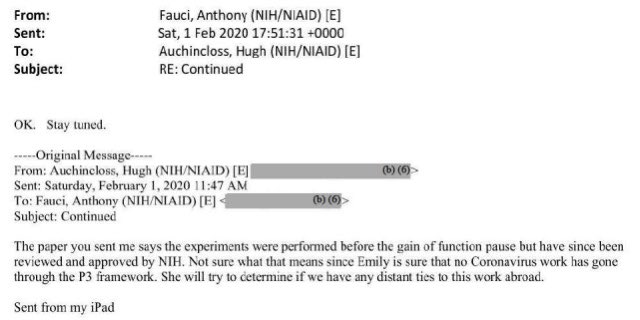







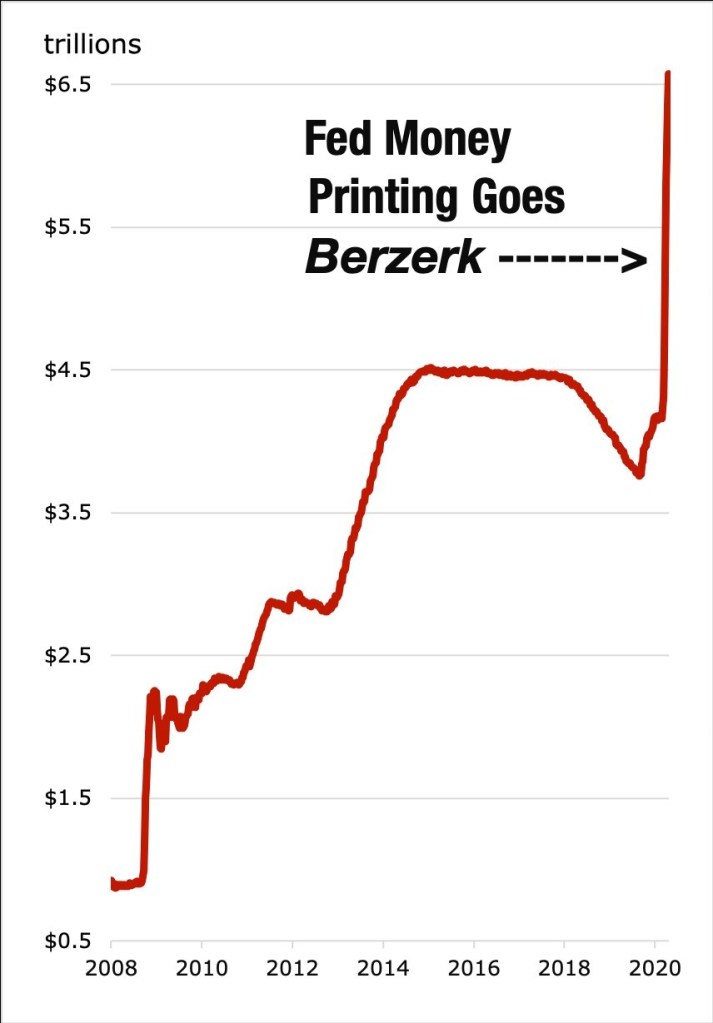
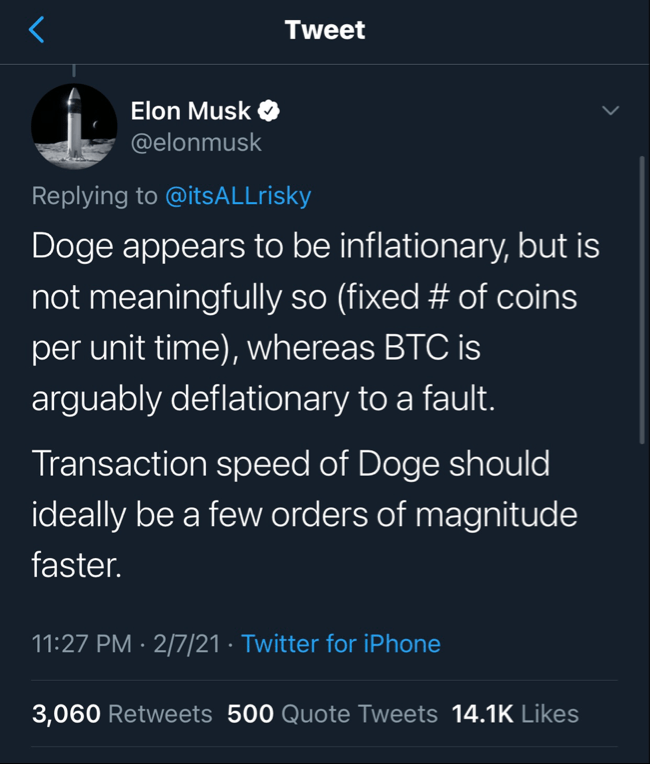



 Irregular Ideation