Where To Go From Here?

Standard

The past few years have been monumental for me. This blog has followed my own personal journey from the initial ideation about love, faith and spiritual life to some major transitions. I’ve changed careers, departed from the denomination that had been the identity I most cherished, and basically had my life turned upside down.

This blog had started as a result of a prayer, as an act of faith, and was to chronicle a fight to overcome the odds. I had realized my own limitations. I was single, in my mid-thirties, working a job that didn’t suit me very well, and worried about being the unfaithful servant who buried his talents. Unfortunately, for myself, I didn’t know a way out of the predicament.

But, instead of wallow in my self-pity, I decided to actually believe what Jesus said, “everything is possible for one who believes,” and with complete reckless abandon, prayed to God asking that the impossible be made possible for me.

I had committed to believing beyond human reason or my own rationality, to believe without adding the qualifications so often used by the religious to excuse their own lack of faith and as a means of preserve their self-serving status quo. My aim was to overcome whatever, the bad luck, personal failures or cultural prejudices, that kept me from living out the potential that seemed to be locked away somewhere and yet was still unrealized.

Of course a big part of that prayer, given the importance of marriage in a conservative Mennonite setting, was in hope of finally getting beyond the invisible barrier to my romantic success and finding the “right one” who could love me despite my imperfection.

My deepest fear had always been that love is little more than a post hoc explanation of something determined at a far baser level. In other words, that love was decided by attributes mostly biologically predetermined or based in performance. If a person lacking the right inborn characteristics is essentially unlovable, then the whole mythology we build around love as something pristine or pure is a delusion and love itself becomes a justification of our selfish or carnal ambitions.

I was determined to disprove that hypothesis. I intentionally sought out a girl theoretically “out of my league” for a variety of those lesser reasons. Before this, I had always picked pragmatically based in who I thought would say “yes” (although they often didn’t) and not with any real faith. This time I picked on what I believed God wanted me to be and because she seemed to be the one who could get me past those limitations. She wasn’t someone who seemed frozen in indecision, she shared my own cultural ideal and would compliment my strengths and weaknesses.

Alas, her sanity won out over my irrational faith-fueled hopes.

However, in telling my story of faith and struggle this blog gained popularity. Over the time my hopes ran into the brick wall of her reasons she couldn’t love me (very much like those I had feared) this blog rose to prominence in the Mennonite blogosphere. Suddenly, in my moment of deep despair and disappointment with my Mennonite ideal, I had an audience of thousands. In a matter of hours a sardonic post assigning points for marriageability, something I wrote one morning while stewing over the reality of the depressing situation I found myself in, was a viral sensation and had obviously resonated with a great swath of people.

After that, I wrote a string of posts about some of those issues I’ve had with the church I was born into and previously didn’t know how to express. It was during this time that a blog post about fundamental flaws in the current conservative Mennonite thinking was picked up by Mennonite World Review. It later made rounds in a conservative email group posted by none other than Peter Hoover who had, by writing Secret of the Strength, inspired my Anabaptist perspective many years before and put me at odds with the creeping influence of fundamentalism.

The great irony in it all was that I reached the pinnacle of my own influence in the Mennonite world *after* I had attended my last service.

Since then, in a greater irony, I’ve seen a romance blossom that would’ve been impossible had I remained Mennonite and evidence of that kind of love of the faithful variety that I did not find where I had most expected to find it. There is a real story of the impossible being made possible developing, not the story of love triumphing over the odds that I had thought I would tell and yet every bit as powerful. However, too much is in limbo right now regarding that circumstance to write about it.

Beyond that, there is also my being immersed into Orthodoxy and the difficulty of putting that experience into words. I mean I could argue for Orthodox Christian practices and perspectives, I have written a couple blogs trying to explain such things to my Mennonite audience, yet Orthodoxy is something better to be experienced. Like Jesus said “follow me,” they make an appeal that is not strictly emotional nor intellectual, but experiential. Faith is something that must be walked to be understood. The Orthodox don’t proselytize in a Protestant manner. No, instead, they invite others to “come and see” like Philip did in urging Nathanael to join him and rely on the mysterious work of God:

The next day Jesus decided to leave for Galilee. Finding Philip, he said to him, “Follow me.”

Philip, like Andrew and Peter, was from the town of Bethsaida. Philip found Nathanael and told him, “We have found the one Moses wrote about in the Law, and about whom the prophets also wrote—Jesus of Nazareth, the son of Joseph.”

“Nazareth! Can anything good come from there?” Nathanael asked.

“Come and see,” said Philip.

When Jesus saw Nathanael approaching, he said of him, “Here truly is an Israelite in whom there is no deceit.”

“How do you know me?” Nathanael asked.

Jesus answered, “I saw you while you were still under the fig tree before Philip called you.”

Then Nathanael declared, “Rabbi, you are the Son of God; you are the king of Israel.”

Jesus said, “You believe because I told you I saw you under the fig tree. You will see greater things than that.” He then added, “Very truly I tell you, you will see ‘heaven open, and the angels of God ascending and descending on’ the Son of Man.” (John 1:43-50)

Can anyone rival that with eloquent words or elaborate arguments?

I know I can’t rival that sort of mysterious work in my own words and worry that my words will actually take away from the beauty of the ancient faith. I mean, what could I possibly add to something so wonderful and profound with my clumsy and simplistic explanations?

So this all leaves me with a dilemma as a writer. Am I more than a one-trick pony? Even as I’ve progressed over the past few months, I feel my blogs have started to become a bit repetitive, as if I only really have one story to tell, and that has bothered me. My area of expertise, at this point, is how to fail miserably trying to find love in the Mennonite context. My painful past is something that I would rather transition away from, something to be discarded along with “former delusions” that I renounced at my Chrismation, to make way for a brighter future.

But the question remains, what will be written in the next chapter?

Where to go from here?

Confessions of the Prodigal’s Older Brother—the Rough Road To Be Free Of Resentment

Standard

I do not call for the judgment of anyone, but it seems only right that good behavior is rewarded. And yet it is often unruly people who get the loving attention when they do bad and then the accolades when they begin to do what the well-behaved have been doing quietly for years.

The conscientious person feels bound to their duty to righteousness. They are driven by loyalties to people, motivated by moral obligation and take responsibility for the welfare of others. It was not out of a desire to be recognized, it is a burden they’ve been carrying since birth, it is never a choice for them, but rather is something inescapable, a prison and hell.

I’ve been that tortured soul. I’ve always wanted to do everything right and for the right reasons. While definitely wanting to be my own person and entitled to my own thoughts, I had no desire to be a troublemaker or disruption. I tried to be cooperative and compliant, to make the lives of my teachers and authorities easier, because I knew the greater social good was dependent upon this and would not be served by my selfish outbursts.

I could never live this ideal out perfectly. I had a standard for myself, a part of the religious inheritance I received as a Mennonite, that was impossible to live out. My frustration with this reality of my own failure would sometimes come bubbling up. Something would set me off and, in the privacy of my parent’s home, I would rage against this awful predicament and the unfairness of it all.

The carefree (and careless) younger brother…

A week or two ago some resentment returned. This change in mood was likely triggered by two things (or rather two conversations) and one of them being an encounter with David Bercot on the topic of divorce and remarriage. The other thing? I had a run-in with my own Prodigal side.

We claim there are consequences for sin. This is how we convince ourselves that our righteous inclinations are correct and there is really no other way to justify depriving oneself of hedonistic pleasure. If it doesn’t matter what we do, no real score kept for right or wrong in the end, then we might as well just have some fun, right?

I’m friends with one of those “bad boys” who (despite his heart of gold) doesn’t care what other people think and has done things at his age that were unimaginable for me. He is a ladies’ man, he’s that guy the young women (yes, even the ‘good’ ones) feel comfortable playing around with, and is basically my antithesis.

I can’t help but love him. He was my true friend a few years ago, heard me spout venom at those who had hurt me with their self-righteous indifference, and never said a word of condemnation. That said, his recklessness and lack of my seriousness, while I was fighting for all I was worth to stay glued together after a devastating announcement, had also sparked my most violent and evil imaginations.

I can’t hold him accountable, though. I look at his freedom with a bit of envy in that at any moment he could decide to settle down, marry the perfect girl (drawn by his charm) and carry no stigma. Me, however, I was always outside looking in, I wasn’t allowed (by character or circumstance) to partake of that “wild” youth nor given the legitimacy that is his for the taking once he decides to settle down.

I’m not jealous of or bitter toward him. Why should I be? But what I do struggle with is anger towards the religious culture that made me, that fed me a steady stream of false promises and left me feeling completely betrayed in the end. Specifically, I’m still upset with the fathers who dismissed me with their cynical calculations and their daughters who continually rejected my sincerest efforts—while meanwhile crawling all over the reckless and indifferent guys.

It is bad enough to go unrecognized. But we seem to live in a world where no good deed goes unpunished, where caring (when others do not) is mischaracterized as creepiness and doing right for the right reasons is often stigmatized. It seems my obeying conscience doesn’t allow me the freedom of rebellion nor does it gain me the approval of those who told me that my conscientious is a good thing when I do what is right in spite of their opinions.

The daddy issues of the Prodigal’s older brother…

The problem with the older brother, in the parable Jesus told about the Prodigal son who returns home, was deeper than his resentment over the celebration for his wayward brother. His indignation was towards his father:

“The older brother became angry and refused to go in. So his father went out and pleaded with him. But he answered his father, ‘Look! All these years I’ve been slaving for you and never disobeyed your orders. Yet you never gave me even a young goat so I could celebrate with my friends. But when this son of yours who has squandered your property with prostitutes comes home, you kill the fattened calf for him!’ (Luke 15:28‭-‬30 NIV)

This anger is likely due to a misconception the older brother had about his father. He obeyed. However, he obeyed for fear of consequences rather than purely as a matter of conscience. His motivation, while in some respects a devotion to his father, was also a desperate effort to secure his place in the family and a mistrust of father’s love. He, like the servant who buried his talent for fear of punishment, couldn’t comprehend being loved for anything other than his performance and had lived in fear rather than faith.

Can you imagine having spent years trying to hold up your own end of the bargain, working hard to produce because that’s how your father’s love is earned, only to have the bubble burst?

In my own case, it was not entirely my own fault that I saw God, my heavenly Father, as this sort of vengeful tyrant. As one raised in a fundamentalist setting there is plenty of reason why I would assume that God’s love is based on my own performance rather than something freely shared to all who accept it and that’s because my earthly fathers often did keep me in limbo. Revivalistic preaching undermined any assurance of salvation, my life could never measure up to their purity standards, and their love for me was limited by what I was able to provide for them.

For years my hopes for love outpaced my resentments. I would tell myself that next time will be different, that my fears of always being on the margins of their paradise were unfounded, and eventually Christian love would triumph over my inadequacies. However that paradigm came crashing down in spectacular fashion when a young woman, someone to whom my hope against hopes (in respect for her professed devotion) were fully invested, said “I can’t love you like that,” which was to say that she really could not love me at all, and destroyed that last hope of a way to her or rather her father’s world.

Trying to please the lawyer’s God…

Over the past weeks, I’ve felt whipsawed. That is to say, I’ve felt pulled between two seemingly opposed views that together undermine my peace with God and the ability to live a victorious life. The first being how the Prodigal gets the embrace while I’ve often been ignored or, worse, had those whose love I had desired recoil as if I was some sort of monster. The second being the inescapable legalistic mindset that is at complete odds with true Christian love.

I have nothing against men like David Bercot personally. In fact, I see them as men very much like myself a few years ago, they diligently search Scripture trying to find their salvation, and yet they are far more capable than I’ll ever be. Their dedication and discipline would seem to be commendable and even something enviable. However, their standard is something I’ve found to be out of my own reach and their religious prescriptions often come at the expense of love.

Bercot, like so many others including myself, is law rather than love oriented. By this I mean we prioritize precise legal interpretation and application of law above the loving purpose behind it. In other words, we are like those religious experts Jesus encountered, who do things like tithe spices, are more concerned with the day someone is healed than the fact that they have been healed, remained as dogmatic even when entering the church and had to be put in their place:

It is for freedom that Christ has set us free. Stand firm, then, and do not let yourselves be burdened again by a yoke of slavery. Mark my words! I, Paul, tell you that if you let yourselves be circumcised, Christ will be of no value to you at all. Again I declare to every man who lets himself be circumcised that he is obligated to obey the whole law. You who are trying to be justified by the law have been alienated from Christ; you have fallen away from grace. For through the Spirit we eagerly await by faith the righteousness for which we hope. For in Christ Jesus neither circumcision nor uncircumcision has any value. The only thing that counts is faith expressing itself through love. You were running a good race. Who cut in on you to keep you from obeying the truth? That kind of persuasion does not come from the one who calls you. “A little yeast works through the whole batch of dough.” I am confident in the Lord that you will take no other view. The one who is throwing you into confusion, whoever that may be, will have to pay the penalty. Brothers and sisters, if I am still preaching circumcision, why am I still being persecuted? In that case the offense of the cross has been abolished. As for those agitators, I wish they would go the whole way and emasculate themselves! (Galatians 5:1‭-‬12 NIV)

Paul’s pun at the end does not take away from the serious warning in his words. Those trying to please God through their careful obedience to the law “have fallen away from grace” and are thus obligating themselves to an impossible standard. They will either end up deluded (like the Pharisee praying loudly about his own superiority to others) or desperately trying to cross all the T’s and dot all of the I’s and ending up in despair when his/her effort falls woefully short of God’s perfection.

Where I’ve found God’s love…

My goal is not to be the rebellious Prodigal son or the one whose careful dedication ended in bitter disappointment. Both of them have fallen short in love for their father or in understanding their father’s love for them and have suffered consequences as a result. The story isn’t intended so that we go out to sow our wild oats, enjoying the pleasures we are afforded us as a result of our inheritance, and then come back to our father’s house again. It isn’t just a warning against a superficial closeness either.

The true meaning of the story is for us to be more like our heavenly Father, who is perfect in mercy and loves even when His love is not reciprocated. Yes, there is a law, not the kind of law that pleases a sanctimonious religious lawyer, but a law summed up by Jesus:

“‘Love the Lord your God with all your heart and with all your soul and with all your mind.’ This is the first and greatest commandment. And the second is like it: ‘Love your neighbor as yourself.’ All the Law and the Prophets hang on these two commandments.” (Matthew 22:37‭-‬40 NIV)

When we love God we do not worry about being stigmatized like Jesus and his disciples were for breaking with the harsh and unloving application of the law. We stop trying to please those impossible to please, stop believing God is some tyrant finger over the “smite” key waiting for us to slip up, and start doing what is possible to do out of love for our neighbors. It is in remembering that Jesus came to save and not to condemn the world—that through his love even the vilest of sinners can find eternal life.

I still struggle with my hurts despite God’s grace towards me. I still find myself trying to please people who have made pretty much zero real investment in my well-being spiritual or otherwise—who absolutely refused to reciprocate my love for them. I could easily become unsettled again, reject the greater blessing I’ve received by pursuing the promises of those who attempt to live by a standard impossible to please.

But I choose to love those whom God has entrusted to me instead and even if it costs me what little remains of my Mennonite reputation. I would rather lose it all for sake of the kingdom than to return to the bondage of fundamentalist expectations. Jesus loved despite the disapproval of his religious peers and that’s the love that will overcome my feelings of resentment as one who followed the rules and got burnt. It is a rough road some days, but we are called to suffer rejection and carry our cross.

How Orthodox Christianity Triumphs Against the Odds

Standard

Christianity was systematically opposed and oppressed in the Soviet Union. The Russian Orthodox church, said to have been founded by the Apostle Andrew, was heavily persecuted under Marxist rule. Atheism was promoted in government schools, speaking against it outlawed, and it seemed that Orthodox Christianity did not stand a chance against this irreligious secular state.

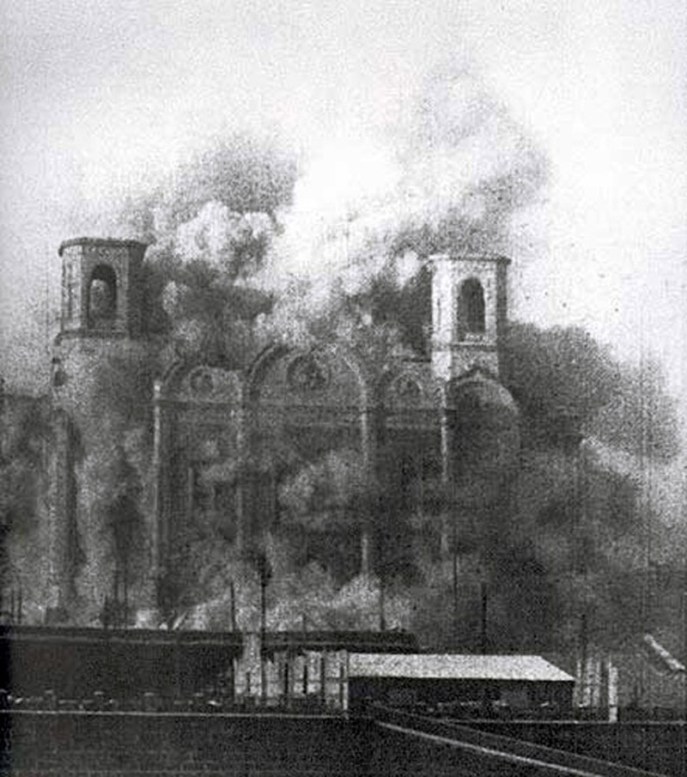
During that dark period, thousands of church leaders were killed. Many more were imprisoned, tortured, sent to mental hospitals or the “gulags” to do forced labor. From 1917 to 1935, 130,000 Russian Orthodox priests were arrested and 95,000 of them were executed by firing squad. Later, from 1937 to 1938, in another anti-religious purge campaign, 168,000 Orthodox clergymen were arrested and, of them, 100,000 shot. Religion was ridiculed in the public sphere, believers were harassed and deprived of parental rights, church properties were seized by the state and buildings, including the beautiful Cathedral of Christ the Savior in Moscow, were destroyed:

Cathedral_of_Christ_the_Saviour_(destruction,_1931)

The Russian Orthodox church, that extended into the Americas (where they didn’t kill the Native populations like their Western counterparts) and had an estimated 54,000 parishes in Russia before WW1, was reduced to only 500 parishes in the 1940’s under the Communist dictatorship. The Bolshevik Revolution of 1917 left Russian Orthodox churches in Japan, United States, Manchuria, and elsewhere effectively orphaned and without support. Patriarch Tikhon, in 1920, issued a decree for these churches to operate independently until normalcy could be restored and, as a result, many of these churches (because of financial hardship and/or need of pastoral care and governance) were turned over to the Orthodox churches of their national homelands—which is why there is the current disorganized mix of Greek, Antiochian, ROCOR and OCA parishes in America.

However, Orthodoxy has since triumphed over Marxism in Russia. An average of three churches a day are being opened by the Orthodox faithful in Russia, there are currently 40,000 churches and, at the current pace, that number may double in the next decades. In addition, there are now 900 active monasteries (down from 1000 pre-revolution) and this is an expansion based on demand. This resilience against the odds, against the world’s only other superpower besides the United States, is a testament to the strength of Orthodox religious tradition. Orthodoxy in Russia could not be driven into extinction by one of the most powerful and brutal regimes in human history and is as strong today as ever.

The divided (and dying) church of America

America has traditionally divided up according to ethnicity or race. Churches (Protestant, Roman Catholic or otherwise) are not exceptional in this regard. Many churches, including Mennonites and Amish, came as a result of immigrants taking their religion with them rather than as a missionary endeavor. It is not a surprise that traditionally German churches, like the Lutherans, are mostly populated by white people nor is it unexpected that people go to churches that are reflective of their own cultures or where their own language is spoken. People tend to gravitate to other people who look like them.

But this “homogeneity principle” also extends beyond skin color as well. A church that is racially or ethnically diverse is probably homogeneous in other ways (things like level of education, political affiliations, etc) and thus not truly diverse. For example, American Mennonites, from the most progressive or liberal to the most ultra-conservative and traditional Old Order end of the denomination. are (with the exception of a few adoptions and inner-city outreaches) ethnically homogenous. But, as centuries of divisions have proven, that shared genetic ancestry and skin color certainly does not make us the same. And so it is with Protestantism in general. A multi-ethnic church probably has very little diversity in terms of educational level, ideological bent, or income and this is because we prefer to be with people who share something in common with us.

The end result is that everyone claims that they are loyal to Christ and his love. Yet, in reality, there are hidden loyalties that are actually taking precedence. We are divided by our loyalties to our race, our religious/cultural heritage, national/political identities, denominational affiliations, personal preferences, and feelings or any combination of the preceding items. In other words, our pet issues and petty differences are what truly matters to us despite what we profess. And this doesn’t get better for those who are non-denominational or believe they are independently guided by the Spirit and are truly only loyal to themselves. Saint Paul, the Apostle, said that the Spirit brings unity to the body (Ephesians 4:1-6) and spoke out against disunity brought about by their misplaced loyalties:

I appeal to you, brothers and sisters, a in the name of our Lord Jesus Christ, that all of you agree with one another in what you say and that there be no divisions among you, but that you be perfectly united in mind and thought. My brothers and sisters, some from Chloe’s household have informed me that there are quarrels among you. What I mean is this: One of you says, “I follow Paul”; another, “I follow Apollos”; another, “I follow Cephas”; still another, “I follow Christ.” Is Christ divided? Was Paul crucified for you? Were you baptized in the name of Paul? I thank God that I did not baptize any of you except Crispus and Gaius, so no one can say that you were baptized in my name. (1 Corinthians 1:10-15)

Note, Paul calls out even those who claim “I follow Christ” in his rebuke and that is not because Christ is not the head of the church either. No, it is because loyalty to Christ means loyalty to his church, to true believers past and present (and future) who together represent his body, and who we are to seek Communion with rather than chase after our own personal ideals. True Christianity is about forbearance, forgiveness, and humility, realizing our own fallibility and showing mercy to others as we have been shown mercy by God. It is little wonder that many are confused about Christianity in America and increasing numbers are checking-out of their denominational and ever-dividing churches. It is because many professing Christians say one thing and do another. They say they love as Christ loves, even call someone a “brother,” but are completely unwilling to sacrifice anything of true consequence to themselves in love for the body of Christ.

Is Orthodoxy any different from this?

Yes and no.

At the time I am writing this there is a break in Communion between the Moscow Patriarchate and Patriarchate of Constantinople over a Ukrainian schism. In 1992, following the breakup of the Soviet Union, some Ukrainian Orthodox wanted their independence from Moscow (understandably so given regional politics) and, unfortunately, went ahead without having appropriate permission. Making matters worse than they already were, Archbishop Bartholomew, the Ecumenical Patriarch of Constantinople, decided to recognize the schismatics and over the protests of Moscow. This, of course, is not acceptable, important church decisions have been always made by a council or through the correct channels, rather than independently, and this is reminiscent of the unilateral decision-making that divided the Roman Catholics from Orthodox in the Great Schism.

The explanation above probably comes off as Greek to those outside of Orthodoxy and took some time me to wrap my own head around. However, it is also a good way to illustrate a key difference between Orthodox, Protestant and Catholic perspectives of authority in the church. In Roman Catholicism, the Pope, as “Vicar of Christ” and supreme by his own decree, rules the roost. Protestants, by contrast, essentially believe that every man (and his Bible) is their own Pope and need not be accountable to anyone besides themselves. Orthodox Christians, on the other hand, do not see even their highest-ranked individual as being infallible or outside need to be accountable and rather (like the early church) build upon consensus and through councils—which means even Peter, the first amongst equals, can be set right as need be.

(On an aside, Anabaptists, in that they believed in individual submission to the group, were traditionally sort of a half-step between Orthodoxy and Protestantism in this regard. The difference being that Anabaptists are only accountable to the local church (and what they cherry-pick from Scripture or early church writings) rather than the universal church and an ordination faithfully passed down, generation to generation, from the time of the Apostles. This unique Anabaptist perspective, while still preserved by the Amish and other Old Order groups, has been largely supplanted by Biblical fundamentalism in “conservative” Mennonite churches and secular/progressive group-think in the “liberal” side—both sides with zero real accountability to the historic church including even their own Anabaptist forebears.)

The Ukrainian schism, while a black mark on the testimony of the those who caused it if left unresolved, is actually proof the triumph of Orthodoxy over the spirit of division or unity formed around the wrong loyalties. The consensus across the Patriarchates seeming to be that the Ecumenical Patriarch went outside the bounds by recognizing the Ukrainian schismatics. The unity of the church is not mere unity for the sake of unity, but a unity of Spirit that doesn’t neglect sound doctrine or the traditions (“whether by word of mouth or by letter,” 2 Thessalonians 2:15) passed down by the church. In other words, the established Orthodoxy has more authority than any one person or group within the church. Orthodoxy is something that transcends all individuals in the church and protects against both abusive patriarchs and also the divisions over personal opinions. The Spirit of truth, the foundation of Orthodox tradition, is what preserved correct doctrines against heresy and false teachers.

Orthodoxy is what delivered the Biblical canon. The same Biblical canon that many Protestant fundamentalists and other separatists idolize as an infallible object equal to God while simultaneously not recognizing the authority of the church that wrote, authenticated, and compiled it for them. It is strange that a council was only good for that one thing, creating a collection of books that can’t be changed, and not anything else before or after, isn’t it?

But, I do digress…

Yes, Orthodoxy is messy because, as with the church of Acts, there is still a difference of opinion, politics, legalism, favoritism, and imperfection. We can’t get away from conflict, not even in the church founded by Christ himself and that is disheartening to us idealistic types. But that was also the case from the earliest days of Christianity and that is why there was a need of the Jerusalem Council recorded in the book of Acts. The church had councils to establish who was right or wrong and how to correctly interpret Scripture.

Orthodoxy (that is to say “right opinion”) is something worthwhile and should be the goal of every Christian. It is that sincere desire to find and hold to what is true that is leading many from the ranks of the most divided and disillusioned branches of Christendom and to the “ancient faith” of the Orthodox Christians.

The triumph of Orthodoxy…

Like King Josiah hearing the Scripture read for the first time, many are discovering the elegant theology and awe-inspiring, aesthetic appeal, and ancient beauty of Orthodox worship. Divine liturgy carries depth, history and meaning unrivaled in an age of flashing lights, cheap gimmicks, and consumerism. This is why people from all denominational backgrounds are finding a home in Orthodoxy today. The majority of those in my parish is not “cradle Orthodox” in that they were born in the Orthodox church and this seems to be the trend. In fact, nearly half of the million Orthodox Christians in the United States are converts and I am just one of the many who did.

It is very exciting to see the interest of those who have read this blog and want to know more. Several are either now attending services, have visited or are planning to visit when they have a chance. There is one, in particular, a single lady born into a conservative Mennonite church, never baptized and made a member, who left the church disillusioned by the pettiness, abusive leadership and message of condemnation, describes the Antiochian parish she is currently attending as “St Philips is beauty for the mind and spirit. A haven, a calm, a refuge,” adding that it is the “truest example of Jesus words put into my own, ‘Come just as you are.'” I have also had the pleasure of conversing with several who are converts from Anabaptist background, including a man who is my cousin through marriage, and have had the same hard-to-put-into-words experience I have had.

To be clear, the Orthodox church, like other churches, did come over with ethnic communities from Greece, Russia, Syria, Africa, Egypt and other parts of the world. Many Orthodox churches in America did often start as a part of an ethnic community and a decade ago may have been compromised mostly of people from one ethnic background. However, as that immigrant population declines it is being replaced by those who come from all sorts of Christian backgrounds. In my own parish, there is everything from non-denominational to Baptist, Episcopalian, Methodist, and Roman Catholic. Many of these converts were, like me, at the end of their ropes with religion as it had been presented to them, some agnostics, who were drawn to Orthodoxy through various means and have been forever changed by the experience. The most recent converts at my parish: Two women, one of them a Mennonite pastor, who were Chrismated and welcomed home a few weeks ago.

There is a great documentary on religious “nones” called “Becoming Truly Human,” that describes the journey of various people who have left the version of Christianity they were raised in and have simply stopped attending any religious services. There is clearly a need for an answer, people long for a connection to the historic church, worship that transcends current fads and trends, something real and authentic, and Orthodox Christianity provides this. Orthodoxy, made “perfect through suffering” (Hebrews 2:10), has withstood the persecution of the past century like it did in the first century and is a bastion for the faithful. Orthodoxy, the church that Jesus promised the “gates of hell would not prevail against” (Matthew 16:18), has and will continue to triumph against the odds.

217361.p

I Prefer Representatives, Sound Doctrine and the Holy Spirit Over False Choices

Standard

I was speaking with a friend a week or two ago (a conservative Mennonite searching for his place in the church) and he shared this quote:

“Doctrine is dead as a doorknob without the presence of the Holy Spirit in an individual’s life.” (Paul Washer)

That quote drop of a Calvinist commentator was annoying to me. It was annoying because it was shared in the context of a conversation about Orthodox worship and prayers. The clear implication being that established doctrine is somehow in conflict with spiritual life.

So, without hesitation, I asked my friend: “How do you know Washer’s doctrines (like the one you just quoted) are inspired by the Holy Spirit?”

My question was based on my own experience as one who had put his full confidence in the Holy Spirit and has since learned (the hard way) the need to be grounded in sound doctrine as well. In fact, it was my desire to follow the Spirit without compromise which had led to my pursuit of the impossibility, which led to my eventual disillusionment with the Mennonite denomination, which led me to the ancient faith of Orthodoxy and new spiritual life.

So, getting back to Washer’s quote, he presents a false choice between doctrine and the Holy Spirit. He, like many Protestant commentators, seems to equate established religious dogma with spiritual deadness. His quote suggests that we devalue church traditions (those pertaining to worship and prayer in the case of my friend) based in an assumption that what is new or spontaneous is somehow more authentic and real than something that has been passed down through many generations.

But is that truly the case?

Do we ever need to choose between established doctrine and authentic faith?

From what I can tell, church doctrine and real spiritual life originate from the same source (that source being the Holy Spirit) and thus we should not ever have to choose between the two. The traditions passed down by the church (including the canon of Scripture) and the Holy Spirit are never at odds. To deny the importance of church doctrines and tradition is basically to speak against the authority of Scripture:

“For the time will come when people will not put up with sound doctrine. Instead, to suit their own desires, they will gather around them a great number of teachers to say what their itching ears want to hear. They will turn their ears away from the truth and turn aside to myths.” (2 Timothy 4:3‭-‬4 NIV)

Nowhere in Scripture do I see sound doctrine being presented in contrast with living according to the Holy Spirit. However, I do see James tells us “faith without works is dead” (James 2:14-26) and also know, according to the Gospel (Matthew 7:22-24), that there will be those who have professed faith in Jesus, even worked miracles in his name, whom he will tell to depart because he never knew them and therefore authenticity of faith is about more than making a claim.

Thus I do question the basis for this commentator’s opinion and the many others out there of those who speak with a similar confidence about spiritual matters. By what authority do they speak? How do we know that they, along with their devoted followings, are not deceived? I mean these ‘spiritual’ commentators are often at complete odds with one another. Don’t believe me? Do a Google search “Paul Washer false teacher” and you’ll find dozens of articles denouncing him and his teachings.

So who is right? Who is wrong? How do we know?

My contempt for commentators…

My reaction to the Washer quote isn’t something unusual for me. I have a near-universal contempt for commentators and especially those who can’t at least ground their statements directly to something found in Scripture. And perhaps that strong aversion is because I have enough strong opinions of my own, more than my fill, and therefore seek something a little more grounded than mere opinions?

Not to be misunderstood, that’s not to say that I find no value in reading commentators. I do believe we can gain many valuable insights from listening to various men and women sharing their personal perspectives on spiritual issues.

But, that said, not all commentators are equal and anyone can say anything and our feelings (one way or another) about what someone says doesn’t make it any more or less true. There are likely false teachings that would resonate with any one of us and we should guard against being closed off to truth based on our emotions. We should remember that all religious groups are able to justify their own understanding of spiritual matters, many of them live morally upright lives, and can be very convincing to those who don’t know any different.

And, to be clear, I’m not just talking about those commentators who say “the Holy Spirit tells me thus and such” without offering any corroborating evidence from church history or Scripture. Being a Bible scholar or well-educated and intelligent does not make a person less susceptible to confirmation bias. No, if anything, being well-studied and smart brings a danger of pride and pride can prevent us from seeing our own biases and the many things we have missed in our studies.

Proof-texting, when a person soundbites Biblical texts at the cost of context, is a real problem for any commentator. That is why we have a multitude of denominations all claiming their authority comes from Scripture and, yet, can’t agree on some very basic issues. It isn’t that one side is more ignorant of the book than another nor that one side is less sincere about their profession of faith than another either—the problem is a lack of accountability to anything more than what feels right to us.

My own commentary on spiritual life…

Going back to Washer’s quote, I believe we can all agree that there is no life in the church or elsewhere without the Holy Spirit.

As the Orthodox pray on a regular basis:

“O Heavenly King, the Comforter, the Spirit of Truth, Who art everywhere and fillest all things; Treasury of Blessings, and Giver of Life – come and abide in us, and cleanse us from every impurity, and save our souls, O Good One.”

We know, from the creation narrative, that “the Spirit of God was hovering over the waters” (Genesis 1:2) and is also the “breath of life” (Genesis 2:7) that entered Adam. Life, both physical and spiritual, comes from the Holy Spirit, and we see this pattern throughout Scripture and even at the end of the Gospel when Jesus empowered the disciples to continue his ministry of forgiveness:

And with that he breathed on them and said, “Receive the Holy Spirit. If you forgive anyone’s sins, their sins are forgiven; if you do not forgive them, they are not forgiven.” (John 20:22‭-‬23 NIV)

Note how that parallels with the Genesis account where God breathes life into Adam. Note also that this being “breathed on” comes after the resurrection, after Jesus spent years teaching these men, and is what enabled them to fully understand what he had taught:

Then he opened their minds so they could understand the Scriptures. He told them, “This is what is written: The Messiah will suffer and rise from the dead on the third day, and repentance for the forgiveness of sins will be preached in his name to all nations, beginning at Jerusalem. You are witnesses of these things. I am going to send you what my Father has promised; but stay in the city until you have been clothed with power from on high.” (Luke 24:45‭-‬49 NIV)

The disciples being “clothed with power from on high” (a step that should happen before we go out on our own commission) is something that happened in the book of Acts, on the day of Pentecost, when they received an outpouring of the Spirit and many came to believe in Jerusalem.

Truth, according to Paul’s commentary, in 1 Corinthians 2:6-16, is something revealed by the Holy Spirit. That is something that mirrors what Jesus said in his promise of a “Comforter” that would “guide you (his disciples) into all the truth” (John 16:13), and there is no way around it. All the Bible study and religious knowledge in the world cannot breath spiritual life into anyone.

All that said, sound doctrine and spiritual life are never at odds with each other. That it took a special outpouring of the Spirit before the disciples could understand what Jesus taught doesn’t make his prior effort useless. His teachings, if anything, provided substance, like the dust God formed up into a man in Genesis, and his breath the catalyst.

Furthermore, those waiting on the right feelings, or teachings that resonate with them and their own prior experience, will likely be like the rich young ruler who left disappointed after asking what he must do to be saved. Faith demands we go outside of our own comfort zone, that we go beyond our own understanding, preferences or calculations, and begin to walk before we have our eyes opened. In fact, the Spirit is something promised only to those who those who love Jesus and keep his commandments:

“If you love me, keep my commands. And I will ask the Father, and he will give you another advocate to help you and be with you forever—the Spirit of truth. […] “Anyone who loves me will obey my teaching. My Father will love them, and we will come to them and make our home with them. (John 14:15‭-‬17a‭, ‬23 NIV)

So, what comes first, belief and obedience to Jesus or is it the revelation of truth via the Holy Spirit that enables us to understand what we read?

That is a paradox and something that has always made me uncomfortable. Jesus appears to make obedience a prerequisite to spiritual revelation, which ran counter to my own intuition, and why I had always stressed the second half of the teaching rather than the first part. How could I know what is sound doctrine (as in the correct understanding of what Jesus taught enabling my obedience) without the Holy Spirit coming first?

My understanding was clouded by an individualistic filter…

One would think that I, as one raised in a church with Anabaptist heritage, would understand that interpretation of Scripture and establishing doctrine is something we do together, empowered by the Holy Spirit, as a church.

But somewhere along the line (somewhere between urban myths being shared from the pulpit and men like Bill Gothard being given a platform), I had lost trust in the ‘ordained’ leadership and other members to discern truth. And, as a result, I began to look beyond my religious peers for answers. Eventually, after an epiphany about faith, I began to find answers in Biblical passages that had once confounded me and became more confident in my own individual discernment through the Spirit.

However, that paradigm of understanding was incomplete and all came crashing down when my own individual ability to discern spiritual truth came into serious question.

It is easy to claim the Holy Spirit is leading you while you remain safe within the boat of religion. But true faith requires going beyond our own established range of possibilities, to let go of our own human logic and reason, and step out of the boat. I did that. I stepped out. I took a few steps across the waves and then was promptly overwhelmed by doubts—doubts that were, in part, a product of running headlong into the plans, prejudices and cynical calculations of those in the church whom I had still counted on to mirror my faith.

I had questions that I could not answer nor could be answered in the Mennonite context. I had lost faith in my Mennonite identity and Anabaptist heritage to provide reliable guidance. I felt I had been fooled, once again, misled by the desire to find meaning in my struggles and a delusional faith that the impossible would be made possible. I had nothing, besides an obligation to continue to fight for the hopes of my bhest, and needed answers.

Fortunately, I ran into a man, a fatherly figure, who did have answers that I needed and set me right again.

Fr. Anthony, an Orthodox priest, arrived in my life as if by divine appointment. He had the right attitude, asked the right questions, never said a disrespectful word about my Mennonite identity (offering praise for our “peace witness” instead) and could speak with an authority that was missing where I was coming from. There was no pressure. However, he always seemed to show up at the right time and was always able to explain things in a way that made sense to me.

The timing was right for me in the same way it was for the man St. Philip encountered on the road:

The Spirit told Philip, “Go to that chariot and stay near it.” Then Philip ran up to the chariot and heard the man reading Isaiah the prophet. “Do you understand what you are reading?” Philip asked. “How can I,” he said, “unless someone explains it to me?” So he invited Philip to come up and sit with him. (Acts 8:29‭-‬31 NIV)

In an individualistic understanding, this man (the eunuch) should’ve had all he needed to find salvation—I mean, according to what many Biblical fundamentalist commentators put forward, Scripture is basically self-explanatory and all we need to do is believe what we read, right?

But clearly, that is not the case.

The Bible itself tells us that somethings in it are difficult to understand (2 Peter 3:16) and this eunuch, an important and likely very intelligent person, could not discern for himself what was written in Isaiah.

The Holy Spirit did provide him with an interpretation, yet that interpretation came through a man named Philip. Philip did not speak his own “private interpretation” (2 Peter 1:20) as a mere commentator offering an opinion. He was a representative. He was a man both directed by the Spirit and also commissioned by the church in the book of Acts:

In those days when the number of disciples was increasing, the Hellenistic Jews among them complained against the Hebraic Jews because their widows were being overlooked in the daily distribution of food. So the Twelve gathered all the disciples together and said, “It would not be right for us to neglect the ministry of the word of God in order to wait on tables. Brothers and sisters, choose seven men from among you who are known to be full of the Spirit and wisdom. We will turn this responsibility over to them and will give our attention to prayer and the ministry of the word.”

This proposal pleased the whole group. They chose Stephen, a man full of faith and of the Holy Spirit; also Philip, Procorus, Nicanor, Timon, Parmenas, and Nicolas from Antioch, a convert to Judaism. They presented these men to the apostles, who prayed and laid their hands on them. (Acts 6:1-6)

Philip was chosen and ordained to be a representative of the apostles, the apostles who themselves were representatives of Christ. His authority to interpret Scripture went beyond being merely a product of his own religious studies. He was not simply a religious commentator spouting his own opinions. No, rather, he was ordained as a representative, as one judged to be “full of the Spirit and wisdom” by the church, and therefore had an authority greater than a mere commentator with an opinion.

My individualistic filter was wrong, I could not understand everything on my own, we still need those representatives who are sent:

How, then, can they call on the one they have not believed in? And how can they believe in the one of whom they have not heard? And how can they hear without someone preaching to them? And how can anyone preach unless they are sent? As it is written: “How beautiful are the feet of those who bring good news!” (Romans 10:14-15 NIV)

Why I prefer representatives…

Anyone can offer commentary, we hear ‘expert’ commentators tell us their opinions of sports, politics and the economy all the time. Some people prefer Paul Krugman, others Rush Limbaugh, and typically we choose those who confirm our existing biases to those who would challenge them. That is also true of Biblical commentators as well. We like those men whom we choose based on our own feelings, on what resonates with us or provide our itching ears with what we wish to hear. Unfortunately, commentators are not accountable to anything besides their own understanding and too often play to the prejudices of their particular audience.

A representative, by contrast, does not speak on their own authority and is ultimately accountable to the authority that sent, commisioned or ordained them.

For example, in a Republic, like the United States, we elect Representatives to speak on our behalf and represent our interests. There are also representatives of a corporation authorized to act on behalf of the collective group and must also answer to the other representatives of the group.

Jesus, likewise, came as a representative of the Father who sent him, on several occasions he tells his audience that he speaks on behalf of the Father and not by his own authority:

Not until halfway through the festival did Jesus go up to the temple courts and begin to teach. The Jews there were amazed and asked, “How did this man get such learning without having been taught?”

Jesus answered, “My teaching is not my own. It comes from the one who sent me. Anyone who chooses to do the will of God will find out whether my teaching comes from God or whether I speak on my own. Whoever speaks on their own does so to gain personal glory, but he who seeks the glory of the one who sent him is a man of truth; there is nothing false about him. (John 7:14-18 NIV)

Jesus is imploring his audience to test his credentials. He is saying that those who choose to do the will of God, by following his teachings, will find out if his words are true or not. In other words, his teachings are a testable hypothesis, established directly on the authority of the Father, and not just his opinions that can’t be verified one way or another. Jesus is not a commentator speaking by his own authority, but a representative, commissioned by the Holy Spirit (confirmed with a voice from heaven and dove descending upon him at his baptism) and spoke with the authority of the Father rather than his own.

The difference between a commentator and a representative is accountable to an authority beyond their own. If a representative goes beyond their commissioning they can be voted out or brought before a council and condemned. A commentator, on the other hand, only needs to be accountable to their own understanding and the whims of their particular audience—their authority rests on their own credentials rather than on a true commissioning by an authority already established.

Doesn’t the Holy Spirit make us representatives as well?

My answer to this question, with my shift in paradigm, has changed.

The answer is both yes and no.

Yes, in that we do, as individuals, receive authority from the Holy Spirit.

But, no, as far that authority giving us license to be free from accountability and operate apart from what has been established by Christ and his church.

The Holy Spirit, the true spiritual guide sent by the Father rather than a counterfeit spirit, should lead us into unity together rather than to divisions. The early church was full of commentators, some who claimed to have the authority of the Spirit or Scripture on their side, but the book of Acts shows us that not all commentators were equal and some had to be rebuked:

Then some of the believers who belonged to the party of the Pharisees stood up and said, “The Gentiles must be circumcised and required to keep the law of Moses.” The apostles and elders met to consider this question. After much discussion, Peter got up and addressed them: “Brothers, you know that some time ago God made a choice among you that the Gentiles might hear from my lips the message of the gospel and believe. God, who knows the heart, showed that he accepted them by giving the Holy Spirit to them, just as he did to us.

[…]

They chose Judas (called Barsabbas) and Silas, men who were leaders among the believers. With them they sent the following letter: The apostles and elders, your brothers, To the Gentile believers in Antioch, Syria and Cilicia: Greetings. We have heard that some went out from us without our authorization and disturbed you, troubling your minds by what they said… (Acts 15:5‭-‬8,22‭-‬24 NIV)

Heretical teachings in the church have always been sorted out by council and consensus.

Even St. Peter and St. Paul were accountable to the body of believers represented in this coming together of apostles and elders.

It is by this process we were even provided with a canon of Scripture: Councils, representatives of the church, decided what books belong in the Bible and which ones (while possibly still useful) did not meet the criteria of Orthodox teachings. Not every book, not every person, is equally authorized to speak on behalf of Christ and his church. The Holy Spirit does work in the life of the individual, but the Holy Spirit also speaks through the church and especially through those sent, ordained or commissioned by Christ and is church:

But we ought always to thank God for you, brothers and sisters loved by the Lord, because God chose you as firstfruits to be saved through the sanctifying work of the Spirit and through belief in the truth. He called you to this through our gospel, that you might share in the glory of our Lord Jesus Christ. So then, brothers and sisters, stand firm and hold fast to the teachings we passed on to you, whether by word of mouth or by letter. (2 Thessalonians 2:13‭-‬15 NIV)

We are told the church, empowered by the Holy Spirit, is “the pillar and foundation of the truth” (1 Timothy 3:15) and that is to say that the church does have authority over the individual as a representative of Christ. We really do need that—we really do need to be accountable to something more than our own ideas and/or interpretations—and should seek to hold fast to the teachings that have been passed by “word of mouth or by letter” of those who, through Christ and his church, have more authority than their own personal opinion.

Good commentary must be rooted in sound doctrine…

Anyone can claim to have the Holy Spirit, but not all who do are true representatives of Christ or his church, and we must use discernment. There have many heresies throughout the ages of those who felt they individually could discern truth without being accountable to anything besides their own religious knowledge and feelings of spiritual superiority to others. We need to be on the guard against their false teachings and also against being deceived by ourselves.

We are all very fortunate, we do not need to choose between the Holy Spirit and sound doctrine. This is a case where we can both have our cake and eat it. The church has preserved the teachings of Jesus, in traditions both written and spoken, as the basis for sound doctrine and that “breath of life” comes in our Communion together. We are not called to be “Lone Rangers” finding our own way, serving our own preferences, etc. We are called to be a part of the body of the church, representatives of the church past, present and future, this church:

And I tell you that you are Peter, and on this rock I will build my church, and the gates of Hades will not overcome it. I will give you the keys of the kingdom of heaven; whatever you bind on earth will be bound in heaven, and whatever you loose on earth will be loosed in heaven.” (Matthew 16:18‭-‬19 NIV)

Assaults, Allegations and Justice For All

Standard

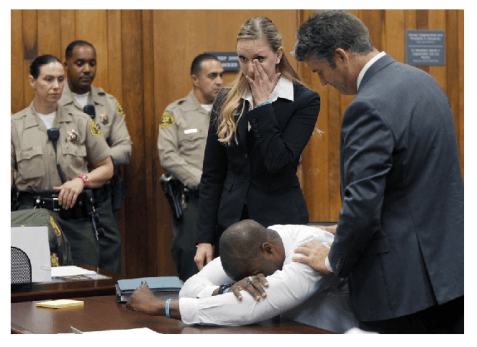
It was an open and shut case. A young woman reported that she had been drug into a stairwell at school and raped. The young man, seventeen, enters a guilty plea and is sentenced as an adult. He will serve five years behind bars, then five years of strict probation, and will need to register as a sex offender for the remainder of his life.

Justice served, right?

That’s the story of Brian Banks, a high school football star, accused of rape by his classmate, Wanetta Gibson, and threatened with forty years to life on the basis of her allegation. His legal counsel, despite Brian maintaining that he was innocent, feared a conviction and advised he go the route of a plea bargain—so that’s what the young man did.

He served his time. He had asked the California Innocence Project to take up his case, but they declined because there was a lack of evidence to prove his innocence. It seemed Brian would spend his entire life, denied opportunities, treated like a sexual predator, and unable to clear his name—all on the basis of her words. I mean who, besides his close friends and family, would believe him, that he had been falsely accused? Doesn’t every rapist claim to be innocent?

But then something extraordinary happened. His accuser, Wanetta, recanted her story (privately) and confessed that she had fabricated everything. Finally, Brian’s name was cleared. His accuser, who had won a 1.5 million dollar settlement against the school, was sued to recoup the money paided to her and has since failed to show for her court dates. Brian had a brief NFL career after this and is now an activist for those wrongly convinced.

The “only” who are falsely accused…

“The ruthless will vanish, the mockers will disappear, and all who have an eye for evil will be cut down— those who with a word make someone out to be guilty, who ensnare the defender in court and with false testimony deprive the innocent of justice.” (Isaiah 29:20‭-‬21 NIV)

There is an oft-repeated claim about the frequency of false accusations being “only” 2-10%. It is a number often used by those trying to downplay the possibility that a man is innocent.

But what is the basis for this number?

The number itself is an estimate. It is based on various studies, studies like one published in the Journal of Forensic Psychology from 2017, that compare numbers of claims deemed false or baseless after an investigation. They found that between the years 2006–2010, out of 87,000–90,000 accusations of rape a year, that around 4,400–5,100 of the reports were deemed false or baseless—that works out to roughly 5.55% of allegations being determined to be false.

However, what a study like that does not take into account is that some accusations of rape are entirely baseless despite an investigation that leads to a conviction. Brian’s case is a prime example, he was found guilty despite his innocence and only exonerated because the woman who accused him later recanted her tale. There could be many more men, convicted on the basis of a false accusation, who are never exonerated because their accuser never recants.

Brian’s story is extraordinary in that his accuser was caught in her lie. However, that’s not always the case. (Not to mention, he had already served five years.) There is really no way of knowing how many, convicted on the word of an accuser, may actually be innocent despite their entering a guilty plea and being convicted. So we really do not know how many accusations are false accusations based on convictions

But, more glaring than the possibility that the number of false accusations could be far higher, is the very reality that thousands of accusations per year are false.

That is, put another way, 4,400–5,100 lives (and potentially more) with their lives turned completely upside down by a false accusation. This could be your own father, brother, nephew or son. Thousands are accused, even imprisoned, and are actually completely innocent—that is an “only” that should slow us from rushing to judgment in the case of an allegation.

That said, not near all rapes and sexual assaults are reported.

“Speak up for those who cannot speak for themselves, for the rights of all who are destitute. Speak up and judge fairly; defend the rights of the poor and needy.” (Proverbs 31:8‭-‬9 NIV)

It is important, at this point, to note that there are many who are victims of crimes that were never reported. I personally know multiple cases of men and women who were sexually molested and/or raped and never reported the assault to authorities. They were abused by family members, grabbed in the groin by a coworker, raped by their boyfriend and there was no police report of the incidents. That too is a sad reality, a traumatic experience that many live with, that should not be ignored.

According to the Department of Justice, in a 2014 report, an estimated 34.8% incidents of sexual assaults are reported to authorities. That is to say that only 3 or 4 out of ten sexual assaults are ever properly investigated and adjudicated.

Now, that this is NOT to say that there is an equal number of rapists to those unreported incidents.

According to a report about repeat rape among “undetected” offenders, repeat rapists “average 5.8 rapes each” and thus the number of undetected rapists is only a fraction of the number of victims. In other words, only a small number of men account for the majority of the incidents and this is precisely why people should report criminal incidents—reporting in a timely manner will protect other people from repeat offenders.

It should come as no surprise, then, that someone who was raped would not report it at the time it happened. Likewise, it should not be a surprise that many rapists continue their life free of consequence for their actions. This is an unfortunate reality of the world we live in, it is the reason why we should always take allegations seriously even if they come out years and years after the assault is said to have happened. There are many unreported assaults, people come forward at different times for different reasons, and this is something to always be aware of in our analysis of reports.

We can (and should) take a clear stand against all forms of abuse.

There is a false choice out there. There are some who deny allegations on the basis of false reports. There are others who dismiss claims of innocence and downplay false allegations as insignificant on the basis of under-reporting statistics.

But we should not choose one or the other. It does the real victims of sexual assault no good to presume the guilt of a man simply on the basis of accusations. It also is wrong to side against an accuser because there are false accusations or they haven’t reported the event immediately after it happened.

We should never disregard an allegation off hand. We should never decide someone’s guilt or innocence by a mere claim or statistics. We can both take sexual abuse allegations seriously and also be reasonably skeptical of the accusations. When pressured to take the side of an accuser or the accused we should take neither side and take the side of justice instead. Every case is different. Every court is different. We must be wise.

Know your own bias and adjust your judgment accordingly!

Still, we all tend to see things from a biased perspective. In the case of Brian Banks, the prosecutor and other authorities believed he was guilty on the basis of the testimony of the young woman. These were well-educated people, people aware of bias, and yet they failed him. In many other cases, there is undo skepticism of those coming forward with allegations and denial of justice to victims of abuse. Both of these things must be guarded against. A person making an allegation should be heard and their story believed. An accused person should be presumed innocent until proven guilty and not be denied due process.

Ultimately, if an allegation falls within the statute of limitations, it is the responsibility of the police to investigate and the job of the courts to decide based on the evidence that they have. I prefer that we side with the evidence, that a charge must be proven beyond a reasonable doubt, and that defendants not be tried in the court of public opinion, perp-walked or treated as if guilty unless there is evidence that proves beyond a reasonable doubt:

“It is better that ten guilty persons escape than that one innocent suffer” (Sir William Blackstone)

Two wrongs never make a right. As much as we want justice for the victims of sexual abuse we should not neglect justice for those accused. It does the true victims no good to create another victim by locking up those falsely accused and truly innocent. We should not punish anyone for a crime that they did not commit and especially not as a result of our prejudice against their race, gender, religion or other a defining characteristic.

We need to be a voice for justice.

False accusations, from the Salem Witch Trials to Emmett Till and everything before or after, come because there is power in making them. An accusation can bring a confirmation hearing to a grinding halt, it can cause questions about a political rival’s character that didn’t exist before and mere words can destroy lives—therefore we must always stand for the rights of the accused.

That said, we must never deny the oppressed, we should have compassion for those abused and especially for abused who have remained silent for fear of not being believed or other reasons—therefore we must always be a voice for the abused.

May God give us wisdom!

Want To Help People In Typhoon Ravaged Philippines?

Standard

Last December (and into January) I had the privilege of traveling to the Philippines.  I traveled to the northern mountainous region of Luzon and met some wonderful people there.  Most of my time was spent in a beautiful place called Baguio, a city around the same elevation as Denver, and the adjacent city of La Trinidad.

This past week these cities, and surrounding area, have been hit by a devastating typhoon and there are many needs.  The area is prone to mudslides given the steep terrain and also flooding in the valleys.  Many have lost everything they have worked so hard for, they have no insurance, no FEMA, and can use all the help they can get.  This is why I’m doing my small part by setting up a site where those who feel led can donate: *click here*

Any funds raised will be distributed through trusted Christian connections (not Mennonite or Orthodox) and go 100% (besides what GoFundMe takes) to those in need in that region.  I know even small amounts can go a long way.  If you can’t give, please at least share this and give others the opportunity to bless Baguio, La Trinidad, and the surrounding areas in Benguet Province.

Thank you!

Godly Men Should Honor (Not Patronize) Women

Standard

I woke up out of the ether with an utterly abandoned feeling and asked the nurse right away if it was a boy or girl. She told me it was a girl, and so I turned my head and wept. ‘All right,’ I’m glad it’s a girl. And I hope she’ll be a fool–that’s the best thing a girl can be in this world, a beautiful little fool.’

That quote of Daisy, from The Great Gatsby, about the birth of her daughter, sardonically expresses her resignation to the male-dominated society of her time. She is saying that it is better for a girl to be a fool—because for a girl to be anything other than that would be to live a frustrated and repressed life, like her own life.

It shows that Daisy, though always acting flighty and fake, a rich ‘privileged’ woman in the roaring 20’s, has far more depth to her character and real intelligence than she is allowed to openly display.

One might assume that someone in her position, all of her material needs met and sheltered from any responsibility, would be content. I mean, the wealth of her husband, the brutal Tom Buchanan, walled her off from the toils and freed her from work or consequences.

But, beneath the veneer of playfulness, she seems miserable. She was powerless beyond what her husband provided for her and merely acting out the role carved out for her by society, the part of a fool, rather than truly free.

There is only the slightest difference between walls intended to protect and walls that imprison, the smallest gap between guarding someone’s child-like faith and enabling their childish behavior, and a person can claim to be protecting others yet really only be protecting their position. There are many people, men in particular, who like to keep others around them weak so they can feel strong or needed.

A fundamental misunderstanding of the weaker vessel…

The idea that women can’t be expected to handle certain circumstances or rise to the same level of behavior as a man is not something new to me. I know in fundamentalist circles many men regard women to be wholly inferior to them (besides in child-bearing) and thus a comment to that effect was not completely unexpected. However, it was still a bit jarring, in the context it was given, to hear a woman being excused for her unsociable behavior because she, as the “weaker vessel” and thus somehow incapable of doing any better.

I had to wonder what women (conservative Mennonite women in particular) would think of that comment.

Is that what they really want?

Do they truly want to always be regarded as helpless, the perpetual damsel in distress, rather than be treated as an equal and emotionally/intellectually capable?

I have a feeling that is not the kind of male protection that most women want.

But then, I could be wrong, my lack of success in the realm of conservative Mennonite courtship could indicate that my treatment of women as an intellectual equal was a grave error. Perhaps this is why I’ve been described as “intimidating” by a couple intelligent Mennonite women? Could it be that women really do feel better being coddled and patronized?

I will say that many women, especially attractive women, expect to be catered to and this is because men (including yours truly) are generally nicer to them for a variety of reasons—some of those reasons less noble than those more often expressed.

Anyhow, these hidden wants, openly expressed opinions and general tendencies aside, the real question is whether or not this is what the “weaker vessel” of Scripture truly means. Yes, obviously, women are, on average, weaker than men in terms of some measures of physical strength. But does this make women more feeble and less capable in all regards? Are women generally inferior to men?

Here’s the text:

Likewise, ye husbands, dwell with them according to knowledge, giving honour unto the wife, as unto the weaker vessel, and as being heirs together of the grace of life; that your prayers be not hindered. (1 Peter 3:7 KJV)

I used the King James version because other translations replace “vessel” (σκεῦος) with “partner” or “sex” and potentially muddy the waters as far as this question more than they make things clearer. Again, I’m not an expert on the Greek language, but judging by how this word is translated elsewhere (John 19:29, Romans 9:21, Acts 9:15,10:11, etc), the word “vessel” seems to be a more literal, direct and appropriate translation.

That word “vessel” is an important qualifier to the word “weaker” (ἀσθενής) that precedes it. It is used in reference to objects or physical things and, in context of 1 Peter 3:7, would be reasonably understood to be a reference to a woman’s physical body rather than her person in general.

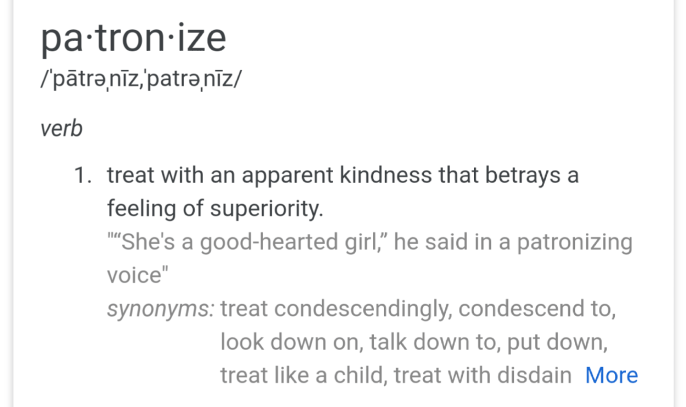
But more important is the rest of what is said. First, this passage is specifically about the relationship between husbands and wives. Second, the answer to a woman being the “weaker vessel” is for husbands to give “honour” (τιμή) to her, which means to value her, as one “being heirs together” with him, and it never suggests treating her like an inferior. If anything, this is an instruction not to use a woman’s lack of physical strength as means to diminish her other abilities or as a reason to otherwise patronize to her.

Yes, certainly we should protect what is valuable and Paul warns (similar to Malachi 2:13-15) about a man’s prayers being hindered if he mistreats his wife. However, that’s not the same thing as saying that we should be an enabler of weakness or should create unhealthy dependencies in our marriages. It is certainly not an excuse to allow a woman to act in an unChrist-like, inappropriate or otherwise unsisterly manner in the church.

The sexism of lower expectations is not honoring or Scriptural…

For the same reason we tell a bully “pick on someone your own size” we also say “don’t hit a woman” and should always take a clear stand against those who would exploit weaker people. Scripture always sides with the protection of the poor and against the oppression of the weak.

However, protection is not the same thing as pandering and nor does having Christian compassion mean we should coddle. No, a man should use his strength to encourage, empower and strengthen the weak. His role should be to give a space for his family to flourish. I believe that is the goal of our protection. Men protect the weak, in essence, by lending them our physical strength against external threats and that allows their abilities to shine rather than be crushed.

It is well-established that countries that protect the property and freedoms of their citizens prosper economically compared to those that exploit and/or do not. This is because people who know their work will likely be stolen have no reason to innovate or be ambitious. Likewise, a man who is a controlling tyrant, who sees his wife or children as wholly inferior, even if he does prevent their being exploited by others, will stifle and destroy the abilities of those entrusted to him.

Sure, maybe some women do employ their weakness as a means to get what they want in a relationship. I also know a couple cases of wives who can’t make their own decisions and depend on their husbands for everything besides picking the color of the drapes. But that level of dependency is not a good thing nor is it something we find in Scripture as an example of exemplary womanhood either:

A good wife who can find? She is far more precious than jewels. The heart of her husband trusts in her, and he will have no lack of gain. She does him good, and not harm, all the days of her life. She seeks wool and flax, and works with willing hands. She is like the ships of the merchant, she brings her food from afar. She rises while it is yet night and provides food for her household and tasks for her maidens. She considers a field and buys it; with the fruit of her hands she plants a vineyard. She girds her loins with strength and makes her arms strong. She perceives that her merchandise is profitable. Her lamp does not go out at night. She puts her hands to the distaff, and her hands hold the spindle. She opens her hand to the poor, and reaches out her hands to the needy. She is not afraid of snow for her household, for all her household are clothed in scarlet. She makes herself coverings; her clothing is fine linen and purple. Her husband is known in the gates, when he sits among the elders of the land. She makes linen garments and sells them; she delivers girdles to the merchant. Strength and dignity are her clothing, and she laughs at the time to come. She opens her mouth with wisdom, and the teaching of kindness is on her tongue. She looks well to the ways of her household, and does not eat the bread of idleness. Her children rise up and call her blessed; her husband also, and he praises her: “Many women have done excellently, but you surpass them all.” Charm is deceitful, and beauty is vain, but a woman who fears the Lord is to be praised. Give her of the fruit of her hands, and let her works praise her in the gates. (Proverbs 31:10‭-‬31 RSV)

That is not a limp-wristed wimp of a woman who follows two paces behind her man to keep in her place. No, that is a human dynamo, a force to be reckoned with and not that extremely anxious woman waiting for her husband’s input before doing anything on her own. No, the ideal woman, according to Proverbs, is the one who “makes her arms strong” and engages in commerce, a manager of a wide variety of affairs, and a wise teacher to boot.

Paul didn’t write so that men would lower their expectations for women. No, Paul has many expectations for women. Including in the verse prior (1 Peter 3:6) where he tells women not to be fearful. Telling a woman not to be fearful (φοβούμεναι) is the same as telling her to be emotionally strong and mentally capable.

It is not honoring of women to treat them as generally inferior or incapable.

How should men honor women?

Strengthen the weak hands, and make firm the feeble knees. Say to those who are of a fearful heart, “Be strong, fear not!” (Isaiah 35:3‭-‬5a RSV)

Honoring means to protect and protect means to strengthen.

A wise man knows that he might not always be able to provide for his wife and children. For that reason, he will protect them by making them strong and not only shelter them with his own strength.

Yes, there is a kind of man who likes to keep others around him permanently disabled so that he can feel strong and useful. There are also women who enjoy being fearful and hanging on the arms of any man who will give them attention. But there is nothing in Scripture that suggests we should encourage this kind of codependent behavior and plenty that indicates we should strengthen and bring out the best in each other.

Men and women may serve different roles in the church and home. After all, people are different, regardless of gender, with different strengths and weaknesses. However, acknowledging that the reality of our differences in strength and honoring the “weaker vessel” does not mean treating anyone as our intellectual, emotional, or spiritual lesser. What Paul is really teaching, in a fuller context of Scripture, is that we not use our own physical strength as a means to diminish the abilities of our wife and rather we should honor her as someone capable.

In the end, nothing good comes from pandering to the women. Instead, we should respect them as capable, despite their lack of physical strength, and should encourage them (as Paul does) to be free rather than fearful. Fundamentalist purity cultures do the opposite, they seek to subjugate the weak and twist Scriptures (sometimes ever so slightly) to justify their dishonoring treatment of women. It is very subtle in some cases, it can be as small as lowering expectations based on gender alone, yet it is pervasive and perverse.

Maybe these men need a reminder? The word “helpmeet” used in Genesis 2:19-20 denotes a “suitable helper” and uses the same Hebrew words used to describe God’s help in battle. It does not imply subordination. It implies capability and strength. So, if we do not honor God through our doubt, then we do we honor women by lowering our expectations for women. Instead, we use our own unique strengths to encourage and strengthen each other.

A woman can be so much more than “a beautiful little fool” and we should not deprive them of the opportunity to rise up to the challenge of meeting the standards of competency that we would expect from a man—so do not dishonor her with sexism of low expectations.

A Beautiful Vision of God’s Spirit Pouring Down On His Church

Standard

One of my favorite features of Orthodox architecture is that Jesus is always above all.

And by this I mean, literally, there is an image of Jesus painted on the ceiling, looking down from the highest point, and this is a constant reminder during worship of what it means to cast our eyes up towards heaven:

This past Sunday I had a beautiful vision while Fr Seraphim blessed the bread and wine. I saw this flow, like a vapor or a cloudburst, coming down through Jesus, pouring down on us and then fanning out in all directions into the world. It was a glimpse of what Holy Communion really is, it is God bringing life into those who are gathered so they can go out bring hope and healing to the world.

Microburst in Pittsburgh

During the liturgy (which literally means “the work of the people“) we bring our petitions to God. Our prayers, which are represented by incense, rise towards God’s heavenly throne. It is a picture of worship found throughout Scripture. It is found in the description of worship throughout the Old Testament and also in Malachi, at the end of that volume of books, in this a promise:

“Oh, that one of you would shut the temple doors, so that you would not light useless fires on my altar! I am not pleased with you,” says the Lord Almighty, “and I will accept no offering from your hands. My name will be great among the nations, from where the sun rises to where it sets. In every place incense and pure offerings will be brought to me, because my name will be great among the nations,” says the Lord Almighty. (Malachi 1:10‭-‬11 NIV)

Of course, we know that Jesus brought a permanent end to temple worship in Jerusalem. The old temple was destroyed in 70 AD, as Jesus had prophesied would happen in the generation to which he spoke (Luke 21:5-32), and now the promise of Malachi is fulfilled in the church which has been founded by Christ. We have become the new temple, the Spirit of God dwells in us, and worship in every place. It is the church that offers incense and pure offerings and makes God’s name great among the nations.

It is a picture of heaven found in the last book of the New Testament:

Another angel, who had a golden censer, came and stood at the altar. He was given much incense to offer, with the prayers of all God’s people, on the golden altar in front of the throne. The smoke of the incense, together with the prayers of God’s people, went up before God from the angel’s hand. (Revelation 8:3‭-‬4 NIV)

Our prayers go up, with a sweet savor of incense, for the country we live in, for the city we are in and every city and land, for favorable weather, an abundance of fruit and peaceful times, for those traveling by land, sea, and air (also through space), for deliverance from affliction, wrath, danger and necessity, and asking “Lord have mercy” after each petition led by the priest. These prayers go up, culminating with the Holy Oblation, the blessing of the Precious Gifts, and we sing:

Holy, holy, holy, Lord of Sabaoth; heaven and earth are full of your glory. Hosanna in the highest. Blessed is he who comes in the name of the Lord. Hosanna in the highest.

Those words a combination of the hymn of the Seraphim (Isaiah 6:3, Revelation 4:8) and the words of the crowd called out when Jesus made his triumphant entry to Jerusalem. It is in anticipation of what is to come. Our prayers go up and God pours out his mercies through the body and blood of Jesus, through the life of Spirit as it was foretold in the book of Joel:

And afterward, I will pour out my Spirit on all people. Your sons and daughters will prophesy, your old men will dream dreams, your young men will see visions. (Joel 2:28 NIV)

Peter quotes this on the day of Pentecost, in Acts 2, to explain the miraculous things happening then and that continues in us today as well. It is through Communion, our partaking of the body of Christ together, that we can be filled with the Spirit and flow out into the world. The life of the church comes through our Communion with each other and with God. This is the picture of what happens next:

A fountain will flow out of the Lord’s house and will water the valley of acacias. (Joel 3:18b NIV)

From what I’ve read, the “valley of acacias” was a dry and barren place.

Looks like it too:

That is the world, people are thirsty for spiritual life and to be watered by the fountain of truth. It is in our Communing with God (and being anointed with oil) that we have a cup that runs over (Psalm 23) that brings life and healing to those whom we touch. We, as those in Communion with Christ and his Church, are the Lord’s house, we are “God’s temple” (1 Cor. 3:16) and our “body is the temple of God” (1 Cor. 6:19) and, therefore, we are the fountain of life in the world.

The Unveiled Truth About 1 Corinthians 11:1-16

Standard

If you come from a conservative Mennonite background, like my own, you have likely heard many sermons stressing the importance of a woman covering her head. The headship veiling is one of those is simultaneously loved and hated topics. Many have become completely tired of hearing about it every other week and yet would, if challenged, defend the practice more vigorously than the incarnation or as if the salvation of the world depended on a few inches of fabric pinned to a female’s coiffed hair.

I’ll try not to beat a dead horse here. If you are tired of endless discussions and debates (or even church splits) over the size or style of veils, please hold your groans to the end, because I hope this is a fresh take on this all too familiar topic. But first I’ll get to the basics of the passage itself and what I believe 1 Corinthians 11:1-16 says about the veil based on both the text itself and also the historical understanding of the text according to early church leaders.

First the text:

Be imitators of me, as I am of Christ. I commend you because you remember me in everything and maintain the traditions even as I have delivered them to you. But I want you to understand that the head of every man is Christ, the head of a woman is her husband, and the head of Christ is God. Any man who prays or prophesies with his head covered dishonors his head, but any woman who prays or prophesies with her head unveiled dishonors her head—it is the same as if her head were shaven. For if a woman will not veil herself, then she should cut off her hair; but if it is disgraceful for a woman to be shorn or shaven, let her wear a veil. For a man ought not to cover his head, since he is the image and glory of God; but woman is the glory of man. (For man was not made from woman, but woman from man. Neither was man created for woman, but woman for man.) That is why a woman ought to have a veil on her head, because of the angels. (Nevertheless, in the Lord woman is not independent of man nor man of woman; for as woman was made from man, so man is now born of woman. And all things are from God.) Judge for yourselves; is it proper for a woman to pray to God with her head uncovered? Does not nature itself teach you that for a man to wear long hair is degrading to him, but if a woman has long hair, it is her pride? For her hair is given to her for a covering. If any one is disposed to be contentious, we recognize no other practice, nor do the churches of God. (1 Corinthians 11:1‭-‬16 RSV)

Now we need to answer the what is being said, why it is being said, and then, lastly, how it applies to us…

Does “her hair is given to her for a covering” mean that this passage is not truly about veiling?

Note, first off, this translation clears up the controversy over whether or not a woman’s hair is her covering. It uses the word “unveiled” where some other translations do not. This difference in words is reflective of the different Greek words used in the original manuscripts. In verse 5, for example, where it says that “any woman who prays or prophesies with her head unveiled dishonors her head,” uses a Greek word “akatakaluptos” (ἀκατακαλύπτῳ) whereas verse 15, “her hair is given to her for a covering,” uses a word “peribolaion” (περιβολαίου) instead—which suggests the translation above is more accurate than those translations which obscure those two different words.

That alone is not enough evidence to dismiss modern commentators who say that this passage is only about a covering of long hair and not a separate veil over a woman’s hair. I’m not a Greek language expert and certainly not enough to say with authority that the two words are not basically synonymous or that the distinction (between the hair covering and a veil) of the RSV translation is incorrect.

However, the logical argument against hair being the veil gives a very strong backing to my rudimentary analysis of the words that are used. That argument being the fact that a woman’s being “covered” is paralleled with a man being “uncovered” in the same context. If the covering was the hair then all men, in order to pray and prophesy without being in violation of this practice, would need to shave their heads. So, in other words, these modern commentators, to be consistent in their perspective that a woman’s hair is her covering, would need to also require that all men shave their heads and thus by shaving would be “uncovered” according to this hairy (or, perhaps, heretical?) logic.

Still, the strongest argument is how leaders in the early church understood the practice, and what had been the established practice in both Catholic and Protestant religious traditions, and what continues to be the practice of the Orthodox Christians in most parts of the world—including North America and Europe. It is only very recently (the past century) that this practice has been questioned and dropped by many professing Christians in the West. There is a long list of Christian commentators from the early church to this very day that pushed the practice. That list including St John Chrysostom (349-407 AD), whose liturgy the Orthodox still use, and wrote this concerning the veiling of women:

“[Christ] calls her to become one with Him: to come under his side and become flesh of His flesh and bone of His bone. […] The covering of the head with a veil symbolizes the reality of woman sheltered in the side of her Source and becoming one with Him. She becomes covered and hidden in her Divine Spouse.”

A beautiful picture.

So, why was the veil dropped in the West?

The knee-jerk response of many Biblical fundamentalists (at least those that don’t mock the practice, like Micheal Pearl) is to blame feminism. After all, the passage is about headship order, right? And clearly, it makes women subject to male authority in a way that is out of step with modern ideas. The passage describes women as being created for men, it says “the head of a woman is her husband,” and that certainly does not jive well with feminism, does it?

However, good men do not blame women. A man who takes his role of spiritual head seriously will take responsibility for those under his authority and will take a deeper, more introspective, look at the issue. Sure, in some cases there is shared blame for failure, it is hard to be a leader of someone who does not want to be led. However, could it be that feminism, at least that part that has taken root within the church, is directly related to a failure in male leadership? Could this be part of an attitude, first adopted by men in the West, that has now trickled down to women, their children, etc?

I’ve heard many red-faced pulpit-pounding sermons from men, speaking to itching (conservative) ears, decrying feminism, disrespect for authority, and pushing stricter dress standards. But it seems that in this hobby horse obsession with a few favorite verses (about veiling or female modesty in general) there is also something missed. The loss of the Christian veiling tradition, in my opinion, is merely a symptom of a greater disease. The issue isn’t the feminism of the past century, no, it is the abuses of men in authority and also the attitudes of men who refuse to submit to anyone besides themselves.

1) Being the “head” means being the better example, whether others follow it or not, and not making excuses.

The discussions of 1 Corinthians 11:1-16, that I recall in a conservative Mennonite setting, more often than not, revolved around female obligation and with scant (if any) mention of what it means to be a man under the headship of Christ. Sure, there might be something said, in passing, of how men should uncover their heads to pray, should not have long hair, etc. But the passage is generally treated as pertaining primarily to women and any look at what headship means for men (besides that brushing glance or blink and you’ll miss it mention) is conspicuously absent from the discussion.

Now, that said, I’ve known many disgruntled (and faithful veil wearing) females express their frustration with the legalistic extra-Biblical requirements or making suggestions about retaliatory legislation adding to the male dress code. (A wrong approach IMO) And, yes, I do acknowledge that popular women’s styles have evolved more dramatically in the past century than that of common men as well. However, very little attention is paid to the question of authority and submission that 1 Corinthians 11:1-16, that it is absolutely about male headship over women (not a comfortable topic) and, more significantly, is a passage about men falling under the authority of other men.

Anyhow, at this point, some independently-minded men might be ready to exit. Some who have endured corrupt church leadership, others who just plain don’t like accountability due to their own rebellious hearts, (or a combination of both, I’m not here to make a judgment call as far as that) and might not want to hear this. For those men, especially them, I urge you to hear me out. This may not tickle your ears like a message that, distilled down, amounts to blame shifting, denial of personal responsibility and/or need to be accountable. Nevertheless, it is a message that is completely Biblical and could serve the church far better than another rant about female immodesty or against feminism.

What does the passage say about men and headship?

Keep reading…

“Be imitators of me, as I am of Christ. “ (1 Corinthians 11:1)

St Paul, right off the bat, establishes his authority on Christ and instructs the reader to follow him as he follows after Christ. That statement (similar to his instruction to “imitate” him in 1 Corinthians 4:16) cuts two different ways. First, it suggests, rather than just take his word for it, we should check his authority against the example of Christ. Second, he is making an explicit claim of having authority himself, as the one writing the letter, as a church leader and one under the authority of Christ.

And, as if to emphasize his point, he continues with praise that they had submitted to his prior instructions (ie: “maintain the traditions even as I have delivered them”) and that they have remembered him. So, Paul, in his introduction to the topic of Christian headship, establishes himself as an authority over his audience, their head, and then goes on in the next verse:

“…the head of every man is Christ…” (1 Corinthians 11:3)

Some men today might read that (out of context) as being a contradiction to what Paul just said prior.

It is not.

Those who take it as an excuse to say “you’re not the boss of me” to church leaders, or to claim that they only need to be accountable to Christ (as their head) and refuse to submit to anyone else, are terribly mistaken. Because, while it is true that Christ is the ultimate head of the church and the one who will be our final judge, we are also told to “submit to one another out of reverence for Christ“ in Ephesians 5:21.

And also this:

Obey your leaders and submit to them; for they are keeping watch over your souls, as men who will have to give account. Let them do this joyfully, and not sadly, for that would be of no advantage to you. (Hebrews 13:17 RSV)

It is, in fact, a theme in the letters of Paul and the apostles that we show our love for Christ in our love for each other, and we show our love for each other in our submission to each other and also in our obedience to church leaders. There is no evidence anywhere in Scripture that a man has authority based on only his own personal interpretation of things. There is, however, ample evidence that our obedience to Christ is found in our interactions with the church body and, in particular, our submission to the church elders and ordained as leaders over us.

The call Paul, a church leader, makes to the Corinthians is for the unity of the church:

I appeal to you, brethren, by the name of our Lord Jesus Christ, that all of you agree and that there be no dissensions among you, but that you be united in the same mind and the same judgment. For it has been reported to me by Chloe’s people that there is quarreling among you, my brethren. What I mean is that each one of you says, “I belong to Paul,” or “I belong to Apollos,” or “I belong to Cephas,” or “I belong to Christ.” (1 Corinthians 1:10‭-‬12 RSV)

Did you ever stop to consider why Paul may have included “I belong to Christ” in this listing?

Isn’t belonging to Christ the goal of Christianity?

Yes, but…

I believe the point being made is that some men use Christ (or rather their own personal interpretation of his teachings) as an excuse for their own unsubmissive attitudes, as a means to escape accountability to others and to create divisions within the church. In other words, these men refuse to truly fall under the headship of Christ because they refuse to fall under the authority that he established in the church (the collective body of believers together) and thus they are truly living in rebellion despite the obedience that they profess. Truly belonging to Christ means seeking unity with the church and living in submission.

It should be remembered that 1 Corinthians 11 is part of a collection of pastoral letters. These letters were compiled, along with the Gospels, by the church and thus their own authority is derived from the authority of the church. We don’t follow after one man nor do we live by our own individual understanding of a book. But there is a spiritual power given to the church collectively, an authority exercised by church leaders, and found where two or three gathers in the name of Jesus. The headship of Christ and submitting to the authority of his church might not be exactly the same thing—nevertheless the two are very closely related and both have authority over individual men.

Finally, Paul rests his case for headship:

If any one is disposed to be contentious, we recognize no other practice, nor do the churches of God. (1 Corinthians 11:16)

That is an appeal, not to the authority of Scripture, not to Christ directly or the Spirit either. It is rather an appeal to the authority of church leaders (ie: “we”) and the “churches of God” as a collective entity. Paul establishes his case for headship squarely on the authority of church leaders and on the consensus of the church. Yes, in arguing for the veil, he does make appeals to nature, the creation narrative, angels, etc. However, he starts and ends with the notion that the church and leaders in the church (and himself specifically) collectively hold authority over individual men and that is significant in a discussion of headship.

2) The rejection of church authority in favor of individual interpretations of Scripture has undermined Christian headship.

Headship is where the Protestant experiment has gone very very bad. Sure, we can agree that this rejection of church authority was the result of corrupt leadership in Rome and I can’t say it was unjustified. When one of the five patriarchates of the church decides to be unaccountable to the rest and elevates themselves as the sole arbiter of truth, it is no surprise when others under that leadership protest and eventually do the same. And that is the clear pattern that has emerged in the West. The pattern has been more and more rejection of accountability and ever-increasing division in the church—which goes completely against the message of love, submission, and unity that leaders, like Paul, preached.

Sadly, there are many, in the Western church today day, who are “disposed to be contentious” and it started with men. It started with men who had a legitimate complaint with the authority over them and has grown, like a cancerous tumor, into a complete rejection of Christian authority or any claim to headship other than their own. Is it a big surprise when women have begun to follow this lead and declare their own understanding of Scripture or Christ alone to be their only head?

Whatever the case, men who do not fall under established authority themselves have no business demanding that their wife or children be subject to them.

It is incumbent on men to lead by example.

Men must submit to each other and submit to their elders in the faith (past and present) before they ask anything of anyone else. If we get that right, if we lead with our own submissive example, then everything underneath our own spiritual authority will fall into place. Truly, only men who have made themselves subject to Christ and his church, men who can themselves be led, are fit to lead.

But, when we give ourselves license to do as we think is right in our own eyes, to live only by our own interpretations, then we should not be surprised when others follow our lead and disregard our headship over them.

Feminism is not a product of female rebellion so much as it is the result of male abuses of their own authority and their unChrist-like attitudes. As the saying goes, more is caught than taught and continuing rebellion against established authority will have far-reaching consequences.

The NEED For Loving Touch

Standard

A few years ago mom and sister, sensing my need for physical touch, made giving me a hug on Sunday evenings as I left for home and another week out on the road. It was a small gesture, a single suture on a gaping wound of loneliness and years of an unmet need for more intimate human relationship, but—nevertheless—it was something that kept me at least partially sane.

Not everyone is the same in regard to how they handle isolation. However, it is known that solitary confinement is extremely detrimental psychologically and is equivalent to torture for some. It is even worse for children deprived of healthy touch and, according to research, babies in orphanages with inadequate human interaction die at a rate of 30 to 40% and even survivors of the negligence often suffer terrible life-long consequences as a result.

We live in a culture that celebrates connectivity and social media. Unfortunately, those things, seeing words on a screen or having a “friends” list of thousands, do not fill the void or need for real physical interactions and touch. When my hopes of meaningful human connection faded away with another crushing rejection my mind slid back into solipsism—the ultimate aloneness, a disconnect from belief in anything outside of my own mind or imagination—the nightmarish hell put into words by Trent Reznor:

Yes I am alone
But then again I always was
As far back as I can tell
I think maybe it’s because
Because you were never really real
To begin with

I just made you up
To hurt myself
I just made you up
To hurt myself
I just made you up
To hurt myself
And it worked
Yes it did

The reality is that healthy people live for connection and survive periods of aloneness on their hopes of future intimacy and interactions. We were created for relationship, both with each other and with the one who walked with Adam in the garden. It is through relationships that we gain our personhood and purpose. The lack of real community, of physical touch and healthy interaction, has come at a great cost and, sadly, few seem ready to take the necessary action to change this for those most in need.

Some of the reason for this neglect is a misconception about the true meaning of the Gospel message…

“All you need is Jesus”

This is one of those religious clichés that is true in one sense, yet is completely untrue the way some people use it and is often nothing more than an excuse for their real indifference.

People need more than words to thrive.

Yes, we do not live by bread alone and we always depend wholly on God’s grace at all times. However, that doesn’t mean we do not have need of food, clothing, shelter or many other things that make our life complete.

Those who spiritualize and who dismiss the human needs of others should be locked for a week in a box naked, without food or sunlight, and then they can discuss what “all you need is Jesus” means to them as someone who was without anything else.

For those who think their offering mere words about an abstraction of Jesus are an indication of their faith and is doing enough, I will offer the words of James:

What good is it, my brothers and sisters, if someone claims to have faith but has no deeds? Can such faith save them? Suppose a brother or a sister is without clothes and daily food. If one of you says to them, “Go in peace; keep warm and well fed,” but does nothing about their physical needs, what good is it? In the same way, faith by itself, if it is not accompanied by action, is dead. (James 2:14-17)

If I could have a dollar for all the times that people expressed sympathy for my circumstances, and then assured me that things would magically work out for me without doing anything to help, I would probably be a millionaire. The whole book of James tells me that such people who do not offer anything in the form of concrete help, despite what they might profess, do not really know Jesus and are still in need of salvation themselves. Christian faith that does not express itself in meeting needs both spiritual AND PHYSICAL is not real Christian faith.

“The word became flesh…”

One of the deficiencies of the theological indoctrination that I received in the denomination of my birth was a lack of explanation for the full significance of incarnation. Incarnation tends to be explained as a historic event, that Jesus provided an example to follow, and yet very little is said about the what this says about the human condition and need for touch.

The incarnation, the word becoming flesh and dwelling among us, is the centerpiece of what John says at the start of his Gospel account and is something that has great significance as far as how it relates to church life. Jesus came so that the Spirit, something not physically defined and the same Spirit “hovering” over the waters in the Genesis creation narrative, could be made one with human flesh and so that through that we also (the church together as the “body of Christ”) could become the incarnation of Christ.

This idea that the Gospel is about an abstraction, some kind of spiritual experience or journey and theological/theoretical construct that has little to offer in physical substance, is wrong. It is part of the issue that early Anabaptists would’ve had with Luther and Protestantism. It is also something Orthodox Christians cannot accept. There is no salvation without incarnation. We cannot live the Chrisitan life alone or without real and tangible love for other Christians.

Christianity is something that must be communal, it must involve actual physical interaction with other members of the body and our partaking of the real flesh and blood of Christ together with other believers, or it is not real. Faith is, as James clearly says, something that changes how we interact with each other in the material world, it should remove barriers (like favoritism or separations within the body between higher and lower social/religious/economic tiers) and make us do something about the physical needs of other Christians.

Feeding people with platitudes does not make you Christ-like or spiritually-minded. No, it is only living in denial of the needs of others, profoundly unloving and disobedience. Yes, certainly, the point of Christianity goes well-beyond mere humanism or making the world a better place to live for others. The kingdom is something that cannot be defined in the material world. That said, Christianity without any fleshing out or being an incarnation of the Spirit ourselves, like Christ, in our Communion together and providing for the physical needs of others is truly not Christianity anymore.

Those who spiritualize physical needs really should consider the question of why Jesus came in the first place. Why didn’t God just send his good news message on tablets of gold from heaven?

The answer is that our body is not something bad or that God has given up on. We are not a mind with a body as many seem to perceive themselves. No, the body and mind are as interwoven as soul and spirit. Sure, you may be able to intellectually conceptualize things like love and theorize about salvation. But the reality is that we do have physical needs, what happens to our bodies does have an impact on our minds, and thus we should take care of our own bodies and also be concerned with the physical well-being of our fellow Christians. The incarnation is important because we are creatures of flesh and with real physical needs. We need other Christians to flesh out Christ today for the same reason Thomas needed to touch the wounds of Jesus to know that he had truly conquered death.

Not just talk, touch…

There is no shortage of advice in the world and much of it unsolicited. Tell a person about your needs and you are bound to get an earful of their opinions. They, like those who claimed faith without works, think that they can talk away your problems and/or need a way to dismiss your needs when you do not take their bad advice. They can say, “Well, he should just listen to me and then things might go better.”

Jesus condemns this sort of aloofness:

They tie up heavy, cumbersome loads and put them on other people’s shoulders, but they themselves are not willing to lift a finger to move them. (Matthew 23:4)

That is not to say that we should never give any weighty advice. However, when our advice is not accompanied by helpful action, then it will simply be adding another burden to someone already struggling under the weight of life. Having real faith, embodying Christ, means offering real substantive help to those who ask. Again, there might be a place for speaking against sin, there is also a good case to be made for teaching people how to help themselves, yet we also need to get our own hands dirty sometimes and help to dig people out of the mire they are in or at least lift their load until they can get their feet under them again.

Jesus said, “Give to those who ask” (Matthew 5:42) And, given that he does offer himself to anyone who asks, it is very likely meant those words take be taken literally. He didn’t say only to give what rationally makes sense to you at the time, he doesn’t say to give only money or time, he tells us to give and our willingness to give is the true measure of our faith. It is our job, as Christians, to give of ourselves for the salvation of others, that is what marriage is about and why we should attend church—and be all the more involved when those in the church need Jesus more than we do.

The point of Christianity is to be part of the body of Christ, to do what he did for others and the “greater things” he promised would come as a result of his leaving. We are to touch and heal the wounded like he did.

The need for non-sexual physical touch…

In many parts of the world, it is not unusual for men to hold hands with other men nor a scandal for men and women to exchange a familial kiss. But somehow here, in the United States, we have managed to sexualize everything and this is especially true fundamentalist Mennonite/Protestant sects. In fact, I have had a young woman from such a setting, in her early twenties as I recall, worried about somehow defiling herself just to be in my physical presence and unsupervised. And that, needless to say, made the conversation extremely awkward.

This aversion to touch does not seem to be found in Scripture. Jesus healed using physical touch, he allowed a woman to wash his feet with her hair and there is (at least according to less sanitized translations) a description of a disciple “leaning on Jesus’ bosom” (John 13:23) while they ate in a reclined posture. There is no indication in Paul’s letters that the “holy kiss” was a gendered practice, he mentions both men and women in his list of those to greet, nor that it was only for their time. It certainly doesn’t seem like physical touch was such a big deal for Jesus and early Christians.

Consider the following:

As Jesus went on from there, two blind men followed him, calling out, “Have mercy on us, Son of David!” When he had gone indoors, the blind men came to him, and he asked them, “Do you believe that I am able to do this?” “Yes, Lord,” they replied. Then he touched their eyes and said, “According to your faith let it be done to you”; and their sight was restored. (Matthew 9:27‭-‬30b NIV)

While Jesus was in one of the towns, a man came along who was covered with leprosy. When he saw Jesus, he fell with his face to the ground and begged him, “Lord, if you are willing, you can make me clean.” Jesus reached out his hand and touched the man. “I am willing,” he said. “Be clean!” And immediately the leprosy left him. (Luke 5:12‭-‬13 NIV)

People were also bringing babies to Jesus for him to place his hands on them. When the disciples saw this, they rebuked them. But Jesus called the children to him and said, “Let the little children come to me, and do not hinder them, for the kingdom of God belongs to such as these. (Luke 18:15‭-‬16 NIV)

While he was still speaking, a bright cloud covered them, and a voice from the cloud said, “This is my Son, whom I love; with him I am well pleased. Listen to him!” When the disciples heard this, they fell facedown to the ground, terrified. But Jesus came and touched them. “Get up,” he said. “Don’t be afraid.” When they looked up, they saw no one except Jesus. (Matthew 17:5‭-‬8 NIV)

And did I mention that Jesus touched?

That last passage, in particular, may give us some of the reason why the incarnation matters. We need more than an abstraction, more than a book or voice from heaven, we need touch. The church, as the hands and feet of Jesus, needs to be physically intimate in the same way that Jesus was to those he loved. There is healing in touch, it is healthy to touch, and Jesus touched.

Touch is good and right.

The need for good old-fashioned sex…

The person, responding to my prior blog about a failure in faith and relationship, had mentioned Maslow’s hierarchy of needs (something that I alluded to in an early blog) and how people, to reach their full potential, need food, water, shelter, clothes, and sex. They put special emphasis on sex because it is something that the spiritualizers (aka modern-day gnostics) would say sex doesn’t matter much and/or is something almost bad even in the context of marriage.

I recall being upset with a psychiatrist for describing my interest in a young woman as being sexual attraction. It was jarring to me at the time. How dare they describe my pure and lofty intentions in such a base manner? I’m not an animal! As obvious as sexual motives are now, looking back in retrospect, I truly was in complete denial then and still have difficulty now being honest about my strong desire for sex.

In fact, I had to be reminded recently that sex, within the marriage context, is something scared and thus my desire for that is not something to be ashamed of or hide.

So why did I hate and conceal this desire to the point that I didn’t even consciously recognize my motivations anymore?

Talk to anyone outside of a religious purity culture and they will be dead honest about their sexual desires. I too would never say that sex is a bad thing even while in denial of my own motivations. But, because sexuality is often discussed in negative terms, and because there was no healthy outlet for my sexual urges for all these years and also knowing that many conservative Mennonite girls share this same shameful view of sex, burying these desires seemed the only option. I mean what kind of God-fearing woman would marry a guy who openly admitted his mixed sexual and spiritual motives?

Unfortunately, this view of sex as being bad (or a shameful compromise) is completely unhealthy and needs to be addressed.

Scripture tells us “He who finds a wife finds what is good and receives favor from the LORD” (Proverbs 18:22) and, it is important to realize, marriage is a sexual union. The idea of “two will become one flesh” includes sex and part of that “good” a man finds in a wife. The apostle Paul, while encouraging celibacy for some, says (in 1 Corinthians 7) that those who “burn with passion” should marry rather than fall into sin. He also said that married couples should not deprive each other of sexual relations for an indefinite period of time. So maybe it is time for a more affirming and positive presentation of sexual desire?

Dividing sexual touch from the sacred is unhealthy and wrong. The marital bed is sacred. Sex, in the right context, is not shameful. Most people need this kind of physical intimacy to reach their full potential and thrive. It is not lustful or a sin to want sex. Sex is something we are made for, it is part of God’s original design and something good—we might as well be open and honest about it!

True connection is a human need…

Not everyone has the same need for intimacy and touch. However, a person doesn’t really know their need of something until it is taken away along with any hope of it. Those who minimize the importance or need for real physical connection with other people probably aren’t those who have been without it for long periods of time.

I believe, as a nearly forty-year-old virgin and one who has experienced years of physical isolation, that this is a big problem that is not being addressed. I believe it is especially a problem for men who have no healthy outlet for physical touch. It is not as culturally taboo for women to touch or at least it is not unusual to see teenage girls hanging all over each other. However unmarried men, who need touch to be healthy just like a woman does, are often left to their own devices—alone, unneeded and unappreciated.

But I digress, both men and women need physical touch and to feel loved.

For those with their own physical needs met, even just keeping singles/widows/widowers involved and regularly invited to dinner with your family is a good start. I know that this, even as a token gesture, helped me have a more positive outlook on life as much as it happened. In fact, my being welcomed into homes in this way by a Charity-ish church every time I visited was nearly enough for me to overlook my differences with their perspectives of theology and application. Something real and tangible is better than nothing at all. And love—genuine, self-sacrificial and materially real love—truly does cover a multitude of sins:

Above all, love each other deeply, because love covers over a multitude of sins. Offer hospitality to one another without grumbling. Each of you should use whatever gift you have received to serve others, as faithful stewards of God’s grace in its various forms. (1 Peter 4:8-10)

It is not enough to wish a brother or sister well who is starving or naked. Likewise, it is not enough to tell those who desire to be needed and appreciated that all they need is an abstraction of Jesus. Jesus came in the flesh so that he could physically interact with and touch people. We too need to incarnate the intimacy that we desire with God through our willingness to be physically connected and intimate with those whom God loves. We need to love others and not with empty words or in religious forms. We need to love them in a way that meets their real physical human needs and in the same way as we want our own spiritual needs to be met by God.

The real need is for meaningful connection. We need adequate relationships to keep our minds from falling into dark and dangerous places. Studies show a correlation between addiction and lack of adequate social connection. We are not self-sufficient, we are not mere minds in a body, we need each other, to be loved and to feel the love of others.

This is why the word became flesh and why we must flesh out the Gospel with healing and healthy touch. It is on us to be the hands and feet of Jesus—faithful love requires that we do more than talk about abstractions of love.