Abraham’s Righteousness vs. Caiaphas’s Calculus: Divergent Ethics in Modern Conflicts

Standard

Relating to a coworker about how hard it is for me to transmit certain values absent a cultural context, with how deeply ingrained they are as part of my religious upbringing, in pondering this reality it becomes easy to understand why so many people—myself included, at times—assume their own moral framework is universal, something everyone else must naturally share.

This moment of realization tied to a broader observation about value systems and how wildly different various religious traditions really are despite sharing some of the same foundational texts—they are fundamentally and irrevocably different. And yet because the texts overlap, some people mistakenly treat those systems as essentially similar—or even interchangeable—overlooking the profound divergences in interpretation, emphasis, or lived practice that centuries of distinct cultural evolution in these systems of thought have produced.

I plan to make three stops: one in the frame of contemporary Western thought, the next from the time of Jesus, and lastly with the patriarch Abraham. And with each of these stops explore how shared origin can mask strikingly divergent ethical worlds, and why recognizing those differences matters more than ever in our interconnected age.

Innocent Until Proven Guilty and the Blackstone Ratio

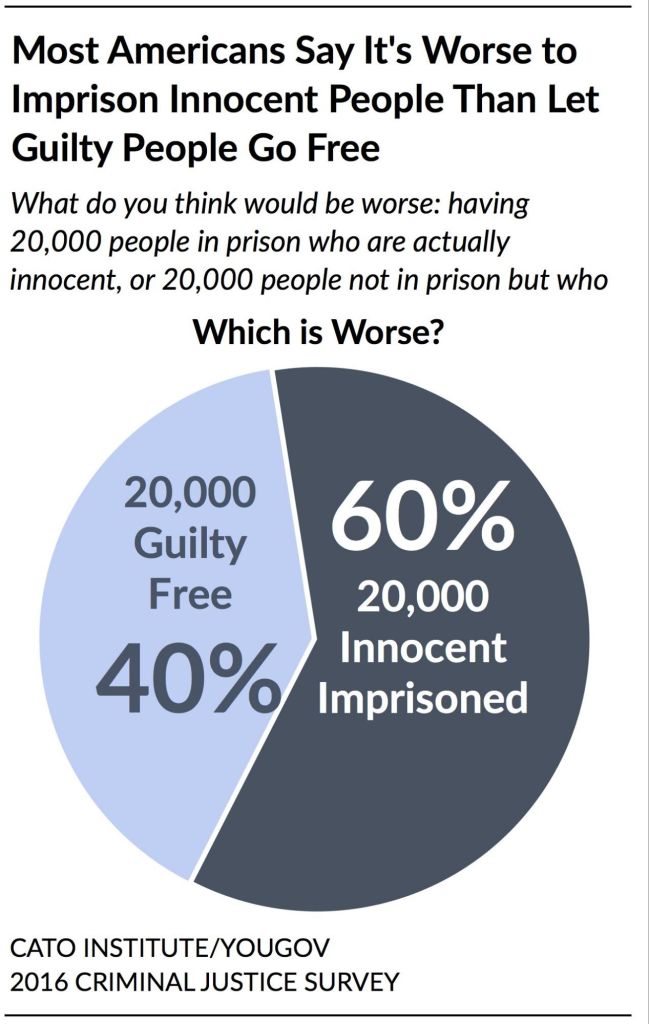
Wrongful convictions happen. We often assume, since someone was charged, that they must be guilty of something. I mean, why else would they be wearing that orange jumpsuit? But this impulse goes contrary to reality where cops plant evidence, people lie, and prejudice plays a role in judgment. 

This was the case with Brian Banks—who had been accused of rape by a classmate who later, after his years in prison, confessed to fabricating the whole account. What a horrible predicament: your whole future blown up, a jury that only sees your guilt.

A jurist, Sir William Blackstone, understanding the imperfection of the justice system and that the ultimate goal of justice is to protect the innocent, proposed:

It is better that ten guilty persons escape than that one innocent suffer

This, the Blackstone ratio, is foundational to how things are at least supposed to work in the United States. Founding father Ben Franklin actually took the concept further by stating, “it is better 100 guilty Persons should escape than that one innocent Person should suffer.”  John Adams, while he defended the British soldiers charged with murder for their role in the Boston Massacre, argued the following:

We find, in the rules laid down by the greatest English Judges, who have been the brightest of mankind; We are to look upon it as more beneficial, that many guilty persons should escape unpunished, than one innocent person should suffer. The reason is, because it’s of more importance to community, that innocence should be protected, than it is, that guilt should be punished; for guilt and crimes are so frequent in the world, that all of them cannot be punished; and many times they happen in such a manner, that it is not of much consequence to the public, whether they are punished or not. But when innocence itself is brought to the bar and condemned, especially to die, the subject will exclaim, it is immaterial to me, whether I behave well or ill; for virtue itself is no security. And if such a sentiment as this should take place in the mind of the subject, there would be an end to all security whatsoever.

This commitment to the innocent reflects a strong emphasis on individual rights. It also seems rooted in the story most defining of Western religion, and that is the story of Jesus—falsely accused and put to death for the sake of political expediency. This has become the defining narrative and a reason to reflect on our judgment rather than react. It is why many principled conservatives are always uncomfortable with those trials in the court of public opinion where the state parades a prosecuted person and people assume this is proof of an airtight case.

You look guilty just for being in a courtroom defending from an accusation.

Tyler Robinson currently stands accused of murdering Charlie Kirk. Some have decided his guilt to the extent of forgiving him prior to his even standing trial or being given the chance to defend himself—as if there’s just no way that anyone other than him could be involved. That’s not justice; that’s denying him a presumption of innocence and might be enabling others to escape accountability for their involvement. It is better that he go free than chance a wrongful conviction—that is just Christian.

Caiaphas’s Expediency Math: Killing One to Save All

At the completely opposite end of the spectrum from the Christian West is the example of the high priest who claimed the murder of an innocent man was necessary to save Israel from destruction:

Then one of them, named Caiaphas, who was high priest that year, spoke up, “You know nothing at all! You do not realize that it is better for you that one man die for the people than that the whole nation perish.”

 (John 11:49-50 NIV)

This may very well be the origin point of trolley problem moral reasoning, where a hypothetical situation is proposed in which an intervention will cost fewer lives. If we just switch the track, this fictional trolley only kills one rather than multiple people. And it seems very reasonable. Isn’t it better when more people survive?

Caiaphas reasoned it was better to kill one Jesus to save Israel.  But it didn’t work out that way. The entire nation—along with their temple and sacrificial system—was forever destroyed in 70 AD. The high priest’s moral reasoning was compromised and wrong. It did not save Israel to kill one man and may well have been part of what eventually led to the destruction of Jerusalem. Those who did not accept the way of Jesus continued, after his ministry ended, to kill his followers and resist their civil authorities. Had they taken one moment to reflect and reconsider their plan to kill their way to peace, they may have survived intact rather than be spread to the corners of the empire.
The problem with killing one—without a just cause, to secure the future—is that it usually doesn’t end there. Kill one and you’ll kill ten; if you kill ten, you’ll kill 100, until soon it is millions upon millions. We see this in the campaign against Gaza. Tens of thousands of children are slaughtered and this is being justified as a war against terror. The reality is that it may very well create the backlash that will make the Zionist project untenable as people see this notion of blood guilt and collective punishment as repulsive. This is not compatible with the Christian values of the West and will lead to our destruction if the escalation of war is not rejected.

The world is better when we don’t play God and use the expediency math. If you’re okay killing one innocent person, you’re now an enemy of all humanity. And if you are willing to kill one, then the second and third come much easier. Innocent life should always be protected—whether it is the life of Jesus, be it the “enemies'” children, or the  unborn. Pro-life means no excuses for the IDF that don’t equally apply to Hamas. If it is okay for the Zionist regime to kill scores of civilians as “collateral damage” for every militant killed—where even the Israelis admit the victims of their onslaught are 83% civilians—why mourn when it is just a handful in Bondi?

The best protection of innocent people, like your own, is to oppose all killing of innocent people no matter the color of their skin or the clothes they wear. If the IDF can kill a journalist claiming they are “Hamas with a camera” or “Hamas-affiliated,” then why is it wrong for Eli Schlanger, who has materially aided a genocide, to be targeted along with his associates? We need to reject this math of expediency no matter who is using it, or we can’t be upset when what goes around finally comes around.

Abraham’s Plea for Mercy: Sparing the Many for the Few Righteous

Now we can go way back, to the book of Genesis, where the world’s most powerful monotheistic religions find their foundation, and this man of faith named Abraham. We join him prior to the destruction of Sodom and have this interesting exchange:

Then the Lord said, “Shall I hide from Abraham what I am about to do?  Abraham will surely become a great and powerful nation, and all nations on earth will be blessed through him.  For I have chosen him, so that he will direct his children and his household after him to keep the way of the Lord by doing what is right and just, so that the Lord will bring about for Abraham what he has promised him.”  Then the Lord said, “The outcry against Sodom and Gomorrah is so great and their sin so grievous that I will go down and see if what they have done is as bad as the outcry that has reached me. If not, I will know.”  The men turned away and went toward Sodom, but Abraham remained standing before the Lord. Then Abraham approached him and said: “Will you sweep away the righteous with the wicked? 

(Genesis 18:17-23 NIV)

Abraham’s opening question, in the passage above, tells you a whole lot about his moral reasoning. But before that you basically have the old covenant explained in brief: The blessing that was being bestowed on Abraham had to do with “doing what is right and just” or not simply being a blood relative of him, which is something that Jesus and the Apostles explained over and over to those who saw their genetic tie to the patriarch as a sort of entitlement and did not act justly or mercifully as he did.

Continuing in the text, take time to contrast the expediency math of Caiaphas with the following:

What if there are fifty righteous people in the city? Will you really sweep it away and not spare the place for the sake of the fifty righteous people in it?  Far be it from you to do such a thing—to kill the righteous with the wicked, treating the righteous and the wicked alike. Far be it from you! Will not the Judge of all the earth do right?” The Lord said, “If I find fifty righteous people in the city of Sodom, I will spare the whole place for their sake.” Then Abraham spoke up again: “Now that I have been so bold as to speak to the Lord, though I am nothing but dust and ashes, what if the number of the righteous is five less than fifty? Will you destroy the whole city for lack of five people?” “If I find forty-five there,” he said, “I will not destroy it.” Once again he spoke to him, “What if only forty are found there?” He said, “For the sake of forty, I will not do it.” Then he said, “May the Lord not be angry, but let me speak. What if only thirty can be found there?” He answered, “I will not do it if I find thirty there.”  Abraham said, “Now that I have been so bold as to speak to the Lord, what if only twenty can be found there?” He said, “For the sake of twenty, I will not destroy it.” Then he said, “May the Lord not be angry, but let me speak just once more. What if only ten can be found there?” He answered, “For the sake of ten, I will not destroy it.”  When the Lord had finished speaking with Abraham, he left, and Abraham returned home.

(Genesis 18:24-33 NIV)

Abraham, after expressing his concern for the innocent, offers an opening bid at fifty righteous. Will God spare the entire wicked city for just fifty? And the first thing that is obvious is his humility, pleading with “I am nothing but dust and ashes” and showing his attitude before God. Second is that his orientation is toward the sparing of innocent life even if it means the evil people of the city of Sodom escape deserved judgment. This is in line with Blackstone’s ratio and in total opposition to Caiaphas, who argued to sacrifice rather than to protect the righteous one. Eventually Abraham concedes, and it makes more sense just to evacuate those righteous—nevertheless the righteous are not destroyed with the wicked.

So why is this account in Genesis?

Why is God engaged in a negotiation with a mere man?

The answer is that this anecdote is here for a reason, and that is to be instructive. The author of Genesis isn’t just telling us that Abraham was righteous—they’re giving us instruction on how to be righteous. To have the same disposition as Abraham, that’s the way to be a child of Abraham, and the path of righteousness that leads to the blessings through God’s promise. Chosen means you believe and obey the Lord. You can’t claim to be children of God, or of Abraham, if you truly share nothing in common with them in terms of your behavior or spirit. Genesis is telling us what that looks like in practice.

Christian Orientation Towards Mercy and Humanity is Truly Abrahamic.

In traversing these three moments—from courtrooms shaped by Christian reflection on an innocent’s crucifixion, to the high priest’s fateful expediency that failed to save his nation, and back to Abraham’s humble plea for mercy amid judgment—we uncover a profound reality: The orientation of the Christian perspective, underpinning American rights, is directly the opposite of the ideological lineage of Caiaphas.

The commitment, in faith, to protecting that one innocent life in a crowd of evil is to be a son or daughter of Abraham.  Those who do the opposite, who are willing to sacrifice the innocent for sake of expediency, carry none of the character of Abraham and cannot be the heirs of anything promised to him.  They must first repent of their sin—then they can be blessed, with all nations, through the one singular seed of Abraham (Gal 3:16) which is Christ Jesus.

Going back to the start and those ethics ingrained in us through a religiously derived culture and our assumptions, those who have rejected Christ and are completely willing to kill innocent people to accomplish ends are also going to manifest the other evil traits of Proverbs 6:16-19:

There are six things the Lord hates, seven that are detestable to him: haughty eyes, a lying tongue, hands that shed innocent blood, a heart that devises wicked schemes, feet that are quick to rush into evil, a false witness who pours out lies and a person who stirs up conflict in the community.

Those of us raised in an Anabaptist church got a strong dose of the Gospel according to Matthew and were taught that speech should be simple and truthful.  Let your yea be yes, and nay be nay is about truly honest conversation and credibility without relying on oaths.  We were told to have a peaceable spirit and merciful approach with all people—to be humble.  

This is an orientation that many of Christian faith may believe is universal.  Except it is not.  Ethno-supremacist pride is okay with those of certain ideologies, deception for sake of gaining an upper hand is looked at like a virtue, they look at their ability to trick you as proof they are superior, and sow the seeds of division covertly not to be caught—like this example:

In a covert operation during 2007–2008, Israeli Mossad agents impersonated CIA officers—using forged U.S. passports, American currency, and CIA credentials—to recruit members of the Pakistan-based Sunni militant group Jundallah for attacks inside Iran, including bombings and assassinations targeting Iranian officials and civilians, as part of a broader effort to destabilize Tehran’s regime amid nuclear tensions. The deception, conducted openly in places like London, aimed to frame the United States as the sponsor, exploiting Jundallah’s sectarian and separatist motives while providing plausible deniability for Israel; U.S. officials uncovered the ruse through internal investigations debunking earlier media reports of CIA involvement, leading to outrage in the Bush White House (with President Bush reportedly “going ballistic”), strained intelligence cooperation under Obama, and the eventual U.S. terrorist designation of Jundallah in 2010, though no public repercussions were imposed on Israel.

 (Overview above by Grok, read: False Flag)

Imagine having a friend who deliberately set you up for a fight against another person by telling them that you said something about them.  My son had a bully do this to him on the bus and this is exactly what so-called ‘greatest ally’ tried to do to the US.  For the Zionist regime, and Mossad, conducting the terror operation via a Pakistani proxy simply was not enough.  They wanted Iran to think the attacks originated with the US in order to provoke a reaction.  And this is how the world becomes a cesspool, all because the Iranians won’t stand idle while Palestinians are deprived of land and human rights.

Deviousness is not exclusive to the children of Caiaphas.  But there’s no stops for those willing to kill innocent people for the sake of expediency.  And a partnership with them is only going to undermine the foundation of our civilization.  The US and ‘Christian’ West have already lost their moral reputation for this unholy alliance.  We need to repent and return to holding evil men accountable and protecting the innocent or all will be lost—we can’t exempt some from a standard of normal decency without also damaging all of Christendom.
The First Anabaptist Identity Conference

Standard

Over the past couple of decades the liberal end of the conservative Mennonites and a few others get together to navel gaze about what it means to be them.  This “Anabaptist Identity Conference” (an annual event which some of us have dubbed the identity crisis) is truly a product of this time where nobody is sure of who they are as they once were.  There is a strong urge to seek out others, like us, as to bolster our shaking foundations. 

In this year’s event there is a line up of many meme worthy topics, like “The Anabaptists: Continuation of the Ancient Faith,” where ol’ David Bercot, a man who truly knows where his meal ticket comes from, will try to make the case that Anabaptism (as they define it) is somehow a direct lineage to the Apostle’s church.  This connecting the dots to make it fit narrative, of course, will play right into the confirmation bias of his audience who fawn over an educated outsider.  Maybe this year he’ll have pictures of whoopie pies painted in the catacombs?

Anyhow, some may believe that the first Anabaptist Identity Conference was held in 2007, in the Amish vacation Mecca called Sarasota, but there was one before this way back in 1536.  It occurred in the aftermath of an event that left Anabaptists then trying to find a path forward.  This is the Bocholt meeting that brought together survivors of the Münster rebellion and other factions in the Anabaptist movement:

In August 1536, the leaders of Anabaptist groups influenced by Melchior Hoffman met in Bocholt in an attempt to maintain unity. The meeting included followers of Batenburg, survivors of Münster, David Joris and his sympathisers, and the nonresistant Anabaptists.[4] At this meeting, the major areas of dispute between the sects were polygamous marriage and the use of force against non-believers. Joris proposed compromise by declaring the time had not yet come to fight against the authorities, and that it would be unwise to kill any non-Anabaptists. The gathered Anabaptists agreed to the compromise of no more force,[5] but the meeting did not prevent the fragmentation of Anabaptism.

No discussion of Anabaptism is complete without a little discussion about this crazy polygamous uprising.  Sure, the revisionist historians of the denomination may tell you otherwise, but the association is definitely there and the Wikipedia summary is accurate.  Menno Simons, in his 1539 Foundation Book, called the Münsterites “dear brethren” rather than claim they weren’t truly Anabaptists.  So are we really in a better position today to decide who is truly representative of the Anabaptist identity?  No, we’re not.

What is the Anabaptist identity?

In America it is mostly an ethnic group with a similar religious lineage.  Some within this category have openly lesbian pastors while others cling to traditional dress and buggies for transportation.  Unlike in the first 1536 identity conference, when their big debate was over use of violence, now the surviving Anabaptist groups agree on that and really not a whole lot other than that.  Even those who organize and attend the conference in the current year only represent a subset of the conservative Anabaptist groups.  The ‘spiritual’ lineage, while all claim it as their own, is too vague to put a finger on.

Men like Bercot and their ilk may want to declare the boundary lines even stricter than the early Anabaptists did, but that is just adding delusion upon a delusion.  No, I am not saying they aren’t Christians, that’s not my purveiw, but for one to claim they’re some kind of special remnant of the remnant is just plain grandiose.  And what comes to mind, at this juncture, is the “Stop It, Get Some Help” meme. 

Newsflash: You’re not even representative of the early Anabaptist —let alone the ancient church. 

This conference can’t speak for the plurality of the groups today who trace their roots the so-called “radical reformation” and do not have a voice in this identity rumination project.  What is hard to miss, for those outside looking in, is that this is an effort to preserve their distinction and not to seek the the unity in Christ that St Paul commanded (1 Corinthians 3) when some in the early church were busy commending themselves for their special identities.

I don’t have a problem with having an ethnic identity that is cherished.  I’m German, still Mennonite in many regards, and absolutely adore Old Order people.  I have no problem with having our own culture or celebrating our heritage.  It is why I encourage my son to keep his Igorot language and ways rather than have it all be erased in the American monoculture.  But there’s a vast difference between that and those basically arguing that they’re saved through heritage. 

Saying that Anabaptists are a “continuation of ancient faith” is only a half step away from being as crazy as the Schizophrenic who thinks they’re the second coming of Jesus.  The denominational ground you’re standing on is not sacred simply because you currently stand on it.  It is spiritually equivalent those Anabaptists in Münster declaring their own project to be the New Jerusalem.  We should know better than to live in that kind of self-delusion.  We should not condone or encourage it.

Response to Questions From a Social Justice Anabaptist…

Standard

Recently I was asked, by a friend on Facebook, a Social Justice Anabaptist, to participate in a “focus group” discussion with Conservative Anabaptists who Support Trump (which they refer to as CAST) and for the stated purpose of finding common ground. I have no reason to doubt the intentions of such an effort, although there is a sort of wariness that comes from having observed these kinds of conversations, it reminds me a bit of the foot-in-the-door tactics of Jehovah’s Witnesses or Mormon missionaries. This “having a conversation” can be code for a sort of Evangelical push of agenda.

But, my initial skepticism aside, I’m not truly part of the Anabaptist church anymore and I’m not sure how they would find common ground with me except they abandon their “former delusion,” stop dividing themselves into political categories, conservative and liberal, truly follow Christ and become Orthodox Christians. So, if they want my advice on how to heal their current schism, perhaps they should look to reconciling the much more significant division from the Apostle’s church first and leave their political disputes to a different venue?

Furthermore, I’m not sure that I “support Trump” so much as I oppose partnering with corporate elitist interests, in bed with a Chinese Communist dictatorship, against my neighbors. I did not vote for Trump in 2016 and even wrote several blogs (1,2,3) to persuade my conservative Mennonite and Amish peers to reconsider. It was only since then, since observing the viciousness of the assault against Trump and reconsidering my own perspective of the man, that I realized I had been duped by some very sophisticated propagandists.

No, that is not to say that my criticisms of the man were invalid, but understanding the other side, knowing their agenda and tactics, certainly can put him in a different light.

While I do not support those who confuse the American flag with the cross, I likewise have must warn those who are fooled into believing that the Gospel of Jesus is compatible with the divisive Social Justice narrative and grievance culture. As I’ve said in another recent blog, there is no rivalry between the kingdom of heaven and the ordained governments of this world. They are two parallel systems, one for our physical protection from evildoers and the other for our salvation from sin and death.

I don’t have a problem with voting for a leader who best fills the role of government described in Romans 13, providing some general protections for all people, but I do think it is problematic to use the government to enforce Christian morality and values. The point of Jesus saying “sell all and give to the poor” was not to express a Socialist ideal, or else he would’ve joined Judas in his rebuke of that woman’s worshipful display of pouring out expensive perfume, but rather it was to point people to the kingdom of heaven. In other words, Judas was trying to turn the words of Jesus into a political solution for social inequalities, while Jesus was primarily interested in the salvation of souls. So, unlike a leftist who looks to government as savior, I do not look to Trump (or any man) to fill the role of Christ. The President, in my view, is put in his position for a purpose different from my own. I do not look to civil authority to bring salvation to the world any more than I look to the fast-food employee flipping my burger to be my bread of life.

So, with all that in mind, here are my responses to the questions offered by the Social Justice Anabaptist:

1) What are the top three issues in ranked order you think best answer the first title question?

Rational, issues-based, voting is a myth. We make decisions based on our intuitions, our experiences, and what we know (or think we know) about the options available. Most elections come down to a choice between two candidates and are decided on the basis of their individual character or that of the ‘side’ which they represent. I didn’t vote for Trump in 2016 because I had questions about his character that could not be resolved. But, that said, I certainly did prefer the risk-taking approach of Trump over that of the careful, yet seemingly dishonest and conniving words of the alternative, and was proven right when she suddenly changed her tune about accepting election results to push a relentless “resistance” campaign based upon a fictional Russian collusion narrative.

2) Would you say the Bible has much to say to guide us in our political choices?

Men look at the outward appearance, but God looks at the heart. There are many chosen by Jesus, to lead his church, who did not measure up to the standards of the smug and sanctimonious religious leaders of that day. Trump is outwardly flawed, he wears his faults on his sleeves, he is called a narcissist and other nasty things, but the blue-collar guy (hurt by ‘progressive’ tax, trade, and border policies) saw his heart better than the truly privileged social elites who hate him. Ultimately, God is sovereign, parsing the Bible for a concrete answer or justification for every choice is foolishness, and my stating some eloquent theology in defense of my choices wouldn’t persuade a skeptic regardless.

3) If so, what Bible verse or spiritual concept guides your political thinking most?

Nothing specific. But generally, God gives us freedom and choice. God also, for our own common good, provides boundaries and divisions. Cities had walls, civilizations have laws. The kingdom of heaven, while open to all who repent, has clear entry requirements.

4) I have heard a lot of folks say that they support the platform though they don’t particularly support the man, Donald Trump, his personal behavior, rhetoric and swagger. Do you feel like that is the consensus of CAST you know?

This question reminds me of the Pharisee, whose house Jesus was visiting, and protests the blunt commentary, “Teacher, when you say these things, you insult us also.” (Luke 11:45). He gets bulldozed. Jesus doesn’t lose a beat. Jesus continues to hammer his point home. There are several times when Jesus gets questioned for offending the elites and he doubles down rather than soften his tone.

The political class often hides their corruption under pious speech and pretense of righteousness. Trump is hated by these people for his crudeness of speech and swagger. But the working class is more concerned with actual substance over style, they aren’t at all offended by a little shop talk, and there’s also a reason for Trump being extremely popular in hip-hop and rap culture. Or at least Trump was popular before his political enemies poisoned this connection.

Incidentally, those who have a problem with Trump’s flamboyant style are probably also, for strategic or cynical reasons, holding back on their judgment of others of similar behavior. By saying Trump is “not Presidential” or complaining about his neglect of decorum, they may actually be implying that he’s not elite (or white) enough for the office. In other words, it is sort of a racist or classist thing. Trump, in being like an uncultured average person, offends those who feel superior to all and entitled to rule.

‘not Presidential’

Anyhow, those who said that Trump would choose conservative Supreme Court Justices were proven right thrice. That will be Trump’s legacy more than his personality, that and the fact that he didn’t lead us into another war, that he brokered several peace deals, and was extremely restrained in his response to the violence of leftists. Sure, maybe Trump is a Twitter troll, but at least he cared enough about random Iranian soldiers to call off a retaliatory missile strike in response to the downing of a drone. So maybe it is time for you, who judge him, to start considering his actions over his rhetoric? Maybe he is right to stand apart from the fawning praise of John “bomb-bomb-Iran” McCain and to defy the neocon establishment? He was elected to put America first, to end endless wars, and that’s exactly what he did, yet some ‘Anabaptists’ still hate him because he isn’t a smooth warmongering liar like his predecessors?

5) Is there anything about his rhetoric, swagger or personal behavior, that does resonate with you or CAST? If so, can you explain that a bit?

Trump’s lack of a facade is a breath of fresh air compared to the lawyer-speak and “focus group” silliness of most in the political class. Psalm 55:21 could easily describe many others: “His talk is smooth as butter, yet war is in his heart; his words are more soothing than oil, yet they are drawn swords.” I prefer Trump’s recklessness and hyperbole, that he attacks others in the privileged class, over those who call common folk “deplorables” and “chumps” behind closed doors or in front of a partisan audience. I’ll not soon forget how Obama allowed his surrogates to slander the loyal opposition as “racist” for opposing his massive expansion of government power. The pretty “mean girls” may get away with their exclusive cliques and bullying because they have such sweet smiles and know how to use their outward beauty work the system, but that doesn’t make them good people or actually superior to those less sophisticated.

6) I assume one of the reasons, you support Trump is his opposition to the “liberal agenda.” Can you identify one part of the liberal agenda that is the most problematic to you?

Depending on coercion and threat of violence to take the property of one group to give to another, so that you can manipulate these others into being a loyal voting bloc? Do I really need to explain to an Anabaptist how unChristian that is?

7) Urban – rural divide. A look at the electoral map shows a dramatic difference in voting patterns based on population density. It seems that one of the things that resonates with Trump supporters is his disdain for the “urban elite.” Can you explain who that is because I might actually fit that category? Can you then explain what it is specifically that makes the urban elite so distasteful?

An elitist Social Justice Anabaptist won’t be able to see it anymore than those who condemned Jesus could understand their own need of him. There is much to say about the pride of the religious and social elites. The left seems to believe that they have all of the answers to everything, they condescend to minorities and treat them like helpless children, keep them dependent, and yet are truly full of themselves. Living in an urban environment is to be removed from the earth, what is natural and good, and is to have the privileged of not having to see the hard work that goes into putting bread on the shelf of that corner store. The exposure to the cosmopolitan world gives one a delusion of being more well-rounded and knowledgeable, yet also comes with a lack of groundedness and the humility of good discernment as well. That is why many elites rejected Trump. I mean, how dare he misspells a word on Twitter or be honest about the threat presented by open borders?

8) Trump has made negative comments about “democratic cities?” Do these comments resonate with CAST? Can you explain one or two top things about democratic cities that are negative?

Maybe you should look up Kimberly Klacik?

She said it best…

Watch here: https://www.facebook.com/1635441679872518/posts/3374958039254198/?sfnsn=mo

9) Trump supporters talk a lot about his defense of religious freedom. Can you help me understand that? What freedoms are we talking about specifically? Are these the sort of things: Right to post Ten Commandments in the courthouse, right to not sell wedding cakes to gay couples, right to not pay for abortive contraception for your employees? Right to worship in groups in spite of COVID?

Why do your ‘scientifically motivated’ Democrats make exceptions for their own, for violent protests and premature celebrations of a Biden win? Why do they support ending the life of a fetus, a separate living human, while claiming to be compassionate and concerned with rights? Why do they choose a fictional identity over biological evidence when it comes to X and Y chromosomes? Why is it okay to demand that someone bakes a cake celebrating a homosexual union, but then perfectly fine for a business to turn someone away people for not wearing something that invades their personal space?

Most conservative Christians simply want the tolerance to go in both directions. However, the left is constantly (like a domineering mother) imposing their own values and preferences on everyone else. Again, God gave us the freedom to follow Him. God also ordained the government to provide some basic order, keep the evildoers restrained and good people should not fear this. But, that is not and never will be a license for tyrannical rule.

10) Health outcomes of African Americans and also low income individuals of any race are substantially worse than the general population resulting in higher mortality rate for nearly every disease and almost every age group. Which responses do you think best describe the CAST response to this information: You may select more than one.

  1. That’s sad, but it is not a government issue.
  2. The Democrats’ efforts such as Medicare for All wouldn’t help this number anyway.
  3. That’s fake news.
  4. That’s sad and healthcare is an issue I disagree with Trump on.
  5. I never heard that before I would have to think about that.
    Other.

Maybe the questioner hasn’t been around enough poor white people?

Maybe they are unaware of the Trump administration’s effort to lower the cost of prescription drugs?

Anyhow, this idea that black and white are homogeneous groups, where all white people are equally ‘privileged’ and all black people are all hapless victims in need of help from white ‘progressives’ (you) is absolutely racist. Various studies show that liberals talk down to minorities, there is this racism of low expectations, and I’ve seen this first hand.

I’m quite familiar with the condescending ‘helpful’ attitude, the patronizing, and pandering behavior.

I’ve been around conservative Mennonite inner-city efforts, I know some of the players involved quite well and can tell you that many of the minorities whose cause they claim to champion are quite aware of this superior spirit amongst these ‘progressive’ types. Sure, these ‘helped’ might not confront the ‘helpers’ for this, they try to appreciate the attempt at support or understand even if it is misguided, and yet they really do not need the white savior ‘progressive’ swooping in. I’ve had some confide in me about this, some of the special sensitivity and exaggerated concern is extremely off-putting to minorities and, frankly, in my opinion, it is racist.

Anyhow, I think Social Justice Anabaptists, like their secular atheistic Marxist teachers, ask the wrong questions. That list of suggested responses above, for example, presupposes that government intervention is the answer to racial disparities (rather than the cause) and neglects the fact that billions have been spent to alleviate these problems with very little to show for it. It seems ‘progressives’ assume that disagreement with them stems from ignorance about the problem. In other words, a perspective so incredibly arrogant that it makes Trump look humble by comparison.

All but one of the options offered by the questioner suggests the ignorance or lack of compassion of those who disagree with their presumption of government as a solution. Extremely loaded, more statements than questions, and pretty much designed to trip up the person trying to answer in succinct manner. Of course, the expectation is that their conservative opposition, not as educated or articulate, will sputter something incoherent in response to this deceptive “galloping Gish” rhetorical strategy and look bad.

But, this strategy doesn’t get past me.

The Social Justice Anabaptists have nothing on me as far as compassion and desire to help others. However, what they lack and I do not, is a basic comprehension of economics and the history of these occasionally well-meaning big government efforts. Furthermore, minorities dying due to inadequate care is very personal to me. Saniyah, my little hope who died unexpectedly, was African American. And, yes, she had access to medical care despite her mother being an illegal immigrant. But the doctor? Had I known how potentially deadly her respiratory ailments were and how incompetent inner-city physicians are, I would have made sure she had a qualified physician in conservative rural Pennsylvania.

Here are some of the right questions to help get our far-leftist friends pointed in the direction of solutions that actually work:

Why has the decades-long “War on Poverty” been a dismissal failure? Could it be that the government is not positioned well to address those problems? Didn’t Jesus tell you to personally intervene on behalf of the poor rather than use government as a means to force your neighbors to do something? And, if all poor people are our personal responsibility then what are you doing for Filipinos, in the Philippines, who have less access to quality care than those in our own inner-cities?

11) In a CAST world view, what is racism and what should be done about it?

Racism is to abandon the standard of Martin Luther King, where people should be judged by “content of character” and not their skin color. Racism is to collectively blame or exempt people according to their skin color and to assume that skin color, not the difference in behavior, is the lead determiner of outcomes. Racists treat everyone differently, raising or lowering expectations, based only on skin color. In other words, if one man rapes a woman this is explained away as something in his environment or mostly ignored. But if another does the same, he is roundly condemned and his evil treated as if it is somehow reflecting upon all men of his skin color or class. Racial tribalism is as racist and bad now as it was when white supremacists had the numbers advantage and the KKK roamed at night. The conservative stands against all racially motivated violence. But Social Justice Anabaptists refuse to condemn those behind the current violence. What should be done about racism? Well, stop being racist, stop excusing racial tribalism, start treating all people as unique individuals, that’s what should be done.

12) What core Anabaptist value most drives you or CAST?

The Golden Rule.

13) If you or CAST found out your pastor voted for Biden, would you have trouble listening to his sermons or receiving counsel from him on other issues?

One of my priests, Fr. James, I suspect would be a Biden voter. But, the Orthodox, unlike most Protestants, understand that “my kingdom is not of this world” means segregation of worldly politics from the church environment and worship. One of the reasons that I left the Anabaptists is because both conservatives and their ‘progressive’ activist counterparts do not know how to keep worldly concerns separate from their worship and Communion together. I suppose this is a tendency to confuse Christian and civil duties goes all the way back to the Münster Rebellion? Wherever the case, I’ve scolded Mennonite pastors who brought their conservative anxieties into the church sanctuary, preached their fears, and also confront those who bring far-leftist political agenda in as well. The Gospel of Jesus Christ is not about the establishment of a Socialist state and those preaching the Social Justice message are preaching a false Gospel and heretical.

14) What do you think a church that is politically divided should do about that?

Stop pushing politics down throats and start loving as Jesus loved. Or, rather, understand that ‘progressive’ politics are as unChristian as any other politics, humble yourselves, and lead by an example of love rather than continue in the politely condescending tones. If you really want to overcome the divisiveness of Protestantism, stop being a separatist, take a step of faith towards Orthodoxy, and being in Communion with the truly kingdom oriented church of the Apostles. Repent! Because the kingdom of heaven is at hand!

15) What does the phrase “Make America Great Again” mean to Conservative Anabaptists that support Trump (CAST)? Is it referencing the period in the 50’s, prior to the modern socially liberal agenda that included Civil Rights, Women’s Liberation, R v. W, Gay Rights, etc.?

Obviously, MAGA is not about any of those things listed. Sure, that is how the far-left controls minorities, through fear-mongering and lying about Trump’s intentions. It is also how smarmy Social Justice Anabaptists try to distinguish themselves as superior-minded and social elites. However, no Trump supporter that I know understands it to mean what the left-wing propagandists say and what it truly means is restoring the status of the United States as a world leader, building a strong middle-class (of all colors or creed) again and nothing to do with that leading question nonsense.

16) Do you think Trump’s strong economy (before COVID) is a key thing that contributes to CAST’s support of him?

Minorities did better under Trump, up until Democrat governors shut down their economies, and only a racist would not support the growing independence of minorities. Many do not realize that George Floyd had lost his job as a result of Democrat-imposed economic shutdowns. He had also been infected with Covid-19 despite these draconian measures. He may very well still be alive and well had it not been for ruinous ‘progressive’ policies. But the controlling left doesn’t seem to care about the consequences of their policies. They seem to believe that only their good intentions matter more than the actual results. Why aren’t you asking about the uptick in suicides and drug overdoses, depression, and quality of life concerns? The economy is life, conservatives intuitively understand this, they understand trade-offs, but ‘progressives’ routinely fail to recognize the folly of their utopian theories and disastrous outcomes of their solutions.

17) Is it a God-given right/responsibility for the secular government to maintain a strong military?

The common defense of a nation is the only legitimate reason why government exists, to physically defend people from evildoers within and without the borders, which is to provide for the general welfare of all citizens. One only needs to look at what happens when this God-ordained order breaks down to see how bad it can get. People need to be secure in their person and property to flourish. The weak and vulnerable suffer most from the neglect of these structures and institutions. That is why God ordained the structure of the family and church to care for our social needs, it is also why St Paul said we should not oppose this legitimate role of government to punish and protect us from evildoers.

18) All other things being equal, do you think it is more likely that a successful businessman would be Christian, or a government executive with a modest income?

Not my place to judge. Jesus had both a repentant tax collector and fishermen. As far as honest labor, certainly, the fishermen outranked a man who lived off what others produced. That’s not to say that those who truly work as public servants have no value, but they should also be appreciative that someone (often without a choice) is providing their income and needs. A business person, by contrast, cannot (outside of collusion with the corrupted government) cannot force you to buy their products and therefore must produce things of actual value or they would not be successful.

19) Is strong border security important?

Does your house have a roof, four walls, a door that can be locked?

Does your body have skin?

Of course, border security is important, President Obama articulated that on multiple occasions and echoed prior administrations about the need for secure borders. It is important for the same reasons why many people flee from other places to come here. They flee from places impoverished by corruption and unrestrained evildoers. Those who do evil would love to follow those fleeing them and many do get in as a direct result of lax enforcement of borders and immigration law. It is compassionate to let the good in and keep the bad out.

The real question is how can an intelligent and compassionate person not be in favor of vetting immigrants?

20) Do you see hunger as a moral issue?

The question is unclear. There is nothing immoral about hunger. Or maybe the question is whether or not it is moral to leave others hungry? If so, maybe we should establish some context first.

Are we talking about this:

Suppose a brother or a sister is without clothes and daily food. If one of you says to them, “Go in peace; keep warm and well fed,” but does nothing about their physical needs, what good is it?

(James 2:15‭-‬16 NIV)

Are talking about the rich man stepping over Lazarus on his doorstep or the Priest and Levite who didn’t offer aid in the good Samaritan story?

If so, if we are talking about needs in the church and needs in our immediate physical proximity, then absolutely it is a moral issue. If God puts a need in our path then we should take care of it by the means God has given us. We are clearly instructed to provide for the needs of those in our church and extend a hand of charity to those whom we come in contact with. This is local, it is our individual duty, and not a responsibility that should be shunted off or delegated to the secular government.

Maybe, instead of proudly parading around with useless slogans, these ‘justice’ Mennonites should learn some carpentry skills and start building ‘affordable’ homes?

If feeding the world is a Christian priority and moral prerogative, then let’s turn this around: How much food have you produced? I know farmers, conservative Mennonite, and many of them Trump supporters, who farm acres of land at a far lower cost than prior generations. They, through their labor, have done far more to feed the multitudes than anyone sitting on some ivory tower somewhere, would you dare speak down to them with this kind of inane question?

21) What are the top solutions to crime issues?

Definitely not Joe Biden’s 1994 Crime bill in light of his son still being a free man nor the zealous drug prosecutions of Kamala Harris who joked about using illegal drugs. Scripture says that crime should be punished. However, I am concerned with some crimes, because of political connections or being of the right class, being totally ignored for some and applied strictly for others. Favoritism is a sin in the church and, likewise, a legal double standard is an injustice. Equal protection under the law is ideal.

Final Thoughts…

So that pretty much wraps it up.

Still, I would love to hear a Social Justice Anabaptist answer my questions scattered throughout this post and also would ask why one would believe that a political party, known for historically treating some as chattel, is actually any different today?

Biden was never asked to disavow his friendship with “mentor” Robert Byrd, a former “Exalted Cyclops” in the KKK, never held to account for his racially insensitive “put ya’ll back in chains” fearmongering and more recent “you ain’t black” comments, and yet Trump was heckled by allegations of racism for saying he wants to protect all Americans from cartel and gang violence?

The big difference is that Social Justice Anabaptists, like their forebearers in Münster, believe that the role of government and church should be combined into one kingdom. Their more conservative (or traditional) counterparts have learned the hard lessons of Münster. The ‘progressives’ merge the message of the cross with a political agenda and join those who look to the government for salvation. The conservatives, by contrast, want a President that allows them to live peaceably, a government that fulfills a basic role of military defense and necessary punishment of evildoers, and they do not seek to impose religious moral obligations on their neighbors.

In conclusion, my advice to the ‘progressives’ is that they not hold their traditional counterparts hostage to their political ideologies. If they must, that they find one of the many mainline Mennonite groups (beholden to the Social Justice Agenda) to hitch their wagons to and not drag the rest of their brethren down with them into that divisive and nasty place. And my advice to the conservatives is not to engage in the conversation at all. If you must vote, do it quietly, otherwise, live out the commandments of Jesus, and don’t get sucked into the black hole of politics. For all, seek after Orthodox Christianity rather than political solutions. There is one church and it is not divided between conservatives and liberals.

Sorry Haus, Not Voting Does Not Mean Apolitical…

Standard

‘Tis the season for conservative Mennonites to preen on social media about their apolitical “kingdom Christian” stance. These Biblical fundamentalists, with an Anabaptisty twist, talk about worldly politics more than many in the voting public do and never miss an opportunity to distinguish themselves with their rude apologetics.

Any more I try to ignore this noxious grandstanding display of religious elitism. But then I saw a video post, with a title proclaiming a change of mind about voting and featuring someone that I’ve run into, on various occasions, in my travels and as part of an online Mennonite discussion forum. I’m quite familiar with his long-held positions and this claim of transformation astonished me.

Perhaps he had voted in a mock election in grade school or something?

Anyhow, starting in general…

The Utterly Non-Revolutionary Act of Not Voting

Mennonites, like other Anabaptists, have built entire religious doctrines around cherry-picked Biblical phrases. The words “be not conformed to this world,” lifted from Romans 12:2, is used to justify everything from not driving motorized vehicles and dressing like it is still the 1800s to condemning military service and not voting in elections. That is standard fare for all traditional or Old Order Anabaptists.

But Fundamentalized Mennonites, unlike their Amish and Old Order Mennonite cousins, feel this unquenchable need to broadcast and announce all that they do. Ignoring the not letting the right hand know what the left hand is doing advice that Jesus gave while he slammed hypocrites. Mennonite fundamentalists, taking their cues from Protestant fundamentalists, are all about political influence and religious apologetics.

An example?

The disdainful retort of a Mennonite gentleman to those who dared to talk about voting in his presence, “I vote on my knees!” This sanctimonious announcement, alluding to prayer rather than direct involvement in the political process, was met appropriately with a humorous remark to the effect that crawling to the ballot box was an odd way to vote. But it does also describe the strange dichotomy, or rather the inconsistent application, of non-conformity rules.

A man actually voting on his knees

The grand irony is that this kind of political non-participation does not make someone unique from ‘the world’ as religious separatists claim.

No, in reality, over half of Americans of voting age do not vote.

Why?

Well, voting or not voting is a habit, they do not believe that their vote matters, or simply do not care about the outcome one way or another. So this idea that not participating in elections is some sort of notable stand or great sacrifice is pure delusion. Not voting is literally as much like ‘the world’ as you can get. It is not revolutionary. It is a nihilistic cultural default, a bit Gnostic, and requires doing nothing. However, unlike most non-voters who have no need to explain their apathy for the democratic process, conservative Mennonite fundamentalists have a great need to spiritualize and broadcast their decisions.

Sure, unlike other fundamentalists, who do vote and promote political involvement, the conservative Mennonite variety proudly distinguishes themselves in other ways. But they still go to universities like Bob Jones or Liberty University, fundamentalist bastions, and pick up the Evangelical attitude to apply to their Anabaptist doctrinal defaults. So, rather than simply live out their faith, like their forbearers, they must be “in your face” about their views, constantly propagandizing and promoting their supposedly ‘Anabaptist’ or purportedly ‘kingdom’ perspectives, and otherwise making sure that you notice them. If it seems self-aggrandizing and obnoxious, then it most certainly is. Worse, they are completely arbitrary and inconsistent in how they apply these supposed “Biblical principles” that justify positions they’ve inherited, never seriously reconsidered, and want to ram down your throat.

How do I know?

I was one of them. I would argue my Mennonite fundamentalism confidently with my teachers in high school. In college, I wrote a position paper to explain my inherited non-resistance dogma, thinking that my take would be fresh. But, for my efforts, ended up with a classroom more fully unconvinced of non-resistance than they would have been had I said nothing at all.

Anyhow, while most from my own religious communities lean towards conservative politics. A few got out of this Mennonite intellectual ghetto long enough to read a little Karl Marx and meet some real live Socialists. And, now, armed with this new knowledge, come back to their conservative peers with a superior attitude and a whole new set of empty platitudes, borrowed from ‘the world’ they claim to stand apart from, that require nothing of them. They proclaim themselves to be different, and imagine themselves to be revolutionary thinkers. Yet they are really nothing but a new blend of the same old political ideologies, tired religious dogmas, and general nonsense.

It was one such story of a ‘transformation’ that caught my eye because I actually knew the guy and knew him too well to be bamboozled by his slickly packaged testimonial.

The Completely Non-Transformative Transformation

I’m not going to reveal the source. More clicks will only encourage them. But it did not take long into the apologetics video to reveal that the title was a bit deceptive, when this conservative Mennonite apologist confessed, “The truth is I’ve never actually voted.”

Hmm.

So, I guess a more upfront and honest title, such as “Mennonite-born Confirms His Confirmation Bias,” isn’t propaganda-ish enough to sell the point?

Anyhow, to be clear, he never changed his mind, he might have momentarily been slightly more open to the idea of political involvement before reverting back to the Mennonite default position. And, sure, his political positions may have evolved slightly from right-wing anarchist and anti-government to being slightly more left-wing anarchist, definitely anti-conservative, and even more anti-government. But, in the decades that I’ve known him, he’s always had this smug-sounding “voting only encourages them” signature line.

What is truly interesting is that this particular individual?

Simultaneous to his decrying the violent and coercive means of the state, he had also worked as a government employee and profited from these means for many years. That’s right. This man who claims that voting is some big moral quandary because the government uses force and threats had no issues with taking money obtained by those means for years.

And yet, somehow, to merely cast a ballot is too much for them to stomach?

If voting is wrong, if political solutions are wrong, then how isn’t his taking through this system extremely wrong?

If he really believes that the government is illegitimate, that we should not participate so much as to cast a ballot, then he ought to do as Zacchaeus did. He should return all of his ill-gotten gains, he should pay it all back with interest to us who paid his salary, and put his money where his fundamentalist Mennonite mouth is.

But what is, by far, the most disturbing thing about this video is the shameless promotional for progressive politics it contained. While claiming to be apolitical. He pushed the far-left social justice agenda as if this was what Jesus taught. Confusing what we should do as individuals, as a church, with the obligations of a nation. How disingenuous an argument. How heretical a theological position. How contradictory with his own religious tradition.

In short, the kingdom of heaven, especially their conservative Mennonite version, does not have open borders and will turn people away for falling short of requirements. Scripture lists whole long lists of who will and will not enter the Kingdom of Heaven (false teachers one of them) and this studious fellow would certainly be aware. And, no, it is not cruelty or indifference that keeps some out. Quite the opposite, in fact. The Kingdom has borders to keep unrepentant murderers, rapists, and other abusers away from those whom they exploited. So this criticism of nations for enforcement of reasonable border policies, for the protection of the nation and those trying to escape horrendous conditions, is asinine.

Imagine that, a conservative Mennonite, part of a denomination known for their strict standards for entry (oftentimes over the slightest minutia of application) taking issue with a nation for taking some precautions and vetting immigrants.

I mean, as one practically engaged to a woman who needs to navigate our immigration system, I have every reason in the world to want the current system to be made easier. And, despite that, despite my own personal struggle waiting on the cumbersome process, I still completely understand and appreciate that we have civil authorities to protect citizens and promote peace. I love her, and my neighbors, enough to want to keep evildoers out. Her uncle was murdered in her home country, as was her grandpa, both good men, it would be absolutely immoral for me to open the floodgates so that their murderers could follow her in.

Ultimately, had this fundamentalist Mennonite commentator stayed politically neutral (rather than parrot a leftist ideological position while falsely claiming to be apolitical) I may have let the duplicitous transformation claim slide.

I’m completely okay with someone being apolitical and not voting if they believe that is what their religious beliefs require of them. But what am I completely not okay with? I’m completely not okay with misleading testimonials and phony claims of being apolitical while promoting a political position. I’m especially not okay with the hypocrisy of saying the government is violent, therefore we must not cooperate so much as to vote, while also being on the taking end and unrepentant about it.

This one was a little more personal because I knew the character making the claim and it was so typical of the fundamentalist tainted brand of Mennonitism that I came from. Mennonite Evangelicals love to distinguish themselves from other Evangelicals, both products of Fundamentalism, by pointing to their Anabaptist doctrines (namely non-resistance and non-conformity) as if it is something revolutionary when, in fact, they are often religious promoters of progressive politics who oddly also decide they are also above voting.

Voting bad, taxes good…

Okay.

Drinking the Kool-Aid of Evangelical Humanism

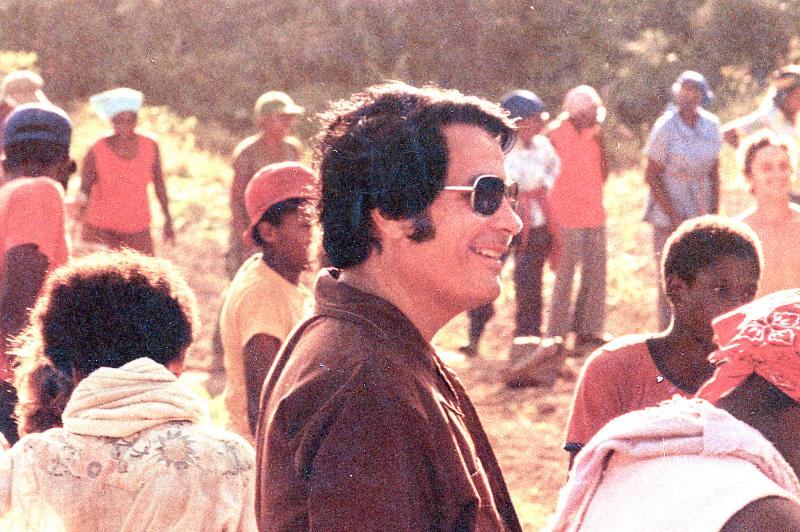
It started so wonderfully, that a charismatic young leader blended concern for the poor and racial inequality with a Gospel message. Eventually this “Peoples Temple of the Disciples of Christ” moved from Indiana to sunny California where this social justice preacher, James Warren Jones, found a more receptive and racially diverse audience. He grew his following to a few thousand members, enough to gain the attention of left-wing political leaders, and hired an African-American preacher to further the social justice message.

Pastor Jim

Jones and his so-called “Peoples Temple” moved progressively in the direction of openly displaying their true Marxist intentions. Their home for senior citizens directly quoted Karl Marx, “From each according to his ability, to each according to his need,” and drew parallels between this political ideology and Christian teachings. Jones became increasingly divisive, increasingly open with his far-left rhetoric, and increasingly controlling as time went on. Jones, the cult leader, preying on the urban poor and minorities, now pushed an idea of “religious communalism” and used various passages of Scripture to justify this aggressive push towards Socialism.

A ‘kingdom’ perspective

Of course, maybe some of you already know how this story ends, at Jonestown, where Jim Jones, the leader of this nasty narcissistic polygamous mess, ordered his followers to drink poisoned Kool-Aid. The infamous Jonestown Massacre, in the Socialist paradise (or rather a hellhole) in Guyana, totaled 909 dead, either by suicide or murdered outright, including a Congressman sent to investigate allegations of abuse. Jones was always only a wolf in sheep’s clothing, he was merely using a twisted version of Biblical texts for his political and personal ends. He was able, with this heretical blend, to lead hundreds of people to their deaths. Sadly, despite this sobering example, many still “drink the Kool-Aid” of social justice and end up spiritually dead having jettisoned the true Gospel.

Jonestown Massacre

Those who fall for the social justice ‘Gospel’ have indeed traded their birthright for a bowl of pottage. They, like Judas, have interpreted the words of Jesus through the lens of their worldly aims. They, like the betrayer of Christ, take the instruction of Christ, “sell all and give to the poor” as some kind of end in itself and not in the context of divine pursuit. It is not because they are far from Jesus. No, in fact, there is only a subtle difference. Judas may well have been the best of the disciples, trusted with the common purse, and able to quote the words of Jesus concerning the poor right back at him. And he was not alone in his confusion about the words of Jesus either. All of the disciples seemed to have worldly power and prestige in mind. They did not anticipate a life of suffering and sacrifice.

Do not drink that social justice Kool-Aid

The close counterfeit is the most dangerous. Many warn of the crude caricatures and obviously flawed copies of the truth. However, when they encounter something that appears, on the surface, to be the genuine article, what do they do? They let down their guard, may even praise the effort, and never realize the missing substance behind the effort. The substance, of course, is that the purpose of everything a Christian does is worship. True, following the instruction to give to the poor, in the context of Christian faith, will create a better world. However, when turned into some legalistic prescription and for the intention of political end, like social justice, it very quickly becomes abusive.

But Jim Jones wasn’t the first to start to push a brand of Socialism and defiance against ordained authority, there was an Anabaptist cult with similar views. The Münster Anabaptists were the true radicals of the so-called “radical reformation” and are the likely cause of the eventual crackdown on all Anabaptists. They too promised ‘the kingdom’ siding with the poor and the peasants, but their “new Jerusalem” very quickly ended up a polygamous nightmare. This disaster is why the “non-resistent” theology won out. This is why conservative Mennonites and Amish have remained relatively apolitical.

Returning to the Vomit of Münster

Modern Mennonites, of all stripes, share a similar antipathy towards authority. Those on the ‘conservative’ end of the spectrum are defiant towards things like COVID-19 restrictions or anything that interferes with their own agenda, while those on the ‘progressive’ side stand against everything from the punishment of evildoers and even national borders. The only significant difference is that the conservatives, like most other conservatives, mostly want to be left alone to practice their religion. While the progressives would be happy to use government to enforce social obligations on their neighbors. Where the conservatives can be neglectful of their neighbors, the progressives (like their worldly counterparts) are enthusiastically abusive.

I’ve noticed many privileged Mennonites, raised in conservative Evangelical/fundamentalist churches, in reaction to their own former ignorance, veer hard to the left.

They were raised in Mennonite homes, lived in Mennonite communities, went to Mennonite schools and a few finished their education in fundamentalist institutions. Most of their lives, unlike my own, they spent in this Mennonite cloister, then they go to the big city somewhere and find out other people see a different perspective from the only one that they knew existed. But rather than apply a grain of salt, or show any spiritual discernment whatsoever, they swallow the newly discovered grievance narratives lock, stock, and barrel. They cheer on, from their ivory towers, the “people power” of those disrupting their neighbors, ignore or justify the violence of those destroying cities, and think their support for Barrabus is doing the Lord’s work.

They are blind guides, more misguided than the Mennonite traditionalists whom they frequently condemn, condescend, and criticize, and yet imagine themselves to be the true standard-bearers for Anabaptism. And they are, but Anabaptist in the same way as Münsterites and of the same spirit as those religious elites whom Jesus taunted in this passage:

Woe to you, teachers of the law and Pharisees, you hypocrites! You build tombs for the prophets and decorate the graves of the righteous. And you say, ‘If we had lived in the days of our ancestors, we would not have taken part with them in shedding the blood of the prophets.’ So you testify against yourselves that you are the descendants of those who murdered the prophets. Go ahead, then, and complete what your ancestors started!

(Matthew 23:29-32 NIV)

Woah!

I mean, woe…

Leftward aligned, and “kingdom Christians” are less committed than their Anabaptist predecessors and yet make the same mistakes. They claim to be above the politics of this age, apolitical even, and pose as enlightened minds, but are really lacking in introspection and this:

These people are springs without water and mists driven by a storm. Blackest darkness is reserved for them. For they mouth empty, boastful words and, by appealing to the lustful desires of the flesh, they entice people who are just escaping from those who live in error. They promise them freedom, while they themselves are slaves of depravity—for “people are slaves to whatever has mastered them.” If they have escaped the corruption of the world by knowing our Lord and Savior Jesus Christ and are again entangled in it and are overcome, they are worse off at the end than they were at the beginning. It would have been better for them not to have known the way of righteousness, than to have known it and then to turn their backs on the sacred command that was passed on to them. Of them the proverbs are true: “A dog returns to its vomit,” and, “A sow that is washed returns to her wallowing in the mud.”

(2 Peter 2:17-22 NIV)

Few Mennonites actually read the writings of Menno Simons, but many are familiar with his poem, “True Evangelical Faith,” a presentation that orients the reader towards the earthy and practical ministries of the church, and some of the reason he is described as an “evangelical humanist” by various sources. No, he would certainly not support the leftist policies of our day nor was he completely aligned with the Anabaptist comrades in Münster. But this understanding of the words of Jesus too easily transforms into left-wing anarchist politics and is very often misconstrued as an endorsement of Socialism.

Couple this with the Zwinglian denial of spiritual and mystical aspects of what Jesus taught, common to all Anabaptists, along with the political ambitions of the historical Anabaptist leftists, who in their zealousness, overthrew the ordained government of a German city named Münster, and you can know where this ‘kingdom’ is headed.

Jan van Leiden baptizes a woman in Münster, painting by Johann Karl Ulrich Bähr.

The contempt for authority is already there, the loss of a truly divine orientation is already there as well, and now they align themselves with those rebellious against all authority and acting out in violence.

This turn towards left-wing politics, those doing apologetics for grievance culture, are urging the faithful to take a big gulp of the same Kool-Aid that was passed around Jonestown. It is the same spirit that led to the horrendous violence of the Münster Rebellion. It is not remotely Christian even if it uses the words of Christ as justification.

Judas too used the words of Jesus. He deceptively used the words of Jesus, “sell all and give to the poor,” as a means to admonish a faithful woman for her impractical worship of pouring out perfume on the feet of the Lord. He, like a Marx-inspired fundamentalist calling ornate houses of worship a waste, told this woman that she should have sold the perfume to give to the poor. He used his position, as a follower of Jesus and disciple, an advocate of the ‘kingdom’ as he understood it, to hide his actual political ambitions. For this smug comment, he earned the sharp rebuke of Jesus.

Those lapping up the radical leftist vomit of Münster Anabaptists, in modern forms, will be worse off than their more traditional Mennonite counterparts. Marxist philosophy is not compatible with the message of the cross nor is this ‘kingdom’ opposition to the established government Christian. They might be sincere. Many are misled by them. But there is no reason for me to suspect that Judas, or others like him who betrayed Christ and the church, were insincere. Had Judas been only a fraud, why would he have despairingly taken his own life?

Oh proud Anabaptist. Oh, fundamentalist with all of the answers and no actual wisdom. Oh you Evangelicals who are all talk and very little understanding, who flail to the right or to the left every time, desperate to be relevant. Oh, you closeted Marxists, with worldly ambitions, posing as agents of the kingdom. Repent now, before it is too late!

Turn Not to the Right or the Left

Every so often a quote pops up, at the right exact time, so poignant, that it appears to be a gift from God. Such was the case when this quote was shared on my news feed while contemplating politics and examining my own stance as far as ideological positions. I tend to be right-wing. I do believe that the role of government is to set some basic boundaries, look out for the “common good,” and stay completely out of my personal business. But I also see the folly of individualism, the need for communities, and voluntary cooperation between people.

I see both right and left-wing extremes, both totalitarianism and anarchism, as unChristian and dangerous. But never had succinct words to describe why this is, at least not before reading this quote:

There are two kinds of ‘atheism’: the atheism of the right, which professes to love God and ignores neighbor; and the atheism of the left, which professes to love neighbor and ignores God.

Archbishop Fulton Sheen, “Those Mysterious Priests”

This quote hits the problems of both sides squarely on the head. The ‘right’ frequently takes their independence too far, they become neglectful in regards to loving their neighbors and in this have rejected God. The ‘left’ on the other hand, professes their compassion for the oppressed and downtrodden, but this often is nothing but human effort that neglects worship. Both the right and left are motivated by selfishness. Both, at different levels, are looking for freedom or control. However, the left is much better at hiding their lust for power and true atheism under a veil of altruism.

It is interesting that frequently, in Scripture, we see passages warning against veering right or left, like this one:

Be strong and very courageous. Be careful to obey all the law my servant Moses gave you; do not turn from it to the right or to the left, that you may be successful wherever you go.

(Joshua 1:7 NIV)

My guess is that partisan alignments, rightward or leftward, take our focus off of the divine. Instead of being focused on Jesus, and theosis, we become mired in political controversy and tribes. It is true, that we cannot serve two masters. And political ideologies, on a horizontal plane, will distract us from the vertical alignment. No, we do not stop eating worldly food or drinking physical water as ambassadors of the Kingdom of Heaven. Nor do we cease to choose McDonald’s rather than Burger King. But, as the Divine Liturgy reminds the faithful, “Put not your trust in princes and sons of man in whom there is no salvation.”

A Christian Perspective of Government

There is a vast difference between the glutton, who looks to food as an end unto itself, and the traveler on the path of repentance who eats to be nourished enough for the day’s work. Political involvement, preferring Candidate A over Candidate B, is not sinful any more than eating or any other choice. We are in the world, even if not of the world, and it is silly to pretend to be aloof from it all. But when politics becomes an obsession, when ideologies become idols, when we veer too much to the right or the left, the lookout. We imperil our own salvation when we turn to the political philosophy and economic systems of men for our help rather than God.

The Kingdom of Heaven is not a rival to any earthly kingdom. No, it is on an entirely different plane from any worldly government and those saying otherwise are false teachers. Sure, yes, the political and religious leaders of the time saw Jesus as a threat to their power, they were confused about the Kingdom as much as the disciples. But never did Jesus show any interest in overthrowing them. Instead, he acknowledged the authority of those who “sit in the seat of Moses” (Matthew 23:21) and told his followers to do what they instructed.

Jesus and those who followed him never once questioned the legitimately applied authority of Rome. St. Paul, despite enduring brutal mistreatment at the hands of Roman authorities, having every reason to be scornful of them, instructed thusly:

Let everyone be subject to the governing authorities, for there is no authority except that which God has established. The authorities that exist have been established by God. Consequently, whoever rebels against the authority is rebelling against what God has instituted, and those who do so will bring judgment on themselves. For rulers hold no terror for those who do right, but for those who do wrong. Do you want to be free from fear of the one in authority? Then do what is right and you will be commended. For the one in authority is God’s servant for your good. But if you do wrong, be afraid, for rulers do not bear the sword for no reason. They are God’s servants, agents of wrath to bring punishment on the wrongdoer. Therefore, it is necessary to submit to the authorities, not only because of possible punishment but also as a matter of conscience. This is also why you pay taxes, for the authorities are God’s servants, who give their full time to governing. Give to everyone what you owe them: If you owe taxes, pay taxes; if revenue, then revenue; if respect, then respect; if honor, then honor.

(Romans 13:1-7 NIV)

It cannot be spelled out any more clearly than that. The authorities, in their capacity to punish evildoers, are divinely ordained, acting on behalf of God, and not to be resisted. To rebel against them, we are told, is to rebel against God.

Of course, this is where some smarmy Anabaptist ‘kingdom’ pusher will interject, to excuse their own topic and rebellious spirit, by saying “Well, America was started by a rebellion,” or “occupies stolen land” and go on to suggest this excuses or exempts them from applying St. Paul’s instruction. They, in their woeful arrogance, have appointed themselves to be the judge of nations rather than simply pray for their leaders and obey Jesus as they ought. And this is because they, like Judas before them, are duplicitous and truly more obsessed with worldly power than they let on. For them, the ‘kingdom’ is merely a front for political ambitions, it is so they can feel righteous in their contempt for what is ordained by God.

The idea of “my kingdom is not of this world” (John 18:36 NIV) and the refusal of Jesus to even stand up to the miscarriage of justice, should put to rest this notion that there should be a rivalry between the Christians and civil authorities. If Jesus even refused to stand up to their abuses, how much more should we be willing to respect and submit to what is truly part of their God-ordained mission?

Both the church and government, are ordained authorities. One is established for our own good as those traveling through this world and the other is a Kingdom that transcends everything in the world. I have no problem with those who do not vote because they do not believe worldly governance is the right place for a Christian. But it is incredible hypocrisy that those who won’t so much as vote will turn the teachings of Jesus into a political message and use this in confrontation with civil authorities. Who are we to judge another man’s servants?

Instead of competition with God’s ordained authorities, snide remarks, or violent protests, try this instead:

I urge, then, first of all, that petitions, prayers, intercession and thanksgiving be made for all people—for kings and all those in authority, that we may live peaceful and quiet lives in all godliness and holiness. This is good, and pleases God our Savior, who wants all people to be saved and to come to a knowledge of the truth.

(1 Timothy 2:1‭-‬4 NIV)

In conclusion, those so delusional that they can’t fathom God using imperfect men probably should not vote. In their arrogance and delusion of their own righteousness, they would be incapable of making a sound decision. Again, I have absolutely no problem with anyone who chooses to abstain from political involvement. The further along we are in our faith the more we will trust the means of prayer and leave our worldly concerns behind. But, that said, I likewise do not stand in condemnation of those who, out of love for their own families and neighbors, and appreciation for their nation, participate in the most peaceable manner possible.

Why Do People, Including Anabaptists, Repeat Their Mistakes?

Standard

With the conviction of Jeriah Mast, the Anabaptist father and missionary to Haiti whose years of sexual abuse were finally brought to light, there has been another round of handwringing on social media. There is a definite desire for change, I’ve seen some express the need for repentance, and that is good.

However, in reading some of the response, a proverb kept coming to mind:

As a dog returns to its vomit, so fools repeat their folly. (Proverbs 26:11)

The idea of the dog eating its own vomit is repugnant. It is most likely reingesting the very poison that caused it to vomit in the first place. Would any of us knowingly do this? Probably not. But many do exactly this, they continue to lap up the very things, the errant ideas, the poison, that will keep them repeating the same mistakes generation after generation.

We see this kind of doubling-down in politics all the time. Many ideological partisans, rather than admit what actually led to their failures, blame everything but themselves and go on to repeat the same mistakes over and over again. This is how confirmation bias works. Most people, rather than deal with the discomfort of being wrong about something close to their core identity, find a scapegoat to blame. People cling to the ideas they’ve most heavily invested in even after suffering through repeated failures.

With that in mind, as a product of both the culture that produced Mast and also produced the reaction to his evil deeds, I’m not convinced that this desire for positive change on the part of some Anabaptists in the wake of the scandal will bear fruit unless we can get to the true root of the problem. If anything, many who claim to be discontent with the status quo, because they do not understand the problem, will double-down on the very religious pride and cultural assumptions that produced it.

Many would like to blame organizations for failing to properly address Mast’s abuse. And it is true, CAM’s administrators really did drop the ball in dealing with Mast and then, rather than accept the full consequences, they went into damage control mode, lawyered up and attempted payoffs to victims. It is also true that his church seems to have enabled him rather than hold him accountable. However, it is quite easy to see the failures of others while never comprehending the cultural reasons behind the repeated bad decisions.

There is a folly here, grounded in pride, that needs to be addressed. It will be difficult to explain without offending some. But please do bear with me as someone who was an insider and is now viewing things with a different perspective.

What Is the Folly Of Modern Anabaptism?

Do you see a person wise in their own eyes? There is more hope for a fool than for them. (Proverb 26:12)

The first thing that fits the bill of folly is this better-than assumption. Modern Anabaptists are well-trained enough not to make an ostentatious display of their pride. However, it takes a great deal of pride to hold on to the very premise that makes them Anabaptist and that premise being that they (and they alone) represent some sort of radical reformation of the Church.

Since the time of Martin Luther and the many divisions that followed shortly thereafter, the answer to any problem has been to disavow and attempt to distance ourselves from it through creating yet another division. That is Protestantism 101 and Anabaptists, as those who couldn’t even agree with the other reformers or amongst themselves, are no exception. So, it is no surprise that those upset about Mast being enabled to abuse take aim at their institutions, that is exactly what their forefathers would likely do, and never realize the problem isn’t CAM or the Mennonite name.

It is a purity spiral that never identifies the real problem.

The irony is that the slice of Anabaptist that Mast belongs to is a group that has prided itself as being the “remnant” for their rejecting some aspects of Mennonite culture (including the Mennonite name) while doubling down on the Protestant revivalism that only entered Anabaptism a century ago. This, the “Charity” movement, has a great zeal for a particular version of the Gospel of Jesus Christ. They are the self-styled Anabaptists of our day as much as anyone else.

Mast, much to the ire of some, has continued to receive a great deal of support from his home church, Shining Light Christian Fellowship, in Millersburg, Ohio. Their “church statement” regarding him highlighting his emotional display and further voluntary confessions after being caught in his sin and present their “Restoration Plan” to hold him accountable. His pastor, according to news reports, speaks of the transformation he has “witnessed” in these few months since Mast fled Haiti. His wife testified to a “radical change” in her husband. And I’m pretty sure they are quite sincere about this assessment. To them, this is, no doubt, the radical forgiveness required of all Christians and what makes them truly Anabaptist.

Meanwhile, on the other side of this debacle, are those who are horrified, rightfully so, and think they need to reclaim the Anabaptist identity by rejecting the form above. They see his home church as enabling him and an example of failure all too common in their denominational context. To them, this is an egregious misrepresentation of Christ that shouldn’t be associated with true Anabaptism.

These two groups may see themselves as being complete opposites. However, in reality, they are two sides of the same coin. Both claim to want to do away with various religious forms (including the Mennonite name) and desire to be authentic Christians. Both see repentance and revival as the solution. But neither side is willing to question their own assumptions about themselves and the history behind their core religious identity—rather than question or reconsider their identity, they continue to repeat the mistake of turning back to the Anabaptist ‘wisdom’ they’ve inherited.

A very intelligent and incredibly talented friend of mine, in lamenting the Mast case, had this to say:

In my observation, we’ve come a long way from the early Anabaptists who understood the error of the church which was bent on formalities and conformity to their own “one church”. They said, “No, we choose instead to put our trust in the living God and trust the Holy Spirit for guidance, regardless of the cost.” Have we slipped back into idolatry? Conformity to a religion? A religion that must be protected for fear it will crumble?

This sounds right to a person indoctrinated into the Anabaptist mindset.

Unfortunately, it is also an assessment of the problem that completely ignores the reality of the situation. Mast’s church doesn’t seem fearful, rather they most likely see themselves as being very courageous for what they see as their uncompromising Christ-like stand on forgiveness. In their embrace of Jeriah’s confession, they see themselves as doing right no matter the cost. CAM, likewise, is not protecting a religion, but rather they are protecting assets they believe should go to a particular mission—that being the mission those who entrusted the funds in them intended it for—and thus the trying to settle quickly/quietly is simply, in their minds, good stewardship.

The statement, “the early Anabaptists who understood,” is practically an article of faith for modern Anabaptists. Sadly it is the very idolatry they project onto any Christian tradition that they reject. It is an accusation full of pride in that authentic Anabaptist identity they see as represented in themselves. Instead of considering the words of St Paul urging unity or considering the case of Diotrephes who arrogantly cast even the Apostles out of his church, they point to their ancestors as if this connection to a glorified past will somehow justify their next move. The folly is pride, pride in our ancestors, a belief that they were completely justified in what they did and is believing, without ever considering the negative consequences, that we should be more like them.

In reality, modern Anabaptists, like those who enabled Mast, are not acting any different from early Anabaptists. Modern Anabaptists, like their forefathers, do not feel a need to be accountable to any established authority that doesn’t conform to their own understanding of things. They reject institutions, they reject each other, they submit only to their own interpretations and believe they are more spiritual for this.

But is that really what Christ taught?

Did he tell us to run from problems and try to reinvent the church every time we disagreed with the established tradition?

When will modern Anabaptists repent of the pride that keeps the Church divided and them unaccountable?

To Save Sinners, Of Whom I Am First

Every Sunday, before partaking of communion, the Orthodox pray:

I believe, O Lord, and I confess that Thou art truly the Christ, the Son of the Living God, Who camest into the world to save sinners, of whom I am first.

That prayer, using the words of St Paul in 1 Timothy 1:15, shows what it truly means to be oriented towards humility and should be how we understand ourselves in relation to our peers. This is in contrast to the example of the Pharisee, that Jesus described in Luke 18:9-14, who boasted about his righteousness in comparison to another man.

If we believe that we are first amongst sinners it will change our response to when others fail. No, that doesn’t mean there will be no accountability for sins either. St Paul was forceful in telling the Corinthian church to cast the wicked man from amongst them and we should have a similar attitude to his. But our being first amongst sinners does mean letting go of hindering pride.

When we can stop saying “I follow [insert name of leader],” “I follow the Holy Spirit,” “I follow the Bible,” or even “I follow Christ,” (1 Corinthians 1) and instead be a part of the Church together and unified in our love, that is when we are being truly humble and understanding our place before God.

This idea that we or our ancestors could somehow create the more perfect Church is pure folly and keeps us bound to repeat the same mistakes in different forms. Sure, one generation may use forgiveness in a way that enables while the next will be ashamed of the enabling of the prior and seek to distance themselves from the others. But both are turning to themselves, to the cultural assumptions implanted in them, and never allow themselves to be accountable to anyone besides themselves.

The folly of modern Anabaptists is the same as their forefathers. They believe they can escape corruption by rejecting established institutions and traditions. And yet their ancestors end up as bad or worse than the groups they left. If they weren’t leading polygamous rebellions they excommunicating each other over things they couldn’t agree on (including, ironically enough, the practice of excommunication itself) and, incidentally, nobody was excommunicated for their participation in the violent uprising at Münster.

Nope, on matters of polygamy and use of force, early Anabaptists simply agreed to disagree.

Anyhow, is it a surprise that Jeriah Mast’s abuse has spawned two contradictory sides who both position themselves as the authentic Anabaptists?

There is a great deal of pride in the Anabaptist name. It gives the user a right to exclude those who disagree, to forgive those who know how to play the system right and avoid any accountability to a Church greater than themselves. It takes humility to realize that we aren’t special, that our ancestors were as flawed as we are today and that we are indeed sinners in need of salvation. It is time to stop repeating the mistakes of our Anabaptist forefathers, renounce the spirit of Diotrephes that divides the body of Christ, and start reconnecting with the Church bigger than our own ideas.

Four Mennonite Sons

Standard

There was, one hundred years ago, a Mennonite family with four sons. They lived near a small rural village on the outskirts of a bustling city, with their three sisters, and two parents. Life was simple. They would get up early, milk the cows, then clean the stalls, before heading in for a hearty breakfast at mom’s dining room table, then out for the fieldwork or to cut firewood. The seasons of planting and harvesting were busy times, but there was always plenty of work year-round. There were community events, almost always involving donated labor, to raise a barn or help some struggling neighbor harvest their crops, but life revolved around the daily chores, tending to the animals, the repetitive cycles of the crops, occasional trips to town and church attendance.

In their spare time, evenings before going to bed or after dinnertime on the slower seasons, these boys would read. They had a keen interested in history and current events. The books gave them a window into the world beyond the horizon, beyond the slow pace of his agricultural lifestyle, where great men made important decisions, tales of war, of how his Anabaptist ancestors had suffered intensely for their faith, stories of missionaries traveling to exotic locations, reports the new technology that promised to change everything, and all of this captivated these young men. Their 8th-grade education and sheltered agrarian lifestyle may have left them in wide-eyed wonderment—like the first time they saw that WW1 surplus Jenny JN-4 biplane flying over the family farm—but this did not make them ignorant or lacking in intelligence.

The eldest son, Joseph, was the spitting image of his father, he had seen the farm grow, had participated in the hard work and toil right from the beginning, this simple lifestyle was as ingrained in his heart as the dirt was ground into his calloused hands. He had his dad’s work ethic, would never complain about physical labor, and he had that wiry strength common to farm boys. It is said that once, as a teenager, one of the town boys seeing this naive Mennonite, tried to pick a fight, even landing a blow, before John gave his antagonist a big bear hug, repeated “I don’t want to fight” and then put the stunned bully down. That bully would go on to be the mill owner, a friend, who would always tell that story, but John would laugh and claim that it was exaggerated, a tall tale. John, who had basically inherited his father’s farm, would continue to implement new techniques, was very successful, a respected member of the local community, married his sweetheart and they faithfully attended the church of his childhood.

The second oldest, the ever-inventive Henry, found a way to improve a farm implement, he started manufacturing in the shop on his dad’s farm, but soon outgrew the shop and purchased some land nearer to the city where he built his first factory. By following his passion for business, employing his hardworking heritage, he became very wealthy and could afford to treat his child to luxuries he could not have even imagined at their age. His life was always full of activities, parties, baby showers, vacations (his wife loved the beach, how could he say no?) and, of course, the daily grind of running an industrial production schedule. His life was dominated by the clock, by the calendar of events, the sports teams, politics, etc. He loved technology and one day brought home a brand new cabinet radio/record player that he had purchased at Sears. But, as busy as they were, and despite leaving his father’s old-fashioned church behind, religion still played an important role in the life of his family and he did his best to instill conservative values, his charitable giving (not for attention) made him a noteworthy character and admired amongst those in need.

Hudson was the third of the sons, said to be named after the famed Protestant missionary to China (although it may have been the automobile of the same name), was the more earnest of the four sons. One day an evangelist came to town, despite attendance being discouraged by the church elders, he (with his brothers) was in the audience. The message tugged at his sensitive heart, he rose to his feet shaking, walked the sawdust trail, and had a “born again” experience. Now, truth be told, he had never really been that rebellious, he had had some terrible guilt about seeing some female peers taking a dip in the pond and spending an extra moment observing, but he had always been thoughtful, considerate, and conscientious sort. But now, freedom from his sin, he was determined to serve. He taught at the newly formed Mennonite high school, eventually became a founding member of Mennonite World Aid, an outreach of the conference created to appease those longing to be missionaries, and even did a stint in post-WW2 Europe. He raised his large family to be Anabaptist (although he saturated them with fundamentalist literature) and was followed everywhere by his adoring perpetually pregnant wife.

Then there was Clyde. Clyde was the black sheep of the family, saw John as naive, not too interested in technology like Henry (other than his camera) and certainly far more cynical than Hudson. He didn’t have much appreciation for the farm life. He soon realized that his church was taught by ignorant rubes who got their “ordination” by seeming sincere enough to nominate and then picking up the right Bible. He at first decide to do the Mennonite missionary thing, but he was more or less there to observe and take pictures, and then headed off to university to satiate his hunger for knowledge. Yet, beneath all of this ‘liberal’ smugness, was a compassionate and caring heart. He would go on to write books, people loving to hear about his experience growing up as a traditional Mennonite (although things had really changed significantly before he was old enough to remember) and he was eventually hired as the pastor of the big conference church. Unlike his forebearers, he used his pulpit to spread about social issues, encouraging diversity, reprimanding the “ethnic church” for not caring enough about minorities, the poor, victims, etc.

All of the sons remained Mennonite. And yet all, besides John, had dramatically changed what it meant to be Mennonite. Even John’s life became more chaotic and cluttered than that of his father’s, some of his sons gave up farming (land was too expensive) and worked at his brother Henry’s factory, others (also smitten by an emotional ‘revival’ preacher” carried out Hudson’s vision, but all remained active in their congregations. Henry’s sons embraced the comforts of modern life, they drove muscle cars, listened to popular music and were a little wild before settling down. Of course, Hudson’s sons, all home-schooled (a necessity on the mission field) were a mixture of sheltered and exposed, they all thought of their father as sort of saintly character and were determined to spread ‘Anabaptism’ to the corners of the world. Then there was Clyde’s only child, an avowed feminist, decrying the patriarchy, privilege, police brutality, and basically indistinguishable from the other trust-fund babies who shared his far-leftist views—to him Jesus was basically a political tool, a means to shame his more practical cousins, and a philosopher superseded by Karl Marx.

Nothing about the new generation was the same as their grandfathers. Horses had been long replaced by tractors, the suburbs had encroached on the farmland inheritance and the influence of the ‘liberal’ cousins was having an impact on Joe’s old Mennonite orthodoxy that had been unquestioned for decades, more and more switched from farming to carpentry or manufacturing as economic realities pressed into their communities. More of Henry and Hudson’s descendants (who still crossed paths as conservative Mennonites) became disenchanted with the status quo, some looking for a more lively worship experience, others being disillusioned by the Protestant influence started to question the foundation of their religious tradition, some were angry about hidden abuses, and there were special conferences held to discuss the “Anabaptist identity” crisis. The trappings of modern life had slowly but surely crept into their lifestyle, smartphones were prevalent, pornography caused anxiety amongst many and the austerity of the past would have been appealing if they had the time to stop and think about it.

When the Truth Threatens Our Way of Life

Standard

Recently I was asked what books were formative for me. Two books immediately came to mind. The first being F. Scott Fitzgerald’s classic, “The Great Gatsby,” a tragic tale of a man who got ever so close to his dreams that had haunted me since high school as it seemed to be a repeat story in my own life. The second book, written by Peter Hoover and far less known outside of a particular religious circle, compared modern-day Mennonites to their Anabaptist forebearers.

Hoover’s book, “The Secret of the Strength,” drew an interesting parallel between the disruptive and defiant (and, dare I say, irrational?) early Anabaptists and the Old Testament character of Samson. This exploration of the secret of their strength lay dormant in me for years, but eventually helped define my longing for more than the conservative Mennonite status quo (including the doubled down version of the same old Mennonite priorities rebranded as “Anabaptist” by some) and this put me on a collision course with the religious culture that had been my identity since birth.

Anyhow, my own religious radicalization aside, I’m fascinated by patterns and especially when it comes to Biblical types. These patterns and types can be easily missed by the casual reader and yet are unmistakable once discovered. And, if we look closely enough, we may even see ourselves and our own patterns in these various characters. As you read, consider your own life, what defines your experience? Are you defining the future with your faith that goes beyond the status quo or are you simply defending a way of life?

Two Men Who Threatened the Status Quo

One thing interesting about Samson is how his story so similar to that of Jesus. These two men, as different as they appear at first blush, have many intriguing parallels. Their births were announced by angels, they were sanctified in the womb, they were deliverers of Israel (old and new, respectively) and free their people of oppression, and the list goes on (click here if you want to learn more), but there is one parallel in particular that I would like to explore and that is how their religious peers responded to their exploits.

First up is the account of Samson and those who decided to confront this Hebrew Hercules:

Then three thousand men from Judah went down to the cave in the rock of Etam and said to Samson, “Don’t you realize that the Philistines are rulers over us? What have you done to us?” He answered, “I merely did to them what they did to me.” They said to him, “We’ve come to tie you up and hand you over to the Philistines.” (Judges 15:11-17a NIV)

Here we have Samson running roughshod over the Philistines. And yet, these three thousand men of Judah, rather than join him in overthrowing their oppressors, decided to capture Samson and turn him over to their enemies. By their faithless reasoning, Samson was a greater threat for “rocking the boat” than the occupiers who had corrupted them with ungodly fear and turned them into cowards.

This reasoning in regards to Samson closely mirrors the discussion about Jesus, in the Gospel of John, and the threat he represented to the established order:

Then the chief priests and the Pharisees called a meeting of the Sanhedrin. “What are we accomplishing?” they asked. “Here is this man performing many signs. If we let him go on like this, everyone will believe in him, and then the Romans will come and take away both our temple and our nation.” Then one of them, named Caiaphas, who was high priest that year, spoke up, “You know nothing at all! You do not realize that it is better for you that one man die for the people than that the whole nation perish.” (John 11:47-50 NIV)

The discussion above takes place directly after Jesus raised Lazarus from the dead. Can you imagine that? A man is literally bringing people back to life, they claim to believe in a God that defeated powerful Egypt, and yet their concern is with what the Romans may think?

The men who turned Samson over to Philistines and the leaders who conspired against Jesus were both guilty of moral cowardice. In both cases, the concern was about the fallout. They feared what others may think, anxiously fretting over the potential for negative repercussions, and that fear led to a moral compromise. The three thousand who went to capture Samson were willing to side with the enemy for sake of political expediency. Likewise, the religious leaders who would eventually have Jesus put to death were more willing to sacrifice a little truth for an imagined greater good.

Samson and Jesus both presented a dangerous threat to the status quo. These moral cowards, more imprisoned by their own inner fear than they were by external oppressors, reasoned that it was better to hand over the heroes of faith, the very men who offered both them and their people a path to salvation, rather than to risk losing their own lives or privileged positions.

We like to think about them as the bad guys. But be honest, what of your cherished positions or most treasured things would you willingly sacrifice without carefully considering the consequences? Would you truly put your own Issac on the altar, the one thing that you value most in the world, and trust God or would you cling to your own reasoning and come up with an excuse for moral compromise?

Good Stewardship or Love of Money and Moral Cowardice?

The failure of Christian Aid Ministries (CAM) to act appropriately in response to sexual abuse caused me to think anew about my own experience.

This organization is basically the flagship of the conservative Anabaptist missionary effort. It is one institution that represents all stripe of conservative Anabaptist more than any other—with their shared German work ethic and careful management of resources.

From early reports, the primary concern seemed about “good stewardship” as it pertained to finances. Faith that does the right thing no matter the cost, apparently, in these initial discussions, taking a back seat to the advice of a lawyer and protecting their image and material assets.

This sort of damage control approach is not unusual in worldly institutions. However, it feels completely out of place for an organization that is supposed to represent a religious tradition of those who would rather face torturous death than to compromise ever so slightly in their commitment.

Indeed, it was Jesus who said, “What good will it be for someone to gain the whole world, yet forfeit their soul?” (Matthew 16:26a) Does an approach focused on avoid liability, punctuated by fear of consequences, the response one would expect of a political campaign, really represent Jesus Christ?

Whatever happened to “let your communication be, Yea, yea; Nay, nay: for whatsoever is more than these cometh of evil” (Matt. 5:37 KJV) and simply telling the truth regardless of cost?

One defining characteristic of CAM’s response is that it is reasonable and not unlike that organization’s general approach to missions. Unlike the disciples, whom Jesus sent out with nothing besides the shirts on their backs and the Spirit of God, they go in on the power of their own resources. It is a reflection of modern-day Anabaptist culture. They are reasonable and rational, not at all radical. Sure, some of their youth might be risk-taking and adventurous, but as a reflection of modern thrill-seeking culture. However, when it comes to really taking a step out in faith, doing what is right even if it means giving up everything, most retreat back to their comfortable religious lifestyles and token sacrifices.

It is really no surprise, then, that there is a tendency towards moral cowardice and “circle the wagons” when a leader needs to step up and take personal responsibility for the mess. I mean, these are men with families, the reputation of something they’ve built over many years to protect, they have something to lose and it is perfectly reasonable that they may hesitate to be open in a way that could expose them legally. Don’t most of us act the same when it comes right down to it? Is there anyone in our time who would actually volunteer to be hung up by their thumbs. It is really easy to advocate doing the right thing when it comes at no personal cost.

So there is definitely some sympathy to be had for those three thousand men from Judah who decided to hand over Samson. It is also reasonable that the religious leaders would choose to sacrifice one man to spare their nation from potential Roman destruction. Samson and Jesus were a threat to the established order in the same way as those who bring hidden sins into the open in our own time. There are many today who would rather “kill the messenger” and bury the prophets so they can continue on as they always have and remain in denial of their own hypocrisy and faithlessness.

Finding Faith Where It Is Least Expected

My blogging over the past couple of years (although less so recently) has focused on the failure of the religious culture I was born into. But that had not been my intention for the start. My writing in this blog had started in anticipation, as a means to share how faith had triumphed within the conservative Mennonite culture.

However, that is not what happened.

What happened is that my friends, my family, and those whom I had admired most, decided to side with what was most rational and sane over my delusional hopes. My hope against hope could not overcome their cold calculation and cynicism. How could it be that people who claimed to take the Bible literally and that Jesus walked on water suddenly turn to statistics and rational arguments as an answer to my pursuit of impossibility and faith? Do they really believe that “all things are possible” as it says in the verses they recite?

They travel around the world, earnestly trying to convert others to their Mennonite understanding, and then revert to “it is what it is” fatalism and insist that hearts can’t change when something comes up that threatened their own status quo. It was this double-mindedness that tortured me for those few years—the impossibility herself recited, “with God all things are possible,” (the theme of my faithful pursuit of a beautiful vision that nobody else could see) while she walked past my discouraged husk one evening and, when I was about to give up, it actually gave me the reason to keep on in my quixotic pursuit of true expectations-defying faith in the Mennonite context.

In the end, I was betrayed, like Samson and Jesus, by those whom I most dearly loved. Also, like those two men, my own bride will come from outside of my birth religious culture. Samson, by divine plan, married a Philistine. Jesus married his bride, the Gentile church… because there was more faith found among them than where it would have been reasonably expected. Like Jesus finding no greater faith in Israel than that of a Roman Centurion, I had to go outside my denominational understanding to find a Christian tradition not mired in modern rationalism and fear of change. Mennonite love could not span prejudice and preference.

The Christian tradition I now am a part of, while not free of the problems of other churches, has provided a fresh (albeit ancient) perspective of faith and, despite the defamatory caricatures I’ve heard in warnings against them by ever defensive Biblical fundamentalist Protestants, have as much vibrancy to their worship and signs of true spiritual life as I’ve found anywhere else. In fact, if it wasn’t for one of them my faith would have foundered—crushed forever against that unforgiving brick wall of Mennonite cultural expectations.

Those Who Try To Keep Their Life…

Speak the truth and you will be maligned. Be truly radical and you will be resisted by all, treated as a threat by those who should be strong allies, betrayed by those whom you trusted as dear friends, and abandoned by the crowds seeking their own ease in your hour of most desperate need.

The same patterns and types exist today as they did in Biblical times, (albeit in a different form) and we need to choose to live in faith and for truth rather by our own understanding and in our own strength. We must stand strong even when those supposed to be our leaders shrink back in fear and urge reasonable compromise.

So, anyhow, whatever did become of Samson?

Samson, after getting an agreement from the fear-fueled Judeans that they wouldn’t kill him themselves, allowed them to restrain him to be brought to the Philistines:

So they bound him with two new ropes and led him up from the rock. As he approached Lehi, the Philistines came toward him shouting. The Spirit of the Lord came powerfully upon him. The ropes on his arms became like charred flax, and the bindings dropped from his hands. Finding a fresh jawbone of a donkey, he grabbed it and struck down a thousand men. (Judges 15:13b‭-‬15 NIV)

Samson, even in being handed over to the enemy by his supposed allies, saw an opportunity and seized upon it. He snatches victory from the jaws of defeat, literally, using a jawbone, and (filled with the Spirit) singlehandedly dispatches one thousand Philistines. Those men from Judah had to feel a bit silly after that, they had clearly picked the wrong side, the moral cowards that they were, and missed the opportunity to share in the victory with courageous Samson.

Likewise, had those who condemned Jesus to death been a bit more courageous, as a group, they might have saved their cherished temple and their beloved identity as a nation. Instead, through their faithless choice, they actually brought the “or else” of Malachi 4:6 upon themselves. The destruction of Jerusalem came as a direct result of the religious leaders picking their course of action based on fear of Rome rather than faith in God. However, the effort of these morally corrupt leaders to save their way of life by killing Jesus clearly did not pan out.

Faithless leaders end up destroying the way of life they so desperately try to preserve through their own diligent efforts. Religious cowards miss the chance for real and lasting success. As Jesus said, “Whoever tries to keep their life will lose it, and whoever loses their life will preserve it.” (Luke 17:33 NIV) That’s a paradox of faith and pattern of Scripture, those who courageously face down giants end up winning despite the odds against them and those whose cowardice leads to moral compromise end up losing everything in the end.

Jesus, like Samson, turned what appeared to be terrible defeat into a stunning victory and made fools of these religious experts who condemned him for going against their customs. Those who rejected Jesus, despite their rational calculations and reasonable compromises, lost everything they were fighting for and missed out on something much better than the lifestyle they clung to so bitterly in their faithless ignorance. They thought they were wise and were really only fools blinded by their own prejudices and preferences.

The good news is that it is never too late to repent, step out from underneath the false security of cultural conditioning and live in the light of the true substance of faith. Change is inevitable and death too. So, live recklessly, selfless, in love for those who need it most, as one with nothing to lose and everything to gain, because that is what praying “on earth as it is in heaven” is all about! Faith means leaving behind the prison of our fears and breaking the bonds of love-limiting expectations.

The Rationalist’s Delusion and the Most Fundamental Problem of Fundamentalism

Standard

Those born into decent homes and immersed in a particular ideology have no reason to question what they’ve been taught. I was no exception in this regard, as one raised in a functional Mennonite home, and had believed the whole “we-aren’t-perfect-but-are-better-than-the-alternatives” (a self-congratulatory mantra repeated when anything bad comes up as to prevent a full examination of our fundamental assumptions) until that paradigm became untenable for me.

This assumption of being right in our foundation, even if the details are not quite right, is not only something true of Mennonites. No, it is a feature of those indoctrinated into religious systems or political ideologies of all types. The college educated ‘progressive’ is not any more free of bias than the average Amishman—both reflect the cultural institutions that created them and, if anything, the ‘smarter’ of the two is likely more subject to bias than the humbler or that is what the current research indicates. At very least, nobody is completely free of bias and oftentimes our most base assumptions are the most difficult to honestly examine—most difficult because we have so much invested in them emotionally or otherwise.

My ‘Rational’ Foundation

Of these foundational assumptions, in Western culture there is one assumption that stands out above the rest and produces the strongest reactions when challenged. It is an assumption that is especially hard to root out of the most intelligent and knowledgeable people. It is a sincerely held belief about the nature of reality that is so prevalent that it underlies the most secular ‘progressive’ or religiously conservative and fundamentalist thinking of our times—from those espousing climate change and those pushing flat-earth theories, both share this same underlying assumption in common.

This assumption being the idea that we (either individually or as humanity collectively) are rational creatures, able to determine truth for ourselves and can essentially save ourselves through our capacity for logic and reason.

If you would have asked me, as a Mennonite, what my foundation was I would have likely answered by saying, “Jesus Christ, of course!” That, after all, is the theologically correct answer to give, something easily reference in the Bible, and a reasonable conclusion based on the available evidence, right? Of course, as an adherent to Anabaptist “believer’s baptism” and Arminianism, I would insist that my church membership was a choice. It couldn’t be any other way, could it? I mean, it couldn’t possibly have been because I was raised in a Mennonite home, born in a nation where most people identified as Christian and was fully immersed in a culture where even non-believers affirm Christian values, right?

Nah, it had to be my own careful consideration of the evidence that led to an inevitable conclusion and from that I made a rational choice to believe that man, born two millennia ago in some Palestinian backwater to a teenage virgin mother, who was actually the creator of the entire universe, allowed himself to be brutally murdered, offering himself as a means to spare us from his own wrath and then, according to those most invested in his teachings, rose from the dead and that not believing this is a one way ticket to eternal torment.

And I believe all this for reasons… [Insert circular reasoning here]

Hmm…

When Christian apologetics fail to provide satisfactory answers, which they inevitably do for anyone beyond the intellect of an adolescent, those steeped in rationalism must either abandon the enterprise of faith entirely or live in denial and ignore the cognitive dissonance.

For example, there is no way to prove the resurrection account in Scripture through rational scientific means, it is completely irrational and yet the entire Gospel of Jesus Christ rests on this miraculous event being true. How does one reconcile such an extraordinary claim with science? By a reasonable standard this is impossible to believe, right?

Is Christianity Rational?

Some, like St Thomas, who would not believe until he saw the risen Christ in the flesh, doubt until they have personal experience and thus choose what is entirely rational. Many others, however, are content to compartmentalize, they partition the miraculous to another time and place (to history or the future) and try to have things both ways.

Truth be told, the resurrection of the dead is not a rational proposition and never will be, it is logically, reasonably and scientifically impossible and thus is, by definition, totally irrational. There is nothing rational about the central premise of Christianity, where a man who is actually God’s son is born of a virgin woman to save the world from sin, and you did not acquire this belief through rational means either. No, according to Scripture, the means used are irrational in terms of material reality and from a normal human logical perspective.

Faith, according to Jesus in his conversation with Nicodemus, originates from an immaterial spiritual source and does not follow our own rules of logic and reason:

Jesus replied, “Very truly I tell you, no one can see the kingdom of God unless they are born again.” “How can someone be born when they are old?” Nicodemus asked. “Surely they cannot enter a second time into their mother’s womb to be born!” Jesus answered, “Very truly I tell you, no one can enter the kingdom of God unless they are born of water and the Spirit. Flesh gives birth to flesh, but the Spirit gives birth to spirit. You should not be surprised at my saying, ‘You must be born again.’ The wind blows wherever it pleases. You hear its sound, but you cannot tell where it comes from or where it is going. So it is with everyone born of the Spirit.” “How can this be?” Nicodemus asked. “You are Israel’s teacher,” said Jesus, “and do you not understand these things? Very truly I tell you, we speak of what we know, and we testify to what we have seen, but still you people do not accept our testimony. I have spoken to you of earthly things and you do not believe; how then will you believe if I speak of heavenly things? (John 3:3‭-‬12 NIV)

Nicodemus is being entirely rational and rightly perplexed. Jesus presents a riddle, he tells Nicodemus he “must be born again” (in reference to a spiritual second birth) but then tells him the Spirit is like the wind and goes wherever it pleases. However, earlier in the passage Jesus does tie the work of the Spirit to being “born of water” or Baptism.

So, does entering the kingdom start as something rational—as the product of a human choice to believe something they’ve been told—or does it originate from a source inexplicable as the wind and as involuntary as our physical birth?

For years I believed what I was taught, that Christianity started as an intellectual acceptance of a particular proposition, that one should recite the “sinner’s prayer” (often in a moment of emotional upheaval) and later, upon their confession of faith, would be Baptized. There was no reason for me to question this indoctrination, it made sense to me, I mean how else does someone change except they make a deliberate choice? And how else do we make a choice besides through the faculties of logic and reason?

Unfortunately for me (and others from my fundamentalist/Evangelical background), that’s not what the Gospels tell us. For example, when Peter reveals the identity of Jesus as “the Messiah, the Son of the living God” he is told directly, “this was not revealed to you by flesh and blood, but by my Father in heaven.” (Matt. 16:16‭-‬17) If the true identity of Jesus was revealed to Peter through normal or rational means, why do we expect anything different for ourselves?

Or, explain why the unborn John the Baptist “leaped” in the womb when his mother Elizabeth first encountered Mary who held the incarnate Logos within her own body as we read at the beginning of St Luke’s Gospel—Was that response a rational choice, this leap of joy due to John’s careful study of the available evidence and coming to a reasonable conclusion? Of course not! The unborn do not have the freedom or cognitive ability to weigh the evidence and make a rational choice.

This assumption that Christian faith is something of rational origin simply does not comport with what we see recorded in Scripture nor does the idea that conversion is the product of an adult choice to believe. It goes completely contrary to what Jesus said about those who would and would not enter the kingdom:

Let the little children come to me, and do not hinder them, for the kingdom of God belongs to such as these. I tell you the truth, anyone who will not receive the kingdom of God like a little child will never enter it. (Luke 18:16; NIV)

We believe we are motivated through rational means of the mind, that is a foundational assumption of modern thought, and have turned Christianity into something it was never intended to be: merely an intellectual proposition. But this is wrong, the human mind is never described as the prime mover, the choice to follow Jesus is never said to be an adult decision or even something born of human will. Yes, certainly we are to participants in our own salvation or St Paul would not urge Christians to “work out” their salvation with due seriousness in Philippians 2:12, but there is something about it all that goes beyond all human rationality and this is a truth not hidden in Scripture.

A Fundamentally Flawed Perspective of Faith

Many Protestant fundamentalists seem to see themselves as a fusion of rationality with faith, they paint themselves as objective and their religion as something a reasonable person should accept but are neither rational nor faithful. No, they are compromised and inconsistent. They do not strictly follow the scientific method, having arrived at their conclusions well in advance of their studies, nor are they faithful for trying to prove something beyond the realm of science with their extra-Biblical theories. They show, with their actions, that they do not actually comprehend science or the rational nor do they truly accept spiritual and supernatural things.

Fundamentalism is, in essence, the bastard child of modernism and the Protestant religion. Both modernism and fundamentalism are products of the Enlightenment and Age of Reason (so-called) that arose from Roman Catholic Scholasticism. And this Scholasticism, much like modern Protestant fundamentalism, started as a means of “articulating and defending dogma in an increasingly pluralistic context” or, in other words, is an appeal to a person’s intellect and mind rather than their heart or soul. It has since developed into what amounts to a denial of the latter things that becomes completely absurd in the Christian context.

While there is little doubt that the turn towards science and reason has led to the development of technology and understanding of the physical world, we can be thankful for modern medicine based in experimentation for extending our life, this shift has done absolutely nothing for spiritual well-being or our pre-rational human needs. A gaze into the night sky through a telescope, for example, could be awe-inspiring and yet it can’t answer those existential questions of meaning and purpose. And, unfortunately, rather than stick to the means of love or the “greater things” that Jesus promised to the faithful, fundamentalists try to compete (albeit fail miserably) with their secular counterparts in the realm of science and reason.

Fundamentalists, as Protestants, have put all of their eggs in the Bible basket and also—as knee-jerk conservatives—cling to an untenable version of literalism that puts their religious dogma in direct conflict with modern scientific observation. But, as an end around to their paradigm being made obsolete, they turn to pseudoscience and apologetics that barely keep their own children let alone convince anyone outside of their circles. They have no choice, they’ve painted themselves into a corner, they believe that the Bible must be completely reliable, but in the same way as a scientific textbook rather than reliable for spiritual truths, and try to rationalize around the many obvious problems with that perspective.

Meanwhile, while insisting on a young Earth and six days literal days of Creation despite the mountain evidence to the contrary, these same fundamentalists become dismissive when speaking of things like sacraments. This, unfortunately, is a tradition that dates back around five hundred years to a man named Huldrych Zwingli and others who with him lowered the status of such things as Baptism and Communion to mere symbols—reasoning that things of spiritual import originate in the mind, as intellectual acceptance, and with this completely reasoned away possibilities beyond their rational capabilities.

The difference between a fundamentalist and an irreligious secularist is that one has taken their logic the full way to a reasonable conclusion while the other thinks they can have it both ways—accepting the irrational over the rational when it suits them and their personal agenda. Then, simultaneously, rejecting what they cannot comprehend, like their secular counterparts, simply because it goes against their own experience and cannot be scientifically proven. They take Jesus literally only when it is convenient for them or when it makes sense them from their own rational perspective and then reject literalism when it goes against their own religious indoctrination.

Here are some cases to consider…

1) What Saves, Preaching or Baptism?

While writing this blog I ran across an article, “The Sacrament of Preaching,” that addressed a glaring blindspot of many in the Protestant fundamentalist world, and amongst Revivalists and Evangelicals in particular, and it shows in what is emphasized in their tradition. In the church that I grew up in, for example, the order of the service centered on the preaching, often an affair intended to provoke, guilt-trip or convict. There’s a reason why Evangelical churches tend to have venues like lecture halls and that’s because preaching, an appeal to the mind or emotions, is perceived as the primary means of bringing salvation to the lost.

There is little doubt that preaching the Gospel of Jesus Christ is important.

After all, didn’t St Paul tell us as much?

How, then, can they call on the one they have not believed in? And how can they believe in the one of whom they have not heard? And how can they hear without someone preaching to them? (Romans 10:14 NIV)

Yet that passage is in the context of a lament about those who have heard and yet did not accept the message of the Gospel, here is that missing context:

But not all the Israelites accepted the good news. For Isaiah says, “Lord, who has believed our message?” Consequently, faith comes from hearing the message, and the message is heard through the word about Christ. But I ask: Did they not hear? Of course they did: “Their voice has gone out into all the earth, their words to the ends of the world.” Again I ask: Did Israel not understand? First, Moses says, “I will make you envious by those who are not a nation; I will make you angry by a nation that has no understanding.” And Isaiah boldly says, “I was found by those who did not seek me; I revealed myself to those who did not ask for me.” But concerning Israel he says, “All day long I have held out my hands to a disobedient and obstinate people.” I ask then: Did God reject his people? By no means! I am an Israelite myself, a descendant of Abraham, from the tribe of Benjamin. God did not reject his people, whom he foreknew. Don’t you know what Scripture says in the passage about Elijah—how he appealed to God against Israel: “Lord, they have killed your prophets and torn down your altars; I am the only one left, and they are trying to kill me”? And what was God’s answer to him? “I have reserved for myself seven thousand who have not bowed the knee to Baal.” So too, at the present time there is a remnant chosen by grace. And if by grace, then it cannot be based on works; if it were, grace would no longer be grace. What then? What the people of Israel sought so earnestly they did not obtain. The elect among them did, but the others were hardened, as it is written: “God gave them a spirit of stupor, eyes that could not see and ears that could not hear, to this very day.” (Romans 10:16-21,11:1‭-‬8 NIV)

If preaching saved in and of itself, then why didn’t the people who heard simply believe? Why did others, according to the quote of Isaiah in the passage above, believe through revelation despite not seeking it and never having been preached to?

St Paul makes it clear that it is only through the grace of God, not by preaching or through human understanding, that anyone is saved.

It is a rationalist’s delusion that preaching is the only way that someone can possibly be saved. Unfortunately, that is an idea that has been pounded into Protestant heads for centuries now and this comes at the expense of the other means of grace used by God and described in Scripture. In fact, many ‘great’ Revivalist preachers, in contradiction to Scripture and the reality that preaching is as physical a means as any other sacrament, basically mocked the idea that anything besides means of the mind could bring someone to salvation.

But it is St Peter whom they mock, who clearly likens Baptism to the waters surrounding Noah’s ark in 1 Peter 3:21, “this water symbolizes baptism that now saves you also—not the removal of dirt from the body but the pledge of a clear conscience toward God.” Like king Naaman having to dip in the river Jordan seven times to be healed, we are also told that Baptism washes sins away, brings forgiveness and new life (Acts 2:38, 22:16, Col. 2:11-12), which is to make these acts as much of a means of salvation as accepting the words spoken by a man about Jesus Christ.

Part of the problem here is the soteriology of fundamentalist “Evangelicals” who typically portray salvation as a once and done event. This confusion is the result of salvation being thought of something in the future only, as in salvation from death, and not also salvation from sin in the present. But Scripture describes salvation both in terms of having been saved (Titus 3:4-5), also in being saved (2 Cor. 2:15) and will be saved (Rom 5:9-10) which suggests something a little different from the “born again” sinner’s prayer form of salvation preached by some.

In other words, our salvation is not this moment or that experience, our salvation is rather a continuing work of God’s grace that comes to us through preaching, revelation, Baptism, the prayers of the faithful, and the many other ways that the work of the Holy Spirit is made manifest. In a sense, nobody is saved through the visible means themselves, nevertheless, these things are the necessary physical expressions of the spiritual work of grace and thus inseparable. Yes, the prime mover is always God and yet there is always evidence of this moving in hearts that takes physical form.

2) Communion, True Presence or Mere Symbolism?

It is very strange, a year or so ago a fundamentalist friend, a sort of logically minded sort, got very emotional and angry when I refused to back down from taking Jesus at his word. Mind you, as far as I know, this is a man who would not question Ken Ham’s interpretation of the Genesis account nor the resurrection of the dead and yet ended up blocking me for suggesting that the words of Jesus could be understood without needing to be rationalized away their literal meaning or any additional explanation.

The discussion was about partaking of the body and blood of Jesus Christ (or Holy Communion) and how this was one of the sacraments downplayed and reinvented as ordinances by Anabaptists under the Zwinglian influence. But the curious part was how a rationally minded guy would get so emotionally bent out of shape over simply taking Jesus at face value or as a child would. He insisted, despite Biblical description completely to contrary to his position, that there was no sacramental value to Holy Communion, that it was merely symbolic and to say otherwise was ridiculous. In his mind, Jesus had to be speaking metaphorically and there was no convincing him otherwise.

This is what Jesus said:

I am the living bread that came down from heaven. Whoever eats this bread will live forever. This bread is my flesh, which I will give for the life of the world.” Then the Jews began to argue sharply among themselves, “How can this man give us his flesh to eat?” Jesus said to them, “Very truly I tell you, unless you eat the flesh of the Son of Man and drink his blood, you have no life in you. Whoever eats my flesh and drinks my blood has eternal life, and I will raise them up at the last day. For my flesh is real food and my blood is real drink. Whoever eats my flesh and drinks my blood remains in me, and I in them. Just as the living Father sent me and I live because of the Father, so the one who feeds on me will live because of me. This is the bread that came down from heaven. Your ancestors ate manna and died, but whoever feeds on this bread will live forever.” He said this while teaching in the synagogue in Capernaum. On hearing it, many of his disciples said, “This is a hard teaching. Who can accept it?” Aware that his disciples were grumbling about this, Jesus said to them, “Does this offend you? Then what if you see the Son of Man ascend to where he was before! The Spirit gives life; the flesh counts for nothing. The words I have spoken to you—they are full of the Spirit and life. Yet there are some of you who do not believe.” For Jesus had known from the beginning which of them did not believe and who would betray him. He went on to say, “This is why I told you that no one can come to me unless the Father has enabled them.” From this time many of his disciples turned back and no longer followed him. “You do not want to leave too, do you?” Jesus asked the Twelve. (John 6:51‭-‬67 NIV)

Many of the rational folks in the crowd evidently had enough hearing Jesus double-down on this bizarre-sounding claim. Had Jesus been speaking figuratively why would he have let so many walk away without stopping them and saying with a chuckle, “Oh, you guys think I’m being literal! Come on now, it’s all just a big metaphor!” But Jesus did not. When the eyebrows raised and murmurs began, he repeated himself all the more emphatically and lets the chips fall as they may rather than back down from this “hard teaching” and, rather than explain his words as being anything but literal. he even asked the disciples if they were going to abandon him as well.

If it weren’t clear enough in John, this is the account of the “Last Supper” and first partaking of Holy Communion:

While they were eating, Jesus took bread, and when he had given thanks, he broke it and gave it to his disciples, saying, “Take and eat; this is my body.” Then he took a cup, and when he had given thanks, he gave it to them, saying, “Drink from it, all of you. This is my blood of the covenant, which is poured out for many for the forgiveness of sins. I tell you, I will not drink from this fruit of the vine from now on until that day when I drink it new with you in my Father’s kingdom.” (Matthew 26:29 NIV)

Is this mere symbolism?

Again, the words do not hint to metaphor. No, they are words of substance as much as his command, “Lazarus, come forth!” was received by dead flesh causing it to reanimate and Lazarus to be resurrected. I mean, if you can’t take Jesus at his word as far as his body and blood, why believe that God could speak anything into existence—let alone literally form mankind out of dust as is claimed in the Genesis creation narrative?

From a perspective of human logic and understanding, one of those events is no more rational than the others, a rotting corpse does not come back to life, our flesh is not the same as dust, and bread is bread is bread. Again, there is nothing rational about the claims foundational to Christianity and it is rather odd that anyone would insist otherwise. I mean, at very least, one might want to consider the serious physical and spiritual consequences of partaking casually of what is supposedly only a symbol:

So then, whoever eats the bread or drinks the cup of the Lord in an unworthy manner will be guilty of sinning against the body and blood of the Lord. Everyone ought to examine themselves before they eat of the bread and drink from the cup. For those who eat and drink without discerning the body of Christ eat and drink judgment on themselves. That is why many among you are weak and sick, and a number of you have fallen asleep. (1 Corinthians 11:27‭-‬30 NIV)

It is interesting that many from my own Protestant roots take the first half of that chapter concerning the veiling of women quite literally, not once expressing doubt of the spiritual significance of a piece of cloth being draped on a woman’s head, and then have their eyes glaze over when the mystical significance of Holy Communion is discussed in the latter part of the chapter quoted above. You would think that the same sects that require women to cover their heads all of their waking hours would want to partake of the body and blood more than once or twice a year, and yet they strain on one while swallowing the other.

Anyhow, is it any wonder we are weak and not seeing the promises of “greater things” (John 14:12) fulfilled in us when we are too ‘rational’ to take Jesus seriously about his own body and blood?

Rational or Faithful, the Choice is Yours!

Obviously, we are given an ability to use logic and reason. We should not waste or neglect this rational ability in the name of faith either. However, it would be wise to realize the limits of our rationality and at least entertain the possibility that there are things of true substance beyond what our minds are able to comprehend. One may want to consider that God, being God, does not need to be rational according to our own rules.

In fact, even for a complete non-believer, at the edge of reality as we know it there is a realm where things do not act accordingly to our rational intuitions based in time and space. For those who have gone down the rabbit hole of Quantum Mechanics, it is quite clear that matter does not behave in the manner would expect it to and becomes irrational from a normal human perspective. The discoveries of the past century have basically turned the concreteness of the physical world, as we know it, into a mere wave of probabilities and a place where particles may very well pop into and out of existence.

So, in short, this is absolutely the wrong time in history to double down on rationalism at the expense of transcending spiritual truth. This idea that things must make rational sense, from a human perspective, is to undermine the very substance that faith rests on, one committed to that might as well end the farce and go the full way to denying everything outside of the realm of material science. However, a person who goes that route is truly only lacking in the humility to know their own limitations. Your inability to wrap your head around something does not make it any less true.

In a time when secular scientists are even beginning to see the end of their own abilities to comprehend, many fundamentalists are still stuck in a watered down modernist paradigm they’ve inherited and rely on a horribly convoluted/inconsistent/selective rationalism rather than simply accept Jesus at his word. In their insistence on their fundamentals and understanding of things, they are like one who has traded his birthright for a bowl of stew—are you still stuck in a rationalist’s delusion, unknowingly governed by emotions or confirmation bias, and missing out on true spiritual sustenance?

Orthodox Christian Response to the Descendants of Anabaptism

Standard

Fr. Anthony Roeber, a priest of the Antiochian Orthodox Christian Archdiocese of North America, and a Professor of Church History, St. Vladimir’s Orthodox Theological Seminary, Yonkers, New York, and a friend of mine, had agreed to answer some questions asked by my Mennonite friends.

Before getting to those questions and his answers, I want to express my gratitude to him, to those brave enough to ask questions, and also for those of you lurking in the shadows. And, while I would much prefer that we could all meet over coffee together, I am still grateful for the opportunity to virtually introduce you and pray that this dialogue is beneficial.

So without further ado…

Question: How does Orthodox Christianity make worship more about God’s glory than Anabaptists do?

Fr. Anthony: I would not suggest that any version of Protestantism neglect’s the glory of God, but the real question that has to be asked is what is Orthodox worship all about. The central focus of the Liturgy involves hearing the Word of God “rightly divided in truth” as well as the reception of the Eucharist—which means Thanksgiving—for the gift of his continued presence in all the Mysteries of the Church, all of which are critical to our on-going journey toward union with God. Right worship always includes acknowledging our privilege as the royal and priestly people who as adopted sons and daughters of God are able to worship him in spirit and in truth. That means that right worship involves the whole person—all the senses, the intellect, the emotions, bodily postures. But that worship also, and always confesses our failures both individual and collective to respond to his grace and the gift of faith. This is why our lives, including the Liturgy, continue to involve living under the Cross—and the need for constant repentance—turning back to God—and the change of heart that is our daily struggle, both individually and collectively. The Liturgy the Orthodox believe is a participation in the eternal Liturgy that is constantly being offered before the throne of God where the bodiless powers of heaven, Mary, the mother of God, and all the saints who have been well-pleasing to him from the beginning already share in a more intimate way in that praise and thanksgiving that will achieve its final shape and fulfillment at the resurrection of the dead and the Second and Final Coming. Liturgy, for the Orthodox, is therefore always eschatological—we are looking forward to his return. And, the Orthodox can claim that this is the way we have always worshipped, even if specific customs and rituals are slightly different in different cultures and places.

Question: I’m bothered by what happened with we Anabaptists in the Reformation (rebellion) 500 years ago. As a group, is there hope for we who left to be reunited back to an ancient branch of the church? In a collective way, can what has been done be undone? Would it take individuals journeying back to a Catholic church, or could some sort of collective reconciliation be made?

Fr. Anthony: The Orthodox identify themselves as the Church that acknowledges the unbroken Tradition of the Church from the very beginning of apostolic times. The Church has been forced by error to articulate aspects of that same faith in the form of the Nicaean Creed for example, and by other general councils of the Church that had to address false versions of the Gospel—the presbyter Arius’ claim that the Son of God was a created God, that there was a time when He was not—and so on. No one in any culture and in any tradition is automatically excluded from the communion of the saints that is the Orthodox Church. But since the Anabaptists were a 16th-century innovation of how the Gospel is understood, and they broke with the Latin Church whose bishop in Rome had already left the communion of the Orthodox. So the Anabaptists were never in communion with the Orthodox, and hence it is probably not correct to talk of “reconciliation,” but rather of how and whether the Anabaptists individually or collectively can accept the unbroken Tradition of Orthodoxy which in some aspects, would understand why for example, the peace testimony of the Anabaptists attempts to do justice to the early Church’s desire to witness to Christ’s own teachings as the God who forgives, who is merciful, who does not wish the death of any sinner.

Question: Since the Reformation, Anabaptist churches have been plagued by schism. How/why is the Orthodox church free from this? What does she have that we don’t?

Fr. Anthony: It would not be honest to say that the Orthodox Church has always succeeded in keeping everyone within the one, holy, catholic, apostolic church. The Church of the East broke communion with the Orthodox by refusing to acknowledge Jesus’ mother as the “God-bearer” thereby casting doubt on whether Jesus of Nazareth was and is fully God. The Council of Chalcedon in 451 finally could not persuade the Coptics, Armenians, and some Syrians that the Church’s attempt to say that Christ is one person with two natures, one fully divine, one fully human, in perfect communion with each other, unconfused, unmixed—was correct or sufficient. And finally, the Roman Church broke communion with the Orthodox by altering the words of the Nicean Creed unilaterally—in violation of the consensus that had been arrived at in council and to which Rome had signed its support and assent. Nonetheless, the Orthodox continue as they always have, confessing, and worshipping as they always have, neither adding nor subtracting from what they have received from the witnesses of the Resurrection. It is this insistence upon an unbroken Tradition that is confessed and sustained wherever the bishop with his presbyters, deacons, and people are gathered around the Mysteries of the Church that has sustained Orthodoxy in the face of persecutions and martyrdoms that continue right into the present day.

Question: What does Orthodoxy desire from Protestants and Anabaptists? Does she have an ideal vision for us and our future? Is she OK with us being alienated from our spiritual past?

Fr. Anthony: The Orthodox pray that all people in all places and times and cultures find their true home in the Orthodox Church. No, the Church is not “okay” with the inadequate—however sincere—confession of the fullness of the faith that it sees in both Protestantism and Roman Catholicism. In short, the Church prays that those who have never been part of the Church or have strayed from it find their way home. It is the obligation of the Orthodox not to put obstacles in the way of those who wish to be members of the Church—but because the Church is made up of fallible and sinful men and women, this has not always been done as it should be.

Finally, one of my own questions: Mennonites and other Anabaptists take a firm stand against violence and cite the Sermon on the Mount as the basis for this. First, what is the Orthodox view of “non-resistance” as described in Matthew 5:39 and elsewhere in Scripture? Second, do the Orthodox have their own version of just war theory?

Fr. Anthony: There is no “just war theory” or theology in Orthodoxy. The Orthodox recognize not merely the scriptural teaching you mention but the witness of the saints, many of whom have suffered martyrdom rather than respond to violence with violence. At the same time, the Orthodox recognize that situations arise when the failure of an Orthodox Christian to defend the weak, the helpless, the innocent, would itself be hard to justify before the Judgement Seat of Christ. But the taking of human life—in any form—is sinful, and must be repented of with a firm intention not to repeat such a grave sin in the future. There may be circumstances when the individual or the community of faith feel compelled to defend themselves or others, but the Orthodox do not spend a lot of time trying to work out systems of “justification” for acts of violence, and increasingly have distanced themselves from actions of individuals, communities, or even states, that continue to commit such sins. But the Orthodox do not see a simple response to this problem nor are they prepared to reduce the entirety of the Gospel to a peace testimony only. Some Orthodox will therefore in good conscience serve “honorably” in the armed forces, or in the police, or other forms of law enforcement—and others will decline to do so. There does exist a Peace Fellowship among the Orthodox and perhaps it is with these Orthodox that Christians from the Reformation Peace Churches should take up contact.

Fundamentally Flawed: How Mennonites Failed To Be Faithful

Standard

I grew up believing my Mennonite religious tradition originated as a part of the Anabaptist movement.  I would’ve been incredulous had someone told me then that our theological underpinnings and practice actually originated from a completely different source and a much later time.

It has taken me decades to come to the full realization that conservative Mennonites (and especially those in the Charity movement) are not truly Anabaptist anymore.  We have, as a result of years of absorbing teachings from other sources, morphed into something quite different from our fore-bearers.

The evolution has been slow and over many generations.  However, these small changes, added together, have become something profound and with very deep implications.  We might self-describe as Mennonite or Anabaptist, but are, in reality, something else entirely and have a mindset completely different from our ancestors.

If you want to see the contrast, compare us (conservative Mennonites) to our Old Order cousins and then consider how differently we approach things.  We might share the same genetic origins (and surnames) yet do not have much in common as far as our theological ideas and practices.

So, who is real and who is the impostor?

Consider that everything from Sunday school to revival meetings, four-part singing to our eschatological perspective, and Zionism, is not originally Mennonite or Anabaptist.  They were things added (and often with great controversy) within the past century and some only the last few decades.

The reality is that our relatives from a generation or two ago swallowed fundamentalist theological innovations hook, line, and sinker.  They did so without realizing the divergent path this represented.  It might have begun with a subtle change of focus, a slight ideological shift, but the difference in final outcomes is huge.

We have gone from from a question of “is it Christ-like” to one of “is it biblical” and many of us don’t even know why that’s a problem.

Our ancestors might have been radical followers of Jesus.  Yet, most of us, despite our additional Mennonite packaging and a little Anabaptist flair (added back in to make us feel special about ourselves) are simply plain old biblical fundamentalists.

What Is Biblical Fundamentalism?

It is a new idea.  It is a conservative Protestant reaction to modernism.  It is a hermeneutical system that re-imagines “word of God” to be a book rather than something far more dynamic and alive.  It turns belief in Jesus into a process of finding a code of ethics in Scripture and creating doctrine—but misses the essence of what it means to truly follow him.

Biblical fundamentalism is an extension of a Protestant idea.  In fundamentalism the religious experience is centered on Scripture-alone (sola Scriptura) and neglects a large swath of Christian tradition.  It is a heresy only possible since the invention of the printing press.

Before Johannes Gutenberg’s invention, in 1440, and widespread literacy, it would have been a hard sell to convince people that God’s word (or logos) came to the masses primarily in book form.

Fundamentalists have literally deified a book, they made it an object of worship, and yet have irrationally thrown aside the institution of the church that delivered it to them.  They have essentially made Holy Scripture an coequal part of the Trinity, synonymous with Jesus Christ, usually at the expense of the Holy Spirit and almost always at the expense of church unity.  If we look at the long-term results, the fruit of the Protestant reformation has undeniably been the fracturing of the church into smaller and smaller bits.

The Scripture-alone view has led to many bizarre interpretations of the text and a hyper-individualism that makes our unbelieving neighbors seem forbearing and cooperative by comparison.  It has led to a religion characterized by legalism and dogmatism.  Making the Bible into an infallible object has led to weird fixations on particular translations (like KJV-onlyism) that make no sense considering that the original text wasn’t written in old English.

In many cases biblical fundamentalists are simply conservatives stubbornly reading their own preconceived ideas back into the text (or proof-texting) rather than taking an honest and open Berean approach.  Fundamentalism started out of fear and as a defensive posture against higher criticism and modernism.  It is limited because it is based on assumptions that are wrongly taken as infallible truths.

It is a religious perspective that never leads to unity or true brotherhood because it is based on personal interpretation rather than a collective and historical understanding through the body of believers.  In Protestantism everyone has become their own pope and their own individual understanding of the Bible their only god.

When Did Biblical Fundamentalism Enter the Mennonite Tradition?

Anabaptism quickly lost its way after a good start.  It soon devolved from radical faith, that challenged everything, into a religious tradition that couldn’t be questioned.  But despite that, it maintained a distinct community ethic and (after reigning in violent factions) developed a strong peace witness.  Ideas like non-conformity and non-resistance were passed down as a teleological “who we are” rather than a theological argument.

However, that “who we are” was too often missing the spiritual component that inspired it.  As a result, many Mennonites over the past few centuries started to look for energy from outside of the Anabaptist tradition.

Protestant movements that led to biblical fundamentalism have long had an appeal to conservative-minded Mennonites.  Pietism, revivalism and biblical fundamentalism have all breathed life into what had become dead orthodoxy.  But these movements did not share the same theological underpinnings of original Anabaptism.  And, instead of help, they have further eroded the Mennonite community, as many splits since then bear witness.

Biblical fundamentalism took root in the Mennonite culture when the longtime standard of the Schleitheim confession (established in 1527) was supplemented in 1921.  The adoption of “Christian Fundamentals” represented a dramatic change of thinking from anything truly Anabaptist.  It mirrored the polemic (or apologetic) style of the Protestant theologians and borrowed language from their work “The Fundamentals” which is the basis of ‘Christian’ fundamentalism.  The shift in priorities is clear, we went from a more practical lived-out ideal to an argumentative obsession with our “doctrines” and a new fixation on a particular brand of biblical literalism.

Our more scholarly and fighting approach has backfired.  The Mennonite church has split multiple times along “conservative” and “liberal” lines since then, both sides using their own interpretation of the Bible as their basis and coming out at different conclusions.  Our going from a perspective that prioritized loving submission to each other to one that elevates an individual’s own (personal, dogmatic and inerrant) interpretation of Scripture has not worked well for us.  It continues to bear the same fruit of division in our denomination as it did in Protestantism in general.

Sadly, we have increasingly farmed out the discipleship duties of the church brotherhood to “Bible institutes” and foolishly turned to fundamentalist icons like Bill Gothard, Michael Pearl or Ken Ham for our understanding of Scripture.  And worse, while a liberal arts education is viewed as a potential pitfall, biblical fundamentalist schools like Bob Jones (where racial segregation was enforced until the 1990’s) and Liberty University (whose founder gave his full-throated endorsement to a divisive and immoral political candidate) are not seen as dangerous.

Why?

Because we have become something different from what we claim to be.

Fundamentalist indoctrination has now become woven into the fabric of our Mennonite experience and is indistinguishable from our authentic Anabaptist heritage to most born into our denomination.  We teach our children lyrics like: “The B-I-B-L-E, now that’s the book for me, I stand alone, on the word of God, the B-I-B-L-E!” or “I love the Bible, I love the Bible, I love the Bible, it is the word of God.”  Which is cringe-worthy when you consider those songs are fundamentalist propaganda, with little basis in Scripture, that are priming a child’s confirmation bias for life.

In their embrace of fundamentalism, conservative Mennonites have lost the fight for the soul of Anabaptist tradition.

Many have confused the fundamentalism of the past century with a “third way” Anabaptist heritage and are fooled into thinking they are winning the war when they are actually fighting for the other side.  In reality, while we think we are still Anabaptists, we have actually been invaded and conquered by our former persecutors.

How Was Authentic Anabaptism Different?

True Anabaptism, while having very high regard for the Holy Scripture, understood the importance of community of faith and attempted an orthodoxy around simple obedience to the instructions of Jesus.  It was Christocentric rather than bibliocentric, meaning that the words of Scripture were to be illuminated through the life of Christ and via the Spirit.  The focus, as a result, was less on theological navel-gazing and more on living true evangelical faith.  Or, in other words, they made practical real world application of Christian love.

Gelassenheit, or the idea of self-surrender and resignation to God’s will, meant submission to the body of believers.  Early Anabaptists understood the importance of community of faith and the part that community (and discipleship) played in salvation of the individual.  They taught that faith produces a practical change in lifestyle.

Fundamentalism, by contrast, puts emphasis on personal experience, stresses the importance of dutiful Bible reading, takes a cerebral (modernist) approach to understanding Biblical text and often gets mired in the theoretical.

Authentic Anabaptism was more teleological than it was deontological in that it was more about just “being” something rather than it was about creating theology or a system of rules.

While fundamentalism reduces Jesus to the level of Moses (makes him into just another man trying to establish a code of ethics and doctrinal framework as a means to salvation) the Anabaptist perspective took emphasis away from the individual, it put an individual in a community of faith (representative of God’s kingdom) and made love in the brotherhood something practical rather than theoretical.  It was less “the Bible says so” (supported by a position paper) and more “this is what we are” using spiritual fruit as evidence.

Our Old Order brethren still carry on the vestiges of an Anabaptist perspective with their focus on maintaining a community of faith.  That, at very least, provides them with some stability and a little protection from being blown hither and thither by the winds of doctrine.  I can see this in my Amish coworkers who exhibit a genuine and simple faith as if it is breathing for them.  Sure, they might not loudly proclaim themselves “born again” or be able to give a detailed explanation of every practice, but they do have a unity of spirit that we as modern “conservative” Mennonites have lost.

Modern Mennonites, like other fundamentalists, are taught to depend on themselves and take an extremely individualistic approach to matters of faith.  We do not see ourselves as our brothers’ keepers (other than to argue with them in men’s Sunday school class) and are quick to split over what we see as “more biblical” based on our own personal interpretation.  We have lost the concept of the body of Christ (and our being the incarnation together) that once made us unique.

Why Has Anabaptism Failed?

Anabaptism started on the right track, but subsequent generations have abandoned what was a teleological (and Spirit-led) faith for something manufactured, deontological and fundamentalist.  Sure, we have more theological knowledge than ever, but we lack spiritual wisdom to contextualize, comprehend or properly apply what we know.

It is bizzare that we cling to fundamentalist innovations of the past century as if all truth depended on it (things like revival meetings, Sunday school, modern eschatological interpretations and Creationism) yet neglect the richer traditions of the church.

Even our Amish brethren celebrate important days on the Christian calendar (Pentecost and Ascension Day) that are forgotten by most of us.  Anabaptism has failed, in part, because it separated itself from the greater cloud of witnesses and universal church that together represent the body of Christ.

We failed also because we, like many religious fundamentalists today, study the Bible thinking a book alone can lead us and this, unfortunately, is a complete rejection of the means that Jesus said would be provided for those who believe.

Jesus promised that we would have the Holy Spirit to “teach us all things” and stressed living in simple obedience through those means—with loving submission to each other as something central.  That is something quite different from a mental assent to a bunch of religious doctrines or dogmas.

We fail because we face backward towards our ancestors as if they hold the answers for today and forget that those before us looked forward full of the Spirit.  They did not dwell in the past.  Instead, they were dependent on each other and had Christ as their head.  We should not be trying to recreate their movement or looking for fundamentals.  We should instead be in full and sincere pursuit of faith as they were.

What To Do?

I believe we would do well to be humble about our heritage, consider the fallibility of our own inherited base assumptions, and reach for an understanding broader, deeper and richer than our own.  Yes, being a Mennonite is as good a place to start as any other, but it cannot be where we remain or it leads to spiritual stagnation.

Faith fossilized into mere Biblical fundamentals is no better than the dead orthodoxy and the faithless modernism it was supposed to protect against.  Faith is something that is supposed to be lived out while moving boldly in a direction and is not something reducible to a set of theological propositions and ‘Biblical’ doctrines.