There are many ways to get things wrong and one of those ways is to detach the law from its most foundational purpose. That is a part of a legalistic mindset—which always will end up producing bad interpretation and misapplication of law.
Law is not an entity separate unto itself or something stand alone. It is a political tool, a guide or instrument for application of an agreed upon principle or cultural value, and application of the intended use requires a common set of assumptions to the creator. It cannot float in space—never treated as an independent truth—it must be moored to a mission or the common good.
It’s the law!!!
I’ve been in conversations recently where some involved are in denial of the political nature of the law and treat it as if the words on a page somehow have their own life. It is a misunderstanding of language. There is nothing static or unassailable about any written code. Everything depends on having an interpreter with values they are similar or basically the same as the originator of the law—the power of law, therefore, is in the interpretation and application.
When a person assumes that the law can speak for itself they’re delusional, they don’t grasp what law is or what it is for at a very basic level and end up using it to create a system of legalistic prescription rather than understand it through a practical lens. They have essentially made dead words (applied in any way they want or are most familiar with) a focus rather than cutting through to the underlying principles that make correct application possible. Their obsession over the letter of the law comes at the expense of following the spirit behind it.
Most people can’t read cursive let alone know what the founders truly intended.
This is what the Pharisees did and Jesus corrected. He didn’t question the legality of his servants breaking Sabbath rules, rather he gave an example of when David did what was unlawful (only lawful for the priests) to show exceptional circumstances allowed a written law to be set aside. It is at this point Jesus declared: “The Sabbath was made for man, not man for the Sabbath.” (Mark 2:27 NIV) This is a higher principle not ever stated in the law but describes a purpose of the law that cannot be separated from the application.
Biblical law may not be relevant to matters of the US Constitution, but both the law of Moses and the law of the Constitution were established to safeguard a nation. It was a law for the common good of the people and not something absolutely set in stone. And, in fact, in the earliest days of the US, it was a matter of disagreement how much power should be in the judiciary—which led to the Judiciary Act of 1802 and to courts being dissolved by Thomas Jefferson.
The point being is the law can’t be properly handled apart from the foundation it is built upon. Law should serve the common good and needs a reset if it goes astray and ends up becoming a cumbersome burden that is in the way of pragmatic concerns. Letter of the law people enforce a system for sake of the system alone—they claim the slightest deviation will destroy everything good and right—and end up with ridiculous results.
Don’t cross the street!
Suppose a child is told not to cross a street by their parent. It is a busy highway and too risky for them to cross. That’s the law and it is a good one. However, if some unusual event were to happen, a real emergency, is it important that the child remain on their side of the road even at risk of death?
Those on the legalistic side would argue the law is what it is. And that making a change based on this circumstance will only lead to more exceptions being made until nothing is left. This is a slippery slope fallacy based on an assumption there is no authority that is higher than the law and that the system we is basically optimized. But this idea that the current regime represents some perfect balance that should not ever be challenged is dumb. There is nothing sacrosanct about the current business as usual.
Many today catastrophize about the end of the US Constitution like they did under Lincoln.
A system of checks and balances requires some dispute and conflict. Activist judges that obstruct the role of elected leaders— with an ever expanding definition of “due process” at our expense—hinder progress and might need to be checked.
Worse yet, when the attention is selective. It is nothing but loopholes for some and the lawfare for others. Which is the irony of legalists. They apply a withering standard for others while always finding exemptions for themselves—they may declare “nobody is above the law” and yet are always given an excuse when it is their turn.
There is a place for precedent or principle, tradition is a better guide than ideology, but then there is a time when a deterioration of values and good faith application bogs the country down and justice becomes slave to a system of perverse priorities. It is when the application of law no longer serves the common good, but only the lawyers, corrupt prosecutors and jurists who all gain at our expense. The legal experts claim to uphold the law and yet undermine public trust with their shenanigans that defy our values.
Lawless regimes
Law is a tool, and the hands wielding it are what matter more than what is written in it. Words on a page are a weak defense when those tasked with applying them are evil or compromised. A hammer can be used by a carpenter to build or by a criminal to kill and law is no different. A nation of attorneys is potentially as lawless as country without a written law and enforcement mechanism—our moral constitution matters more than a jot and tittle legalism.
Jesus took on the legal system of his day and not to abolish the law. No, he exposed the experts. They strained on gnats while swallowing camels, missed the forest for the trees, and are like those today who will punish us with regulations while rewarding those who flout our laws. We are shown no mercy while simultaneously the favorites of the political establishment need not worry about a day in court. Law for thee, not for me. It serves the elites, not the people.
Law is about setting boundaries and due process depends on the situation. When the British invaded, in 1812, there was never a thought of applying the Bill of Rights for those who rose in defense of the nation. In times of war the due process is pointing rifles at the invader. And foreign gang members who crossed into this country illegally shouldn’t be allowed to abuse asylum laws. Abraham Lincoln suspended the writ of habeas corpus or due process for citizens during the Civil War—a free ride home for non-citizens is a great deal compared to Union Army detention.
Lincoln was hated by Democrats for his use of executive power
Having dealt with the USCIS, I am not a big fan of paperwork and most especially not when they offhandedly reject your mother-in-law’s tourist visa (as they have done for years, see the time stamps) after all the fees are paid and a visit to the US embassy—and you can rest assured there is no grandstanding by US politicians about due process and assumed right to be in the country on the behalf of those who do it the right way.
No law might be more fair than our currently convoluted regime—that does many times more to protect gang members than grandmas merely wanting to visit their children or grandchildren. Sure, we can’t take lawful order for granted and we deal with this inconvenience for the sake of stability and security, but when we show excess concern for those who broke the law while then applying the letter to those trying to abide by it the law has become an immoral instrument and the current corrupt application of law should be set aside for a saner approach.
The perfect law is no law…
In an ideal world there would be no laws, no borders, no governments. Instead we would have a law written on hearts—where we voluntarily only do good for people based on internalized values—and have no need for legislation, enforcement or courts. Borders would be unnecessary and airport screening an unthinkable invasive of personal space. This is why we have a Bill of Rights to limit the power of government—more law tends to increase injustice rather than serve the common good.
In the end, just as the Judiciary Act of 1802 sought to realign the law with the common good by curbing an overreaching judiciary, we must continually ensure that our laws remain tools for justice, tethered to their foundational purpose of serving us, not as rigid idols that enslave us to legalism. We need to understand the limits of resources and get our priorities right.
Remember, as a child, those day-dreams of a life unrestricted by parental control, where it would be video games all night, ice cream, pizza, and soda all day? What is amazing is upon reaching adulthood the thought of this lifestyle is disgusting. First off, it would be horribly unhealthy—in the sense that those who indulge bulge. Second, a party every day is totally unsustainable, someone has to do the work to keep the lights on and put food on the table.
Many people become more conservative as they mature and start to realize the value of the limitations they once spurned. Yes, an adult will modify what was taught to them by their parents and community. And some grew up in social environments where there was not much worthy to be preserved. But to totally throw away everything inherited from prior generations is a terrible mistake. Only an ideological extremist believes stripping it all bare is necessary and good. It is wiser to build on what works.
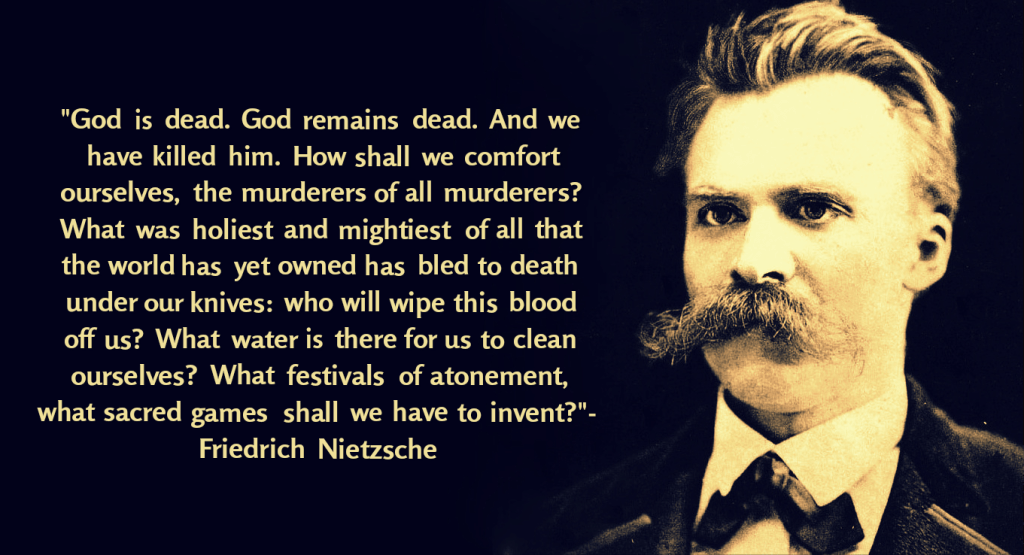
That is not to say that the tradition passed down can’t become stifling and overbearing or limiting our potential either. There must be a bit of flexibility, some Oikonomia, or means to adapt the rules as the need arises. However, the opposite ditch, of discarding everything and starting from scratch very quickly becomes chaotic, everyone does what is right in their own eyes, and it soon requires authoritarian measures to enforce the vision. This is the thing Nietzsche warned about—our morality is not self-evident and we should think long and hard about those monsters that we will release with our neglect.
This wasn’t a sacrilege, it was a lament of what happens when you yank the foundational rug out from under a moral system.
Cultural revolution, while always promising to upend systems of oppression and usher in a new utopian age, ends up being worse than what it is replaced. Yes, “All animals are equal” may be the founding cry, but is very soon after modified by opportunists who sadly are now unrestrained by those institutions despised and yet there for a reason. The only good thing is that this out-of-balance off-kilter, ‘we know better than all who came before’ attitude, tends to implode on itself if given time. The Soviet Union only lasted as long as it did because of Christian ethics within the population.
Two Visions For Our Future
Recently, with the decline of Joe Biden and a failed assassination attempt against his rival, the Democrats decided it was time to make a change up top. It is her time now—that is to say Vice President Kamala Harris—and there is plenty that could be said about her career thus far, but there is one peculiar repeat statement she has made that really deserves our attention:
“What can be, unburdened by what has been.”
This strange little mantra has been widely panned by the right. This is more Kamala word salad, they chortle, and yet—while she does sometimes explain things like a school teacher talking to a kindergartener—it is not gibberish. This is something Harris has apparently put some thought into and is something with a meaning that we should try to unpack.
What does it really mean to be unburdened by what has been?
I’m not going to sinisterize.
Most on the left I know have a glowing hope for the future and could never imagine that their philosophy could lead to Gulags. I do not believe Harris intends it this way, but it does hint heavily of Marxist thought where we are to be liberated or emancipated from all that came before. On the surface, this is an inviting thought. Imagine a world with no abuse, no poor, everyone has their needs provided and has complete freedom. This would be wonderful—and this is what every cookie-cutter college leftist has in mind as the end product of their efforts.
So how does the unburdening begin? Well, it already has. If you have been paying a bit of attention, everything normal is now being called fascist. Believe that women exist as a category and isn’t something a man can ‘transition’ to? Fascist! Maybe you like the nuclear family and see it as a praiseworthy social convention? Fascist! How about a border where there is reasonable control over who is allowed in and who is kept out? That makes you literally Hitler! And Harris has embraced this side of the debate, she announced her pronouns and the nature of her politics.
None of this is to say that Harris is a terrible person. I simply don’t want a leader unbound to existing ethics or any standard of decency, or who can write off Constitutional law as being a “what has been” product of wealthy white men with some of them slave owners and thus should be discarded. Sure, it may be a document with flaws, and could possibly use more amendments too, but it is better than nothing and represents the will of the people who signed onto this national project to this very day—white, black, Native, or immigrant alike.
What was established is for our benefit. It is no more a burden than a wool coat in the blistering cold. To think that we know more than every other generation that came before us, that science and technology have made us into gods, is delusional.
Furthermore, the left’s unboundness means they do not care about precedents (except as a tool to restrict their rule-obeying opponents and the ends justify the means. And they mean well. They plan to fight injustice. But this script has played out many times before and is the very thing that tradition is a bulwark against. At the very least those who believe what “has been” has value will hesitate and consider before they destroy the foundations of civilization.
Make America Great Again
Donald Trump rolled out his red hats and MAGA slogan in his 2016 campaign. The message was simple, a repeat of Ronald Reagan’s “Let’s make America great again” encouraging answer to the total economic disaster of the Carter years. As he said, in the 1980 Republican convention:
For those without job opportunities, we’ll stimulate new opportunities, particularly in the inner cities where they live. For those who’ve abandoned hope, we’ll restore hope and we’ll welcome them into a great national crusade to make America great again.
Trump knows a good brand and borrowed it from the best Republican leader since a guy named Abraham Lincoln. The progressives lost their minds. They dug up the one time it was used by the KKK. And couldn’t decide to condemn with “America was never great” or be offended because “America is already great and how dare Trump suggest anything otherwise!” If you were playing a game of “wrong answers only” this harsh criticism of MAGA as white supremacy would make a bit of sense.
MAGA is not hateful.
When the left says, “Do you know who else said make America great again?” and then goes on to associate this benign statement with all manner of evil, they’re poisoning the well. There is zero reason to interpret this slogan as Trump’s desire to bring back Jim Crow or the racial policies that were once championed by Democrats. But this does whip the left into a frenzy and it keeps them from deviating and making an independent decision whom to vote for based on the actual positions of candidates.
What does Trump mean by “make America great again”?
Trump is a businessman, his interests are mostly economic, rebuilding our industrial base, bringing back gainful employment for blue-collar workers lower taxes, and less red tape standing in the way of entrepreneurial spirit. My wife, who opened a store in her home country, complains that the US is not a free country and is appalled by the many layers of taxes and requirements. This is what dooms many to working for “the man” or corporations that can afford compliance costs while drowning their competitors with cheap imported foreign goods.
The legalism of US law would make a Pharisee uncomfortable.
Jobs can stop leaving our country, and start pouring in. Failing schools can become flourishing schools. Crumbling roads and bridges can become gleaming new infrastructure. Inner cities can experience a flood of new jobs and investment. And rising crime can give way to safe and prosperous communities.
Had Trump’s first term not been sabotaged by COVID and blue state shutdowns, there is no doubt this would have been fulfilled. In fact, by the third year of his presidency the minority unemployment rate reached record lows. Even NPR, while downplaying it, could not deny these numbers Trump touted were real. Biden’s only success comes from not rolling back those tariffs the fear-mongering media had so roundly criticized. It is strange how the success and failure of policies is determined only by who is employing them, isn’t it?
No, Trump’s not woke. He believes in hiring based on qualifications. He doesn’t want to continue world policing and the massive expansion of government programs. This is why he is the enemy of those who derive all of their power from the administrative state and sap our resources. He is keenly aware that a free flow of cheap labor, while it helps elites who want nannies and landscaping at a discount, pulls down wages for those who do not come from wealth. Even a Senator named Barack Obama understood this:
If this huge influx of mostly low-skill workers provides some benefits to the economy as a whole—especially by keeping our workforce young, in contrast to an increasingly geriatric Europe and Japan—it also threatens to depress further the wages of blue-collar Americans and put strains on an already overburdened safety net.
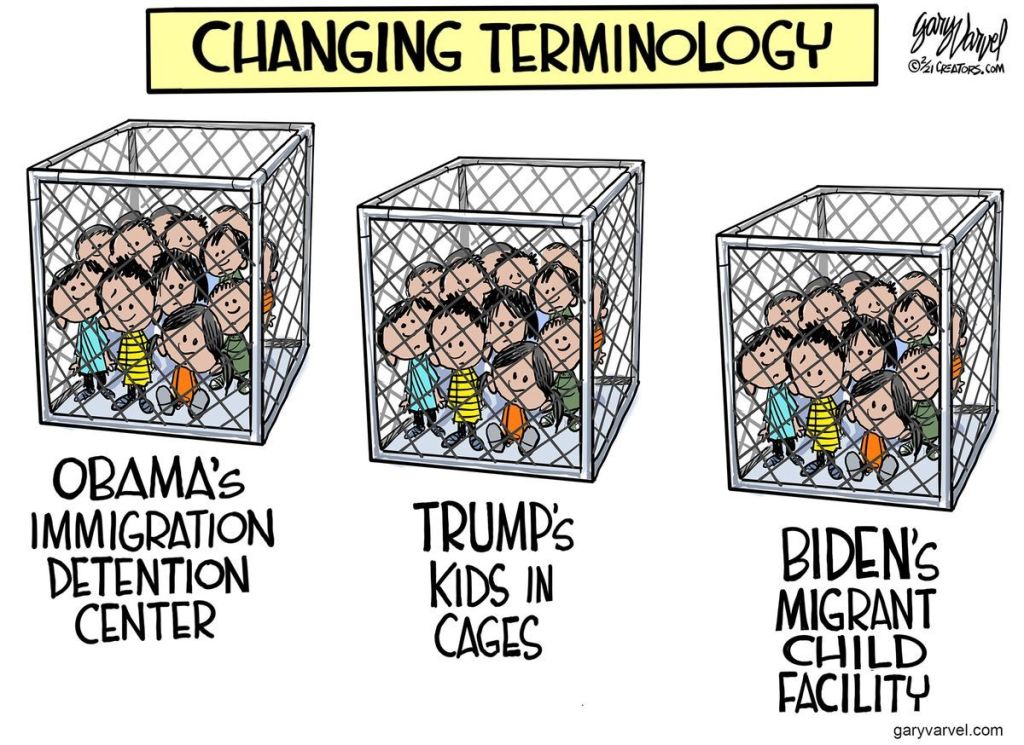
Make America Great Again is not about a swerve in the direction of Nazism or some new form of ethno-nationalism. It is about restoring the economic conditions that had allowed our grandparents to buy their home and a car on a single income. Back in 2015, Bernie Sanders had blamed open borders on a right-wing conspiracy, that will make everyone poorer, but now the left is saying that normal border security is racist. What changed? Why are these Democrat policies, like the immigrant cages during the Obama administration, demonized under Trump?
Compassion means disincentivizing illegal crossings where human trafficking is a concern requiring sorting facilities.
It is really disorienting for those who soak propaganda like a sponge. They never see that Democrats did this full 180 on multiple issues where they had been right. Trump is right about the border. It should be the top priority. Just the Fentanyl overdoses alone are a reason. I’ve lost a former high school classmate and football teammate this way— 83,000 Americans died in 2022 alone—and it had ironically played as much role in the death of George Floyd as a knee on his shoulder. Why do we even talk about that dozen killed in a school shooting or Ukraine in light of this?
Reform, Not Revolution
Progressives tear at the fabric of civilization without understanding the consequences of their actions. They believe that the erasure of history, destruction of monuments, or the degrading of religion (see Paris Olympics) is a path to a better future. But this amounts to cultural vandalism and is ignorance of the positive contribution of these religiously created values we’ve internalized. There is truly nothing that is written on the substrate of the universe that says slavery is wrong or that genocide is evil—the stopping point to “unburdened by what has been” is a return to animalistic impulse.
By design, not accident.
The frontal lobe of the brain is developed by the myths and moralities that progressives do everything in their power to destroy with ridicule and sacrilege. And it will inevitably go much further than anticipated. We rarely have enough appreciation for what we have been given. Everything is taken for granted until it is gone. And when there is a vacuum that is left to fill, and the ‘demons’ waiting in the wings will come rushing in:
When an impure spirit comes out of a person, it goes through arid places seeking rest and does not find it. Then it says, ‘I will return to the house I left.’ When it arrives, it finds the house unoccupied, swept clean and put in order. Then it goes and takes with it seven other spirits more wicked than itself, and they go in and live there. And the final condition of that person is worse than the first. That is how it will be with this wicked generation. (Matthew 12:43-45 NIV)
Christianity led to equal rights in the West, the abolition movement, is a product of St Paul advocating for Onesimus or telling the Galatian church, “There is neither Jew nor Greek, there is neither slave nor free, there is neither male nor female; for you are all one in Christ Jesus.” The left assumes the values it has are universal. They see only the faults without giving credit.
“You will not surely die!”
The progressive left, by contrast, denies all limits and conventions. Their “can be” may seem good at first glance. But is opening Pandora’s box, it is releasing what previous generations have built social structures to contain and could end up being more like a trip on Event Horizon. America has been good and bad, had moments of greatness and failure. We should tune the ideal it was founded on, not tear it down to start all over again. There is much to conserve in “what is” with an eye to improvement. Veer not too far to the right or left.
At least with Trump, morally corrupt as he may be, he comprehends that our inheritance is not a burden. For him, there is something that can be recovered “again” from the past generations even if those lessons were not perfectly applied to him. He’s a grandpa, he has seen trends come and go, old enough not to care about what is currently popular. Trump may have some narcissistic traits, at least that is the character he plays on television to the roar of the WWE crowd—but he isn’t trying to be God.
Recently I was asked, by a friend on Facebook, a Social Justice Anabaptist, to participate in a “focus group” discussion with Conservative Anabaptists who Support Trump (which they refer to as CAST) and for the stated purpose of finding common ground. I have no reason to doubt the intentions of such an effort, although there is a sort of wariness that comes from having observed these kinds of conversations, it reminds me a bit of the foot-in-the-door tactics of Jehovah’s Witnesses or Mormon missionaries. This “having a conversation” can be code for a sort of Evangelical push of agenda.
But, my initial skepticism aside, I’m not truly part of the Anabaptist church anymore and I’m not sure how they would find common ground with me except they abandon their “former delusion,” stop dividing themselves into political categories, conservative and liberal, truly follow Christ and become Orthodox Christians. So, if they want my advice on how to heal their current schism, perhaps they should look to reconciling the much more significant division from the Apostle’s church first and leave their political disputes to a different venue?
Furthermore, I’m not sure that I “support Trump” so much as I oppose partnering with corporate elitist interests, in bed with a Chinese Communist dictatorship, against my neighbors. I did not vote for Trump in 2016 and even wrote several blogs (1,2,3) to persuade my conservative Mennonite and Amish peers to reconsider. It was only since then, since observing the viciousness of the assault against Trump and reconsidering my own perspective of the man, that I realized I had been duped by some very sophisticated propagandists.
No, that is not to say that my criticisms of the man were invalid, but understanding the other side, knowing their agenda and tactics, certainly can put him in a different light.
While I do not support those who confuse the American flag with the cross, I likewise have must warn those who are fooled into believing that the Gospel of Jesus is compatible with the divisive Social Justice narrative and grievance culture. As I’ve said in another recent blog, there is no rivalry between the kingdom of heaven and the ordained governments of this world. They are two parallel systems, one for our physical protection from evildoers and the other for our salvation from sin and death.
I don’t have a problem with voting for a leader who best fills the role of government described in Romans 13, providing some general protections for all people, but I do think it is problematic to use the government to enforce Christian morality and values. The point of Jesus saying “sell all and give to the poor” was not to express a Socialist ideal, or else he would’ve joined Judas in his rebuke of that woman’s worshipful display of pouring out expensive perfume, but rather it was to point people to the kingdom of heaven. In other words, Judas was trying to turn the words of Jesus into a political solution for social inequalities, while Jesus was primarily interested in the salvation of souls. So, unlike a leftist who looks to government as savior, I do not look to Trump (or any man) to fill the role of Christ. The President, in my view, is put in his position for a purpose different from my own. I do not look to civil authority to bring salvation to the world any more than I look to the fast-food employee flipping my burger to be my bread of life.
So, with all that in mind, here are my responses to the questions offered by the Social Justice Anabaptist:
1) What are the top three issues in ranked order you think best answer the first title question?
Rational, issues-based, voting is a myth. We make decisions based on our intuitions, our experiences, and what we know (or think we know) about the options available. Most elections come down to a choice between two candidates and are decided on the basis of their individual character or that of the ‘side’ which they represent. I didn’t vote for Trump in 2016 because I had questions about his character that could not be resolved. But, that said, I certainly did prefer the risk-taking approach of Trump over that of the careful, yet seemingly dishonest and conniving words of the alternative, and was proven right when she suddenly changed her tune about accepting election results to push a relentless “resistance” campaign based upon a fictional Russian collusion narrative.
2) Would you say the Bible has much to say to guide us in our political choices?
Men look at the outward appearance, but God looks at the heart. There are many chosen by Jesus, to lead his church, who did not measure up to the standards of the smug and sanctimonious religious leaders of that day. Trump is outwardly flawed, he wears his faults on his sleeves, he is called a narcissist and other nasty things, but the blue-collar guy (hurt by ‘progressive’ tax, trade, and border policies) saw his heart better than the truly privileged social elites who hate him. Ultimately, God is sovereign, parsing the Bible for a concrete answer or justification for every choice is foolishness, and my stating some eloquent theology in defense of my choices wouldn’t persuade a skeptic regardless.
3) If so, what Bible verse or spiritual concept guides your political thinking most?
Nothing specific. But generally, God gives us freedom and choice. God also, for our own common good, provides boundaries and divisions. Cities had walls, civilizations have laws. The kingdom of heaven, while open to all who repent, has clear entry requirements.
4) I have heard a lot of folks say that they support the platform though they don’t particularly support the man, Donald Trump, his personal behavior, rhetoric and swagger. Do you feel like that is the consensus of CAST you know?
This question reminds me of the Pharisee, whose house Jesus was visiting, and protests the blunt commentary, “Teacher, when you say these things, you insult us also.” (Luke 11:45). He gets bulldozed. Jesus doesn’t lose a beat. Jesus continues to hammer his point home. There are several times when Jesus gets questioned for offending the elites and he doubles down rather than soften his tone.
The political class often hides their corruption under pious speech and pretense of righteousness. Trump is hated by these people for his crudeness of speech and swagger. But the working class is more concerned with actual substance over style, they aren’t at all offended by a little shop talk, and there’s also a reason for Trump being extremely popular in hip-hop and rap culture. Or at least Trump was popular before his political enemies poisoned this connection.
Incidentally, those who have a problem with Trump’s flamboyant style are probably also, for strategic or cynical reasons, holding back on their judgment of others of similar behavior. By saying Trump is “not Presidential” or complaining about his neglect of decorum, they may actually be implying that he’s not elite (or white) enough for the office. In other words, it is sort of a racist or classist thing. Trump, in being like an uncultured average person, offends those who feel superior to all and entitled to rule.
‘not Presidential’
Anyhow, those who said that Trump would choose conservative Supreme Court Justices were proven right thrice. That will be Trump’s legacy more than his personality, that and the fact that he didn’t lead us into another war, that he brokered several peace deals, and was extremely restrained in his response to the violence of leftists. Sure, maybe Trump is a Twitter troll, but at least he cared enough about random Iranian soldiers to call off a retaliatory missile strike in response to the downing of a drone. So maybe it is time for you, who judge him, to start considering his actions over his rhetoric? Maybe he is right to stand apart from the fawning praise of John “bomb-bomb-Iran” McCain and to defy the neocon establishment? He was elected to put America first, to end endless wars, and that’s exactly what he did, yet some ‘Anabaptists’ still hate him because he isn’t a smooth warmongering liar like his predecessors?
5) Is there anything about his rhetoric, swagger or personal behavior, that does resonate with you or CAST? If so, can you explain that a bit?
Trump’s lack of a facade is a breath of fresh air compared to the lawyer-speak and “focus group” silliness of most in the political class. Psalm 55:21 could easily describe many others: “His talk is smooth as butter, yet war is in his heart; his words are more soothing than oil, yet they are drawn swords.” I prefer Trump’s recklessness and hyperbole, that he attacks others in the privileged class, over those who call common folk “deplorables” and “chumps” behind closed doors or in front of a partisan audience. I’ll not soon forget how Obama allowed his surrogates to slander the loyal opposition as “racist” for opposing his massive expansion of government power. The pretty “mean girls” may get away with their exclusive cliques and bullying because they have such sweet smiles and know how to use their outward beauty work the system, but that doesn’t make them good people or actually superior to those less sophisticated.
6) I assume one of the reasons, you support Trump is his opposition to the “liberal agenda.” Can you identify one part of the liberal agenda that is the most problematic to you?
Depending on coercion and threat of violence to take the property of one group to give to another, so that you can manipulate these others into being a loyal voting bloc? Do I really need to explain to an Anabaptist how unChristian that is?
7) Urban – rural divide. A look at the electoral map shows a dramatic difference in voting patterns based on population density. It seems that one of the things that resonates with Trump supporters is his disdain for the “urban elite.” Can you explain who that is because I might actually fit that category? Can you then explain what it is specifically that makes the urban elite so distasteful?
An elitist Social Justice Anabaptist won’t be able to see it anymore than those who condemned Jesus could understand their own need of him. There is much to say about the pride of the religious and social elites. The left seems to believe that they have all of the answers to everything, they condescend to minorities and treat them like helpless children, keep them dependent, and yet are truly full of themselves. Living in an urban environment is to be removed from the earth, what is natural and good, and is to have the privileged of not having to see the hard work that goes into putting bread on the shelf of that corner store. The exposure to the cosmopolitan world gives one a delusion of being more well-rounded and knowledgeable, yet also comes with a lack of groundedness and the humility of good discernment as well. That is why many elites rejected Trump. I mean, how dare he misspells a word on Twitter or be honest about the threat presented by open borders?
8) Trump has made negative comments about “democratic cities?” Do these comments resonate with CAST? Can you explain one or two top things about democratic cities that are negative?
9) Trump supporters talk a lot about his defense of religious freedom. Can you help me understand that? What freedoms are we talking about specifically? Are these the sort of things: Right to post Ten Commandments in the courthouse, right to not sell wedding cakes to gay couples, right to not pay for abortive contraception for your employees? Right to worship in groups in spite of COVID?
Why do your ‘scientifically motivated’ Democrats make exceptions for their own, for violent protests and premature celebrations of a Biden win? Why do they support ending the life of a fetus, a separate living human, while claiming to be compassionate and concerned with rights? Why do they choose a fictional identity over biological evidence when it comes to X and Y chromosomes? Why is it okay to demand that someone bakes a cake celebrating a homosexual union, but then perfectly fine for a business to turn someone away people for not wearing something that invades their personal space?
Most conservative Christians simply want the tolerance to go in both directions. However, the left is constantly (like a domineering mother) imposing their own values and preferences on everyone else. Again, God gave us the freedom to follow Him. God also ordained the government to provide some basic order, keep the evildoers restrained and good people should not fear this. But, that is not and never will be a license for tyrannical rule.
10) Health outcomes of African Americans and also low income individuals of any race are substantially worse than the general population resulting in higher mortality rate for nearly every disease and almost every age group. Which responses do you think best describe the CAST response to this information: You may select more than one.
That’s sad, but it is not a government issue.
The Democrats’ efforts such as Medicare for All wouldn’t help this number anyway.
That’s fake news.
That’s sad and healthcare is an issue I disagree with Trump on.
I never heard that before I would have to think about that. Other.
Maybe the questioner hasn’t been around enough poor white people?
Anyhow, this idea that black and white are homogeneous groups, where all white people are equally ‘privileged’ and all black people are all hapless victims in need of help from white ‘progressives’ (you) is absolutely racist. Various studies show that liberals talk down to minorities, there is this racism of low expectations, and I’ve seen this first hand.
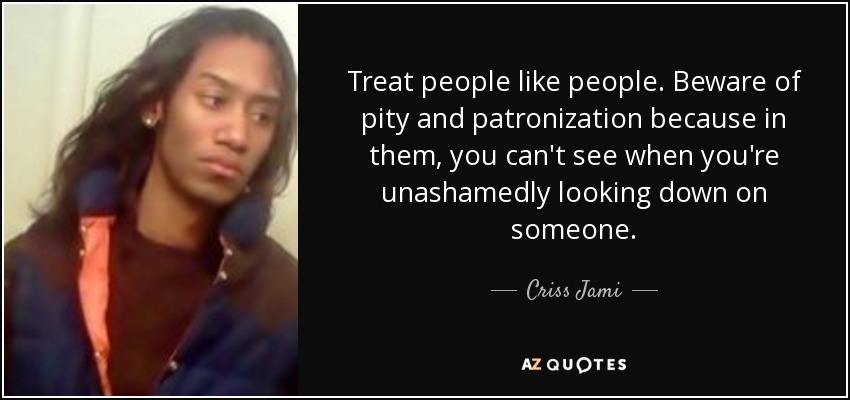
I’m quite familiar with the condescending ‘helpful’ attitude, the patronizing, and pandering behavior.
I’ve been around conservative Mennonite inner-city efforts, I know some of the players involved quite well and can tell you that many of the minorities whose cause they claim to champion are quite aware of this superior spirit amongst these ‘progressive’ types. Sure, these ‘helped’ might not confront the ‘helpers’ for this, they try to appreciate the attempt at support or understand even if it is misguided, and yet they really do not need the white savior ‘progressive’ swooping in. I’ve had some confide in me about this, some of the special sensitivity and exaggerated concern is extremely off-putting to minorities and, frankly, in my opinion, it is racist.
Anyhow, I think Social Justice Anabaptists, like their secular atheistic Marxist teachers, ask the wrong questions. That list of suggested responses above, for example, presupposes that government intervention is the answer to racial disparities (rather than the cause) and neglects the fact that billions have been spent to alleviate these problems with very little to show for it. It seems ‘progressives’ assume that disagreement with them stems from ignorance about the problem. In other words, a perspective so incredibly arrogant that it makes Trump look humble by comparison.
All but one of the options offered by the questioner suggests the ignorance or lack of compassion of those who disagree with their presumption of government as a solution. Extremely loaded, more statements than questions, and pretty much designed to trip up the person trying to answer in succinct manner. Of course, the expectation is that their conservative opposition, not as educated or articulate, will sputter something incoherent in response to this deceptive “galloping Gish” rhetorical strategy and look bad.
But, this strategy doesn’t get past me.
The Social Justice Anabaptists have nothing on me as far as compassion and desire to help others. However, what they lack and I do not, is a basic comprehension of economics and the history of these occasionally well-meaning big government efforts. Furthermore, minorities dying due to inadequate care is very personal to me. Saniyah, my little hope who died unexpectedly, was African American. And, yes, she had access to medical care despite her mother being an illegal immigrant. But the doctor? Had I known how potentially deadly her respiratory ailments were and how incompetent inner-city physicians are, I would have made sure she had a qualified physician in conservative rural Pennsylvania.
Here are some of the right questions to help get our far-leftist friends pointed in the direction of solutions that actually work:
Why has the decades-long “War on Poverty” been a dismissal failure? Could it be that the government is not positioned well to address those problems? Didn’t Jesus tell you to personally intervene on behalf of the poor rather than use government as a means to force your neighbors to do something? And, if all poor people are our personal responsibility then what are you doing for Filipinos, in the Philippines, who have less access to quality care than those in our own inner-cities?
11) In a CAST world view, what is racism and what should be done about it?
Racism is to abandon the standard of Martin Luther King, where people should be judged by “content of character” and not their skin color. Racism is to collectively blame or exempt people according to their skin color and to assume that skin color, not the difference in behavior, is the lead determiner of outcomes. Racists treat everyone differently, raising or lowering expectations, based only on skin color. In other words, if one man rapes a woman this is explained away as something in his environment or mostly ignored. But if another does the same, he is roundly condemned and his evil treated as if it is somehow reflecting upon all men of his skin color or class. Racial tribalism is as racist and bad now as it was when white supremacists had the numbers advantage and the KKK roamed at night. The conservative stands against all racially motivated violence. But Social Justice Anabaptists refuse to condemn those behind the current violence. What should be done about racism? Well, stop being racist, stop excusing racial tribalism, start treating all people as unique individuals, that’s what should be done.
12) What core Anabaptist value most drives you or CAST?
The Golden Rule.
13) If you or CAST found out your pastor voted for Biden, would you have trouble listening to his sermons or receiving counsel from him on other issues?
One of my priests, Fr. James, I suspect would be a Biden voter. But, the Orthodox, unlike most Protestants, understand that “my kingdom is not of this world” means segregation of worldly politics from the church environment and worship. One of the reasons that I left the Anabaptists is because both conservatives and their ‘progressive’ activist counterparts do not know how to keep worldly concerns separate from their worship and Communion together. I suppose this is a tendency to confuse Christian and civil duties goes all the way back to the Münster Rebellion? Wherever the case, I’ve scolded Mennonite pastors who brought their conservative anxieties into the church sanctuary, preached their fears, and also confront those who bring far-leftist political agenda in as well. The Gospel of Jesus Christ is not about the establishment of a Socialist state and those preaching the Social Justice message are preaching a false Gospel and heretical.
14) What do you think a church that is politically divided should do about that?
Stop pushing politics down throats and start loving as Jesus loved. Or, rather, understand that ‘progressive’ politics are as unChristian as any other politics, humble yourselves, and lead by an example of love rather than continue in the politely condescending tones. If you really want to overcome the divisiveness of Protestantism, stop being a separatist, take a step of faith towards Orthodoxy, and being in Communion with the truly kingdom oriented church of the Apostles. Repent! Because the kingdom of heaven is at hand!
15) What does the phrase “Make America Great Again” mean to Conservative Anabaptists that support Trump (CAST)? Is it referencing the period in the 50’s, prior to the modern socially liberal agenda that included Civil Rights, Women’s Liberation, R v. W, Gay Rights, etc.?
Obviously, MAGA is not about any of those things listed. Sure, that is how the far-left controls minorities, through fear-mongering and lying about Trump’s intentions. It is also how smarmy Social Justice Anabaptists try to distinguish themselves as superior-minded and social elites. However, no Trump supporter that I know understands it to mean what the left-wing propagandists say and what it truly means is restoring the status of the United States as a world leader, building a strong middle-class (of all colors or creed) again and nothing to do with that leading question nonsense.
16) Do you think Trump’s strong economy (before COVID) is a key thing that contributes to CAST’s support of him?
Minorities did better under Trump, up until Democrat governors shut down their economies, and only a racist would not support the growing independence of minorities. Many do not realize that George Floyd had lost his job as a result of Democrat-imposed economic shutdowns. He had also been infected with Covid-19 despite these draconian measures. He may very well still be alive and well had it not been for ruinous ‘progressive’ policies. But the controlling left doesn’t seem to care about the consequences of their policies. They seem to believe that only their good intentions matter more than the actual results. Why aren’t you asking about the uptick in suicides and drug overdoses, depression, and quality of life concerns? The economy is life, conservatives intuitively understand this, they understand trade-offs, but ‘progressives’ routinely fail to recognize the folly of their utopian theories and disastrous outcomes of their solutions.
17) Is it a God-given right/responsibility for the secular government to maintain a strong military?
The common defense of a nation is the only legitimate reason why government exists, to physically defend people from evildoers within and without the borders, which is to provide for the general welfare of all citizens. One only needs to look at what happens when this God-ordained order breaks down to see how bad it can get. People need to be secure in their person and property to flourish. The weak and vulnerable suffer most from the neglect of these structures and institutions. That is why God ordained the structure of the family and church to care for our social needs, it is also why St Paul said we should not oppose this legitimate role of government to punish and protect us from evildoers.
18) All other things being equal, do you think it is more likely that a successful businessman would be Christian, or a government executive with a modest income?
Not my place to judge. Jesus had both a repentant tax collector and fishermen. As far as honest labor, certainly, the fishermen outranked a man who lived off what others produced. That’s not to say that those who truly work as public servants have no value, but they should also be appreciative that someone (often without a choice) is providing their income and needs. A business person, by contrast, cannot (outside of collusion with the corrupted government) cannot force you to buy their products and therefore must produce things of actual value or they would not be successful.
19) Is strong border security important?
Does your house have a roof, four walls, a door that can be locked?
Does your body have skin?
Of course, border security is important, President Obama articulated that on multiple occasions and echoed prior administrations about the need for secure borders. It is important for the same reasons why many people flee from other places to come here. They flee from places impoverished by corruption and unrestrained evildoers. Those who do evil would love to follow those fleeing them and many do get in as a direct result of lax enforcement of borders and immigration law. It is compassionate to let the good in and keep the bad out.
The real question is how can an intelligent and compassionate person not be in favor of vetting immigrants?
20) Do you see hunger as a moral issue?
The question is unclear. There is nothing immoral about hunger. Or maybe the question is whether or not it is moral to leave others hungry? If so, maybe we should establish some context first.
Are we talking about this:
Suppose a brother or a sister is without clothes and daily food. If one of you says to them, “Go in peace; keep warm and well fed,” but does nothing about their physical needs, what good is it?
(James 2:15-16 NIV)
Are talking about the rich man stepping over Lazarus on his doorstep or the Priest and Levite who didn’t offer aid in the good Samaritan story?
If so, if we are talking about needs in the church and needs in our immediate physical proximity, then absolutely it is a moral issue. If God puts a need in our path then we should take care of it by the means God has given us. We are clearly instructed to provide for the needs of those in our church and extend a hand of charity to those whom we come in contact with. This is local, it is our individual duty, and not a responsibility that should be shunted off or delegated to the secular government.
Maybe, instead of proudly parading around with useless slogans, these ‘justice’ Mennonites should learn some carpentry skills and start building ‘affordable’ homes?
If feeding the world is a Christian priority and moral prerogative, then let’s turn this around: How much food have you produced? I know farmers, conservative Mennonite, and many of them Trump supporters, who farm acres of land at a far lower cost than prior generations. They, through their labor, have done far more to feed the multitudes than anyone sitting on some ivory tower somewhere, would you dare speak down to them with this kind of inane question?
21) What are the top solutions to crime issues?
Definitely not Joe Biden’s 1994 Crime bill in light of his son still being a free man nor the zealous drug prosecutions of Kamala Harris who joked about using illegal drugs. Scripture says that crime should be punished. However, I am concerned with some crimes, because of political connections or being of the right class, being totally ignored for some and applied strictly for others. Favoritism is a sin in the church and, likewise, a legal double standard is an injustice. Equal protection under the law is ideal.
Final Thoughts…
So that pretty much wraps it up.
Still, I would love to hear a Social Justice Anabaptist answer my questions scattered throughout this post and also would ask why one would believe that a political party, known for historically treating some as chattel, is actually any different today?
The big difference is that Social Justice Anabaptists, like their forebearers in Münster, believe that the role of government and church should be combined into one kingdom. Their more conservative (or traditional) counterparts have learned the hard lessons of Münster. The ‘progressives’ merge the message of the cross with a political agenda and join those who look to the government for salvation. The conservatives, by contrast, want a President that allows them to live peaceably, a government that fulfills a basic role of military defense and necessary punishment of evildoers, and they do not seek to impose religious moral obligations on their neighbors.
In conclusion, my advice to the ‘progressives’ is that they not hold their traditional counterparts hostage to their political ideologies. If they must, that they find one of the many mainline Mennonite groups (beholden to the Social Justice Agenda) to hitch their wagons to and not drag the rest of their brethren down with them into that divisive and nasty place. And my advice to the conservatives is not to engage in the conversation at all. If you must vote, do it quietly, otherwise, live out the commandments of Jesus, and don’t get sucked into the black hole of politics. For all, seek after Orthodox Christianity rather than political solutions. There is one church and it is not divided between conservatives and liberals.















 Irregular Ideation