From False Flags to Fortress Minds: The Politics of Fear

Standard

We don’t see things as they are, we see them as we are.

Anaïs Nin

In today’s world, discerning what is real from what is manufactured is a formidable challenge. Suspicion abounds, particularly among the political right, that groups like Patriot Front—openly fascist—are not grassroots movements but rather orchestrated operations, possibly by federal agencies. The MAGA base can’t even spell the word “fascism” let alone embrace it as a guiding philosophy.  Yet, this suspicion fuels the leftist “anti-fascism” narrative, which is wielded as a justification for aggressive tactics and bullying.

Fear is a potent tool for control, and political operatives exploit it to manipulate public sentiment. When voter turnout wanes in critical demographics, staged provocations—such as groups wielding tiki torches to “Unite the Right”—can galvanize a larger, more powerful group into action. These events often attract a few genuine extremists, but their true purpose is to provoke a broader reaction.

A pony motor.

This strategy mirrors the “pony motor” in early diesel engines, where a smaller gasoline engine was used to heat and start the larger one. Similarly, false flag operations—whether orchestrated or permitted—serve as catalysts for sweeping agendas, such as justifying military invasions of countries or enacting restrictive laws. While I’m not convinced that 9/11 was a government-orchestrated plot, evidence suggests some knew in advance and that it was exploited to advance a wishlist of wars against unrelated nations and to pass laws that would not have prevented the attack. This reflects the mechanics of how to “manufacture consent” in our modern democracies—where fear is leveraged to unify and control populations.

The creation of a common enemy is a time-tested method for fostering unity. During the Cold War, the specter of communism was used to rally the public. After the Soviet Union’s collapse, Islamic terrorism became the new focal point. The 9/11 attacks, likely executed in part by Osama bin Laden’s organization, were real but were exploited to amplify fear. Domestically, this pattern persists: Democrats emphasize the threat of right-wing extremism, while Republicans fixate on “wokeism” and DEI initiatives. These are deliberate strategies, rallying points designed to consolidate support. Even more effective is provoking hatred from opponents—forcing one’s base to fight for survival and justifying the consolidation of power.

What do you think the point of The Handmaid’s Tale really is?

We Create Our Own Enemies

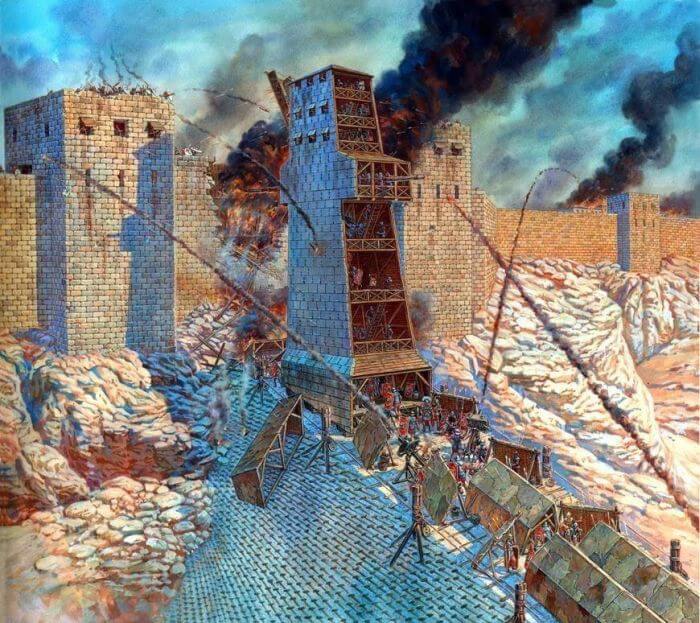
This dynamic extends beyond politics into cultural and religious identities. Jewish identity, for example, is partly shaped by what’s known as “Masada syndrome,” a collective memory of the Jewish defenders at Masada in Roman Judea (later renamed Syria Palaestina in 135 CE), who chose suicide over captivity. This narrative of the siege mentality is reinforced during the Passover celebration with texts proclaiming to the faithful, “In every generation, they rise up against us to destroy us.” Such beliefs foster an “us against the world” mentality, where hatred is seen as inevitable, reinforcing group cohesion.

Similarly, in the Anabaptist tradition that I grew up in, the reading of Martyrs Mirror cultivates a persecution complex. Likewise, Kanye West’s controversial remark about slavery—“When you hear about slavery for 400 years… that sounds like a choice”—touches on a deeper truth about locus of control. As my mother would say, “You can’t stop a bird from landing on your head, but you can stop it from building a nest.” Paranoia and defensiveness can alienate others or invite their suspicion, while believing you’re inherently excluded can lead to antisocial or even criminal behavior. It’s as if we seek to validate the fears that define our identity.

This pattern is evident in contemporary conflicts. Hamas, for instance, was probably willing to sacrifice innocent lives in Gaza to highlight the Palestinian plight—anticipating Israel’s brutal and disproportionate response. Yet, why does Israel fall into this trap? One possibility is that it aligns with certain political goals. Israeli Prime Minister Netanyahu, facing corruption charges, may benefit from war as a distraction. The Likud party’s vision of a Greater Israel—encompassing Palestinian territories, Jordan, and parts of Saudi Arabia and Egypt—could also be a factor. Some speculate this violence is a deliberate provocation to unify Jews through fear, and possibly tied to messianic expectations.
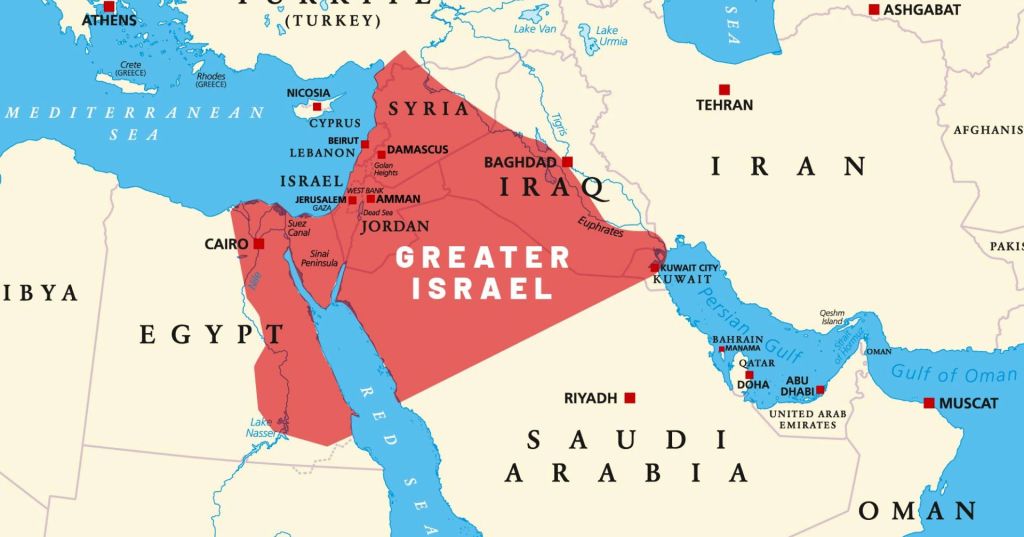
Netanyahu is a Revisionist Zionist, this is their long-term plan.

This self-fulfilling prophecy is reflected in online discussions, such as an Israeli subreddit where users lament being hated globally. They attribute this to irrational antisemitism, dismissing the role of the Israel Defense Forces’ actions, such as killing children, which fuel international outrage. This mindset—“They’ll hate us regardless, so we might as well give them a reason”—makes them vulnerable to exploitation by corrupt leaders like Netanyahu.

Breaking the Fear and Control Cycle

The fear of the Lord is a fountain of life, that one may turn away from the snares of death.

Proverbs 14:27 ESV

We must guard against siege mentalities like Masada syndrome. By convincing ourselves that the world is inherently against us, we risk acting in ways that bring about the very persecution we fear. Focusing on external threats to define our identity can lead us to become what we dread, fulfilling a prophecy of our own making due to our own unacceptable actions. 

Breaking this cycle requires rejecting fear-based narratives and fostering a sense of agency over our own actions and beliefs.

To guard against exploitation, we must shift our focus from the fear of man to the fear of God.

Human fears—stoked by manufactured enemies and self-fulfilling prophecies—keep us trapped in cycles of division and control.  A reverent fear of a perfect moral agent beyond us offers a higher perspective, grounding us in principles of justice, compassion, and accountability. By prioritizing a divine wisdom earthly manipulation, we become less susceptible to the provocative tactics of those who thrive on our fear, fostering a resilience that unites rather than divides. Establishment of this spiritual foundation empowers us to reject their deadly paranoia and act with clarity, so we break free from those divisive narratives that political systems use exploit to consolidate power.

Two Kinds Of Black

Standard

Identity is fluid, a physical characteristic is not.  I had identified as being “Mennonite” for many years of my life.  It was not much of a choice for me.  Raised in a Mennonite home, participated in a Mennonite church, and had internalized the values, the belief system, etc.  Mennonite was simply what I was and it still remains by ethnic/cultural background.  Leaving the community does not mean I’ll escape the genetic realities of my birth tribe.  

Is an identity surface level or deeper?

There was many of these labels that have to do with our social status, some we pick and others are picked for us.  In school if you’re into sports, hang out with other athletes, it is going to get you a “jock” designation and likely also stereotype applied with that.  Likewise, if were to wear a particular wardrobe to conform with a group of self-described non-conformists then you’re Goth or Emo.  People tend to coagulate into identity group—they find others who are like them and also become more like those whom they identify with.

But there’s a huge difference between these identities built around how we dress or who we associate with and those like eye color, bone structure or genitalia.  Sure, someone can dye their hair purple and claim that they are an astronaut, but that does not change what they were born with nor does it make them qualified to fly a space shuttle.  There are those ‘assigned’ categories that need to be objective facts rather than some kind of self-identity or cosplay act.  Science needs to have clear definitions or the endeavor is impossible.  And society simply can’t let you be a medical doctor because you feel like you should be a Porsche owner while you’re stuck driving a Kia.

Anyhow, getting to the point, a big problem with these conversations is that people are using the same words to mean something different.  For example, Rachel Dolezal, the woman who identified as ‘black’ despite her being born a daughter of European parents and having their biological characteristics, yet she could be ‘black’ for many years.  In my mind she can be both black or not black depending on what the term is describing—is it the genetic inheritance or the adopted culture?

I mean, think of Eminem’s lyrics: “I am the worst thing since Elvis Presley, to do Black music so selfishly and use it to get myself wealthy.”

Technically, if it is a ‘white’ artist doing the writing and performing, what is so ‘black’ about it?  He’s performing in English.  He’s doing naval gazing more common with the self-loathing European culture and his lyrics were about being some weird trailer trash hybrid rather than the themes common with the gangsta rap I knew growing up where it was at least presented as being something to take seriously.  How is a genre of music a skin color?  Asians are quite good at playing instruments and music first developed by the West—is that appropriation?

In many cases ‘black’ is not referring to something truly immutable.  No, rather it is about a lifestyle, a set of values, a certain way of behaving and, by this definition, it is perfectly legitimate for someone to identify as black without African genetics.  In other words, it is more like belonging to political party or religion than something someone is born.  And this is how suddenly the far left can claim work ethic or nuclear families are ‘white’ despite the Africans I know being as hard working and loyal to their spouses as any other person.

It is grotesque, horrendously racist, when a political candidate tells a whole segment of the population that if they don’t vote for him then, “You ain’t black.

Of course that was to intentionally confuse actual skin color and everything associated with it, with a ideology and perspective.  It is to rob the targets (black people who think differently than him) of their identity and is a form of gaslighting.  An outsider doesn’t get to decide what people should or should not belong.  It is inappropriate and bullying behavior, this truly is the worst kind of manipulation, it reinforces stereotypes and denies the true diversity within a category of color.

So identity is fluid.  We can change our own idea of what we are.  Still, there are also the fixed points determined by birth, a physical characteristic, that even if the surface level manifestations are surgically changed and hormones artificially employed, cannot be chosen or changed.  A man can behave in a feminine way, a woman in a masculine way, yet he doesn’t lose a Y chromosome simply for declaring himself a woman.  Sure, he can have his male anatomy reconstructed to resemble the female sex.  But there is more to being a woman.

Due to chromosomal abnormalities, there may not be a binary of male and female, but there most certainly is between female and not female.  It is one thing for the man once known as Bruce Jenner to reject the typical male role and change his name.  But that does not change the fact that he fathered his children and lacks the real hardware to be a woman.  Again, Rachel Dolezal can act in a manner that is associated with those of African origins, even fool the NAACP with her outward appearance, but she is not truly African American.

We do not need to recognize every claim as being valid.  I can’t just thrash around in the pool, march up to the podium and demand to be recognized as the winner of a swim meet without the necessary qualifications or actual achievement.  Why then is it ever okay for someone with male genitals and body to dominate in a female category for simply changing his name and having the powers that be join him in his psychosis?  

Changing your name and official category doesn’t change the physical reality.

It is a serious threat to civilization to attack the common language in this manner and it cannot be taken lightly.  One person with a delusion is not a problem.  However, when it is a significant portion of society going off the rails together then very quickly becomes dangerous.  Matters of our preference and culture are subjective, what is feminine or masculine is not set in stone, but science and reason must be built on something that is objective.  There must be a wall between identity that is merely social construct and that which is grounded in substance.

The First Anabaptist Identity Conference

Standard

Over the past couple of decades the liberal end of the conservative Mennonites and a few others get together to navel gaze about what it means to be them.  This “Anabaptist Identity Conference” (an annual event which some of us have dubbed the identity crisis) is truly a product of this time where nobody is sure of who they are as they once were.  There is a strong urge to seek out others, like us, as to bolster our shaking foundations. 

In this year’s event there is a line up of many meme worthy topics, like “The Anabaptists: Continuation of the Ancient Faith,” where ol’ David Bercot, a man who truly knows where his meal ticket comes from, will try to make the case that Anabaptism (as they define it) is somehow a direct lineage to the Apostle’s church.  This connecting the dots to make it fit narrative, of course, will play right into the confirmation bias of his audience who fawn over an educated outsider.  Maybe this year he’ll have pictures of whoopie pies painted in the catacombs?

Anyhow, some may believe that the first Anabaptist Identity Conference was held in 2007, in the Amish vacation Mecca called Sarasota, but there was one before this way back in 1536.  It occurred in the aftermath of an event that left Anabaptists then trying to find a path forward.  This is the Bocholt meeting that brought together survivors of the Münster rebellion and other factions in the Anabaptist movement:

In August 1536, the leaders of Anabaptist groups influenced by Melchior Hoffman met in Bocholt in an attempt to maintain unity. The meeting included followers of Batenburg, survivors of Münster, David Joris and his sympathisers, and the nonresistant Anabaptists.[4] At this meeting, the major areas of dispute between the sects were polygamous marriage and the use of force against non-believers. Joris proposed compromise by declaring the time had not yet come to fight against the authorities, and that it would be unwise to kill any non-Anabaptists. The gathered Anabaptists agreed to the compromise of no more force,[5] but the meeting did not prevent the fragmentation of Anabaptism.

No discussion of Anabaptism is complete without a little discussion about this crazy polygamous uprising.  Sure, the revisionist historians of the denomination may tell you otherwise, but the association is definitely there and the Wikipedia summary is accurate.  Menno Simons, in his 1539 Foundation Book, called the Münsterites “dear brethren” rather than claim they weren’t truly Anabaptists.  So are we really in a better position today to decide who is truly representative of the Anabaptist identity?  No, we’re not.

What is the Anabaptist identity?

In America it is mostly an ethnic group with a similar religious lineage.  Some within this category have openly lesbian pastors while others cling to traditional dress and buggies for transportation.  Unlike in the first 1536 identity conference, when their big debate was over use of violence, now the surviving Anabaptist groups agree on that and really not a whole lot other than that.  Even those who organize and attend the conference in the current year only represent a subset of the conservative Anabaptist groups.  The ‘spiritual’ lineage, while all claim it as their own, is too vague to put a finger on.

Men like Bercot and their ilk may want to declare the boundary lines even stricter than the early Anabaptists did, but that is just adding delusion upon a delusion.  No, I am not saying they aren’t Christians, that’s not my purveiw, but for one to claim they’re some kind of special remnant of the remnant is just plain grandiose.  And what comes to mind, at this juncture, is the “Stop It, Get Some Help” meme. 

Newsflash: You’re not even representative of the early Anabaptist —let alone the ancient church. 

This conference can’t speak for the plurality of the groups today who trace their roots the so-called “radical reformation” and do not have a voice in this identity rumination project.  What is hard to miss, for those outside looking in, is that this is an effort to preserve their distinction and not to seek the the unity in Christ that St Paul commanded (1 Corinthians 3) when some in the early church were busy commending themselves for their special identities.

I don’t have a problem with having an ethnic identity that is cherished.  I’m German, still Mennonite in many regards, and absolutely adore Old Order people.  I have no problem with having our own culture or celebrating our heritage.  It is why I encourage my son to keep his Igorot language and ways rather than have it all be erased in the American monoculture.  But there’s a vast difference between that and those basically arguing that they’re saved through heritage. 

Saying that Anabaptists are a “continuation of ancient faith” is only a half step away from being as crazy as the Schizophrenic who thinks they’re the second coming of Jesus.  The denominational ground you’re standing on is not sacred simply because you currently stand on it.  It is spiritually equivalent those Anabaptists in Münster declaring their own project to be the New Jerusalem.  We should know better than to live in that kind of self-delusion.  We should not condone or encourage it.

What Is Biblical Israel?

Standard

There is a nation in the world that identifies as Israel.  And, as we all know, if a person or group of people identify as something then this is what they are.  If I say that I’m a ham sandwich you better believe it!  Israel is what calls itself Israel.

That out the way, is that Israel the same as the Biblical Israel established by God?

If you were raised under Zionist teachings this isn’t even a question.  Of course, it is!  What else could it be?  Biblical criteria or qualifications, what are those?  I mean, how exciting would those end times novels be without our favorite backdrop???  And next, you’ll be telling us reality television is fake and that Caitlyn Jenner is a man and not a stunning and brave woman!?! 

Isn’t everyone who identifies as something that thing?

However, for those slightly more literate, and not born yesterday, the question of what the Biblical Israel is and if the state by the same name is the same thing is important.  For a Christian, up until the time of the reformation and a little after, this answer was quite clear and that is that Israel today is the remnant of the Jews who remained faithful—as well as those Gentiles converted. 

From the perspective of New Testament writers Israel is the Church or the body of those who believe—a religious affiliation and not a particular race.

About Religion, Not Race…

While still a member of a Mennonite church, I was not happy to have my religious identity be classified as an ethnic group.  In my own opinion I wasn’t born a Mennonite, it was my religion and something that I had to choose to participate in.  And yet there was truth to the claim.  There is was an ethnic component to being part of the group.  We shared a culture, and have our own common surnames, and many converts don’t fit in well.  

However, the most damning evidence, other than having unique genetic disorders, is the broad range of beliefs and practices under the Mennonite banner.  Those calling their church Mennonite span from those who are progressive and ordaining lesbian pastors to those very traditional still using horses and buggies for transportation.  So, when the only true common bond between all of these Mennonite groups is a sprinkling of Yoders, Gingrichs, Millers, or Barkmans, can it really be a religious belief system?  

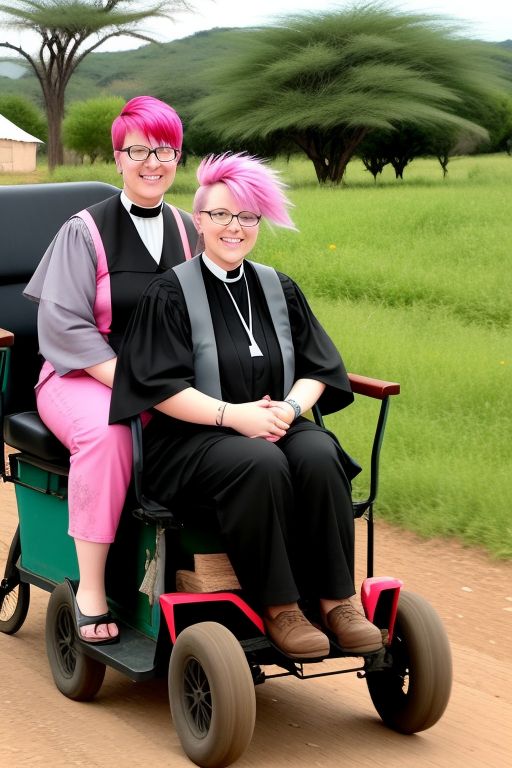
Rev Michelle Yoder, a charismatic lesbian pastor of the Mennonite faith, sitting comfortably with partner in her electric Mennonite buggy as she makes her way through Africa

Okay, like a Facebook relationship status, it’s complicated.  People can and do convert to become Mennonite.  And, surprisingly enough, since a few decades ago, an African version of the Mennonite denomination has been growing rapidly to the point there are now more Mennonites in Congo than in Canada.  I mean, who knows if their doctrines or religious practices are anything that a North American conservative would recognize, nevertheless they do carry the name of Menno Simons in a direction he probably never imagined.

That’s one thing that the Orthodox generally put up front.  If you are Orthodox in Greece or a Greek community, then you’re a Greek Orthodox.  The liturgy and general practice are the same, established by canons, but there is also room for ethnic expression and use of the language common to the people.  In the Arabic world, for example, they use “Allah” where we use the Roman pagan word ‘God’ and have been using it before Islam even existed as a religion.  Anyhow, in Orthodoxy, unlike Mennonites, the identity is built from the substance of something established and a faith that is ancient.

Absurdly, when it comes to Judaism, we no longer care if they’re practicing or apostate, we slap that big ethnic label on them all and claim all of them have a claim to the land by their DNA.  To us, they’re all the same.  But that’s certainly not the case when it comes to Biblical Israel, not every part of the assembly was blessed, some were literally swallowed up by the earth, while others were put to death for disobedience, and the whole would end up in exile: 

But if you or your descendants turn away from me and do not observe the commands and decrees I have given you and go off to serve other gods and worship them, then I will cut off Israel from the land I have given them and will reject this temple I have consecrated for my Name. Israel will then become a byword and an object of ridicule among all peoples. This temple will become a heap of rubble. All who pass by will be appalled and will scoff and say, ‘Why has the Lord done such a thing to this land and to this temple?’ People will answer, ‘Because they have forsaken the Lord their God, who brought their ancestors out of Egypt, and have embraced other gods, worshiping and serving them—that is why the Lord brought all this disaster on them.’ ‭‭‭‭

1 Kings‬ ‭9:6‭-‬9‬ ‭NIV

It is quite clear that the covenant was even conditional for those who were biological offspring of Abraham.  Not only this, but people could become part of Israel who were not blood descendants of Abraham, Ruth the Moabite, or Rehab the prostitute, a Gentile, for example.  So it was never about ethnicity, it was always about obedience and the covenant conditional based upon obedience rather than bloodlines.

Chosen For Abraham’s Faith

The children of Israel were not picked for their superior genetics.  That’s not to say there aren’t very intelligent and extremely talented people of Jewish religious heritage.  Abraham was picked for being a righteous man:

And the LORD said, Shall I hide from Abraham that thing which I do; seeing that Abraham shall surely become a great and mighty nation, and all the nations of the earth shall be blessed in him? For I know him, that he will command his children and his household after him, and they shall keep the way of the LORD, to do justice and judgment; that the LORD may bring upon Abraham that which he hath spoken of him.

Genesis 18:17‭-‬19 KJV

It was Abraham’s righteousness and how he would guide his children to “keep the way of the Lord,” that God picked him.  God went on to set Israel aside through religion, not race, and those who did not keep the law would soon find themselves entirely cut off from the assembly of Israel.  There was never a blessing for simply being a blood relative of Abraham.  It was always conditioned on a faith that produced the work of obedience and this remains the case.  

Those born to keep the law of Moses must recognize their Lord and Savior or they’re no more blessed than the Benjamites put to the sword for their evil:

The tribes of Israel sent messengers throughout the tribe of Benjamin, saying, “What about this awful crime that was committed among you? Now turn those wicked men of Gibeah over to us so that we may put them to death and purge the evil from Israel.” But the Benjamites would not listen to their fellow Israelites. […] The Lord defeated Benjamin before Israel, and on that day the Israelites struck down 25,100 Benjamites, all armed with swords. […] The men of Israel went back to Benjamin and put all the towns to the sword, including the animals and everything else they found. All the towns they came across they set on fire.

Judges 20:12‭-‬13‭, ‬35‭, ‬48 NIV

If this were a Covenant merely about blood or genetics, then the Benjaminites really got shafted.  I mean, I’m not sure how anyone could construe being slaughtered wholesale as being a blessing or some special thing to be chosen for, “Congratulations, you’ve been selected to be purged!”  So this idea that anyone will ever be saved simply for their chosen race is wrong and there is only one true religion which is founded in Abraham’s seed, through the law of Moses, and is fulfilled in Christ.  

My favorite Jewish writer explains:

Those who want to impress people by means of the flesh are trying to compel you to be circumcised. The only reason they do this is to avoid being persecuted for the cross of Christ. Not even those who are circumcised keep the law, yet they want you to be circumcised that they may boast about your circumcision in the flesh. May I never boast except in the cross of our Lord Jesus Christ, through which the world has been crucified to me, and I to the world. Neither circumcision nor uncircumcision means anything; what counts is the new creation. Peace and mercy to all who follow this rule—to the Israel of God. 

Galatians 6:12‭-‬16 NIV

After Christ, even the law of circumcision becomes secondary to what St Paul describes as being “the new creation.” 

So it was the righteousness of Abraham, which was followed up with their being set aside by careful obedience to the law—which was the test of the Old Covenant—and finally, reconciliation through Christ that is salvation for all. 

It was NEVER only about ethnicity or race.  Modern descendants of the Jews must do the same as anyone else, repent and accept their King or perish. Repentance is the first step to salvation and that is what distinguishes true Israel from the counterfeit.  The first followers of Jesus were Jewish.  Christianity is the part of the assembly that remained faithful to their Lord while the others who rejected their rightful king are called anti-Christ:

Dear children, this is the last hour; and as you have heard that the antichrist is coming, even now many antichrists have come. This is how we know it is the last hour.  They went out from us, but they did not really belong to us. For if they had belonged to us, they would have remained with us; but their going showed that none of them belonged to us. […]  Who is the liar? It is whoever denies that Jesus is the Christ. Such a person is the antichrist—denying the Father and the Son.  No one who denies the Son has the Father; whoever acknowledges the Son has the Father also.” ‭‭

1 John‬ ‭2:18‭-‬19‬ ‭NIV‬‬

There are a great many who call themselves Christian today who have Scripture and yet no discernment whatsoever.  You don’t even need to believe in Jesus to understand what is being said in the passage.  Who is identified as the liar and anti-Christ?  1 John 2 very plainly tells us who: “It is whomever denies that Jesus is the Christ.”  That is to say those unfaithful to the covenant made with Abraham through their rejection of the Son—God in the flesh.

To say that some can deny the Son and still have a Covenant with the Father?  It is to basically throw out the entire Gospel of Jesus Christ.  It is completely moronic and a sign that someone was never truly part of the assembly of God.  If they truly belonged they would see their Lord as the fulfillment and not be so easily led astray.  When Jesus says “Salvation is from the Jews” he is not talking about an ethnic group, he is talking about himself and how he is the Messiah that was promised through the faithful seed of Abraham.

Chosen by Christ

It is really a form of idolatry to hold a race or ethnicity up as chosen by God for no reason other than their genetics.  That is not what the “Israel of God” ever was.  The assembly (or ‘ekklesia’) was always about those who were faithful, a remnant of Abraham’s seed that included Gentile converts, and turning it into an ethno-nationalist state is a perversion of what the original covenant between God and Abraham actually entailed.  A covenant is a two-edged sword, while it comes with blessings for those who obey there is also a list of curses for those who do not hold up their own end.

‭‭Jesus spoke to them again in parables, saying: “The kingdom of heaven is like a king who prepared a wedding banquet for his son. He sent his servants to those who had been invited to the banquet to tell them to come, but they refused to come. […] “But they paid no attention and went off—one to his field, another to his business. The rest seized his servants, mistreated them and killed them. The king was enraged. He sent his army and destroyed those murderers and burned their city. “Then he said to his servants, ‘The wedding banquet is ready, but those I invited did not deserve to come. So go to the street corners and invite to the banquet anyone you find.’ […] “For many are invited, but few are chosen.”

Matthew‬ ‭22:1‭-‬3‬,5-9,14 ‭NIV‬‬

Any guess which of those on the guest list killed the servants sent by the King?

The Biblical Israel, for those who believe in the Gospel of Jesus Christ, is that remnant of Jews who obey and follow after the Word of God incarnate.  This is always how Israel worked.  Some were pruned off the tree and others grafted in.  There were never special exceptions made for anyone merely on the basis of ethnicity or race.  The Church is the nation of those faith to the work of God that started with a Covenant with Abraham and needs no worldly state or rebuilt temple of stones.  Christians are the chosen people.

This essay doesn’t mean that there should be no modern state of Israel or that the mistreatment of any group of people in the world who have rejected Jesus is ever acceptable. We just need to know there’s a big difference between “identifies as’ and what is actually being referred to in the Bible.

An Affirmative Reaction

Standard

The Supreme Court has finally ruled against the practice of blatant racial discrimination in university admissions.  This, after Harvard and other schools, in pursuit of filling quotas, would find means to select against qualified Asians to meet an ideal for diversity based on skin color.

The Affirmation Fairy… 

African Americans, at least as a collective whole, have suffered disproportionately and this is a historical injustice that is not easily solved.  Much of our success later in life has to do with the homes and communities that we were born into.  The values we receive via our culture make a huge difference so far as outcomes.

I remember a viral video, a few years back, that lines up a bunch of young people on a grassy field.  The announcer asked various questions, such as “Take two steps forward if both of your parents are still married,” and those who could answer yes advanced.  The results of this survey were framed as ‘white privilege’ and yet none of the statements had anything to do with race.

Social inequality is certainly not a black-and-white issue, many children of European and Asian ancestry lacked a father in the home, worried about fitting in, did not feel safe at night in their neighborhood, worried about having enough to eat, and lacked access to private education or tutors.  I once begged my mother to take me out of public school after a rough patch.  I changed my hairstyle as a response to classmates who made note of my ‘Mennonite’ side part.  I decided to quit college rather than go deep into debt.  

Am I underprivileged?

Exactly how much am I disadvantaged as a learning-disabled child of two high school dropouts, with a father who had to be away all week to support our family?

There problem with all “affirmative action” is that it is a vast oversimplification of a very complex and multi-layered problem that may be more about culture than color.  We simply cannot account for every factor or rate every single subcategory of ethnicity and culture for statistical disadvantage.  For example, do we know the college graduation rates of Americans of German ancestry or Irish and Italian?  Are a proportional amount of these ethnic groups represented?

Furthermore, our own disadvantages can be advantages, in that they can provide u much-needed motivation.  Sure, having money may mean a trip to Harvard and a certain level of success.  However, the same is true of those who are tall and athletic.  Jeff Bezos, at 5′-7″ tall, may have benefitted from having some ‘short man syndrome’ or that extreme desire some have to compensate for the discrimination they faced for physical characteristics that were beyond their control.

Affirmative action is wrong in that there is no way to rank hardships.  It is wrong because it isn’t addressing the root causes of social inequalities, even as defined by the privilege police, in that we’re not talking about things like fatherless homes or inner-city violence and cultural forces that discourage the behaviors that aid in academic achievement.  You can’t wait until a person is eighteen, then wave a wand of university education and credentials as a solution to these underlying issues.

Asterisk Graduates…

The true underlying message of affirmative action was that minorities, specifically those of African descent, couldn’t be successful without the help of the government.  As liberal arts universities continue to seek to fulfill a narrow color-obsessed definition of diversity, using quotas rather than qualifications, they unintentionally degrade all of their minority graduates—even those equal in merit to the non-minority graduates.

The idea of a “diversity hire” or a person not equally qualified to others who applied and yet are given preference only because of their special category of race or gender, is a direct consequence of discriminatory affirmative action programs.  People know how to read between the lines (albeit often unfairly) and will diminish accomplishments that weren’t actually earned or can be perceived as being unearned.  It is why we do not see the work of those ‘born into wealth’ as being equal to that of those who are self-made.

A classic example of the patronizing white saviorism that is lurking behind divisive equity campaigns.

Just as a university degree would lose value if everyone were simply given a diploma for breathing, admitting some primarily on the basis of skin color devalues the effort even in the eyes of those who benefit.  It only serves to feed an idea of black inferiority, that they need a ‘white savior‘ to swoop in and rescue them from their plight, and is grossly unfair to all who were truly qualified on the basis of merit—but will still deal with the asterisk due to systemic compensatory color preferences or racially discriminatory quotas.

You cannot defeat unfair discrimination with a new kind of unfair discrimination.  It is not right that overqualified Asian students were being overlooked because of their race or on some kind of subjective basis that the worth of their own “lived experience” is less than a person of African origin.  Many Asians have overcome extreme hardship, faced intense pressure at home and hate crimes (often underreported for going against the typical racial narrative), yet won’t ever express this due to cultural reserve—why should they be punished for the success of their peers?

Two-tiered or lower standards for some will never achieve the goal of equal outcomes.

Favouritism Forbidden…

We’re living in a time of moral inversion, a time when those who lived a life of crime and abuse are treated as victims simply on the basis of their outward appearance.  It is as wrong as the favoritism of preferring the wealthy over the poor for the potential benefits:

Do not pervert justice; do not show partiality to the poor or favoritism to the great, but judge your neighbor fairly.

Leviticus 19:15 NIV

The problem was favoritism, preferring one party based on who they are (what they can provide for us) rather than the actual merit of the case.  Fairness of judgment, not equality of outcome, is the goal.

Christians were told not to judge by a person’s outward appearance:

My brothers and sisters, believers in our glorious Lord Jesus Christ must not show favoritism. Suppose a man comes into your meeting wearing a gold ring and fine clothes, and a poor man in filthy old clothes also comes in. If you show special attention to the man wearing fine clothes and say, “Here’s a good seat for you,” but say to the poor man, “You stand there” or “Sit on the floor by my feet,” have you not discriminated among yourselves and become judges with evil thoughts?

James 2:2-4 NIV

Many, trying to make a show of their own righteousness, take a Scripture like that above and turn it into a call for social justice or a special preference for the poor or otherwise disenfranchised.  However, this kind of reverse favoritism totally misses the point.  Trading one kind of perverse judgment for another is not a virtue.  No, it is a virtue signal and something people do for the social benefit of merely appearing to be an advocate for those recognized as being disadvantaged.  Even if sincere, this is a misguided approach that goes against the instruction not to show favoritism.

Affirmative action, in the end, is just a new form of white supremacy that is expressed as patronization.  It frames differences in outcomes solely in terms of identity groups while neglecting to correct the factors causing the inequal results or truly helping people to cross over these unhelpful, artificial, and arbitrary divisions.  Jesus taught more of a gracious meritocracy, where our behavior did matter and we would ultimately be judged on how we treat other people irrespective of their deserving or appearance.  In this regard, our equality comes only in repentance and our obedience to the law of Christ—not by force of courts or legislation.

We do not save the world by trying to force others into compliance or control outcomes. Rather we change ourselves and become an example of impartiality and love to all people. Honest and fair equal opportunity is having the same requirements for all and not preferences tailored to some at the expense of others. You cannot rob Peter to pay Paul. We shouldn’t love bomb some, even to make them feel better about themselves, by removing opportunities for those who truly have earned their place.

Shedding Identity

Standard

There was a time when I could simply say “I’m Mennonite.”  That is what I was.  It was my religion, culture and ethnicity wrapped up into one tidy package.  It was as real to me as my gender and first name.  But now, having left the denomination of my youth behind, it is really difficult to buy-in to a new identity or at least not to the extent of feeling a significant attachment to the distinguishing title.

We live in a great identity crisis.  We might celebrate more identities than ever, and yet somehow along the way, we have lost the very meaning of the words that we use to define these identity categories.  

What is an identity?

An identity is a word used to distinguish one from another.  Or a statement of what we are in comparison to the whole group.  Are you Catholic or Protestant?  Black or white?  A Republican, Democrat or Independent?  And whether it is identity or not has much to do with the emotional weight that we place on these categories and terms.  In other words, blue-eyed is certainly a category that some of us belong to, but is not currently an true identity marker.

There are also various kinds of identity, there are those inborn or assumed—Charlotte, due to her inherited genetics, is Kankanaey, and would be no matter what she believed about herself or if she prefers that another term be used.  Then there are those types of identities that are less about our immutable being and more about what we are doing.  By contrast, trucker or truck driver is an identity, and even comes with a license to prove it, but it is not something that is actually written in a CDL holder’s DNA.

Identity is never something we can select for ourselves.  I can claim to be a Dill Pickle and even legally require the moniker be used in reference to me. But this is never going to change what other people will perceive me to be.  Identity is something that others construct, with us, and not only a thing that we independently choose for ourselves.  Put another way, a rose by any other name is still a rose and even if we paint it blue.  And blue does not become yellow because we switch the color identity labels either.

Our “I am” identity…

I’m sexually attracted to the female form and this has dictated my priorities and activities throughout the years.  But, as important as it is to me, I don’t tout my ‘straight’ preference as being my identity.  I am many things, but my sexuality is not something to hang my sense of who I am on.  There are no hetero pride parades for this reason and no need to fly a special banner in front of my house to announce my preferences either.  Sexuality is not who we really are.

So, when someone says “I am gay,” my mind always must go to the question, “you are a sexuality?”  The reality is that this identity is about far more than what they do in bed.  It is about the community or lifestyle and an identity built around being their status as an exception.  Being “gay” is just as much about the social aspect as the orientation.  It is not just something you only do in private.  No, it requires a public display and solidarity with others like you.  If it were simply about sex there would be no parades or neverending need to be legitimized by others.  Identity is bigger than the individual.

And trans is simply the next level.  Those calling themselves “trans” may (in direct contradiction with their biological gender assignment) self-identify as a man or a woman.  But those who are truly male or female simply are and there is no need for hormones, reconstruction of genitals or to exaggerate gender stereotypes with weird provocative displays.  On the other hand, no matter how much  surgery is performed on the body of a ‘trans’ person they will always be trans.  The more trans people try to force others to recognize them (despite our own eyes) the more they will stand out as being different.  Which is truly the point.

Identity is about our distinguishing ourselves from the larger group.  It is also about what is the most important thing to us.  If a person were ask who I am I would probably start with my given name.  That is where I am oriented in society, as a product of my parents, and also gives others a shorthand to address my person.  Then I might mention my role as a husband and father as those things are currently the most meaningful parts of my life.  Of course, also in the mix is my religious affiliation and occupation.  Sexuality, while very important, wouldn’t even make the top of the list.

Furthermore, there is no need for anyone to defy their own eyes or be forced to recognize anything about me against their will.  Identity is not only about what I declare.  A large part of real identity is what others recognize with no coercion.  If I had to demand that my son call me daddy or that my wife appreciate my bad cooking the same as she did the work of a master chef, would their bending to my will really make me any more legitimately those things?  No, it would certainly not!  It would make me a bully and look very insecure.

The Identity Gambit…

Special identity is a way to gain advantage over others. In the past it was about having the right privileging title or family pedigree. Now it has become a no holds barred fight between various victim categories. But in both cases it was about unearned respect, about people who did not do anything noteworthy enough in their lives to be recognized and thus invent illegitimate reasons why others must genuflect to them. These frauds are enabled by those who have twisted morality and a corrupted political system.

Stop. I look like a police officer!

People can lie about their identity for many reasons.  Impersonation of a police officer, for example, gives a person false authority and ability to manipulate the unsuspecting.  Or stolen valor, in the case of those who, for attention, dress like and pretend to be a military veteran.  Sure, the act is usually off, since these posers don’t have the requisite qualifications, but it fools enough people that they get the payoff of the true identity—or at least until caught.  Then again, prancing around and pathologically pretending to be a girl is now extremely lucrative for some men.

Pretending to be a doctor or airline pilot is something children do innocently and yet it would be silly to legally recognize this as not to make them feel bad.  True identity is not an act or a costume we put on. 

Shedding identity…

Identity is powerful.  For example, a person calling themselves a “gangsta” or “thug” is declaring a whole package of behaviors and dress styles.  It is a choice as well as a habit, they could change and yet their momentum is in a particular direction.  They have been conditioned, for years and years, by culture and peers, to assume this posture towards the world.  

There is some truth to the statement, “you can take the boy out of the country, but you can’t take the country out of the boy.”  We have many things instilled in us, accents to tastes, but this is not written into our DNA and doesn’t mean it is an “I am what I am” excuse.  We will send children to speech therapy if they have an impediment rather than let them be their true selves.  We can and should modify things that an identity is built from.  This notion of a genuine self that can’t be changed is ridiculous.

Right now there is a Ukrainian vs. Russian war.  The narrative we’re being sold is that there is a vast difference between the two sides—that this is a fight between freedom and democracy or authoritarian rule.  We are told the Russians are barbaric and cruel, the Ukrainian’s heroic and capable.  But both are from the same Kievan Rus origins, speak a dialect of the same language, and truly have much more in common with each other than they do with us.  Furthermore, the regime in Kiev is hopelessly corrupt, and had been shelling those trying to escape this rule for years prior to the Russian invasion—it isn’t a distinction worth dying over.

Ukraine vs. Russia is more like the US Civil War than WW2.

The reality is we are not bound to identity, especially not to those that are more about what we are currently doing rather than our actual being.  We choose our divisions as much as we are born with them.  Sure, we can’t help what side of a border we are born on nor if our personality traits are judged as being masculine or feminine.  But we can decide what is most important to us.  And, more importantly, we can pick identities that are greater than sexuality or gender.  We must reject this idea that we can’t change or improve while also accepting what we are and were born to be.

Many people get off from being contrarian and offending others, they especially enjoy being able to force others to go along with their language games.  But, in the end, their ‘preferred pronoun’ is a distinction without a difference.  We will remain what we are no matter how we dress it up or how much we compel others to go along with the delusion and falsehoods we peddle.  It is only in our spiritual transformation, in finding a bigger purpose, that we can be free from needing the approval and attention of others.

More and more I have no identity to cling to outside of being who I am.  I am what I am and don’t need to hide behind a special label or find my place in the world.  While many in my religious past hold conference in search of their identity and as many converts in the tradition in which I currently participate tout the Orthodox adjective in the manner some do they/them pronouns, I have little interest in joining them in this inane competition.  St Paul, in Galatians 2:38, would have us shed our divisive identities for a joint identity in Christ.

Fundamentalist Anti-fragility Training

Standard

Years ago my mom decided to stop in at the local public elementary school.  Impressed, after talking to the staff, my parents sent my older sister there and soon I would follow—along with the rest of my siblings.

This might not seem strange to most.  But, for a conservative Mennonite child this was highly unusual—or at least in the past few decades.  It bucked the trend of religious parents, afraid of secular influence, pulling their children out.  Private schools and home schooling becoming the preferred ‘safe’ options.

Anyhow, maybe as a result of my positive experience, or from inheriting my mom’s genetics, I have always thought differently than my peers.  That is to say, for better or worse, I stood apart from both my public school and Mennonite peers, basically a third culture kid or non-conformed in both settings.  So, when I had to consider where to send my own children, public school was not something I feared.

This post is not saying that everyone should follow in my footsteps nor suggesting that every child should go to public schools.  No other situation is exactly the same as mine, some schools are better or worse and every student different.  My intent in this blog is simply to give an explanation of what is now unthinkable to most fundamentalist Christians.

A Stranger in a Strange Land

Public school did not mean assimilation for me.  My religious identity was always visible enough for me to be given nicknames like “Micro Mennonite” or basically any Amish sounding name my classmates could come up with.  The small things, like wearing pants in the hot weather or the side part of my hair were enough for some to take notice.

I was sometimes subjected to what could be called microaggressions.  As in I had one or two classmates who would inform me what I should or should not do, as a Mennonite, and this often included the idea that we did not pay taxes or the assumption that we needed a horse and buggy for transportation.  This kind of banter was mostly benign, or at least taken that way, but still served as a continual reminder of my outsider status.

The end result is that I seemed to have a stronger Mennonite identity than many of my religious peers.  I learned, at a young age, that I was different and it was okay to be my own person.  I was never ashamed to be Mennonite nor stopped from following my own conscience so far as things like pledge of allegiance (I always stood respectfully) or abstaining from other activities that went against my cultural standards.  

A child private or homeschooled does not truly know, first hand, the alternative to their own community and home.  It is easier for them to believe that the grass is greener on the other side of the fence and many of my religious peers did jettison the indoctrination they received in a pursuit of the prevailing culture.  But, being the witness of single parent homes, the chaos of the world and consequences suffered, it made me more thankful for what I had.

Exposure made my home more desirable, it also made the failures of parents my community feature less prominently in my mind.  There were many who, raised in the  religious cloister, became disillusioned with Christianity as a result of their overbearing dad or as the result of school administrators showing extreme favoritism.  Had the same thing happened to them in public school, had they been bullied or abused there instead, at least it would not come in direct conflict with their walk of faith.

No, certainly we don’t want to put children in a harsh environment so that our own home or community contrasts favorably, but some healthy perspective is good.  Not taking for granted the food or shelter over our heads by being a little exposed and feeling some hunger pains for home is not a bad thing at all.  A big benefit of my public schooling was appreciation for my heritage and a strong desire to preserve the Mennonite culture.  I could not afford to be myopic or ignorant, throwing out tradition recklessly because it didn’t suit me.

I had to weigh things more carefully rather than react and throw the baby out with the bathwater.  Many of my religious peers have this feeling of having missed out and some had to learn the hard way from their own experiences.  

Walk In Faith, Not Fragility!

Conservatives love to laugh about the ‘woke’ and their safe spaces.  They are very quick to ridicule those families still wearing face masks and call people snowflakes for their sensitivity.  The great irony is that many of these same people withdrew their children from public schools, decades ago, because they “took God out of the schools” by ending prayer led by state employees.  The reality is that it isn’t just the fringe far-left that tries to hide themselves and their children from all contrary opinions.

You may work where your employer doesn’t lead prayer, can you handle it?

The problem is that without challenge there is no growth.  Yes, part of the job of a parent is to protect and yet it is equally important to prepare a child for the real world.  I know, I know, someone out there is saying right now, “he’s saying to throw my precious darling to the wolves!”  And then we wonder why, with that kind of attitude, when we assume all of our neighbors are dangerous predators, we are not more successful reaching them with the Gospel?

Jesus, our Lord and Savior, and example to follow, had no problem detouring into the Samaritan lands nor with standing on his own two feet with elders as a child.  And I, likewise, had no difficulty standing toe to toe with my high school biology teacher or with seeing through leftist propaganda even back in elementary school.  I remember scoffing, even then, at the blatant manipulation on Earth day or that faulty “haves vs have nots” construction of my fresh out of university social studies teacher.

Hint to the homeschoolers: Your neighbors aren’t demons and your children aren’t little saints either.  In fact, many of my younger home or privately schooled religious cousins were doing drugs, drinking hard and partying, even sleeping around, long before I had so much as a sip of alcohol.  As Jesus said to a prior generation of contamination obsessed religious people, according to Mark 7:14–23:

"Nothing outside a person can defile them by going into them. Rather, it is what comes out of a person that defiles them."  

We can’t save our children by sheltering them.

I know, but what about the “groomers’ and the brainwashing?  No, I’m not going to say it is all hysteria.  Indeed, the far-left is targeting children, they’re making no secret of their agenda and it is cause for concern.  We see all of those sensational headlines of abuse and it is easy to be full of anxiety and fear about this.  But, for perspective, there are over 3,800,000 teachers in the United States and the vast majority are simply doing their job.  Some extreme example, from an urban hellhole or California, is not representative of the whole.  Yes, your child going to a public school will be exposed to other perspectives and yet why would they choose lies over the truth?

It is no coincidence that the greatest Biblical examples of faith are those, who as children, faced pagan influence.  Moses, trained as an Egyptian, was bolder than his other Israelites and faced down Pharaoh.  Daniel refused to bend to social pressure, a Jewish child in the Babylonian court, and stands as an example of faith.  And who can forget that trial by fire of three young men, Shadrach, Meshach, and Abednego, who would not bow to the statue of the powerful Nebuchadnezzar II?

It is so strange that fundamentalists can read these stories to their children in their Sunday school classes and then be terrified by the thought little Johnny being away from them for a few hours a day.  It makes me wonder if they truly believe these stories are true.  Maybe they do not think that the God who called Samuel as a child or emboldened young David to slay a giant is still capable of the same today?  Apparently they think God is getting weak in old age and only they are able to save their children from the world? 

In the World, Not of the World

Part of the problem with the fundamentalist “purity culture” mindset is that they believe that Holiness is achieved through means of physical separation.  Many parents think that they will keep their children safe from harm by keeping them in their protective enclave and away from all other influence.  But, the truth is, if Adam and Eve could fall even in the garden of Eden, why would we believe that the serpent can’t find it’s way into our own homes and communities?

For as much as my religious peers would try to keep evil out, pulling their children out of even the church school to guard them from the influence of other Mennonite children, it is no defense from the most dangerous sin of all which is pride and this accompanying idea that we can be fully righteous by our own efforts.  But, in the economy of Jesus, it is better to be the woman caught in adultery or thief on the cross who repents than the rich young ruler who kept the law perfectly yet isn’t able to live in faith.

They say more is caught than taught.  We can say we believe “greater is He that is in me than He that is in the world” (1 John 4:4) and that God is our strength, but our actions betray us.  The conservative Christian retreat from the public sphere is pretending that if they ignore the deterioration somehow the problem will go away.  They are training their children to be cowards, afraid to effectively confront the culture or fully contend with the reality that they’re losing ground.

It is true, a Christian is not to be of this world and yet this is all about the spirit in which we are approaching life.  The exact phrase “in the world but not of it” is not in Scripture, but we also see where Jesus didn’t avoid people simply because they were Samaritans, tax collectors or others that his religious peers carefully avoided.  Unlike the parachute in ‘missionary’ compassion of today, he spent his time amongst his own people, rubbing shoulders with the unwashed masses and even being touched by a woman made into an outcast for her illness.

If we go out in strength, trusting that God is still able to protect us and our children from the teeth of lions, we would possibly see the change of culture that will make the world a place liveable for a Christian.  But right now we’re teaching our children to be weak and, when the world finally does come to snatch them from the safety of their homes, many will be fragile and unprepared to stand.  This is why so many get caught in the false social justice Gospel, they weren’t properly trained to identify the counterfeit.

“Train up a child in the way he should go, and when he is old he will not depart from it.”

(Proverbs 22:6 KJV)

Why would I send my son into the lion’s den?

Because Daniel continued to pray, despite the risk of severe punishment, and precisely as a result of his childhood faith and learning to resist peer pressure at a young age. 

Contrast that with the religious experts who had rejected Jesus for the unclean who he mingled with. Or with Israelites who prospered in their own promised land, absent of persecution, and only went through the religious motions of faith in God. They voluntarily brought idols into their homes and folded before their enemies. 

Complacency is a bigger threat to a Christian’s child than lions. 

We should not teach our children to run from the giants of our time or they’ll become king Saul.

Instead we should be helping them polish those giant slaying stones and trust God.

Call Me Stephanie

Standard

Maybe you haven’t heard about the latest visual and verbal contrivance that has been bestowed upon us by the meme lords?

If not, White Boy Summer, has been making an appearance on my news feed, especially popular amongst the disenfranchised right of center males.  It is mostly in fun, a poke at the color tribe obsessed, that started with a post by Chet Hanx, and has since evolved into a sort of pushback campaign against divisive identity politics with some actual white supremacist types joining in on the action.  It is mostly just the typical alt-right silliness the feeds off far-left identity politics outrage.  

As for myself, I’m still principled enough, in my opposition to color identity politics, to not to join in.  No, that’s not at all to say I’m any better than those less idealistic and more open to this kind of humor.  However, I can’t help but believe this is exactly what far-left fringe elements of the political spectrum had in mind when they started to affix “white” or “black” to various terms.  Even as a joke it is reinforcing of their divisive narratives.

The Identity Politics Dilemma

That feedback loop is the insidious part of identity politics and tribalism.  When one group of people starts to gang up, then others need to do the same or risk fighting a mob alone.  A person doesn’t have to care one bit about skin color to not want to be the next Reginald Denny, a man beaten by four strangers because they hated people who looked like him.  So we go down this spiral of increasing mistrust and polarization often leading to an escalation of hostilities.

In my own life time I’ve watched the tension grow between ‘white’ and ‘black’ people.  It feels as if we have taken steps back, more people see relations deteriorating, most likely due largely to the intentionally divisive framing of news stories, and yet perception becomes reality as we react to this by being more conscious of color.  Those who push racial or other identity division do it cynically, as part of their divide and conquer strategy, winding the two sides up to play them off each other while they use the ensuring chaos to take more power.

White and black should not be identities.  It is superficial.  It confuses culture with color and goes directly against everything gained in the Civil Rights era.  I’m sorry, but a person only needs to be the slightest bit aware and marginally intelligent to realize that there are vast differences between individuals in these too generalized color categories.  As someone born into the working class and a small religious subculture, I probably have more in common with most racial minorities than I do the American mainstream.

Call Me Stephanie 

Stephanie is a wonderfully energetic and comedic person.  She’s the receptionist and all around badass, in heels, employee for the place where I go for physical therapy and friend.  Being my inquisitive self, knowing that she’s a cool person who laughs about her love for fried chicken, I had to ask her a little about what it is like for her (as a black woman) growing up in rural Pennsylvania.  

The most significant thing that came from that conversation was her answer to the annoying (yet well meaning) questions she fields about her preferences regarding her identity.  In other words, does she want to be called “black” or is “African-American” her preference?  To which her witty response is “call me Stephanie.”

As a conservative Mennonite kid in a public school, who also had to field dozens of such ‘micro-aggressions’ or ignorant assumptions that undermined my individuality, I wanted to give her a hug.  I also admire her for taking such things in stride.  I’ll admit, I have not always handled similar things as graciously and let people get under my skin rather than just blow them off as ignorant.  And for this reason I love Stephanie, she’s just a great person and all around good example.

To be honest, what she expressed is a big part of my own identity.  When classmates tried to pigeonhole, bringing up my then side parted hair as being “Mennonite” style, I would resist their categories and changed to a different hairstyle.  Despite my love for my strange religious denomination, I didn’t want to fit their stereotype for Mennonites and allow them to minimize my own uniqueness in the process.  I may have been Mennonite, but I was also Joel and had my own mind separate from their generalizations.

Stop Coloring Everything!

There are some who, unlike Stephanie, love to wallow in their assigned categories.  They both choose to be and then simultaneously resent being categorized.  In other words, if something bad happens to someone who is superficially like them they’ll tribalize around that person and yet also not own the many reasons for differences of outcomes that are less than politically expedient.

Why should a college educated, reasonably law-abiding and responsible person ever see a drug addict or convicted rapist as being their own peer or clan?

That’s what drives me crazy about all of this color division, those who truly have more in common with me or even enjoying privileges that I do not, are so easily bamboozled into believing that our many similarities are less important than the color of our skin.  The more troubling part being that to do that they have to ‘other’ me and not accept my own lived experience as equal to their’s.  It is the very definition of dehumanization and ends any possibility of finding common ground that transcends our most obvious (most truly meaningless) difference.

I mean, does my exterior veneer actually make my own suffering, my many losses and disappointments, any less valid than that of someone else?

It isn’t fragility to reject the divisive color framing intended to keep us at odds.  And, no, taking responsibility for our own future, two-parent homes and a work ethic are not indications of white privilege, rather it is the most probable and proven path out of poverty and laying the foundation for the success of future generations.  That’s the big lie of divisive color terms.  People, no matter their skin color, are not fundamentally different and those who try to convince us otherwise are only trying exploit our insecurities to keep us trapped under their games.

A Short Response to Systemic Heightism

Standard

The following is intended both as serious and satire.  The serious part is that the statistics are real, shortness is practically a crime.  The satire is how little those who typically decry such things care about forms of discrimination not as popularized and yet as established in fact as any other.

Systemic heightism is everywhere.  This discrimination against people on the basis of shorter than average stature is something that is deeply embedded into culture and our institutions.  For men, in particular, it means a lifetime of being denied opportunities for some and height privilege for others.

Shortness and Statistics 

In terms of available statistics, and actually proven discrimination, short men are most disadvantaged of any group of people both in history and modern times. 

There is a distinct wage gap driven by height:

“…researchers estimate that each additional centimeter of height is associated with a 1.30% increase in annual income. In other words, a person who is 5 feet 6 inches making $50,000 per year would expect to make about $2,000 more if they were 5 feet 7 inches, and $4,000 more if they were 5 feet 8 inches.”

https://www.forbes.com/sites/traversmark/2020/04/16/your-height-has-a-big-impact-on-your-salary-new-research-seeks-to-understand-why/

It isn’t only a matter of income either, but status: 90% of CEOs are of above average height.  Try playing college sports, let alone get an athletic scholarship, if you’re below average height.  Even in the Bible a man named Saul was made king simply for being taller than average.  Meanwhile, David, a short man, was ridiculed, and had to literally kill a giant to prove his worth.  

Many short men are never given the chance to prove themselves and this is especially true in the realm of romance.  Women on dating sites openly, and rudely, dismiss short men writing in their profiles things like “must be 5′-10″ or over to ride.”  Of course, most women are more covert in their height discrimination and simply ignore potential suitors who who don’t meet their requirements.

Some women say what others conceal, but the preference is proven in the numbers.

A 2006 study, by the University of Chicago, found that a man who is 5’6” needs an additional $175,000 to be as desirable as a man who is approximately 6′ tall and only makes $62,500 a year.  Talk about an uphill battle.  Not only do short men get paid less, on average, but they also need more money in order to get an equal opportunity to be considered desirable to women.

Given that single men have a deceased life expectancy, presenting a 32% greater risk for men, being especially short is basically a death sentence.

Getting the Short End of Stick

Deniers of systemic heightism try to explain away the discrimination by victim blaming.  They will often claim that lack of confidence that is the real issue.  However, this is adding insult to injury.  A short man can’t even be confident without risking an attempt to diminish him on the basis of his height.  An assertive tall man is considered to be confident, to have leadership potential, while a short man with similar qualities will often be accused of “small man syndrome” or having a Napoleon complex.

Napoleon was often pictured with his tall elite soldiers and not actually unusually short.

Even in language, terms like “great stature” indicate something good, while phrases like “short tempered” are indicative of a flaw in character.  And not to forget those many common expressions, like “getting the short end of the stick” or “coming up short” that associate shortness with inadequacy or misfortune.  There is even implicit heightism expressed in the statues of famous people being enormous in size.  It is inescapable, ‘bigger’ is typically paired with ‘better’ and nobody cares about the harm done.

Over the course of a lifetime a short man will have endured being last picked in gym class despite his tenacity, friend-zoned by women who admire his character and yet are not at all romantically interested.  He’ll literally be overlooked by his employers and routinely denied promotions.  It will cost him years of his life.  But there will never be reparations, never even be a bit of sympathy, because nobody sees shortness the same way that they do gender or skin color.  

The Long and Short 

We’ll never have social media campaigns to affirm shortness because it would just seem too silly, plus even short men (already self-conscious) would reject the effort.  I mean who really wants to be praised, falsely, for a characteristic that makes less attractive than others?  It is better to just deal with it, use the disadvantage as motivation, prove that a guy can be short of stature and still a bigger man than most.  That is the best and truly the only way to overcome adversity, to show the world who you are.

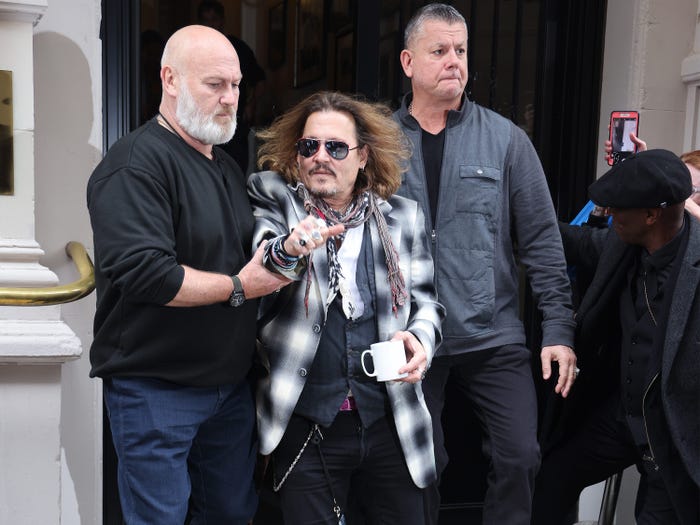
Johnny Depp with bodyguards

Maybe this is why the most powerful and influential men are actually on the shorter end of the scale?  Many actors and a significant number of billionaires are of average or below average height.  Maybe it is because they knew that they would be overlooked without going 110% in everything they do?  The long and short is that we can forever wallow in our disadvantage or we can turn it into a strength.  No, it does not make it fair, nothing ever is fair, still nobody will ever come to the rescue of short men.

The worst thing we can do to anyone is pity them and make them dependent on our help to be actualized.  It is the true racist, and the real sexist, who assumes that some need their help or uses their ‘sensitivity’ to such things for their own socal advancement, a person dealing honestly will value character above all else and not allow themselves to be biased one way or another, favorably or unfavorably, on the basis of outward appearance.

Elliott Rogers is a poster child of grievance culture and where he was the real problem.

In the end, hurting people come in all shapes and sizes.  It is impossible to quantify and rank such things and completely a fool’s errand to try to compensate people for every disadvantage they face in life.  Furthermore, in trying, we make the problem worse in that we actually reinforce the feelings and the perception of inferiority in those we’re trying to help.  It also leaves those not receiving this special treatment, and as disadvantaged or more, feeling even more neglected.

Sure, absolutely, a little awareness of the unique difficulties some encounter can go a long way to helping. And yet grievance is often a tool used by toxic and controlling people so they can have their way without putting forth the required effort for success themselves.  There’s a vast difference between pity dating a short guy and giving him a chance despite his lack of statute.  We should help people because they are people, not because they tall or short, black or white, male or female.

Short men, by dwelling on their grievance, will only exasperate their disadvantage. It may be cathartic to whiny and complain, but it doesn’t bring a person closer to feeling accepted. Having ‘pride’ events, marches declaring we matter, even months where members are extolled, can never actually produce the legitimacy that those snared in their grievances crave. It is only in finding our identity in something else that we’re free.

What Is a Woman?

Standard

Put away those pink vagina hats, feminists, 2017 might as well be 17 BC, this is the current year, now wearing such a monstrous thing on your head is a clear sign of bigotry and transphobia.  How would those ‘women’ with penises feel?  A pussyhat is worse than a Confederate battle flag or MAGA hat and completely insensitive.

Transphobic sign from 2017?

A decade ago answering the question of what a woman is would be easy for most people.  My mom is a woman.  That’s what we call the part of mankind that is able to give birth: A womb-man.  

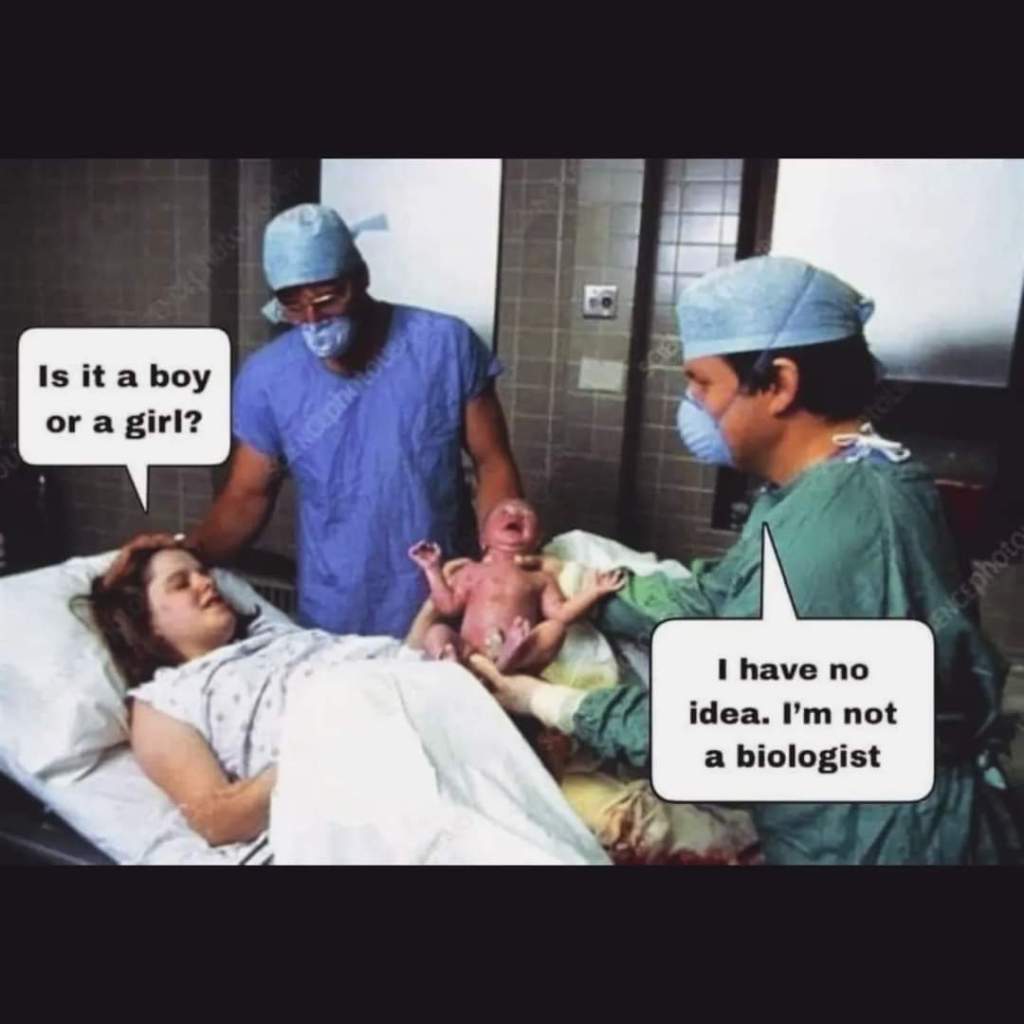
But, in the age of far-left ‘woke’ politics, this isn’t so easy anymore.  And this is the reason why, Ketanji Brown Jackson, a Supreme Court nominee, when asked, “Can you provide a definition for the word woman?” replied, “I can’t, not in this context, I’m not a biologist.”

Now, some are calling this question a trap, which it is.  It is a question intended to reveal the true character of Brown Jackson and it has.  Brown Jackson has shown herself as someone beholden to far-left extremism and unwilling to state a basic understanding that doesn’t need a biologist to get it right.

This is someone whom we are supposed to trust to make judgements on such matters, being interviewed for a job that is all about providing the final legal interpretations.  Will she also refuse to weigh in on the language of the law because she’s not one of the writers?  “I’m sorry, but I can’t rule on this, I didn’t write the Constitution.”

Alas, I think this is a selective lack of basic comprehension of what even children can figure out.  And we all know that it is not fair for a biological male to change his name, take some hormones, and then dominate women.  However, in the current ‘woke’ political paradigm one must pretend that a man competing as women is somehow stunning and brave.

The true irony of all this is that the pushers of the very same identity politics that moved Brown Jackson to the front of the line, which is completely about dividing people up into categories as a means to exploit their base tribal instincts, nominated someone who claims to suddenly be unable to distinguish women from men.

Man, I Feel Like A Women

And as far as the appeal to credentialism, I’m not sure any biologist would want to be declared to be transphobic and a bigot.  It would be a quick route to losing their job or funding, being cancelled, to risk offending the most powerful of marginalized.  Let’s hope this USA Today clip doesn’t represent a scientific community consensus or we’re in for a rough ride:


If this is indeed true, if there is “no sufficient way to clearly define what makes someone a woman,” then the solution to the alleged pay gap is to have more men identify as women, right?

If Jeff Bezos becomes Jen instead, would that be a huge victory for women?

Would it then be sexist to question the business practices of Amazon?

All of this is absurd.  A word that can’t be defined is meaningless.  We might as well remove it from the census form as it would be impractical to consult a biologist to help decide what gender we on a given day.  If it is that difficult to define woman, then we may all be women and who can say otherwise?  Who hasn’t sang along with Shania Twain, “Man, I feel like a woman”?

Transgenderism is truly a bigger threat to the special privileges of women than anything patriarchal.  It is essentially to say that the category does not exist, that anyone who identities as a woman can be a woman, and therefore all should have access to those spaces typically reserved for women.  Lia Thomas has arrived to erase the best efforts of women.

Loss of Meaning and Purpose

The one thing that is hard to define in this postmodern age, where a woman can’t even say what it actually means to be a woman, is our direction.  Even with the rejection of God and questioning of truth, a prior generation of academics and scientists could agree on basic definitions enough to advance.   

However, as this nihilistic deconstruction of meaning (and thus purpose) continued, as the very things that built civilization have become progressively eroded over time, it is become increasingly difficult to form a productive consensus.  If many can’t even be objective about gender and what it means to be a woman anymore, how will we decide anything if this goes further?

Language is becoming detached from the meaning.  This is a wedge driven by those perpetually stuck in dithering indecision, who are often insulated from real world consequences, who can afford to live in abstraction and denial.  But it is not sustainable, we can’t build strong and safe bridges while declaring engineering and mathematics to be racist. 

At some point there is reality, cold and harsh, that doesn’t care about our feelings.

Our elites are basically like those ridiculed for their debates about how many angels could dance on the head of a needle.  They have become totally impractical, useless as far as executive decision making and a real threat to social order.  Those unable to settle any matter definitively, let alone those truly more complex and nuanced, can’t build a future together.

It is a luxury, the ultimate privilege, to never have to define or decide anything and still be able to live.

The guy, trying to impress his date with his wokeness beside me, doesn’t actually live by the dogmas he is spouting, he can yammer on endlessly about his theories, but to sustain a relationship he’s going to have to make a commitment to something, eventually, or no woman will keep him around for long.