I’ve heard stories of Mennonite old timers who would walk into a dealership, ask them to give their best price and then refuse to engage in any haggling beyond that. To them this concrete style of communication is commanded by Jesus and something I can respect. Their word was their bond. They did not play all the games. Business that is honest and done with a handshake.
What a pleasant and simple world it would be if everyone operated this way. No need for lawyers to read the fine print if everyone were an honest broker like this. But we do not live in that world. And there are those who love to exploit the trust of those born into Anabaptist religious cloisters. Every few years there’s another fraudster who sweeps through Amish and Mennonite country, selling the next big ‘investment’ and wiping out the hard earned savings of the unsuspecting—which is not to even mention those small scale “natural healing” swindles or grift seminars.
This is why healthy skepticism is necessary and discernment of character is a skill that must be learned. Born into one of these communities, I’m still far too trusting—most especially if someone starts to speak my language. “Oh, he stands up for the working class! They’re the defenders of freedom and democracy!” We fall for those who exploit us, who manufacture consent by various means, who claim to be like us and yet lack our Christian conscience. We are most susceptible to those who mimic our values as part of their deception.
Being a good or moral person can lead to being extra vulnerable. Some just lack the imagination for evil, which is wonderful innocence, but this is not optimal. Wisdom requires that we are able to read through a sales pitch and understand how propaganda works. A skilled liar plays on what you want to hear, they exploit the prejudices and preconceived ideas of any audience. We need to be a step ahead of their schemes—which requires a little pattern recognition or small consideration of what may be hidden behind their words.
Letting Your Yea Be Yes, Nay Be Nay
Growing up, going to a public school, there was always that “I swear on my grandma’s grave” kid. Cued by your incredulous face, he would attempt to fortify his most questionable claims with this invocation of something else trustworthy. And the whole reason for this is that their own word wasn’t good enough. And this swearing act itself would arouse my suspicions. If I can’t trust you in a small inconsequential claim—how could I ever trust your oath?
Obviously this was theatrics in Secondary school, but a manner of speech that Jesus targeted for rebuke:
Again, you have heard that it was said to the people long ago, ‘Do not break your oath, but fulfill to the Lord the vows you have made.’ But I tell you, do not swear an oath at all: either by heaven, for it is God’s throne; or by the earth, for it is his footstool; or by Jerusalem, for it is the city of the Great King. And do not swear by your head, for you cannot make even one hair white or black. All you need to say is simply ‘Yes’ or ‘No’; anything beyond this comes from the evil one.
(Matthew 5:33-37 NIV)
This is repeated in James 5:12 a bit more succinctly:
Above all, my brothers and sisters, do not swear—not by heaven or by earth or by anything else. All you need to say is a simple “Yes” or “No.” Otherwise you will be condemned.
Credibility is something built over time and lost in an instant. Swearing an oath won’t fix a loss of trust. But it does basically admit that your own word is not sufficient and this suggests a deeper problem. An oath is useful in a courtroom, where it is used as a dividing line between speech that is free and misleading words you can be prosecuted for—yet what Jesus says is part of a broader push in the direction of plain and honest speech. As St Paul instructs:
Therefore each of you must put off falsehood and speak truthfully to your neighbor, for we are all members of one body.
(Ephesians 4:25 NIV)
Practice truthfulness.
Humanity is one team, one body, so deception is a sin against all members.
The Bible is also full of examples of the opposite of this:
Those who flatter their neighbors are spreading nets for their feet.
(Proverbs 29:5 NIV)
Everyone lies to their neighbor; they flatter with their lips but harbor deception in their hearts. May the Lord silence all flattering lips and every boastful tongue.
(Psalm 12:2-3 NIV)
Not a word from their mouth can be trusted; their heart is filled with malice. Their throat is an open grave; with their tongues they tell lies [or flatter].
(Psalm 5:9 NIV)
My companion attacks his friends; he violates his covenant. His talk is smooth as butter, yet war is in his heart; his words are more soothing than oil, yet they are drawn swords.
(Psalms 55:20-21 NIV)
In all of these cases you have those who appear to be our friends and use flowery and agreeable speech to ensnare. We naturally suspect those who aren’t like us, who say the stuff we don’t like, but we trust those who speak our native tongue and seem to share our cultural values. That’s our blind side and vulnerability. A guy shows up in a nice suit, well-groomed, and we’ll just take him as credible. We’re susceptible to those who dress up their deception in the familiar—or who feed our prejudices.
Those Who Dress To Deceive
The Bible mentions flattery, a Trojan horse and the way some use to lower our guard, but the Gospel warns about this:
Watch out for false prophets. They come to you in sheep’s clothing, but inwardly they are ferocious wolves.
(Matthew 7:15 NIV)
Looks can be deceiving.
For there are many rebellious people, full of meaningless talk and deception, especially those of the circumcision group. They must be silenced, because they are disrupting whole households by teaching things they ought not to teach—and that for the sake of dishonest gain. One of Crete’s own prophets has said it: “Cretans are always liars, evil brutes, lazy gluttons.” This saying is true. Therefore rebuke them sharply, so that they will be sound in the faith and will pay no attention to Jewish myths or to the merely human commands of those who reject the truth. To the pure, all things are pure, but to those who are corrupted and do not believe, nothing is pure. In fact, both their minds and consciences are corrupted. They claim to know God, but by their actions they deny him. They are detestable, disobedient and unfit for doing anything good.
(Titus 1:10-16 NIV)
If it were easy to cut through the crap then there would be very little chance of anyone ever being deceived. But the worst enemies of Christ weren’t those who had openly hunted and tried to kill his followers. You knew to avoid them. It’s those who entered the church to subvert and undermine.
St Paul calls out those of the “circumcised group” and who have actions that deny the relationship they claim to have with God. Today we deal with something insidious, now embedded into several generations through propaganda and established prejudice. We can’t see it because it hides within us, carries a familiar last name or claims to have devotion to the same values.
Many now believe it is okay to kill babies for an ethno-state. They go to church on Sunday never realizing that they have departed from Christ:
Not everyone who says to me, ‘Lord, Lord,’ will enter the kingdom of heaven, but only the one who does the will of my Father who is in heaven. Many will say to me on that day, ‘Lord, Lord, did we not prophesy in your name and in your name drive out demons and in your name perform many miracles?’ Then I will tell them plainly, ‘I never knew you. Away from me, you evildoers!’
(Matthew 7:21-23 NIV)
Those who have yoked together with those who Jesus said are “of their father the devil” (John 8:44) are as doomed to hell as an unbeliever. The Covenant with Abraham was tied to sharing his faith and righteousness. Likewise, you are not of Christ unless you obey his will no matter how “born again” you feel or how flowery you pray in front of the crowd. Enabling evil is just evil. Jesus called out the fakes who hid behind their mask of devotion and his earliest followers did the same. Stephen “cut them to the heart” challenging the Jewish leaders with a flurry of accusations—they killed him for telling the truth:
You have taken up the tabernacle of Molek and the star of your god Rephan, the idols you made to worship. Therefore I will send you into exile’ beyond Babylon. (Acts 7:43 NIV)
Harmless as Doves, Yet…
The simple and honest are especially vulnerable to the cunning and crafty. And it’s not always a matter of intelligence. It is about trust. It is about being a part of the same civilizational project.
Some places you can leave front doors unlocked and not worry about being robbed. Everyone is bought into the same moral code or same social contract, and thus respects the property and the rights of others who are partners in the overall work. And the doors of our civilization are wide open—not turning people away is a wonderful Christian value and good.
However, this value also means many let their guard down around imposters who pretend to be like us and yet work to subvert, supplant, enslave or destroy what we’ve built. They are a “snake in the grass” slithering, waiting for the moment of weakness to strike. They’re the wolves who will accuse the sheepdog of being a bigger threat to the sheep while they plot to devour the flock.
Yes, an impulse towards being charitable is great, but also we need to be wary of those who do not share the same civilizational bond or social contract—this is what Jesus said:
I am sending you out like sheep among wolves. Therefore be as shrewd as snakes and as innocent as doves.
(Matthew 10:16 NIV)
There was this horrible story about a young man opening the door to two men who were dressed like UPS delivery drivers and ended up paying with his life. The fake employees pushed into the residence, with two others who had hidden around the corner, and they murdered the young man and two women in the home—all of this happening in front of two children under the age of five.
We trust based on appearance. If the men in the story above had been dressed like a couple hoodlums nobody would open that door. There’s little chance of a very foreign looking religion or culture slipping into our communities unnoticed. But when we see something familiar or someone speaking in a way to convince us they’re on our side we do not take precautions. We let them in without considering that they could have values completely different despite their surface level disguise.
Whether the Trojan horse gift or that bright beautiful serpent in the garden—it is the job of the discerning person to sound the alarm and protect their own community or home from evil schemes. You need to be able to think like the schemers do to anticipate the deception. The first thing the wolves do is attack and try to silence the voices of those who identify them as being a threat. They will always come after the watch dog first before devouring the sheep.
Fool Me Once Shame On You
Zionism had slipped into my former Mennonite church through Evangelicalism. The church was founded near the same time a state called Israel was founded with a brutal and cruel expulsion of indigenous people. But we celebrated plucky little Israel, as if they came about by a miracle rather than being a result of a campaign of terrorism or military means. For whatever reason Palestinians didn’t matter, as just another group of backwards Arabs, and I’m guessing this is *still* the majority opinion as far as fundamentalist part of the sect I was born in. It’s just part of a disconnect between the love they profess on Sunday and the politics they accept the rest of the week.
Even if the state of Israel is a part of God’s plan does not mean we should be the cheerleaders for genocide or the justifiers of abuse of others. The “I didn’t vote for Trump to be a pastor” crowd seems to be too happy with the totally merciless treatment of the native population—including their innocent children. Apparently God’s chosen are just to be exempted from Christian ethics and can just kill as they please.
It defies every message on grace and mercy ever shared from a church pulpits. We let a wolf into the church and it has devoured our humanity in the name of a worldly kingdom.
Unfortunately Zionist ideology, their sensational end times fantasy, has caused many to abandon the cause of Christ. The old serpent has slipped through the church doors decades ago and is now preaching from many pulpits. He infiltrates the ranks, pretends to share our values as he subtly undermines them, and soon what is up is down is up—with the ‘faithful’ defending a Sodomizing pedo protecting baby killing cult of elites and calling good old fashioned conservative American values.
Hasbura will tell you Goliath was a victim and David a villain.
The worst part is when even to question the official narrative, put out by those who lied wmv will lie again, is twisted into being an ‘evil’ worse than any other. They don’t seem to get that good institutions can be hijacked or that Jesus most certainly did insult those who held positions of authority and he did it by calling them out to their faces. This idea that we must shrink away from challenging the mask of righteousness worn to fool the masses is just flat out wrong. We must call out what the New Testament writers call the synagogue of Satan:
I know about the slander of those who say they are Jews and are not, but are a synagogue of Satan.
(Revelation 2:9 NIV)
In the end, we either are what we say we are or we’re not. That’s what yay be yay is truly about. James warns against being double-minded, about showing favoritism, and the New Testament is full of statements which emphasize no difference between Jew and Gentile in Christ. Israel isn’t a blessing nor is it protected by the hand of God. No, they are simply willing to do the treacherous and nasty things that are completely antithetical to the teachings of Jesus Christ. We need to be wiser understanding that some will lie to gain our money or support.
The quote in title, an unintentionally honest comment from a pious young woman, will continue to ring in my ears for decades to come. Scripture describes the word of God being “sharper than any two-edged sword,” but her romantic rejection came more like a hammer blow to my Mennonite worldview where spiritual was supposed to outweigh physical gain. I had patterned my life, up to that point, around a sort of practicality over flash and suddenly realized what I thought was an asset was actually liability.
I was reminded of these words again as my wife’s glowing approval of the monstrosity in my driveway, a Ford Explorer ST, still feels out of place for me. I mean, granted, I was not keen on transitioning to family life with a pedestrian option like a minivan or boring SUV. But I didn’t expect my always frugal—cost conscious—female counterpart to go along with it 100%. She was supposed to pump the brakes and did not. I’ve realized, in this, that every woman is happy with the nice things and won’t say no if you provide it for them. We’ve both agreed to blame the baby for our reckless financial decision.
So, back to Milton, a place I’ve since moved on from and to the higher cost town across the river. Up until the words from the mouth of this wholesome girl, I had thought having a little house completely paid off would be worth something—even attractive. After all she claimed to be interested in missionary service and what better place to get a start, right? From what I had believed, there are needs anywhere there are people and where better to start than a deteriorating industrial town? Milton is an example of the rust belt, a place of declining opportunities and costs of outsourcing production.
The phrase “you’re thirty years old living in Milton” was simply accurate conveyance of her underlying priorities. There’s always the difference between what we say we are and the actual truth. Even in the secular culture there’s a romanticization of the love of two impoverished people who stand together in desperate circumstances. And those raised in an environment where Christian mission is supposed to be first, living as one poor as a church mouse amongst common people would seem the ideal.
But it is not. No, this young woman, like the one who had rejected me for not pursuing a title of “missionary” or “pastor” years prior, was clearly after status. They will not say it outright, probably are not even aware, but it is a kind of glamour they seek in service. A call to some exotic location to impress their religious peers. Sure, a Bentley may not be status in a conservative Anabaptist church, but the ability to jet around the world (often on someone else’s dime) is thrilling where it is considered sacrifice. It is currency, a way to gain status in a community of faith or be seen as righteous.
Resources are showered on the ministry or mission. Sure, it comes with stress, my 9-5 does as well, but the payoff is proportional. And not talking about “treasures in heaven” or God’s favor. A pastor has access to the community resources. It is social power as much as it is a position of responsibility and there are always those who want to curry a little favor. Again, it also comes with more scrutiny as well, but most tend to minimize the costs when they set off in a particular direction. Besides that, for the Mennonite woman, this is for the broad shoulders of her husband to bear, right?
The high expectations of my wife have been a little surprising to me. To her credit, she has been putting up with a partly finished remodel of old house since marrying and moving in. But yet, despite coming from the Philippines, her standards are now close to that of an American woman. We comment about our son’s demands for what the other kids have, but often fail the test ourselves. I mean, is it at all coincidence that I decide to finally pull the trigger on a new vehicle after a Mennonite workmate showed up with his new truck? Probably not.
And that’s the bottom line here. We are all after power in different forms. Be it money, be it land, access to resources or just status in our peer group. What I’ve found is that a religiously trained (or ‘spiritual’) person is no different. No, all they do is give a righteous cover to their personal ambition. They live in a delusion. Materialism is bad, they will say, but they are fine with your donation of money so they can buy a bigger missionary compound in Southeast Asia. And, under the fluff of my own pursuit of love was the same sexual motivation of all men.
I hated when a physiatrist summarized my obsession with the impossibility as being a “sexual attraction” and dismissed it initially as a woman who knew nothing of my heart as a man of God. But now I realized this is undoubtedly the correct assessment. Men want sexually attractive women and women want high status men. This is an essential part of our nature—a matter of survival for our genes—a young healthy woman is able to bear children and a wealthy or connected man can give them much more than a thirty year old living in Milton.
I’ve moved on from Milton, but cannot move on from the reality I have encountered head on, we’re sexual creatures living in material reality and can’t escape this by denial. I had been better to learn this decades ago rather than cling to a naive notion of love where it ends like a storybook. But I am now living the best life available to me and hope that my wife is happy with her decision. She’s won my heart asking for the “simple and happy life” and now I want to give her that and everything else wonderful this world offers. The best thing we gained was the child born almost a year ago now…
It’s never too late to live the life that you should—which is more about perspective than what you possess—even if you were denied love for being thirty years old and living in Milton.
We cling to morality like it’s a lighthouse in the fog—steady, universal, guiding us home. But it’s a lie. It’s a battered flag, flapping in whatever wind our tribe’s blowing, stitched from the yarns we’re spun by family, faith, or flag. Raised Mennonite, I drank in peace and love for the outsider as if they were carved in my bones—until I saw they weren’t. Nature doesn’t whisper “thou shalt not kill”; it shrugs while we slit throats or swipe bread when the need hits. History’s littered with it: Biblical Israel butchered Canaanites—whole towns, babies dashed on rocks—‘cause God handed them the deed (Deuteronomy 7:1-2), and the faithful sang psalms over the ashes.
Fast-forward to 2025: Israel pounds Gaza, kids buried in rubble, and the justification’s “security”—Hamas tunnels, rockets, survival. Insiders nod; it’s moral, necessary. Morality’s no fixed star—it’s a mirror, reflecting who we’re with and what we want.Look around today, and it’s the same mess. Russia rolls tanks into Ukraine, March 2025 still grinding on, flattening Mariupol redux—schools, hospitals, grandmas in the crosshairs. Putin’s line: “denazification,” protecting Russian speakers, historical destiny. His people buy it, or enough do—state TV’s been marinating them in it for years. The West screams “war crimes!”—sanctions pile up, Zelensky’s a saint on X—but that’s the outsider’s perch. Kyiv’s got its own blood on the slate: shelling Donbas for a decade, shrugging at Russian-speaking dead. Both sides sanctify their kills; morality bends to the banner. Or take the U.S.: Trump loyalists storm Capitol Hill in ‘21, “stolen election!” on their lips, while Biden’s crew locks ‘em up, crowing “democracy!” Same act—violence for a cause—flips from treason to justice depending on the lens. It’s not universal; it’s us-versus-them, conditioned to the core.
Look around today, and it’s the same mess. Russia rolls tanks into Ukraine, March 2025 still grinding on, flattening Mariupol redux—schools, hospitals, grandmas in the crosshairs. Putin’s line: “denazification,” protecting Russian speakers, historical destiny. His people buy it, or enough do—state TV’s been marinating them in it for years. The West screams “war crimes!”—sanctions pile up, Zelensky’s a saint on X—but that’s the outsider’s perch. Kyiv’s got its own blood on the slate: shelling Donbas for a decade, shrugging at Russian-speaking dead. Both sides sanctify their kills; morality bends to the banner. Or take the U.S.: Trump loyalists storm Capitol Hill in ‘21, “stolen election!” on their lips, while Biden’s crew locks ‘em up, crowing “democracy!” Same act—violence for a cause—flips from treason to justice depending on the lens. It’s not universal; it’s us-versus-them, conditioned to the core.
Objections bubble up like clockwork. The optimists—call ‘em Pinker’s crowd (2011)—say genocide’s revulsion proves we’ve got a moral spine, empathy baked in from caveman days. Hunter-gatherers shared meat, Confucius preached kindness—see, we’re wired for good! But that’s a half-truth, and a flimsy one. Those old tribes cared for their own; strangers got the club. Same with today’s wars: Ukraine’s defenders weep for Bucha’s mass graves but gloss over their own artillery sins. Israel’s critics howl at Gaza’s death toll—over 40,000 by late 2024, per UN counts—yet Hamas rockets barely dent their outrage. Why? Fundamental attribution error: outsiders slap “evil” on the doer—Russia’s a monster, Israel’s a bully—while ignoring the stew they’re boiling in: encirclement fears, decades of tit-for-tat bombs. Insiders don’t see villainy; they see survival, righteousness, their conditioning kicking in. Evolution’s no saint—it’ll cheer cooperation or carnage, whichever keeps the clan breathing.
Objections bubble up like clockwork. The optimists—call ‘em Pinker’s crowd (2011)—say genocide’s revulsion proves we’ve got a moral spine, empathy baked in from caveman days. Hunter-gatherers shared meat, Confucius preached kindness—see, we’re wired for good! But that’s a half-truth, and a flimsy one. Those old tribes cared for their own; strangers got the club. Same with today’s wars: Ukraine’s defenders weep for Bucha’s mass graves but gloss over their own artillery sins. Israel’s critics howl at Gaza’s death toll—over 40,000 by late 2024, per UN counts—yet Hamas rockets barely dent their outrage. Why? Fundamental attribution error: outsiders slap “evil” on the doer—Russia’s a monster, Israel’s a bully—while ignoring the stew they’re boiling in: encirclement fears, decades of tit-for-tat bombs. Insiders don’t see villainy; they see survival, righteousness, their conditioning kicking in. Evolution’s no saint—it’ll cheer cooperation or carnage, whichever keeps the clan breathing.
Zoom out, and the pattern’s stark. Morality’s a tool, not a truth—always has been. Libertarians’ll shoot to guard their patch, Marxists’ll guillotine for the proletariat, U.S. elites’ll drone-strike weddings to keep oil flowing—all cloaked in principle, all serving their pack. Russia’s “special operation” is Ukraine’s genocide; Israel’s “self-defense” is Palestine’s ethnic cleansing. The outsider’s gasp—those viral X posts of Kyiv’s ruins or Rafah’s craters—ain’t proof of a moral bedrock; it’s just a rival script, misreading situation as sin. We’re not debating ethics to polish some eternal gem; we’re wrestling over whose story rules. Take the Houthi strikes in Yemen, 2025 heating up: U.S. bombs “terrorists,” Saudis cheer, while aid workers tally starved kids—same act, split morals. Conditioning calls the shots.
The rebuttal’s got one last kick: if morality’s so fluid, why bother refining it? They say it’s progress, not just haggling—reason taming our beastly side. But that’s wishful polish on a cracked hull. Ukraine’s Zelensky begs for NATO jets, Israel’s Netanyahu quotes scripture for settlers, Trumpers and progressives sling “fascist” like mud—reason’s just a megaphone for the tribe. Authenticity’s the only anchor: own the bias, ditch the sanctimonious dance. Russia’s generals don’t lose sleep over Bucha; Israel’s brass don’t flinch at Gaza’s toll—they’ve got their why, and it’s enough. Outsiders clutch pearls—#WarCrimes trending—because they’re not in the fight. Morality’s a fluid mess, shifting with the players, not a lighthouse. Stop pretending it’s more.
Stepping back from the fray—whether it’s Putin’s moves in Ukraine or Hamas’s salvos from Gaza—offers an authenticity that sidesteps the knee-jerk noise and stares down our own fundamental attribution error. Take Putin: some tag him as a ruthless tyrant, others see a strategist pushing back—NATO’s ring of bases and war games from Poland to the Baltics isn’t exactly a welcome mat, but Russia’s leveling cities isn’t a handshake either. Hamas gets the same split: outsiders call them terrorists, yet in Gaza—two million penned in, scrappy and stubborn—they’re fighting a chokehold, though rockets don’t win halos. My Mennonite roots nudge me to judge NATO’s chest-thumping ‘values’ or Hamas’s bloodshed, but I’ve got my own baggage—my folks kept the world at arm’s length too, just with hymns, not guns. Seeing that, owning how my lens twists the view, points a pragmatic way forward: not crowning heroes or villains, but cutting through the sanctimony—NATO’s not spotless, Gazans aren’t pawns, and I’m no referee, just a guy sorting his own slant in the mess.
Identity is fluid, a physical characteristic is not. I had identified as being “Mennonite” for many years of my life. It was not much of a choice for me. Raised in a Mennonite home, participated in a Mennonite church, and had internalized the values, the belief system, etc. Mennonite was simply what I was and it still remains by ethnic/cultural background. Leaving the community does not mean I’ll escape the genetic realities of my birth tribe.
Is an identity surface level or deeper?
There was many of these labels that have to do with our social status, some we pick and others are picked for us. In school if you’re into sports, hang out with other athletes, it is going to get you a “jock” designation and likely also stereotype applied with that. Likewise, if were to wear a particular wardrobe to conform with a group of self-described non-conformists then you’re Goth or Emo. People tend to coagulate into identity group—they find others who are like them and also become more like those whom they identify with.
But there’s a huge difference between these identities built around how we dress or who we associate with and those like eye color, bone structure or genitalia. Sure, someone can dye their hair purple and claim that they are an astronaut, but that does not change what they were born with nor does it make them qualified to fly a space shuttle. There are those ‘assigned’ categories that need to be objective facts rather than some kind of self-identity or cosplay act. Science needs to have clear definitions or the endeavor is impossible. And society simply can’t let you be a medical doctor because you feel like you should be a Porsche owner while you’re stuck driving a Kia.
Anyhow, getting to the point, a big problem with these conversations is that people are using the same words to mean something different. For example, Rachel Dolezal, the woman who identified as ‘black’ despite her being born a daughter of European parents and having their biological characteristics, yet she could be ‘black’ for many years. In my mind she can be both black or not black depending on what the term is describing—is it the genetic inheritance or the adopted culture?
I mean, think of Eminem’s lyrics: “I am the worst thing since Elvis Presley, to do Black music so selfishly and use it to get myself wealthy.”
Technically, if it is a ‘white’ artist doing the writing and performing, what is so ‘black’ about it? He’s performing in English. He’s doing naval gazing more common with the self-loathing European culture and his lyrics were about being some weird trailer trash hybrid rather than the themes common with the gangsta rap I knew growing up where it was at least presented as being something to take seriously. How is a genre of music a skin color? Asians are quite good at playing instruments and music first developed by the West—is that appropriation?
In many cases ‘black’ is not referring to something truly immutable. No, rather it is about a lifestyle, a set of values, a certain way of behaving and, by this definition, it is perfectly legitimate for someone to identify as black without African genetics. In other words, it is more like belonging to political party or religion than something someone is born. And this is how suddenly the far left can claim work ethic or nuclear families are ‘white’ despite the Africans I know being as hard working and loyal to their spouses as any other person.
It is grotesque, horrendously racist, when a political candidate tells a whole segment of the population that if they don’t vote for him then, “You ain’t black.“
Of course that was to intentionally confuse actual skin color and everything associated with it, with a ideology and perspective. It is to rob the targets (black people who think differently than him) of their identity and is a form of gaslighting. An outsider doesn’t get to decide what people should or should not belong. It is inappropriate and bullying behavior, this truly is the worst kind of manipulation, it reinforces stereotypes and denies the true diversity within a category of color.
So identity is fluid. We can change our own idea of what we are. Still, there are also the fixed points determined by birth, a physical characteristic, that even if the surface level manifestations are surgically changed and hormones artificially employed, cannot be chosen or changed. A man can behave in a feminine way, a woman in a masculine way, yet he doesn’t lose a Y chromosome simply for declaring himself a woman. Sure, he can have his male anatomy reconstructed to resemble the female sex. But there is more to being a woman.
Due to chromosomal abnormalities, there may not be a binary of male and female, but there most certainly is between female and not female. It is one thing for the man once known as Bruce Jenner to reject the typical male role and change his name. But that does not change the fact that he fathered his children and lacks the real hardware to be a woman. Again, Rachel Dolezal can act in a manner that is associated with those of African origins, even fool the NAACP with her outward appearance, but she is not truly African American.
We do not need to recognize every claim as being valid. I can’t just thrash around in the pool, march up to the podium and demand to be recognized as the winner of a swim meet without the necessary qualifications or actual achievement. Why then is it ever okay for someone with male genitals and body to dominate in a female category for simply changing his name and having the powers that be join him in his psychosis?
Changing your name and official category doesn’t change the physical reality.
It is a serious threat to civilization to attack the common language in this manner and it cannot be taken lightly. One person with a delusion is not a problem. However, when it is a significant portion of society going off the rails together then very quickly becomes dangerous. Matters of our preference and culture are subjective, what is feminine or masculine is not set in stone, but science and reason must be built on something that is objective. There must be a wall between identity that is merely social construct and that which is grounded in substance.
There was a time when I could simply say “I’m Mennonite.” That is what I was. It was my religion, culture and ethnicity wrapped up into one tidy package. It was as real to me as my gender and first name. But now, having left the denomination of my youth behind, it is really difficult to buy-in to a new identity or at least not to the extent of feeling a significant attachment to the distinguishing title.
We live in a great identity crisis. We might celebrate more identities than ever, and yet somehow along the way, we have lost the very meaning of the words that we use to define these identity categories.
What is an identity?
An identity is a word used to distinguish one from another. Or a statement of what we are in comparison to the whole group. Are you Catholic or Protestant? Black or white? A Republican, Democrat or Independent? And whether it is identity or not has much to do with the emotional weight that we place on these categories and terms. In other words, blue-eyed is certainly a category that some of us belong to, but is not currently an true identity marker.
There are also various kinds of identity, there are those inborn or assumed—Charlotte, due to her inherited genetics, is Kankanaey, and would be no matter what she believed about herself or if she prefers that another term be used. Then there are those types of identities that are less about our immutable being and more about what we are doing. By contrast, trucker or truck driver is an identity, and even comes with a license to prove it, but it is not something that is actually written in a CDL holder’s DNA.
Trump ‘identifies’ as a trucker…
Identity is never something we can select for ourselves. I can claim to be a Dill Pickle and even legally require the moniker be used in reference to me. But this is never going to change what other people will perceive me to be. Identity is something that others construct, with us, and not only a thing that we independently choose for ourselves. Put another way, a rose by any other name is still a rose and even if we paint it blue. And blue does not become yellow because we switch the color identity labels either.
Our “I am” identity…
I’m sexually attracted to the female form and this has dictated my priorities and activities throughout the years. But, as important as it is to me, I don’t tout my ‘straight’ preference as being my identity. I am many things, but my sexuality is not something to hang my sense of who I am on. There are no hetero pride parades for this reason and no need to fly a special banner in front of my house to announce my preferences either. Sexuality is not who we really are.
So, when someone says “I am gay,” my mind always must go to the question, “you are a sexuality?” The reality is that this identity is about far more than what they do in bed. It is about the community or lifestyle and an identity built around being their status as an exception. Being “gay” is just as much about the social aspect as the orientation. It is not just something you only do in private. No, it requires a public display and solidarity with others like you. If it were simply about sex there would be no parades or neverending need to be legitimized by others. Identity is bigger than the individual.
And trans is simply the next level. Those calling themselves “trans” may (in direct contradiction with their biological gender assignment) self-identify as a man or a woman. But those who are truly male or female simply are and there is no need for hormones, reconstruction of genitals or to exaggerate gender stereotypes with weird provocative displays. On the other hand, no matter how much surgery is performed on the body of a ‘trans’ person they will always be trans. The more trans people try to force others to recognize them (despite our own eyes) the more they will stand out as being different. Which is truly the point.
Identity is about our distinguishing ourselves from the larger group. It is also about what is the most important thing to us. If a person were ask who I am I would probably start with my given name. That is where I am oriented in society, as a product of my parents, and also gives others a shorthand to address my person. Then I might mention my role as a husband and father as those things are currently the most meaningful parts of my life. Of course, also in the mix is my religious affiliation and occupation. Sexuality, while very important, wouldn’t even make the top of the list.
Furthermore, there is no need for anyone to defy their own eyes or be forced to recognize anything about me against their will. Identity is not only about what I declare. A large part of real identity is what others recognize with no coercion. If I had to demand that my son call me daddy or that my wife appreciate my bad cooking the same as she did the work of a master chef, would their bending to my will really make me any more legitimately those things? No, it would certainly not! It would make me a bully and look very insecure.
The Identity Gambit…
Special identity is a way to gain advantage over others. In the past it was about having the right privileging title or family pedigree. Now it has become a no holds barred fight between various victim categories. But in both cases it was about unearned respect, about people who did not do anything noteworthy enough in their lives to be recognized and thus invent illegitimate reasons why others must genuflect to them. These frauds are enabled by those who have twisted morality and a corrupted political system.
Stop. I look like a police officer!
People can lie about their identity for many reasons. Impersonation of a police officer, for example, gives a person false authority and ability to manipulate the unsuspecting. Or stolen valor, in the case of those who, for attention, dress like and pretend to be a military veteran. Sure, the act is usually off, since these posers don’t have the requisite qualifications, but it fools enough people that they get the payoff of the true identity—or at least until caught. Then again, prancing around and pathologically pretending to be a girl is now extremely lucrative for some men.
Pretending to be a doctor or airline pilot is something children do innocently and yet it would be silly to legally recognize this as not to make them feel bad. True identity is not an act or a costume we put on.
Shedding identity…
Identity is powerful. For example, a person calling themselves a “gangsta” or “thug” is declaring a whole package of behaviors and dress styles. It is a choice as well as a habit, they could change and yet their momentum is in a particular direction. They have been conditioned, for years and years, by culture and peers, to assume this posture towards the world.
There is some truth to the statement, “you can take the boy out of the country, but you can’t take the country out of the boy.” We have many things instilled in us, accents to tastes, but this is not written into our DNA and doesn’t mean it is an “I am what I am” excuse. We will send children to speech therapy if they have an impediment rather than let them be their true selves. We can and should modify things that an identity is built from. This notion of a genuine self that can’t be changed is ridiculous.
Right now there is a Ukrainian vs. Russian war. The narrative we’re being sold is that there is a vast difference between the two sides—that this is a fight between freedom and democracy or authoritarian rule. We are told the Russians are barbaric and cruel, the Ukrainian’s heroic and capable. But both are from the same Kievan Rus origins, speak a dialect of the same language, and truly have much more in common with each other than they do with us. Furthermore, the regime in Kiev is hopelessly corrupt, and had been shelling those trying to escape this rule for years prior to the Russian invasion—it isn’t a distinction worth dying over.
Ukraine vs. Russia is more like the US Civil War than WW2.
The reality is we are not bound to identity, especially not to those that are more about what we are currently doing rather than our actual being. We choose our divisions as much as we are born with them. Sure, we can’t help what side of a border we are born on nor if our personality traits are judged as being masculine or feminine. But we can decide what is most important to us. And, more importantly, we can pick identities that are greater than sexuality or gender. We must reject this idea that we can’t change or improve while also accepting what we are and were born to be.
Many people get off from being contrarian and offending others, they especially enjoy being able to force others to go along with their language games. But, in the end, their ‘preferred pronoun’ is a distinction without a difference. We will remain what we are no matter how we dress it up or how much we compel others to go along with the delusion and falsehoods we peddle. It is only in our spiritual transformation, in finding a bigger purpose, that we can be free from needing the approval and attention of others.
More and more I have no identity to cling to outside of being who I am. I am what I am and don’t need to hide behind a special label or find my place in the world. While many in my religious past hold conference in search of their identity and as many converts in the tradition in which I currently participate tout the Orthodox adjective in the manner some do they/them pronouns, I have little interest in joining them in this inane competition. St Paul, in Galatians 2:38, would have us shed our divisive identities for a joint identity in Christ.
Years ago my mom decided to stop in at the local public elementary school. Impressed, after talking to the staff, my parents sent my older sister there and soon I would follow—along with the rest of my siblings.
This might not seem strange to most. But, for a conservative Mennonite child this was highly unusual—or at least in the past few decades. It bucked the trend of religious parents, afraid of secular influence, pulling their children out. Private schools and home schooling becoming the preferred ‘safe’ options.
Anyhow, maybe as a result of my positive experience, or from inheriting my mom’s genetics, I have always thought differently than my peers. That is to say, for better or worse, I stood apart from both my public school and Mennonite peers, basically a third culture kid or non-conformed in both settings. So, when I had to consider where to send my own children, public school was not something I feared.
This post is not saying that everyone should follow in my footsteps nor suggesting that every child should go to public schools. No other situation is exactly the same as mine, some schools are better or worse and every student different. My intent in this blog is simply to give an explanation of what is now unthinkable to most fundamentalist Christians.
A Stranger in a Strange Land
Public school did not mean assimilation for me. My religious identity was always visible enough for me to be given nicknames like “Micro Mennonite” or basically any Amish sounding name my classmates could come up with. The small things, like wearing pants in the hot weather or the side part of my hair were enough for some to take notice.
I was sometimes subjected to what could be called microaggressions. As in I had one or two classmates who would inform me what I should or should not do, as a Mennonite, and this often included the idea that we did not pay taxes or the assumption that we needed a horse and buggy for transportation. This kind of banter was mostly benign, or at least taken that way, but still served as a continual reminder of my outsider status.
The end result is that I seemed to have a stronger Mennonite identity than many of my religious peers. I learned, at a young age, that I was different and it was okay to be my own person. I was never ashamed to be Mennonite nor stopped from following my own conscience so far as things like pledge of allegiance (I always stood respectfully) or abstaining from other activities that went against my cultural standards.
A child private or homeschooled does not truly know, first hand, the alternative to their own community and home. It is easier for them to believe that the grass is greener on the other side of the fence and many of my religious peers did jettison the indoctrination they received in a pursuit of the prevailing culture. But, being the witness of single parent homes, the chaos of the world and consequences suffered, it made me more thankful for what I had.
Exposure made my home more desirable, it also made the failures of parents my community feature less prominently in my mind. There were many who, raised in the religious cloister, became disillusioned with Christianity as a result of their overbearing dad or as the result of school administrators showing extreme favoritism. Had the same thing happened to them in public school, had they been bullied or abused there instead, at least it would not come in direct conflict with their walk of faith.
No, certainly we don’t want to put children in a harsh environment so that our own home or community contrasts favorably, but some healthy perspective is good. Not taking for granted the food or shelter over our heads by being a little exposed and feeling some hunger pains for home is not a bad thing at all. A big benefit of my public schooling was appreciation for my heritage and a strong desire to preserve the Mennonite culture. I could not afford to be myopic or ignorant, throwing out tradition recklessly because it didn’t suit me.
I had to weigh things more carefully rather than react and throw the baby out with the bathwater. Many of my religious peers have this feeling of having missed out and some had to learn the hard way from their own experiences.
Walk In Faith, Not Fragility!
Conservatives love to laugh about the ‘woke’ and their safe spaces. They are very quick to ridicule those families still wearing face masks and call people snowflakes for their sensitivity. The great irony is that many of these same people withdrew their children from public schools, decades ago, because they “took God out of the schools” by ending prayer led by state employees. The reality is that it isn’t just the fringe far-left that tries to hide themselves and their children from all contrary opinions.
You may work where your employer doesn’t lead prayer, can you handle it?
The problem is that without challenge there is no growth. Yes, part of the job of a parent is to protect and yet it is equally important to prepare a child for the real world. I know, I know, someone out there is saying right now, “he’s saying to throw my precious darling to the wolves!” And then we wonder why, with that kind of attitude, when we assume all of our neighbors are dangerous predators, we are not more successful reaching them with the Gospel?
Jesus, our Lord and Savior, and example to follow, had no problem detouring into the Samaritan lands nor with standing on his own two feet with elders as a child. And I, likewise, had no difficulty standing toe to toe with my high school biology teacher or with seeing through leftist propaganda even back in elementary school. I remember scoffing, even then, at the blatant manipulation on Earth day or that faulty “haves vs have nots” construction of my fresh out of university social studies teacher.
Hint to the homeschoolers: Your neighbors aren’t demons and your children aren’t little saints either. In fact, many of my younger home or privately schooled religious cousins were doing drugs, drinking hard and partying, even sleeping around, long before I had so much as a sip of alcohol. As Jesus said to a prior generation of contamination obsessed religious people, according to Mark 7:14–23:
"Nothing outside a person can defile them by going into them. Rather, it is what comes out of a person that defiles them."
We can’t save our children by sheltering them.
I know, but what about the “groomers’ and the brainwashing? No, I’m not going to say it is all hysteria. Indeed, the far-left is targeting children, they’re making no secret of their agenda and it is cause for concern. We see all of those sensational headlines of abuse and it is easy to be full of anxiety and fear about this. But, for perspective, there are over 3,800,000 teachers in the United States and the vast majority are simply doing their job. Some extreme example, from an urban hellhole or California, is not representative of the whole. Yes, your child going to a public school will be exposed to other perspectives and yet why would they choose lies over the truth?
It is no coincidence that the greatest Biblical examples of faith are those, who as children, faced pagan influence. Moses, trained as an Egyptian, was bolder than his other Israelites and faced down Pharaoh. Daniel refused to bend to social pressure, a Jewish child in the Babylonian court, and stands as an example of faith. And who can forget that trial by fire of three young men, Shadrach, Meshach, and Abednego, who would not bow to the statue of the powerful Nebuchadnezzar II?
It is so strange that fundamentalists can read these stories to their children in their Sunday school classes and then be terrified by the thought little Johnny being away from them for a few hours a day. It makes me wonder if they truly believe these stories are true. Maybe they do not think that the God who called Samuel as a child or emboldened young David to slay a giant is still capable of the same today? Apparently they think God is getting weak in old age and only they are able to save their children from the world?
In the World, Not of the World
Part of the problem with the fundamentalist “purity culture” mindset is that they believe that Holiness is achieved through means of physical separation. Many parents think that they will keep their children safe from harm by keeping them in their protective enclave and away from all other influence. But, the truth is, if Adam and Eve could fall even in the garden of Eden, why would we believe that the serpent can’t find it’s way into our own homes and communities?
For as much as my religious peers would try to keep evil out, pulling their children out of even the church school to guard them from the influence of other Mennonite children, it is no defense from the most dangerous sin of all which is pride and this accompanying idea that we can be fully righteous by our own efforts. But, in the economy of Jesus, it is better to be the woman caught in adultery or thief on the cross who repents than the rich young ruler who kept the law perfectly yet isn’t able to live in faith.
They say more is caught than taught. We can say we believe “greater is He that is in me than He that is in the world” (1 John 4:4) and that God is our strength, but our actions betray us. The conservative Christian retreat from the public sphere is pretending that if they ignore the deterioration somehow the problem will go away. They are training their children to be cowards, afraid to effectively confront the culture or fully contend with the reality that they’re losing ground.
It is true, a Christian is not to be of this world and yet this is all about the spirit in which we are approaching life. The exact phrase “in the world but not of it” is not in Scripture, but we also see where Jesus didn’t avoid people simply because they were Samaritans, tax collectors or others that his religious peers carefully avoided. Unlike the parachute in ‘missionary’ compassion of today, he spent his time amongst his own people, rubbing shoulders with the unwashed masses and even being touched by a woman made into an outcast for her illness.
If we go out in strength, trusting that God is still able to protect us and our children from the teeth of lions, we would possibly see the change of culture that will make the world a place liveable for a Christian. But right now we’re teaching our children to be weak and, when the world finally does come to snatch them from the safety of their homes, many will be fragile and unprepared to stand. This is why so many get caught in the false social justice Gospel, they weren’t properly trained to identify the counterfeit.
“Train up a child in the way he should go, and when he is old he will not depart from it.”
(Proverbs 22:6 KJV)
Why would I send my son into the lion’s den?
Because Daniel continued to pray, despite the risk of severe punishment, and precisely as a result of his childhood faith and learning to resist peer pressure at a young age.
Contrast that with the religious experts who had rejected Jesus for the unclean who he mingled with. Or with Israelites who prospered in their own promised land, absent of persecution, and only went through the religious motions of faith in God. They voluntarily brought idols into their homes and folded before their enemies.
Complacency is a bigger threat to a Christian’s child than lions.
We should not teach our children to run from the giants of our time or they’ll become king Saul.
Instead we should be helping them polish those giant slaying stones and trust God.
There was a 1980s cult film about a man who finds a pair of sunglasses which allows him to see subliminal messages in mass media. In this science fiction movie, “They Live,” the protagonist learns that world is run by aliens, along with human collaborators, who use billboards and television to control the population. The protagonist, now that he is awakened to this truth, goes on a mission to free people.
I’m not sure that I’ve ever watched the entire movie. It was before my time. But, from the bits and pieces that I’ve seen, it is basically a commentary on our mind-numbing American consumerism and political propaganda. It is trying to show how mass media is used by social elites to manipulate and manage people.
Anyhow, for a moment, yesterday, I thought somehow I had landed in that movie and posted the following on social media to describe the experience:
“Was out on the road today and saw a billboard with the word “Obey” in large print. I thought, for a moment, that I was in the 1980s movie, “They Live,” in which the protagonist finds special glasses that allow him to see what really is. In the film the world is controlled by aliens who manipulate people to conform. As it turns out this was not my new vision that could see through the propaganda, but was a Christian Aid Ministries (Mennonite) evangelism effort aimed at professing Christians that do not live to their standards.”
Now, given that much of my friends list is still conservative Mennonite, who live mostly in their own religious cloister, I knew the risk of some missing the meaning and intended humor of the cultural reference. However, what I had not expected was the personal attacks against me and bizarre accusations of bashing CAM for stating the plain truth. What led to this severe reaction? Apparently, that last sentence, that this message was “aimed at professing Christians that do not live their standards,” which offended.
Standards are a sore subject for conservative Mennonites and most especially for the neo-Anabaptist types. Perhaps, had I used the word “doctrines” the howls of protest may have been more muted. Why? Well, the word “standards” is often associated with that multitude of extra-Biblical rules that some argue aren’t a matter of salvation and yet, despite this claim, are somehow important enough to be the cause of their countless church splits. But the bizarre part is that I didn’t say anything about their extra-Biblical standards and that’s what made the boisterous denials so interesting.
What does “Real Christians” actually mean?
The billboard proclaimed “Real Christians OBEY Jesus’ teachings,” citing Luke 6:46 as a reference. At face value that is the goal of all Christians, to obey Jesus, right? But it is this qualifying word “real” that indicates this is a loaded statement and more than just a reminder to be good Christians. The writer doesn’t want you to just be any kind of Christian. No, they want you to be a “real Christians” and quite obviously, unless this writer is at odds with themselves, it means to be like them.
There’s nothing wrong with that sentiment, St. Paul urged, “follow me as I follow Christ,” (1 Corinthians 11:1) and that would certainly mean to be a part of the same church body as him. It shouldn’t be a big controversy, when a Mennonite puts up a sign saying to be a “real Christian” they mean to be more like them, an Anabaptist. This would not even be a question if a billboard, with a similar message, were put up by a Mormon or Jehovah’s Witness organization. So it is beyond disingenuous to insist that this use of “real Christian” has nothing to do with being more like Mennonites.
As someone who has spent decades of their own life amongst conservative Mennonites and other Anabaptist types, this notion that “we’re the real Christian” oozes out. And, more precisely, when they say “obey Jesus” what this ultimately means is agreeing with their Mennonite ‘doctrines’ of “non-conformity” and “non-resistance.” To them, this is just Biblical teaching, the clear extension of the commands of Jesus and, therefore, the most essential part of what it means to be real Christians.
So why deny it?
Why do some get up in arms over someone speaking this truth?
Why not be Mennonite and own it?
The real issue goes deeper. Mennonites, for various reasons, do not like to be identified as Mennonites. The term turns them into an ethnic tribe or mere subculture rather than the purer form. Whereas they would rather see themselves as simply being the only genuine Christians. The Holdeman Mennonites, calling themselves the Church of God in Christ, were more forthright in this regard and believed themselves to be the only true church. Other Mennonites aren’t as bold as to outright say that they’re the remnant church, but also do not fully embrace their common denominational label either.
The worst of the deniers try to discard the word “Mennonite” completely, despite this being their religious, cultural, and ethnic heritage. Modify the veil a little, ditch the capedress for another style of conservative dress, change the language, and suddenly they’re now the more authentic ‘Anabaptist’ who arrived at this particular emphasis by their own study of Scripture. This faux conversion is something born of insecurity from knowing that their own religious form is inherited. And yet, despite this, holding to a dogma of “Believer’s baptism” that causes cognitive dissonance if their being Mennonite isn’t completely a choice.
There’s also another possible reason why someone might deny their religious heritage and that is to fool their potential converts. In other words, a bait-and-switch tactic: 1) Tell inquirers that the group is all about following the example of Jesus, 2) shower them with attention and get them invested in the local fellowship, then 3) slowly shoulder them with those expectations that aren’t explicitly stated and yet required to be in Communion with them. This way they can use the established emotional connection as a tool for manipulation to later bring the new person into full compliance.
Let’s talk about those Mennonite doctrines…
What was most striking, and absolutely disturbing, about this recent encounter on social media, was how completely willing some were to question my faith and even to bear false witness to my face. For my infraction of saying that Mennonites are what they are, that they generally promote keeping their standards as being the definition of what it means to be a true Christian—for being an ex-Mennonite—one of their number went as far as to question if I was even a brother in Christ.
This, of course, is the grandest of ironies and starkly illustrates the disconnect between what adherents claim versus the reality of the practice.
First, they (two or more) wrongly interpreted my post as bashing CAM. But, instead of show love or turning the other cheek (as would be truly obeying what Jesus, right?), they attacked me personally and lied. Rather than address me directly and honestly, they would attempt to knock down strawman versions of what I said and pigeonhole me. Which is another reason why I don’t buy into the Mennonite ‘doctrine’ of non-resistant. It seems almost entirely about avoiding military service, giving them something to hold over other believers, and not all that practical or sincere.
In response to this empty non-resistance, it would be better to be the Roman Centurion that Jesus commended for his “great faith” than be the person who is a “conscientious objector” as a matter of cultural inheritance or convenience. It is noteworthy that Jesus, in the “Sermon on the Mount,” says not a word about wars between nations or about police doing their work, the examples given are what amount to insults and it seems to be about how we respond to our own personal enemies. So how this gets reversed, as part of Mennonite ‘doctrine,’ is strange.
And, so far as “non-conformity,” taken from St Paul’s “be not conformed to the world,” (Romans 12) the rest of the context does not at all support the most common ‘Anabaptist’ interpretation or application. In that context, there is no mention of clothing or style, but rather what this means is summed up in the second half of the verse where he says “but be ye transformed by the renewing of your mind.” He goes on in the chapter to define this further, describing what this looks like in practice. It is about looking intentionally different or in-your-face billboards.
The Truth sets free!
The fictional “They Live” speaks of the reality that is hidden beneath political messaging and commercial advertising. It is almost routine now that the name of a new piece of legislation or branch of government is nearly the opposite of what it does. For example, the Defense Department leads the absolutely most aggressive military in the world. The Inflation Reduction Act has nothing to do with reducing inflation and will likely only increase costs as all subsidies tend to do. The ‘right’ words are always manipulation and cover their agenda.
But the reality is, most of us, and especially those brought up in a religious home and community, have great difficulty telling the truth. No, it is not that we set out to lie or mislead people, rather it is we have difficulty fully comprehending how corrupted our own hearts can be. We tend to see ourselves as being righteous and forget that even our Sunday best is filthy rags by comparison to true Holiness. We do not realize how much we are bound to our own confirmation bias and prejudices. This could be why Jesus said we leave behind even our families to follow Him:
“If anyone comes to me and does not hate father and mother, wife and children, brothers and sisters—yes, even their own life—such a person cannot be my disciple." (Luke 14:26 NIV)
Taken literally this would be a contradiction with the many admonitions to love found in Scripture and the Gospels. I’m pretty sure the “hate” means to not be encumbered by or unable to see beyond our own heritage and most familiar to us. This means accepting that we may ourselves have an incorrect understanding of the Biblical texts. When Jesus spoke of those who cry “Lord Lord,” he isn’t speaking to those other “nominal Christians,” but to those who are sure that they represent His truth and do not.
Jesus said, in John 8:32, “the truth will set you free.” And, for this reason, it would be far better that Mennonite-borns embrace, rather than deny, the influence of their culture and tradition so far as the Christ that they are able to see. In doing this, in our understanding that what we received in doctrine or practice is not plain unadulterated Christianity, there is a far greater possibility of discovering our own blindspots and growing in faith. It is more comfortable to assume that we’re the real Christians. It is much harder to deal with our pride and repent.
Maybe you haven’t heard about the latest visual and verbal contrivance that has been bestowed upon us by the meme lords?
If not, White Boy Summer, has been making an appearance on my news feed, especially popular amongst the disenfranchised right of center males. It is mostly in fun, a poke at the color tribe obsessed, that started with a post by Chet Hanx, and has since evolved into a sort of pushback campaign against divisive identity politics with some actual white supremacist types joining in on the action. It is mostly just the typical alt-right silliness the feeds off far-left identity politics outrage.
As for myself, I’m still principled enough, in my opposition to color identity politics, to not to join in. No, that’s not at all to say I’m any better than those less idealistic and more open to this kind of humor. However, I can’t help but believe this is exactly what far-left fringe elements of the political spectrum had in mind when they started to affix “white” or “black” to various terms. Even as a joke it is reinforcing of their divisive narratives.
The Identity Politics Dilemma
That feedback loop is the insidious part of identity politics and tribalism. When one group of people starts to gang up, then others need to do the same or risk fighting a mob alone. A person doesn’t have to care one bit about skin color to not want to be the next Reginald Denny, a man beaten by four strangers because they hated people who looked like him. So we go down this spiral of increasing mistrust and polarization often leading to an escalation of hostilities.
In my own life time I’ve watched the tension grow between ‘white’ and ‘black’ people. It feels as if we have taken steps back, more people see relations deteriorating, most likely due largely to the intentionally divisive framing of news stories, and yet perception becomes reality as we react to this by being more conscious of color. Those who push racial or other identity division do it cynically, as part of their divide and conquer strategy, winding the two sides up to play them off each other while they use the ensuring chaos to take more power.
White and black should not be identities. It is superficial. It confuses culture with color and goes directly against everything gained in the Civil Rights era. I’m sorry, but a person only needs to be the slightest bit aware and marginally intelligent to realize that there are vast differences between individuals in these too generalized color categories. As someone born into the working class and a small religious subculture, I probably have more in common with most racial minorities than I do the American mainstream.
Call Me Stephanie
Stephanie is a wonderfully energetic and comedic person. She’s the receptionist and all around badass, in heels, employee for the place where I go for physical therapy and friend. Being my inquisitive self, knowing that she’s a cool person who laughs about her love for fried chicken, I had to ask her a little about what it is like for her (as a black woman) growing up in rural Pennsylvania.
The most significant thing that came from that conversation was her answer to the annoying (yet well meaning) questions she fields about her preferences regarding her identity. In other words, does she want to be called “black” or is “African-American” her preference? To which her witty response is “call me Stephanie.”
As a conservative Mennonite kid in a public school, who also had to field dozens of such ‘micro-aggressions’ or ignorant assumptions that undermined my individuality, I wanted to give her a hug. I also admire her for taking such things in stride. I’ll admit, I have not always handled similar things as graciously and let people get under my skin rather than just blow them off as ignorant. And for this reason I love Stephanie, she’s just a great person and all around good example.
To be honest, what she expressed is a big part of my own identity. When classmates tried to pigeonhole, bringing up my then side parted hair as being “Mennonite” style, I would resist their categories and changed to a different hairstyle. Despite my love for my strange religious denomination, I didn’t want to fit their stereotype for Mennonites and allow them to minimize my own uniqueness in the process. I may have been Mennonite, but I was also Joel and had my own mind separate from their generalizations.
Stop Coloring Everything!
There are some who, unlike Stephanie, love to wallow in their assigned categories. They both choose to be and then simultaneously resent being categorized. In other words, if something bad happens to someone who is superficially like them they’ll tribalize around that person and yet also not own the many reasons for differences of outcomes that are less than politically expedient.
Why should a college educated, reasonably law-abiding and responsible person ever see a drug addict or convicted rapist as being their own peer or clan?
That’s what drives me crazy about all of this color division, those who truly have more in common with me or even enjoying privileges that I do not, are so easily bamboozled into believing that our many similarities are less important than the color of our skin. The more troubling part being that to do that they have to ‘other’ me and not accept my own lived experience as equal to their’s. It is the very definition of dehumanization and ends any possibility of finding common ground that transcends our most obvious (most truly meaningless) difference.
I mean, does my exterior veneer actually make my own suffering, my many losses and disappointments, any less valid than that of someone else?
It isn’t fragility to reject the divisive color framing intended to keep us at odds. And, no, taking responsibility for our own future, two-parent homes and a work ethic are not indications of white privilege, rather it is the most probable and proven path out of poverty and laying the foundation for the success of future generations. That’s the big lie of divisive color terms. People, no matter their skin color, are not fundamentally different and those who try to convince us otherwise are only trying exploit our insecurities to keep us trapped under their games.
Conflict is everywhere, anywhere there are two are more gathered there is potential for conflict. We currently watch the lingering hostilities between the West and Russia unfold into open war in Ukraine, between people of a common Kyivan Rus’ religious and cultural heritage. The reasons are complex (watch this video for a deeper dive) and beyond the scope here.
Nevertheless, the same things that cause wars between nations also lead to schism and splits in the church, and despite the exhortation of St. Paul to make every effort to maintain unity:
Be completely humble and gentle; be patient, bearing with one another in love. Make every effort to keep the unity of the Spirit through the bond of peace. There is one body and one Spirit, just as you were called to one hope when you were called; one Lord, one faith, one baptism; one God and Father of all, who is over all and through all and in all.
(Ephesians 4:2-4 NIV)
If we would ask most who profess Christ, they would probably agree that the Church should be united, there should not be rifts or denominations, yet that’s probably where the agreement would end. The body of believers has split hundreds of different ways, over matters of theology, history, structure, worship style, politics, or personalities.
But, before we get to the broader conflicts and division within Christianity, I’ll confess that I’m currently in my own conflict. This is why I am both the right and the wrong person to write about this topic. I am the wrong person because the impasse has not been resolved yet despite a small gesture on the part of the other person. My anger has exasperated the issue. And yet I’m also still wanting to find peace with this other person and honest resolution.
Conflict is Nothing New or Unexpected
If an enemy were insulting me, I could endure it; if a foe were rising against me, I could hide. But it is you, a man like myself, my companion, my close friend, with whom I once enjoyed sweet fellowship at the house of God, as we walked about among the worshipers.
(Psalms 55:12-14 NIV)
I believe we can all identify with the text above. We expect an enemy to do us harm and will find ways to maintain distance. However, when someone that we trust acts in a deliberately hurtful way, exploiting our vulnerabilities, the betrayal of a friend is the worst kind of pain. It is hard to come back to the table when someone professing Christ, who worshipped with us, seemingly close in spirit, totally destroys our trust.
That said, restoration of what is broken is part and parcel of Christianity. Indeed, we’re told that if we can’t forgive a person who owes us, then we will not be forgiven by God. (Matthew 6:4,5) This is something that Jesus expounded on in the parable of the unforgiving servant, a man who begs for mercy for a vast sum of money he owed, is forgiven, and then turns around to demand from a fellow servant.
And yet, no teaching of Jesus should be taken out of context either. Jesus was not, I repeat, was not telling us to sweep sin under a rug or not hold people accountable for their abuses. This certainly was not unilateral and unconditional forgiveness without repentance:
“If your brother or sister sins, go and point out their fault, just between the two of you. If they listen to you, you have won them over. But if they will not listen, take one or two others along, so that ‘every matter may be established by the testimony of two or three witnesses.’ If they still refuse to listen, tell it to the church; and if they refuse to listen even to the church, treat them as you would a pagan or a tax collector. (Matthew 18:15-17 NIV)
So many conflicts within the Church could be solved if we would go directly to the other person who had caused our offense. This process above is prescriptive and may keep a mere misunderstanding from blowing up into something that leads to separation or divides a congregation. First, before consulting anyone else, we should try to settle the issue amongst ourselves. Then, if that doesn’t work, it is time to seek the counsel of others and confront together. And, if that fails, if they refuse collective council, we should part ways.
It is similar to this explicit command from St. Paul:
I wrote to you in my letter not to associate with sexually immoral people—not at all meaning the people of this world who are immoral, or the greedy and swindlers, or idolaters. In that case you would have to leave this world. But now I am writing to you that you must not associate with anyone who claims to be a brother or sister but is sexually immoral or greedy, an idolater or slanderer, a drunkard or swindler. Do not even eat with such people. What business is it of mine to judge those outside the church? Are you not to judge those inside? God will judge those outside. “Expel the wicked person from among you.”
(1 Corinthians 5:9-13 NIV)
Forgiveness is not the same thing as tolerance for unrepentant sin. The church cannot be a hospital if we let the infection of sin to spread, like a superbug, untreated and ignored. The antiseptic is to confront the issue, to give opportunity for confession and repentance to begin the healing process. But, if the limb refuses treatment, then (as an absolute last resort) it must be amputated to save the body, as St. Paul had asked rhetorically in the lead up to the verses above: “Don’t you know that a little yeast leavens the whole batch of dough?”
In cases of actual unrepentant sin, conflict is entirely appropriate. The church cannot be allowed to become an incubator for sin. The toxicity can quickly spread and destroy the fellowship and health of a congregation. It takes proactive pastoral involvement, like that of St. Paul, to keep things from spiraling out of control. Yes, we should pray about all things. Sure, we should not judge without mercy and willingness to forgive the repentant. Still, we must confront sin, endure the discomfort of effective conflict resolution, and not simply resign to fate.
Not All Separation is Sin
Too many seem to skip over the book of Acts and miss the opportunity to see how Christianity played out in the early church:
Some time later Paul said to Barnabas, “Let us go back and visit the believers in all the towns where we preached the word of the Lord and see how they are doing.” Barnabas wanted to take John, also called Mark, with them, but Paul did not think it wise to take him, because he had deserted them in Pamphylia and had not continued with them in the work. They had such a sharp disagreement that they parted company. Barnabas took Mark and sailed for Cyprus, but Paul chose Silas and left, commended by the believers to the grace of the Lord.
(Acts 15:36-40 NIV)
This seemed like an amicable separation between Paul and Barnabas. Nevertheless, it was an unresolved conflict and they parted ways over it. There is no indication that either of the men was harboring an unforgiving spirit or in the wrong for this and, in the end, it probably helped the Gospel to reach more people than if they had stuck together. That is why with my own current conflict I may simply move on rather than make an effort to settle things. It is sometimes not worth the energy to continue with someone that does not see things the way we do.
Going separate ways, rather than trying to push through a conflict, may serve a greater purpose. At the very least, as with Abraham and Lot who parted ways over the turf wars between their respective herdsmen, we’ll gain a little peace. The key is that we don’t harbor ill-will or bring any hostilities with us Note that Paul and Barnabas did not go out and start competing church groups. They stayed within the same body of faith, carried on the same tradition, and simply moved in a different direction.
Is Ecumenicalism the Answer?
A church unified in teaching and mission should be the desire of all Christians. Some achieve this by declaring themselves the remnant and carrying on the great tradition of Diotrephes who turned away even the Apostles:
I wrote to the church, but Diotrephes, who loves to be first, will not welcome us. So when I come, I will call attention to what he is doing, spreading malicious nonsense about us. Not satisfied with that, he even refuses to welcome other believers. He also stops those who want to do so and puts them out of the church.
(3 John 1:9-10 NIV)
Declaring yourself to be the true church and everyone else imposters is certainly convenient and yet not really employing be completely humble. I mean, sure, when I was Mennonite I wanted a church unity built around the doctrines that I was taught. It is easy to assume that the ground that we stand on is sacred simply because we’re standing on it. However, that is not an attitude or spirit that will ever overcome our existing conflicts.
Many are tempted to see ecumenicalism as the better alternative. Let’s all just give up on the particulars, find our common ground in Jesus, sing kumbaya while holding hands together, and move on, right?
But this is a race to the lowest common denominator, we would need to throw out almost everything to reach some kind of consensus. We would end up with a vague picture of the real Jesus and only end up creating one more faction. That’s the grand irony of universalist, non-denominational or ecumenical efforts, they never do actually solve the divisions and only end up creating another group of those willing to compromise for sake of creating a kind of unity that doesn’t really amount to much.
Pope Francis greets Ecumenical Patriarch Bartholomew of Constantinople outside the Basilica of St. Nicholas in Bari, Italy, July 7. The pope met leaders of Christian churches in the Middle East for an ecumenical day of prayer for peace in the region. (CNS photo/Vatican Media) See POPE-ECUMENICAL-ENCOUNTER-BARI July 9, 2018.
Eccumenticalism tends to be a denial of the reasons why the conflicts exist. It glosses over serious differences in theology and practice. It appeals to a “can’t we all just get along” sentiment, it is modeled off of the democratic process that many in our time embrace rather than the Gospel, and is not the way of the early church.
How Did the Early Church Settle Disputes?
The early church was not conflict-free. And had a fair amount of heretical teachings and false prophets that needed to be addressed. But one of the big disputes was between the Judiazers, those of Jewish background who wished to impose Jewish law on all new converts, and those who did not see this as necessary:
Certain people came down from Judea to Antioch and were teaching the believers: “Unless you are circumcised, according to the custom taught by Moses, you cannot be saved.” This brought Paul and Barnabas into sharp dispute and debate with them. So Paul and Barnabas were appointed, along with some other believers, to go up to Jerusalem to see the apostles and elders about this question. The church sent them on their way, and as they traveled through Phoenicia and Samaria, they told how the Gentiles had been converted. This news made all the believers very glad. When they came to Jerusalem, they were welcomed by the church and the apostles and elders, to whom they reported everything God had done through them. Then some of the believers who belonged to the party of the Pharisees stood up and said, “The Gentiles must be circumcised and required to keep the law of Moses.” The apostles and elders met to consider this question. After much discussion, Peter got up and addressed them: “Brothers, you know that some time ago God made a choice among you that the Gentiles might hear from my lips the message of the gospel and believe. God, who knows the heart, showed that he accepted them by giving the Holy Spirit to them, just as he did to us. He did not discriminate between us and them, for he purified their hearts by faith. Now then, why do you try to test God by putting on the necks of Gentiles a yoke that neither we nor our ancestors have been able to bear? No! We believe it is through the grace of our Lord Jesus that we are saved, just as they are.” The whole assembly became silent as they listened to Barnabas and Paul telling about the signs and wonders God had done among the Gentiles through them. When they finished, James spoke up. “Brothers,” he said, “listen to me. Simon has described to us how God first intervened to choose a people for his name from the Gentiles. The words of the prophets are in agreement with this, as it is written: “ ‘After this I will return and rebuild David’s fallen tent. Its ruins I will rebuild, and I will restore it, that the rest of mankind may seek the Lord, even all the Gentiles who bear my name, says the Lord, who does these things’— things known from long ago. “It is my judgment, therefore, that we should not make it difficult for the Gentiles who are turning to God.
(Acts 15:1-19 NIV)
This conflict was not solved by democracy or popular vote. No, it was decided by a council of elders and Apostles, who then told the rest of the Church what the right approach would be. It also went against a strict interpretation and application of Scripture. It was both hierarchical and required submission. We might not like that this dispute was decided from the top down. We can question the authority of this council or those that followed after, nevertheless, this was how conflicts over theology and practice were settled.
The Embrace of the Apostles Peter and Paul, Cretan school, Angelos Akotantos, 1st half 15th century
This is the strength of Orthodoxy; Orthodoxy centers on the Orthodoxy rather than hierarchy and that does mean the tradition of the Apostles, passed on “by word of mouth or by letter,” (2 Thess. 2:15) a canon of teachings (including Scripture) that have been established as authentic through councils of the Church, and has been held fast by the faithful throughout the centuries.
So Orthodoxy is the Answer to Conflict?
Many Orthodox Christians will tout their unbroken lineage all that way back to the Apostles. Our way of worship goes back over a millennium, the liturgy of St. John Chrysostom celebrated from the 5th Century on and is unrivaled in terms of the beauty of the content and structure. We are the ancient Church tradition and, indeed, Holy Communion is a mystical experience when in the presence of all those through the centuries who have participated. Such unity!
We’ll talk about the Great Schism and do some of that necessary handwringing about the literally thousands of divisions within Protestantism. I mean, judge for yourself, is there any civilization more divided against itself than the West? Even Roman Catholicism, with its progressive Pope and sex abuse scandals, is quite at odds with itself despite having a defined hierarchical structure.
Had I entered Orthodoxy with blind idealism, expecting the perfect church, I would probably have left even before getting started. The Orthodox may have the richest of Christian traditions, it is certainly a treasure trove for those who appreciate history and want to participate in a Christianity recognizable to those in the early Church. There is also a defined hierarchy to settle disputes. I mean, what could possibly go wrong? And yet the same conflicts of personalities and politics happen here as much as anywhere else.
Pretty much simultaneous to my entering the fold, the Ukrainian Schism took place. The gist of the dispute was that the Archbishop of Constantinople and Ecumenical Patriarch Bartholomew decided unilaterally to grant autocephaly (or independence) to the Ukrainian church. The problem was that this overstepped canonical law and violated the jurisdiction of the Moscow Patriarchate. For sake of context, Bartholomew is pretty much the patriarch of a city that no longer exists, is supported by American churches, and is acting outside of his authority in a way reminiscent of the very Papal abuse that led to the Great Schism between East and West in 1054.
And then there were those families that left my own parish, led by a homeschooling mom from a Protestant background, who made some vicious (and completely unfounded, I was on the council and reviewed the books) accusations against the new priest. This woman, one of those pious and outwardly perfect types, the kind that can fool all of the frivolous old ladies, sends up all of the red flags of a classic manipulator. Things didn’t go her way and, therefore, that was proof of abuse and fraud. I tried to be her friend. I don’t completely connect with our new priest myself, and yet she’s way out of line.
Of course, I come from a Mennonite background, where no dispute is too petty to divide over. We would part ways over hairstyles.
The most disappointing fissure, however, other than my own personal conflict with someone that I thought was a real friend, is that between Abbott Tryphon and Ancient Faith Ministries. Tryphon, a convert to Orthodoxy, is a great writer and a favorite of my parish priest. I follow him on social media. He had a falling out with Ancient Faith over his more overtly political content. Of course, the accusations fly between sides, some say that one side has been compromised, has connections to this industry, or that, while the other would say it was over someone getting too entangled in worldly politics.
In other words, both sides are making essentially the same claim about the other and it probably does stem from both sides holding slightly different partisan perspectives. I can understand the perspectives that both sides have. I do not see worldly politics as being a good mix with the Gospel of Jesus Christ and yet I also see that a prophetic voice must speak to the issues relevant to the time. Still, Tryphon, though very eloquent, seems the more butt-hurt of the two parties and even alienated some of his own audience with his lashing out.
I would actually side against Tryphon, based on his visible conduct, if it weren’t for one thing and that thing being that I’m just like him when hurt. He’s a passionate man, someone who speaks with conviction, a bit black and white, and completely like me.
Division Makes Us All Weak
There is no religious system or culture that can prevent conflicts. We can go through all of the correct motions, speak all of the right words, have a perfect understanding of Christianity at a theoretical level, and yet totally fail to resolve conflicts.
Returning to the passage from Ephesians, from the start of the blog, the “make every effort to keep the unity of the Spirit through the bond of peace” is preceded by “Be completely humble and gentle; be patient, bearing with one another in love.” That’s the hard part. When hurt or offended we don’t want to wait, we want to speak out rashly and let them feel a little of our own anguish.
And yet St Paul does not tell us to bury our grievances in the name of keeping unity and peace either:
Then we will no longer be infants, tossed back and forth by the waves, and blown here and there by every wind of teaching and by the cunning and craftiness of people in their deceitful scheming. Instead, speaking the truth in love, we will grow to become in every respect the mature body of him who is the head, that is, Christ. From him the whole body, joined and held together by every supporting ligament, grows and builds itself up in love, as each part does its work.
(Ephesians 4-14-16 NIV)
We should not lose our sensitivity:
So I tell you this, and insist on it in the Lord, that you must no longer live as the Gentiles do, in the futility of their thinking. They are darkened in their understanding and separated from the life of God because of the ignorance that is in them due to the hardening of their hearts. Having lost all sensitivity, they have given themselves over to sensuality so as to indulge in every kind of impurity, and they are full of greed. That, however, is not the way of life you learned when you heard about Christ and were taught in him in accordance with the truth that is in Jesus. You were taught, with regard to your former way of life, to put off your old self, which is being corrupted by its deceitful desires; to be made new in the attitude of your minds; and to put on the new self, created to be like God in true righteousness and holiness. Therefore each of you must put off falsehood and speak truthfully to your neighbor, for we are all members of one body.
(Ephesians 4:17-25 NIV)
Instead, we need to find a way to navigate through conflicts, to speak truthfully and reject falsehood, while still being completely gentle, humble, and patient at the same time. It is both prayerful and proactive. The potential growth of the church is stunted both by those aggressively confrontational and overly passive in their approach. Again, what good is a hospital that only ever talks about infection without ever treating it? Likewise, who would go to a hospital where they a browbeaten and belittled constantly?
Having the right spirit is the start to resolving (or even completely avoiding) conflicts. There is a need for open and direct communication. We should also not let things stretch out too long, where we let things stew, as Ephesians 4:26-27 says: “In your anger do not sin”: Do not let the sun go down while you are still angry, and do not give the devil a foothold.” The more that I think about something the more upset I can become. I tend to soften up very quickly when face-to-face with someone, it is harder to hold on to the grievance.
Oh No, Here We Go Again!
When I entered Orthodoxy, trying to put the deep disappointments behind me, and already having the romance question answered by Charlotte, I was determined to remain friendly, and yet aloof and impersonal enough not to get hurt. The people were nice at the small parish, a good mix of ages, coffee hour conversations could go deep and I very quickly warmed up to most of the regular attenders.
In the intervening years, there has been some change and conflict. The long-serving Fr. Dan, who helped to build the parish, retired (his last service my Chrismation) and the search was on for a new rector. Unfortunately, not everyone was happy with the choice and almost immediately set to undermine the new priest. I tried to steer clear of those politics, choosing to remain faithful to the parish community despite my own personality conflicts with the burly bearded Harley riding Baptist convert. He’s a gruff man with a golden heart.
It was in the midst of the pandemic, after that initial quarantine phase in the spring of 2020, that a new person started to attend. She looked like someone who could be cradle Orthodox, with dark curly hair, and her veil with a long dress reminded me of the traditional Mennonite style that I loved. So I pretty much had to introduce myself and make them feel welcomed. I can’t really remember how that went, she was reserved and a little standoffish, and yet Orthodoxy provided a bond that allowed us to develop what seemed to be an authentic brotherly and sisterly relationship.
We spent a fair amount of time talking about our long-distance love interests, we became a sort of two-person support group for those waiting on their significant other to arrive, comforting and encouraging each other, and I found the greatest joy when her tall handsome man arrived one evening for vespers. I was so excited, in fact, that I offered to play the part of the photographer to make sure that this moment was captured.
I didn’t realize then that this would be the high point of the relationship. Uriah’s death meant I needed some space to process and mourn. I pulled back. And pulled back even more after a sarcastic remark was directed at me. It wasn’t meanspirited or meant to hurt, but I simply didn’t have the emotional armor for it and decided to let her be with her new nihilistic Ortho-bro Millennial buddies. A church isn’t supposed to be a social club or clique of cool kids snickering at everyone else, I could find more neutral company until I got my feet under me again, and that’s what I did.
It was mutual avoidance at this point. I wanted space, she never really loved me anyway (later revealing that our friendship was fake when I did try to reconcile) and this was fine.
However, eventually, this arrangement started to wear thin for me. It seemed dishonest or out of sorts with the loving claims we made with our mouths during worship together. It was too reminiscent of those cold shoulders Mennonite girls give when they want the pudgy less than hygienic misfit to get the hint and not Christian. So I did what I thought I do well, wrote an email, shelved that one, and wrote another less emotionally charged version that I sent.
Unfortunately, the signals that I got back were not conciliatory and some of the comments seemed to be very intentionally aimed at my known vulnerabilities, I was falsely accused of being romantically interested (100% not the case) and pretty much had everything thrown back in my face. It was at this point some of my past started to bubble back up, seeing her would trigger severe discomfort and a flight reflex. She did gesture to try to make it right and try I have not seen much evidence of a change of heart either.
Rather than reconcile with me directly and be honest, she seems determined to maintain the distance by getting intermediaries involved. And my initial anxiety attacks have morphed into intense feelings of anger from what feels like a betrayal and lies. I don’t trust her anymore and I don’t trust anyone to mediate. I can’t see platitudes or empty motions as being a way forward and would rather stick to the avoidance strategy. So the one triumph for true brotherhood in Christ ends in a messy quagmire.
It’s Not You, It’s Me
“We have met the enemy and he is us.”
The truth is that my interpersonal conflict, like all in the Church, is a problem with me as much (or more) than it is them. I have trust issues and an impossible ideal, the initial estrangement was my fault, she has her own baggage to deal with and is now moving to protect herself from me. In her mind, and in the mind of her allies, I am the unstable and manipulative party in this conflict. She is, no doubt, being encouraged to write me off and move on. I’ve given her reason (like telling her “stay away from me”) to never talk to me again.
So, what is my reason for spilling my guts in a blog once again?
Maybe so that someone reading can offer a solution or that those who are prayer warriors can help by begging God to remove those blinders from our eyes and free us from the bindings of fear. I had initially loved this person because they appeared to be sincere and that (during a sermon about martyrs and contemplating my own weakness of faith) I decided it would be worth dying beside her rather than leaving her to face death alone. It is tragic that we should end up dying now in opposition to each other due to our past. Please pray for me, a sinner, that I can learn humility and live a life of repentance.
This brings me to the final point and another reason why I’m sharing this openly: We cannot solve those broader schisms and divisions within the Church if we can’t even love those who are right in front of us enough to lower our defensive posture or give a second chance to those undeserving. Healing, within the body of Christ, can only be accomplished by working locally to resolve our own conflicts with humility, gentleness, and patience. We cannot conquer the world for the Kingdom when we’re at war with ourselves.
Furthermore, it takes being at peace with who we are as individuals, petty, unworthy, afraid and broken, to solve our own inner conflicts, before we’re going to do much good in our communities. My own insecurities, no doubt, are what cloud my judgment and lead to the wrong kind of response. The Gordian knot that I project onto this situation is less an external reality and more a reflection of my internal state. I am frustrated with my lack of progress. I did find great comfort in this friend who is complex and conflicted like me.
Now my true character has been revealed. I’m not this wonderful even-keeled guy. My emotions do get the best of me. I’m not at peace with myself all of the time and sometimes do look outward for a resolution to this inner battle. Unfortunately, looking to others for security and stability, will leave us further hurt. They have their baggage too, they respond wrong, misunderstand, misrepresent, manipulate, lie and will otherwise disappoint. That’s why spiritual healing has to start with me—with getting my own conflicted heart right.
Years ago, in the parking lot of the Mennonite church, one of the cool youth guys told one of the pretty teenage girls to do something. I’m not sure of the exact lead-in, he probably suggested it was impossible to do, but he instructed her to simultaneously grab her ankles and spell the word run three times.
To my horror, this young woman, my first real crush, in traditional Mennonite dress, voluntarily did exactly as he said. She bent over, and with her dainty ankles in hand, actually spelled out “R-U-N, R-U-N, R-U-N!”
At the time I had regarded her as a completely innocent party and being exploited. It has to do with this notion, especially popular in patriarchal purity cultures, that men are more sexually interested and women simply want emotional support. Therefore it was not possible that she would consent to this sort of activity knowing what his actual intention was, right?
This heroic offense that, no doubt, my reserved conservative Mennonite male readers will likely take on her behalf is trust misplaced.
In retrospect, given the various activities that she would later quite willingly participate in, even after marriage, some that included the jokester from the story above, my own assessment of what was truly going on there has changed. I mean, had he not been an athletic six-foot built, I’m pretty sure she would have decided to be a little more aware of his intentions. But the reality is that she was enjoying the attention whether or not she knew exactly what game was being played.
Beauty and Godliness
Many men (and women) confuse feminine beauty for godly character. One of those shattering realizations was that the virtue that I saw in conservative Mennonite women was one of mere outward appearance and not really an indication of their being truly different under the surface. Sure, those of us raised in this culture are better trained, and our lusts are hidden under more layers of religious garb, but this demure and righteous front conceals passions that are no different from those found in all people.
In ‘worldly’ hookup culture, it is all about the physical. It is blatantly superficial and makes no attempt at hiding this. Sure it is discriminatory, sayings like “must be 5′-10″ or over to ride” are common, and only the hottest guys and girls are going to be especially successful, but it is also honest. It is a meat market and that’s what you should expect going in.
But, raised in the sub-culture that I was in, there was this idea that character mattered most and what was being sought after. Some of us believed that.
My first crush, the girl in the account above, was someone that I had assumed was of impeccable character. Compared to those high school girls, like those cheerleader friends who (while at McDonald’s sitting with this blushing Mennonite kid) had fun taking turns saying the word “penis” a little louder each time, she was a saint and basically sinless. Or so I had thought. However, as it turns out, those ‘bad’ girls went on to be faithful to their partners, and the girl that had left me feeling unworthy ended up being fondled by that R-U-N guy a few years down the road—despite both of them being married.
I had assumed that my crush was of better character because of my bias towards those who dressed and acted a particular way. I had her, so pretty and pristine, high upon a pedestal. She had no dirty thoughts like me. She would love me for my heart rather than my stature or appearance. And yet my doubts began to grow, she had become unapproachable to me, too good, too pure, and too perfect, how could someone with my stumbling words, painfully awkward, ever add up compared to this angelic being? It is easy to see why my effort was doomed from the start and especially since she was as horny and completely carnally minded as any other young person her age.
Men, at least those in traditional cultures, want to defend the damsel in distress. So, women, in turn, will play that part. They are agreeable, they will accentuate their vulnerability and it is all part of the game to attract a mate. Maintaining an appearance of ‘godliness’ is a part of this trying to be desirable in cultures where such things are valued.
And that’s not to say it is knowingly a pretense either. It is simply how we frame the experience. We don’t need to admit to the sexual motivations like the crass (yet wonderfully truthful) young ‘worldly’ women—like those schoolmates who had delightfully, with giggles, defied my own teenage expectations as far as propriety and appropriateness. Us born into religious subcultures, especially a purity culture, confuse our merely following the rules for actual righteousness. It is virtue signaling. We hang onto that wonderful image because it is valuable, a social advantage, and yet are as superficial as our ‘worldly’ counterparts when it comes to the true motivation behind our choices.
I’ve learned since that I was lying to myself, this Mennonite girl was a complete knockout no matter how ‘modestly’ she dressed at that time. That physical beauty most definitely played a part in my attraction and the virtue that had been projected onto her physical frame. And, while being genuinely horrified during the parking lot incident, there was also that fascination about what was happening, a curiosity like how we can’t take our eyes off of a trainwreck. Yes, I might have even enjoyed it in a weird way, so was I actually any better than the instigator?
Seeing Through My Own Projections
The “R-U-N” crush was never a saint to begin with. I had projected my own ideas of her purity onto her, assumed that her inner composition matched her flawless exterior, and thus had turned her into more of an idol than a real person. Not excusing her eventual infidelity and recent divorce, but would it really be any surprise if some do break under this pressure to perform and be her daddy’s perfect daughter?
My disappointment with things not being as they appeared to have long since worn off, I’ve come to accept that even the ‘good’ girls (even those who would never dare cheat on their husbands or even say anything out of turn) aren’t as spiritually oriented as their outward show would have many believe. Their faith is often shallow and a means to stay relevant or appear righteous to their religious peers. I mean, it isn’t all for show either, we’re always a mixed bag of motivation in even our best moments, but ultimately they are as flawed as anyone else and as oriented towards that strapping physique as much as their hook-up culture counterparts.
Still, it was this realization that left me feeling betrayed by my idealism and needing to let go of this falsehood of their loftiness compared to my own shortcomings. They were no different from me—not better, not worse.
This sinless young woman myth is as harmful and as completely patriarchal as the idea that a woman being ‘undefiled’ is her only value. Being beautiful, and not being openly aggressive or disagreeable, does not make an outwardly well-behaved woman a better person. And, truly, at this point, I would rather deal with the ‘slut’ that is real than the ‘saint’ that is only skin deep and fake. It is much better to start with the baseline that all have sinned and fallen short of divine glory than to treat anyone as somehow above or beyond. Religious women may not sin in the same ways or as openly as their male or secular counterparts, but they still do.
People certainly look at outward appearance, but Jesus said this concerning the deception of those who kept up appearances:
You are like whitewashed tombs, which look beautiful on the outside but on the inside are full of the bones of the dead and everything unclean. In the same way, on the outside you appear to people as righteous but on the inside you are full of hypocrisy and wickedness.
(Matthew 23:27b-28 NIV)
What I’ve found about myself and others raised in a culture with high expectations is that we tend to keep two sets of books. One to keep up the prescribed cultural standard and impress our peers, and another hidden account book that contains our more carnal imaginations and base desires. Pretty on the outside does not mean a pure heart. It could simply be manipulation or a way to benefit from the protection provided to those who conform and do not have evidence of good character.
Character Is More Than Skin Deep
So, anyhow, once burned, twice shy, right? And, having learned that exteriors do not always match interiors, when stumbled across Charlotte’s profile, and saw this shy and adorable-looking woman beautiful amongst the flowers, I asked: “Are you as beautiful on the inside as you are on the outside?”
I know.
Not much of a pick-up line, right?
Nevertheless, it was exactly the right question for someone struggling. It signaled to her that I actually cared about more than her physical form and wanted to know about her as a whole person. Of course, her beauty is indeed more than skin deep. And, although she confesses that I’m a good person while she’s my “imperfect Bhest,” she’s golden. Her humility alone, in realizing that she is flawed and admitting it, is proof of her beautiful godly character. And, as our relationship progressed, it was her soul that I wanted to protect and not merely some projected cultural ideal.
Charlotte, for her part, is also well aware that I’m not the epitome of manliness. She knows that I show my emotions, sees me as a little soft compared to those stoic Igorot men, and had to make some adjustments to my dress style in Taiwan so I didn’t look as much like a dweeb. There’s very little pretense with her. Maybe she’s more plainspoken being that English is a second language? But it’s also cultural. Or, rather, a lack of the cultural facade where people have learned to say the right things and yet lack actual substance. She is refreshingly real and appreciates me for my character rather than care too much about my missing-in-action six-pack abs.
I’m not flashy enough to attract the Tinder date nor the goody-two-shoes who conceals her carnal appetites under layers of sanctimonious bullshit. And yet do have enough of something to keep from giving up on true love despite the painful distance and wait. I’m not her perfect Bhest, but I do love that she is more concerned with my faith than my physical perfection.



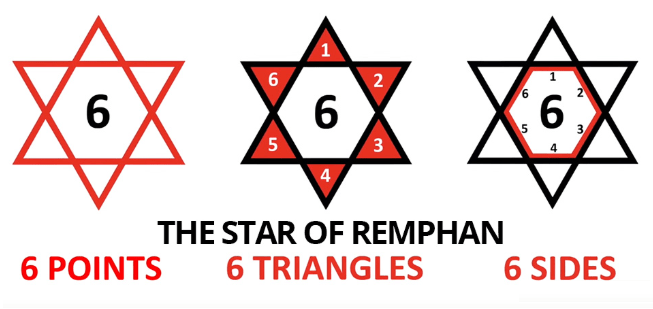







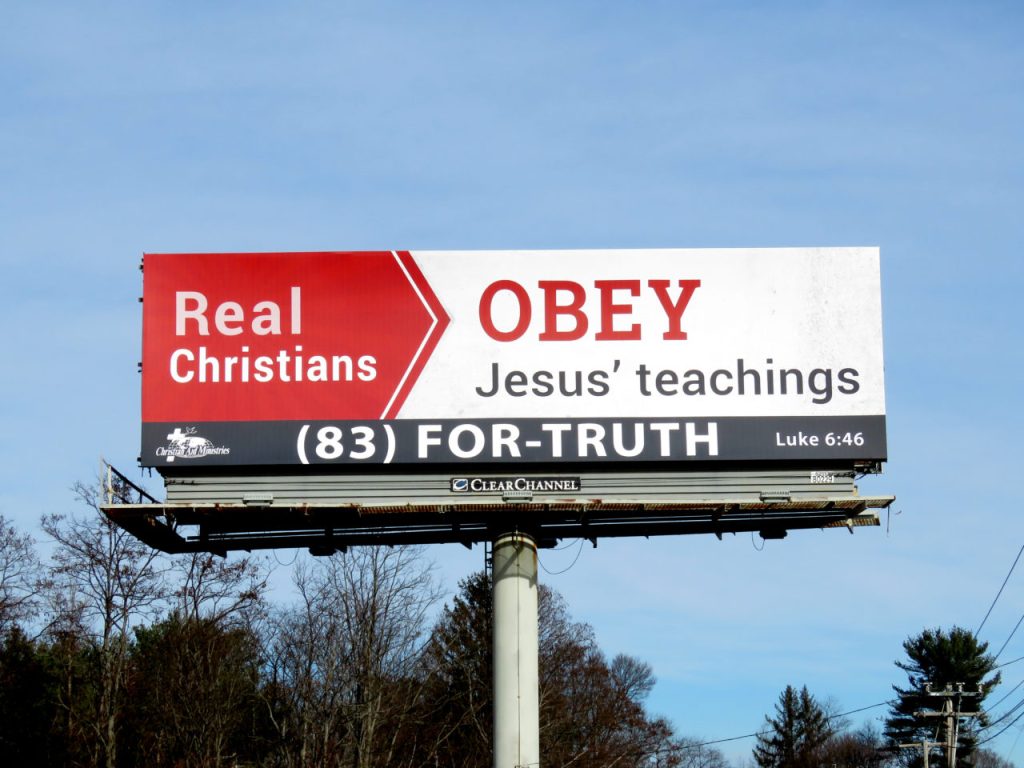






 Irregular Ideation