“You’re Thirty Years Old Living In Milton”

Standard

The quote in title, an unintentionally honest comment from a pious young woman, will continue to ring in my ears for decades to come. Scripture describes the word of God being “sharper than any two-edged sword,” but her romantic rejection came more like a hammer blow to my Mennonite worldview where spiritual was supposed to outweigh physical gain. I had patterned my life, up to that point, around a sort of practicality over flash and suddenly realized what I thought was an asset was actually liability.

I was reminded of these words again as my wife’s glowing approval of the monstrosity in my driveway, a Ford Explorer ST, still feels out of place for me. I mean, granted, I was not keen on transitioning to family life with a pedestrian option like a minivan or boring SUV. But I didn’t expect my always frugal—cost conscious—female counterpart to go along with it 100%. She was supposed to pump the brakes and did not. I’ve realized, in this, that every woman is happy with the nice things and won’t say no if you provide it for them. We’ve both agreed to blame the baby for our reckless financial decision.

So, back to Milton, a place I’ve since moved on from and to the higher cost town across the river. Up until the words from the mouth of this wholesome girl, I had thought having a little house completely paid off would be worth something—even attractive. After all she claimed to be interested in missionary service and what better place to get a start, right? From what I had believed, there are needs anywhere there are people and where better to start than a deteriorating industrial town? Milton is an example of the rust belt, a place of declining opportunities and costs of outsourcing production.

The phrase “you’re thirty years old living in Milton” was simply accurate conveyance of her underlying priorities. There’s always the difference between what we say we are and the actual truth. Even in the secular culture there’s a romanticization of the love of two impoverished people who stand together in desperate circumstances. And those raised in an environment where Christian mission is supposed to be first, living as one poor as a church mouse amongst common people would seem the ideal.

But it is not. No, this young woman, like the one who had rejected me for not pursuing a title of “missionary” or “pastor” years prior, was clearly after status. They will not say it outright, probably are not even aware, but it is a kind of glamour they seek in service. A call to some exotic location to impress their religious peers. Sure, a Bentley may not be status in a conservative Anabaptist church, but the ability to jet around the world (often on someone else’s dime) is thrilling where it is considered sacrifice. It is currency, a way to gain status in a community of faith or be seen as righteous.

Resources are showered on the ministry or mission. Sure, it comes with stress, my 9-5 does as well, but the payoff is proportional. And not talking about “treasures in heaven” or God’s favor. A pastor has access to the community resources. It is social power as much as it is a position of responsibility and there are always those who want to curry a little favor. Again, it also comes with more scrutiny as well, but most tend to minimize the costs when they set off in a particular direction. Besides that, for the Mennonite woman, this is for the broad shoulders of her husband to bear, right?

The high expectations of my wife have been a little surprising to me. To her credit, she has been putting up with a partly finished remodel of old house since marrying and moving in. But yet, despite coming from the Philippines, her standards are now close to that of an American woman. We comment about our son’s demands for what the other kids have, but often fail the test ourselves. I mean, is it at all coincidence that I decide to finally pull the trigger on a new vehicle after a Mennonite workmate showed up with his new truck? Probably not.

And that’s the bottom line here. We are all after power in different forms. Be it money, be it land, access to resources or just status in our peer group. What I’ve found is that a religiously trained (or ‘spiritual’) person is no different. No, all they do is give a righteous cover to their personal ambition. They live in a delusion. Materialism is bad, they will say, but they are fine with your donation of money so they can buy a bigger missionary compound in Southeast Asia. And, under the fluff of my own pursuit of love was the same sexual motivation of all men.

I hated when a physiatrist summarized my obsession with the impossibility as being a “sexual attraction” and dismissed it initially as a woman who knew nothing of my heart as a man of God. But now I realized this is undoubtedly the correct assessment. Men want sexually attractive women and women want high status men. This is an essential part of our nature—a matter of survival for our genes—a young healthy woman is able to bear children and a wealthy or connected man can give them much more than a thirty year old living in Milton.

I’ve moved on from Milton, but cannot move on from the reality I have encountered head on, we’re sexual creatures living in material reality and can’t escape this by denial. I had been better to learn this decades ago rather than cling to a naive notion of love where it ends like a storybook. But I am now living the best life available to me and hope that my wife is happy with her decision. She’s won my heart asking for the “simple and happy life” and now I want to give her that and everything else wonderful this world offers. The best thing we gained was the child born almost a year ago now…

It’s never too late to live the life that you should—which is more about perspective than what you possess—even if you were denied love for being thirty years old and living in Milton.

What Thomas Sowell (and Libertarians) Get Wrong About Trump’s Tariffs

Standard

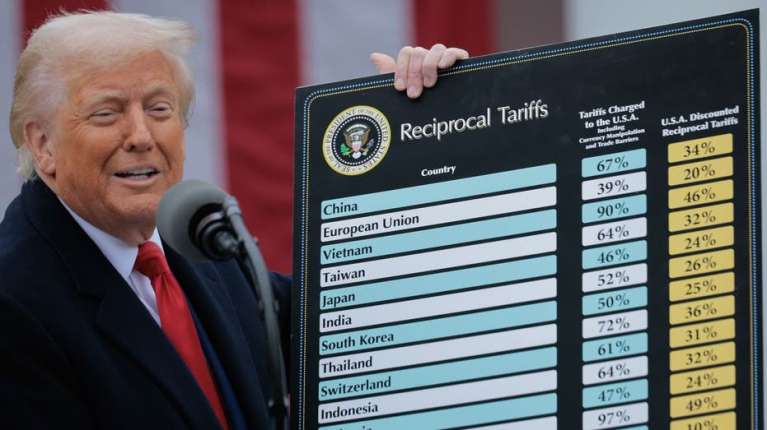
The point of Trump’s tariffs is to get rid of all tariffs.  I can feel the blank stares of my ideological and indoctrinated friends who are hyperventilating about a blip in stock prices and loses for billionaires.  

I get it, Libertarians, you really do not want the government to do anything and Thomas Sowell said stuff about tariffs being bad, so in unison you bleat: “Tariffs are taxes!”

But your sloganeering is not argumentation and—while I generally believe less is more in the case of government—I’m stuck here in the real world with Trump.

Economic theory has it’s place, as do ideals, and yet this isn’t a matter of Sowell said it, I believe it, that settles it.  

Marxists also believe their man’s theory will work if properly applied.  Ideological people can’t accept when their theory doesn’t work in reality, they will always insist “that wasn’t true [insert ideology here]” and continue on their merry way muttering that next time it will work—if they could just brainwash more children and eliminate more enemies of the revolution.  There’s never a reevaluation in light of the actual evidence.

True X hasn’t been tried.

So, without further ado, let’s dive into where free trade fails and Thomas Sowell after we do that…

Can Hell Be Made Worse?

After the devastating earthquake of 2010, I joined a group of young people on a trip to Haiti.  It was a Christian mission and hosted by a Haitian pastor.  This grandfatherly man had, at one point, been in business and ran a factory manufacturing clothes.  

While I’m not going to make a case against charity or giving, there is often a cost that is unseen and a greater dependency created in the end.  The Haitian pastor was forced to shutter his operation and lay off all of his employees after the combination of cheap imports and donations made it impossible to compete in the marketplace.

But the even sadder story was in a place in the country called “little Africa” where rice farmers tried to make ends meet.  No, they were never rich.  However, they had scraped a living out of cultivation up until Bill Clinton started to dump subsidized American rice on the Haitian market.  These people were desperate.  They mobbed our delivery of a bit of relief and aid.

I know, I know, this isn’t real free trade.  But it is the kind of situation we are in.  Putting our favorite theories and fandom aside, and ideals that could possibly work if all abided by the same rules or assumptions, we don’t live in that fantasy land.  In the real world, it is like Haiti where subsidized products are exported and some will disproportionately suffer consequences.  

Yes, in theory, Haiti still benefits, as a whole, from importing cheap or free stuff.  But we can also make the argument that this kind of unfair trade has undermined a situation that was already fragile.  A government that would protect Haitian industries would not let subsidized products be dumped without something stabilizing in return.

Thomas Sowell vs Donald Trump 

Sowell is a great economist and provides a good answer to ‘progressive’ theories.  His being a guest on the Rush Limbaugh show has made him a favorite of conservatives—wanting validation for their free market and small government views.

As an academic, Sowell’s work dealt mostly with economic theory and to argue against all tariffs he uses abstraction “protectionism hurts market efficiency” and that they don’t solve issues like wealth gap, that they favor special interests, and retaliation against tariffs hurts exports, and they lead to long-term stagnation.  And he may be right if we lived in a vacuum sealed petri dish.

Trump, by contrast, lives in the very messy world of politics and negotiations.  He runs on instincts and intuition, not by intellectual exercises or writing papers or creating a set of principles.  He comes in with the big ask, the threat or the bluff, trying to disrupt and even create a bit of anxiety in the other side, before eventually bringing this process to a resolution that makes all parties leave with a feeling like they’ve won.

This is how we got from the “fire and fury” rhetoric—with the political class and corporate media hyperventilating about this being a path to war—to Trump being the first US President to set foot in North Korea and then shaking hand of Kim Jong Un.  It is just his method of changing the conversation or moving the Overton window.  You can’t get from point A to point B without shaking up the old status quo a bit.

Trump isn’t ideological, like Sowell, or trying to live off a written in stone economic code of conduct.  No, when he has leverage, or sees an opportunity, he uses it.  There are many countries tariffing US goods.  And our trade deficit is enormous.  So why is it so out of line for our President to cry foul or use the threat of reciprocal tariffs in other to back these countries down and then get a better deal for his country?

Surely Sowell isn’t against pushing for the elimination of tariffs—which likely is the end game.  And, furthermore, Trump’s brazen actions are far more likely to get results than the fine professor’s best lecture on economics.  Already other countries are lining up to start talks about removing their unfair tariffs against the US.  It is a game of musical chairs and you don’t want to be the last one looking for a seat.

Power, Principles, and Persuasion 

Marxism is about the application of power, Libertarians are about strict adherence to a set of principles, but Trump is different.  He is about persuasion.

Marxism is a hammer—raw power of the mob, trying to smashing the old order to hand control to the workers, or so it claims. In reality, it’s a machine for centralization: seize the levers, dictate terms, and dress it up as justice. Think Soviet bread lines or Mao’s famines—equality morphing into control. Libertarians, by contrast, wield a rulebook, not a fist. Their creed—liberty, markets, entirely hands off—is sacred, rigid as stone. Tariffs? Sacrilege. Sowell represents this.  Marxism a power grab, and libertarianism a fortress of unattainable ideals—both are better to be left as theory rather than an approach to real world negotiations.

Marxism would’ve sparked a trade war, not talks; libertarianism would’ve let markets bleed out. Trump’s different—he’s making countries dance. China grumbles but hints at softening; the EU’s haggling too. Stocks have dipped, and Sowell’s costs loom, but the moves are now undeniable: Vietnam’s concessions, India’s play, Japan’s hustle. It’s not a system winning—it’s Trump, raw and loud, proving persuasion trumps power or principle. He’s bending the world his way, one bluff at a time.  He is about persuasion—messy, unscripted, a vibe that bends the room.  

Tariffs are the threat, but trade that is truly free and fair is the actual goal.  And Trump is further along in achieving this simply for his boldness alone.  Maybe he’s not doing it the ‘right’ way or by conventional means, yet who says that we can’t try a new approach to get some better results than we’ve been getting?  The people who have been leaving the American worker behind tot decades now?  As my 13-year-old son would say: Let him cook!

Morality as a Fluid Mess: Conditioning, Conflict, and the Mirage of Universality

Standard

We cling to morality like it’s a lighthouse in the fog—steady, universal, guiding us home. But it’s a lie. It’s a battered flag, flapping in whatever wind our tribe’s blowing, stitched from the yarns we’re spun by family, faith, or flag. Raised Mennonite, I drank in peace and love for the outsider as if they were carved in my bones—until I saw they weren’t. Nature doesn’t whisper “thou shalt not kill”; it shrugs while we slit throats or swipe bread when the need hits. History’s littered with it: Biblical Israel butchered Canaanites—whole towns, babies dashed on rocks—‘cause God handed them the deed (Deuteronomy 7:1-2), and the faithful sang psalms over the ashes. 

Fast-forward to 2025: Israel pounds Gaza, kids buried in rubble, and the justification’s “security”—Hamas tunnels, rockets, survival. Insiders nod; it’s moral, necessary. Morality’s no fixed star—it’s a mirror, reflecting who we’re with and what we want.Look around today, and it’s the same mess. Russia rolls tanks into Ukraine, March 2025 still grinding on, flattening Mariupol redux—schools, hospitals, grandmas in the crosshairs. Putin’s line: “denazification,” protecting Russian speakers, historical destiny. His people buy it, or enough do—state TV’s been marinating them in it for years. The West screams “war crimes!”—sanctions pile up, Zelensky’s a saint on X—but that’s the outsider’s perch. Kyiv’s got its own blood on the slate: shelling Donbas for a decade, shrugging at Russian-speaking dead. Both sides sanctify their kills; morality bends to the banner. Or take the U.S.: Trump loyalists storm Capitol Hill in ‘21, “stolen election!” on their lips, while Biden’s crew locks ‘em up, crowing “democracy!” Same act—violence for a cause—flips from treason to justice depending on the lens. It’s not universal; it’s us-versus-them, conditioned to the core.

Look around today, and it’s the same mess. Russia rolls tanks into Ukraine, March 2025 still grinding on, flattening Mariupol redux—schools, hospitals, grandmas in the crosshairs. Putin’s line: “denazification,” protecting Russian speakers, historical destiny. His people buy it, or enough do—state TV’s been marinating them in it for years. The West screams “war crimes!”—sanctions pile up, Zelensky’s a saint on X—but that’s the outsider’s perch. Kyiv’s got its own blood on the slate: shelling Donbas for a decade, shrugging at Russian-speaking dead. Both sides sanctify their kills; morality bends to the banner. Or take the U.S.: Trump loyalists storm Capitol Hill in ‘21, “stolen election!” on their lips, while Biden’s crew locks ‘em up, crowing “democracy!” Same act—violence for a cause—flips from treason to justice depending on the lens. It’s not universal; it’s us-versus-them, conditioned to the core.

Objections bubble up like clockwork. The optimists—call ‘em Pinker’s crowd (2011)—say genocide’s revulsion proves we’ve got a moral spine, empathy baked in from caveman days. Hunter-gatherers shared meat, Confucius preached kindness—see, we’re wired for good! But that’s a half-truth, and a flimsy one. Those old tribes cared for their own; strangers got the club. Same with today’s wars: Ukraine’s defenders weep for Bucha’s mass graves but gloss over their own artillery sins. Israel’s critics howl at Gaza’s death toll—over 40,000 by late 2024, per UN counts—yet Hamas rockets barely dent their outrage. Why? Fundamental attribution error: outsiders slap “evil” on the doer—Russia’s a monster, Israel’s a bully—while ignoring the stew they’re boiling in: encirclement fears, decades of tit-for-tat bombs. Insiders don’t see villainy; they see survival, righteousness, their conditioning kicking in. Evolution’s no saint—it’ll cheer cooperation or carnage, whichever keeps the clan breathing.

Objections bubble up like clockwork. The optimists—call ‘em Pinker’s crowd (2011)—say genocide’s revulsion proves we’ve got a moral spine, empathy baked in from caveman days. Hunter-gatherers shared meat, Confucius preached kindness—see, we’re wired for good! But that’s a half-truth, and a flimsy one. Those old tribes cared for their own; strangers got the club. Same with today’s wars: Ukraine’s defenders weep for Bucha’s mass graves but gloss over their own artillery sins. Israel’s critics howl at Gaza’s death toll—over 40,000 by late 2024, per UN counts—yet Hamas rockets barely dent their outrage. Why? Fundamental attribution error: outsiders slap “evil” on the doer—Russia’s a monster, Israel’s a bully—while ignoring the stew they’re boiling in: encirclement fears, decades of tit-for-tat bombs. Insiders don’t see villainy; they see survival, righteousness, their conditioning kicking in. Evolution’s no saint—it’ll cheer cooperation or carnage, whichever keeps the clan breathing.

Zoom out, and the pattern’s stark. Morality’s a tool, not a truth—always has been. Libertarians’ll shoot to guard their patch, Marxists’ll guillotine for the proletariat, U.S. elites’ll drone-strike weddings to keep oil flowing—all cloaked in principle, all serving their pack. Russia’s “special operation” is Ukraine’s genocide; Israel’s “self-defense” is Palestine’s ethnic cleansing. The outsider’s gasp—those viral X posts of Kyiv’s ruins or Rafah’s craters—ain’t proof of a moral bedrock; it’s just a rival script, misreading situation as sin. We’re not debating ethics to polish some eternal gem; we’re wrestling over whose story rules. Take the Houthi strikes in Yemen, 2025 heating up: U.S. bombs “terrorists,” Saudis cheer, while aid workers tally starved kids—same act, split morals. Conditioning calls the shots.

The rebuttal’s got one last kick: if morality’s so fluid, why bother refining it? They say it’s progress, not just haggling—reason taming our beastly side. But that’s wishful polish on a cracked hull. Ukraine’s Zelensky begs for NATO jets, Israel’s Netanyahu quotes scripture for settlers, Trumpers and progressives sling “fascist” like mud—reason’s just a megaphone for the tribe. Authenticity’s the only anchor: own the bias, ditch the sanctimonious dance. Russia’s generals don’t lose sleep over Bucha; Israel’s brass don’t flinch at Gaza’s toll—they’ve got their why, and it’s enough. Outsiders clutch pearls—#WarCrimes trending—because they’re not in the fight. Morality’s a fluid mess, shifting with the players, not a lighthouse. Stop pretending it’s more.

Stepping back from the fray—whether it’s Putin’s moves in Ukraine or Hamas’s salvos from Gaza—offers an authenticity that sidesteps the knee-jerk noise and stares down our own fundamental attribution error. Take Putin: some tag him as a ruthless tyrant, others see a strategist pushing back—NATO’s ring of bases and war games from Poland to the Baltics isn’t exactly a welcome mat, but Russia’s leveling cities isn’t a handshake either. Hamas gets the same split: outsiders call them terrorists, yet in Gaza—two million penned in, scrappy and stubborn—they’re fighting a chokehold, though rockets don’t win halos. My Mennonite roots nudge me to judge NATO’s chest-thumping ‘values’ or Hamas’s bloodshed, but I’ve got my own baggage—my folks kept the world at arm’s length too, just with hymns, not guns. Seeing that, owning how my lens twists the view, points a pragmatic way forward: not crowning heroes or villains, but cutting through the sanctimony—NATO’s not spotless, Gazans aren’t pawns, and I’m no referee, just a guy sorting his own slant in the mess.

The People Want a King, Part II: The Idolatry of the State and the Call to Self-Rule

Standard

A decade ago, in “The People Want a King, Part I,” I wrestled with the ancient cry of Israel—“Give us a king!”—from 1 Samuel 8, seeing in it a mirror to our own craving for centralized power. I cast Trump, then a looming figure on the horizon, as a Saul-like pretender—brash, self-absorbed, a king unfit for the throne. The heart of man, I argued, is frail and fearful, ever eager to trade liberty for the illusion of security. Now, ten years on, we revisit that cry, turning the lens inward and upward: what happens when the king we demand becomes a god we worship? And what might it mean to cast down that idol and govern ourselves under a higher law—one that admits no rival?

Let us begin with a heresy: government is not sacred. It is not a divine institution bestowed from on high, nor are its stewards a priestly caste anointed with heavenly oil. Scripture offers no such mandate. The state is a human construct—a tool, a mechanism, a servant of necessity. It is not the ekklesia, the called-out assembly of God’s people, nor the Kingdom of Heaven breaking through the veil. It is, at its core, a business: a transactional entity exchanging services for tribute. When it ceases to serve—when it grows fat and lazy, a Blockbuster Video in a Netflix world—it deserves no reverence, only replacement. To treat it otherwise is to fashion a golden calf from the scraps of bureaucracy.

Yet the cry persists: “The nation is too complex for such simplicity!” I encountered this objection recently, a rebuttal to my call for radical restructuring. The argument, draped in the garb of sophistication, insists that governance transcends mere commerce—that its intricacies demand a permanence beyond critique. This is a shade thrown at those, like the DOGE reformers, who dare to wield the axe of efficiency against the overgrowth of empire. It is a plea for the status quo, cloaked as concern for “public trust.” But trust in whom? The regime that has ruled longer than memory, entwined with corporate titans and special interests, bleeding the commons dry? The trust was shattered long before any billionaire CEO took the helm; it crumbled under tax rates that plunder and wars that pulverize the defiant.

Here lies the theological crux: complexity is not a virtue—it is a veil. In 1 Samuel 8, Samuel warned Israel that their king would take and take—sons, daughters, fields, flocks—until they were slaves in all but name. The modern state has fulfilled this prophecy with chilling fidelity, its mission creep a slow idolatry. What begins as a servant becomes a lord; what promises order delivers oppression. The labyrinthine bills, the thousand-page tomes of legislation—these are not signs of wisdom but of deceit, a Sanhedrin of scribes hiding corruption behind the law’s letter. To call this sacred is to confuse the Temple with the moneychangers’ tables.

Government as business is no mere metaphor—it is a functional truth. It trades protection and infrastructure for our coin and consent, a covenant not unlike the marketplace. Yet unlike the agora, where competition hones the blade of excellence, the state resists renewal. Private enterprise, for all its flaws, bends to the will of the consumer: Sears falls, Amazon rises. Governance, enthroned as monopoly, calcifies. Its priests—elected or appointed—crown themselves with divine right, decrying reform as sacrilege, a “threat to democracy.” But democracy is not their god; power is. And power, unchecked, builds altars to itself.

This is the sin of the political establishment: they have conflated the nation with their institution, the people with their rule. The nation is not the state, nor the state the nation—just as Israel was not its kings, nor its kings Israel. Government should reflect the imago Dei in its people, a stewardship of justice and flourishing. Instead, it mirrors Baal, demanding sacrifice from the many for the feast of the few. How is this sustained? Through a catechism of control—children reciting pledges, citizens taught to venerate the machine as eternal. To question it is to court excommunication.

Yet Scripture beckons us elsewhere. The restoration of governance requires a return to first principles: simplicity as clarity, transparency as righteousness, accessibility as the leveling of pride. The state’s convolution is no accident—it is a shroud for sin, a “you wouldn’t understand” that echoes the serpent’s whisper. To dismantle it is not anarchy but exorcism, a stripping back to the studs to expose what festers. The old guard, like Saul clinging to his throne, shriek at the loss of their sacred monopoly. But their divinity is a lie, and their temple must fall.

The Stagnation of the External, the Promise of the Internal

Consider the contrast: a business that squanders its capital dies; a government that squanders ours endures. This is the curse of external governance—its inertia defies the natural law of adaptation. Were it subject to the crucible of choice, only the fittest form would stand. Instead, it grows sclerotic, a Leviathan too holy to slay. And the people, seduced by its permanence, make it their idol. They crave a king to think for them, a mediator to absolve their agency. Politicians—prostitutes of the soul—oblige, peddling promises they half-believe, deluded into messiahs of their own making. Zelensky’s advisors call him mad with grandeur; Washington’s geriatrics are no different, mistaking their tenure for providence.

This is not governance but bondage, a learned helplessness masquerading as piety. The privately employed know their limits—life persists beyond their shift. But the state’s acolytes preach indispensability, as if only they can wield the scepter. Contrast this with self-governance: a people ruled not by fleshly lords but by principle, by the law written on their hearts. Jeremiah 31:33 whispers of such a day; Hebrews 8 seals it in Christ’s blood. At the civic level, this need not mean chaos but discernment—shuffling roles, pruning branches, trusting that micromanagement by fools yields only thorns.

Why, then, the sanctity of the status quo? It is the coward’s theology: easier to bow to mystery than to wrestle truth. As Israel preferred a king to the uncertainty of judges, so we prefer bureaucracy to responsibility. Samuel’s warning rings anew: the king takes, and we cry too late. External governance is not our salvation—it is our stagnation, a false god promising safety while forging fetters.

The Myth and Monuments of the Federal Cult

To cement this idolatry, the Federal government has woven a mythology and erected monuments rivaling the temples of old. Consider the Capitol, that domed sanctum of marble and myth, its steps ascending like an altar to a civic deity. The Lincoln Memorial, a brooding Parthenon, gazes over a reflecting pool as if to baptize the nation in its own reverence. These are not mere buildings—they are shrines, designed to awe, to whisper: “This is eternal, this is beyond you.” Like the ziggurats of Babylon or the temples of Rome, they fuse power with divinity, demanding obeisance from the pilgrim and the peasant alike. The Founding Fathers, recast as demigods, stare down from friezes and statues, their words carved into stone as if they were Moses descending Sinai. Big Brother is not God—yet here he looms, a surveillance state cloaked as savior, its all-seeing eye promising protection while its fist tightens the leash.

This cultic architecture is no accident—it sells the lie that the state is sacrosanct, its form immutable. The pledge of allegiance, recited by schoolchildren, is a liturgy; the flag, a totem; the Constitution, a holy writ too sacred to amend save by the high priests of amendment. Yet this is a sleight of hand. The Constitution, for all its brilliance, is a human document, not a divine oracle—its framers knew it, urging vigilance against its abuse. The Federal cult inverts this, turning a tool into a god, a means into an end. As the temples of Baal housed idols to blind the masses, so these monuments obscure the state’s frailty, its susceptibility to rot.

Enter January 6th, 2021—a day branded as a desecration, a violation of the “sacred ground” of democracy. The narrative drips with priestly indignation: rioters stormed the Capitol, profaned its halls, threatened the holy order. Politicians clutched their vestments, decrying the “insurrection” as an assault on the nation’s soul. But let us parse this claim with a smirk—how many have died at the hands of this government, overseas and at home, in the name of “protecting democracy”? Millions, if you tally the wars and drones, yet the single death of that day gets the sackcloth and ashes. If the Capitol is sacred, what makes it so? Not its service to the people—its corridors have long echoed with the clink of corporate coin and the murmur of self-interest. Not its fidelity to justice—its laws have sanctioned plunder at home and terror abroad, not least against Argentina, whose people still bear the scars of U.S.-backed meddling and economic strangulation. The sanctity, then, is a projection, a mythos guarding the idol. January 6th was chaos, yes—ugly, reckless, and lawless—but to call it a sacrilege assumes the temple was holy to begin with. It wasn’t. It was a house of power, not of God.

The true violation predates that day: the slow consecration of a bureaucracy into a deity, the elevation of marble over morality. Ancient temples hid their emptiness behind splendor; the Federal cult does the same, crying “blasphemy” when the curtain is pulled. January 6th didn’t defile a sacred space—it exposed a hollow one, a monument to a king the people demanded but never needed. And here’s where Argentina’s President Javier Milei enters, grinning like a Cheshire cat as he handed Elon Musk a chainsaw in 2025, etched with “Viva la libertad, carajo” (“Long live liberty, damn it”). Milei, who’s taken his own chainsaw to Argentina’s bloated state, wasn’t just gifting Musk a tool for bureaucracy—he was practically dancing with glee to see Musk turn it on the U.S. regime that’s bullied his nation for decades, from IMF debt traps to covert coups. It’s less a symbol of shared efficiency and more a middle finger to the empire, wrapped in a libertarian bow.

Trump’s Mandate and the Singular King

So where does Donald Trump fit in this unholy pantheon? In Part I, I cast him as a flawed Saul—brash, impulsive, a king more enamored with his own mirror than his people’s good. I stand corrected, or at least refined. Trump is no savior, nor should he be—Christians have but one King, enthroned above all earthly powers (Colossians 1:16-17). Yet he wields a mandate, both legal and theological, to tear down these idols, and therein lies his purpose—not as messiah, but as iconoclast.

Legally, Trump’s authority stems from the Constitution itself—a document that vests executive power in a president elected by the people (Article II, Section 1). His 2024 victory, a roar against the entrenched cult, grants him the democratic right to wield that power against inefficiency and corruption. The Federal government, swollen beyond its constitutional bounds, has no divine charter to resist pruning. The framers envisioned a lean state, not a Leviathan; Trump’s DOGE-inspired axe—however blunt—aligns with that original intent. He can shutter departments, slash budgets, and fire the high priests of waste, all within the law’s letter. The shrieks of “threat to democracy” from the old guard are the death rattles of a dethroned idol, not a defense of principle.

Theologically, his warrant runs deeper. Scripture abhors idolatry—Exodus 20:4-5 commands no graven images, no bowing to crafted gods. The Federal cult, with its temples and myths, is precisely that: a false deity usurping allegiance owed to Christ alone. When Jesus declared, “Render to Caesar what is Caesar’s, and to God what is God’s” (Matthew 22:21), He drew a line—Caesar gets coins, not worship. Trump, for all his bombast, serves as a wrecking ball to this blasphemy. He need not be pious to smash Baal’s altars; Gideon was a coward before he toppled the poles (Judges 6:27). If Trump’s tenure exposes the state’s hollow sanctimony—January 6th as symptom, not sin—then he fulfills a divine irony: a flawed vessel breaking a greater folly.

Yet here’s the correction to my 2015 take: Trump is not the point. I overstated his flaws as disqualifying, missing the forest for the trees. He’s no king to crown—Christians must reject all earthly thrones save one. “My kingdom is not of this world,” Christ said (John 18:36), and Paul echoed, “Our citizenship is in heaven” (Philippians 3:20). Trump’s role is transient—permitted, not ordained—to dismantle a false god, not to replace it. The Christian’s allegiance lies with the King of Kings, whose rule brooks no rival, be it Trump, Biden, or the marble gods of DC. Self-governance, then, is not just civic—it’s spiritual, a refusal to outsource our souls to any throne but His.

The Eschatological Hope

The people want a king, but the King we need refuses a throne of stone. To cling to the state as sacred is to repeat Israel’s folly, to trade the Spirit’s freedom for Saul’s spear. Self-governance is not utopia—it is obedience to a higher call, a shedding of idols for the stewardship God demands. Complexity is a liar’s refuge; trust is a martyr of our making. Let Trump tear down the temples—legally, he can; theologically, he should—but let us not crown him in their place. Overturn the tables, tear the veil, and build anew—not a kingdom of men, but a commonwealth of the free, under no crown but His.

Love Is Patriarchal

Standard

As I ponder my responsibilities, bringing a daughter into this world, my patriarchal protection is a given.

The West has been so successful at privileging women that many women do not comprehend the risks of true equal treatment. Feminism is only possible as a part of the patriarchal duty that men feel to protect women. What it amounts to is using male power to enforce standards that are friendly to women, that allow them to walk freely in the street in all manner of dress (or undress), and ignore the reality of what has existed outside the walls of patriarchalism.

Even the idea that sexual assault is a bad thing is an extension of patriarchalism where natural desire must be restrained by structures created by men. A buck in the rut doesn’t ask permission. Hormones direct it’s behavior and only the bigger male can ward off the advances it will make on a doe. It is a hierarchy that is built only on strength. Moral conscience is built off the idea that there’s a big man up there who cares about property rights; who says that a body belongs to someone and is therefore not ours for the taking simply because we desire it.

Yes, eventually this evolved into an idea of everyone owning themselves that we now assume is simply the universal truth. However, nothing in the animal kingdom suggests this is the case. The real world is often a brutal and unforgiving place. When a new group of male lions takes over a pride they will kill the cubs of the previous males. And human morality developed in a very similar manner. This was the default, whether the Psalmist’s fantasy about bashing the heads of an enemy’s infants against rocks or the book of Deuteronomy giving some rules for the treatment of war brides:

When you go to war against your enemies and the Lord your God hands them over to you and you take some of them prisoner, and if you see a beautiful woman among the captives, desire her, and want to take her as your wife, you are to bring her into your house. She is to shave her head, trim her nails, remove the clothes she was wearing when she was taken prisoner, live in your house, and mourn for her father and mother a full month. After that, you may have sexual relations with her and be her husband, and she will be your wife. Then if you are not satisfied with her, you are to let her go where she wants, but you must not sell her or treat her as merchandise, because you have humiliated her.

Deuteronomy 21:10-14

To our modern ears, this is horrendous. There is no asking for permission. And, other than saying to wait a month, the men were free to rape their captive females. But the reality is that this was a radical step in the direction of protecting women from physical violation. One hopes that this delay would’ve ensured a more compassionate and gentle approach rather than some blood-soaked orgy during the heat of battle and immediately after her male relatives were slaughtered. As grotesque as this seems, it was better for her to belong to one man (with some rights after he rejects her) than to be passed around as a mere sex object in the manner of a Japanese comfort woman:

CLAVERIA: (Through interpreter) A Japanese soldier got his bayonet and started peeling my father’s skin while saying, tell us the truth – your child is part of the guerrillas with the owners of that empty house.

MCCARTHY: As Claveria pleaded to let her father go, a soldier wrenched her arm. Birdlike, petite, Claveria strokes a badly set bone as she picks up the story of how she followed her mother’s screams up the stairs.

CLAVERIA: (Through interpreter) I saw my mother lying down with her skirt up, and there was a Japanese soldier on top of her. I ran. My two youngest siblings took little sticks and started hitting the soldiers. The Japanese soldiers then snatched away the sticks and bayoneted both of them.

MCCARTHY: They died. Claveria believes her parents were killed when the village was torched. Japanese soldiers hauled away two older sisters to a garrison and took Claveria to an infirmary for her injured arm. She does not recall how long she was there recovering, but she remembers a soldier named Terasaki. One day, he told Claveria she smelled, but she refused to take a bath, saying she had no change of clothes. Ordering her to wash, she says he gave her a uniform to put on.

CLAVERIA: (Through interpreter) I was to be taken to the garrison where my two sisters were. Before we reached the garrison, he raped me. I thought that I was going to die because I was in so much pain.

MCCARTHY: Terasaki would be the first of many Japanese soldiers to sexually assault Claveria, who was not even a teenager at the time. She was 12. She said her sister Meteria had been driven half mad by the trauma she’d experienced at the garrison. Claveria was shocked when she caught sight of her there.

CLAVERIA: (Through interpreter) She was burned with cigarette butts and boiled sweet potatoes. When one soldier after the next raped her, she put up a fight, but my sister was not brave. She refused because she was in so much agony from all the abuse.

MCCARTHY: Claveria believes her other kidnapped sister was moved to a different garrison. She was never seen again. Historians have estimated that at least 200,000 women were forced into sexual servitude during World War II, mostly in areas occupied by Japan, prominently Korea. The women were euphemistically called comfort women, and the organized system of comfort stations to supply soldiers sexual gratification ran from Seoul to Singapore. Writer Evelina Galang has documented women captured in the Philippines.

EVELINA GALANG: And these are women as young as 16 years old – really, some of them 8, 10 years old. In the Philippines, historians estimate that there were probably about a thousand women and girls taken and put into military sex slave camps.

Men can be monsters. Worse than animals. And, in many parts of the world, immodest dress is taken to be a sign she wants it. Morality does not hold back the aggression of the rapist. No, rather it is the role of other men to restrain evil. Women are protected by their fathers, by their husbands, and by institutions that represent these men. Political structures were created by men and are defended by men. Yes, even if women were granted the right to participate. E.g. even if Kamala Harris takes the patriarchal role—she is still acting in a patriarchal manner and will need the strength of men to impose her will.

There will not be a feminist left in Europe if Islamists take over. That is not to bash Islam or say they would kill off all women who did not submit. No, it is to say that feminism cannot exist outside of the Christian West. The notion of individual rights, that people can independently make their own decisions, cannot exist only on paper or it is impotent. It requires men willing to sacrifice themselves to preserve this egalitarian ideal for their wives and children. Self-sacrificial love is not natural nor a priority in every religious patriarchal structure. Feminists cannot exist in Islam because only the respect of patriarchal institutions gives them power.

The alternative to the current patriarchy is not the absence of patriarchy, men (or those who act like men) will always rule, but the real choice is what manner of rule we wish to live under. It really is survival of the fittest outside of the walls of civilization. Chants of “down with the patriarchy” are about as meaningless as shaking your fist at the wind. It misunderstands the world. It assumes that nature will simply obey our voice because we’re angry and believe rights can exist outside of the structures that guaranteed them for us. It is only in the absence of rule by men who care about more than their own sexual gratification that the value of this benevolent form of patriarchy is known.

Sight, Sources, Statistics and Science

Standard

Social media provocateurs love to push popular controversies to generate clicks on their sites and get those heated comments sections.  The question about the gender of two boxers in the female category of the competition was that perfect story.  It was not straight up or settled, but generated a lot of strong opinions on both sides.

For myself, it is fairly evident that these two boxers do have a competitive advantage or they would not have won in their respective divisions.  I mean, that’s not even a matter of dispute.  An advantage is how anyone wins an athletic contest and it doesn’t mean they cheated.  However, when not only one but two people with the same extremely rare and potentially enhanced condition—both get the gold?  What are the odds?

Only one out of 500,000 people in the world go to the Olympics.  But, of course, nothing is ever that simple.  Those who live in small countries, like Algeria or Taiwan, have a far greater chance of representing their home countries simply because there are fewer people to fill the same spots.  And then not everyone in the world is competing to be in the Olympics.  Most of us don’t try out.  It is sort of like my being sixth while wrestling in the Eastern National AAUs—many superior to me simply didn’t make the trip.

But to go to Paris and beat everyone?  There is a reason why we give precious medals to those who do.  It is one thing to be that PhD who identified as a breakdancer and ended up scoring zero, it is quite another to get on the podium.  There were 124 boxers in the female category, divided into six different weight classes, and went through three qualification tournaments.  This is certainly not an easy road.  The champion is one out of every woman in the world who can make that weight and is into boxing.

There is speculation that those two boxers who had been disqualified from IBA fights due to failed gender tests—and masculine appearance—is they may have a disorder called Swyer syndrome.  This isn’t a fact, but it would explain why they would have been declared women at birth and always identified as women.  Those with this very rare condition have a male Y chromosome despite their female sexual hardware and offer no male advantage.  

However, it is also possible that the two have Androgen Insensitivity Syndrome, which impacts 2-5 out of 100,000 females, which means they would have characteristics of a female outwardly but also have male testes that are undescended.  Severe AIS wouldn’t confer an athletic advantage, according to the sources I’ve read, and yet that does not tell us anything about milder cases.  

Still, the conversation can’t end there, we have other possibilities:

Some press reports have mentioned 5alpha-reductase type 2 deficiency.  This rare syndrome is best reported in the Güevedoces in the Dominican Republic.  Affected XY individuals are apparently female at birth because they can’t activate sufficient testosterone to the much more potent dihydrotestosterone to masculine in utero and thus appear female (the default gender in the absence of masculinising hormones).  However, they have testes in what appear to be labia.  At puberty, the testes produce much more testosterone sufficient to activate receptors and masculinise the child.  Such subtleties are beyond the capacity of most regulatory bodies to accommodate.

The chances of two women with these rare chromosomal disorders somehow making it to the Olympics would be incredibly low.  For example, Swyer Syndrome is around 1 in 80,000 births.  So multiply those odds by the chances of getting to the Olympics and then take that times two.  The number is incredibly large.  There is a far greater chance of being struck by lightning.  If the XY chromosome is present in these two—along with higher testosterone levels—the fact they dominated the field, given what coaches have said, should be considered proof of a potential unfair advantage.

Sources Please Vs. What We See

Much of the smirking response of mid-wit “sources please” types—who simply went along with the ‘official’ International Olympic Committee (IOC) narrative—comes down to many of the slightly dimwitted “I see what I see” types misidentification of the issue as being about transgenderism.  When the real issue is whether or not these athletes have intersex characteristics and thus an unfair advantage in female competition.

Yes, the right is too reactionary.  However, not without cause, they know too well how the NCAA and corporate media denied that Lia Thomas had an unfair advantage as one born a man and still having a penis as well as the rest of a man’s hardware.  And they correctly see that these two Olympic boxing competitors have a masculine appearance.  They had incorrectly assumed that this was just another case of a man cheating his way to the top by pretending to be a woman.

However, that misunderstanding of some is being used as a strawman of the real issue, the real argument is source versus source.  Specifically, the fact that these two athletes were disqualified by the International Boxing Association (IBA) for having male XY chromosomes.  These laboratory tests took place in Turkey and India  So, despite the attempts, by bigots, to smear the IBA as being corrupt for ties to Russia.  But the reality is that no organization is totally without political ties and there’s a reason why the IOC has never banned the US for our military aggression around the world.

So it really comes down to who we want to believe.  The IOC rests its entire claim of gender, on legal documents, passports, and birth certificates, provided by the country of origin, and says this gender assignment makes the boxers women.  By contrast, the IBA cites biological science and test results and tells us these two ‘women’ have XY chromosomes.  Right off the bat, the criteria of the IBA are science and laboratories whereas the IOC is relying on political entities.  Should we follow the science or believe those appealing to non-scientific evidence?

At this point, the mid-wits completely lose the plot and rely on their confirmation bias rather than logical deduction.  They’ll simply refuse to acknowledge the obvious, that the official IOC criteria to determine eligibility is entirely inadequate for solving this riddle; that the IBA at least has what appears to be scientific evidence, and thus this is a question to be answered in the lab rather than the court of public opinion—so they double down on their insults trying to deflect from the real issue.

But, in the end, this isn’t about science, what we see, statistics, or sources.  No, it is about partisan politics that blind many somewhat intelligent adults to what even a child could see.  It exposes those “sources please” mid-wits as just another level of ignorance.  And social conservatives could help themselves a whole lot by not jumping the gun and not oversimplifying complex issues.  Both sides are guilty of false dichotomies and believing misinformation.  Lastly, those who are suggesting that I-man Khelif is representative of Algerian femininity are guilty of the bigotry of low expectations.

Is Traditional Masculinity Toxic?

Standard

I’ve been extremely critical of abusive men in my blogs, taking on things like blame-shifting, patriarchal and purity cultures. Men who use their natural strengths or positions of authority to take advantage of others are reprehensible and should be called out for their abuses of power.

That all said, I’ve shied-away from using the term “toxic masculinity” to describe male abuses and my reasons for hesitation were confirmed in the past few weeks when the American Psychological Association (APA) claimed that traditional masculinity is harmful and lumped it together with murder, bullying and other toxic behaviors.

This is not an overgeneralization. No, it seems to be a part of broader misandry campaign and, at very least, is a complete misdiagnosis of the problem. It would be like pulling out crime statistics for a particular racial demographic and applying them as criticism to all within that group. That, of course, is stereotyping and unfair to the many who do not fit the broad brush of statistics.

It is true that men, as a category of gender, do dominate statistics for violent crime. However, what is not true is that all men are equally guilty and should be judged on the basis of the bad examples. The vast majority of men have not murdered, raped or otherwise act violently and would never excuse such behavior. I say this as someone who has been around men his entire life: Most men that I know aim to be protectors, not predators.

The Protector and the Predator…

A few weeks ago, before the APA taking aim at traditional masculinity (and an ill-advised Gillette ad) became a topic of conversation, I had started to write a blog to describe two distinct but related categories of male behavior—the predator vs. the protector—and what makes the difference.

The first category (and the one rightfully called toxic) is that of the predatory male. The predatory man is only concerned about his own wants or needs and will use any power he is given to exploit others for his own gain. This includes men who use religion or other means to manipulate others for their own personal gain and especially those who are coercive in pursuit of sexual gratification.

For example, the boyfriend who pressures his girlfriend into sex. I can understand, with teenage hormones raging, that waiting for sex is not easy for a passionate man and know this from personal experience. But there is simply no excuse for the young man who believes his natural urges entitle him. The young man who makes his commitment to relationship contingent on her compliance with his premarital sexual desires (ie: “If you love me, then you will…”) is a predator.

By contrast, the second category, the protective male, consists of men who use their strengths and abilities to serve others. This is not a man without desires. A protective man is tempted to serve his own needs and wants like anyone else. However, a protector is one who chooses to resist any evil or exploitative impulses and follows an example of self-sacrificial love instead. The protective man is even willing to give his own life for the good of others.

Traditional Masculinity Is Not Toxic…

As long as there have been appetites and differentials in power there have been abuses. Much of human behavior has to do with instincts, it is why we breathe, why we seek food to eat and why we desire companionship. This isn’t something that needs to be trained, we observe similar behavior in animals, and is natural.

There is no concern for morality with animals and in the natural world. When a lion, acting on predatory instincts, stalks, pursues and takes down it’s prey, this is not a cause for consternation. We understand that this and “survival of the fittest” is part of life and even how biological life thrives. If predators were removed, as they have found out in Yellowstone Park after wolves were reintroduced, everything in an ecosystem is thrown out of balance and deteriorates.

A young buck does not need any training to be overcome by hormones, to pursue a doe, fight off the competition, and do his thing whether the female consents or not. His sexual aggression is just part of his natural composition, it is not a choice, he is as controlled by his biological impulses as much as the female is subdued by his physical strength and stamina. We cannot make a moral judgment of a creature incapable of moral reasoning or choice.

However, human society works differently and notions of morality are used to push back against some of our baser instincts. Part of this push back has come in the form of tradition. In fact, our traditional morality, that arose in conjunction with religion, formed to provide protection against predatory behaviors. It is Christian religious tradition that has promoted the idea that behavior is a choice and therefore men, unlike deer, should be held accountable for what they do.

Traditional masculinity is not responsible for the toxic behavior of men who choose to act on their most vile and violent imaginations. Quite the opposite. It was the traditional men in my life who taught me to respect boundaries, to save sex for a marital commitment and to offer my life as a sacrifice to the world. It is traditional masculinity that has stood as a protector against predatory animals and opposed to toxic (or what we would traditionally call immoral) behavior.

With Every Strength There Is Weakness…

I would be remiss to claim that everything the APA says about masculinity is baseless. Men so tend towards certain and some of those behaviors are definitely harmful. However, it is one thing to say that men should not bury their emotions nor ever excuse behavior that is harmful to other people or even themselves. It is quite another thing to declare: “…traditional masculinity—marked by stoicism, competitiveness, dominance and aggression—is, on the whole, harmful.”

First of all, there is the question of what traditional masculinity is and if it is truly defined by stoicism, competitiveness, dominance, and aggression—I would argue that it is not. Second, those characteristics also are part of a two-sided coin, one side positive and the other negative, where stoicism becomes loving restraint, competitiveness is a drive to provide, dominance is an urge to explore (pursue science, innovation, etc) and aggression is merely assertiveness.

Not just that, but those things listed are not all bad in and of themselves. In an age where we are constantly told to embrace diversity, tolerance, and inclusion, on what basis can we declare something to be “on the whole” harmful?

I mean, what is really wrong with some friendly competition, say a game of basketball or a Poker (Rook, if you’re Mennonite) tournament, where everyone gets the exercise or thrill of the experience—despite there being a winner and a loser?

It is a sad day when we can’t discern the difference between a harmless playful tussle between boys and harmful bullying behavior. It is an even sadder day when the negative expressions of masculinity are used as a basis to bash the very thing that channels natural male qualities in a socially beneficial and positive direction. It is traditional masculinity that has long urged young men to use their physical strength and competitive nature to make the world a better place for all people and we have succeeded.

The inability of the APA to see traditional masculinity in a more nuanced and balanced way will likely do more much more harm than any good it accomplishes. It is, in effect, an attempt to bully young men, through quasi-intellectual means, into compliance with their own prejudiced worldview and expectations. They fail to see the good in their focus on the bad and have done a disservice, and not only to traditionally masculine men but also to their own profession and all people.

Everyone Is Hurt When Good Men Are Destroyed…

My conservative Mennonite father, the embodiment of traditional masculinity, gave me an example of a man who didn’t use his emotions as an excuse to lash out. This ‘stoicism’ was for the benefit of not only my mother, myself and my siblings, it was also for the men who worked with him. There are many men today who do not exercise this kind of restraint, they become screaming tyrants when things do not go their way and have neglected the tradition of my father, his fathers and our Father:

My dear brothers and sisters, take note of this: Everyone should be quick to listen, slow to speak and slow to become angry, because human anger does not produce the righteousness that God desires. […] Those who consider themselves religious and yet do not keep a tight rein on their tongues deceive themselves, and their religion is worthless. Religion that God our Father accepts as pure and faultless is this: to look after orphans and widows in their distress and to keep oneself from being polluted by the world. (James 1:19‭-‬20‭, ‬26‭-‬27 NIV)

The tragedy of this new targeting of traditional masculinity is exactly the opposite of what is needed in the world. It is the lack of traditionally masculine role models that has led to more toxic behavior in young men. It is not a coincidence that mass shooters come from fatherless homes. Indeed, fatherlessness is a more reliable predictor of future poverty than race and is linked to many negative outcomes for both male and female children.

The real crisis in this country is not traditional masculinity, the real crisis is the lack of traditional masculine role models that often leads to harmful and self-destructive behavior. The real truth is that traditional values have been under assault for a long time now and we are reaping a crop of toxic behavior as a result. But those who are responsible for this destruction, rather than admit their mistake, have decided to double-down and continue to punish the wrong people.

Traditional masculinity is to serve as a protector and provider, the man who looks after the widows and orphans, as James implores. It is the man who reads and obeys the instruction of John the Baptist to soldiers, in Luke 3:14—and doesn’t use his physical strength to extort or do violence to others. He is a man who follows after Jesus who treated women (including his mother) with absolute respect and told men to serve others rather than exploit them:

Jesus called them together and said, “You know that the rulers of the Gentiles Lord it over them, and their high officials exercise authority over them. Not so with you. Instead, whoever wants to become great among you must be your servant, and whoever wants to be first must be your slave—just as the Son of Man did not come to be served, but to serve, and to give his life as a ransom for many.” (Matthew 20:25‭-‬28 NIV)

To conflate toxic behavior with traditional masculinity is not only frustrating to the men who are least deserving of rebuke—it is also convenient cover for abusers and those truly guilty of toxic behavior. Good men do not need to become the scapegoats for predators, but rather need to be appreciated and encouraged to continue to live a healthy and traditional masculine example.

Toxic Behavior Need Not Be Coupled With Masculinity…

I had never liked the term “toxic masculinity” and long suspected that those behind the wording (not the average users of the term) were targeting masculinity itself as much as anything else. But now the cat is out of the bag, the APA and others are lumping my father in with the wolf-whistlers, womanizer’s and Weinstein’s, and I’ve had enough.

My father is not perfect, but he’s not toxic for his traditional masculinity either…

My father spending some toxically masculine time with his grandchildren…

We can and should distinguish between traditional masculinity and toxic behavior. No, that does not mean we bury our heads in the sand and pretend all problems with men started with the social upheaval of the 1960s nor should we deny the reality that extreme expressions of what could be called traditional masculinity are bad. But the extremes of anything are often unhealthy and yet we are able to delineate one from the other.

Furthermore, women can be predatory and violent too. It is true that men are statistically more likely, as a general category, to be violent, but women also can be self-centered and abusive as well. Women, however, often prey on children or other women, usually in less visible or openly violent ways—like destroying reputations through gossip, cyber-bullying or other passive-aggressive means.

And, ironically enough, while reading the sanctimonious blather about toxic masculinity another article popped up on my news feed, “Video shows group of women allegedly trying to attack food court employees…

What?!?

Do we call that toxic feminity and blame traditional female expectations?

Sorry Gillette, APA and all others condemning what you do not truly know, but your campaign is picking the wrong target. Traditional masculinity, at least in a Christian cultural context, has Jesus Christ as the ultimate example and not Bruce Willis.

Traditional masculinity is not the problem, immoral behavior is the problem and women are not guiltless when it comes to sin. We all, male or female, need to repent of our selfish instincts and change our bad behavior to good.

So let’s target the bad behavior, not the gender!

Assaults, Allegations and Justice For All

Standard

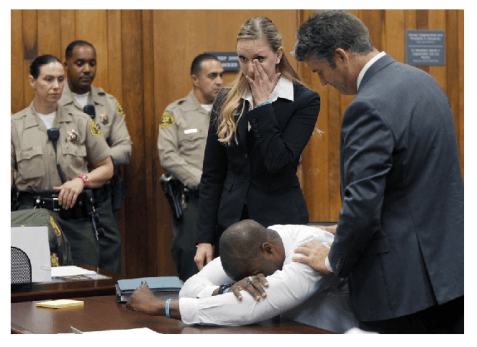
It was an open and shut case. A young woman reported that she had been drug into a stairwell at school and raped. The young man, seventeen, enters a guilty plea and is sentenced as an adult. He will serve five years behind bars, then five years of strict probation, and will need to register as a sex offender for the remainder of his life.

Justice served, right?

That’s the story of Brian Banks, a high school football star, accused of rape by his classmate, Wanetta Gibson, and threatened with forty years to life on the basis of her allegation. His legal counsel, despite Brian maintaining that he was innocent, feared a conviction and advised he go the route of a plea bargain—so that’s what the young man did.

He served his time. He had asked the California Innocence Project to take up his case, but they declined because there was a lack of evidence to prove his innocence. It seemed Brian would spend his entire life, denied opportunities, treated like a sexual predator, and unable to clear his name—all on the basis of her words. I mean who, besides his close friends and family, would believe him, that he had been falsely accused? Doesn’t every rapist claim to be innocent?

But then something extraordinary happened. His accuser, Wanetta, recanted her story (privately) and confessed that she had fabricated everything. Finally, Brian’s name was cleared. His accuser, who had won a 1.5 million dollar settlement against the school, was sued to recoup the money paided to her and has since failed to show for her court dates. Brian had a brief NFL career after this and is now an activist for those wrongly convinced.

The “only” who are falsely accused…

“The ruthless will vanish, the mockers will disappear, and all who have an eye for evil will be cut down— those who with a word make someone out to be guilty, who ensnare the defender in court and with false testimony deprive the innocent of justice.” (Isaiah 29:20‭-‬21 NIV)

There is an oft-repeated claim about the frequency of false accusations being “only” 2-10%. It is a number often used by those trying to downplay the possibility that a man is innocent.

But what is the basis for this number?

The number itself is an estimate. It is based on various studies, studies like one published in the Journal of Forensic Psychology from 2017, that compare numbers of claims deemed false or baseless after an investigation. They found that between the years 2006–2010, out of 87,000–90,000 accusations of rape a year, that around 4,400–5,100 of the reports were deemed false or baseless—that works out to roughly 5.55% of allegations being determined to be false.

However, what a study like that does not take into account is that some accusations of rape are entirely baseless despite an investigation that leads to a conviction. Brian’s case is a prime example, he was found guilty despite his innocence and only exonerated because the woman who accused him later recanted her tale. There could be many more men, convicted on the basis of a false accusation, who are never exonerated because their accuser never recants.

Brian’s story is extraordinary in that his accuser was caught in her lie. However, that’s not always the case. (Not to mention, he had already served five years.) There is really no way of knowing how many, convicted on the word of an accuser, may actually be innocent despite their entering a guilty plea and being convicted. So we really do not know how many accusations are false accusations based on convictions

But, more glaring than the possibility that the number of false accusations could be far higher, is the very reality that thousands of accusations per year are false.

That is, put another way, 4,400–5,100 lives (and potentially more) with their lives turned completely upside down by a false accusation. This could be your own father, brother, nephew or son. Thousands are accused, even imprisoned, and are actually completely innocent—that is an “only” that should slow us from rushing to judgment in the case of an allegation.

That said, not near all rapes and sexual assaults are reported.

“Speak up for those who cannot speak for themselves, for the rights of all who are destitute. Speak up and judge fairly; defend the rights of the poor and needy.” (Proverbs 31:8‭-‬9 NIV)

It is important, at this point, to note that there are many who are victims of crimes that were never reported. I personally know multiple cases of men and women who were sexually molested and/or raped and never reported the assault to authorities. They were abused by family members, grabbed in the groin by a coworker, raped by their boyfriend and there was no police report of the incidents. That too is a sad reality, a traumatic experience that many live with, that should not be ignored.

According to the Department of Justice, in a 2014 report, an estimated 34.8% incidents of sexual assaults are reported to authorities. That is to say that only 3 or 4 out of ten sexual assaults are ever properly investigated and adjudicated.

Now, that this is NOT to say that there is an equal number of rapists to those unreported incidents.

According to a report about repeat rape among “undetected” offenders, repeat rapists “average 5.8 rapes each” and thus the number of undetected rapists is only a fraction of the number of victims. In other words, only a small number of men account for the majority of the incidents and this is precisely why people should report criminal incidents—reporting in a timely manner will protect other people from repeat offenders.

It should come as no surprise, then, that someone who was raped would not report it at the time it happened. Likewise, it should not be a surprise that many rapists continue their life free of consequence for their actions. This is an unfortunate reality of the world we live in, it is the reason why we should always take allegations seriously even if they come out years and years after the assault is said to have happened. There are many unreported assaults, people come forward at different times for different reasons, and this is something to always be aware of in our analysis of reports.

We can (and should) take a clear stand against all forms of abuse.

There is a false choice out there. There are some who deny allegations on the basis of false reports. There are others who dismiss claims of innocence and downplay false allegations as insignificant on the basis of under-reporting statistics.

But we should not choose one or the other. It does the real victims of sexual assault no good to presume the guilt of a man simply on the basis of accusations. It also is wrong to side against an accuser because there are false accusations or they haven’t reported the event immediately after it happened.

We should never disregard an allegation off hand. We should never decide someone’s guilt or innocence by a mere claim or statistics. We can both take sexual abuse allegations seriously and also be reasonably skeptical of the accusations. When pressured to take the side of an accuser or the accused we should take neither side and take the side of justice instead. Every case is different. Every court is different. We must be wise.

Know your own bias and adjust your judgment accordingly!

Still, we all tend to see things from a biased perspective. In the case of Brian Banks, the prosecutor and other authorities believed he was guilty on the basis of the testimony of the young woman. These were well-educated people, people aware of bias, and yet they failed him. In many other cases, there is undo skepticism of those coming forward with allegations and denial of justice to victims of abuse. Both of these things must be guarded against. A person making an allegation should be heard and their story believed. An accused person should be presumed innocent until proven guilty and not be denied due process.

Ultimately, if an allegation falls within the statute of limitations, it is the responsibility of the police to investigate and the job of the courts to decide based on the evidence that they have. I prefer that we side with the evidence, that a charge must be proven beyond a reasonable doubt, and that defendants not be tried in the court of public opinion, perp-walked or treated as if guilty unless there is evidence that proves beyond a reasonable doubt:

“It is better that ten guilty persons escape than that one innocent suffer” (Sir William Blackstone)

Two wrongs never make a right. As much as we want justice for the victims of sexual abuse we should not neglect justice for those accused. It does the true victims no good to create another victim by locking up those falsely accused and truly innocent. We should not punish anyone for a crime that they did not commit and especially not as a result of our prejudice against their race, gender, religion or other a defining characteristic.

We need to be a voice for justice.

False accusations, from the Salem Witch Trials to Emmett Till and everything before or after, come because there is power in making them. An accusation can bring a confirmation hearing to a grinding halt, it can cause questions about a political rival’s character that didn’t exist before and mere words can destroy lives—therefore we must always stand for the rights of the accused.

That said, we must never deny the oppressed, we should have compassion for those abused and especially for abused who have remained silent for fear of not being believed or other reasons—therefore we must always be a voice for the abused.

May God give us wisdom!

Missionaries From Hell? (Matthew 23:13-15)

Standard

Jesus may have said his yoke is easy, but it is not easy for someone born and raised outside the conservative Mennonite culture to become Mennonite—especially not a woman.

Mennonites are not the only ones that demand conformity to a list of cultural expectations. Fundamentalist sects all have their fundamentals, their own special set of rules, cultural expectations, or doctrinal essentials that they use as tests for membership.

For example, a very sincere and sweet Christian friend of mine was asked about her view of “Once Saved, Always Saved” theology. Her questioner, someone who believes in eternal security, did not like her answer and now counts her as lost. To them salvation depends on our ability to parrot a theological position, a work of the mind, and no nuances are allowed.

And these false dichotomies, based on personal opinion, exist at all levels. If your hermeneutic allows for some flexibility interpreting the creation narrative of Genesis, then Ken Ham (including his partner in self-promoting pseudo-scientific dogmatism, Bill Nye) will insist that you should be an agnostic.

Nothing is further from the truth.

Jesus rebukes religious gatekeepers and damned missionaries.

The text…

Woe to you, teachers of the law and Pharisees, you hypocrites! You shut the door of the kingdom of heaven in people’s faces. You yourselves do not enter, nor will you let those enter who are trying to. Woe to you, teachers of the law and Pharisees, you hypocrites! You travel over land and sea to win a single convert, and when you have succeeded, you make them twice as much a child of hell as you are. (Matthew 23:13‭,‬15)

Jesus confronts the religious elites, who had positioned themselves as the final arbiter of truth, and he rudely knocks them off their pedestal. He confronts them for shutting people out who might otherwise enter and says they make those few they do convert “twice the child of hell” as that they are. That is a shocking reproach for those who are diligently religious.

Missionary service is typically unquestioned and perhaps that is because many of us feel guilt for not doing enough ourselves? But missionaries get no free pass from Jesus; on the contrary, he rebukes them even more severely and describes them as being counterproductive. I hope, after considering that, it goes without saying that missionary service can be a false indication of sincere faith and love for God.

There are many reasons why a person might want to be a missionary other than pure love for God and other people. Traveling, in our day and age, is fun and many enjoy the adventure. There are also the duty-bound “do-gooder” religious types, motivated more by fear than love. But there is an even more insidious reason why a person may choose to be a missionary service, and that is the power over others it offers:

1) Power of peer respect: There is no question that being a missionary is considered honorable amongst religious people. It draws positive attention. Those who have served in a visible way are often given special praise and in my church it is almost a prerequisite to being ordained. It can become a basis for ranking members of the church into higher and lower tiers. When used that way, it goes directly against the admonition of Jesus to be a brotherhood of equals earlier in his sermon.

2) Power of material resources: I know missionaries who go out like Jesus sent his disciples (Mark 6:7-13) in the power of the Spirit and with little more the shirts on their backs. Unfortunately, we do not embody that kind of faith anymore. Our missionaries rely on the power of their own calculations and often with enough resources to live comfortably beyond the reach of the people they are trying to evangelize. This can create a situation where people serve the missionaries’ whims for no reason other than attaining access to their resources. Being treated as royalty can also be gratifying to those who hold this power.

3) Power to be a religious gatekeeper: Everyone, including the religious elites condemned by Jesus, believes they are right, and that sanctimonious feeling can be the basis to becoming an evangelist. Recently a friend shared the testimony of Megan Phelps-Roper who was raised in Westboro Baptist Church and joined in their protests as a child. It was through conversation with the “other side” that she realized her spirit was wrong and repented.

Unfortunately, there are many who never do get knocked off their pedestal, never do humble themselves in the light of God’s grace, and do damage to the cause of Christ. They position themselves as the final arbiters of truth, as gatekeepers to the kingdom with the licence to shut people out, and the words of Jesus apply to them just as much as they did to the religious elites in the original audience.

Knowledge can become a barrier to truth when it leads to dead religion rather than following in faith.

We shut people off from the truth when we center our faith on our own religious “knowledge” rather than on the grace of our Lord Jesus Christ. These “all or nothing,” black-and-white propositions are a distraction from the substance of Christian faith. Obsession on theological minutia causes confusion rather than bringing clarity, and our additional requirements take away from the simple truth of the Gospel message:

If you declare with your mouth, “Jesus is Lord,” and believe in your heart that God raised him from the dead, you will be saved. For it is with your heart that you believe and are justified, and it is with your mouth that you profess your faith and are saved. As Scripture says, “Anyone who believes in him will never be put to shame.” For there is no difference between Jew and Gentile—the same Lord is Lord of all and richly blesses all who call on him, for, “Everyone who calls on the name of the Lord will be saved.” (Romans 10:9‭-‬13)

We should remember what Jesus said to his disciples when they took issue with someone speaking in the power of Jesus name outside their exclusive club:

“Master,” said John, “we saw someone driving out demons in your name and we tried to stop him, because he is not one of us.” “Do not stop him,” Jesus said, “for whoever is not against you is for you.” (Luke 9:49‭-‬50)

It should be noted that in the verse just prior to this, the disciples were having an argument over who amongst them would be greatest. Jesus answers them by bringing a child beside him and declaring that whoever would be most welcoming to that child in his name would be greatest. I’m guessing that child wasn’t 100% theologically correct.

We should serve others in truth of self-sacrificial love and in humility rather than in superiority of knowledge.

There are many who go out in the strength of their own knowledge. They never do comprehend the significance of God’s grace, and are blind though they think they see:

We know that “We all possess knowledge.” But knowledge puffs up while love builds up. Those who think they know something do not yet know as they ought to know. But whoever loves God is known by God. (1 Corinthians 8:1b‭-‬3)

Some say it is the thought that counts.

It is also said that the road to hell is paved with good intentions.

But before we say or think too much, we should take heed of what Jesus said and consider it a warning against an idea that our salvation comes from our religious diligence or right ideas. Instead we must be an example of the grace shown to us while we were yet dead in our sins.

We need to hold the door open for those wishing to enter and lower the threshold, rather than trip them up with our own pet doctrines.

We are not called to be gatekeeper; instead, we are called to serve in love and humility.

Let’s let God be the final arbiter of truth.

Jesus Assails Unhelpful Religious Elites (Matthew 23:1-4)

Standard

I’ve always respected my father as a leader.  I consider it a privilege to have his example of Christian leadership in my life.  He’s a man who leads by example.  He does his best to get the job done right and always treats those under him with respect.

We all interact with leaders.  Many direct from behind by telling others what to do rather than leading by example.  We know of the parents who demand that their children do as they say and then do not live up to their own standards.  We know about politicians and celebrities who lecture about social responsibility while living in mansions.

Jesus is a man who led by example.

Jesus never asked anyone to do anything for him that he would not do for them.  He asked only, “Follow me” and then provided his example as a means to lead those he called to salvation.

For this, Jesus was also a threat to the established religious and social order.  There are always those who are privileged by the established regimes and governing institutions.

A hierarchical system serves those at the top.

And yet Jesus (after sending a rich young ruler away disappointed) promises his followers in his kingdom that the current roles would be reversed:

Truly I tell you, at the renewal of all things, when the Son of Man sits on his glorious throne, you who have followed me will also sit on twelve thrones, judging the twelve tribes of Israel.  And everyone who has left houses or brothers or sisters or father or mother or wife or children or fields for my sake will receive a hundred times as much and will inherit eternal life.  But many who are first will be last, and many who are last will be first. (Matthew 19:28‭-‬30)

Jesus repeats this maxim, “The last will be first, and the first will be last,” at the end a parable in the next chapter.  In the parable, there are workers in the vineyard show up early and then cry “unfair” when those who show up later receive the same compensation.

That is not a message the religious elites and privileged classes want to hear.

I mean, they (and their ancestors) put their time in, and therefore they deserve the place of recognition and respect.  Follow the rules, earn the prize.  God was obviously blessing them for their careful religious devotion… right?

Then here comes this agitator, this Jesus, who dares to challenge and rebuke them.  Not only that, this provoker, he tells them the tables will be turned, roles will be reversed and their kingdom will be left desolate.

Jesus begins his sermon in Matthew 23 by taking direct aim at the unhelpful religious elites.

The text…

Then Jesus said to the crowds and to his disciples: “The teachers of the law and the Pharisees sit in Moses’ seat.  So you must be careful to do everything they tell you. But do not do what they do, for they do not practice what they preach. They tie up heavy, cumbersome loads and put them on other people’s shoulders, but they themselves are not willing to lift a finger to move them.” (Matthew 23:1‭-‬4)

There is a derisive tone to those words.  In one line Jesus tells his audience that they must respect those in the position of power and then in the next, he describes those who hold those positions of power in a way that could be considered disrespectful.

I do not take the advice Jesus gave to, “be careful to do everything they tell you,” as an endorsement of the rules.  I believe it is simply an acknowledgment of the real power they held.  To “sit in Moses’ seat” meant they could have you killed and that is pretty good reason to pay attention.

These religious elites, who saw themselves as better than everyone else, did not “practice what they preach”, according to Jesus.  They heaped on a “cumbersome loads” of standards and yet were not living up to what they preached.

This could mean a simple double standard: one set of rules for themselves and a different set for other people.  It might also indicate that they loved the “letter of the law” more than the Author of the law.

I believe it is the latter.

The “experts of the law and Pharisees,” we are told, “diligently” studied the Scriptures, thinking that in their to devotion to them they had eternal life (John 5:39) and the rich young ruler also claimed to have kept the commandments from boyhood.  There is every indication that these were devout and sincere people.

However, where the Pharisees went wrong was in what they prioritized.

Jesus prioritized people over the letter of the law.

Read Mark 2:3-283:1-6.

When a man was forgiven and healed, the Pharisees were more concerned with their interpretation of blasphemy laws than they were in the miracle.

The Pharisees were more concerned with looking righteous in the eyes of their religious peers than they were in the well-being of those of lower position who needed healing and salvation.

In questioning why the disciples of Jesus did not fast along with everyone else, there was a lack of understanding that unique circumstances can demand a departure from the normal religious routine.

Regarding the Sabbath they saw a rigid true-for-all-time black and white standard, but Jesus reminds them of when David’s servants violated the Sabbath and points to the humanitarian intent behind the law.

Jesus, in his anger against the legalistic thinking of the religious elites, heals a man on the Sabbath.  For this defiance of their tradition they began to plot how to kill him.

The law of the Pharisees is described as a “heavy” and “cumbersome load” by Jesus.  But, in describing his own way, Jesus says, “My yoke is easy and my burden is light.”

While the religious elites would not risk contamination (as depicted in the story of the Good Samaritan) and were “not willing to lift a finger” to move the burdens they put on others, those who followed after Jesus were instructed:

Carry each other’s burdens, and in this way you will fulfill the law of Christ. (Galatians 6:2)

The self-righteous elites were about preserving their status and image by following a religious code and demanding others live up to it, while Jesus led by his example self-sacrifice and urged his followers to prioritize love for others over their tradition.

The letter of the law is indifferent to the real needs of people.  The law is uncompromising and cruel.  It does not care about the impossible burdens it placed on those less privileged and powerful.  The law condemns all people to death.

The Spirit, on the other hand, is a comfort and helper in our time of need; he brings grace to those who will receive it.  A true follower of Jesus walks according to the Spirit (Romans 8, Galatians 5) and will help to carry burdens and bring newness of life.

Jesus speaks against the attitudes of Mennonite religious elites today.

I’m fortunate in that I’ve been spared the worst that the Mennonite religious culture has to offer.  Yet, a lighter dose of the same wrong attitudes does surface from time to time.

My own experience with the uglier side of the denomination is pretty tame compared to what others have experienced.  In the conference I’m a part of (Keystone), we didn’t have the control-freak bishops playing “religious policeman” and constantly adding to the rules or micromanaging and excommunicating people who don’t fit the mold.

However, we do have the complacent unhelpful attitudes of those Jesus rebuked and the same resistance to change.  Many will only help in their religiously prescribed ways (words of encouragement, offered prayers, etc) but do not offer much burden-carrying outside the range of our established protocol.

Mennonite employers will often use their position to privilege themselves, nobly willing to move heaven and earth for their own families, but too often at the expense of employees and their families.  I know first-hand accounts of men who work less than bankers hours (for good pay) while expecting those under them to pick up the slack.

There can also be the attitude that those who aren’t as successful as we are did not try hard enough or otherwise “deserve” it.  We too often hold those raised outside of our communities to a standard we are only able to achieve because of our home and heritage.  We expect others to rise to our own level when we should be bringing ourselves down to theirs.

To follow Jesus means to give up our special privileges for the good and welfare of others.  It means to humble ourselves and lead the way he did in when he left heavenly glory to live and die for us.  We too must step down to meet people where they are and help them to carry their burdens.

Follow my example, as I follow the example of Christ. (1 Corinthians 11:1)

That is how to be a Christian leader.