A religious fundamentalist might see Nietzsche’s “Madman” parable as an attack on faith. The German philosopher Friedrich Nietzsche’s mental decline and tragic end could seem like an obvious consequence. His bold claim that “God is dead” would naturally lead to madness, wouldn’t it?
Recently, I came across the story of Ruth Miller, an Amish woman whose religious convictions led to an unthinkable act. In a state of spiritual delusion, she drove her 4-year-old son, Vincen, to a lake and “gave him to God” by throwing him into the water resulting in his drowning. This awful tragedy following immediately after the accidental drowning of her husband Marcus during a failed attempt to swim to a sandbar in an effort to prove his faith.
Both belief in God or disbelief really does not make a difference as far as our mental health. We can attribute beliefs to actions, like the divisive assumption—of black and white thinkers—that Decarlos Brown Jr. was motivated by racial animus. Or realize that our human psyche is capable of dangerous misfires no matter our skin color category or ideological affiliation. Black, Amish or Atheist, all can have psychological breaks from reality originating from family history or environmental factors.
In the case of Nietzsche, who suffered from a breakdown at the age of 44—while seeing a horse being flogged—the theories of why he declined range from neurosyphilis to the possibility of frontotemporal dementia and a brain tumor. It could be a combination of factors, and maybe the very thing that made him brilliant also part of his downfall?
Nietzsche had a busy and relentless mind, his “will to power” philosophy itself perhaps a way to cope with a world that didn’t align with what his cultural heritage told him. He had to take things to their ends, he was not content with the answers he was given and this tendency of his mind being rooted deep in the composition of his brain—progressive disease and circumstances finally pushing him over the edge into insanity?
Likewise, the Amish mother, a pious woman by appearances, didn’t process her religious teachings the same as others in her church and tradition. For better or for worse, most claim to take the Bible literally would never attempt to do the things that they’ve read in the book. In a modern context a parent who is willing to sacrifice a child to God is rightly considered mad. But for Abraham it was a proof of his righteousness:
By faith Abraham, when God tested him, offered Isaac as a sacrifice. He who had embraced the promises was about to sacrifice his one and only son, even though God had said to him, “It is through Isaac that your offspring will be reckoned.” Abraham reasoned that God could even raise the dead, and so in a manner of speaking he did receive Isaac back from death.
(Hebrews 11:17-19 NIV)
That’s one way to explain away an irrational act of Abraham tying up his child, and then putting him pyre to be a sacrifice to God. It is just plain madness otherwise. Is it really any wonder a delusional mind would follow this pattern in the Holy texts? I mean, truly, the crazier part is how we can read through this in Sunday school class without being a bit disturbed. Only when someone starts to act in this kind of ‘faith’ does anyone notice it is completely unacceptable.
Faith or lunacy?
But then we’re all mad. Half of us claim it is okay to dismember a living human being in the womb because their existence is a big inconvenience for an adult woman. While the other half thinks it is okay dismember a living human being in Gaza because of what Hamas did a couple of years ago. All seem willing to sacrifice little children in the ‘right’ circumstances. We’ll praise those who end the life of the innocent when this aligns with an imagined ideal outcome or future. We’ll all say the other is irrational and evil while justifying our own violence.
But, I digress, we should not blame the blackness of Decarlos Brown Jr. for his evil deed any more than the Amishness of Ruth Miller for what she did. The idea that we should not change our standards based on race should come with the general non-judgment based on race. Mental illness is mental illness, unbound by category. To judge actions without prejudice—based on race, faith, or even agnostic philosophy—requires us to comprehend the universal fragility of the human mind and our own susceptibility to delusion.
Holocausts and genocides occur because atrocities are obscured by layers of justification, propaganda, and denial. Historically, these layers have enabled mass violence by fostering ignorance or apathy among populations. In Nazi Germany, the genocide of six million Jews was justified through antisemitic propaganda blaming Jews for economic woes and civil unrest, despite only a small fraction being involved in communist movements. Most Germans did not need to endorse the “Final Solution”; they only needed to remain ignorant or in denial, facilitated by censorship, secrecy, and moral rationalizations.
This pattern of denial and justification is evident in other genocides, such as the Communist purges in the Soviet Union, China, and Cambodia, where millions were killed to eliminate perceived threats to a utopian vision. The logic behind these atrocities often follows a “utopian cost-benefit analysis,” akin to the Trolley Problem in ethics: committing a painful or immoral act is justified if it promises immense societal benefits. For example, in Stalin’s purges, an estimated 680,000–1.2 million people were executed to “secure” the revolution, with the promise of a classless society outweighing individual lives. This reasoning holds that if a perfect society is achievable, no sacrifice is too great.
This same moral calculus can be applied to the ongoing conflict in Gaza, which constitutes a genocide. By examining the mechanisms of denial, propaganda, and prejudice, we can see how atrocities are enabled today, just as they were historically.
The Gaza Conflict as Genocide
The situation in Gaza meets the criteria for genocide under the UN Genocide Convention, which defines it as acts committed with intent to destroy, in whole or in part, a national, ethnic, racial, or religious group.
Israeli Prime Minister Benjamin Netanyahu’s 2023 reference to Palestinians as “Amalek”—a Biblical group the Israelites were commanded to exterminate—signals intent to dehumanize and destroy. This rhetoric has been followed by actions: the bombing of 70% of Gaza’s healthcare facilities (WHO data), the blockade of food and water leading to starvation (UNRWA reports of 1 in 5 Gazans facing acute hunger), and incidents like the February 2024 attack on a crowd seeking aid, killing 112 civilians (per Gaza authorities). These actions systematically target the conditions necessary for Palestinian survival, aligning with the Genocide Convention’s criteria.
Layers of Denial and Propaganda
Genocides thrive when atrocities are hidden or justified. In Gaza, denial is facilitated by restricting information. The unprecedented killing of 185 journalists since October 2023 (Committee to Protect Journalists data) limits independent reporting, while Israel’s control over access to Gaza restricts international observers. The proposed U.S. TikTok ban, justified on national security grounds, may also suppress unfiltered footage from Gaza, as the platform has been a key source of firsthand accounts. For example, X posts from Gazan users often share videos of destruction, but these are dismissed as unverified or biased, while Israeli military statements are rarely scrutinized with the same skepticism.
Does Israel deserve destruction because they voted for a terror sponsor named Netanyahu?
Propaganda further obscures the truth. The narrative that Gazans “deserve” their suffering because they elected Hamas in 2006 ignores key facts: only 8% of Gaza’s current population (given the median age of 18 and population growth) could have voted in that election, and no elections have occurred since. Collective punishment of civilians, including children who comprise 47% of Gaza’s population, is justified through this lens of collective guilt, a tactic reminiscent of historical genocides.
Prejudice and Moral Reasoning
Prejudice fuels apathy. In Western discourse, Islamophobia often leads to skepticism of Palestinian claims, even when supported by evidence from groups like Amnesty International or Human Rights Watch. For example, reports of torture in Israeli detention centers, corroborated by Palestinian Christians and secular activists, are dismissed, while IDF explanations face less scrutiny. This selective skepticism mirrors the antisemitic prejudice that enabled the Holocaust, where Jewish suffering was ignored or blamed on the victims.
The “utopian cost-benefit analysis” in Gaza is tied to ideological goals, such as fulfilling religious prophecies (e.g., Zionist visions of a Greater Israel) or ensuring Israeli security and long-term peace. These goals are presented as justifying extreme measures, much like the Nazi vision of a “pure” Germany or the Communist dream of a classless society. The logic posits that eliminating Hamas, even at the cost of civilian lives, will bring lasting peace. Yet, this ignores the disproportionate harm: 70% of Gaza’s casualties are women and children (UN data), undermining claims of precision targeting.
Addressing Counterarguments
Critics argue that Israel’s actions are defensive, targeting Hamas rather than Palestinians as a group. They point to Hamas’s use of civilian areas for military operations, which complicates urban warfare. However, the scale of destruction—leveling entire neighborhoods, as documented by satellite imagery—and the blockade’s impact on non-combatants (like the malnourished dying baby in the featured picture) suggest a broader intent. While Hamas’s actions are indefensible, they do not justify collective punishment, which violates international humanitarian law.
Others claim the genocide label is inappropriate because Palestinians are not being exterminated on the scale of the Holocaust. Yet, genocide does not require total destruction; the Rwandan genocide, for instance, killed 800,000 Tutsis in 100 days, and Gaza’s death toll, combined with deliberate starvation and displacement, fits the legal definition of targeting a group “in part.”
The Role of Silence
Silence enables genocide. In Nazi Germany, many who knew of the camps chose not to act, fearing repercussions or believing the propaganda. Today, those aware of Gaza’s suffering often choose apathy, swayed by prejudice or the promise of a greater good. This is not to equate all silence with complicity—some lack access to reliable information—but ignoring well-documented atrocities, such as those reported by the UN and NGOs, perpetuates harm.
Conclusion
Holocausts and genocides persist because societies allow them to, through denial, prejudice, and flawed moral reasoning. The situation in Gaza, with its systematic destruction and dehumanizing rhetoric, bears the hallmarks of genocide, enabled by global silence and selective outrage. To prevent history’s repetition, we must challenge propaganda, demand accountability, and reject the notion that any utopian goal justifies the sacrifice of innocent lives. Speak out, seek the truth, and act—because silence in the face of atrocity is a choice with consequences.
It was November 29, 1900, and fans filled the stadium in San Francisco for the annual Thanksgiving Day game between California Golden Bears and Stanford Cardinal. Some, not wanting to pay the entry fee (one dollar then, $40 in today’s money), climbed on a nearby glass factory roof to get their view of the action on the field.
The newly built factory roof collapsed about twenty minutes into the game. One hundred people fell as it gave way and plunged four stories down—many landing on the 500° F oven below. It was a horrific scene. Young people being cooked alive. What happened? The building roof wasn’t designed to hold a mass of spectators. It failed. Those who had climbed up were oblivious or did not have enough concern for the stress they were adding to the structure.
This tragedy wasn’t just a failure of design; it revealed a deeper misconception that buildings should be invincible, a myth that shapes our reactions to collapses even today. It goes further than engineering or physical buildings as well. Our models of reality are oversimplified at best and flat-out wrong in too many cases.
There is a common misconception and an unrealistic expectation about structures—many people seem to assume they are like blocks of granite. From those who believe that every building collapse is a conspiracy to those who think every failure demands stricter government regulations, the myth of an indestructible building continues due to a lack of understanding of engineering and the limitations.
Design Limits Are Not Defects
One key misunderstanding is design limits. Engineering is not about making a building too strong to ever fail. Unless we’re talking about the Great Pyramids, it’s all about trying to meet certain established parameters. An engineered building is designed to meet the expected conditions as defined by regional building codes. If the wind, snow, or loads exceed the designated standards, then there will likely be a collapse.
Earlier this year, after a heavy snowfall in upstate New York, many buildings had their roofs cave in (including this fire hall) because the weight of the snow was that much greater than the design weight. Sure, most engineers build an extra safety margin into their components, but eventually these limits are too far exceeded and you’ll end up with a tangled mess. This is why there are sideline roof shoveling businesses in these places where large snow accumulations are a regular occurrence.
Sure, code could force people to build to a much higher standard, making a collapse due to snow load virtually impossible. But this would increase the costs so much that it would price many people out of building a new house or barn. Engineering is all about compromise, more precisely about making the right compromises given the expected conditions. Yes, there is a case for making adjustments based on observation or after studies, but ultimately we build for what will work most of the time.
More Is Not Always Better
In the aftermath of the earthquake that had struck Myanmar and neighboring Thailand, there was a comment made to me in a chat hoping for more layers of regulation. This is a sentiment, in the specific context of rapid development of Bangkok, that seems more reflexive than reflective. It is a progressive impulse to believe that more interventions and rules are the answer.
The collapse of an unfinished tower in Bangkok, during the earthquake, sparks questions about building codes. Was it missing sheer walls? Did the contractor rush to ‘top it off’ quickly? I want to know what the investigation finds.
But, for me, as someone who works in the construction industry and has occasionally needed to sift through these layers, I could not disagree more. Sure, better regulations may be needed. However, legalism doesn’t work in building standards any better than it does in churches. Sure, you need a code of some kind. And yet onerous regulation will add to the cost of construction, not necessarily improving the end results, and only making new housing less accessible.
It is, at best, the same trade-off discussion we can have about self-driving cars and the need for LIDAR. Sure, this expensive laser ranging system may marginally improve the results, but at what cost? Self-driving cars with cameras alone are already safer than human drivers. Keeping these systems at a price that is affordable will save more lives than pricing them out of reach for average people. It is, therefore, optimal to rollout the less expensive and safer tech even if it could be slightly improved.
At worst there is only more expense and no benefit to more layers of red tape. The real problem with rules is that they are written in language that needs interpretation. Unlike a classroom theoretical setting, in the real world you can’t just memorize the correct answers and pass the test. The ability to make a judgment call is far more important than adding to the pile of regulations. More rules can mean the more confusion and the truly critical matters get lost in the mess.
I see it over and over again, when different customers send the same job for a quote and all of them interpreting the engineering specifications their own way. It is the tire swing cartoon, a funny illustration of when the customer wants something simple and yet the whole process distorts the basic concept until it is unrecognizable. That is where my mind goes when we talk about adding layers. Is it increasing our safety or merely adding more points of failure?
This one stuck with me and should be standard equipment in every design department. I first saw it as a child while visiting the engineering department of the construction company my dad worked for.
Some of it is just that some people are plain better at their jobs than others with the very same credentials. I am impressed by some engineers, architects, contractors, and code officers—not so much by others. I’m willing to bet the intuition of some Amish builders is probably more trustworthy than a team of engineering students’ textbook knowledge, full of theory, with no real or practical world experience. In the end any system is only ever as good as the users.
Theory Is Not Reality
My work relies on truss design software. I enter information and it does those boring calculations. When I started, I assumed that it was more sophisticated than it really is. I thought every load was accounted for and nothing assumed. But very soon the limits of this tool started to reveal themselves. It is only as accurate or true to reality as the engineers and developers behind it—and on the abilities of the user (me) understanding the gaps in the program.
When it comes to mental models—the kind of physics involved in engineering—only a few people seem able to conceptualize the force vectors. Things like triangulation, or compression and tension loads, are simply something I get. Maybe from my years of being around construction or that curiosity I had, as a child, that made me want to learn what holds a stone arch up or why there are those cables running through that concrete bridge deck. My model was built off of this childhood of building Lincoln Log towers (arranging them vertically) and occasionally making mini earthquakes.
I’m exasperated by this expectation that people have for skyscrapers to be indestructible or to topple over in the same manner of a tree—as if they’re a solid object. It also seems that the big difference between static and dynamic loads is lost on most people. They don’t understand why a building could start to pancake, one floor smashing the next, or how twisting due to extreme heat could undermine the structural integrity of a building without ever melting the steel. Of course this has to do with their beliefs or mistrusts that are not related to engineering—nevertheless it shows their completely deficient understanding of how the science works.
The concept in their head is off, their brain modeling is inaccurate, and their resolution may be so low they simply can’t grasp what the reality is. You try to explain basic things and their eyes glaze over—sort of like when Pvt. John Bowers tried to explain why the plants need water, and not the electrolytes in Brawndo, in the movie Idiocracy. Ignorant people will scoff before they accept a view different from their model of the world. The theory they believe rules over all evidence or better explanation.
On the other side are those who trust every established system without understanding it. They “believe science” and see more as an answer to every question. More rules, a larger enforcement apparatus, faith in their experts, without any feel for the problems encountered by the professionals or those in the field. If they had, they would question much more than they do. Human judgment is still at the base of it all. Or at least that is what the lead engineer told me while we discussed the limits of software and the need to be smarter than the tool.
Not even AI can give us the right balance of efficiency in design versus safety factor or what should be written in the code. It may be a better reflection of our own collective intelligence than any individual, but our own limits to see the world how it actually is are not erased by the machines we create. We are amplified, never eliminated, by the tools we create. So we’ll be stuck wrestling with our myths and theories until we take a final breath—only our flaws are indestructible.
Models of a Messy World
If truss software taught me anything, it’s that no model nails reality perfectly—not beams, not buildings, not life. We lean on these frameworks anyway, because the world’s too wild to face without a map. But just like those fans on that San Francisco roof in 1900, we often climb onto flimsy assumptions, mistaking them for solid ground. The myth of an indestructible building is just one piece of a bigger distortion: we think our mental models—of faith, of power, of people—are unshakable truths, when they’re really sketches, some sharper than others, of a reality we’ll never fully pin down.
Misconceptions can have deadly consequences.
Take religion. For some, it’s a cathedral of certainty, every verse a load-bearing beam explaining why the world spins. Others see it as a rickety scaffold, patched together to dodge hard questions. Both are models—ways to grapple with life’s big “why.” Politics is messier still. It’s like designing a city where everyone’s got their own codebook. One side swears by tight regulations, convinced they’ll keep the streets safe. Another group demands open plans, betting that freedom builds stronger foundations. Both sides act like their own ideological model is bulletproof, shouting past each other while the ground shifts—economies wobble, climates change, and people clash.
Then there’s prejudice, the shoddiest model of all. It’s like sizing up a beam by its color instead of its strength. Prejudice, always a shortcut to save us from the effort of real thought, fails because it’s static, blind to the dynamic load of human individuals. Good perception, like good engineering, adjusts to what’s real, not what’s assumed.
All these—religion, politics, prejudice—come down to how we see. Perception’s the lens we grind to make sense of the blur. Some folks polish it daily, questioning what they’re fed. Others let it cloud over, stuck on a picture that feels safe but warps the view. I think of those fans in 1900, not asking if the roof could hold them. They didn’t mean harm—they just saw what they wanted: a free seat, a clear view. We do the same, building lives on models we don’t test, whether it’s a god we trust, a vote we cast, or a snap judgment we make. The distortion isn’t just in thinking buildings won’t fall—it’s in believing our way of seeing the world is indestructible.
What makes a model reliable? Not that it’s right—none are. It’s that it bends without breaking, learns from cracks, holds up when life piles on the weight. In construction, we double-check measurements because we know plans lie. In life, we’d do well to double-check our certainties—about the divine, the ballot, the stranger next door. The San Francisco collapse wasn’t just about a roof giving way; it was about people trusting a picture that didn’t match the world. We’re still climbing those roofs, chasing clear views on shaky frames. Maybe the only thing we can build to last is a habit of asking: what’s holding this up? And what happens when it falls?
Remember that viral video, from a few years ago, that has a bunch of young people lined up in a field?
As the music plays, we hear an announcer tell participants this is a race for a $100 bill and then proceeds to list off statements that will allow some to advance. If both parents married, if they had a father figure, if they had access to private education, if they never had their cell phone shut off or had to help their parents with bills, and the list goes on.
For those of us who have studied socioeconomic issues, and have long pointed to things like fatherless homes as being predictive of outcomes, this is no surprise. In fact, fatherless homes have a stronger correlation with negative outcomes than race. Many mass shooters come from broken homes. We should be talking about such things.
However it seems many of my former religious peers, raised in conservative Mennonite cloisters, prior to watching this video, had been completely unaware of this ‘privilege’ of family structure. Suddenly their ignorance had been revealed. But, some, rather than simply ponder and reflect, used this new knowledge to bludgeon others and suggest that anything less than feeling deep shame equal to their own is somehow sinful.
One problem with being raised in a religious culture where indoctrination and conformity is preferred to open discussion is that many coming from this background are nearly incapable of critical thought. A media presentation like this dazzles them and there’s no reason they can imagine to question the conclusions. They see what they’re supposed to see, what was carefully edited and prepared for them to see, and what the lecturer tells them to believe.
The video, unfortunately, frames things in terms of race. The one announcing even explicitly saying “if this was a fair race…some of these black dudes would smoke all of you.”
It’s ironic that this man plays on racial stereotype, the perceived athletic advantage that some have, while simultaneously making the case that privilege is about getting the money at the end of a race. He undermines his own thesis. If some young people, as a result of their athleticism, can get into a prestigious university, how is that not also privilege?
More importantly, where does that leave those of us who neither had the athletic prowess nor the academic chops nor wealthy parents to provide for our education?
My father was absent, out on the road weeks at a time, I went to public school because my parents couldn’t afford the Mennonite school tuition, I never had a cell phone growing up and also eventually had to pay rent to my parents for the privilege of living under their roof, is that unfair?
Who is to say that a person raised in single parent home is truly at a disadvantage to someone with a learning disability?
And is it actually true that those with non-athletic scholarships didn’t earn any of that reward through their own hard work?
A big problem with the presentation is how it frames privilege in a very narrow and misleading way. The list of factors is extremely selective. He never mentioned the many other disadvantages (or advantages) that can shape outcomes, things like physical stature or gender, affirmative action and health. There is also no attempt to explain why these factors should be weighted as they are. Ask different questions and the completion of the results may completely change.
Breaking Down Privilege
The problem with the privilege narrative is not that it highlights the advantages that some have over others. We all know that an athletic tall guy is more likely to dunk a basketball, and have a girlfriend, than the 5′-5″ tall perpetually last-picked dude. All of the things listed in the video may very well have an impact on outcomes and yet there are so many other things people overcome that never got mentioned.
The message is right, in that we should be aware of the disadvantages others face, but does a disservice in framing privilege almost entirely in terms of race. And, with that, feeds insecurities, builds upon division, encourages animosity or guilt—all without providing any actual solutions.
To get to solutions we need to break down the framing:
1) Not About Race
The irony of the “white privilege” claim is that, when we get to specifics, the advantages some have are often not actually about race.
Fatherless homes, for example, have nothing to do with race and everything to do with the choices of a prior generation. My dad took responsibility, he provided for his children, my mom remained loyal to him despite his shortcomings, and us children benefited.
Do you know who else had that privilege?
The daughters of Michelle and Barack Obama.
Not only that, Sasha and Malia, had access to private school, prestigious universities, and other opportunities that a working-class child (such as myself) could only ever dream about. Sure, they may have similar skin color to Trayvon Martin, but that’s where the similarities end and to say otherwise is to be absurd. The average blue collar white person has more in common with racial minorities than anyone in the ruling class.
My school friend, Adam Bartlett, the one who eventually killed himself and another man, was a victim of sexual abuse as a child. Not only that, but he wasn’t all that athletic, wasn’t a great student, had nothing given to him by his parents, yet we’re supposed to believe that he had this thing called “white privilege” and was actually better off than the daughters of the President?
This idea that privilege is about color, that fatherless homes and poverty is a matter of race, is the very definition of prejudice. It is a message bad for the racial minorities whom it both disempowers and discourages. It is also wrong, an injustice, to the many people deemed privileged who face the exact same challenges and never get as much sympathy or help.
The truth is that statistics never tell us about individuals. There are many born into poverty and poor conditions who do overcome their circumstances. It has as much to do with attitude, the things we believe and are told to believe about ourselves, as anything else. The very things that can be a disadvantage in one case can be motivation in the next.
2) Let’s Address Culture, Not Color!
If we’re truly interested in changing results then we need to talk about the elephant in the room. Why do some children grow up in single parent homes, in poverty, while others do not? More importantly, what can we do to prevent this from repeating?
Woke nationalism, a far-left Marxist political movement adjacent to this sort of privilege propaganda, would have people believe that more money (in form of reparations or government programs) is the solution to disparities in outcomes. Rather than address the root cause of disparities, they blame-shift and promote acceptance of toxic behavior.
Black Lives Matter, for example, doesn’t support the reestablishment of traditional families. And, worse, many promoters of the “white privilege” narrative would have us believe that things like work ethic are somehow related to skin color. They are explicitly encouraging the very things that the video would have us believe hold people back from success.
Just today, while writing this, a BLM leader in London, was shot in the head. Her story not all that uncommon in the inner-city, where gang warfare and honor culture, a criminal underground, leads to many violent ends.
Are we truly supposed to believe this is black culture?
Should I celebrate that the majority of shootings in my little corner of the world are perpetrated by a rather small minority?
My answer is a hard N-O to both questions.
No, we should not accept fatherless homes as normal nor be an apologist for the honor culture that so often leads to violent outcomes.
No, skin color does not, should not, should NEVER determine our behavior.
It is culture, not color, that is shaping outcomes. And to conflate color with culture is the very epitome of racial prejudice. Seriously, saying that black people must act differently, must be more expressive, must prefer particular kinds of music, must talk a certain way, is the same kind of ridiculous thinking behind minstrel shows. We should be beyond this, we should be judging by content of character rather than color of skin, stop promoting foolishness!
3) Life Is Not Competition
The most egregious presumption in the video is that life is a competition and ending up with more money is the goal. Talk about spiritual rot posing as enlightenment!
Sure, your bank account may be somewhat a product of the home, community and culture that you were raised in. Hunter Biden certainly has an advantage over me in terms of earning potential given his father’s high political profile. And, trust me, it has very little to do with anything he’s done. For sure, if he were the average Joe, if the 1994 Crime Bill applied to him, he might be in jail for a long list of crimes. But that ‘privilege’ doesn’t mean he’s a success compared to me, does it?
Some extremely wealthy and visibly successful people are extremely unhappy with their lives. No amount of access to private education, cell phones, health care, or whatever, is going to solve a feeling of inferiority or self-loathing. And, if anything, more wealth in the hands of a disgruntled person will only enable them to do more evil. I mean, was Hitler, a struggling artist and disenfranchised military veteran, improved by the power eventually given to him?
No, not at all.
This idea, in the video, that life is a competition, that more material wealth equates to success, is completely wrong and deserving of the severest rebuke. What is truly shameful is that those religious folks sharing this message never once stopped to consider the metrics of success presented. So much for the first being last and last being first, as Jesus taught, apparently to them life is all about the accumulation of stuff and political power.
Sad.
Maybe if we would, instead of pitying and patronizing people, start preaching the truth, start telling dead beat parents, or anyone making excuses for themselves, to repent—then we would see positive change?
But that would require us to see others as being our equals, capable of choosing good behavior. It would require being unpopular and to stand at odds with the virtue signaling of the social elites. Those who are honest about matters of culture, who confront woke nationalism and racist lies, they are the only people systemically oppressed.
Jesus Defies Privilege Narrative
No, matters of bad character and toxic culture are not fixed by more money, consider this parable:
“Again, it will be like a man going on a journey, who called his servants and entrusted his wealth to them. To one he gave five bags of gold, to another two bags, and to another one bag, each according to his ability. Then he went on his journey. The man who had received five bags of gold went at once and put his money to work and gained five bags more. So also, the one with two bags of gold gained two more. But the man who had received one bag went off, dug a hole in the ground and hid his master’s money. “After a long time the master of those servants returned and settled accounts with them. The man who had received five bags of gold brought the other five. ‘Master,’ he said, ‘you entrusted me with five bags of gold. See, I have gained five more.’ “His master replied, ‘Well done, good and faithful servant! You have been faithful with a few things; I will put you in charge of many things. Come and share your master’s happiness!’ “The man with two bags of gold also came. ‘Master,’ he said, ‘you entrusted me with two bags of gold; see, I have gained two more.’ “His master replied, ‘Well done, good and faithful servant! You have been faithful with a few things; I will put you in charge of many things. Come and share your master’s happiness!’ “Then the man who had received one bag of gold came. ‘Master,’ he said, ‘I knew that you are a hard man, harvesting where you have not sown and gathering where you have not scattered seed. So I was afraid and went out and hid your gold in the ground. See, here is what belongs to you.’ “His master replied, ‘You wicked, lazy servant! So you knew that I harvest where I have not sown and gather where I have not scattered seed? Well then, you should have put my money on deposit with the bankers, so that when I returned I would have received it back with interest. “ ‘So take the bag of gold from him and give it to the one who has ten bags. For whoever has will be given more, and they will have an abundance. Whoever does not have, even what they have will be taken from them. And throw that worthless servant outside, into the darkness, where there will be weeping and gnashing of teeth.’
(Matthew 25:14-30 NIV)
Of the parables that Jesus told, this one has to be one of the most harsh and counterintuitive. I mean, who can blame this servant, given so little, for burying his talent?
Was it fair that, before the investment phase even began, the “wicked” and “lazy” servant was already at a severe disadvantage?
While this parable affirms the idea that what we’re born with has little to do with what we’ve done. However, it departs radically from the central notion of the video that success at the end of life is “nothing to do with what you’ve done.”
This flies completely in the face of the social justice gospel and, frankly, everything that comes naturally to me. As one who always felt like the servant given little and thus was fearful of God, this parable confounded me. Didn’t the initial disadvantage, the unequal distribution of wealth, shape the outcome?
Are we now going to say that Jesus lacked understanding, compassion or sensitivity?
Should we cancel Jesus?
We could replace the wealth or talents of the parable with “privilege points” and not change the message. Jesus who said, “to those much is given much will be required,” also said those who are given less by God should be appreciative and invest well rather than make excuses.
In other words, if you have no father, you can wallow in the disadvantage or choose to invest in the next generation so they do not suffer as you did. If you were excluded, as I was, on the basis of lacking stature and athletic abilities or other things not within your control, you can harbor the grievance, let it take over your life, or you can use it as motivation to do unto others what wasn’t done for you.
The reality is that Jesus was being far more compassionate in addressing the spiritual matter at the heart of many negative outcomes and ignoring questions of fairness. Furthermore, life is not a competition for material gain, it is not about the rank we attain in society either, and to frame it in such a way only shows a complete lack of discernment. The privilege narrative is not only racist to the core, it is also at odds with the Gospel of Jesus Christ.
Instead of chastising innocent people for their alleged color privilege, trying to burden them down with guilt. Instead of telling some people that they lack the ability to be successful simply on the basis of their outward appearance or place they were born, which is a total lie. We should love our neighbors, rebuke this notion that life is a competition for money, and call all to repentance.
The other day I was filling out a survey and came to the questions about my race and gender. I paused for a second, “what am I today?” And decided to select what applied to me in that moment, which is the answer that I would typically use when asked those questions, and yet continued to ponder this question of identities.
I understand why these categories exist, we do have tendencies and traits as a part of a demographic group. Generalities and stereotypes certainly do have some basis in reality and I won’t deny that. However, what makes me bristle a bit is what this grouping too often does to relationships across category lines. It is divisive, it robs us our uniqueness as individuals and also puts us at odds with those deemed to be different from us.
It is too black and white. Too simplistic and encourages a distorted picture of reality in emphasizing that one similarity we share in common (or one difference we have) over everything else. The labels themselves are even dumb. I’m not actually white. My skin is a shade of brown. Furthermore, I probably only ever started identifying as white because someone told me to fill in that box as a child and I mindlessly complied.
The idea of “whiteness” is a social construct and has come to mean much more than it ever did before. Now some claim that everything from work ethic and politeness to mathematics is somehow a part of being white. Which is appalling ignorance, unexcusable, given the contributions of people of all skin shades and cultural backgrounds to civilization as we know it. All people should be offended by that nonsense.
I had a classmate, a Jamaican immigrant, brilliant at math, well-spoken, very polite, the son of an engineer or university professor as I recall. And, by the current color obsessed paradigm, he’s more ‘white’ than I am. It is a backhanded insult to the many, like him, who have natural talents that don’t fit within the narrow categories or grievance culture narratives of the racially prejudiced left.
Which is the crux of the matter. I hate these categories because they lie. As Mark Twain quipped, “there are lies, damn lies, and statistics.” Sure one color group may, collectively, produce more elite athletes, another more classical musicians, and another mathematicians. But those group statistics tell you absolutely nothing about individuals nor why some individuals achieved these outcomes.
Much being attributed to color is actually culture. In Europe, in Africa, in Asia, and America, there are as many cultures as their are shades of skin color. Some European regions are known for their industriousness and superior engineering, others for their laid-back attitude and art. The same is true of Asian cultures. The same is true of African people. So how do we know color has anything to do with these differences?
The two biggest lies of our time…
1) The myth that skin color is synonymous with culture.
2) The myth that group statistics determine individual outcomes.
Yes, there may be some statistical correlations between certain behaviors and skin color categories. But that doesn’t mean that what applies to one of a certain category applies to all. For example, many women love pink, but that doesn’t mean the most or even many women are fond of that color. My younger sister defies many of those sort of feminine associated things, she’s not afraid of any critter, has reptiles for pets, and that does not make her less of a woman than those who freak out at the sight of a spider.
Correlation is not equal to causation. And the late George Floyd has more in common with me, as a working class schlub, than he does with the Harvard educated, son of a privileged WASP mother, who calls himself Barack Obama. It’s true. Look it up. One half of Obama’s lineage is as Yankee as you can get, a great great […] grandfather being the first to build a gristmill in the State of New Jersey, back in the 1600s, later elected to the state Congress.
It is a complete farce that a coal cracker kid, raised in rural West Virginia, is advantaged over a college educated “person of color” working as a Wall Street broker. Nah, I’ve been around, I know how the cultural elites sneer at ‘deplorables’ and work overtime to make sure that they know their place. Class privilege is often misidentified as color privilege and misidentified by the very people who benefit most from spreading out the blame for their own sins.
The son or daughter of an immigrant wage-slave has more in common with the ‘black’ category than the trust fund babies of any color pointing the crooked finger. This is what grates me the most. In the real world blacks and whites work together. Out on the road, hauling commodities for the man, I swung the sledgehammer as much as that ‘black’ fellow beside me.
So do I really need my prissy, Che Guevara T-shirt wearing sociology professor cousin, son of a doctor, who could somehow afford to travel the world taking photos while I worked for $7.50 an hour, lecturing me on things that I don’t understand as a white male?
No, no I do not!
Those who associate certain outcomes or behaviors with certain colors of skin, who only ever see skin color in their analysis, are the true racists. There is a stronger correlation between fatherless homes and negative outcomes than there is between skin color and negative outcomes. In other words, things commonly categorized as a color privilege is more strongly correlated with family structure.
Look into mass shooters.
Not at all excusing their violence, but many of them were estranged from their fathers, struggled to fit in, and it is hard not to see this as being an insignificant factor in their outcomes.
Think about that when discussion of privilege comes up.
Unfortunately, there is not much to be gained as far as political power in a “the fatherless unite!” campaign. Racial division, by contrast, is an easy sell. Skin color, indeed, is the low hanging fruit of human difference. Tribalism comes naturally, all you need to do is convince people that they are somehow fundamentally different because of something superficial and their confirmation bias will do the rest of the work for you.
Breaking the Bonds of Designated Identities
I’m not going to minimize the importance of life experience and family inheritance in shaping our identities. I was born into a conservative Mennonite home and that identity was very important to me. In public school it made me a religious minority, subjected me to many inquiries, what would now be called micro-aggressions, and some bullying later in life too.
The strange part is that, while being the Mennonite kid amongst my school peers, I never really felt like I fit in with my ethic church peers either. After years of rejections, both in romantic endeavors and even as far as filling offices or missionary opportunities. Finding my place, complete acceptance, within the Mennonite culture had eventually become an obsession. I desperately wanted to be the good Mennonite for reasons that I can’t fully explain.
That pursuit came to an end with a young woman who declared, “I can’t love you the way that you want to be loved.”
Mercifully, over the same time, a truly fatherly figure, Fr. Anthony, an Antiochian priest and college professor, took me under his wing to help me through this collapse of my Mennonite identity that had left me with a meaningless existence and suicidal.
I had to break from my ethnic and religious identity because I had no other choice. It was not pleasant. I loved, and still do love, many parts of the Mennonite culture. My parents are wonderful. My church was not one of those Pharisaical nightmares all too common in that denomination. But, as Fr Anthony offered, maybe I had simply “outgrown” the tradition.
And, truly, in Christ, we are all called to a higher common identity:
So in Christ Jesus you are all children of God through faith, for all of you who were baptized into Christ have clothed yourselves with Christ. There is neither Jew nor Gentile, neither slave nor free, nor is there male and female, for you are all one in Christ Jesus. If you belong to Christ, then you are Abraham’s seed, and heirs according to the promise.
(Galatians 3:26-29 NIV)
St. Paul, in the context of the tumultuous days of the early church, spent much time addressing the many competing identities within the church. He took on the religious elitists, bluntly telling them to castrate themselves in one letter, and spoke up for those being excluded on a class or ethnic basis. That’s what he’s doing in the passage above, emphasizing that in Christ we can all be “children of God” and share one identity together.
The astounding part is that the church then, like the church now, still struggles on this point. Even in the conservative Mennonite church, where we were basically all from the same ethic and cultural background, there were definitely tiers of acceptance. Some simply check more of the ‘right’ boxes, are more popular, find the beautiful adoring wife, have all the opportunities, work their way up the ranks quickly and others not so much. In short, the words to the Galatians are as relevant now as were then.
Christian Identity Makes Difference Beautiful
One of Mennonite cultural distinctives that I had rejected early on is that of uniformity as a part of Anabaptist non-conformity teaching. My own church wasn’t nearly as strict as some. But there is an undercurrent, undeniably, that if a girl talks more than average she’s a “flirt” or a motorhead guy with a nice car was somehow materialistic compared to a wealthy business owner with three farms. Pity the artistic types in those churches more traditional than mine.
By contrast, an Orthodox Christian friend, gave this wonderful description: The church is like a garden, full of different plants and plants, all watered by the same source.
That is the ideal.
Unity in Christ is not about erasing all differences. Galatians 3:28 is not turning us into an androgynous ‘multi-cultural’ blob of completely equal outcomes. Jesus was not a Communist. Having “all things in common” was not about forced wealth redistribution or reparations. Certainly not about getting mine. Rather it was about bringing our diversity of talents and abilities, bonded together as the body and blood of Christ, to the church.
Diversity can be a strength. Not talking about superficial skin deep token ‘diversity’ achieved through quotas either. Instead, what I love is those of many colors, many backgrounds and classes, working voluntarily towards a common goal, having found a shared identity that transcends all others and allows the entire group to reach full potential. Competing identities keep us in conflict, but through Christ we could create the most beautiful harmonies.
In the end we must free ourselves from identities that keep us at war with each other. However, that is not something we do ourselves. There are many misguided efforts. Many are embracing divisive political ideologies, like critical race theory, that will only produce more hate and mistrust. Condemning “whiteness” or heaping praise on “people of color” and otherwise playing favorites on those currently deemed to be victims is never going to do anything besides add to the confusion.
Only in Christ, in repentance, in faith, can our differences in gender, culture, color or class be something beautiful.
I recall my tears shed after the Nickel Mines school massacre, an incident where a man decided to take his disgruntlement out on some Amish girls, shooting them in the head one by one, before taking his own life. They were targeted, no doubt, for their innocence and vulnerability, what normal person would not be deeply troubled by such horrendous thing?
My emotion was wholly appropriate, especially for someone living in Lancaster County at the time, and yet was quite a bit different from my response to other very similar incidents. For example, when a deranged individual slaughtered dozens at Sandy Hook Elementary School, I did not shed a tear. I can’t tell you exactly why that is, it was very similar to the public school that I had attended and a child is a child, but somehow I was simply more removed from the tragedy and had to contemplate why I would value the Amish girls higher than those other children.
Of course, the key to understanding this is my identity: 1) I was born and raised Mennonite, 2) the Amish are the slightly more peculiar religious cousins of Mennonites and, 3) as someone with an Amish surname, they are actual (albeit very distant) cousins in my case. Sure, I had never met those girls nor did I know their particular families, but I could certainly identify with their culture. I could see something of my own childhood, of my family and of my religious identity in them, I mourned my own loss of innocence as much as their suffering a terrible evil.
Sandy Hook, by contrast, while tragic and as terrible, involved people who were less connected to me and thus my reaction was more muted. It just was not as personal to me and therefore I did not feel the same depth of pain. Had I known a child in the school my reaction would have been quite a bit different and perhaps a bit more like the day the child of a close friend died—that is simply the reality of our limited human perspective: One death, if it is made personal to us, will overrule the millions worldwide who have died in similar circumstances.
“A single death is a tragedy; A million deaths is a statistic.”
For Better Or Worse, Nobody Loves Everyone
Many Americans, back in the days when bumper stickers were more common, had “God bless America” message stuck to the backs of their automobile. It was one of those ways a person could show their care for all of their American neighbors and regardless of party affiliation, religious identity, country of origin or gender. Nearly all reading that message (given that it was displayed on American soil and not shared worldwide) shared that same identity and thus should have felt equally blessed by the message.
However, there is that small, hyper-competitive segment of the population, who (like Topper in the Dilbert cartoon above) simply can’t appreciate what other people appreciate and are determined to outdo their neighbors with their superior virtue. It is that spirit that seems to be behind the bumper stickers in retort to the “God bless America” variety, and proclaiming with great piety: “God bless the whole world, no exceptions!”
Of course, that “no exceptions” part at the end is necessary in case their less sophisticated neighbors, who only expressed love for those actually present and able to read the message, wouldn’t catch the drift.
It has made me wonder, does that same person never tell their spouse or significant other that they love them specifically?
Wife: “I love you, Barry!”
Husband: “I love all women, including you!”
Nothing smug or sanctimonious about that, nope, nothing at all demeaning of the other person either, it is simply a man with a far bigger love than that which can be exclusively reserved for one particular woman and is therefore extended to all women in the world.
Right…
Anyhow, I question if someone who claims to love everyone actually loves anyone.
Yes, certainly, the “God so loved the world” of John 3:16 doesn’t exclude anyone. We are also told that following after Jesus means that our loyalties to our family are secondary (Luke 14:26) to our calling to bring God’s love to the world. Still, we are also told that a man who doesn’t provide for his own family is worse than an unbeliever (1 Timothy 5:8) and also see love expressed for particular groups and individuals. So God loving the world doesn’t mean that our own love is not especially for some. In fact, while we are instructed to do good to all people, there is also special emphasis given:
Let us not become weary in doing good, for at the proper time we will reap a harvest if we do not give up. Therefore, as we have opportunity, let us do good to all people, especially to those who belong to the family of believers. (Galatians 6:9-10 NIV)
Love starts locally. Loving our neighbors means caring about those who cross our paths, preferring those right in front of us over some theoretical duty to all of humanity that is never made manifest in real life. In the story of the good Samaritan, remember, it was those who were too important or thinking of responsibilities down the road, who didn’t attend to the suffering soul beside the path of their greater ambitions. In other words, it is the simpleton, with heart, who stops to help you jump start your car and not the self-important pretentious snob, with a global vision and yet can’t see what is right in front of them.
Bottom line: It is good to love those who are close to us and even to prefer investing in those who, like us, are members of the household of faith. If a person cannot especially love their neighbors across the street, whom they have met, then how could they possibly love those whom they have never met around the world?
For whoever does not love their brother and sister, whom they have seen, cannot love God, whom they have not seen. (1 John 4:20 NIV)
Of Igorot and Mennonite Tribes…
When uncle Roland, a man I had met during my stay in the Philippines, disappeared and was later found murdered in an empty lot, the call for justice went out across social media. It spread like wildfire amongst a certain part of the Filipino population and that being the members of his Igorot tribe. The amazing part is that this collective effort very quickly located the stolen van and only potential lead for this vicious crime. The people who located the van? They were Igorots too, they happened to be on holiday in the “low lands” and spotted the abandoned vehicle.
Mennonites, like Igorots, also take notice when one of their own is missing or harmed. There have been several cases over the past few years that have exploded across the Mennonite online community and made a few individuals into household names. I mean who, in the Menno-sphere, can forget that young married couple, Marco and Mary Ann Kauffman, his life cut tragically short by home invader? Or the disappearance, and later reappearance, of Rodney Sweigart? When a Mennonite is in trouble it is natural that others of their religious tribe, even those who have moved on, respond with extra care and concern.
I was reminded of this once again when I could not resist sharing the story of a young woman, Sasha Krause, who vanished from a Mennonite outpost in Farmington, New Mexico.
Dozens of similar posts about missing persons have crossed my newsfeed, there is likely very little that my sharing (as someone on the other end of the country) will do to help, and yet there is this sort of tribal solidarity that compels me to take an interest, to be somehow involved and share. This young woman could as easily be my sister, my cousin, or any of the number of young Mennonite women whom I know and care about.
Tribal identities, like family identities, are a good thing in that they provide individuals with the protection of a group. The world we live in can be a very rough place and not a place that is very easily navigated alone. We, in the developed world, have a wide range of social programs that attempt to fill individual needs, but the best efforts that government put forward rarely come close to what can be offered by a community of those who share a religious, cultural or tribal identity in common. We have finite resources and prefer to distribute them amongst those who share our common biological heritage or cause.
The Two-edged Sword of Tribally Allocated Care…
Both Jesus and St Paul showed a heightened concern for those who shared their religio-cultural background. They certainly did not hold back in terms of criticism. In fact, their commentary on their Jewish people could be very easily misconstrued into anti-Semitism and very soon was quickly used that way once the Scripture became a subject of individual interpretation in the wake of the Protestant movement in Europe.
Likewise, when a concern goes viral on social media, especially when it involves a particular religious minority group, the feedback can quickly turn very negative. Prejudice can rear its ugly head, those with an ax to grind see an opportunity to promote their own grievances. There are always those who had an unfortunate encounter with that particular tribal group and it was the only bad thing that ever happened to them. So, in the minds of these offended folks, that tribe has become the root of all evil and representative of everything bad in the world. Those full of toxic bitterness will, in the guise of empathy and concern, sow their seeds of destruction.
Very rarely does publicly broadcast dirty laundry do much good when it comes from a tribal outsider without a real or personal connection to those involved. When you leave a tribe you pretty much lose any credibility within the tribe, you have made yourself an outsider by rejecting the group identity and therefore your opinion does not need to be taken seriously by the in-group anymore. To those in that in-group you will be viewed with suspicion, as an external threat to their group cohesion, and summarily dismissed. I’m not saying that is how it should be, that’s just how it is, people do not like judgments coming in from the outside and react defensively in most cases.
Tribal identities very often come with tribal obligations. Those who are showered with concern from within the tribe, even those who did not ask for it, in many cases are expected to give something back in return. Tribes have a sort of “I scratch your back, you scratch mine” arrangement that can go terribly wrong when the devotion to an individual from the tribe does not match the commitment that is reciprocated or vice versa. Feeling betrayed by your own is some of the deepest pain a person can feel. Indeed the world is a very lonely place for those who have been neglected or abandoned by those whom they expected would love them.
But, worse than that, tribes, while easily able to spot sin in all other tribes, too often shelter their own abusers or never see their own shortcomings as a group. Some tribes will, too often, send into exile those who dare to confront or challenge their status quo of the group. This is one thing Mennonites and motorcycle gangs have in common, albeit in different forms, the criminals enforce a “snitches get stitches” code” and too often Christian denominations misallocate forgiveness (for only those who have learned how to exploit their system) rather than follow the order of St Paul in 1 Corinthians 5:13: “Expel the wicked person from among you!”
There is also something more insidious when tribes become too insular or only concerned with protecting their own and that being their lack of care for those that are outside of their identity group. This misallocation of care is up last on my list, but it is certainly not the least as far as things that should concern a Christian.
Tribal Misallocation of Care…
I understand why people prefer their own families and tribes. It is something we are biologically hardwired to do. Religions are forced to hijack familial language, like “brother” and “sister,” in reference to fellow members in hopes of capturing that level of relationship within their ranks.
Tribalism has long frustrated me as a force of division and strife. What side of the OJ Simpson case someone came out on, for example, had much to do with a person’s race. The evidence available was the same, yet 67% of black Americans (polled in 1995) thought Simpson was innocent while a vast majority of whites saw him as guilty, that gap has since narrowed. But what that shows is how our perspectives are skewed by our tribal identities and the potential for terrible injustice this presents. The same is true of other identity divisions, such as gender or political affiliation, we tend to see only what is good for our tribe.
Over the past few years wished that I could somehow harness some of the tribal love that is on display in the various GoFundMe campaigns involving one identity group or another. An American, with the right group connections, can easily raise thousands or even hundreds of thousands and despite having insurance, government programs, etc. Meanwhile, a far greater need overseas will often only get a mediocre response because the people don’t look like us, we don’t know them, or simply cannot identify with their struggles being too far removed. That and, given the number of scams out there, we can’t trust outsiders.
Still, we should consider those less fortunate, those less fortunate than the unfortunate members of our own tribes, and love them too. That is the greater implications of Christian love, that our love will erase some of those disparities in care. If we truly believe Galatians 3:28, that “there is neither Jew nor Gentile, neither slave nor free, nor is there male and female,” and that we (as a church) “are all one in Christ Jesus,” then will we ever be satisfied with misappropriation of care based in those listed identities? Can a person be a feminist, a nationalist or an activist for lessor identity groups and a Christian?
When a Mennonite goes missing or is harmed it is easy to understand why other Mennonites take special notice. The idea of having equal love for all of humanity, even those whom you never met, is silliness. That said, when our tribal identities mean indifference or lack of equal empathy for other people whom we encounter who are outside of our group, then we are also putting our Christian identity second. It means we have made an idol of ourselves, our own identity, and should consider the words of Jesus:
If you love those who love you, what credit is that to you? Even sinners love those who love them. And if you do good to those who are good to you, what credit is that to you? Even sinners do that. And if you lend to those from whom you expect repayment, what credit is that to you? Even sinners lend to sinners, expecting to be repaid in full. (Luke 6:32-34 NIV)
Tribal Expansion…
Love starts locally, it means loving our own tribes. We must learn to love our own, those close to us are sometimes the most difficult to love or hardest to hold accountable. We should love our Trump-supporting neighbors as much as we love the Congolese refugee, the Democrat party loyalist as much as we do the unborn. Christian love has a global reach, it must reach across partisan lines, and should always make us wish to expand the borders of our tribe.
I believe Jesus would weep as much for Muslim children killed by a drone strike as I did for those Amish girls. God loves the missing or exploited Filipino worker overseas, who is only known by their family, as much as the Mennonite online community hopes for the safe return of Sasha Krause. We have our favorites, but God does not.
Christian love, in purest form, turns a world full of misfits and outsiders into one family where everyone belongs and nobody is left behind.
President Trump’s State of the Union address was very well received and perhaps some of the reason for that being his call for redemption. Two of the special guests had been incarcerated during the Clinton administration (when things like “mandatory minimums” and “three strikes,” often disproportionately impacting minorities, became Federal law) and have been recently given their freedom.
The first mentioned was Alice Johnson who had been convicted in 1996 for her involvement in a cocaine trafficking organization (apparently not the CIA), sentenced to life in prison, and having their sentence commuted by the Trump administration:
Inspired by stories like Alice’s, my Administration worked closely with members of both parties to sign the First Step Act into law. This legislation reformed sentencing laws that have wrongly and disproportionately harmed the African-American community. The First Step Act gives non-violent offenders the chance to re-enter society as productive, law-abiding citizens. Now, States across the country are following our lead. America is a Nation that believes in redemption.
The second guest mentioned, in relation to this redemption theme, was a man named Matthew Charles. Charles, with a face that beamed with gratitude, had been sentenced to 35 years in 1996 for selling crack cocaine in 1996 and became the first prisoner released under the “First Step Act” signed into law recently by Trump.
Like the President or not, this kind of criminal justice reform—after decades of excessive punishments—is something worthy of our praise. It is a first step back towards what once made America great and that being the opportunity to move on from our past failures, both individual or collective, and pursue a better tomorrow together.
Grievance Culture Never Forgives
Unfortunately, while legislative reforms are important, the President can’t undo a cultural progression away from Christian ideas of redemption and towards that of eternal grievance. Those sentenced by an outrage mob in the “court of public opinion” cannot face their accusers, they are denied any form of due process and are rarely, if ever, pardoned.
Media fueled public shaming campaigns, often at the behest of social justice warriors or their sympathizers, have destroyed careers mid-flight over a bad joke on Twitter—who can forget Justine Sacco’s sardonic quip about Africa, AIDS and race? One moment she was an anonymous leftist speaking cryptically about her white privilege to a small circle of friends and the next she is an international pariah for an allegedly racist remark.
His crime? He mentioned, off-the-cuff, some potential to change feminine scents, which was characterized as being “misogynistic” and “sexist” in one sensational story after another. Who knows what amazing breakthroughs someone as brilliant as Heinz could’ve produced in his lifetime had it not been cut tragically short by those who profit by pushing identity politics and division?
That’s not to say that there is no pushback against this sort of abuse. The wrongly accused boys from Covington Catholic High School are being represented in defamation lawsuits after suffering harassment and threats as a result of a media campaign, involving celebrities and other public figures, to shame them. One of the vicious commentators, Kathy Griffen, who called for their identities to be revealed and falsely accused them of using Nazis signs.
To Forgive Or Not To Forgive?
Of course who can forget the Brett Kavanaugh hearings or ignore the current uproar in Virginia over a photo in Democrat Governor Ralph Northam’s medical school yearbook showing a man in blackface with a Klansman?
And that’s not to mention the two sexual assault allegations that surfaced since then against Virginia’s Lt Governor, Justin Fairfax, and a Duke basketball player. Reportedly Fairfax used his knowledge of a young woman’s prior rape allegation being quashed by university officials as a means to victimize her again since he believed she would be unlikely to report as a result of her prior experience.
In all of these cases the evidence and allegations are different. They all should be addressed on their individual merits and in the correct venues. But all are also in the realm of politics and from many years ago, which really does significantly complicate matters. Who or what many believe seems to become more of a matter of whose ideological team you are on or the potential political fallout more than the actual veracity of the claims being made.
Political campaigns have long relied on digging up comments, years old, served up out of context, is simply how the game has been played. That said, that doesn’t take away from the seriousness of the more serious allegations, it is one thing to accuse someone of being a racist, sexist, or liar (largely subjective judgements) and quite another to be accuse them of rape. The latter accusation is either objective reality or it is not, potentially criminal behavior, and definitely reflective of a serious character flaw if true.
Still, with the lessor offenses or with unsubstantiated allegations, at what point do we forgive “human frailty” (as the Wall Street Journal puts it), remember that “all have sinned and fallen short of the glory of God” (Romans 2:10), “judge not lest ye be judged” (Matthew 7:2), and move on? Should we ever treat human failure (real or alleged) like a permanent stain, a reason to always be suspicious of a person, or an irredeemable blemish? I would say no, based on the references provided above, but then…
Maybe Forgiveness Is Only For Some…?
One of the problems with how forgiveness is often used is that is used as a license for our friends and political/religious/tribal peers while simultaneously denying the same privilege to others. This is why a perceived smirk can become a national outrage while actual violence in malls is dismissed as “teenage boredom” and largely ignored.
I’ve long been against collective punishment for individual sins. I’m part of that generation who had Martin Luther King’s “content of character” rather than “color of skin” speech drilled into them and have always made a sincere effort to put that axiom urging judgment based on individual merit to practice. But I’ve found that this steadfast conclusion makes me a relic in the time of intersectionality, group shaming, unforgivable guilt for some and permanent victim status for others.
Perhaps this current generation is a correction to the overly optimistic outlook of my own?
Stereotypes are not entirely baseless, statistics do bear out differences in attitudes, behavior, and outcomes of groups, which could be proof of systemic oppression or simply our own cultural and biological inheritance. There is a reason why many professional athletes are typically of one demographic and chess players are of another, it has to do with discrimination and yet is discrimination based on ability despite coinciding with differences in race or gender. So it is conceivable, as well, that some groups are more likely to become school shooters and for others to me more generally violent as well.
There is a time for generalization…
For there are many rebellious people, full of meaningless talk and deception, especially those of the circumcision group. They must be silenced, because they are disrupting whole households by teaching things they ought not to teach—and that for the sake of dishonest gain. One of Crete’s own prophets has said it: “Cretans are always liars, evil brutes, lazy gluttons.” This saying is true. Therefore rebuke them sharply, so that they will be sound in the faith and will pay no attention to Jewish myths or to the merely human commands of those who reject the truth. (Titus 1:10-14 NIV)
There may indeed be tendencies of groups that should be called out. That said, I doubt very much that St Paul, in the passage above, is making a case for unforgivingness or collective punishment. No, I’m quite certain that he, as one who once persecuted and killed Christians before his dramatic conversion, understood very much the need for redemption or he himself would forever be condemned. Had he been held to the same standard of today he would likely be completely disqualified from leadership and certainly never embraced as a brother by those whom he harmed.
Forgiveness Is For Those Who Repent.
One of those other problematic teachings that I’ve frequently encountered (particularly in my Mennonite religious culture) is this idea that forgiveness should be bestowed upon all people regardless of what they do or how often. This is based in a misapplication of Christian examples in a way that too often provides shelter for repeat sexual abusers and others who have learned how to game the system.
This idea that forgiveness removes any sort of accountability for sin is dead wrong. Sure, Zaccheaus needed to be forgiven for his taking advantage of people as a tax collector, but he also needed to repent of his sin and repentance required taking responsibility (financial or otherwise) for the wrong he had done.
In other words, had Zaccheaus been a child-molester simply admitting the sin or even an “I’m so sorry” speech is not enough, he would need to also face the civil penalties for his actions and also the social consequences as well.
The plea of Jesus on the cross, “Father forgive them for they know not what they do,” was not permission for those in the crowd chanting “crucify him” to go on murdering innocent people or an escape from need for repentance. Those in that outraged mob who called for his death would eventually need to repent and face the consequences of their sins like everyone else.
Forgiveness does not absolve a person from need to repent. Yes, there are times when we need to forgive those who have offended us without them repenting, we should always give a second chance (even 70 x 7 chances) to those who do truly repent (ie: have confessed and also paid the penalties for their sin), but this idea that forgiveness means complete freedom from consequences or removes the need to repent fully is not at all Christian—repentance is a requirement.
So, yes, we must forgive as we want to be forgiven and we should also not hold a grudge against those who have wronged us, but there is no indication that those who do not repent will be forgiven by God and we owe it to them to tell them the truth. Furthermore, according to 1 Corinthians 5:1-12, we should not even associate with a person who calls themselves a Christian and continues to live in unrepentant sin.
So, returning to the question initially asked…
Should People Be Given Second Chances?
The answer is both yes and no.
Forgiveness is something conditional. Jesus called for repentance, saying “go and sin no more” to a woman whom he forgave, and using a parable of a man forgiven a great debt who did not forgive to illustrate the point that forgiveness can be revoked for the unrepentant.
Second chances are for those who acknowledge their error (and repent) or can’t be found guilty of wrongdoing after the matter has been addressed in the appropriate manner.
There should also be allowance for growth—people do mature and change. There should also be some tolerance given to all people, because nobody is perfect, we all have our flaws, and would probably look pretty bad if our lives were put under the microscope of the outrage mobs. However, this tolerance and allowance should not only be for those who are on our team.
For example, we cannot say that blackface is the unpardonable sin of racism in one case and then play it off as a “coming of age ritual” (it certainly wasn’t for me) because our own guy got caught. We can’t treat a boy’s expression as a “facecrime” (thank you, George Orwell) worthy of national contempt while totally ignoring the grown men yelling homophobic and bigoted things (or worse, describe their hateful and intentionally provocative slurs as “preaching about the Bible and oppression” (*ahem* CNN) while simultaneously heaping condemnation on a boy for wearing a MAGA hat and an awkward smile.
That said, I would expect more from a fellow Christian, raised in a good home and under good instruction, than I would from some random dude on the street. Jesus did say that more will be expected from those who are given more (Luke 12:48) and that may mean we hold some to a higher standard. And yet we should also be aware that our own judgment is clouded by prejudice, that we don’t see everything a person is going through or the disadvantages they’ve faced in their lives, and therefore should err on the side of forbearance in all cases.
So there is no simple answers.
I do believe that our culture, due to social media, click-bait stories and a progressive decline in moral values, has veered dangerously away from forgiveness and redemption. We should definitely think twice before joining an outrage mob, we also need to do whatever it takes to keep partisan politics and tribal identities from perverting our judgment, and we should always give as many second chances to others as we would want for ourselves.
No matter your politics, you very well could be the next less-than-perfect person turned into an unforgivable villain by the mob, so keep that in mind next time you see a sensational headline, read a poorly concieved Tweet or watch a video clip without context.
It was an open and shut case. A young woman reported that she had been drug into a stairwell at school and raped. The young man, seventeen, enters a guilty plea and is sentenced as an adult. He will serve five years behind bars, then five years of strict probation, and will need to register as a sex offender for the remainder of his life.
Justice served, right?
That’s the story of Brian Banks, a high school football star, accused of rape by his classmate, Wanetta Gibson, and threatened with forty years to life on the basis of her allegation. His legal counsel, despite Brian maintaining that he was innocent, feared a conviction and advised he go the route of a plea bargain—so that’s what the young man did.
He served his time. He had asked the California Innocence Project to take up his case, but they declined because there was a lack of evidence to prove his innocence. It seemed Brian would spend his entire life, denied opportunities, treated like a sexual predator, and unable to clear his name—all on the basis of her words. I mean who, besides his close friends and family, would believe him, that he had been falsely accused? Doesn’t every rapist claim to be innocent?
But then something extraordinary happened. His accuser, Wanetta, recanted her story (privately) and confessed that she had fabricated everything. Finally, Brian’s name was cleared. His accuser, who had won a 1.5 million dollar settlement against the school, was sued to recoup the money paided to her and has since failed to show for her court dates. Brian had a brief NFL career after this and is now an activist for those wrongly convinced.
The “only” who are falsely accused…
“The ruthless will vanish, the mockers will disappear, and all who have an eye for evil will be cut down— those who with a word make someone out to be guilty, who ensnare the defender in court and with false testimony deprive the innocent of justice.” (Isaiah 29:20-21 NIV)
There is an oft-repeated claim about the frequency of false accusations being “only” 2-10%. It is a number often used by those trying to downplay the possibility that a man is innocent.
But what is the basis for this number?
The number itself is an estimate. It is based on various studies, studies like one published in the Journal of Forensic Psychology from 2017, that compare numbers of claims deemed false or baseless after an investigation. They found that between the years 2006–2010, out of 87,000–90,000 accusations of rape a year, that around 4,400–5,100 of the reports were deemed false or baseless—that works out to roughly 5.55% of allegations being determined to be false.
However, what a study like that does not take into account is that some accusations of rape are entirely baseless despite an investigation that leads to a conviction. Brian’s case is a prime example, he was found guilty despite his innocence and only exonerated because the woman who accused him later recanted her tale. There could be many more men, convicted on the basis of a false accusation, who are never exonerated because their accuser never recants.
Brian’s story is extraordinary in that his accuser was caught in her lie. However, that’s not always the case. (Not to mention, he had already served five years.) There is really no way of knowing how many, convicted on the word of an accuser, may actually be innocent despite their entering a guilty plea and being convicted. So we really do not know how many accusations are false accusations based on convictions
But, more glaring than the possibility that the number of false accusations could be far higher, is the very reality that thousands of accusations per year are false.
That is, put another way, 4,400–5,100 lives (and potentially more) with their lives turned completely upside down by a false accusation. This could be your own father, brother, nephew or son. Thousands are accused, even imprisoned, and are actually completely innocent—that is an “only” that should slow us from rushing to judgment in the case of an allegation.
That said, not near all rapes and sexual assaults are reported.
“Speak up for those who cannot speak for themselves, for the rights of all who are destitute. Speak up and judge fairly; defend the rights of the poor and needy.” (Proverbs 31:8-9 NIV)
It is important, at this point, to note that there are many who are victims of crimes that were never reported. I personally know multiple cases of men and women who were sexually molested and/or raped and never reported the assault to authorities. They were abused by family members, grabbed in the groin by a coworker, raped by their boyfriend and there was no police report of the incidents. That too is a sad reality, a traumatic experience that many live with, that should not be ignored.
According to the Department of Justice, in a 2014 report, an estimated 34.8% incidents of sexual assaults are reported to authorities. That is to say that only 3 or 4 out of ten sexual assaults are ever properly investigated and adjudicated.
Now, that this is NOT to say that there is an equal number of rapists to those unreported incidents.
According to a report about repeat rape among “undetected” offenders, repeat rapists “average 5.8 rapes each” and thus the number of undetected rapists is only a fraction of the number of victims. In other words, only a small number of men account for the majority of the incidents and this is precisely why people should report criminal incidents—reporting in a timely manner will protect other people from repeat offenders.
It should come as no surprise, then, that someone who was raped would not report it at the time it happened. Likewise, it should not be a surprise that many rapists continue their life free of consequence for their actions. This is an unfortunate reality of the world we live in, it is the reason why we should always take allegations seriously even if they come out years and years after the assault is said to have happened. There are many unreported assaults, people come forward at different times for different reasons, and this is something to always be aware of in our analysis of reports.
We can (and should) take a clear stand against all forms of abuse.
There is a false choice out there. There are some who deny allegations on the basis of false reports. There are others who dismiss claims of innocence and downplay false allegations as insignificant on the basis of under-reporting statistics.
But we should not choose one or the other. It does the real victims of sexual assault no good to presume the guilt of a man simply on the basis of accusations. It also is wrong to side against an accuser because there are false accusations or they haven’t reported the event immediately after it happened.
We should never disregard an allegation off hand. We should never decide someone’s guilt or innocence by a mere claim or statistics. We can both take sexual abuse allegations seriously and also be reasonably skeptical of the accusations. When pressured to take the side of an accuser or the accused we should take neither side and take the side of justice instead. Every case is different. Every court is different. We must be wise.
Know your own bias and adjust your judgment accordingly!
Still, we all tend to see things from a biased perspective. In the case of Brian Banks, the prosecutor and other authorities believed he was guilty on the basis of the testimony of the young woman. These were well-educated people, people aware of bias, and yet they failed him. In many other cases, there is undo skepticism of those coming forward with allegations and denial of justice to victims of abuse. Both of these things must be guarded against. A person making an allegation should be heard and their story believed. An accused person should be presumed innocent until proven guilty and not be denied due process.
Ultimately, if an allegation falls within the statute of limitations, it is the responsibility of the police to investigate and the job of the courts to decide based on the evidence that they have. I prefer that we side with the evidence, that a charge must be proven beyond a reasonable doubt, and that defendants not be tried in the court of public opinion, perp-walked or treated as if guilty unless there is evidence that proves beyond a reasonable doubt:
“It is better that ten guilty persons escape than that one innocent suffer” (Sir William Blackstone)
Two wrongs never make a right. As much as we want justice for the victims of sexual abuse we should not neglect justice for those accused. It does the true victims no good to create another victim by locking up those falsely accused and truly innocent. We should not punish anyone for a crime that they did not commit and especially not as a result of our prejudice against their race, gender, religion or other a defining characteristic.
We need to be a voice for justice.
False accusations, from the Salem Witch Trials to Emmett Till and everything before or after, come because there is power in making them. An accusation can bring a confirmation hearing to a grinding halt, it can cause questions about a political rival’s character that didn’t exist before and mere words can destroy lives—therefore we must always stand for the rights of the accused.
That said, we must never deny the oppressed, we should have compassion for those abused and especially for abused who have remained silent for fear of not being believed or other reasons—therefore we must always be a voice for the abused.
Instantly I’m making judgments about that person’s lack of driving skills. How dare they interrupt my text messaging and topple the donut that was perched precariously on my lap!
However, later that same day, I’m cruising along in bumper to bumper traffic, my exit is coming up, I see an opportunity and take it. The guy behind me blows the horn, he obviously cannot appreciate my superior skills and that I had no other choice.
That, of course, is a composite of many true events out on the road. When I do something wrong, there’s always a good reason for it and if there isn’t a good reason—Well, nobody is perfect, everyone makes mistakes, right?
People believe they see things as they are.
We feel we are a fairly good judge of ourselves and others.
This trust in our own abilities is what enables us to navigate life. If we couldn’t judge up from down or left from right we would have no means to make a decision or progress in a direction. We are aiming creatures. We have two eyes pointed frontward, stereoscopic or “binocular” vision, so we can judge distance and aim correctly at a target down range. That is what our mind does, it prioritizes one thing over another, it is a sorting machine, we are built to judge and—unless sleeping or in a vegetative state—we are always making judgments.
Unfortunately, this forward facing vision gives us big blind spots. We can only see in one direction at a time. When we are locked in on a particular subject we can lose grasp of the bigger picture and possibilities outside of our range of vision. We are creatures with a finite mind and ability to comprehend. We need our judgment to navigate through life and yet our judgment is not perfect, we are short-sighted, biased and often inconsistent. We project into our environment. We judge people based on our presumptions about them and their motives.
We tend to justify or rationalize our own bad behavior, see our mistakes or the mistakes of those whom we love as being the result of circumstances, then turn around and mercilessly judge the faults of others as being serious character defects. This tendency—called fundamental attribution error—leads us to judge ourselves only by our own intentions and others only by their actions. It is extremely common, if not completely universal, and shows up constantly in political and religious debates. The other side is evil, corrupt and inexcusable—our own side is righteous, well-intended and misunderstood.
We don’t see things as they are, we see them as we are.
Truth be told, many people are not good at judging others as they imagine themselves to be and are wrong more they realize. Our memory is selective. On one hand, we sort out examples that go against our fundamental assumptions about reality and, on the other, we can easily recall those things that confirm our existing ideas. This confirmation bias, combined with fundamental attribution error and our many other cognitive limitations, unless humbly considered, will make us a very poor judge.
Legalism is a misuse of the law by those who do not understand the intent of the law.
The basic intent of the law is to create order out of chaos and yet law itself can become a source of confusion and conflict. The problem with any law is that it requires interpretation and understanding of the intent. This is why we have lawyers, judges, juries, and courts—to safeguard the intent of the civil law from abuse.
Legalism abuses the intent of the law.
Legalists incorrectly use the technicalities of language to find loopholes and carve out special exemptions for themselves. Legalists also apply their own interpretation of the law to others in a way that is harsh and often hypocritical. For them, the law is a tool to help them achieve their own personal or political ends.
That is not to say legalists are lacking in sincerity either, they are often diligent students of law, they have zealously committed the letter to memory and know the words inside and out. But what legalists lack is the spirit of the law and their knowledge is a hindrance to them.
#1) The rich man who relies on his own abilities rather than live in faith. (Matt. 19:16-30, Mark 10:17-31 and Luke 18:18-30) In this story, we are told of a young man who is wealthy and also very religiously devoted. He comes to Jesus, whom he addresses as “good teacher” and asks “what must I do to inherit eternal life?” Jesus, upon hearing this man’s diligence, tells him to sell all he has, to give the proceeds to the poor and then to follow him.
Sadly, and ironically, this account is often used by modern legalists to make a new religious formula rather than understand. This man was a legalist who succeeded in following the law and still lacked one thing and that thing being faith. There are a few who are able to keep the letter of the law and miss the intent of the law because of this. The intent of the law is so we depend on God for our salvation rather than our own works:
For all who rely on the works of the law are under a curse, as it is written: “Cursed is everyone who does not continue to do everything written in the Book of the Law.” Clearly no one who relies on the law is justified before God, because “the righteous will live by faith.” The law is not based on faith; on the contrary, it says, “The person who does these things will live by them.” Christ redeemed us from the curse of the law by becoming a curse for us, for it is written: “Cursed is everyone who is hung on a pole.” He redeemed us in order that the blessing given to Abraham might come to the Gentiles through Christ Jesus, so that by faith we might receive the promise of the Spirit. (Galatians 3:10-14 NIV)
The law is not there so we can believe we will impress God with our careful obedience. No, the intention of the law was to do the opposite—it was to remind us that we do not measure up to the righteousness of God and that we are therefore condemned to death. This rich young man had achieved the letter of the law, he had done everything that could be done through his own abilities, yet lacked the most important thing and that being faith in God. Jesus gave the answer to how we are saved: “What is impossible for man is possible for God.”
#2) The religious hypocrites who use the law to accuse others and are guilty themselves. (John 8:1-11) In our day we don’t take some sins as seriously as we do others. Many, for example, are condemning of homosexuality and yet do not seem to realize that there are many things that we take rather lightly that are sin and that all sin comes with the penalty of death. Such was the case in the following extraordinary account:
The teachers of the law and the Pharisees brought in a woman caught in adultery. They made her stand before the group and said to Jesus, “Teacher, this woman was caught in the act of adultery. In the Law Moses commanded us to stone such women. Now what do you say?” (John 8:3-5 NIV )
We are told they did this was intended as a trap for Jesus. Evidently they knew the compassion Jesus had for sinners and wanted to present an impossible dilemma: a) He follows the law, condemns her to death as is required and proves to be no better than them or b) he contradicts Moses, can be accused of rebellion against the law and be himself condemned under their law.
He avoids their trap:
But Jesus bent down and started to write on the ground with his finger. When they kept on questioning him, he straightened up and said to them, “Let any one of you who is without sin be the first to throw a stone at her.” Again he stooped down and wrote on the ground. At this, those who heard began to go away one at a time, the older ones first, until only Jesus was left, with the woman still standing there. Jesus straightened up and asked her, “Woman, where are they? Has no one condemned you?” “No one, sir,” she said. “Then neither do I condemn you,” Jesus declared. “Go now and leave your life of sin.” (John 8:6-11 NIV)
We have no indication of what Jesus wrote in the dirt. However, it is fairly obvious, it takes two to tango and yet we only have a woman standing accused—What happened to the man involved in the adultery? Why was no man brought with this adulterous woman?
It is also interesting that the only tool these men seemed to have was condemnation. Perhaps this is psychological projection? Maybe deep down they felt guilty and the reason they needed to find fault with Jesus and this woman is so they could feel better about themselves?
Whatever the case, we know that Jesus did not condemn this woman. This could be interpreted as Jesus saying that what she did doesn’t matter. But, he doesn’t say her sin doesn’t matter—he tells her to go and sin no more.
#3) Judas betrays Jesus with his legalistic use of compassion. (John 12:1-8, Matt. 26:6-13) If you want to see the ultimate expression of legalism, it is Judas (and other disciples) interrupting a beautiful act of worship to criticize and, in the process, throwing the words of Jesus back in his face:
Then Mary took about a pint of pure nard, an expensive perfume; she poured it on Jesus’ feet and wiped his feet with her hair. And the house was filled with the fragrance of the perfume. But one of his disciples, Judas Iscariot, who was later to betray him, objected, “Why wasn’t this perfume sold and the money given to the poor? It was worth a year’s wages.” He did not say this because he cared about the poor but because he was a thief; as keeper of the money bag, he used to help himself to what was put into it. “Leave her alone,” Jesus replied. “It was intended that she should save this perfume for the day of my burial. You will always have the poor among you, but you will not always have me.” (John 12:3-8 NIV)
It is interesting there are many who use the words of Jesus the same way as Judas. They use them to support a socialist political agenda or as a means to condemn any extravagant form of worship. They rationalize their condemnation of others using the words of Jesus and, despite completely missing the spirit of the law, are correct according to the letter of the law—but they completely lack the joy and life of the Spirit. They might hide their legalism in compassion for the poor or in concern for the kingdom of God and yet themselves are no better in their attitudes than the legal experts who put Jesus to death.
What is the true intent of the Biblical law?
To save us from ourselves.
Those who use the law to parse away their own guilt or as a bludgeon to use against those who do not add up to their own standards, even standards that are based in the law itself, have missed the point—we don’t add up and by our own efforts we never will.
Any person, when held up to a perfect standard, will fail by comparison. How can we, as finite and limited creatures, ever compare favorably to an infinite and limitless good? This is a reality that should humble us and fundamentally change how we treat other people.
It is fitting that the first step in Christianity is repentance. If one considers the severity of the law and that everyone stands condemned before God—and that just might change our perspective about that guy who just cut us off in traffic.
The Christian answer to legalism: “Judge not lest ye be judged.”
Legalism is applying the law to others in a way we, as individuals, were never ordained to do. Yes, we must make judgments for ourselves and should always promote what is good even if it offends. Yes, there are some things that are under the jurisdiction of civil authorities (Romans 13:1-7) and sin is to be addressed by the church. However, we are not given license to go out on our own as individuals passing judgment on others, quite the opposite:
Brothers and sisters, do not slander one another. Anyone who speaks against a brother or sister or judges them speaks against the law and judges it. When you judge the law, you are not keeping it, but sitting in judgment on it. There is only one Lawgiver and Judge, the one who is able to save and destroy. But you—who are you to judge your neighbor? (James 4:11-12 NIV)
Some religious experts, who argue the false dichotomy of faith versus works, might see James (above) as contradicting Paul’s emphasis on grace, but they can’t on this point:
You, then, why do you judge your brother or sister? Or why do you treat them with contempt? For we will all stand before God’s judgment seat. It is written: “‘As surely as I live,’ says the Lord, ‘every knee will bow before me; every tongue will acknowledge God.’” So then, each of us will give an account of ourselves to God. Therefore let us stop passing judgment on one another. Instead, make up your mind not to put any stumbling block or obstacle in the way of a brother or sister. (Romans 14:10-13 NIV)
Our true obligation to others is not to bring them condemnation—it is to be like Jesus and show them the love and grace we want God to show us.
The truer law is not that of the letter. It is the law of reciprocation. What we do to others or demand be done to them will be the same standard that is applied to us. In other words, if you live by the sword you will likewise die by it (Matt. 26:52) and if you judge others by the law you are putting yourself back under the curse of the law and will be required to do the impossible without God’s help—as Paul warned the Galatian church.
Jesus, when asked by a lawyer, says the entire law hangs on two commandments: He says to love God with all your heart and love your neighbor as yourself (Matt. 22:35-40, Mark 12:28-32) and this is some practical application:
For if you forgive other people when they sin against you, your heavenly Father will also forgive you. But if you do not forgive others their sins, your Father will not forgive your sins. (Matthew 6:14-15 NIV)
That is black and white. So is this:
“Do not judge, or you too will be judged. For in the same way you judge others, you will be judged, and with the measure you use, it will be measured to you. (Matthew 7:1-2 NIV)
The law is a means to end, to point us to our need for Jesus, and not an end in itself as many religious folks attempt to make it. The law itself can only bring condemnation and death because nobody is able to match the righteousness of God. The law is given, ultimately, not to condemn anyone—but rather so we can all know our own need of a savior and be saved.
Be perfect, not in legalism, but in mercy…
One of the starkest warnings Jesus gave (Matt. 18:21-35) was a parable about a man forgiven a debt impossible to pay and is shown great mercy by the king whom he owed. This same forgiven man turns around and demands a small sum owed him—throwing the offending party in jail. The end result is the king revoking the mercy he had shown and doing what the unmerciful man had done to the one who owned him a little. That is the response Jesus gave to how much we should forgive.
James further expounds:
If you really keep the royal law found in Scripture, “Love your neighbor as yourself,” you are doing right. But if you show favoritism, you sin and are convicted by the law as lawbreakers. For whoever keeps the whole law and yet stumbles at just one point is guilty of breaking all of it. For he who said, “You shall not commit adultery,” also said, “You shall not murder.” If you do not commit adultery but do commit murder, you have become a lawbreaker. Speak and act as those who are going to be judged by the law that gives freedom, because judgment without mercy will be shown to anyone who has not been merciful. Mercy triumphs over judgment. (James 2:8-13 NIV)
Merely showing favoritism is mentioned in the same breath as murder and adultery!
Presumably, given we should be one in Christ according to Galatians 3:28, that would include any kind of favoritism. In other words, sexism, racism, ageism, xenophobia, social elitism, or anything else used to justify the favorable treatment of some and unfavorable treatment of others, makes you condemned as much as the evilest men of history under the law. James says that a person is guilty of breaking the entire law if they show favoritism…
Who then can be saved?
It is interesting, especially in a discussion of legalism, to consider some of the discrepancies of language in Scripture. For example, one Gospel calls out only Judas for his judgmental attitude towards the woman pouring perfume while another says it was disciples (plural) and not just Judas. One Gospel account of the rich man has him calling Jesus “good teacher” while another omits this entirely and says he started by asking “what good thing must I do” instead. Perhaps the writers were a bit less concerned than we are with the legalistic details and more with the message?
There is also an inconsistency between what the Gospels tell us Jesus said at the end of the Sermon on the Mount. I quoted Matthew’s version in my last blog: “Be perfect, therefore, as your Father in heaven is perfect.” Which seems sort of vague and open to some interpretation. I mean, how does one compete with the perfection of God? However, in Luke 6:36, in the same context of love for enemies, we read: “Be merciful, just as your Father is merciful.” Combining the two different tellings, it seems what is being asked of us is to be perfect in mercy towards others and not perfect in some onerous legalistic manner.
We should turn our natural tendency to fundamental attribution error around. In other words, rather than judge those outside our own social group and show mercy to our own, we should judge ourselves (our own people) more harshly and leave the others to God. Or, in more practical terms, if someone cuts us off in traffic, rather than attribute his or her annoying act to an irredeemable character flaw, we should assume the best. And, if we cut someone else off, we should not excuse our own poor driving habits and take full responsibility instead.
If we want to be judged by God’s perfect law (and condemned) we should be legalistic.
I’ve heard the good Samaritan story many times before. I even blogged about it a couple times because of the important message it contains about salvation. But this weekend I’ve gained some new perspective on this account and wanted to share it.
First some context…
The good Samaritan story is the answer Jesus gave to a legal expert who had asked him how to obtain eternal life.
In Luke’s account we read that Jesus, rather than attempt to explain, answered the legal expert’s question with some other questions:
“What is written in the Law?”
“How do you understand it?”
To that the legalistic man answered by quoting Scripture:
“Love the Lord your God with all your heart and with all your soul and with all your strength and with all your mind”
“Love your neighbor as yourself…”
Jesus tells the man that he had answered correctly and further affirms with a statement: “Do this and you will live.”
However, the expert was not satisfied. Luke tells us that he sought “to justify himself” and inquires further: “And who is my neighbor?“
Here’s the twist…
I’ve never realized the full connotation of that question. The question actually came loaded with more arrogance and elitism than is reflected in our modern reading of the language. The word “neighbor” was understood to mean a close associate and thus the question asked was more to the effect: “And who is like me?“
In other words the expert wanted Jesus to affirm his own understanding of Biblical text that gave him a legal loophole and means to escape the inconvenience of a broader interpretation of the law. The expert wanted to love only those who added up according to his own religious standard.
Jesus, now having exposed the real intent of the expert’s questions, responds with a story about a traveler who suffered misfortune. He had been beaten, robbed and was lying by the side of the road. Two religious elitists approached and then crossed to the other side of the road and passed without making any attempt to help.
Jesus goes on to describe a Samaritan (a tribe who the legal expert would not associate with) who went above and beyond to help the wounded man and then asks the expert: “Which of these three was a neighbor to the man who fell into the hands of robbers?”
Jesus turned a question “who is like me” into an opportunity to reorient the questioner…
The expert, obviously trying to justify his own selective love, had asked who to love. But Jesus does not directly answer the expert’s question. Instead he takes the conversation from a question of who to love to a question of how to love and described a love without preconditions or prejudice.
To love God means to look past differences of race, social status or religion and love like the Samaritan. It is a message extremely relevant in a time when we are told some lives matter and others not so much.
Following Jesus doesn’t mean sanctimiously calling out those who we deem to be racist, sexist or otherwise bigoted—as a means to wash our own hands of responsibility for those things—and then being on our way feeling smugly justified.
It means laying our own tribal identities at the foot of the cross, loving those different from us as freely as the good Samaritan did, and being a fulfillment of the ideal in Galatians 3:28…
“There is neither Jew nor Gentile, neither slave nor free, nor is there male and female, for you are all one in Christ Jesus.”


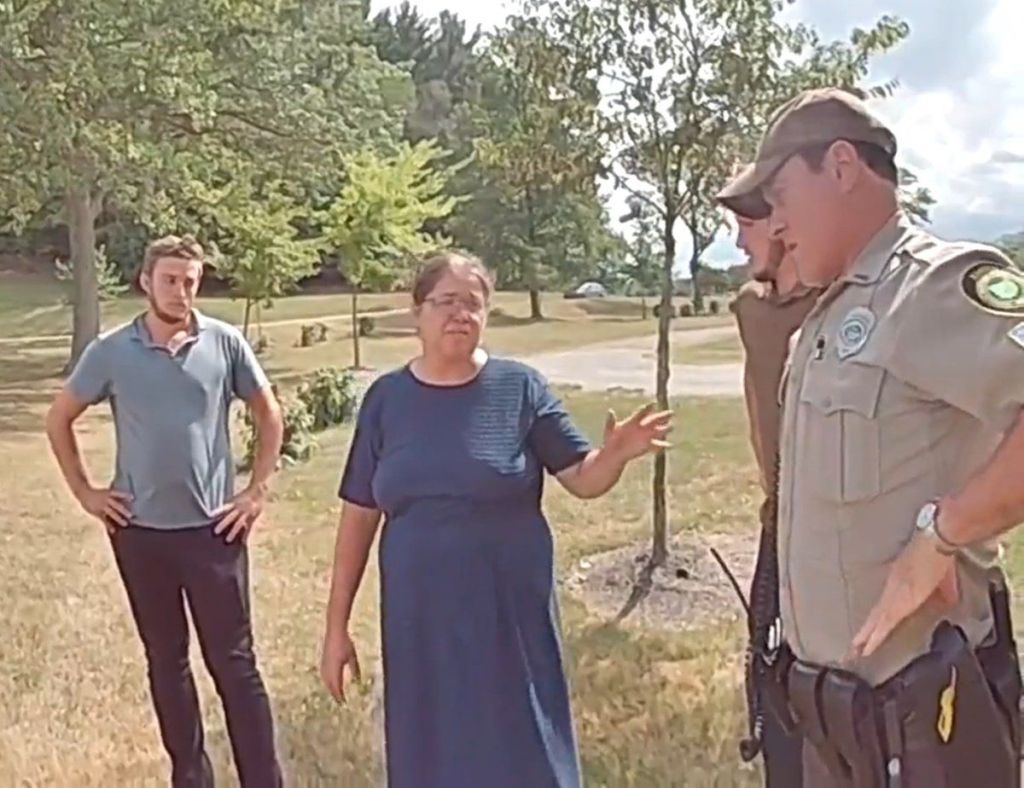


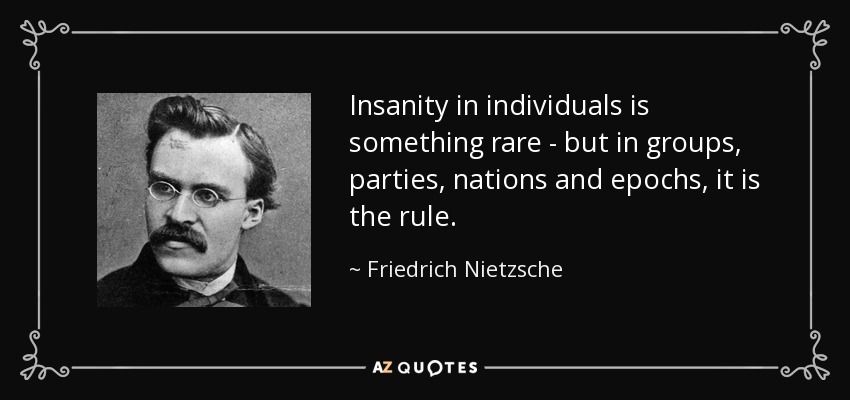
















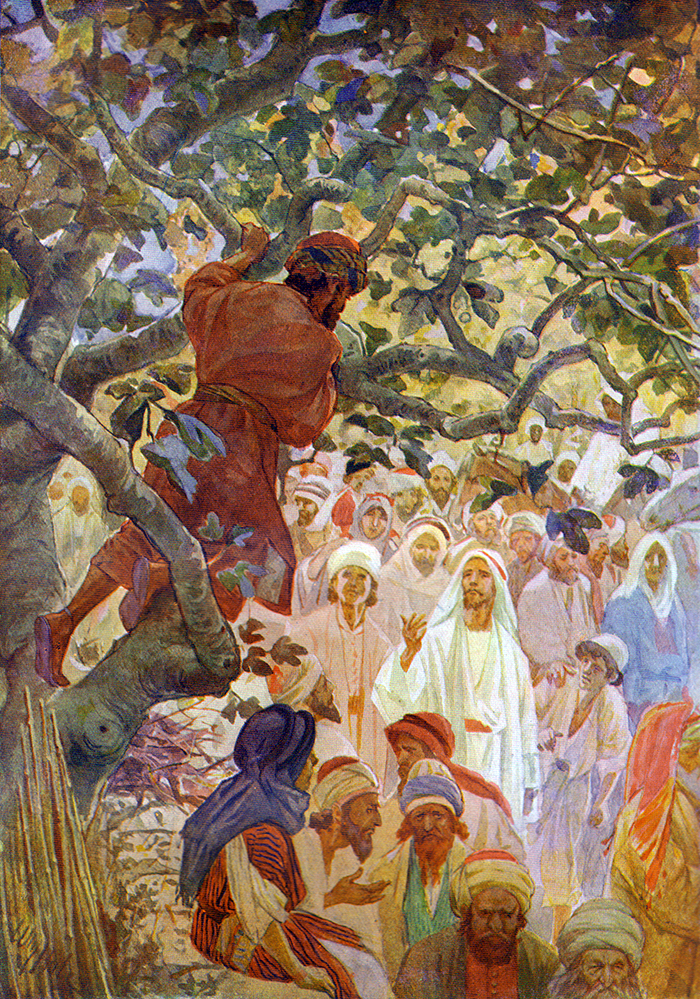

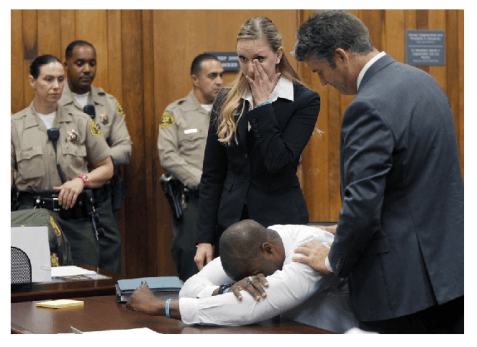

 Irregular Ideation