It has become a Superbowl tradition to hate the halftime show. The performance is a no win situation for the NFL, it is impossible to please such a broad audience. I’ll confess, probably revealing my age, that I really didn’t know Kendrick Lamar existed and nothing I saw convinces me to go buy his album. My overall reaction is basically, “Meh, another mediocre halftime show, what’s new?”
Now, should I start my critique with some deconstruction of themes or with some of my own lived experience?
Let’s do the latter.
Rebellion is part of the American cultural zeitgeist. From the throwing tea into the Boston harbor, in 1773, to women burning their bras in the 1960s and soot-spewing diesel pickups with obnoxious flags, we’re not going to take it—anymore! Basically, we’re a nation of rebels without a cause. If you tell us not to do something we’ll feel obligated to be defiant because “We got rights!” The “culture wars,” in this country, really all come down to whose big grievance with authority is most recognized.
As far as the prior, I have been conscious of rap and hip-hop scene since “Hammer time” and seeing my middle school classmates turning their clothes inside out to be like Kris Kross. Yes, I was a sheltered, a part of the conservative Mennonite cloister, but would also end up sampling a lot of the popular music and had a special affinity for the harder stuff. Heavy Metal and Gangsta Rap appealed to me as a sort of alter ego. I had to be well-behaved—yet had pent up anger and could identify with any expression of existential angst.
The pinnacle experience, regarding the rap genre, was cruising through Compton with a former classmate, in his Mitsubishi Eclipse, while bumping to “California Love.” I had stayed relevant up until around the time when 50 Cent showed up and listened to Eminem as a sort of guilty pleasure—before he became a whiny Democrat shill. Ludacris, Cypress Hill, DMX, Kanye West (specifically “Jesus Walks”), Biggie and Tupac rounded out my play list. Never as a first choice, but always part of the mix or when I was in the mood to change things up.
So, approaching the halftime show, I’m an equal opportunity cynic and not moved by the moral panic on both sides. Nobody needs to love hip-hop music. You are not special if you love it—you are not special if you hate it. Announcing that it is the worst halftime show ever doesn’t make you better than claiming it is the best ever. We have our unique tastes, different preferences, and personal opinions. You’re not less racist if you like it nor are you eugenically superior for viewing it with total contempt. I’m unimpressed knee-jerk reactionaries on both sides. To me “the worst ever” people sound no different from religious folks who dutifully post “I don’t watch the Super Bowl” to virtue-signal to their peers—I suppose we all like reaching out to our own respective tribes for validation?
First thing I noticed that GNX shell on the stage. That 1987 Buick was a monster for it’s time, under the hood a turbocharged 3.8 liter V-6, and one of the few GM cars I have desired. It made me a bit sad when dozens of backup dancers emerged from the coupe and showed the classic wasn’t more than a hollowed out empty prop. Nevertheless, it was a good choice of vehicle, showed someone had decent taste.
My overall impression?
The flag choreography was cool.
Samuel L. Jackson played a funny role.
But the lyrics were muffled—difficult for me to decipher as someone who doesn’t listen to the ‘new’ stuff—and nothing really stood out besides the those things I have already mentioned.
I’ve learned later that there was a ‘diss track’ mixed in. Apparently this Lamar fellow has some issue with a Canadian rapper (yeah, I also think that those two words “Canadian” and “rapper” are hilarious together) named Drake. Which is what you call a male duck and may fit given ducks are promiscuous and aggressive. Who knows? But what I do know is that Mr. Canadian Duck dated one of the Williams sisters—Serena (or the more feminine one), and apparently things did not go too well?
Wherever the case, we have two grown men in a petty feud, both of them nearly in their forties, both multi-millionaires, sort of juvenile. Then again, we also had a guy named Donald Trump in the audience—and know the beef between him and a Canadian named Justin Trudeau. So, of all people, a MAGA voter should appreciate the art form. There’s also a reason why Big Don was so loved by rap artists prior to them finding out that he was running for office as a Republican. His ‘mean Tweets’ are basically a battle rap. I still say it was a huge mistake of the Democrats to label Trump a “convicted felon” and give him some real street cred.
An aside here: Rednecks are basically the country version of Ghetto. The two really should ‘get’ each other. I mean, these are the two groups that were, by far, the biggest reactionaries against the mask mandates. The rural resistance going to social media to announce to us, “I can smell ma farts through dem dar masks, y’all look dumb,” whereas the other busting a cap in the ass of any who dared (as part of their gainful employment) to “disrespect” them by asking to wear a mask or leave the store. So there is some real common ground. Unfortunately both are too bleary-eyed with alcoholism or general substance abuse to realize that they are being played against each other.
So, back on the halftime show, I thought it was a great trolling moment when Samuel L. Jackson, the parody Uncle Sam, exclaims “Too loud, too reckless, too ghetto!” Which is a dig at the very people who went online, the very moment the performance started, to voice their displeasure. It basically the same thing that the political establishment pearl-clutchers hate Elon Musk, and his new boss, Donald Trump, for doing. Yet, in this case, NPR will do a breathless review, to showcase this wonderful artistic expression, and the right-wing WWE crowd will bray in unison about how unsophisticated it is. Strange.
All that said, while there was a little bit of self-awareness in the act, it was not edgy or even fresh. Oh no, here’s another artist who is worth $150 million and somehow at odds with the world! Boo! Put Ye up on stage, at least then we would get a couple unscripted moments and a genuine controversy rather than a refresh of the same tired old tropes. Tell me again how the police harassed you for the crimes confessed in lyrics and how it makes you special. *yawn*
Hip-hop is mainstream. The self-declared king of the rap genre (who vastly undersells his rival) represents youthful rebellion only as much as those old prunes—called the Rolling Stones—did in their prancing on the stage a few years back. The presentation, overall? Just plain campy and unoriginal. Like the angry girl with pink hair or that disaffected guy who puts a Confederate flag on his wall. It is not counterculture, there was nothing really clever. To me it was about as exciting as the latest Britney Spears dance video and cry for help/attention. A demonstration of poor taste or trying too hard. Maybe that’s why I stopped listening to rap music? Just too much repetition of same old themes and not enough true revolution?
I mean, politics right now have more value as far as entertainment goes. Trump got shot, on stage, and his bars make actual world leaders squirm in their seats. Why settle for make-believe ghetto turf battles when you can gun for Greenland or claim a gulf for ‘merica?
I didn’t hate the halftime show. I just simply did not care. I spent the time watching with one eye and writing checks for my property tax bill. My thirteen year old son didn’t look up from his phone the entire time. Boring is what I saw. Other than that GNX and a flag formed from the dancers. Discussion of it is much ado about nothing. Those days of N.W.A. causing riots or Wu-Tang Clan being controversial are over. Unless you’re looking for the exit at a Diddy party, the menace that made rap rebellious is gone. This rerun is as dated as the car on the stage. The professional critics just can’t say that because they’re too busy trying to be relevant themselves.
And maybe that’s just the nature of things—the revolution eventually becomes the old news? The wild Anabaptists who burned a path through the cultural landscape of Europe became today’s Amish. Other than those three cages hung from St Lambert’s Church in the city of Münster, the place where the most extreme of these rebels were put on display, as an example, there is nothing to show of them in the old world. Likewise, having a Slayer patch on your old blue jeans don’t mean that you’re going to murder your family—it simply means that you’re over forty and clinging to the past when you were too cool for school.
As for the halftime show whiners, complaining when the NFL—what do you really want?
There is a nation in the world that identifies as Israel. And, as we all know, if a person or group of people identify as something then this is what they are. If I say that I’m a ham sandwich you better believe it! Israel is what calls itself Israel.
That out the way, is that Israel the same as the Biblical Israel established by God?
If you were raised under Zionist teachings this isn’t even a question. Of course, it is! What else could it be? Biblical criteria or qualifications, what are those? I mean, how exciting would those end times novels be without our favorite backdrop??? And next, you’ll be telling us reality television is fake and that Caitlyn Jenner is a man and not a stunning and brave woman!?!
Isn’t everyone who identifies as something that thing?
However, for those slightly more literate, and not born yesterday, the question of what the Biblical Israel is and if the state by the same name is the same thing is important. For a Christian, up until the time of the reformation and a little after, this answer was quite clear and that is that Israel today is the remnant of the Jews who remained faithful—as well as those Gentiles converted.
From the perspective of New Testament writers Israel is the Church or the body of those who believe—a religious affiliation and not a particular race.
About Religion, Not Race…
While still a member of a Mennonite church, I was not happy to have my religious identity be classified as an ethnic group. In my own opinion I wasn’t born a Mennonite, it was my religion and something that I had to choose to participate in. And yet there was truth to the claim. There is was an ethnic component to being part of the group. We shared a culture, and have our own common surnames, and many converts don’t fit in well.
However, the most damning evidence, other than having unique genetic disorders, is the broad range of beliefs and practices under the Mennonite banner. Those calling their church Mennonite span from those who are progressive and ordaining lesbian pastors to those very traditional still using horses and buggies for transportation. So, when the only true common bond between all of these Mennonite groups is a sprinkling of Yoders, Gingrichs, Millers, or Barkmans, can it really be a religious belief system?
Rev Michelle Yoder, a charismatic lesbian pastor of the Mennonite faith, sitting comfortably with partner in her electric Mennonite buggy as she makes her way through Africa
Okay, like a Facebook relationship status, it’s complicated. People can and do convert to become Mennonite. And, surprisingly enough, since a few decades ago, an African version of the Mennonite denomination has been growing rapidly to the point there are now more Mennonites in Congo than in Canada. I mean, who knows if their doctrines or religious practices are anything that a North American conservative would recognize, nevertheless they do carry the name of Menno Simons in a direction he probably never imagined.
That’s one thing that the Orthodox generally put up front. If you are Orthodox in Greece or a Greek community, then you’re a Greek Orthodox. The liturgy and general practice are the same, established by canons, but there is also room for ethnic expression and use of the language common to the people. In the Arabic world, for example, they use “Allah” where we use the Roman pagan word ‘God’ and have been using it before Islam even existed as a religion. Anyhow, in Orthodoxy, unlike Mennonites, the identity is built from the substance of something established and a faith that is ancient.
Absurdly, when it comes to Judaism, we no longer care if they’re practicing or apostate, we slap that big ethnic label on them all and claim all of them have a claim to the land by their DNA. To us, they’re all the same. But that’s certainly not the case when it comes to Biblical Israel, not every part of the assembly was blessed, some were literally swallowed up by the earth, while others were put to death for disobedience, and the whole would end up in exile:
But if you or your descendants turn away from me and do not observe the commands and decrees I have given you and go off to serve other gods and worship them, then I will cut off Israel from the land I have given them and will reject this temple I have consecrated for my Name. Israel will then become a byword and an object of ridicule among all peoples. This temple will become a heap of rubble. All who pass by will be appalled and will scoff and say, ‘Why has the Lord done such a thing to this land and to this temple?’ People will answer, ‘Because they have forsaken the Lord their God, who brought their ancestors out of Egypt, and have embraced other gods, worshiping and serving them—that is why the Lord brought all this disaster on them.’
The children of Israel were not picked for their superior genetics. That’s not to say there aren’t very intelligent and extremely talented people of Jewish religious heritage. Abraham was picked for being a righteous man:
And the LORD said, Shall I hide from Abraham that thing which I do; seeing that Abraham shall surely become a great and mighty nation, and all the nations of the earth shall be blessed in him? For I know him, that he will command his children and his household after him, and they shall keep the way of the LORD, to do justice and judgment; that the LORD may bring upon Abraham that which he hath spoken of him.
Genesis 18:17-19 KJV
It was Abraham’s righteousness and how he would guide his children to “keep the way of the Lord,” that God picked him. God went on to set Israel aside through religion, not race, and those who did not keep the law would soon find themselves entirely cut off from the assembly of Israel. There was never a blessing for simply being a blood relative of Abraham. It was always conditioned on a faith that produced the work of obedience and this remains the case.
Those born to keep the law of Moses must recognize their Lord and Savior or they’re no more blessed than the Benjamites put to the sword for their evil:
The tribes of Israel sent messengers throughout the tribe of Benjamin, saying, “What about this awful crime that was committed among you? Now turn those wicked men of Gibeah over to us so that we may put them to death and purge the evil from Israel.” But the Benjamites would not listen to their fellow Israelites. […] The Lord defeated Benjamin before Israel, and on that day the Israelites struck down 25,100 Benjamites, all armed with swords. […] The men of Israel went back to Benjamin and put all the towns to the sword, including the animals and everything else they found. All the towns they came across they set on fire.
Judges 20:12-13, 35, 48 NIV
If this were a Covenant merely about blood or genetics, then the Benjaminites really got shafted. I mean, I’m not sure how anyone could construe being slaughtered wholesale as being a blessing or some special thing to be chosen for, “Congratulations, you’ve been selected to be purged!” So this idea that anyone will ever be saved simply for their chosen race is wrong and there is only one true religion which is founded in Abraham’s seed, through the law of Moses, and is fulfilled in Christ.
My favorite Jewish writer explains:
Those who want to impress people by means of the flesh are trying to compel you to be circumcised. The only reason they do this is to avoid being persecuted for the cross of Christ. Not even those who are circumcised keep the law, yet they want you to be circumcised that they may boast about your circumcision in the flesh. May I never boast except in the cross of our Lord Jesus Christ, through which the world has been crucified to me, and I to the world. Neither circumcision nor uncircumcision means anything; what counts is the new creation. Peace and mercy to all who follow this rule—to the Israel of God.
Galatians 6:12-16 NIV
After Christ, even the law of circumcision becomes secondary to what St Paul describes as being “the new creation.”
So it was the righteousness of Abraham, which was followed up with their being set aside by careful obedience to the law—which was the test of the Old Covenant—and finally, reconciliation through Christ that is salvation for all.
It was NEVER only about ethnicity or race. Modern descendants of the Jews must do the same as anyone else, repent and accept their King or perish. Repentance is the first step to salvation and that is what distinguishes true Israel from the counterfeit. The first followers of Jesus were Jewish. Christianity is the part of the assembly that remained faithful to their Lord while the others who rejected their rightful king are called anti-Christ:
Dear children, this is the last hour; and as you have heard that the antichrist is coming, even now many antichrists have come. This is how we know it is the last hour. They went out from us, but they did not really belong to us. For if they had belonged to us, they would have remained with us; but their going showed that none of them belonged to us. […] Who is the liar? It is whoever denies that Jesus is the Christ. Such a person is the antichrist—denying the Father and the Son. No one who denies the Son has the Father; whoever acknowledges the Son has the Father also.”
1 John 2:18-19 NIV
There are a great many who call themselves Christian today who have Scripture and yet no discernment whatsoever. You don’t even need to believe in Jesus to understand what is being said in the passage. Who is identified as the liar and anti-Christ? 1 John 2 very plainly tells us who: “It is whomever denies that Jesus is the Christ.” That is to say those unfaithful to the covenant made with Abraham through their rejection of the Son—God in the flesh.
To say that some can deny the Son and still have a Covenant with the Father? It is to basically throw out the entire Gospel of Jesus Christ. It is completely moronic and a sign that someone was never truly part of the assembly of God. If they truly belonged they would see their Lord as the fulfillment and not be so easily led astray. When Jesus says “Salvation is from the Jews” he is not talking about an ethnic group, he is talking about himself and how he is the Messiah that was promised through the faithful seed of Abraham.
Chosen by Christ
It is really a form of idolatry to hold a race or ethnicity up as chosen by God for no reason other than their genetics. That is not what the “Israel of God” ever was. The assembly (or ‘ekklesia’) was always about those who were faithful, a remnant of Abraham’s seed that included Gentile converts, and turning it into an ethno-nationalist state is a perversion of what the original covenant between God and Abraham actually entailed. A covenant is a two-edged sword, while it comes with blessings for those who obey there is also a list of curses for those who do not hold up their own end.
Jesus spoke to them again in parables, saying: “The kingdom of heaven is like a king who prepared a wedding banquet for his son. He sent his servants to those who had been invited to the banquet to tell them to come, but they refused to come. […] “But they paid no attention and went off—one to his field, another to his business. The rest seized his servants, mistreated them and killed them. The king was enraged. He sent his army and destroyed those murderers and burned their city. “Then he said to his servants, ‘The wedding banquet is ready, but those I invited did not deserve to come. So go to the street corners and invite to the banquet anyone you find.’ […] “For many are invited, but few are chosen.”
Matthew 22:1-3,5-9,14 NIV
Any guess which of those on the guest list killed the servants sent by the King?
The Biblical Israel, for those who believe in the Gospel of Jesus Christ, is that remnant of Jews who obey and follow after the Word of God incarnate. This is always how Israel worked. Some were pruned off the tree and others grafted in. There were never special exceptions made for anyone merely on the basis of ethnicity or race. The Church is the nation of those faith to the work of God that started with a Covenant with Abraham and needs no worldly state or rebuilt temple of stones. Christians are the chosen people.
This essay doesn’t mean that there should be no modern state of Israel or that the mistreatment of any group of people in the world who have rejected Jesus is ever acceptable. We just need to know there’s a big difference between “identifies as’ and what is actually being referred to in the Bible.
The book of Ezra is difficult to read. It ends with God’s prophet breaking up marriages between Israelite men and foreign women, leaving these wives abandoned, with their children, without once considering their welfare. Not only is it cold and callused, but all this talk of the impurity of these people is also disturbingly like that of the ethnonationalist rhetoric leading to genocide in modern times.
My own mixed family has encountered some difficulties with those who put their own tribe first recently at work and school.
My son, a very friendly and outgoing kid, has had some issues with a few bullies. One of these adversaries slapped him hard on the side of his head at the bus stop. Eventually, my son and this attacker had an all-out brawl on the sidewalk and my son says he got the upper hand before an adult intervened. But now my son is afraid of being the victim of another surprise attack and feels very much alone against the group. Which is the worst part, the one who is instigating the violence, telling other kids that my son insulted them or otherwise provoked, is himself a newly arrived racial minority—albeit from a much less friendly urban culture.
My wife recently started a new job at a local meat packing facility, staffed primarily by those from Spanish-speaking countries, and faces a similar uphill battle. They preferred their own for promotions and sabotaged the work of another Filipino who took one of these better-paid positions. The upper management is seemingly unaware of this dynamic, perhaps seeing all ethnic minorities as the same, but it is very real to those who directly encounter it and see the discrimination first-hand. It really is not ‘people of color’ versus white as is the binary often presented. No, there are local majorities, and also many rivalries that are within racial minorities.
Something my wife observed early on is that you need to know someone to get a job. As it turns out, that is true, she had applied at her current employer and never heard from them in weeks. Finally, she found out that a fellow Filipino worked there, reached out, got a recommendation, and a few days after this she was interviewed. Her ethnic contingent, within the company, has increased to three as they also have convinced another to join them against Hispanics.
My ideal solution to my son’s situation would be for him to have an older sibling or cousin to help him. It is just automatic that family will look out for family and yet this dynamic does not contradict the sad reality of the rest of this post. There is a fine line between this preference for our own blood and racial discrimination and bullying behavior. In fact, it is basically the same thing. We prefer our genetic division and general ethnic category to others. And this may be why the older Asian girl on the bus takes a little more interest in my son? Instincts may cause her to treat him like she may a little brother. At the very least his polite and respectful behavior is common across most Asian cultures.
Discrimination is a survival mechanism. An individual who truly treated everyone exactly the same would soon find themselves to be depleted of resources. Without a tribe or a gang, nobody is strong enough to stand up to the bullies in the real world. You’re either in the dominant (physically superior and better organized) group or you’ll be harassed into serving it. Even the legendary heroes of ancient times tended to have an army to back them up. And outward appearance is simply the easiest way to align ourselves given that this was always a natural division of people across time.
This all starts at a very young age. At only three months old babies will start to prefer faces of their own race to others. This idea that children need to be taught to be racists has no basis in science. Yes, conditioning and socialization will come into play, but this is only a sharping of inborn tendencies. We will trust those who look like us over those who are foreigners. This can metastasize into racist ideologies and the hatred of those ‘impure’ others. But it is not unnatural.
Inhuman Nature and the Alternative
Defenders of Biblical ethno-nationalism will say that the problem was more about these people being idol worshippers. And yet the people of Israel certainly weren’t free of this and they themselves would frequently follow after these false gods. Why weren’t these impurities abandoned? Ezra gave them an opportunity to repent and remain part of the group despite this disobedience. They, as the seed of Abraham, were given preferential treatment simply for their bloodline and not only as a result of their different behavior.
Being truly human is about going beyond the primal and transcending even ourselves. No, we may never convince all to find a common bond beyond the lowest hanging fruit that is skin color or facial features. Still, those I’ve been able to identify with the most, at least other than siblings or biological cousins, do not belong to my own race.
My wife and I started as geographically far apart as two people could possibly be on this planet. Her people, Igorots, were very tribal and primitive up until a half-century ago, my own Swiss-German heritage may seem the opposite. But her rural agrarian roots make her more similar to me than one may assume. Her people are stoic, with a strong work ethic, and are very much like my own grandparents. Our son, to whom I am a step-father, is completely different than me in terms of his athleticism compared to my own clumsiness. Still, we do share many interests and are peas in a pod.
Unnatural love is that which is extended to those who do not look like us. It is to try to be fair to all people, of all races, rather than show favoritism. It starts with simply not mistreating those who are different from us and trying to find the humanity in others. It is to put our common values and aims at a higher level of importance than appearance, which is to say seeing the heart rather than outward appearance.
This is not ‘diversity is our strength’ or some kind of woke BS either.
The left is as divisive as the right or worse. They hold everyone to a different standard, based on their outward appearance, and call this inclusion. But all they really do is replace a meritocracy with a victim hierarchy and then use past injustice as an excuse to do the same thing to others today. Actual virtue or contribution does not matter in this ideological dogma, it is always about outward appearance. The bully is of another color and the discrimination goes in a new direction, but it is just more division by the lowest common denominator.
Common values are our strength. Working towards the same cultural and civilizational goals, rather than only what is good for our own ethnic identity group, is where diversity of abilities is useful. Bullies cost us resources, discrimination for reasons other than good or behavior is unjust, and being totally colorblind may be impossible. However, we can work to correct our own prejudice and towards a common goal. It will take some faith and leading by example, it will a change of heart from the current paradigm:
“There is neither Jew nor Gentile, neither slave nor free, nor is there male and female, for you are all one in Christ Jesus.” (Galatians 3:28 NIV)
It is that, unity in Christ, or we revert back to the ethnic wars, cleansings, disregard, and other abuses of the Old Testament. We can live in a world where it is tribe against tribe, man against woman, and soon every man for themselves, or we can find ways to overcome our differences and see our better potential realized. We’ll never be completely fair, favoritism is natural, but we can aim for it. We don’t need to slaughter each other over our shades of difference.
The Supreme Court has finally ruled against the practice of blatant racial discrimination in university admissions. This, after Harvard and other schools, in pursuit of filling quotas, would find means to select against qualified Asians to meet an ideal for diversity based on skin color.
The Affirmation Fairy…
African Americans, at least as a collective whole, have suffered disproportionately and this is a historical injustice that is not easily solved. Much of our success later in life has to do with the homes and communities that we were born into. The values we receive via our culture make a huge difference so far as outcomes.
I remember a viral video, a few years back, that lines up a bunch of young people on a grassy field. The announcer asked various questions, such as “Take two steps forward if both of your parents are still married,” and those who could answer yes advanced. The results of this survey were framed as ‘white privilege’ and yet none of the statements had anything to do with race.
Social inequality is certainly not a black-and-white issue, many children of European and Asian ancestry lacked a father in the home, worried about fitting in, did not feel safe at night in their neighborhood, worried about having enough to eat, and lacked access to private education or tutors. I once begged my mother to take me out of public school after a rough patch. I changed my hairstyle as a response to classmates who made note of my ‘Mennonite’ side part. I decided to quit college rather than go deep into debt.
Am I underprivileged?
Exactly how much am I disadvantaged as a learning-disabled child of two high school dropouts, with a father who had to be away all week to support our family?
There problem with all “affirmative action” is that it is a vast oversimplification of a very complex and multi-layered problem that may be more about culture than color. We simply cannot account for every factor or rate every single subcategory of ethnicity and culture for statistical disadvantage. For example, do we know the college graduation rates of Americans of German ancestry or Irish and Italian? Are a proportional amount of these ethnic groups represented?
Furthermore, our own disadvantages can be advantages, in that they can provide u much-needed motivation. Sure, having money may mean a trip to Harvard and a certain level of success. However, the same is true of those who are tall and athletic. Jeff Bezos, at 5′-7″ tall, may have benefitted from having some ‘short man syndrome’ or that extreme desire some have to compensate for the discrimination they faced for physical characteristics that were beyond their control.
Affirmative action is wrong in that there is no way to rank hardships. It is wrong because it isn’t addressing the root causes of social inequalities, even as defined by the privilege police, in that we’re not talking about things like fatherless homes or inner-city violence and cultural forces that discourage the behaviors that aid in academic achievement. You can’t wait until a person is eighteen, then wave a wand of university education and credentials as a solution to these underlying issues.
Asterisk Graduates…
The true underlying message of affirmative action was that minorities, specifically those of African descent, couldn’t be successful without the help of the government. As liberal arts universities continue to seek to fulfill a narrow color-obsessed definition of diversity, using quotas rather than qualifications, they unintentionally degrade all of their minority graduates—even those equal in merit to the non-minority graduates.
The idea of a “diversity hire” or a person not equally qualified to others who applied and yet are given preference only because of their special category of race or gender, is a direct consequence of discriminatory affirmative action programs. People know how to read between the lines (albeit often unfairly) and will diminish accomplishments that weren’t actually earned or can be perceived as being unearned. It is why we do not see the work of those ‘born into wealth’ as being equal to that of those who are self-made.
A classic example of the patronizing white saviorism that is lurking behind divisive equity campaigns.
Just as a university degree would lose value if everyone were simply given a diploma for breathing, admitting some primarily on the basis of skin color devalues the effort even in the eyes of those who benefit. It only serves to feed an idea of black inferiority, that they need a ‘white savior‘ to swoop in and rescue them from their plight, and is grossly unfair to all who were truly qualified on the basis of merit—but will still deal with the asterisk due to systemic compensatory color preferences or racially discriminatory quotas.
The hate crimes against Asians, like the murder of Yao Pan Ma, rarely receive coverage as other racially involved crimes.
Two-tiered or lower standards for some will never achieve the goal of equal outcomes.
Favouritism Forbidden…
We’re living in a time of moral inversion, a time when those who lived a life of crime and abuse are treated as victims simply on the basis of their outward appearance. It is as wrong as the favoritism of preferring the wealthy over the poor for the potential benefits:
Do not pervert justice; do not show partiality to the poor or favoritism to the great, but judge your neighbor fairly.
Leviticus 19:15 NIV
The problem was favoritism, preferring one party based on who they are (what they can provide for us) rather than the actual merit of the case. Fairness of judgment, not equality of outcome, is the goal.
Christians were told not to judge by a person’s outward appearance:
My brothers and sisters, believers in our glorious Lord Jesus Christ must not show favoritism. Suppose a man comes into your meeting wearing a gold ring and fine clothes, and a poor man in filthy old clothes also comes in. If you show special attention to the man wearing fine clothes and say, “Here’s a good seat for you,” but say to the poor man, “You stand there” or “Sit on the floor by my feet,” have you not discriminated among yourselves and become judges with evil thoughts?
James 2:2-4 NIV
Many, trying to make a show of their own righteousness, take a Scripture like that above and turn it into a call for social justice or a special preference for the poor or otherwise disenfranchised. However, this kind of reverse favoritism totally misses the point. Trading one kind of perverse judgment for another is not a virtue. No, it is a virtue signal and something people do for the social benefit of merely appearing to be an advocate for those recognized as being disadvantaged. Even if sincere, this is a misguided approach that goes against the instruction not to show favoritism.
Affirmative action, in the end, is just a new form of white supremacy that is expressed as patronization. It frames differences in outcomes solely in terms of identity groups while neglecting to correct the factors causing the inequal results or truly helping people to cross over these unhelpful, artificial, and arbitrary divisions. Jesus taught more of a gracious meritocracy, where our behavior did matter and we would ultimately be judged on how we treat other people irrespective of their deserving or appearance. In this regard, our equality comes only in repentance and our obedience to the law of Christ—not by force of courts or legislation.
We do not save the world by trying to force others into compliance or control outcomes. Rather we change ourselves and become an example of impartiality and love to all people. Honest and fair equal opportunity is having the same requirements for all and not preferences tailored to some at the expense of others. You cannot rob Peter to pay Paul. We shouldn’t love bomb some, even to make them feel better about themselves, by removing opportunities for those who truly have earned their place.
There was a time when I could simply say “I’m Mennonite.” That is what I was. It was my religion, culture and ethnicity wrapped up into one tidy package. It was as real to me as my gender and first name. But now, having left the denomination of my youth behind, it is really difficult to buy-in to a new identity or at least not to the extent of feeling a significant attachment to the distinguishing title.
We live in a great identity crisis. We might celebrate more identities than ever, and yet somehow along the way, we have lost the very meaning of the words that we use to define these identity categories.
What is an identity?
An identity is a word used to distinguish one from another. Or a statement of what we are in comparison to the whole group. Are you Catholic or Protestant? Black or white? A Republican, Democrat or Independent? And whether it is identity or not has much to do with the emotional weight that we place on these categories and terms. In other words, blue-eyed is certainly a category that some of us belong to, but is not currently an true identity marker.
There are also various kinds of identity, there are those inborn or assumed—Charlotte, due to her inherited genetics, is Kankanaey, and would be no matter what she believed about herself or if she prefers that another term be used. Then there are those types of identities that are less about our immutable being and more about what we are doing. By contrast, trucker or truck driver is an identity, and even comes with a license to prove it, but it is not something that is actually written in a CDL holder’s DNA.
Trump ‘identifies’ as a trucker…
Identity is never something we can select for ourselves. I can claim to be a Dill Pickle and even legally require the moniker be used in reference to me. But this is never going to change what other people will perceive me to be. Identity is something that others construct, with us, and not only a thing that we independently choose for ourselves. Put another way, a rose by any other name is still a rose and even if we paint it blue. And blue does not become yellow because we switch the color identity labels either.
Our “I am” identity…
I’m sexually attracted to the female form and this has dictated my priorities and activities throughout the years. But, as important as it is to me, I don’t tout my ‘straight’ preference as being my identity. I am many things, but my sexuality is not something to hang my sense of who I am on. There are no hetero pride parades for this reason and no need to fly a special banner in front of my house to announce my preferences either. Sexuality is not who we really are.
So, when someone says “I am gay,” my mind always must go to the question, “you are a sexuality?” The reality is that this identity is about far more than what they do in bed. It is about the community or lifestyle and an identity built around being their status as an exception. Being “gay” is just as much about the social aspect as the orientation. It is not just something you only do in private. No, it requires a public display and solidarity with others like you. If it were simply about sex there would be no parades or neverending need to be legitimized by others. Identity is bigger than the individual.
And trans is simply the next level. Those calling themselves “trans” may (in direct contradiction with their biological gender assignment) self-identify as a man or a woman. But those who are truly male or female simply are and there is no need for hormones, reconstruction of genitals or to exaggerate gender stereotypes with weird provocative displays. On the other hand, no matter how much surgery is performed on the body of a ‘trans’ person they will always be trans. The more trans people try to force others to recognize them (despite our own eyes) the more they will stand out as being different. Which is truly the point.
Identity is about our distinguishing ourselves from the larger group. It is also about what is the most important thing to us. If a person were ask who I am I would probably start with my given name. That is where I am oriented in society, as a product of my parents, and also gives others a shorthand to address my person. Then I might mention my role as a husband and father as those things are currently the most meaningful parts of my life. Of course, also in the mix is my religious affiliation and occupation. Sexuality, while very important, wouldn’t even make the top of the list.
Furthermore, there is no need for anyone to defy their own eyes or be forced to recognize anything about me against their will. Identity is not only about what I declare. A large part of real identity is what others recognize with no coercion. If I had to demand that my son call me daddy or that my wife appreciate my bad cooking the same as she did the work of a master chef, would their bending to my will really make me any more legitimately those things? No, it would certainly not! It would make me a bully and look very insecure.
The Identity Gambit…
Special identity is a way to gain advantage over others. In the past it was about having the right privileging title or family pedigree. Now it has become a no holds barred fight between various victim categories. But in both cases it was about unearned respect, about people who did not do anything noteworthy enough in their lives to be recognized and thus invent illegitimate reasons why others must genuflect to them. These frauds are enabled by those who have twisted morality and a corrupted political system.
Stop. I look like a police officer!
People can lie about their identity for many reasons. Impersonation of a police officer, for example, gives a person false authority and ability to manipulate the unsuspecting. Or stolen valor, in the case of those who, for attention, dress like and pretend to be a military veteran. Sure, the act is usually off, since these posers don’t have the requisite qualifications, but it fools enough people that they get the payoff of the true identity—or at least until caught. Then again, prancing around and pathologically pretending to be a girl is now extremely lucrative for some men.
Pretending to be a doctor or airline pilot is something children do innocently and yet it would be silly to legally recognize this as not to make them feel bad. True identity is not an act or a costume we put on.
Shedding identity…
Identity is powerful. For example, a person calling themselves a “gangsta” or “thug” is declaring a whole package of behaviors and dress styles. It is a choice as well as a habit, they could change and yet their momentum is in a particular direction. They have been conditioned, for years and years, by culture and peers, to assume this posture towards the world.
There is some truth to the statement, “you can take the boy out of the country, but you can’t take the country out of the boy.” We have many things instilled in us, accents to tastes, but this is not written into our DNA and doesn’t mean it is an “I am what I am” excuse. We will send children to speech therapy if they have an impediment rather than let them be their true selves. We can and should modify things that an identity is built from. This notion of a genuine self that can’t be changed is ridiculous.
Right now there is a Ukrainian vs. Russian war. The narrative we’re being sold is that there is a vast difference between the two sides—that this is a fight between freedom and democracy or authoritarian rule. We are told the Russians are barbaric and cruel, the Ukrainian’s heroic and capable. But both are from the same Kievan Rus origins, speak a dialect of the same language, and truly have much more in common with each other than they do with us. Furthermore, the regime in Kiev is hopelessly corrupt, and had been shelling those trying to escape this rule for years prior to the Russian invasion—it isn’t a distinction worth dying over.
Ukraine vs. Russia is more like the US Civil War than WW2.
The reality is we are not bound to identity, especially not to those that are more about what we are currently doing rather than our actual being. We choose our divisions as much as we are born with them. Sure, we can’t help what side of a border we are born on nor if our personality traits are judged as being masculine or feminine. But we can decide what is most important to us. And, more importantly, we can pick identities that are greater than sexuality or gender. We must reject this idea that we can’t change or improve while also accepting what we are and were born to be.
Many people get off from being contrarian and offending others, they especially enjoy being able to force others to go along with their language games. But, in the end, their ‘preferred pronoun’ is a distinction without a difference. We will remain what we are no matter how we dress it up or how much we compel others to go along with the delusion and falsehoods we peddle. It is only in our spiritual transformation, in finding a bigger purpose, that we can be free from needing the approval and attention of others.
More and more I have no identity to cling to outside of being who I am. I am what I am and don’t need to hide behind a special label or find my place in the world. While many in my religious past hold conference in search of their identity and as many converts in the tradition in which I currently participate tout the Orthodox adjective in the manner some do they/them pronouns, I have little interest in joining them in this inane competition. St Paul, in Galatians 2:38, would have us shed our divisive identities for a joint identity in Christ.
There are many alt-right types who use IQ statistics to distinguish between groups of people, and yet they themselves do not seem to grasp statistics or even understand what IQ actually measures. They suggest their own lack of intelligence through this. And, given that their use of IQ is most often directed at those whom they deem to be inferior races and is what makes them feel superior, this is deliciously ironic.
Yes, certainly IQ does matter. But it matters in the same way that hitting a golf ball and bench pressing do as being a measure of overall athleticism. Sure, it does differentiate natural ability for those with equal training, and yet says very little about the inborn abilities of those coming from vastly different circumstances. In other words, I can out bench many bigger men who never saw a gym. But not because they couldn’t outperform me if they put the same time in. And, likewise, the kind of intelligence that IQ tests measure is built on practice.
So, basically, without a multi-variant analysis, the results of IQ tests tell us very little. A person can score high because they are genetically gifted. They could score high because they had a stable home, good nutrition, and high-quality education. And, like Koreans getting taller on average, lower average IQ today does not mean the same will be true tomorrow or if all circumstances were equal. In fact, IQ tests are increasing generation by generation, this is called the “Flynn Effect” and not necessarily a result of people actually getting smarter than their grandparents.
No, IQ tests tend to focus on a kind of abstract reasoning that has no practical application for prior generations or those who are raised outside of an advanced economic system. My ability to reason through engineering problems may unlock earning potential in a very controlled environment and yet doesn’t mean I would survive a day in the Amazon basin or on the streets of Rio. So this assumption that my test scores prove something about my superiority is basically nonsense.
Sure, not everyone has the mental capacity to solve differential equations. But that doesn’t mean everyone who couldn’t solve them prior to Isaac Newton and Gottfried Leibniz was an idiot.
The really crazy thing about racial supremacist mid-wits (or at least those who I know of European ancestry) is that they will so often make fun of the pointy-headed intellectuals (those who outscore them in IQ while lacking street smarts) only to turn around and use IQ statistics to create a racial pecking order. I mean, if IQ is a reason for some to rule, why do these same people turn to wild conspiracy theories to explain why many Ashkenazi Jews are disproportionately more successful (academically) and in positions of power or influence? Why not just assume they are the next stage of human evolution?
The truth is culture and environment have a large part to play in our development. What is prioritized in homes and communities can make a huge difference in outcomes. If my dad was an attorney and I was sent to a prep school, I would probably be more likely to score higher and go further in pursuit of a professional career. Alternatively, if I was raised in a place where everyone was obsessed with track speed and achieving celebrity status, I doubt I would’ve grown up playing with Legos or visiting various museums with my parents. My own 97th percentile IQ was likely built on experience as much as anything else.
Lastly, it is worth noting that outliers do not tell us a whole lot. Interestingly enough, men are both smarter and dumber than women and this has to do with standard distribution or how the bell curve works. What this means is that there can be more or less diversity within categories. Or, put otherwise, some Kenyans being excellent long-distance runners doesn’t mean all are and this superiority of some Kenyans will tell us even less about those on the other end of the African continent. Too often we look at the cream of the crop (or bad actors) as an indication of the whole and yet group statistics never tell us about individuals.
Maybe you haven’t heard about the latest visual and verbal contrivance that has been bestowed upon us by the meme lords?
If not, White Boy Summer, has been making an appearance on my news feed, especially popular amongst the disenfranchised right of center males. It is mostly in fun, a poke at the color tribe obsessed, that started with a post by Chet Hanx, and has since evolved into a sort of pushback campaign against divisive identity politics with some actual white supremacist types joining in on the action. It is mostly just the typical alt-right silliness the feeds off far-left identity politics outrage.
As for myself, I’m still principled enough, in my opposition to color identity politics, to not to join in. No, that’s not at all to say I’m any better than those less idealistic and more open to this kind of humor. However, I can’t help but believe this is exactly what far-left fringe elements of the political spectrum had in mind when they started to affix “white” or “black” to various terms. Even as a joke it is reinforcing of their divisive narratives.
The Identity Politics Dilemma
That feedback loop is the insidious part of identity politics and tribalism. When one group of people starts to gang up, then others need to do the same or risk fighting a mob alone. A person doesn’t have to care one bit about skin color to not want to be the next Reginald Denny, a man beaten by four strangers because they hated people who looked like him. So we go down this spiral of increasing mistrust and polarization often leading to an escalation of hostilities.
In my own life time I’ve watched the tension grow between ‘white’ and ‘black’ people. It feels as if we have taken steps back, more people see relations deteriorating, most likely due largely to the intentionally divisive framing of news stories, and yet perception becomes reality as we react to this by being more conscious of color. Those who push racial or other identity division do it cynically, as part of their divide and conquer strategy, winding the two sides up to play them off each other while they use the ensuring chaos to take more power.
White and black should not be identities. It is superficial. It confuses culture with color and goes directly against everything gained in the Civil Rights era. I’m sorry, but a person only needs to be the slightest bit aware and marginally intelligent to realize that there are vast differences between individuals in these too generalized color categories. As someone born into the working class and a small religious subculture, I probably have more in common with most racial minorities than I do the American mainstream.
Call Me Stephanie
Stephanie is a wonderfully energetic and comedic person. She’s the receptionist and all around badass, in heels, employee for the place where I go for physical therapy and friend. Being my inquisitive self, knowing that she’s a cool person who laughs about her love for fried chicken, I had to ask her a little about what it is like for her (as a black woman) growing up in rural Pennsylvania.
The most significant thing that came from that conversation was her answer to the annoying (yet well meaning) questions she fields about her preferences regarding her identity. In other words, does she want to be called “black” or is “African-American” her preference? To which her witty response is “call me Stephanie.”
As a conservative Mennonite kid in a public school, who also had to field dozens of such ‘micro-aggressions’ or ignorant assumptions that undermined my individuality, I wanted to give her a hug. I also admire her for taking such things in stride. I’ll admit, I have not always handled similar things as graciously and let people get under my skin rather than just blow them off as ignorant. And for this reason I love Stephanie, she’s just a great person and all around good example.
To be honest, what she expressed is a big part of my own identity. When classmates tried to pigeonhole, bringing up my then side parted hair as being “Mennonite” style, I would resist their categories and changed to a different hairstyle. Despite my love for my strange religious denomination, I didn’t want to fit their stereotype for Mennonites and allow them to minimize my own uniqueness in the process. I may have been Mennonite, but I was also Joel and had my own mind separate from their generalizations.
Stop Coloring Everything!
There are some who, unlike Stephanie, love to wallow in their assigned categories. They both choose to be and then simultaneously resent being categorized. In other words, if something bad happens to someone who is superficially like them they’ll tribalize around that person and yet also not own the many reasons for differences of outcomes that are less than politically expedient.
Why should a college educated, reasonably law-abiding and responsible person ever see a drug addict or convicted rapist as being their own peer or clan?
That’s what drives me crazy about all of this color division, those who truly have more in common with me or even enjoying privileges that I do not, are so easily bamboozled into believing that our many similarities are less important than the color of our skin. The more troubling part being that to do that they have to ‘other’ me and not accept my own lived experience as equal to their’s. It is the very definition of dehumanization and ends any possibility of finding common ground that transcends our most obvious (most truly meaningless) difference.
I mean, does my exterior veneer actually make my own suffering, my many losses and disappointments, any less valid than that of someone else?
It isn’t fragility to reject the divisive color framing intended to keep us at odds. And, no, taking responsibility for our own future, two-parent homes and a work ethic are not indications of white privilege, rather it is the most probable and proven path out of poverty and laying the foundation for the success of future generations. That’s the big lie of divisive color terms. People, no matter their skin color, are not fundamentally different and those who try to convince us otherwise are only trying exploit our insecurities to keep us trapped under their games.
All lies have an element of truth. In fact, a misleading narrative, in order to have any convincing power, must contain many true statements.
It is not the off-the-wall and totally unsubstantiated claim that is the most dangerous. No, it is the half-truths, the facts out of context, the misunderstood statistics, that are most deceptive. Effective lies employ facts, they work our emotions and attempt to frame even our own experiences into a deceptive narrative.
The biggest lie of our time is the so-called “anti-racism” of the far-left. Call it woke, call it social justice, Critical Race Theory, Equity committees, or anything else, it is all fundamentally the same thing and that common thing is to promote division over identities.
The sad part is that many will stop reading here and leave without understanding. They might see the statement above as attacking their good intentions, as being ignorant, and a lack of comprehension of what those things listed truly are.
First, discrimination is real.
People are discriminated against on the basis of height, body shape, ability, intelligence, credentials, wealth, political views, affiliation, having a disease, personal history, gender, and, of course, skin color. Any category of identity or appearance can be used as a reason to deny and mistreat people. Ultimately, we’re all a minority of one and most have faced some form of discrimination.
In this country, the United States, religious, racial, and ethnic minorities have faced a significant level of discrimination. Chinese weren’t allowed to hold certain jobs, Germans were forced to scrub away much of their cultural heritage and unique identity because of war propaganda, Japanese sent to internment camps, Mormons were lynched, as were Republicans, and of course the horrendous exploitation of African Americans as slaves and then the discriminatory Jim Crow laws that followed.
This legacy of discrimination, especially in the most severe cases, has undoubtedly left its mark on various communities.
Second, power dynamics change with context.
Be the wrong person to walk into a biker bar and the welcome will be anything but warm. Go to Philadelphia, get off the beaten path like my family did, and the McDonald’s may be a rather hostile environment where the staff servers others ahead of you and then make your tired little sister cry because they dumped a massive pile of salt on Happy Meal burger.
As a Northerner, in the rural South, I was a bit nervous about standing out too much for my accent, did the sons and daughters of the Confederacy hold a grudge?
I was definitely a fish out of the water getting off the bus stop in Compton!
I think we all feel a little uncomfortable out of our own context, away from our own cultural tribe. I know from traveling abroad, being surrounded by people who eat unfamiliar foods, speak a strange language, look, act and dress differently, this can feel a little threatening and unsafe. No, it is not because the people are unfriendly or show any signs of contempt for you, as a foreigner, it is just that you don’t know the risks, customs, or what to expect.
Stepping out of the airport terminal, into the steamy Manila heat, filled me with a mix of excitement and anxiety as I clung tightly to my bags and scanned for the face of that one person of millions that I hoped would not beat, rob, and leave me for dead.
It would be really easy, had I had the wrong encounter, to generalize and conclude that Americans were unwelcome. If on my own turf, if treated badly, I would assume it was a bad individual and not a reflection of all in the community or culture. But amongst those who are different in appearance, it is very easy to make broad generalizations based on a couple of bad experiences. Being in a room full of strangers, especially those who seem to know each other or have something in common, we feel vulnerable or powerless. And sometimes there is actual bullying and discrimination against the odd ones out in a given context.
As a Mennonite in a public school, I was always keenly aware of being different. I was asked questions, often containing assumptions and annoying, had nicknames based around my religious (and ethnic) identity, it is a behavior called “micro-aggression” according to the current paradigm. Being called “Jebediah” or hearing derogatory comments about Mennonites didn’t exactly leave me emotionally unaffected. There was always (and still is) a feeling of safety and security that comes from being with people of my own sub-culture.
Third, I’m completely opposed to racism.
I have long taken a stand against racism and discrimination based on appearance.
Even the concept of race itself does not actually make much sense.
Why is Barack Obama black when his mom was a privileged New England blue blood, white, and that lineage half of his genetics? What percentage of African blood does one need to be black? Why does skin color or a few unique physical features determine another race, but not hair color or height? Why aren’t redheads a separate race?
The definition of race, according to Merriam-Webster, is “any one of the groups that humans are often divided into based on physical traits regarded as common among people of shared ancestry” and could actually mean that Mennonites and Amish, with their unique genetic disorders, are a race. But the reality is that it is mostly an artificial barrier, something arbitrary, a category based on mostly superficial things, and not science-based.
This first step in eliminating racism is to reconsider the existence of race. Race is not real or at least no more than Mickey Mouse. It is simply lines that we have drawn, like the political and geographic boundaries between nations, and the bigger difference between people is actually culture, but don’t take my word for it:
Culture has enormous effects on social outcomes. The influence of culture on social outcomes is not just a hypothetical—there is a great deal of evidence that culture has a large effect on many of the unequal social outcomes that some would like to ascribe to biological differences between races or sexes. Those who urge us not to deny that biology contributes to human nature have a point, but they often short-change the significance of what really makes the human species exceptional—our culture.
There is a multitude of reasons why some like to emphasize racial differences and try to make culture synonymous with race. The first amongst them is political power. By convincing people that some others are inferior or a threat, based on some category of difference, you can harness their anxieties as a means to get votes. Blaming behavior on genetic predisposition is a license for color discrimination and also a ready excuse for bad behavior.
If we ever want to overcome racism we need to understand race is purely a social construct.
What is false about anti-racism?
Being raised in liberal America, post-Civil Rights era, meant being indoctrinated into the teaching of Martin Luther King. It was not colorblindness, as often framed, rather seeing the person first rather than judge on the basis of outward appearance. But this liberal order is currently under assault. Even reciting the passage out of the “I Have Dream” speech, about not being judged by the color of skin but by the content of their character,” will be met with the ire of the “anti-racist” left.
Why?
Well, strange as it is, the far-left push for ‘diversity’ and ‘inclusion’ is not about race at all. No, in their worldview and framing of experience, it is always about this supposed power struggle between the majority (within their culture) and those deemed to be marginalized and oppressed. In other words, if skin color were removed from the equation entirely it would not matter, this ideology seeks to find any difference in outcomes and call it an injustice.
The term “white privilege,” for example, is indicative of race. That is how it is defined, as the perceived advantage of those with lighter skin tone over those of darker complexion, and yet that’s not truly what it is about. That’s simply the bait. The term is a divisive tool and cover for an assault on religion, property rights, traditional marriage, and other existing beneficial structures of civilization that stand in the way of the far-left’s self-declared ‘revolutionary’ ideological goals.
For sake of analogy, think of the gag when you tap a person on the opposite shoulder to make it appear that someone else in the room did it. I mean, nothing but a harmless prank in that case. However, it could also be employed as a diversionary tactic, where you get two other people arguing so you can take advantage of the ensuing chaos to pursue the actual objective. It is misdirection.
Many, in taking on racially divisive terms like “white privilege” fall for the ruse, they respond by pointing out all of the advantages black Americans have. This, in turn, can easily be presented (out of context) as proof of racial prejudice and only fuels the fire of resentment across color lines. Many black Americans, for their part, are very aware and sensitive about their racial identity and not without cause either. Unfortunately, this also makes them vulnerable to political opportunists who seek to exploit this history and experience of prejudice. It very quickly escalates into an unsolvable tit-for-tat mess, nobody on either side realizing they’ve been played for fools.
The prime example is how the Kyle Rittenhouse shooting is framed as being white privilege, the riots in Kenosha supposedly an expression of anti-racism. The narrative pushed by the corporate media is that Rittenhouse was some kind of far-right nut job looking for trouble, a counterprotester, and gunned down protestors at random. In reality, Rittenhouse had family connections in the city, he was there protecting a minority-owned car dealership, he has actually expressed support for BLM, and his attackers were all white men. He wasn’t there to oppose justice for Jacob Blake. He was there because of the destruction the night before and to defend the innocent from harm.
The three white men who attacked Rittenhouse are protected from scrutiny, under the “white privilege” rubric, for being classified as oppressed. It is not in spite of, rather it is because of the violent criminal history of these three white men that they are considered victims by the left. The left assumes that people behave the way they do because of circumstances, they blame-shift responsibility for violence perpetrated by their own and use narrative as cover for ideological agenda rather than a means of transmitting truth. The left is not truly against discrimination or anti-racism, they are about gaining power over others by any means and this racial wedge is simply an effective tool.
The lie that color is culture
Underlying the Critical Race Theory (CRT) and any of the rebranding attempts used to “start the conversation” or sell this anti-liberal divisive ideology is an assumption that race and culture are inexorably linked. It is, not too ironically, the one thing that both the ‘woke’ and actual white supremacists agree on. They both teach and believe that skin color determines behavior.
This is why those pushing CRT reject the call of Martin Luther King to see past color and judge by the content of character instead. To them people behave the way that they do because of their race, that skin color basically determines culture and character, and therefore it is oppression for the majority to impose any kind of order or at least not when it goes against their own leftist political agenda. Any cultural standard, like the idea people should work for their own food, is classified as oppression and racism.
Both white supremacists and far-left theorists present differences in behavior and statistical outcomes, between racial categories, as being primarily driven by genetics. They, unlike liberals, who see a larger role of culture and assume that economic circumstances play a part in shaping outcomes, see race as being what determines culture. The only difference between the two is that white supremacists see this as a reason to subdue and subjugate some races, while the far-left sees it as a reason to subjectively excuse or accuse people along color lines. Both are equally abhorrent. Both reverse cause and effect and provoke hate.
The first problem is that even if genetics did determine outcomes, why stop with categories of race? We all know that Europeans all have their own unique cultural groups, as do Middle-Easterners, Africans, and Asians. It is the basis for stereotypes. We know Italians to be big talkers, Germans as industrious, Russians for drinking lots of Vodka, and the same thing could be done across any racial division. It is sort of like Native American tribes, they were not all the same, some were warlike and conquered their neighbors. Some were nomadic, others building massive cities. To lump them all together is plain ignorant, it is the heart of racial prejudice and poor analysis.
At this point, some, at least on the right, would be eager to get into statistics showing the correlation between race and criminality or IQ. To them, this is smoking-gun evidence of the superiority or inferiority of collective racial groups. They would use the athletic advantage of African Americans, given the domination of black people in professional sports, as undeniable proof of this overall thesis. And, certainly, we could get into a discussion of the structure of the Achilles tendon, Testosterone levels, and whatnot that would go on forever. However, all this obsession on physical racial differences ignores both the large overlap between groups on the standard Bell Curve and also the role that culture plays in shaping these outcomes.
The lie is that race predisposes culture. That some are genetically predisposed to violence or laziness and therefore should be exempted (or excluded) and granted special permissions. It completely ignores the reality that categories of white and black are far too narrow given the diversity of outcomes within those labels, that there are two many other influences on behavior to settle on only an inborn genetic nature. Yes, perhaps some of our personality is predetermined and travels along with skin color. But we cannot rule out that these behavioral predilections are not mostly a product of nurture or culture.
The left needs to have race determine culture in other to push forward a victim narrative and this idea of systemic racism. If culture (behavior) is genetic and not a choice, then some can’t be held accountable for their own poverty of criminal activities. This is a new variant of Marxism. The German philosopher, Karl Marx, saw us as products of class rather than independent moral agents, which was the basis for class warfare rhetoric and license for violence against those more successful. The left wants African Americans to believe that they can’t thrive in the broader American culture. That’s a lie.
Religion produces culture and shapes outcomes
One of the most wonderful things about being rejected by my own ethnic kind is the opportunity it gave me to learn how much people are truly the same. I’ve never dated an ethnic Mennonite, nor a white American-born woman, and not as something deliberate either. In other words, I was open to any race and simply had more luck with those different from me.
But each time, whether an immigrant, black, white, or the infinite shades in between, Hispanic, Algerian, Egyptian, Cantonese, Filipino, or Congolese, slightly better educated or more athletic, these women had much more in common with me than was actually different. In some regards, they remain more my kinfolk than the conservative Mennonites who could not love me the way that I wanted to be loved. And, here’s the truth, while racial and cultural differences are always an interesting conversation, it is similarities in religion that formed the bridge of our common bond.
My bhest, Charlotte, is an Asian woman. A Filipino to be more precise. And yet her ethnic heritage is actually Igorot. The Igorot tribes live in the Cordillera mountain region of Luzon. They are known as ferocious warriors and only a couple of generations removed from head hunting:
A tribal war usually starts after a tribesman takes the head of a member from another tribe. Head taking was a rite of passage into manhood. The offended tribe can demand retribution. If the one taking the head desires continued peace, influential tribal leaders are sent to the other tribe to negotiate. Compensation is paid and the accord is sealed with an exchange of articles. If no agreement is reach then a war challenge is issued by the offended party.
This cultural arrangement would make for a rather uncomfortable existence, at least when traveling alone on the edge of tribal boundaries, and resulted in plenty of bloodshed, no doubt. However, while still carrying on some of the tradition, the practice of headhunting is a curiosity of the past rather than a reason to be fearful of getting a haircut while visiting Baguio City, which is now a big tourist destination for other Filipino people and the hub of the Igorot world.
What changed?
Well, not the genetics.
Let me tell you the story of Charlotte’s family, the terrible tragedies they have (at the hands of wicked men) endured, what made the difference for them and how it is a path forward for us. The violent lifestyle of Igorot tribes changed with the conversion of many of their ethnic kind to Christianity and this has produced significant changes in outcomes.
An Igorot family that forgave
As a writer, as part of my trying to make sense of the world, I do not want the suffering of others to be for naught. But I know that this subject matter is personal and painful for Charlotte and her family, so understand that I share this with conflicted feelings. On one hand, I want to protect those whom I loved. On the other, I want to create a better world for our children by this very practical testimony of faith and sacrifice.
Charlotte’s grandpa converted to Christianity and even started a church in the village. He was a respected man, an elder in the village, and was called to settle a land dispute between two parties. However, the party he went against was evidently enraged. He hired an assassin. And Charlotte’s grandpa was murdered in the night, shot in his own bed, leaving the family without their beloved Patriarch and with a trauma that is visited upon generations.
Now, the traditional Igorot way of handling this would be to take matters into their own hands. However, rather than seek blood for blood, this first-generation Christian family chose to forgive. No, they would not have opposed justice for the killer. But civil authority is weak and overstressed in this region, this meant nobody would face legal penalties for this murder. A tough pill to swallow for sure.
And yet, that’s not even the most extraordinary part, they knew who the hired killer was. They knew who he was and would actually allow him to eat with them! Talk about heaping coals of fire! The only thing is, they did not forget nor did they let him off scot-free. There called him Judas. Referring to the Apostle who betrayed Jesus for money and his obsession with political power. Which is an apt description. So even with this forgiveness, there was still a bit of poetic justice and a not too subtle call for repentance.
One morning, several years ago, I was getting ready for work and received a call from Charlotte. I have never collapsed to the floor before in my life. But, I was immediately overcome with emotion, when I heard those words “they killed uncle Roland!”
My heart sank.
How could this be?
The man who so selflessly served his family, a wonderful father who would smother his children with love despite being exhausted from a long day of work, a provider, a leader in the community, and someone who would help anyone. The friend who welcomed me into his home, along with his lovely wife, aunt Geraldine, was murdered in a most brutal fashion, by thugs hired by a jealous business rival.
But, again, despite the identity of the killers (and who hired them) being known, despite the police lacking resources to investigate and prosecute, the family did not seek vengeance. I mean, for some time, I would fantasize about taking my own anger over what was done out on these wicked men. Still, in the end, what would that accomplish other than continue the cycle of violence common in tribal honor cultures the world over?
The wicked flee though no one pursues, but the righteous are as bold as a lion.
(Proverbs 28:1 NIV)
Now it is said that the man responsible for the murder, upon realizing what Igorot tribe uncle Roland came from and knowing their reputation for violent retribution, went into hiding and only goes out in disguise. Not sure if that is still true, nevertheless Jesus saved him even while he remains lost in his sin, and he should pray for God’s mercy on his soul.
Let’s talk about Haitian work ethic
A prejudice many sanctimonious Americans have against Haitians is that their poverty is the result of a lack of ambition or work ethic. A point of agreement between many on the ‘common sense’ right and ‘woke’ far-left. And yet, as one who has been there, who still has a deep respect for a particular Haitian family despite our estrangement (on social media) over political differences, I can say unequivocally that this generalization is a lie.
Looking at the county of Haiti, the poorest in our hemisphere, it would be easy to assume that this is entirely a reflection of the people. And, indeed, corruption does abound, there is something reflected of the character of a people in a nation and the fatalistic Voodoo religion likely does play a role. But what a lot of people do not realize is that there are a lot of good people stuck in a feedback loop and, once broken free of the cycles of poverty and violence, could be extremely successful.
First, I think of that Haitian man, in Port Au Prince, heaving a truck body on his back. That is many things, but it is not lazy or lack of work ethic. The amount of determination and strength this took, for such little compensation when he finally got it to the metal scrap yard at the port, required extraordinary motivation. I had to think about my own complaints, making tens of thousands out on the road, and how this man would be both able to do my job and probably be much more grateful as well.
Second, that young man who showed up outside the church us Mennonite ‘missionaries’ were painting as part of our well-meaning desire to serve others. This young Haitian man, thin and possibly malnourished, confirmed one of my fears prior to going on this youth group trip. He, with pleading eyes, begged, “I can paint!” We could have employed him and a crew of Haitians, with American supervisors if need be, for a year with the money that went towards our airline tickets. He was willing to work, but lacked opportunity due to circumstances completely out of his control.
Third, let’s talk about my Haitian immigrant friends. All of them have gone further with their education, have worked their tails off, and have proven themselves to be real go-getters. Beyond that, they have always been hospitable to me and I have many fond memories from the time with them in Brooklyn or elsewhere. Their agreement with divisive racial politics aside, I see them as people of great moral character and more than my equal in many regards.
You stick the child of a hard-working American in “little Africa” in Haiti and there’s a very high probability that they will not live a comfortable life in suburbia. In Haiti, there is a sort of systemic oppression. The elites in that country squandered opportunities for their people. The political gridlock and misguided charitable efforts produce poverty, and the culture as well. Yeah, duh, people in such a chaotic environment are likely to score lower on a standardized intelligence test or even give in to despair. Just like children from fatherless homes (white or black) are often disadvantaged. The differences in outcomes are a matter of culture or circumstances and not of race.
Furthermore, if you look at Appalachia or Coal Region, or any blue-collar town where the industry has left, the results are often no different. These “deplorables” are not privileged people and have more in common with inner-city minorities than the social elites who sneer at them. (I mean, take this UC Berkeley professor putting his anti-rural bigotry on full display.) The customs and costumes vary and yet the actual substance does not. Black or white matters less than frequently believed. No, work ethic has nothing to do with skin color, nor does faithfulness in romantic relationships nor propensity for violence.
There is little doubt that our genetics do have an impact on our outcomes. Being bigger and stronger, smarter or more attractive, is at least somewhat predetermined. It is not all nurture.
Still, race is a construct. People certainly are not predisposed to culture on the basis of the race category they are placed in. Behavior is a choice. No, we do not choose our cultural conditioning, the neighborhood we were both into, and a vast number of factors that help to shape outcomes. We are judged by our appearance. But this does not mean we should.
Lies can shape outcomes. If we are told, over and over again, that this one distinguishing characteristic is of primary importance, we start to believe it. My being 5′-8″ tall, for example. This is a definite disadvantage, there is prejudice against men of shorter stature, statistics show this clearly, but dwelling on this only compounds the problem. Things like short-man syndrome or insecurity only increase the disadvantage. Isn’t it better to tell people to be confident?
That is what is so troublesome about the racial narrative of the far-left. It encourages people to believe that race determines culture. This is part of their broader push to blame bad behavior on circumstances and undesirable outcomes on oppression. But the real crime is that they’re robbing individuals of their agency and saying that we cannot transcend or change our stripes. It is essentially anti-Christian and racist at the core. If a person is what they are because it skin color then prejudice and discrimination is justified. This is not the way forward.
Racism is the idea that we are fundamentally different because of skin color, that culture and behavior are determined by race. It is a framework, a lens, that discards any evidence to the contrary or, worse, attempts to delegitimize the people that go against the narrative. This happened in the segregationist South. It was almost worse for white people who stood against the racism there. But it is happening now, where racial minorities who stand up to the political far-left are the biggest targets of ridicule and hate.
If a ‘black’ person has a job and is a productive citizen, the racist left attacks this success as internalized racism. If a ‘white’ person enjoys other cultures, they are vilified for appropriation and accused of theft.
The ‘woke’ left must guard these color lines or their divisive political ‘theory’ falls apart.
The reality is that behavior is not inexorably tied to skin color. Culture is behavior and evolves. Loud and obnoxious or reserved and shy, it could be a result of social contagion and cultural conditioning more than something genetically preprogrammed. What is called ‘black’ culture today will change. The mainstream American culture has also dramatically been remade over and over again. We don’t have duels to settle ‘gentlemanly’ disputes, petticoats have long gone out of style, my German identity has largely been assimilated into the melting pot and my children will have values slightly different from my own. The same is true in Africa, Asia, South America, and elsewhere.
The reason why the left seeks to break cultural cohesion, with CRT indoctrination (or wherever it will be renamed now that it is being scrutinized) and conflating race with culture is that a coalition of minorities is more powerful than those who would represent the cultural norm. Think about it. Most of us think we are unique, most of us could frame our “lived experience” as being disadvantaged. Much of this, in actuality, is an illusion of our own knowing our own struggles and not knowing what others have faced. Oppression narrative frames this as being a matter of only some identities, not a shared human experience as it truly is. We’re all a minority of one that must negotiate within the broader social space. Culture can unite. It can bridge differences in racial or other identities.
The left wants morality to be subjective. There is no good or evil in their perspective. There’s only what is politically expedient to them, a means to obtain power and control for themselves or those like them. Every system designed to create equity will eventually only end up unfairly advantaging a different group of people. Allow pedophiles to follow their passions, like everyone else, and children will be exploited. They will destroy liberal institutions, in the name of helping those marginalized, and only ever make us all subject to their own dictatorial whims without solving any injustice in the end.
I have little doubt that many seeking “social justice” or “equity” are good and sincerely caring people. But they are participating in a divisive framing of things that will only lead to more injustice. The term “white privilege” promotes prejudice and anti-racism is truly hyper-racism. Their critique aimed at structures of civilization, like marriage, religion, property rights, will only result in more insecurity and hurt.
The Christian alternative to race obsession
The church, not an equity committee, is supposed to be the center of community and healing. We can’t solve a spiritual problem with a political solution. We can’t fix the world without addressing our own hearts first.
CRT is a cheap counterfeit for the Gospel. It encourages us to externalize blame rather than repent of our own sin and let God judge others. Rather than project our own guilt on others, or accuse, decide who has too much, is racist or whatever, this is the Christian ethic:
Brothers and sisters, do not slander one another. Anyone who speaks against a brother or sister or judges them speaks against the law and judges it. When you judge the law, you are not keeping it, but sitting in judgment on it. There is only one Lawgiver and Judge, the one who is able to save and destroy. But you—who are you to judge your neighbor?
(James 4:11-12 NIV)
Politics is a competitive affair. It is a constant battle for position. And one of the cheats to gain power is to rile people up and use them as pawns to take out those who stand in the way of their agenda. This is done through vicious accusations and evil surmises. It is the very opposite of what James instructs, which is to focus on our own behavior rather than judge others.
The Gospel is about creating a joint identity that overcomes our differences:
So in Christ Jesus you are all children of God through faith, for all of you who were baptized into Christ have clothed yourselves with Christ. There is neither Jew nor Gentile, neither slave nor free, nor is there male and female, for you are all one in Christ Jesus. If you belong to Christ, then you are Abraham’s seed, and heirs according to the promise.
(Galatians 3:26-29 NIV)
Christian culture is for all identities. The salvation Christ brings is free to all and thus can’t be appropriated.
There is no such thing as the “social justice” Gospel. Our ‘equity’ does not come from political action. It comes from Christ and loving those whom He loves. Unlike the political alternative, this is a positive focus, us using our love to build humbly rather than destroy with accusations:
You, my brothers and sisters, were called to be free. But do not use your freedom to indulge the flesh; rather, serve one another humbly in love. For the entire law is fulfilled in keeping this one command: “Love your neighbor as yourself.” If you bite and devour each other, watch out or you will be destroyed by each other.
(Galatians 5:13-15 NIV)
Proverbs 6 calls “a person who stirs up conflict in the community” detestable to God. It is because these contests are limiting our collective potential and destructive.
Orthodox Christianity is about looking inward rather than outward. It is about finding a common union in Christ rather than dwelling on differences. It promotes leadership through self-sacrificial love rather than by political power and change that comes through personal repentance rather than reforming systems, this is the way:
It is worth noticing that, after acquiring spiritual understanding, the defects and faults of one’s neighbor begin to seem very slight and insignificant, as redeemed by the Savior and easily cured by repentance—those very faults and defects which seemed to the carnal understanding so big and serious. Evidently the carnal mind, being itself a plank, gives them this huge significance. The carnal mind sees in others sins that are not there at all.
(St. Ignatius Brianchaninov, The Arena)
The other day, I had a ‘woke’ online acquaintance (presumably, someone who still goes to church) respond to something I wrote with a proclamation about racism existing. The weird part was that my post had nothing to do with race whatsoever and was simply me venting my frustrations with a multitude of things including the slow progress of Charlotte’s immigration. For whatever reason, he saw race and pounced on the opportunity to promote his racially divisive worldview. As in the quote, people obsessed with a particular narrative “see in others sins that are not there at all” and are truly only projecting their own sins.
We must first correct the beam in our own eyes before we can see clearly to help others with the splinters we perceive in their eyes. If we want spiritual transformation and social change we need to shed our own judgemental black and white thinking first. The path out of this sinful delusion of racism and divisive race obsession is repentance.
Remember that viral video, from a few years ago, that has a bunch of young people lined up in a field?
As the music plays, we hear an announcer tell participants this is a race for a $100 bill and then proceeds to list off statements that will allow some to advance. If both parents married, if they had a father figure, if they had access to private education, if they never had their cell phone shut off or had to help their parents with bills, and the list goes on.
For those of us who have studied socioeconomic issues, and have long pointed to things like fatherless homes as being predictive of outcomes, this is no surprise. In fact, fatherless homes have a stronger correlation with negative outcomes than race. Many mass shooters come from broken homes. We should be talking about such things.
However it seems many of my former religious peers, raised in conservative Mennonite cloisters, prior to watching this video, had been completely unaware of this ‘privilege’ of family structure. Suddenly their ignorance had been revealed. But, some, rather than simply ponder and reflect, used this new knowledge to bludgeon others and suggest that anything less than feeling deep shame equal to their own is somehow sinful.
One problem with being raised in a religious culture where indoctrination and conformity is preferred to open discussion is that many coming from this background are nearly incapable of critical thought. A media presentation like this dazzles them and there’s no reason they can imagine to question the conclusions. They see what they’re supposed to see, what was carefully edited and prepared for them to see, and what the lecturer tells them to believe.
The video, unfortunately, frames things in terms of race. The one announcing even explicitly saying “if this was a fair race…some of these black dudes would smoke all of you.”
It’s ironic that this man plays on racial stereotype, the perceived athletic advantage that some have, while simultaneously making the case that privilege is about getting the money at the end of a race. He undermines his own thesis. If some young people, as a result of their athleticism, can get into a prestigious university, how is that not also privilege?
More importantly, where does that leave those of us who neither had the athletic prowess nor the academic chops nor wealthy parents to provide for our education?
My father was absent, out on the road weeks at a time, I went to public school because my parents couldn’t afford the Mennonite school tuition, I never had a cell phone growing up and also eventually had to pay rent to my parents for the privilege of living under their roof, is that unfair?
Who is to say that a person raised in single parent home is truly at a disadvantage to someone with a learning disability?
And is it actually true that those with non-athletic scholarships didn’t earn any of that reward through their own hard work?
A big problem with the presentation is how it frames privilege in a very narrow and misleading way. The list of factors is extremely selective. He never mentioned the many other disadvantages (or advantages) that can shape outcomes, things like physical stature or gender, affirmative action and health. There is also no attempt to explain why these factors should be weighted as they are. Ask different questions and the completion of the results may completely change.
Breaking Down Privilege
The problem with the privilege narrative is not that it highlights the advantages that some have over others. We all know that an athletic tall guy is more likely to dunk a basketball, and have a girlfriend, than the 5′-5″ tall perpetually last-picked dude. All of the things listed in the video may very well have an impact on outcomes and yet there are so many other things people overcome that never got mentioned.
The message is right, in that we should be aware of the disadvantages others face, but does a disservice in framing privilege almost entirely in terms of race. And, with that, feeds insecurities, builds upon division, encourages animosity or guilt—all without providing any actual solutions.
To get to solutions we need to break down the framing:
1) Not About Race
The irony of the “white privilege” claim is that, when we get to specifics, the advantages some have are often not actually about race.
Fatherless homes, for example, have nothing to do with race and everything to do with the choices of a prior generation. My dad took responsibility, he provided for his children, my mom remained loyal to him despite his shortcomings, and us children benefited.
Do you know who else had that privilege?
The daughters of Michelle and Barack Obama.
Not only that, Sasha and Malia, had access to private school, prestigious universities, and other opportunities that a working-class child (such as myself) could only ever dream about. Sure, they may have similar skin color to Trayvon Martin, but that’s where the similarities end and to say otherwise is to be absurd. The average blue collar white person has more in common with racial minorities than anyone in the ruling class.
My school friend, Adam Bartlett, the one who eventually killed himself and another man, was a victim of sexual abuse as a child. Not only that, but he wasn’t all that athletic, wasn’t a great student, had nothing given to him by his parents, yet we’re supposed to believe that he had this thing called “white privilege” and was actually better off than the daughters of the President?
This idea that privilege is about color, that fatherless homes and poverty is a matter of race, is the very definition of prejudice. It is a message bad for the racial minorities whom it both disempowers and discourages. It is also wrong, an injustice, to the many people deemed privileged who face the exact same challenges and never get as much sympathy or help.
The truth is that statistics never tell us about individuals. There are many born into poverty and poor conditions who do overcome their circumstances. It has as much to do with attitude, the things we believe and are told to believe about ourselves, as anything else. The very things that can be a disadvantage in one case can be motivation in the next.
2) Let’s Address Culture, Not Color!
If we’re truly interested in changing results then we need to talk about the elephant in the room. Why do some children grow up in single parent homes, in poverty, while others do not? More importantly, what can we do to prevent this from repeating?
Woke nationalism, a far-left Marxist political movement adjacent to this sort of privilege propaganda, would have people believe that more money (in form of reparations or government programs) is the solution to disparities in outcomes. Rather than address the root cause of disparities, they blame-shift and promote acceptance of toxic behavior.
Black Lives Matter, for example, doesn’t support the reestablishment of traditional families. And, worse, many promoters of the “white privilege” narrative would have us believe that things like work ethic are somehow related to skin color. They are explicitly encouraging the very things that the video would have us believe hold people back from success.
Just today, while writing this, a BLM leader in London, was shot in the head. Her story not all that uncommon in the inner-city, where gang warfare and honor culture, a criminal underground, leads to many violent ends.
Are we truly supposed to believe this is black culture?
Should I celebrate that the majority of shootings in my little corner of the world are perpetrated by a rather small minority?
My answer is a hard N-O to both questions.
No, we should not accept fatherless homes as normal nor be an apologist for the honor culture that so often leads to violent outcomes.
No, skin color does not, should not, should NEVER determine our behavior.
It is culture, not color, that is shaping outcomes. And to conflate color with culture is the very epitome of racial prejudice. Seriously, saying that black people must act differently, must be more expressive, must prefer particular kinds of music, must talk a certain way, is the same kind of ridiculous thinking behind minstrel shows. We should be beyond this, we should be judging by content of character rather than color of skin, stop promoting foolishness!
3) Life Is Not Competition
The most egregious presumption in the video is that life is a competition and ending up with more money is the goal. Talk about spiritual rot posing as enlightenment!
Sure, your bank account may be somewhat a product of the home, community and culture that you were raised in. Hunter Biden certainly has an advantage over me in terms of earning potential given his father’s high political profile. And, trust me, it has very little to do with anything he’s done. For sure, if he were the average Joe, if the 1994 Crime Bill applied to him, he might be in jail for a long list of crimes. But that ‘privilege’ doesn’t mean he’s a success compared to me, does it?
Some extremely wealthy and visibly successful people are extremely unhappy with their lives. No amount of access to private education, cell phones, health care, or whatever, is going to solve a feeling of inferiority or self-loathing. And, if anything, more wealth in the hands of a disgruntled person will only enable them to do more evil. I mean, was Hitler, a struggling artist and disenfranchised military veteran, improved by the power eventually given to him?
No, not at all.
This idea, in the video, that life is a competition, that more material wealth equates to success, is completely wrong and deserving of the severest rebuke. What is truly shameful is that those religious folks sharing this message never once stopped to consider the metrics of success presented. So much for the first being last and last being first, as Jesus taught, apparently to them life is all about the accumulation of stuff and political power.
Sad.
Maybe if we would, instead of pitying and patronizing people, start preaching the truth, start telling dead beat parents, or anyone making excuses for themselves, to repent—then we would see positive change?
But that would require us to see others as being our equals, capable of choosing good behavior. It would require being unpopular and to stand at odds with the virtue signaling of the social elites. Those who are honest about matters of culture, who confront woke nationalism and racist lies, they are the only people systemically oppressed.
Jesus Defies Privilege Narrative
No, matters of bad character and toxic culture are not fixed by more money, consider this parable:
“Again, it will be like a man going on a journey, who called his servants and entrusted his wealth to them. To one he gave five bags of gold, to another two bags, and to another one bag, each according to his ability. Then he went on his journey. The man who had received five bags of gold went at once and put his money to work and gained five bags more. So also, the one with two bags of gold gained two more. But the man who had received one bag went off, dug a hole in the ground and hid his master’s money. “After a long time the master of those servants returned and settled accounts with them. The man who had received five bags of gold brought the other five. ‘Master,’ he said, ‘you entrusted me with five bags of gold. See, I have gained five more.’ “His master replied, ‘Well done, good and faithful servant! You have been faithful with a few things; I will put you in charge of many things. Come and share your master’s happiness!’ “The man with two bags of gold also came. ‘Master,’ he said, ‘you entrusted me with two bags of gold; see, I have gained two more.’ “His master replied, ‘Well done, good and faithful servant! You have been faithful with a few things; I will put you in charge of many things. Come and share your master’s happiness!’ “Then the man who had received one bag of gold came. ‘Master,’ he said, ‘I knew that you are a hard man, harvesting where you have not sown and gathering where you have not scattered seed. So I was afraid and went out and hid your gold in the ground. See, here is what belongs to you.’ “His master replied, ‘You wicked, lazy servant! So you knew that I harvest where I have not sown and gather where I have not scattered seed? Well then, you should have put my money on deposit with the bankers, so that when I returned I would have received it back with interest. “ ‘So take the bag of gold from him and give it to the one who has ten bags. For whoever has will be given more, and they will have an abundance. Whoever does not have, even what they have will be taken from them. And throw that worthless servant outside, into the darkness, where there will be weeping and gnashing of teeth.’
(Matthew 25:14-30 NIV)
Of the parables that Jesus told, this one has to be one of the most harsh and counterintuitive. I mean, who can blame this servant, given so little, for burying his talent?
Was it fair that, before the investment phase even began, the “wicked” and “lazy” servant was already at a severe disadvantage?
While this parable affirms the idea that what we’re born with has little to do with what we’ve done. However, it departs radically from the central notion of the video that success at the end of life is “nothing to do with what you’ve done.”
This flies completely in the face of the social justice gospel and, frankly, everything that comes naturally to me. As one who always felt like the servant given little and thus was fearful of God, this parable confounded me. Didn’t the initial disadvantage, the unequal distribution of wealth, shape the outcome?
Are we now going to say that Jesus lacked understanding, compassion or sensitivity?
Should we cancel Jesus?
We could replace the wealth or talents of the parable with “privilege points” and not change the message. Jesus who said, “to those much is given much will be required,” also said those who are given less by God should be appreciative and invest well rather than make excuses.
In other words, if you have no father, you can wallow in the disadvantage or choose to invest in the next generation so they do not suffer as you did. If you were excluded, as I was, on the basis of lacking stature and athletic abilities or other things not within your control, you can harbor the grievance, let it take over your life, or you can use it as motivation to do unto others what wasn’t done for you.
The reality is that Jesus was being far more compassionate in addressing the spiritual matter at the heart of many negative outcomes and ignoring questions of fairness. Furthermore, life is not a competition for material gain, it is not about the rank we attain in society either, and to frame it in such a way only shows a complete lack of discernment. The privilege narrative is not only racist to the core, it is also at odds with the Gospel of Jesus Christ.
Instead of chastising innocent people for their alleged color privilege, trying to burden them down with guilt. Instead of telling some people that they lack the ability to be successful simply on the basis of their outward appearance or place they were born, which is a total lie. We should love our neighbors, rebuke this notion that life is a competition for money, and call all to repentance.
My own family situation was unique. As many good Mennonites do, my aunts and uncles, like my grandmother, adopted and there was no child left behind. Of course what this meant is there was some additional shades of color at family reunions and it had always seemed like this wonderful idyllic thing. And it certainly did help in the regard that it gave some children the privilege of a stable home and also likely helped us other cousins to humanize those of different color from our own.
But with this also came a negative side. Believe it or not, good little Mennonite children can also be vicious racists, being of a different skin color did indeed make that a focal point of conflict and I wonder how many seeds were planted then that fed insecurities that we all deal with and yet would be felt especially acutely by those adopted? My own feelings of not belonging did not have that one focal point, that specific thing that could be identified as a source, and yet I was still the “black sheep” regardless.
Still, I had the opportunity to talk to another self-identified “black sheep” of his family, my cousin Isaac, who like me, had a foot in two different cultures. He would spend most of the year with his white family in rural Pennsylvania, his parents my first cousins, and would also spend time with his black family in the inner-city of Philadelphia during the summer. Of course this gives him a very unique perspective on racial issues and definitely a voice worth listening to. So, when we started to argue about recent events, both of us talking past each other, he called and this is the result.
My Voice Doesn’t Matter
Taking a step back, Isaac and I are a different generation. I’ve been struggling, over the past few years, with feelings of betrayal for having embraced the ideal of racial equality and all that nonsense (which isn’t actually nonsense) about judging each other by the content of character rather than the color of their skin. Racism always seemed silly to me. What did it really matter what skin a person wore so long as they treated me decently, right? And that’s just how I would assume that most rational and sane people think. Unfortunately things are more complicated than that and that is what is creating conflict across this great nation.
My grievance started years ago, with something that I witnessed over and over again and maybe is best captured in a story from my school years when a mother, black, got on to the bus and screamed in the face of our bus driver, calling him “racist” and “redneck,” nasty things. Why? Well, he had had the audacity to apply the same standard, established for the safety of her children as much as all of us, but apparently the only thing she could see was that this white man (now beet red) was somehow mistreating her perfect darling angels for trying to impose a little order. The rest of us sat in stunned silence, the poor farmer working for a pittance was not a sophisticated man nor equipped for this kind of conflict nor were the rest of us.
That was one of many similar incidents where us polite people had to simply keep our mouths shut as some other folks got a free pass for their misbehavior. Polite culture means we avoided causing a scene, that we look the other way when the impolite people fight and basically do whatever it takes to avoid conflict. Conflict over the slightest perceived insult was the realm of bullies and other insecure people. We did not wish to be browbeat and berated ourselves. Our own grievances with this mistreatment would be mocked and belittled anyways, so we kept our heads low and did whatever it took to accommodate those less polite.
A few years, during the Obama presidency, many took issue with the massive expansion of government called by the misnomer Affordable Care Act. Of course, as a consistent fiscal conservative and one keenly aware of the costs, along with unintended consequences, of expanded government power, I was opposed. Many Americans did peacefully protest and yet, almost immediately, they were branded as racist by the media. I was appalled. But at least a black friend, a progressive, with a good education, would treat my own concerns as valid, right? It ended up being one of the most disappointing conversation of my life. A man, who already intimidated me for his advantages, dismissed my points with personal insults.
It was in that conversation and several others, after Obama’s call for dialogue about race, that I found out my own voice and experience didn’t matter in this ‘conversation’ about race. If I did not accept everything on their terms then I wasn’t understanding or lacked in empathy, which is absurd and definitely not terms that I would ever agree with in any other discussion. Nevertheless, it was what was, my skin color automatically disqualified my opinion, my attempts at consistently applied principles didn’t apply to their grievance, and I’ve always left feeling unheard. That’s the experience for many who don’t go 100% along with the protest narrative. Our voice didn’t matter.
A Time When Silence Is No Longer An Option
Over the past few years I’ve become a professional (yet hopefully harmless) agitator. After years of being a polite person or at least trying, wanting to go along with the Mennonite program, and finally it had just become too much. I had been told I was respected, affirmed in many ways, followed the rules, mostly, or to the best of my abilities and felt the other side of this social contract wasn’t holding up their own end of the commitment. My grievance had become too much to bear any longer and thus began my blogging here. It eventually boiled over and led me to leave my Mennonite tribal identity behind or at least to the extent that is possible.
But this emancipation was not complete. There was one topic, given past experience and potential loss of friends, that I avoided as much as possible. The politics of race, meaning the discussion of things related to measuring out justice and governance, is a third rail for those who wish to think outside of the established and acceptable narrative. As oppressed as some claim to be, the oppressed sure do dominate conversation, they have governors breaking their own shutdown orders to march, celebrities speaking out in solidarity and big corporations affirming their message without any word about the accompanying violence. If only I could be so oppressed.
It was with cities burning, small owners being beaten for defending their livelihoods, with my polite friends seeing “animals” and a growing number people dying in the violence, that I decided to take off my own filter and say enough is enough!
Everyone up to President Trump himself had acknowledged the injustice of George Floyd’s death. We had an opportunity for solidarity against police brutality, the officer was charged, and yet, after what seemed like a full validation of the concern, the protests only picked up steam. I might be a polite person, who avoids conflict when possible, but I don’t want to be beaten to death on account of my skin color more than anyone else and certainly was not going to wait untill the violence had reach my own doorstep to speak out. No, nobody asked me to mediate or broker a conversation. I knew that those on the ‘other side’ would likely tune me out, maybe even unfriend or unfollow me, and started my own form of protest.
The racially divisive narrative was a lie. Police brutality is a problem. The death of George Floyd is, by all appearances, an injustice. I have no problem with those who, on their own time and dime, without violating the rights of others, wish to protest. I know well the reality of racism, both historically and in the current year. And yet to frame everything of what happened in Minnesota in terms of race simply ignores reality and this sort of assumption about what happened will lead to anything but justice. If we were allowed to have an intelligent discussion on matters of race, if I had a partner in that discussion willing to see another perspective, I could explain.
The Call
Anyhow, it was in the midst of speaking out that someone with connection to me since childhood decided to speak back. That being my cousin Isaac. And it went predictably, online, as one would expect, I was “missing the point” and this first round came to a stalemate, with us moral posturing and might have ended there had Isaac not reached out with a phone call. It didn’t feel, at the end of an hour or so, that we agreed on too much. We had our times of animation, talking over each other, and emotion. But the reality is that we accomplished far more in our willingness to engage and so I did want to summarize a little of what I saw as significant, what I heard, where we agreed and where as diverged.
1) Not About George Floyd
The one thing that Issac and I seemed to agree on is that that this was not about only the death of George Floyd. In his view, this is about racial unjustice and draws upon his own experience of finding out what it means to be black as a teenager. He spoke of the fear that black (presumably men in particular) have in their encounters with police, the profiling he suspects when entering into white communities and some of the racist language he has encountered.
The circumstances surrounding Floyd’s death, that being his violent criminal record, his being on drugs and passing forged currency were inconsequential in his opinion. And I agree that this doesn’t make any difference as far as the guilt or innocent of Derek Chauven and the other officers. But where I diverge from Isaac is where he claims this death makes him equally vulnerable, as a black man, whereas I believe that criminal behavior and repeat negative encounters with law enforcement are going to dramatically increase the chances of dying at the hands of police.
So we agreed that it is not about George Floyd. But I see the only reason that we are talking about this case, as a nation, is because of Floyd is black and not because of the injustice.
2) Black Lives Is Not About Black Lives, But All Lives?
Isaac took issue with me saying that this was all about black tribal identity and racial solidarity, but was actually about police brutality and justice for all people. But, while saying this, he also defended the “Black Lives Matter” description and claimed it was a movement to respect all lives.
However, if this were truly the case, I postulated, why do we only have protests, riots and looting when it is a black man involved?
Why didn’t millions of Black Lives Matter protestors take to the streets and demand instantaneous prosecution of the black officer, Mohamed Noor, who shot and killed Justine Damond, an unarmed 40-year-old white woman in July of 2017?
Timpa cried out thirty times, as officers pinned his shoulders, knees and neck down, and joked over his body as he slipped away in 2017? Why no outrage over the officers only being charged with misdemeanors and then having those charges dropped?
His killer was acquitted, even briefly reinstated as a police officer just so he could receive a pension and nothing burned. Nobody said much of anything.
Why?
I know what my own answers to that series of questions is. My answer is that these deaths did not fit a racially divisive narrative. If this were truly about making all lives matter and police brutality, then these three cases would be an excellent opportunity to bring many people into the fold. No, that doesn’t mean that Isaac is insincere, not at all, but I do think the “Black Lives Matter” moniker is alienating and, frankly, insulting to those of us who have spent our lives treating everyone of all colors and creeds as if their lives mattered.
So, my point is if this truly is about police reforms, not racial tribalism or divisive political posturing, why not find descriptive language that matches that intention? Why not “All Male Lives Matter,” since most who are killed by police happen to be men, mostly white men, not women? Or maybe “Police Brutality Must Stop,” a title that would describe the actual mission if it is about change and reform of police violence? The point is that words also matter and I would much sooner jump on board a movement that didn’t falsely present the issue.
Isaac would likely disagree with everything I just said, that’s his right.
3) Isaac Wants Change, I Do Too
The real crux of the matter comes down to a difference of perspective. Isaac (who has friends who are in law enforcement) sees a “broken criminal justice system” and wants a change. I agree that there needs to be improvement, but also that there’s an elephant in the room not often talked about and that being that we aren’t actually being honest in our discussion about race or getting to those things that lead to more violent encounters with police. And that’s not blame-shifting, we can both hold police officers accountable and also get to some of those root issues shaping black outcomes as well, but there first needs to be some acknowledgement of that difference.
As things currently stand, polite people are forbidden to talk about things like black on black crime, we are not supposed to notice when public officials, journalists and activists downplay the ongoing murder and mayhem in the name of justice. We are not supposed to believe our own eyes when we see people, many of them black, with armfuls of stolen merchandise. Sure this may be a small minority, but let’s not pretend that this is only a few “white supremacist” infiltrators. It is time to stop this racism of lower expectations and have zero tolerance for using one injustice to excuse another. Again, that would restore some credibility and help accomplish the stated goals of the protests.
And we need to talk about this double standard. The polite people are fed up with being treated like second-class citizens and silenced based on their skin color. They are tired of being villainized or ridiculed for their peaceful protests of other forms of government oppression, equated to terrorists, when actual terrorism is being ignored and criminals lionized. We need to talk about this because even polite people won’t respect those who do respect them. If the goal is to eventually achieve equality (which is my own hope) then the pandering and patronizing must end. To achieve the change we need to be the change and to be the change we need to treat others as we wish to be treated.
Ironically, I believe some of the reason why many white people tune out is because they don’t feel heard themselves. Many, like me, feel unappreciated in a system that expects them to be polite people and then celebrates when their minority counterparts act out. It’s almost as if the minstrel shows have etched in this expectation that the black folk are supposed to sing, dance and keep us entertained, riot occasionally, that black people are unable to control themselves or their emotions and thus can be exempted if they are more aggressive, etc. But this is utter nonsense, there are many sober and serious black people, many emotional and expressive white people.
I do agree with Isaac, we should not hold police to a different standard than anyone else, they must be held accountable for their actions like anybody else, and I support the push for reforms. Where we seem to diverge the most is our perception of what’s important to consider. He would prefer a more narrow focus, on the problem of police brutality, where I am more interested in doing more to address the cultural issues that lead to negative outcomes and would improve the image of black men in particular.
4) I Want Appreciation, And As An Individual
It is not fair that Isaac, as intelligent and well-rounded as an individual that he is, gets lumped in with the crimes of any other black man or is even the defined in any way by his skin color. Likewise, I don’t want to be judged or held personally accountable for sins I’ve never committed as some are trying to do. It is absolutely absurd to me that some white people are out literally kissing the boots of black men. Please stop this insanity! Let’s just all learn to appreciate each others as equally individuals, okay? Fight prejudice in all forms.
I would also rather we start from a position of appreciation for the criminal justice system that we do have. It is far from perfect and yet I know first hand what happens where it doesn’t exist. The killers of uncle Roland, in the Philippines, despite many leads, have not been brought to justice and that’s simply because there’s not the law enforcement resources to bring to bear. It is extremely easy to criticize any system and yet we should also study what is working and why as well. The key to fixing or improving any system is having an intimate knowledge of how it works or why it was designed in a particular way.
I think that’s where Isaac and I differ the most, and also why we must talk, he wants change while I’m geared for caution and constraint. He protests for justice, now, immediately and on his own terms, while I ruminate about foundational principles and think about past incidents of mob rule. Neither of us are right or wrong in our approach. I understand his orientation towards action. He probably gets more done while I brood and ponder philosophies. We make perfect sparing partners. He knows enough about me to keep me honest and I know enough about him to do the same.
I appreciate that Isaac, while passionate, did not attempt to pigeonhole and treated me with respect, like an equal. As Scripture says, “iron sharpens iron” and I felt quite evenly matched. It was definitely a conflict, yet I never felt threatened, as I have in other similar attempts at honest dialogue and efforts to bring the racial divide. We ended up expressing our love for each other, something that I don’t think we’ve even done before given there is a whole multitude of cousins on my dad’s side, and the whole experience was cathartic for someone like me who cares deeply and often feels helpless to change anything given the complexity of everything.
It also inspired me to write this and help get our combined perspectives (albeit obviously biased towards my own perspective) out there for your consideration. But the more important take away is that we not ignore uncomfortable topics, that we not shout each other down rather than hear, that we engage in there types of true conversations, with two sides given, and find our common ground. I feel strongly that God brought Isaac and I together for a reason and the reason is to be that bridge between people. But Isaac deserves most of the credit, he didn’t fire shots and run, he was willing to engage in a meaningful dialogue.

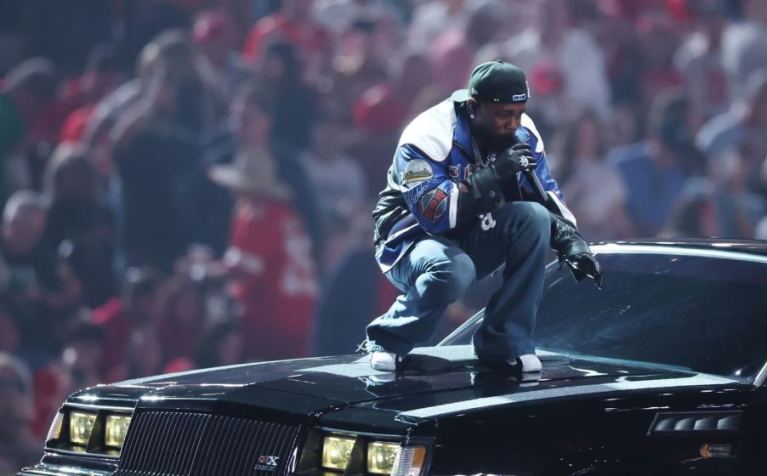
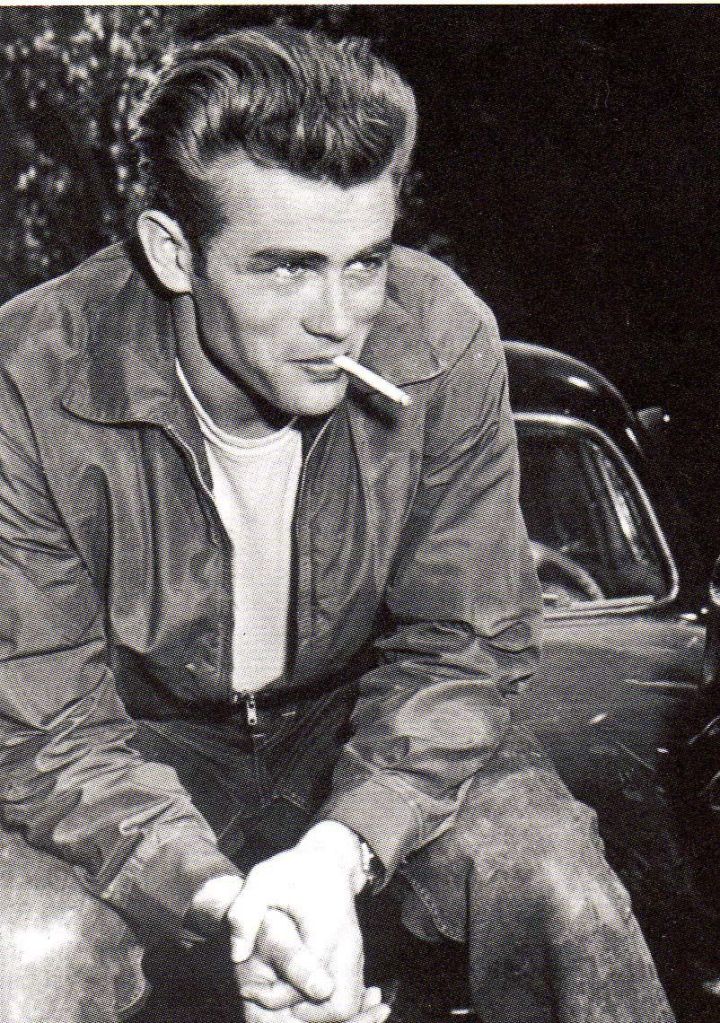
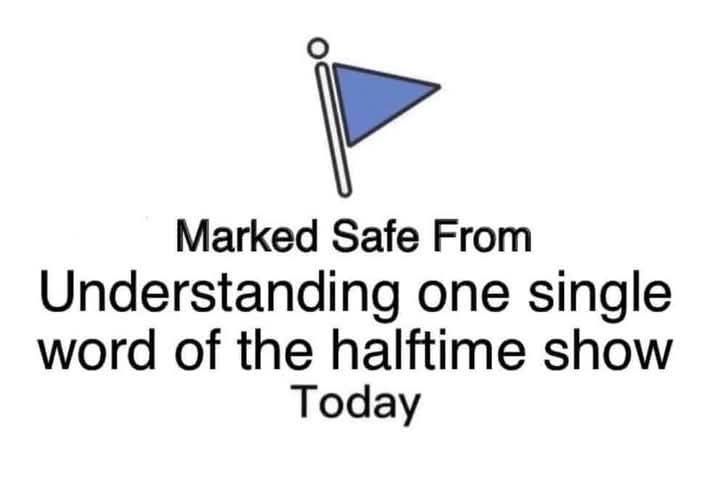


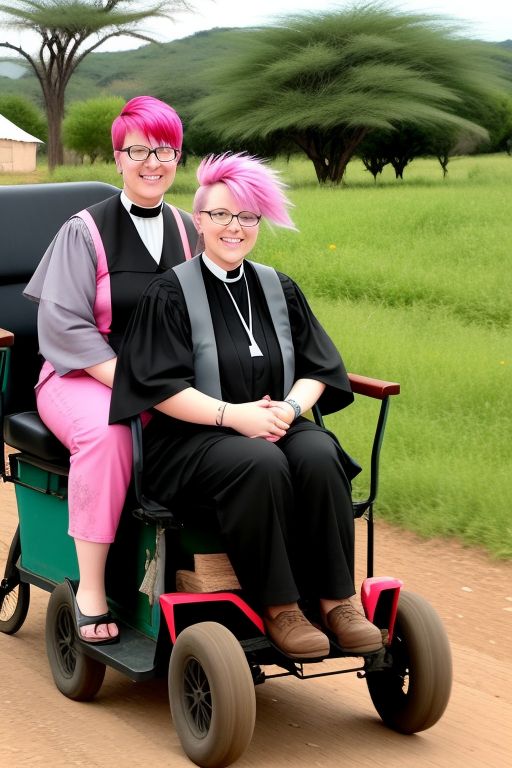

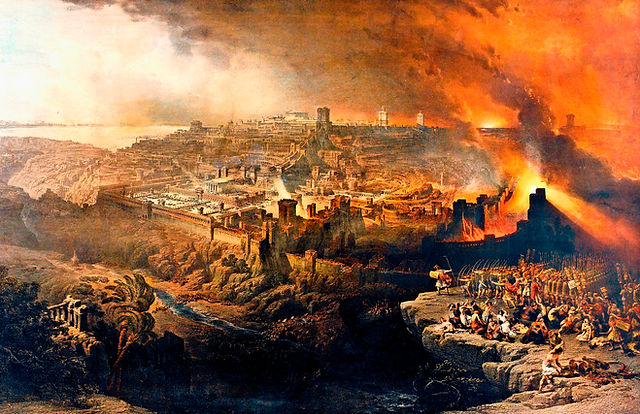
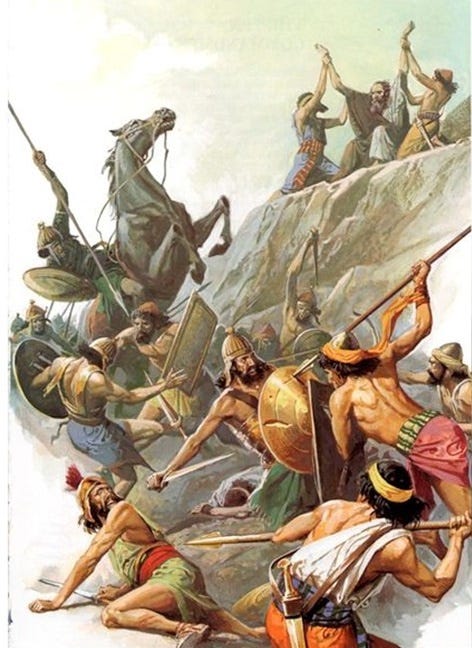

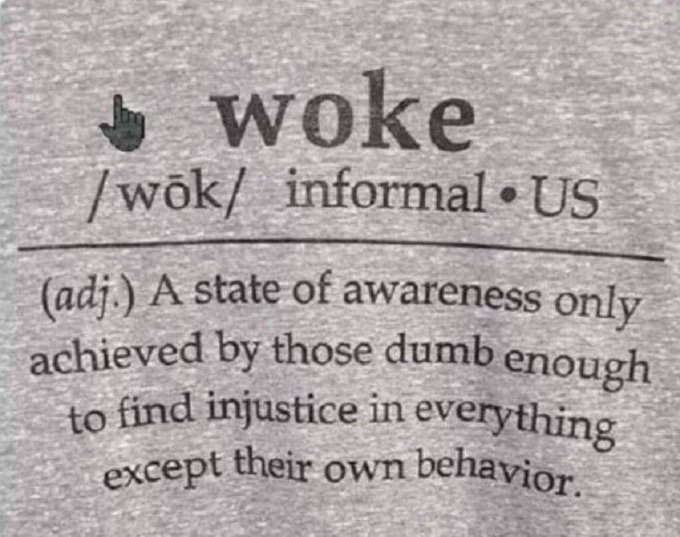


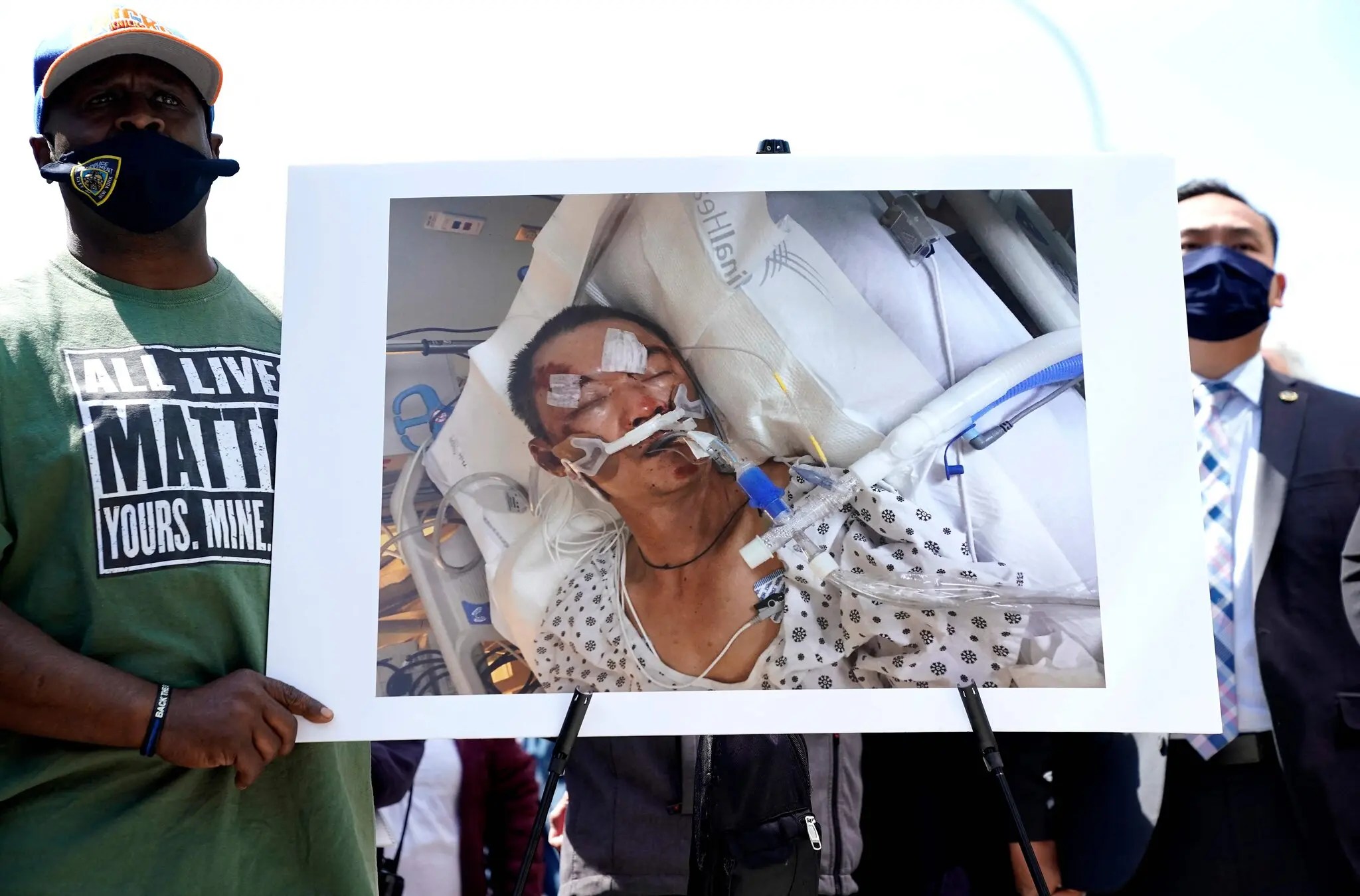


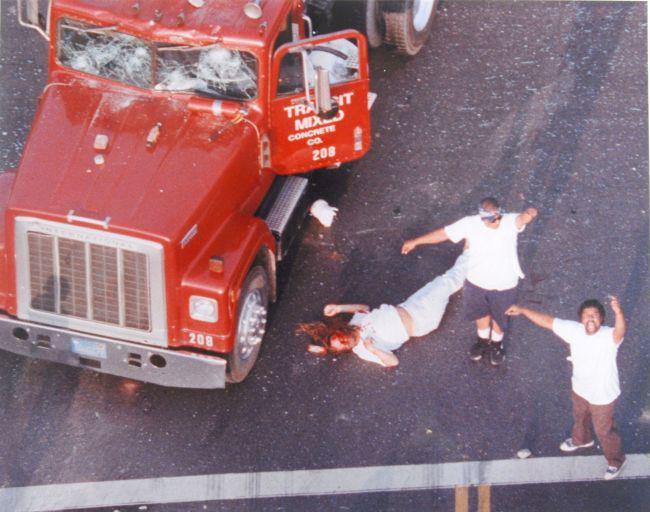
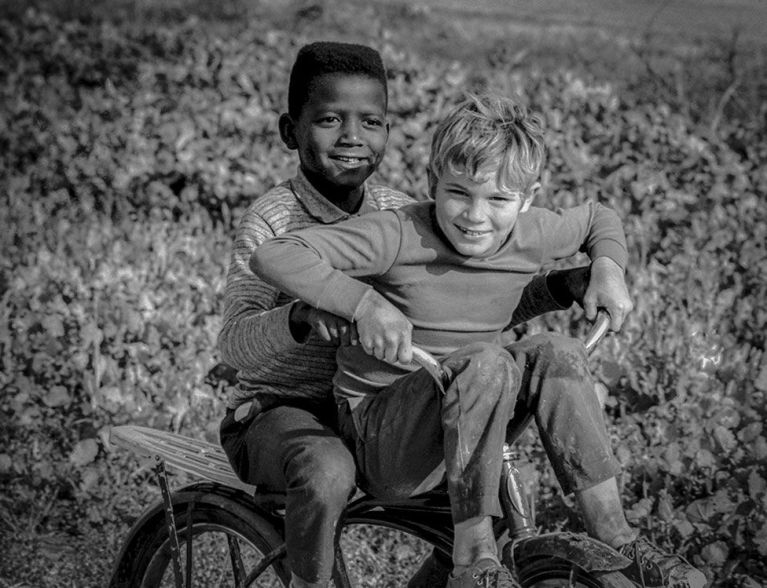





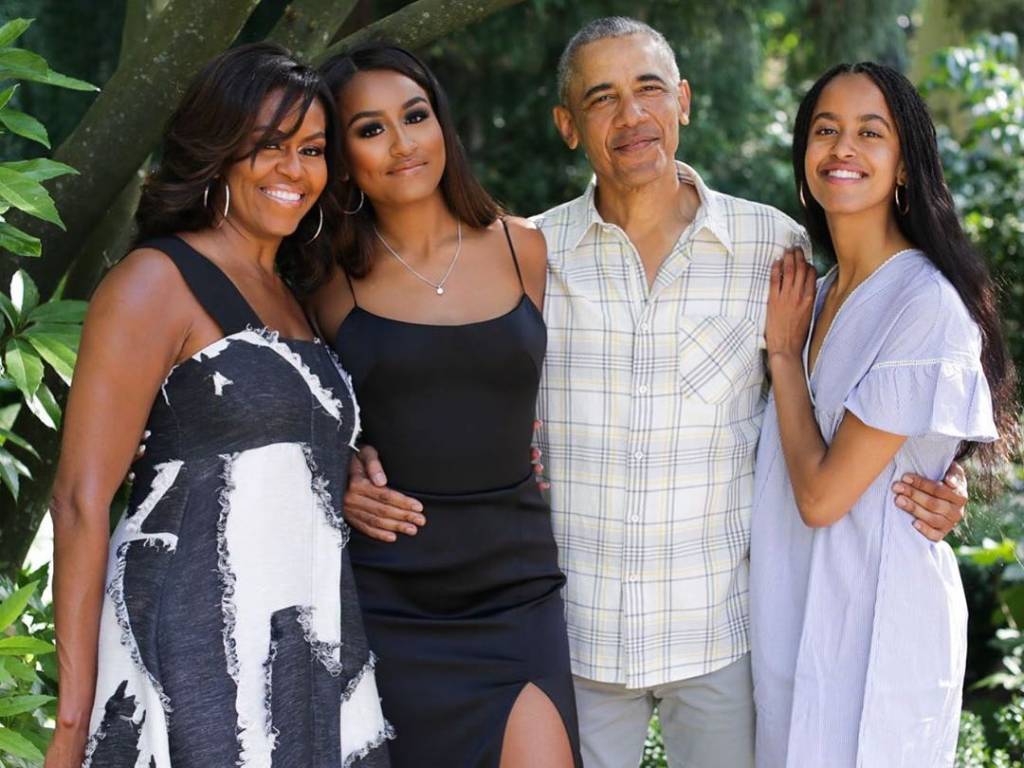

 Irregular Ideation