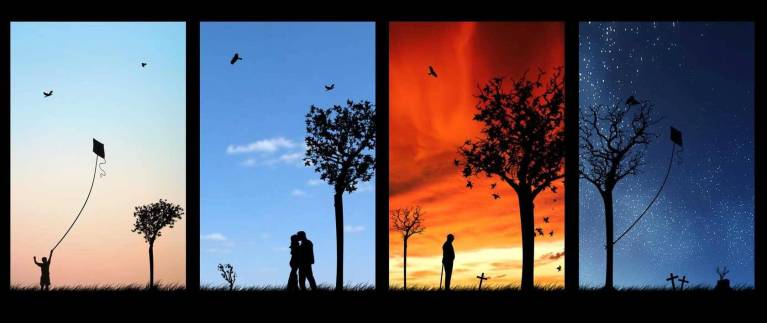
Liturgies of Life

Standard

The readers of this Irregular Ideation most likely noticed that I was down and struggling a bit.  No doubt the prayers of my family and good friends have been heard.  While the neck and other issues linger, there has been a break in the form of some good news that has brought with it that glimmer of hope again.

These cycles of mood and emotional swings have been something that I’ve pondered.  Despite there being events that are involved, there is also this sort of rhythm and inevitability to these things.  The phase “what goes up must come down” comes to mind.  Sure, I’m probably on the more neurotic end of things, with higher highs and lower lows.  But most people, no matter how good or bad their life is compares to others, seem able to identify with these ebbs and flows.

I mean, we have that time before coffee in the morning then that time after where the brightest of the world returns.  There are those the weekly slow starts “a case of the Mondays” contrast with that euphoria of Fridays.  Then the longer cycling patterns tired to holidays or weather.  Has anyone else had encounters with SAD or Seasonal Effective Disorder?  Descriptions like “terrible twos” or “the midlife crisis” exist for a reason.  Is the “sophomore slump” real?  I think so.  

And there does seem to be a preordained nature to this all, like the seasons or how the sun rises and sets. 

This kind of constant change is confirmed in Scripture:

There is a time for everything, and a season for every activity under the heavens: a time to be born and a time to die, a time to plant and a time to uproot, a time to kill and a time to heal, a time to tear down and a time to build, a time to weep and a time to laugh, a time to mourn and a time to dance, a time to scatter stones and a time to gather them, a time to embrace and a time to refrain from embracing, a time to search and a time to give up, a time to keep and a time to throw away, a time to tear and a time to mend, a time to be silent and a time to speak, a time to love and a time to hate, a time for war and a time for peace.

(Ecclesiastes 3:1‭-‬8 NIV)

To me this is both beautiful and terrifying at the same time.  The woman who brought a man such joy in their youth may make him all the more lonely when the season of death and seperation comes.  The attributes that make a nation rise in prominence, say a focus on equality, can be the very thing that brings about their collapse once it finally does reach the top.  

Not to say that any of this is meted out evenly across board either, some do have it easier or a higher baseline mood and others not as fortunate, nevertheless there are patterns.  

Bigger dreams lead to bigger despair.  But a harder struggle can also lead to greater joy and a more wonderful triumph for the faithful than those who lived for their own comfort.  There is balance, there is growth, larger and smaller patterns, a predictability that seems could be modeled.  How it plays out across groups of people is also a fascination of mine.

My own thought is that we could probably remove the triggering events and still end up with the same patterns in the end. 

In other words, there would have been a world war even if the Archduke Franz Ferdinand had not been assassinated, my disenchantment with the Mennonite denomination would have eventually boiled over even if not for the same specific reasons, and Elon Musk’s Twitter account isn’t the reason the crypto market dropped from those all time highs either.

First, Let Me Talk About Stocks…

If cycles of human emotion could be mapped out, the stock market might be the place to start.  The euphoria of a “bull” market and seeming endless pessimism of a “bear” market show how our emotions, collectively, shape the direction or mood of the market.  But it is more than just random noise, it is a complex dance of feelings and facts, that produces the ‘right’ price in the end.  It can often be algorithmically predicted.

A little story, for example, of how it works: I have bought and sold Dogecoin over the past few months.  My first purchase, in December, at a cost of $1000 then, would have been worth hundreds of thousands at the peak.  I sold it for a small gain.  But later, as not to miss out, I bought in again, and saw my portfolio balloon when the “meme coin” finally caught fire.  However, over the past few months, things haven’t been too good and the price was going down and down.

At first I had complete resolve.  The smart investor holds, I did my due diligence, this is only a correction cycle and things will reverse soon.  But eventually the pressure broke me.  I decided that it was time to save what was left of my gains and move to something that would produce a better return.  I thought this down trend would continue indefinitely or at least go lower—give me a better buy-in price later, right?  

I’ll show you where I sold around 80% of my Doge…
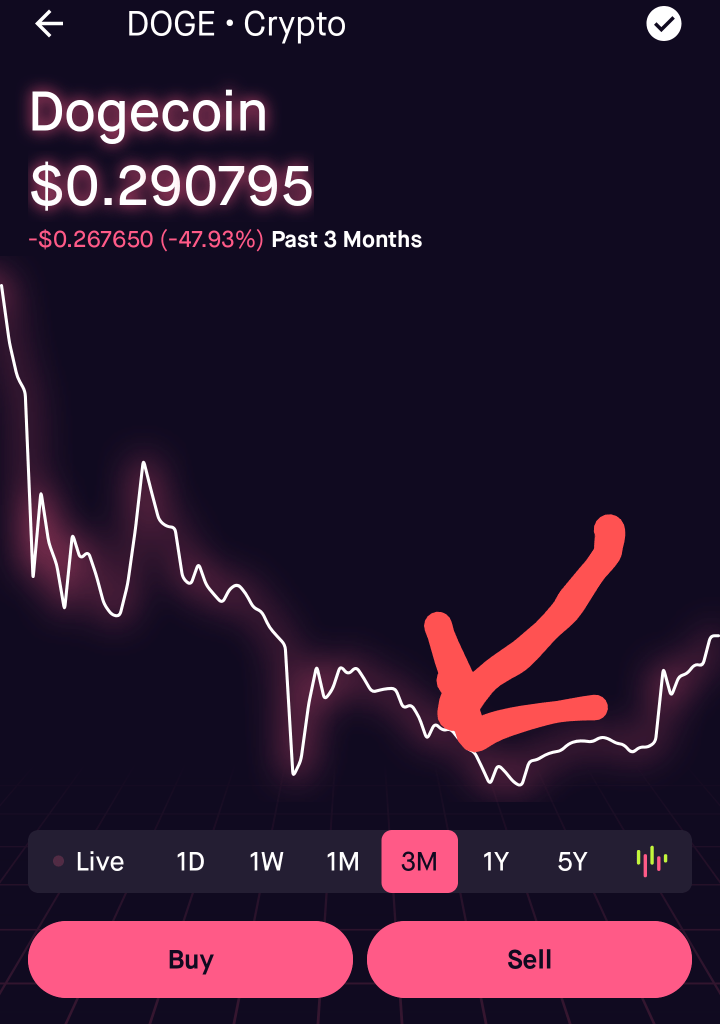
Oh well, I think I’ll be able to get more later.

Yup.  I picked the very bottom of the downward trend.  Even knowing that cryptos have gone through similar corrective phases in the past before continuing their upward climb, and even telling my coworkers that Bitcoin (despite the plunge) would end the year above $70,000, I fell victim to fear, uncertainty and doubt precisely at the wrong time.  I had waited for two months to see that trend reversal, at the bottom, and would have gotten it had I held on for another couple more weeks.

But more than to talk about my missed opportunities, I’m interested in that larger cycle of the market and how human emotions (in an aggregate) create this clear pattern.  Many people want to blame events, like a Tweet from Elon Musk or what have you, for their change in fortunes.  However, while we could see these events as being triggers, it seems the larger patterns are something more or less baked in.  

Elon Musk speaks as Doge sells

Dogecoin, for example, could not continue straight up forever.  Smart investors, who know the adage, “buy the rumor, sell the news,” started to sell before Musk’s SNL appearance.  And the sell-offs came with mentions both good and bad.  It was not the autistic billionaire businessman’s fault that so many people decided on that moment to cash in nor that others began to panic sell as the price dipped.  It was all predictable, part of some sort of fractal meta-pattern, can be modeled (like this), and would have happened (triggered by something else) regardless.

Smart investors learn to zoom at, look at the longer trend, rather than let the emotions of a bad day get to them.  Cryptos, despite their recent dip, have remained in an ascending pattern with the recent lows still higher than the high of the prior cycle, which is why the smart money (unlike your’s truly) continues to buy the dip and HODL (Hold On for Dear Life) rather than give up.  Most people miss on big gains because they’re impatient.

Despite Recent Lows, An Upwardly Building Pattern Prevails…

It was after my most recent dip in mood that I realized something.  In my prior lows over the years, as a Mennonite, I would still go to church for the fellowship and yet would not sing if the words didn’t feel authentic coming from my mouth.  

But this past time, despite my feeling low, I still showed up to sing and did because (despite my pain and depressed mood) someone had to carry my part in the choir.  Music was my worship, spiritual combat, rather about how I felt.  This time I soldiered through the liturgy, toothache, emotional turmoil, and all.  I left immediately after the service, rather than do the social ‘coffee hour’ thing, because I was miserable.

It might seem to be virtuous to only show up or sing when the feelings are there and yet it is hardly sustainable.  If I only showed up for my job when I was in the mood or having a good day, my paycheck would be small to nonexistent.  Many marriages end in divorce because the ‘love’ therein depends on their feelings in the moment and is not an actual commitment to love through better or worse.

So, in short, this duty-driven devotion, rather than being led by emotions, is actually progress.  It was not simply another dive into the same dumps as before.  No, I have changed, improved, from the “be true to yourself” advice to doing my job, for the good of others (including my choir director), gutting it out.  Two steps forward, one step back, will eventually get you where you need to be.

There is a sense in which it was always a choice whether or not to participate.  But my character development?  That seems like something guided, the result of years of small nudges in the right direction, and not something that I can take credit for.  In other words, I’m becoming what I was meant to be, having been placed in the right time and circumstances.

Despite Individual Progress, Are We Becoming Weaker?

That’s not to say that this kind of building pattern cannot work in reverse.  When we consider our “first-world problems” in comparison to what people face in Afghanistan, it would appear that we are becoming collectively weaker rather than use the past generations boost.  We use our opportunity to “stand on the shoulders of giants” to bellyache about ‘oppression’ because other people are not forced to pay for our lifestyle choices.

To put things into perspective?  

Charlotte, my Igorot bhest, as the daughter of a subsistence farmer in the mountainous Benguet province, was sent away to assist her grandmother.  She describes her childhood as being her “grandma’s water pump,” carrying heavy buckets to keep the garden watered.  The work was so hard that she would cry and wonder why she was even born.  That’s pretty much how my grandparents or great-grandparents lived, they did complain and probably because there was nobody to listen.  Everyone struggled, physically, and became strong enough to survive.

Not Charlotte. But how many in the world work.

Compare that to my generation, where we were mostly spared hard physical labor, yet find plenty of reason to cry injustice.  We have gone from “sticks and stones may break my bones, but words can never hurt me,” to triggered because an Amish kid stares at us.  Being looked at too long a micro-aggression, I’ve heard.  My own endless existential crisis another example and there are many other cases, in my generation, of oversensitive and dark struggles of those truly privileged compared to their hardworking parents.

While past generations in my religious upbringing may blame their insecurities on the standards and not being appreciated by their workaholic father or whatever, the latest generation can’t even eat peanut butter without breaking into hives.  It isn’t their fault either, they’ve been coddled and protected from birth, their parents worked overtime to make sure that they felt heard and connected.  Now, rather than see their discontentment coming from having to follow ‘legalistic’ church standards, our youth will struggle with questions of whether or not they’ve somehow been mis-gendered at birth.

There is little doubt that our sterile environment is likely contributing to the vast increase in autoimmune disorders and allergies.  Whereas previous generations fell to disease, endured actual physical hardship and wondering where the next meal would come from, girls married as teenagers, we now have people distressed that someone used the ‘wrong’ pronoun…

Triggered transgender

However, in a sense, over the generations it is the same struggle in different form.  No matter how improved things become, whether we get that go cart we dreamed about every day or not, there will always be another circumstance to blame our own feelings of not belonging on.  The more challenges we remove for our children, the less capable they become.  No longer comfortable in their own skin.  We blame different externalities for our despair, yet maybe it is something genetic, internal and inevitable?

How Civilizations Rise And Fall

There have been various descriptions of how civilizations rise and fall, one example below:

Many Americans see that we’re on the decline and that our fall from world prominence is now as inevitable as the sun going down.  And, given that many great empires have come and gone, this is not a big surprise.  How could a nation of immigrants, people who left the oppression of the old world, traveled across the treacherous Atlantic and conquered a continent, who understood sacrifice, lead to a generation so entitled, unappreciative, self-loathing and suicidal?

It is easy to paint a very bleak picture.  But then, gripes about the next generation are as old as human civilization and this doesn’t always mean a collapse is imminent.  Yes, there is change.  Top hats have gone out of fashion and will likely never make a return, trends come and go.  There have been times of great social upheaval, like the American Civil War, followed by periods of relative calm.  Those who lived through the Great Depression, the World Wars or Cold War all had their anxieties about the end being near, only for that “great peace” and fall of the Soviet Union to follow.

What feels like the end, under fresh leadership, could be the start of a new epoch.  Take the fall of Rome.  Sure, the Mediterranean empire fragmented, yet the common thread of Western civilization has remained to this day and is arguably stronger than ever.  Yeah, the British Empire may no longer rule the seas, but their rebellious American sons and daughters have become even more powerful than any empire ever.  So maybe after a painful declining corrective phase there will be a revival or rebirth?

Our survival depends on our optimism.  We must assume that each pullback will lead to the next increase in amplitude.  No, that doesn’t mean this is easy, doubt and despair require far less effort than hope and faith; failure is always possible even with the best efforts, but humanity has made it through many bad moments—moments many times worse than any of us will likely experience in our own lifetimes.

Maybe the down is what we needed to give us the bounce to greater heights?
North-South, East-West

Standard

One of my favorite love stories, the BBC adaptation of a Victorian era novel, North & South, features two very strong and compelling characters.  

The first, Margaret Hale, the cherub-faced daughter of an English clergyman, is forced to move to the industrial North after her father’s resignation over a matter of conscience.  The other is John Thornton, a mill-owner, a handsome man with piercing eyes, brooding and intense, and interest in the demure young woman.

Things started fairly well.  But, that doesn’t last as the differences in their perspectives becomes clear.  Margaret, compassionate and having lived a sheltered life, interprets the actions of John in a negative light and pulls away after witnessing his harshness towards an employee caught smoking.  What she sees as just cruelty was actually Thornton’s concern for the safety and wellness of his workers given the extreme risk of fire.

It is in the last and final act where there’s a scene where the tension between the two finally disappears.  Throughout the middle-act Thornton’s truly good character is slowly revealed.  And, Margaret, having returned South, has reconsidered her own idealistic notions, now sees the merits to living in Milton, and decided to return North again.  Meanwhile, John is going South, the two cross paths at a station near the midpoint and cue the music.

North & South

There is this wonderful part of the soundtrack in this climatic station scene, Northbound Train (listen here), that so perfectly accompanied the moment.  It is understated and elegant, reflective, that builds in waves to crescendo and then slips away as wistfully as it came.  Thornton’s steadfast devotion is finally rewarded with a kiss and happily ever after begins despite the painful struggle to get there.

When the Story Goes South…

During my pursuit of the impossibly (a preacher’s daughter, like Margaret) this story brought a little hope with the similarities to my own.  It wasn’t that we were so terribly different in our desires as it was she never heard me.  Her conclusions formed before the conversation even began.  She had pronounced “you’re thirty years old living in Milton” (the actual name of the town) meaning, in translation, that I would hinder her big plans.  And could not understand it was her boldness and ability to get out that attracted me.

My thesis then was that a composite of our unique strengths, seemingly incompatible, bound together by Christian love, would exceed what those of similar abilities could accomplish. My thinking outside the box combined with her represention of the Mennonite standard.  And, while I’m never good at getting things started (hence being stuck in Milton) I’m extremely loyal and willing to sacrifice for the team.  I knew my age and life experience was an asset.  But she could not see my value.

Still, for the year or so following her initial rejection I believed.  What a wonderful story we would have when all was said and done, right?

Anyhow, that music, Northbound Train, had seemed like the perfect bridal march.  Partly in innocent faith, partly to bolster my failing confidence against the deluge of rational fears, this image of the impossibly walking the church aisle dressed in white.  As would be the case in real life, tears would stream down my cheeks as the nightmare of the past decade was replaced by this wonderful dream of marital companionship and completeness.  

The strong emotions that came with that gentle harp being replaced with one violin and then two, have now disappeared.  The music is still beautiful, but my feelings of numbness have long replaced that panging desire for a well-defined conclusion to over a decade of struggle.  What I got instead was a world more complex.  The cynicism that I had fought tooth and nail was confirmed.  

The sunshine through the clouds, endings sweet and perfect are not for everyone.  And the reason we tell such lovely tales is probably because they’re so uncommon, the exception, and not the rule.  Sure, we can see ourselves as the characters.  But the impossibly will likely go on seeing me as the villain in her movie, her conventional guy as the hero, and has never once shared in my fairytale that love would prevail over our differences.

As Far As the East is From the West

It is hard to believe that nearly another decade has passed and I’m still alone.  I’ve moved from Milton, left the religion of my childhood behind, even traveled to the complete opposite side of the world twice, and have changed from that guy perpetually unsure of how to find direction.  No, I’m not a missionary, but I do genuinely love people and probably accomplish more of actual value than those duty-bound Evangelical types who see ‘the lost’ as their get-into-heaven projects.

More importantly, I’ve found another impossibly, a beautiful Filipina flower, a little lost sheep when I found her (struggling abroad, in Taiwan, to support her son back home) and now the one who keeps me strong despite our torturous wait.  Unlike the Mennonite impossibility, we do not share a cultural or ethnic identity, our lives have been very different, yet we have our simple and devoted love in common—which has been just enough to sustain us through these past years.

East & West

However, after all I’ve been through, holding on to hope is hard.  Could my visions of her arrival at the airport, on American soil, with Y-dran in tow, also be a delusion?  

It has been over two years and eight months since we’ve held each other that one last time before we parted ways in Taoyuan International Airport.  I had known the immigration process would be difficult, but could not have anticipated the pandemic and travel bans that make it nearly impossible to be with Charlotte.  It really does start to bring those worries that I might be cursed to the forefront again and sometimes the despair does win.

The eternal optimism of youth wiped away by the rejection of the Mennonite ideal, now facing my rational fears and the fact that I’ve been hoping longer than Jacob worked for Rachel and without so much as a Leah in between, I can now fully identify with the wife of Job, “Are you still trying to maintain your integrity? Curse God and die.”  The frustration is real.  How long does one go on dreaming?  When is it justified to wither away into bones, with life never to return again?

As far as the East is from the West is an expression, in Psalms 103:12, used to describe an impossible distance that cannot be bridged.  And it could seem that, despite the abiding love of my bhest to encourage me onwards, I’ve jumped straight from the frying pan into the fire.  We have had a bit of good news since I’ve last published a blog here, the USCIS approved the application, and yet will this impossibly ever become possible?

I see the successful couples. So lovely together. To them it feels preordained, meant to be, a dream come true. For me, on the outside looking in, there is now more uncertainty than certainty, not everyone gets that music at the end.

What Wears Me Out

Standard

I’ve always been a sort of magical thinker, my hopes always far outpacing my realities, and to the point that sometimes when my dreams would finally come true the pleasure had already been exhausted.

I had so wanted a go cart growing up.  On the school bus ride home my mind would start to wander into the fantasy realm.  I would picture a shiny new go cart, like the ones in the catalog, waiting for me at the end of the driveway and would actually be disappointed when it did not end up being true when we would finally pull up to to my stop. 

That’s not to say that I didn’t love the old go cart that my dad would finally weld up, using a rusted frame as a starting point, and an old lawnmower engine.  Anything with four wheels, that ran on gasoline, that could be slid around corners, definitely scratched that itch.  Still, my vivid world of make-believe did not always end with any fulfillment.

In my adulthood this tendency to be way out ahead of myself did not get any better.  I’ve cried, on more than one occasion, thinking of my beautiful bride walking towards me up the aisle.  And not in sadness either, it was in bliss having momentarily put myself in that wonderful place.  Of course, given that I never even so much as went on one date with this young woman, I pretty much ruined that music.

The world between my ears can be a paradise.  A place where there’s such thing as innocent love and anything is actually possible.  I used this as an escape.  My school years spent doodling and hoping for some kind of rescue from the mundanity of the classroom.

These visions were often grandiose.  A child scaled B-17 would land in the school yard.  I would run out to meet my faithful crew as the teacher and 5th grade class would watch in disbelief, stunned, as we revved the engines and were on our way to the nation (later a planet with two suns) that I benevolently ruled along with my brother Kyle and cousin Mel.

Truly, I had always thought that Kyle and I would always be together, build a house with a chimney in the center, like the ruins that I saw on a Civil War battlefield.  I’m not sure why, but it didn’t seem possible then (despite our fights) that we ever be separated, let alone hours apart, and I really can’t claim to have gotten over that disappointment yet.  He moved on, it seems that I could not.

And I have lived a sort of Peter Pan existence.  Holding on, hoping that some day the love that had eluded me, child-like and innocent, would finally magically arrive to rescue me from my torment for having failed to achieve.  I long overstayed the youth group.  Until I had my happily ever after, what choice did I have?  Get old by myself and alone?

Unfortunately, hope is not a strategy and I lacked the necessary social tools to approach an attractive young woman—let alone convince her to date me.  

Years would go by, where I would convince myself, “this time will be different,” and end up leaving the church retreat no closer to my goals and disappointed.  These beautiful wonderful thought going in would slowly morph into a nightmarish reality as opportunity would pass me by and I would be left with only my profound loneliness again.

It was only in my mid thirties that this optimism would crack and the pattern of hope followed by disappointment would finally overwhelm me.  Brimming with outsized expectations, I would arrive at the weekend, and suddenly shut down.  The wheels came off, I would collapse into the nearest couch, curl up, unable to push myself to try again—eventually ending up a sobbing mess.

The pressure had become too much.  The difference between my hopes and reality too insurmountable. 

Sure, I could entertain my delusions, the right one was going to finally arrive, we would look at our feet, shy at first, we would talk, she would smile at my earnest thoughts, I would finally be at ease and soon enough we would be walking hand in hand out the back of a church.  But the chances of that were as good as Gatsby somehow being able to turn back the hands of time and Daisy would be his.

My collapse from exhaustion came at the tail end of decades of forced optimism and sweeping aside my rational fears.  I did not want a world where my being 5′-8″ tall and rather unathletic disqualified me.  Love, to me, especially pertaining to my female religious counterparts, was supposed to be something transcendent.  Unfortunately, what I got instead was a brick wall of rejection.

Life is especially cruel to those with a high ideal.  If I were less able to see the marvelous maybe I could have more easily moved on to more practical aims.  But I could never get my head out of the clouds nor was I willing to acknowledge the harsh truth about romance.  The young women were also chasing their version of perfection and that perfect man wasn’t me.

Somehow, despite a mind that could span universes, I ended up being thirty years old living in Milton and thus ineligible for that kind of love.  How does a dreamer, still holding to those childish notions of escape, ever recover from that terrible pronouncement?

They don’t. 

It wears me out thinking about it.  

It makes me think of another novel and protagonist, Ethan Frome, an injured ruin of a man.  His house reduced in size as he limped, painfully, through what remained of his life.  Not even granted the merciful end to his suffering of that suicide pack those many years before.  Perhaps my life would have been better had my secret world been a little more stark, desolate and devoid of life?

Fascism By Any Other Name

Standard

Many Mennonites, in North America today, are horrified to find that some who shared their religious/ethnic heritage collaborated with the Nationalsozialistische Deutsche Arbeiterpartei (aka: Nazi Party) and rightfully so.  And, predictably, there have been various woke adjacent Mennonite commentators that, while claiming to be above this somehow parrot far-left radicals that accuse anyone with a positive view of traditional American national values of being “white nationalists” or fascists without seeing it as ironic.

The irony is that these moralizing finger-waggers, blinded by their arrogance like those self-righteous religious elites whom Jesus mocked in Matthew 23 (“If we had lived in the days of our ancestors, we would not have taken part with them in shedding the blood…”), are unwittingly aligning themselves with the modern variant of fascism.  Their simple minds apparently cannot comprehend that the same evil, to avoid detection, can be dressed differently and that this time it is their turn to enable the tyrants and true fascists.

Real Fascists Please Stand Up

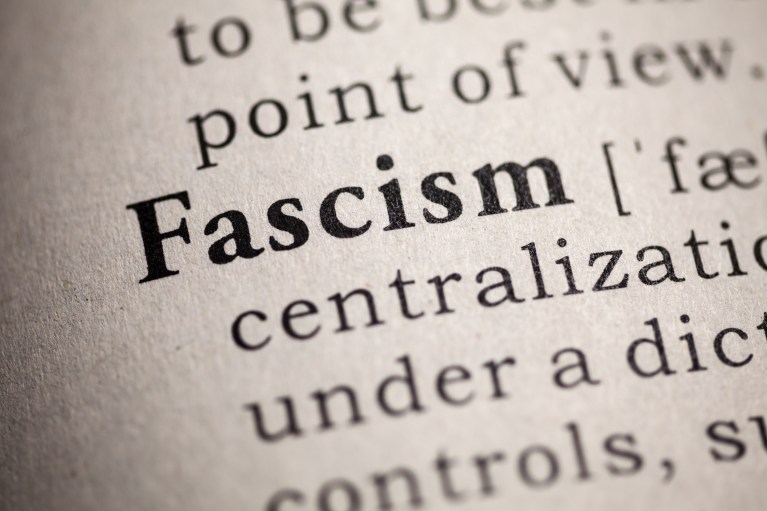
Fascism is a hard word to define, many dictionary definitions are insufficient or too narrow and do not give a sufficient description. The following quote (from an article, “What Is Fascism?”) gives a better picture of what the term is referring to and why some of us see this emerging in the current corporate and government institutional regime: 

Mussolini coined the term “fascism” in 1919.  The word “fascism” comes from the Italian “fascio,” meaning a bundle or group, and is considered a term for a militant brotherhood. The word “fasces” means an ax tightly bound with sticks, an image that became a symbol of the fascist movement, according to the History Department at King’s College in Wilkes-Barre, Pennsylvania.

How is fascism defined? Robert Paxton, a professor emeritus of social science at Columbia University in New York, who is widely considered the father of fascism studies, told Live Science that fascism is “a form of political practice distinctive to the 20th century that arouses popular enthusiasm by sophisticated propaganda techniques.

Two common themes of fascism that Paxton lists “anti-liberalism, rejecting individual rights, civil liberties, free enterprise and democracy,” also “exclusion of certain groups, often through violence,” and I’ll add that fascists have tended to have an obsession with what they consider to be impurities.  A particular German leader saw certain groups as being vectors of disease and thus justified their elimination.

So, the two primary elements of fascism, distilling this down, are this obsession with contaminates and the merger (or bundling) of power.  The only real difference between fascism and Socialism is that the latter had been more concerned with class distinctions and the prior with racial difference.  But, in the modern era, when the ‘Socialist’ left regularly uses skin color to divide people, and seem fine using corporate power to advance their social agenda, and are the masters of propaganda, it is basically a distinction without a difference.

Sure, they can call themselves “anti-fascists” or “Antifa” and claim that they’re only assaulting Nazis. But, come on people, a guy at the mall can wear a red suit, black boots, and call himself Santa—he’s still not going to come down your chimney with Christmas goodies. And look who is behind most of the violence across this country in the past few years.

Hint: It is not those individuals, totally unarmed, many of them military veterans, who entered the Capital Building on January 6th.

Not defending that either, they should be held accountable, but the difference is that these rioters do not have the corporate media shilling for them nor free reign of the college campus with their demands or sympathetic prosecutors who look the other way at their criminal behavior.

Like it or not, Trump supporters are not anti-democratic, not in the least, and simply wanted allegations of fraud and abuse to be heard. I mean, isn’t it is a little strange that the most well-armed part of our population would go into January 6th planning to take over the government and forget their entire arsenal at home?  If it truly was an “insurrection,” as our totally fair and unbiased political establishment would have us believe, why did they not bring any weapons with them?

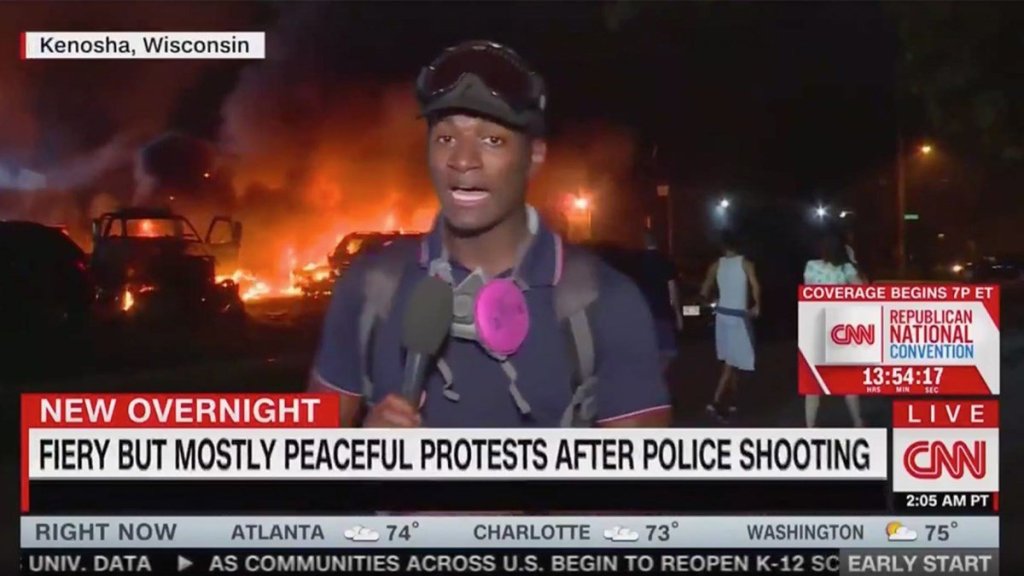
Night after night a Federal building, a court house, was attacked by far-leftists in Portland. In Seattle we had a whole section of the city taken over and declared an “autonomous zone” in defiance of the government. Over two billion dollars of damages, dozens murdered, in a summer of violence that our corporate media called “mostly peaceful protests” and yet we’re only talking about the wrongness of this one outburst?  Propaganda much?

Funny how January 6th was not called an unguided ‘mostly peaceful’ Capital Building tour, why is that?

But I do digress.

Fascism is “anti-liberalism, rejecting individual rights, civil liberties, free enterprise and democracy,” and basically Marxism on steroids. In other words, fascism is authoritarian, collectivist, my tribe versus yours, willing to close private business (or churches) and undermine the democratic process to achieve their ends. So, ask yourself, who was asking for mail-in ballots that are an invitation for fraud banned in most countries? Who is asking for collective judgment (or pardon) of people based only on their skin color? Who was creating the dictatorial mandates, in name of keeping us pure of disease, at the expense of our freedom?

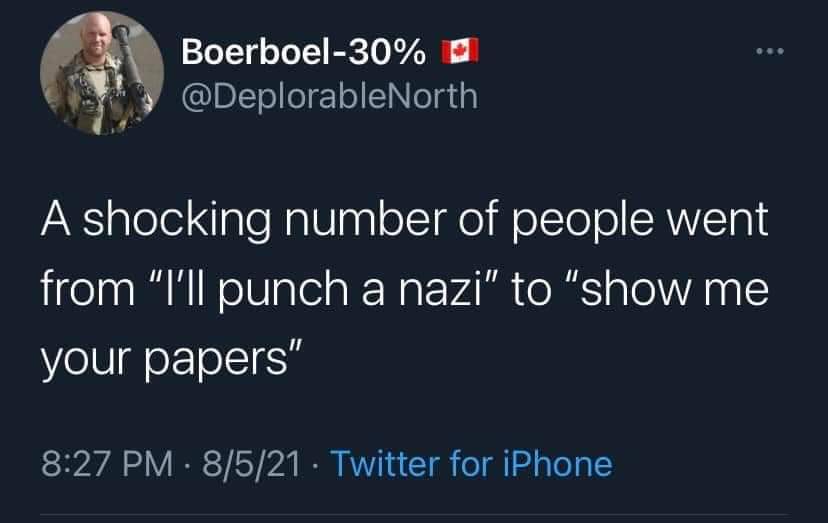
Those Who Defend “Papers Please” Are Fascists

My reason for writing this is the response to the meme below by some exceedingly ignorant people from my own Mennonite tribe:

The first response, a virtue signal about those dying in India, a total whataboutism, was completely insensitive to those suffering under the current nonsense. I’m pretty sure this smug individual won’t bother to watch this video nor ever question approved content they spew on social media. They can’t, they were raised in and remain in a religious cloister that taught them, “go along with the group” and “do as your told.” They might eventually drop the cultural costume some day, and yet they have not demonstrated any ability in our brief conversation to think independently or beyond the narrative being pushed.

No, they “believe science,” which is actually only an appeal to an authority they themselves do not posses, and ignore the mounting evidence that the ‘vaccines’ are totally ineffective. They will continue to think of themselves as well-informed, smarter than their cautioning peers, despite the fact that the six-foot social distancing rule was bogus, as was the focus on surfaces and mask mandate. This coming from someone who had N95 masks back in January of 2020 and while the ‘experts’ were still saying that we should be more concerned about the seasonal flu. Masks make a negligible difference if any at all. There is no proof otherwise.

So now that we’re talking about vaccine passports and literally forcing people to get an injection that has little or not value, that should not be necessary for those who have natural immunity through infection, and comes with the unknown long-term risks of any experimental new product, they still don’t see the problem?

I’m sorry, but only a fascist would be okay with this, because only a fascist is okay with “exclusion of certain groups” and take no heed of the individual rights or civil liberties of those who wish only to travel freely without harassment. To see the religious elites of the Mennonites not only tolerate, but enthusiastically endorse such policies, should send a chill up the spine of those moderate or apolitical in their ranks. These ‘educated’ nitwits don’t seem to get that the Nazi party came to power and won Germans over with the good they were doing—the Holocaust came later.

Diary Of A Tortured Soul

Standard

What makes me a forever tortured soul is that I’m standing on the knife’s edge.  On one side my ideal, my hopes, dreams and faith.  On the other side my rationality, my anxiety, my knowledge and fears.  

The current cultural paradigm tells me the prior things are built upon social construct, the latter upon science.  They have first deconstructed meaning and purpose, now moved on to trying to even erase categories built upon biology, constantly destroying the rule by highlighting the exception.

The problem with me is that I’m not able to dismiss one or the other.  In many regards I am a postmodern thinker, having rejected modernism, and yet not in the way of those out to destroy every religious tradition or cultural institution.

My own understanding is that social structures, like family, gender distinction or nation, do exist for a reason.  Sure, they should not be an excuse for injustice or unfair exclusion.  However, those who only see these things in negative terms or as unnecessary are severely mistaken.

There are things that can’t be viewed under a microscope that are as needed for human thriving as oxygen or water.  Sure, it is easy to dismiss religion as superstition or redefine terms to suit the current demands of outliers.  

But being unable to appreciate the balance of forces that keep a bridge from falling doesn’t mean that someone can keep removing structural members without consequences.

While being a critic of abuses by these institutions of culture and religion, my point has never been to destroy them.  Sure, it is not acceptable, for example, that the word “modesty” in the Bible is misused to blame women for male lusts, nevertheless tearing down all expectations is an abuse as bad or worse.

Perhaps there are benefits to promoting healthy masculinity or a distinct feminine role?

Those trying to erase all difference in the name of equality are the most controlling and unpleasant people.  In the name of tolerance, they are literally at war with everyone present and past trying to preserve an identity they cherish.  They worship the exception while making life miserable for everyone else.

That’s where I differ from the ‘woke’ and the virtue signaling masses that empower their tyrannical edicts.  Sure, I believe in recognizing disadvantages of some and making wrongs right.  But that’s not what social justice is truly about.  It advertises itself as being a solution, yet is only the same evil of intolerance in a new more ‘colorful’ form.

Still, I am not capable of being fully engulfed by the teachings of Christianity either.  I tend to be philosophically in alignment rather than spiritually and that’s because I’m continually dismissing my own experience as invalid.  I mean, so what if I got the warm fuzzies at a church service, right?  I’ve also experienced euphoria on Adderall.  Been manipulated by music, a rousing speech or what have you.

I can identify fully with H.P. Lovecraft:

“We all know that any emotional bias — irrespective of truth or falsity — can be implanted by suggestion in the emotions of the young, hence the inherited traditions of an orthodox community are absolutely without evidential value…. If religion were true, its followers would not try to bludgeon their young into an artificial conformity; but would merely insist on their unbending quest for truth, irrespective of artificial backgrounds or practical consequences. With such an honest and inflexible openness to evidence, they could not fail to receive any real truth which might be manifesting itself around them. The fact that religionists do not follow this honourable course, but cheat at their game by invoking juvenile quasi-hypnosis, is enough to destroy their pretensions in my eyes even if their absurdity were not manifest in every other direction.”

But this writer of horror, who lived in his own existential crisis hell, does not seem like an example to follow.  What is the point of being ‘rational’ if it keeps one in a state of constant dread about how insignificant and out of control they are?  Is this holding to an agnostic and meaningless interpretation actually intelligence or simply another form of ignorance?

I vote the latter.

Command of language, the ability to pull together a vast amount of information and sift science from superstition, these are things seen as signs of intelligence.  And certainly they are measures of a particular kind of capability of mind.  But, as a person can be knowledgeable and unwise, saying things that bring us pleasure or purpose are not real is simply ignorant.

Serotonin is as real as the stars in the sky, the feelings this hormone produces are no different from light.  It would be stupid to argue that light waves are less important because they lack mass.  Likewise, to say that the spiritual is non-existent, because it cannot be weighed or otherwise measured, is not brilliance either.  Lack of appreciation or ability to comprehend things of emotional value is not intellectual strength.

Nevertheless, there is a sense in which seeing behind the veil changes things, there are things that can’t be unseen.  And those Lovecraftian monsters do exist even if only in the mind of the author.  

My own experience, unfortunately, has left me untethered from the comfortable and floating in space.  My sincerest hopes rejected as being delusion by the very people who I had thought would appreciate such things.  It is difficult to cling to the belief that “with faith all things are possible” when your former pastor’s daughter, encouraged by him, supposedly missionary minded, tells you she can’t love.

It is that disconnect between profession and action that keeps me still precariously balanced on bloodied feet.  

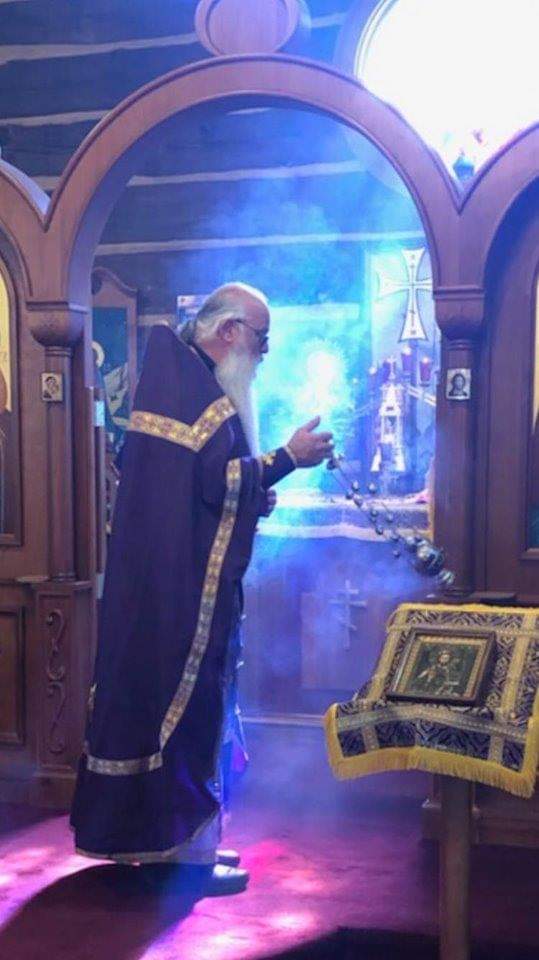
Orthodoxy has brought me a firmer foundation than the ever shifting sands of Protestant theology and practice.  It is certainly more ancient and authentic than the alternatives.  Still, that loss of identity and innocence, that process of degradation of my child-like faith over time, makes restoration of my soul seem as possible as a return to my mother’s womb.  How to become less cynical again?

I do envy the simpletons who can ignore such things.  They suffer without swaying in the belief that God is in control.  Wouldn’t we all live that way if we could?

At some point doesn’t logic dictate we take the advice of Job’s wife, curse God and die, rather than continue to push through the pain against all odds?

This blog site, Irregular Ideation, was a product of my dilemma.  That is what to do when the happily ever after and meant to be fairy tales are insufficient to get us beyond our fears.  What does happen when those teeth of quiet desperation and endless angst finally gnaw through what remains of the moral foundation.  The eternal abyss opens beneath our feet, the inscription over our heads: “Abandon all hope, ye who enter here.”

Fr. Anthony, the spiritual mentor that met me in my time of need, boiled it down to a choice, either we choose to live a life of meaning or we do not.  Charlotte, my bhest, has also urged me to be strong and that likewise suggests that we decide what is worth the effort.  But none of that makes the choice easy or pain free.  Adam and Eve never lost that awareness that biting from the forbidden fruit of knowledge gave them, the thistles of doubt and despair still remain.

It is both assuring and terrifying that the most notable characters in Scripture were tormented.  Elijah, having witnessed literal fire from heaven, fled terrified into the wilderness because a wicked queen threatened him.  John the Baptist, suffering in prison, sent his disciples to ask Jesus, “Are you the one who is to come, or should we expect someone else?” (Matthew 11:3 NIV)  And Jesus himself, in angish, speaking of his coming trials, prayed “take this cup away, and on the cross felt forsaken or abandoned by God.

St. Paul, with his undisclosed “thorn in his side,” suggested a division within, the ‘spirit’ being willing while the ‘flesh’ is weak.  The book of Psalms and other Biblical poetry, a great comfort to many today, suggests the writers were experiencing travails and torment.  In no way were these ignorant people living a life of bliss.  They were fully aware, they had their moments of failure, and choose to keep going on in faith despite this all.

As my parish priest reminds us, “If you ain’t struggling you ain’t Orthodox.”

So while my life would be so much easier if I could be agnostic and accept that we’re all products of random chance, biological robots plotting a predetermined course, that everything is about sex and power.  But I don’t give in to that existential dread and will stand against those who, with seeming sadistic pleasure, tear at the foundation of meaning and purpose.

I’m tortured soul because I am able to both see the fullness of beauty and also stare into the void of emptiness.  I live with keen awareness that many have died, clinging to breath and hope, thinking their salvation was right around the corner.  It could all be for naught.  Still, I fight.  I’m not in control, I never will be, and long for that final peace when my journey is complete.  For now, though, I’ll dance on this blade, my persistent uncertainty on one side and strong desire for God on the other.

I can pretty much rationalize around any moral boundaries, maybe eventually embrace a life of self-indulgence and not giving a crap about those whom I’ve stepped on to gain a small advantage.  I could, more easily, give in to self-pity or be overwhelmed by cruelty and give up.  Lord have mercy!  Still, something within, not even sure how to define it, pushes me to endure through hardships.

At some level it makes no sense, why must we go through hell to get to heaven?

It doesn’t make sense.

But then neither does my existence.  How did I come to be?  If my life is finite and time stretches infinity in both directions, there is essentially zero chance of being on this moment right now.  So our existence is not rational nor that we extrapolate, from our pleasure and our pain, that there is something greater.  Maybe belief in the divine realm, where all is made right, is merely a survival mechanism—so why then do we question it?

And so it goes on.  There is no growth without pain, not triumph without suffering, our moments of glory would not be such a pleasure if there was nothing required to attain.  So why not extend this pattern and conclude that our torment, if righteous, will be rewarded…

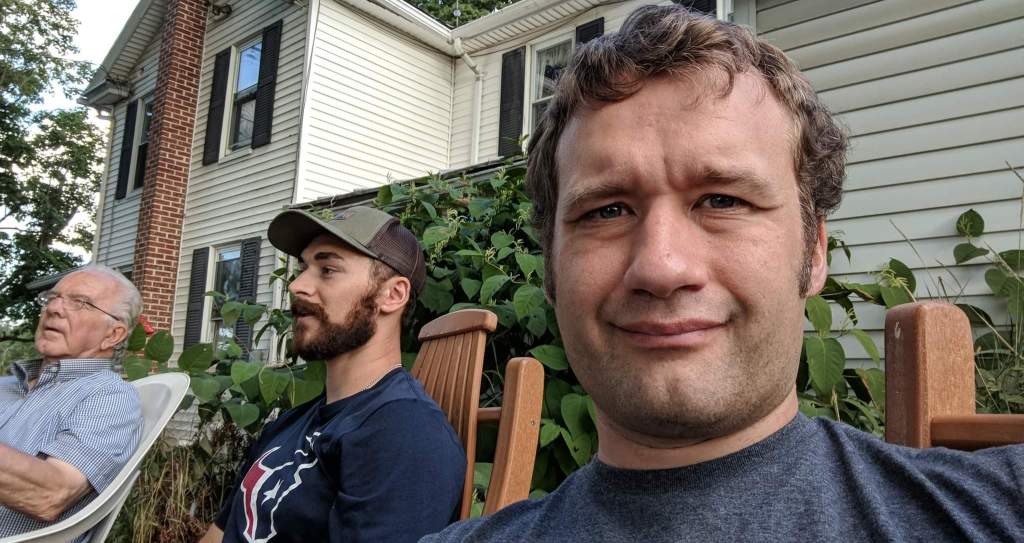
A picture I snuck of my grandpa, Uriah and myself…while contemplating life…

When To Give Up?

Standard

The past few weeks have been painful.  I had a bad toothache on top of my chronic neck issues.  Sleeping and eating became extremely difficult.  Like a city that still hasn’t been able to repair the flood walls after the last devastating storm, it did not take much time before waves of despair washed over me.

Yes, I knew that eventually this round of suffering would likely end.  Antibiotics did finally do their thing for the infected root after a few days of excruciating pain.  But I’m also more keenly aware than ever of my own deteriorating condition.  I have gone to the gym faithfully for years, live a generally healthy life, and yet it is all simply a matter of time before I’ll succumb to old age.

It’s been a rough year, maybe even a rough decade, as the strong have fallen and yet another romance seems to be up against impossible odds.  The death of Uriah, despite my best efforts to prepare for the outcome of the terrible prognosis he received, is still difficult.  And now the unexpected circumstances of the pandemic are a real threat to my most successful relationship.

It has been over two and half years, early January of 2019, since Charlotte and I have been physically together.  I had visited her over the holidays two years in a row and might have done the same had a contractor, remodeling my house, not overstayed their welcome.  So, thinking the immigration process would soon be underway, I had promised Charlotte that I would visit the next year if she was not here.

Unfortunately, as December of 2020 approached, it soon became very clear that I would not be able to keep my word.  Travel into the Philippines, for a foreigner like me, had been banned.  It was, to say the least, a huge disappointment.  And, obviously, having not come through, my own credibility also took a huge hit.  Sure, I could not have known, but then how do you assure of anything in times like these?

I’m still not allowed to visit my love and there’s no end in sight to our wait.  The Philippines is unusually strict as far as allowing noncitizens into the country and the immigration process, already arduous, has slowed to a crawl in the current pandemic era.  In any year prior to 2020 there’s a good chance that we would be buying plane tickets right now for her and her son.  Now everything is uncertain.

It is torture.  What has remained of my hopes is being severely tested.  Sure, the first step of the K-1 Visa process may soon be underway (we submitted our paperwork at the start of the year) yet the US Citizenship and Immigration Services (USCIS) hasn’t even started to review it.  The estimated start of processing is 6 to 8 months, we’re on month 8, and they could deny our application.  And that’s just the start, then it moves on to the US Department of State.

Very recently I’ve heard that the Embassy in Manila isn’t even doing the interviews right now and, if true, this would mean a tremendous backlog of cases.  They’ll likely force Charlotte and Y-dran (her son) to get the experimental vaccine or at least make it exceedingly hard otherwise.  I’m not completely comfortable with that and yet what choice does one have?  They basically have us over the barrel.  Even with full compliance we’re looking at possible years of additional waiting.

It is so completely unnecessary that Y-dran has to wait even longer to have a father in his life, so absolutely unfair that Charlotte’s patience continues to be punished with one more year of waiting, and that’s not to mention my own distress trying to decide what is best considering the circumstances.  It seems every path I try to ease our suffering is met with a new obstacle.

Just today, as I further explored our options to visit or meet somewhere, I found the ticket prices for my go-to airline have about tripled from last time that I looked and are pretty much prohibitively expensive.  I do not even mention that sort of thing to her right now because it is too depressing too talk about.  Maybe I’ll do a GoFundMe to raise funds if there is actually an option for us to see each other.

At this point nothing else in my life matters besides my obligation to Charlotte and Y-dran.  If it weren’t letting them down, it would be easy to jump off of a bridge given the current outlook.  I’ve been stuck in this nightmare of having my most sincere romantic hopes be dashed by things unforeseeable for decades.  I’ve already endured complications that extended our seperation for years and now this.

Prior to the pandemic we would likely have everything processed by now and would be purchasing tickets.  Now it is perhaps foolish to believe that we’ll ever be together or at least not for many years.  Which, given our current ages, and the ticking biological clock, could mean that we never have children.  At the very least, I’ll be even older and in less favorable condition than I am now, which is a very hard pill to swallow for both of us.

I’ll admit that my resolve is being strained to the max.  Given my physical battles and my history of seeing everything possible go wrong in pursuit of happily ever after, there is this nagging fear that the past couple of years have been wasted on a lost cause and that I’ve dragged down to other people with my own delusional faith.  I know Charlotte could find another man.  Am I selfish to hold on?  How long do you keep dreaming before giving up?

The problem is, if I give up, I’ve given up on life and love—I have let cynicism win.

Then again, it does feel that the odds are stacked up against us.  Why would this all happen right now, when we already had such a tough journey?  We’re up against the world, a cold-hearted system that doesn’t care about our story nor our love.  Those making these decisions, processing our paperwork, can hold out indefinitely without feeling an ounce of our pain.  We’re not giving up although maybe we have picked a battle that can’t be won.

Politics of Pandemic–Breaking Down the Fauci Emails

Standard

Recently, through the Freedom of Information Act, by request of Washington Post and BuzzFeed News, a trove of Dr. Fauci’s emails have been released and the revelations therein causing a great uproar online.  On one side there’s the “I told you so” crowd doing their victory lap. While, on the other side, is the supposedly unbiased ‘fact-checkers’ and corporate media denial professionals trying to argue that there’s nothing to see here. 

So, is Dr. Fauci a national hero, a seasoned expert who helped the nation navigate a crisis, or should his head be on a pike?  

Let’s start with who Dr. Fauci is and why he is the focus of national attention…

Doctor in the Spotlight

Anthony S. Fauci, M.D., was born in Brooklyn, NY, on December 24, 1940, to parents who operated a pharmacy in the city, his grandparents were immigrants, he was raised Catholic and now considers himself to be a humanist.  He was a standout basketball player in the private Jesuit high school he attended, went to Holy Cross University for pre-med, and then attended Cornell University’s Medical School.  He married Christine Grady, in 1985, who is described as “an American nurse and bioethicist” in Wikipedia, and they have three daughters.

Dr. Fauci is the director of the National Institute of Allergy and Infectious Disease, a role he has served since 1984, through seven presidencies and, while a respected figure in his field of immunology, had not garnered much public attention prior to the emergence of Covid-19.

In early 2020 Fauci was selected to be part of the Trump administration’s White House Coronavirus Task Force (now serves as Biden’s chief medical advisor) and very quickly was singled out by the corporate media for his sometimes seemingly contrarian positions with the President.  If anything, his elevated role and becoming the face of the pandemic response has more to do with partisan politics of those desirous use him as a foil against President Trump than it does with anything else.  Even Fauci himself, in the emails, seemed confused about his new celebrity status. 

There were many stories lauding Fauci.  There is no indication that he wanted to become the public figure he has become.  He did not have the power to tell states what to do.  But now, because he was portrayed as this unquestionable expert, he has become symbolic of the shutdowns and mask mandates to many Americans.  Fame, even if unasked for, is a two-edged sword.  One can quickly transition from hero to heel once the spotlight begins to reveal their blemishes.  By putting Fauci front and center of the Covid response, the partisans have given us ample reason to scrutinize just who he is.

I personally, as someone with a sister who is a medical doctor and another who is a nurse, I am also not comfortable with many of those trashing Fauci’s reputation.  I’m equally opposed to demonizing him or trying him in the court of public opinion.  That said, as one who has some life experience, I also understand the value of second opinions when it comes to medical interventions.  Fauci’s opinion should have been considered one of many, as part of a task force, and should never have been positioned as a rival to the President.  That was dirty politics, completely a media creation, and likely hurt the pandemic response. 

The Politics of Pandemic 

Ideally, in times of national crisis, where many lives are at risk, partisan politics would’ve been put aside and the nation would rally behind the leaders elected no matter their party affiliation.  In that world, the President, informed by various economic and medical advisors, would make the executive decisions and government agencies would do their best to put these decisions to practice.  However, in the current polarized hyper-partisan environment, and with a Presidential election looming in 2020, the pandemic was treated by many as simply another divisive political tool.

No world leader’s response to Covid-19 was perfect.  For example, had European governments followed Trump’s lead and shut down travel from China early on in the pandemic we might have had more time to prepare.  It is easy to forget, but before social distancing and shutdowns became vogue, many social elites were minimizing the threat and calling Trump a racist for warning the world about the virus.  In Italy, for example, they were urging people to give hugs to Chinese people to prove their own virtue.  Our Speaker of the House, Nancy Pelosi, urged her constituents to visit the crowded streets of Chinatown in San Fransico.

Trump was criticized for urging calm and being a cheerleader once the danger of Covid was finally realized.  And, before that, was criticized for shutting down travel from China and accused of fear-mongering for speaking out.  He could not win. He was resisted at every turn while trying to take steps to prepare and then accused of literal murder for the deaths in this country as if the world was somehow doing better.  Few here would know that the US death rate is actually lower than that of Europe, per capita, but the stories here would focus on death totals to build the image of Trump’s failure.

Fauci, on the other hand, was not allowed to be criticized.  He was praised endlessly as a representative of science, as bold and unbiased, a source of all truth and wisdom.  His word was to be treated as irrefutable, god-like, his perspectives treated as the only one that mattered, and Trump asked over and over again, “will you follow Dr. Fauci’s recommendations?”  It was presented as this horrendous thing that Trump may not take this one man’s advice on how to respond, as if there weren’t teams of other advisors to be heard and other concerns to be considered.  

Every smart patient knows to get a second opinion on serious matters.  Even the best physicians, experts in their fields, can misdiagnose or prescribe the wrong treatment.  And this idea that “following the science” means worshipping or never questioning, men like Fauci is pure ignorance. It is dangerous ignorance.

But, as ignorant, is holding Fauci to an impossible standard because others put him on a pedestal.   

On one hand, I completely understand the resentment that some hold towards this man that has come to symbolize the economic destruction brought on by state governors following Federal guidelines.  However, much of what is being said now, in wake of the released emails, is as unfair as the coverage of the previous administration.  Those against mask mandates and economic shutdowns are doing the same thing to Fauci as the corporate media propagandists did to Trump.  His comments, like Trump’s comments, are being ripped out of context by many commentators, without explanation, and that’s a problem.

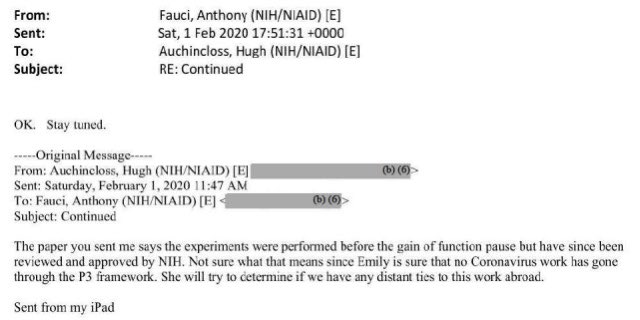
Yes, some of the emails show that Fauci withheld certain ideas about the origin of the virus and was initially dismissive of masking, yet nothing I’ve seen so far is smoking-gun evidence of his wrongdoing.   Of particular interest is his involvement in funding the Wuhan lab, during the Obama administration, and whether or not this may have been a conflict of interest.  And then there is the ethical issue issue with “gain of function” research that must be explored.  My goal is to give fair treatment to the man and offer my own perspective as far as the content of the emails.

To Mask or Not To Mask?

One of the most contentious issues of the pandemic was the mask mandates.  These state level policies, following the recommendations of the Federal government, were viewed either as life saving and scientifically proven or as terrible infringements on liberty and pretty much totally ineffective. 

My own leanings, as someone who purchased a box of N95 masks in January of 2020, is that masks offer a marginal protection, if the correct type and properly used, and yet the mandates were basically useless.  First cloth masks don’t offer the level of filtration that is necessary to trap the water droplets carrying the virus.  Second, some countries required both a face shield and mask because they determined that masks alone weren’t effective.

Dr. Fauci seems to have come out against mask mandates before coming out in favor:

The typical mask you buy in the drug store is not really effective in keeping out virus, which is small enough to pass through the material. It might, however, provide some slight benefit in keep[ing] out gross droplets if someone coughs or sneezes on you. I do not recommend that you wear a mask, particularly since you are going to a very low risk location.

And also saying this:

Masks are really for infected people to prevent them from spreading infection to people who are not infected rather than protecting uninfected people from acquiring infection…

Now, I believe he’s right in both cases.  Masks only offer minimal protection.  Covid spread through factories where everyone wore masks and states with mask mandates really didn’t fare better than those that did not.  I understand that urge people have to “do something” and there are several flawed studies that back up the idea that masking is beneficial.  However, I really do not see evidence that it makes a significant difference.  Real life doesn’t match up with laboratory conditions.  And thus that was likely behind Fauci’s pragmatic first take.

What is a bit unfair about the criticism about this apparent reversal in opinion on masks is that we all change our minds all the time.  Sometimes I may disagree with some of my colleagues on something, state my own perspective, and then later amend as new evidence comes in.  However, what is disturbing is where Dr Fauci explains this flipflop as being protection of mask supply for medical professionals.  In other words, he is basically admitting to having lied to the American people about the effectiveness of masks.  If that is the case then he should not be given a free pass.

The ‘Debunked’ Lab Leak Theory

One of those banned topics on social media was the theory that Covid-19 may have come from the lab in Wuhan, China.  It made sense, a deadly virus emerges at a market within walking distance of Wuhan Institute of Virology, why not put that laboratory on the list of suspects?  But for some reason discussion of this possibility was forbidden until very recently when it was revealed, through US intelligence, that researchers at this lab had become ill shortly before the virus turned the surrounding city into a warzone.

The Fauci emails also reveal that this possibility, even that Covid showed signs of being engineered for “gain of function” research, were discussed.  Now, frankly, this is just good forensic science.  It would be more shocking had this never been considered at all.  And the batting this idea around alone is not proof that this is what had actually happened. 

However, that so many literally conspired, with a foreign entity, to suppress this hypothesis (Big Tech censorship stifling the online conversation, corporate media fact-checkers claiming it had been debunked, etc) should be a cause for global outrage. 

Of course, the most laughable claim of media propagandists, at the time, was that it was racist to link the virus to the Chinese Communist Party.  Nevermind this was from the same people who had no problem with taking aim at wet markets and bat soup.  But somehow that criticism of Chinese eating habits wasn’t a problem while taking a closer look at a laboratory that was studying coronavirus and bats was inappropriate. 

Uh-huh.

Anyhow, given that Fauci had come out in full support of gain of function research and also been a force behind funding the Wuhan lab.  Could it be this history explains the private discussion, in emails, and simultaneous public denial? Possibly, yes.  It is very clear there’s a conflict of interest.  Of course there’s a reason for him to keep a lid on what could be proof of his culpability for millions of deaths worldwide. 

The result of Fauci’s silence, and corporate media stupidity and bias, is that something that should have been thoroughly explored months ago is only now being openly discussed.  This has given a totalitarian regime, known for deception, more than enough time to cover up the truth and their role.  Precious time has been wasted on what could be the biggest crime against humanity in the history of humankind.  We have experienced a death toll and economic damages greater than twenty nuclear bombs, countless innocent lives destroyed, and the likely culprit was protected by a web of denial, collusion between Big Tech, the corporate media and high ranking government officials—like Dr. Fauci.

If the January 6th fracas is worthy of consideration for a Congressional Commission, then we really should dig deeper and investigate the true cause of a global pandemic that killed millions.  No, there’s no smoking gun in the Fauci emails, or least none that I could see, and yet there is more than enough reason to suspect that one of our leading experts had tried to keep a lid on the Wuhan lab theory because of his own ties to the research.  And still our corporate media speaks glowingly of him, as if he could do no wrong, the fact-checkers scurrying to tell us there is no bombshell revelation in the emails.

Dr. Fauci: Authority or Arrogant?

One thing that the pandemic has revealed and the emails only further confirmed, is the complete arrogance of our institutions.  For whatever reason Fauci and others felt it was okay to mislead the American people, to tell the so-called “noble lie,” and then they wonder why trust is waning amongst the people they’ve deliberately deceived? Meanwhile, those who should be holding their feet to the fire, our ‘journalists’ (who now also see themselves worthy to pick winners for us rather than simply report), embarrass themselves with their fauning praise.

Is Fauci the sole source of all real science and truth?

No, absolutely not!

Is he a total fraud unworthy of his position?  

Well, that is something worthy of investigation and yet to be determined. Innocent until proven guilty is still the law of the land. And I do not believe in trials in the court of public opinion. Again, while there are questions of ethics and culpability to be answered, that our corporate media should be asking rather than singing his praises, nothing in the emails implicates him of a crime.

My own thought, knowing what is known, is that making Fauci the fall guy would be letting too many others off the hook.  Sure, he represents an accountability problem with the political establishment and elites who are protected by their own interests at the expense of the American people.  No, they don’t simply “follow the science” nor are they invulnerable to group think or free from all bias.  They’re human, like us, they make mistakes, they have political agendas and hidden motivations too.  It isn’t about secret conspiracies so much as it is a matter of human fallibility, in general, and arrogance.

Over the course of the past year Fauci’s name has become synonymous with authority and science. But much of that is smoke and mirrors. He is truly only one qualified voice of many and was only made the face of the pandemic as a way to undermine Trump. This is pretty much the only reason why he is loved by one side and loathed by the other. Politics. The politics of the pandemic cloud good judgment. And those caught in this political fray deserve better than to be torn up by the mob or raised up like saints.

Fauci, given the voting patterns of NYC and government lifers, is probably as Democrat as one could be. That could explain some of the looks of tension, and tedious corrections, when Trump used his layman’s terms during press conferences. But, unlike the media narrative that constantly pitted him against the President, the emails showed this conflict between the men was massively overblown.

In the end, Dr. Fauci has the swagger of a Brooklynite, cocky or confident depending on who you ask, and amazing stamina for a man his age. But he should have never been made a celebrity, never turned into this unquestioned authority on matters of science or used as a tool of partisan politics.

Fair enough?

Let the Idiot Speak!

Standard

This morning I came across an article reporting Facebook’s sudden about face on the matter of whether Covid-19 came from a lab in Wuhan.  The established narrative was that this debunked, a wild conspiracy theory, and thus the social media giant took it upon themselves to protect us from this misinformation. 

Had you posted some speculation about the possible man-made origin of the pandemic prior to this it is likely it would be demoted by Facebook’s algorithms or removed entirely from the platform.  This, like questions about the election results or the Biden laptop scandal, deemed to be fake news by Big Tech monopolies, present a prime examples of why I oppose all censorship.

Their supposedly independent fact-checkers, who somehow never found the time to flag some false claims (including the Russian collusion narrative, that ‘kids in cages’ started with the last administration, and the myth that Trump praised white supremacists), somehow instantly debunked the New York Post’s big scoop in the weeks prior to the election.

Of course, the Twitter CEO, Jack Dorsey, did issue an apology for this “total mistake” and yet long after it could impact the election.

All this to say that, no matter your politics or perspectives, these Silicon Valley elites did a rather poor job of playing impartial arbiters of truth and really can’t be trusted to police the national conversation.  Sure, maybe it was an honest effort, confirmation bias can make a fool of the best of us, they were relying on the experts, yada yada, but clearly they can be wrong and can be wrong again.

Wisdom of the Crowds

A few months back I had planned to write a blog on an interesting phenomenon called wisdom of the crowds.  

In an experiment, Sir Francis Galton, a statistician, had the visitors to a country fair guess the weight of a dressed ox.  He also had some experts independently assess the weight.  Many of the non-expert guesses were wild and yet, when taken collectively, as a mean average, do you know who came out on top?

That’s right!  

The crowd beat the experts and actually came within 1% of the true weight of the slaughtered animal.

Now this wisdom, when manipulated, say by someone claiming to know the weight, is no longer accurate.  And this is not to be dismissive of expertise.  There is certainly a place for doctors, lawyers and engineers, professionals, those who have spent years in careful study or ‘know the math’ so to speak.

Still, maybe just maybe we should rethink this idea that some kind of central body, especially in matters of partisan politics, should have complete control over what information is or is not fit for public consumption.  I mean, do you really believe that smart people are immune to things like group think, that there’s no echo chamber or chance that they miss something in their ‘expert’ analysis?

It is absolutely fact that well-educated people can get things wrong.  Remember that deadly collapse of a bridge under construction in Florida, someone in the FAA approved the 737 Max to fly before it was grounded after two plunged killing all board, surgeons sometimes remove the wrong leg and there’s a good reason malpractice insurance exists. 

Even the best of us make mistakes.  Add political agenda to the mix and there can be tremendous blindspots.  

A friend of mine suffers from a rare genetic disorder.  But it had gone misdiagnosed for years.  A local hospital even refusing to consider the possibility of a genetic cause by running tests.  Well, it turns out, a relative of his, a layperson, reading in publication about someone with the same disorder, put two and two together, my friend finally demanded the tests and that is likely the only reason he’s alive.

So why, again, should we blindly trust a small team of experts when we can open it up to the entire crowd?

Let the Idiots Speak!

One of the things that bugs me most about the whole censorship regime is that truth can come from complete idiots.  Yes, I get tired of crackpot conspiracy theories, critical thinking often seems to be in very short supply, and yet I would rather have the open conversation than to arrogantly assume that the unwashed masses have nothing of value to contribute.

First of all, as previously discussed, the established ‘expert’ consensus can be wrong.  The problem with experts is that they often have a very narrow focus and rely on other experts rather than research everything for themselves.  So, in other words, incorrect knowledge can be repeated over and over again, taken as fact, because everyone trusts their colleagues too much and sometimes, even after peer review uncovers the error, the myth persists.

For example, the Lancet, a renown medical journal, was forced to retract a study they published that came out against use of hydroxychloroquine as a Covid-19 treatment option.  How this got past their editors is anyone’s guess, but this shows the danger of relying too heavily on a few experts.

Second, idiots, being less knowledgeable, can be at an advantage as far as telling the truth as they see it.  Confirmation bias, as it turns out, is something that plagues the intelligent or those who are more able to rationalize their way around the problems with their perspective.  It is far less likely that an idiot will come up with wrong (yet plausible sounding) explanation which sways public policy in the wrong direction—like a PhD college professor could.

Third, children, who are idiots due to their lack of education, are less prone to functional fixedness, they often speak in an unfiltered way and have a fresh perspective that should be heard.  The story of the Emperor’s New Clothes describes this well, the child in the tale didn’t know what they weren’t supposed to say and blurted out the truth that the socially pressured adults refused to see.

So, in conclusion, the established ‘truth’ can be wrong, the child (or unsophisticated mind) can sometimes see through the knowledge others have, and therefore we should allow all to speak no matter how stupid they sound to us.  No, that doesn’t mean we should let the idiots lead or ignore the experts, but there is great danger in shutting even their incorrect and sometimes offensive ideas out of the conversation.

At the very least, nobody is safe when the tyrant king murders the court jester.  When the idiots can be silenced it won’t be very long before the powerful begin to use the label “idiot” for anyone challenging their authority, including you, and who will dare to speak up for you after that?

The Privilege Paradox—What Jesus Taught About Fairness

Standard

Remember that viral video, from a few years ago, that has a bunch of young people lined up in a field?  

As the music plays, we hear an announcer tell participants this is a race for a $100 bill and  then proceeds to list off statements that will allow some to advance.  If both parents married, if they had a father figure, if they had access to private education, if they never had their cell phone shut off or had to help their parents with bills, and the list goes on.

For those of us who have studied socioeconomic issues, and have long pointed to things like fatherless homes as being predictive of outcomes, this is no surprise.  In fact, fatherless homes have a stronger correlation with negative outcomes than race.  Many mass shooters come from broken homes.  We should be talking about such things.

However it seems many of my former religious peers, raised in conservative Mennonite cloisters, prior to watching this video, had been completely unaware of this ‘privilege’ of family structure.  Suddenly their ignorance had been revealed.  But, some, rather than simply ponder and reflect, used this new knowledge to bludgeon others and suggest that anything less than feeling deep shame equal to their own is somehow sinful.

One problem with being raised in a religious culture where indoctrination and conformity is preferred to open discussion is that many coming from this background are nearly incapable of critical thought.  A media presentation like this dazzles them and there’s no reason they can imagine to question the conclusions.  They see what they’re supposed to see, what was carefully edited and prepared for them to see, and what the lecturer tells them to believe.

The video, unfortunately, frames things in terms of race.  The one announcing even explicitly saying “if this was a fair race…some of these black dudes would smoke all of you.”

It’s ironic that this man plays on racial stereotype, the perceived athletic advantage that some have, while simultaneously making the case that privilege is about getting the money at the end of a race.  He undermines his own thesis.  If some young people, as a result of their athleticism, can get into a prestigious university, how is that not also privilege?  

More importantly, where does that leave those of us who neither had the athletic prowess nor the academic chops nor wealthy parents to provide for our education?

My father was absent, out on the road weeks at a time, I went to public school because my parents couldn’t afford the Mennonite school tuition, I never had a cell phone growing up and also eventually had to pay rent to my parents for the privilege of living under their roof, is that unfair?

Who is to say that a person raised in single parent home is truly at a disadvantage to someone with a learning disability?  

And is it actually true that those with non-athletic scholarships didn’t earn any of that reward through their own hard work?

A big problem with the presentation is how it frames privilege in a very narrow and misleading way.  The list of factors is extremely selective.  He never mentioned the many other disadvantages (or advantages) that can shape outcomes, things like physical stature or gender, affirmative action and health.  There is also no attempt to explain why these factors should be weighted as they are.  Ask different questions and the completion of the results may completely change.

Breaking Down Privilege 

The problem with the privilege narrative is not that it highlights the advantages that some have over others.  We all know that an athletic tall guy is more likely to dunk a basketball, and have a girlfriend, than the 5′-5″ tall perpetually last-picked dude.  All of the things listed in the video may very well have an impact on outcomes and yet there are so many other things people overcome that never got mentioned.

The message is right, in that we should be aware of the disadvantages others face, but does a disservice in framing privilege almost entirely in terms of race.  And, with that, feeds insecurities, builds upon division, encourages animosity or guilt—all without providing any actual solutions.

To get to solutions we need to break down the framing:

1) Not About Race

The irony of the “white privilege” claim is that, when we get to specifics, the advantages some have are often not actually about race.  

Fatherless homes, for example, have nothing to do with race and everything to do with the choices of a prior generation.  My dad took responsibility, he provided for his children, my mom remained loyal to him despite his shortcomings, and us children benefited.  

Do you know who else had that privilege?

The daughters of Michelle and Barack Obama.  

Not only that, Sasha and Malia, had access to private school, prestigious universities, and other opportunities that a working-class child (such as myself) could only ever dream about.  Sure, they may have similar skin color to Trayvon Martin, but that’s where the similarities end and to say otherwise is to be absurd.  The average blue collar white person has more in common with racial minorities than anyone in the ruling class.

My school friend, Adam Bartlett, the one who eventually killed himself and another man, was a victim of sexual abuse as a child.  Not only that, but he wasn’t all that athletic, wasn’t a great student, had nothing given to him by his parents, yet we’re supposed to believe that he had this thing called “white privilege” and was actually better off than the daughters of the President?

This idea that privilege is about color, that fatherless homes and poverty is a matter of race, is the very definition of prejudice.  It is a message bad for the racial minorities whom it both disempowers and discourages.  It is also wrong, an injustice, to the many people deemed privileged who face the exact same challenges and never get as much sympathy or help.

The truth is that statistics never tell us about individuals.  There are many born into poverty and poor conditions who do overcome their circumstances.  It has as much to do with attitude, the things we believe and are told to believe about ourselves, as anything else.  The very things that can be a disadvantage in one case can be motivation in the next.

2) Let’s Address Culture, Not Color!

If we’re truly interested in changing results then we need to talk about the elephant in the room.  Why do some children grow up in single parent homes, in poverty, while others do not?  More importantly, what can we do to prevent this from repeating?

Woke nationalism, a far-left Marxist political movement adjacent to this sort of privilege propaganda, would have people believe that more money (in form of reparations or government programs) is the solution to disparities in outcomes.  Rather than address the root cause of disparities, they blame-shift and promote acceptance of toxic behavior.  

Black Lives Matter, for example, doesn’t support the reestablishment of traditional families.  And, worse, many promoters of the “white privilege” narrative would have us believe that things like work ethic are somehow related to skin color.  They are explicitly encouraging the very things that the video would have us believe hold people back from success.

Just today, while writing this, a BLM leader in London, was shot in the head.  Her story not all that uncommon in the inner-city, where gang warfare and honor culture, a criminal underground, leads to many violent ends.  

Are we truly supposed to believe this is black culture?  

Should I celebrate that the majority of shootings in my little corner of the world are perpetrated by a rather small minority?

My answer is a hard N-O to both questions.

No, we should not accept fatherless homes as normal nor be an apologist for the honor culture that so often leads to violent outcomes.

No, skin color does not, should not, should NEVER determine our behavior.

Many things that are being framed in terms of race are actually cultural and a direct result of choices.  A man, no matter his color, does not need to murder his ex-wife because she is with another man, or shoot someone over a borrowed hat, there’s no excuse.  My little town does not need drive-by shootings, we don’t need more bodies dumped in remote locations.  And, yes, we need to ask why the ‘disrespect’ of a mask requirement was a considered a reason to murder a security guard, why a successful NFL athlete took a former friend to an industrial lot to execute him for talking to the wrong people.

It is culture, not color, that is shaping outcomes.  And to conflate color with culture is the very epitome of racial prejudice.  Seriously, saying that black people must act differently, must be more expressive, must prefer particular kinds of music, must talk a certain way, is the same kind of ridiculous thinking behind minstrel shows.  We should be beyond this, we should be judging by content of character rather than color of skin, stop promoting foolishness!

3) Life Is Not Competition

The most egregious presumption in the video is that life is a competition and ending up with more money is the goal.  Talk about spiritual rot posing as enlightenment!

Sure, your bank account may be somewhat a product of the home, community and culture that you were raised in.  Hunter Biden certainly has an advantage over me in terms of earning potential given his father’s high political profile.  And, trust me, it has very little to do with anything he’s done.  For sure, if he were the average Joe, if the 1994 Crime Bill applied to him, he might be in jail for a long list of crimes.  But that ‘privilege’ doesn’t mean he’s a success compared to me, does it?

Some extremely wealthy and visibly successful people are extremely unhappy with their lives.  No amount of access to private education, cell phones, health care, or whatever, is going to solve a feeling of inferiority or self-loathing.  And, if anything, more wealth in the hands of a disgruntled person will only enable them to do more evil.  I mean, was Hitler, a struggling artist and disenfranchised military veteran, improved by the power eventually given to him?

No, not at all.

This idea, in the video, that life is a competition, that more material wealth equates to success, is completely wrong and deserving of the severest rebuke.  What is truly shameful is that those religious folks sharing this message never once stopped to consider the metrics of success presented.  So much for the first being last and last being first, as Jesus taught, apparently to them life is all about the accumulation of stuff and political power.  

Sad.

Maybe if we would, instead of pitying and patronizing people, start preaching the truth, start telling dead beat parents, or anyone making excuses for themselves, to repent—then we would see positive change? 

But that would require us to see others as being our equals, capable of choosing good behavior.  It would require being unpopular and to stand at odds with the virtue signaling of the social elites.  Those who are honest about matters of culture, who confront woke nationalism and racist lies, they are the only people systemically oppressed.

Jesus Defies Privilege Narrative

No, matters of bad character and toxic culture are not fixed by more money, consider this parable:

“Again, it will be like a man going on a journey, who called his servants and entrusted his wealth to them. To one he gave five bags of gold, to another two bags, and to another one bag, each according to his ability. Then he went on his journey. The man who had received five bags of gold went at once and put his money to work and gained five bags more. So also, the one with two bags of gold gained two more. But the man who had received one bag went off, dug a hole in the ground and hid his master’s money. “After a long time the master of those servants returned and settled accounts with them. The man who had received five bags of gold brought the other five. ‘Master,’ he said, ‘you entrusted me with five bags of gold. See, I have gained five more.’ “His master replied, ‘Well done, good and faithful servant! You have been faithful with a few things; I will put you in charge of many things. Come and share your master’s happiness!’ “The man with two bags of gold also came. ‘Master,’ he said, ‘you entrusted me with two bags of gold; see, I have gained two more.’ “His master replied, ‘Well done, good and faithful servant! You have been faithful with a few things; I will put you in charge of many things. Come and share your master’s happiness!’ “Then the man who had received one bag of gold came. ‘Master,’ he said, ‘I knew that you are a hard man, harvesting where you have not sown and gathering where you have not scattered seed. So I was afraid and went out and hid your gold in the ground. See, here is what belongs to you.’ “His master replied, ‘You wicked, lazy servant! So you knew that I harvest where I have not sown and gather where I have not scattered seed? Well then, you should have put my money on deposit with the bankers, so that when I returned I would have received it back with interest. “ ‘So take the bag of gold from him and give it to the one who has ten bags. For whoever has will be given more, and they will have an abundance. Whoever does not have, even what they have will be taken from them. And throw that worthless servant outside, into the darkness, where there will be weeping and gnashing of teeth.’ 

(Matthew 25:14‭-‬30 NIV)

Of the parables that Jesus told, this one has to be one of the most harsh and counterintuitive.  I mean, who can blame this servant, given so little, for burying his talent?  

Was it fair that, before the investment phase even began, the “wicked” and “lazy” servant was already at a severe disadvantage?

While this parable affirms the idea that what we’re born with has little to do with what we’ve done.  However, it departs radically from the central notion of the video that success at the end of life is “nothing to do with what you’ve done.” 

This flies completely in the face of the social justice gospel and, frankly, everything that comes naturally to me.  As one who always felt like the servant given little and thus was fearful of God, this parable confounded me.  Didn’t the initial disadvantage, the unequal distribution of wealth, shape the outcome?

Are we now going to say that Jesus lacked understanding, compassion or sensitivity?

Should we cancel Jesus?

We could replace the wealth or talents of the parable with “privilege points” and not change the message.  Jesus who said, “to those much is given much will be required,” also said those who are given less by God should be appreciative and invest well rather than make excuses.  

In other words, if you have no father, you can wallow in the disadvantage or choose to invest in the next generation so they do not suffer as you did.  If you were excluded, as I was, on the basis of lacking stature and athletic abilities or other things not within your control, you can harbor the grievance, let it take over your life, or you can use it as motivation to do unto others what wasn’t done for you.

The reality is that Jesus was being far more compassionate in addressing the spiritual matter at the heart of many negative outcomes and ignoring questions of fairness.  Furthermore, life is not a competition for material gain, it is not about the rank we attain in society either, and to frame it in such a way only shows a complete lack of discernment.  The privilege narrative is not only racist to the core, it is also at odds with the Gospel of Jesus Christ.

Instead of chastising innocent people for their alleged color privilege, trying to burden them down with guilt.  Instead of telling some people that they lack the ability to be successful simply on the basis of their outward appearance or place they were born, which is a total lie.  We should love our neighbors, rebuke this notion that life is a competition for money, and call all to repentance.

The Beauty Of Orthodox Faith

Standard

A thought occurred to me, while lamenting my persistent unorthodoxness, that eventually the point of any religious practice (with emphasis on practice) is to color outside of the lines a bit.  From art, to athletic endeavors, being spontaneous, unpredictable, and original, there is advantage in harnessing some of that creative chaos.  So ritual and rigorousness has taken a back seat to emotional expression.  Many call themselves ‘spiritual’ for their abandonment of church tradition.

However, an art teacher will tell you and a good writer knows, that there is no natural talent so good that it can’t benefit from studying the masters.  Before one can reinvent the wheel, it might be good to at least know what the wheel is and understand the basic function of the thing before improving upon it.  No basketball player does well to ignore all of the established fundamentals of their sport nor is it recommended that a weightlifter abandon good technique.  Doing things your own way can lead to injury, can limit potential and be a tremendous disadvantage.

Yes, some do “shoot from the hip” and still manage to score some points.  My own writing has improved from simply writing and not from having read every style manual written in the past few centuries.  And yet I would be remiss, as well as incredibly arrogant, to not give complete credit to the teachers, the many writers, the coiners of terms and all those who have contributed to the descriptive wealth of the English language.  And if my desire is to improve, then reading the greats, absorbing their knowledge of the craft, is only going to enhance my own creative efforts.

Only a fool would enter the ring relying only upon their natural and unimproved fighting abilities.  Absolutely, Mike Tyson would knock me out without having spent a day training, God gifted him with a heavy weight’s frame and musculature.  But, no boxer, no high level competitor, would last a minute against a person who studied form, who learned all they could from the best, practiced hours and came prepared.  It is religious devotion that pushes even the elite to the next level.

Jesus is the foundation of the church, that is true, yet this doesn’t mean we should strip it bare to the bedrock each generation.  Do we forget that Jesus himself, God in the flesh, was a practicing Jew for three decades before, while reading Isaiah 61, the prescribed text at the synagogue, announced “today this Scripture is fulfilled in your hearing.”  We know that Jesus would go on to push the boundaries, to correct and build upon the established religion, yet never claiming it was worthless.

What Is Orthodoxy?

This word “orthodox” refers to correctness.  

It is the same root used for terms like “orthopedic” or “orthodontist” and basically implies straightening out, correctness.

Orthodox, as the Orthodox Christian uses it, is an adjective and not a noun.  Orthodoxy is not a denomination.  No, it is an unbending pursuit, a desire to live out the fullness of the faith, it means uncompromised worship and devotion to Christ and the Church.

Unlike Protestantism, that has whittled away at tradition, the Orthodox continue to practice as Christians have for over a millennia.  We celebrate the liturgy of St John Chrysostom or St Basil and not because it is required to be a Christian, I’ve never heard those Orthodox proclaim those who profess Christ outside the tradition to be lost, yet we do see established tradition as a useful aid to the Christian.

Orthodoxy is built upon the foundation of Christ.  And yet it is not in denial of the history of the Church nor dismissive of the written and unwritten tradition that the Apostle Paul admonished the church of Thessaloniki to keep:

But we ought always to thank God for you, brothers and sisters loved by the Lord, because God chose you as firstfruits to be saved through the sanctifying work of the Spirit and through belief in the truth. He called you to this through our gospel, that you might share in the glory of our Lord Jesus Christ.  So then, brothers and sisters, stand firm and hold fast to the teachings (or traditions) we passed on to you, whether by word of mouth or by letter.

(2 Thessalonians 2:13‭-‬15 NIV)

The first thing noteworthy is that the church had a tradition and the second is that this tradition was passed down by the Apostles both in letter and spoken word.  But, more significantly, in the same context of keeping tradition, St Paul also speaks of things of the Spirit.  The idea that spiritual is odds with traditional is the great delusion of our time and trying to sustain one without the other is proving to be an overall failed experiment.  Tradition, passed down by the Church both in written and by “word of mouth” is for our spiritual benefit.

Orthodox tradition is about carrying forward the practices sustained, and that sustained, generations of the Church.  It pertains most particularly to the traditions of corporate worship.  And, like the tradition of Scripture itself, gives a voice (or vote) to the many faithful who have gone on before us:

“Tradition means giving votes to the most obscure of all classes, our ancestors. It is the democracy of the dead. Tradition refuses to submit to that arrogant oligarchy who merely happen to be walking around.”

(G. K. Chesterton “The Ethics of Elfland,” Orthodoxy)

To be Orthodox one must appreciate that the Church is bigger than their own individual perspective.  The Church is bigger than this generation.  Yes, we, the Church militant, are still in the the fight and yet undoing the contribution of the Church triumphant is foolishness.  It is a special kind of ignorance in an age where ‘progress’ too often means replacing an old church building with a Dollar General.

Christ is the foundation of the Church, but much has been built, from the Apostle’s time forward, that is beneficial to our spiritual growth and also very beautiful.

The Beauty of Orthodox Worship

There is something incredible about participating in a tradition of worship that has passed the test of time.  The basic form of Divine Liturgy has endured, despite the severe persecution of the Orthodox, and in to join in this is to join in the choir of all who have worshipped in this manner.  

To those who have never been to an Orthodox service, the first experience may feel foreign, especially if there is some ethnic flavor mixed in, and yet why would we expect the Church (which is universal throughout time) to be a reflection of our modern American culture?  Are we truly that arrogant to believe that our own practices, built from the clay of Modernism, is superior to the gold refined over the centuries?  We’re better than the entire Church spanning the millennia?

Before going further, consider for a moment that every Church has a liturgy, an order to the service, their own unique traditions, and there’s a reason for this.  Protestants, from revival meetings to special mother’s day services, have formed their own traditions to replace those more timeless.  I’ve heard about conservative Mennonite churches where at least one elder would insist that the ordained men enter in order of their respective ranks.  

And, lest my ‘contemporary’ friends see themselves as superior.  Not everyone is up front leading the service.

Order is good.  St. Paul spoke to this need for order in worship as an alternative to the chaos and confusion of everyone talking over each other.  We are creatures of habit, when brushing our teeth or taking a shower, rather than go through the wasted mental effort of finding a new way each time, we repeat a liturgy of a sort.  We can get more done when we finally cease these useless arguments over worship style and move on to things of more substance.

Before I had ever entered an Orthodox liturgical service, I (like most or many Protestant borns) would’ve believed it to be stuffy and boring.  I mean, how can something prewritten, predetermined, be as authentic or real as my own concept of worship?

However, upon reflection, considering the many times of Mennonite deacons begging for testimonies and prayer requests to a deafening silence or the same requests over and over again from the same people, the liturgical form that covers everything in prayer makes much more sense.  Every service the priest leads us in prayer, through a list that covers pretty much everything, and I’ll often think (and pray) for a specific reason while crossing myself to physically confirm my inner thoughts.

Which is the one beauty of Orthodox worship: It is immersive, involves all senses, we love the beauty of the house we share, our temple, that is divided in a similar way to the Biblical places of worship.  There is rich symbolism, incense rising as prayer (as is described in Scripture) and an altar, behind the Iconostasis, where the Communion is prepared.  Better yet, the entire service is participatory, a sort of call and response style, with the entire Divine Liturgy service centered around our partaking of the body and blood of Christ.

The second thing I have found, as beautiful, is that this repetition of Scripture in song is spiritually like the muscle memory formed from any other practice.  I can’t count the times when the music and words of a liturgical service will pop up during the week, either as a comfort or a challenge, and how these phrases have started to shape my perspective.  For example, “put not your trust in princess or sons of man in who there is no salvation.”  What a great reminder in this time when the institution of government seems to be failing, right?

Well worn pathways are not confining, they are freeing.  Why hack our way through the jungle of life, being ‘authentic’ in the way of every other person in this age who has lost both religion and depth, undisciplined, when there is a rich banquet of tradition to draw upon?  Does reciting the Lord’s Prayer over and over again ever take away from the meaning of the words or cause you to want to rewrite it for our own time?  I should pray not!  

No, we need good ritual in our life because it helps us to focus.  Everything in Orthodox worship is founded upon Scripture and a beautiful expression of obedience.  It has richness and depth, from the Lenten journey of fasting and reflection, to the icons, incense, vestments, altars, oil, candles, hymns, recitations and processions.  It connects is to centuries of the faithful, in our participation in the Church that they built together on the foundation of Christ and is wonderful.

Dismiss “smells and bells” all you want, but it is worshipful and beautiful.

In the end, as Father Seraphim reminds us often in his homilies, we are not saved by our church attendance, we can read Scripture, sing, give tithes and it all be for naught.  If there is no spiritual fruit this is all empty and utterly meaningless as far as salvation.  However, as St Paul speaks of the law being a guardian, the established prescription and pattern for worship, once catalyzed with sincere Christian faith, is an invaluable asset.  It may not be necessary for salvation, the repentant thief on the cross beside Jesus was never Baptized, and yet it does greatly enhance the life of the believer.

Lastly, Orthodox worship doesn’t take away from our ability to worship spontaneously, in the spur of the moment, like King David dancing as the Ark of the Covenant was being processed through the city of Jerusalem.  This is not an either/or thing nor have I found the tradition to be onerous or confining in the way one may fear coming out of a legalistic tradition.  There is a sort of casualness to our formality, an allowance for imperfection.  So simple even children participate.

Structure We Need To Thrive

Us creative types loath structure.  We like to color outside of the lines, right?  And yet, despite this umbrage, we often live as beneficiaries of the structure that others provide.  Many artists would starve, or be overrun, unable to do their work, outside the structure that others have diligently maintained for them.  And many would do better, even in their passionate pursuits, if they would acknowledge their need.  

The framework that Orthodoxy provides, likewise, for me has been that missing element that I didn’t even know that I needed.  This idea that tradition is somehow bad is corrosive, it is creating a generation desperate to find their place, suicidal, distorted and unfulfilled.  We are better when plugged in, when a part of something bigger than ourselves.  Tradition brings us together and Orthodoxy enhances rather than take away from worship.

As we Orthodox like to say…

“Come and see!”