Would the real bigots please stand up!

Standard

Politicians aren’t supposed to say what’s really on their mind.  People are annoyed by the carefully worded statements of career politicians. Many claim they want something more genuine and real. Yet, if we have no grace for honesty that we disagree with, can we blame politicians for their lawyer language?

I like honesty. No, not that of a nasty, intentionally inflammatory or unnecessarily disrespectful kind either. I like honesty that doesn’t take into account political expediency.  Honesty like when Ben Carson said he “would not advocate” for a hypothetical Muslim candidate that did not support the US Constitution and whose faith was inconsistent with American values.

Of course this became an opportunity to label Carson as a bigot and Islamophobe.  Both Republican and Democrat competitors alike condemned his honesty and some (ironically) think this disqualifies him to run for President.  Carson’s political adversaries delight in taking his comments out of context and yet many should agree with him if they were honest.

As another blogger has pointed out already, many moderate Muslims would not vote (or advocate for) a Muslim candidate who supported the brutal application of Shari’a law.  I am doubtful, very doubtful, that most of those lambasting the conservative physician would advocate for the oppression of women or death penalty for homosexuality.

In fairness to my Muslim friends, interpretations of the Qur’an do vary and the brand of Islam fueling terrorism represents them about as much as Westboro Baptist represents the mainstream of Christianity.  It would’ve been helpful had Carson been more specific about what kind of Muslim he would not advocate for rather than leave that to interpretation.

However, if it is not bigoted or Christo-phobic to tell Kim Davis to step down or advocate against candidates who want Creationism taught, why is what Carson actually said so inexcusably wrong?

I, as a Christian, would not advocate for a Christian who believes that the law of Moses should be enforced by the government.  There are some Bible-believing people who are convinced that both the Old and New Testament should be considered equally, their theological perspective is called Theonomy, and I would not advocate for their political ambitions.  Am I an anti-religious bigot?

Do I need to advocate for the Pope to escape an accusation of being an anti-Catholic bigot? 

Is hate for Mormons the reason some refused to vote for Mitt Romney’s conservative (religiously influenced) values?

Is it wrong that an atheist believer in gun control to say they would not support a Christian NRA member?

No, no, and no, who we advocate for or against is our own choice, we are free to our own opinions and there’s nothing wrong with being honest about what we believe.  Sure, it might not be the smart political move to say everything we think out loud.  But, for all you who complain about dishonest politicians, maybe we should stop punishing the decent and honest ones?

This outrage over Carson’s comments seems more than a little bit disingenuous and is logically inconsistent at very least.  He didn’t say Muslims should not be permitted to run for political office.  He didn’t say they should be stopped from voting their conscience.  What he said is he would not advocate for a Muslim of a particular interpretation of that religion.

In conclusion, I would take Ben Carson over a man or woman who lies and says what people want to hear.  I don’t agree with him in all areas, yet I do know where he stands and that’s refreshing.  I am doubtful that many Americans (including Muslims) disagree with his actual stance.
I prefer open racism…

Standard

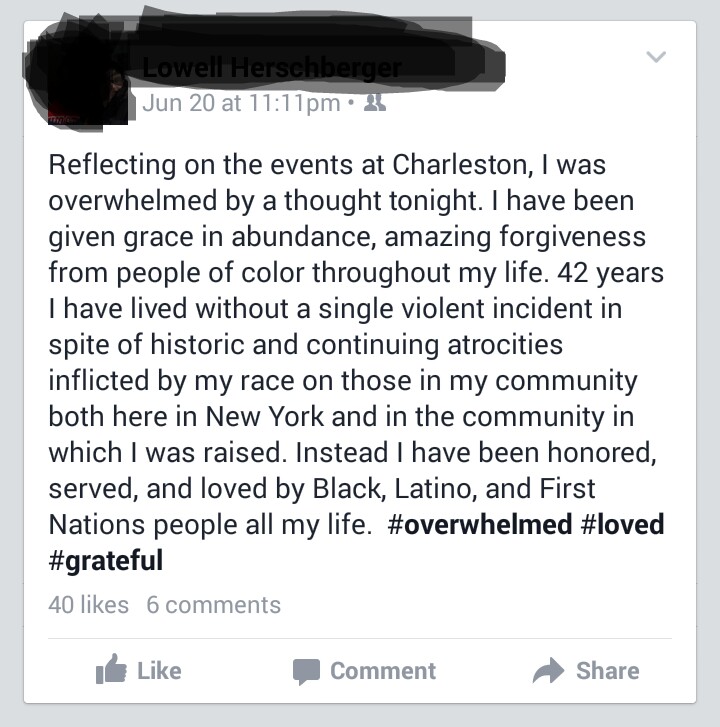
I shook my head as I read a social media post from a well-meaning white friend thanking various “people of color” for not doing him harm because of historical and current injustices.

Many of his friends liked the post—a vast majority of the affirmation, despite his diverse mix of friends, came from his white friends. On the surface his post is contrite or considerate and praise-worthy.  What could be wrong about a man owning up to the sins of his own kind?

But under the surface of his post lurks something insidious.  It uncovers a secret expectation that “people of color” should be irrationally violent and thus are deserving of his praise when they are not.  It is a demeaning and belittling message cloaked in empathy.  It actually reinforces an awful stereotype.

Think about it: Would it be praise to thank a white man for being civilized or would it be patronization and a backhanded insult?

What is more disturbing is this persistent idea that a whole race should be held accountable for the sins of one of their own.  Apparently I should be judged by the depraved acts of Dylann Roof (and every white man in history) because I share his skin color and gender.  But isn’t that exactly the logic of every racist in history and the way of thinking we are trying to escape? 

I believe ‘white guilt’ is a symptom of racist thinking rather than a solution.  When we thank “people of color” for not harming us as white people we are perpetuating the idea that people should be judged as a race rather than as unique individuals.  It is a tribalist suggestion that violence against a whole race is justified therefore we need forgiven as individual members of a racial tribe.

But this thinking is racist to the core.  It keeps “people of color” as something separate from us.  It treats them as something to be pandered to in a way that we would never do to another white man.  (My thanking a white man for not killing me today would be taken as foolishness or sarcasm.)  It is also saying that we expect irrationality and violence from them—which is exactly the same reasoning of a racist killer.

We cannot help but see people as white or black.  We should not be ignorant of historical injustice or continuing racism either.  But we can stop believing that people are fundamentally different because of their skin color.  Part of that is not apologizing in a grandstanding fashion for our own skin color.  Part of that is not treating “people of color” as inferior by thanking them for things we would not even thank a small child for.

We recognize calling a black man “boy” may be insulting.  We also see the battle flag of the Confederacy (the “rebel flag”) as symbolic of racism.  However, do we see subtle racism of those who’s words betray an expectation that black people should be irrational and violent?

I myself prefer those who display their true colors openly, because then we know what we are dealing with and don’t need to dig through the layers of carefully hidden prejudices to find the truth.

What does Charleston say about us?

Standard

There are many who react to the church shooting at Charleston’s historic Emanuel A.M.R. Church by blaming availability of guns and decrying racism.

But one thing missing from the discussion, that is a victimhood mentality and the idea that all people of a particular race are guilty because of the acts of a few. 

When Dylann Storm Roof walked into the doors of that church he was armed with two ideas: 1) his tribe (white people, women, etc) were the victims, and 2) their tribe (black people) were collectively responsible for black rapists, perceived injustice, etc.

It was the ideas that this depraved young man harbored in his heart that were dangerous.  However, these ideas are not unique to him or just to unreasonable and angry white men.  These are ideas accepted accepted in mainstream thought that divides people into falsely dichotomous categories.

Who kills the innocent? We do!

Ideas that white is equal to privilege or black is equal to victimhood are equally dangerous.  When we feed the martyr complex and victimhood mentality we are giving license to those of an even more deranged mind to take it a step further. 

The problem with Roof and those like him (of all races, genders, etc) is not what they do—but that they feel justified to do it.  We can fret about availability of guns and a multitude of other factors, but until we address the heart issue we are only treating the symptoms.

We won’t stop a person bent on evil and destruction with more legislation.  If anything more law will only create the next inequity and give some other person reason to feel disenfranchised.  But what we do need is to unravel the false dichotomies and prejudice assumptions that fuel hatred.

Being on the ‘right’ side of history…

We are urged to be on the “right side of history” yet the problem is that everyone (including Roof) feels they are on the ‘right’ side and justified.  Jesus encountered this in the Pharisees who thought themselves better than other people and superior to their own ancestors:

“Woe to you, teachers of the law and Pharisees, you hypocrites!  You build tombs for the prophets and decorate the graves of the righteous.  And you say, ‘If we had lived in the days of our ancestors, we would not have taken part with them in shedding the blood of the prophets.’  So you testify against yourselves that you are the descendants of those who murdered the prophets.”  (Matthew 23:29-31)

There are many sanctimonious today who think they are superior to other people.  They may decry the injustices of the past, support punishment for those they hold responsible and blame, but they themselves often as guilty or more of similar abuse.

Is an anti-abortion activist who calls women entering a clinic names or murderers a provider any better than those they accuse? 

Is a person who labels others as “racist” or “homophobic” or “hateful” in response to a disagreement over opinion less abusive than a person who uses the n-word?

I say, no and no. 

The solution to hate is not to be hateful.  As Mahatma Gandhi wisely observed: “An eye for an an eye only leaves the whole world blind.”  What he observed is the same as when Jesus quipped that those who live by the sword will die by it (Matthew 26:52) or ‘what goes around comes around’ in essence.

We make a difference by being different…

Everyone has reason for their own abuses.  Many of the most abusive people in history believed they served a righteous cause.  Many people can identify the sins of other tribes or the prior generation, but few seem able to see their own abuses.  We prefer to keep the spotlight on those whom we perceive to be worse than us than we are interested in searching out the wickedness of our own hearts.

Ben Carson spoke well:

“You know, we have a war on women, race wars, income wars, age wars, religious wars. Anything you could imagine, we have a war on it… And we’re giving people a license to hate people who disagree with them.”

We need to stop arming ourselves with contempt and be committed to loving as we wish to be loved.  It is easy to love our own and hate others, but divine love seeks unity rather than encourage division.  It sacrifices self rather than perpetuate cycles of violence.  It brings grace to the fight even when vengeance feels justified.

Grace saves us…

It is the Spirit of love like that of Marcus Stanley, who was shot eight times but lived, and chose grace in response to hate:

“I don’t look at you with the eyes of hatred, or judge you by your appearance or race, but I look at you as a human being that made a horrible decision to take the lives of 9 living & breathing people. Children do not grow up with hatred in their hearts. In this world we are born color blind. Somewhere along the line, you were taught to hate people that are not like you, and that is truly tragic. You have accomplished nothing from this killing, but planting seeds of pain that will forever remain in the hearts of the families that lost their lives and countless hearts around our country.”

Let’s not fall victim to those who would divide us into categories, but instead seek the unity of all people only possible with a love that tears down walls, bridges divides and believes when others say it is impossible. 

May those seeds of Roof’s hate stay dead and the love of Jesus in Stanley’s gracious response grow in us.  The answer is not more or less guns nor petitions against flags and protest, it is less hate and more Jesus.

“Do not be overcome by evil, but overcome evil with good.”  (Romans 12:21)

What’s in a word?

Standard

Words are interesting things.  The word “gay” for example.  According to my grandpa it once just meant happy and excited.  In Webster’s 1828 edition dictionary it carries the same basic idea.  However, compare that definition to those found in modern dictionary and the change is significant.

Words change in meaning.  Words like “retarded” to describe a person have been replaced with terms like “special needs” by those trying to soften the label.  But as a result, now saying “he’s ‘special’…” takes a whole new meaning and doesn’t imply greater or better.  Changing the labeling word has not removed the stigma associated with mental handicap.

Are Black Men Thugs?

The word “thug” is another word that has seemed to have evolved in meaning.  It once meant “ruffian” or a murderous criminal and yet lately it is often used for a much more specific group of people.  Thug seems the new favorite word to describe a young black person involved in a violent confrontation and that has raised the hackles of numerous social commentators who say it is a racist code word.

Richard Sherman, the ever so outspoken Seattle Seahawks cornerback, put it plainly when he suggested that the word “thug” is the new N-word. 

I do not go as far as some do, I do not believe it is a word used exclusively for young black men, and I do not believe all who use it intend it with a racial connotation.  I am doubtful President Obama or Stephanie Rawlings-Blake, the mayor of Baltimore, meant their usage of “thug” as racist and believe we should give all people the same benefit of doubt regardless of skin color.

That said, that doesn’t mean those who are describing “thug” as a new racist code word are totally wrong either.  I myself began to suspect something amiss with the word before it became a topic of widespread outrage and media hand wringing.  It was because of overzealous spam posts of conservative (white) friends that I began to wonder about the usage.

Will the Real Thug Please Stand Up!

A story, “INSTANT JUSTICE: Black Thug Tries to Bully ‘Little’ White Teen…BAD IDEA,” links a video showing a white teen mercilessly beating a black teen.  I can hardly see the justice in it.  Furthermore, if “thug” is just a general term for a violent person, why is the more violent of the two in the video only a “white teen” and not also a thug?  Hitting a dazed opponent seems thuggish behavior to me.

Another story, “High School Thug Bullies Classmate for ‘Talking White’ — Doesn’t End Well for Him,” shows one black teen harassing another and things turn violent.  Again race is the topic.  Again the one delivering the beating is the “classmate” and not labeled as a “thug” like the other guy.  It is a bit murkier because both involved are black.  But nevertheless you have “thug” versus “white” in the title and a curiously sympathetic accompanying article.

A third video, “NY Thug Picks Fight With Wrong Trucker, Gets Beating Of A Lifetime,” also starts after the fight has already began (removing context) and again the word “thug” is only used to describe the black participant.  Again the suggestion seems to be that the beating was a justified response.

Why is a young man described as “black thug” or “thug” and not just as a bully, harasser, instigator, etc?

I can’t read the minds of those who posted the videos.  But the framing of these stories does cause me to wonder about the intent in sharing them.  It would be as strange as a title, “Offended Young People Provoked by Thug Police,” to a story about the Baltimore rioters pummeling officers with rocks.  There would seem to be an intent to bias the reader at very least.

The (Thuggish) Hypocrisy on Both Sides…

Not every use of “thug” carries an extra racial overtone.  I believe it would not be fair to characterize it as a racist term or all those who use it as racists.  It is unfair to assume every person who uses a certain word has loaded it up the same as you do.

The word “racist” itself can be used in a prejudicial and unjust way.  The usage of the term “racist” to describe an offending white person is probably as damaging to them as any other contemptuous and derisive term.  Words like “privilege” and “redneck” are also questionable.  They are words used to categorize people and often unfairly.  Sure, many people use those terms as descriptive or even as terms of endearment, but the same is also true of “thug” and the N-word. 

In fact, the popularity of the word “thug” used to describe young black urbanites could have come in part to use of the word as a self-description: 

image

image

image

Understandably is is different when a word is used as derogatory and not as a term of endearment.  But it should also not be a surprise when descriptions we use for ourselves are picked up in popular dialog and become a nucleus for stereotypes.

Making ‘Thug’ a Taboo Word Is NOT the Answer.

I am reminded of the wise words of W.E.B. DuBois in reply to Roland A. Barton in 1928 about the topic of names (please take the time to read the whole letter) and his solution:

“Your real work, my dear young man, does not lie with names. It is not a matter of changing them, losing them, or forgetting them. Names are nothing but little guideposts along the Way. The Way would be there and just as hard and just as long if there were no guideposts, but not quite as easily followed! Your real work as a Negro lies in two directions: First, to let the world know what there is fine and genuine about the Negro race. And secondly, to see that there is nothing about that race which is worth contempt; your contempt, my contempt; or the contempt of the wide, wide world.”

As an alternative to abolishing words (that will soon replaced by new words to fill the vacuum) and being offended at every turn: Be the solution.  The solution, of course, is to live outside of the labels used to box us in and beyond identities built around race.  The solution ultimately is for everyone to do unto others what they want others to do to them (Luke 6:31) and abandoning their right to retaliation.  Be what you want others to be.

Words come and go, so don’t let them define you!

Baltimore: Race, Rage, and Reality

Standard

As fires rage in Baltimore, my thoughts go to the many good people of all races harmed by those who excuse their own destructive and abusive behavior. Mob violence only adds to injustice.

A (Completely Open and Honest) Conversation About Race and Violence

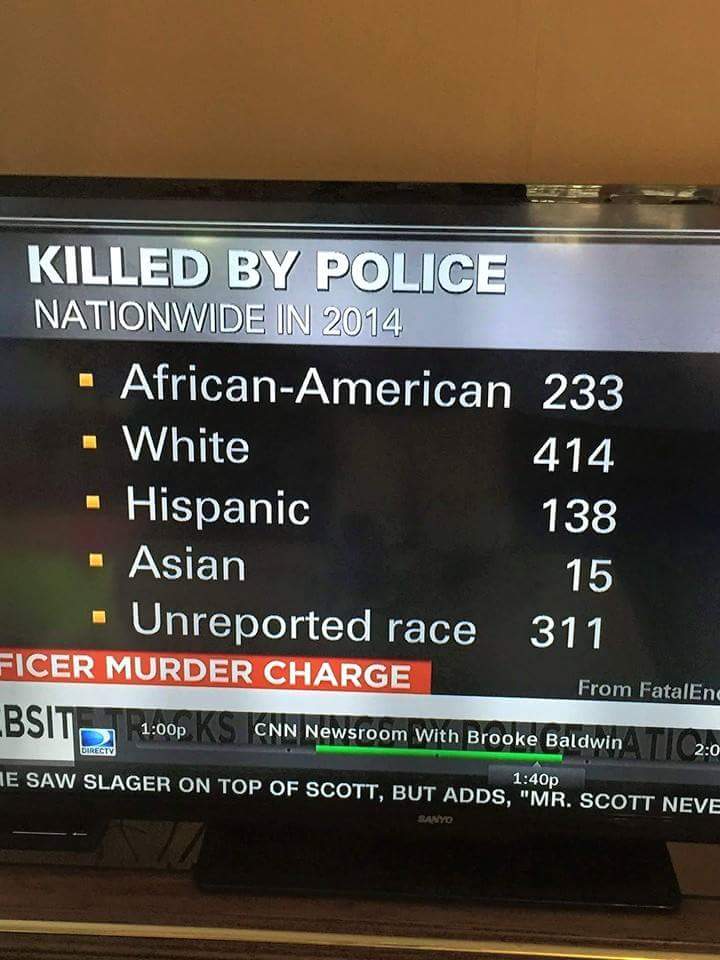
Many, including President Obama, have urged a conversation on race. I have avoided speaking in terms of black and white because I didn’t want to feed existing prejudices. Unfortunately, by my silence, I am also feeding into a dangerous ignorance about the root causes of violent behavior. There is a real elephant in the room when it comes to discussion of race and statistics, here’s a part of it:

image

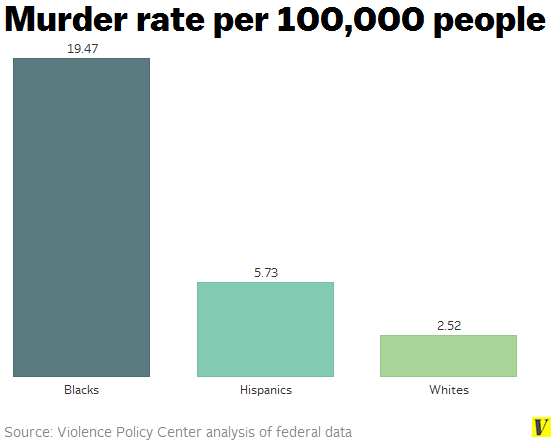
It seems to me there could be a connection between that and the disproportionate violence here:

image

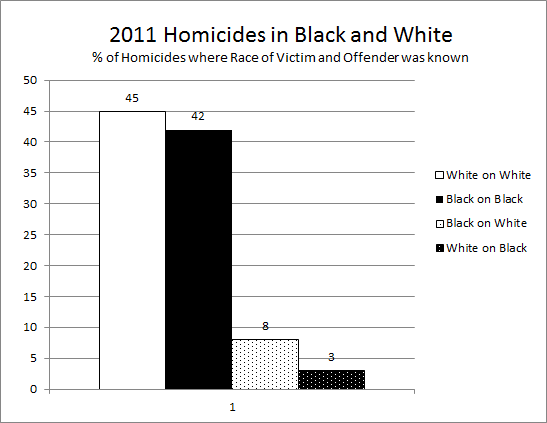
And this is how it breaks down as far as who is murdering who:

image

Media Fueled Ignorance and the Bigger Threat to Black Lives

A few weeks ago I read an article, “I Fear for Our Black Men,” and then began reading the comments in response. I was shocked. Instead of shared sympathy from other black women there was a lot of anger towards black men. From what I gather the complaint is that when a police officer harms a black man it is an outrage and a cause for civil unrest, but when a black man beats his wife or girlfriend nobody cares:

image

Why do we focus on stories about men being victims of police and yet ignore a far bigger problem of women and children victimized by men? Police brutality, while a matter of real concern, is a drop in the bucket of violence in general society and the black community. And the real disproportion is how much attention is focused on their failures rather than the bigger problems. It is straining on the gnat while swallowing the camel.

Which leads me to the topic of government and media complicity. Much is said about disproportionate arrest statistics or incarceration rates. But very little is mentioned about the disproportionately higher levels of violence I highlight above. Apparently we are supposed to obsess on the race only as an explanation and ignore all other factors—factors like resisting arrest, criminal records, dysfunctional homes, etc.

Why Not Build Identity Around Good Behavior Instead of Race?

I would rather talk about behaviors than race. I would rather good people of all races identify with other good people of all races. However, since shared race is how some people choose to build their identity, then I need to address the issue of racial tribalism directly: If you take the side of a person simply because they share your racial tribe identity, then you need to take complete ownership of the bad they do as well and you are a partner in it.

But I would rather we didn’t do that. I say we lose the tribalism motif. I say we stop focusing all of our attention on race and historical grievance. I say we start to address current behavior instead. That is fairer. It is fairer because the vast majority of people (all races) are not criminals. If we are not criminals we should not lump ourselves together with bad actors and defend them simply because we share their skin tone.

Will Stack vs. Ignorance

Standard

“Ignorance has no color, God doesn’t see color, why should we?”

Yesterday I had the distinct honor and privilege of a short conversation with Will Stack.  You may have already seen the video of his that went viral and if you haven’t you really should.  So many of the world’s problems could be solved instantly if more people shared this kind of perspective. 

The good news is that there is one young man who is a real role model.  The great news is that, judging by the response, there are millions of others like him who are respectful and loving of all people regardless of differences.  I think his video resonates with so many people because it is the message too often missing from the front pages.

Another Story of Contrast

That same day another friend posted this video (warning: the content is vulgar) of a group seeking violent retribution against those who they describe as “devils” and was so over the top I could hardly take it serious.  I debated even giving them more credibility than they deserve by linking their hatred.

I was struck by the sharp contrast.  It reminded me of the two mothers I posted about the other day and I thought maybe I would do a follow-up about these two different sons.  The son of hate that screams vengeance and promises only continuation of violence.  Then there is this son of grace who speaks words of peace and respect.

Leadership by Example

Will Stack responded almost immediately to my friend request on Facebook.  He even took the time to write back to me despite being overwhelmed with friend requests and attention.  He is extraordinary, but he also represents an example of an ideal within our own reach and evidently he hit a chord with many people—myself included.

But there is still much work to be done.  There are still those who only see other people through the lenses of their prejudices.  However, we cannot change them, we must change ourselves and lead by example.  And there is one more person I know who has demonstrated this type of leadership…

Well done, Will!

Mennonite Millennials and the Good Samaritan

Standard

Jesus was a great story teller.  Those raised in conservative Mennonite homes and communities are very familiar with his stories. 

Ask any of us about ‘the parable of the good Samaritan’ (Luke 10:25-37) and we will tell you of a man who was traveling, who was attacked by bandits, left for dead, ignored by two passersby and finally helped by a good man.  The man, a good Samaritan.

Some of us might even be able to explain how the Samaritans were looked down upon by the audience Jesus was addressing.  And also that those two who passed this man in desperate need of help (even crossed to the other side of the road) were important religious leaders and might have not wanted to risk defiling themselves by touching a man who by appearances was dead.

The moral to the story is in the question it answered.  Jesus was being questioned by a person identified as an “expert in the law” who was asking initially about how to gain immortality.  Jesus asks him what the law says and the man quotes the part of their law where it says to love God and your neighbor.  But, when Jesus tells the man he’s correct the man (being a legal expert) needs further definition of terms, he asks:

Who is my neighbor?

The typical definition of neighbor is those people who live next door to us.  Those people with the annoying yappy dog who you might wave to while pulling out of the drive.  Good Americans where I live and the kind who will offer to help push when your car is stuck in the snow.

But Jesus uses the parable to extend the definition of neighbor.  When he finishes the story he asks which of the three was the neighbor and the expert tells him it was the one who had mercy.  So, simple, cut and dried, we help a couple people with a broke down car or give a twenty to some homeless guy, pay our taxes on time and we are a good neighbor, right?

Well, maybe, maybe not…

Samaritan today means a helpful stranger.  The Samaritans when Jesus spoke were despised people and an enemy to those listening.  I think the parable might be told differently today. 

If Jesus were speaking to a conservative audience he might have the story of the two responsible gun owners, the stupid irresponsible traveler (who got what he deserved) and a good illegal immigrant.  If he was telling it to a liberal audience it could be about the two politically correct professors, the aborted black inner-city child and a good redneck.

More interesting is that the enemies of Israel today, Palestinians, have Samaritan blood.  So even after two thousand years the story is relevant in the place and religious setting it was originally told to.  In today’s language it could be told as the story of the good Palestinian or good Muslim. 

It could be any scenario where a person who has a historical grievance lays it aside to care for the ‘privileged’ person who may have previously treated them like dirt.  It is a story for a downtrodden and unimportant person helped a stranger when the people who should’ve helped didn’t.

So what does this have to do with Mennonite Millenials?

It is a quirky thing, but we probably have an easier time flying to the opposite side of the world than we do with being neighborly with our actual neighbors.  We may travel to some far away place to spend a week or two cleaning up from a typhoon.  It is exciting to experience a new culture.  The more dedicated may even spend years in a remote village somewhere or some other exotic outpost.

Yet, if we were asked to do something we personally find dull or undesirable, if there were a task we considered beneath our abilities, would we do it?

The men who passed by the beaten man were probably men with vision.  They had important tasks to do that could not be compromised by the needs of a person who probably should’ve known better anyhow.  They were missionaries, the equivalent of church leaders and had big things on their minds.  They also lived in a world of abstraction or theory and neglected practical application.

“Truly I tell you, whatever you did for one of the least of these brothers and sisters of mine, you did for me.” (Matthew 25:40 NIV)

Who’s least or greatest changes with cultural context.  We probably don’t think of a Samaritan as being lower than us.  We may not harbor animosity or a superior attitude to other races.  But we still do have our prejudices.  We still have our own religious rites or rituals that take precedent over practicality.  We still look too far down the road.

Think globally, act locally!

This generation is better equipped with technology, has greater access to information and the world.  But it is also a very narcissistic and self-absorbed generation.  With some of us the problem is not fear, the lack of opportunity (like prior generations) or the complacency that is common today, but for us the problem could be arrogance.  We need to be reminded that there is nothing too small for us to do.

Don’t be too important to do little things.  Indeed, sometimes it is a small amount of humility that does the world more good than the grandest of visions or best of experiences.  Don’t be aloof, don’t be a religious idealist, don’t be prejudicial against anyone, be a neighbor!

Sharia Law: I read it on the internet…, part 3

Standard

I have quite a number of friends who like or repost stories with shouting headlines and containing claims apparently designed to feed fears.  What amounts to fear-mongering propaganda is wrapped in the trappings of legitimate “conservative” news sources.  Unfortunately, most of it, while at some level based in a true story, is so badly blown out of proportion and hyperbolic that it is a dishonest representation.

Now, these purveyors of hysterics and half-truths may or may not be intentionally distorting the reality.  But I suspect there could be a bit of an ‘ends justify the means’ mentality and an idea that their twisted versions of a story represent a greater truth or reality.  I think every journalist does pick and choose what facts are relevant and how they present a story does reveal their personal bias.  However, to me,  there is a level of this that is unintentional or within reason and a level that is inexcusable.

Woman Has Opinion; Sparks Controversy

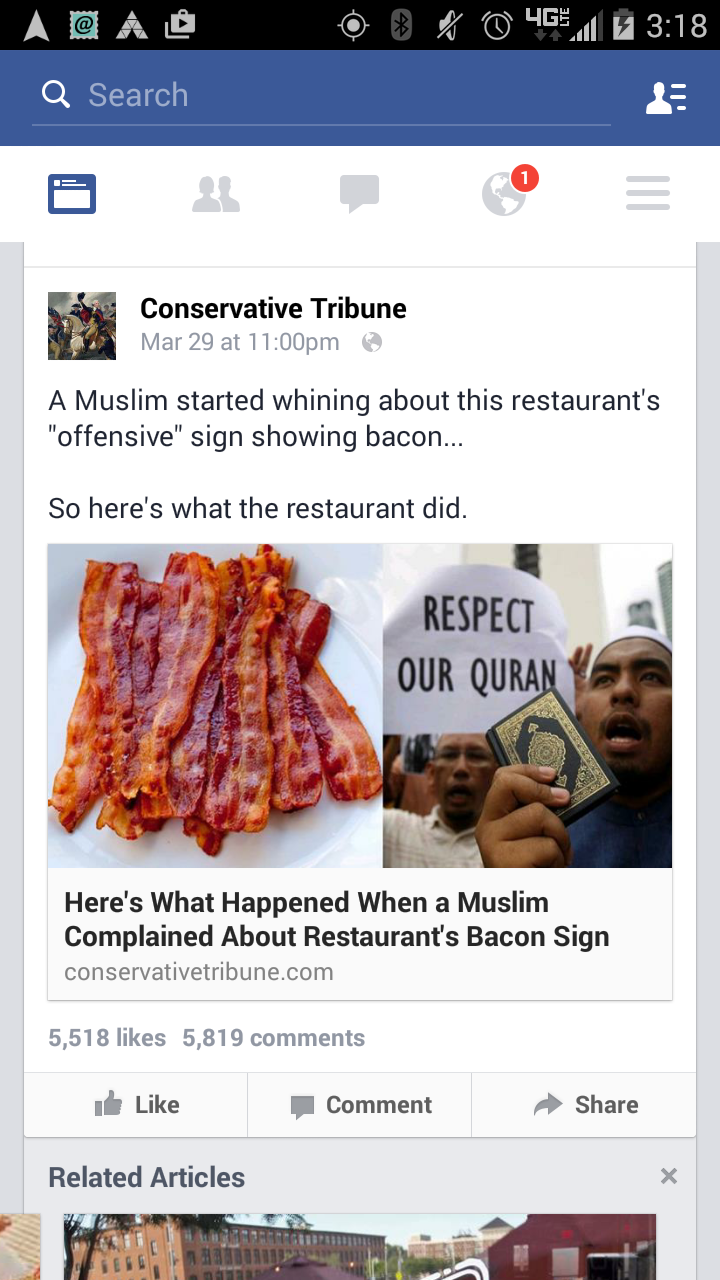
One of these specters repeatedly raised is that of Sharia law and the suggestion it will be imposed on Americans.  A particular story about a sign advertising bacon in a Vermont town caught my eye today after a friend commented.  Here is the screenshot of my news feed:

image

As one could imagine, the response in comments was one of the outrage of thousands of freedom (and bacon) loving Americans who don’t want religion imposed on them.  I realize there is reason to be aware of religious extremism, but what is the reason for this particular furor and do the actual facts support such a dramatic response?  According to the conservativetribune.com story this is the issue:

“Should a restaurant that serves bacon be allowed to display signs and/or advertisements that mention bacon? The U.S. Constitution says that it should, but Muslims in Vermont apparently disagree.”

From that opening paragraph one could assume there is a direct threat to freedom of speech posed by a group of people.  The article goes on to discuss a solitary example of a business owner who took down a sign because “an outraged Muslim woman” complained about it.  There are no further examples given and no evidence that this woman speaks for a plurality of Muslims.

The complaint of one woman does not seem to match the “Muslims in Vermont” description above it and that is quite an over-statement.  What’s the problem?  Well, if one woman can speak for “Muslims in Vermont,” then I suppose Westboro Baptist speaks for Christians in Kansas, right?

Concern for Safety or Fear of Violence?

Anyhow, there’s an article on the Washington Post website that takes a more detailed look and provides the full text of the woman’s complaint.  She describes herself as “a vegan and a member of a Muslim household” then goes on to say the sign is both insensitive to those who don’t eat pork and this:

“Second, it clutters an already dangerous crosswalk. This signage for a business’ food distracts from the purpose of that area: for pedestrians to safely cross and for drivers to safely enter the circle. What is the additive safety factor of this sign being there? I fail to see what benefit it affords people in that intersection and why the city put it up. The only appropriate signage would be standardized official road signs pertaining to the crosswalk and circle.”

I would guess that is why the restaurant owner mentions safety in his response.  However that apparently isn’t as obvious to everyone as it seems to me and leads to this speculation in the conservativetribune.com article about the owners response:

“Notice how he mentioned “safety” concerns. This made it sound as if he feared the Muslims in Winooski would have taken violent action had he not removed the sign”

I cannot fathom how one could make that leap based in the known facts.  It doesn’t “make it sound” as if he feared violence from Muslims to me.  No, it makes it sound as if the restaurant owner read the woman’s letter and was responding to the excerpt of her letter I posted above.  The concern for safety she mentioned was having a business sign creating a distraction.

Right to Free Speech and Threats Thereof

So basically we have a woman with an opinion and a business owner willing to accommodate her preferences.  It hardly seems like a crisis of Constitutional freedom when a woman exercises that her right to express a controversial opinion.  But it does seem a case of journalistic malpractice to make one woman into a representative of Muslims or categorize her as an “acolyte of Shariah law” because she expressed a concern. 

The real threat to liberty is those who abuse it.  I am more concerned over reckless surmises and the feeding of irrational fears than I am of one woman exercising her freedom of speech.  Her opinion, while I disagreed with it, was reasonably explained and it is her right to express it.  The response was a distortion at best, slanderous at worse and one of many similar stories.

Unfortunately I cannot respond to every internet hoax or propaganda piece and even if I did the chances of my words reaching through the mess and changing minds already made up seems slim.  Still I do try to make a difference.

Politics, Religion and (Media) Bias

Standard

Here I go again talking about politics and religion.  Well, truthfully, this post is more about ideas, inquisition, how stories are presented by the media and alleged bias.

It seems everyone complains about media bias.  There is endless controversy over what stories get covered, how they are covered and why, with charges of favoritism from all sides.

I suppose I am just another voice adding fuel to that fire.  But hopefully I add a bit of helpful reason and rational to the discussion rather than just one more partisan crying foul only when his own side is (in his own mind) treated unfairly.

Two things got me thinking about media bias.  The first a couple cartoons and social media comments about the shootings in Chapel Hill that allege it was not being covered adequately.  The second the off-topic questioning of an American politician and the way it was presented.

Ho-hum, no story here…

I first heard about the three students killed in North Carolina the morning after (as evidenced by my blog post yesterday) and on the CNN website via my smart phone.  The shooting took place “just after 5 p.m. on February 10” and, according to the New York Times, it was early the next day before specific information was available about the shootings:

“In fact, the police did not release the names of the victims or the accused until after 2 a.m. Wednesday; Mr. Hicks turned himself in to sheriff’s deputies in Pittsboro, a few miles away, but it was not clear when. During a court appearance Wednesday, a judge ordered him held without bond. By that point, most major American news organizations had reported the story, but that did not slow the allegations of news media neglect.”

So basically a local homicide became a national news story overnight and that is likely something to do with the unusual nature of the crime.  But many complained within that time frame that the story was being ignored and that this was an example of media bias.  Here are a few examples I have found from those alleging media bias:

image

image

image

Not every homicide receives widespread attention.  It took over a week before the Trayvon Martin shooting was picked up by Reuters and became a hot topic.  So, with that as a basis of comparison, the murder of Deah Barakat, Razan Abu-Salha and Yusor Abu-Salha was relatively quick.

Favoritism and presumptions…

If anything the murder of these attractive and ambitious young Americans will receive more attention than similar cases.  Beautiful people with promising futures are often are shown preference.  Add to that the man who confessed to the murders is an outspoken atheist, the victims identifiably Muslim, and that feeds speculation.

Having myself been raised in a tradition (Christian) where women veil, and having a dear friend (Muslim) who dresses similar to those pictured, I couldn’t help but take interest and wonder if their appearance played a part.  I have worried for my sisters and my Muslim friend because of prejudicial views I have heard expressed.

It is probably their appearance, the fact they were killed in the manner they were, the race and the views of the man, that made this a big story.  It is understandable the Muslim American community can feel embattled at times and unfairly blamed for the acts of people who do not represent them (terrorists) and thus afraid of reprisals.

However, this case is not necessarily a ‘hate crime’ as some speculate.  Yes, the shooter did openly share his views that blamed religious people for violence and (ironically) proclaimed atheism as the solution, but that doesn’t equal a motive. 

From available evidence he seemed to be an unreasonable and angry man who may have murdered over a parking dispute. Whatever the motive, it is an act beyond my comprehension and I mourn with those who have lost loved ones to this senseless act of evil.

Trading topics…

The other story concerns the Governor of Wisconsin (and potential candidate for President) who was on a visit to discuss trade with British officials.  The story headline, “Wisconsin Gov. Walker refuses to answer evolution question,” centers on a question asked that has nothing to do with trade.

The question if Walker “believes in the theory of evolution” seems a rather odd thing to ask a politician.  Doubly interesting is that the Associated Press writer felt it necessary to mention Walker’s faith and the occupation of his father, as if those two facts were relevant to the story:

“Walker, an evangelical Christian and the 47-year-old son of a Baptist preacher, also declined to answer a series of questions about foreign policy…”

Huh? 

I’m not really sure how his faith comes into play here, especially as it relates to the Governor trying to keep on topic of trade by not answering irrelevant inquisitions.  Maybe somebody can explain the connection between his father and foreign policy, but I’m not understanding it.

What I do suspect, both as the reason scientific theory is being asked about and also why religion is being mentioned, is an attempt to construct a label or pigeonhole Walker.  I think it is a classic example of dog-whistle politics in that the intend recipients are supposed to read between the lines and apply a particular stereotype. 

The intent is likely to paint the fiscally conservative Walker to voters, who are tired of government expansion and yet not religious, as dogmatic and ignorant.  I could be wrong, but when a story that should be about trade becomes one about refusal, theory of evolution and religion, there seems something to be amiss.

Bias is in the eye of the beholder…

If beauty is in the eye of the beholder, perhaps bias is as well.  What we think deservers more or less coverage is probably as much a matter of our own biases as it is of anyone else’s. 

Muslims, understandably, take immediate interest when three who share their faith are killed ‘execution style’ by an irreligious man.  Me, being a political conservative and religious, know too well the presumptions often made about those of faith and saw some sort of prejudice at work in the Walker story.  We take notice when people we identify with in some way are targeted unjustly and we probably miss many instances that counter our own narratives.

The media is undoubtedly biased. The media is produced by people and people are inherently biased.  But our personal biases also mess with our own perception of what is important and our judgment of presentation.  We need to be as aware of our own potential biases to the same degree we believe others are guilty.

God Forgive Us

Standard

There is danger in religious extremism.  But there’s also danger in irreligious extremism and a story out of North Carolina another tragic reminder:

“Washington (AFP) – A North Carolina man espousing anti-religious views has been charged with the murders of three Muslim students, including a husband and wife, who were shot dead in the university town of Chapel Hill, police said Wednesday.”

My heart aches.

Murder, no matter the motive, is a horrible and immoral act, but to kill other peaceable people over ideology (or a parking dispute) seems somehow worse.  There is no defense for man that executes three innocent people.

The damage extends beyond the three killed, it effects those who lost their loved ones and ripples out into the world.  Violence begats more violence and this murder could soon be used to justify reprisals just as irrational.

“Father, forgive them; for they know not what they do.” (Jesus Christ)

God forgive us for our murderous hearts and give us a heart of love for all people.  May we love in extreme, lay down our own lives for the good of others and leave vengeance to you.

We need a love that overcomes evil with good.  We need the love that was found in Jesus or we too may succumb to this mindless cycle of violence.