An Affirmative Reaction

Standard

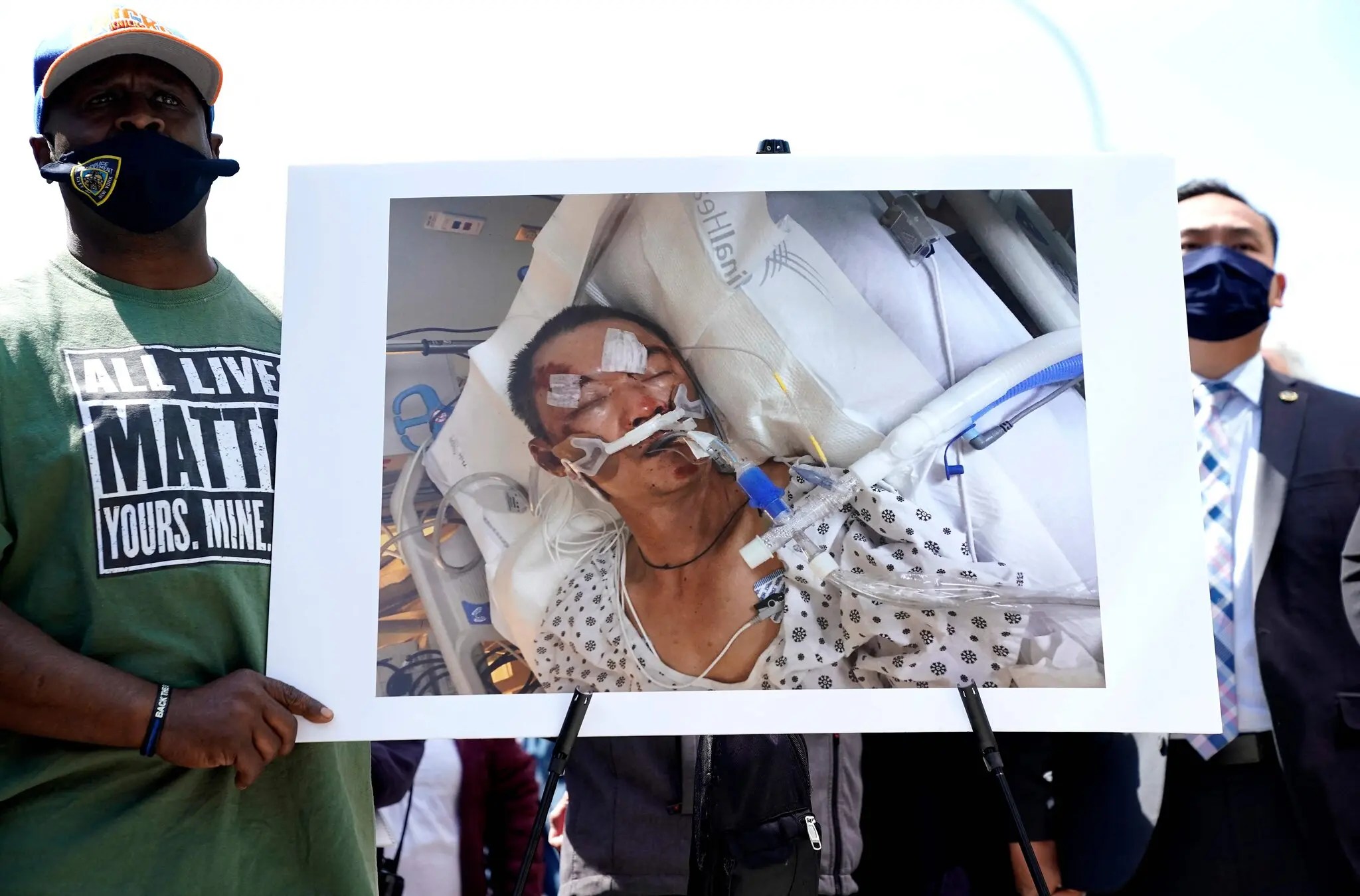
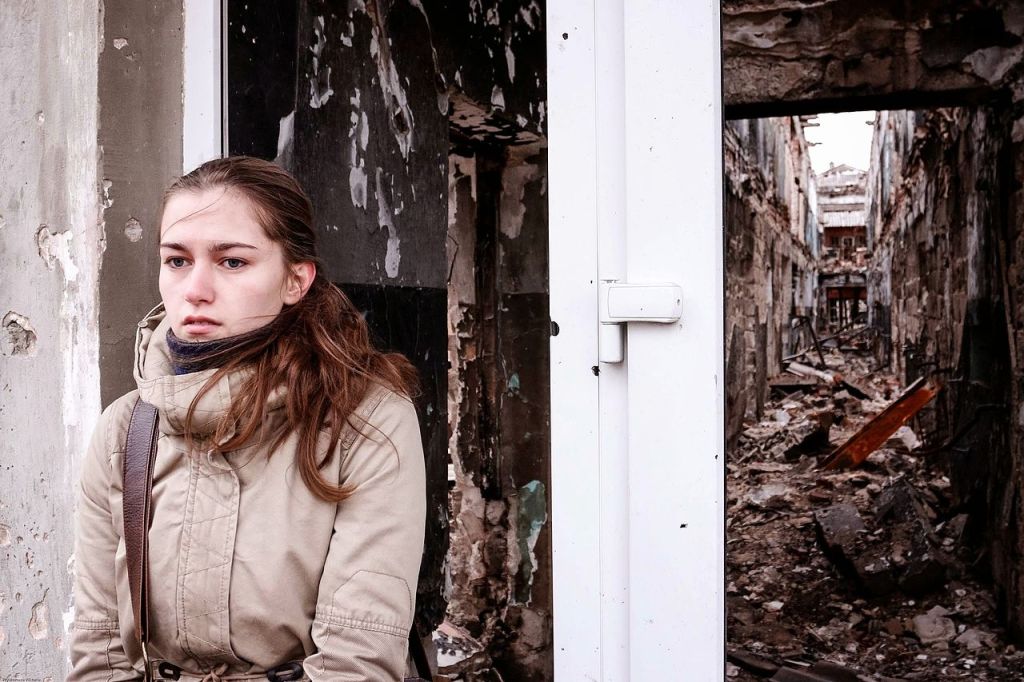
The Supreme Court has finally ruled against the practice of blatant racial discrimination in university admissions.  This, after Harvard and other schools, in pursuit of filling quotas, would find means to select against qualified Asians to meet an ideal for diversity based on skin color.

The Affirmation Fairy… 

African Americans, at least as a collective whole, have suffered disproportionately and this is a historical injustice that is not easily solved.  Much of our success later in life has to do with the homes and communities that we were born into.  The values we receive via our culture make a huge difference so far as outcomes.

I remember a viral video, a few years back, that lines up a bunch of young people on a grassy field.  The announcer asked various questions, such as “Take two steps forward if both of your parents are still married,” and those who could answer yes advanced.  The results of this survey were framed as ‘white privilege’ and yet none of the statements had anything to do with race.

Social inequality is certainly not a black-and-white issue, many children of European and Asian ancestry lacked a father in the home, worried about fitting in, did not feel safe at night in their neighborhood, worried about having enough to eat, and lacked access to private education or tutors.  I once begged my mother to take me out of public school after a rough patch.  I changed my hairstyle as a response to classmates who made note of my ‘Mennonite’ side part.  I decided to quit college rather than go deep into debt.  

Am I underprivileged?

Exactly how much am I disadvantaged as a learning-disabled child of two high school dropouts, with a father who had to be away all week to support our family?

There problem with all “affirmative action” is that it is a vast oversimplification of a very complex and multi-layered problem that may be more about culture than color.  We simply cannot account for every factor or rate every single subcategory of ethnicity and culture for statistical disadvantage.  For example, do we know the college graduation rates of Americans of German ancestry or Irish and Italian?  Are a proportional amount of these ethnic groups represented?

Furthermore, our own disadvantages can be advantages, in that they can provide u much-needed motivation.  Sure, having money may mean a trip to Harvard and a certain level of success.  However, the same is true of those who are tall and athletic.  Jeff Bezos, at 5′-7″ tall, may have benefitted from having some ‘short man syndrome’ or that extreme desire some have to compensate for the discrimination they faced for physical characteristics that were beyond their control.

Affirmative action is wrong in that there is no way to rank hardships.  It is wrong because it isn’t addressing the root causes of social inequalities, even as defined by the privilege police, in that we’re not talking about things like fatherless homes or inner-city violence and cultural forces that discourage the behaviors that aid in academic achievement.  You can’t wait until a person is eighteen, then wave a wand of university education and credentials as a solution to these underlying issues.

Asterisk Graduates…

The true underlying message of affirmative action was that minorities, specifically those of African descent, couldn’t be successful without the help of the government.  As liberal arts universities continue to seek to fulfill a narrow color-obsessed definition of diversity, using quotas rather than qualifications, they unintentionally degrade all of their minority graduates—even those equal in merit to the non-minority graduates.

The idea of a “diversity hire” or a person not equally qualified to others who applied and yet are given preference only because of their special category of race or gender, is a direct consequence of discriminatory affirmative action programs.  People know how to read between the lines (albeit often unfairly) and will diminish accomplishments that weren’t actually earned or can be perceived as being unearned.  It is why we do not see the work of those ‘born into wealth’ as being equal to that of those who are self-made.

A classic example of the patronizing white saviorism that is lurking behind divisive equity campaigns.

Just as a university degree would lose value if everyone were simply given a diploma for breathing, admitting some primarily on the basis of skin color devalues the effort even in the eyes of those who benefit.  It only serves to feed an idea of black inferiority, that they need a ‘white savior‘ to swoop in and rescue them from their plight, and is grossly unfair to all who were truly qualified on the basis of merit—but will still deal with the asterisk due to systemic compensatory color preferences or racially discriminatory quotas.

You cannot defeat unfair discrimination with a new kind of unfair discrimination.  It is not right that overqualified Asian students were being overlooked because of their race or on some kind of subjective basis that the worth of their own “lived experience” is less than a person of African origin.  Many Asians have overcome extreme hardship, faced intense pressure at home and hate crimes (often underreported for going against the typical racial narrative), yet won’t ever express this due to cultural reserve—why should they be punished for the success of their peers?

Two-tiered or lower standards for some will never achieve the goal of equal outcomes.

Favouritism Forbidden…

We’re living in a time of moral inversion, a time when those who lived a life of crime and abuse are treated as victims simply on the basis of their outward appearance.  It is as wrong as the favoritism of preferring the wealthy over the poor for the potential benefits:

Do not pervert justice; do not show partiality to the poor or favoritism to the great, but judge your neighbor fairly.

Leviticus 19:15 NIV

The problem was favoritism, preferring one party based on who they are (what they can provide for us) rather than the actual merit of the case.  Fairness of judgment, not equality of outcome, is the goal.

Christians were told not to judge by a person’s outward appearance:

My brothers and sisters, believers in our glorious Lord Jesus Christ must not show favoritism. Suppose a man comes into your meeting wearing a gold ring and fine clothes, and a poor man in filthy old clothes also comes in. If you show special attention to the man wearing fine clothes and say, “Here’s a good seat for you,” but say to the poor man, “You stand there” or “Sit on the floor by my feet,” have you not discriminated among yourselves and become judges with evil thoughts?

James 2:2-4 NIV

Many, trying to make a show of their own righteousness, take a Scripture like that above and turn it into a call for social justice or a special preference for the poor or otherwise disenfranchised.  However, this kind of reverse favoritism totally misses the point.  Trading one kind of perverse judgment for another is not a virtue.  No, it is a virtue signal and something people do for the social benefit of merely appearing to be an advocate for those recognized as being disadvantaged.  Even if sincere, this is a misguided approach that goes against the instruction not to show favoritism.

Affirmative action, in the end, is just a new form of white supremacy that is expressed as patronization.  It frames differences in outcomes solely in terms of identity groups while neglecting to correct the factors causing the inequal results or truly helping people to cross over these unhelpful, artificial, and arbitrary divisions.  Jesus taught more of a gracious meritocracy, where our behavior did matter and we would ultimately be judged on how we treat other people irrespective of their deserving or appearance.  In this regard, our equality comes only in repentance and our obedience to the law of Christ—not by force of courts or legislation.

We do not save the world by trying to force others into compliance or control outcomes. Rather we change ourselves and become an example of impartiality and love to all people. Honest and fair equal opportunity is having the same requirements for all and not preferences tailored to some at the expense of others. You cannot rob Peter to pay Paul. We shouldn’t love bomb some, even to make them feel better about themselves, by removing opportunities for those who truly have earned their place.

The Russo-Ukraine War—A Timeline

Standard

As with most reporting of current events, the presentation of the ongoing conflict between Russia and Ukraine is distorted.  Both sides are engaged in their own propaganda.  It is said that truth is the first casualty of war and, in the case of this one, the falsehoods span many decades.  The first thing to do, to get beyond this, is explore the history leading to to the present…

862 —1242 

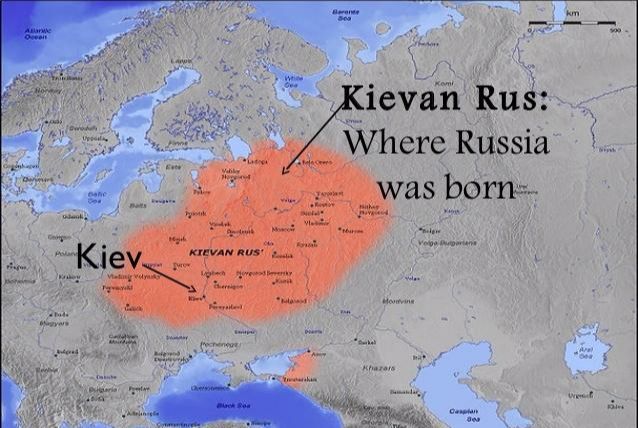
East Slavic tribes, in the area of modern-day Ukraine, Belarus, and Russia unite to become the Kievan Rus’ people.

980 — 1015

Vladimir the Great brought Christianity to the Kievan Rus’ people.  Often referred to, in the West, as the Eastern Orthodox, this tradition (practiced from Egypt all the way to Greece) broke from the Roman Catholics in 1054.

1237 — 1480

The Mongols invaded and, laying siege to Kiev in 1240, came out victorious.  This begins a period of Mongol rule.

1547 — 1721.

Mongol rule fades.  The Muscovy dynasty rises.  This Tsarist Russia, with periods of chaos and conflict, including what is referred to as a Time of Troubles from 1598 to 1613, ends with the rise of Peter the Great and brings us to the modern age.

1721 to 1917

The Russian Empire expanded from historical Kievan Rus’ territory and, stretching around 8,800,000 square miles, became the third largest empire in history behind the British and Mongol empires.

An empire spans West to East

March 22, 1917

Tsar Nicholas II and his family are murdered by Bolshevik revolutionaries.  Their dynastic rule over the people of Ukraine, Moscow, and the entire Russian Empire, which had been weakened by their involvement in WW1, was replaced by a Communist state.  The USSR (Union of Soviet Socialist Republics, aka the Soviet Union) was very antagonistic towards Christians.

Orthodox Cathedral demolished by Soviets

1922–1952

Joseph Stalin, an ethnic Georgian, becomes the General Secretary and begins his rule over the Soviet Union.  His reign is marked by the Great Purge, from 1936 to 1938, when from 700,000 to 1.2 million people are killed, the number including many Orthodox priests, and political dissidents are rounded to be sent to Gulags.

1929

The Organization of Ukrainian Nationalists (OUN) is formed in Vienna.  This group was known for the assassinations of Poles, Russians, and Jews.  It was later supported by the CIA as part of an effort to undermine the Soviet Union and led to a bloody insurrection.

1932-33

Of Stalin’s atrocities, the Ukrainian famine or Holodonor, when 3.9 million were starved to death, stands out.  This suffering is directly the result of a collectivist plot against successful private farmers.  This murderous Soviet campaign was covered up with the help of the New York Times and Walter Duranty, a Pulitzer Prize-winning journalist, who wrote glowing reports about Stalinism.

June 23, 1941

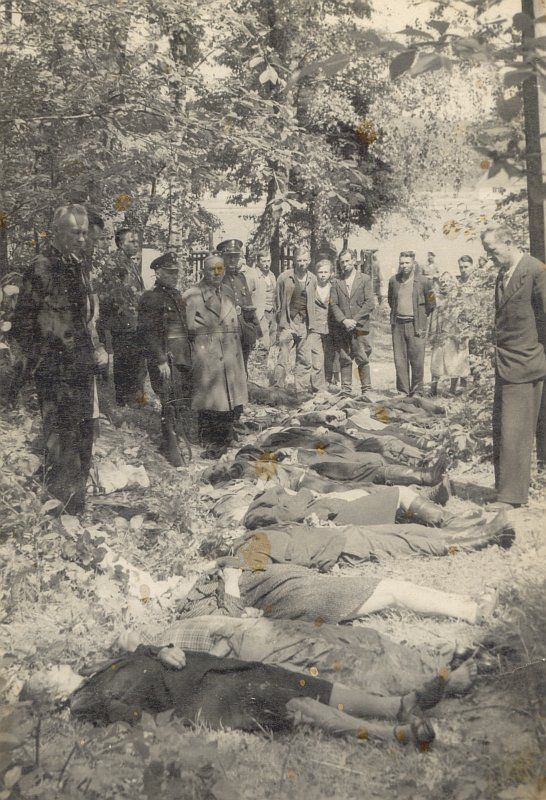
Stepan Bandera, the leader of the far-right Ukrainian nationalism, reaches out to Nazi invaders offering his support in exchange for an independent Ukrainian state.  Bandera is responsible for the brutal massacre of ethnic Poles, from 1943 to 1945, and is celebrated today as the father of Ukraine.  Ukrainian paratroopers (and nationalist priests) today chant “Our father is Bandera, Ukraine is our mother!”

Poles murdered by Ukrainian nationalists

1941—1944

Vladimir Spiridonovich Putin and Maria Ivanovna Shelomova struggle to survive the brutal German siege of Leningrad (now the city of St Petersburg) and are nearly killed.  Vladimir, who lost a couple brothers in the battles, was wounded by a grenade in the fighting and crippled for life.  The pair met after the war, got married, and had a son named Vladimir Putin in 1952.

April 4, 1949

The North Atlantic Treaty Organization (or NATO) is formed in Washington DC as an alliance to oppose the Soviet Union.  The Warsaw Pact was created in May of 1955 as a response.

February 19, 1954

Crimea, which was part of Russia since being annexed from the Ottomans back in 1783, was gifted to Ukraine by the Soviets as a gesture of friendship.  This ethnically Tatar and Russian-speaking region is the site of a key warm-water Russian naval base.

Oct 16, 1962—Oct 29, 1962

The Soviet Union responded to the United States putting nuclear missiles in Italy and Turkey by sending their own missiles to Cuba.  The Kennedy administration, after the failed Bay of Pigs invasion, authorized a CIA campaign of terrorism and sabotage within Cuba, answered with a naval blockade.  The Cuban Missile Crisis ended when Moscow backed down after a secret deal where the offending US missiles were removed from Europe.

Nikita Khrushchev, Fidel Castro, and JFK

1979—1989

A pro-Soviet government took power in Kabul in 1978 and tried to counter Islamic traditionalism with steps towards modernization.  They invited Soviet military advisors and this led to troops being deployed to help the Afghans suppress the insurgency.  The CIA supplied the Afghan rebels and foreign fighters (including a Saudi named Osama Bin Laden) the Mujahideen, with weapons.  The Soviets withdrew after a humiliating costly affair.

December 26, 1991

The Soviet Union collapsed, the Warsaw Pact dissolved, and Soviet republics (including Ukraine) given their independence.  NATO begins an eastward expansion, absorbing former Soviet republics.  Russia falls into disarray as oligarchs partner with the West to exploit the vast resources of that country—Ukraine also becomes known for extreme corruption.

March 24, 1999—June 10, 1999

NATO intervened on behalf of Kosovo rebels, who had been resisting Serbian authorities, and then demanded that the country be partitioned along ethnic lines.

December 31, 1999

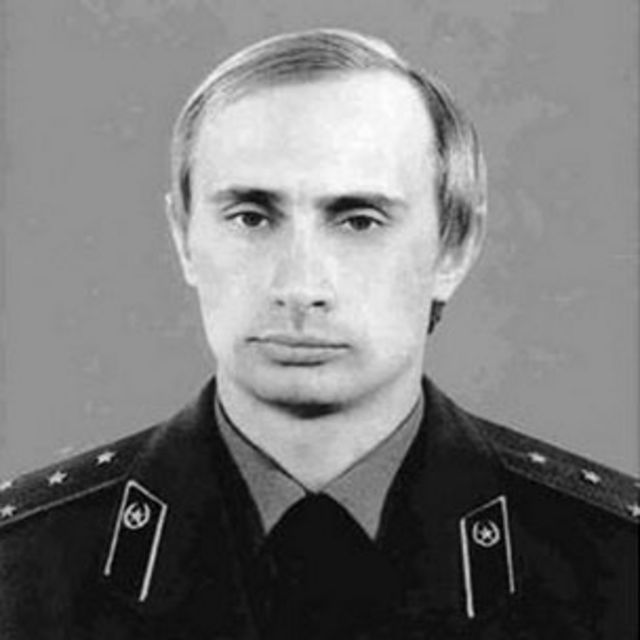
Vladimir Putin became the acting President of the Russian Federation when Boris Yeltsin unexpectedly resigned.  From 2000 to 2004, after winning a special election, he begins to reform the country and reign in the oligarchs forcing them to answer to his government to keep their power.  Putin opposes the expansion of NATO to his border, regarding it as a threat to Russian sovereignty, and makes this red line clear.

Vladimir Putin, a former KGB officer.

Nov 21, 2013—Feb 22, 2014

The democratically elected President of Ukraine, Viktor Yanukovych, decided to keep closer ties with Moscow over the European Union.  This leads to protests in Maidan Nezalezhnosti (Independence Square) in Kiev.  The protestors occupied the square, they had their own food production, medical, and broadcasting facilities, along with that, stages for speeches and performances, as well as their own security forces.  This boiled over when snipers, still unidentified, fired on the crowd.  Both police and protesters were killed in this attack.  Before this escalation high-ranking US officials, then Secretary of State Victoria Nuland and the Ambassador to Geoffrey Pyatt, picked the replacement of Yanukovych who was later overthrown in the Maidan coup.

May 12, 2014

Hunter Biden, son of the then US Vice-President, Joe Biden, is given a seat on the board of Burisma Holdings, as a “legal advisor” and is paid over a million for this service.  He gave Burisma executives access to his politically powerful father and later the elder Biden would brag, live on television, about a quid pro quo that got a Ukrainian prosecutor fired—who had been investigating Burisma corruption.

Like father, like son

Feb 20, 2014 – Mar 21, 2014

The Russians, believing their naval base in Crimea would be threatened by the new pro-West government, moved quickly to secure it from the Kievian nationalists.  They already had a significant military presence there, it is a Russian-speaking area, and the Crimean status referendum, held on March 16, 2014, had an 87% turnout and was 97% in favor of reunification with Russia.  

April 6, 2014–February 24, 2022

The Russian-speaking Donbas region also wanted more autonomy, they opposed Kiev’s efforts at “Ukrainianization,” which sought to erase their Russian heritage, and eventually declared their independence.  These breakaways were invaded by the Kievan regime, starting a war that killed over 14,000 and lasted nearly eight years before the current Russian intervention.

Donbass, when nobody outside Ukraine cared about the war.

May 2, 2014

Protests around the country became violent again when the right-wing nationalists, who favored the new post-coup government that had been installed in Kiev, forced opposition demonstrators into a building that was set ablaze.  This incident, the Odessa Massacre, burned alive 48 people, some of those who did manage to escape were beaten by the mob.  Like the shootings used to justify the Maiden insurrection, nobody was arrested or charged for this mass murder.

April 21, 2019

Volodymyr Zelenskyy, a comedian, groomed by an oligarch, wins the second round of voting in a landslide victory and becomes the President of Ukraine.  He promised to bring peace and end corruption.  There was not much success on either front.  Human rights abuses have only increased during his presidency and especially after the start of the Russo-Ukraine War.

Zelenskyy, the other Vlad.

February 24, 2022

After massing their troops on the Ukrainian border, Russia demands that the shelling of Donbas cease.  When the attacks continue, the “special military operation” begins, which is condemned in the West as an “unprovoked invasion,” and is now effectively a proxy war between NATO and Russia.  The bloodshed continues to the time of this writing.

Vladimir versus Volodymyr

While many commentators, on both sides, want to present this as a battle of good and evil, it is really a fight between spiritual (even actual) cousins.  Those who say that Russia is the aggressor neglect that the war began years ago with the Ukrainian nationalists and their campaign against separatists, that this came about as a result of a coup apparently orchestrated by or at least with the direct aid of the US State Department.  If Ukraine can be independent of Russia, or Kosovo from Serbia, why not Donbass?  And who says that the Soviets handing over Crimea, in the 1950s, is more valid than the referendum that brought it back?

The US “rules-based international order” only makes sense for those who share the bias of those spoon-fed by US media.  The legacy of CIA support for terrorism abroad and the violent overthrow of democratic leaders makes anything done by Russia seem like child’s play.  The US acts with impunity around the world—provoking sanctioning, and invading with destructive campaigns of “shock and awe” anyone who dares to oppose its imperial aims.  The US really had no business playing kingmaker in the backyard of Russia.  The US enforces the Monroe Doctrine in the Western Hemisphere, why would Russia (or China) be happy with our military expansion in their own areas of national interest?

Us-rules based order

Sure, Russia isn’t faultless, by any means, and Putin is no St. Vladimir either.  But, that said, neither is Zelenskyy or the Kievan (Kyivan) nationalist regime he represents. 

Truthfully, the most significant difference between the two sides of the war may actually be their Slavic language dialects.  Which is to say it isn’t much.  Both sides commit war crimes, both lie about the other side, and both also share the same religious and ethnic heritage.  They are natural allies, given their shared Kievan Rus’ history, which is probably why Western powers want to instigate and encourage the division.  It is a family feud, a fratricidal war, and benefits only the US military-industrial complex.

9/11 In Retrospect—Collapse of the New World Order

Standard

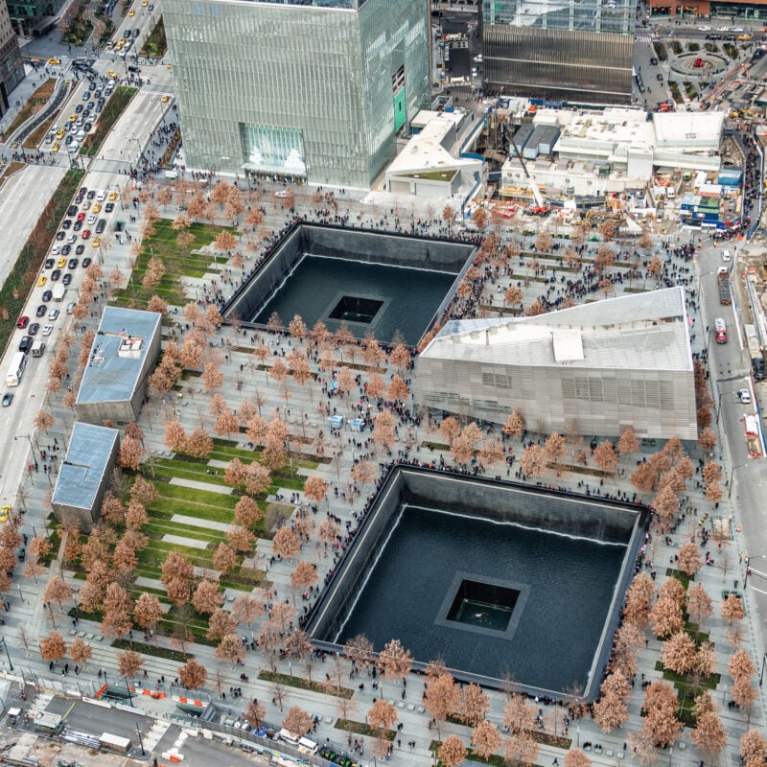
Visiting the site of the Twin Towers again has revealed how much my perspective of the has changed over the past few decades since the attacks.  The World Trade Centers, built in the 1970s, had once dominated the Financial District of Manhattan and represented both the pinnacle of engineering and the economic might of the American empire. 

Like the Pentagon struck the same day, they were symbols of American dominance.  Pillars of a system that, prior to that sunny September day, had seemed invulnerable.  The United States had won the Cold War, demonstrated unrivaled military might in the Gulf War (all but erasing the bitter aftertaste of Vietnam) and the 1990s felt almost as if it was the ‘end of history‘ with the final victory of liberal democracy over the world.

The NYC skyline is impressive even today, yet that September day the delusion of being untouchable had been wiped away and the trust of the system has continued to degrade as more are seeing the truth:  

1) Our government can’t keep us safe.  Many forget now that 9/11 was not the first attack on the World Center twins.  In 1993 a truck bomb had been detonated in the parking garage of the South Tower and could’ve taken down the towers had it been better placed.  But despite this, despite the billions we spent on intelligence agencies, the US had missed multiple opportunities to take down Osama Bin Laden.  All of our military strength was useless against a small group of dedicated men using box cutters and airliners.

2) They made us bleed.  While many around the world were horrified at the images, there were others who danced with glee as shock and awe covered Manhattan in dust.  It was a propaganda coup for those who opposed US hegemony as much as anything else, it proved that there could be repercussions for our policing and globalist policies.  Sure we would go on to kill Bin Laden.  But he more than accomplished his goal.  Not only did he bring down the towers, and strike the Pentagon, but he also goaded us into spending trillions on a fruitless war on terror.

But, beyond this, in the past twenty years, I have gone from being an apologist for the second invasion of Iraq to now being very deeply disillusioned.  And I’m not alone.  The world is no longer what it was in the 1990s where the US leads the way to a new age.  Rather many are starting to see through the shiny facade and realize that the system in its current form serves a few at the top.  But our banks, our government, and corporations routinely conspire to rob us.  There is no free market or true representatives of the people, it is a rigged game and the ‘house’ always wins.

Walking past Wall Street I remarked “This is the heart of the beast” and it is.  The money flowing through this place is the lifeblood of a nation, the very center of the current world order, and what enables the endless wars of our political regime.  The towers were not random targets.  Nor was the attack because they hate freedom and democracy, but rather it was a response to the imposition of US policies on their countries and the never-ending presence of our military in their own backyard to serve US economic interests that they resented. 

As wrong as it was to murder 2,977 people, this ‘collateral damage’ has long been a part of war, many Americans have no moral qualms about nuking the cities of Hiroshima or Nagasaki, and the US has killed hundreds of thousands of non-combatants.  So why is it such an outrage if others in the world employ a similar total war strategy against us?

If America once represented an ideal, that is fading due to relentless attacks by the left and the growing disillusionment of everyone else.  There has been a transition, over the last few decades in particular, from the time when athletes would wrap themselves in the flag to this time it has become controversial and even contemptible.  Even conservatives no longer trust national institutions and have embraced a myriad of conspiracy theories—including many about the 9/11 attacks.

Personally, I do not believe that the official narrative is entirely a lie.  I believe a group of men, funded by Al Qaeda, hijacked four fuel-laden airliners, two of them were flown into the towers, one struck the Pentagon and a fourth crashed into a field in Pennsylvania.  I do not see a need for a controlled demolition to explain why the buildings collapsed.  No this is not to say that our government didn’t know more prior, opportunistically exploit or even facilitate the attacks.  There’s simply a better explanation of everything that happened that day and since.

The fragility of our world order

As a young person everything that was had this feeling of permanence.  My parents and other adults were fixtures in my life.  It all felt robust and unchangeable.  But as time went on, grandparents passed away, trends came and went, seasons changed and I began to learn that nothing is forever.  Even concrete will degrade in strength and eventually, it will crumble away into dust.  Institutions are no different, they tend to have a lifecycle, at the very least require constant maintenance, and all these systems we rely upon to create order in our world are surprisingly fragile.

The New York City skyline has a robustness of appearance.  It is built off of the bedrock, the skyscrapers seemingly carved out of a single piece of polished granite.  This is by design.  The architects and engineers who built these monolithic-looking structures do want them to feel secure and safe.  And, for the most part, or under typical conditions, it is true—they are reliable.

However, they’re not indestructible.  

The Word Trade Centers, while massive and certainly marvels of engineering, under that shiny metal and glass veneer, were as flimsy as a stack of cards.  What made them great also created unique vulnerabilities.  Unlike the Empire State Building, a grid of I-beams and tapers in towards the top, the enormous twins had a center trunk section with long clear spanning trusses that were supported by the outer ‘skin’ of the buildings.  This had given them a large and unobstructed office space.  This was practical, but in retrospect became a fatal flaw in their design.

The WTC design was innovative, unusually lightweight construction with wide open floor spaces supported by trusses.

The impact of the airliners removed some of the structure.  No, this was not enough to cause a collapse, yet this was enough to add strain and reduce the load-carrying capacity of the buildings. The towers, despite getting hit by aircraft larger than the 124-ton Boeing 707, had exceeded expectations and absorbed the impact.  It was only after fires raged, out of control, that the heat had reduced the tensile strength of the steel enough that the floor trusses would deflect and could no longer hold the upper floors—at which point the top of the buildings began to fall into the lower—smashing one floor at a time until nothing but a cloud of dust and pile of rubble remained.

The popular meme “Jet fuel can’t melt steel” is clearly ignorant of the reality that you do not need to turn steel into liquid before it will fail.  An inferno of jet fuel mixed with office materials is more than enough to weaken a structure to the breaking point.  There is no need to explain this as controlled demolition or building 7, where there was damage to the structure, fires burning on ten floors, and the sprinkler systems disabled due to water main breaks.  

Still, many Americans have a huge problem accepting that these symbols of our strength could be taken down by a handful of zealots with box cutters.  It makes us feel insecure.  We want it to be more.  And thus it must be some kind of massive concerted effort, with an enormous cover-up, right?

This is, ultimately, a form of denial. 

Most Americans know that manufacturing jobs have been continually outsourced. But many do not fully comprehend the economic reasons why the US has gone from the nation that won WW2 with industrial power to the current situation nor how much they have benefitted. It is the status of the US Dollar as the world reserve currency and the Petrodollar arrangement that give US consumers the edge. Basically, in order to buy their oil from Saudi Arabia, other countries around the world needed to get their hands on our money and for this reason would sell us goods they produced at a bargain price.

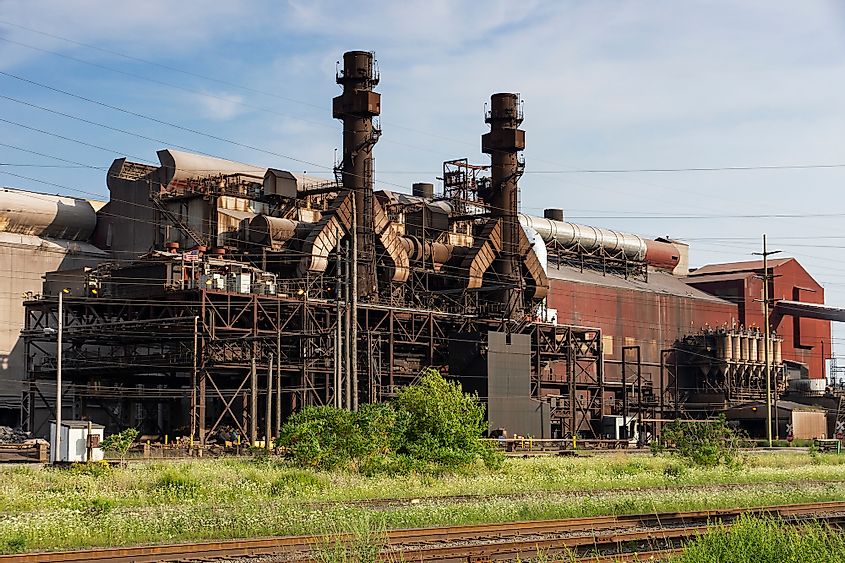
The manufacturing backbone no longer exists.

The “new world order” George HW Bush hypothesized was never to be.  Bin Laden had answered and won on multiple fronts.  He caused us to question our own American identity, whether our leaders actually represent our good, and if their endless wars truly benefit us—which they don’t.  More importantly, he penetrated the illusion of permanence and strength that kept us blindly pulling the weight of empire for our masters.  Even 9/11 truthers, in their rejection of the official narrative, are part of this new anxiety undermining the tower of world dominance built in the post-WW2 era.

After two more wars where only the defense contractors and their political proxies came out as victors, after bailouts for the “too big too fail” and current institutional protection of the hedge fund billionaires against retail ‘Ape’ insurgents, more are waking up.  How the elites and political establishment gang up on populists, like Donald Trump or Bernie Sanders—brazenly rigging the DNC primary in 2015 and the Big Tech election interference this past cycle—has damaged faith in the democratic process.  And, lastly, having endured the Covid lockdowns, more question the notion of us being exceptionally free people.

Even if enough Americans remain under the spell and continue to support the collapsing regime, the rest of the world (at least beyond Western Europe and Australia) is not fooled by our propaganda.  After decades of BS and bullying, like those WMDs never found, many are rejecting the monopolar order and ready to work on plan B.  China, India, Middle-Eastern and African nations do not want to be perpetually subject to US economic threats and warfare.  And, after the Ukrainian sanctions, they’re taking steps to protect their own sovereignty against this imperial aggression.  BRICS is here and the supremacy of the Petrodollar, which is what has enabled the half-century US reign, is being challenged.

The pillars upon which the US economic might was built are now shaking and yet nobody seems to be focused on shoring up this foundation. The tower sways, but hubris blinds those who could prevent the collapse.

From confidence to doubt…

Bin Laden knew his 9/11 attacks would lead to massive overreach.  He understood that the arrogance of our leaders would lead to a flailing angry response.  No, the attacks were not enough to bring it all down but they did put the cracks in the base of this order and the future is no longer as certain as it was prior to that moment of horror and disbelief—when a bustling city and the most powerful country in the world was brought to a standstill. 

Those feelings of horror and helplessness and disbelief remain, like those abyss-like holes in the ground where the towers once stood.  We have all seen the writing on the wall.  The party may have continued, on the surface, but something has fundamentally changed underneath it all, the ground has shifted—as has our perception of our own untouchable position in the world.

History is not an end, the new world order is starting to look as frail as those geriatrics who rule us afraid to die and desperately cling to their power.   

The juggernaut of the US-led world order, which had briefly appeared to be an impenetrable fortress, is now unraveling and all it took is a little push.

Forget Gas Stoves—Why Are Pets Legal?

Standard

The Biden administration has recently floated the idea of banning all gas stoves.  Richard Trumka Jr., son of the powerful union boss of the same name and nepotistic selection for Commissioner of the CPSC, has made this proposal and cited potential long-term health issues (due to using them in homes without proper ventilation) as the reason.  Very quickly, in the typical hive mind far-left fashion, various state governors have followed suit and very soon we can expect that Democrats will once again be limiting consumer choices.

When qualifications are more about favors to political cronies than expertise.

This move is more driven by the current climate change ideological cult than actual concern for people.  And the climate change hysteria is primarily driven by political propaganda rather than true science.  All of which has an underlying goal of giving more power and control to a few billionaires (who meet in Davos annually) and own many of our elected (or selected) leaders.

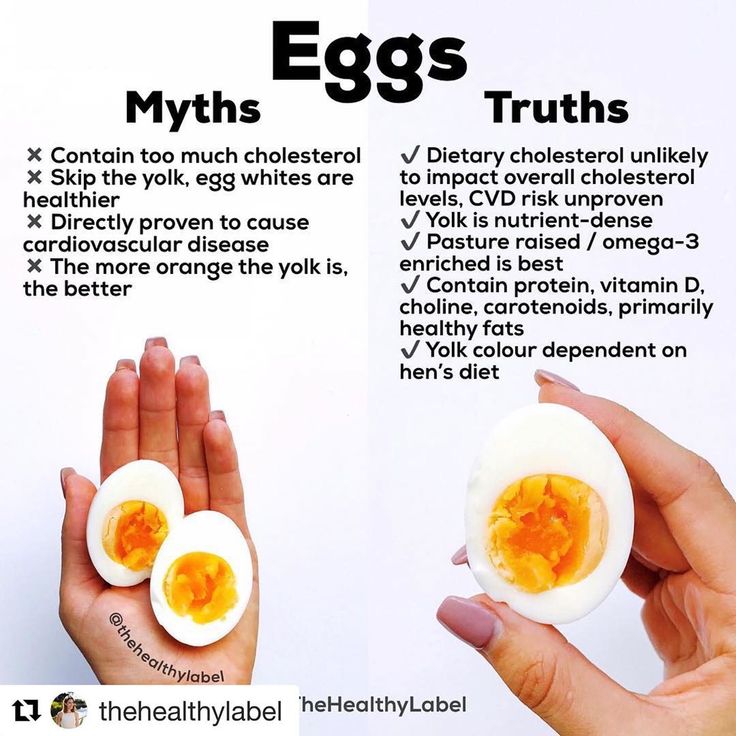
Another hidden reason for why now could be to lower gas prices to make exports to Europe viable.  Currently the billionaire owned world government, centered in the US and Western Europe, is at war with Russia and must keep gas dependent countries, like Germany, from total economic collapse due to untenable energy costs.  This would be manipulation similar to how the Lyndon B. Johnson administration deceptively used cholesterol warnings as an answer to an egg shortage and price inflation.

Eggs: Then and now

However, as a thought experiment: If we were to assume this is honestly about public health and climate change, not some cynical move motivated by geopolitics and commodities markets, why start with gas stoves?

Why not start with pets instead?

In this progressive age of believe science and consumer protection, can we really continue to ignore the well-established risks associated with pet ownership and especially the health risks to children?

Cull the Biological Menace: Save the Children!

Anyone who has had to clean cat poo deposited on the living room carpet has learned a hard lesson.  As cuddly and cute as these furballs seem to be, they are basically walking, sneezing, crapping, and puking biohazard containers. 

At risk of a fact-check claiming that cats also vomit on tile and linoleum.

The Chinese, during the Covid pandemic, knowing that pets were vectors of human disease, euthanized scores of dogs and cats as part of their pragmatic response to the pandemic.  And it just makes sense.  Pets are super-spreaders, next to impossible to mask properly, being exposed to their feces and urine can be dangerous, and that alone is a reason to ban these incubators of deadly disease.

A person who, as a result of exposure to cat excrement, has suffered from Toxoplasmosis, will think twice about having a pet in their home. 

Then there’s the issue of animals attacking humans.  It is terrifying to be out on a peaceful walk and suddenly be set upon by a snarling beast and knowing how many die from dog attacks.  The President’s own dog has bitten several people, and this is okay?  Dogs alone account for 4.5 million bites a year and many of the victims are our most vulnerable.  Think of the children! 

If we are to save grandma by wearing masks and getting mRNA injections, why allow these disease carrying clumps of cells (with claws and teeth) that serve no practical purpose and fit the definition of a parasite?

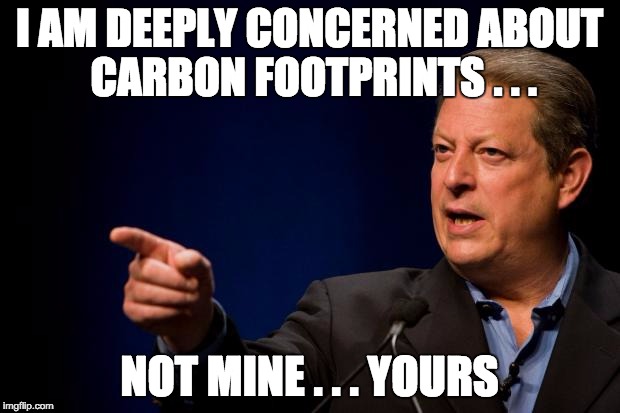
Add to all of that the unnecessary carbon footprint of Fido and Fifi.  Feeding and watering millions upon millions of animals used for human entertainment comes at an enormous environmental cost.  Many popular pets are fed with meats, which is especially burdensome, and will accelerate global cooling warming very scary climate change.  We must do the right thing for the planet!

And, more importantly, why are we allowing this obvious menace to continue when there are alternatives?

Pet Reform: The Green Answer

In the spirit of progressive politics and Democrat party paternalism, l propose that we introduce common sense pet reform and ban all emissions producing pets and replace them with purring and barking electronic animals.  There would be no need for kitty litter or toxic carpet cleaner after the transition.   The green alternatives could be programmed to only knock over household items at a safe predetermined rate and will attack only those who our wise and tolerant revolutionary leaders call Nazis.

Only shoots insurrections wearing MAGA hats, not a threat to humans.

Think of how many lives may be changed or improved by removing this pet-stilence!

It would protect children from pet allergies, dangerous infections, cat-induced insanity (could this impact female voting patterns?), and prevent spread of other serious diseases.  Just the elimination of bites leading to emergency room visits alone would justify this as a cost-saving measure.  During the Covid pandemic we were told that saving only one life justified every new mandate.  Has that ethical math changed?

If it antivaxx to oppose boosters that have only been tested on eight mice or dare to resist the products coming from a corporation staffed by those who make a very bold display of their questionable ethics to a date, then it is extremely anti-science to be in favor of pet ownership.  I mean, how many more studies do we need for these Neanderthals who think animal ownership is a right to understand, right? 

Is there a reasonable argument against banning pets?

Who Determines Acceptable Risk and How?

The point, of course, is that we accept the health risks of pets.  Why?  Well, many have decided that the intangible benefits of a living companion outweigh the risk to their own health and also that of the general public.  Sure, we do have leash laws and liabilities assessed when people who have pets do not take proper precautions. 

And no doubt pet ownership will be the next stop for the climate change alarmists, like the very privileged Greta Thunberg, when their handlers tell them this is the scientific consensus.   I mean, they’re already taking steps against farm animals and telling us to eat bugs as an alternative, do you think they’ll stop there?  Not a chance, if they get their way on gas stoves, soon pets will be only for elites.  These professional Karens, the petty administrative tyrants running this country, can’t be satisfied ever.  There’s no reasonable compromise with them.

These bans in American politics stem from a Puritanical impulse.  It is the very same thing that was behind the Prohibition, this desire to control, often sold with some kind of apocalypse tied to it as justification.  Where it was once Johnathan Edwards preaching “Sinners in the Hands of an Angry God,” the early American sermon delivered in a monotone, it is Albert Gore’s “An Inconvenient Truth” for this new secular version of the same old cult religion.  We all must do our penance and pay the ministers of this new era—it is hard work to keep the population in line and in perpetual fear of destruction. 

Al Gore knows as much about science as a Televangelist knows about theology…

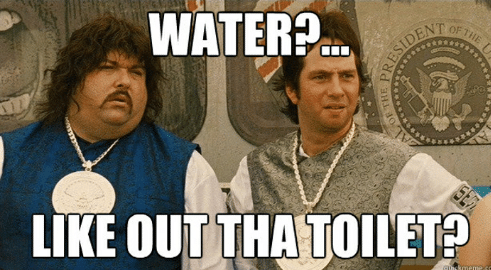
Banning gas stoves isn’t driven by science anymore than witch-hunts or eugenics. Sure, it is rationalized by their own beliefs about cherry-picked data and the purported implications. But water can be made to look awful if a person wants to make that case. It is the midwits, with rudimentary understanding of all things, that have this mistaken idea that life can be free of all risk, completely safe, and strive for perfect pure solutions. They accept the ‘experts’ opinion uncritically as if it is Gospel and become the “sources please” zealots which make truly intelligent conversation impossible.

Risk can’t be eliminated. Removing one risk only ever creates another. That is the real problem with complex systems. Poke in one place, to fix this problem, and the unintended consequences of a prescribed solution can vastly outweigh the benefits. The noxious invisible gas that is more a threat than nitrogen dioxide is the ceaseless and incurable arrogance of those who think it is their job to save the world or manage the lives of others. We cannot risk anymore of what remains of our freedom to please their whims, they will consume it all in the name of protection.

Of all tyrannies, a tyranny sincerely exercised for the good of its victims may be the most oppressive. It would be better to live under robber barons than under omnipotent moral busybodies. The robber baron’s cruelty may sometimes sleep, his cupidity may at some point be satiated; but those who torment us for our own good will torment us without end for they do so with the approval of their own conscience.

C. S. Lewis

Politicians have long abused science as a means to gain power for themselves. It is what had, a century ago, inspired notions of superior race and now is what arms a new generation of young activists—indoctrinated by leftist parents, mass media and their government funded schools. It is no different from any other moral panic where critical thinking made someone an enemy of the sanctimonious mob.

The Cooperative Alternative

Standard

There is an intermediate step between our own lonely individualism and some sort of wonky religious or hippie flower child 1960s-style communalism.  There is plenty of room in between the extremes.

My thoughts about this ideal were sparked again by my interactions with a young woman, on the anxious left-wing activist side of things, thinking to declare as a philosophy major, who wanted me to check out some websites about cooperatives.

While I do not embrace the full package of left-wing ideology, I do see the huge deficit of viable communities and the economic forces that are behind this erosion.  We have traded the mom-and-pop stores downtown for the corporately owned big box.

This is as unhealthy an arrangement as the mass-produced junk food many Americans choose.  And yet, if you question this regime of suburban sprawl and consumerism, you’ll get a response similar to the dialogue, in the movie Idiocracy, when Joe suggests using water rather than Brawndo, an energy drink, for irrigating the crops:

“Community, like a cult or Jonestown?”

If you bring up the word commune there will probably be a strong visceral reaction on the part of conservatives.  There is this delusion of independence, a crucial component of the American cultural mythos, which is what drives many to trade community (and potential for their greater success) for a payment plan.

Whereas a generation or two ago, there was the church and social clubs to provide some level of mutual support, now we have a class of some who make it and others who are an unforeseen circumstance and paycheck away from dependence on welfare programs.  We have traded flesh and blood relationship for faceless state or corporate bureaucracy and a truckload of paperwork.

The current system is so woefully inefficient that we’re probably working twice as hard for half the rewards.  Governments, banks, and big corporations are profiting massively by keeping us divided up and dependent on their systems.  Many believe that they are free because they can watch smut or own a deadly weapon, but they’re really slaves to debt and tossed about by entities that have no actual concern for their well-being or wellness.

But, despite their slavery to this system, the moment you suggest that they consider an alternative, working together with those of like-mind towards a common goal, there is strong resistance.  I mean, how dare you suggest that they give up their own property (that the bank owns anyway) or learn how to share anything?

Reducing the friction of commerce…

The reality is, unless you live alone on your Alaskan homestead, you are dependent on other people.  And my thought here is that we should be more intentional about this and choose what makes the most sense.  

The idea of a cooperative is basically to remove the dead weight of a business and distribute profits more evenly amongst the employed.  It means that all involved in the enterprise share in both the risks and the rewards.  Instead of paying interest to banks or making dozens of taxed transactions, all of this cost can be eliminated.  What it all means, in the end, is working less for more in return.

For example, instead of everyone buying their own lawn mower or hiring someone, why not have one person do this for the community and earn credits?  

My own vision is a mix of both cooperation and autonomy, which is negotiated between the members and the group.  There would not be everyone living in some kind of compound or anything like that, everyone could have their own residence.  There would simply be more shared space for all, fewer redundancies, and potentially more access to costly tools or equipment.

The economics of this kind of cooperative arrangement is so superior that once it was started it would vastly outpace those trying to do it on their own through the currently conventional means.  Ever wonder why so many motels and gas stations are owned by immigrants?  It is because they are financed through their ethnic communities and have eliminated the friction of interest.

Americans, by contrast, always seem to see everything as a competition.  They’ll buy the biggest most ridiculous SUV, they truly can’t afford, to keep up with the Joneses and the only real winner is the financer of this silly display of excess.  We would rather sacrifice our time so that the boss can get his hunting land or an executive makes their bonus than give up this faux image of self-reliance and work together.

Finding our commonality…

A successful cooperative arrangement does require some sort of connection or common purpose to unite the individuals.  In the early Church, their having “all things in common” was a byproduct of faith and a commitment to Christ.  The ideological left, on the other hand, begins with a different moral premise and that is the abolition of private property or Capital.  In both cases, there is a shared identity that is the glue.

That is the biggest roadblock in the rapidly atomizing West, where Protestantism has led to a proliferation of denominations with competing claims and now the dissolution of a shared or universal purpose.  Everything is about us now, about our own opinions and wants, to the point that many marriages end in a protest called divorce.  We can’t sacrifice anything in the present, even if our greater integration as a whole would be better for us in the end.

But there is a huge potential upside.  If we could find a way to look past ourselves for a moment and understand how cooperation is a means to reduce friction or cost.  However, the real need is for more people to let go of this delusion that they are better off on their own and that security comes only through money in their bank account.  The absurd part is that we already do lend our time to many people, for a wage,  their services, or whatever, and would do better to choose better partners.

If there was a way to make cooperative arrangements more palatable I would.  The real problem is that anytime we gain the slightest advantage over our neighbors we would rather keep it all for ourselves.  Many cannot see past this pointless competition and appreciate the great gain of voluntarily distributing costs or sharing responsibilities. Perhaps this is why we can’t have nice things?  I know it is why so many are lonely and discontent. They are looking in the wrong direction for fulfillment.

There are always tradeoffs for every arrangement. And yet there are also things that we are biologically wired for and denying them is to our detriment. We are social creatures. We have a neurological reward system built around having positive meaningful interactions with other people. The economic benefits of greater cooperation, at a local level, would be enormous and the social benefits even greater.

Money Matters, Markets and Meme Stocks

Standard

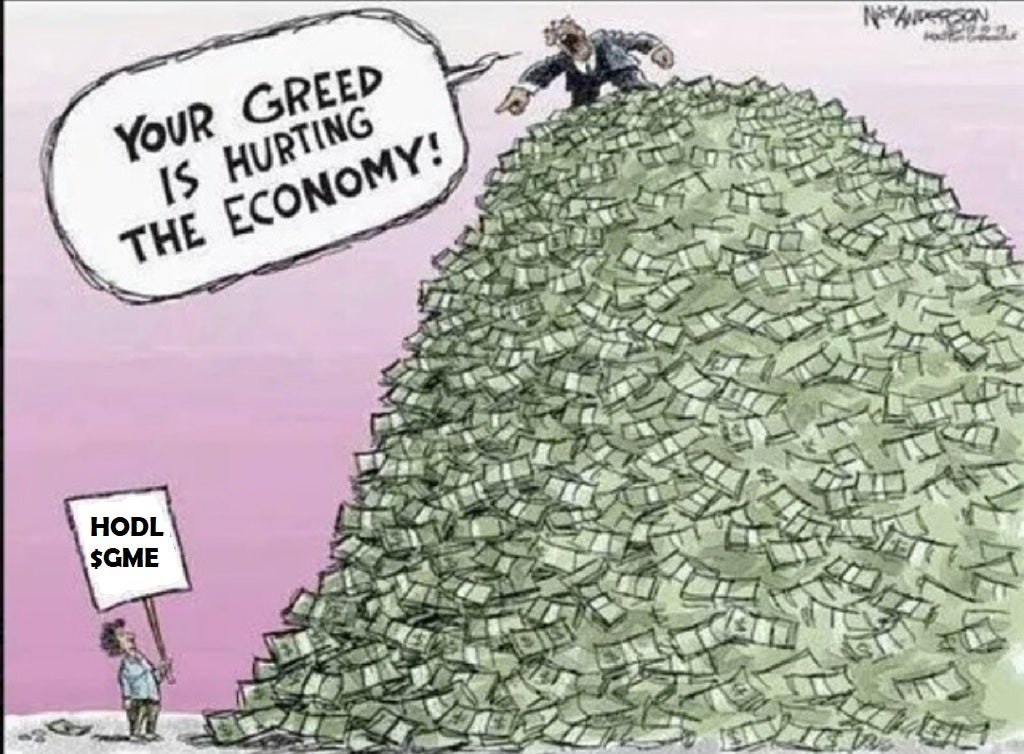
What happens when working-class investors combine forces to take on the Wall Street elites?  Well, the collapse of Melvin Capital, as a start, and much more to come if retail ‘Apes’ have their way.  It’s amazing, for as much as we hear that AMC stock is a losing bet, retail investors buying (and HODLing) shares are sure upsetting many in the corporate media who claim we’re somehow ruining the market.  

The burnishers of our financial institutions, the smart and privileged people that they are, love to look down their noses at the common people.  This article, “Planet of the AMC Apes: Biggest Market Enemy Isn’t Citadel,” highlights an attitude and contempt, using words like “cult” and”mania” and “conspiracy theory” to describe the Ape movement.  We’re the “dumb money” who are mindless following the crowd, governed wholly by our emotions, unlike them.

And there’s an extent to which this is a valid criticism.  Many who see the markets as a get-rich scheme, that they will become instant millionaires for buying the latest digital token, will be sorely disappointed.  It takes patience and conviction, the ability to overcome our fears when the price drops, as well as good due diligence, to make money in the market.  Those who have YOLO’d their life savings into Luna are feeling some real pain as the price of that cryptocurrency fell through the floor.

But this idea that only some are fit to make important decisions, or that the elites are not distorting things for their own personal gain, is laughable.  The whole idea of hedge funds being allowed to short a stock into oblivion just seems wrong and especially when they are out trying to manipulate retail investors with bearish valuations, FUD articles—deploying bots to shill or bash.  This is not to mention the dark pool abuse.  You can smell the fraud, yet we’re bad for calling it out as what it is?

The thing is, most retail investors, like me, entered the market thinking that it was free and fair.  We didn’t understand how short selling worked or how much happened behind the scenes at the behest of the so-called market makers.  We’re just finally now aware of what they do to distort. We rebelled by taking an opposite position to their own in companies they were trying to bankrupt. And now they’re angry for being bested in their own game.

Who knew my just liking a stock could be such an awful thing?

The true reality is that it is not about the money anymore for those who are buying meme stocks. Of course, yes, we would all be happy to see a huge profit for our efforts. But the real goal is to take on the lack of transparency and ability of the hedge funds to rob millions through cynical means.  It is not a free or fair market when some are allowed to use algorithms to manipulate or withhold orders to set the price where it benefits them.  It is also evident that there is naked shorting—that is to say they ‘create’ fake shares to sell and artificially drop the price to scare retail get out at a loss or illegal dilution.

The average Joe is tired of taking a beating by elites who sold them out over and over again.  From outsourcing, globalism, open borders, and the resultant stagnant wages, to “too big to fail” and bank bailouts at the taxpayer’s expense, they don’t actually care about pension funds, and we’re just fed up with a rigged game and corruption.  Fighting this status quo is something that is worth risking my hard-earned cash for.  Money comes and goes, but bringing some justice into the system is worthwhile.

As far as Apes being stupid.  Sure, there are dumb individuals and, absolutely, we need the meme silliness to keep us focused on the goal and laughing rather than worried.  And yet, to counter what the wealthy elites have at their disposal, there is the wisdom of the crowds and a sort of collective intelligence that is greater than the sum total of the parts.  This is not Tulip mania, this is a short squeeze play and together we’re simply Wall Street’s biggest Whale investor doing what they would do.

In the end, as a final thought, there are many things more important than money in the world and I try to remain mindful of this:

But godliness with contentment is great gain. For we brought nothing into the world, and we can take nothing out of it. But if we have food and clothing, we will be content with that. Those who want to get rich fall into temptation and a trap and into many foolish and harmful desires that plunge people into ruin and destruction. For the love of money is a root of all kinds of evil. Some people, eager for money, have wandered from the faith and pierced themselves with many griefs.

(1 Timothy 6:6‭-‬10 NIV)

Do Not Muzzle the Ox or Canadian Truck Drivers

Standard

When a convoy of trucks descended upon Ottawa to protest the imposition of mandates, Justin Trudeau, the ever so prim and polished Canadian Prime Minister took to the screen to disparage the effort as a “small fringe minority” with “unacceptable views.”

If that sounds like a school teacher scolding a class of 8th graders, that is because teaching was Trudeau’s former occupation before being elected to office on the basis of his good looks, smooth speech, and all-around nice guy appearance. There is a certain demographic that swooned after this young charismatic figure, despite his far-left disposition.

Of course, what works in the classroom doesn’t necessarily make the best approach for leading a diverse nation. A teacher is an authoritarian, they rule over the children either buy their superior knowledge or simply by the hierarchical structure needed to keep order in a school. But that’s not how a liberal democracy with elected representatives is supposed to work.

It is not Trudeau’s job to decide what views are and are not acceptable. And that is the very tone that is starting to provoke a response. People are getting tired of politicians, with no moral authority (see: Trudeau in blackface) or real expertise forcing them to comply and lecturing them about what views are or are not acceptable.

It is fitting that a chaotic sea of truck drivers has risen up to challenge this would-be dictator. Ironically, 90% of the drivers are already in compliance according to Newsweek, and yet they are standing up for their rights as Canadians and saying “enough is enough” after two years of being pushed around by those who have long ago overstepped their mandate to govern.

What Makes A Truck Driver Special?

There is some truth to the idea that truckers are on the fringe. The word “fringe” carries a negative connotation when used in a political context, but is defined generally as “the border or outer edges of an area or group.”

Truckers are strong and independent people who face brutal extremes so that those within the borders of their effort are protected.

Like feminine traits (like compassion and nurturing) are ideal for careers like nursing or teaching, it takes a rugged masculine individual to go out and brave all weather and conditions. Truckers occupy that space between order and disorder. They deal with mud, freezing cold and ice, long hours. They can be out weeks at a time, sleeping in a box behind the cab, living in a solitary space so that everyone else can have their comfortable lives.

It doesn’t matter how you feel when there is work to be done. A trucker’s life is pass or fail. Either you clear the snow off the dump trailer tarp and get loaded or you don’t get home. There is no one to hold your hand, nobody out on the edge in this wilderness cares that you’re offended. You’re on your own, buddy, and better be able to deal with loneliness, make your own decisions, overcome the disorder, and find a way to get moving again.

At the same time, a trucker, a real trucker, is not just a dumb brute holding a steering wheel. They need to understand the machinery that they operate, how to properly secure and balance their loads, how to predict their trip and make their appointment times, many are small business owners and need to keep up with the onerous compliance regime imposed upon them.

Professional truckers are some of the most meticulous and detailed people when it comes to their work and their vehicles. Many spend their free time shining the rims, their weekends doing maintenance work, and are extremely skilled.

One skill truckers have is the ability to think for themselves. They form their own opinions and aren’t going to be pushed around by the popular narratives and certainly not by some coward who will not face them while still collecting a check at taxpayers’ expense.

Meanwhile, truckers go out on the road every week to keep the economy going and support their families, facing adversity on the open road and now in front of the parlament, it is costing them a great amount of money to stand up for freedom.

Which is the true form of a truck driver: They are self-sacrificial.

The Contrast Of Fringe Minorities

Political elites and truck drivers occupy opposite sides of society and only one of them is essential. Truckers could survive, on their own, without Trudeau to lead them and may actually do better without the expense of bloated governments bearing down on their shoulders. The elites, on the other hand, would not be able to live their lifestyle without the workers.

For years, especially the past two, the privileged elites, with their access to political power and ability to broadcast their opinions, have encroached more and more on the freedoms of their fellow citizens. Even before the outbreak of disease they always had a ready excuse why their influence and control should be expanded. They will have us believe that they “follow the science” and represent the expert opinions, that they are more qualified.

And yet, these people at the topmost fringe of the social hierarchy often are far removed from the practical implications of their policies. They may say things like “we’re in this together” and pretend to be one of the people when that is convenient to their ends, yet they never do suffer to the extent that those at the bottom do. In fact, there are many pictures of politicians, who issued strict restrictions, not following their own rules.

It would be one thing if they had faithfully led by example, refused to travel and go out themselves, or at least did not hypocritically attack leaders who allowed freedom while they indulged themselves, but it was always “rules for thee and not for me.” They scared and coerced everyone else into compliance, economically ruinous policies for small businesses while being totally exempted from the pain they inflicted.

The truckers, by contrast, simply did their job, rain or shine, deadly virus or not, delivering the goods that are necessary for civilization to exist. And for this, they are mocked, falsely (and bizarrely) characterized as being racist or sexist for standing up to the rich powerful corporate and state actors. I mean, maybe the media thinks that we don’t see the Sikhs or Native people cheering on and joining their fellow Canadians?

How anyone continues to see these fusspot fakes as being credible is beyond me. But then many are divorced from the harsh realities beyond the safe spaces that others provide for them. Unlike truckers, they are controlled by fear, suffer from a kind of Stockholm syndrome where they believe that those exploiting them (for political or other gains) are their protectors.

The elites are the fringe in Canada. The majority of their countrymen want the restrictions to end and thus, spiritually, are on the side of the truckers rather than Trudeau. Sure, many have been misled by corporate media and mischaracterizations of the trucker convoy by those trying to cast this protest in a negative light. But more are starting to see through the blinders of partisanship and propaganda, they should go meet the friendly truckers.

Do Not Muzzle The Ox

St. Paul, on several occasions, makes reference to Deuteronomy 25:4, the law of Moses: “Do not muzzle an ox while it is treading out the grain.” He uses it in the context of being allowed to work for pay and applies it as a general principle. So much for strict literalism and lawyerly application, right?

The ox treading out the grain is used as an analogy of a worker. It is wrong to deny the ox some of the fruit of their labor and it is also wrong to deny a person their fair wages. It makes sense, we should treat those working for our benefit with appreciation and respect.

Sure, a draft animal might not be the smartest creature. But it does deserve what it is due.

And, speaking of muzzles being removed and speaking out against unjust beating, remember the comical story of Balaam’s donkey, where self-important Balaam has a conflict with his transportation. The donkey, seeing an angel with a sword in hand unseen to Balaam, refused to continue down the path and for this suffers abuse. This happens three times before God finally allows the ‘dumb’ animal to speak:

Then the Lord opened the donkey’s mouth, and it said to Balaam, “What have I done to you to make you beat me these three times?

”Balaam answered the donkey, “You have made a fool of me! If only I had a sword in my hand, I would kill you right now.”

The donkey said to Balaam, “Am I not your own donkey, which you have always ridden, to this day? Have I been in the habit of doing this to you?”

“No,” he said.

Then the Lord opened Balaam’s eyes, and he saw the angel of the Lord standing in the road with his sword drawn. So he bowed low and fell facedown.

(Numbers 22:28-31 NIV)

The hilarious part is that the donkey starts to talk back against the abuse and yet that’s not enough for arrogant Balaam to stop and reconsider.

The donkey, like our trucker friends, reminds his rider that he has been completely reliable up until that point, never complained or caused problems, and was refusing to continue for reasons that his master could not see.

Balaam had spiritual blindness, too caught up in his own dignity, assuming his own superiority to the animal, and was very fortunate to not be killed. The Bible is full of stories about tyrants who refused to listen to the people under their rule and suffered severe consequences.

In a time of mask mandates and slanderous lies against the working class ‘deplorables’ it seems fitting that those of spiritual vision stand up together with the Canadian truck drivers.

May the walls of this modern Jericho come down with the honking of many horns.

Politics of Pandemic–Breaking Down the Fauci Emails

Standard

Recently, through the Freedom of Information Act, by request of Washington Post and BuzzFeed News, a trove of Dr. Fauci’s emails have been released and the revelations therein causing a great uproar online.  On one side there’s the “I told you so” crowd doing their victory lap. While, on the other side, is the supposedly unbiased ‘fact-checkers’ and corporate media denial professionals trying to argue that there’s nothing to see here. 

So, is Dr. Fauci a national hero, a seasoned expert who helped the nation navigate a crisis, or should his head be on a pike?  

Let’s start with who Dr. Fauci is and why he is the focus of national attention…

Doctor in the Spotlight

Anthony S. Fauci, M.D., was born in Brooklyn, NY, on December 24, 1940, to parents who operated a pharmacy in the city, his grandparents were immigrants, he was raised Catholic and now considers himself to be a humanist.  He was a standout basketball player in the private Jesuit high school he attended, went to Holy Cross University for pre-med, and then attended Cornell University’s Medical School.  He married Christine Grady, in 1985, who is described as “an American nurse and bioethicist” in Wikipedia, and they have three daughters.

Dr. Fauci is the director of the National Institute of Allergy and Infectious Disease, a role he has served since 1984, through seven presidencies and, while a respected figure in his field of immunology, had not garnered much public attention prior to the emergence of Covid-19.

In early 2020 Fauci was selected to be part of the Trump administration’s White House Coronavirus Task Force (now serves as Biden’s chief medical advisor) and very quickly was singled out by the corporate media for his sometimes seemingly contrarian positions with the President.  If anything, his elevated role and becoming the face of the pandemic response has more to do with partisan politics of those desirous use him as a foil against President Trump than it does with anything else.  Even Fauci himself, in the emails, seemed confused about his new celebrity status. 

There were many stories lauding Fauci.  There is no indication that he wanted to become the public figure he has become.  He did not have the power to tell states what to do.  But now, because he was portrayed as this unquestionable expert, he has become symbolic of the shutdowns and mask mandates to many Americans.  Fame, even if unasked for, is a two-edged sword.  One can quickly transition from hero to heel once the spotlight begins to reveal their blemishes.  By putting Fauci front and center of the Covid response, the partisans have given us ample reason to scrutinize just who he is.

I personally, as someone with a sister who is a medical doctor and another who is a nurse, I am also not comfortable with many of those trashing Fauci’s reputation.  I’m equally opposed to demonizing him or trying him in the court of public opinion.  That said, as one who has some life experience, I also understand the value of second opinions when it comes to medical interventions.  Fauci’s opinion should have been considered one of many, as part of a task force, and should never have been positioned as a rival to the President.  That was dirty politics, completely a media creation, and likely hurt the pandemic response. 

The Politics of Pandemic 

Ideally, in times of national crisis, where many lives are at risk, partisan politics would’ve been put aside and the nation would rally behind the leaders elected no matter their party affiliation.  In that world, the President, informed by various economic and medical advisors, would make the executive decisions and government agencies would do their best to put these decisions to practice.  However, in the current polarized hyper-partisan environment, and with a Presidential election looming in 2020, the pandemic was treated by many as simply another divisive political tool.

No world leader’s response to Covid-19 was perfect.  For example, had European governments followed Trump’s lead and shut down travel from China early on in the pandemic we might have had more time to prepare.  It is easy to forget, but before social distancing and shutdowns became vogue, many social elites were minimizing the threat and calling Trump a racist for warning the world about the virus.  In Italy, for example, they were urging people to give hugs to Chinese people to prove their own virtue.  Our Speaker of the House, Nancy Pelosi, urged her constituents to visit the crowded streets of Chinatown in San Fransico.

Trump was criticized for urging calm and being a cheerleader once the danger of Covid was finally realized.  And, before that, was criticized for shutting down travel from China and accused of fear-mongering for speaking out.  He could not win. He was resisted at every turn while trying to take steps to prepare and then accused of literal murder for the deaths in this country as if the world was somehow doing better.  Few here would know that the US death rate is actually lower than that of Europe, per capita, but the stories here would focus on death totals to build the image of Trump’s failure.

Fauci, on the other hand, was not allowed to be criticized.  He was praised endlessly as a representative of science, as bold and unbiased, a source of all truth and wisdom.  His word was to be treated as irrefutable, god-like, his perspectives treated as the only one that mattered, and Trump asked over and over again, “will you follow Dr. Fauci’s recommendations?”  It was presented as this horrendous thing that Trump may not take this one man’s advice on how to respond, as if there weren’t teams of other advisors to be heard and other concerns to be considered.  

Every smart patient knows to get a second opinion on serious matters.  Even the best physicians, experts in their fields, can misdiagnose or prescribe the wrong treatment.  And this idea that “following the science” means worshipping or never questioning, men like Fauci is pure ignorance. It is dangerous ignorance.

But, as ignorant, is holding Fauci to an impossible standard because others put him on a pedestal.   

On one hand, I completely understand the resentment that some hold towards this man that has come to symbolize the economic destruction brought on by state governors following Federal guidelines.  However, much of what is being said now, in wake of the released emails, is as unfair as the coverage of the previous administration.  Those against mask mandates and economic shutdowns are doing the same thing to Fauci as the corporate media propagandists did to Trump.  His comments, like Trump’s comments, are being ripped out of context by many commentators, without explanation, and that’s a problem.

Yes, some of the emails show that Fauci withheld certain ideas about the origin of the virus and was initially dismissive of masking, yet nothing I’ve seen so far is smoking-gun evidence of his wrongdoing.   Of particular interest is his involvement in funding the Wuhan lab, during the Obama administration, and whether or not this may have been a conflict of interest.  And then there is the ethical issue issue with “gain of function” research that must be explored.  My goal is to give fair treatment to the man and offer my own perspective as far as the content of the emails.

To Mask or Not To Mask?

One of the most contentious issues of the pandemic was the mask mandates.  These state level policies, following the recommendations of the Federal government, were viewed either as life saving and scientifically proven or as terrible infringements on liberty and pretty much totally ineffective. 

My own leanings, as someone who purchased a box of N95 masks in January of 2020, is that masks offer a marginal protection, if the correct type and properly used, and yet the mandates were basically useless.  First cloth masks don’t offer the level of filtration that is necessary to trap the water droplets carrying the virus.  Second, some countries required both a face shield and mask because they determined that masks alone weren’t effective.

Dr. Fauci seems to have come out against mask mandates before coming out in favor:

The typical mask you buy in the drug store is not really effective in keeping out virus, which is small enough to pass through the material. It might, however, provide some slight benefit in keep[ing] out gross droplets if someone coughs or sneezes on you. I do not recommend that you wear a mask, particularly since you are going to a very low risk location.

And also saying this:

Masks are really for infected people to prevent them from spreading infection to people who are not infected rather than protecting uninfected people from acquiring infection…

Now, I believe he’s right in both cases.  Masks only offer minimal protection.  Covid spread through factories where everyone wore masks and states with mask mandates really didn’t fare better than those that did not.  I understand that urge people have to “do something” and there are several flawed studies that back up the idea that masking is beneficial.  However, I really do not see evidence that it makes a significant difference.  Real life doesn’t match up with laboratory conditions.  And thus that was likely behind Fauci’s pragmatic first take.

What is a bit unfair about the criticism about this apparent reversal in opinion on masks is that we all change our minds all the time.  Sometimes I may disagree with some of my colleagues on something, state my own perspective, and then later amend as new evidence comes in.  However, what is disturbing is where Dr Fauci explains this flipflop as being protection of mask supply for medical professionals.  In other words, he is basically admitting to having lied to the American people about the effectiveness of masks.  If that is the case then he should not be given a free pass.

The ‘Debunked’ Lab Leak Theory

One of those banned topics on social media was the theory that Covid-19 may have come from the lab in Wuhan, China.  It made sense, a deadly virus emerges at a market within walking distance of Wuhan Institute of Virology, why not put that laboratory on the list of suspects?  But for some reason discussion of this possibility was forbidden until very recently when it was revealed, through US intelligence, that researchers at this lab had become ill shortly before the virus turned the surrounding city into a warzone.

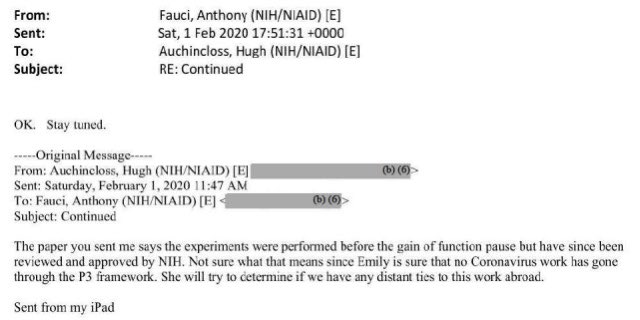
The Fauci emails also reveal that this possibility, even that Covid showed signs of being engineered for “gain of function” research, were discussed.  Now, frankly, this is just good forensic science.  It would be more shocking had this never been considered at all.  And the batting this idea around alone is not proof that this is what had actually happened. 

However, that so many literally conspired, with a foreign entity, to suppress this hypothesis (Big Tech censorship stifling the online conversation, corporate media fact-checkers claiming it had been debunked, etc) should be a cause for global outrage. 

Of course, the most laughable claim of media propagandists, at the time, was that it was racist to link the virus to the Chinese Communist Party.  Nevermind this was from the same people who had no problem with taking aim at wet markets and bat soup.  But somehow that criticism of Chinese eating habits wasn’t a problem while taking a closer look at a laboratory that was studying coronavirus and bats was inappropriate. 

Uh-huh.

Anyhow, given that Fauci had come out in full support of gain of function research and also been a force behind funding the Wuhan lab.  Could it be this history explains the private discussion, in emails, and simultaneous public denial? Possibly, yes.  It is very clear there’s a conflict of interest.  Of course there’s a reason for him to keep a lid on what could be proof of his culpability for millions of deaths worldwide. 

The result of Fauci’s silence, and corporate media stupidity and bias, is that something that should have been thoroughly explored months ago is only now being openly discussed.  This has given a totalitarian regime, known for deception, more than enough time to cover up the truth and their role.  Precious time has been wasted on what could be the biggest crime against humanity in the history of humankind.  We have experienced a death toll and economic damages greater than twenty nuclear bombs, countless innocent lives destroyed, and the likely culprit was protected by a web of denial, collusion between Big Tech, the corporate media and high ranking government officials—like Dr. Fauci.

If the January 6th fracas is worthy of consideration for a Congressional Commission, then we really should dig deeper and investigate the true cause of a global pandemic that killed millions.  No, there’s no smoking gun in the Fauci emails, or least none that I could see, and yet there is more than enough reason to suspect that one of our leading experts had tried to keep a lid on the Wuhan lab theory because of his own ties to the research.  And still our corporate media speaks glowingly of him, as if he could do no wrong, the fact-checkers scurrying to tell us there is no bombshell revelation in the emails.

Dr. Fauci: Authority or Arrogant?

One thing that the pandemic has revealed and the emails only further confirmed, is the complete arrogance of our institutions.  For whatever reason Fauci and others felt it was okay to mislead the American people, to tell the so-called “noble lie,” and then they wonder why trust is waning amongst the people they’ve deliberately deceived? Meanwhile, those who should be holding their feet to the fire, our ‘journalists’ (who now also see themselves worthy to pick winners for us rather than simply report), embarrass themselves with their fauning praise.

Is Fauci the sole source of all real science and truth?

No, absolutely not!

Is he a total fraud unworthy of his position?  

Well, that is something worthy of investigation and yet to be determined. Innocent until proven guilty is still the law of the land. And I do not believe in trials in the court of public opinion. Again, while there are questions of ethics and culpability to be answered, that our corporate media should be asking rather than singing his praises, nothing in the emails implicates him of a crime.

My own thought, knowing what is known, is that making Fauci the fall guy would be letting too many others off the hook.  Sure, he represents an accountability problem with the political establishment and elites who are protected by their own interests at the expense of the American people.  No, they don’t simply “follow the science” nor are they invulnerable to group think or free from all bias.  They’re human, like us, they make mistakes, they have political agendas and hidden motivations too.  It isn’t about secret conspiracies so much as it is a matter of human fallibility, in general, and arrogance.

Over the course of the past year Fauci’s name has become synonymous with authority and science. But much of that is smoke and mirrors. He is truly only one qualified voice of many and was only made the face of the pandemic as a way to undermine Trump. This is pretty much the only reason why he is loved by one side and loathed by the other. Politics. The politics of the pandemic cloud good judgment. And those caught in this political fray deserve better than to be torn up by the mob or raised up like saints.

Fauci, given the voting patterns of NYC and government lifers, is probably as Democrat as one could be. That could explain some of the looks of tension, and tedious corrections, when Trump used his layman’s terms during press conferences. But, unlike the media narrative that constantly pitted him against the President, the emails showed this conflict between the men was massively overblown.

In the end, Dr. Fauci has the swagger of a Brooklynite, cocky or confident depending on who you ask, and amazing stamina for a man his age. But he should have never been made a celebrity, never turned into this unquestioned authority on matters of science or used as a tool of partisan politics.

Fair enough?

The Cryptocurrency Explosion

Standard

Cryptocurrency is all of the rage right now, what was once the realm of tech nerds and crazy uncles is now becoming part of the mainstream.  The maturation of this technology, as well as the attention given to it by celebrities and billionaires, combined with concern about inflationary monetary policies has created a wave of crypto mania on social media.  It is now something I’ll talk about with friends or coworkers who aren’t especially geeky.  Very soon even grandma will have a crypto wallet.

So, what is cryptocurrency?

To understand cryptocurrency one first must understand what the money in their wallet is.  Money is a store of value.  It is something developed thousands upon thousands of years ago as means of exchange and make trade easier.  If there was no money we could barter and yet that would be cumbersome.  

Imagine someone wanted two ears of corn from their neighbor and only had pigs.  Two ears of corn is worth far less than a whole pig, but it is rather difficult to divide the pig into fractions without killing the animal.  So to barter for the corn one would either need to take corn that they didn’t really want or give the pig away for far less than it’s actual value.

As a solution to this problem eventually someone got the bright idea: Let’s trade a shiny (and rare) metal in exchange for our goods rather than barter.  These metal tokens of trade would eventually become standardized coins.

In the corn and pig scenario this means that the person with the pig could sell the pig for ten coins and then buy the ears of corn without having to divide up the pig.  It was also far easier not to need both the pig and corn to be together at the same place and time.  These coins were made of non-perishable metals, could be stored and used at any time.

However, shiny metal coins are heavy and very soon institutions offered to keep the coins safe and then give the owner of the metal a special note saying that they owned the metal.  This “bank note” itself became the means of exchange.  And the banking or government institutions with the actual metal also learned that they could simply print more of the notes, without having the metal to back it, then have all of the pigs and corn that they wanted.

Thanks Telegraph: https://www.telegraph.co.uk/finance/businessclub/money/11174013/The-history-of-money-from-barter-to-bitcoin.html

Paper money has value based upon trust in the system that has produced it.  Prior to a certain time, exchanging a pig or corn for paper would be sheer lunacy.  The paper in your wallet only has value that is derived from faith that it can be exchanged for things of practical value.  

So, again, what is cryptocurrency?

First and foremost, cryptocurrency, like the dollar in your wallet, is a store of value.  And it gets it’s value from the collective faith of those who believe it has value.  Like shiny metal replaced the impractical bartering of pigs and corn, like paper notes replaced heavy shiny metal, cryptocurrency is now ready to replace paper notes and for a variety of reasons.

The Federal Reserve Inflation Scam

Most people notice that the price of goods and services is always going up.  But not enough can give a good answer as for why this inflation occurs.  Some price increase is due to increase in costs, such as employee wages or more looters helping themselves to items.  There is also supply and demand, if there’s only so much land, and more people who want it, then price will price will go up as more people bid against each other for a limited resource.

However, the biggest driver of this upward trend is inflationary monetary policy or the fact that central banks continue to print more money and, right now, at an ever increasing rate.  Of course, since paper is basically worthless, the value of this new money has to come from somewhere and that somewhere is your grandma’s savings account.  In the United States the Federal Reserve (a private bank) inflates the currency supply through printing, then loans this newly minted cash to the Federal government.

Need some bread?

That’s right.  The Federal Reserve (a private bank) creates money out of thin air, the value of it coming from shrinking the value of the money in your own wallet, and then loans it to the Federal government where it is distributed to the cronies of politicians, which is eventually must be paid back by taxpayers.  If this seems like a scam, you’re correct, it is.  Only those at the top benefit and then they placate you with ‘stimilus’ crumbs off their table.

Do you hear that sucking sound? That’s the sound of the value being drawn out of your savings account with every new dollar.

There are no limits to how much paper money government and their private bankster partners can print.  The more money they print the less valuable the money that you earned is worth.  They rob us blind, and then claim to have our best interests at heart when they give back some of what was taken from us.  If most people understood this, how much the current system is costing them, they would revolt and put an end to the robbery.

How does cryptocurrency work differently?

The most important thing to understand about cryptocurrency is that supply is limited.  What this means is that value, at least related to the dollar, will increase over time.  

Cryptocurrency, unlike printed money, has a set amount of virtual ‘coins’ or digital tokens that can be produced.  Bitcoin, for example, has a maximum number of coins set at 21 million.  This compared to trillions of US dollars in circulation.  And, as more dollars are produced the number of Bitcoin only decreases in relation.  And, as more people use their dollars to buy this limited supply of Bitcoin that comparative value will only continue to rise.

But what would stop Bitcoin from making more coins?

This is where things get technical, here’s what Forbes says:

Bitcoin is a decentralized digital currency that you can buy, sell and exchange directly, without an intermediary like a bank. Bitcoin’s creator, Satoshi Nakamoto, originally described the need for “an electronic payment system based on cryptographic proof instead of trust.”

Each and every Bitcoin transaction that’s ever been made exists on a public ledger accessible to everyone, making transactions hard to reverse and difficult to fake. That’s by design: Core to their decentralized nature, Bitcoins aren’t backed by the government or any issuing institution, and there’s nothing to guarantee their value besides the proof baked in the heart of the system.

The short version is that Bitcoin is not a centralized bank, not a corporation, it is a code and the security provided through blockchain technology or cryptology and direct user oversight rather than by an institution.  The transactions are the currency and it is pretty much impossible to counterfeit or fake.  Someone would need simultaneous access to every one of the digital ledgers to create more.  Even if this were possible it would cost way too much, require far too much genius, to be practical as a scheme.

The end result is that cryptocurrency is more secure.  The dollar being printed into oblivion is robbing many people blind with the inflation it produces.  Even tokens, like Dogecoin, which have a set percentage increase of supply (to make it more viable as an actual form of currency) doesn’t even come close to the amount of new dollars put into circulation every year.  What this means is that cryptocurrency will continue to increase in dollar value even if there was no increase in demand for the tokens.

Add to this the many people who are only now discovering the crypto revolution, the development of platforms like Coinbase, Webull, Robinhood and others that make it easier for retail customers, and the sky truly is the limit.  Those who missed the opportunity to become millionaires by getting into Bitcoin early now can ride on the Dogecoin phenomenon.  It is a true modern day gold rush.

What are the risks?

This blog would be incomplete without getting into the potential risks.  First of all, not all cryptocurrencies will gain value like Bitcoin, Ethereum, Dogecoin or others.  It seems likely that eventually the market will become saturated with new coins and prices will remain stagnant or even drop with established brands.  And, second, with so much new interest, there are going to be an ever growing number of straight up scams.  So, if you don’t know much, play it safe and talk to that nerdy friend before making an investment.

The other risk is that what goes up fast can also go down as fast.  Dogecoin has gone up 400% in a matter of days and could go up by the same amount in coming weeks.  And yet, sentiment could change, some of the big ‘whale’ investors could pull out with their profits, and there be the equivalent of a bank run (look at the 1920s) as those invested see a rapid decline and sell in a panic.  In the opinions of some, the gains of value amount to a speculative bubble, like the “Tulip mania” that swept the Dutch Republic in 1700s, and eventually the price will collapse.

Also, seller beware, cryptocurrency profits are taxed differently than other income and trading too often could end up putting you in a hole as the IRS demands their slice

Add to that the possibility that governments, like Turkey, fearing the loss of their currency monopolies, lost tax revenue and control over markets, will decide to crackdown and make life difficult for those already in the game. Even the threat could drive prices through the basement.

My own advice?  

1) Do not put all of your eggs in one basket, diversity is usually a strength when it comes to investments.

2) Secure profits along the way, cash out your initial investment as soon as you are able, and that way you’ll never lose.

But, most of all…

3) While seizing opportunity, always be aware of the risks and never EVER use money you need very soon.

Still, with those warnings out of the way, I believe cryptocurrency is here to stay and will be a rare opportunity for many early adopters to see tremendous gains.  It doesn’t matter what the skeptics say, what matters is that a billion people in the world (like me) do see the value of this, we don’t want to see our hard earned savings ruined by hyperinflation, and will continue to pour money into this decentralized bank of the future. 

So, dip a toe, then jump on in, the water is great, and the tide is rising!

Practical Solutions for Filipino Farmers and Market Fluctuations

Standard

Problem: Small scale Filipino farmers plant not knowing what the price will be by the time the crop is ready for harvest. When the price drops due to oversupply of vegetables the farmers barely make enough and sometimes even end up dumping their crops because the cost of transportation is greater than the value of the vegetables.

The problem is three-fold. First, it is the inability of farmers to see the whole picture of who is planting what crops, which results in overproduction and then drives market prices down. Second, it is a problem of markets being mostly local, with little to no access to other markets, this keeps prices lower. Third, there is not enough coordination between domestic farmers and government agencies that control the importation of agricultural goods.

Solution: The Department of Agriculture (Philippines) needs to study the market to find out what amount of vegetable production is needed. Once they establish a baseline, then they should come up with a voluntary program that will aid farmers in deciding what crops to plant today based on their projections of future demand.

The Department of Agriculture (Philippines) could issue a quota voucher to farmers, who had enrolled in the program, to plant crops based on the projections and granting them certain protections for if the market price does drop. In other words, if there is a market need for a particular amount of green beans then the agency could issue a proportional number of vouchers. This, assuming import controls, would stabilize the markets and prices. And, if the market price dropped anyways, abiding by the voucher system would entitle the farmer to some compensation.

Another way to get better prices for isolated farmers is to facilitate the connection to a broader market. Access to markets beyond the local region is one way to increase the value of crops produced and also to stabilize price fluctuations. Government contracted transportation and distribution could be a part of this or it could be entirely put out to bids with private contractors. The transportation costs to be offset by the better prices in the destination market, the farmer would get the voucher guarantee price and the rest would go to the transportation contractor.

This sort of analysis and organization could also be done independently of the government. But it would take a significant investment. The national government would be in a better position to facilitate this than a private entity of limited resources. That said, universities could help to develop the models of the agricultural markets necessary to determine how many vouchers should be issued for each kind of crop. It would need to be a collaborative effort. Maybe with the help of transportation cooperatives between these small-scale farmers?

And one key is to incorporate the local ‘grassroots’ input, as well, as a strictly top-down central planning agency would likely fail. Central planning generally doesn’t work and especially not when it removes the autonomy of individuals to act in their own self-interest or allow choice. Participantion would need to be voluntary and incentives market-based rather than artificial. Ideally it would be self-sustaining and entirely funded by the beneficiaries.

Finally, yes, protectionism may be bad in excess, as in North Korea. However, any country that wishes to maintain domestic industry and jobs must moderate foreign imports. Haitian farmers learned this lesson the hard way when cheap, subsidized, rice exports from the United States destroyed their already meager profits and forced more of them to compete for the limited opportunities for employment in the cities. So it is incumbent, on the government of the Philippines, to control agricultural imports for the benefit of domestic producers.

Anyhow, some ideas.