A social media friend of mine posted a statement on his profile page:
There is not one verse in the entire Bible that says women should cover their bodies well to keep men from lusting after them.
This, of course, drew several responses from the fundamentalist audience, some bringing up verses about modesty and seeming to believe that refuted his statement.
However, contrary to usage in some circles where “modesty” is assumed to mean something about guarding sexual purity, the Biblical word translated as “modesty” comes from a Greek word that could translate as “orderly” or “neat” and in context of putting too much focus on outward appearance.
Perplexed, I decided to send a private message to the friend and ask about the post. I also included the text of my message, with the link, and…
More red!?!
What on earth?!?
It was then that I realized that something in my post had offended the censorship algorithms of the social media platform and the link was my first guess. So, I did what anyone would do, I put the link through tinyurl.com to circumvent the control freaks and, yippie, this time it posted!
But this success was short lived as the site informed me, immediately thereafter, that it had removed my post for “violation of community standards” without explanation.
Update: Now they’re calling it spam. But I never was allowed to post one time, every attempt to post the BibleHub link was thwarted. Test it for yourself if you went a red mark on your account or try the Hitler quote at the end of this article.
Why a reference, like BibleHub, would be banned is beyond me. I mean, is the dictionary next? Are we going to ban Webster’s because their rewritten definitions still aren’t woke enough for the totalitarian leftists in Silicon Valley? And the extent of this effort, on the part of the platform, in going a layer deeper by banning even a link to the link, is chilling to say the least and especially when there is no hearing, no way to question the decision, no recourse.
My inquiry online led to a Newsweek article, dated January 28th, claiming that this Bible reference ban was a mistake. The story included this quote from Facebook on the matter: “We’ve since corrected this and BibleHub.com content can now be shared. We apologize for this error.” And yet, months later, my posting a link to that site was blocked even in private messaging and removed when I tried to bypass their system. Apparently nobody fact-checked that claim?
The truly insane part is how these platforms attempt to disguise their censorship under error messages and suggestions that the user may have removed the post knowing full well that this is a lie. They blatantly mislead, brazenly deceive, call election tampering a “total mistake” and then think that we should trust them to be gatekeepers of truth? It is an abomination! An insult to our intelligence.
Sure, Mark…
Meanwhile, a baker in Colorado is sued, once again, by malevolent and meanspirited people because he declined to do a creative work in celebration of a practice that he finds personally offensive or simply doesn’t want to associate himself with. Imagine that. Imagine if Pro-Life activists would deliberately target Democrat-run businesses, who are are known to be pro-abortion and demand they produce things proclaiming abortion to be murder. Would that go over well?
But, I digress, the frustrating part about the Big Tech tyranny was that I was actually making a point against holding women responsible for male lusts. And, even if it were something offensive, it really is none of Mark Zuckerberg’s business what we talk about. The government protects social media corporations, like Facebook, from being held accountable for things that are said on their sites, under section 230, by classifying them as a platform rather than a publisher.
It is long past time for some protection against abuse and discrimination for social media users. Legal speech, especially political and religious speech, should be protected from censorship. Frankly, I don’t care that these are private businesses, there’s a vast difference between a mom and pop cake shop and a cabal of corporate billionaires, the monopolistic Robber Baron’s of our day, trying to manipulate the system, shut down competition and stifle the national conversation.
Fake news and hate speech are only a pretext. The New York Post got taken down for posting the truth about Joe Biden’s son making millions off of Chinese connections and yet never stopped anyone from posting the “very fine people” myth. The real aim is not protection of truth, the aim is complete ideological conformity, to remove any narrative that goes against that of these oligarchs, their minions or the political establishment. The scariest part is that they can shadow ban, throttle content, and otherwise distort the natural flow of information and no one would know any better.
This will not get better any time soon, not when it benefits the regime in power, so it is best to migrate to other platforms now before you get banned and lose all of your connections. These “alt tech” sites are also vulnerable to attack and might not be around long, yet they do still exist. Check out Parler, MeWe, and Gab if free speech is important to you.
But, more than that, speak out against censorship. Yesterday it was conservative firebrands, today it is Bible concordances, tomorrow it could be you. It is time to defend the defenseless.
When do you say “no more” and take a stand?
The clock is ticking. They’re just getting started. Are you ready for social credit scores, with criteria decided by people who hate you? Do you want to be banned from travel for because credit card companies, airlines, and social media platforms conspire, have a policy against religious proselytizing or declare all organisations not far-left to be dangerous extremists?
Irony missed on the part of tyrants.
How long will you wait to say something, to do something?
Writing tributes has become one of those things that I’ve done. It feels right as a way that I can give back to those who have positively contributed to my life. It is said, “a person dies twice: once when they draw their last breath, and later, the last time their name is spoken.” So, by writing, I feel like I’m extending the legacy of those whom have lived as an example and deserve to be remembered.
My thoughts were to do the same for my cousin Uriah. To honor him as someone who was there for me, as the brother who selflessly cared for his special needs siblings, as the young man mature beyond his years looking to contribute to society in a positive way, as a listening ear and true friend during some of my darkest days, as someone who never complained about being dealt a very nasty card and had every right to the question God.
A picture from Moyer Christmas a few years ago
So far I’ve collapsed under the weight of the task. There is simply no way to put into words or adequately describe the loss of a close friend. The other tributes I’ve written were for those who had basically lived a full life and, more importantly, cases where I could take a step back from the subject to capture their character. I’m simply not skilled enough as writer to give a summary of someone who meant so much to me.
But, still, since his death is something that occupies my mind and since grieving is a process that most have experienced, I’ll write about my own experiences with him and the feelings that I’m currently sorting out. I’ve decided to talk about death and despair. And not with anything glowy to offer as an alternative either. And yet also not as someone who is defeated or ready to succumb to hopelessness. Yes, I’m battling with some depression, but down does not mean defeated.
Anyhow, the blog from here will be in two parts. First the events of the past couple of years from my own perspective. Then, after that, going back a little further for some additional stories about my interactions with Uriah and why this has brought back some of the identity related questions and traumas that has been the overall theme of Irregular Ideation. It is relationships that define and show the depths of what a person is. Hopefully by sharing from my own eyes it will be easier to understand what manner of man Uriah was.
The Strange Lump On Uriah’s Ankle
After finishing up at Bloomsburg University, Uriah decided to enlist. I’m not sure why exactly, he was always up to a challenge, the National Guard was a way to serve his country and give back, and it was always something to put on the resume. I’ve always flirted with the idea, despite being raised in a conservative Mennonite culture that preached against military service, the structure appealed to me. But, unlike me, Uriah followed through.
A rare picture of Uriah without a smile.
He excelled in basic training. He was motivated and willing to put in the work to be at the top of his class. One testament to this tenacious spirit was that a painful lump developed on his ankle. Uriah, unlike a ‘normal’ person, decided to continue with his training rather quit to get immediate medical attention. He reasoned that it was better this than to repeat basic and simply endured. I’m doubtful this made much difference as far as the final outcome, but it did mean that he was active duty military during the fight and received the very best care possible.
It was when he came home, over the winter, to visit family and get this lump checked out that I first heard about it. I decided to visit over this time and it was definitely concerning. Still, I was optimistic, I had had a lump removed from my shoulder area before, my sister had a tumor in her abdomen removed, and there was no reason to despair about this. We would wait on the results of the biopsy and pray for the best in the meantime.
We would soon find out that this tumor was malignant and when chemo didn’t do enough, the choice was given: Allow the to cancer spread or amputate. Uriah elected to do the unimaginable for most young and active people. He had his leg removed below the knee. This was hard enough for me. I couldn’t possibly imagine having to make this kind of decision. To go from runner, weight lifter, and athlete, to having to learn how to walk again!
Some nifty attachmentsMe trying to be positive, like Uriah
But Uriah, for lack of a better expression, took this huge setback in stride and committed to physical therapy. It felt very fortunate too that he was in the military, Walter Reed is a prosthetics leader and he very proudly showed me the attachments available that would eventually enable him to run again. Besides this, he also had the wonderful Shanae in his life, and knowing my lifelong struggles in the romance department, this was something significant for me. Lumps, and loss of limbs, life goes on.
The Terrible News, Moments Bittersweet
A little over a year ago, and about a year after losing his leg, soon after Uriah’s new normal began to slip from my daily prayers, came the awful news: The cancer was back, this time it was in his lungs and the prognosis was not good. My heart sank. And tears flowed. Uriah would not be with us for much longer and there was very little that could be some about it.
Still, I would not allow this dark cloud plunge me into despair. If we couldn’t save Uriah then we would give him a most glorious send off imaginable. My imagination ran wild with ideas, a day that would be unforgettable, with my brother flying him and faking an emergency landing in a nearby city where us cousins would be waiting to whisk him away in a waiting limo, maybe a mock car chase with him in the passenger seat of my Shelby, with police in on the fun in pursuit around the closed airport, me yelling “we only live once!”
Alas, that was never meant to be. Uriah needed medical treatment more than a memorable adventure, the pandemic shutdowns followed soon thereafter (briefly changing the mood from: “Oh no, Uriah’s going to die” to “Oh no, we’re all gonna die!) and then his marriage to Shanae. That last item being a far better send off than this bachelor and a bunch of crazy cousins could provide.
A handsome couple
The last year with Uriah served to highlight his bravery even against these impossible odds. Uriah, even with late stage lung cancer, refused to stop living his life and made time to be with those who loved him most. On multiple occasions, when the restaurants were still open, we dined out together. Me and him or joined by friends and cousins. These are some of the most beautiful and cherished moments of a very stressful and emotionally draining year.
However, of those moments, one shines above the rest. Uriah, probably only because he was Uriah, asked me if he could come visit my church sometime. Of course, I was thrilled by this, that he would think of this, and soon the arrangements were made. Nobody seeing him that day would have guessed he was terminally ill. He looked as strong and vital as ever. The highlights when Father Seraphim, who I had ambushed together with Uriah, agreed to anoint him and pray for healing. I also had the opportunity to take Uriah on one more ride in the Shelby on the way home.
In the week that followed the anointing something amazing happened. A text message from Uriah with the first good news since his lung cancer and prognosis were revealed. The tumors had shrunk! Could it be possible?
But this relief would only be temporary and the next time I would see my cousin he was no longer looking so invulnerable.
Over Thanksgiving Uriah, his condition already deteriorated, became infected with the Covid-19 virus. He was not doing bad from what I had been told. Unfortunately, after walking into the hospital, he was soon put on a ventilator and his loved ones told he would likely never be taken off of it. Still, my courageous friend had yet one more trick up his sleeve. He ended up, at some point, ripping the ventilator out and was breathing well enough on his own. It was fantastic. I prayed he would be able to go home and he was going home.
My optimism remained until my last meeting with him. I figured as long as he was fighting I would keep hoping for that miracle.
I had not been able to see him for months, partially due to my own bout with Covid-19, and also because he was under the care of his parents and Shanae. I may have missed the opportunity to see him entirely had it not been for my cousin David declaring that he didn’t think Uriah wanted visitors. I thought to myself, “we’ll see about that,” and I sent a text message soon thereafter. Uriah told me he wanted to see me and directed me to Shanae, I asked if David and another friend Derek could accompany me. We planned for the next Saturday.
I had known, with the cancer spreading throughout his body and now unable to walk because of diminished lung capacity, that Uriah wouldn’t be an image of health. Still, actually seeing him was a little jarring, he looked rough, and I realized that, even if the lastest longshot treatment option would work out, there was irreparable damage. It was a struggle for him to breath. But he still ate a slice or two of the pizza that I had brought. It was their wedding anniversary and an honor to be able to be there despite the circumstances.
Four friends in better times
When David and Derek said their goodbyes, they offered a fist bump. But it did not seem appropriate. I offered a hand shake, I wanted to clasp his hand and look him in the eyes. My last words to him were to tell him how proud I was of him. It was only a few days later that I received a phone call during the day from David. Uriah had passed away that morning. We had done we could, he fought like a true warrior, never complaining or falling to despair. He died short of his twenty-fifth birthday.
The Time Uriah Asked Me For Advice
I am a good bit older than Uriah. I can’t remember exactly how and when our relationship took off. But he had his own unique version of the Moyer cousin humor and a rare determination. I recall him out running, as teenager, with bricks in the backpack he was wearing. He wanted to be the best at what he did and put the work in too. He was a decent athlete, played basketball and soccer, and I knew he was becoming a man when I could no longer take him in a wrestling match.
When Uriah enrolled in Bloomsburg University, I had very little doubt in his abilities. He was extremely intelligent, someone mature beyond his years, and thus it came as a bit of a surprise when he reached out to me asking for advice. We met at Weaver’s for some pizza and ice cream. And when there he expressed his doubts. He was thinking about dropping out and wanted to get my opinion.
Of course, as one who has long struggled with feelings of having buried my talents, having quit college before obtaining a degree, to open I urged, “don’t be like your loser cousin!” I went on to explain the lifelong benefits of a degree, my own regrets, and encouraged him to continue on pursuing his dreams.
Uriah would go on, finish that first year, and continue through the next year. He was on the Dean’s list, evidently a good student, and would graduate with his criminal justice degree. It was something that made me immensely proud, especially that I had a small part in his success, and it seemed as if even the sky wasn’t the limit for him. He had done the thing that I failed to do. Not only that, but he had met Shanae while on campus and there was a budding romance between them.
Taken from Uriah’s Facebook page
As I look back my feelings are mixed. On one hand, my advice came with an assumption that he would live a long life, that his degree would open career opportunities. Uriah never did get that far, he never had an actual career, so what was the point of all that hard-work and discipline? My nihilism creeps in. As the book of Ecclesiastes begins: “Meaningless! Meaningless!” says the Teacher. “Utterly meaningless! Everything is meaningless.” But, on the other hand, and as if to throw a wrench in my despair, had Uriah quit he would not have Shanae to accompany him during the last two years.
The Friend That I Didn’t Want
I’m a very idealistic person and loyal too. I remember my plans, as a child, to eventually live with my brother Kyle. I mean, we were peas in a pod, we understood each other, why would we ever go our separate ways, right? But, eventually, I had to come to terms with the fact that my siblings, including Kyle, are very motivated people and were destined to have their own lives away from me. Our childhood together a passing phase and not permanent. It’s tough, yet necessary for progress.
However, having learned this, I was not prepared for what happened when a close friend, a wingman for many years, got married. I’m not sure what happened, but right after his wedding he basically disappeared. And, after the first efforts to reconnect failed, I decided that he simply didn’t need the relationship anymore and had moved on. To this day his wife is the only person who has shown any interest in maintaining a connection and it truly is baffling to me. Is this normal behavior? Should I be concerned?
Anyhow, this friendship of over a decade that vanished overnight left me wondering what friendship really is? It also made me wary of making such an investment ever again. If someone like this other friend could completely abandon our relationship, effectively ghost me, was it truly worth becoming connected at this level again? I almost felt lonelier having lost a friend, my romantic life wasn’t helping that, and when someone else started to emerge as a friend (Uriah) I wrote the following in a journal:
Uriah is a faithful something. I suppose he is a friend, although I don’t know if I want any friends really, not after [omitted]. I feel antisocial, I am sick of people and yet would not fare well alone. Last weekend proof of that.
I was dealing with many things at the time, in rehab and off of work because of a knee injury, and still reeling from the loss of a friendship. Once bitten, twice shy, right? I was reluctant to allow someone else to become close. I felt better to be in control, to keep some safe distance between myself and other people.
Nevertheless, a stronger bond did continue to develop between Uriah and myself, he was capable of intelligent discussion, completely trustworthy, and never judged me. My ideations, given the feelings of betrayal, were extremely dark and it was safe to express them with him. He helped me to not take them, or even myself, too seriously and provided a bit of a reprieve. And when I holed up he persisted. There were times we sat quietly together. I knew that he cared.
When I left the Mennonite church many of the people that I spent years with made no attempt to connect. There were so many relationships pursued and never reciprocated. Or, when there was relationship it was forced, a part of their religious duty and not real. Uriah was always genuine, like I try to be, and was never going to be a fairweather friend like so many others. That’s what makes it so especially hard to lose him in a manner completely unexpected.
He’s the friend that I didn’t want because losing friends is too painful. In the weeks following his death my desire was to withdrawal, avoid intimate relationships, and protect against future disappointment. Of course, avoiding pain and risk is not a way to live and in the intervening weeks I’ve started to force myself to reengage. I can’t bring Uriah back, he’s gone. But there’s no point in joining him in the grave.
The Questions That Cannot Be Answered
The hardest part of Uriah’s death is where it leaves his parents. Ed and Judy are two of the hardest working and most dedicated parents I know. And for reasons we’ll never know three of their four children suffered terrible seizures. Renita Gail, I carried out to the cemetery on a cold day many years ago. Uriah’s two remaining siblings, Aleah and Isaiah, have not developed beyond a certain point and require constant care.
My wonderful aunt Judy
It goes without saying that there were many hopes that evaporated with the passing of Uriah. He was the strong and healthy son, someone more than willing to help with Aleah and Isaiah, and now he’s gone. It is unfair. There is no way to understand why misfortune visits some. Perhaps that is why the book of Job was written? To put to end this notion that people get what they deserve only good things happen to good people?
There is nothing I can offer that will come close replacing a young man who was my better in so many ways. It would be silly to even try, he was one of a kind, tall and handsome. He got the intelligence and work ethic from both of his parents. He had the compassionate heart of his mother and quirky humor of his father. He was their legacy, the one who was supposed to carry the Derstine name and support them in their old age.
Uncle Ed with Uriah
Being a pallbearer for Uriah was a great honor. However, carrying that casket up that icy hill, like I had with Renita many years before, came with the burden of the many unanswerable questions. I won’t even attempt to answer. But maybe if I have another son, I’ll name him Uriah Edward and tell him someday about my cousin, my aunt and uncle. I have not heard one complaint from them Uriah’s parents. They feel the loss more than anyone else and yet their resolve to trust God is encouraging to those of us with our many questions.
A very cold day
Dealing with death isn’t easy, especially not when it is someone so undeserving and special. I’ve been battling against depression and despair over the past few weeks, despite having a year to prepare, and I suppose it would be strange to feel nothing in such circumstances? But I don’t plan to linger here. I acknowledge the feelings, I lost a friend, a rare kind of individual. There will never be another Uriah. There are no easy answers. But I will try to carry the legacy of Uriah as far as I am able.
The other day I was filling out a survey and came to the questions about my race and gender. I paused for a second, “what am I today?” And decided to select what applied to me in that moment, which is the answer that I would typically use when asked those questions, and yet continued to ponder this question of identities.
I understand why these categories exist, we do have tendencies and traits as a part of a demographic group. Generalities and stereotypes certainly do have some basis in reality and I won’t deny that. However, what makes me bristle a bit is what this grouping too often does to relationships across category lines. It is divisive, it robs us our uniqueness as individuals and also puts us at odds with those deemed to be different from us.
It is too black and white. Too simplistic and encourages a distorted picture of reality in emphasizing that one similarity we share in common (or one difference we have) over everything else. The labels themselves are even dumb. I’m not actually white. My skin is a shade of brown. Furthermore, I probably only ever started identifying as white because someone told me to fill in that box as a child and I mindlessly complied.
The idea of “whiteness” is a social construct and has come to mean much more than it ever did before. Now some claim that everything from work ethic and politeness to mathematics is somehow a part of being white. Which is appalling ignorance, unexcusable, given the contributions of people of all skin shades and cultural backgrounds to civilization as we know it. All people should be offended by that nonsense.
I had a classmate, a Jamaican immigrant, brilliant at math, well-spoken, very polite, the son of an engineer or university professor as I recall. And, by the current color obsessed paradigm, he’s more ‘white’ than I am. It is a backhanded insult to the many, like him, who have natural talents that don’t fit within the narrow categories or grievance culture narratives of the racially prejudiced left.
Which is the crux of the matter. I hate these categories because they lie. As Mark Twain quipped, “there are lies, damn lies, and statistics.” Sure one color group may, collectively, produce more elite athletes, another more classical musicians, and another mathematicians. But those group statistics tell you absolutely nothing about individuals nor why some individuals achieved these outcomes.
Much being attributed to color is actually culture. In Europe, in Africa, in Asia, and America, there are as many cultures as their are shades of skin color. Some European regions are known for their industriousness and superior engineering, others for their laid-back attitude and art. The same is true of Asian cultures. The same is true of African people. So how do we know color has anything to do with these differences?
The two biggest lies of our time…
1) The myth that skin color is synonymous with culture.
2) The myth that group statistics determine individual outcomes.
Yes, there may be some statistical correlations between certain behaviors and skin color categories. But that doesn’t mean that what applies to one of a certain category applies to all. For example, many women love pink, but that doesn’t mean the most or even many women are fond of that color. My younger sister defies many of those sort of feminine associated things, she’s not afraid of any critter, has reptiles for pets, and that does not make her less of a woman than those who freak out at the sight of a spider.
Correlation is not equal to causation. And the late George Floyd has more in common with me, as a working class schlub, than he does with the Harvard educated, son of a privileged WASP mother, who calls himself Barack Obama. It’s true. Look it up. One half of Obama’s lineage is as Yankee as you can get, a great great […] grandfather being the first to build a gristmill in the State of New Jersey, back in the 1600s, later elected to the state Congress.
It is a complete farce that a coal cracker kid, raised in rural West Virginia, is advantaged over a college educated “person of color” working as a Wall Street broker. Nah, I’ve been around, I know how the cultural elites sneer at ‘deplorables’ and work overtime to make sure that they know their place. Class privilege is often misidentified as color privilege and misidentified by the very people who benefit most from spreading out the blame for their own sins.
The son or daughter of an immigrant wage-slave has more in common with the ‘black’ category than the trust fund babies of any color pointing the crooked finger. This is what grates me the most. In the real world blacks and whites work together. Out on the road, hauling commodities for the man, I swung the sledgehammer as much as that ‘black’ fellow beside me.
So do I really need my prissy, Che Guevara T-shirt wearing sociology professor cousin, son of a doctor, who could somehow afford to travel the world taking photos while I worked for $7.50 an hour, lecturing me on things that I don’t understand as a white male?
No, no I do not!
Those who associate certain outcomes or behaviors with certain colors of skin, who only ever see skin color in their analysis, are the true racists. There is a stronger correlation between fatherless homes and negative outcomes than there is between skin color and negative outcomes. In other words, things commonly categorized as a color privilege is more strongly correlated with family structure.
Look into mass shooters.
Not at all excusing their violence, but many of them were estranged from their fathers, struggled to fit in, and it is hard not to see this as being an insignificant factor in their outcomes.
Think about that when discussion of privilege comes up.
Unfortunately, there is not much to be gained as far as political power in a “the fatherless unite!” campaign. Racial division, by contrast, is an easy sell. Skin color, indeed, is the low hanging fruit of human difference. Tribalism comes naturally, all you need to do is convince people that they are somehow fundamentally different because of something superficial and their confirmation bias will do the rest of the work for you.
Breaking the Bonds of Designated Identities
I’m not going to minimize the importance of life experience and family inheritance in shaping our identities. I was born into a conservative Mennonite home and that identity was very important to me. In public school it made me a religious minority, subjected me to many inquiries, what would now be called micro-aggressions, and some bullying later in life too.
The strange part is that, while being the Mennonite kid amongst my school peers, I never really felt like I fit in with my ethic church peers either. After years of rejections, both in romantic endeavors and even as far as filling offices or missionary opportunities. Finding my place, complete acceptance, within the Mennonite culture had eventually become an obsession. I desperately wanted to be the good Mennonite for reasons that I can’t fully explain.
That pursuit came to an end with a young woman who declared, “I can’t love you the way that you want to be loved.”
Mercifully, over the same time, a truly fatherly figure, Fr. Anthony, an Antiochian priest and college professor, took me under his wing to help me through this collapse of my Mennonite identity that had left me with a meaningless existence and suicidal.
I had to break from my ethnic and religious identity because I had no other choice. It was not pleasant. I loved, and still do love, many parts of the Mennonite culture. My parents are wonderful. My church was not one of those Pharisaical nightmares all too common in that denomination. But, as Fr Anthony offered, maybe I had simply “outgrown” the tradition.
And, truly, in Christ, we are all called to a higher common identity:
So in Christ Jesus you are all children of God through faith, for all of you who were baptized into Christ have clothed yourselves with Christ. There is neither Jew nor Gentile, neither slave nor free, nor is there male and female, for you are all one in Christ Jesus. If you belong to Christ, then you are Abraham’s seed, and heirs according to the promise.
(Galatians 3:26-29 NIV)
St. Paul, in the context of the tumultuous days of the early church, spent much time addressing the many competing identities within the church. He took on the religious elitists, bluntly telling them to castrate themselves in one letter, and spoke up for those being excluded on a class or ethnic basis. That’s what he’s doing in the passage above, emphasizing that in Christ we can all be “children of God” and share one identity together.
The astounding part is that the church then, like the church now, still struggles on this point. Even in the conservative Mennonite church, where we were basically all from the same ethic and cultural background, there were definitely tiers of acceptance. Some simply check more of the ‘right’ boxes, are more popular, find the beautiful adoring wife, have all the opportunities, work their way up the ranks quickly and others not so much. In short, the words to the Galatians are as relevant now as were then.
Christian Identity Makes Difference Beautiful
One of Mennonite cultural distinctives that I had rejected early on is that of uniformity as a part of Anabaptist non-conformity teaching. My own church wasn’t nearly as strict as some. But there is an undercurrent, undeniably, that if a girl talks more than average she’s a “flirt” or a motorhead guy with a nice car was somehow materialistic compared to a wealthy business owner with three farms. Pity the artistic types in those churches more traditional than mine.
By contrast, an Orthodox Christian friend, gave this wonderful description: The church is like a garden, full of different plants and plants, all watered by the same source.
That is the ideal.
Unity in Christ is not about erasing all differences. Galatians 3:28 is not turning us into an androgynous ‘multi-cultural’ blob of completely equal outcomes. Jesus was not a Communist. Having “all things in common” was not about forced wealth redistribution or reparations. Certainly not about getting mine. Rather it was about bringing our diversity of talents and abilities, bonded together as the body and blood of Christ, to the church.
Diversity can be a strength. Not talking about superficial skin deep token ‘diversity’ achieved through quotas either. Instead, what I love is those of many colors, many backgrounds and classes, working voluntarily towards a common goal, having found a shared identity that transcends all others and allows the entire group to reach full potential. Competing identities keep us in conflict, but through Christ we could create the most beautiful harmonies.
In the end we must free ourselves from identities that keep us at war with each other. However, that is not something we do ourselves. There are many misguided efforts. Many are embracing divisive political ideologies, like critical race theory, that will only produce more hate and mistrust. Condemning “whiteness” or heaping praise on “people of color” and otherwise playing favorites on those currently deemed to be victims is never going to do anything besides add to the confusion.
Only in Christ, in repentance, in faith, can our differences in gender, culture, color or class be something beautiful.
The man had charisma. He wore a swanky grey sport coat and a shiny pair of quality brown dress shoes, that all went along with his well-manicured hair. He stood out in this crowd of mostly Amish gathered for the seminar.
I tend not to pay for such things. I have a knack for learning through non-conventional means, namely running into walls until I get to the correct answer, and have also learned quite a bit from observation. My own ticket had been provided by my company and I was there with the rest of the office staff to hear what this life-coaching speaker had to say about customer service and listening.
The content was good. It seemed worthwhile advice for those seeking to improve their customer experience and grow their business. However, I kept thinking about the Christian themes mixed into his message. This son of a missionary did not preach a sermon nor did he mention the Gospel of Jesus Christ. Still, there was definitely an attempt to relate to the audience at a level of their religious values.
This sort of thing, good or bad, seems like the latest development in Christian missions. In times past, the church was the church, those ordained and sent were more open about their underlying goals, urging repent and be baptized, and those personally profiting off the message were condemned:
“Unlike so many, we do not peddle the word of God for profit. On the contrary, in Christ we speak before God with sincerity, as those sent from God.”
(2 Corinthians 2:17 NIV)
Now, the man before us, he represented a non-profit entity and was giving advice that pertained to sales and serving customers. Still, he did reference Scripture amongst his quotes of self-improvement gurus and even used the phrase “word of God” at one point in his presentation. He would use our familiarity with the “good book” to bolster his claims and even shared some theological perspective.
Again, I have no problem with this man nor the particular presentation. In the business world this kind of consulting and advice is likely key to reaching the next level of sales and I’m sure we will do many of the things that he recommended.
However, what did stand out, and is the reason for writing this blog, is this trend towards a mission of influence rather than open proclaiming of the Gospel and, in many ways, I was at the forefront of this evolution. My blogs, often a mix of theology, philosophy, and personal observation, is not openly declared as a Christian mission. Still, I have used this media, and my understanding of Scripture, to do pretty much the same thing (minus the monetization) of this life coach of Anabaptist background.
So here’s some thoughts…
Where Did It All Begin?
The church has always had influential men and inspiring women. Some rose in prominence, even have their writings and stories recorded in the canon of Scripture for our benefit. The Orthodox have many noteworthy figures, Early Church Fathers, including St John Chrysostom, the archbishop of Constantinople, a man who took on the abuses of ecclesiastical and political authorities of his own time, and whose Divine Liturgy we celebrate to this very day, his name means “golden-mouthed” in Greek and he definitely had a way with words to match the description.
However, those in Scripture, as well as St John Chrysostom, were themselves all under the authority and guidance of the other Christians. They were also very open about their mission. They were unabashed preachers of the Gospel of Jesus Christ. They weren’t your life coach using Christian themes to decorate a business oriented daylong consulting session for $150 a head. St Paul may have made tents to support himself and his ministry, yet I’m not sure that he sold them using Christian themes. Just saying. His ministry was ministry and business was business.
But there is a sort of murkiness to many modern-day efforts, where they aren’t part of the church per se nor even announcing themselves as a ministry, and it is by design. So how did we get here?
The starting point of the current Western paradigm is obviously the Protestant schism with the leadership in Rome. The intention of Martin Luther, ordained by the Roman Catholic Church, was not to start a denomination. He wanted reforms and had good reason for his critiques. And yet his written protests quickly became a catalyst, many took things much further than he had ever intended and we have the multitude of denominations as his most significant accomplishment.
Still, despite this, the church, even or especially with those of the radical reformation, remained a collection of individuals with accountability to each other. Sure, the Anabaptists were more localized, led by shared statements of faith, and collectively agreed upon congregational rules rather than by a hierarchical structure, but it was never every-man-for-himself or a free-for-all. Those who spoke were ordained by various means, not simply a man full of his own ideas and finding a following.
The turning point?
I think around the turn of the last century represents a shift. The whole tent revival circuit, where a dynamic speaker, an Evangelist, would get up in front of the crowd and wow the audience with his polished salvation message. Many were sold the Gospel in this manner, walked the sawdust trail, the circus would eventually leave town and life would go back to normal or the new normal, I suppose?
The next stage in development was the parachurch missionary organization. By parachurch, these organizations are run seperately from the denomination, are often subject only to their own board members, and seek funding for themselves. Basically, any ambitious person, with some natural musical or speaking talent, interested in travel, can start a prison ministry, missionary training institute or what have you, and only with as much ties to the existing church structure as they want. All one must do is set up their nonprofit, find investors, buy the bus, and be on their way to preach the word as their adoring wife glows beside them.
Yet, as all things, the traveling Evangelist and other obvious Christian missionary efforts, including openly Christian contemporary artists, have become tired old tropes. The in-your-face presentation, the lack of follow-up or one-dimensionality of the presentation, the realization that the novelty had worn off of the original form, the scams, and scandals, has led to a third wave of influencer and that’s the one that doesn’t even announce the Christian intentions at all.
Sometimes this lack of openly expressed intention is to avoid legal prohibition. For example, teaching English in Asian countries that would not otherwise invite Christian missionaries. Other times it is to add a practical element, after preaching and charities failed to help solve many underlying conditions, which gave rise to micro-lending groups. Sometimes this repackaging is to sell the mission itself as something exciting, an adventure rather than some kind of dull service opportunity, and part of an effort to make Christianity relevant to the next generation.
After watching the presentation the other day, I suggested to a left-leaning Mennonite friend that we go on tour together for sake of racial reconciliation and healing. Why not? I think I could probably work the crowd, with a little practice, and definitely believe in the cause, could leading faith-related seminars be my calling too?
In theory, this cause-oriented Christian influencer thing seems great. We can have sportsman’s banquets, business seminars, and TED Talk the unsuspecting heathens (or even the more traditional religious types) with a flashy Powerpoint presentation, funny stories and down to earthiness. And yet, this does seem to get things out of order, it puts values first and repentance second.
More troubling, from the Evangelist of the past century, to parachurch missionary organization of the past decades, to the influencers of the present, the distance between the activity and actual purpose has grown. The Evangelist preached without providing adequately in discipleship. The missionary went without being sent or accountable to the church. And the motivational speaker, while referencing the Bible, never announced a Christian intention. And it makes me wonder, how far can we detach values or ministries from the Church, and cause of Christ, before it becomes entirely self-interested and divorced from Christ?
At what point is it all just a moneymaking scheme, devoid of actual spiritual substance?
I mean, we’ve all seen it, the shyster, the con man, the ministry with a board of directors full of families and “yes man” friends, the Televangelist, the guy selling a product, an ideology, a Ponzi scheme. There is sometimes a very fine line between the less scrupulous, eyebrow-raising efforts, and the more accepted manifestations. Are we someday going to have Christian pornography, subtle Christian themes, maybe an actor pick up a Bible and read a passage before the main event, to hopefully plant that seed of influence?
Where does it end?
The Rise and Fall of the Christian Influencer
David Ramsey, James Dobson, Ravi Zacharias, Ken Ham, and Bill Gothard are familiar names in conservative Mennonite circles. Ramsey with his financial advice, Dobson with his focus on the culture war, Zacharias with his appeals to reason, Ham for his fundamentalist theme park, and Gothard an earlier version of life coaching seminars. The point of all of these men, at least as expressed, was to advise, consult, and influence. They are all men who took aspects of their religious values and turned it into an enterprise.
None of the men above represent a church denomination. They rely on selling merch, the loyal support of people like you, and donations to expand their reach. They have built ministry campuses, a literal ark in the state of Kentucky, a few massage parlors here and there, and are only accountable to their own ministry boards. Usually the focus, at least initially, is around one illustrious character, a strong personality, who is too often surrounded by the cult he has created rather than those who will challenge.
There now seems like a parachurch organization for every niche. The list of bloggers, authors, evangelists, producers of all sorts, continues to grow and especially now in the age of social media. It costs me nothing but time to set up my account on WordPress and start spewing out my perspectives. Perhaps, if I were a bit more ambitious, I would write a book, do a book tour, and eventually be at your Lady’s Tea event sharing what I learned about life and love from the book of Ecclesiastes. Book your reservations now as available slots are filling fast!
But the parachurch is the downfall of the church. Too often these ‘ministries’ have come at the expense of the local body of believers, submitting and serving each other in love. Too often it is something guided more by the spirit of Diotrephes, wanting things our own way and seeking those who agree, rather than by Christ. That is why we have seen a growing number of scandals come to light, of leaders forced to resign by outside pressure or disgraced after death for their hidden sinful deeds. I know, speaking for myself, it is too easy for me to shun deeper involvement in the actual church because it is difficult, not determined by my feelings of inspiration, and this is something that must be repented.
Jesus was willing to serve, but he didn’t determine the cross he was required to carry and, instead, submitted to the will of the Father. The disciples, and St Paul, likewise, were not Lone Rangers, doing it their own way, without accountability or oversight. Those with gifts aren’t to use those gifts to serve themselves or build their own empires. They were sent and commissioned by the church, under the umbrella of those ordained to lead, and not independent contractors pursuing their own pet causes.
The Christian life is not about values, certainly not about self-promotion or having the right program either, but is about our Communion together with other believers, both past and present, and with Christ. From that, the Holy Spirit, from our accountability to each other, our true obedience, transformation will come from inside out and love will flow out to change the world. The values and culture come from that rather than being taught at seminars, religious institutions, or Bible schools.
We don’t need more influencers. We don’t need more parachurch organizations or a return to tent revival meetings either. Many of these things are mere human efforts that will ultimately fail. What we really need is the body of Christ, to partake and participate together in the life of the one true Church.
Jesus was an extremely divisive figure. He said insulting things, routinely called out the religious elites, and was ultimately nailed to the cross for the inflammatory things that he said. Some of what Jesus said, if taken in context, would make Donald J Trump blush. And, lest someone say that this role was reserved for him, as son of God, Saint Stephen was cancelled by an enraged mob for doubling down on what Jesus said and St Paul literally told his religious rivals to emasculate themselves in one of his rebukes.
When someone uses “unChrist-like” to describe something another person did that offended them, it immediately flags that person as an unthoughtful and reactionary person. It is a favorite term of Mennonite religious snobs, with an extremely black and white perspective on everything, and seem to think that Jesus was some kind of Marxist hipster douche, like them, rather than a man who could throw a rhetorical punch, call people out for their hypocrisy and made many enemies within the ranks of the self-righteous religious elites.
If Jesus were in the flesh today he would enrage the ‘woke’ social justice left like he did the Pharisees. He would violate their speech codes, intentionally, like he did by healing on the Sabbath and allowing his disciples to ignore the cleansing rituals:
“Why do your disciples break the tradition of the elders? They don’t wash their hands before they eat!” Jesus replied, “And why do you break the command of God for the sake of your tradition? For God said, ‘Honor your father and mother’ and ‘Anyone who curses their father or mother is to be put to death.’ But you say that if anyone declares that what might have been used to help their father or mother is ‘devoted to God,’ they are not to ‘honor their father or mother’ with it. Thus you nullify the word of God for the sake of your tradition. You hypocrites! Isaiah was right when he prophesied about you: “‘These people honor me with their lips, but their hearts are far from me. They worship me in vain; their teachings are merely human rules.’”
(Matthew 15:2-9 NIV)
These studious religious experts, looked up to within their own religious circles, point out that the disciples of Jesus are not behaving correctly according to their standards. But Jesus, rather than apologize, instead uses what would now be called a “whataboutism” by those trying to deflect legitimate criticism. He goes after their own crafty violation of the law, their legalistic approach that neglected the spirit or intention of the law, and then attacks them personally, calling them hypocrites, with empty words, who merely follow after human rules.
Ouch!
However, what is most interesting about the Gospel account is that those who loathed Jesus couldn’t condemn him on the basis of his inflammatory rhetoric alone. No, they still had to connive to misrepresent the actual intent of his words to paint him as violent and a threat to the powers that be. They maliciously twisted his words to suggest that he was planning to lead a violent insurrection and should therefore be condemned:
The chief priests and the whole Sanhedrin were looking for evidence against Jesus so that they could put him to death, but they did not find any. Many testified falsely against him, but their statements did not agree. Then some stood up and gave this false testimony against him: “We heard him say, ‘I will destroy this temple made with human hands and in three days will build another, not made with hands.’ ” Yet even then their testimony did not agree.
(Mark 14:55-59 NIV)
That passage (above) would, if they had social media then, would likely be rated as being false by the fact-checkers. Why? Well, Jesus did indeed say that the temple would be destroyed:
“Destroy this temple…”
(John 2:19 NIV)
See! Right there it is! Incitement to violence! Jesus, speaking to the crowd, with his followers listen and willing to obey, says “destroy this temple.” Clearly a madman, speaking in a fit of rage after assaulting money changers on sacred ground, attacking established institutions, and a man clearly leading an insurrection, right? No wonder the frenzied mobs wanted him dead, permanently removed, his followers purged from polite society, they were being misled and used as pawns by the powers that be who saw Jesus as a threat to their own religious/political racket.
Follow the Real Jesus—Reject the Leaven of the Pharisees
Christianity, real Christianity, did not parrot the popular narrative. It was extremely divisive, although not along lines of gender, race or superficial difference, and it was those with the blessing of the established institutions who pursued and persecuted his followers. The followers of Jesus, for their part, were defiant like Him, they refused to stop speaking the truth even against the orders of governing authorities. These weren’t no limp-wristed mealy-mouthed educated folk, trying to position themselves for the approval of others.
The followers of Jesus today, as simple blue collar workers, would be called ‘deplorables’ by the elites who despised them. Some of them, as Romans or former collaborators with Rome, would be hated “fascists” or any other of a long list of names used by social justice activists to silence, marginalize or dehumanize their political opposition.
And, yes, the hypocritical religious elites of our day will use “unChrist-like” in an attempt to discredit and shame legitimate critics. They see themselves as being the pure and undefiled arbiters of truth. And you? Well, you’re the unwashed masses, those not privileged with their superior intelligence or education. No, they are, in their own minds, more truly compassionate, those who listen to and represent the downtrodden, while you are too dumb or hard-hearted to comprehend. Of course, it is all hogwash. Nevertheless, they do have a power to lead silly women and weak men astray with their nonsense.
Ultimately, contrary to the myths of the sanctimonious Mennonite progressives, the Gospel of Jesus Christ is a divisive message. It calls all to repentance, it stands in opposition to all tribalism and identity politics, and offends the elites who are not accustomed to being put in their place. It is not all kumbaya, linking hands singing “praise and worship” around a fire while shaking a tambourine, or unity around the lowest common denominator. No, sometimes it is harsh, raw and divisive truth, like this:
“Be careful,” Jesus said to them. “Be on your guard against the yeast of the Pharisees and Sadducees.”
(Matthew 16:6 NIV)
Meanwhile, when a crowd of many thousands had gathered, so that they were trampling on one another, Jesus began to speak first to his disciples, saying: “Be on your guard against the yeast of the Pharisees, which is hypocrisy.
(Luke 12:1 NIV)
“Do not suppose that I have come to bring peace to the earth. I did not come to bring peace, but a sword. For I have come to turn “‘a man against his father, a daughter against her mother, a daughter-in-law against her mother-in-law—a man’s enemies will be the members of his own household.’
(Matthew 10:34-36 NIV)
Those of the prideful social justice mindset, like those of any other errant ideology, the Pharisaical “leaven” of our own time, should be called to repentance. They, themselves, are not arbiters of truth, who can declare a person as not Christian for belonging to a group not their own. No, they are like the self-righteous religious elites who confronted Jesus for his incorrect, according to their own rules of conduct, teachings and example. The religious ‘progressive’ today would imagine themselves on the “right side of history” the same as Jesus sarcastically and very caustically condemned:
“Woe to you, teachers of the law and Pharisees, you hypocrites! You build tombs for the prophets and decorate the graves of the righteous. And you say, ‘If we had lived in the days of our ancestors, we would not have taken part with them in shedding the blood of the prophets.’ So you testify against yourselves that you are the descendants of those who murdered the prophets. Go ahead, then, and complete what your ancestors started!
(Matthew 23:29-32 NIV)
And continued…
“You snakes! You brood of vipers! How will you escape being condemned to hell? Therefore I am sending you prophets and sages and teachers. Some of them you will kill and crucify; others you will flog in your synagogues and pursue from town to town. And so upon you will come all the righteous blood that has been shed on earth, from the blood of righteous Abel to the blood of Zechariah son of Berekiah, whom you murdered between the temple and the altar.
(Matthew 23:33-35 NIV)
Religious elites today never understand that the words of Jesus address them, personally, as much as anyone else nor are capable of understanding that those who were called “you brood of vipers” were the polished, the educated, those of correct pedigree and how dare this uncouth uneducated man tell them otherwise! They were completely justified in their own minds and this man had no business name calling! I mean, how unChrist-like can you be? The real Christ, according to their own experts and expectations, would be a religious bigot like them, would talk down to those lacking sophistication, and endorse them as rulers.
Let My People Go!
The sanctimonious never mind their own business. No, they’re always out to prove themselves more righteous, thus must pursue and destroy anyone who stands in their way, points out their egregious doublestandards or otherwise triggers the privileged religious elites. They are entitled, they have the credentials, who are you to stand up to their bullying and abuse?
They need a captive audience.
They need to have you around, as their whipping boys, to feel better about themselves.
Cutting to the chase, after years of seeing good rural people belittled and falsely accused, having their grievances ignored by the coastal elites, I decided to start a Facebook group to highlight this growing divide. It was a semi-serious solution, where urban and rural people, with their vastly different needs, would be governed separately and in a way better matched to their own needs. The key operant words words being “peaceful partitioning” of the two divergent Americas as a means to avoid violence.
Unfortunately, and predictably, while enjoyed with light-hearted amusement by the rural folks invited, it was soon met with an extremely vicious response. As aggressive as those men in Sodom knocking on Lot’s door, demanding access to his angelic guests, and not taking “no” for an answer, the assault was on. By the direction of a few agitators mischaracterizing the group according to their own blinding prejudice, many in the social justice mob (or sympathetic) began to stalk the group and harass me. How dare rural people seek to be separate and safe from them! [Insert popular false accusations here.]
“You’re unChrist-like!”
It was “unChrist-like,” they cried, with a collective banshee howl, and heaped condemnation.
And yet, those who tell you that there is no Christian precedent for peaceful separation between disagreeing parties are either ignorant or liars. In Scripture there are multiple times when conflict between parties led to separation, as a means to keep the peace, starting with Lot and Abraham who went their different ways to end conflict between their parties. And, even in the New Testament, there was a time when St Paul and St Barnabas, had a severe disagreement and decided to go their separate ways.
The only time where this sort of separation did not go smoothly was when Moses asked Pharaoh, “let my people go!” Evil Pharaoh had initially balked, he didn’t want to lose his source of cheap labor and felt he had all of the power on his side. But Moses persisted, and God assisted by visiting Egypt with a series of plagues, until the tyrant was forced to loosen his grip. Finally, only when the cost became too high, the beleaguered abuser of the children of Israel allowed them to go—only to go against his own word later and pursue them to his own peril.
Maybe Pharaoh is the Christ of the social justice Mennonite?
I’m sure he was polished and prestigious.
Whatever the case, insisting that every American be under the same national flag has nothing to do with Christ or his teachings. I have worshipped in foreign nations, amongst those who didn’t share my political affiliation, and it never ever took away from unity in Christ. No, only when Christianity is corrupted, turned into a political ideology, does this difference in national identity become an issue. And it is not coincidence that those influenced by Marxist political ideology cannot see the vast difference between the two kingdoms. They profess faith, they condemn us as nationalists, yet are the ones who are truly blending religion and politics.
Lastly, there’s something deliciously ironic about a bunch of religious separatists, proud of their Anabaptist heritage, lecturing peaceable folks about keeping unity in the church.
You’re joking, right?
These are people who have no desire to reconsider and reunite with the historic church, that transcends nations, is timeless and complete.
No, they see themselves as superior-minded, able to discern for themselves what is correct ‘Christ-like’ teachings. There is zero self-awareness or introspection as they parrot popular leftist slogans and copy cancel culture against those who dissent to their rule. They are always looking outward, at the Publican over there, praying in his unsophisticated humble manner, trying to justify themselves. They see themselves as the gatekeepers of the kingdom and yet, if they do not repent, they too will be shut out and condemned to outer darkness.
Some day Jesus will divide the sheep from the goats. I ask everyone to consider what side they want to be on in that final judgment. Rural or urban, none of us are in a position to decide who belongs in the church or does not. Those suggesting that being a part of a Facebook group they disapprove of are any less Christian than them? They are delusional. Full of themselves. It is cultural imperialism at best (no surprise some of these are in that special self-congratulatory ‘missionary’ class, who travel over land in sea like those addressed in Matthew 23:15) and is an attitude that will only drive the wedge deeper.
Nobody wants to stay in a toxic relationship. Nobody wants to share a home with their unrepentant abusers. If these elites want to be heard by those of us who have listened to them lecture and condemn year after year, then it is time for them to start listening to our grievances too. If not, if they are incapable, then the most Christ-like thing they can do is let us go our separate ways. It is not peaceable to demand that others see things your own way, there is no reason why Christians can’t go their separate ways, and being in two different nations doesn’t mean we should be at war with each other.
In the world of sports there are the stars and then there are the role players. The stars get the attention, the glory, while the role players work quietly behind the scenes, and yet would Michael Jordan be famous without his supporting cast?
This past week one of those supporting cast men died after becoming infected by Covid-19, having succumbed on Tuesday of this past week, on the same day as another regular during my growing up days, Lenore Miller, 89, who loved to use testimony time at church to sing, and passed after becoming ill of the same disease.
John Kenneth Metzler, 82, better known as just “Ken,” had been in poor health for the past decade and really seemed to be living on borrowed time as it was. He was born in 1938, February 15, in Lancaster County, the faithful husband to his wife of 60 years, Arlene, and proceeded in death by his daughter Brenda.
I almost didn’t write anything about Ken. I mean, the Mennonite denomination is my past and Ken was simply Ken. A deacon in the church. But an awkward and common man. He ran a muffler shop for years, lived in a little ranch house beside it, drove a Chrysler minivan for years (completely practical like him) and spoke with his totally unsophisticated dutchified drawl.
Not really the kind who gets invited to speak in front of the crowds nor mentioned as someone noteworthy, and yet someone always willing to serve.
I’ll admit, as a teenage punk, who knew nothing and prioritized ‘coolness’ over substance of character, Ken was annoying for his self-effacing style. He would literally apologize for himself while sharing a devotional, for his lack of education and many shortcomings.
He also held some odd views, like the time he confessed to enjoying the comics page and acted as if it was some sort of terrible transgression. He would also, while teaching youth Sunday school, ask questions that would be more suitable for kindergarten students, which would leave everyone confused thinking he was asking rhetorically and him frustrated (or “fuss-trated” in his persistent Lancaster dialect) thinking we weren’t paying attention.
But in the end?
Ken was a man with a golden heart, who became more and more endearing as I matured and, despite his slightly stooped posture, had all the true qualities of a hero.
There are plenty of flashy Mennonites, big fish in their small ponds, who act as “missionaries” or “evangelists” and are roundly praised for their efforts. Many of them have the perfect hair, the superior intelligence, the pedigree and popular families. They travel to the exotic places, some have the academic credentials too, they have the wealth (or access to resources) and reputation for their wonderfulness.
Ken had none of that pomp and pizzazz. He wouldn’t want it even if he were capable. Instead he, slow and steady, like the persistent tortoise compared to the haire of children’s book fame, he worked mostly unrecognized for the good of others. If it was to cut someone a break on a repair bill at his shop or consistently running the canned goods distribution, you would hardly have noticed his contribution.
When crowns in heaven are distributed, I believe there will be many surprises. But it will not be a surprise to me if Ken received a reward bigger than that of the known names. No, he did not lead the church outreach, but he supported it wholeheartedly, and remained long after the charismatic movers and shakers chased after that next new and exciting project. He stayed, stayed true to his commitments, and is a hero in a world full of vain and self-serving ‘good’ men.
Ken also died as he lived. He could have, given his poor physical health, cowered in fear and never left his home. Nobody would have criticized him for doing this, he was clearly in that most at risk category and could not be faulted for hiding out the pandemic. But then why miss out on life when you already know that your days are numbered? He got out instead, remained a part of the community, and that is a choice that I respect—even recommend.
Ken’s death was not a big surprise to me. My initial reaction when I heard he had been at church when a visiting chorus was there, basically a Covid super-spreader event, was to think, “oh, Ken,” and question the wisdom.
But, on second thought, Ken made the right and heroic choice. Ken knew that risk of death isn’t a reason to stop living. He had been on death’s door before and made a deliberate choice.
Ken, unlike many in this age, understood life is difficult and every day is a gift. He may have lived a year or two more, possibly, but was not long for this world by any reasonable assessment. Sure, he likely suffered, he spent his last days alone because of nonsense policies created by administrators, but he was a man who never had it easy and lived a life of faith and sacrifice.
Real heroes don’t wear capes or live in the pages of comic books, most of them do not die in some grand saving-the-world deed, many of them pass unnoticed. They quietly play their role, in the background, until it is time to go home.
At the start of the Covid-19 pandemic shutdowns transportation in the Philippines ground to a halt and left Charlotte with a dilemma. She had started a new job and didn’t want to lose her spot in this highly competitive market where the position would soon be filled. But how would she safely get there from her apartment?
A world away, and definitely sympathetic to her plight, I did not want my ‘bhest’ to throw away the time that she had spent training. She has studied for this new job diligently, had made me proud, and it was not an effort that I wanted her to sacrifice. However, I was also very much concerned about her well-being. Baguio City is not like small-town Pennsylvania, her uncle Roland had been murdered a little over a year ago, and it isn’t recommended to walk in the dark all alone.
How was I supposed to advise her?
In the absence of a firm understanding of all of the dynamics of her circumstances, not wanting to impose too much on her autonomy and push her one way or another, I equivocated. My answer was a meandering non-answer where I expressed my thought that she should do what she could, within reason, to keep her new job. But then, I also restated the risk of her attempting to go try to find a way, in the early morning hours, with the uncertainty of the shutdowns.
She would do what she knew was appropriate, all things considered, right?
Then, in the early evening, her morning, I received her call and was greeted by Charlotte’s harried voice. She had decided, interpreting my indecisive words as an encouragement to go, to set off for work by foot, in the darkness, and was now a little spooked. And, obviously, in no position to offer any form of physical protection.
Now I was both worried and feeling guilty, I had failed in leadership, she had sought my direction and my non-committal tendencies had seriously endangered her.
Anyhow, we were debating, should she continue on or go back when the call abruptly dropped. I tried to call and nobody picked up. She did not respond to messages either. Now, service is spotty in some parts of the city, all of those steep inclines and valleys, and we will routinely need to call again. But this time around there was silence. No message, no nothing. What happened? Something horrible, unthinkable? I tried to keep those thoughts minimized, and prayed, as the minutes became an hour.
As it turns out, she had made her way to work, after the cell service had got spotty, and went right to her duties having arrived a bit late.
All is well that ends well?
But that whole episode made me think very seriously about my role in Charlotte’s life. Had something gone terribly wrong that day, wouldn’t I bear some of the responsibility? She wanted my input, invited me to help her to decide and I refused to offer the clear guidance she needed. That is not a mistake that I wish to repeat. Leaders are called upon to make decisions and should not be neglectful of their duties.
What Does It Mean to Be a Man Under Authority?
The blog title phrase, “a man under authority,” comes from this Gospel account:
When Jesus had entered Capernaum, a centurion came to him, asking for help. “Lord,” he said, “my servant lies at home paralyzed, suffering terribly.” Jesus said to him, “Shall I come and heal him?” The centurion replied, “Lord, I do not deserve to have you come under my roof. But just say the word, and my servant will be healed. For I myself am a man under authority, with soldiers under me. I tell this one, ‘Go,’ and he goes; and that one, ‘Come,’ and he comes. I say to my servant, ‘Do this,’ and he does it.” When Jesus heard this, he was amazed and said to those following him, “Truly I tell you, I have not found anyone in Israel with such great faith. I say to you that many will come from the east and the west, and will take their places at the feast with Abraham, Isaac and Jacob in the kingdom of heaven. But the subjects of the kingdom will be thrown outside, into the darkness, where there will be weeping and gnashing of teeth.” Then Jesus said to the centurion, “Go! Let it be done just as you believed it would.” And his servant was healed at that moment.
(Matthew 8:5-13 NIV)
There is so much going on in that passage that it is very easy to miss the commentary on what makes this man’s faith, a pagan soldier, greater than that of an entire religious nation. This detail, while overshadowed by the response of Jesus, seems to be an extremely significant and is context completely necessary for understanding the statement about “great faith” that follows directly after it. What was it about this man that made him such an extraordinary and commendable example of faith?
The answer, of course, is that he was “a man under authority,” a soldier able to both give orders and also to take orders. He, a good soldier, understood his place, that he was a part of something bigger than himself and was, therefore, able to submit to those in positions of authority greater than his own. He, unlike the faithless Israelites who rejected the authority of Jesus, saw someone who was doing extraordinary things, had a need, had faith, and went to him for help. He realized that the word of Jesus had authority, like that of a military commander, and trusted.
So a pagan soldier knew more about faith than all of the unruly religious snobs who thought of themselves as God’s chosen people and yet rejected that same divine authority come in human flesh when they should have believed. Unlike the Roman centurion, who submitted to something bigger than himself as a way of life, as a soldier, they were too arrogant, elitist, and pig-headed. These sanctimonious religious zealots claimed to have faith in God, but really only believed in their own authority and supposed right to rule.
It is, incidentally, why these unbelieving rebellious hypocrites would eventually get crushed by Rome despite having the fortification of Jerusalem. They, rather than unite against their common enemy, even fought for supremacy amongst themselves, within the walls of the city, rather than submit to each other and do what needed to be done. Sure, they all may have claimed God as their authority, but they truly lacked faith and, for this reason, were routed by the well-disciplined Roman soldiers who did know how to fall into rank and fight together as a unit. A Roman soldier understood that falling under authority was necessary to win battles. They could overcome superior numbers because of their discipline.
Abuse, Neglect and the Leadership Gap
A man unwilling to submit to those whom God ordained is unfit to lead. There are many who fall on this side of the spectrum in the Protestant church, men who demand that their own wives and families submit to their own “headship” in the home while absolutely refusing to fall under the greater authority of the church. It is very little wonder that women and children, raised under such hypocrisy, end up following in this example of rebellion rather than submit. A true leader is someone who leads by example, is someone willing to sacrifice their own privilege, even their life, both for the greater authority and those under their protection. A man who cannot submit to those above or before him and also demands the respect of others below or after him is in it for his own personal gain. They are not leading as Christ led. Period.
However, there’s another type of man, equally unfaithful, possibly in overreaction to the controlling hypocrites, who neglects his duties. He, in his passive approach, also disobeys the authority of God and leaves those under his roof vulnerable. In reality, this kind of leader is as much (or more) in rebellion against his own head (Christ) than the abusive hypocrites. Sure, he may claim that his easy-going and tolerant approach is to demonstrate Christian love. However, that is a lie. Men who refuse to lead, as commanded, force others into chaotic and dangerous situations.
My reluctance to offer clear direction could be some of my own natural disposition and a tendency to be indecisive. It also could be in reaction to patriarchal abuse. I did not want to be one of those domineering and controlling men. I would rather empower others to make their own decisions. But, that is the positive spin, my equivocating was also a product of not wanting to take responsibility for the decision. Instead of putting someone at ease who was looking for advice, by offering them something concrete, a clear “I think you should stay home to avoid the risk,” I forced Charlotte to guess what I truly wanted and made her vulnerable. It was neglectful, weak, and not any better than the patriarchal abuse on the other end of the spectrum.
Yes, a good leader empowers those under them. But this empowerment comes from their offering a hedge of protection, through loving guidance, rather than throw them to the wolves of anxiety, doubt, and indecision.
This running joke about a man asking his wife, “where do you want to eat?” and getting an ambiguous non-committal answer, demonstrates this. This is supposed to highlight a tendency of women, but also perfectly describes a male weakness. It is actually both a symptom of a faithless people pleaser (ie: Adam disobeyed God to eat the apple because Eve handed it to him) and plain old laziness. It takes effort to lead. Sure, the man could’ve taken some time to contemplate what restaurant options there were, came up with his own preference, and then presented the list to his significant other. But it was far easier for him to put her in the hot seat and then pretend that the indecision was her problem.
Male lack of leadership, at least when leadership requires sacrifice, is a chronic issue. Many men need a good hard elbowing in the ribs, like Mary urging Jesus “do something” when the wine ran low at the wedding of Cana, or they will never step up to the plate. Ironically, it does often take a woman to bring out a man’s strength. And yet the chances of a linguini-spined sad excuse of a man getting married or landing a date is in the negative. Most women want to be heard. However, if they wanted a faithful companion and follower, a creature that waited attentively on their every whim or never offered any kind of loving direction, they would get a dog.
Weak Non-commital Men Need Not Apply…
There is this misconception, in this democratic age of female ’empowerment’ and feminism, that sameness of roles will lead to happiness. Many have confused equality of rights or opportunity with the sameness of roles, responsibilities, and outcomes. Both men and women, in this paradigm, have been done a great disservice.
As a reformed “nice guy” who refused to lead for fear of stepping on toes, then complained how women would choose those arrogant self-serving jerks instead, I’ve learned that there is a third and better option.
Women don’t actually want a “yes man” and will, in fact, run from men with insecurities. Sure, they may complain about the opposite extreme, of an overconfident and domineering male specimen, some of those abused by men will decry “toxic masculinity” and find a pushover excuse for a man to feel safe. But most women long for the security of a man that both listens to them and knows who he is enough to kindly tell them when they are wrong. It is sad, this composite of strength and gentleness, of meekness, is a rarity in this world of feminized men and overcompensating fools, but a man who gets it right is irresistible.
There is nothing in this world more pathetic than a man devoid of passion and, rather than take the risk of responsibility, waits on others to make decisions for him. A man who speaks with authoritative power is attractive. Nobody wants that milquetoast, weasel-worded, and non-committal “nice guy,” and too often this display is little more than a lame attempt to curry favor with the female gender anyway. Women want, and frankly need, a man who can say what he means and mean what he says. No, not an authoritarian, not a man lacking in the humility to be wrong either, but someone with the wisdom and discernment that comes from life experience. The man without passion never goes outside of what is familiar and comfortable, is afraid to fail, and has nothing to offer that is uniquely masculine.
I can most certainly understand the frustration of single men. The world is full of mixed media. On one hand, women are demanding power and control for themselves, on the other hand, they are showing up in the millions to watch movies like “50 Shades of Grey” about the perverse and abusive sexual domination of a woman. Secular women fantasize about a “Handmaid’s Tale,” even wear this weird costume as a protest of the patriarchy, and yet these same women apparently long for a government that can exercise absolute control and will keep them safe. It is contradictory and exasperating. Men are told things like “must be 5′-10″ or taller to ride” and then also told not to objectify women. It is a hot mess.
I ran into a different version of this impossible expectation in conservative Mennonite women. They are reminded, ad nauseam, about women needing to submit to men. They are deathly afraid of being stuck with some dude who will stifle their dreams, is unworthy of their respect, and holds the trump card of submission over them. This pushes normal female choosiness to a whole different level. The only control they have is the veto before a relationship even begins. Like the young woman who lamented not being able to pick her own clothes after marriage. Insane! Is it any wonder that many are terrified to date and some flee to leave this nonsense behind?
Here’s a hint: If your religious culture needs to continually pound instruction to women to submit, then you’re 100% without-a-doubt doing it wrong.
In the end, most women do not thrive with a man who isn’t a man. Sure, some women who suffered abuse may gravitate to weak and ineffectual men, as to be in control. But most men value a man who is strong, who is able to protect them from threats (both physical and emotional); one that both listens intently and speaks with a comforting authority that is rare in this tumultuous time. I mean, not every man is cut out to be Keanu Reeves. We can’t all be six feet tall and appear to be chiseled from rock either. However, a man should learn to be reliable and committed, unselfish, and protective.
Christ the Paradox…
Leadership is not about calling the shots, being the boss, or the big man in charge. It does not stifle or rob others of their autonomy and ability to speak to things that matter to them either. No, rather it is being Christ-like, being the strength, and an example of self-sacrificial love, to those more vulnerable. The kingship of Christ is not tyrannical nor passive, firm or gentle depending on the need, he both knew how to submit unto death and also how to speak in an authority unrivaled. He’s both lamb and lion, teacher of the faithful and protector of the flock, merciful to the sinner, and a judge of all.
One of the most interesting icons portraying Jesus is called the “Pantocrator” (Greek for Almighty) shows his face with two different halves. One half shows the compassionate Good Shepherd, giving a blessing, the other shows a stern expression of a mighty ruler. It is very interesting when you cover one half of his face and see the contrast. Many today seem to follow after their own hippy-Jesus, a “you do you” bro dude, but that is not the man we see in Scripture who confronted and will judge the world. He’s Lord of all. That teacher and judge is the image below:
Pantocrator
That in mind, Jesus, while sometimes giving a sharp rebuke, also did not simply bark orders at the disciples while refusing to fall under authority. No, he was also in submission to his own head, the God the Father. One of the most profound statements in Scripture, given the divinity of Christ, is this, “Father, if you are willing, take this cup from me; yet not my will, but yours be done.”
I’m not sure how all of that works, how someone can be both fully human and fully God. But we do know that Jesus, the man, had to submit to God the Father and with that led by example.
Ultimately, the example of leadership Jesus showed is one of self-sacrificial love. Jesus was a man with divine authority, but also a man under authority and willing to suffer for the good of others. He did not lead in a spirit of entitlement nor use his authority to privilege himself at the expense of those under his leadership. He protects his flock, he is their advocate and defender. He prayed alone while his disciples slept. He suffered and died for our salvation rather than take the easy way out. A man following in the example of Christ steps up to the plate. He does his job without complaining. Taking full responsibility for those under his care. He commands respect due to his character, not because he demands it and, like a good soldier, is a man under authority.
Charlotte needs me to man up, take responsibility and not be a pathetic mess of excuses and equivocation. But I can’t expext her to respect me if I’m simply doing everything for myself, addicted to substances or even just my own selfish ambitions. She should have a man who is confident, in his place, and offers her security rather than leave her feeling uncertain. A good man, a true Christian leader, gives others a place to thrive.
As a final thought, men must be allowed to grow into their leadership role, a man never given a chance can’t show his potential. And sometimes those men who appear to have it all together in their teens and twenties aren’t all that they seem. Look at Judas compared to Peter. Judas had his act together, he was trusted with the money, had all the answers, yet betrayed Jesus at the end and took his own life rather than accept his failure. Peter also denied Christ three times. But, unlike Judas, he repented and became the leader of the church. So, don’t lose hope simply because you are not where you want to be and don’t try to do things on your own strength either. We are not worthless nor are we gods, but we are soldiers of faith and only as ever as worthy as the authority we are under.
“The Lord disciplines the one he loves, and he chastens everyone he accepts as his son.” (Hebrews 12:6 NIV)
The other day someone commented, in response to a blog, that it was a “vicious attack” and then thumped me with a Scripture reference that I promptly forgot to read. But they couldn’t have read much more than that particular proof-text because, otherwise, they would be doing less Bible-thumping about my lack of their religious refinement and their protest sounded remarkably similar to those offended who stopped Jesus to ask him if he realized that his words were insulting to them.
My words were not slanderous nor untrue and not written to be meanspirited either. In fact, I never even mentioned a name, because my point was not about the person, it was about the behavior and errant ideas behind the behavior. Sure, it was a rebuke to those who engage in this sort of thing, but certainly not as severe as the preaching of Jesus and definitely not as scathing as what St. Paul had to say to these sorts of religious bluebloods who were trying to influence others to live by their standards:
It is for freedom that Christ has set us free. Stand firm, then, and do not let yourselves be burdened again by a yoke of slavery. Mark my words! I, Paul, tell you that if you let yourselves be circumcised, Christ will be of no value to you at all. Again I declare to every man who lets himself be circumcised that he is obligated to obey the whole law. You who are trying to be justified by the law have been alienated from Christ; you have fallen away from grace. For through the Spirit we eagerly await by faith the righteousness for which we hope. For in Christ Jesus neither circumcision nor uncircumcision has any value. The only thing that counts is faith expressing itself through love. You were running a good race. Who cut in on you to keep you from obeying the truth? That kind of persuasion does not come from the one who calls you. “A little yeast works through the whole batch of dough.” I am confident in the Lord that you will take no other view. The one who is throwing you into confusion, whoever that may be, will have to pay the penalty. Brothers and sisters, if I am still preaching circumcision, why am I still being persecuted? In that case the offense of the cross has been abolished. As for those agitators, I wish they would go the whole way and emasculate themselves!
(Galatians 5:1-12 NIV)
Paul was taking direct aim at the Judaizers (equivalent to the “good Mennonite” or others who hold their mastery of a particular tradition as a point of pride) for burdening others down with their rules and employed a very crude double entendre to make his point. I mean, circumcision is literally to “nip the tip” of the male genitalia, as part of the Jewish tradition, and Paul is telling them he wishes that these men would cut off the whole cucumber to prove how superior they are. Of course, he’s also saying he wishes they would leave the church, compares them to a contaminant, and is definitely not mincing his words to be polite.
Jesus would not have tickled the prissy ears of the pretentious. He was provocative. He would likely be called a racist today for using “dog” in reference to a Canaanite woman. St. Paul too, he would surely have made the religious prudes blush then and would have enraged our social police. Both men threw their rhetorical bombs at those who felt too secure in their self-righteous positions and they made no apologies for it. The truth is sometimes harsh. Waking people from the stupor of their pride can take some colorful persuasion. Yes, absolutely, we must keep our own pride in check, but passive and mealy-mouthed men are not living the example of Jesus.
In the end, the opinions of some clucking hen, taking offense on behalf of a man quite confident in himself already, means nothing to me. As the old saying goes, “Throw a rock into a pack of dogs, and the one that yips is the one that you hit.” Feel free to shatter my “glass house” of hypocrisy if you see where I do not live up to my profession. It is better that I am insulted today than be forever damned. Niceness is not a synonym for love and Jesus was not some “you do you” hippy either. And this insulted woman would know that if she would read (or was able to comprehend) the Bible. Jesus didn’t come so that we can be feckless and ineffectual, he came to upset the status quo and the religious elites were his favorite targets.
It is better that I rhetorically cut false teachings to pieces now, while those holding them can still be saved, than allow anyone to go unwarned to final their final judgment and be cut to pieces, thrown in a fire, and destroyed. The yelps of those insulted and offended are proof that the message is true enough to not be laughed off as a joke. Those using the Gospel of Jesus to sell their political-ideological Social Justice wares, trying to enslave others to their repackaged Marxist philosophy, will find no quarter here. I will whip them, and whip them good, with the truth of God’s word.
Recently I was asked, by a friend on Facebook, a Social Justice Anabaptist, to participate in a “focus group” discussion with Conservative Anabaptists who Support Trump (which they refer to as CAST) and for the stated purpose of finding common ground. I have no reason to doubt the intentions of such an effort, although there is a sort of wariness that comes from having observed these kinds of conversations, it reminds me a bit of the foot-in-the-door tactics of Jehovah’s Witnesses or Mormon missionaries. This “having a conversation” can be code for a sort of Evangelical push of agenda.
But, my initial skepticism aside, I’m not truly part of the Anabaptist church anymore and I’m not sure how they would find common ground with me except they abandon their “former delusion,” stop dividing themselves into political categories, conservative and liberal, truly follow Christ and become Orthodox Christians. So, if they want my advice on how to heal their current schism, perhaps they should look to reconciling the much more significant division from the Apostle’s church first and leave their political disputes to a different venue?
Furthermore, I’m not sure that I “support Trump” so much as I oppose partnering with corporate elitist interests, in bed with a Chinese Communist dictatorship, against my neighbors. I did not vote for Trump in 2016 and even wrote several blogs (1,2,3) to persuade my conservative Mennonite and Amish peers to reconsider. It was only since then, since observing the viciousness of the assault against Trump and reconsidering my own perspective of the man, that I realized I had been duped by some very sophisticated propagandists.
No, that is not to say that my criticisms of the man were invalid, but understanding the other side, knowing their agenda and tactics, certainly can put him in a different light.
While I do not support those who confuse the American flag with the cross, I likewise have must warn those who are fooled into believing that the Gospel of Jesus is compatible with the divisive Social Justice narrative and grievance culture. As I’ve said in another recent blog, there is no rivalry between the kingdom of heaven and the ordained governments of this world. They are two parallel systems, one for our physical protection from evildoers and the other for our salvation from sin and death.
I don’t have a problem with voting for a leader who best fills the role of government described in Romans 13, providing some general protections for all people, but I do think it is problematic to use the government to enforce Christian morality and values. The point of Jesus saying “sell all and give to the poor” was not to express a Socialist ideal, or else he would’ve joined Judas in his rebuke of that woman’s worshipful display of pouring out expensive perfume, but rather it was to point people to the kingdom of heaven. In other words, Judas was trying to turn the words of Jesus into a political solution for social inequalities, while Jesus was primarily interested in the salvation of souls. So, unlike a leftist who looks to government as savior, I do not look to Trump (or any man) to fill the role of Christ. The President, in my view, is put in his position for a purpose different from my own. I do not look to civil authority to bring salvation to the world any more than I look to the fast-food employee flipping my burger to be my bread of life.
So, with all that in mind, here are my responses to the questions offered by the Social Justice Anabaptist:
1) What are the top three issues in ranked order you think best answer the first title question?
Rational, issues-based, voting is a myth. We make decisions based on our intuitions, our experiences, and what we know (or think we know) about the options available. Most elections come down to a choice between two candidates and are decided on the basis of their individual character or that of the ‘side’ which they represent. I didn’t vote for Trump in 2016 because I had questions about his character that could not be resolved. But, that said, I certainly did prefer the risk-taking approach of Trump over that of the careful, yet seemingly dishonest and conniving words of the alternative, and was proven right when she suddenly changed her tune about accepting election results to push a relentless “resistance” campaign based upon a fictional Russian collusion narrative.
2) Would you say the Bible has much to say to guide us in our political choices?
Men look at the outward appearance, but God looks at the heart. There are many chosen by Jesus, to lead his church, who did not measure up to the standards of the smug and sanctimonious religious leaders of that day. Trump is outwardly flawed, he wears his faults on his sleeves, he is called a narcissist and other nasty things, but the blue-collar guy (hurt by ‘progressive’ tax, trade, and border policies) saw his heart better than the truly privileged social elites who hate him. Ultimately, God is sovereign, parsing the Bible for a concrete answer or justification for every choice is foolishness, and my stating some eloquent theology in defense of my choices wouldn’t persuade a skeptic regardless.
3) If so, what Bible verse or spiritual concept guides your political thinking most?
Nothing specific. But generally, God gives us freedom and choice. God also, for our own common good, provides boundaries and divisions. Cities had walls, civilizations have laws. The kingdom of heaven, while open to all who repent, has clear entry requirements.
4) I have heard a lot of folks say that they support the platform though they don’t particularly support the man, Donald Trump, his personal behavior, rhetoric and swagger. Do you feel like that is the consensus of CAST you know?
This question reminds me of the Pharisee, whose house Jesus was visiting, and protests the blunt commentary, “Teacher, when you say these things, you insult us also.” (Luke 11:45). He gets bulldozed. Jesus doesn’t lose a beat. Jesus continues to hammer his point home. There are several times when Jesus gets questioned for offending the elites and he doubles down rather than soften his tone.
The political class often hides their corruption under pious speech and pretense of righteousness. Trump is hated by these people for his crudeness of speech and swagger. But the working class is more concerned with actual substance over style, they aren’t at all offended by a little shop talk, and there’s also a reason for Trump being extremely popular in hip-hop and rap culture. Or at least Trump was popular before his political enemies poisoned this connection.
Incidentally, those who have a problem with Trump’s flamboyant style are probably also, for strategic or cynical reasons, holding back on their judgment of others of similar behavior. By saying Trump is “not Presidential” or complaining about his neglect of decorum, they may actually be implying that he’s not elite (or white) enough for the office. In other words, it is sort of a racist or classist thing. Trump, in being like an uncultured average person, offends those who feel superior to all and entitled to rule.
‘not Presidential’
Anyhow, those who said that Trump would choose conservative Supreme Court Justices were proven right thrice. That will be Trump’s legacy more than his personality, that and the fact that he didn’t lead us into another war, that he brokered several peace deals, and was extremely restrained in his response to the violence of leftists. Sure, maybe Trump is a Twitter troll, but at least he cared enough about random Iranian soldiers to call off a retaliatory missile strike in response to the downing of a drone. So maybe it is time for you, who judge him, to start considering his actions over his rhetoric? Maybe he is right to stand apart from the fawning praise of John “bomb-bomb-Iran” McCain and to defy the neocon establishment? He was elected to put America first, to end endless wars, and that’s exactly what he did, yet some ‘Anabaptists’ still hate him because he isn’t a smooth warmongering liar like his predecessors?
5) Is there anything about his rhetoric, swagger or personal behavior, that does resonate with you or CAST? If so, can you explain that a bit?
Trump’s lack of a facade is a breath of fresh air compared to the lawyer-speak and “focus group” silliness of most in the political class. Psalm 55:21 could easily describe many others: “His talk is smooth as butter, yet war is in his heart; his words are more soothing than oil, yet they are drawn swords.” I prefer Trump’s recklessness and hyperbole, that he attacks others in the privileged class, over those who call common folk “deplorables” and “chumps” behind closed doors or in front of a partisan audience. I’ll not soon forget how Obama allowed his surrogates to slander the loyal opposition as “racist” for opposing his massive expansion of government power. The pretty “mean girls” may get away with their exclusive cliques and bullying because they have such sweet smiles and know how to use their outward beauty work the system, but that doesn’t make them good people or actually superior to those less sophisticated.
6) I assume one of the reasons, you support Trump is his opposition to the “liberal agenda.” Can you identify one part of the liberal agenda that is the most problematic to you?
Depending on coercion and threat of violence to take the property of one group to give to another, so that you can manipulate these others into being a loyal voting bloc? Do I really need to explain to an Anabaptist how unChristian that is?
7) Urban – rural divide. A look at the electoral map shows a dramatic difference in voting patterns based on population density. It seems that one of the things that resonates with Trump supporters is his disdain for the “urban elite.” Can you explain who that is because I might actually fit that category? Can you then explain what it is specifically that makes the urban elite so distasteful?
An elitist Social Justice Anabaptist won’t be able to see it anymore than those who condemned Jesus could understand their own need of him. There is much to say about the pride of the religious and social elites. The left seems to believe that they have all of the answers to everything, they condescend to minorities and treat them like helpless children, keep them dependent, and yet are truly full of themselves. Living in an urban environment is to be removed from the earth, what is natural and good, and is to have the privileged of not having to see the hard work that goes into putting bread on the shelf of that corner store. The exposure to the cosmopolitan world gives one a delusion of being more well-rounded and knowledgeable, yet also comes with a lack of groundedness and the humility of good discernment as well. That is why many elites rejected Trump. I mean, how dare he misspells a word on Twitter or be honest about the threat presented by open borders?
8) Trump has made negative comments about “democratic cities?” Do these comments resonate with CAST? Can you explain one or two top things about democratic cities that are negative?
9) Trump supporters talk a lot about his defense of religious freedom. Can you help me understand that? What freedoms are we talking about specifically? Are these the sort of things: Right to post Ten Commandments in the courthouse, right to not sell wedding cakes to gay couples, right to not pay for abortive contraception for your employees? Right to worship in groups in spite of COVID?
Why do your ‘scientifically motivated’ Democrats make exceptions for their own, for violent protests and premature celebrations of a Biden win? Why do they support ending the life of a fetus, a separate living human, while claiming to be compassionate and concerned with rights? Why do they choose a fictional identity over biological evidence when it comes to X and Y chromosomes? Why is it okay to demand that someone bakes a cake celebrating a homosexual union, but then perfectly fine for a business to turn someone away people for not wearing something that invades their personal space?
Most conservative Christians simply want the tolerance to go in both directions. However, the left is constantly (like a domineering mother) imposing their own values and preferences on everyone else. Again, God gave us the freedom to follow Him. God also ordained the government to provide some basic order, keep the evildoers restrained and good people should not fear this. But, that is not and never will be a license for tyrannical rule.
10) Health outcomes of African Americans and also low income individuals of any race are substantially worse than the general population resulting in higher mortality rate for nearly every disease and almost every age group. Which responses do you think best describe the CAST response to this information: You may select more than one.
That’s sad, but it is not a government issue.
The Democrats’ efforts such as Medicare for All wouldn’t help this number anyway.
That’s fake news.
That’s sad and healthcare is an issue I disagree with Trump on.
I never heard that before I would have to think about that. Other.
Maybe the questioner hasn’t been around enough poor white people?
Anyhow, this idea that black and white are homogeneous groups, where all white people are equally ‘privileged’ and all black people are all hapless victims in need of help from white ‘progressives’ (you) is absolutely racist. Various studies show that liberals talk down to minorities, there is this racism of low expectations, and I’ve seen this first hand.
I’m quite familiar with the condescending ‘helpful’ attitude, the patronizing, and pandering behavior.
I’ve been around conservative Mennonite inner-city efforts, I know some of the players involved quite well and can tell you that many of the minorities whose cause they claim to champion are quite aware of this superior spirit amongst these ‘progressive’ types. Sure, these ‘helped’ might not confront the ‘helpers’ for this, they try to appreciate the attempt at support or understand even if it is misguided, and yet they really do not need the white savior ‘progressive’ swooping in. I’ve had some confide in me about this, some of the special sensitivity and exaggerated concern is extremely off-putting to minorities and, frankly, in my opinion, it is racist.
Anyhow, I think Social Justice Anabaptists, like their secular atheistic Marxist teachers, ask the wrong questions. That list of suggested responses above, for example, presupposes that government intervention is the answer to racial disparities (rather than the cause) and neglects the fact that billions have been spent to alleviate these problems with very little to show for it. It seems ‘progressives’ assume that disagreement with them stems from ignorance about the problem. In other words, a perspective so incredibly arrogant that it makes Trump look humble by comparison.
All but one of the options offered by the questioner suggests the ignorance or lack of compassion of those who disagree with their presumption of government as a solution. Extremely loaded, more statements than questions, and pretty much designed to trip up the person trying to answer in succinct manner. Of course, the expectation is that their conservative opposition, not as educated or articulate, will sputter something incoherent in response to this deceptive “galloping Gish” rhetorical strategy and look bad.
But, this strategy doesn’t get past me.
The Social Justice Anabaptists have nothing on me as far as compassion and desire to help others. However, what they lack and I do not, is a basic comprehension of economics and the history of these occasionally well-meaning big government efforts. Furthermore, minorities dying due to inadequate care is very personal to me. Saniyah, my little hope who died unexpectedly, was African American. And, yes, she had access to medical care despite her mother being an illegal immigrant. But the doctor? Had I known how potentially deadly her respiratory ailments were and how incompetent inner-city physicians are, I would have made sure she had a qualified physician in conservative rural Pennsylvania.
Here are some of the right questions to help get our far-leftist friends pointed in the direction of solutions that actually work:
Why has the decades-long “War on Poverty” been a dismissal failure? Could it be that the government is not positioned well to address those problems? Didn’t Jesus tell you to personally intervene on behalf of the poor rather than use government as a means to force your neighbors to do something? And, if all poor people are our personal responsibility then what are you doing for Filipinos, in the Philippines, who have less access to quality care than those in our own inner-cities?
11) In a CAST world view, what is racism and what should be done about it?
Racism is to abandon the standard of Martin Luther King, where people should be judged by “content of character” and not their skin color. Racism is to collectively blame or exempt people according to their skin color and to assume that skin color, not the difference in behavior, is the lead determiner of outcomes. Racists treat everyone differently, raising or lowering expectations, based only on skin color. In other words, if one man rapes a woman this is explained away as something in his environment or mostly ignored. But if another does the same, he is roundly condemned and his evil treated as if it is somehow reflecting upon all men of his skin color or class. Racial tribalism is as racist and bad now as it was when white supremacists had the numbers advantage and the KKK roamed at night. The conservative stands against all racially motivated violence. But Social Justice Anabaptists refuse to condemn those behind the current violence. What should be done about racism? Well, stop being racist, stop excusing racial tribalism, start treating all people as unique individuals, that’s what should be done.
12) What core Anabaptist value most drives you or CAST?
The Golden Rule.
13) If you or CAST found out your pastor voted for Biden, would you have trouble listening to his sermons or receiving counsel from him on other issues?
One of my priests, Fr. James, I suspect would be a Biden voter. But, the Orthodox, unlike most Protestants, understand that “my kingdom is not of this world” means segregation of worldly politics from the church environment and worship. One of the reasons that I left the Anabaptists is because both conservatives and their ‘progressive’ activist counterparts do not know how to keep worldly concerns separate from their worship and Communion together. I suppose this is a tendency to confuse Christian and civil duties goes all the way back to the Münster Rebellion? Wherever the case, I’ve scolded Mennonite pastors who brought their conservative anxieties into the church sanctuary, preached their fears, and also confront those who bring far-leftist political agenda in as well. The Gospel of Jesus Christ is not about the establishment of a Socialist state and those preaching the Social Justice message are preaching a false Gospel and heretical.
14) What do you think a church that is politically divided should do about that?
Stop pushing politics down throats and start loving as Jesus loved. Or, rather, understand that ‘progressive’ politics are as unChristian as any other politics, humble yourselves, and lead by an example of love rather than continue in the politely condescending tones. If you really want to overcome the divisiveness of Protestantism, stop being a separatist, take a step of faith towards Orthodoxy, and being in Communion with the truly kingdom oriented church of the Apostles. Repent! Because the kingdom of heaven is at hand!
15) What does the phrase “Make America Great Again” mean to Conservative Anabaptists that support Trump (CAST)? Is it referencing the period in the 50’s, prior to the modern socially liberal agenda that included Civil Rights, Women’s Liberation, R v. W, Gay Rights, etc.?
Obviously, MAGA is not about any of those things listed. Sure, that is how the far-left controls minorities, through fear-mongering and lying about Trump’s intentions. It is also how smarmy Social Justice Anabaptists try to distinguish themselves as superior-minded and social elites. However, no Trump supporter that I know understands it to mean what the left-wing propagandists say and what it truly means is restoring the status of the United States as a world leader, building a strong middle-class (of all colors or creed) again and nothing to do with that leading question nonsense.
16) Do you think Trump’s strong economy (before COVID) is a key thing that contributes to CAST’s support of him?
Minorities did better under Trump, up until Democrat governors shut down their economies, and only a racist would not support the growing independence of minorities. Many do not realize that George Floyd had lost his job as a result of Democrat-imposed economic shutdowns. He had also been infected with Covid-19 despite these draconian measures. He may very well still be alive and well had it not been for ruinous ‘progressive’ policies. But the controlling left doesn’t seem to care about the consequences of their policies. They seem to believe that only their good intentions matter more than the actual results. Why aren’t you asking about the uptick in suicides and drug overdoses, depression, and quality of life concerns? The economy is life, conservatives intuitively understand this, they understand trade-offs, but ‘progressives’ routinely fail to recognize the folly of their utopian theories and disastrous outcomes of their solutions.
17) Is it a God-given right/responsibility for the secular government to maintain a strong military?
The common defense of a nation is the only legitimate reason why government exists, to physically defend people from evildoers within and without the borders, which is to provide for the general welfare of all citizens. One only needs to look at what happens when this God-ordained order breaks down to see how bad it can get. People need to be secure in their person and property to flourish. The weak and vulnerable suffer most from the neglect of these structures and institutions. That is why God ordained the structure of the family and church to care for our social needs, it is also why St Paul said we should not oppose this legitimate role of government to punish and protect us from evildoers.
18) All other things being equal, do you think it is more likely that a successful businessman would be Christian, or a government executive with a modest income?
Not my place to judge. Jesus had both a repentant tax collector and fishermen. As far as honest labor, certainly, the fishermen outranked a man who lived off what others produced. That’s not to say that those who truly work as public servants have no value, but they should also be appreciative that someone (often without a choice) is providing their income and needs. A business person, by contrast, cannot (outside of collusion with the corrupted government) cannot force you to buy their products and therefore must produce things of actual value or they would not be successful.
19) Is strong border security important?
Does your house have a roof, four walls, a door that can be locked?
Does your body have skin?
Of course, border security is important, President Obama articulated that on multiple occasions and echoed prior administrations about the need for secure borders. It is important for the same reasons why many people flee from other places to come here. They flee from places impoverished by corruption and unrestrained evildoers. Those who do evil would love to follow those fleeing them and many do get in as a direct result of lax enforcement of borders and immigration law. It is compassionate to let the good in and keep the bad out.
The real question is how can an intelligent and compassionate person not be in favor of vetting immigrants?
20) Do you see hunger as a moral issue?
The question is unclear. There is nothing immoral about hunger. Or maybe the question is whether or not it is moral to leave others hungry? If so, maybe we should establish some context first.
Are we talking about this:
Suppose a brother or a sister is without clothes and daily food. If one of you says to them, “Go in peace; keep warm and well fed,” but does nothing about their physical needs, what good is it?
(James 2:15-16 NIV)
Are talking about the rich man stepping over Lazarus on his doorstep or the Priest and Levite who didn’t offer aid in the good Samaritan story?
If so, if we are talking about needs in the church and needs in our immediate physical proximity, then absolutely it is a moral issue. If God puts a need in our path then we should take care of it by the means God has given us. We are clearly instructed to provide for the needs of those in our church and extend a hand of charity to those whom we come in contact with. This is local, it is our individual duty, and not a responsibility that should be shunted off or delegated to the secular government.
Maybe, instead of proudly parading around with useless slogans, these ‘justice’ Mennonites should learn some carpentry skills and start building ‘affordable’ homes?
If feeding the world is a Christian priority and moral prerogative, then let’s turn this around: How much food have you produced? I know farmers, conservative Mennonite, and many of them Trump supporters, who farm acres of land at a far lower cost than prior generations. They, through their labor, have done far more to feed the multitudes than anyone sitting on some ivory tower somewhere, would you dare speak down to them with this kind of inane question?
21) What are the top solutions to crime issues?
Definitely not Joe Biden’s 1994 Crime bill in light of his son still being a free man nor the zealous drug prosecutions of Kamala Harris who joked about using illegal drugs. Scripture says that crime should be punished. However, I am concerned with some crimes, because of political connections or being of the right class, being totally ignored for some and applied strictly for others. Favoritism is a sin in the church and, likewise, a legal double standard is an injustice. Equal protection under the law is ideal.
Final Thoughts…
So that pretty much wraps it up.
Still, I would love to hear a Social Justice Anabaptist answer my questions scattered throughout this post and also would ask why one would believe that a political party, known for historically treating some as chattel, is actually any different today?
The big difference is that Social Justice Anabaptists, like their forebearers in Münster, believe that the role of government and church should be combined into one kingdom. Their more conservative (or traditional) counterparts have learned the hard lessons of Münster. The ‘progressives’ merge the message of the cross with a political agenda and join those who look to the government for salvation. The conservatives, by contrast, want a President that allows them to live peaceably, a government that fulfills a basic role of military defense and necessary punishment of evildoers, and they do not seek to impose religious moral obligations on their neighbors.
In conclusion, my advice to the ‘progressives’ is that they not hold their traditional counterparts hostage to their political ideologies. If they must, that they find one of the many mainline Mennonite groups (beholden to the Social Justice Agenda) to hitch their wagons to and not drag the rest of their brethren down with them into that divisive and nasty place. And my advice to the conservatives is not to engage in the conversation at all. If you must vote, do it quietly, otherwise, live out the commandments of Jesus, and don’t get sucked into the black hole of politics. For all, seek after Orthodox Christianity rather than political solutions. There is one church and it is not divided between conservatives and liberals.


















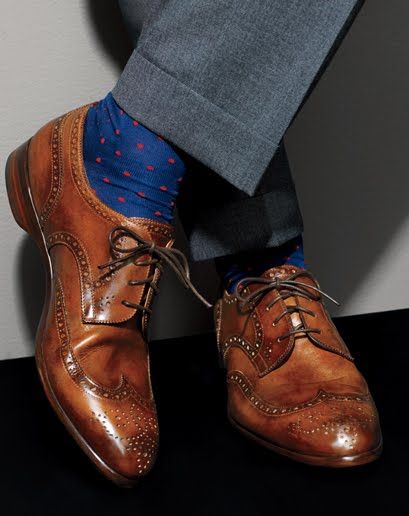






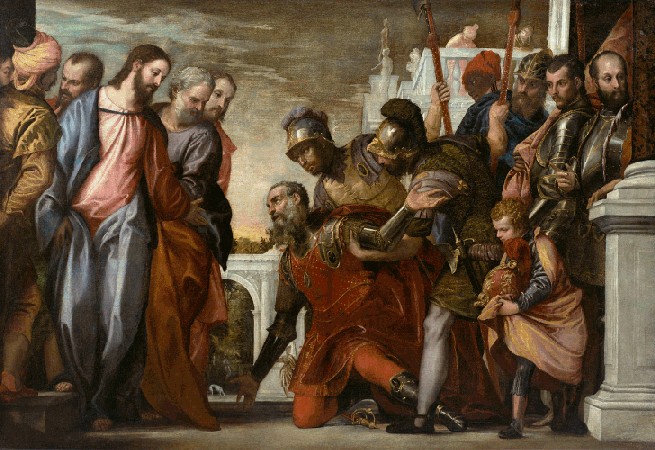

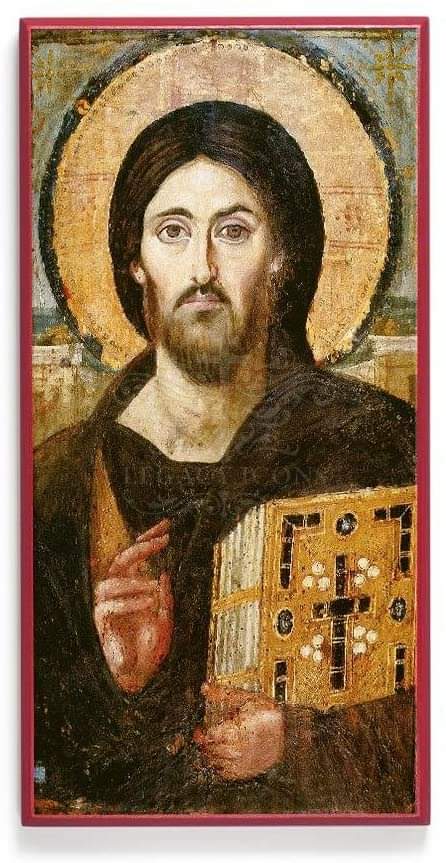
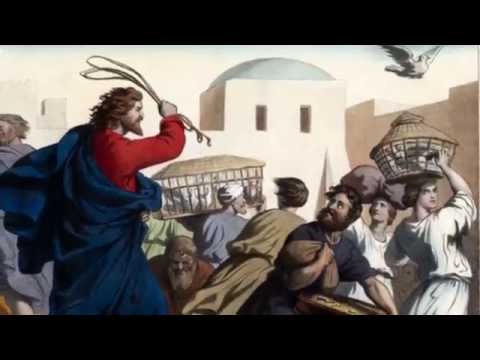





 Irregular Ideation