A person can attend every church service, faithfully tithe, and beneath this righteous public display be concealing an adulterous affair. One can go through the ritual of Holy Communion without being truly reconciled with their brother or right with God. False religion makes a mockery of the Church and the true faith of the Saints.
It is because of that fake devotion that many do throw the baby out with the bathwater and conclude that all religious practice is useless. My generation, for better or worse, longs for authenticity and has rejected the motions of religion on that basis. We all know hypocrites, those who dressed in the correct prescribed manner, who acted right and abused, neglected, or mistreated us.
This is likely one of the reasons why church attendance is dropping. People had a bad experience (or many) and decided it is better to stay home than to simply show up for sake of appearance. Why hang out with people who are phony, who do not truly live out what they claim to believe, yet will judge you because you are sincere and don’t follow all of their forms?
This is, after all, what Jesus did during his ministry, he challenged the pretentious, the religious elites, and brought the focus back to being genuine in love for each other. And yet this is not to say that he was not an observant Jew or irreligious. We know he was taken to the temple as a child, we know he was active in his own synagogue and kept the feasts.
Sure, he chased out the corruption. Sure, he corrected the misuse of the law. And there was also the condemnation of those who were circumcised and imposed their tradition on new believers. But that doesn’t mean that Christianity was without ritual or religion, it certainly does not mean we would be better to practice our faith only when we feel like it or completely agree with the application.
Authenticity is a good thing. However, as an artistic cousin of mine (employed as a writer and musician in Nashville) once told me, you must practice even when you do not feel like it. That is why I write almost constantly, and whether I feel like it or not, because regular practice is the only way we get better at anything. If we always waited for the right amount of inspiration before going to work we would severely limit our potential.
Practice makes perfect and going to the gym every day, the repetition of various motions with the right amount of intensity, will allow us to build strength over time. That is the power of religion. It is not vain repetition to go through the motions of prayer or treating others with love, that is what builds muscle memory and leads to gain. Had we just stayed home, to prove our authenticity or whatever, we would miss out on the opportunity for growth.
The danger of taking authenticity too far is that we never show up because we don’t feel like it. My natural disposition would be to attend St. Mattress on Sunday morning and not have to face some people and their hurtful behavior that is inconsistent with their Christian profession. It is triggering, it feeds deep-seated doubts and makes me uncomfortable. Still, I go to work in the morning or the gym despite feeling unmotivated.
That is why we go through the motions of religion. Faith is what it does. And, if you want to move mountains or slay giants, then you need to show up for the small tasks as well. David was a good shepherd who tended and protected sheep before he became king of his people. Daniel prayed, faithfully, three times a day, before he faced down the lions. Religion, going through the motions, can strengthen us.
However, at the same time, we can’t expect any gain through the ritual alone, at some point this must translate into tangible acts of love or it is fake. The Pharisees, we are told, were diligent in their religion and yet unloving in their actions. The church should never be a toxic environment where problems are never adequately addressed. St. Paul was brutal in his letters in addressing neglected issues. James too makes it clear that profession without concern for our brothers and sisters is not enough:
What good is it, my brothers and sisters, if someone claims to have faith but has no deeds? Can such faith save them? Suppose a brother or a sister is without clothes and daily food. If one of you says to them, “Go in peace; keep warm and well fed,” but does nothing about their physical needs, what good is it? In the same way, faith by itself, if it is not accompanied by action, is dead.
(James 2:14-17 NIV)
By this we know love, that he laid down his life for us, and we ought to lay down our lives for the brothers. But if anyone has the world’s goods and sees his brother in need, yet closes his heart against him, how does God’s love abide in him? Little children, let us not love in word or talk but in deed and in truth.
(1 John 3:16-18 NIV)
Religious discipline, without love for each other, is only ever a dead work. It is false security for those relying upon their own strength. We’re not saved by the number of prayers we pray nor by our participation in the rituals and tradition of the Church. All of this, without genuine love, is “a resounding gong or a clanging cymbal,” a hollow act, worthless noise, and meaningless.
Maybe do not have any unmet material needs anymore, like those mentioned in the passages above, but we do have emotional needs and a need for real connection. And, let’s not forget that Judas betrayed Jesus with a kiss, we can even go through the motions of intimacy and love. The truth of our faith depends on the authenticity of our love one for another; what we withhold from our brothers and sisters we withhold from God.
It is disappointing when the church is like a social club, people go through the motions of relationships, and there is no true depth or commitment to real love. It does seem that many lean towards this idea that Christianity is a “personal relationship with Jesus” or something between them and God alone, basically impractical religion, but that is not the attitude of those in the true Church. There is no love for God required to sit alone at home.
But if any provide not for his own, and specially for those of his own house, he hath denied the faith, and is worse than an infidel.
(1 Timothy 5 KJV)
I had to think about that verse when reading an article about terrible dating advice given out by an Evangelical superstar shared by a friend. The article itself may be a bit unfair, in that we can rip quotes from a book and make almost any point we want. But I do believe that it raises an important point. A man who does not provide for their own family (and wife) is worse than an unbeliever.
There are so many highly motivated religious men that should never be married. As cited in the article, St Paul gave this advice:
I would like you to be free from concern. An unmarried man is concerned about the Lord’s affairs—how he can please the Lord. But a married man is concerned about the affairs of this world—how he can please his wife—and his interests are divided.
(1 Corinthians 7:32-34 NIV)
In Orthodoxy, a priest must be married prior to ordination or remain single. Bishops are unmarried. This, I believe, is to help prevent conflicts of interest and so they remain ministry focused. Of course, if someone is so completely ‘sold out for Christ’ then they should not marry at all. And yet there are some who seem to want both the pleasure of marriage and also credit for their ‘missionary’ devotion. In other words, they neglect their responsibilities at home because they must be seeking their own personal vision. They want to have their cake and eat it too. Someone is getting shortchanged:
He must manage his own family well and see that his children obey him, and he must do so in a manner worthy of full respect. (If anyone does not know how to manage his own family, how can he take care of God’s church?)
(1 Timothy 3:4-5 NIV)
Red flags should go up when a church leader’s children do not respect their authority or leadership. It reminds me of the pastor that I knew, all of his children seem to be sexual addicts at a young age, they were totally wild, and most not in the church anymore. But, when this man was approached about stepping down or even taking a sabbatical, he would always find justification for not doing what Scripture clearly instructs. He reasoned that his leaving the pulpit would mean Satan win, and yet I’ll have you know that Satan won because he refused to repent or be humbled.
No, that is not to say a parent is completely responsible for the choices of their children either. However, there is influence there. And, if his example wasn’t working at home, why would he be so sure that it was beneficial to the church? He should have obeyed the word of God, that he would preach of so vigorously, and focused on the salvation of himself and his own children.
Being Truly Devoted To God
For those married being truly devoted to God means caring for those entrusted to us. The King James translation of 1 Timothy 5 may be use “he” and yet other translations do not. When men and women are too focused on career or climbing the social hierarchy, even if it appears righteous, they are betraying Christ. Even to neglect care of our elderly parents is in opposition to the word of God:
Then some Pharisees and teachers of the law came to Jesus from Jerusalem and asked, “Why do your disciples break the tradition of the elders? They don’t wash their hands before they eat!” Jesus replied, “And why do you break the command of God for the sake of your tradition? For God said, ‘Honor your father and mother’ a and ‘Anyone who curses their father or mother is to be put to death.’ But you say that if anyone declares that what might have been used to help their father or mother is ‘devoted to God,’ they are not to ‘honor their father or mother’ with it. Thus you nullify the word of God for the sake of your tradition.
(Matthew 15:1-5 NIV)
This rebuke reminds me of a man that was always so devoted to beautifying the parish. An Orthodox of Orthodox, by appearances, and yet had emotionally and otherwise neglected his home. In fact, he had once bought a Christmas tree for the church and, meanwhile, left his wife fending for herself to decorate their home. I know this may seem insignificant. Still, it reflected some seriously screwed up priorities and, while his hidden infidelity was a disappointment, it was also not a big surprise. A righteous man should, first and foremost, be the priest of his own home.
So, in conclusion, devotion to the cause of Christ that results in a man who does not devote himself first to the needs of his own family is false devotion. It is the same spirit of the Pharisees (passage above) who would set aside care for their elderly parents and use it for a visible religious purpose. They would claim these resources were ‘devoted to God’ and yet God had told them to honor their parents first and foremost. In the end they were only virtue signaling and deceiving themselves, but Jesus was not fooled.
What is the highest form of a loving relationship? Many would probably say marriage. Marriage is the recognition of two committing to oneness, involves physical intimacy, and is supposed to last “till death do us part.” What could be more wonderful than romantic love?
But, truth be told, people get into romantic relationships for some very biological reasons. As in pheromones and sexual attraction play a large role. It is why Mennonites marry young, they burn for sexual gratification, and there’s nothing wrong with that. However, while this can develop into something deeper, it does not always and marriage can very quality become an unwanted obligation. Divorce rates would be much lower if people married for deeper reasons than merely getting something for themselves.
And that is why marriage and romance is not the ultimate expression of love. Admitted or not, it usually centers on sexual appetites, this special person may become your best friend and yet that does not negate the start. It began with physical attraction and is tied up in our reproductive instincts. So what is more wonderful?
The Love of David and Jonathan
I grieve for you, Jonathan my brother; you were very dear to me. Your love for me was wonderful, more wonderful than that of women.
(2 Samuel 1:26 NIV)
This lament of David, in the quote above, the phrase “more wonderful than that of a woman” in particular, is supposed to stand out. It is a comparison for sake of showing how special and significant this relationship was to David.
But what made it so wonderful?
David, the Biblical character known for his fight with a Philistine giant among other things, had been secretly picked and annointed to be the next king of Israel. King Saul, despite his unusually tall stature, was a cowardly man and poor leader who blamed the people for his own incompetence. He was jealous and identified David as a rival for the throne.
But Jonathan, Saul’s son, who potentially had more to lose than his father immediately showed fondness towards the newly arrived giant slayer:
After David had finished talking with Saul, Jonathan became one in spirit with David, and he loved him as himself. From that day Saul kept David with him and did not let him return home to his family. And Jonathan made a covenant with David because he loved him as himself. Jonathan took off the robe he was wearing and gave it to David, along with his tunic, and even his sword, his bow and his belt.
(1 Samuel 18:1-4 NIV)
They were “one in spirit” and made a covenant to express their love. Which became more important as David’s popularity, as a heroic military leader, grew:
When the men were returning home after David had killed the Philistine, the women came out from all the towns of Israel to meet King Saul with singing and dancing, with joyful songs and with timbrels and lyres. As they danced, they sang:
“Saul has slain his thousands, and David his tens of thousands.”
Saul was very angry; this refrain displeased him greatly. “They have credited David with tens of thousands,” he thought, “but me with only thousands. What more can he get but the kingdom?”
And from that time on Saul kept a close eye on David.The next day an evil a spirit from God came forcefully on Saul. He was prophesying in his house, while David was playing the lyre, as he usually did. Saul had a spear in his hand 11and he hurled it, saying to himself, “I’ll pin David to the wall.” But David eluded him twice.
(1 Samuel 18:6-11 NIV)
King Saul was, quite evidently, a very insecure man and couldn’t stand being shown up. Despite David being loyal, rage would get the better of Saul, as in the account above, and this would become a theme.
But Jonathan warned David and stood up to his father on behalf of his friend:
Saul told his son Jonathan and all the attendants to kill David. But Jonathan had taken a great liking to David and warned him, “My father Saul is looking for a chance to kill you. Be on your guard tomorrow morning; go into hiding and stay there. I will go out and stand with my father in the field where you are. I’ll speak to him about you and will tell you what I find out.”
Jonathan spoke well of David to Saul his father and said to him, “Let not the king do wrong to his servant David; he has not wronged you, and what he has done has benefited you greatly. He took his life in his hands when he killed the Philistine. The Lord won a great victory for all Israel, and you saw it and were glad. Why then would you do wrong to an innocent man like David by killing him for no reason?
(1 Samuel 19:1-5 NIV)
Jonathan, unlike his spiritually corrupt father, Saul, recognized that David had done no wrong and had actually secured their power. He put his neck out for David by standing up to his moody and unpredictable father. He had as much reason to be threatened by the rise of David, he could have simply kept his mouth shut to save his own skin, but instead he risked being the next to have a spear chucked at him defended his spiritual brother.
What Made This Love More Wonderful?
Some modern commentators try to pervert and sexualize the love between David and Jonathan. To them any intimate relationship must revolve around gratification of physical desires. But there is nothing in the text that suggests this was the case.
The fundamentalist religious types also dismiss love and intimacy that does not revolve around romance. They may not try to redefine the relationship of these two characters, but it is also an anomaly and mystery to them. Where I came from, there was no true brotherly or sisterly relationship, it was expected that people find their intimate connection in biological family or marriage.
David and Jonathan had a spiritual connection. It was a love that wasn’t self-centered. Jonathan was loyal, he eventually died beside his father in battle. Likewise, David had solid character, he absolutely refused to kill king Saul, the Lord’s annointed, despite being unjustly hunted and having to run for his life. Their love was more wonderful because it defied expectations, it went beyond the typical and was deeper connection.
All lies have an element of truth. In fact, a misleading narrative, in order to have any convincing power, must contain many true statements.
It is not the off-the-wall and totally unsubstantiated claim that is the most dangerous. No, it is the half-truths, the facts out of context, the misunderstood statistics, that are most deceptive. Effective lies employ facts, they work our emotions and attempt to frame even our own experiences into a deceptive narrative.
The biggest lie of our time is the so-called “anti-racism” of the far-left. Call it woke, call it social justice, Critical Race Theory, Equity committees, or anything else, it is all fundamentally the same thing and that common thing is to promote division over identities.
The sad part is that many will stop reading here and leave without understanding. They might see the statement above as attacking their good intentions, as being ignorant, and a lack of comprehension of what those things listed truly are.
First, discrimination is real.
People are discriminated against on the basis of height, body shape, ability, intelligence, credentials, wealth, political views, affiliation, having a disease, personal history, gender, and, of course, skin color. Any category of identity or appearance can be used as a reason to deny and mistreat people. Ultimately, we’re all a minority of one and most have faced some form of discrimination.
In this country, the United States, religious, racial, and ethnic minorities have faced a significant level of discrimination. Chinese weren’t allowed to hold certain jobs, Germans were forced to scrub away much of their cultural heritage and unique identity because of war propaganda, Japanese sent to internment camps, Mormons were lynched, as were Republicans, and of course the horrendous exploitation of African Americans as slaves and then the discriminatory Jim Crow laws that followed.
This legacy of discrimination, especially in the most severe cases, has undoubtedly left its mark on various communities.
Second, power dynamics change with context.
Be the wrong person to walk into a biker bar and the welcome will be anything but warm. Go to Philadelphia, get off the beaten path like my family did, and the McDonald’s may be a rather hostile environment where the staff servers others ahead of you and then make your tired little sister cry because they dumped a massive pile of salt on Happy Meal burger.
As a Northerner, in the rural South, I was a bit nervous about standing out too much for my accent, did the sons and daughters of the Confederacy hold a grudge?
I was definitely a fish out of the water getting off the bus stop in Compton!
I think we all feel a little uncomfortable out of our own context, away from our own cultural tribe. I know from traveling abroad, being surrounded by people who eat unfamiliar foods, speak a strange language, look, act and dress differently, this can feel a little threatening and unsafe. No, it is not because the people are unfriendly or show any signs of contempt for you, as a foreigner, it is just that you don’t know the risks, customs, or what to expect.
Stepping out of the airport terminal, into the steamy Manila heat, filled me with a mix of excitement and anxiety as I clung tightly to my bags and scanned for the face of that one person of millions that I hoped would not beat, rob, and leave me for dead.
It would be really easy, had I had the wrong encounter, to generalize and conclude that Americans were unwelcome. If on my own turf, if treated badly, I would assume it was a bad individual and not a reflection of all in the community or culture. But amongst those who are different in appearance, it is very easy to make broad generalizations based on a couple of bad experiences. Being in a room full of strangers, especially those who seem to know each other or have something in common, we feel vulnerable or powerless. And sometimes there is actual bullying and discrimination against the odd ones out in a given context.
As a Mennonite in a public school, I was always keenly aware of being different. I was asked questions, often containing assumptions and annoying, had nicknames based around my religious (and ethnic) identity, it is a behavior called “micro-aggression” according to the current paradigm. Being called “Jebediah” or hearing derogatory comments about Mennonites didn’t exactly leave me emotionally unaffected. There was always (and still is) a feeling of safety and security that comes from being with people of my own sub-culture.
Third, I’m completely opposed to racism.
I have long taken a stand against racism and discrimination based on appearance.
Even the concept of race itself does not actually make much sense.
Why is Barack Obama black when his mom was a privileged New England blue blood, white, and that lineage half of his genetics? What percentage of African blood does one need to be black? Why does skin color or a few unique physical features determine another race, but not hair color or height? Why aren’t redheads a separate race?
The definition of race, according to Merriam-Webster, is “any one of the groups that humans are often divided into based on physical traits regarded as common among people of shared ancestry” and could actually mean that Mennonites and Amish, with their unique genetic disorders, are a race. But the reality is that it is mostly an artificial barrier, something arbitrary, a category based on mostly superficial things, and not science-based.
This first step in eliminating racism is to reconsider the existence of race. Race is not real or at least no more than Mickey Mouse. It is simply lines that we have drawn, like the political and geographic boundaries between nations, and the bigger difference between people is actually culture, but don’t take my word for it:
Culture has enormous effects on social outcomes. The influence of culture on social outcomes is not just a hypothetical—there is a great deal of evidence that culture has a large effect on many of the unequal social outcomes that some would like to ascribe to biological differences between races or sexes. Those who urge us not to deny that biology contributes to human nature have a point, but they often short-change the significance of what really makes the human species exceptional—our culture.
There is a multitude of reasons why some like to emphasize racial differences and try to make culture synonymous with race. The first amongst them is political power. By convincing people that some others are inferior or a threat, based on some category of difference, you can harness their anxieties as a means to get votes. Blaming behavior on genetic predisposition is a license for color discrimination and also a ready excuse for bad behavior.
If we ever want to overcome racism we need to understand race is purely a social construct.
What is false about anti-racism?
Being raised in liberal America, post-Civil Rights era, meant being indoctrinated into the teaching of Martin Luther King. It was not colorblindness, as often framed, rather seeing the person first rather than judge on the basis of outward appearance. But this liberal order is currently under assault. Even reciting the passage out of the “I Have Dream” speech, about not being judged by the color of skin but by the content of their character,” will be met with the ire of the “anti-racist” left.
Why?
Well, strange as it is, the far-left push for ‘diversity’ and ‘inclusion’ is not about race at all. No, in their worldview and framing of experience, it is always about this supposed power struggle between the majority (within their culture) and those deemed to be marginalized and oppressed. In other words, if skin color were removed from the equation entirely it would not matter, this ideology seeks to find any difference in outcomes and call it an injustice.
The term “white privilege,” for example, is indicative of race. That is how it is defined, as the perceived advantage of those with lighter skin tone over those of darker complexion, and yet that’s not truly what it is about. That’s simply the bait. The term is a divisive tool and cover for an assault on religion, property rights, traditional marriage, and other existing beneficial structures of civilization that stand in the way of the far-left’s self-declared ‘revolutionary’ ideological goals.
For sake of analogy, think of the gag when you tap a person on the opposite shoulder to make it appear that someone else in the room did it. I mean, nothing but a harmless prank in that case. However, it could also be employed as a diversionary tactic, where you get two other people arguing so you can take advantage of the ensuing chaos to pursue the actual objective. It is misdirection.
Many, in taking on racially divisive terms like “white privilege” fall for the ruse, they respond by pointing out all of the advantages black Americans have. This, in turn, can easily be presented (out of context) as proof of racial prejudice and only fuels the fire of resentment across color lines. Many black Americans, for their part, are very aware and sensitive about their racial identity and not without cause either. Unfortunately, this also makes them vulnerable to political opportunists who seek to exploit this history and experience of prejudice. It very quickly escalates into an unsolvable tit-for-tat mess, nobody on either side realizing they’ve been played for fools.
The prime example is how the Kyle Rittenhouse shooting is framed as being white privilege, the riots in Kenosha supposedly an expression of anti-racism. The narrative pushed by the corporate media is that Rittenhouse was some kind of far-right nut job looking for trouble, a counterprotester, and gunned down protestors at random. In reality, Rittenhouse had family connections in the city, he was there protecting a minority-owned car dealership, he has actually expressed support for BLM, and his attackers were all white men. He wasn’t there to oppose justice for Jacob Blake. He was there because of the destruction the night before and to defend the innocent from harm.
The three white men who attacked Rittenhouse are protected from scrutiny, under the “white privilege” rubric, for being classified as oppressed. It is not in spite of, rather it is because of the violent criminal history of these three white men that they are considered victims by the left. The left assumes that people behave the way they do because of circumstances, they blame-shift responsibility for violence perpetrated by their own and use narrative as cover for ideological agenda rather than a means of transmitting truth. The left is not truly against discrimination or anti-racism, they are about gaining power over others by any means and this racial wedge is simply an effective tool.
The lie that color is culture
Underlying the Critical Race Theory (CRT) and any of the rebranding attempts used to “start the conversation” or sell this anti-liberal divisive ideology is an assumption that race and culture are inexorably linked. It is, not too ironically, the one thing that both the ‘woke’ and actual white supremacists agree on. They both teach and believe that skin color determines behavior.
This is why those pushing CRT reject the call of Martin Luther King to see past color and judge by the content of character instead. To them people behave the way that they do because of their race, that skin color basically determines culture and character, and therefore it is oppression for the majority to impose any kind of order or at least not when it goes against their own leftist political agenda. Any cultural standard, like the idea people should work for their own food, is classified as oppression and racism.
Both white supremacists and far-left theorists present differences in behavior and statistical outcomes, between racial categories, as being primarily driven by genetics. They, unlike liberals, who see a larger role of culture and assume that economic circumstances play a part in shaping outcomes, see race as being what determines culture. The only difference between the two is that white supremacists see this as a reason to subdue and subjugate some races, while the far-left sees it as a reason to subjectively excuse or accuse people along color lines. Both are equally abhorrent. Both reverse cause and effect and provoke hate.
The first problem is that even if genetics did determine outcomes, why stop with categories of race? We all know that Europeans all have their own unique cultural groups, as do Middle-Easterners, Africans, and Asians. It is the basis for stereotypes. We know Italians to be big talkers, Germans as industrious, Russians for drinking lots of Vodka, and the same thing could be done across any racial division. It is sort of like Native American tribes, they were not all the same, some were warlike and conquered their neighbors. Some were nomadic, others building massive cities. To lump them all together is plain ignorant, it is the heart of racial prejudice and poor analysis.
At this point, some, at least on the right, would be eager to get into statistics showing the correlation between race and criminality or IQ. To them, this is smoking-gun evidence of the superiority or inferiority of collective racial groups. They would use the athletic advantage of African Americans, given the domination of black people in professional sports, as undeniable proof of this overall thesis. And, certainly, we could get into a discussion of the structure of the Achilles tendon, Testosterone levels, and whatnot that would go on forever. However, all this obsession on physical racial differences ignores both the large overlap between groups on the standard Bell Curve and also the role that culture plays in shaping these outcomes.
The lie is that race predisposes culture. That some are genetically predisposed to violence or laziness and therefore should be exempted (or excluded) and granted special permissions. It completely ignores the reality that categories of white and black are far too narrow given the diversity of outcomes within those labels, that there are two many other influences on behavior to settle on only an inborn genetic nature. Yes, perhaps some of our personality is predetermined and travels along with skin color. But we cannot rule out that these behavioral predilections are not mostly a product of nurture or culture.
The left needs to have race determine culture in other to push forward a victim narrative and this idea of systemic racism. If culture (behavior) is genetic and not a choice, then some can’t be held accountable for their own poverty of criminal activities. This is a new variant of Marxism. The German philosopher, Karl Marx, saw us as products of class rather than independent moral agents, which was the basis for class warfare rhetoric and license for violence against those more successful. The left wants African Americans to believe that they can’t thrive in the broader American culture. That’s a lie.
Religion produces culture and shapes outcomes
One of the most wonderful things about being rejected by my own ethnic kind is the opportunity it gave me to learn how much people are truly the same. I’ve never dated an ethnic Mennonite, nor a white American-born woman, and not as something deliberate either. In other words, I was open to any race and simply had more luck with those different from me.
But each time, whether an immigrant, black, white, or the infinite shades in between, Hispanic, Algerian, Egyptian, Cantonese, Filipino, or Congolese, slightly better educated or more athletic, these women had much more in common with me than was actually different. In some regards, they remain more my kinfolk than the conservative Mennonites who could not love me the way that I wanted to be loved. And, here’s the truth, while racial and cultural differences are always an interesting conversation, it is similarities in religion that formed the bridge of our common bond.
My bhest, Charlotte, is an Asian woman. A Filipino to be more precise. And yet her ethnic heritage is actually Igorot. The Igorot tribes live in the Cordillera mountain region of Luzon. They are known as ferocious warriors and only a couple of generations removed from head hunting:
A tribal war usually starts after a tribesman takes the head of a member from another tribe. Head taking was a rite of passage into manhood. The offended tribe can demand retribution. If the one taking the head desires continued peace, influential tribal leaders are sent to the other tribe to negotiate. Compensation is paid and the accord is sealed with an exchange of articles. If no agreement is reach then a war challenge is issued by the offended party.
This cultural arrangement would make for a rather uncomfortable existence, at least when traveling alone on the edge of tribal boundaries, and resulted in plenty of bloodshed, no doubt. However, while still carrying on some of the tradition, the practice of headhunting is a curiosity of the past rather than a reason to be fearful of getting a haircut while visiting Baguio City, which is now a big tourist destination for other Filipino people and the hub of the Igorot world.
What changed?
Well, not the genetics.
Let me tell you the story of Charlotte’s family, the terrible tragedies they have (at the hands of wicked men) endured, what made the difference for them and how it is a path forward for us. The violent lifestyle of Igorot tribes changed with the conversion of many of their ethnic kind to Christianity and this has produced significant changes in outcomes.
An Igorot family that forgave
As a writer, as part of my trying to make sense of the world, I do not want the suffering of others to be for naught. But I know that this subject matter is personal and painful for Charlotte and her family, so understand that I share this with conflicted feelings. On one hand, I want to protect those whom I loved. On the other, I want to create a better world for our children by this very practical testimony of faith and sacrifice.
Charlotte’s grandpa converted to Christianity and even started a church in the village. He was a respected man, an elder in the village, and was called to settle a land dispute between two parties. However, the party he went against was evidently enraged. He hired an assassin. And Charlotte’s grandpa was murdered in the night, shot in his own bed, leaving the family without their beloved Patriarch and with a trauma that is visited upon generations.
Now, the traditional Igorot way of handling this would be to take matters into their own hands. However, rather than seek blood for blood, this first-generation Christian family chose to forgive. No, they would not have opposed justice for the killer. But civil authority is weak and overstressed in this region, this meant nobody would face legal penalties for this murder. A tough pill to swallow for sure.
And yet, that’s not even the most extraordinary part, they knew who the hired killer was. They knew who he was and would actually allow him to eat with them! Talk about heaping coals of fire! The only thing is, they did not forget nor did they let him off scot-free. There called him Judas. Referring to the Apostle who betrayed Jesus for money and his obsession with political power. Which is an apt description. So even with this forgiveness, there was still a bit of poetic justice and a not too subtle call for repentance.
One morning, several years ago, I was getting ready for work and received a call from Charlotte. I have never collapsed to the floor before in my life. But, I was immediately overcome with emotion, when I heard those words “they killed uncle Roland!”
My heart sank.
How could this be?
The man who so selflessly served his family, a wonderful father who would smother his children with love despite being exhausted from a long day of work, a provider, a leader in the community, and someone who would help anyone. The friend who welcomed me into his home, along with his lovely wife, aunt Geraldine, was murdered in a most brutal fashion, by thugs hired by a jealous business rival.
But, again, despite the identity of the killers (and who hired them) being known, despite the police lacking resources to investigate and prosecute, the family did not seek vengeance. I mean, for some time, I would fantasize about taking my own anger over what was done out on these wicked men. Still, in the end, what would that accomplish other than continue the cycle of violence common in tribal honor cultures the world over?
The wicked flee though no one pursues, but the righteous are as bold as a lion.
(Proverbs 28:1 NIV)
Now it is said that the man responsible for the murder, upon realizing what Igorot tribe uncle Roland came from and knowing their reputation for violent retribution, went into hiding and only goes out in disguise. Not sure if that is still true, nevertheless Jesus saved him even while he remains lost in his sin, and he should pray for God’s mercy on his soul.
Let’s talk about Haitian work ethic
A prejudice many sanctimonious Americans have against Haitians is that their poverty is the result of a lack of ambition or work ethic. A point of agreement between many on the ‘common sense’ right and ‘woke’ far-left. And yet, as one who has been there, who still has a deep respect for a particular Haitian family despite our estrangement (on social media) over political differences, I can say unequivocally that this generalization is a lie.
Looking at the county of Haiti, the poorest in our hemisphere, it would be easy to assume that this is entirely a reflection of the people. And, indeed, corruption does abound, there is something reflected of the character of a people in a nation and the fatalistic Voodoo religion likely does play a role. But what a lot of people do not realize is that there are a lot of good people stuck in a feedback loop and, once broken free of the cycles of poverty and violence, could be extremely successful.
First, I think of that Haitian man, in Port Au Prince, heaving a truck body on his back. That is many things, but it is not lazy or lack of work ethic. The amount of determination and strength this took, for such little compensation when he finally got it to the metal scrap yard at the port, required extraordinary motivation. I had to think about my own complaints, making tens of thousands out on the road, and how this man would be both able to do my job and probably be much more grateful as well.
Second, that young man who showed up outside the church us Mennonite ‘missionaries’ were painting as part of our well-meaning desire to serve others. This young Haitian man, thin and possibly malnourished, confirmed one of my fears prior to going on this youth group trip. He, with pleading eyes, begged, “I can paint!” We could have employed him and a crew of Haitians, with American supervisors if need be, for a year with the money that went towards our airline tickets. He was willing to work, but lacked opportunity due to circumstances completely out of his control.
Third, let’s talk about my Haitian immigrant friends. All of them have gone further with their education, have worked their tails off, and have proven themselves to be real go-getters. Beyond that, they have always been hospitable to me and I have many fond memories from the time with them in Brooklyn or elsewhere. Their agreement with divisive racial politics aside, I see them as people of great moral character and more than my equal in many regards.
You stick the child of a hard-working American in “little Africa” in Haiti and there’s a very high probability that they will not live a comfortable life in suburbia. In Haiti, there is a sort of systemic oppression. The elites in that country squandered opportunities for their people. The political gridlock and misguided charitable efforts produce poverty, and the culture as well. Yeah, duh, people in such a chaotic environment are likely to score lower on a standardized intelligence test or even give in to despair. Just like children from fatherless homes (white or black) are often disadvantaged. The differences in outcomes are a matter of culture or circumstances and not of race.
Furthermore, if you look at Appalachia or Coal Region, or any blue-collar town where the industry has left, the results are often no different. These “deplorables” are not privileged people and have more in common with inner-city minorities than the social elites who sneer at them. (I mean, take this UC Berkeley professor putting his anti-rural bigotry on full display.) The customs and costumes vary and yet the actual substance does not. Black or white matters less than frequently believed. No, work ethic has nothing to do with skin color, nor does faithfulness in romantic relationships nor propensity for violence.
There is little doubt that our genetics do have an impact on our outcomes. Being bigger and stronger, smarter or more attractive, is at least somewhat predetermined. It is not all nurture.
Still, race is a construct. People certainly are not predisposed to culture on the basis of the race category they are placed in. Behavior is a choice. No, we do not choose our cultural conditioning, the neighborhood we were both into, and a vast number of factors that help to shape outcomes. We are judged by our appearance. But this does not mean we should.
Lies can shape outcomes. If we are told, over and over again, that this one distinguishing characteristic is of primary importance, we start to believe it. My being 5′-8″ tall, for example. This is a definite disadvantage, there is prejudice against men of shorter stature, statistics show this clearly, but dwelling on this only compounds the problem. Things like short-man syndrome or insecurity only increase the disadvantage. Isn’t it better to tell people to be confident?
That is what is so troublesome about the racial narrative of the far-left. It encourages people to believe that race determines culture. This is part of their broader push to blame bad behavior on circumstances and undesirable outcomes on oppression. But the real crime is that they’re robbing individuals of their agency and saying that we cannot transcend or change our stripes. It is essentially anti-Christian and racist at the core. If a person is what they are because it skin color then prejudice and discrimination is justified. This is not the way forward.
Racism is the idea that we are fundamentally different because of skin color, that culture and behavior are determined by race. It is a framework, a lens, that discards any evidence to the contrary or, worse, attempts to delegitimize the people that go against the narrative. This happened in the segregationist South. It was almost worse for white people who stood against the racism there. But it is happening now, where racial minorities who stand up to the political far-left are the biggest targets of ridicule and hate.
If a ‘black’ person has a job and is a productive citizen, the racist left attacks this success as internalized racism. If a ‘white’ person enjoys other cultures, they are vilified for appropriation and accused of theft.
The ‘woke’ left must guard these color lines or their divisive political ‘theory’ falls apart.
The reality is that behavior is not inexorably tied to skin color. Culture is behavior and evolves. Loud and obnoxious or reserved and shy, it could be a result of social contagion and cultural conditioning more than something genetically preprogrammed. What is called ‘black’ culture today will change. The mainstream American culture has also dramatically been remade over and over again. We don’t have duels to settle ‘gentlemanly’ disputes, petticoats have long gone out of style, my German identity has largely been assimilated into the melting pot and my children will have values slightly different from my own. The same is true in Africa, Asia, South America, and elsewhere.
The reason why the left seeks to break cultural cohesion, with CRT indoctrination (or wherever it will be renamed now that it is being scrutinized) and conflating race with culture is that a coalition of minorities is more powerful than those who would represent the cultural norm. Think about it. Most of us think we are unique, most of us could frame our “lived experience” as being disadvantaged. Much of this, in actuality, is an illusion of our own knowing our own struggles and not knowing what others have faced. Oppression narrative frames this as being a matter of only some identities, not a shared human experience as it truly is. We’re all a minority of one that must negotiate within the broader social space. Culture can unite. It can bridge differences in racial or other identities.
The left wants morality to be subjective. There is no good or evil in their perspective. There’s only what is politically expedient to them, a means to obtain power and control for themselves or those like them. Every system designed to create equity will eventually only end up unfairly advantaging a different group of people. Allow pedophiles to follow their passions, like everyone else, and children will be exploited. They will destroy liberal institutions, in the name of helping those marginalized, and only ever make us all subject to their own dictatorial whims without solving any injustice in the end.
I have little doubt that many seeking “social justice” or “equity” are good and sincerely caring people. But they are participating in a divisive framing of things that will only lead to more injustice. The term “white privilege” promotes prejudice and anti-racism is truly hyper-racism. Their critique aimed at structures of civilization, like marriage, religion, property rights, will only result in more insecurity and hurt.
The Christian alternative to race obsession
The church, not an equity committee, is supposed to be the center of community and healing. We can’t solve a spiritual problem with a political solution. We can’t fix the world without addressing our own hearts first.
CRT is a cheap counterfeit for the Gospel. It encourages us to externalize blame rather than repent of our own sin and let God judge others. Rather than project our own guilt on others, or accuse, decide who has too much, is racist or whatever, this is the Christian ethic:
Brothers and sisters, do not slander one another. Anyone who speaks against a brother or sister or judges them speaks against the law and judges it. When you judge the law, you are not keeping it, but sitting in judgment on it. There is only one Lawgiver and Judge, the one who is able to save and destroy. But you—who are you to judge your neighbor?
(James 4:11-12 NIV)
Politics is a competitive affair. It is a constant battle for position. And one of the cheats to gain power is to rile people up and use them as pawns to take out those who stand in the way of their agenda. This is done through vicious accusations and evil surmises. It is the very opposite of what James instructs, which is to focus on our own behavior rather than judge others.
The Gospel is about creating a joint identity that overcomes our differences:
So in Christ Jesus you are all children of God through faith, for all of you who were baptized into Christ have clothed yourselves with Christ. There is neither Jew nor Gentile, neither slave nor free, nor is there male and female, for you are all one in Christ Jesus. If you belong to Christ, then you are Abraham’s seed, and heirs according to the promise.
(Galatians 3:26-29 NIV)
Christian culture is for all identities. The salvation Christ brings is free to all and thus can’t be appropriated.
There is no such thing as the “social justice” Gospel. Our ‘equity’ does not come from political action. It comes from Christ and loving those whom He loves. Unlike the political alternative, this is a positive focus, us using our love to build humbly rather than destroy with accusations:
You, my brothers and sisters, were called to be free. But do not use your freedom to indulge the flesh; rather, serve one another humbly in love. For the entire law is fulfilled in keeping this one command: “Love your neighbor as yourself.” If you bite and devour each other, watch out or you will be destroyed by each other.
(Galatians 5:13-15 NIV)
Proverbs 6 calls “a person who stirs up conflict in the community” detestable to God. It is because these contests are limiting our collective potential and destructive.
Orthodox Christianity is about looking inward rather than outward. It is about finding a common union in Christ rather than dwelling on differences. It promotes leadership through self-sacrificial love rather than by political power and change that comes through personal repentance rather than reforming systems, this is the way:
It is worth noticing that, after acquiring spiritual understanding, the defects and faults of one’s neighbor begin to seem very slight and insignificant, as redeemed by the Savior and easily cured by repentance—those very faults and defects which seemed to the carnal understanding so big and serious. Evidently the carnal mind, being itself a plank, gives them this huge significance. The carnal mind sees in others sins that are not there at all.
(St. Ignatius Brianchaninov, The Arena)
The other day, I had a ‘woke’ online acquaintance (presumably, someone who still goes to church) respond to something I wrote with a proclamation about racism existing. The weird part was that my post had nothing to do with race whatsoever and was simply me venting my frustrations with a multitude of things including the slow progress of Charlotte’s immigration. For whatever reason, he saw race and pounced on the opportunity to promote his racially divisive worldview. As in the quote, people obsessed with a particular narrative “see in others sins that are not there at all” and are truly only projecting their own sins.
We must first correct the beam in our own eyes before we can see clearly to help others with the splinters we perceive in their eyes. If we want spiritual transformation and social change we need to shed our own judgemental black and white thinking first. The path out of this sinful delusion of racism and divisive race obsession is repentance.
It is astonishing, really, but motherhood isn’t actually a one-way relationship. It is symbiotic. The child provides their own blood for the benefit of their mothers. And once the child is born there’s the release of a hormone (Oxytocin) which leads to that special bonding and attachment that mothers have with their children.
Blood relatives can be our closest friends. We share some of the same genetic material and often intimate experiences as well. My siblings and cousins understand my humor, we think alike in many regards, and sometimes I wonder if I have any true friends that aren’t family. I certainly do not trust anyone, besides Charlotte, the same as I do my own relatives.
Don’t get me wrong either. I know many good people, some who might literally give me the shirt off of their back, and yet I’ve had so many friends like that who have faded out of my life.
The Quote…
The fraternity of Christ, is closer than the fraternity of blood.
St. Ambrose of Milan
Is a statement actual truth or wishful thinking?
This is what the body of Christ is supposed to be. A brotherhood, a group of people who carry burdens and cry together, who cheer each other on and encourage, who have real intimacy rather the superficial, make small talk, kind of relationship. The kind of familial investment that goes to bat for others in the Church, as St. Paul did speaking on behalf of Onesimus:
Therefore, although in Christ I could be bold and order you to do what you ought to do, yet I prefer to appeal to you on the basis of love. It is as none other than Paul—an old man and now also a prisoner of Christ Jesus— that I appeal to you for my son Onesimus, who became my son while I was in chains.
(Philemon 1:8-10 NIV)
When I read that quote of St Ambrose, a couple of days ago, it provoked me to reach out to someone that I love in that way and still did after a sort of falling out. It remains to be seen if that effort, to be a brother, will bear fruit or only widen the divide. But one thing is for certain, no matter how this goes, and that is that relationships that are “closer than blood” have not been my own experience yet.
Sure, the good church people will use weighty words like “brother” and “sister” to describe their relationships, but is it truly reality or is it a faux closeness like those social media scammers trying to exploit religious strangers for personal gain?
Maybe, in this time of social fragmentation and community disintegration, where many children are raised without both of their biological parents, we have lost some of the meaning of these words?
Community, for example, should mean living in close proximity and sharing in common. People used to work and worship with the people who lived in close proximity to them. Now I barely know my next-door neighbors and then drive thirty minutes to ‘fellowship’ for a couple of hours. And then there’s those who watch a sermon at home and make-believe that’s being part of the church. I mean, might as well take it all the way and spend the afternoon gardening, right?
Is It All Fake?
One of my memories, in the church I grew up in, was pastor Sam slapping down a transparency onto the overhead projector, and starting with his wonderful baritone, “You may notice we say brother and sister ’round here…” He was certainly sincere. A fatherly leader in a denomination that neglects such things. Once he caught a hint that I was a fan of high school football he would always ask me about the game. I have fond memories of the times spent in the Corderman’s living room even after leaving my Mennonite roots.
And yet not all there got the memo. We were more glorified acquaintances. Sure, we would smile, shake hands, and make small talk together. There was also that cultural and ethnic component that did give a kind of closeness. There were also those last vestiges of the Anabaptist barn-raising spirit. However, like those veils on the female heads or the foot-washing rituals, it all seemed to be mostly symbolic. A father might set his own son up in business, but no man in the church would ever think of doing the same for a non-family member in the congregation. It was superficial closeness.
Amish community spirit…
I’ve heard it explained before that religious groups hijack the language of family to create a false sense of closeness. At first, I had bristled at this suggestion. It felt like they were trying to discredit this special spiritual bond that people of like faith share. However, if we were close as family, let alone closer than blood, would we even need to use this familiar language? Wouldn’t it just be self-evident, like when Charlotte told me she would rather die with me than go on living without?
It is in that weird territory of language, like when some feel compelled to pray in old English as if this somehow reverences their prayers or those hypocrites that Jesus condemned for their love of important titles. One starts to be able to see through the pretense. There’s a vast difference between the man who treats you as a brother, offers protection, like big Tony Fisher did for me in school, and the people who use the right terms as a way to acquire resources or maintain status.
But, for me, those intuitions only came after being played a fool many times.
And perhaps I learned that lesson a little too well?
It’s Not You, It’s Me
I have trust issues.
And I’m not completely sure why.
It could have something to do with my premature birth and spending my first weeks in a plastic box rather than bonding with my mom. It could simply be a natural disposition. But I do know that I was the one child in my family who had separation anxiety and would go into panic mode if my mom would leave me for a moment to take out the trash. I was clingy and fearful.
Still, I was an extremely trusting person at one time, and long before I knew names like Jerry Sandusky or Jeriah Mast, when I lived in this sort of “Leave It To Beaver” world where people were true as their smiles and everything worked out in the end.
And that’s how childhood should be. Children may pretend, but they don’t put on masks in the same way as an adult and tend to be open about their intentions and accepting of even strangers. It is often easier to talk to eighteen-year-old girls than it is to have a conversation with those that are in their mid-twenties and that’s likely because the latter group understands that male attention usually means romantic interest. We become cagey as we become older, it is a way to protect ourselves from those who might do us harm or simply defile with their hopes of more than we’re willing to offer them.
For me, everything went downhill after puberty and with that gradual (often excruciatingly painful) loss of innocence. One of my earliest memories is walking hand in hand with my cousin when we were five years old. I don’t even talk to her anymore. She’s married to a privileged wackadoodle and didn’t appreciate my opinions of where his far-left politics will lead. Even if that weren’t the case, we probably wouldn’t be holding hands anymore even if we were on better terms. I mean, I would, because I still have fond memories, and yet I’m weird.
Anyhow, my own fear of rejection, a product of my purest hopes being smashed over and over again, has metastasized into disillusionment. I have a hard time trusting. I start to pull away when I sense the slightest bit of phoniness in another person. Call it despair, call it depression, I prefer to think of it as preserving what little sanity I have left, but I don’t want to have fake friendships anymore. I’m tired. Exhausted by it all, truthfully, and simply want to withdraw to the safety of not caring or concerning myself with those who are only going through the motions.
My expectations are impossible. But, then again, they should be. We are told, in Scripture, that with faith all things are possible. And, therefore, if someone declares otherwise, says that they can’t love or live as a Christian ought to live, it is because they lack faith.
Either that or it is all made up.
The thing that has most fed my own fear and doubt, is how people in the church don’t really act any different from people outside of it. In other words, if we don’t act like family then are we even Christians?
My Orthodox parish has a good number of converts and some older singles like me. There is a sort of closeness that came initially, as we traded stories about our experience, and it was very exciting for someone who had looked for depth elsewhere and had come out disappointed. However, there is this class, a sort of misfit club, of converts that is very similar to the Protestant fundamentalists of my past. They are really caught up in getting the Orthodox rituals right and somewhat neglecting as far as the meat of faith which is this self-sacrificial familial love.
My moon shot…
The thing is, I came into this damaged. I had shot for the moon, in faith, and somehow ended up in Williamsport, at Holy Cross, wondering what happened. My expectations were low and it wasn’t about the “smells and bells” to me. There was a combination of things that brought me, excellent theology, Fr. Anthony’s fatherly care, and a connection to the ancient Church. Since I knew no one local who was Orthodox, I went in simply seeking a place to worship and not expecting much. But I did meet many good people there, some who did embrace me as family, I’ll never forget that old woman (I can’t even recall who it was) who warmly told me “welcome home” after my Chrismation.
As with everything in faith, familial love is a work in progress and there are bound to be many failures along the way. At best, we’re a dysfunctional family, like many American families, caught up in our own lives, acting like Protestants when things don’t go our way, and not as truly full of love and grace as we are for our own blood. My want of perfection, and pursuit of the impossibility, must first and foremost mean that I love those who are difficult to love, love who let me down and abandon me, and let God judge those who do not meet my own expectations.
Therefore, as God’s chosen people, holy and dearly loved, clothe yourselves with compassion, kindness, humility, gentleness and patience. Bear with each other and forgive one another if any of you has a grievance against someone. Forgive as the Lord forgave you. And over all these virtues put on love, which binds them all together in perfect unity.
Colossians 3:12-14 NIV
What Is Love, Friendship, Humanity?
Still, the thought that plagues me most and probably always will is this question of if real love even exists at all. I’m not talking about those passing feelings of fondness we have for another person, but that spiritual bond and willingness to sacrifice ourselves for the good of others. As I’ve posited before, there is a selfish component to love. Not only those who say they “love” someone and then kill them in a jealous rage either. But it seems that it is impossible to love without getting something in return.
It is always nice when a server pays attention to me. I would certainly like to believe that they like me. And I’m guessing a few would actually enjoy spending time with me outside of work too. I’m a polite and considerate guy, I also tend to lay a heavier tip when there’s some conversation that comes along with the meal. I do, indeed, go out because staying home would be lonely and alone since it is simply too hard to coordinate plans with friends or I don’t know whom to ask. So I’ll pay for that time with another human. But it can also be unfulfilling. The relationship could have an element of truth and yet really it is centered on the economic transaction or they would be inviting me to hang out when they’re not on the clock.
There is a scene, in Blade Runner 2049, a science fiction thriller about what it means to be human, that illustrates the point. The story follows, K, a “replicant” (or bioengineered ‘human’), and his relationship with his girlfriend named Joi. Except she is not flesh and blood, not even human, but artificial intelligence, software on a computer, with a holographic projection. Still, despite this, the relationship is real. And, when the device containing her (their memories together that made the interaction meaningful) is crushed, he mourns. As the audience, you feel some pain. Yet, later, an interactive sign, with her likeness, uses the same pet name, and it is obvious that the original Joi was programmed to “fall in love” with anyone who wanted companionship.
What is real? What is artificial?
The part that gets to me is how hormones and the positive feedback loop of emotions is, practically speaking, the same as programming. So how are the emotional responses we receive from others any more authentic than that of Joi?
What about our own friendships?
Why do we favor some people over others?
Do we love people or do we merely enjoy what benefits we get from them and that’s why we show such strong preference. Sure, there are some who are kinder and more willing to give attention to the unattractive or social outcasts. However, as far as real commitment, ongoing investment, we generally spare that for those most likely to produce a return. In other words, we love those who do what we want them to do, have something we want in terms of their physical form, intellect, or other abilities, or simply feel drawn to as a result of our coding and subconscious desires.
And then we expect people to stay at the level of friendship assigned to them. One sure way to make things awkward is to make an expression of love that is more intimate or deep than the level the other person wants. Asking a girl on a date is a good way to get put on her blocked list, to get an industrial strength cold shoulder, and even if she was seeming to enjoy the relationship up until then. Why? Well, maybe the ‘friendship’ was a social obligation more than anything authentic? You just know, when push comes to shove, most on your social media friends list aren’t going to be there for you, or at least not like blood relatives.
The Impossible Love
Still, I’m not comfortable with this mechanistic, bound by programming and mere product of circumstances, perspective. If love is not a choice, if we can only love those who are attractive, have resources we want, or are this sort of enjoyable reflection of ourselves, then we would not have agency or the ability to follow the commands to love God and our neighbors. Can we really do that? Do people ever go beyond and actually transcend themselves by loving those whom they would not naturally love?
I’m not sure, when I look at the Christian experiment, that I see much evidence of these relationships that are closer than blood. I mean, maybe, if we were willing to “fake it until we make it” then we would be able to overcome. Isn’t that what faith is really about, doing things that are uncomfortable, going against our own natural condition, or an exercise? I’m pretty sure my grandparents didn’t always feel like loving each other and yet going through the motions of a relationship, in those tough times, is how their love became such pure gold. Sixty years of marriage is impossible for many today because they’ve decided to be ruled by what is comfortable at the moment.
So when church people say they can’t love, and I’m talking about any kind of love, what they’re actually saying is that they don’t believe. It is agnosticism, denial of the humanity of another, and have refused to see the command of Christ as being actually true. When we decide we can’t love as we ought to love or pretend that we are loving while we truly are not, we are essentially making Scripture into a lie. At that point we are nothing but animals following after our programmed instincts and selfish desires. Do you truly love the body of Christ as much as you do your own blood?
The traditional male is supposed to be a little aggressive. There is something women love about swagger, the confident risk taking persona, and maybe because these men get things done. The bigger bolder man is going to give them more of what they want. They are the star athlete, they can dance, and (by outward appearance at least) are greatly endowed with those attributes most pleasurable. It doesn’t matter if he is entitled, arrogant, emotionally distant or otherwise a complete douche, nor that he’ll be bald with a potbelly at fourth, in his youth he’s that picture of masculine strength that immature women crave.
Success is a positive feedback loop. Even the tall handsome dude is going to have some approach anxieties. However, that self-talk goes a bit easier for the guy who has had his arm squeezed by an ogling female admirer or has never been turned down for a date. Men are not the choosers. Women make themselves available to the desirable men, they smile and laugh for him, will literally crawl into their pick-up truck, all he needs to do is make the move and very soon this flirtation leads into intimacy and meant to be. It didn’t require any faith or great courage on his part. He barely had a speaking role. Like men confuse beauty for virtue, women love that strong silent type for the character they can project onto his frame.
Outside looking in? The Nice Guy. That guy never picked first for any physical contest. The one who is a little timid or shy, awkward or clumsy, the late bloomer, and generally stayed out of the spotlight. He might have been on the receiving end of bullying or, at the very least, was disgusted by the insensitivity and crude sexuality of his male peers. If he’s lucky, women like him because he’s sweet and sincere, respectful and never a threat. While she gets the benefit of his companionship, he is lives under the delusion that if the girl simply gets to know him then she’ll see his golden heart and move him out of the friendzone. It never happens. And, worse, he betrays platonic assurance that gave him access to her.
Recently, women took to Reddit to tell their scariest stories about “Nice Guys” — what our own Miles Klee described as a dude “who claims he only wants to be a woman’s friend, then gets mad about being ‘friendzoned’ and cruelly judges her for dating anyone who isn’t him.” The Nice Guy believes he lives outside of sexism and toxic masculinity, yet his schtick still hinges on the idea that basic decency toward a woman entitles him to sexual access.
The ‘Nice Guy’ wants the same things that any other male wants. But, because he is not 5′-10″ (or over) nor charismatic enough to gain her love, he plays the only angle that he has and that is to be ‘better’ than those other superficial losers. Except the reality is that he’s no different in what he actually wants and that is a relationship that ends in more than polite chatter. The whole thing of dating and romance is crass (a desire for sex hidden under a layer of sophistication) yet, in the cases of attractive men, the base desire for sex is categorized as wanted attention. However, in the case of ‘Nice Guys’ this desire is only ever a betrayal of friendship.
It is one of those all around loathsome things. Not being one of those cool sexy men doesn’t mean that a man wants to remain a celibate. However, to the women who wanted him as their pet rather than a partner, his bitterness and jealousy only confirms his status as an inferior man. In her mind, he was simply to take his place as supporting cast, the enuch to her queenly court, and that’s his only value to her. He’s the sounding board for her complaints, not even really a human with natural hopes to her, and therefore when he imagines himself as more she is appalled. How dare he be a sexual creature like her and the men that she prefers? How dare he mislead and be like those guys who she would allow in her pants!
I mean, she’s right, had she had an inkling that he ever sexual desires she would never have given him the time of day. Women might be best known for their nurture, but they sure can turn the cold shoulder to a guy who doesn’t meet their qualifications. And, again, who can blame them? If the top tier of attractive women could never say “no” or deploy that RBF shield, they would never be able to escape all of the unwanted male attention.
And yet, I’m also sympathetic to those who play that ‘Nice Guy’ angle, in so much that it is not entirely a lie and that they do often hear all of the complaints from women. Why did she go right from that abusive jerk to the womanizer who obviously only sees her as a fresh piece of meat? Why wouldn’t she at least give him a try, acknowledge his passion as valid, and stop denying him what she so freely gives to these others? It is insanely frustrating, especially in this age of equal opportunity politics, as his choice in stature and personality is no different than skin color. In the end his indignation is the most dignifying thing he has left after the rest of the world, including the ‘compassionate’ kind, have left him in the dust and trampled under their own ambitions.
The real problem with the ‘Nice Guy’ is that underneath his self-righteous facade lives a hypocrite. He lives in denial of his own sexuality, as a means to attain access to female attention, and yet is still pursuing the beauty queens like the jocks. He may have no choice. His lack of confidence could be the result of many rejections or simply disposition. It is entirely unfair too that his better qualifies are overlooked as well. And yet the only answer ever is for him not to be like those who are superficial and find one of those many women (truly his own counterpart) who aren’t the 9.5 on the 1-10 attractiveness scale. Because his sanctimoniousness and toxic entitled attitude is certainly not going to secure love.
The harsh reality is that we all, whether we hide it in religious babble or sophisticated explanation, want the same things. There are traits universally attractive and some are born with more of them. It’s not fair. It is most definitely superficial. But we’re all guilty and would be better to take responsibility for our own part. My own beautiful sister remains single, often overlooked by those guys pursuing those perfect 10s (who often lack character despite their angelic appearance) and has as much right as any guy to be upset. So maybe the first step is a little honesty? Both men and women are absolutely superficial and willing to overlook many things if someone scratches that itch. Love may emerge, but nothing after puberty is absolutely pure.
Note, not at all saying that truly platonic friendships do not exist between men and women. Many of my best friends are women. But to be in denial of our base level sexual attraction is the beginning of spiral into insanity, it is self-deception, and will eventually come bleeding out. We need to be real. People don’t date or marry as some purely spiritual experience, so why would our friendships be any different? We spend time with those who we are attracted to and often it is more complicated than mere common interests. It is a matter of maturity to a) fully acknowledge our sexual attraction to another person and b) also be completely fine with the friendship.
One of my favorite love stories, the BBC adaptation of a Victorian era novel, North & South, features two very strong and compelling characters.
The first, Margaret Hale, the cherub-faced daughter of an English clergyman, is forced to move to the industrial North after her father’s resignation over a matter of conscience. The other is John Thornton, a mill-owner, a handsome man with piercing eyes, brooding and intense, and interest in the demure young woman.
Things started fairly well. But, that doesn’t last as the differences in their perspectives becomes clear. Margaret, compassionate and having lived a sheltered life, interprets the actions of John in a negative light and pulls away after witnessing his harshness towards an employee caught smoking. What she sees as just cruelty was actually Thornton’s concern for the safety and wellness of his workers given the extreme risk of fire.
It is in the last and final act where there’s a scene where the tension between the two finally disappears. Throughout the middle-act Thornton’s truly good character is slowly revealed. And, Margaret, having returned South, has reconsidered her own idealistic notions, now sees the merits to living in Milton, and decided to return North again. Meanwhile, John is going South, the two cross paths at a station near the midpoint and cue the music.
North & South
There is this wonderful part of the soundtrack in this climatic station scene, Northbound Train (listen here), that so perfectly accompanied the moment. It is understated and elegant, reflective, that builds in waves to crescendo and then slips away as wistfully as it came. Thornton’s steadfast devotion is finally rewarded with a kiss and happily ever after begins despite the painful struggle to get there.
When the Story Goes South…
During my pursuit of the impossibly (a preacher’s daughter, like Margaret) this story brought a little hope with the similarities to my own. It wasn’t that we were so terribly different in our desires as it was she never heard me. Her conclusions formed before the conversation even began. She had pronounced “you’re thirty years old living in Milton” (the actual name of the town) meaning, in translation, that I would hinder her big plans. And could not understand it was her boldness and ability to get out that attracted me.
My thesis then was that a composite of our unique strengths, seemingly incompatible, bound together by Christian love, would exceed what those of similar abilities could accomplish. My thinking outside the box combined with her represention of the Mennonite standard. And, while I’m never good at getting things started (hence being stuck in Milton) I’m extremely loyal and willing to sacrifice for the team. I knew my age and life experience was an asset. But she could not see my value.
Still, for the year or so following her initial rejection I believed. What a wonderful story we would have when all was said and done, right?
Anyhow, that music, Northbound Train, had seemed like the perfect bridal march. Partly in innocent faith, partly to bolster my failing confidence against the deluge of rational fears, this image of the impossibly walking the church aisle dressed in white. As would be the case in real life, tears would stream down my cheeks as the nightmare of the past decade was replaced by this wonderful dream of marital companionship and completeness.
The strong emotions that came with that gentle harp being replaced with one violin and then two, have now disappeared. The music is still beautiful, but my feelings of numbness have long replaced that panging desire for a well-defined conclusion to over a decade of struggle. What I got instead was a world more complex. The cynicism that I had fought tooth and nail was confirmed.
The sunshine through the clouds, endings sweet and perfect are not for everyone. And the reason we tell such lovely tales is probably because they’re so uncommon, the exception, and not the rule. Sure, we can see ourselves as the characters. But the impossibly will likely go on seeing me as the villain in her movie, her conventional guy as the hero, and has never once shared in my fairytale that love would prevail over our differences.
As Far As the East is From the West
It is hard to believe that nearly another decade has passed and I’m still alone. I’ve moved from Milton, left the religion of my childhood behind, even traveled to the complete opposite side of the world twice, and have changed from that guy perpetually unsure of how to find direction. No, I’m not a missionary, but I do genuinely love people and probably accomplish more of actual value than those duty-bound Evangelical types who see ‘the lost’ as their get-into-heaven projects.
More importantly, I’ve found another impossibly, a beautiful Filipina flower, a little lost sheep when I found her (struggling abroad, in Taiwan, to support her son back home) and now the one who keeps me strong despite our torturous wait. Unlike the Mennonite impossibility, we do not share a cultural or ethnic identity, our lives have been very different, yet we have our simple and devoted love in common—which has been just enough to sustain us through these past years.
East & West
However, after all I’ve been through, holding on to hope is hard. Could my visions of her arrival at the airport, on American soil, with Y-dran in tow, also be a delusion?
It has been over two years and eight months since we’ve held each other that one last time before we parted ways in Taoyuan International Airport. I had known the immigration process would be difficult, but could not have anticipated the pandemic and travel bans that make it nearly impossible to be with Charlotte. It really does start to bring those worries that I might be cursed to the forefront again and sometimes the despair does win.
The eternal optimism of youth wiped away by the rejection of the Mennonite ideal, now facing my rational fears and the fact that I’ve been hoping longer than Jacob worked for Rachel and without so much as a Leah in between, I can now fully identify with the wife of Job, “Are you still trying to maintain your integrity? Curse God and die.” The frustration is real. How long does one go on dreaming? When is it justified to wither away into bones, with life never to return again?
As far as the East is from the West is an expression, in Psalms 103:12, used to describe an impossible distance that cannot be bridged. And it could seem that, despite the abiding love of my bhest to encourage me onwards, I’ve jumped straight from the frying pan into the fire. We have had a bit of good news since I’ve last published a blog here, the USCIS approved the application, and yet will this impossibly ever become possible?
I see the successful couples. So lovely together. To them it feels preordained, meant to be, a dream come true. For me, on the outside looking in, there is now more uncertainty than certainty, not everyone gets that music at the end.
I’ve always been a sort of magical thinker, my hopes always far outpacing my realities, and to the point that sometimes when my dreams would finally come true the pleasure had already been exhausted.
I had so wanted a go cart growing up. On the school bus ride home my mind would start to wander into the fantasy realm. I would picture a shiny new go cart, like the ones in the catalog, waiting for me at the end of the driveway and would actually be disappointed when it did not end up being true when we would finally pull up to to my stop.
That’s not to say that I didn’t love the old go cart that my dad would finally weld up, using a rusted frame as a starting point, and an old lawnmower engine. Anything with four wheels, that ran on gasoline, that could be slid around corners, definitely scratched that itch. Still, my vivid world of make-believe did not always end with any fulfillment.
In my adulthood this tendency to be way out ahead of myself did not get any better. I’ve cried, on more than one occasion, thinking of my beautiful bride walking towards me up the aisle. And not in sadness either, it was in bliss having momentarily put myself in that wonderful place. Of course, given that I never even so much as went on one date with this young woman, I pretty much ruined that music.
The world between my ears can be a paradise. A place where there’s such thing as innocent love and anything is actually possible. I used this as an escape. My school years spent doodling and hoping for some kind of rescue from the mundanity of the classroom.
These visions were often grandiose. A child scaled B-17 would land in the school yard. I would run out to meet my faithful crew as the teacher and 5th grade class would watch in disbelief, stunned, as we revved the engines and were on our way to the nation (later a planet with two suns) that I benevolently ruled along with my brother Kyle and cousin Mel.
Truly, I had always thought that Kyle and I would always be together, build a house with a chimney in the center, like the ruins that I saw on a Civil War battlefield. I’m not sure why, but it didn’t seem possible then (despite our fights) that we ever be separated, let alone hours apart, and I really can’t claim to have gotten over that disappointment yet. He moved on, it seems that I could not.
And I have lived a sort of Peter Pan existence. Holding on, hoping that some day the love that had eluded me, child-like and innocent, would finally magically arrive to rescue me from my torment for having failed to achieve. I long overstayed the youth group. Until I had my happily ever after, what choice did I have? Get old by myself and alone?
Unfortunately, hope is not a strategy and I lacked the necessary social tools to approach an attractive young woman—let alone convince her to date me.
Years would go by, where I would convince myself, “this time will be different,” and end up leaving the church retreat no closer to my goals and disappointed. These beautiful wonderful thought going in would slowly morph into a nightmarish reality as opportunity would pass me by and I would be left with only my profound loneliness again.
It was only in my mid thirties that this optimism would crack and the pattern of hope followed by disappointment would finally overwhelm me. Brimming with outsized expectations, I would arrive at the weekend, and suddenly shut down. The wheels came off, I would collapse into the nearest couch, curl up, unable to push myself to try again—eventually ending up a sobbing mess.
The pressure had become too much. The difference between my hopes and reality too insurmountable.
Sure, I could entertain my delusions, the right one was going to finally arrive, we would look at our feet, shy at first, we would talk, she would smile at my earnest thoughts, I would finally be at ease and soon enough we would be walking hand in hand out the back of a church. But the chances of that were as good as Gatsby somehow being able to turn back the hands of time and Daisy would be his.
My collapse from exhaustion came at the tail end of decades of forced optimism and sweeping aside my rational fears. I did not want a world where my being 5′-8″ tall and rather unathletic disqualified me. Love, to me, especially pertaining to my female religious counterparts, was supposed to be something transcendent. Unfortunately, what I got instead was a brick wall of rejection.
Life is especially cruel to those with a high ideal. If I were less able to see the marvelous maybe I could have more easily moved on to more practical aims. But I could never get my head out of the clouds nor was I willing to acknowledge the harsh truth about romance. The young women were also chasing their version of perfection and that perfect man wasn’t me.
Somehow, despite a mind that could span universes, I ended up being thirty years old living in Milton and thus ineligible for that kind of love. How does a dreamer, still holding to those childish notions of escape, ever recover from that terrible pronouncement?
They don’t.
It wears me out thinking about it.
It makes me think of another novel and protagonist, Ethan Frome, an injured ruin of a man. His house reduced in size as he limped, painfully, through what remained of his life. Not even granted the merciful end to his suffering of that suicide pack those many years before. Perhaps my life would have been better had my secret world been a little more stark, desolate and devoid of life?
Remember that viral video, from a few years ago, that has a bunch of young people lined up in a field?
As the music plays, we hear an announcer tell participants this is a race for a $100 bill and then proceeds to list off statements that will allow some to advance. If both parents married, if they had a father figure, if they had access to private education, if they never had their cell phone shut off or had to help their parents with bills, and the list goes on.
For those of us who have studied socioeconomic issues, and have long pointed to things like fatherless homes as being predictive of outcomes, this is no surprise. In fact, fatherless homes have a stronger correlation with negative outcomes than race. Many mass shooters come from broken homes. We should be talking about such things.
However it seems many of my former religious peers, raised in conservative Mennonite cloisters, prior to watching this video, had been completely unaware of this ‘privilege’ of family structure. Suddenly their ignorance had been revealed. But, some, rather than simply ponder and reflect, used this new knowledge to bludgeon others and suggest that anything less than feeling deep shame equal to their own is somehow sinful.
One problem with being raised in a religious culture where indoctrination and conformity is preferred to open discussion is that many coming from this background are nearly incapable of critical thought. A media presentation like this dazzles them and there’s no reason they can imagine to question the conclusions. They see what they’re supposed to see, what was carefully edited and prepared for them to see, and what the lecturer tells them to believe.
The video, unfortunately, frames things in terms of race. The one announcing even explicitly saying “if this was a fair race…some of these black dudes would smoke all of you.”
It’s ironic that this man plays on racial stereotype, the perceived athletic advantage that some have, while simultaneously making the case that privilege is about getting the money at the end of a race. He undermines his own thesis. If some young people, as a result of their athleticism, can get into a prestigious university, how is that not also privilege?
More importantly, where does that leave those of us who neither had the athletic prowess nor the academic chops nor wealthy parents to provide for our education?
My father was absent, out on the road weeks at a time, I went to public school because my parents couldn’t afford the Mennonite school tuition, I never had a cell phone growing up and also eventually had to pay rent to my parents for the privilege of living under their roof, is that unfair?
Who is to say that a person raised in single parent home is truly at a disadvantage to someone with a learning disability?
And is it actually true that those with non-athletic scholarships didn’t earn any of that reward through their own hard work?
A big problem with the presentation is how it frames privilege in a very narrow and misleading way. The list of factors is extremely selective. He never mentioned the many other disadvantages (or advantages) that can shape outcomes, things like physical stature or gender, affirmative action and health. There is also no attempt to explain why these factors should be weighted as they are. Ask different questions and the completion of the results may completely change.
Breaking Down Privilege
The problem with the privilege narrative is not that it highlights the advantages that some have over others. We all know that an athletic tall guy is more likely to dunk a basketball, and have a girlfriend, than the 5′-5″ tall perpetually last-picked dude. All of the things listed in the video may very well have an impact on outcomes and yet there are so many other things people overcome that never got mentioned.
The message is right, in that we should be aware of the disadvantages others face, but does a disservice in framing privilege almost entirely in terms of race. And, with that, feeds insecurities, builds upon division, encourages animosity or guilt—all without providing any actual solutions.
To get to solutions we need to break down the framing:
1) Not About Race
The irony of the “white privilege” claim is that, when we get to specifics, the advantages some have are often not actually about race.
Fatherless homes, for example, have nothing to do with race and everything to do with the choices of a prior generation. My dad took responsibility, he provided for his children, my mom remained loyal to him despite his shortcomings, and us children benefited.
Do you know who else had that privilege?
The daughters of Michelle and Barack Obama.
Not only that, Sasha and Malia, had access to private school, prestigious universities, and other opportunities that a working-class child (such as myself) could only ever dream about. Sure, they may have similar skin color to Trayvon Martin, but that’s where the similarities end and to say otherwise is to be absurd. The average blue collar white person has more in common with racial minorities than anyone in the ruling class.
My school friend, Adam Bartlett, the one who eventually killed himself and another man, was a victim of sexual abuse as a child. Not only that, but he wasn’t all that athletic, wasn’t a great student, had nothing given to him by his parents, yet we’re supposed to believe that he had this thing called “white privilege” and was actually better off than the daughters of the President?
This idea that privilege is about color, that fatherless homes and poverty is a matter of race, is the very definition of prejudice. It is a message bad for the racial minorities whom it both disempowers and discourages. It is also wrong, an injustice, to the many people deemed privileged who face the exact same challenges and never get as much sympathy or help.
The truth is that statistics never tell us about individuals. There are many born into poverty and poor conditions who do overcome their circumstances. It has as much to do with attitude, the things we believe and are told to believe about ourselves, as anything else. The very things that can be a disadvantage in one case can be motivation in the next.
2) Let’s Address Culture, Not Color!
If we’re truly interested in changing results then we need to talk about the elephant in the room. Why do some children grow up in single parent homes, in poverty, while others do not? More importantly, what can we do to prevent this from repeating?
Woke nationalism, a far-left Marxist political movement adjacent to this sort of privilege propaganda, would have people believe that more money (in form of reparations or government programs) is the solution to disparities in outcomes. Rather than address the root cause of disparities, they blame-shift and promote acceptance of toxic behavior.
Black Lives Matter, for example, doesn’t support the reestablishment of traditional families. And, worse, many promoters of the “white privilege” narrative would have us believe that things like work ethic are somehow related to skin color. They are explicitly encouraging the very things that the video would have us believe hold people back from success.
Just today, while writing this, a BLM leader in London, was shot in the head. Her story not all that uncommon in the inner-city, where gang warfare and honor culture, a criminal underground, leads to many violent ends.
Are we truly supposed to believe this is black culture?
Should I celebrate that the majority of shootings in my little corner of the world are perpetrated by a rather small minority?
My answer is a hard N-O to both questions.
No, we should not accept fatherless homes as normal nor be an apologist for the honor culture that so often leads to violent outcomes.
No, skin color does not, should not, should NEVER determine our behavior.
It is culture, not color, that is shaping outcomes. And to conflate color with culture is the very epitome of racial prejudice. Seriously, saying that black people must act differently, must be more expressive, must prefer particular kinds of music, must talk a certain way, is the same kind of ridiculous thinking behind minstrel shows. We should be beyond this, we should be judging by content of character rather than color of skin, stop promoting foolishness!
3) Life Is Not Competition
The most egregious presumption in the video is that life is a competition and ending up with more money is the goal. Talk about spiritual rot posing as enlightenment!
Sure, your bank account may be somewhat a product of the home, community and culture that you were raised in. Hunter Biden certainly has an advantage over me in terms of earning potential given his father’s high political profile. And, trust me, it has very little to do with anything he’s done. For sure, if he were the average Joe, if the 1994 Crime Bill applied to him, he might be in jail for a long list of crimes. But that ‘privilege’ doesn’t mean he’s a success compared to me, does it?
Some extremely wealthy and visibly successful people are extremely unhappy with their lives. No amount of access to private education, cell phones, health care, or whatever, is going to solve a feeling of inferiority or self-loathing. And, if anything, more wealth in the hands of a disgruntled person will only enable them to do more evil. I mean, was Hitler, a struggling artist and disenfranchised military veteran, improved by the power eventually given to him?
No, not at all.
This idea, in the video, that life is a competition, that more material wealth equates to success, is completely wrong and deserving of the severest rebuke. What is truly shameful is that those religious folks sharing this message never once stopped to consider the metrics of success presented. So much for the first being last and last being first, as Jesus taught, apparently to them life is all about the accumulation of stuff and political power.
Sad.
Maybe if we would, instead of pitying and patronizing people, start preaching the truth, start telling dead beat parents, or anyone making excuses for themselves, to repent—then we would see positive change?
But that would require us to see others as being our equals, capable of choosing good behavior. It would require being unpopular and to stand at odds with the virtue signaling of the social elites. Those who are honest about matters of culture, who confront woke nationalism and racist lies, they are the only people systemically oppressed.
Jesus Defies Privilege Narrative
No, matters of bad character and toxic culture are not fixed by more money, consider this parable:
“Again, it will be like a man going on a journey, who called his servants and entrusted his wealth to them. To one he gave five bags of gold, to another two bags, and to another one bag, each according to his ability. Then he went on his journey. The man who had received five bags of gold went at once and put his money to work and gained five bags more. So also, the one with two bags of gold gained two more. But the man who had received one bag went off, dug a hole in the ground and hid his master’s money. “After a long time the master of those servants returned and settled accounts with them. The man who had received five bags of gold brought the other five. ‘Master,’ he said, ‘you entrusted me with five bags of gold. See, I have gained five more.’ “His master replied, ‘Well done, good and faithful servant! You have been faithful with a few things; I will put you in charge of many things. Come and share your master’s happiness!’ “The man with two bags of gold also came. ‘Master,’ he said, ‘you entrusted me with two bags of gold; see, I have gained two more.’ “His master replied, ‘Well done, good and faithful servant! You have been faithful with a few things; I will put you in charge of many things. Come and share your master’s happiness!’ “Then the man who had received one bag of gold came. ‘Master,’ he said, ‘I knew that you are a hard man, harvesting where you have not sown and gathering where you have not scattered seed. So I was afraid and went out and hid your gold in the ground. See, here is what belongs to you.’ “His master replied, ‘You wicked, lazy servant! So you knew that I harvest where I have not sown and gather where I have not scattered seed? Well then, you should have put my money on deposit with the bankers, so that when I returned I would have received it back with interest. “ ‘So take the bag of gold from him and give it to the one who has ten bags. For whoever has will be given more, and they will have an abundance. Whoever does not have, even what they have will be taken from them. And throw that worthless servant outside, into the darkness, where there will be weeping and gnashing of teeth.’
(Matthew 25:14-30 NIV)
Of the parables that Jesus told, this one has to be one of the most harsh and counterintuitive. I mean, who can blame this servant, given so little, for burying his talent?
Was it fair that, before the investment phase even began, the “wicked” and “lazy” servant was already at a severe disadvantage?
While this parable affirms the idea that what we’re born with has little to do with what we’ve done. However, it departs radically from the central notion of the video that success at the end of life is “nothing to do with what you’ve done.”
This flies completely in the face of the social justice gospel and, frankly, everything that comes naturally to me. As one who always felt like the servant given little and thus was fearful of God, this parable confounded me. Didn’t the initial disadvantage, the unequal distribution of wealth, shape the outcome?
Are we now going to say that Jesus lacked understanding, compassion or sensitivity?
Should we cancel Jesus?
We could replace the wealth or talents of the parable with “privilege points” and not change the message. Jesus who said, “to those much is given much will be required,” also said those who are given less by God should be appreciative and invest well rather than make excuses.
In other words, if you have no father, you can wallow in the disadvantage or choose to invest in the next generation so they do not suffer as you did. If you were excluded, as I was, on the basis of lacking stature and athletic abilities or other things not within your control, you can harbor the grievance, let it take over your life, or you can use it as motivation to do unto others what wasn’t done for you.
The reality is that Jesus was being far more compassionate in addressing the spiritual matter at the heart of many negative outcomes and ignoring questions of fairness. Furthermore, life is not a competition for material gain, it is not about the rank we attain in society either, and to frame it in such a way only shows a complete lack of discernment. The privilege narrative is not only racist to the core, it is also at odds with the Gospel of Jesus Christ.
Instead of chastising innocent people for their alleged color privilege, trying to burden them down with guilt. Instead of telling some people that they lack the ability to be successful simply on the basis of their outward appearance or place they were born, which is a total lie. We should love our neighbors, rebuke this notion that life is a competition for money, and call all to repentance.
“See, I will send the prophet Elijah to you before that great and dreadful day of the Lord comes. He will turn the hearts of the parents to their children, and the hearts of the children to their parents; or else I will come and strike the land with total destruction.”
(Malachi 4:5-6 NIV)
That end to the Old Testament has intrigued me. It contains a very clear either/or option. Either the people heed the message of Elijah or the land will be totally destroyed. God desired all to be saved, to be united in love for each other, and yet also doesn’t force the relationship and eventually the opportunity for reconciliation will end.
This is how John the Baptist was introduced in the New Testament:
He will bring back many of the people of Israel to the Lord their God. And he will go on before the Lord, in the spirit and power of Elijah, to turn the hearts of the parents to their children and the disobedient to the wisdom of the righteous—to make ready a people prepared for the Lord.”
(Luke 1:16-17 NIV)
Very aspirational.
Unfortunately, we see how this would eventually work out for the nation, as a whole, of those who didn’t repent or turn from their religious elitism. We see it in the following pronouncement of Jesus:
“Do not suppose that I have come to bring peace to the earth. I did not come to bring peace, but a sword. For I have come to turn “ ‘a man against his father, a daughter against her mother, a daughter-in-law against her mother-in-law—a man’s enemies will be the members of his own household.’
(Matthew 10:34-36 NIV)
Many picked or else.
They choose their own destruction rather than heed the message and accept the offer of repentance and life.
I’m convinced it didn’t need to be that way, that had the people accepted their Lord and Savior, the city of Jerusalem would’ve stood and would not have been destroyed by the Romans. It was political division, the insanity of the zealots (including Judas) pursuing their own version of social justice, the complacent ruling class unable to make up their minds, that ultimately doomed the city to destruction.
Jesus is uniting or divisive. The choice is ours. Like it or not, the Gospel lays out a choice between unity or division. The truth will set you free or you’ll stay in bondage to your sin, to your preferences, your prejudices and perish. If we would truly choose Jesus then we would let go of all of our other identities, grievances and special privileges, we would be united in love.
Many who profess Christ today are more like those who rejected him. They choose tribe over unity, they choose political gain over peace, they accuse others while being as guilty or more guilty themselves. We would be wise to do as Jesus told his disciples regarding those who refuse to hear, to kick the dust from our sandals and move on to those more receptive.
Peace Through Separation
This theme of peace through separation is throughout Scripture, one example being Abram and Lot:
“…quarreling arose between Abram’s herders and Lot’s. The Canaanites and Perizzites were also living in the land at that time. So Abram said to Lot, “Let’s not have any quarreling between you and me, or between your herders and mine, for we are close relatives. Is not the whole land before you? Let’s part company. If you go to the left, I’ll go to the right; if you go to the right, I’ll go to the left.”
(Genesis 13:7-13 NIV)
Lot picked the area close to the city, pitching his tent towards Sodom, Abram went the other way, and the strife between their clans ended. Nobody was offended, there was no reason to be offended, seperation to avoid unnecessary conflict is a peaceable solution.
We see the same happen in the New Testament:
Some time later Paul said to Barnabas, “Let us go back and visit the believers in all the towns where we preached the word of the Lord and see how they are doing.” Barnabas wanted to take John, also called Mark, with them, but Paul did not think it wise to take him, because he had deserted them in Pamphylia and had not continued with them in the work. They had such a sharp disagreement that they parted company. Barnabas took Mark and sailed for Cyprus, 40 but Paul chose Silas and left, commended by the believers to the grace of the Lord. He went through Syria and Cilicia, strengthening the churches.
(Acts 15:36-41 NIV)
Imagine that. A sharp disagreement, even within the early church, leading to a parting of ways. And it actually seemed to work for the best. Sometimes the best solution to an irreconcilable difference is to go different ways. It seems that actually enhanced rather than take way from their respective ministries. At the very least, we see this affair being stated matter of factly and not a cause for additional drama.
There is, however, at least one case of separation gone awry and that’s when Pharoah refused to let the children of Isreal go. He had refused after first bring asked nicely, relented only after a series of plagues that increased in severity, then changed his mind once again and pursued those seeking freedom from him. Why? Well, because he was exploiting their labor and knew letting them go would cost him.
That is also how an abusive spouse acts. They simply can’t tolerate someone wanting to get away from them, they’re insecure, they need to have control, and would sooner murder the other person than allow them to go in peace. They can’t stand that someone would dare to expose their own ugliness and will slander the other party rather than repent of creating the conditions that led to the other party being uncomfortable remaining with them.
A Christian is able to walk away in peace, without things ending on their own terms, but those who are exploiting others or trying to advantage themselves cannot. Is it better that there is no seperation? Sure. Is separation wrong when remaining together becomes unbearable? Absolutely not! In short, seperation is a peaceable solution for peaceable people. But tyrants, who must have their own way, will refuse to leave others be.
Two Groups, Presenting an A-B Option
About six months ago, in response to the increased promotion of tribalism, I started a group on social media “One Nation Under God…” The point was to present an alternative to these divisive forces. A place where people of all colors, creeds, genders, or orientations could celebrate our common humanity together. The idea being that we could act “one nation” rather than allow our differences to divide us. I featured a picture of a diverse group of American children and posted feel-good stories of people overcoming conflicts, Good Samaritan acts, and kindness.
Love Thy Neighbor
That group, which is representative of my highest aspirations and my desire to be unified with all, only attracted a handful of friends and remains at only a few dozen members. I would rather that we learn to get along, to hear each other’s perspectives, to find our common humanity, and respect our differences.
That’s definitely my option A.
However, around the start of the new year, after a contentious election season and continuing strife, seeing some voices were not being represented, I decide (on a whim) to start a group where disenfranchised rural people could find a home. My group description contrasted “two different Americans” and went on to note the differing cultural values between rural and urban people, with a lament of double standards, and a call for a peaceful resolution.
The point?
Well, on one level, it was option B, to advocate for an amicable divorce rather than continue the perpetual conflict and subjugation of one half of the country or the other every four years.
Let My People Go!
But, on another level, it was still in hopes of option A, to make those on the ‘other side’ aware of this grievance, to hopefully find a listening ear, and then find an understanding together. In other words, it was the same reason that any other peaceful advocacy group exists, to give some a voice in the conversation, to say our culture matters, to stop sweeping our issues under the rug, and have a dialogue.
First and foremost, the group was created as a haven for rural people, who tend to be more reserved and too often get dominated by their socially adept, politically powerful, urban counterparts. There was no hate or contempt for those on the other side of the divide, only a listing of different cultural values, a lament of double-standards, and a call for a peaceful resolution to irreconcilable differences. Rural people have the same desire to feel safe, to feel reasonably represented, and speak against the cultural imperialism of the truly privileged as anyone else.
Many people are fleeing urban areas to escape tyranny and violence. And they are all welcome to live in rural areas. But, that said, those bringing their problems with them, their tribalism and hate, are best staying where they are rather than have them bring their divisiveness to us. Little old Asian women aren’t being physically assaulted by grown men in central Pennsylvania and some of us would rather keep it that way. We believe in equal justice under the law, merit and not quotas, and no special treatment for some over others.
Respect our values or let us go our separate ways. That’s all. Option A and B. Hear the grievance and maybe we can patch things up. That’s always possible. But, respond with more accusations and hate? Yeah, that will only confirm my own reason to leave.
Pharaoh’s ‘Woke’ Army Is Outraged
I was blindsided by it. A friend went me a private message to alert me. The eye of Sauron had found The Rural Divide and the legions of far-left sympathizing, the hoards of apologists for wokeism and closed social justice warriors were on their way to overrun this resistance to their totalitarian agenda. Behind the buttery smooth words, of well-trained passive-aggressive Mennonite-borns, there was seething rage—a sea of hatred, irrationality and nasty accusations
Murder in words.
Only one person reached out for an explanation. A few others to heap condemnation and clearly unwilling to listen. Even some old friends were unwittingly used as pawns. But the truly disappointing part is that those who led this campaign know me enough to know that their characterization of the group was a lie.
For those who don’t know me, I was the religious odd ball at my school (as a conservative Mennonite) and found my place amongst the other misfits. One of my close friends, throughout my school years, came out of the closet in highschool and never once did I think of him as less a person than me. My cafeteria clique consisted of the only Roman Catholic and Mormon guys in the school, an ethnic Indian Hindu, a Filipino Seventh-day adventist. My other closest friend was an atheist fellow.
After school, I’ve only ever dated women categorized as “people of color” according to the current jargon. I’ve punched an openly racist Kansan (not my finest moment) and lost my job as a result. I was obsessed with the Civil Rights Era and fully embraced what Martin Luther King Jr said about content of character over color of skin. My assailants are mostly whites who grew up in ethically homogeneous enclaves, homeschooled, often privileged over me and extremely gullible too. They, like their forbearers, seem to believe that their own poop don’t stink.
So Woke.
Anyhow, back to the present drama, one particularly sanctimonious religious elite, likely trying to impress his peers with this virtue signaling display, suggested that those who joined the group were not even Christian.
Imagine that, you get a random request for a group, decide to accept the invite to see what it is, and bam suddenly you’re out of the Kingdom. Wow! Yeah, I’m thinking this extremely judgmental elite confuses Christianity with cancel culture. Or maybe it is that they are from a conservative Mennonite background where a marriage partner who separates from their abuser is often treated as the guilty party? The apple doesn’t always fall far from the tree, does it?
I’m sure they are too ‘woke’ to carry on the prior generation’s opinions regarding abused women leaving their abusers. And yet, under this new facade of social justice, they carry on the exact same attitude in regards to those who wish to be separated from those that routinely accuse, slander, and belittle them?
Reminds me of this:
“Woe to you, teachers of the law and Pharisees, you hypocrites! You build tombs for the prophets and decorate the graves of the righteous. And you say, ‘If we had lived in the days of our ancestors, we would not have taken part with them in shedding the blood of the prophets.’ So you testify against yourselves that you are the descendants of those who murdered the prophets. Go ahead, then, and complete what your ancestors started! “You snakes! You brood of vipers! How will you escape being condemned to hell? Therefore I am sending you prophets and sages and teachers. Some of them you will kill and crucify; others you will flog in your synagogues and pursue from town to town. And so upon you will come all the righteous blood that has been shed on earth, from the blood of righteous Abel to the blood of Zechariah son of Berekiah, whom you murdered between the temple and the altar. Truly I tell you, all this will come on this generation. “Jerusalem, Jerusalem, you who kill the prophets and stone those sent to you, how often I have longed to gather your children together, as a hen gathers her chicks under her wings, and you were not willing. Look, your house is left to you desolate. For I tell you, you will not see me again until you say, ‘Blessed is he who comes in the name of the Lord.’ ”
(Matthew 23:29-39 NIV)
It is interesting, first, that this passage above contains both a loving lament and harsh condemnation, both in the same thought. This goes back to the either/or proposition of Malachi. Second, those who killed Jesus, along with the other prophets, thought they were the enlightened and righteous ones. Saul, who latter become St Paul, harassed, pursued and killed Christians thinking this was God’s work. He found fault in others despite being murderous himself and it was only after repentance that he could see.
The very same people today, who are heroes in their own eyes for attacking peaceable people today, would likely be cheering loudly for Jim Crow laws a few generations ago, or aligned with Bolsheviks in Russia and Nazis in Germany before their atrocities were fully known. It’s amazing the similarities between abusers, both then and now, rather than live and let live or leave when unwelcomed, they “pursue to town to town” and demand their piece of God’s people like the mob of degenerates in Sodom wanting a to ‘know’ Lot’s angelic visitors:
Before they had gone to bed, all the men from every part of the city of Sodom—both young and old—surrounded the house. They called to Lot, “Where are the men who came to you tonight? Bring them out to us so that we can have sex with them.”
(Genesis 19:4-5 NIV)
The far-left is equally aggressive today in pursuit of anyone who would rather not be with them. If you’re putoff by their nastiness they’ll accuse you of an “ism” or being “phobic” and harass and lie in an effort to have their way with you. To them you have no rights as an individual, you belong to them, and if you refuse their advances they will break your door down…
Or crack your skull!
And those outraged about The Rural Divide acted in the same manner. They attacked in a swarm, relentless, demanding to know why the group existed, trying to infiltrate, and were no different than that enraged mob picking up stones to murder St Stephen for his paraphrasing of what Jesus said:
“Was there ever a prophet your ancestors did not persecute? They even killed those who predicted the coming of the Righteous One.”
(Acts 7:52 NIV)
A Time To Reconcile, A Time To Choose A Side
If anyone in that cabal of hate and hysteria would like to approach me and apologize, I’m more than willing to forgive the slanderous attacks. Unlike the far-left, I believe in repentance, that people should be forgiven of their faults and can change. I’m willing to reconcile with any of those who participated in this spreading of malicious nonsense about me. A simple apology admitting that they misunderstood or were misled into believing my group was something it was not would be sufficient enough.
There are those whom I blocked on social media for their racism or otherwise rude and elitist behavior that I would gladly welcome back into my life if there was a hint of repentance. That’s option A.
This is option B:
But now I am writing to you that you must not associate with anyone who claims to be a brother or sister but is sexually immoral or greedy, an idolater or slanderer, a drunkard or swindler. Do not even eat with such people.
(1 Corinthians 5:11 NIV)
St Paul prefaces this by saying that he’s not speaking against association with sinful non-Christians, who God will judge. But he’s talking about those who profess Christ and yet refuse to repent of their sin. This excommunication is necessary to maintain our own integrity and as not to confuse our non-believing neighbors. It applies, not in cases of different preferences, but in cases of clearly defined sin and lack of repentance. In case I’m unclear:
If anyone teaches otherwise and does not agree to the sound instruction of our Lord Jesus Christ and to godly teaching, they are conceited and understand nothing. They have an unhealthy interest in controversies and quarrels about words that result in envy, strife, malicious talk, evil suspicions.
(1 Timothy 6:3-4 NIV)
I’m sure this was just St Paul’s white cisgender male privilege speaking right?
More toxic masculinity, I suppose?
Whatever the case, if even Paul and Barnabas had to go their separate ways over a dispute, both early church missionaries and leaders, then why is it so offensive or wrong that some would rather peaceably divide rather than continue in a quarrel? Isn’t that what happened with Abram and Lot when their groups were in conflict? Abraham going the way of the country and Lot picking the life of the city?
Separated, but still Christian. Imagine that!
In the end, it is laughable that any Protestant religious separatist, especially these proud social justice preaching types who still identify as “Anabaptist” and refuse to seek membership with the universal church, would be at all critical of those rural folks who wish to have a separate space for themselves. Their hateful reaction confirmed every reason why The Rural Divide exists.
The Rural Divide is a group open to all shades of skin color, even those of other cultures, but only where there is mutual respect and not cultural imperialism. And, yes, the unrepentant ‘woke’ nationalists can stay out.
Relax, folks, it is just a Facebook group.
Everyone else has their safe space, wants their communities and values to be respected.






















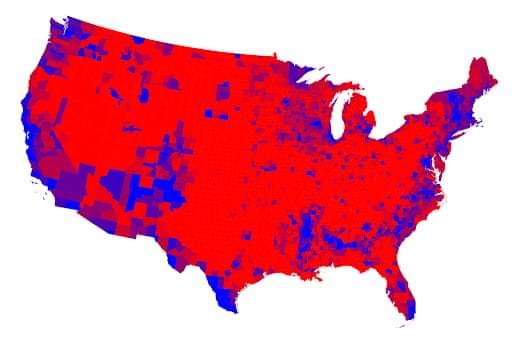


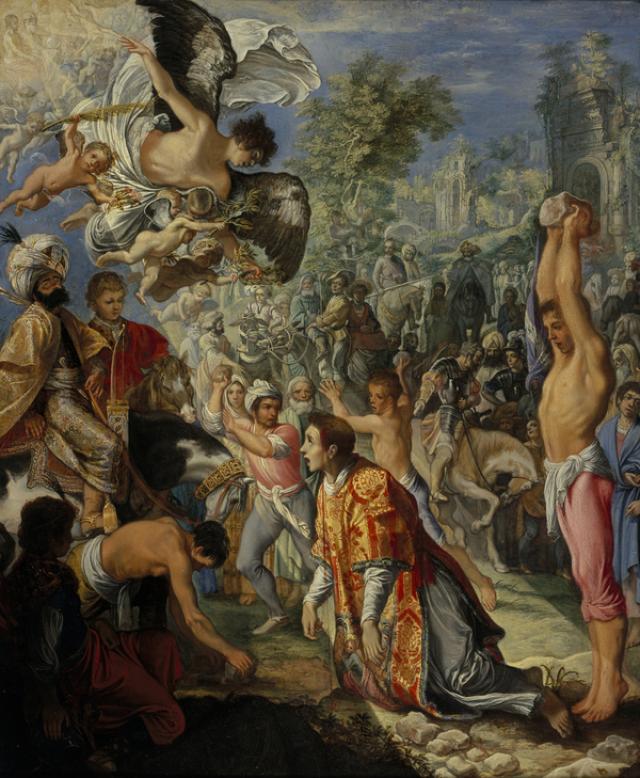

 Irregular Ideation