I try not to get too political here. However, it is sometimes unavoidable, like those times when a prominent politician misuses the words of Jesus to justify spending 40 billion dollars so Ukraine has enough bombs. The verse used, Mathew 25:35, “when I was hungry you fed me,” out of the mouth of a multi-millionaire, comes off as slimy. It very closely resembles how Judas used words about caring for the poor as part of his scheme to line his own pockets. And, make no mistake about it, phony compassion is the favorite tool of the most shameless exploiters of our time. They are wolves in sheep’s clothing and love power more than truth.
True or false: The truth of the entire Gospel message depends on the bodily resurrection of Jesus.
I’m pretty certain that this is something that both Christians and non-Christians alike, after reading the Gospel accounts, would agree on. If Jesus remained in the grave, a dead man, then doesn’t that make the entire account of these books a lie?
Recently I was invited to watch a lecture by Gary Habermas, a professor, historian Christian apologist, and author of various books about Jesus. This after I had expressed a thought on how difficult this central claim of the Gospel would be to accept for a true skeptic. Presumably, this recommendation was to help me bridge the gap between the claims and reasons to doubt them.
It seems reasonable that Habermas, an expert who believes, would come out with his best argument. I mean, why waste an opportunity by holding the most solid proof of resurrection for a later date, right?
So, after watching, and taking notes, this is the outline of the arguments made along with my own counterpoints:
1) Most Contemporary Scholars Agree
Habermas spends considerable time talking about the changes in perspectives in the last 30-40 years in academic circles. Apparently, most theologians are conservative now and he cites a skeptic who has warmed to even the claims that the disciples saw Jesus after his death on the cross.
However, the first thing I see, when someone uses “experts agree,” is an appeal to authority, which can be a logical fallacy if being used as evidence of a claim. The fact that a majority of doctors had once believed that bloodletting was good therapy does not actually prove anything as far as the reliability of the practice.
So, to a critical thinker, this is a red flag. He is starting with an appeal that is not a true argument for his further claims or at least not any more than “a consensus of scientists believe” disproves the outliers who disagree with their conclusions.
Everyone else is here, can’t be the wrong place…
But, more than that, the devil is always in the details and there is a bit of a bait and switch in his presentation. The acceptance of any empty tomb is not the same thing as the real issue at hand which is resurrection. It is possible that something else could explain the disappearance. An empty tomb is not itself proof of the miraculous.
So what about this shift in thinking?
Well, it is no secret that the Western world is falling into unbelief, Christianity is losing influence, and to the point that the ‘liberals’ may have long left the room. In other words, it could be polarization, where nobody in the moderate middle ground survived, and thus only ‘conservatives’ see theology as being a worthwhile pursuit.
When something falls out of popular favor, like eugenics or white supremacy, then it is not really a big surprise when the hardliners are all that remains.
As a young person, I remember an Evolution versus Creation debate at a local university campus. Such an event would not even be hosted by such an institution. The 2014 Ken Ham vs Bill Nye rhetorical battle was held at the Creation Museum for a reason. And it is not because either of these men are taken seriously or viewed as credible by the mainstream.
The point is most people may simply have moved on and the plurality of those remaining, the current theologians, are the fundamentalists. There is much talk about the collapse of the center and this change Habermas mentions could be a product of that rather than anything related to the evidence.
We also have a resurgence of flat earth theories (and the rise of Socialism on the other) which is certainly not an argument for those beliefs. I guarantee more than 350 pages have been written in defense of Marxism and yet that does not convince me in any way, shape, or form that this ideology is the right way forward. No, this does not prove or disprove anything as far as the resurrection, but why waste time on this kind of appeal if there’s better evidence?
2) Paul Is Generally Accepted, Even By Skeptics
Of all the writings in the New Testament those of Paul, the Apostle, are the most compelling and probably because this man (despite his own claims to the contrary) is so eloquent in his presentation. I do find his focus on spiritual transformation to be more inviting than Mathew, Mark, or Luke. And also his ability to be the odd one out as far as important matters of the faith.
He was a controversial figure, even in the early church, and often put on the defensive by those fighting to preserve the Jewish tradition from Gentile converts. The account of his Damascus road encounter obviously convinced the right people of his change of heart. And this acceptance is significant, it is at least an answer to those modern-day Pauline skeptics, namely feminists and contemporary Judaizers, who would have us believe he was in conflict with Jesus.
That said, both Joseph Smith, the founder of Mormonism, and Muhammad claimed to have had dramatic encounters. Both were committed to these revelations they had received and able to convince a large body of people of these claims. It is always amazing to me how even a fundamentalist Christian can scoff at claims of angels delivering inerrant teachings or laugh off the flight to Medina on the Burāq, all the while accepting Biblical claims.
An undeniably beautiful image, right?
In short, I absolutely believe that Joseph Smith and Muhammad existed as real people. I also have no reason to doubt that they did not believe what they claim to believe or even that they had some sort of trip and conversion experience. But the truth of their existence and conviction does not mean their most extraordinary claims are actually reliable. It does not matter how many people recorded their lives or believed what they said.
So, of course, a man named Paul existed, and perhaps he did have an encounter with an apparition. I will accept that he was brought into the church. There is no reason to take issue with any of this. And I’m sure, if he was indeed out there killing Christians, this was a very welcomed development. And yet there are also those raised Christian who become Muslims or atheists. A conversion experience does not prove the extraordinary claims of a particular religion.
3) More Sources Than Alexander the Great
Habermas spends significant time in his lecture discussing the typical criteria for accepting a source. There is more proof of Jesus, according to what is acceptable by normal academic standards, than there is of Alexander the Great. Which is no surprise given that Jesus arrived on the scene later and spawned a religious movement through his teaching.
And yet while most everyone agrees that George Washington was a real person, that he crossed the Delaware river, this doesn’t mean that they must accept his ideological perspective or believe the mythology about the cherry tree. Historic texts, like reporting of events in our own time, can be almost entirely fact, yet also be embellished or just incorrect on details.
The biggest lies are always laced with facts. It is how so many people are snookered. A charlatan will make many credible claims to establish themselves. They may have credentials and compelling stories. The New York Times reporter, Walter Duranty, won a Pulitzer Prize for his glowing coverage of the Soviet Union. That he included many verified facts in his accounts does not mean his writing was not deceptive.
The reality is that extraordinary claims require extraordinary evidence. If I were to list off my activities for the day, that I went to Dunkin for coffee, to the gym after that, and then broke Usain Bolt’s 100 meter sprint time, would finding independent verification of the first two claims bolster the last claim that I’m now the fastest man alive?
Most of the Bible being reliable does not mean every claim being made is true. Being correct on a million mundane facts does not prove any of the most extraordinary claims contained. No, it does not even suggest we should be less skeptical. Maybe this makes some of us uncomfortable, but this is a normal burden of proof that we place on those who are outside of our own belief system, why not use the same standard for ourselves?
The big difference between Jesus and other historical figures is that nobody is telling me to devote my life to Alexander the Great. It is one thing to believe that Abraham Lincoln existed as a real person and a significant figure, and quite another to say that he resurrected from the dead and ought to be worshipped as God.
4) We Can Trace the Narrative Back
Most of the New Testament was written down long after the events took place, this is something generally agreed on by all sides, and Habermas does have an interesting response for those who would use this as a basis for skepticism. This, I believe, is where a general consensus is good enough. It is silly to argue that Jesus did not exist or that the narrative was entirely fabricated well after the fact.
Close is not the same as complete. Not even close.
And yet, again, this tracing narrative back, using catchy phrases to suggest that these things had been established early and then were passed along made me think of modern memes or protest chants that are created in response to real events.
Michael Brown, for example, was shot by a police officer in Ferguson, Missouri. Soon a phase, “hands up, don’t shoot,” became the rallying cry and is a short version of this idea that Brown was gunned down while simply trying to surrender. However, both a St Louis County grand jury and a US Department of Justice investigation cleared the officer of wrongdoing, the actual evidence points to the teen being in a physical altercation with the officer, and the catchy chants, therefore, are not an accurate representation no matter how popular.
The thing is, if we can’t get things right even days after the actual event, does gap or no gap matter?
It really does not.
5) Why Die For A Lie?
Joan of Arc was an extraordinary young woman. She managed to inspire her people to fight and is a wonderful icon of faith and courage. But eventually, she fell into the hands of the English, who had every reason to hate her guts, and they put her on trial for ‘heretical’ exploits. There is every indication that she was cooperative to the point that there was no justification for her execution and had likely been forced to violate the terms so they could kill her.
The martyrdom of the disciples of Jesus is something many Christian apologists tout as being hard evidence of the resurrection. As in who would die for something that they know is a lie? And this is indeed is proof of the commitment that these men had made to the Gospel message.
But let’s consider what happened to the Millerite movement when their prophecies about the Second Coming proved to be false. Did they give up their delusion or even entirely reject the teachers that had misled them? Some did. But, as with Harold Camping, who spiritualized the prediction post hoc rather than admit being wrong, this is what is now the Seventh-day Adventist denomination.
So why do people remain committed to something despite overwhelming evidence to the contrary from an outsider’s perspective?
It is this little thing called confirmation bias, we become emotionally attached to the things we believe and to the point of being blind to the obvious. As the saying goes, “A man convinced against his will is of the same opinion still.” And people who have had their belief system falsified will simply modify as much as necessary and then move on as if nothing happened. Why? Well maybe because it is too hard to start from square one, to admit being wrong, or perhaps because the community and values feel too important to give up?
So, since I have my skeptic hat on, and we already know that the disciples had been looking for a literal earthly kingdom, what is to say they did not pick up and run with an alternative rather than return to the lives they had before. I mean, even most agnostics will claim that Jesus was a good teacher, so this could be justification for building a mythology to sell this better way. For radicals the ends often justify the means, lying is not forbidden if for a righteous cause in Judaism.
Anyhow, if backed in a corner, if you’re likely killed even if you do recant, why not refuse to go along with what your persecutors want? I doubt Joseph Smith would have given his tormentors the satisfaction of admitting that he never had his angelic encounter. That doesn’t make Mormonism true. No, this is just how we are. Pathological liars are so convincing because they believe their own lies. What Jesus taught was revolutionary, people die for less all of the time.
Is That Really the Best We Have?
I know that I’m not going to win many fans amongst my Christian audience by giving an honest answer to the apologetics they offer. I’m sorry, it may work for many who already buy-in, it may be enough to convert a few, but I simply cannot be impressed.
That said, I do appreciate Habermas for his admitting that the Gospels do not always agree perfectly, and also admire those who can engage in the long form of argument too tedious for my own tastes.
Still, all said and done, these sorts of arguments can never span the gap between the extraordinary claims and the most capable skeptics. It is nibbling around the edges of proof and really only ever evidence that is convincing to those who come in with the right presuppositions—like those claims of the miraculous as an explanation to things not yet explainable.
In his questions and answers follow-up, Habermas mentions how many do not believe for emotional (rather than rational) reasons. He points to C.S. Lewis as someone who fell away from faith over the death of his mom before his eventual rise as a Christian thinker. However, the same is also true for why people believe. We want a world with purpose and meaning, and the Gospel narrative provides this. It is harder to give up a comprehensive belief system, even if it makes no truly testable claims.
It just feels like apologetics always relies on strawman versions of skepticism. Even if I fell totally into unbelief, I could never dismiss all of Scripture. But I also have seen, first hand, how incapable people are at getting the facts right, how they see what they want to see and delude themselves. I know because I’ve made the error of pursuing something, in sincere faith, that could be falsifiable and was forced to swallow the hard reality of my self-deception.
Most who profess belief in Jesus will never be so bold as to risk it all on something that can be disproven. They believe things that are written in a book, they attribute their good fortune to God’s goodness or try to accept the bad as being loving discipline, without ever putting it to the test as they would if they had actual faith. It is as if they hope if they never question then maybe the dream of eternal reward will come true and thus run from any chance of encountering a serious refutation.
The thing is if the resurrected Jesus needed to appear to Peter, James and Paul before they would believe, then why not appear to us all?
Is there an answer to this that doesn’t come off like an excuse?
It isn’t like the creator of the universe lacked the budget. And that the most important decision in our lives would come down to believing the eyewitness testimony of a handful of first-century men, this seems rather odd. Don’t get me wrong either, the Biblical narrative is quite fascinating, the miracles, angelic visits, and promise of life after death to those who believe, it is wonderful. The teachings of Jesus have led to a more compassionate era. Still, the claims like the virgin birth, walking on water, and raising the dead aren’t exactly things a rational person would accept without seeing these miraculous events for themselves.
The biggest problem with the apologetics of Habermas is that it relies on a false dichotomy. A reader doesn’t need to be able to accept that a source is perfectly reliable to believe some of it is true. There is a multitude of possibilities as to why the disciples would go with the resurrection narrative. First, it is much easier than saying they wasted their last few years. Second, it sells the teachings of Jesus better than anything else. And third, it can’t be falsified, how does anyone disprove what they claim to have seen?
The possibilities are endless.
This is not to say that the disciples were delusional or lying either. My point is that it is too easy to see an argument as being stronger than it is. It is annoying, perhaps, that we can’t rely on apologetics to do the heavy lifting of the Gospel, nevertheless, the only resurrection of Jesus many people will see is that which is embodied in us. What that means is self-sacrifice and bridging the gap of unbelief with the substance of love.
Talk is easy, actually taking up the cross is not…
Some of us are old enough to remember the playground taunt, “Sticks and stones may break my bones, but words can never hurt me.” That denial of the power of words, of course, was merely to disempower a bully and quite a bit more effective than crying for mommy in most circumstances.
In this age of online censorship and newly invented categories of offense, it is difficult to even claim that words have absolutely no impact on us. Being called a “racist” or “domestic terrorist” does matter, it can come with serious social consequences and be used as a pretext for punishment of political opponents. No laughing matter.
We are governed by words. If we see a red sign emblazoned with the letters S-T-O-P, we tend to comply (at least partially) without much thought. And, whether you want to comply or not, because of written laws, you’ll end up giving the IRS a significant portion of your income. Words can and do hurt your wallet, they limit opportunity and shape outcomes.
We are steered, employed by others to their own ends, by use of description, framing and narratives. For example, whether a deadly conflict is described as being a “military intervention” (Yemen) or as an “invasion” and “aggression” (Ukraine) has little to do with substantive difference and everything to do with how propagandists wish us to perceive the event.
Context provided, what is or is not reported, changes the moral equation.
Those who control social media platforms understand the power of words. They know that awareness is induced through language and that narrative matters. This is why they have taken such interest in curtailing speech and the dissemination of information. Even if corrupted by partisanship, many of them likely see this as their responsibility or a moral obligation.
This deal is dangerous for our democracy. Billionaires like Elon Musk play by a different set of rules than everyone else, accumulating power for their own gain. We need a wealth tax and strong rules to hold Big Tech accountable.
Strange how now she speaks up about potential “dangerous to democracy,” but not when Big Tech was using the pretense of their “community standards” to ban content creators, including a former President, for challenging their ideological agenda and narratives. Sure, they always could conjure their excuses or hide behind “Twitter is a private business, if you don’t like it start your own internet,” disingenuously while suing individuals who defied their demands, but now the truth comes out, suddenly it is all about democracy:
Credentialism much? I guess we should trust the privileged elites who trust the corporate system instead?
To those of us who have faced algorithmic demotion and punitive measures for our wrong-think, doing things like posting the actual flag of Ukraine’s Azov battalion or a quote of Hitler praising censorship intended as ironic, there is appreciation for Musk as a free speech advocate. To those who use the word “democracy” as an excuse to trample rights, this represents an enormous threat to the ability to control narrative.
For those of us who have been paying close attention and involved, we know why Yahoo News, along with other far-leftist run online publishers, have shutdown their comment sections. Sure, they may say this was to prevent misinformation, but the reality is that there would often be factual rebuttals or additional context that would undermine the narrative of the article. It was always about control, not protection.
The war of words is as important as that which involves tanks, bombs and guns. It was propaganda and censorship, as much as physical means, that enabled Nazis to put Jews in camps. This is why Russo-phobia, the demonization and cancelation of a whole ethinic group, over things the the US-led imperial left, is so troubling. President Obama was not accused of war crimes for a brutal AC-130 attack on an Afghan hospital, despite the dozens of verified casualties, why is that?
It is, of course, how the story is presented that makes all of the difference. If a writer wants a leader to appear incompetent they might use the words like “bungled” as the description. If they wish to spin it as positive they’ll say “setbacks” and dwell on framing the cause as righteous instead. Those who want the public to support one side of the Ukrainian conflict will downplay or even completely ignore important context, like NATO expansion, the violent overthrow of Ukraine’s democratically elected government in 2014, and merciless shelling of the Donbass region.
And this is why Musk promising to restore freedom of speech on Twitter is such a big deal and especially to the current power brokers. The military-industrial complex, which owns the corporate media and many of our politicians, stands to lose billions in revenue if they can’t convince the gullible masses that Vladimir Putin is literally Hitler for leading a US-style “regime change” effort in his own neighborhood.
I mean, how will US political families, like the quid pro quo Biden’s, continue to make their millions in kickbacks (Burisma/Hunter scandal) if Ukrainian’s energy is back under Russian control again?
This is why they’ll fight tooth and nail to keep the presentation of the story as one-sided as possible. They do not want us to hear the facts that may cause questions. They only want us to have their prepacked stawman “don’t say gay” version of their enemies, presented by the late-night funnyman for ridicule, rather than allow a truly informed debate.
Unlike many, the ignorant who accept narratives at face value, the elites with government and corporate power understand that the world is run by ideas. It is how wars are won.
Put away those pink vagina hats, feminists, 2017 might as well be 17 BC, this is the current year, now wearing such a monstrous thing on your head is a clear sign of bigotry and transphobia. How would those ‘women’ with penises feel? A pussyhat is worse than a Confederate battle flag or MAGA hat and completely insensitive.
Transphobic sign from 2017?
A decade ago answering the question of what a woman is would be easy for most people. My mom is a woman. That’s what we call the part of mankind that is able to give birth: A womb-man.
But, in the age of far-left ‘woke’ politics, this isn’t so easy anymore. And this is the reason why, Ketanji Brown Jackson, a Supreme Court nominee, when asked, “Can you provide a definition for the word woman?” replied, “I can’t, not in this context, I’m not a biologist.”
Now, some are calling this question a trap, which it is. It is a question intended to reveal the true character of Brown Jackson and it has. Brown Jackson has shown herself as someone beholden to far-left extremism and unwilling to state a basic understanding that doesn’t need a biologist to get it right.
This is someone whom we are supposed to trust to make judgements on such matters, being interviewed for a job that is all about providing the final legal interpretations. Will she also refuse to weigh in on the language of the law because she’s not one of the writers? “I’m sorry, but I can’t rule on this, I didn’t write the Constitution.”
Alas, I think this is a selective lack of basic comprehension of what even children can figure out. And we all know that it is not fair for a biological male to change his name, take some hormones, and then dominate women. However, in the current ‘woke’ political paradigm one must pretend that a man competing as women is somehow stunning and brave.
The true irony of all this is that the pushers of the very same identity politics that moved Brown Jackson to the front of the line, which is completely about dividing people up into categories as a means to exploit their base tribal instincts, nominated someone who claims to suddenly be unable to distinguish women from men.
Man, I Feel Like A Women
And as far as the appeal to credentialism, I’m not sure any biologist would want to be declared to be transphobic and a bigot. It would be a quick route to losing their job or funding, being cancelled, to risk offending the most powerful of marginalized. Let’s hope this USA Today clip doesn’t represent a scientific community consensus or we’re in for a rough ride:
If this is indeed true, if there is “no sufficient way to clearly define what makes someone a woman,” then the solution to the alleged pay gap is to have more men identify as women, right?
If Jeff Bezos becomes Jen instead, would that be a huge victory for women?
Would it then be sexist to question the business practices of Amazon?
All of this is absurd. A word that can’t be defined is meaningless. We might as well remove it from the census form as it would be impractical to consult a biologist to help decide what gender we on a given day. If it is that difficult to define woman, then we may all be women and who can say otherwise? Who hasn’t sang along with Shania Twain, “Man, I feel like a woman”?
Transgenderism is truly a bigger threat to the special privileges of women than anything patriarchal. It is essentially to say that the category does not exist, that anyone who identities as a woman can be a woman, and therefore all should have access to those spaces typically reserved for women. Lia Thomas has arrived to erase the best efforts of women.
Loss of Meaning and Purpose
The one thing that is hard to define in this postmodern age, where a woman can’t even say what it actually means to be a woman, is our direction. Even with the rejection of God and questioning of truth, a prior generation of academics and scientists could agree on basic definitions enough to advance.
However, as this nihilistic deconstruction of meaning (and thus purpose) continued, as the very things that built civilization have become progressively eroded over time, it is become increasingly difficult to form a productive consensus. If many can’t even be objective about gender and what it means to be a woman anymore, how will we decide anything if this goes further?
Language is becoming detached from the meaning. This is a wedge driven by those perpetually stuck in dithering indecision, who are often insulated from real world consequences, who can afford to live in abstraction and denial. But it is not sustainable, we can’t build strong and safe bridges while declaring engineering and mathematics to be racist.
At some point there is reality, cold and harsh, that doesn’t care about our feelings.
Our elites are basically like those ridiculed for their debates about how many angels could dance on the head of a needle. They have become totally impractical, useless as far as executive decision making and a real threat to social order. Those unable to settle any matter definitively, let alone those truly more complex and nuanced, can’t build a future together.
It is a luxury, the ultimate privilege, to never have to define or decide anything and still be able to live.
The guy, trying to impress his date with his wokeness beside me, doesn’t actually live by the dogmas he is spouting, he can yammer on endlessly about his theories, but to sustain a relationship he’s going to have to make a commitment to something, eventually, or no woman will keep him around for long.
Conflict is everywhere, anywhere there are two are more gathered there is potential for conflict. We currently watch the lingering hostilities between the West and Russia unfold into open war in Ukraine, between people of a common Kyivan Rus’ religious and cultural heritage. The reasons are complex (watch this video for a deeper dive) and beyond the scope here.
Nevertheless, the same things that cause wars between nations also lead to schism and splits in the church, and despite the exhortation of St. Paul to make every effort to maintain unity:
Be completely humble and gentle; be patient, bearing with one another in love. Make every effort to keep the unity of the Spirit through the bond of peace. There is one body and one Spirit, just as you were called to one hope when you were called; one Lord, one faith, one baptism; one God and Father of all, who is over all and through all and in all.
(Ephesians 4:2-4 NIV)
If we would ask most who profess Christ, they would probably agree that the Church should be united, there should not be rifts or denominations, yet that’s probably where the agreement would end. The body of believers has split hundreds of different ways, over matters of theology, history, structure, worship style, politics, or personalities.
But, before we get to the broader conflicts and division within Christianity, I’ll confess that I’m currently in my own conflict. This is why I am both the right and the wrong person to write about this topic. I am the wrong person because the impasse has not been resolved yet despite a small gesture on the part of the other person. My anger has exasperated the issue. And yet I’m also still wanting to find peace with this other person and honest resolution.
Conflict is Nothing New or Unexpected
If an enemy were insulting me, I could endure it; if a foe were rising against me, I could hide. But it is you, a man like myself, my companion, my close friend, with whom I once enjoyed sweet fellowship at the house of God, as we walked about among the worshipers.
(Psalms 55:12-14 NIV)
I believe we can all identify with the text above. We expect an enemy to do us harm and will find ways to maintain distance. However, when someone that we trust acts in a deliberately hurtful way, exploiting our vulnerabilities, the betrayal of a friend is the worst kind of pain. It is hard to come back to the table when someone professing Christ, who worshipped with us, seemingly close in spirit, totally destroys our trust.
That said, restoration of what is broken is part and parcel of Christianity. Indeed, we’re told that if we can’t forgive a person who owes us, then we will not be forgiven by God. (Matthew 6:4,5) This is something that Jesus expounded on in the parable of the unforgiving servant, a man who begs for mercy for a vast sum of money he owed, is forgiven, and then turns around to demand from a fellow servant.
And yet, no teaching of Jesus should be taken out of context either. Jesus was not, I repeat, was not telling us to sweep sin under a rug or not hold people accountable for their abuses. This certainly was not unilateral and unconditional forgiveness without repentance:
“If your brother or sister sins, go and point out their fault, just between the two of you. If they listen to you, you have won them over. But if they will not listen, take one or two others along, so that ‘every matter may be established by the testimony of two or three witnesses.’ If they still refuse to listen, tell it to the church; and if they refuse to listen even to the church, treat them as you would a pagan or a tax collector. (Matthew 18:15-17 NIV)
So many conflicts within the Church could be solved if we would go directly to the other person who had caused our offense. This process above is prescriptive and may keep a mere misunderstanding from blowing up into something that leads to separation or divides a congregation. First, before consulting anyone else, we should try to settle the issue amongst ourselves. Then, if that doesn’t work, it is time to seek the counsel of others and confront together. And, if that fails, if they refuse collective council, we should part ways.
It is similar to this explicit command from St. Paul:
I wrote to you in my letter not to associate with sexually immoral people—not at all meaning the people of this world who are immoral, or the greedy and swindlers, or idolaters. In that case you would have to leave this world. But now I am writing to you that you must not associate with anyone who claims to be a brother or sister but is sexually immoral or greedy, an idolater or slanderer, a drunkard or swindler. Do not even eat with such people. What business is it of mine to judge those outside the church? Are you not to judge those inside? God will judge those outside. “Expel the wicked person from among you.”
(1 Corinthians 5:9-13 NIV)
Forgiveness is not the same thing as tolerance for unrepentant sin. The church cannot be a hospital if we let the infection of sin to spread, like a superbug, untreated and ignored. The antiseptic is to confront the issue, to give opportunity for confession and repentance to begin the healing process. But, if the limb refuses treatment, then (as an absolute last resort) it must be amputated to save the body, as St. Paul had asked rhetorically in the lead up to the verses above: “Don’t you know that a little yeast leavens the whole batch of dough?”
In cases of actual unrepentant sin, conflict is entirely appropriate. The church cannot be allowed to become an incubator for sin. The toxicity can quickly spread and destroy the fellowship and health of a congregation. It takes proactive pastoral involvement, like that of St. Paul, to keep things from spiraling out of control. Yes, we should pray about all things. Sure, we should not judge without mercy and willingness to forgive the repentant. Still, we must confront sin, endure the discomfort of effective conflict resolution, and not simply resign to fate.
Not All Separation is Sin
Too many seem to skip over the book of Acts and miss the opportunity to see how Christianity played out in the early church:
Some time later Paul said to Barnabas, “Let us go back and visit the believers in all the towns where we preached the word of the Lord and see how they are doing.” Barnabas wanted to take John, also called Mark, with them, but Paul did not think it wise to take him, because he had deserted them in Pamphylia and had not continued with them in the work. They had such a sharp disagreement that they parted company. Barnabas took Mark and sailed for Cyprus, but Paul chose Silas and left, commended by the believers to the grace of the Lord.
(Acts 15:36-40 NIV)
This seemed like an amicable separation between Paul and Barnabas. Nevertheless, it was an unresolved conflict and they parted ways over it. There is no indication that either of the men was harboring an unforgiving spirit or in the wrong for this and, in the end, it probably helped the Gospel to reach more people than if they had stuck together. That is why with my own current conflict I may simply move on rather than make an effort to settle things. It is sometimes not worth the energy to continue with someone that does not see things the way we do.
Going separate ways, rather than trying to push through a conflict, may serve a greater purpose. At the very least, as with Abraham and Lot who parted ways over the turf wars between their respective herdsmen, we’ll gain a little peace. The key is that we don’t harbor ill-will or bring any hostilities with us Note that Paul and Barnabas did not go out and start competing church groups. They stayed within the same body of faith, carried on the same tradition, and simply moved in a different direction.
Is Ecumenicalism the Answer?
A church unified in teaching and mission should be the desire of all Christians. Some achieve this by declaring themselves the remnant and carrying on the great tradition of Diotrephes who turned away even the Apostles:
I wrote to the church, but Diotrephes, who loves to be first, will not welcome us. So when I come, I will call attention to what he is doing, spreading malicious nonsense about us. Not satisfied with that, he even refuses to welcome other believers. He also stops those who want to do so and puts them out of the church.
(3 John 1:9-10 NIV)
Declaring yourself to be the true church and everyone else imposters is certainly convenient and yet not really employing be completely humble. I mean, sure, when I was Mennonite I wanted a church unity built around the doctrines that I was taught. It is easy to assume that the ground that we stand on is sacred simply because we’re standing on it. However, that is not an attitude or spirit that will ever overcome our existing conflicts.
Many are tempted to see ecumenicalism as the better alternative. Let’s all just give up on the particulars, find our common ground in Jesus, sing kumbaya while holding hands together, and move on, right?
But this is a race to the lowest common denominator, we would need to throw out almost everything to reach some kind of consensus. We would end up with a vague picture of the real Jesus and only end up creating one more faction. That’s the grand irony of universalist, non-denominational or ecumenical efforts, they never do actually solve the divisions and only end up creating another group of those willing to compromise for sake of creating a kind of unity that doesn’t really amount to much.
Pope Francis greets Ecumenical Patriarch Bartholomew of Constantinople outside the Basilica of St. Nicholas in Bari, Italy, July 7. The pope met leaders of Christian churches in the Middle East for an ecumenical day of prayer for peace in the region. (CNS photo/Vatican Media) See POPE-ECUMENICAL-ENCOUNTER-BARI July 9, 2018.
Eccumenticalism tends to be a denial of the reasons why the conflicts exist. It glosses over serious differences in theology and practice. It appeals to a “can’t we all just get along” sentiment, it is modeled off of the democratic process that many in our time embrace rather than the Gospel, and is not the way of the early church.
How Did the Early Church Settle Disputes?
The early church was not conflict-free. And had a fair amount of heretical teachings and false prophets that needed to be addressed. But one of the big disputes was between the Judiazers, those of Jewish background who wished to impose Jewish law on all new converts, and those who did not see this as necessary:
Certain people came down from Judea to Antioch and were teaching the believers: “Unless you are circumcised, according to the custom taught by Moses, you cannot be saved.” This brought Paul and Barnabas into sharp dispute and debate with them. So Paul and Barnabas were appointed, along with some other believers, to go up to Jerusalem to see the apostles and elders about this question. The church sent them on their way, and as they traveled through Phoenicia and Samaria, they told how the Gentiles had been converted. This news made all the believers very glad. When they came to Jerusalem, they were welcomed by the church and the apostles and elders, to whom they reported everything God had done through them. Then some of the believers who belonged to the party of the Pharisees stood up and said, “The Gentiles must be circumcised and required to keep the law of Moses.” The apostles and elders met to consider this question. After much discussion, Peter got up and addressed them: “Brothers, you know that some time ago God made a choice among you that the Gentiles might hear from my lips the message of the gospel and believe. God, who knows the heart, showed that he accepted them by giving the Holy Spirit to them, just as he did to us. He did not discriminate between us and them, for he purified their hearts by faith. Now then, why do you try to test God by putting on the necks of Gentiles a yoke that neither we nor our ancestors have been able to bear? No! We believe it is through the grace of our Lord Jesus that we are saved, just as they are.” The whole assembly became silent as they listened to Barnabas and Paul telling about the signs and wonders God had done among the Gentiles through them. When they finished, James spoke up. “Brothers,” he said, “listen to me. Simon has described to us how God first intervened to choose a people for his name from the Gentiles. The words of the prophets are in agreement with this, as it is written: “ ‘After this I will return and rebuild David’s fallen tent. Its ruins I will rebuild, and I will restore it, that the rest of mankind may seek the Lord, even all the Gentiles who bear my name, says the Lord, who does these things’— things known from long ago. “It is my judgment, therefore, that we should not make it difficult for the Gentiles who are turning to God.
(Acts 15:1-19 NIV)
This conflict was not solved by democracy or popular vote. No, it was decided by a council of elders and Apostles, who then told the rest of the Church what the right approach would be. It also went against a strict interpretation and application of Scripture. It was both hierarchical and required submission. We might not like that this dispute was decided from the top down. We can question the authority of this council or those that followed after, nevertheless, this was how conflicts over theology and practice were settled.
The Embrace of the Apostles Peter and Paul, Cretan school, Angelos Akotantos, 1st half 15th century
This is the strength of Orthodoxy; Orthodoxy centers on the Orthodoxy rather than hierarchy and that does mean the tradition of the Apostles, passed on “by word of mouth or by letter,” (2 Thess. 2:15) a canon of teachings (including Scripture) that have been established as authentic through councils of the Church, and has been held fast by the faithful throughout the centuries.
So Orthodoxy is the Answer to Conflict?
Many Orthodox Christians will tout their unbroken lineage all that way back to the Apostles. Our way of worship goes back over a millennium, the liturgy of St. John Chrysostom celebrated from the 5th Century on and is unrivaled in terms of the beauty of the content and structure. We are the ancient Church tradition and, indeed, Holy Communion is a mystical experience when in the presence of all those through the centuries who have participated. Such unity!
We’ll talk about the Great Schism and do some of that necessary handwringing about the literally thousands of divisions within Protestantism. I mean, judge for yourself, is there any civilization more divided against itself than the West? Even Roman Catholicism, with its progressive Pope and sex abuse scandals, is quite at odds with itself despite having a defined hierarchical structure.
Had I entered Orthodoxy with blind idealism, expecting the perfect church, I would probably have left even before getting started. The Orthodox may have the richest of Christian traditions, it is certainly a treasure trove for those who appreciate history and want to participate in a Christianity recognizable to those in the early Church. There is also a defined hierarchy to settle disputes. I mean, what could possibly go wrong? And yet the same conflicts of personalities and politics happen here as much as anywhere else.
Pretty much simultaneous to my entering the fold, the Ukrainian Schism took place. The gist of the dispute was that the Archbishop of Constantinople and Ecumenical Patriarch Bartholomew decided unilaterally to grant autocephaly (or independence) to the Ukrainian church. The problem was that this overstepped canonical law and violated the jurisdiction of the Moscow Patriarchate. For sake of context, Bartholomew is pretty much the patriarch of a city that no longer exists, is supported by American churches, and is acting outside of his authority in a way reminiscent of the very Papal abuse that led to the Great Schism between East and West in 1054.
And then there were those families that left my own parish, led by a homeschooling mom from a Protestant background, who made some vicious (and completely unfounded, I was on the council and reviewed the books) accusations against the new priest. This woman, one of those pious and outwardly perfect types, the kind that can fool all of the frivolous old ladies, sends up all of the red flags of a classic manipulator. Things didn’t go her way and, therefore, that was proof of abuse and fraud. I tried to be her friend. I don’t completely connect with our new priest myself, and yet she’s way out of line.
Of course, I come from a Mennonite background, where no dispute is too petty to divide over. We would part ways over hairstyles.
The most disappointing fissure, however, other than my own personal conflict with someone that I thought was a real friend, is that between Abbott Tryphon and Ancient Faith Ministries. Tryphon, a convert to Orthodoxy, is a great writer and a favorite of my parish priest. I follow him on social media. He had a falling out with Ancient Faith over his more overtly political content. Of course, the accusations fly between sides, some say that one side has been compromised, has connections to this industry, or that, while the other would say it was over someone getting too entangled in worldly politics.
In other words, both sides are making essentially the same claim about the other and it probably does stem from both sides holding slightly different partisan perspectives. I can understand the perspectives that both sides have. I do not see worldly politics as being a good mix with the Gospel of Jesus Christ and yet I also see that a prophetic voice must speak to the issues relevant to the time. Still, Tryphon, though very eloquent, seems the more butt-hurt of the two parties and even alienated some of his own audience with his lashing out.
I would actually side against Tryphon, based on his visible conduct, if it weren’t for one thing and that thing being that I’m just like him when hurt. He’s a passionate man, someone who speaks with conviction, a bit black and white, and completely like me.
Division Makes Us All Weak
There is no religious system or culture that can prevent conflicts. We can go through all of the correct motions, speak all of the right words, have a perfect understanding of Christianity at a theoretical level, and yet totally fail to resolve conflicts.
Returning to the passage from Ephesians, from the start of the blog, the “make every effort to keep the unity of the Spirit through the bond of peace” is preceded by “Be completely humble and gentle; be patient, bearing with one another in love.” That’s the hard part. When hurt or offended we don’t want to wait, we want to speak out rashly and let them feel a little of our own anguish.
And yet St Paul does not tell us to bury our grievances in the name of keeping unity and peace either:
Then we will no longer be infants, tossed back and forth by the waves, and blown here and there by every wind of teaching and by the cunning and craftiness of people in their deceitful scheming. Instead, speaking the truth in love, we will grow to become in every respect the mature body of him who is the head, that is, Christ. From him the whole body, joined and held together by every supporting ligament, grows and builds itself up in love, as each part does its work.
(Ephesians 4-14-16 NIV)
We should not lose our sensitivity:
So I tell you this, and insist on it in the Lord, that you must no longer live as the Gentiles do, in the futility of their thinking. They are darkened in their understanding and separated from the life of God because of the ignorance that is in them due to the hardening of their hearts. Having lost all sensitivity, they have given themselves over to sensuality so as to indulge in every kind of impurity, and they are full of greed. That, however, is not the way of life you learned when you heard about Christ and were taught in him in accordance with the truth that is in Jesus. You were taught, with regard to your former way of life, to put off your old self, which is being corrupted by its deceitful desires; to be made new in the attitude of your minds; and to put on the new self, created to be like God in true righteousness and holiness. Therefore each of you must put off falsehood and speak truthfully to your neighbor, for we are all members of one body.
(Ephesians 4:17-25 NIV)
Instead, we need to find a way to navigate through conflicts, to speak truthfully and reject falsehood, while still being completely gentle, humble, and patient at the same time. It is both prayerful and proactive. The potential growth of the church is stunted both by those aggressively confrontational and overly passive in their approach. Again, what good is a hospital that only ever talks about infection without ever treating it? Likewise, who would go to a hospital where they a browbeaten and belittled constantly?
Having the right spirit is the start to resolving (or even completely avoiding) conflicts. There is a need for open and direct communication. We should also not let things stretch out too long, where we let things stew, as Ephesians 4:26-27 says: “In your anger do not sin”: Do not let the sun go down while you are still angry, and do not give the devil a foothold.” The more that I think about something the more upset I can become. I tend to soften up very quickly when face-to-face with someone, it is harder to hold on to the grievance.
Oh No, Here We Go Again!
When I entered Orthodoxy, trying to put the deep disappointments behind me, and already having the romance question answered by Charlotte, I was determined to remain friendly, and yet aloof and impersonal enough not to get hurt. The people were nice at the small parish, a good mix of ages, coffee hour conversations could go deep and I very quickly warmed up to most of the regular attenders.
In the intervening years, there has been some change and conflict. The long-serving Fr. Dan, who helped to build the parish, retired (his last service my Chrismation) and the search was on for a new rector. Unfortunately, not everyone was happy with the choice and almost immediately set to undermine the new priest. I tried to steer clear of those politics, choosing to remain faithful to the parish community despite my own personality conflicts with the burly bearded Harley riding Baptist convert. He’s a gruff man with a golden heart.
It was in the midst of the pandemic, after that initial quarantine phase in the spring of 2020, that a new person started to attend. She looked like someone who could be cradle Orthodox, with dark curly hair, and her veil with a long dress reminded me of the traditional Mennonite style that I loved. So I pretty much had to introduce myself and make them feel welcomed. I can’t really remember how that went, she was reserved and a little standoffish, and yet Orthodoxy provided a bond that allowed us to develop what seemed to be an authentic brotherly and sisterly relationship.
We spent a fair amount of time talking about our long-distance love interests, we became a sort of two-person support group for those waiting on their significant other to arrive, comforting and encouraging each other, and I found the greatest joy when her tall handsome man arrived one evening for vespers. I was so excited, in fact, that I offered to play the part of the photographer to make sure that this moment was captured.
I didn’t realize then that this would be the high point of the relationship. Uriah’s death meant I needed some space to process and mourn. I pulled back. And pulled back even more after a sarcastic remark was directed at me. It wasn’t meanspirited or meant to hurt, but I simply didn’t have the emotional armor for it and decided to let her be with her new nihilistic Ortho-bro Millennial buddies. A church isn’t supposed to be a social club or clique of cool kids snickering at everyone else, I could find more neutral company until I got my feet under me again, and that’s what I did.
It was mutual avoidance at this point. I wanted space, she never really loved me anyway (later revealing that our friendship was fake when I did try to reconcile) and this was fine.
However, eventually, this arrangement started to wear thin for me. It seemed dishonest or out of sorts with the loving claims we made with our mouths during worship together. It was too reminiscent of those cold shoulders Mennonite girls give when they want the pudgy less than hygienic misfit to get the hint and not Christian. So I did what I thought I do well, wrote an email, shelved that one, and wrote another less emotionally charged version that I sent.
Unfortunately, the signals that I got back were not conciliatory and some of the comments seemed to be very intentionally aimed at my known vulnerabilities, I was falsely accused of being romantically interested (100% not the case) and pretty much had everything thrown back in my face. It was at this point some of my past started to bubble back up, seeing her would trigger severe discomfort and a flight reflex. She did gesture to try to make it right and try I have not seen much evidence of a change of heart either.
Rather than reconcile with me directly and be honest, she seems determined to maintain the distance by getting intermediaries involved. And my initial anxiety attacks have morphed into intense feelings of anger from what feels like a betrayal and lies. I don’t trust her anymore and I don’t trust anyone to mediate. I can’t see platitudes or empty motions as being a way forward and would rather stick to the avoidance strategy. So the one triumph for true brotherhood in Christ ends in a messy quagmire.
It’s Not You, It’s Me
“We have met the enemy and he is us.”
The truth is that my interpersonal conflict, like all in the Church, is a problem with me as much (or more) than it is them. I have trust issues and an impossible ideal, the initial estrangement was my fault, she has her own baggage to deal with and is now moving to protect herself from me. In her mind, and in the mind of her allies, I am the unstable and manipulative party in this conflict. She is, no doubt, being encouraged to write me off and move on. I’ve given her reason (like telling her “stay away from me”) to never talk to me again.
So, what is my reason for spilling my guts in a blog once again?
Maybe so that someone reading can offer a solution or that those who are prayer warriors can help by begging God to remove those blinders from our eyes and free us from the bindings of fear. I had initially loved this person because they appeared to be sincere and that (during a sermon about martyrs and contemplating my own weakness of faith) I decided it would be worth dying beside her rather than leaving her to face death alone. It is tragic that we should end up dying now in opposition to each other due to our past. Please pray for me, a sinner, that I can learn humility and live a life of repentance.
This brings me to the final point and another reason why I’m sharing this openly: We cannot solve those broader schisms and divisions within the Church if we can’t even love those who are right in front of us enough to lower our defensive posture or give a second chance to those undeserving. Healing, within the body of Christ, can only be accomplished by working locally to resolve our own conflicts with humility, gentleness, and patience. We cannot conquer the world for the Kingdom when we’re at war with ourselves.
Furthermore, it takes being at peace with who we are as individuals, petty, unworthy, afraid and broken, to solve our own inner conflicts, before we’re going to do much good in our communities. My own insecurities, no doubt, are what cloud my judgment and lead to the wrong kind of response. The Gordian knot that I project onto this situation is less an external reality and more a reflection of my internal state. I am frustrated with my lack of progress. I did find great comfort in this friend who is complex and conflicted like me.
Now my true character has been revealed. I’m not this wonderful even-keeled guy. My emotions do get the best of me. I’m not at peace with myself all of the time and sometimes do look outward for a resolution to this inner battle. Unfortunately, looking to others for security and stability, will leave us further hurt. They have their baggage too, they respond wrong, misunderstand, misrepresent, manipulate, lie and will otherwise disappoint. That’s why spiritual healing has to start with me—with getting my own conflicted heart right.
If you read the Gospel narratives and get to the end of these books, you come across some very interesting passages. It is after the resurrection and right before Jesus ascends that we read this:
Again Jesus said, “Peace be with you! As the Father has sent me, I am sending you.” And with that he breathed on them and said, “Receive the Holy Spirit. If you forgive anyone’s sins, their sins are forgiven; if you do not forgive them, they are not forgiven.”
(John 20:21-23 NIV)
And according to St. Luke:
Then he opened their minds so they could understand the Scriptures.
(Luke 24:45 NIV)
What strikes me, in both passages, is how this final transformative step took place after a long-drawn-out process of teaching and showing by example. Why go through this protracted effort if ultimately their minds needed to be opened by the Holy Spirit?
Furthermore, why even go through the centuries, from the time of Abraham on, leading these stubborn Israelite people, if the real plan is to send Jesus and rely on the power of the Holy Spirit? If all of this eighth day of creation could have been accomplished with God merely saying the word, why not skip steps A to Z or cut to the chase?
In the Beginning…
There are many who believe that anything other than a ‘literal’ interpretation of the word days in the first chapters of Genesis takes away from God’s power. In their mind it must be twenty-four-hour, the earth spinning a full rotation on its axis, days and nothing else.
Of course, knowing the little I do about language, and how words like “gay” can evolve from happy to men who prefer men, it makes very little sense to die on the hill of one particular translation from archaic language. It does not seem necessary to turn this into an either/or and especially considering that none of us were there to witness the events described. There is a sort of poetic metre to the opening chapter of Genesis, it could certainly suggest we could see this as a summary rather than something exhaustive.
All that the long way around to saying that this opening act of Scripture culminates at this moment:
Then the Lord God formed a man from the dust of the ground and breathed into his nostrils the breath of life, and the man became a living being.
(Genesis 2:7 NIV)
Creation of Adam, mosaic, 12th century. Monreale, Cathedral
The interesting part is that this is the second account of the creation of man, whereas this is the first version of this significant event:
Then God said, “Let us make mankind in our image, in our likeness, so that they may rule over the fish in the sea and the birds in the sky, over the livestock and all the wild animals, and over all the creatures that move along the ground.” So God created mankind in his own image, in the image of God he created them; male and female he created them.
(Genesis 1:26-27 NIV)
In the above account we have both male and female, or mankind, being created simultaneously on the “sixth day” and yet in the very next chapter we have Adam naming all of the animals, not finding a suitable match for himself amongst all of the creation, and this *before* Eve being formed. At best that was one heck of a long day, at worse the first two chapters of the Bible directly contradict each other.
Of course, then we get into what a “day” really is without a sun, as celestial bodies weren’t created until the fourth day according to the Genesis account. Time is not some immutable thing, it passes faster and slower depending on the reference frame, the Palmist tells us that a thousand years is as a day from God’s perspective. So I’m not sure what is gained by insisting on the one interpretation that most conflicts with the scientific evidence.
A Biblical Preference for Process
It does not take a deep dive into theology to realize the importance of ritual. Whether Namaan’s seven dips in the river Jordan before being healed, the march seven times around the walls of Jericho before they fell, or Jesus spitting in mud and rubbing it into a blind man’s eyes before the miraculous, there’s a distinct pattern of the creation doing and the God coming through to complete the work.
Maybe the repeating record of Scripture is trying to tell us something?
First, the elongated process does not eliminate or even diminish God. Sure, many of us want immediate results, we want everything to materialize, fully formed, rather than have to wait days, weeks, or years. And many do conclude after a prayer is not immediately answered or according to their own timeline, that this does rule out the possibility of God. But the clear Biblical pattern is that everything is always in the fullness of time:
So also, when we were underage, we were in slavery under the elemental spiritual forces of the world. But when the set time had fully come, God sent his Son, born of a woman, born under the law, to redeem those under the law, that we might receive adoption to sonship.
(Galatians 4:3-5 NIV)
St. Paul likens the spiritual transformation, made possible through Christ, to the two sons of Abraham—one of them the result of rushing the process and the other of truly Divine origin. The law is a foundation and yet not the fullness or complete fulfillment. Even now, even for the believer, we know we are not a completed work until that day we hear “well done, good and faithful servant!”
Cutting to the chase, the “formed a man from the dust” of Genesis doesn’t tell us much about the process behind that formation. But the “breathed into his nostrils the breath of life” of Genesis does parallel with “he breathed on them” in the Gospel of John. The disciples, like Adam, had some kind of form prior to this transformation and enhanced spiritual life. The time they had spent with Jesus prior to their mind being opened was not purposeless.
God could have created without a process. Still, the overwhelming pattern appears to be that God catalyzes things that are already underway or set in motion. It would therefore not be all that surprising if forming out of dust alludes to an evolutionary process, which was finalized in Adam and this special spiritual life breathed into him.
What Makes Us More Than Animals?
Truly, in terms of biology, we aren’t different from animals, we have instincts that drive us, and can lose our humanity too. Indeed, we can be degraded to an animalistic existence through our actions and lose that element of being created in the image of God:
But these people blaspheme in matters they do not understand. They are like unreasoning animals, creatures of instinct, born only to be caught and destroyed, and like animals they too will perish.
(2 Peter 2:12 NIV)
So the Bible tells us about evolution (and de-evolution) from the perishable fleshly form or physical body to those are quickened in spirit and being transformed:
So will it be with the resurrection of the dead. The body that is sown is perishable, it is raised imperishable; it is sown in dishonor, it is raised in glory; it is sown in weakness, it is raised in power; it is sown a natural body, it is raised a spiritual body. If there is a natural body, there is also a spiritual body. So it is written: “The first man Adam became a living being”; the last Adam, a life-giving spirit. The spiritual did not come first, but the natural, and after that the spiritual. The first man was of the dust of the earth; the second man is of heaven. As was the earthly man, so are those who are of the earth; and as is the heavenly man, so also are those who are of heaven. And just as we have borne the image of the earthly man, so shall we bear the image of the heavenly man. I declare to you, brothers and sisters, that flesh and blood cannot inherit the kingdom of God, nor does the perishable inherit the imperishable.
(1 Corinthians 15:42-50 NIV)
It is this spiritual component—this ‘breath’ of God both in Genesis and the end of the Gospels—that sets us apart from the animal. We’re essentially on the same journey as Pinocchio, who wanted to be a real boy, in this pursuit of the Divine transformation. We have evolved, even if not in the Darwinian sense, from that first cell in our mother’s womb to the learning of our childhood, and this is a creative process guided by the Holy Spirit from start to finish.
Icon of Jesus pulling Adam and Eve out of the grave on the mystical eighth day of creation, which is to say His victory over death and the resurrection of the dead.
A person can attend every church service, faithfully tithe, and beneath this righteous public display be concealing an adulterous affair. One can go through the ritual of Holy Communion without being truly reconciled with their brother or right with God. False religion makes a mockery of the Church and the true faith of the Saints.
It is because of that fake devotion that many do throw the baby out with the bathwater and conclude that all religious practice is useless. My generation, for better or worse, longs for authenticity and has rejected the motions of religion on that basis. We all know hypocrites, those who dressed in the correct prescribed manner, who acted right and abused, neglected, or mistreated us.
This is likely one of the reasons why church attendance is dropping. People had a bad experience (or many) and decided it is better to stay home than to simply show up for sake of appearance. Why hang out with people who are phony, who do not truly live out what they claim to believe, yet will judge you because you are sincere and don’t follow all of their forms?
This is, after all, what Jesus did during his ministry, he challenged the pretentious, the religious elites, and brought the focus back to being genuine in love for each other. And yet this is not to say that he was not an observant Jew or irreligious. We know he was taken to the temple as a child, we know he was active in his own synagogue and kept the feasts.
Sure, he chased out the corruption. Sure, he corrected the misuse of the law. And there was also the condemnation of those who were circumcised and imposed their tradition on new believers. But that doesn’t mean that Christianity was without ritual or religion, it certainly does not mean we would be better to practice our faith only when we feel like it or completely agree with the application.
Authenticity is a good thing. However, as an artistic cousin of mine (employed as a writer and musician in Nashville) once told me, you must practice even when you do not feel like it. That is why I write almost constantly, and whether I feel like it or not, because regular practice is the only way we get better at anything. If we always waited for the right amount of inspiration before going to work we would severely limit our potential.
Practice makes perfect and going to the gym every day, the repetition of various motions with the right amount of intensity, will allow us to build strength over time. That is the power of religion. It is not vain repetition to go through the motions of prayer or treating others with love, that is what builds muscle memory and leads to gain. Had we just stayed home, to prove our authenticity or whatever, we would miss out on the opportunity for growth.
The danger of taking authenticity too far is that we never show up because we don’t feel like it. My natural disposition would be to attend St. Mattress on Sunday morning and not have to face some people and their hurtful behavior that is inconsistent with their Christian profession. It is triggering, it feeds deep-seated doubts and makes me uncomfortable. Still, I go to work in the morning or the gym despite feeling unmotivated.
That is why we go through the motions of religion. Faith is what it does. And, if you want to move mountains or slay giants, then you need to show up for the small tasks as well. David was a good shepherd who tended and protected sheep before he became king of his people. Daniel prayed, faithfully, three times a day, before he faced down the lions. Religion, going through the motions, can strengthen us.
However, at the same time, we can’t expect any gain through the ritual alone, at some point this must translate into tangible acts of love or it is fake. The Pharisees, we are told, were diligent in their religion and yet unloving in their actions. The church should never be a toxic environment where problems are never adequately addressed. St. Paul was brutal in his letters in addressing neglected issues. James too makes it clear that profession without concern for our brothers and sisters is not enough:
What good is it, my brothers and sisters, if someone claims to have faith but has no deeds? Can such faith save them? Suppose a brother or a sister is without clothes and daily food. If one of you says to them, “Go in peace; keep warm and well fed,” but does nothing about their physical needs, what good is it? In the same way, faith by itself, if it is not accompanied by action, is dead.
(James 2:14-17 NIV)
By this we know love, that he laid down his life for us, and we ought to lay down our lives for the brothers. But if anyone has the world’s goods and sees his brother in need, yet closes his heart against him, how does God’s love abide in him? Little children, let us not love in word or talk but in deed and in truth.
(1 John 3:16-18 NIV)
Religious discipline, without love for each other, is only ever a dead work. It is false security for those relying upon their own strength. We’re not saved by the number of prayers we pray nor by our participation in the rituals and tradition of the Church. All of this, without genuine love, is “a resounding gong or a clanging cymbal,” a hollow act, worthless noise, and meaningless.
Maybe do not have any unmet material needs anymore, like those mentioned in the passages above, but we do have emotional needs and a need for real connection. And, let’s not forget that Judas betrayed Jesus with a kiss, we can even go through the motions of intimacy and love. The truth of our faith depends on the authenticity of our love one for another; what we withhold from our brothers and sisters we withhold from God.
It is disappointing when the church is like a social club, people go through the motions of relationships, and there is no true depth or commitment to real love. It does seem that many lean towards this idea that Christianity is a “personal relationship with Jesus” or something between them and God alone, basically impractical religion, but that is not the attitude of those in the true Church. There is no love for God required to sit alone at home.
When a convoy of trucks descended upon Ottawa to protest the imposition of mandates, Justin Trudeau, the ever so prim and polished Canadian Prime Minister took to the screen to disparage the effort as a “small fringe minority” with “unacceptable views.”
If that sounds like a school teacher scolding a class of 8th graders, that is because teaching was Trudeau’s former occupation before being elected to office on the basis of his good looks, smooth speech, and all-around nice guy appearance. There is a certain demographic that swooned after this young charismatic figure, despite his far-left disposition.
Of course, what works in the classroom doesn’t necessarily make the best approach for leading a diverse nation. A teacher is an authoritarian, they rule over the children either buy their superior knowledge or simply by the hierarchical structure needed to keep order in a school. But that’s not how a liberal democracy with elected representatives is supposed to work.
It is not Trudeau’s job to decide what views are and are not acceptable. And that is the very tone that is starting to provoke a response. People are getting tired of politicians, with no moral authority (see: Trudeau in blackface) or real expertise forcing them to comply and lecturing them about what views are or are not acceptable.
It is fitting that a chaotic sea of truck drivers has risen up to challenge this would-be dictator. Ironically, 90% of the drivers are already in compliance according to Newsweek, and yet they are standing up for their rights as Canadians and saying “enough is enough” after two years of being pushed around by those who have long ago overstepped their mandate to govern.
What Makes A Truck Driver Special?
There is some truth to the idea that truckers are on the fringe. The word “fringe” carries a negative connotation when used in a political context, but is defined generally as “the border or outer edges of an area or group.”
Truckers are strong and independent people who face brutal extremes so that those within the borders of their effort are protected.
Like feminine traits (like compassion and nurturing) are ideal for careers like nursing or teaching, it takes a rugged masculine individual to go out and brave all weather and conditions. Truckers occupy that space between order and disorder. They deal with mud, freezing cold and ice, long hours. They can be out weeks at a time, sleeping in a box behind the cab, living in a solitary space so that everyone else can have their comfortable lives.
It doesn’t matter how you feel when there is work to be done. A trucker’s life is pass or fail. Either you clear the snow off the dump trailer tarp and get loaded or you don’t get home. There is no one to hold your hand, nobody out on the edge in this wilderness cares that you’re offended. You’re on your own, buddy, and better be able to deal with loneliness, make your own decisions, overcome the disorder, and find a way to get moving again.
At the same time, a trucker, a real trucker, is not just a dumb brute holding a steering wheel. They need to understand the machinery that they operate, how to properly secure and balance their loads, how to predict their trip and make their appointment times, many are small business owners and need to keep up with the onerous compliance regime imposed upon them.
Professional truckers are some of the most meticulous and detailed people when it comes to their work and their vehicles. Many spend their free time shining the rims, their weekends doing maintenance work, and are extremely skilled.
One skill truckers have is the ability to think for themselves. They form their own opinions and aren’t going to be pushed around by the popular narratives and certainly not by some coward who will not face them while still collecting a check at taxpayers’ expense.
Meanwhile, truckers go out on the road every week to keep the economy going and support their families, facing adversity on the open road and now in front of the parlament, it is costing them a great amount of money to stand up for freedom.
Which is the true form of a truck driver: They are self-sacrificial.
The Contrast Of Fringe Minorities
Political elites and truck drivers occupy opposite sides of society and only one of them is essential. Truckers could survive, on their own, without Trudeau to lead them and may actually do better without the expense of bloated governments bearing down on their shoulders. The elites, on the other hand, would not be able to live their lifestyle without the workers.
For years, especially the past two, the privileged elites, with their access to political power and ability to broadcast their opinions, have encroached more and more on the freedoms of their fellow citizens. Even before the outbreak of disease they always had a ready excuse why their influence and control should be expanded. They will have us believe that they “follow the science” and represent the expert opinions, that they are more qualified.
And yet, these people at the topmost fringe of the social hierarchy often are far removed from the practical implications of their policies. They may say things like “we’re in this together” and pretend to be one of the people when that is convenient to their ends, yet they never do suffer to the extent that those at the bottom do. In fact, there are many pictures of politicians, who issued strict restrictions, not following their own rules.
It would be one thing if they had faithfully led by example, refused to travel and go out themselves, or at least did not hypocritically attack leaders who allowed freedom while they indulged themselves, but it was always “rules for thee and not for me.” They scared and coerced everyone else into compliance, economically ruinous policies for small businesses while being totally exempted from the pain they inflicted.
The truckers, by contrast, simply did their job, rain or shine, deadly virus or not, delivering the goods that are necessary for civilization to exist. And for this, they are mocked, falsely (and bizarrely) characterized as being racist or sexist for standing up to the rich powerful corporate and state actors. I mean, maybe the media thinks that we don’t see the Sikhs or Native people cheering on and joining their fellow Canadians?
How anyone continues to see these fusspot fakes as being credible is beyond me. But then many are divorced from the harsh realities beyond the safe spaces that others provide for them. Unlike truckers, they are controlled by fear, suffer from a kind of Stockholm syndrome where they believe that those exploiting them (for political or other gains) are their protectors.
The elites are the fringe in Canada. The majority of their countrymen want the restrictions to end and thus, spiritually, are on the side of the truckers rather than Trudeau. Sure, many have been misled by corporate media and mischaracterizations of the trucker convoy by those trying to cast this protest in a negative light. But more are starting to see through the blinders of partisanship and propaganda, they should go meet the friendly truckers.
Do Not Muzzle The Ox
St. Paul, on several occasions, makes reference to Deuteronomy 25:4, the law of Moses: “Do not muzzle an ox while it is treading out the grain.” He uses it in the context of being allowed to work for pay and applies it as a general principle. So much for strict literalism and lawyerly application, right?
The ox treading out the grain is used as an analogy of a worker. It is wrong to deny the ox some of the fruit of their labor and it is also wrong to deny a person their fair wages. It makes sense, we should treat those working for our benefit with appreciation and respect.
Sure, a draft animal might not be the smartest creature. But it does deserve what it is due.
And, speaking of muzzles being removed and speaking out against unjust beating, remember the comical story of Balaam’s donkey, where self-important Balaam has a conflict with his transportation. The donkey, seeing an angel with a sword in hand unseen to Balaam, refused to continue down the path and for this suffers abuse. This happens three times before God finally allows the ‘dumb’ animal to speak:
Then the Lord opened the donkey’s mouth, and it said to Balaam, “What have I done to you to make you beat me these three times?
”Balaam answered the donkey, “You have made a fool of me! If only I had a sword in my hand, I would kill you right now.”
The donkey said to Balaam, “Am I not your own donkey, which you have always ridden, to this day? Have I been in the habit of doing this to you?”
“No,” he said.
Then the Lord opened Balaam’s eyes, and he saw the angel of the Lord standing in the road with his sword drawn. So he bowed low and fell facedown.
(Numbers 22:28-31 NIV)
The hilarious part is that the donkey starts to talk back against the abuse and yet that’s not enough for arrogant Balaam to stop and reconsider.
The donkey, like our trucker friends, reminds his rider that he has been completely reliable up until that point, never complained or caused problems, and was refusing to continue for reasons that his master could not see.
Balaam had spiritual blindness, too caught up in his own dignity, assuming his own superiority to the animal, and was very fortunate to not be killed. The Bible is full of stories about tyrants who refused to listen to the people under their rule and suffered severe consequences.
In a time of mask mandates and slanderous lies against the working class ‘deplorables’ it seems fitting that those of spiritual vision stand up together with the Canadian truck drivers.
There are many desperately trying to push back against the march of progress. I’ve seen the Ted Kaczynski’s (aka “the Unibomber”) Manifesto popping up lately because of how his predictions are coming true. Even those at the cutting edge of the current technological revolution, men like Elon Musk, are terrified of the implications of this rapid change.
Things like transhumanism, cashless society, social credit scores, next level automation and artificial intelligence are upon us. The internet, this once free space, that reduced the friction of communication and allowed the masses to bypass the established gatekeepers of information, is now enabling a new generation of tyrants with power that their predecessors couldn’t have even begun to imagine.
There is a feeling of helplessness against this faceless emerging (and present) threat, we know that they work behind the scenes to control the narrative. The NSA, Big Tech corporations, existing institutions, they’re all competing for their place at the top of this new order, often colluding and conspiring when their goals align. To them we’re ants, pawns to be manipulated and moved.
It is inevitable. Removing a few key players may be a speed bump. However, nothing short of an asteroid hitting the planet and mass extinction will stop this transition. To resist is to be like the Luddites who thought destroying a few industrial looms would preserve their trade. Their movement was destined to be steamrolled by the invisible hand of market realities. It would be easier to stop a freight train by standing in it’s path than to stop this.
That is what the conspiracy theorists and end time prognosticators get most wrong, they see this wind of change as being directed by a particular group of people, a few elites and celebrities, when it is truly a spirit of our time that even they themselves are participating in. I mean, how many posts do you need to read on Facebook decrying what it does to hijack our minds before the universe explodes because of the massive irony? We can’t help ourselves.
Even the Amish, who are way ahead of the curve as far as identifying the social danger of technology, cannot resist that sirens song and love their smart phones as much as anyone else. And they’re the experts at banning technology they’ve decided is bad for their communities and way of life. If they cannot collectively stop this influence, with their strong religious tradition, what chance do we have to hold back this flood of change?
Still some delude themselves, they believe they’re going to run into the hills and escape this onslaught. I’m thinking of the Rod Dreher types who believe that they will somehow be able to remove themselves, this isn’t the Eastern Roman Empire we’re dealing with. There is no place to hide, no place on this planet out of reach, maybe you’ll fall through the cracks or fly beneath the radar and yet I doubt it.
What we are seeing is the merger of something extremely old with some brand new means. There have always been those with an insatiable lust for power and control, those like the men of Sodom who believed that they should have access to Lot’s angelic guests. It will never be enough for them to rule their own domain. They will use the new technology to search out anyone who would resist them. They get off on your resistance and now have new tools.
The thing about the Biblical antichrist is that it is first and foremost a spirit. You can’t keep it out by walls or physical distance, we can see the manifestations, but we do not battle against flesh and blood. No, it is a war with isms, systems that deny Christ and put try to order the world without God. This always comes in such a glowing colorful and exciting form, but under this cover it is the same perversion of beauty and love.
The world isn’t ever going back to that of our childhood or parents and grandparents. For better or worse, the only constant in life is change. Yes, the pace now seems greater than ever, we are certainly finding ourselves with fewer places to hide. The surveillance state has never been stronger, privacy is a thing of the past, the new tools we use too complicated for most of us to understand and only give us an illusion of control.
Alas, all the things we face today are new forms of the same evils that have existed from the beginning of civilization. The only difference is that now it is on a global scale, with more sophisticated means and ability for centralized administration. The fake news, propaganda and misinformation is more subtle and convincing than ever. It all comes at us so fast anymore. It is easy to become disillusioned and demoralized, but we can’t let the giants defeat us.
There has always been an ebb and flow, the rise and fall of empires and epochs. The most cunning have always found ways to consolidate power and exercise control over the masses through various means. The times we live in could easily be compared to the “bread and circuses” of the Roman Empire. Now we have Netflix and the welfare state, enough entertainment and ease to keep us subdued. Maybe this is the time when the types who desire complete supremacy finally win?
We must pick our battles. There is probably not much you are going to do against the weight of the wealthiest most calculated and powerful of our time. What will be will be. Freedom and equal rights have pretty much always been a fantasy to keep us from being trouble to the elites. Most of us are slaves via debt. Step out of line, be the slightest threat to their rule, and they’ll put you in your place.
But if any provide not for his own, and specially for those of his own house, he hath denied the faith, and is worse than an infidel.
(1 Timothy 5 KJV)
I had to think about that verse when reading an article about terrible dating advice given out by an Evangelical superstar shared by a friend. The article itself may be a bit unfair, in that we can rip quotes from a book and make almost any point we want. But I do believe that it raises an important point. A man who does not provide for their own family (and wife) is worse than an unbeliever.
There are so many highly motivated religious men that should never be married. As cited in the article, St Paul gave this advice:
I would like you to be free from concern. An unmarried man is concerned about the Lord’s affairs—how he can please the Lord. But a married man is concerned about the affairs of this world—how he can please his wife—and his interests are divided.
(1 Corinthians 7:32-34 NIV)
In Orthodoxy, a priest must be married prior to ordination or remain single. Bishops are unmarried. This, I believe, is to help prevent conflicts of interest and so they remain ministry focused. Of course, if someone is so completely ‘sold out for Christ’ then they should not marry at all. And yet there are some who seem to want both the pleasure of marriage and also credit for their ‘missionary’ devotion. In other words, they neglect their responsibilities at home because they must be seeking their own personal vision. They want to have their cake and eat it too. Someone is getting shortchanged:
He must manage his own family well and see that his children obey him, and he must do so in a manner worthy of full respect. (If anyone does not know how to manage his own family, how can he take care of God’s church?)
(1 Timothy 3:4-5 NIV)
Red flags should go up when a church leader’s children do not respect their authority or leadership. It reminds me of the pastor that I knew, all of his children seem to be sexual addicts at a young age, they were totally wild, and most not in the church anymore. But, when this man was approached about stepping down or even taking a sabbatical, he would always find justification for not doing what Scripture clearly instructs. He reasoned that his leaving the pulpit would mean Satan win, and yet I’ll have you know that Satan won because he refused to repent or be humbled.
No, that is not to say a parent is completely responsible for the choices of their children either. However, there is influence there. And, if his example wasn’t working at home, why would he be so sure that it was beneficial to the church? He should have obeyed the word of God, that he would preach of so vigorously, and focused on the salvation of himself and his own children.
Being Truly Devoted To God
For those married being truly devoted to God means caring for those entrusted to us. The King James translation of 1 Timothy 5 may be use “he” and yet other translations do not. When men and women are too focused on career or climbing the social hierarchy, even if it appears righteous, they are betraying Christ. Even to neglect care of our elderly parents is in opposition to the word of God:
Then some Pharisees and teachers of the law came to Jesus from Jerusalem and asked, “Why do your disciples break the tradition of the elders? They don’t wash their hands before they eat!” Jesus replied, “And why do you break the command of God for the sake of your tradition? For God said, ‘Honor your father and mother’ a and ‘Anyone who curses their father or mother is to be put to death.’ But you say that if anyone declares that what might have been used to help their father or mother is ‘devoted to God,’ they are not to ‘honor their father or mother’ with it. Thus you nullify the word of God for the sake of your tradition.
(Matthew 15:1-5 NIV)
This rebuke reminds me of a man that was always so devoted to beautifying the parish. An Orthodox of Orthodox, by appearances, and yet had emotionally and otherwise neglected his home. In fact, he had once bought a Christmas tree for the church and, meanwhile, left his wife fending for herself to decorate their home. I know this may seem insignificant. Still, it reflected some seriously screwed up priorities and, while his hidden infidelity was a disappointment, it was also not a big surprise. A righteous man should, first and foremost, be the priest of his own home.
So, in conclusion, devotion to the cause of Christ that results in a man who does not devote himself first to the needs of his own family is false devotion. It is the same spirit of the Pharisees (passage above) who would set aside care for their elderly parents and use it for a visible religious purpose. They would claim these resources were ‘devoted to God’ and yet God had told them to honor their parents first and foremost. In the end they were only virtue signaling and deceiving themselves, but Jesus was not fooled.

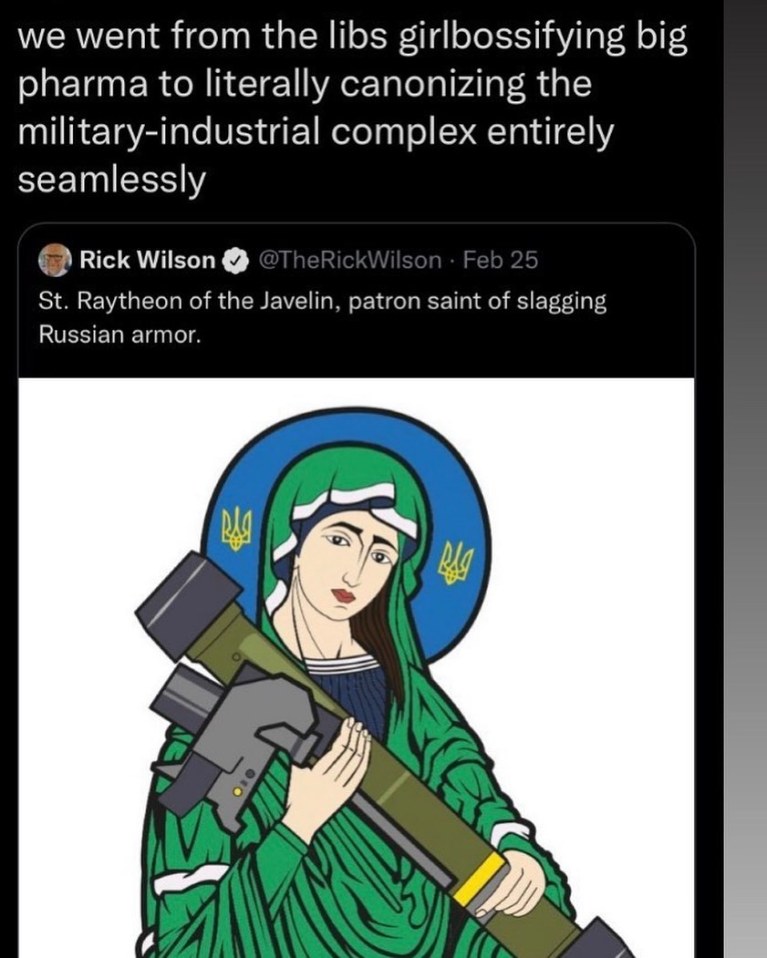






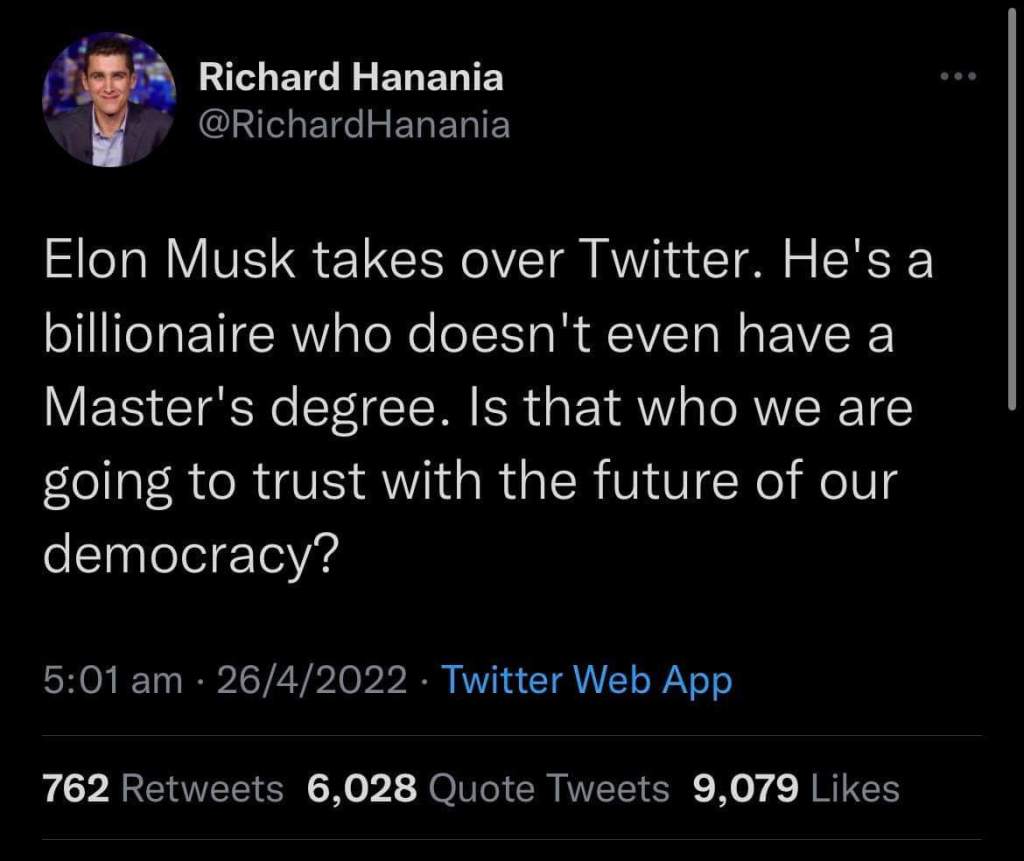














 Irregular Ideation