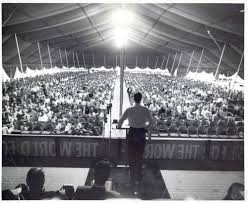
What Is Your Mennonite Marriageability Rating?

Link

Once upon a time I had a fairy-tale perspective of romance.  I believed in meeting the “right one” then “falling in love” and then living “happily ever after.” 

This is the Disney kind of love that keeps many young women bogged down in princess syndrome because they’re waiting for a knight in shining armor.  It is also why young men only pursue their ideals. 

It is totally faithless.

Instead of loving a person, we are caught up in our unspoken lists of attributes and unrealistic ideals.  Those who do find what they want will likely be disappointed once they marry and find out that not everything is as it appeared.

We might claim to love unconditionally and yet anyone claiming to be totally altruistic is a liar.  We love for what we get or what we hope to get and might as well be honest about it.  Much of what gets us hooked then hitched is superficial and our secret judgement probably should be openly examined.

I’ve decided to come up with a scorecard—both for fun and for introspection about the items listed.  How do you rate against ideals of the Mennonite culture?  Have you ever judged anyone based on any of the things mentioned below?

So, anyhow, without further ado, here’s a marriageability rating scorecard for conservative Mennonites.  

1) Appearance: Be cute or go home!

God may judge by the heart, but we tend to judge by appearance.  Many confuse outward beauty with virtue and stature with strength of character.  Being overweight, poorly dressed or unkempt will certainly count against you.  Sorry if you are not naturally stunning, but take solace in the fact that most of us aren’t and it hasn’t killed us yet.

  • +15 if you are a girl of average height and size to petite.
  • +15 if you are a guy over 5′-10″ tall and don’t look gawky.
  • +15 if you are a guy described as “handsome” by someone other than your mom or sisters.
  • +15 if you are physically fit or considered well-proportioned according to prevailing cultural standards.
  • +15 if you are a girl who gets more than 75 likes when you update your profile picture.
  • +5 if you are a guy with a pickup truck or Jeep.
  • -10 if you have been turned down or have never been asked for a date.

2) Ability: Wow!  Did you see that?

We might claim to value things like character and integrity over athleticism or charisma.  Unfortunately we don’t really have a way to quantify abstractions (like courage or perseverance against the odds) and yet do take notice of something we see clearly like a volleyball spike or a great singing voice.  There are no participation awards and moral victories in this category; it is win or lose, all of nothing, etc.

  • +15 if you have ever been picked to sing a solo.
  • +15 if you articulate well, make people laugh and people seek you out or gather around you.
  • +15 if you have ever played on a championship team and made a solid contribution.
  • +15 if you can play an instrument well enough to keep an audience.
  • +10 for going on a chorus tour more than once or being asked to sing at a wedding.
  • +5 if you are a notable artist, writer, etc.
  • +5 if you are a girl and bagged a buck. (-10 if you are a guy who has not)
  • +5 if you can sincerely parrot accepted Mennonite ideas.
  • -5 for actual intelligence.

3) Ancestory: Who are your parents again? 

One thing off the radar is the importance of pedigree.  Being from the right family can cover over a multitude of sins and being from the wrong family can mean nothing you do is ever going to be good enough.  There is a Mennonite pecking order, there are various tiers we can be classified in, and people rarely marry outside of their own family caste.

  • +20 if you are a pastor or missionary kid.
  • +15 if your dad is a successful businessman.
  • +15 if your mom was asked out by five or more guys before settling on your dad.
  • +10 if you have a common Mennonite surname.
  • +5 if you can play the Mennonite game.
  • -5 if your parents aren’t Mennonite.
  • -10 if you aren’t Mennonite.

4) Ambitions: God has led me to be important…

The Millennial generation is said to value traveling and experiences.  One of the privileges of American affluence is the lack of concern about things like shelter, clothing or food.  It took actual faith for those truly called to go out in the past.  However, today it only takes a fat wallet or an adventure seeking heart.  You can go for a few years and then come back to be knighted as a pastor or regarded as someone special.

  • +15 if you have the luxury of world travel without needing to truly count the cost.
  • +10 if your ambitions make you popular in the Mennonite religious culture.
  • +10 if you describe what you want to do as God’s leading.
  • +5 if your dad is a college graduate or taught a Bible school/seminar class.
  • +5 if you have over a half dozen siblings.
  • +5 if you or your dad is a pilot.

5) Activities: Doing the cool things that people notice.

I had thought it would be wrong to go to Bible school or a missionary trip in order to find a spouse and it would be taboo to admit that you did.  But the correlation is real.  Many conservative Mennonites *do* find their spouse this way and then use some kind of convoluted logic that assumes people who do these kinds of activities are more sincere because they do—never mind that the real reason many of them do these things is to be more marketable. 

  • +15 if you regularly play Rook and Settlers of Catan or think Spike Ball is awesome.
  • +10 if you have convinced yourself that short-term missionary trips and going to Bible school is a sign of spiritual depth.
  • +10 if you homeschooled and somehow avoided social awkwardness.
  • +5 if you think Christian schooling helped you be a better person.
  • +5 if your face was ever on a prayer card.
  • -5 for every break up.

6) Age: Over thirty?  Forgetaboutit…

It is no big secret that the American culture is youth obsessed.  Mennonites are no exception to this and are perhaps even more guilty of ageism than their secular counterparts.  There are many who might even be so bold (or arrogant) as to tell older singles that it might be God’s will that they remain single.  Nevermind the Bible would indicate age as an asset rather than a liability—that is one part of the book that is dismissed as irrelevant in our times.

  • +5 if you are between the age of 18-25
  • -10 if you are single by the age of thirty and not a sought-after person.
  • -1 for every additional year you are over thirty.

Can you outrank the writer?

Add up your totals and then comment your Mennonite marriageability rating if you dare. 

I come out around 20 points and expect to be easily surpassed by most of my conservative Mennonite peers. 

Of course this is not scientific or based in surveys, so don’t take it too seriously. 

However, I’m guessing that you will be more successful in getting hitched if you find a person at your eligibility rating level. 

Props to those of you who are able to overachieve.

Do People Get What They Deserve?

Standard

In a non-zero-sum game everyone can be a winner.  It is a non-competitive or competitive circumstance where all participants can achieve optimal results and be successful.  In an abundance of resources and opportunities and assuming equality of abilities this is the case.

zero-sum-game is a circumstance where when someone gains another loses. This is true of sports where there is a score kept and a winner and loser at the end. It can be true of the marketplace when two people desire the same property but only one can possess it. It is true of any limited resource.

The right-wing or conservatives prefer the non-zero-sum explanation.  They assume that all things are equal besides effort then they are free to look the other way at those who have not achieved what they have.  This is not always uncaring or completely cold-hearted either—these people have worked hard, often have overcome obstacles (while playing by the rules) and believe others can as well.

However, the left-wing or progressives tell us, and rightfully so, that it is not that simple.  We can certainly say “when life gives you lemons make lemonade” and yet what does one do when life gives you rocks?  I suppose then you throw the rocks at those telling you to make lemonade?

Those who argue that life is largely a non-zero-sum experience and that those who put forward an adequate effort are too quick to dismiss differences in circumstances—they often do not appreciate providence of their own advantages enough.  Sure, people reap what they sow, but can we assume that everyone has the same soil, seeds and weather to work with?

Do people get what they deserve?

We like the idea of karma, that people get what they deserve and everything we have was somehow earned.  This absolves us of responsibility to those with less and allows us to enjoy our advantages in life without guilt.  This is an explanation of things that works for those who are relatively successful and have basically gotten what they want.

Many religious people, to cover for their lack of compassion, go a step further and assume that disability and disaster is a result of sin.

That is why Job’s friends added insult to injury and accused him of having some hidden sin because of all awful things that happened to him.  They were wrong for their assumption that he deserved what he got.

People getting what they deserve is not the reality that Jesus describes.  When asked who’s sin caused a man’s blindness he answered that it was nobodies sin and used the opportunity to bring glory to God by healing the man.  He also used a couple events as a basis for a rhetorical question and answer:

Now there were some present at that time who told Jesus about the Galileans whose blood Pilate had mixed with their sacrifices. Jesus answered, “Do you think that these Galileans were worse sinners than all the other Galileans because they suffered this way?  I tell you, no!  But unless you repent, you too will all perish.  Or those eighteen who died when the tower in Siloam fell on them—do you think they were more guilty than all the others living in Jerusalem?  I tell you, no! But unless you repent, you too will all perish.” (Luke 13:1‭-‬5)

His answer seems to go directly against those who try to attribute calamity to God’s judgment and see success as a sign of God’s favor.  He muddies the water for the sanctimious religious elites with their simple (and often self-congratulatory) black and white explanation.  He defies their people should get what they deserve logic:

You have heard that it was said, “Love your neighbor and hate your enemy.’  But I tell you, love your enemies and pray for those who persecute you, that you may be children of your Father in heaven. He causes his sun to rise on the evil and the good, and sends rain on the righteous and the unrighteous.  If you love those who love you, what reward will you get? Are not even the tax collectors doing that?  And if you greet only your own people, what are you doing more than others? Do not even pagans do that?  Be perfect, therefore, as your heavenly Father is perfect. (Matthew 5:43‭-‬48)

It is interesting that the parallel account in the book of Luke uses “merciful” rather than perfect.  Assuming that they are both a paraphrase of the actual words of Jesus and accurate (as opposed to one being unreliable) we can probably combine the two ideas to approximate the correct message.  I believe we are to be perfect in our mercy or perfectly merciful like God.

The message that seems clear in the teachings of Jesus is that nobody gets what they deserve.  He says that unless people repent they too will perish—that neither sunshine nor rain is distributed by who deserves or does not—and with this undermines those who want to put all blame for failure on the individual.

Furthermore, there is no excuse for indifference.  Even our enemies, people who deserve our contempt for things they have done, we are told to treat as we do those who are deserving of our love.  We are to be perfectly merciful because we can do nothing to deserve God’s love and yet are loved despite that.

That is the essence of the Gospel, to do unto others, not as they deserve, but we want God to do to us.  We will be shown mercy we we show mercy and judged as we judge.  If we live by the sword then we can expect to die by it as well.  If we forgive others then we will be forgiven by God.

If nobody gets what they deserve, then what?

Truly believing in the goodness of God is not about crowing on social media when things go right.  No, that is only triumphalism covered in religion and brings no glory to God whatsoever.  Again, some good people suffer terribly for their righteousness while many evil people in the world are both materially and socially successful.

A big bank account or beautiful girlfriend is not proof God’s goodness or else Job’s friends would have been right to torment him further trying to find a hidden sin.  Success is only proof that circumstances tilted in favor of the outcome you desired and attributing it to God’s favor is only to dance on the backs of the bruised.

True thankfulness to God is using the means we are given to help others.  Those with loaves and fishes didn’t thank God loudly then gorge themselves in the presence of the hungry crowd.  No, they responded to the call of Jesus, gave up what many would argue they were entitled to through their foresight and by their sacrifice we have the miracle of five thousand being fed.

It is on us to be an answer to prayer using the means provided to us, being an answer to prayer—that is our thankfulness to God.  Your success or failure in an endeavor says nothing about God’s plan.  Only your willingness to step out in real faith, the faith of going outside of comfort zone and sacrificing for those who deserve judgement, is evidence of God’s goodness.

True repentance is realizing that you deserve nothing and treating others as if they deserve all of your love.  If we truly appreciate God’s grace we will show it in humble actions of service rather than pompous claims of God’s goodness to us.  It was the Pharisee who stood on the corner thankful to God at the expense of others and was condemned for his pride—he knew nothing of God’s goodness:

The Pharisee stood by himself and prayed: “God, I thank you that I am not like other people—robbers, evildoers, adulterers—or even like this tax collector.” (Luke 18:11)

Sadly many conservative Mennonites and other religious fundamentalists are like that Pharisee.  Even in their thanking God they are self-congratulatory and can barely hide their self-righteous pride under the pretense of praise—evidently they forget pride is the first sin.  In context of the passage above it was the man who prayed “God have mercy on me, a sinner” who left justified before God.

Those who know they are undeserving do not boast in God’s goodness towards them.  No, they share it with others by helping carry the burdens of others who were less fortunate than themselves.  True faith is not about bragging about things we do not deserve—it is about our self-sacrificially serving those who do not deserve.

Perhaps God is not multiplying our effort today, like he did in the Acts church, because we pretend to be thankful for His goodness in our words and yet withhold grace from those whom we feel do not deserve?

Maybe God could turn our zero-sum game into an over-abundance when we let go of our own calculations and plans to trust Him?

So, anyhow…

Shut up about your good life—people already know!  Instead, thank God by being an answer to prayer to someone who didn’t have your advantages.  

Actions speak louder than words.

The End of the Run

Standard

It is my last day on the job with Northern Tier Transportation and, appropriately enough, I’m stuck at Mt Pocono waiting on a load.  This week has been a proper end to eight years of hauling commodities.  It ended where it began.

For the first few months driving I had been making a regular run of ‘midds’ (wheat middlings) down from a flour mill in Mt Pocono to Cooperative Milling in Gettysburg.  

That regular trek up and down the foggy interstate 81 through Harrisburg, sometimes stopping at Cracker Barrel or Perkins, abruptly stopped.  It had been steady work for months and then circumstances forced a change.  

That has been the pattern.  We establish a regular ritual, rates change, and it is on to something else.  Nothing lasts forever in the trucking industry.

But the past couple weeks I’ve been to Gettysburg again for the first time in years.

This week I had two runs to Gettysburg.

A trip down memory lane.

The quirky guy with a mustache who once unloaded me has since retired.  However, there are some things that have remained unchanged, like the driver ahead of me and his complaints about the lack of urgency.  Hourly mill workers and truck drivers have a different time perspective.  We need to get unloaded or else we might get stuck waiting overnight if delayed.  They clock out go home at the end of their day regardless.

I also said goodbye to Brenda.  I will miss my hour long chats with her while getting loaded with poultry meal in Moorefield West Virginia—I have been been there twice a week with consistency over the past year.  She took over (after the prior load out guy left his wife and ran off with a female truck driver) and knew how to get things done.  I was impressed by her management compared to her predecessor.  I hardly ever had to wait.  We quickly became good friends and her encouragement has meant so much for my confidence.

Anyhow, last night I had anticipated this.  Mt Pocono is unpredictable and there was inclement weather on the way.  However, it was already late when I unloaded, I was out of hours, and so I left for my last load into the snow early this morning instead.

It was not too bad on the road besides other drivers.  I was impatient because a minute too long could mean getting to the mill after rather than before another truck and add an extra hour or two added to my work day.

It is Mt Pocono where I learned “hurry up and wait” or a phrase truckers use to describe the contradictions too common to the industry.  In other words, the times when your dispatcher tells you to be there yesterday and then (after moving heaven and earth to get there) you arrive ahead of schedule only to end up waiting hours.  I call it “Camp Pocono” because I’ve spent many hours here waiting on product.

The wait also means that I will need to find a way to clear my tarp (at a place that prohibits any reasonable way of accomplishing that task) and that is not something that I’m looking forward to.  Had there not been a line, with hours to wait as they make feed, I would not have to imperil myself by crawling across the canvas with a broom.  I will not miss that.

Overall my experience has been good.  I appreciate my boss, Ernie, for his putting up with my high expectations.  I respect him for what he has built over the time I’ve been driving for him.  He went from one truck and trailer when I started to a decent sized company today.  I am glad to have contributed to his success and appreciate all he has done for me.

Well, I’m probably going to be here until 5:00pm.  There’s a restaurant at the top of the hill and I’m a frequent customer.  It is good exercise.  I don’t get to choose where I am and would rather be home (a little over an hour away) than here, but I plan to make the most of my time.  It is time for some lunch.  Into the snow I go.

God bless!

Caution: Mennonite In Transition

Standard

A couple years ago, upon realizing my life was going nowhere in a hurry and not wanting to settle for mediocrity, I called out for God’s help.  I wanted a truly abundant life, I knew that I was wholly inadequate to bring about the necessary changes to make that reality (God knows I’ve tried) so I begged for the impossible be done.

I have seen many dreams die in my life because of fear of failure, inexplicably poor timing, etc.  I was well-aware of the cliché definition of insanity (doing the same thing over and over again and expecting a different result) but could not seem to break from the patterns of life that limited my potential.  I was what I was and deeply dissatisfied with that.  

There was an undefined something that always seemed to crush my higher ambitions.

I could not beat an enemy that could not be defined.  So I told God in no uncertain terms that I would literally crawl on hands and knees across a wilderness of broken glass to be made right.  Throwing every bit of faith I could muster, like a gambler going all in with a desperate last gasp effort, I prayed “make the impossible possible for me” and then concluded my morning prayer.

It was an hour or two after that when I hopped out of my truck and went down writhing in pain.  My knee buckled under me.  In that moment what had been diagnosed as an MCL sprain became a full ACL tear and I knew that the implications were huge.  I would be unable to perform the duties of my job and with that was facing financial uncertainty.

Still, despite excruciating pain, I was serene and confident.

God had answered.

Or so I hoped.

“It is what it is…”

My faith crumbled against that awful reality.

“You are thirty years old living in Milton.”

It was true and the implications clear enough.

I was a stick in the mud, already past my prime by the standards of some, and certainly not the adventure her heart was set upon.  I simultaneously loved her brutal honesty and hated the harshness of judgment.  My worst fear realized.

I had no defense.

When we finally parted ways I was lost in a haze.  The rug yanked out from under me.  My sputtering attempts to articulate my own heart had no effect on her whatsoever.  Blissful hopes were mercilessly cut down by an otherwise nurturing soul.

My conversation with her end with my mouth involuntarily echoing her “it is what it is” plea and with that accepting the rationality of fatalism that had long dogged me.

A continuing cruel loneliness now seemed inevitable.  I had tried many times before, taken my hits, always got back up again by believing next time would be better—that something greater would come from my suffering rejection.  But this time I could not delude myself with hope.

My faith had lost the day—my hope against hope had failed—and now a terrible fate of a despairingly cold and isolated life was upon me.

My mind, a place normally full of noise and activity, went totally blank as if unable to comprehend any of it.  I was in shock about what had transpired and numb.  

I wandered off aimlessly.  

Into the wilderness of South Dakota.  

Into the dark of night.  

Into oblivion.

The storm brewing in overhead seemed to perfectly mirror the log-jam of conflicted thoughts and swirl of deep emotions.

My delusion of hope that a young ambitious woman might find me desirable enough to consider a romantic relationship was shattered into a million fragments.  My failure to achieve now clung to me like an unforgivable sin.  Very soon I awoke from my stupor into an inescapable nightmare of reality.

The uneasy calm broke when Johnny and Brian somehow found me.  The rain, which had coincidentally held to precisely the moment they carried me to the shelter of an awaiting truck cab, began to pour down in torrents and so did my tears.

Escaping reality was impossible.

Doing battle with the it…

Most people nowadays pursue career first and romance second.  But I had these things in reverse order.  I prioritized relationship and postponed all else.

My reasoning was that it would be better to form life ambitions and goals together as a couple rather than apart.  And I might have pulled it off had I been a bit less socially awkward.  Unfortunately I had this vexing tendency to freeze up as soon as my interest was piqued and thus my early romantic pursuits failed miserably.

Years were frittered away with unfulfilled dreams, chasing one false hope after another and waiting for opportunities that never came.

Not to say that I did nothing of value in that time either.  I gained life experience, slowly built confidence in my abilities, learned to live independently, and gained perspective.

However, it was hard not to feel a failure.

There seemed to be this mysterious “it” that always kept my best efforts from panning out and nobody had the answers for this that I craved.

I’ve heard all the cliché advice I could ever stomach.  One person says try harder and the next will say you’re trying too hard.  One tells you “you’re intimidating” and the next says you lack confidence.  You’re basically wrong no matter what you do.

The same one who says they want someone “mature” rejects your offer and then dates a teenager whom she later marries.  It is incredibly confusing when the same person who says you’ll make a “great husband” refuses to even consider a date.

It is impossible to define exactly what the “it” is.  It was a ball of anxieties, that inexplicably poor timing, a curse of a jealous enemy, the lack of true community and help.

It was many things and yet nothing at all.

It was an invisible monster that chased me throughout my life.  It was the glass wall that seperated me from those who were more able to conquer the obstacles in their way and achieve their goals.  It was my doing too little too late or too much too early.  It was my always being close to the mark and yet never hitting it.

The “it” is not something external to be vanquished.  It is everything from my formative years up until the present moment that I’ve experienced or thought.  It is my home, my genetic and cultural inheritance, the good and bad together intertwined and inseparable as part of my own character.

The “it” is a sum total of what defines me as a person.  

It was inescapable.

It is me.

It is what we make it…

Her certainty about her own direction was why she was so attractive to me.  It was never my plan to grow old in Milton.

However, she seemed to believe that her personal ambitions were something that made us incompatible.  To me our lack of similar résumé was not a disqualification, I saw our differences as an asset, considering her strengths as being complimentary rather than contradictory to mine, but she disagreed.

She was my last remaining escape plan.

I did not eat in the days after because I had no desire to continue as I had and seemingly had no escape.  I wanted to die and would rather starve than keep feeding myself with more false hopes.

I cried, “I have no vision!”

I so desperately wanted free of a mind seemingly incapable of focus.  I had seemed to do fine in a structure.  I was a diligent worker, a loyal friend, responsible and dedicated.  But leave me too free to choose my own path and I would dither indefinitely in indecision.

God provided just enough reason to get me out of bed.  I cleaned up, composed myself a bit, ate the cup of yogurt and glass of water mom provided.  I faced her again, my elusive hope against hope, and then in the weeks following I went under the knife to have the torn ligament replaced with a graft and after that began the months of rehabilitation.  My goal to come back stronger than before and physically I did.

What also happened in my time off of work was a book (written but shelved pending further review) and this blog.  I’ve found some answers in blogging.  Writing my experiences and recording some of my thoughts has seemed to help provide some direction.  The more vulnerable I’ve become the more friends and opportunities to serve I’ve seemed to gain.

Why am I Mennonite?

I have never been the Mennonite golden boy.

I’ve never had the swooning attention of the favorites who better represent the ideals of Mennonite culture.  I’ve always done things a little different.  I was who I was and gave up on being anything besides that.  But still, I longed to gain acceptance in the Mennonite culture.

In Mennonite culture marriage is acceptance and not all are.  Yes, sure, we’ll let most anyone be a member so long as they complete the required steps, but marriage is where the reality of a two tiered system becomes very evident.  There are the kids born in the right homes, the ones able to do all the things that make them popular within their cultural context and marriageable, and then there are those of us who don’t fit the mold.

She represents a direction that I thought my life should go in.  Her Mennonite idealism, her simplicity of role or purpose in life, represented something deep within my own heart and desirable.

However, many who have read my blogs question this and ask… “why are you still Mennonite?”

It is question that I dislike.

I’m Mennonite because I like being Mennonite.

We have such a neat and tidy cloistered existence.  We have beautiful families.  We are the happy Hobbits living in the Shire of Middle-earth.  Everything we do is safe.  Even our missionaries typically go out to all the corners of the world yet never leave the protection of their religious confines.

It has been suggested to me recently that I have “out grown” the tradition.  That is the question that I have wrestled with as of late.  

Can one actually out grow their home?  

I’m running out of arguments why to stay in a denomination that is more about conforming to cultural expectations than transformation of mind and living a life of true faith.

It is hard not to notice that most of the help on my journey came from those leaving the Mennonite tradition or outside of it.  The support I’ve gotten from those within has been grudgingly or something that needed extracted and done as mere religious duty.  I hear brotherly love spoke of by Mennonites, but it seems more relic or ritual than actually reality.  The real brotherhood I’ve experienced, the genuine Christian love, comes from beyond my own Mennonite tradition.

Does a man of faith belong with those who shrug “it is what it is” rather than risk a small step into unfamiliar territory?

Should I have any part with those who eagerly travel over land and sea to win a single convert and yet would never go in a direction they don’t understand?

Still there is a strong urge to remain a part.

I’ve always thought all voices were needed in the conversation and the including mine.  If everyone capable of challenging the cultural status quo leaves it would create even more tunnel vision and further imbalance.  My strengths, rejected or not, would be of benefit to those who think they have all the answers and are confident about the tradition they received.  

Composites make a stronger material than their component parts—shouldn’t the bond of love be able to do the same with two dissimilar people?

Decisions, decisions…

There is a time to wait and there is a time to take decisive action.  I have given up many opportunities for placing my hopes within the context of my Mennonite culture and gone many years without seriously considering the alternatives.

Mennonite is my cultural identity.  Despite my many idiosyncrasies, I’ve always been Mennonite at heart and somewhat proud of my ethnic and religious heritage.  How does one unbind and divorce themselves from their cherished past?

Impossible, right?

It is not like I haven’t ventured out before in search of what I might find only to return again as if drawn by an invisible force that grew stronger the further away I got from whoopie pies and covering strings.  But things do change and there could be a force stronger than that which always pulled me back.

When I asked God to make the impossible possible for me, I had a personal vision that included remaining Mennonite and the young woman that I knew was an impossibility as far as worldly logic is concerned.  But it now seems possible that my vision then was too narrow and that I should look beyond to the other options available.

Being Mennonite is not the be all end all.  God calls us to go beyond the limits we set for ourselves or those set for us by our cultures and that is my intention.  It doesn’t matter what my religious peers or even my blood relatives think—Jesus called us to follow Him and leave our fears, insecurities and inadequacies behind us.

Maybe impossibility made possible for me is something I never anticipated?

That is what have I learned since that day tearing my ACL, in recovery from yet another slap of rejection, and from the battle with the “it” which drove me to extremes in search of answers.  I learned that I do not have all the answers and don’t need all the answers before I am able to step out in faith.

Please pray…

There are many things that will soon come to a head for me and most I am unable to talk openly about at this time.  Many of these things being pivotal life changing decisions that must be made.  What happens in the next couple months will determine many things.

Your prayers to help me through this transitional time are very appreciated.  Pray that the impossible is made possible.

When Love Remains — A Guest Blog By Linda Stoltzfus

Standard

This is my first guest post.  It is written by my mom (a person who encouraged my writing) and resonated deeply with me.  It is something my mother shared recently about her own mother’s decline in health and I asked permission to share here.  I felt it was something relevant and worthwhile for those who have faced or are facing similar circumstances.  A story about memory loss and love…

Sitting on the couch my mom reaches for her phone. She snaps it open and stares at the face that greets her. The man who has been at her side for over sixty years stares back.  Her fingers haltingly push the button that calls him.  It rings and I hear his voice answering.

She pauses; words no longer come easily for her.  But I know what she will say.  She will ask him to come back into the house.

As I reach for the phone I reassure her that Dad has just gone out for a walk and he will be back in time for supper.  She seems to understand, but I know that as soon as I leave the room she will be trying to call him again.  Her mind can no longer retain anything that was said a minute or two ago.  She wants her husband, my dad, to be by her side night and day.  He has become her memory and her security in this foggy world of hers.

My mother has been given the diagnosis of dementia likely caused by Alzheimer’s.  At the age of eighty this isn’t really that unusual.  According to the Alzheimer’s Association, one in nine people over 65 has Alzheimer’s disease.  One of three senior citizens will die with Alzheimer’s or another type of dementia.

My Mom has beautiful eyes: big, bright and blue.  She had lovely long hair which never turned gray and kept its blonde streaks into her seventies.  She would faithfully wash it once a week, often using whipped egg whites as conditioner.  It was her pride and glory.  When she was diagnosed with Non-Hodgins Lymphoma, I believe the most severe blow was that treatment would cause her to lose her hair.  But to live she had no choice.  The cancer was stage four and her swollen lymph nodes were giving her a lot of pain.

Except for her hair loss, she tolerated the heavy duty cocktail of chemo drugs rather well.  It was with much relief that after her last treatment she was pronounced cancer free.  However, she seemed to becoming more and more confused.  Her once sharp memory wasn’t there and she constantly wanted pain pills for some ache somewhere.

Instead of getting her strength back she wanted to do nothing but curl up on the couch. She began refusing to shower, or even comb the hair which had begun to grow back.  Having to leave the house and attend any activity with people made her extremely anxious.  My dad desperately held on to the hope that she was still recovering from the cancer.  He insisted that once her strength came back things would get better.  But after cognitive memory testing by the doctor, it became obvious that she was showing signs of dementia.

I was aware of symptoms of dementia and saw the effects it had on my grandmother and the toil it took on my aunt as her caretaker, but they lived several hours away and our contact was minimal.  The reality is much harder when you deal with it day to day.

Dementia is often misunderstood as being something all old people have; however it is actually a part of different diseases.  Alzheimer’s is the one that often comes first to mind but mini strokes, vascular issues, Lewy’s disease, Parkinson’s and even brain trauma can lead to the diagnosis of dementia.   My mother has been diagnosed with Parkinson’s but the doctors seem to think the cause of her dementia is Alzheimer’s.

Today when I look into my mother’s eyes they look back at me empty of emotion.  Occasionally she surprises us with a smile, and for a brief moment I see them light up.  But most of the time, they remain dead to her surroundings.  Her face seems fixed into some sort of mask of confusion.  During her calm times her eyes stare blankly into the distance.  When agitated she has the look of a distressed child.

It is now supper time and my mother makes her slow trek to the kitchen gripping her walker for support.  I pull out her chair and she sits down.  I hand her some napkins which she seems to enjoy folding. It is one of the few things she still can do.

My dad comes into the house, and with his usual style, asks Mom how she is feeling.  Although he hasn’t had a positive answer from her concerning her health for months, he seems to retain some sort of illusive idea that it may yet happen.

He deeply misses his soulmate.  They were unusual by today’s standards.  There was no independence in their relationship: they did everything together and it seemed to work for them.  Dad enjoyed driving and Mom did the navigating.  Dad liked watching people while Mom did the grocery shopping.  They both enjoyed going out for fast food, Burger King was a favorite, and they preferred eating in the car together rather than inside.

Mom always made sure Dad had three meals a day and that his needs were well taken care of.  However, that all changed with her cancer diagnosis.  She hasn’t cooked since.  Today we all take turns making sure they have a cooked meal each day.

At the supper table, I try to bring back some sort of connection by talking about my birth fifty some years ago. Mom is still able to recall my date of birth but she isn’t sure how old she is or even what day or year it is.

One of the frustrating things about dementia is the way it plays with your emotions.  One minute the person can be reciting a date or event in perfect order but then a moment later have no idea who they just talked to or what was said.  A person with dementia has good and bad days just as any normal person does.  This puts caretakers on an emotional seesaw, since the good days make you want to believe that the person is getting better.

The first thing that comes to mind when you hear the word dementia is loss of memory.  Of course this is true but we all experience some loss of memories throughout the years.  The disease or injury that causes dementia is much more complicated than simply forgetting something.  It takes many cranial connections to make a decision, to recall how to turn on a stove, know the steps in taking a shower.  Once this processing is damaged, or gone, a person becomes more and more limited.  They need someone to give them step by step directions for each and every process of the day.

Today is one of Mom’s good days.  She seems relaxed, when several of her younger grandchildren show up, she smiles.  Instead of lying on her couch she remains sitting watching the activity.   She motions to me.  I can see that she wants to say something but her voice is subdued, and hard to hear.  I move next to her.

“Do we have any smarties?” she asks me.  It is her favorite treat for the children.

I check the dish she keeps next to her bedside.  It has several pieces and I give her the dish.  Her face lights up as she hands them to the children, and for a short time I see my mom back.

My mom’s biggest goal in life was to take care of her husband and family. She faithfully raised seven children and celebrated the birth of each 30 grandchildren and 20 some great-grandchildren.

My mom enjoyed listening to music, reading and going to church and social activities.  Now she no longer wants to attend any type of social activity and refuses to have any music playing around her.  She can’t focus to read.  Although still able to read the words the comprehension is no longer there.  She has always been a follower of Christ with strong convictions but now no longer prays before a meal unless my Dad reminds her.

One of the cruelest things of dementia is the loss of the personality of the person you love. The disease has robbed her and us of some of the most precious parts of the human relationship.

In exception of one thing:  unending love. My mom is surrounded by agape love.  For sixty years my dad has been with her and is committed to being there until the end.  Although he has taken on the role of caretaker, his love for her remains the same.

Each of her four daughters is involved in her care, making sure her daily needs are being met.  Her daughters in laws have faithfully been making meals for several years with even some of her grandchildren helping out.  We all play different roles motivated by love.

One evening as I sat next to my mom who was lying on the couch with her eyes closed, seemingly sleeping, she reached out her hand and put it in mine.  She then took her other hand and laid it on top.  A wave of warmth spread over me. I haven’t felt that kind of emotional connection from her in a long time.

In that simple gesture, I knew that in spite of her confused state Mom was feeling loved.  In return she was offering the one thing she could still give back: affirmation of her love.  No disease can ever take that away.

Are You Too Busy To Read This Blog?

Standard

I’ve been wanting to do a blog on Mary and Martha, but I’ve been…well…busy…

It seems appropriate, with the bustle of the holiday season soon to be upon us, to talk about distraction and keeping our focus on what actually matters.  There are two Biblical characters who are notable for being in the presence of Jesus and yet too caught up in the wrong way of thinking to care.

Jesus, in defense of impractical love, confronts Martha’s distraction and disillusionment of Judas.

There are several different Biblical accounts where we see a woman (not always identified as Mary) who pours out her adoration in a way that seems irresponsible.  She is rebuked by others for it, but defended by Jesus.

Here’s the first account:

“As Jesus and his disciples were on their way, he came to a village where a woman named Martha opened her home to him. She had a sister called Mary, who sat at the Lord’s feet listening to what he said. But Martha was distracted by all the preparations that had to be made. She came to him and asked, ‘Lord, don’t you care that my sister has left me to do the work by myself? Tell her to help me!’ ‘Martha, Martha,’ the Lord answered, ‘you are worried and upset about many things, but few things are needed—or indeed only one. Mary has chosen what is better, and it will not be taken away from her.'” (Luke 10:38-42)

Hosting a large group of people is not easy and it is completely understandable that Martha would be annoyed.  I can imagine her, hands on hips, showing her indignation and I can also see Jesus smile as he answers.  She was so wound tight that she was not enjoying life or appreciating the moment.  Martha was stumbling through her life blinded by distractions.  Jesus gently tries to redirect her attention from the multitude of tasks that cluttered her vision back to what was truly important.

Mary, in contrast to her sister Martha, was in the moment and focused on what mattered.  It is interesting that in another Gospel account Mary is also criticized by Judas Iscariot for her use of resources, he asks: “Why wasnʼt this perfume sold and the money given to the poor? It was worth a yearʼs wages.” (John 12:5)  And Jesus, seeming to prefer the impractical display of affection, rebukes Judas as he did Martha.  In both cases Jesus is endorsing the fanciful over what we would call good stewardship of time and resources.

The disillusionment of Judas leads to betrayal of Jesus.

The Gospel accounts captured a feeling of distain for this man, the writers making sure to inform us that Judas was a thief and stealing from the common purse he carried for the disciples.  He’s obviously a complex character, he was chosen as a disciple and evidently had some interest in what Jesus taught.

But we do know that Judas, whether a disenchanted social justice warrior unhappy with the lack of progress or plain greedy and in it for his own gain, was distracted by money.  He betrayed his relationships, he was stealing from his friends (hence thier distain) and ultimately died miserable, taking his own life, after betraying Jesus for a little silver.

Many men today are similarly distracted by money and betray family for business and trade true faith for some numbers in a bank account.

The judgment against men who make an idol of money or financial security at the expense of relationships will be severe.  They will lose the hearts of their children, love of their wife, and possibly forgo their only chance for salvation.

Martha was simply too busy to enjoy life and too distracted to fully appreciate Jesus.

Unlike Judas (who was serving himself despite his altruistic rationalizations) we see Martha was very busy serving others.  She seems to be an extremely duty bound person and was probably completely exhausted.  She takes out her frustration on those around her, including sister Martha and even Jesus.

We are not told how Martha responds to the correction offered by Jesus.  If she’s like some of the industrious Mennonite women I know she probably scoffed at the suggestion before scurrying away to do all those other things that couldn’t wait.  But I can also see her later contemplating what was said, learning to worry less and relax a little.

In Martha I see my own mother (sorry mom, yes I do appreciate all you do and I can’t wait for thanksgiving day) who tends to stress out about hosting people.  The house must be perfect.  She scrubs, scours, cleans, and frets, often to the perplexed amusement of other inhabitants of the household who don’t mind a little dirt so long as the food tastes good—and it always does.

In conclusion, be a Mary, do not be distracted by things that do not matter and focus on what does. 

We to live in a time packed full of activities and work more hours than generations before us so we can afford more stuff that doesn’t satisfy us in the end.  Those who aren’t successfully distracted in their business can become bitter when others seem oblivious to their own concerns.

Most of us have our heads spinning because of smart phones, work obligations and social commitments.  Even good things, things that are good in their proper place, can keep us preoccupied and spiritually disconnected.

Dutiful religious devotion, reading a few Bible verses or going Christmas carolling and volunteering at the local food bank, is not always connection with the giver of life.  To be in the presence of Jesus is to be rested fully in the Spirit of God.  It could mean quiet contemplation alone.  It could also mean putting aside that carefully arranged schedule and really listening to someone who needs a friend.

Our devotedness to God truly is not measured by the amount of tasks we complete ritualistically.  True devotion is to love as God loves—to love the sparrow that falls and love the poor child without a father even more.

The first Christmas started with an impromptu visit of a pregnant woman to a stable in Bethlehem and yet things seemed to turn out just fine.  Keep that in mind.

Show devotion by trusting God—trusting God both with the minutia of details that you can’t ever control and also with the ‘big’ things that we delude ourselves to believe are secure and really are not.  Science can’t even tell us what keeps the universe glued together, nobody is guaranteed tomorrow, so stop banking on your own abilities and…

“Humble yourselves, therefore, under Godʼs mighty hand, that he may lift you up in due time. Cast all your anxiety on him because he cares for you.” (1 Peter 5:6-7)

With the holiday season upon us, be sure to contemplate where real security is found, remember what is truly important to remember, and experience the real presence of Jesus!

Conscience or Compromise?  The Courage of Desmond Doss…

Standard

There is a movie out about an unlikely war hero.  The man, Desmond Doss, was a Christian conscientious objector (or a conscientious cooperator according to his own description) who joined the army to save lives rather than take them.

Doss refused to pick up a rifle in training and for disobedience to orders to do so he was court-martialed.  But he stood his ground, he was allowed to go into combat without a weapon, and went unarmed as a medic.  His courageous effort to save lives earned him presidential honor.

Doss, unlike many in the church today, was unwilling to compromise for sake of convenience.  Many have compromised valuing their own temporal comfort over full obedience to the one who has control over eternity.  Many have compromised, voting for ‘the lessor of two evils’ and political expedience rather than take a courageous stand against the evil of both sides.

#1) The Apostate Church Does Not Overcome Evil With Good.

Jesus said…

“You have heard that it was said, ‘Eye for eye, and tooth for tooth.’  But I tell you, do not resist an evil person.  If anyone slaps you on the right cheek, turn to them the other cheek also.   And if anyone wants to sue you and take your shirt, hand over your coat as well.  If anyone forces you to go one mile, go with them two miles. Give to the one who asks you, and do not turn away from the one who wants to borrow from you.  You have heard that it was said, ‘Love your neighbor and hate your enemy.’  But I tell you, love your enemies and pray for those who persecute you, that you may be children of your Father in heaven.  He causes his sun to rise on the evil and the good, and sends rain on the righteous and the unrighteous.  If you love those who love you, what reward will you get?  Are not even the tax collectors doing that?  And if you greet only your own people, what are you doing more than others?  Do not even pagans do that?  Be perfect, therefore, as your heavenly Father is perfect.” (Matthew 5:38-48)

It is amazing to me that many claim to love Jesus and yet find all kinds of ways to make the plain teachings above not apply to their own situation.  They misuse other parts of Scripture to water down the words of Jesus and faithless hypothetical “what if” reasoning to justify around what is clearly stated.  I guess for them Biblical literalism only applies when it has no real practical value or real life consequences—like the creation narrative in the book of Genesis?

But, when Paul echoes Jesus and says we should “overcome evil with good” (Romans 12:21) I am doubtful that he is saying that we should do the same things evil people are doing while slapping a religious justification on it.  He’s actually telling us to be radically different, that we should care for our enemies as we would our own, and trust God will do justice.

Those in the apostate church do not trust God and therefore take matters into their own hands that are not assigned to them.  This is the beginning of their road to compromise, it is negotiating a deal with Devil to secure a temporal gain and exactly the temptation Jesus resisted when offered worldly power.

#2) The Apostate Church Is Focused On Judgement of Others Rather Than Self-examination.

Jesus said…

Do not judge, and you will not be judged. Do not condemn, and you will not be condemned. Forgive, and you will be forgiven. Give, and it will be given to you. A good measure, pressed down, shaken together and running over, will be poured into your lap. For with the measure you use, it will be measured to you. Can the blind lead the blind? Will they not both fall into a pit? The student is not above the teacher, but everyone who is fully trained will be like their teacher. Why do you look at the speck of sawdust in your brotherʼs eye and pay no attention to the plank in your own eye? How can you say to your brother, ‘Brother, let me take the speck out of your eye,’ when you yourself fail to see the plank in your own eye? You hypocrite, first take the plank out of your eye, and then you will see clearly to remove the speck from your brotherʼs eye.” (Luke 6:37-42)

If we ever could fully comprehend God’s perfection (and our own unworthiness by comparison) we would likely never judge anyone again.  Instead we would spend our days prostrate in prayer and thanking God for the amazing grace that saved a wretch like us.  Unfortunately we do not understand God’s grace and therefore struggle with smugness, sanctimony and self-righteous feelings.

We also tend to judge ourselves differently than we do others.  There is a tendency to justify our own behavior based in circumstances while treating the sins of others as a character flaw and an inexcusable choice for evil.  This tendency is called fundamental attribution error and the very opposite of what Jesus taught us to do.

We should never excuse our own compromise and then simultaneously pray “Father forgive them for they know not what they do” as Jesus did.  It is our job to show grace and in our doing so we are living in obedience to God who will show us grace.  Those in the apostate church do opposite of this and are harsh to outsiders while forgiving their own or themselves. 

#3) The Apostate Church Demonizes Opposition Rather Than Love As Christ Loved.

The apostate church has compromised and have broke spiritually blind despite their arrogance.  They therefore cannot love as Jesus did and do not understand this:

“Put on the full armor of God, so that you can take your stand against the devilʼs schemes. For our struggle is not against flesh and blood, but against the rulers, against the authorities, against the powers of this dark world and against the spiritual forces of evil in the heavenly realms.” (Ephesians 6:11-12)

A Christian should not be involved in the politics of those who demonize their opposition.  Some of the claims from this past election remind me the blood libel used to slander the Jews and create an irrational hatred of that whole people group.  When we turn other people into demons we justify our own unthinkable acts and often become as terrible as those we demonize.

Our flight is in a spiritual realm “not against flesh and blood” but the apostate church spiritualizes their own worldly perspective and demonizes those whom they are commanded to love.  Furthermore, our judgement again should be turned inward and towards our own, as Paul explains:

“I wrote to you in my letter not to associate with sexually immoral people—not at all meaning the people of this world who are immoral, or the greedy and swindlers, or idolaters. In that case you would have to leave this world. But now I am writing to you that you must not associate with anyone who claims to be a brother or sister but is sexually immoral or greedy, an idolater or slanderer, a drunkard or swindler. Do not even eat with such people.  What business is it of mine to judge those outside the church? Are you not to judge those inside? God will judge those outside. ‘Expel the wicked person from among you.'” (1 Corinthians 5:9-13)

Even in churches where political involvement is discouraged Paul’s words (above) are ignored and the judgement focused on those outside.  But we are told it is not our job to judge those outside our group—those outside are for God to judge.  Instead we are not to be associated with those who claim to be Christian yet live unrepentant in their immorality.

This in–group favoritism is common in the world, it is expressed in various forms of tribalism where people only see the faults of those outside their tribe, it is also a common feature of the apostate church, but it is the antithesis of what Jesus taught.  We must not associate ourselves with those who claim to be Christian and yet live in unrepentant sin.

#4) The Apostate Church Is Focused On the Worldly Kingdom.

Jesus said…

“My kingdom is not of this world. If it were, my servants would fight to prevent my arrest by the Jewish leaders. But now my kingdom is from another place.” (John 18:36)

The idea that a person must vote as a Christian duty is absurd.  Certainly there is a case for using the means we have influence the world in a positive direction and voting could be a means for doing that.  However, there is also a case for abstaining from politics and following after the example of Jesus who refused worldly power offered to him by Satan:

“The devil led him up to a high place and showed him in an instant all the kingdoms of the world. And he said to him, ‘I will give you all their authority and splendor; it has been given to me, and I can give it to anyone I want to. If you worship me, it will all be yours.'” (Luke 4:5-7)

Many seem to be willing to make a deal with the devil for much less than what was promised to Jesus.  Offer them a few Supreme Court Justices with assurances of their religious freedom and they’ll turn out in droves.  Never mind whether or not the one promising the world to us will deliver on their end of the bargain.

Have we forgotten that true men of faith would rather be in prison or a martyr than make the smallest comprise for worldly gain?

How has the church become so blinded by worldly political ambition?

It is disturbing to me is how some who profess Christ are actually shamelessly celebrating the election of a vulgar and unrepentant man as if it is a spiritual triumph.  It makes a mockery of our faith when we compromise out of fear, it is a spiritual poverty and should be repented rather than celebrated.  

Our lack of trust in God will make us losers even when we think we have won.  The ends do not justify the means.  We need less cowardly people who compromise for sake of temporal worldly gain—and more who make a courageous stand like Desmond Doss.

Will the Real Anabaptists Please Stand Up…

Audio

We are all familiar with that guy—the high water mark of his life being his senior year of high school—who is always looking back on that one moment when he was actually relevant and longing for those glory days to return, right?

It is the tendency of some to romanticize the past and something very easy to do when things aren’t going as well as we’d like in the present.  Occasionally this sentimentalism about the past is useful reflection, but oftentimes it is no more than our fear of a future that seems uncertain and keeps us from the greater fulfillment of our potential as an individual or together as a group.

We read about those who rejected what would have brought them into the promised land who “in their hearts turned back to Egypt” and “worship the symbols of their former greatness rather than understand” (Acts 7:39) in Scripture.  Because of this idolatrous preference for things past-tense a generation of Israelites escaped the bondage of Egypt only to wander aimlessly in the wilderness because they did not trust God to overcome the giants of their time.

It is fashionable nowadays in some conservative Mennonite or somehow otherwise related circles to use the word “Anabaptist” as a means to distinguish themselves.  This resurrection of Anabaptist identity seems to both be a response to a perceived lukewarmness in the established tradition and also a rejection of what is often labeled Evangelicalism.  But what it often amounts to is no more than a change of window dressing and nothing more.

In many cases it seems these new Anabaptists are simply another hybrid/remix version of conservative Mennonite standards with Biblical fundamentalism, Revivalism, Pietism, along with many other more recent innovations and influences.  These self-proclaimed Anabaptists may actually be more at odds with their ancestors than their Old Order cousins whom they consider to be their spiritual inferiors.  There is no new life, only rewarmed leftovers of yesterday’s meals and a new distraction.

Early Anabaptists did not spend their days in obsessive omphaloskepsis or in preserving a religious cultural identity.  They were men emboldened by the Spirit to question the authority of their own human teachers and break from tradition passed to them.  They were rebels, branded as troublemakers and thought to be dangerous heretics. 

If your primary goal in life is raising your quiverful and maintaining a respectable image in church or society in general, then you, my friend, are no George Blaurock.

Are modern day Anabaptist wannabes doomed to wander a spiritual wilderness?

The short answer is, no.  

We all have choices to make in the present that will shape our future and the choice is still in front of us all. 

Here’s your choice: Will you be like those who stubbornly clung to the past for security and missed out on the promised land because of their lack of faith?  Or, will you this day choose to stop burying your talents in fear, invest fully in trust of God’s grace and rest completely in the Spirit’s ability to lead you as it did Jesus? 

Jesus, when his authority was questioned, pointed to John’s Baptism (Mathew 21:23-27, Mark 11:27-33, Luke 20:1-8) and a moment of special spiritual anointing recorded in all of the Gospels. 

We are told the sky was “torn open” (Mark 1:9-11) then the Spirit of God descended upon him “in bodily form like a dove” (Luke 3:21-23) “and alighted on him” (Matthew 3:13-17) and immediately after this: “Jesus, full of the Holy Spirit, left the Jordan and was led by the Spirit into the wilderness…” (Luke 4:1)  I believe those writers wanted us to know what gave Jesus authority and direction—what say you?

This is what I read: Jesus appealed to an authority greater than the experts on Scripture and theology back then could duplicate.  He points to something spiritually significant that accompanied his physical water Baptism.  An anointing by God that immediately leads him to the wilderness where he is tempted and then emerges to read from Isaiah “the Spirit of God is upon me” claiming it to be fulfilled that day in him to a stunned and incredulous audience.

But, besides that, there is another Biblical accounting of the Baptism of Jesus with an added detail of great importance, the testimony of John:

“I saw the Spirit come down from heaven as a dove and remain on him. And I myself did not know him, but the one who sent me to baptize with water told me, ‘The man on whom you see the Spirit come down and remain is the one who will baptize with the Holy Spirit.’ I have seen and I testify that this is Godʼs Chosen One.” (John 1:32-34)

Jesus did not only live as an example and die as a sacrifice for our sins.  No, according to the passage above, he came to deliver on a promise.  That promise was a spiritual anointing like his available to all who believe. 

That promise being “the Spirit of truth” that the world (including many who falsely claim to believe Jesus) cannot accept as real (John 14-17) and is only known to those who have been anointed or “clothed with power from on high” (Luke 24:49) and is what was experienced on the day of Pentecost in an event Peter claims was foretold by the prophet Joel before preaching a message of repentance:

“Repent and be baptized, every one of you, in the name of Jesus Christ for the forgiveness of your sins. And you will receive the gift of the Holy Spirit. The promise is for you and your children and for all who are far off—for all whom the Lord our God will call.” (Acts 2:38-39)

What is the first step out of the wilderness?

#1) “Repent, for the kingdom of heaven has come near.” (Matthew 3:2, 4:17, Mark 1:15) Which means turning away from our sinful attitudes and behaviors—be Baptized, then live in obedience to the teachings of Jesus as we know them.  The Baptism of repentance is something we do as both a symbolic gesture and also as part of sincere effort to put to practice the self-sacrificial love of Jesus.

This is the most difficult step for those raised in a Christian religious tradition.  We know how to follow the rules or behave ourselves and act right.  However, this is often a commitment without sacrifice and an occasion to stumble over our own pride.  We become like the prodigal son who never left home yet was far from repentance.

Keep repenting as need be.

#2) “Ye must be born again.” (John 3:1-21) This was something perplexing to Nicodemus and still mysterious to us.  Jesus says “no one can enter the kingdom of God unless they are born of water and the Spirit” then adds that only the Spirit gives birth to the spirit.  As surely as you didn’t give birth to yourself the first time you will not give birth to yourself spiritually.  For man this is impossible, but with God all things are possible.

There are many spiritual infants in the church today or those who rely on their own human reasoning and not the power of God.  There was recently a man, ordained in the Mennonite church, who confessed to his not being spiritually born when he started as a preacher.  We send missionaries out full of themselves or a religious indoctrination and youthful ambition rather than tell them to wait on the fullness of Spirit to come to them as Jesus urged his disciples.

#3) “But you have an anointing from the Holy One, and all of you know the truth.” (1 John 2:20)  Do you have that confidence?  Or are you like those Paul encountered who were Baptized in water of repentance and yet…

“While Apollos was at Corinth, Paul took the road through the interior and arrived at Ephesus. There he found some disciples and asked them, ‘Did you receive the Holy Spirit when you believed?’ They answered, ‘No, we have not even heard that there is a Holy Spirit.’ So Paul asked, ‘Then what baptism did you receive?’ ‘Johnʼs baptism,’ they replied.  Paul said, ‘Johnʼs baptism was a baptism of repentance. He told the people to believe in the one coming after him, that is, in Jesus.’ On hearing this, they were baptized in the name of the Lord Jesus. When Paul placed his hands on them, the Holy Spirit came on them, and they spoke in tongues and prophesied.” (Acts 19:1-6)

There are many who have been Baptized with water of repentance who are still not quickened in Spirit.  There are two Baptisms, one physical and the other spiritual, one is to show our repentance and another is of God clothing us.  I pray God sends the willing of this generation to lay hands on those who are Baptized yet still spiritual powerless and that through prayer they are anointed in the name of the Lord Jesus.

#4) “Where there is no revelation, people cast off restraint…” (Proverbs 29:18)  The word revelation (also translated as vision) is about spiritual foresight and leadership.  When there is no spiritual vision people cast off restraint, run wild, perish, etc.

Vision is not about looking backwards for answers.  This is not medieval Switzerland, you are not George Blaurock, I am not Conrad Grebel, and we can’t recreate the 1500’s today nor should we want to.  Tent meetings, Sunday schools, VBS (or any of the other innovations of a prior era) do not need to be preserved ad infinitum either.  We have work to do, work God has given us to do in this present moment using the advantages we are given.

Yes, the witness of faithfulness past-tense should not be forgotten and is a great encouragement.  Take these translated words of “Gott, dich will ich loben” (God, You I Will Praise) a hymn written by Blaurock before his martyrs death have great value:

“Lord God, how do I praise Thee
From hence and evermore,
That Thou real faith didst give me
By which I Thee may know.
Forget me not, O Father,
Be near me evermore;
Thy Spirit shield and teach me,
That in afflictions great
Thy comfort I may ever prove,
And valiantly may obtain
The victory in this fight.”

But putting those words to actual practice does not mean we should be consummate historians, full of knowledge of the past and light on vision for the future.  We should not be like those obsessed with their former glory, trying to be great again by looking backwards, rather we should be full of the Spirit and a vision for today.

The real Anabaptist is the one who does as they did and recklessly pursues the truth regardless of personal cost.  We need a radical faith, one that uses the technological means and media of today, that reaches the world with authentic self-sacrificial love.   We have tools at our disposal that give of us capabilities that our ancestors could hardly even imagine.

Ultimately, however, for any of our tools, technology and historical knowledge to be useful, we need a spiritual awakening.  Real Christian vision is not a product of human ability or effort, it comes from the Spirit of God—For any of our advantages to matter we must be born again.

Those who walk in the Spirit look forward with a positive vision and a great hope for the future.

Should Christians Flee Jerusalem?

Standard

In 1630 John Winthrop, an English Puritan leader, wrote a thesis titled A Model of Christian Charity that described a spiritual vision for the new settlement in America.  He explains an ideal love that if practiced would make them “a city upon a hill” and seen by all people. 

But, Winthrop warns that with this great potential there will be great consequences if and when this ideal is abandoned.  In his words: 


“We shall open the mouths of enemies to speak evil of the ways of God, and all professors for God’s sake. We shall shame the faces of many of God’s worthy servants, and cause their prayers to be turned into curses upon us till we be consumed out of the good land whither we are going.”


America has formed into a great nation, an exceptional nation in many respects, and has become the place seen by the world.  Two Presidents (John Kennedy and Ronald Reagan) made reference to the “city upon a hill” imagery and at a time which was arguably the peak of our influence. 

I firmly believe that our lingering greatness is a reflection of the moral character of those who came before us.  However, our end will be as dramatic as our rise when we neglect love for our fellow man that Winthrop envisioned and is the true evidence of faith in God.

There was another city on a hill (seven hills actually) and that being the historical city of Jerusalem described in the Bible.  Jerusalem was a place of great importance to the Jewish religion and the location of their temple to God.  It was an impressive awe inspiring place by ancient standards and also the place where Jesus went with his disciples and made a startling prophecy about the unimaginable destruction that would soon come to that city.

Six days that marked the beginning of the end.

It was the Passover, a significant event on the Jewish religious calender, and what would turn out to be a most pivotal week for Christianity.  Jesus, after having raised Lazarus from the dead, departs from Bethany and continues with his disciples to Jerusalem despite the obvious risk to his life. 

The Scripture describes Jesus coming down from the Mount of Olives towards the great Holy City:

“As he approached Jerusalem and saw the city, he wept over it and said, ‘If you, even you, had only known on this day what would bring you peace—but now it is hidden from your eyes.  The days will come upon you when your enemies will build an embankment against you and encircle you and hem you in on every side.  They will dash you to the ground, you and the children within your walls. They will not leave one stone on another, because you did not recognize the time of Godʼs coming to you.'” (Luke 19:41-44)

This moment of emotion and prophecy marks the beginning of a tumultuous week.  Jesus was greeted as a king and yet simultaneously weeps over Jerusalem.  The week continues with him dramatically cleansing the temple of commerce.  He spends an intimate last meal with his disciples after which he is betrayed by one of them.  He is put on trial, crucified under a mocking “king of the Jews” sign.  But not before making several claims about a destruction coming and an end that was very near at hand.

In a sermon (Seven Woes of Matthew 23) Jesus severely rebuked his religious critics for their hypocrisy.  He told them that they are no better than their ancestors who murdered prophets.  Jesus warns once again of a judgment that would befall their generation, and laments:

“Jerusalem, Jerusalem, you who kill the prophets and stone those sent to you, how often I have longed to gather your children together, as a hen gathers her chicks under her wings, and you were not willing.  Look, your house is left to you desolate.  For I tell you, you will not see me again until you say, ‘Blessed is he who comes in the name of the Lord.'” (Matthew 23:37-39)

Jesus laments their unwillingness to trust him.  But also uses “desolate” (erémos) to describe their “house” (oikos) which is a strange way to describe a thriving city and is a foreshadowing statement.  He ends the sermon by saying only those who acknowledge him will see him again.

Following that, in the next chapter, we read this account:

“Jesus left the temple and was walking away when his disciples came up to him to call his attention to its buildings. ‘Do you see all these things?’ he asked. ‘Truly I tell you, not one stone here will be left on another; every one will be thrown down.'” (Matthew 24:1-2)

Wow!  Talk about shocking!

Can you imagine?

It would be like being with a group of friends taking in the sights in Manhattan and talking about the beauty of the architecture, but then in response the tour leader tells you that in forty years it would all be rubble. 

It was the temple (according to Luke 21:5) that had the disciples most captivated and Jesus tells them it will soon be destroyed.  Naturally, as we continue to read, this awful prediction provoked more questions from those who heard about when and how:

“As Jesus was sitting on the Mount of Olives, the disciples came to him privately. ‘Tell us,’ they said, ‘when will this happen, and what will be the sign of your coming and of the end of the age?’ 

Jesus answered: ‘Watch out that no one deceives you. […] Truly I tell you, this generation will certainly not pass away until all these things have happened.  Heaven and earth will pass away, but my words will never pass away.'” (Matthew 24:3-5)

Two observations: 1) These words are all spoken entirely in the context of the temple and the Jerusalem that the disciples saw with their own eyes.  2) This is the second time Jesus promises that “this generation” (to the audience with him then) would see these things happen.

So what did happen?

The end of Jerusalem and temple worship came to pass in AD 70.

It is amazing to me that this event, an astonishing fulfillment of prophecy, is not front and center for more Christians.  The destruction of the temple and sacrificial system it represented was so complete that it has lasted until this day.

Furthermore, this total destruction happened (as predicted) in the very generation that first heard the words of Jesus about the end of the age.  It is a well-documented historical event that would seem to completely fulfill the words of Jesus and yet it is hardly acknowledged.

So why is this such a secret?

Well, maybe because it throws a monkey wrench into the eschatology of many modern Bible readers who have been indoctrinated to believe Jesus is speaking of events in our own future?

Who knows?

But we do know that the historical evidence is clear.  The city of Jerusalem was destroyed, the temple of stone at the center of Jewish religion reduced to rubble, and with that came an ending of an age.  Some skeptics may dispute the details, yet one only need to go to the modern city built on the ruins of historical Jerusalem and see for themselves that the temple is gone.

The end of the former age is the beginning of something new and better.

The end of earthly Jerusalem had begun the week Jesus was crucified.  The destruction of the old way came as the beginning of a new and better way.  It is as Jesus promised:

“‘Sir,’ the woman said, ‘I can see that you are a prophet. Our ancestors worshiped on this mountain, but you Jews claim that the place where we must worship is in Jerusalem.’

‘Woman,’ Jesus replied, ‘believe me, a time is coming when you will worship the Father neither on this mountain nor in Jerusalem.  You Samaritans worship what you do not know; we worship what we do know, for salvation is from the Jews.  Yet a time is coming and has now come when the true worshipers will worship the Father in the Spirit and in truth, for they are the kind of worshipers the Father seeks.  God is spirit, and his worshipers must worship in the Spirit and in truth.'” (John 4:19-24)

There is a city spoke of by Jesus in the Sermon on the Mount.  It is a metaphor used to describe a greater reality “You are the light of the world. A city that is set on a hill cannot be hidden.” (Matthew 5:14)  It is also the likely origination of Puritan John Winthrop’s “a city upon a hill” phrase.  

We also know, in the writing of Paul, that he says the church is collectively and together is the temple of God:

“Don’t you know that you yourselves are God’s temple and that God’s Spirit dwells in your midst? If anyone destroys God’s temple, God will destroy that person; for God’s temple is sacred, and you together are that temple.” (1 Corinthians 3:16-17)

It is a funny thing how so many who claim to be Biblical literalists read that and still await a third temple built of stone.  Paul says that his audience, believers, are the temple and God dwells in them.  Believers, according to Scripture, are literally the temple of God and yet some wait for the constitution a third temple?

Perhaps those still waiting for a third temple have also missed out on the promised second coming of Jesus as well? 

Read this assurance that Jesus left for his disciples:

“‘Very truly I tell you, whoever believes in me will do the works I have been doing, and they will do even greater things than these, because I am going to the Father.  And I will do whatever you ask in my name, so that the Father may be glorified in the Son.  You may ask me for anything in my name, and I will do it.  If you love me, keep my commands.  And I will ask the Father, and he will give you another advocate to help you and be with you forever—the Spirit of truth.  The world cannot accept him, because it neither sees him nor knows him. But you know him, for he lives with you and will be in you.  I will not leave you as orphans; I will come to you.  Before long, the world will not see me anymore, but you will see me. Because I live, you also will live.  On that day you will realize that I am in my Father, and you are in me, and I am in you.  Whoever has my commands and keeps them is the one who loves me. The one who loves me will be loved by my Father, and I too will love them and show myself to them.’    

Then Judas (not Judas Iscariot) said, ‘But, Lord, why do you intend to show yourself to us and not to the world?’  

Jesus replied, ‘Anyone who loves me will obey my teaching. My Father will love them, and we will come to them and make our home with them…'” (John 14:12-23)

So there we have a new city, a better temple and a greater coming of Jesus—each of these iterations being far better than the ones replaced.  If we believe we will be the fulfillment of Scripture in the same way as Jesus and do even greater things as he promised we would.  We will not be looking forward to a new version of the old way and instead be bringing the better kingdom into our reality.

Why then do some amongst us still wait for another physical fulfilment rather than live in the fullness of the kingdom promise today?

Perhaps it is because they, like those who rejected Jesus in his first coming, do not have the truth in them and need to repent?

So, anyhow, cutting to the chase, why is the fall of Jerusalem relevant to us today?

The point of this blog post is not history or eschatology, those can be topics for another day, but it is to discuss the choice we have to learn from history or repeat it again.  We can look at the future as something set in place and beyond our own influence or we can consider that Jerusalem had a choice and that is contained in the last words of the Old Testament:

“See, I will send the prophet Elijah to you before that great and dreadful day of the Lord comes. He will turn the hearts of the parents to their children, and the hearts of the children to their parents; or else I will come and strike the land with total destruction.” (Malachi 4:5-6)

Do you see the option A and the option B?

John the Baptist, while not literally Elijah, came in the Spirit of Elijah, preaching “repent, for the kingdom of heaven has come near” (Matthew 3:2) and yet was rejected by those who expected a literal return.  Because of their refusal to repent they choose the “or else” of option B  and we too face that choice: Will we repent and bring the Lord’s prayer “thy kingdom come” to life or will we continue waiting for fulfilment on our own terms and be destroyed?

The American church today is not much different from Jerusalem.  We face an uncertain future, we have been divided into competing political factions, there are angry zealots ready to run amok railing against foreigners, oppressors, etc.  We too have become woefully arrogant and blinded by our ambitions.  It is very much the same climate Jesus lived in two millennia ago.  It is the attitudes that Winthrop warned against nearly four hundred years ago:


“But if our hearts shall turn away, so that we will not obey, but shall be seduced, and worship other Gods, our pleasure and profits, and serve them; it is propounded unto us this day, we shall surely perish out of the good land whither we pass over this vast sea to possess it.”


We are at a crossroads as a people today.

The next forty years will probably hold dramatic changes.  How we respond to opportunities today could very well define the future of our nation.  America will need to choose repentance or it will continue to slide further away from greatness and towards destruction. 

Our end as “a city upon a hill” may not be as spectacular as the fall of Jerusalem, we might simply fade from prominence like other great nations before us, but be ready.    

Be ready for the fall.

Commitment Issues: Why Do We Baptize Younger, but Marry Older?

Standard

There was a Baptism service at my church this past weekend and not the usual indoctrinated from birth teenager either.  This was a married couple in their thirties come in from outside the Mennonite religious tradition.

We had Communion that night and the devotional was about how Jesus asked “take this cup from me” when considering the suffering he would soon endure.  The cup we drink at Communion is a voluntary commitment to “take up the cross” and suffer with Jesus.

Baptism is a serious commitment.  Jesus urged to “count the cost” before making a commitment to follow after him and his converts were adults.  This seems in stark contrast to the evangelical emotional appeals for a decision and child conversion of the current conservative Mennonite culture.

Mennonites, or rather our Anabaptist ancestors, suffered persecution because they (among other things) rejected infant Baptism in defiance of the established religious order of their day and tied the ritual back to profession of faith.  This is called “Believer’s Baptism” and a commitment made with keen awareness that it could come at a tremendous cost.

Baptism Age: Then Compared To Now…

We, as Mennonites, especially conservative Mennonites, take pride in our Anabaptist identity, we like to use it as something that makes us unique, special or separated and, put plainly, better than other Christian denominations.

But are we?

Are we much like early Anabaptists and Mennonites who came before us?

In my own church experience, as noted, the ‘conversion’ to Christianity often comes at a very young age and most are Baptized as teenagers.  This is probably a reflection of a departure from our Anabaptist roots and embrace of more recent Evangelical innovations.  We, unlike our predecessors, have pulpits to pound on, Sunday school hours aimed at children and Revival meetings with strong emotional appeals.

So, what about our Anabaptist heritage, how does *their* normal for conversion compare to our own?

When did *they* get Baptized?

According to a GAMEO article on age of Baptism this is the answer:

“The estimated average age of baptism for 10 representative Anabaptist men and women, 1525-1536, was 36.4, with none under the age of 20, two between the ages of 20 and 29, four between 30 and 39, and four between 40 and 49.”

Early Anabaptist converts were often adults who could likely more fully understand the commitment that they made and knew it could be a death sentence.  Mennonite converts today, by contrast, are often children, products of a careful indoctrination from a young age, taught to please parents and through ‘conversion’ gain access to the perks of cultural acceptance rather than lose it.

Which leaves a question of whether or not our child converts actually able to count the cost of being a disciple of Jesus or are they simply doing what is culturally expedient and trying to keep up with their religious peers?

Sure, we could say that our children (because of our great teaching and example) are more ready for a serious commitment than say, for example, a 16th century German peasant facing death, a safe assumption, right?

However, then we get to the topic of marriage commitment…

Marriage Age: Then Compared To Now…

As far as I can tell our Amish and Old Order cousins are doing just fine in regards to courtship and marriage—It seems to be business as usual for them.  However, in the conservative Mennonite subset I am a part of there also seems to have been a shift away from marriage commitment.

When compared to prior generations we are waiting longer and longer to tie the knot.  My great grandma, not uncommon in her day, married as a teenager, and my grandparents married just into their twenties like my parents did.  But in my own church today there’s nearly two pews of those twenty-five or older who never married and hardly even dated.

The subset of Mennonite I belong to came under the influence of fundamentalist voices, men like Bill Gothard (who remains single) and others, that taught a courtship model.  They have embraced an idea that basically turns a first date into an engagement.  Friendship, let alone development of a romance, has become nearly impossible and it is because there’s this fear instilled in both genders to prevent even healthy interaction.

These fundamentalist Mennonites have also come under the influence of worldly entertainment.  Despite our traditional dress and slightly more cloistered communities, we are exposed (through internet and other media) to secular millennial generation values.  Mennonite fundamentalists, like their worldly counterparts, are postponing a marriage commitment longer and more never do tie the knot.

Could it be possible that we value freedom from responsibility over commitment and our temporal pleasures (like freedom to travel or other self-satisfactory personal projects both religiously or otherwise justified) over the risk of a long-term relationship?

But, more importantly, what does this reluctance to show romantic love say about our faith?  Can we claim to be committed to God when we can’t even make a serious commitment to loving each other?

Why Do We Baptize Younger, but Marry Older?

I believe our practices betray our inconsistency of thought and departure from the identity we claim as our own.  It is cognitive dissonance, hypocrisy, etc.  We urge our children to commitment before they are able to count the cost as an adult, but then continue to mistrust that decision after they do so as if we do secretly know better. 

First we often urge them to wait to be Baptized.  We save that public confirmation for teenagers who went through a young believers class, which is nothing like the Baptism immediately upon profession of faith as was the case in the early church. 

But then, even after that, we continue to mistrust the commitment when it comes to courtship practice.  Mennonite suitors are not treated as an actual brother in Christ when it comes time to ask.  No, instead they are treated as if a hostile invader who must prove himself worthy by running a gauntlet and can be instantly disqualified if he dare be too honest about his own imperfection.

We might ridicule Catholics and Lutherans for doing the opposite of us (for Baptizing their infants and then confirming them as believers later on) but should probably be careful not to throw stones from our glass houses.  We should instead consider the beam in our own eye and ask why we are urging commitments that we don’t fully recognize or completely respect later on.

We tell tales of Constantine marching his troops through a river and calling them Baptized.  Yet could it be that we are really only manufacturing pre-programmed religious robots?  Sure, we produce children who recite back memory verses, spout out our dogmas on cue, and give all the right sounding answers with a smile on their face, but are as evil as the world at heart?

Adult Commitment Rather Than Premature Birth and Underdeveloped Faith

In Christian commitment (as in marriage) we should probably be encouraging our adults to commitment and telling our children to wait until ready.  If a person is too young to commit to marriage then they are also likely too young to comprehend the true cost of discipleship and make a commitment to God.

As one who was physically born early (my mother’s labor induced rather than natural) there is clear danger in going ahead of schedule like this.  I spent weeks in the hospital, in plastic box seperated from my mom because of a collapsed lung, and seemed to have developmental issues since as a result.

Likewise, encouraging premature spiritual birth could be to our detriment and leading our converts to struggles down the road.  Perhaps we have become like Abraham who tried to create a fulfilment of God’s plan through his own efforts?  Ultimately our children are not saved by our good parenting, frequent altar calls or courtship standards.

We need to return to a radical faith that emphasizes the cost of discipleship and encourages adult decision rather than urge premature commitments.  Perhaps the our young adults would be less fearful of lessor commitments and more ready to sacrifice all for love than cling forever to their childish fears?

Whatever the case, there is something very special about an adult Baptism and a decision made by one more fully aware of the cost of commitment.  May God bless Dan and Dina for their testimony of faith and their public commitment yesterday.