The Greater Good Fallacy: Morality Without Excuses

Standard

Setting aside moral principle to serve a greater good means you have no moral principles.

Moral relativists love their hypotheticals: “What if you had a chance to travel back in time and kill baby Hitler?”

Once they can establish the answer as “yes” then pretty soon thereafter anyone who stands in their way is a Nazi. Or, in other words, the morality of “everyone I don’t like is literally Hitler” where you will basically become Hitler killing all of those baby Hitlers before they become Hitler—kill them all, you can’t be too careful!

It is ends justify the means morality that justifies, ultimately, the most heinous and horrible acts by one projecting a possible outcome as an excuse to violate another person—in some cases even before they drew a first breath.

For example, the Freakonomics case for abortion pointing to how inner-city crime rates dropped in correlation with black babies being killed—used as a moral justification.

Contrast this with Matthew 12:20, with Jesus: “He will not break a crushed blade of grass…”

This prejudice is behind every genocide or ethnic cleansing campaign. The excuse: “We don’t want to kill babies, but if we don’t ‘mow the grass‘ then they’ll grow up to kill us.” I mean, it’s not like that attitude will create a backlash or stir the anger of the population being cynically targeted for a trimming back, right?

Oh well, at least when you are starting at the very bottom, relying on self-defense by precrime judgment and a doctrine of preemption, there is no slippery slope to be concerned about: Morality becomes a race of who can eliminate their potential opponents most efficiently rather than a social contract between people trying to live peaceably with their neighbors.

(Im)Morality of the ‘God’s Plan’ Excuse…

One of the sidesteps of treating others with human decency is that it is all part of God’s plan. Biblical fundamentalists often use a similar kind of ends justify the means moral reasoning as the far-left—except they dress it up as faith and seeing the bigger perspective.

This is their excuse to be Biblical, but not Christian. The moment you raise a moral objection about anything they’ll find their loophole in Scripture: “Oh, yes, God said not to take innocent life, but He also told Israel to wipeout the Amalekites, so it is up to us to decide who gets slaughtered or saved.”

This is the God’s eye perspective Jesus addressed in Mark 7:10-12:

For Moses said, ‘Honor your father and mother,’ and, ‘Anyone who curses their father or mother is to be put to death.’ But you say that if anyone declares that what might have been used to help their father or mother is Corban (that is, devoted to God)—then you no longer let them do anything for their father or mother.

What the Biblical experts were doing was using one command to nullify another by a greater good moral reasoning. Of course they, in their own minds, were the more spiritual. They had convinced themselves that—by neglecting their duty to parents—they were seeing things from God’s eyes and just better than everyone else. But, in reality, this is rationalization and an excuse to be immoral.

Morality isn’t about taking the God’s eye view, it is about our practically applying the Golden Rule or the law of reciprocity described in the passages below:

For if you forgive other people when they sin against you, your heavenly Father will also forgive you. But if you do not forgive others their sins, your Father will not forgive your sins.

Matthew 6:14-15 NIV

“Do not judge, or you too will be judged. For in the same way you judge others, you will be judged, and with the measure you use, it will be measured to you. “Why do you look at the speck of sawdust in your brother’s eye and pay no attention to the plank in your own eye? How can you say to your brother, ‘Let me take the speck out of your eye,’ when all the time there is a plank in your own eye? You hypocrite, first take the plank out of your own eye, and then you will see clearly to remove the speck from your brother’s eye.

Matthew 7:1-5 NIV

Speak and act as those who are going to be judged by the law that gives freedom, because judgment without mercy will be shown to anyone who has not been merciful. Mercy triumphs over judgment.

James 2:12-13 NIV

See the pattern here?

What we put into the world is what we will receive back. If we do not show any mercy to those under our power, then we will not be shown mercy. And that’s the point behind the parable that Jesus told about a man forgiven a great debt—then goes out demanding repayment from the man who owed him.

Seeing things from God’s perspective—according to this—is to apply Micah 6:8:

He has shown you, O mortal, what is good. And what does the Lord require of you? To act justly and to love mercy and to walk humbly with your God.

There are no excuses to set aside normal morality for the sake of God’s plan.

There is no special exemption given for a chosen race of people either.

Throughout history the most evil of men have excused their atrocities using God’s will. It is the reasoning of the Crusader’s command, based on 2 Timothy 2:19, of “Kill them, for God knows his own.”

The ‘Christian’ West killed more innocent people in the Holy Lands than Islamists.

With that kind of thinking, everything will become justified as part of God’s plan if you zoom it out and, therefore, we can’t take a moral stand against anything. If it is God’s plan that babies are killed—then who are you to decry it as murder?

This is logic which can neutralize every moral stance or turn every evil deed into some kind of ultimate good—if you just see it from ‘God’s perspective’ it all becomes okay.  Of course, at that point, accepting this, there is no morality—once everything is relative to God’s will or the outcome that we call good.

It essentially replaces the Golden Rule with: “Do unto others as you would have them do unto you—except if you can explain away the abuse by some kind of greater good excuse.”

Act Justly, Love Mercy, That’s the Conclusion…

Moral relativism, whether cloaked in the guise of achieving a greater good or justified as part of God’s plan, erodes the foundation of true morality—the Golden Rule.

By excusing heinous acts through hypothetical necessities or our ‘divine’ rationalizations, we are becoming the very monsters we claim to oppose. True morality demands consistency: acting justly, loving mercy, and walking humbly, without excuses or every resorting to preemptive judgments or selective exemptions.

When we abandon moral principles for the sake of outcomes we desire or divine loopholes, we replace mutual respect or an opportunity for understanding with a race to eliminate every perceived threat, leaving no room for peace, forgiveness, or humanity.

The measure we use—whether it is mercy or judgment—will be measured back to us, and no appeal to a higher purpose can absolve us of that final reckoning.

Post script: Morality is staying in our lane and abiding by the rules. Playing God is running someone off the road for daring to cross into our lane. It is about our keeping the law—not our enforcing of it. And when we start to justify the abuse of others, as Biblical, then we turn into a violator. James 4:11 explains: “When you judge the law, you are not keeping it, but sitting in judgment on it.” The end result of exemption of ourselves using God’s plan as cover is a cycle of violence where all see themselves as righteous—even while doing incredible evil.

Too Cruel To Be Coincidence

Standard

There is this sort of silly thought I have had, which has some legs, about the true nature of the universe and how unlikely it seemed that our friend’s daughter would fall victim to the currents of the Susquehanna river.  I realize this is more just a hiccup of my own mind than an actual reality, but what are the chances?  What are the actual probabilities we would know another Filipino-American couple with so many similarities and has a tragedy like this happen?

I ran my hunch through Grok.  What are the chances that another couple, one of them a German-American with neck or back issues (like me) the other a recent immigrant from the Philippines who came with a child and has also (like my wife) recently given birth to a second child, losing their ten-year-old daughter in a drowning incident just a week prior to Mother’s Day?  And how likely is it that I would have experienced the loss of a close friend’s child twice?  The probabilities are so infinitesimal that the very existence of life is more likely than this:

The probabilities of the specific scenarios you described—knowing an ethnic German man in Pennsylvania with a Filipino wife and children matching your family’s profile (0.00462%), his 10-year-old daughter drowning in the Susquehanna River on a specific weekend (1 in 2.82 trillion), and being friends with two women who lost children tragically (0.566%)—are all significantly lower than the probability of life existing in the universe, which is nearly certain (1) due to the vast number of planets (10²²). Even in an extreme pessimistic scenario where life is exceedingly rare (0.36%), only the third scenario approaches or slightly exceeds it, while the others remain far less likely. The universe’s immense scale makes life’s existence highly probable, whereas the hyper-specific nature of your scenarios, especially the drowning event, drives their probabilities to near-zero.

All this is just an extended version of that age-old question: “Why me?”  

This weird feeling of this being a tragedy too perfectly scripted to be real is simply the hallucination of a mind searching for meaning where there is none.  

It is no different from when I—in delusion of religion and looking for answers—had assigned meaning to the ‘impossibility’ (a romantic interest) randomly picking up a paper, leftover from Sunday school class in the same location, and then reading from it “with God all things are possible” right as she walked past me—renewing my hope to continue my foolish pursuit of faith and love.  Belief in a divine plan only led to more disappointment.  It is what it is—as she told me as an answer.  A coincidence is no more meaningful than we have made it.  

apophenia

Truly, we could throw our lasso around any circumstance, any set of facts, and find it to be highly improbable.  But, after the fact, if it has happened, the probability is always 100%.  Basically everything is unlikely right before it has happened and this why those Lee Strobel type of apologetic ‘cases’ aren’t very compelling for a critical thinker.  They are too based on assumptions and deciding what matters based on our own window of understanding—never considering the other possibilities.  

It is actually very likely that I know another Filipino-American couple, involving a single mother and a lonely guy similar to me, given that we deliberately connected to the local Pinoy community for sake of my wife.  And it was our similarities that always gave us something to talk about.  He was employed in an engineering related field, same as me, and going through the visa process.  As far as the tragedy, around 4000 unintentionally drown in the US per year (900 children) and spring weather (near Mother’s Day) is just likely to bring people to the river.

My foreign-born friends, in retrospect, were more vulnerable.  Those who grew up in the Susquehanna valley have a bit more fear of the river.  The waters may appear to placid, but we also know about those floods which have ripped through communities and how it respects nobody.  You’ll try to pet a bison up until you see the first person gored.  We simply don’t know risk until we have seen it for ourselves.  But then I also know that the mother, in this case, was always extremely cautious and only looked away for seconds before hearing the commotion.

What is so hard to accept is that reality that this world is full of danger.  Both conspiracy theorists and left-wing control freaks refuse to deal straight up with a world where death can occur without some dark plot and that this won’t be solved with politics.  I’ve never been under that delusion.  However, I have had this good things happen to good people expectation going in to life.  My Pollyannish hopes have been rebuffed too harshly and consistently to continue holding to them.  In truth, the natural world does not care about your morality—if you follow all the rules or are evil incarnate—the universe is utterly indifferent.  It just is what it is.

There is no evidence of a grand design, as I had been indoctrinated to believe, and fully embraced—before falling flat.

It is pareidolia, a mirage or projection of our own desire to find explanation or reason for everything.  People want this singular thing to blame for all bad things and yet there is not in the case of this drowning.  The mom was not negligent, the water is neutral and neither good nor evil.  Trying to find design is only me choking on a reality we all should face: We all leave this world the same as we entered it—dust to dust.  Some depart on a different schedule than expected.  But many children have died before their parents and long before history recorded it.

To have no cosmic force orchestrating our suffering is a big comfort.  It eliminates the cognitive dissonance of the loving God that then subjects Creation to torment.  Pain is a survival mechanism.  It helps to correct our behavior and train us, but also misfires (ask those with chronic pain) and hurts us for no good reason.  There is no need for a perfect system, one where only those who deserve punishment are punished, merely one that functions well enough.  There is no intent to be cruel, no special message to glean from the loss of a precious daughter a weekend before Mother’s Day—she slipped on a rock and that’s all there is to it.

We desire a director behind all events good or bad to make it easier to understand.

If fantasy helps you cope with grief then by all means embrace it.  We could theorize it was part of a hidden divine plan to gain the salvation of her parents, a punishment for lack obedience to Allah, and that she is playing up in heaven with those millions of aborted fetuses Evangeli-cons care about (or the children of Gaza they don’t) and if the thought comforts then pull it up over your head like a warm blanket.  Nature can be cruel, cruel in a way that seems very much too improbable to be unplanned, but good people suffer just as the wicked do, and the universe offers no explanation or apology for it.

Snow Woke—Disney’s Female Empowerment Fairytale

Standard

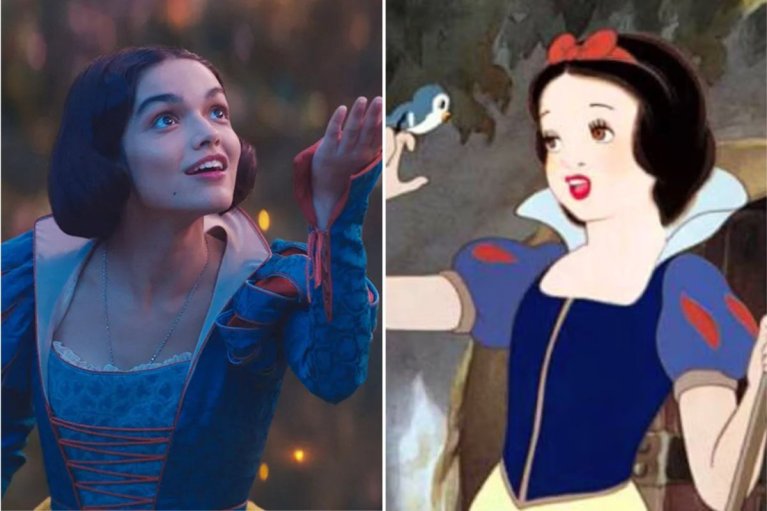
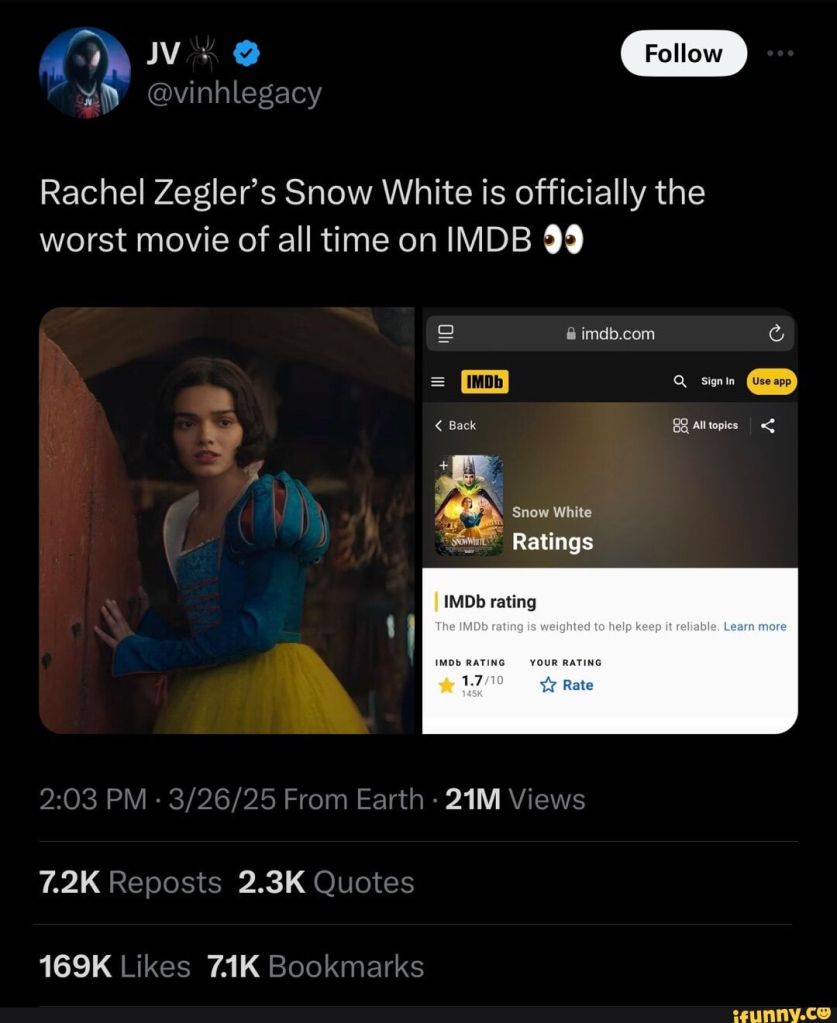
Apparently the Snow White remake bombed at the box office. We could just go with the standard “get woke, go broke” traditionalist assessment. Rachel Zegler comes off as the female equivalent of Andrew Tate—as being angry, entitled, selfish and toxic—which isn’t appealing to a broad audience.

But, before we get into the remake, let’s talk a bit about the original Disney animation of the fairytale. The character deviates quite a bit from the Grimm version. For a start, the fair-skinned protagonist is half the age (7 rather than 14) and there’s no “true love’s kiss” in this original version. Furthermore, she’s a sort of blank slate archetype—not some ideal 1930s homemaker mothering a bunch of dwarfs. In short, the adaptation then was not completely true to the source material and created an image of feminity relevant to that time.

The Grimm version was darker in tone and featured a prince weirdly obsessed with a dead girl in a glass coffin. The dwarfs did not have distinct personalities. And Snow White awakened when the poisoned apple is dislodged from her throat when a servant carrying her coffin stumbles. And it was at this point the prince professes his love and proposes marriage—which she accepts.

The latest Disney live-action takes liberties in a very different direction. It is even less true to the original (other than elimination of the Disney romance) and reimagines Snow White being a sort of feminist militia leader who leads a bloodless insurrection against the usurping queen. But the “mirror mirror on the wall” remains and a poisoned apple—despite the heavy edit of the script where an empowered woman replaces the worn damsel in distress trope.

Why People Don’t Like Snow Woke

People enjoy new takes on old genres, like Shrek or Furiosa and also powerful female characters such as Ellen Ripley in Aliens, Sarah Connor in Terminator or even Katniss Everdeen in the Hunger Games.  They were relatable, we saw them develop, circumstances made them tough to survive, and audiences loved them.  What they don’t like is preachy dialogue or lack of any real character development. A Mary Sue, a hero with no weaknesses, is unrelatable. It is the problem with Superman and with the many woke adaptations of stories.

We like the image of a woman against the machine.

Christian movies have a tendency to be bad for the same reasons. They can come off a little campy or forced. Sure, it may work for drawing your ideological camp, but it isn’t a compelling story for the unindoctrinated or the broader audience. Which is not to say that movies about Christianity can’t be great for entertainment.  I love gritty true stories like that of Hacksaw Ridge or profound, like Silence, will have anyone at the edge of their seats—the key being relatable characters.

Zegler is a bit much. Totally insufferable in the eyes of some. And she plays a part that is equally annoying. The departure from the source material is just too rude. Sure, there is room for an update, but you would never reinvent Rambo as well adjusted pacifist in a mission to avoid too much sun exposure. Disney dumped the essence of the original and replaced it with another tired ’empowered woman’ cliché. You wonder if Zegler herself wrote the script with lines like, “I’m not waiting for anyone to save me” or groaner, “The fairest isn’t about beauty—it’s about justice!”

Ouch.

Oh well, at least even apologists for woke seem to understand that it is just bad. They did not even bother accusing the audience of being racist or misogynistic this time around.

Smash the Symbolism!

What is truly lost is the symbolic depth of the original tale. Snow White was beauty and purity contrasted with the vanity and evil of the obsessed queen. They gutted what made the Grimm tale a significant message about the triumph of innocence over the destructive power of pride. This, obviously, is too nuanced for a superficial sexual organ obsessed militant far-leftist to understand. The producers of the new film replaced purity of motive against cunning with a banal competition for power.

It’s not even moral inversion. They totally lost the point. It makes me think they lack any layers to their being. It’s all about their grievance and getting back at those they’ve scapegoated for their own misery. Like the evil queen, with all the power, they envy the beauty and peace of others and attempt to kill it with their poisoned apple. Snow Woke is the toxic fruit. Zegler is an icon of their privileged ‘diverse’ female with an entitled chip on her shoulder and not the slightest bit of appreciation for all the good men who made her ignorance possible.

This is not to say those who are fixated on the literal whiteness of the actress are any better. Grimm was not writing about racial supremacy anymore than woke supremecy, if anything the original story was about our transcending politics and Zegler would be perfectly suited for the role if she were able to embody that spirit. But our culture, in a desperate need of critique, it dichotomizes everything—divides the world into friend or foe, as if life is a zero-sum game and there is never anything to gain through fusion of opposites.

Zegler is as Puritanical (and Pharisaical) as a religious fundamentalist. She reframes a rescuing prince as a stalker and romance as weird. More rigid than a patriarch, more domineering than the system she is taught to loath. A preacher rather than an actual protagonist. Basically, a young idealist who wields her moral certainty with a convert’s passion, and yet stumbling into hypocrisy under scrutiny—reaping benefits of every institution she claims to reject.

The Female Power of Beauty, Gentleness and Grace

A few years ago, I was in the checkout line and suddenly noticed the cashier. She was beautiful, pale or ashen-faced, with hair that was jet black, pleasant smile and yet there was something uncanny valleyish about her appearance. I could not quite put my finger on it. But then she spoke. This would send a shiver through me. Never before did I have that sort of feeling simply by hearing someone talk. There was a certain quality to her voice that was almost child-like, soft, pure, and really threw me for a loop. And it occurred to me that this young woman was a real life Snow White.  I had not thought this would actually be attractive in person, but it had me momentarily smitten.

As it would turn out, in a later conversation, I learned she was mixed race, Filipino mom and dad of some kind of European descent, which is likely what gave her this stunningly feminine appearance. Now, no doubt this gentle exterior was cover over a tough and capable individual. She drove an old pickup truck and lived apart from her family with a sister, and may well have been a teenager or in her early twenties. In many ways she is like Zegler (who is herself a mix of Colombian and Polish heritage), but this real-life Snow White wielded her beauty, gentleness, and grace as a quiet strength that captivated without preaching, Zegler’s strident zeal turns a timeless tale into a soapbox, losing the feminine power of subtlety for a hollow shout of self-righteousness.

This is what outspoken angry feminists fail to grasp, forcefulness isn’t the only kind of power. My petite wife could never command me to do anything. I’m 50% bigger than her and have twice the upper body strength, I would shrug it off. But she does not need to force me to do anything. She overpowers me by other means. For example, early on, before we were married, she convinced me to stop drinking so much soda, she told me water is a symbol of her love “pure and clean” and when I drink it I could feel her love. I didn’t need to be told twice.

When I look at my baby daughter I would do anything for her. She’s so vulnerable—there is a strong desire to protect and defend her—I’m drawn, not compelled.

So what does female empowerment really mean?

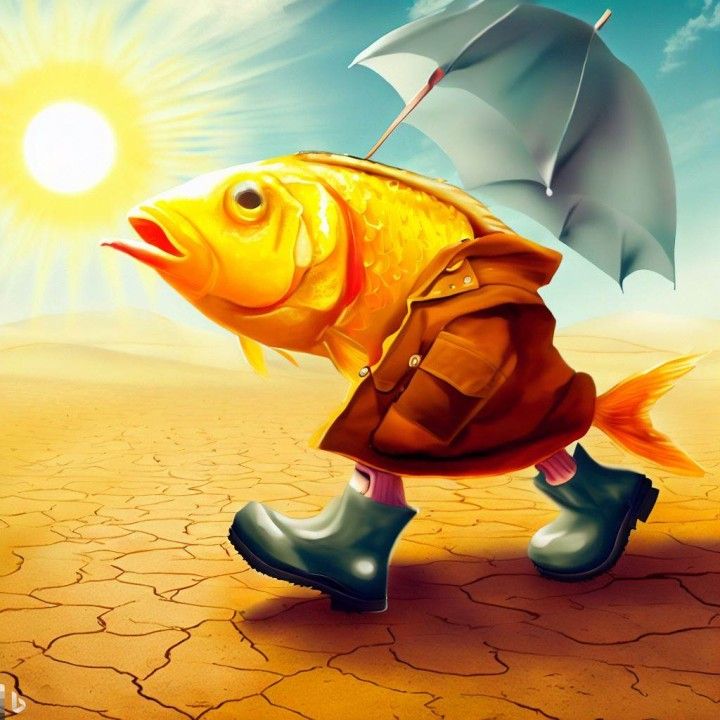
Is it empowering to a fish to be out of the water?

A visual representation of society telling individuals they need to be something else to be happy.

Humans are wired for their base biological and physical functions. Reproduction is a big part of this. It becomes clear after you see process through from courtship to baby in a carriage. Early in the pregnancy, given our financial goals, my wife had considered sending the yet to be both child to be raised by her mother. But as soon as the bundle of cuteness arrived, along with the appropriate hormones, it was never a question. Family is empowerment. My sacrifice, as a father, is more rewarding than the toys I could buy for myself as an independent bachelor.

We’re relational, not rational.

Therefore, the things we think will make us happy do not give us long-term fulfillment—the woke Zegler types are privileged, given preference as women or minorities, and yet always unhappy and looking at what others have and they do not. They are a paradox, enjoying female privilege—then miserable and wanting what men have.

It is toxic, it is their impurity of spirit, and it destroys their natural beauty and potential for true empowerment.

In all honesty, I don’t really have a problem with Zegler’s passion or outspokenness.  I guess I tend to prefer women with a real personality and feel she is right on the Gaza issue.  But what is wrong is that she’s not the right character to play what is supposed to be an embodiment of purity and the power of innocence against evil.  Snow White isn’t supposed to be Mockingjay or a story where physical force met with force—but of a different kind of power.

Ultimately, the 2025 Snow White stumbles not just as a film but as a misguided anthem, with Rachel Zegler’s shrill militancy drowning out the subtle power the Grimm tale once whispered. The original’s purity and even Disney’s 1937 grace knew strength isn’t loud—it’s captivating, like the cashier whose soft voice and uncanny beauty stopped me cold, a real-life Snow White wielding gentleness over force. My wife, too, overpowers me not with commands but with a love pure as water, turning a stubborn man into a willing protector, and just as our daughter’s vulnerability stirs my soul to shield her. Zegler’s remake, obsessed with preaching justice over enchantment, misses this: true feminine empowerment doesn’t need a megaphone or a militia—it’s the quiet, relational magic that binds us, a truth the poisoned apple of ‘Snow Woke’ chokes out, leaving a hollow echo where a fairytale’s heart once beat.

Morality as a Fluid Mess: Conditioning, Conflict, and the Mirage of Universality

Standard

We cling to morality like it’s a lighthouse in the fog—steady, universal, guiding us home. But it’s a lie. It’s a battered flag, flapping in whatever wind our tribe’s blowing, stitched from the yarns we’re spun by family, faith, or flag. Raised Mennonite, I drank in peace and love for the outsider as if they were carved in my bones—until I saw they weren’t. Nature doesn’t whisper “thou shalt not kill”; it shrugs while we slit throats or swipe bread when the need hits. History’s littered with it: Biblical Israel butchered Canaanites—whole towns, babies dashed on rocks—‘cause God handed them the deed (Deuteronomy 7:1-2), and the faithful sang psalms over the ashes. 

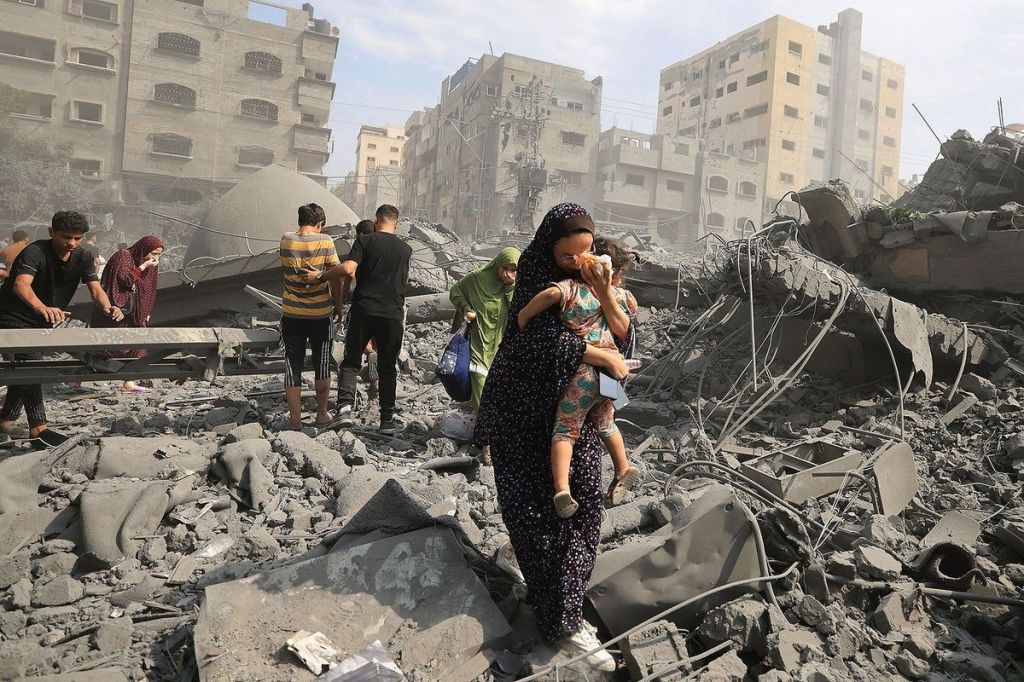
Fast-forward to 2025: Israel pounds Gaza, kids buried in rubble, and the justification’s “security”—Hamas tunnels, rockets, survival. Insiders nod; it’s moral, necessary. Morality’s no fixed star—it’s a mirror, reflecting who we’re with and what we want.Look around today, and it’s the same mess. Russia rolls tanks into Ukraine, March 2025 still grinding on, flattening Mariupol redux—schools, hospitals, grandmas in the crosshairs. Putin’s line: “denazification,” protecting Russian speakers, historical destiny. His people buy it, or enough do—state TV’s been marinating them in it for years. The West screams “war crimes!”—sanctions pile up, Zelensky’s a saint on X—but that’s the outsider’s perch. Kyiv’s got its own blood on the slate: shelling Donbas for a decade, shrugging at Russian-speaking dead. Both sides sanctify their kills; morality bends to the banner. Or take the U.S.: Trump loyalists storm Capitol Hill in ‘21, “stolen election!” on their lips, while Biden’s crew locks ‘em up, crowing “democracy!” Same act—violence for a cause—flips from treason to justice depending on the lens. It’s not universal; it’s us-versus-them, conditioned to the core.

Look around today, and it’s the same mess. Russia rolls tanks into Ukraine, March 2025 still grinding on, flattening Mariupol redux—schools, hospitals, grandmas in the crosshairs. Putin’s line: “denazification,” protecting Russian speakers, historical destiny. His people buy it, or enough do—state TV’s been marinating them in it for years. The West screams “war crimes!”—sanctions pile up, Zelensky’s a saint on X—but that’s the outsider’s perch. Kyiv’s got its own blood on the slate: shelling Donbas for a decade, shrugging at Russian-speaking dead. Both sides sanctify their kills; morality bends to the banner. Or take the U.S.: Trump loyalists storm Capitol Hill in ‘21, “stolen election!” on their lips, while Biden’s crew locks ‘em up, crowing “democracy!” Same act—violence for a cause—flips from treason to justice depending on the lens. It’s not universal; it’s us-versus-them, conditioned to the core.

Objections bubble up like clockwork. The optimists—call ‘em Pinker’s crowd (2011)—say genocide’s revulsion proves we’ve got a moral spine, empathy baked in from caveman days. Hunter-gatherers shared meat, Confucius preached kindness—see, we’re wired for good! But that’s a half-truth, and a flimsy one. Those old tribes cared for their own; strangers got the club. Same with today’s wars: Ukraine’s defenders weep for Bucha’s mass graves but gloss over their own artillery sins. Israel’s critics howl at Gaza’s death toll—over 40,000 by late 2024, per UN counts—yet Hamas rockets barely dent their outrage. Why? Fundamental attribution error: outsiders slap “evil” on the doer—Russia’s a monster, Israel’s a bully—while ignoring the stew they’re boiling in: encirclement fears, decades of tit-for-tat bombs. Insiders don’t see villainy; they see survival, righteousness, their conditioning kicking in. Evolution’s no saint—it’ll cheer cooperation or carnage, whichever keeps the clan breathing.

Objections bubble up like clockwork. The optimists—call ‘em Pinker’s crowd (2011)—say genocide’s revulsion proves we’ve got a moral spine, empathy baked in from caveman days. Hunter-gatherers shared meat, Confucius preached kindness—see, we’re wired for good! But that’s a half-truth, and a flimsy one. Those old tribes cared for their own; strangers got the club. Same with today’s wars: Ukraine’s defenders weep for Bucha’s mass graves but gloss over their own artillery sins. Israel’s critics howl at Gaza’s death toll—over 40,000 by late 2024, per UN counts—yet Hamas rockets barely dent their outrage. Why? Fundamental attribution error: outsiders slap “evil” on the doer—Russia’s a monster, Israel’s a bully—while ignoring the stew they’re boiling in: encirclement fears, decades of tit-for-tat bombs. Insiders don’t see villainy; they see survival, righteousness, their conditioning kicking in. Evolution’s no saint—it’ll cheer cooperation or carnage, whichever keeps the clan breathing.

Zoom out, and the pattern’s stark. Morality’s a tool, not a truth—always has been. Libertarians’ll shoot to guard their patch, Marxists’ll guillotine for the proletariat, U.S. elites’ll drone-strike weddings to keep oil flowing—all cloaked in principle, all serving their pack. Russia’s “special operation” is Ukraine’s genocide; Israel’s “self-defense” is Palestine’s ethnic cleansing. The outsider’s gasp—those viral X posts of Kyiv’s ruins or Rafah’s craters—ain’t proof of a moral bedrock; it’s just a rival script, misreading situation as sin. We’re not debating ethics to polish some eternal gem; we’re wrestling over whose story rules. Take the Houthi strikes in Yemen, 2025 heating up: U.S. bombs “terrorists,” Saudis cheer, while aid workers tally starved kids—same act, split morals. Conditioning calls the shots.

The rebuttal’s got one last kick: if morality’s so fluid, why bother refining it? They say it’s progress, not just haggling—reason taming our beastly side. But that’s wishful polish on a cracked hull. Ukraine’s Zelensky begs for NATO jets, Israel’s Netanyahu quotes scripture for settlers, Trumpers and progressives sling “fascist” like mud—reason’s just a megaphone for the tribe. Authenticity’s the only anchor: own the bias, ditch the sanctimonious dance. Russia’s generals don’t lose sleep over Bucha; Israel’s brass don’t flinch at Gaza’s toll—they’ve got their why, and it’s enough. Outsiders clutch pearls—#WarCrimes trending—because they’re not in the fight. Morality’s a fluid mess, shifting with the players, not a lighthouse. Stop pretending it’s more.

Stepping back from the fray—whether it’s Putin’s moves in Ukraine or Hamas’s salvos from Gaza—offers an authenticity that sidesteps the knee-jerk noise and stares down our own fundamental attribution error. Take Putin: some tag him as a ruthless tyrant, others see a strategist pushing back—NATO’s ring of bases and war games from Poland to the Baltics isn’t exactly a welcome mat, but Russia’s leveling cities isn’t a handshake either. Hamas gets the same split: outsiders call them terrorists, yet in Gaza—two million penned in, scrappy and stubborn—they’re fighting a chokehold, though rockets don’t win halos. My Mennonite roots nudge me to judge NATO’s chest-thumping ‘values’ or Hamas’s bloodshed, but I’ve got my own baggage—my folks kept the world at arm’s length too, just with hymns, not guns. Seeing that, owning how my lens twists the view, points a pragmatic way forward: not crowning heroes or villains, but cutting through the sanctimony—NATO’s not spotless, Gazans aren’t pawns, and I’m no referee, just a guy sorting his own slant in the mess.

God, Suffering and Salvation

Standard

I have complete sympathy for atheists and agnostics.  I’ve wrestled with questions my entire life and whether or not there is a God is always one of them.  But the one thing that I can’t understand is being angry about human suffering, from a rational basis, if God does not exist.  If there is no ultimate good, no greater purpose or meaning to life, on what basis do we make a moral judgment about suffering?

Okay, let’s back up a second.  I’m here at my local establishment drinking another Long Island, one of many since the death of Uriah, and it hasn’t given me an answer as to why he would die of cancer at twenty-four.  The medical diagnosis is simple enough.  He had cancer.  The aggressive kind.  It started with the lump on his ankle during boot camp.  I still have the picture on my phone taken out of morbid curiosity and never dreaming it was a death sentence.

Uriah and I, despite our difference in age, got along in a way that only cousins do.  He was like me.  We didn’t simply accept those easy cliché answers.  He was someone who was both determined and also full of doubts.  He was also the six-foot tall and better version of everything I ever was.  The best part was that I could claim some of his success for myself given that I had encouraged him to continue his college education, telling him that it was better to keep going than to live a life of regrets.

Watching Uriah sacrifice a leg only to have the cancer be found in his lungs a year later. It was a gut punch.  I think I stopped praying, at some point, because I just knew what the prognosis was.  

The hardest part, however, is that Uriah was not the first of his family that I had to carry out of the church on a cold winter day.  His parents had already lost one of their children to a seizure disorder.  His two other siblings are severely disabled and will need constant care.  Judy, his mom, is an incredible woman and has extraordinary faith.  Ed too has great strength of character.  And neither of them wastes any time feeling sorry for themselves despite losing the one healthy child they had to this terrible disease.

Where was God?

When my little Saniyah died, unexpectedly, it was a really big struggle for me.  It took me years to get my feet back under me again, spiritually and emotionally speaking, and I had both doubted my own faith along with the existence of a loving God.  The death of Uriah, along with my disappointments with those whom I put my trust in, and my long wait for Charlotte, have really tested me the past few years.  But, I have those who need me to be strong this time around and, for this reason, have had to push back against falling into despair again.

Nevertheless, I totally get why someone who has encountered suffering in a personal way is angry and denies the existence of God on this basis.  I mean why would this kind of pain and loss be allowed if there is an all-powerful good in the universe, right?  Why would God not intervene and stop this all rather than let us go through such terrible experiences?  It doesn’t make much sense, does it, that we should be left so lonely and struggling if God is good.

However, if we eliminate totally God from the equation, then we dismiss religious morality and must acknowledge that there is nothing written in the fabric of the universe that says our existence entitles us to good feelings.  I mean, as far as evolution goes, pain is more or less a survival tool, a feedback system to tell us what to avoid.  Feeling sad about the death of a friend or family member is, by this logic, a malfunction. 

In this harsh environment, where everything is out to kill us, why would we ever expect anything more than suffering?

The moral reasoning that makes this bad, if you are truly an atheist, is nothing other than a construct.  In terms of pure biology, it is good that fire hurts or we might burn our arms off.  That is pain for a very practical and utilitarian purpose.  Undeniably good if there is such a thing.  But what reasonable good is there in mourning those already dead?  No point in crying over spilled milk, right?  A totally rational being would simply move on to the next social resource and not be so attached or sentimental.

Being upset over suffering and death, if there is no God, is irrational.  And, if there is a God, like that of Christianity, then suffering and death are exactly what we’re promised in this life.  Sheesh.  Did you read the story of Jesus and how he was betrayed, beaten, and then unjustly killed in the most brutal fashion all as part of a redemptive plan?  If you actually believe in eternity then why be angry about a few years living out this rich narrative we call life? 

At the very least, how can we judge anything, especially a fictional character, on the basis of a moral standard that doesn’t exist? 

If there is no God, then there is no basis for morality either.  That too, including the idea that suffering is bad or pleasure is good, is entirely a construct.  Pain is good in some circumstances, it protects us from injury and causes us to change behavior in ways that are beneficial.  In other words, without the discomfort of hunger or thirst, we would not correctly prioritize our life.  Pleasure can be bad when it makes us eat too many donuts and become diabetic.  So how does one truly know that their own interpretation of these signals is the correct one?

From what I’ve observed in myself and in others, unbelief stems from disappointment when things do not go as expected.  It is about who is in control.  We can cling, in our own arrogance, to this notion that the universe should bend to our will.  Or realize that our own perceptions, based on senses which are not very reliable and a brain prone to making mistakes in judgment, are not infallible or ever actual truth.

The thing is we only ever know if suffering is good or bad if it is properly contextualized if we understand the end.  For example, feeling the burn of exercise is good pain because it is what accompanies muscle development and so we embrace this.  So what is the real context of our life?  To what end, or for what reason, did we become conscious?  What is behind this ‘accident’ if it is one? 

How do we contextualize our existence enough to judge what is good or bad?

If there is such a thing as an eternal reward, that would change the calculus, right?  It would mean that all pain can be gain, and all suffering can draw us closer as much as it drives us away because defining the moral character of any experience depends on the end.  I am willing to subject myself to many hardships if the reward is big enough.  No, this doesn’t take away the question of why we must go through here to get there.  But seeing past our immediate feelings is pretty much the only way to make progress.

Angry is a feeling, not a guide for life…

I was at this time living, like so many Atheists or Antitheists, in a whirl of contradictions. I maintained that God did not exist. I was also very angry with God for not existing. I was equally angry with Him for creating a world.

C.S. Lewis

People don’t walk away from Christianity for rational or scientific reasons.  Sure, they may guard their emotion-based unbelief behind a wall of post hoc justification.  But the reality is that they’re upset about something.  They had expectations and are now disappointed and acting as wounded people do.  It’s just strange that anyone at all Biblically literate would suddenly lose faith over our suffering when that’s literally the only we’re promised in this life.

What really doesn’t make any sense is why anyone would rather suffer with no hope at all of eternity.  If God is dead, then nihilism is the logical next stop and that life has no real meaning or purpose.  But the suffering does not go away simply because we’re angry at the giver of life.  No, it will only intensify and become a spiral of despair.  Our salvation is in our understanding that, smart as we may think we are, we’re truly quite ignorant and even our most ‘concrete’ reality is not real:

The first gulp from the glass of natural sciences will turn you into an atheist, but at the bottom of the glass God is waiting for you. 

Werner Heisenberg

For those who don’t know who that is, Mr. Heisenberg was awarded the Nobel Prize in Physics, in 1932, for the creation of quantum mechanics.  Materialism, despite the zombie corpse of this thing staggering on, died with the discovery of things in defiance of this entirely too simplistic conception.  Sure, this kind of physics is well-beyond most, but it does support a notion of reality that requires a Universal Perceiver (as described in this article) and we could call that God.

So, if you’re actually serious about science, then the hard science of physics is the place to start and, with its mathematical origin and proofs, is much less likely to be clouded by emotion one way or another.  We can’t run from God.  But we may need to leave behind the baggage of our own misconceptions and learn the value of true repentance.  Maybe Uriah died, and went to his reward, so some of us would have our flawed thinking broken and seek our salvation in Him?

Maybe some of us are just too stubborn, or too needing of control being in our own hands, to admit we can’t save ourselves?

I’ll tell you this.  The universe, without God, is an infinitely dark and lonely place.  It is that starring abyss of which Friedrich Nietzsche warned, the existential horror H.P. Lovecraft describes.  Highly intelligent men, both of them, and understood the implications that come with true unbelief in God.  You will not escape your suffering simply by denying that the Divine all-powerful good exists.  No, rather you will just remain in that hell of your own creation.

Postscript: Questions Remain

I still grieve Uriah, as I do Saniyah, uncle Roland, and others that seem to have been taken before their time. I’ve long struggled against sources of trauma much more basic, the lack of unconditional love in the church that could make up for my shortcomings, and much of that is unresolved. At the time of my writing, the impossibility is something yet to be fulfilled. I do not have answers for any of this nor do I expect to. I’m not the arrogant kid who argued with his high school biology teacher, not a Bible-thumping fundamentalist at all, and yet must believe.

The Terrible Irony of a Person Who Hates People

Standard

One of my biggest pet peeves?

How so many people hate people.

They see encroachment on animal habitats, destruction of the environment, our nature, and imagine the world as being better without people.

Sure, I do understand the sentiment, I do not want to see something good be ruined. And I believe, for the good of humanity and all other living things, we should be caretakers of this amazing planet to the extent that we are able.

However, without us to observe, what would be left to make the judgment that the world is better or worse without us?

Without a Capable Observer—Does Anything Really Matter?

Like beauty is in the eye of the beholder, the existence of anything is a matter of there being a capable observer. Rocks or even simple organisms show no sign of being capable of appreciating their own existence—let alone beauty or the universe.

Our existence in time and space is something profoundly mysterious no matter what you believe about the origin of life—created in six days or over the span of 13.8 billion years—it is incredible.

But we are unique in this capacity to use words to describe our existence. We are, by all appearances, alone in this ability to contemplate our own existence or at least able to do it at a level unmatched by anything else known. Dolphins and elephants are, indeed, very intelligent yet, at very least, lack our vantage point as observers.

The Contradiction of a People Hating Person

Those who claim to prefer the creature over humanity are truly at odds with themselves. Not only are humans the pinnacle of the complexity of life on this planet, but we are also special for our ability to appreciate that we or anything else exists.

In other words, no beholder means no beauty, because beauty is not something out there or independent of an observer—beauty is rather a concept of mind that depends on the existence of the observer as much as the things being observed. What is out there only exists to the extent that something is able to assign value or appreciate that it does exist.

People who hate people underappreciate the wonderful mystery of their own consciousness and completely fail to comprehend that their observation is what gives all things value.

An amoeba may exist independently of us in some form, but it lacks the human mind to process things like future and understand the result of actions or consequence—which is the basis of the moral reasoning and the very thing that can cause some to view themselves (or just other people) with contempt.

Maybe it isn’t that people hate all people so much as they are narcissistic and simply hate every other person—with exception of themselves?

Narcissists Only Value Their Own Consciousness

It does seem that there are many people, who see themselves as being worthy of resources because they are (in their own minds) enlightened and special in comparison to others.

This aggrandized perception of self is possibly due to their own inability to imagine others being equally (or more) intelligent, as consciously aware or moral as they are, and otherwise equal. Their deficiency of imagination is only made worse by a culture that promotes a notion of self-worth that is independent of love for humanity in general.

Whatever the case, it leads to self-contradiction, it leads to a person who values themselves and their own moral judgment while not recognizing this capacity in others to do the same. It is basically a person who loves their own consciousness so much that they can no longer value perspectives that do not mirror their own and thus hate (rather than appreciate) anyone in competition with them for resources.

A people hating person sees other humans as being greedy and abusive, but fail to comprehend their own jealousy and control freakishness. They judge humanity as a whole without turning the criticism back on themselves or understanding that they themselves, with the mundane choices they make on a daily basis, are as responsible for the large scale problems as the collective whole.

A person who sees others as morally or otherwise inferior to themselves it is on a path to self-destruction. Pride coming before the fall is not karma—it is consequence. A person can become so blinded by their own arrogance and contempt for others that they are actually worse than those whom they condemn. They cannot learn or grow and are bound to hit a wall at some point when their own hatred makes their own life unbearable.

In some cases, when coupled with young male aggression, they become school shooters.

But in most cases, people who undervalue people simply live as one led by the nose by their own confirmation biases and emotions. They see themselves as having all the right answers, as always being the good or righteous person, and are really just egotistical and hypocrites. They may feel entitled because of their inflated self-worth—but are deceived. Like Cain who slew his brother Abel (as means to deal with his own cognitive dissonance as a result of his sacrifice being rejected), they are truly an enemy of themselves.

Why Care About What Will Eventually Burn Anyways?

Another deficiency of a person who hates other people is their inability to comprehend the reality of the universe as it is. Both an atheist astrophysicist and religious fundamentalist should be able to agree on this and that is that the universe as we know it will eventually end. Solar physics (evidenced in the stars) and Scripture point to fire as being the ultimate end of life on earth.

Even if some life were to somehow escape that consuming fire it too would cease as the cosmic clock spring of thermodynamics (behind all movement and life in the universe) became completely unwound. That, the “heat death of the universe” may be billions upon billions of years in the future, but it is as inevitable as the sun coming up in the morning and everything we know in this life will cease. There will be no stars flickering, no photosynthesis, no warmth or entropy—all will have expired.

But we do not even need to go that far out in time to understand the reality of life. Take a visit to the American Museum of Natural History in New York City sometime, consider for themselves all of those various forms of creature that went extinct and went extinct long before humans could have played a significant role in the environment. Nobody cries over Pakicetus nor laments the complexity of the ecosystem that it lived in, so why be upset about Pandas or Polar Bears following the same path?

Certainly, we should be concerned about the decline in the diversity of life, especially as rapid as it has been in recent centuries. That said, there have always been periods of expansion and contraction, usually related to cataclysmic events such as comet strikes or super volcanos, which will happen whether we campaign to “save the whales” or not. Which isn’t to say that we should care any less than we do, but we should probably care differently knowing that it is all temporal regardless.

Which leads into a question, if all this will end one way or another…

What Really Is Important?

Humans are magnificent creatures. We are the only creature capable of planetary destruction. But also creatures so extraordinarily capable of perceiving the future and contemplating things like value. It is our unique abilities that make our complex moral reasoning possible, where we can examine our own actions (collectively or individually) and pronounce judgment.

We are more responsible, but only because we are better at understanding the consequences of our actions and are able to adjust our behavior accordingly. We make priorities. We decide, in our own minds, what is good or bad, what is worthy of our love and what is deserving of our hate, whether flamingos matter more than fetuses.

We determine what is important.

So what is most important given that everything in this universe has a definite expiration date?

If there is anything timeless or beyond this universe, more important than life itself, what is it?

For me the answer is love.

If anything can escape our temporal existence it is love. Love transcends. Love allows us to show grace to the other creatures on this planet which are most like ourselves and that being all of those other fallible human beings. It is true, people are often unappreciative and wasteful. But hate for other people is really only self-loathing (removed a few steps) and to underestimate the value of our existence as the observers most capable of appreciating the beauty of this world.

It is important that we love other people. Sure, there billions of us and it is really hard to love those faceless masses sometimes. Still, other people have as much right to exist as anything else in the universe, we should appreciate them that they are conscious, like us, and love them as we want to be loved ourselves. Without love, nothing is really important and our existence, this tiny snapshot we get of the universe as humans, is meaningless.

Redemption In An Age Of Unjust Outrage—Should People Be Given Second Chances?

Standard

President Trump’s State of the Union address was very well received and perhaps some of the reason for that being his call for redemption. Two of the special guests had been incarcerated during the Clinton administration (when things like “mandatory minimums” and “three strikes,” often disproportionately impacting minorities, became Federal law) and have been recently given their freedom.

The first mentioned was Alice Johnson who had been convicted in 1996 for her involvement in a cocaine trafficking organization (apparently not the CIA), sentenced to life in prison, and having their sentence commuted by the Trump administration:

Inspired by stories like Alice’s, my Administration worked closely with members of both parties to sign the First Step Act into law. This legislation reformed sentencing laws that have wrongly and disproportionately harmed the African-American community. The First Step Act gives non-violent offenders the chance to re-enter society as productive, law-abiding citizens. Now, States across the country are following our lead. America is a Nation that believes in redemption.

The second guest mentioned, in relation to this redemption theme, was a man named Matthew Charles. Charles, with a face that beamed with gratitude, had been sentenced to 35 years in 1996 for selling crack cocaine in 1996 and became the first prisoner released under the “First Step Act” signed into law recently by Trump.

Like the President or not, this kind of criminal justice reform—after decades of excessive punishments—is something worthy of our praise. It is a first step back towards what once made America great and that being the opportunity to move on from our past failures, both individual or collective, and pursue a better tomorrow together.

Grievance Culture Never Forgives

Unfortunately, while legislative reforms are important, the President can’t undo a cultural progression away from Christian ideas of redemption and towards that of eternal grievance. Those sentenced by an outrage mob in the “court of public opinion” cannot face their accusers, they are denied any form of due process and are rarely, if ever, pardoned.

Media fueled public shaming campaigns, often at the behest of social justice warriors or their sympathizers, have destroyed careers mid-flight over a bad joke on Twitter—who can forget Justine Sacco’s sardonic quip about Africa, AIDS and race? One moment she was an anonymous leftist speaking cryptically about her white privilege to a small circle of friends and the next she is an international pariah for an allegedly racist remark.

Then there is Austen Heinz, the socially awkward genetic researcher and entrepreneur, who was driven to suicide by a bullying campaign led by Huffington Post, Daily Mail, BuzzFeed and other clickbait media sources.

His crime? He mentioned, off-the-cuff, some potential to change feminine scents, which was characterized as being “misogynistic” and “sexist” in one sensational story after another. Who knows what amazing breakthroughs someone as brilliant as Heinz could’ve produced in his lifetime had it not been cut tragically short by those who profit by pushing identity politics and division?

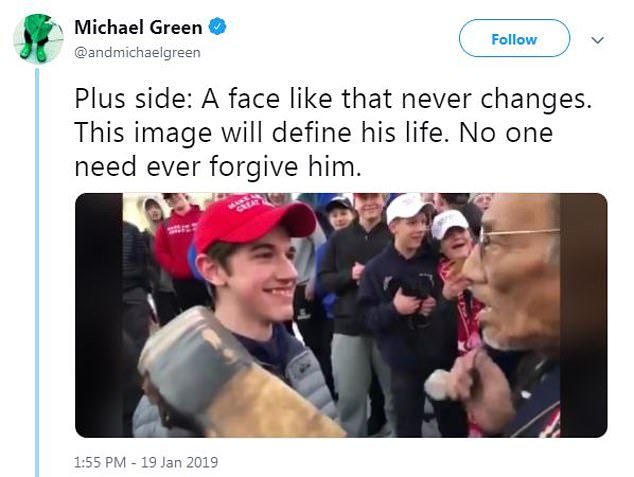
That’s not to say that there is no pushback against this sort of abuse. The wrongly accused boys from Covington Catholic High School are being represented in defamation lawsuits after suffering harassment and threats as a result of a media campaign, involving celebrities and other public figures, to shame them. One of the vicious commentators, Kathy Griffen, who called for their identities to be revealed and falsely accused them of using Nazis signs.

To Forgive Or Not To Forgive?

Of course who can forget the Brett Kavanaugh hearings or ignore the current uproar in Virginia over a photo in Democrat Governor Ralph Northam’s medical school yearbook showing a man in blackface with a Klansman?

And that’s not to mention the two sexual assault allegations that surfaced since then against Virginia’s Lt Governor, Justin Fairfax, and a Duke basketball player. Reportedly Fairfax used his knowledge of a young woman’s prior rape allegation being quashed by university officials as a means to victimize her again since he believed she would be unlikely to report as a result of her prior experience.

In all of these cases the evidence and allegations are different. They all should be addressed on their individual merits and in the correct venues. But all are also in the realm of politics and from many years ago, which really does significantly complicate matters. Who or what many believe seems to become more of a matter of whose ideological team you are on or the potential political fallout more than the actual veracity of the claims being made.

Political campaigns have long relied on digging up comments, years old, served up out of context, is simply how the game has been played. That said, that doesn’t take away from the seriousness of the more serious allegations, it is one thing to accuse someone of being a racist, sexist, or liar (largely subjective judgements) and quite another to be accuse them of rape. The latter accusation is either objective reality or it is not, potentially criminal behavior, and definitely reflective of a serious character flaw if true.

Still, with the lessor offenses or with unsubstantiated allegations, at what point do we forgive “human frailty” (as the Wall Street Journal puts it), remember that “all have sinned and fallen short of the glory of God” (Romans 2:10), “judge not lest ye be judged” (Matthew 7:2), and move on? Should we ever treat human failure (real or alleged) like a permanent stain, a reason to always be suspicious of a person, or an irredeemable blemish? I would say no, based on the references provided above, but then…

Maybe Forgiveness Is Only For Some…?

One of the problems with how forgiveness is often used is that is used as a license for our friends and political/religious/tribal peers while simultaneously denying the same privilege to others. This is why a perceived smirk can become a national outrage while actual violence in malls is dismissed as “teenage boredom” and largely ignored.

I’ve long been against collective punishment for individual sins. I’m part of that generation who had Martin Luther King’s “content of character” rather than “color of skin” speech drilled into them and have always made a sincere effort to put that axiom urging judgment based on individual merit to practice. But I’ve found that this steadfast conclusion makes me a relic in the time of intersectionality, group shaming, unforgivable guilt for some and permanent victim status for others.

Perhaps this current generation is a correction to the overly optimistic outlook of my own?

Stereotypes are not entirely baseless, statistics do bear out differences in attitudes, behavior, and outcomes of groups, which could be proof of systemic oppression or simply our own cultural and biological inheritance. There is a reason why many professional athletes are typically of one demographic and chess players are of another, it has to do with discrimination and yet is discrimination based on ability despite coinciding with differences in race or gender. So it is conceivable, as well, that some groups are more likely to become school shooters and for others to me more generally violent as well.

There is a time for generalization…

For there are many rebellious people, full of meaningless talk and deception, especially those of the circumcision group. They must be silenced, because they are disrupting whole households by teaching things they ought not to teach—and that for the sake of dishonest gain. One of Crete’s own prophets has said it: “Cretans are always liars, evil brutes, lazy gluttons.” This saying is true. Therefore rebuke them sharply, so that they will be sound in the faith and will pay no attention to Jewish myths or to the merely human commands of those who reject the truth. (Titus 1:10‭-‬14 NIV)

There may indeed be tendencies of groups that should be called out. That said, I doubt very much that St Paul, in the passage above, is making a case for unforgivingness or collective punishment. No, I’m quite certain that he, as one who once persecuted and killed Christians before his dramatic conversion, understood very much the need for redemption or he himself would forever be condemned. Had he been held to the same standard of today he would likely be completely disqualified from leadership and certainly never embraced as a brother by those whom he harmed.

Forgiveness Is For Those Who Repent.

One of those other problematic teachings that I’ve frequently encountered (particularly in my Mennonite religious culture) is this idea that forgiveness should be bestowed upon all people regardless of what they do or how often. This is based in a misapplication of Christian examples in a way that too often provides shelter for repeat sexual abusers and others who have learned how to game the system.

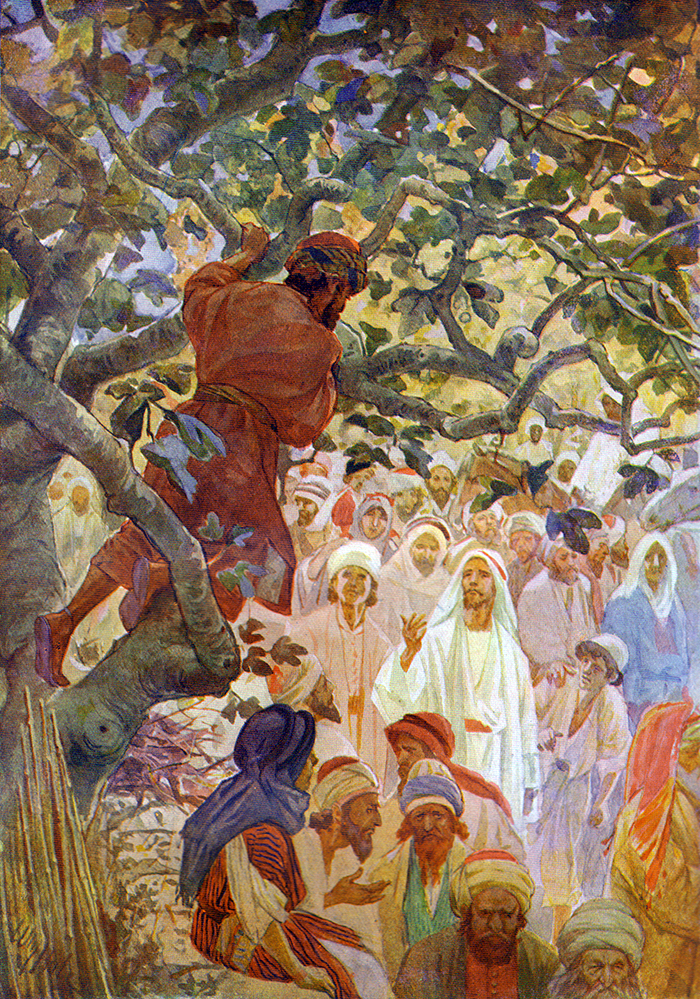
This idea that forgiveness removes any sort of accountability for sin is dead wrong. Sure, Zaccheaus needed to be forgiven for his taking advantage of people as a tax collector, but he also needed to repent of his sin and repentance required taking responsibility (financial or otherwise) for the wrong he had done.

In other words, had Zaccheaus been a child-molester simply admitting the sin or even an “I’m so sorry” speech is not enough, he would need to also face the civil penalties for his actions and also the social consequences as well.

The plea of Jesus on the cross, “Father forgive them for they know not what they do,” was not permission for those in the crowd chanting “crucify him” to go on murdering innocent people or an escape from need for repentance. Those in that outraged mob who called for his death would eventually need to repent and face the consequences of their sins like everyone else.

Forgiveness does not absolve a person from need to repent. Yes, there are times when we need to forgive those who have offended us without them repenting, we should always give a second chance (even 70 x 7 chances) to those who do truly repent (ie: have confessed and also paid the penalties for their sin), but this idea that forgiveness means complete freedom from consequences or removes the need to repent fully is not at all Christian—repentance is a requirement.

So, yes, we must forgive as we want to be forgiven and we should also not hold a grudge against those who have wronged us, but there is no indication that those who do not repent will be forgiven by God and we owe it to them to tell them the truth. Furthermore, according to 1 Corinthians 5:1-12, we should not even associate with a person who calls themselves a Christian and continues to live in unrepentant sin.

So, returning to the question initially asked…

Should People Be Given Second Chances?

The answer is both yes and no.

Forgiveness is something conditional. Jesus called for repentance, saying “go and sin no more” to a woman whom he forgave, and using a parable of a man forgiven a great debt who did not forgive to illustrate the point that forgiveness can be revoked for the unrepentant.

Second chances are for those who acknowledge their error (and repent) or can’t be found guilty of wrongdoing after the matter has been addressed in the appropriate manner.

There should also be allowance for growth—people do mature and change. There should also be some tolerance given to all people, because nobody is perfect, we all have our flaws, and would probably look pretty bad if our lives were put under the microscope of the outrage mobs. However, this tolerance and allowance should not only be for those who are on our team.

For example, we cannot say that blackface is the unpardonable sin of racism in one case and then play it off as a “coming of age ritual” (it certainly wasn’t for me) because our own guy got caught. We can’t treat a boy’s expression as a “facecrime” (thank you, George Orwell) worthy of national contempt while totally ignoring the grown men yelling homophobic and bigoted things (or worse, describe their hateful and intentionally provocative slurs as “preaching about the Bible and oppression” (*ahem* CNN) while simultaneously heaping condemnation on a boy for wearing a MAGA hat and an awkward smile.

That said, I would expect more from a fellow Christian, raised in a good home and under good instruction, than I would from some random dude on the street. Jesus did say that more will be expected from those who are given more (Luke 12:48) and that may mean we hold some to a higher standard. And yet we should also be aware that our own judgment is clouded by prejudice, that we don’t see everything a person is going through or the disadvantages they’ve faced in their lives, and therefore should err on the side of forbearance in all cases.

So there is no simple answers.

I do believe that our culture, due to social media, click-bait stories and a progressive decline in moral values, has veered dangerously away from forgiveness and redemption. We should definitely think twice before joining an outrage mob, we also need to do whatever it takes to keep partisan politics and tribal identities from perverting our judgment, and we should always give as many second chances to others as we would want for ourselves.

No matter your politics, you very well could be the next less-than-perfect person turned into an unforgivable villain by the mob, so keep that in mind next time you see a sensational headline, read a poorly concieved Tweet or watch a video clip without context.

What Are ‘Christian’ Values?

Standard

The culture war continues. 

The latest salvo in the fight is over the current segregation of public restrooms.  The proponents of change and traditionalists battle it out for control on social media and in the public arena. 

Both argue the moral inferiority of the other side.  Both claim to be defending the security of their loved ones.  Both threaten to take punitive measures against those who do not comply with their demands. 

It is a fight where nobody seems to win and everyone comes out a loser.  But what if this two sided debate is actually false dichotomy?  Could there be a third option solution where all could win? 

Perhaps, if all sides of this struggle for control could put down their rhetorical and political weapons for a moment, there is a better example to follow?

I believe there is a better ‘third’ way that is neither dogmatically religious nor demandingly progressive.  I believe there is an alternative where all can win and none lose. 

However, before I can get to the solution I need to discuss where the other options fall short and to do this I have defined a few categories. 

(Please understand in advance that there is overlap between my categories and many people may not fall neatly into one or another.)

1) Liberal ‘progressive’ or secular values are marketed as love, tolerance, inclusion and open-mindedness.  The promise is a more fair or high-minded society, but the result is often as petty and even more divisive than what it seeks to replace.  It is morally incoherent, in one breath claiming to be non-judgmental and making more allowance for free expression, but in the next moment enforcing strict dogmas of politically correct language and behavior. 

Those who do not comply with the moral edicts of progressives should be prepare to be shamed, belittled and bullied into silence.  Those who fall away, question or challenge the new orthodoxy will be labeled as a bigot, racist, homophobe, misogynist, hateful or insensitive.  The shouts of “don’t judge me” are often only a tool to drown out dissent and not a consistently applied principle.  These bleeding hearts are out for blood as much as those they accuse of lacking understanding or compassion.

2) Conservative ‘nationalistic’ or established values are the present cultural norms and current notions of common sense.  This is the flag waving proud patriotic perspective held by those who believe their own values (football, freedom and frequent beer consumption) represent the greatness of the American past, present and future.  These are the biggest defenders of the status quo, their status quo, and never minding that their current cherished culture was formed yesterday.

These are the people who complain about outsourced jobs while simultaneously shopping at Walmart and criticizing as lazy those who aren’t as successful as them.  This is the moral majority of the moment that sees their own privileges and preferences as fundamental rights without respect or consideration of those who see differently.  They have also abandoned the traditional values of their parents and grandparents yet still condemn those who go a step further than them.

In their eyes America was almost always right.  Historic injustice is white washed with a brush of romanticism.  Slavery, racial inequality, segregation of schools, massacres and other abuses against native people are forgotten.  The sins of our modern imperialistic aggression and global hegemony are downplayed.  “It’s ‘merica, baby, land of the free, home of the brave!”

3) Religious ‘fundamentalist’ or traditional values are those out of the mainstream who claim to represent God’s will and freely judge all people—especially those outside of their own sub-cultural group.  These self-proclaimed sanctimonious gatekeepers to the realm of moral truth annoy everyone who doesn’t share their own interpretations.  People call them the “Bible-thumpers” and they come with a “holier then thou” attitude that is a major turn off to those outside their own cult.

They pose as authorities on spiritual matters.  However, their knowledge doen’t seem to know much beyond their proof-texting and dogmas.  They use “the Bible says” and selectively quote the Old Testament when it suits their own agenda.  But gloss over and don’t deal honestly with other culturally inconvenient Biblical realities like captured brides, naked prophets and daughters sacrificed in God’s name.

They make fun of the sensitivity of the progressives and then cry “persecution” when they themselves are opposed.  They feel entitled to a special privileged position in society as God’s favorites.  They use grace as a cover for their own sins without extending the same to those who sin differently or disagree.

4) Faithful ‘Spirit And In Truth’ followers are those who pick up the cross and live to be a consistent example of self-sacrificial love.  These are those who seek to be the literal embodiment of Jesus Christ. This means they follow his commandments to love their neighbors as themselves, to do unto others as they would have them do for us and, while seeking to purify themselves of evil, leave judgment outside to God. 

It is a way that doesn’t seek power to impose on others and instead is committed to self-sacrificial love and leadership by example.  It is the beautiful alternative to the endless cycles of reaction, retaliation and repeat again.  It forgives and frees others of their sin debt to us.  It builds a new identity in Jesus and is a truth that is lived more than preached.

How are Christian values different from progressive values?

There are some similarities.  Jesus broke from the established religious and cultural standard.  He identified with the societal outcasts and was full of compassion for hurting people. 

But Jesus did not turn to more law or greater regulation of offending behavior as the solution.  He did not urge a political fight or demand his voice be heard by government authorities.  He did not lead massive protests against the privileged and powerful.  Instead Jesus showed the example to follow, he offered his own life as atonement for the sins of others and forgave offenses.

How are Christian values different from ‘traditional’ American values?

There are many who characterize America as a ‘Christian’ nation and really do a disservice to the truth in this.  America does have some ‘Christian’ values reflected in its history and did certainly provide a haven of religious freedom. 

However, this conveniently glosses over the fact that founding fathers were not faithful.  Thomas Jefferson, for example, cut out portions of the Bible he found disagreeable.  Ben Franklin lived immorally according to a Christian standard. 

The individualism, materialism and entitlement mentality of modern America is not in the least bit reflective of the teachings of Jesus.

How are Christian values different from religious and Biblical fundamentalist values?

Oftentimes it seems those who are closest to the truth who are the furthest away.  Or, at least, this was the case with those who inherited the Scripture in Jesus day and thought of themselves as experts in morality.  But human efforts, even the most diligent of human efforts, cannot bring anyone a step closer to the truth. 

The truth, as found in Jesus, is not an accumulation of knowledge and careful application that leads to moral superiority.  No, the way of Jesus is acknowledgement of our inability—it is humble, repentant and is fully dependent on the grace of God.

Putting down Peter’s sword

We could have everyone forced to use the ‘right’ restroom without accomplishing anything more than Peter’s sword:

“Then Simon Peter, who had a sword, drew it and struck the high priest’s servant, cutting off his right ear. (The servant’s name was Malchus.) Jesus commanded Peter, ‘Put your sword away!  Shall I not drink the cup the Father has given me?'” (John 18:10-11)

Peter thought he was defending the truth and mission of Jesus, but actually stood in the way of God’s plan.  Peter, who was rebuked on several occasions for his lack of understanding and overzealousness, treated the servant as sword practice.

By contrast, the John’s account treats the man Peter wounded as a unique individual with a name: Malchus.  And, in a parallel account (Luke 22:51) Jesus demonstrates a different way, he heals the ear of Malchus—a man sent to bring him to his death—and showed the true Christian value.

Peter was fighting a losing battle.  He had his own vision different from that of Jesus.  He thought he was defending truth when in reality he was a part of the problem.  He thought his act was one of total commitment to the cause when it was in fact the opposite.

Peter’s act is perfect a metaphor of what happens when those of us who claim faith in Jesus go out militantly defending our own religious values with political force—we cut off ears.

And picking up the cross to follow Jesus…

“From that time on Jesus began to explain to his disciples that he must go to Jerusalem and suffer many things at the hands of the elders, the chief priests and the teachers of the law, and that he must be killed and on the third day be raised to life.  Peter took him aside and began to rebuke him.  ‘Never, Lord!’ he said.  ‘This shall never happen to you!’  Jesus turned and said to Peter, ‘Get behind me, Satan!  You are a stumbling block to me; you do not have in mind the concerns of God, but merely human concerns.'” (Matthew 16:21-23)

Here Peter was completely willing to fight for the kingdom of God, but for his enthusiasm is called small minded, a stumbling block and mouthpiece for Satan.

Can you imagine how Peter felt? 

Jesus continues…

“Then Jesus said to his disciples, ‘Whoever wants to be my disciple must deny themselves and take up their cross and follow me.  For whoever wants to save their life will lose it, but whoever loses their life for me will find it.  What good will it be for someone to gain the whole world, yet forfeit their soul?  Or what can anyone give in exchange for their soul?'” (Matthew 16:24-26)

This was not what Peter or the other disciples had in mind.  They pictured themselves as co-rulers of a worldly kingdom and had been arguing things like who would sit on the right hand of Jesus on his earthly throne when they finally defeated Rome.

But Jesus paints a picture entirely different.  He’s predicting his death, a painful and humiliating death on a Roman cross, while urging them to follow the same path of self-sacrificial love.  He was trying to explain a reality bigger than their worldly political visions and values.

What are Christian values?

Jesus, after being baptized, after receiving the Spirit’s anointing and being tempted in the wilderness, announced the start of his ministry by quoting the prophet Isaiah:

“The Spirit of the Lord is on me, because he has anointed me to proclaim good news to the poor.  He has sent me to proclaim freedom for the prisoners and recovery of sight for the blind, to set the oppressed free, to proclaim the year of the Lord’s favor.”  (Luke 4:18-19)

That is where we start.  That is Christian values in a nutshell. 

“For God did not send his Son into the world to condemn the world, but to save the world through him. Whoever believes in him is not condemned, but whoever does not believe stands condemned already…”  (John 3:17-18)

That’s the good news.   Jesus didn’t come to condemn anyone, but to heal the sick, restore sight to the blind, forgive impossible debts, reconcile relationships with God and bring freedom to those condemned to death.  It was a message of restoration and hope, not condemnation.

Christian values begin and end in living out the example of Jesus Christ.  Jesus was not a progressive, not a defender of cultural status quo nor a religious fundamentalist, his values were higher and spiritual.  He was not seeking legal power or political advantage so he could impose on others, that wasn’t his fight.

“Jesus said, ‘My kingdom is not of this world. If it were, my servants would fight to prevent my arrest by the Jewish leaders. But now my kingdom is from another place.'”  (John 18:36)

Having Christian values means one shares the same priorities as Jesus.  It means talking up the cross of self-sacrificial love and showing the way of grace.  Jesus was not a cultural warrior seeking to impose values by force of law or a sword, instead he is an advocate for those lost in sin. 

Ultimately it doesn’t matter what restroom your neighbor uses, that is an argument where both sides lose and a distraction. What matters is how our own attitudes and actions reflect those of Jesus Christ. 

We must put our rhetorical swords down. We must love our (political) enemies and heal rather than cut off ears.

The problem of knowing…

Standard

Knowledge is power or that is what I am told.  But how does our knowing make us more capable and is that capability to know always from our own betterment?

The answer is, no, not always, and our knowledge could very well be less for our own betterment than we know.  The same knowledge of the human body used by a doctor to save life can also by others to take it.  Knowledge of how to start a fire gives one the ability to cook and create glass or steel, and yet it is also a tool of an arsonist.  If knowledge is power it can be a destructive power.  Knowledge can be power to do evil.

Increased knowledge does not equate to moral progress…

“Of all the problems which will have to be faced in the future, in my opinion, the most difficult will be those concerning the treatment of inferior races of mankind” (Leonard Darwin)

Knowledge can also be deceiving and dangerous when it is incomplete, over-interpreted or not properly contextualized.  Eugenicists, like Darwin in the quote above, claimed confidently that their knowledge of science gave them the ability to decide what races of men and women should be allowed to reproduce.  People too easily use knowledge that validates their own presuppositions to overreach and sometimes with deadly consequences.

The confident and exuberant knowledge based claims of one generation become the warnings to the next.  Things argued as logical, reasonable, fact based and morally responsible by one generation will sometimes be regarded as the atrocities of the next.  Eugenics in America has become a prime example.  Very intelligent and knowledgeable men (like Nikola Tesla) argued for sterilization of races they deemed inferior.  But, the results of these brilliant forward thinking men of yesteryear, we now as a society pay a price for today.

“Pride goes before destruction, a haughty spirit before a fall.”  (Proverbs 16:18)

One would think our knowledge of historical blunders would act to restrain our enthusiasm for allowing our knowledge today to delude us.  But increased knowledge does not equate to increased wisdom or humility.  Knowledge we possess can be a source of dangerous pride.  Pride that can blind us to the limits of our own knowledge and ability to reason correctly from the knowledge we possess.  Knowing what we do not know, being humble with what we think we know and listening to those who know differently from us can save us from our limited knowledge being our own destruction.

Known knowns, known unknowns and unknown unknowns…

“There are known knowns. These are things we know that we know. There are known unknowns. That is to say, there are things that we know we don’t know. But there are also unknown unknowns. There are things we don’t know we don’t know.” (Donald Rumsfeld)

Every fool in history was a likely victim of their own knowledge.  History is replete with examples of well-intended and intelligent men who misjudged on the basis of the knowledge they had.  I do not take Neville Chamberlain for an idiot because of his infamous “peace for our time” utterance after his meeting with Hitler gave hope of avoiding war.  In retrospect, with the knowledge available even then, one could have concluded very differently than Chamberlain and Hitler’s rise may have been thwarted saving countless lives.

Many terrible mistakes might have been avoided if people would have arrived at different conclusions using the greater available evidence or even the same knowledge they had making a bad judgment. Confidence in our ability to discern from our knowledge is good.  However, if our confidence is an insulation to keep us from hearing contrary opinions, if it is used to demean those who disagree and their perspectives, we are on a very dangerous road.  It is with more knowledge we can realize the conclusions we reached based in prior knowledge were overconfident, arrogant and wrong.

“Plans fail for lack of counsel, but with many advisers they succeed.”  (Proverbs 15:22)

More knowledge is not a savior of humanity.  Educated and knowledgeable people are some of the most dangerous people if they are unrestrained by moral conscience or humility.  There is a story of a new king (1 Kings 12) who decided to disregard the council of older advisors, choose to follow the advice of more agreeable peers and sowed the seeds of his own destruction.  We too risk the same when we seek the council of those who confirm our own biases and disregard the perspectives of those outside our own peer group or culture.

“…knowledge puffs up while love builds up. Those who think they know something do not yet know as they ought to know.” (1 Corinthians 8:1b-2)

Based in their knowledge people too often pick advisors who are no different from them.  It is a form of self-love.  From young people who turn to age-group peers, to fundamentalists (religious, scientific or otherwise) who vehemently defend their own various established dogmas and quickly dismiss any interpretation counter to their own, we need to be wary of our own potential knowledgeable ignorance.  Having an abundance of fact, logic and reason does not equate to having good discernment.  Knowing you could be wrong and not know what you believe you know could save you (or those you influence) plenty of sorrow and regret.

The advantage of not knowing and loving freely…

I believe we are often geared too much towards our own knowledge and not enough towards love and humility.  If we were more mindful of the limits to our own knowledge or more aware of the lessons of history (and able to apply them to ourselves) we would probably not be as quick to trust our own discernment.  Knowledge can lead to arrogance, but the right kind of knowledge can lead to our being humbled and able to submit to the way of love that defies common understanding.

“For I resolved to know nothing while I was with you except Jesus Christ and him crucified.”  (1 Corinthians 2:2)

Unpackaged: Knowing only Jesus Christ is to know only the Spirit of God and power of love, and to know only that could do more good for the world than a supercomputer of facts.  Love has more power than the combined intelligence of those who unlocked the secrets of the atom and the awe-ful results of their knowledge.

The world would be better with more who had the faith (and courage) of a young woman, Maryann Kauffman, who lost her husband to a senseless act of violence and choose knowing only Jesus or forgiveness rather than bitterness.  I can know without knowing that her pain is as real as anyone else’s, but evidently her love is bigger.

May we resolve to know goodness more completely and I know we will be better for it. There is no loss in willing self-sacrificial love…