Apparently the Snow White remake bombed at the box office. We could just go with the standard “get woke, go broke” traditionalist assessment. Rachel Zegler comes off as the female equivalent of Andrew Tate—as being angry, entitled, selfish and toxic—which isn’t appealing to a broad audience.
But, before we get into the remake, let’s talk a bit about the original Disney animation of the fairytale. The character deviates quite a bit from the Grimm version. For a start, the fair-skinned protagonist is half the age (7 rather than 14) and there’s no “true love’s kiss” in this original version. Furthermore, she’s a sort of blank slate archetype—not some ideal 1930s homemaker mothering a bunch of dwarfs. In short, the adaptation then was not completely true to the source material and created an image of feminity relevant to that time.
The Grimm version was darker in tone and featured a prince weirdly obsessed with a dead girl in a glass coffin. The dwarfs did not have distinct personalities. And Snow White awakened when the poisoned apple is dislodged from her throat when a servant carrying her coffin stumbles. And it was at this point the prince professes his love and proposes marriage—which she accepts.
The latest Disney live-action takes liberties in a very different direction. It is even less true to the original (other than elimination of the Disney romance) and reimagines Snow White being a sort of feminist militia leader who leads a bloodless insurrection against the usurping queen. But the “mirror mirror on the wall” remains and a poisoned apple—despite the heavy edit of the script where an empowered woman replaces the worn damsel in distress trope.
Why People Don’t Like Snow Woke
People enjoy new takes on old genres, like Shrek or Furiosa and also powerful female characters such as Ellen Ripley in Aliens, Sarah Connor in Terminator or even Katniss Everdeen in the Hunger Games. They were relatable, we saw them develop, circumstances made them tough to survive, and audiences loved them. What they don’t like is preachy dialogue or lack of any real character development. A Mary Sue, a hero with no weaknesses, is unrelatable. It is the problem with Superman and with the many woke adaptations of stories.
We like the image of a woman against the machine.
Christian movies have a tendency to be bad for the same reasons. They can come off a little campy or forced. Sure, it may work for drawing your ideological camp, but it isn’t a compelling story for the unindoctrinated or the broader audience. Which is not to say that movies about Christianity can’t be great for entertainment. I love gritty true stories like that of Hacksaw Ridge or profound, like Silence, will have anyone at the edge of their seats—the key being relatable characters.
Zegler is a bit much. Totally insufferable in the eyes of some. And she plays a part that is equally annoying. The departure from the source material is just too rude. Sure, there is room for an update, but you would never reinvent Rambo as well adjusted pacifist in a mission to avoid too much sun exposure. Disney dumped the essence of the original and replaced it with another tired ’empowered woman’ cliché. You wonder if Zegler herself wrote the script with lines like, “I’m not waiting for anyone to save me” or groaner, “The fairest isn’t about beauty—it’s about justice!”
Ouch.
Oh well, at least even apologists for woke seem to understand that it is just bad. They did not even bother accusing the audience of being racist or misogynistic this time around.
Smash the Symbolism!
What is truly lost is the symbolic depth of the original tale. Snow White was beauty and purity contrasted with the vanity and evil of the obsessed queen. They gutted what made the Grimm tale a significant message about the triumph of innocence over the destructive power of pride. This, obviously, is too nuanced for a superficial sexual organ obsessed militant far-leftist to understand. The producers of the new film replaced purity of motive against cunning with a banal competition for power.
It’s not even moral inversion. They totally lost the point. It makes me think they lack any layers to their being. It’s all about their grievance and getting back at those they’ve scapegoated for their own misery. Like the evil queen, with all the power, they envy the beauty and peace of others and attempt to kill it with their poisoned apple. Snow Woke is the toxic fruit. Zegler is an icon of their privileged ‘diverse’ female with an entitled chip on her shoulder and not the slightest bit of appreciation for all the good men who made her ignorance possible.
This is not to say those who are fixated on the literal whiteness of the actress are any better. Grimm was not writing about racial supremacy anymore than woke supremecy, if anything the original story was about our transcending politics and Zegler would be perfectly suited for the role if she were able to embody that spirit. But our culture, in a desperate need of critique, it dichotomizes everything—divides the world into friend or foe, as if life is a zero-sum game and there is never anything to gain through fusion of opposites.
Zegler is as Puritanical (and Pharisaical) as a religious fundamentalist. She reframes a rescuing prince as a stalker and romance as weird. More rigid than a patriarch, more domineering than the system she is taught to loath. A preacher rather than an actual protagonist. Basically, a young idealist who wields her moral certainty with a convert’s passion, and yet stumbling into hypocrisy under scrutiny—reaping benefits of every institution she claims to reject.
The Female Power of Beauty, Gentleness and Grace
A few years ago, I was in the checkout line and suddenly noticed the cashier. She was beautiful, pale or ashen-faced, with hair that was jet black, pleasant smile and yet there was something uncanny valleyish about her appearance. I could not quite put my finger on it. But then she spoke. This would send a shiver through me. Never before did I have that sort of feeling simply by hearing someone talk. There was a certain quality to her voice that was almost child-like, soft, pure, and really threw me for a loop. And it occurred to me that this young woman was a real life Snow White. I had not thought this would actually be attractive in person, but it had me momentarily smitten.
As it would turn out, in a later conversation, I learned she was mixed race, Filipino mom and dad of some kind of European descent, which is likely what gave her this stunningly feminine appearance. Now, no doubt this gentle exterior was cover over a tough and capable individual. She drove an old pickup truck and lived apart from her family with a sister, and may well have been a teenager or in her early twenties. In many ways she is like Zegler (who is herself a mix of Colombian and Polish heritage), but this real-life Snow White wielded her beauty, gentleness, and grace as a quiet strength that captivated without preaching, Zegler’s strident zeal turns a timeless tale into a soapbox, losing the feminine power of subtlety for a hollow shout of self-righteousness.
This is what outspoken angry feminists fail to grasp, forcefulness isn’t the only kind of power. My petite wife could never command me to do anything. I’m 50% bigger than her and have twice the upper body strength, I would shrug it off. But she does not need to force me to do anything. She overpowers me by other means. For example, early on, before we were married, she convinced me to stop drinking so much soda, she told me water is a symbol of her love “pure and clean” and when I drink it I could feel her love. I didn’t need to be told twice.
When I look at my baby daughter I would do anything for her. She’s so vulnerable—there is a strong desire to protect and defend her—I’m drawn, not compelled.
So what does female empowerment really mean?
Is it empowering to a fish to be out of the water?
A visual representation of society telling individuals they need to be something else to be happy.
Humans are wired for their base biological and physical functions. Reproduction is a big part of this. It becomes clear after you see process through from courtship to baby in a carriage. Early in the pregnancy, given our financial goals, my wife had considered sending the yet to be both child to be raised by her mother. But as soon as the bundle of cuteness arrived, along with the appropriate hormones, it was never a question. Family is empowerment. My sacrifice, as a father, is more rewarding than the toys I could buy for myself as an independent bachelor.
We’re relational, not rational.
Therefore, the things we think will make us happy do not give us long-term fulfillment—the woke Zegler types are privileged, given preference as women or minorities, and yet always unhappy and looking at what others have and they do not. They are a paradox, enjoying female privilege—then miserable and wanting what men have.
It is toxic, it is their impurity of spirit, and it destroys their natural beauty and potential for true empowerment.
In all honesty, I don’t really have a problem with Zegler’s passion or outspokenness. I guess I tend to prefer women with a real personality and feel she is right on the Gaza issue. But what is wrong is that she’s not the right character to play what is supposed to be an embodiment of purity and the power of innocence against evil. Snow White isn’t supposed to be Mockingjay or a story where physical force met with force—but of a different kind of power.
Ultimately, the 2025 Snow White stumbles not just as a film but as a misguided anthem, with Rachel Zegler’s shrill militancy drowning out the subtle power the Grimm tale once whispered. The original’s purity and even Disney’s 1937 grace knew strength isn’t loud—it’s captivating, like the cashier whose soft voice and uncanny beauty stopped me cold, a real-life Snow White wielding gentleness over force. My wife, too, overpowers me not with commands but with a love pure as water, turning a stubborn man into a willing protector, and just as our daughter’s vulnerability stirs my soul to shield her. Zegler’s remake, obsessed with preaching justice over enchantment, misses this: true feminine empowerment doesn’t need a megaphone or a militia—it’s the quiet, relational magic that binds us, a truth the poisoned apple of ‘Snow Woke’ chokes out, leaving a hollow echo where a fairytale’s heart once beat.
The battery electric vehicle (EV) versus the internal combustion engine (ICE) powered debate is one of the most irrational of our time. On both sides of the discussion, you have those frothing-at-the-mouth types who attack the moment you disagree. And this is exactly the response that I got after I had casually mentioned that ICE is 1/3 the cost under a click-bait post…
Model Y starts at $43,990 FYI.
One just called me ignorant, but others tried to make an argument, including this response:
I’m trying to figure out what car cost 1/3 of the price of a Tesla🤔🤔? The long range Model 3 (the one you want for a roadtrip) is $42,500 – $7500 tax credit is $35,000. This is not factoring in gas savings. Please tell me what new car is availability for under $12,000 (that’s the 1/3 cost of a Tesla you mentioned)?
Fair enough question.
Note, I never said new, but assuming that I did…
Believe it or not, and even in this inflationary age, there are still reliable sedans that come in under $20,000. Starting with a Mitsubishi Mirage G4 ($18,500), the Kia Rio ($17,875), and the Nissan Versa ($17,075), the lowest-priced option is half of even the subsidized price of the Tesla base model.
But you can’t exclude the subsidy from the cost of the EV, the government doesn’t have a magic wand to create value and we all end up paying for their expenditures in our taxes or by inflation due to money printing. And it only begins with that “tax credit” (so-called) given directly to privileged people who can afford a new luxury car.
What is the true cost of subsidies?
According to a study by the Texas Public Policy Foundation, the cost to us is nearly $50,000 for every EV produced:
Federal and state subsidies and regulatory credits for EVs totaled nearly $22 billion in 2021, or nearly $50,000 per EV, socializing the true cost of these vehicles to taxpayers, utility ratepayers, and owners of gasoline vehicles
Tens of billions of dollars have been spent trying to make EVs viable, and yet still the average cost of these vehicles is $65,000, compared to $48,000 for ICE. Why haven’t these subsidies leveled the playing field? It is simply the fact that batteries require tons of extra material and a much more complex process to produce.
So we can at least double that visible “tax credit” subsidy and already the true cost of an EV is close to three times a comparable ICE sedan.
We could stop there—the 1/3 number reached—but let’s continue…
What is the true cost of production?
The cost of a vehicle isn’t just the window sticker price or the money that it takes to manufacture. The bigger question—given the reason many say we should switch to EVs is about emissions—is what the increased environmental impact is of producing the batteries that go into these cars. Is this a trade-off we are willing to make?
Lithium batteries are costly, they require an enormous amount of water and also leave a toxic legacy that will grow exponentially as EV is adopted. Is it worth this cost to only marginally reduce carbon emissions? That is to say, around 17-30% less emissions according to European Energy Agency?
Sure, it could get better with a heavy investment in electrical generation and transmission—yet that is another huge cost financially and environmentally…
What is the cost of infrastructure demand?
This is where the conversation is the most interesting. We have the refining capacity and distribution network already built for ICE vehicles. Gasoline and diesel fuel have the advantage of being energy-dense and can be moved around using the existing highways. But what about EVs?
There is an illusion that comes with plugging something in. The load we put on the system is invisible. But there is no magic to it. Electricity is something that must be produced somewhere and then transmitted to the charging stations. If everyone adopted EV technology the grid would collapse.
We’re currently nowhere even near what it would take in capacity to convert everyone to EV. The easiest route to more electrical generation is to go anuclear. So how many new nuclear power plants would it take? Well, if we use miles driven and the number of cars on the road today, then we would need to build 250 additional nuclear power plants as big as the largest plant in the US, and the supporting infrastructure to keep up with this demand.
So are you willing to have a Palo Verde in your own backyard?
It cost 5.9 billion dollars to build one in 1988 (the equivalent of 13.9 billion in 2023) and we needed to start building 250 of them yesterday. The solar and wind equivalent would be even more costly to build and maintain.
The costs would be astronomical and that’s just considering only passenger vehicles. Switching Class 8 trucks would take even more of these massive power plants and spending—the cost of switching would be insane. Not to mention you would need more trucks to do the same work as you did with diesel. And remember, every dime that we spend on this mass EV conversion could go to health care or education instead.
Can you now see how extremely costly EVs will become as they are adopted?
But it does not end there…
Why is the cost of wear items greater?
Batteries are heavy and weight is the enemy of “wear items” like brakes or tires—which is not to mention the additional damage to the highway infrastructure.
EV tires wear 20% faster than comparable ICE vehicles. That is a cost out of your own pocket and also a concern for the environment. And do not forget, to be safe you’ll need those heavy-duty EV-specific tires. Sure, maybe this is not a very big problem for those who can already afford the premium cost of a new EV? However, for that waitress struggling to make ends meet she will have to make the choice between safety and home utilities.
Next up is excess road wear. Big trucks are obviously the leading cause of damage to roads. However, EV proliferation will start to cause problems for existing infrastructure:
A 6,000-pound vehicle causes more than five times as much road damage as a 4,000-pound sedan. A GMC Hummer EV, which weighs 9,063 pounds, will cause 116 times as much road damage as a Honda Civic, weighing 2,762 pounds.
The article cited above isn’t about EVs yet does apply given it is about the vehicle weight. Even the Model 3 is a whopping 3,862 to 4,054 lbs. Sure, one vehicle is not going to do a whole lot by itself, but the volume over time will significantly impact bridges and parking garages that were designed for lighter ICE vehicles. This EV vehicle weight bloat caused by batteries will require very costly upgrades to prevent catastrophic failures—like the Ann Street Building Collapse:
Speaking of disasters. With EV there is potential for a thermal runaway or reaction that can’t be stopped—like an ICE fire—by simply denying the source of oxygen. This hazard will result in more damage to road surfaces, more time spent in traffic jams after incidents, and additional toxic emissions. This is a cost to be seriously considered with all of the others.
Cost of time, capability, and resale value…
Many of the costs and drawbacks of EVs are hidden under a pile of subsidies or are moved upstream like the emissions—out of sight out of mind.
But what cannot be ignored is performance in terms of range. Time is by far our most valuable resource and nobody wants to spend hours in a place they don’t want to be because their vehicle battery is drained.
As far as capabilities, even EV trucks are useless for towing, both the Tesla Cybertruck and the Ford Lightning—both costing around $100,000 in the higher trim levels—aren’t so good at doing typical truck things. Sure, they produce a ton of low-end torque and are very fast. But the F-150 EV only went 90 miles pulling a camper and the Tesla only fared a little better.
7000lb luxury land yachts
And finally, we need to talk about plunging resale values. For a while EV was a novelty, the “way of the future” every suburban geek needed to virtue signal. But it appears that this is now starting to fade and reality is starting to take over again—46% of EV owners in the US plan to ditch EV to return back to ICE—and many will not recoup their cost because the floor is dropping out for used EVs:
A recent study from iSeeCars.com showed the average price of a 1- to 5-year-old used EV in the U.S. fell 31.8% over the past 12 months, equating to a value loss of $14,418. In comparison, the average price for a comparably aged internal combustion engine vehicle fell just 3.6%.
ICE costs less to build, but the hybrid will likely emerge as the winner for being the best of both worlds. It has range like ICE, and torque like an EV, while also keeping its value and not requiring vast new expenditures to upgrade the electrical infrastructure. If costs are reflected in the market hybrid will come out victorious in the end. Some can afford EVs today, but only because others are absorbing more than half of the real costs.
As a footnote, I’m not opposed to EVs nor do I think they are destined to go extinct. If resale values continue to drop I would even consider owning one. The whole point of this article is simply to give a bit of pushback against the Pollyannaish sentiments that would lead to an ill-advised mandate. There would be an enormous cost, and opportunity cost, that would come with this. Just the fact that EVs need massive subsidies to be sold should tell us enough. If it isn’t viable in the market it isn’t viable.
As I ponder my responsibilities, bringing a daughter into this world, my patriarchal protection is a given.
The West has been so successful at privileging women that many women do not comprehend the risks of true equal treatment. Feminism is only possible as a part of the patriarchal duty that men feel to protect women. What it amounts to is using male power to enforce standards that are friendly to women, that allow them to walk freely in the street in all manner of dress (or undress), and ignore the reality of what has existed outside the walls of patriarchalism.
Even the idea that sexual assault is a bad thing is an extension of patriarchalism where natural desire must be restrained by structures created by men. A buck in the rut doesn’t ask permission. Hormones direct it’s behavior and only the bigger male can ward off the advances it will make on a doe. It is a hierarchy that is built only on strength. Moral conscience is built off the idea that there’s a big man up there who cares about property rights; who says that a body belongs to someone and is therefore not ours for the taking simply because we desire it.
Yes, eventually this evolved into an idea of everyone owning themselves that we now assume is simply the universal truth. However, nothing in the animal kingdom suggests this is the case. The real world is often a brutal and unforgiving place. When a new group of male lions takes over a pride they will kill the cubs of the previous males. And human morality developed in a very similar manner. This was the default, whether the Psalmist’s fantasy about bashing the heads of an enemy’s infants against rocks or the book of Deuteronomy giving some rules for the treatment of war brides:
When you go to war against your enemies and the Lord your God hands them over to you and you take some of them prisoner, and if you see a beautiful woman among the captives, desire her, and want to take her as your wife, you are to bring her into your house. She is to shave her head, trim her nails, remove the clothes she was wearing when she was taken prisoner, live in your house, and mourn for her father and mother a full month. After that, you may have sexual relations with her and be her husband, and she will be your wife. Then if you are not satisfied with her, you are to let her go where she wants, but you must not sell her or treat her as merchandise, because you have humiliated her.
Deuteronomy 21:10-14
To our modern ears, this is horrendous. There is no asking for permission. And, other than saying to wait a month, the men were free to rape their captive females. But the reality is that this was a radical step in the direction of protecting women from physical violation. One hopes that this delay would’ve ensured a more compassionate and gentle approach rather than some blood-soaked orgy during the heat of battle and immediately after her male relatives were slaughtered. As grotesque as this seems, it was better for her to belong to one man (with some rights after he rejects her) than to be passed around as a mere sex object in the manner of a Japanese comfort woman:
CLAVERIA: (Through interpreter) A Japanese soldier got his bayonet and started peeling my father’s skin while saying, tell us the truth – your child is part of the guerrillas with the owners of that empty house.
MCCARTHY: As Claveria pleaded to let her father go, a soldier wrenched her arm. Birdlike, petite, Claveria strokes a badly set bone as she picks up the story of how she followed her mother’s screams up the stairs.
CLAVERIA: (Through interpreter) I saw my mother lying down with her skirt up, and there was a Japanese soldier on top of her. I ran. My two youngest siblings took little sticks and started hitting the soldiers. The Japanese soldiers then snatched away the sticks and bayoneted both of them.
MCCARTHY: They died. Claveria believes her parents were killed when the village was torched. Japanese soldiers hauled away two older sisters to a garrison and took Claveria to an infirmary for her injured arm. She does not recall how long she was there recovering, but she remembers a soldier named Terasaki. One day, he told Claveria she smelled, but she refused to take a bath, saying she had no change of clothes. Ordering her to wash, she says he gave her a uniform to put on.
CLAVERIA: (Through interpreter) I was to be taken to the garrison where my two sisters were. Before we reached the garrison, he raped me. I thought that I was going to die because I was in so much pain.
MCCARTHY: Terasaki would be the first of many Japanese soldiers to sexually assault Claveria, who was not even a teenager at the time. She was 12. She said her sister Meteria had been driven half mad by the trauma she’d experienced at the garrison. Claveria was shocked when she caught sight of her there.
CLAVERIA: (Through interpreter) She was burned with cigarette butts and boiled sweet potatoes. When one soldier after the next raped her, she put up a fight, but my sister was not brave. She refused because she was in so much agony from all the abuse.
MCCARTHY: Claveria believes her other kidnapped sister was moved to a different garrison. She was never seen again. Historians have estimated that at least 200,000 women were forced into sexual servitude during World War II, mostly in areas occupied by Japan, prominently Korea. The women were euphemistically called comfort women, and the organized system of comfort stations to supply soldiers sexual gratification ran from Seoul to Singapore. Writer Evelina Galang has documented women captured in the Philippines.
EVELINA GALANG: And these are women as young as 16 years old – really, some of them 8, 10 years old. In the Philippines, historians estimate that there were probably about a thousand women and girls taken and put into military sex slave camps.
Men can be monsters. Worse than animals. And, in many parts of the world, immodest dress is taken to be a sign she wants it. Morality does not hold back the aggression of the rapist. No, rather it is the role of other men to restrain evil. Women are protected by their fathers, by their husbands, and by institutions that represent these men. Political structures were created by men and are defended by men. Yes, even if women were granted the right to participate. E.g. even if Kamala Harris takes the patriarchal role—she is still acting in a patriarchal manner and will need the strength of men to impose her will.
There will not be a feminist left in Europe if Islamists take over. That is not to bash Islam or say they would kill off all women who did not submit. No, it is to say that feminism cannot exist outside of the Christian West. The notion of individual rights, that people can independently make their own decisions, cannot exist only on paper or it is impotent. It requires men willing to sacrifice themselves to preserve this egalitarian ideal for their wives and children. Self-sacrificial love is not natural nor a priority in every religious patriarchal structure. Feminists cannot exist in Islam because only the respect of patriarchal institutions gives them power.
The alternative to the current patriarchy is not the absence of patriarchy, men (or those who act like men) will always rule, but the real choice is what manner of rule we wish to live under. It really is survival of the fittest outside of the walls of civilization. Chants of “down with the patriarchy” are about as meaningless as shaking your fist at the wind. It misunderstands the world. It assumes that nature will simply obey our voice because we’re angry and believe rights can exist outside of the structures that guaranteed them for us. It is only in the absence of rule by men who care about more than their own sexual gratification that the value of this benevolent form of patriarchy is known.
It is very common for the the very wealthy and politicians to start foundations for a charity or cause. This is both a publicity coup and also an opportunity to raise cash under the auspices of a greater good. But very often it is more cynical than sincere and probably for the tax breaks or as a money laundering scheme more than anything else, in some cases these organizations spend all of their donations on administrative salaries and not the stated mission.
Virtue signaling is a social phenomenon where a person, with a very small actual personal investment or self-sacrifice, can gain a great benefit or standing amongst their peers. This can include social media activism, yard signs declaring virtue, and any other low effort high reward way that people try to distinguish themselves as better than their neighbors. It is more often token giving or symbolic compassion, lacking substance, and is something that Jesus encountered and condemned.
Good Samaritan and Poor Widow Versus the Rich Boastful Givers
Most of us are a mixed bag of motivation, we can intend good and yet too often our self-interests corrupt the effort. The greater problem being that we’re not even ourselves fully aware of our hidden ambitions. We can easily and do often delude ourselves about our own righteousness compared to others, especially our ideological enemies and truly be more exploitative than those who we would condemn. The teachings of Jesus are an opportunity for self-reflection, a chance to grow in self-awareness and learn about how true compassion compares to the phony variety and counterfeit virtue.
First, consider the example of a boastful virtue signaler:
“Be careful not to practice your righteousness in front of others to be seen by them. If you do, you will have no reward from your Father in heaven. “So when you give to the needy, do not announce it with trumpets, as the hypocrites do in the synagogues and on the streets, to be honored by others. Truly I tell you, they have received their reward in full. But when you give to the needy, do not let your left hand know what your right hand is doing, so that your giving may be in secret. Then your Father, who sees what is done in secret, will reward you.
(Matthew 6:1-4 NIV)
It is fairly obvious, in this extreme to make the point, that this hypocritical giver is in it for themselves. They want the attention and good publicity, they desire the honor of their peers, and it isn’t truly about the needy who are receiving the help.
Here’s the genuine article:
Jesus sat down opposite the place where the offerings were put and watched the crowd putting their money into the temple treasury. Many rich people threw in large amounts. But a poor widow came and put in two very small copper coins, worth only a few cents. Calling his disciples to him, Jesus said, “Truly I tell you, this poor widow has put more into the treasury than all the others. They all gave out of their wealth; but she, out of her poverty, put in everything—all she had to live on.”
(Mark 12:41-44 NIV)
It is nothing for a billionaire to write a million dollar check. It is nothing for a politician to promise billions from the public treasury as a ‘sacrifice’ for a supposedly just cause. But, in both cases there is often a big political or social reward for this ‘charitable’ act, it can mean reelection or personal access to even more resources. But, in this example above, this poor widow put in 100% and got nothing in return—at least not in the short-term. Her sacrifice is more condemnable and true than those dumping a fraction of their excess.
And then there is the classic case of the good Samaritan:
On one occasion an expert in the law stood up to test Jesus. “Teacher,” he asked, “what must I do to inherit eternal life?” “What is written in the Law?” he replied. “How do you read it?” He answered, “ ‘Love the Lord your God with all your heart and with all your soul and with all your strength and with all your mind’; and, ‘Love your neighbor as yourself.’” “You have answered correctly,” Jesus replied. “Do this and you will live.” But he wanted to justify himself, so he asked Jesus, “And who is my neighbor?” In reply Jesus said: “A man was going down from Jerusalem to Jericho, when he was attacked by robbers. They stripped him of his clothes, beat him and went away, leaving him half dead. A priest happened to be going down the same road, and when he saw the man, he passed by on the other side. So too, a Levite, when he came to the place and saw him, passed by on the other side. But a Samaritan, as he traveled, came where the man was; and when he saw him, he took pity on him. He went to him and bandaged his wounds, pouring on oil and wine. Then he put the man on his own donkey, brought him to an inn and took care of him. The next day he took out two denarii and gave them to the innkeeper. ‘Look after him,’ he said, ‘and when I return, I will reimburse you for any extra expense you may have.’ “Which of these three do you think was a neighbor to the man who fell into the hands of robbers?” The expert in the law replied, “The one who had mercy on him.” Jesus told him, “Go and do likewise.”
(Luke 10:25-37 NIV)
Not only was this a great answer to a trap question, but the Samaritans were the low class and looked down ‘deplorables’ of their day who lacked the right pedigree to be the social elites. The priest and Levite, on the other hand, were the important and looked up to. They would be the religious bloggers of their day, preaching about the equivalent to social justice or other popular ‘righteous’ things, but made excuses for themselves and looked the other way when their love was tested.
The good Samaritan’s love was genuine. It was not announced to the world. It was not only a gesture or incomplete aid. And, more importantly, he gave completely of his own resources. There was no GoFundMe or calls for others to see the need and help him to distribute the cost. Nope. He saw the need, he dug into his own meager resources, and finished the job without any need of the help, attention or affirmation of others. Only this poor beaten man knew of his goodness.
The teachings of Jesus are always always about changing us, as individuals, and not the systems of the world. The priest and Levite, like the unnamed rich man of Luke 16 (who stepped over a poor very sick man on his doorstep, named Lazarus), all had their important things to do. They were the social elites and responsible people. In their own minds they had justified their response to the need directly in their paths.
Giving Self-sacrificially Is Christian Love, Forcing Others Give Is Not
Modern Western ‘democracy’ is full of virtue signaling and a favorite thing to do is decry the ‘racism’ of denying entry to the unvetted masses driven to our borders. It is the one issue where those who call out the “Christian nationalism” of their neighbors suddenly will find Jesus—albeit only to distort and use His words to bludgeon others, like Judas.
Now, before I get too far in, I do believe there are many who do have genuine compassion and care for refugees. Indeed, it is Christian duty to welcome the stranger and even invite them into our homes. My grandma was one of these open-handed people. No, they did not have that much themselves and yet her table was always open to those who needed a warm meal. This is the charity Jesus was talking about, not a social program.
Politicians will routinely make a display of the vulnerable as a cynical ploy to promote agenda. It is not out of love, it is simply a way to exploit our pity and silence objections to what is often a cover for a power grab. It is always “think of the children” when they are the true beneficiaries. They call for the “rich” to “pay their fair share” while having an abundance themselves. They may want to change the world and yet should start by changing themselves.
Again, I’m not saying that social activists are not well-intentioned. And yet I will say that they might not comprehend the costs that they incur on others (some who have less than them) nor fully consider the complexity and consequences. It is one thing to want to fix climate change or have a world free of borders, but quite another to pay the price for these ambitions. Many want to ride the compassion bandwagon, few want to be in the mud pushing this load of crocodile tear crying virtue signaling fools.
We have an inversion of Christian morality in the West where now the ‘first’ are demanding the ‘last’ pay for their virtuous acts. It is our most powerful, wealthy and privileged, who hold the money bag like Judas, demanding that common folk sell all to give to the poor while they keep their private jets, mansions and lavish lifestyle. The poor now subsidize the ‘compassion’ of the rich and many seem not to see how perverse this really is.
It is bad enough to give only for the attention of others. But, to guilt, shame or force those with less to subsidize your own altruism and compassion? That is a whole new level of self-serving, psychopathic and evil. It was always those confronting Jesus, and His followers, tithing even their spices, going to these extremes impress and try to establish a themselves as better than. Today it is the same, it is those who proudly preen their love and tolerance who are oftentimes most selfish and cruel under their costumes of righteous.
The Cruelty and Compassion of Martha’s Vineyard
Border states are being overwhelmed by the flow of unvetted migrants. But, for the most part, this growing humanitarian crisis has been ignored. Out of sight is out of mind for most people and this has been the case on our Southern border. I’m not a big fan of political stunts and yet sometimes to make others aware of an issue does require a little creativity or some coloring outside of the lines to illustrate the point to those in denial or oblivious.
And there was outrage, wild accusations of cruelty, even human trafficking, when Florida governor, Ron DeSantis, provided free airfare for fifty migrants from a nasty red state to a very blue Martha’s Vineyard.
For those who do not know, Martha’s Vineyard is a popular hangout for the very wealthy and most privileged—an exclusive enclave where these social elites have their summer homes. And, yes, ironically, while most of us could only ever get on there real estate as the help, they do have those virtue screaming “all are welcomed” signs. How this free ride to this liberal “sanctuary city” is cruelty, I’ll never know, but how quickly the new arrivals were deported tells a bit of the true depth of the compassion under their righteous bluster.
Interestingly, the Biden administration has also sent new arrivals to interior cities, less resource rich, and never had been accused of human trafficking or cruelty for this. But apparently, when you send these people to one of the wealthiest and most privileged enclaves in America, that claims to be a sanctuary city and welcoming of all, it is a terrible crime. Or, in the eloquent parlance of a “founding member” of an organization to help refugees, this is throwing your “trash” in someone else’s neighborhood:
Cognitive dissonance anyone?
I mean this blurb takes the cake. The lack of self-awareness to say, let alone publish, such a statement is astounding. The media has glowed at how these resource rich people fed these asylum seekers for a day, but has yet to speak of the cruelty of these new arrivals being deported from the exclusive island within 24-hours. Apparently nobody had room in their mansion or second home to provide long-term shelter?
But the whole ordeal is a classic example of what virtue signaling is and how it is vastly different from true compassion. A virtue signal is all about a person trying to glean the social benefits of holding the correct beliefs or the good deed and requires very little actual sacrifice. While the cameras rolled, the hot food trays came out and the picture looked very virtuous. And yet, rather than keep on caring, they literally called up the National Guard and almost immediately offloaded the expense to the taxpayers.
The people who could afford to build brand new houses for all fifty sent, who could have easily created a place for them in their own community and made real on the “all are welcomed” sign, only had a minor day long inconvenience. They’ll probably spend more on litigation, against the state of Florida, than they did on this fortunate handful of the thousands pouring into this country every day and overwhelming the resources of border states. So the compassion is fake, they claim the moral high ground while others shoulder the costs.
Compassion Claimed, Costs Diffused
Costs don’t matter to the privileged and social elites. They have never had to pay for anything themselves. As trust-fund babies or politically connected, they could always snap their fingers and someone else would clean up the mess behind them. So, yes, of course they will support open borders for us, proclaiming the virtue, and the Levites (story of the good Samaritan) will simply follow their example. Others bear the cost.
What are the costs?
Wage suppression. Old Socialists, in contrast to the wealthy factory owners and industrialists, always wanted strict border controls. Why? Well, because a never ending flow of low skill labor takes the feet out from under those trying to bargain for better compensation. And this is a real problem in the South. Why hire from the local population, with the legitimate process paperwork, when you could pay half the money to an illegal immigrant, under the table, and they dare not complain?
Another cost is to the local government resources. A flow of unvetted immigrants, even if most are very good people, is a huge burden and much more than some catered trays brought out for the eyes of the media in New England. There’s the need for ESL teachers and more classrooms, additional policing, the welfare benefits, and the tab for this is not distributed evenly despite some Federal aid. And that’s not to even mention the quality of life issues. No, immigrants aren’t trash and yet they do bring problems with them. The states in the South are overwhelmed.
But the real cruelty and inhumanity of all this is how much work it is for some to enter this country while others can just jump line and be treated as victims. While political elites talked about family separations, a necessary precaution to establish the identities of the adults and prevent human trafficking, I could not even travel to be with the child who calls me “daddy” and my love. As one of those going through this expensive and completely frustrating process, with the trash websites, poor communication and the many tons of requirements, I know.
If you do not have equal love for the MAGA hat wearing ‘deplorable’ that American, living in the rust belt, having to bear the cost of your ideal, then maybe your love isn’t all that real. True love shoulders the entire cost, it never tells others to make a sacrifice for sake of our own compassion. We should welcome the stranger, yes, but we must also love our actual neighbors and give our all before asking anything of others. It is not love to virtue signal, it is just another form of ignorance.
Maybe you haven’t heard about the latest visual and verbal contrivance that has been bestowed upon us by the meme lords?
If not, White Boy Summer, has been making an appearance on my news feed, especially popular amongst the disenfranchised right of center males. It is mostly in fun, a poke at the color tribe obsessed, that started with a post by Chet Hanx, and has since evolved into a sort of pushback campaign against divisive identity politics with some actual white supremacist types joining in on the action. It is mostly just the typical alt-right silliness the feeds off far-left identity politics outrage.
As for myself, I’m still principled enough, in my opposition to color identity politics, to not to join in. No, that’s not at all to say I’m any better than those less idealistic and more open to this kind of humor. However, I can’t help but believe this is exactly what far-left fringe elements of the political spectrum had in mind when they started to affix “white” or “black” to various terms. Even as a joke it is reinforcing of their divisive narratives.
The Identity Politics Dilemma
That feedback loop is the insidious part of identity politics and tribalism. When one group of people starts to gang up, then others need to do the same or risk fighting a mob alone. A person doesn’t have to care one bit about skin color to not want to be the next Reginald Denny, a man beaten by four strangers because they hated people who looked like him. So we go down this spiral of increasing mistrust and polarization often leading to an escalation of hostilities.
In my own life time I’ve watched the tension grow between ‘white’ and ‘black’ people. It feels as if we have taken steps back, more people see relations deteriorating, most likely due largely to the intentionally divisive framing of news stories, and yet perception becomes reality as we react to this by being more conscious of color. Those who push racial or other identity division do it cynically, as part of their divide and conquer strategy, winding the two sides up to play them off each other while they use the ensuring chaos to take more power.
White and black should not be identities. It is superficial. It confuses culture with color and goes directly against everything gained in the Civil Rights era. I’m sorry, but a person only needs to be the slightest bit aware and marginally intelligent to realize that there are vast differences between individuals in these too generalized color categories. As someone born into the working class and a small religious subculture, I probably have more in common with most racial minorities than I do the American mainstream.
Call Me Stephanie
Stephanie is a wonderfully energetic and comedic person. She’s the receptionist and all around badass, in heels, employee for the place where I go for physical therapy and friend. Being my inquisitive self, knowing that she’s a cool person who laughs about her love for fried chicken, I had to ask her a little about what it is like for her (as a black woman) growing up in rural Pennsylvania.
The most significant thing that came from that conversation was her answer to the annoying (yet well meaning) questions she fields about her preferences regarding her identity. In other words, does she want to be called “black” or is “African-American” her preference? To which her witty response is “call me Stephanie.”
As a conservative Mennonite kid in a public school, who also had to field dozens of such ‘micro-aggressions’ or ignorant assumptions that undermined my individuality, I wanted to give her a hug. I also admire her for taking such things in stride. I’ll admit, I have not always handled similar things as graciously and let people get under my skin rather than just blow them off as ignorant. And for this reason I love Stephanie, she’s just a great person and all around good example.
To be honest, what she expressed is a big part of my own identity. When classmates tried to pigeonhole, bringing up my then side parted hair as being “Mennonite” style, I would resist their categories and changed to a different hairstyle. Despite my love for my strange religious denomination, I didn’t want to fit their stereotype for Mennonites and allow them to minimize my own uniqueness in the process. I may have been Mennonite, but I was also Joel and had my own mind separate from their generalizations.
Stop Coloring Everything!
There are some who, unlike Stephanie, love to wallow in their assigned categories. They both choose to be and then simultaneously resent being categorized. In other words, if something bad happens to someone who is superficially like them they’ll tribalize around that person and yet also not own the many reasons for differences of outcomes that are less than politically expedient.
Why should a college educated, reasonably law-abiding and responsible person ever see a drug addict or convicted rapist as being their own peer or clan?
That’s what drives me crazy about all of this color division, those who truly have more in common with me or even enjoying privileges that I do not, are so easily bamboozled into believing that our many similarities are less important than the color of our skin. The more troubling part being that to do that they have to ‘other’ me and not accept my own lived experience as equal to their’s. It is the very definition of dehumanization and ends any possibility of finding common ground that transcends our most obvious (most truly meaningless) difference.
I mean, does my exterior veneer actually make my own suffering, my many losses and disappointments, any less valid than that of someone else?
It isn’t fragility to reject the divisive color framing intended to keep us at odds. And, no, taking responsibility for our own future, two-parent homes and a work ethic are not indications of white privilege, rather it is the most probable and proven path out of poverty and laying the foundation for the success of future generations. That’s the big lie of divisive color terms. People, no matter their skin color, are not fundamentally different and those who try to convince us otherwise are only trying exploit our insecurities to keep us trapped under their games.
The following is intended both as serious and satire. The serious part is that the statistics are real, shortness is practically a crime. The satire is how little those who typically decry such things care about forms of discrimination not as popularized and yet as established in fact as any other.
Systemic heightism is everywhere. This discrimination against people on the basis of shorter than average stature is something that is deeply embedded into culture and our institutions. For men, in particular, it means a lifetime of being denied opportunities for some and height privilege for others.
Shortness and Statistics
In terms of available statistics, and actually proven discrimination, short men are most disadvantaged of any group of people both in history and modern times.
There is a distinct wage gap driven by height:
“…researchers estimate that each additional centimeter of height is associated with a 1.30% increase in annual income. In other words, a person who is 5 feet 6 inches making $50,000 per year would expect to make about $2,000 more if they were 5 feet 7 inches, and $4,000 more if they were 5 feet 8 inches.”
It isn’t only a matter of income either, but status: 90% of CEOs are of above average height. Try playing college sports, let alone get an athletic scholarship, if you’re below average height. Even in the Bible a man named Saul was made king simply for being taller than average. Meanwhile, David, a short man, was ridiculed, and had to literally kill a giant to prove his worth.
Many short men are never given the chance to prove themselves and this is especially true in the realm of romance. Women on dating sites openly, and rudely, dismiss short men writing in their profiles things like “must be 5′-10″ or over to ride.” Of course, most women are more covert in their height discrimination and simply ignore potential suitors who who don’t meet their requirements.
Some women say what others conceal, but the preference is proven in the numbers.
A 2006 study, by the University of Chicago, found that a man who is 5’6” needs an additional $175,000 to be as desirable as a man who is approximately 6′ tall and only makes $62,500 a year. Talk about an uphill battle. Not only do short men get paid less, on average, but they also need more money in order to get an equal opportunity to be considered desirable to women.
Deniers of systemic heightism try to explain away the discrimination by victim blaming. They will often claim that lack of confidence that is the real issue. However, this is adding insult to injury. A short man can’t even be confident without risking an attempt to diminish him on the basis of his height. An assertive tall man is considered to be confident, to have leadership potential, while a short man with similar qualities will often be accused of “small man syndrome” or having a Napoleon complex.
Napoleon was often pictured with his tall elite soldiers and not actually unusually short.
Even in language, terms like “great stature” indicate something good, while phrases like “short tempered” are indicative of a flaw in character. And not to forget those many common expressions, like “getting the short end of the stick” or “coming up short” that associate shortness with inadequacy or misfortune. There is even implicit heightism expressed in the statues of famous people being enormous in size. It is inescapable, ‘bigger’ is typically paired with ‘better’ and nobody cares about the harm done.
Over the course of a lifetime a short man will have endured being last picked in gym class despite his tenacity, friend-zoned by women who admire his character and yet are not at all romantically interested. He’ll literally be overlooked by his employers and routinely denied promotions. It will cost him years of his life. But there will never be reparations, never even be a bit of sympathy, because nobody sees shortness the same way that they do gender or skin color.
The Long and Short
We’ll never have social media campaigns to affirm shortness because it would just seem too silly, plus even short men (already self-conscious) would reject the effort. I mean who really wants to be praised, falsely, for a characteristic that makes less attractive than others? It is better to just deal with it, use the disadvantage as motivation, prove that a guy can be short of stature and still a bigger man than most. That is the best and truly the only way to overcome adversity, to show the world who you are.
Johnny Depp with bodyguards
Maybe this is why the most powerful and influential men are actually on the shorter end of the scale? Many actors and a significant number of billionaires are of average or below average height. Maybe it is because they knew that they would be overlooked without going 110% in everything they do? The long and short is that we can forever wallow in our disadvantage or we can turn it into a strength. No, it does not make it fair, nothing ever is fair, still nobody will ever come to the rescue of short men.
The worst thing we can do to anyone is pity them and make them dependent on our help to be actualized. It is the true racist, and the real sexist, who assumes that some need their help or uses their ‘sensitivity’ to such things for their own socal advancement, a person dealing honestly will value character above all else and not allow themselves to be biased one way or another, favorably or unfavorably, on the basis of outward appearance.
Elliott Rogers is a poster child of grievance culture and where he was the real problem.
In the end, hurting people come in all shapes and sizes. It is impossible to quantify and rank such things and completely a fool’s errand to try to compensate people for every disadvantage they face in life. Furthermore, in trying, we make the problem worse in that we actually reinforce the feelings and the perception of inferiority in those we’re trying to help. It also leaves those not receiving this special treatment, and as disadvantaged or more, feeling even more neglected.
Sure, absolutely, a little awareness of the unique difficulties some encounter can go a long way to helping. And yet grievance is often a tool used by toxic and controlling people so they can have their way without putting forth the required effort for success themselves. There’s a vast difference between pity dating a short guy and giving him a chance despite his lack of statute. We should help people because they are people, not because they tall or short, black or white, male or female.
Short men, by dwelling on their grievance, will only exasperate their disadvantage. It may be cathartic to whiny and complain, but it doesn’t bring a person closer to feeling accepted. Having ‘pride’ events, marches declaring we matter, even months where members are extolled, can never actually produce the legitimacy that those snared in their grievances crave. It is only in finding our identity in something else that we’re free.
Put away those pink vagina hats, feminists, 2017 might as well be 17 BC, this is the current year, now wearing such a monstrous thing on your head is a clear sign of bigotry and transphobia. How would those ‘women’ with penises feel? A pussyhat is worse than a Confederate battle flag or MAGA hat and completely insensitive.
Transphobic sign from 2017?
A decade ago answering the question of what a woman is would be easy for most people. My mom is a woman. That’s what we call the part of mankind that is able to give birth: A womb-man.
But, in the age of far-left ‘woke’ politics, this isn’t so easy anymore. And this is the reason why, Ketanji Brown Jackson, a Supreme Court nominee, when asked, “Can you provide a definition for the word woman?” replied, “I can’t, not in this context, I’m not a biologist.”
Now, some are calling this question a trap, which it is. It is a question intended to reveal the true character of Brown Jackson and it has. Brown Jackson has shown herself as someone beholden to far-left extremism and unwilling to state a basic understanding that doesn’t need a biologist to get it right.
This is someone whom we are supposed to trust to make judgements on such matters, being interviewed for a job that is all about providing the final legal interpretations. Will she also refuse to weigh in on the language of the law because she’s not one of the writers? “I’m sorry, but I can’t rule on this, I didn’t write the Constitution.”
Alas, I think this is a selective lack of basic comprehension of what even children can figure out. And we all know that it is not fair for a biological male to change his name, take some hormones, and then dominate women. However, in the current ‘woke’ political paradigm one must pretend that a man competing as women is somehow stunning and brave.
The true irony of all this is that the pushers of the very same identity politics that moved Brown Jackson to the front of the line, which is completely about dividing people up into categories as a means to exploit their base tribal instincts, nominated someone who claims to suddenly be unable to distinguish women from men.
Man, I Feel Like A Women
And as far as the appeal to credentialism, I’m not sure any biologist would want to be declared to be transphobic and a bigot. It would be a quick route to losing their job or funding, being cancelled, to risk offending the most powerful of marginalized. Let’s hope this USA Today clip doesn’t represent a scientific community consensus or we’re in for a rough ride:
If this is indeed true, if there is “no sufficient way to clearly define what makes someone a woman,” then the solution to the alleged pay gap is to have more men identify as women, right?
If Jeff Bezos becomes Jen instead, would that be a huge victory for women?
Would it then be sexist to question the business practices of Amazon?
All of this is absurd. A word that can’t be defined is meaningless. We might as well remove it from the census form as it would be impractical to consult a biologist to help decide what gender we on a given day. If it is that difficult to define woman, then we may all be women and who can say otherwise? Who hasn’t sang along with Shania Twain, “Man, I feel like a woman”?
Transgenderism is truly a bigger threat to the special privileges of women than anything patriarchal. It is essentially to say that the category does not exist, that anyone who identities as a woman can be a woman, and therefore all should have access to those spaces typically reserved for women. Lia Thomas has arrived to erase the best efforts of women.
Loss of Meaning and Purpose
The one thing that is hard to define in this postmodern age, where a woman can’t even say what it actually means to be a woman, is our direction. Even with the rejection of God and questioning of truth, a prior generation of academics and scientists could agree on basic definitions enough to advance.
However, as this nihilistic deconstruction of meaning (and thus purpose) continued, as the very things that built civilization have become progressively eroded over time, it is become increasingly difficult to form a productive consensus. If many can’t even be objective about gender and what it means to be a woman anymore, how will we decide anything if this goes further?
Language is becoming detached from the meaning. This is a wedge driven by those perpetually stuck in dithering indecision, who are often insulated from real world consequences, who can afford to live in abstraction and denial. But it is not sustainable, we can’t build strong and safe bridges while declaring engineering and mathematics to be racist.
At some point there is reality, cold and harsh, that doesn’t care about our feelings.
Our elites are basically like those ridiculed for their debates about how many angels could dance on the head of a needle. They have become totally impractical, useless as far as executive decision making and a real threat to social order. Those unable to settle any matter definitively, let alone those truly more complex and nuanced, can’t build a future together.
It is a luxury, the ultimate privilege, to never have to define or decide anything and still be able to live.
The guy, trying to impress his date with his wokeness beside me, doesn’t actually live by the dogmas he is spouting, he can yammer on endlessly about his theories, but to sustain a relationship he’s going to have to make a commitment to something, eventually, or no woman will keep him around for long.
Remember that viral video, from a few years ago, that has a bunch of young people lined up in a field?
As the music plays, we hear an announcer tell participants this is a race for a $100 bill and then proceeds to list off statements that will allow some to advance. If both parents married, if they had a father figure, if they had access to private education, if they never had their cell phone shut off or had to help their parents with bills, and the list goes on.
For those of us who have studied socioeconomic issues, and have long pointed to things like fatherless homes as being predictive of outcomes, this is no surprise. In fact, fatherless homes have a stronger correlation with negative outcomes than race. Many mass shooters come from broken homes. We should be talking about such things.
However it seems many of my former religious peers, raised in conservative Mennonite cloisters, prior to watching this video, had been completely unaware of this ‘privilege’ of family structure. Suddenly their ignorance had been revealed. But, some, rather than simply ponder and reflect, used this new knowledge to bludgeon others and suggest that anything less than feeling deep shame equal to their own is somehow sinful.
One problem with being raised in a religious culture where indoctrination and conformity is preferred to open discussion is that many coming from this background are nearly incapable of critical thought. A media presentation like this dazzles them and there’s no reason they can imagine to question the conclusions. They see what they’re supposed to see, what was carefully edited and prepared for them to see, and what the lecturer tells them to believe.
The video, unfortunately, frames things in terms of race. The one announcing even explicitly saying “if this was a fair race…some of these black dudes would smoke all of you.”
It’s ironic that this man plays on racial stereotype, the perceived athletic advantage that some have, while simultaneously making the case that privilege is about getting the money at the end of a race. He undermines his own thesis. If some young people, as a result of their athleticism, can get into a prestigious university, how is that not also privilege?
More importantly, where does that leave those of us who neither had the athletic prowess nor the academic chops nor wealthy parents to provide for our education?
My father was absent, out on the road weeks at a time, I went to public school because my parents couldn’t afford the Mennonite school tuition, I never had a cell phone growing up and also eventually had to pay rent to my parents for the privilege of living under their roof, is that unfair?
Who is to say that a person raised in single parent home is truly at a disadvantage to someone with a learning disability?
And is it actually true that those with non-athletic scholarships didn’t earn any of that reward through their own hard work?
A big problem with the presentation is how it frames privilege in a very narrow and misleading way. The list of factors is extremely selective. He never mentioned the many other disadvantages (or advantages) that can shape outcomes, things like physical stature or gender, affirmative action and health. There is also no attempt to explain why these factors should be weighted as they are. Ask different questions and the completion of the results may completely change.
Breaking Down Privilege
The problem with the privilege narrative is not that it highlights the advantages that some have over others. We all know that an athletic tall guy is more likely to dunk a basketball, and have a girlfriend, than the 5′-5″ tall perpetually last-picked dude. All of the things listed in the video may very well have an impact on outcomes and yet there are so many other things people overcome that never got mentioned.
The message is right, in that we should be aware of the disadvantages others face, but does a disservice in framing privilege almost entirely in terms of race. And, with that, feeds insecurities, builds upon division, encourages animosity or guilt—all without providing any actual solutions.
To get to solutions we need to break down the framing:
1) Not About Race
The irony of the “white privilege” claim is that, when we get to specifics, the advantages some have are often not actually about race.
Fatherless homes, for example, have nothing to do with race and everything to do with the choices of a prior generation. My dad took responsibility, he provided for his children, my mom remained loyal to him despite his shortcomings, and us children benefited.
Do you know who else had that privilege?
The daughters of Michelle and Barack Obama.
Not only that, Sasha and Malia, had access to private school, prestigious universities, and other opportunities that a working-class child (such as myself) could only ever dream about. Sure, they may have similar skin color to Trayvon Martin, but that’s where the similarities end and to say otherwise is to be absurd. The average blue collar white person has more in common with racial minorities than anyone in the ruling class.
My school friend, Adam Bartlett, the one who eventually killed himself and another man, was a victim of sexual abuse as a child. Not only that, but he wasn’t all that athletic, wasn’t a great student, had nothing given to him by his parents, yet we’re supposed to believe that he had this thing called “white privilege” and was actually better off than the daughters of the President?
This idea that privilege is about color, that fatherless homes and poverty is a matter of race, is the very definition of prejudice. It is a message bad for the racial minorities whom it both disempowers and discourages. It is also wrong, an injustice, to the many people deemed privileged who face the exact same challenges and never get as much sympathy or help.
The truth is that statistics never tell us about individuals. There are many born into poverty and poor conditions who do overcome their circumstances. It has as much to do with attitude, the things we believe and are told to believe about ourselves, as anything else. The very things that can be a disadvantage in one case can be motivation in the next.
2) Let’s Address Culture, Not Color!
If we’re truly interested in changing results then we need to talk about the elephant in the room. Why do some children grow up in single parent homes, in poverty, while others do not? More importantly, what can we do to prevent this from repeating?
Woke nationalism, a far-left Marxist political movement adjacent to this sort of privilege propaganda, would have people believe that more money (in form of reparations or government programs) is the solution to disparities in outcomes. Rather than address the root cause of disparities, they blame-shift and promote acceptance of toxic behavior.
Black Lives Matter, for example, doesn’t support the reestablishment of traditional families. And, worse, many promoters of the “white privilege” narrative would have us believe that things like work ethic are somehow related to skin color. They are explicitly encouraging the very things that the video would have us believe hold people back from success.
Just today, while writing this, a BLM leader in London, was shot in the head. Her story not all that uncommon in the inner-city, where gang warfare and honor culture, a criminal underground, leads to many violent ends.
Are we truly supposed to believe this is black culture?
Should I celebrate that the majority of shootings in my little corner of the world are perpetrated by a rather small minority?
My answer is a hard N-O to both questions.
No, we should not accept fatherless homes as normal nor be an apologist for the honor culture that so often leads to violent outcomes.
No, skin color does not, should not, should NEVER determine our behavior.
It is culture, not color, that is shaping outcomes. And to conflate color with culture is the very epitome of racial prejudice. Seriously, saying that black people must act differently, must be more expressive, must prefer particular kinds of music, must talk a certain way, is the same kind of ridiculous thinking behind minstrel shows. We should be beyond this, we should be judging by content of character rather than color of skin, stop promoting foolishness!
3) Life Is Not Competition
The most egregious presumption in the video is that life is a competition and ending up with more money is the goal. Talk about spiritual rot posing as enlightenment!
Sure, your bank account may be somewhat a product of the home, community and culture that you were raised in. Hunter Biden certainly has an advantage over me in terms of earning potential given his father’s high political profile. And, trust me, it has very little to do with anything he’s done. For sure, if he were the average Joe, if the 1994 Crime Bill applied to him, he might be in jail for a long list of crimes. But that ‘privilege’ doesn’t mean he’s a success compared to me, does it?
Some extremely wealthy and visibly successful people are extremely unhappy with their lives. No amount of access to private education, cell phones, health care, or whatever, is going to solve a feeling of inferiority or self-loathing. And, if anything, more wealth in the hands of a disgruntled person will only enable them to do more evil. I mean, was Hitler, a struggling artist and disenfranchised military veteran, improved by the power eventually given to him?
No, not at all.
This idea, in the video, that life is a competition, that more material wealth equates to success, is completely wrong and deserving of the severest rebuke. What is truly shameful is that those religious folks sharing this message never once stopped to consider the metrics of success presented. So much for the first being last and last being first, as Jesus taught, apparently to them life is all about the accumulation of stuff and political power.
Sad.
Maybe if we would, instead of pitying and patronizing people, start preaching the truth, start telling dead beat parents, or anyone making excuses for themselves, to repent—then we would see positive change?
But that would require us to see others as being our equals, capable of choosing good behavior. It would require being unpopular and to stand at odds with the virtue signaling of the social elites. Those who are honest about matters of culture, who confront woke nationalism and racist lies, they are the only people systemically oppressed.
Jesus Defies Privilege Narrative
No, matters of bad character and toxic culture are not fixed by more money, consider this parable:
“Again, it will be like a man going on a journey, who called his servants and entrusted his wealth to them. To one he gave five bags of gold, to another two bags, and to another one bag, each according to his ability. Then he went on his journey. The man who had received five bags of gold went at once and put his money to work and gained five bags more. So also, the one with two bags of gold gained two more. But the man who had received one bag went off, dug a hole in the ground and hid his master’s money. “After a long time the master of those servants returned and settled accounts with them. The man who had received five bags of gold brought the other five. ‘Master,’ he said, ‘you entrusted me with five bags of gold. See, I have gained five more.’ “His master replied, ‘Well done, good and faithful servant! You have been faithful with a few things; I will put you in charge of many things. Come and share your master’s happiness!’ “The man with two bags of gold also came. ‘Master,’ he said, ‘you entrusted me with two bags of gold; see, I have gained two more.’ “His master replied, ‘Well done, good and faithful servant! You have been faithful with a few things; I will put you in charge of many things. Come and share your master’s happiness!’ “Then the man who had received one bag of gold came. ‘Master,’ he said, ‘I knew that you are a hard man, harvesting where you have not sown and gathering where you have not scattered seed. So I was afraid and went out and hid your gold in the ground. See, here is what belongs to you.’ “His master replied, ‘You wicked, lazy servant! So you knew that I harvest where I have not sown and gather where I have not scattered seed? Well then, you should have put my money on deposit with the bankers, so that when I returned I would have received it back with interest. “ ‘So take the bag of gold from him and give it to the one who has ten bags. For whoever has will be given more, and they will have an abundance. Whoever does not have, even what they have will be taken from them. And throw that worthless servant outside, into the darkness, where there will be weeping and gnashing of teeth.’
(Matthew 25:14-30 NIV)
Of the parables that Jesus told, this one has to be one of the most harsh and counterintuitive. I mean, who can blame this servant, given so little, for burying his talent?
Was it fair that, before the investment phase even began, the “wicked” and “lazy” servant was already at a severe disadvantage?
While this parable affirms the idea that what we’re born with has little to do with what we’ve done. However, it departs radically from the central notion of the video that success at the end of life is “nothing to do with what you’ve done.”
This flies completely in the face of the social justice gospel and, frankly, everything that comes naturally to me. As one who always felt like the servant given little and thus was fearful of God, this parable confounded me. Didn’t the initial disadvantage, the unequal distribution of wealth, shape the outcome?
Are we now going to say that Jesus lacked understanding, compassion or sensitivity?
Should we cancel Jesus?
We could replace the wealth or talents of the parable with “privilege points” and not change the message. Jesus who said, “to those much is given much will be required,” also said those who are given less by God should be appreciative and invest well rather than make excuses.
In other words, if you have no father, you can wallow in the disadvantage or choose to invest in the next generation so they do not suffer as you did. If you were excluded, as I was, on the basis of lacking stature and athletic abilities or other things not within your control, you can harbor the grievance, let it take over your life, or you can use it as motivation to do unto others what wasn’t done for you.
The reality is that Jesus was being far more compassionate in addressing the spiritual matter at the heart of many negative outcomes and ignoring questions of fairness. Furthermore, life is not a competition for material gain, it is not about the rank we attain in society either, and to frame it in such a way only shows a complete lack of discernment. The privilege narrative is not only racist to the core, it is also at odds with the Gospel of Jesus Christ.
Instead of chastising innocent people for their alleged color privilege, trying to burden them down with guilt. Instead of telling some people that they lack the ability to be successful simply on the basis of their outward appearance or place they were born, which is a total lie. We should love our neighbors, rebuke this notion that life is a competition for money, and call all to repentance.
There was a time, many years ago, when I had a particularly severe struggle with insecurities, it was likely related to a recent romantic rejection and this mess of anxieties being part of the aftermath. I had walked into a youth volleyball event and, observed, a couple of girls across the room laughing.
I had known how cruel young women could be about guys who didn’t meet their standards, overheard their giggles and comments related to that slightly awkward and unfashionable older guy who was the constant butt of their jokes. So my fears of this sort of ridicule were not entirely unfounded.
But, after a quick self-assessment, making sure I wasn’t wearing my underwear on the outside or anything too obviously wrong, I did my best to ignore that nagging voice and find another explanation. They could have been laughing about anything, there was absolutely no reason to conclude it related to me and yet the unpleasant knot remained in my stomach.
Had I run with this conclusion, based upon my hallucination of their reason for laughing and not reality, this incident added to my existing grievance with the female gender. I was already aware that many girls have a 5′-10″ cutoff for guys they will date, the guy that did end up dating the one I had asked was a six-footer, it could be that they were laughing at my expense?
However, had I gone with that, even if I didn’t match across the room and command them, “Do better!” Something that most definitely would have branded me as a weirdo even if they were guilty and did apologize. Even if I had simply allowed my own explanation of their actions to metastasize, it would be the root of a very toxic attitude that would further marginalize me.
My initial interpretation, born of my anxieties, not their laughter across the room, was the real problem. Even if we banned all laughter or every snickering teenager girl were reprimanded for their feeding of male insecurities, had a plan been devised to force all girls to date short men as reparations for discrimination and height privilege be excoriated by leaders, the actual issue would never be solved.
No, I’m not saying that genuine acceptance doesn’t go a long way towards healing old wounds. Becoming part of the Orthodox world, where I didn’t have a reputation to proceed (and limit) me, where it was possible to talk to the opposite gender comfortably, did certainly help. And there’s no denying that my being in a relationship has lowered the stakes and helped me to relax around other women.
Still, all that only happened once I stopped caring what other people thought and subsequently became comfortable in my own skin. Today, unless it was a really bad day, I would be more likely to laugh with those laughing and then ask them what they were laughing about. Slinking around, and making accusations, might gain you a following on social media and earn the meaningless sympathies of those only hearing one side. But it will do nothing to improve self-image.
Painful as it was, I’m glad that things didn’t work out for me because someone swooped in for the rescue. Had this happened I may never have found my internal spiritual footing and, after briefly appreciating the charitable effort, remained as lacking in confidence. Pity the woman who marries a man looking for her to bolster his self-image and mend his brokenness, that relationship is probably going to be hell in a few years.
My physical stature hasn’t changed since my days of paralyzing approach anxieties and there remains plenty of reason that one may laugh in my direction. But my life improved vastly when those voices of self-pity and doubt were muted. At this point it would not matter if those girls had been truly laughing at me, I wouldn’t take them so seriously anymore. I’m a different man.
Recently I was asked, by a friend on Facebook, a Social Justice Anabaptist, to participate in a “focus group” discussion with Conservative Anabaptists who Support Trump (which they refer to as CAST) and for the stated purpose of finding common ground. I have no reason to doubt the intentions of such an effort, although there is a sort of wariness that comes from having observed these kinds of conversations, it reminds me a bit of the foot-in-the-door tactics of Jehovah’s Witnesses or Mormon missionaries. This “having a conversation” can be code for a sort of Evangelical push of agenda.
But, my initial skepticism aside, I’m not truly part of the Anabaptist church anymore and I’m not sure how they would find common ground with me except they abandon their “former delusion,” stop dividing themselves into political categories, conservative and liberal, truly follow Christ and become Orthodox Christians. So, if they want my advice on how to heal their current schism, perhaps they should look to reconciling the much more significant division from the Apostle’s church first and leave their political disputes to a different venue?
Furthermore, I’m not sure that I “support Trump” so much as I oppose partnering with corporate elitist interests, in bed with a Chinese Communist dictatorship, against my neighbors. I did not vote for Trump in 2016 and even wrote several blogs (1,2,3) to persuade my conservative Mennonite and Amish peers to reconsider. It was only since then, since observing the viciousness of the assault against Trump and reconsidering my own perspective of the man, that I realized I had been duped by some very sophisticated propagandists.
No, that is not to say that my criticisms of the man were invalid, but understanding the other side, knowing their agenda and tactics, certainly can put him in a different light.
While I do not support those who confuse the American flag with the cross, I likewise have must warn those who are fooled into believing that the Gospel of Jesus is compatible with the divisive Social Justice narrative and grievance culture. As I’ve said in another recent blog, there is no rivalry between the kingdom of heaven and the ordained governments of this world. They are two parallel systems, one for our physical protection from evildoers and the other for our salvation from sin and death.
I don’t have a problem with voting for a leader who best fills the role of government described in Romans 13, providing some general protections for all people, but I do think it is problematic to use the government to enforce Christian morality and values. The point of Jesus saying “sell all and give to the poor” was not to express a Socialist ideal, or else he would’ve joined Judas in his rebuke of that woman’s worshipful display of pouring out expensive perfume, but rather it was to point people to the kingdom of heaven. In other words, Judas was trying to turn the words of Jesus into a political solution for social inequalities, while Jesus was primarily interested in the salvation of souls. So, unlike a leftist who looks to government as savior, I do not look to Trump (or any man) to fill the role of Christ. The President, in my view, is put in his position for a purpose different from my own. I do not look to civil authority to bring salvation to the world any more than I look to the fast-food employee flipping my burger to be my bread of life.
So, with all that in mind, here are my responses to the questions offered by the Social Justice Anabaptist:
1) What are the top three issues in ranked order you think best answer the first title question?
Rational, issues-based, voting is a myth. We make decisions based on our intuitions, our experiences, and what we know (or think we know) about the options available. Most elections come down to a choice between two candidates and are decided on the basis of their individual character or that of the ‘side’ which they represent. I didn’t vote for Trump in 2016 because I had questions about his character that could not be resolved. But, that said, I certainly did prefer the risk-taking approach of Trump over that of the careful, yet seemingly dishonest and conniving words of the alternative, and was proven right when she suddenly changed her tune about accepting election results to push a relentless “resistance” campaign based upon a fictional Russian collusion narrative.
2) Would you say the Bible has much to say to guide us in our political choices?
Men look at the outward appearance, but God looks at the heart. There are many chosen by Jesus, to lead his church, who did not measure up to the standards of the smug and sanctimonious religious leaders of that day. Trump is outwardly flawed, he wears his faults on his sleeves, he is called a narcissist and other nasty things, but the blue-collar guy (hurt by ‘progressive’ tax, trade, and border policies) saw his heart better than the truly privileged social elites who hate him. Ultimately, God is sovereign, parsing the Bible for a concrete answer or justification for every choice is foolishness, and my stating some eloquent theology in defense of my choices wouldn’t persuade a skeptic regardless.
3) If so, what Bible verse or spiritual concept guides your political thinking most?
Nothing specific. But generally, God gives us freedom and choice. God also, for our own common good, provides boundaries and divisions. Cities had walls, civilizations have laws. The kingdom of heaven, while open to all who repent, has clear entry requirements.
4) I have heard a lot of folks say that they support the platform though they don’t particularly support the man, Donald Trump, his personal behavior, rhetoric and swagger. Do you feel like that is the consensus of CAST you know?
This question reminds me of the Pharisee, whose house Jesus was visiting, and protests the blunt commentary, “Teacher, when you say these things, you insult us also.” (Luke 11:45). He gets bulldozed. Jesus doesn’t lose a beat. Jesus continues to hammer his point home. There are several times when Jesus gets questioned for offending the elites and he doubles down rather than soften his tone.
The political class often hides their corruption under pious speech and pretense of righteousness. Trump is hated by these people for his crudeness of speech and swagger. But the working class is more concerned with actual substance over style, they aren’t at all offended by a little shop talk, and there’s also a reason for Trump being extremely popular in hip-hop and rap culture. Or at least Trump was popular before his political enemies poisoned this connection.
Incidentally, those who have a problem with Trump’s flamboyant style are probably also, for strategic or cynical reasons, holding back on their judgment of others of similar behavior. By saying Trump is “not Presidential” or complaining about his neglect of decorum, they may actually be implying that he’s not elite (or white) enough for the office. In other words, it is sort of a racist or classist thing. Trump, in being like an uncultured average person, offends those who feel superior to all and entitled to rule.
‘not Presidential’
Anyhow, those who said that Trump would choose conservative Supreme Court Justices were proven right thrice. That will be Trump’s legacy more than his personality, that and the fact that he didn’t lead us into another war, that he brokered several peace deals, and was extremely restrained in his response to the violence of leftists. Sure, maybe Trump is a Twitter troll, but at least he cared enough about random Iranian soldiers to call off a retaliatory missile strike in response to the downing of a drone. So maybe it is time for you, who judge him, to start considering his actions over his rhetoric? Maybe he is right to stand apart from the fawning praise of John “bomb-bomb-Iran” McCain and to defy the neocon establishment? He was elected to put America first, to end endless wars, and that’s exactly what he did, yet some ‘Anabaptists’ still hate him because he isn’t a smooth warmongering liar like his predecessors?
5) Is there anything about his rhetoric, swagger or personal behavior, that does resonate with you or CAST? If so, can you explain that a bit?
Trump’s lack of a facade is a breath of fresh air compared to the lawyer-speak and “focus group” silliness of most in the political class. Psalm 55:21 could easily describe many others: “His talk is smooth as butter, yet war is in his heart; his words are more soothing than oil, yet they are drawn swords.” I prefer Trump’s recklessness and hyperbole, that he attacks others in the privileged class, over those who call common folk “deplorables” and “chumps” behind closed doors or in front of a partisan audience. I’ll not soon forget how Obama allowed his surrogates to slander the loyal opposition as “racist” for opposing his massive expansion of government power. The pretty “mean girls” may get away with their exclusive cliques and bullying because they have such sweet smiles and know how to use their outward beauty work the system, but that doesn’t make them good people or actually superior to those less sophisticated.
6) I assume one of the reasons, you support Trump is his opposition to the “liberal agenda.” Can you identify one part of the liberal agenda that is the most problematic to you?
Depending on coercion and threat of violence to take the property of one group to give to another, so that you can manipulate these others into being a loyal voting bloc? Do I really need to explain to an Anabaptist how unChristian that is?
7) Urban – rural divide. A look at the electoral map shows a dramatic difference in voting patterns based on population density. It seems that one of the things that resonates with Trump supporters is his disdain for the “urban elite.” Can you explain who that is because I might actually fit that category? Can you then explain what it is specifically that makes the urban elite so distasteful?
An elitist Social Justice Anabaptist won’t be able to see it anymore than those who condemned Jesus could understand their own need of him. There is much to say about the pride of the religious and social elites. The left seems to believe that they have all of the answers to everything, they condescend to minorities and treat them like helpless children, keep them dependent, and yet are truly full of themselves. Living in an urban environment is to be removed from the earth, what is natural and good, and is to have the privileged of not having to see the hard work that goes into putting bread on the shelf of that corner store. The exposure to the cosmopolitan world gives one a delusion of being more well-rounded and knowledgeable, yet also comes with a lack of groundedness and the humility of good discernment as well. That is why many elites rejected Trump. I mean, how dare he misspells a word on Twitter or be honest about the threat presented by open borders?
8) Trump has made negative comments about “democratic cities?” Do these comments resonate with CAST? Can you explain one or two top things about democratic cities that are negative?
9) Trump supporters talk a lot about his defense of religious freedom. Can you help me understand that? What freedoms are we talking about specifically? Are these the sort of things: Right to post Ten Commandments in the courthouse, right to not sell wedding cakes to gay couples, right to not pay for abortive contraception for your employees? Right to worship in groups in spite of COVID?
Why do your ‘scientifically motivated’ Democrats make exceptions for their own, for violent protests and premature celebrations of a Biden win? Why do they support ending the life of a fetus, a separate living human, while claiming to be compassionate and concerned with rights? Why do they choose a fictional identity over biological evidence when it comes to X and Y chromosomes? Why is it okay to demand that someone bakes a cake celebrating a homosexual union, but then perfectly fine for a business to turn someone away people for not wearing something that invades their personal space?
Most conservative Christians simply want the tolerance to go in both directions. However, the left is constantly (like a domineering mother) imposing their own values and preferences on everyone else. Again, God gave us the freedom to follow Him. God also ordained the government to provide some basic order, keep the evildoers restrained and good people should not fear this. But, that is not and never will be a license for tyrannical rule.
10) Health outcomes of African Americans and also low income individuals of any race are substantially worse than the general population resulting in higher mortality rate for nearly every disease and almost every age group. Which responses do you think best describe the CAST response to this information: You may select more than one.
That’s sad, but it is not a government issue.
The Democrats’ efforts such as Medicare for All wouldn’t help this number anyway.
That’s fake news.
That’s sad and healthcare is an issue I disagree with Trump on.
I never heard that before I would have to think about that. Other.
Maybe the questioner hasn’t been around enough poor white people?
Anyhow, this idea that black and white are homogeneous groups, where all white people are equally ‘privileged’ and all black people are all hapless victims in need of help from white ‘progressives’ (you) is absolutely racist. Various studies show that liberals talk down to minorities, there is this racism of low expectations, and I’ve seen this first hand.
I’m quite familiar with the condescending ‘helpful’ attitude, the patronizing, and pandering behavior.
I’ve been around conservative Mennonite inner-city efforts, I know some of the players involved quite well and can tell you that many of the minorities whose cause they claim to champion are quite aware of this superior spirit amongst these ‘progressive’ types. Sure, these ‘helped’ might not confront the ‘helpers’ for this, they try to appreciate the attempt at support or understand even if it is misguided, and yet they really do not need the white savior ‘progressive’ swooping in. I’ve had some confide in me about this, some of the special sensitivity and exaggerated concern is extremely off-putting to minorities and, frankly, in my opinion, it is racist.
Anyhow, I think Social Justice Anabaptists, like their secular atheistic Marxist teachers, ask the wrong questions. That list of suggested responses above, for example, presupposes that government intervention is the answer to racial disparities (rather than the cause) and neglects the fact that billions have been spent to alleviate these problems with very little to show for it. It seems ‘progressives’ assume that disagreement with them stems from ignorance about the problem. In other words, a perspective so incredibly arrogant that it makes Trump look humble by comparison.
All but one of the options offered by the questioner suggests the ignorance or lack of compassion of those who disagree with their presumption of government as a solution. Extremely loaded, more statements than questions, and pretty much designed to trip up the person trying to answer in succinct manner. Of course, the expectation is that their conservative opposition, not as educated or articulate, will sputter something incoherent in response to this deceptive “galloping Gish” rhetorical strategy and look bad.
But, this strategy doesn’t get past me.
The Social Justice Anabaptists have nothing on me as far as compassion and desire to help others. However, what they lack and I do not, is a basic comprehension of economics and the history of these occasionally well-meaning big government efforts. Furthermore, minorities dying due to inadequate care is very personal to me. Saniyah, my little hope who died unexpectedly, was African American. And, yes, she had access to medical care despite her mother being an illegal immigrant. But the doctor? Had I known how potentially deadly her respiratory ailments were and how incompetent inner-city physicians are, I would have made sure she had a qualified physician in conservative rural Pennsylvania.
Here are some of the right questions to help get our far-leftist friends pointed in the direction of solutions that actually work:
Why has the decades-long “War on Poverty” been a dismissal failure? Could it be that the government is not positioned well to address those problems? Didn’t Jesus tell you to personally intervene on behalf of the poor rather than use government as a means to force your neighbors to do something? And, if all poor people are our personal responsibility then what are you doing for Filipinos, in the Philippines, who have less access to quality care than those in our own inner-cities?
11) In a CAST world view, what is racism and what should be done about it?
Racism is to abandon the standard of Martin Luther King, where people should be judged by “content of character” and not their skin color. Racism is to collectively blame or exempt people according to their skin color and to assume that skin color, not the difference in behavior, is the lead determiner of outcomes. Racists treat everyone differently, raising or lowering expectations, based only on skin color. In other words, if one man rapes a woman this is explained away as something in his environment or mostly ignored. But if another does the same, he is roundly condemned and his evil treated as if it is somehow reflecting upon all men of his skin color or class. Racial tribalism is as racist and bad now as it was when white supremacists had the numbers advantage and the KKK roamed at night. The conservative stands against all racially motivated violence. But Social Justice Anabaptists refuse to condemn those behind the current violence. What should be done about racism? Well, stop being racist, stop excusing racial tribalism, start treating all people as unique individuals, that’s what should be done.
12) What core Anabaptist value most drives you or CAST?
The Golden Rule.
13) If you or CAST found out your pastor voted for Biden, would you have trouble listening to his sermons or receiving counsel from him on other issues?
One of my priests, Fr. James, I suspect would be a Biden voter. But, the Orthodox, unlike most Protestants, understand that “my kingdom is not of this world” means segregation of worldly politics from the church environment and worship. One of the reasons that I left the Anabaptists is because both conservatives and their ‘progressive’ activist counterparts do not know how to keep worldly concerns separate from their worship and Communion together. I suppose this is a tendency to confuse Christian and civil duties goes all the way back to the Münster Rebellion? Wherever the case, I’ve scolded Mennonite pastors who brought their conservative anxieties into the church sanctuary, preached their fears, and also confront those who bring far-leftist political agenda in as well. The Gospel of Jesus Christ is not about the establishment of a Socialist state and those preaching the Social Justice message are preaching a false Gospel and heretical.
14) What do you think a church that is politically divided should do about that?
Stop pushing politics down throats and start loving as Jesus loved. Or, rather, understand that ‘progressive’ politics are as unChristian as any other politics, humble yourselves, and lead by an example of love rather than continue in the politely condescending tones. If you really want to overcome the divisiveness of Protestantism, stop being a separatist, take a step of faith towards Orthodoxy, and being in Communion with the truly kingdom oriented church of the Apostles. Repent! Because the kingdom of heaven is at hand!
15) What does the phrase “Make America Great Again” mean to Conservative Anabaptists that support Trump (CAST)? Is it referencing the period in the 50’s, prior to the modern socially liberal agenda that included Civil Rights, Women’s Liberation, R v. W, Gay Rights, etc.?
Obviously, MAGA is not about any of those things listed. Sure, that is how the far-left controls minorities, through fear-mongering and lying about Trump’s intentions. It is also how smarmy Social Justice Anabaptists try to distinguish themselves as superior-minded and social elites. However, no Trump supporter that I know understands it to mean what the left-wing propagandists say and what it truly means is restoring the status of the United States as a world leader, building a strong middle-class (of all colors or creed) again and nothing to do with that leading question nonsense.
16) Do you think Trump’s strong economy (before COVID) is a key thing that contributes to CAST’s support of him?
Minorities did better under Trump, up until Democrat governors shut down their economies, and only a racist would not support the growing independence of minorities. Many do not realize that George Floyd had lost his job as a result of Democrat-imposed economic shutdowns. He had also been infected with Covid-19 despite these draconian measures. He may very well still be alive and well had it not been for ruinous ‘progressive’ policies. But the controlling left doesn’t seem to care about the consequences of their policies. They seem to believe that only their good intentions matter more than the actual results. Why aren’t you asking about the uptick in suicides and drug overdoses, depression, and quality of life concerns? The economy is life, conservatives intuitively understand this, they understand trade-offs, but ‘progressives’ routinely fail to recognize the folly of their utopian theories and disastrous outcomes of their solutions.
17) Is it a God-given right/responsibility for the secular government to maintain a strong military?
The common defense of a nation is the only legitimate reason why government exists, to physically defend people from evildoers within and without the borders, which is to provide for the general welfare of all citizens. One only needs to look at what happens when this God-ordained order breaks down to see how bad it can get. People need to be secure in their person and property to flourish. The weak and vulnerable suffer most from the neglect of these structures and institutions. That is why God ordained the structure of the family and church to care for our social needs, it is also why St Paul said we should not oppose this legitimate role of government to punish and protect us from evildoers.
18) All other things being equal, do you think it is more likely that a successful businessman would be Christian, or a government executive with a modest income?
Not my place to judge. Jesus had both a repentant tax collector and fishermen. As far as honest labor, certainly, the fishermen outranked a man who lived off what others produced. That’s not to say that those who truly work as public servants have no value, but they should also be appreciative that someone (often without a choice) is providing their income and needs. A business person, by contrast, cannot (outside of collusion with the corrupted government) cannot force you to buy their products and therefore must produce things of actual value or they would not be successful.
19) Is strong border security important?
Does your house have a roof, four walls, a door that can be locked?
Does your body have skin?
Of course, border security is important, President Obama articulated that on multiple occasions and echoed prior administrations about the need for secure borders. It is important for the same reasons why many people flee from other places to come here. They flee from places impoverished by corruption and unrestrained evildoers. Those who do evil would love to follow those fleeing them and many do get in as a direct result of lax enforcement of borders and immigration law. It is compassionate to let the good in and keep the bad out.
The real question is how can an intelligent and compassionate person not be in favor of vetting immigrants?
20) Do you see hunger as a moral issue?
The question is unclear. There is nothing immoral about hunger. Or maybe the question is whether or not it is moral to leave others hungry? If so, maybe we should establish some context first.
Are we talking about this:
Suppose a brother or a sister is without clothes and daily food. If one of you says to them, “Go in peace; keep warm and well fed,” but does nothing about their physical needs, what good is it?
(James 2:15-16 NIV)
Are talking about the rich man stepping over Lazarus on his doorstep or the Priest and Levite who didn’t offer aid in the good Samaritan story?
If so, if we are talking about needs in the church and needs in our immediate physical proximity, then absolutely it is a moral issue. If God puts a need in our path then we should take care of it by the means God has given us. We are clearly instructed to provide for the needs of those in our church and extend a hand of charity to those whom we come in contact with. This is local, it is our individual duty, and not a responsibility that should be shunted off or delegated to the secular government.
Maybe, instead of proudly parading around with useless slogans, these ‘justice’ Mennonites should learn some carpentry skills and start building ‘affordable’ homes?
If feeding the world is a Christian priority and moral prerogative, then let’s turn this around: How much food have you produced? I know farmers, conservative Mennonite, and many of them Trump supporters, who farm acres of land at a far lower cost than prior generations. They, through their labor, have done far more to feed the multitudes than anyone sitting on some ivory tower somewhere, would you dare speak down to them with this kind of inane question?
21) What are the top solutions to crime issues?
Definitely not Joe Biden’s 1994 Crime bill in light of his son still being a free man nor the zealous drug prosecutions of Kamala Harris who joked about using illegal drugs. Scripture says that crime should be punished. However, I am concerned with some crimes, because of political connections or being of the right class, being totally ignored for some and applied strictly for others. Favoritism is a sin in the church and, likewise, a legal double standard is an injustice. Equal protection under the law is ideal.
Final Thoughts…
So that pretty much wraps it up.
Still, I would love to hear a Social Justice Anabaptist answer my questions scattered throughout this post and also would ask why one would believe that a political party, known for historically treating some as chattel, is actually any different today?
The big difference is that Social Justice Anabaptists, like their forebearers in Münster, believe that the role of government and church should be combined into one kingdom. Their more conservative (or traditional) counterparts have learned the hard lessons of Münster. The ‘progressives’ merge the message of the cross with a political agenda and join those who look to the government for salvation. The conservatives, by contrast, want a President that allows them to live peaceably, a government that fulfills a basic role of military defense and necessary punishment of evildoers, and they do not seek to impose religious moral obligations on their neighbors.
In conclusion, my advice to the ‘progressives’ is that they not hold their traditional counterparts hostage to their political ideologies. If they must, that they find one of the many mainline Mennonite groups (beholden to the Social Justice Agenda) to hitch their wagons to and not drag the rest of their brethren down with them into that divisive and nasty place. And my advice to the conservatives is not to engage in the conversation at all. If you must vote, do it quietly, otherwise, live out the commandments of Jesus, and don’t get sucked into the black hole of politics. For all, seek after Orthodox Christianity rather than political solutions. There is one church and it is not divided between conservatives and liberals.

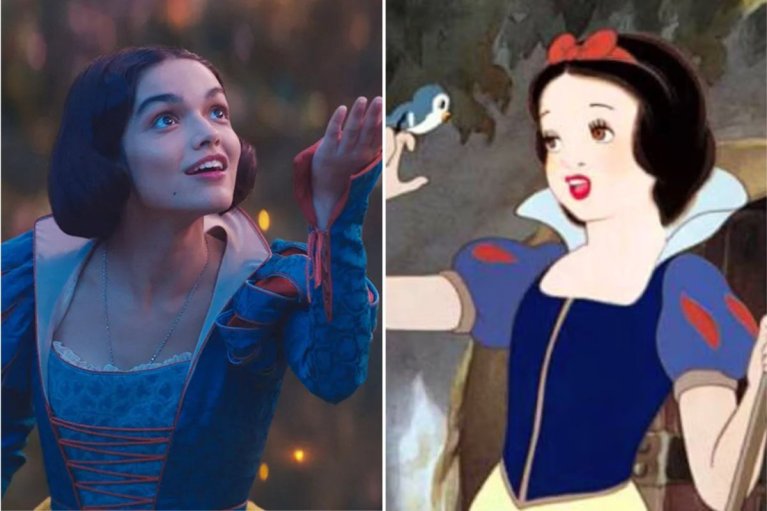

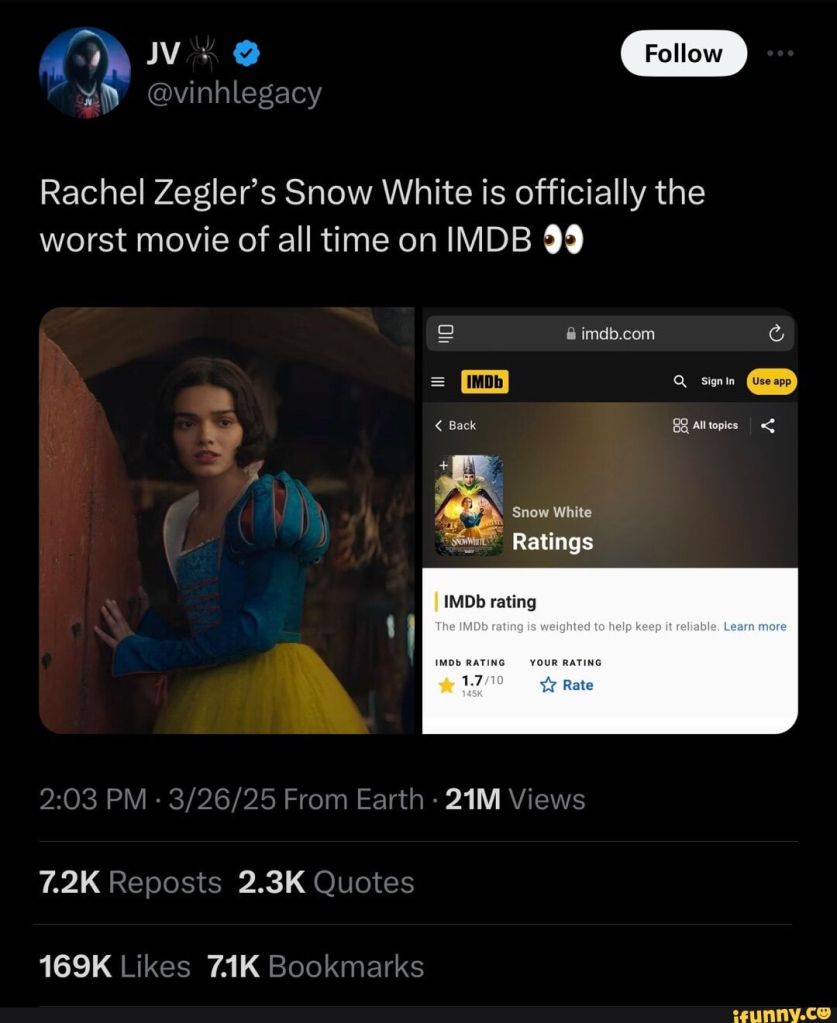











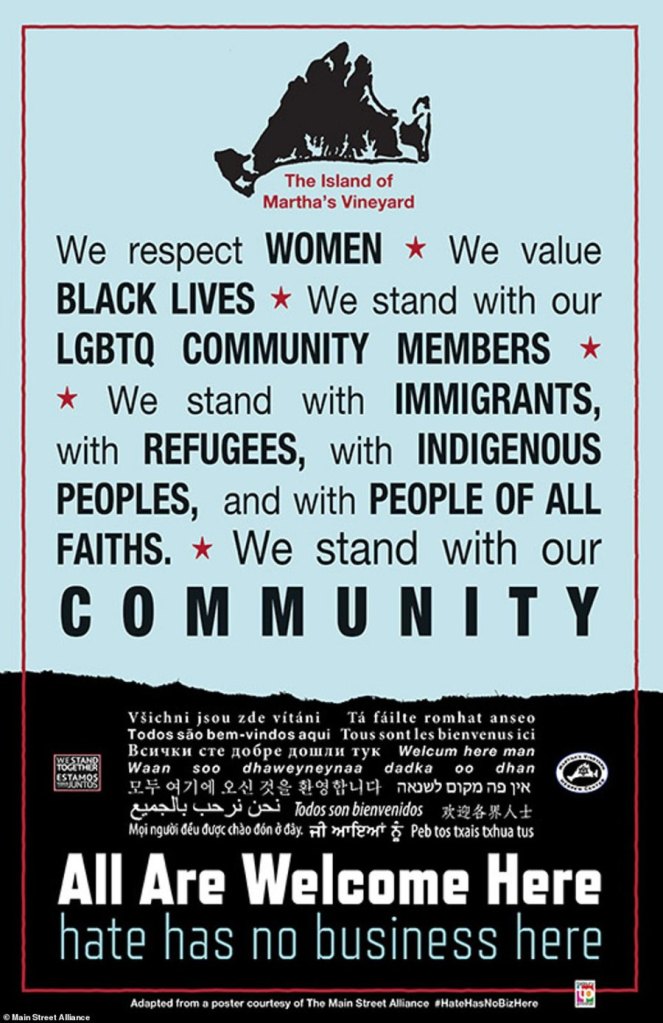
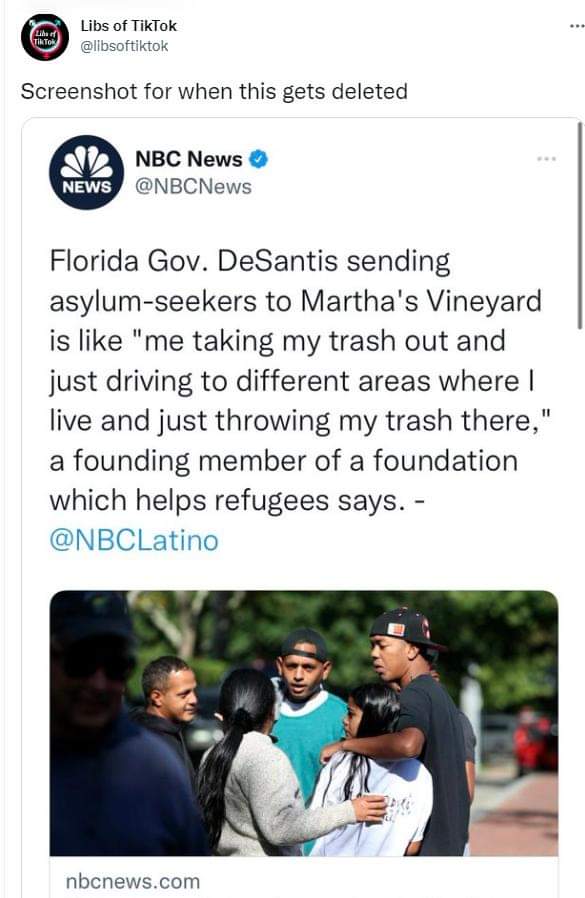





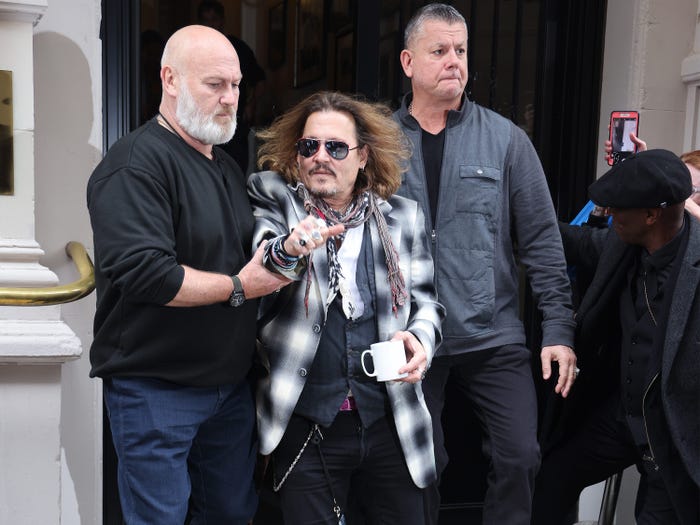


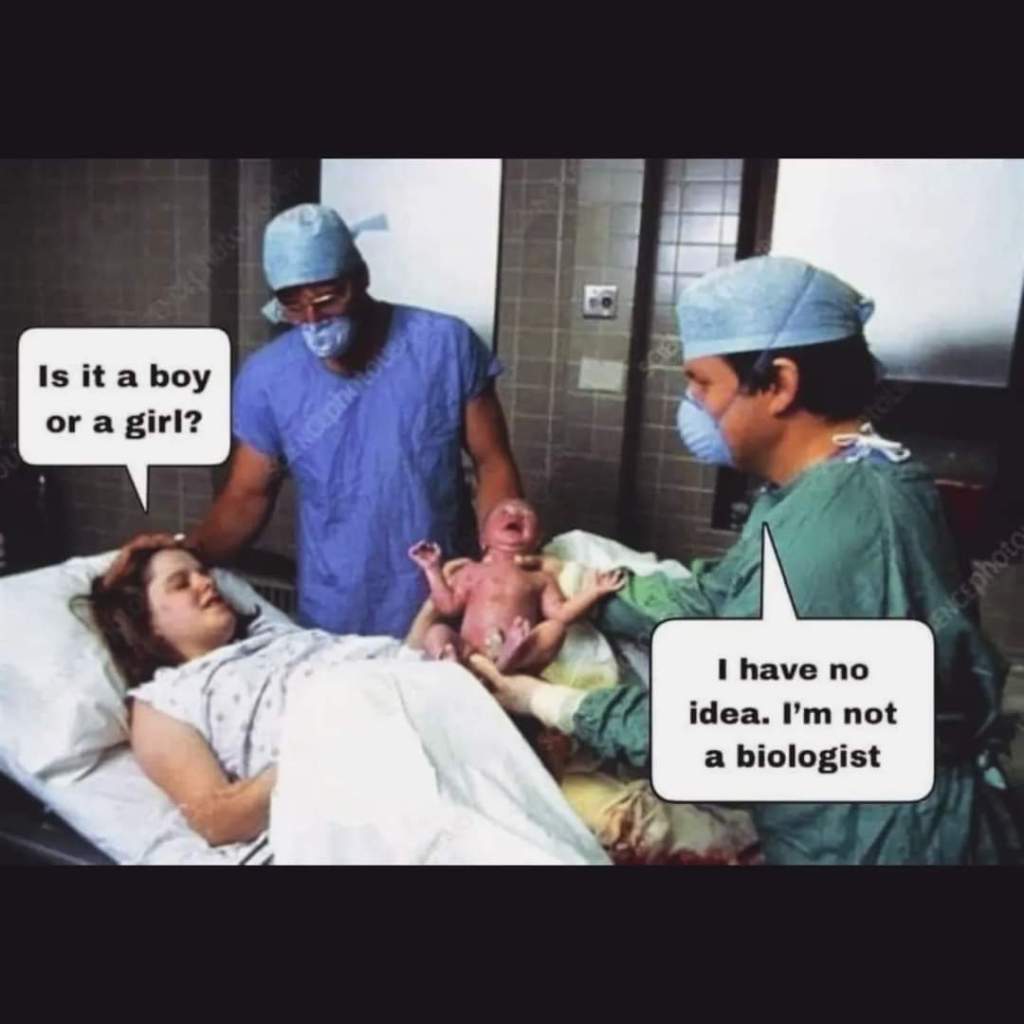

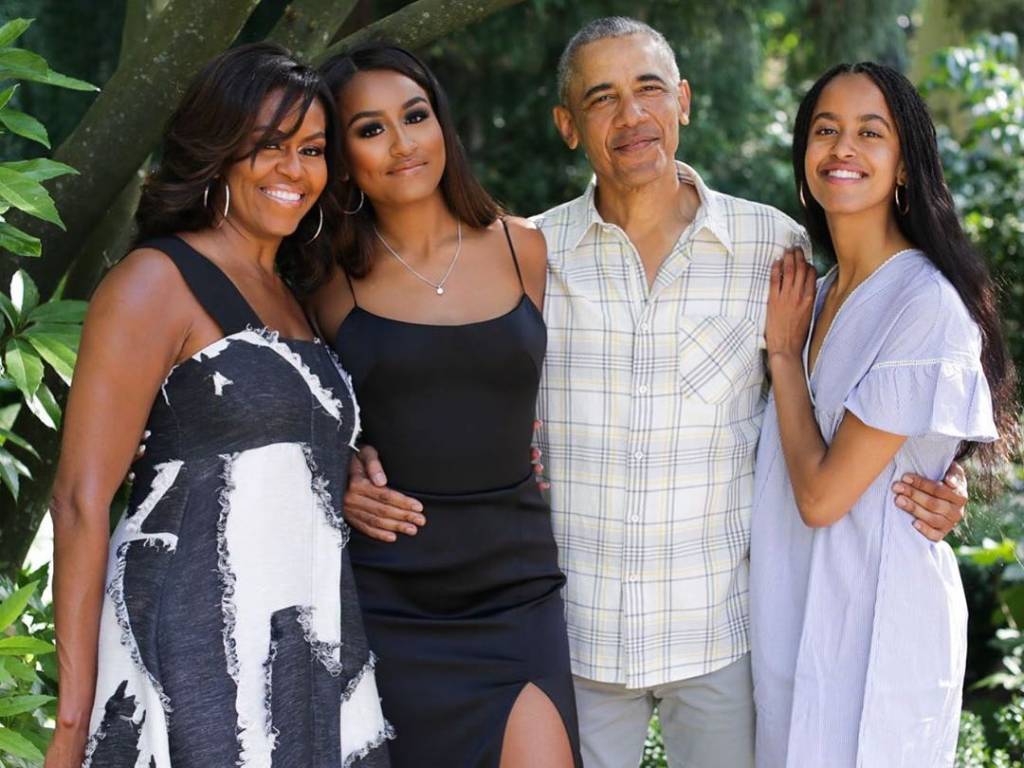





 Irregular Ideation