
Jesus vs. the Narcissists: When Compassion For ‘Others’ is the Ultimate Offense

Standard

Q: How do you enrage a narcissist?

A: Tell them they’re not the most important person in the world.

There’s this mess of entitlement, of eternal victimhood, self-admiration and severe lack of empathy we call narcissism.  And it does seem to be everywhere, most especially in a situation where someone is able to escape normal pushback for their overinflated self-image and sense of importance.  But this is not something new or merely a product of modern life—it is as old as the Bible.

What Jesus confronted most severely in the religious elites of his day was a narcissistic attitude.  Indeed, he was not killed as threat to Rome.  The Roman authority, despite the facilitation of the mob, did not buy into their reasoning and declared him to be  innocent.  The real issue is that Jesus offended an ideological cult of ethno-supremacists, those who believed a book (or rather their own errant and self-serving interpretation of the text) made them a cut above all other people.  

They believed that they were God’s favorites and yet Jesus said even the rocks could accomplish the mission.  He did not need their permission to speak and insulted them at every turn.  How did he insult?  Well, mostly by reminding them that God loved all people and not just their own tribe.  In defiance of their narcissistic self-belief, he held up the good examples of Samaritans, Canaanites, Syrians and Romans—presenting the foreigner as a righteous contrast to them.  And they could not argue with him, he knew their Scripture better than they did, so they killed him.

Here’s six examples of where Jesus took on the ethno-nationalist pride and narcissism of religious peers: 

1. The Parable of the Good Samaritan (Luke 10:25-37)

In response to a lawyer asking about who is our neighbor, Jesus tells a parable where a Samaritan (despised as ethnic outsiders by Jews) acts heroically with mercy, while a Jewish priest and Levite ignore a wounded man. This framing of an answer intentionally swerves off the beaten path to offend his ethno-supremacist audience by portraying their loathed ‘enemy’ favorably and implying that true neighborliness is something that transcends ethnic boundaries:

In reply Jesus said: “A man was going down from Jerusalem to Jericho, when he was attacked by robbers. They stripped him of his clothes, beat him and went away, leaving him half dead. A priest happened to be going down the same road, and when he saw the man, he passed by on the other side. So too, a Levite, when he came to the place and saw him, passed by on the other side. But a Samaritan, as he traveled, came where the man was; and when he saw him, he took pity on him. […] “Which of these three do you think was a neighbor to the man who fell into the hands of robbers?” The expert in the law replied, “The one who had mercy on him.” Jesus told him, “Go and do likewise.”

Imagine that, this smug religious expert, who thought he was self-justified, getting shown up rhetorically by the outsider.

2. The Faith of the Roman Centurion (Matthew 8:5-13)

A Roman centurion (a Gentile military occupier) approaches Jesus to heal his servant. Jesus not only heals but praises the centurion’s faith as surpassing anything being found “in Israel,” and implicitly rebuking the Pharisees’ assumption of Jewish spiritual superiority. This favorable portrayal of this Gentile outsider was extremely offensive to these ethno-supremacists:

When Jesus had entered Capernaum, a centurion came to him, asking for help. “Lord,” he said, “my servant lies at home paralyzed, suffering terribly.” […] When Jesus heard this, he was amazed and said to those following him, “Truly I tell you, I have not found anyone in Israel with such great faith. I say to you that many will come from the east and west, and will take their places at the feast with Abraham, Isaac and Jacob in the kingdom of heaven. But the subjects of the kingdom will be thrown outside, into the darkness, where there will be weeping and gnashing of teeth.”

He’s stomping on their entitlement at the end, literally saying that they’ll be thrown out and then replaced by Gentiles in God’s kingdom!

3. The Faith of the Canaanite Woman (Matthew 15:21-28)

Jesus initially tests a Canaanite woman (a Gentile outsider) seeking healing for her daughter but he ultimately commends her persistent faith and grants the request. This interaction challenges Pharisaic purity laws and ethnocentrism by showing a non-Jew’s faith as exemplary, even using the language which highlights ethnic barriers only to overcome them:

A Canaanite woman from that vicinity came to him, crying out, “Lord, Son of David, have mercy on me! My daughter is demon-possessed and suffering terribly.” Jesus did not answer a word. So his disciples came to him and urged him, “Send her away, for she keeps crying out after us.” He answered, “I was sent only to the lost sheep of Israel.” The woman came and knelt before him. “Lord, help me!” she said. He replied, “It is not right to take the children’s bread and toss it to the dogs.” “Yes it is, Lord,” she said. “Even the dogs eat the crumbs that fall from their master’s table.” Then Jesus said to her, “Woman, you have great faith! Your request is granted.” And her daughter was healed at that moment.

This passage illustrates the ethnic-supremacist attitudes of even the disciples of Jesus.  Whereas today, in the West, you can barely say people are different in ability without it being controversial, nobody cared that this woman was referred to as a dog in this audience.  But his actions of love and compassion spoke louder than his words and this woman’s lack of narcissism was a stark contrast to the prideful racist disciples  Her prayer was answered because she was humble.

4. The Healing of the Ten Lepers (Luke 17:11-19)

Jesus heals ten lepers, but only one—a Samaritan (an ethnic outsider)—returns to thank him. Jesus highlights this Samaritan’s faith, questioning where the other nine (presumably Jews) are, thus favoring the outsider and critiquing ingratitude among insiders:

As he was going into a village, ten men who had leprosy met him. They stood at a distance and called out in a loud voice, “Jesus, Master, have pity on us!” […] One of them, when he saw he was healed, came back, praising God in a loud voice. He threw himself at Jesus’ feet and thanked him—and he was a Samaritan. Jesus asked, “Were not all ten cleansed? Where are the other nine? Has no one returned to give praise to God except this foreigner?” Then he said to him, “Rise and go; your faith has made you well.”

The entitled can’t show gratitude.  Perhaps, as the self-declared chosen, the others who never came back felt they deserved this healing—that it was their birth right?  But Jesus was unimpressed by them and highlighted the foreigner who was thankful instead.

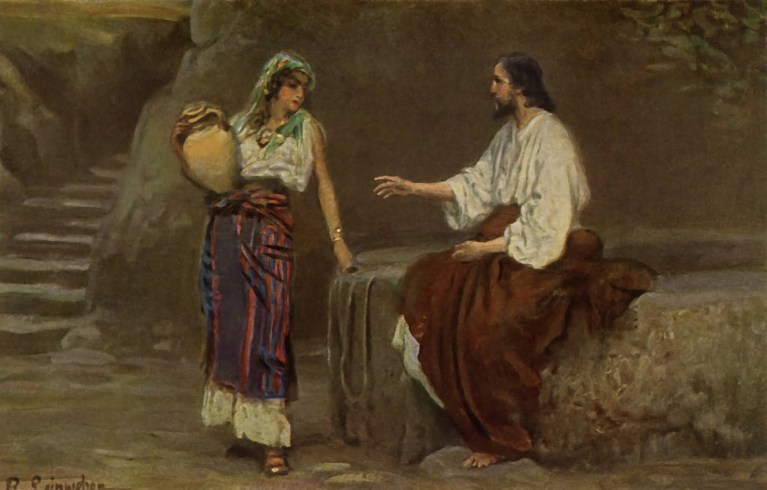
5. The Samaritan Woman at the Well (John 4:1-42)

Below Jesus initiates a conversation with a lowly Samaritan woman (an outcast on multiple fronts: Samaritan and female), he reveals himself as the Messiah, and leads to many Samaritans believing in him. This breaches ethnic and social barriers, totally offending Pharisaic norms of separation, as the Jews typically avoided Samaritans:

When a Samaritan woman came to draw water, Jesus said to her, “Will you give me a drink?” […] The Samaritan woman said to him, “You are a Jew and I am a Samaritan woman. How can you ask me for a drink?” (For Jews do not associate with Samaritans.) […]  Many of the Samaritans from that town believed in him because of the woman’s testimony, “He told me everything I ever did.”  So when the Samaritans came to him, they urged him to stay with them, and he stayed two days. And because of his words many more became believers.

This was Jesus deliberately breaking down a barrier.  The Jews of this time weren’t just racist, but sexist as well, and would see this entire encounter as an egregious violation.  Here Jesus was humanizing the Samaritan enemy and—even more scandalously—he was talking directly to a woman!  While rebuking his own ethnic and religious tribe he hung out with the impure!

He’s practically as evil as Tucker Carlson…

6. Jesus’ Sermon in Nazareth (Luke 4:16-30)

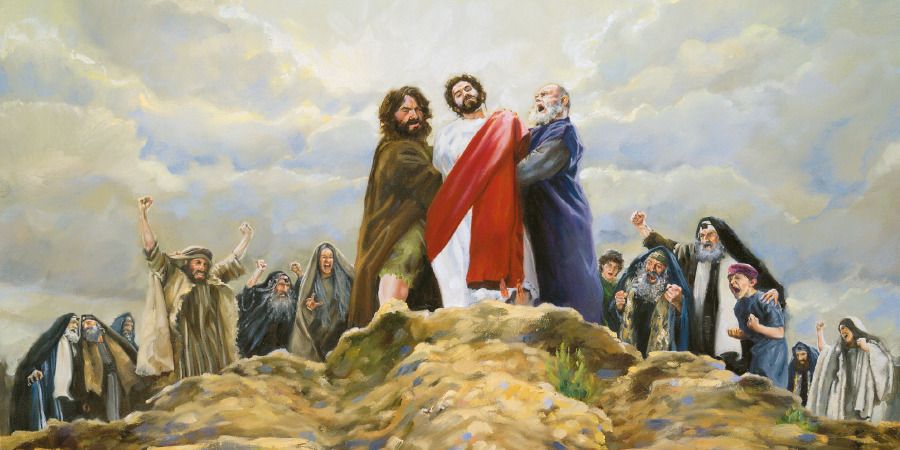
In his hometown synagogue, Jesus reads from Isaiah and then references the Old Testament prophets helping Gentiles (a widow in Sidon and Naaman the Syrian) instead of Israelites during times of need. This enrages the crowd, who try to kill him right there and then, as it directly challenges their ethno-supremacist expectations that God’s favor is exclusive to Jews:

“Truly I tell you,” he continued, “no prophet is accepted in his hometown. I assure you that there were many widows in Israel in Elijah’s time, when the sky was shut for three and a half years and there was a severe famine throughout the land.  Yet Elijah was not sent to any of them, but to a widow in Zarephath in the region of Sidon. And there were many in Israel with leprosy in the time of Elisha the prophet, yet not one of them was cleansed—only Naaman the Syrian.”  All the people in the synagogue were furious when they heard this.  They got up, drove him out of the town, and took him to the brow of the hill on which the town was built, in order to throw him off the cliff.  But he walked right through the crowd and went on his way.

The passages all illustrate Jesus’ pattern of associating with and elevating of outsiders, which offended the Pharisees’ ethnocentric pride and their self-righteous “we’re chosen people” claims by his stubborn inclusion of sinners, tax collectors, and Gentiles.  

Had it not been for a miracle Jesus may be remembered as being thrown off a cliff for praising the foreigners in front of a Jewish audience.  He was hitting them directly in their Hindenburg sized egos.  They had the most severe case our own [excrement] don’t stink that’s possible.

Ms. Rachel is an ‘anti-Semite’ for loving all children?

 A Zionist organization, StopAntisemitism, has named Rachel Griffin Accurso, a very popular children’s content creator, a finalist for their “Antisemite of the Year” and for a very specific offense: Ms. Rachel dared to treat the suffering of Palestinian children as equal to that of Jewish people!  How dare she humanize the child of an enemy!  Those in this Zionist cult love themselves only and make a strict dichotomy between their own and the dogs.  The spirit that Jesus rebuked is maintained in this perverse tradition.

I didn’t know much about Ms. Rachel prior to the birth of my daughter, but she’s not a Hamas apologist or sympathizer and has expressed similar sentiments about Israeli and African children.  Only the arrogant Zio-bots used her concern as a cause for their vicious accusations and vile labels.  They can be the only victims and treating Gaza’s children with the same love as their own is a terrible offense in their supremacist eyes—only their suffering can matter.  

He didn’t say Hamas.  He said Palestinians.

Ms Rachel committed their most grievous sin of believing children are not terrorists because of where they are born and now—as another enemy—she must be destroyed.

That is the narcissistic attitude of Zionism.  You must choose between them and others, they cannot share your concern with those who are inferior beings.  It’s an insult, as if they have been made equal to a dog, which is what they think of us Gentiles.  Listen to what they say, they believe that they should be treated like gods—in the words of Jewish supremacist and the former chief Rabbi of Israel, Ovadia-Yosef:

“Goyim (gentiles, non-Jews) were born only to serve us. Without that, they have no place in the world – only to serve the People of Israel,” he said, according to the Jerusalem Post. “Why are gentiles needed? They will work, they will plow, they will reap. We will sit like an effendi and eat. That is why gentiles were created.” 

Rabbi Ovadia-Yosef, in his own words

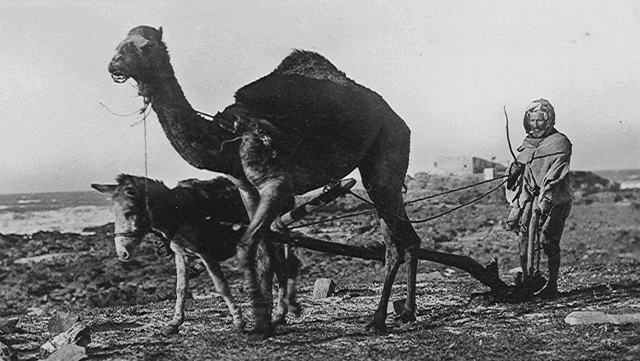
Treated as our lords.  That is the nature of Zionism.  It is about their narcissistic view that they deserve to be our masters and to do with us as they please—as they may an ox that plows their fields.  Which is what is so disturbing about an Israel-Firster, Ben Shapiro, proclaiming that retirement is stupid and that Americans should work until they drop.  Says a guy who sits around and talks as an occupation.  This, of course, does not represent all Jews or Israeli citizens, but it is written in the Talmud and lines up with the Likud party leadership of Israel.

Zionism does not represent all Jews.

Zionists don’t just want to rule over the current territory of Israel or the Holy Lands.  No, they want Jerusalem to be the hub of their Greater Israel and later one world government where their own version of a Messiah cleanses the world of all who defy them.  They rule because you’re too stupid to live free.

Judas wanted an Israel like this.  A worldly kingdom where he would be served.  Jesus, by sharp contrast, taught a kingdom not of this world—where the greatest would serve rather than be served.  He corrected heresy that made the blessing of Abraham only about a genetic inheritance rather than a matter of sharing the patriarch’s sincere and simple faith.  It was the very opposite of what they believed they were owed as the self-declared special people.  Jesus offended by telling them they weren’t special and calling the children of the Devil rather than of Abraham.  Ethnic supremacy and self-righteous pride is the basis of Zionism, Christianity heralds repentance as the foundation of true faith in God, as John the Baptist declared:

But when he saw many of the Pharisees and Sadducees coming to where he was baptizing, he said to them: “You brood of vipers! Who warned you to flee from the coming wrath? Produce fruit in keeping with repentance. And do not think you can say to yourselves, ‘We have Abraham as our father.’ I tell you that out of these stones God can raise up children for Abraham.  The ax is already at the root of the trees, and every tree that does not produce good fruit will be cut down and thrown into the fire. 

(Matthew 3:7-10 NIV)

Water is wet.  The sky is blue.  You can’t be a Christian and a Zionist too.  We must pick one or the other.  There is no union between light and darkness, no yoking of believer to unbeliever, we either believe what we’re told in the Gospel about a “synagogue of Satan” (Rev 3:9) and who Jesus himself declared to be children of their father the Devil (John 8:44) or we deny that Christ is King.  It’s just astounding to see so many who either never read the New Testament or had eyes glazed over in those sections where Jesus rebuked those who thought their Jewish supremacy and genetic ties to Abraham would save them.

The unrepentant narcissist will never enter the kingdom of heaven.  Pride was the sin of Satan who thought he could rival God and it is also the sin of those who rejected Jesus for his acceptance of all and not caring about their ethnic pedigree.  They hated him for exposing them as religious frauds.  And the campaign they waged against him was very similar to that being used currently to try to silence critics of Israel.  The role of a good Goy is to simply believe whatever they say and allow them to be the gods they believe they are—to kill or rape as they please.

From Tribal Vengeance to Universal Justice: In Pursuit of One Higher Standard 

Standard

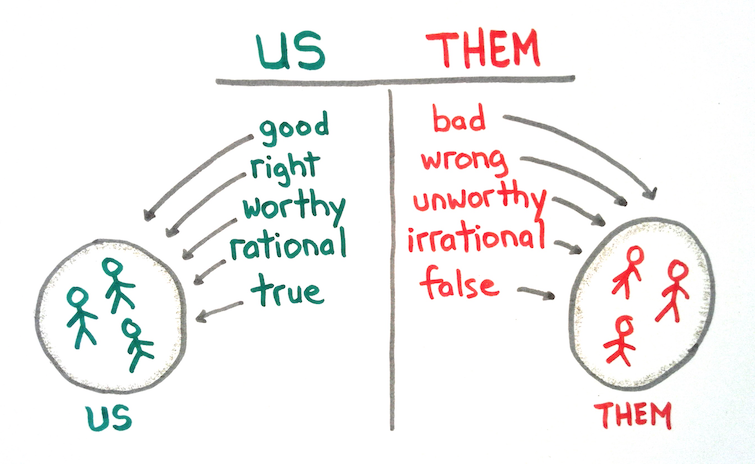
The default position for most people is some form of tribal ethic. If it is done to them or their own family by another tribe it is a horrendous and terrible crime. But, when only those in another tribe are hurt or if they are afraid that confronting the abuse will hurt their own tribal agenda—then suddenly the unforgivable becomes a “Who cares, everyone does it, why are you bringing that up again?”

Tribal ethics amount to doing only what is good for the tribe—usually sacrificing the rights of an individuals in the tribe and always denying the basic humanity of those outside of the tribe. Individual rights of those in the tribe are generally honored, but only so far as protecting them is useful to the collective and not as something that is absolute or immutable. If a few die for sake of the tribal order—are stoned to death for daring to pick up sticks on the Sabbath—that’s just how it is.

The Old Testament is full of this. Your own are completely free to enslave, rape or take from those outside the tribe and yet would be enraged if one of their own were treated in the same way—like when vengeance was taken by Dinah’s brothers who wiped out a whole city for sake of the family’s honor. If it were within the tribe the attitude would be quite a bit different. Under Moses law this was simply a matter of paying the price of the bride and not a death sentence. And it is clear that things morally abhorrent by a modern standard, like genocide, were done by the command of God.

Tribalism is a feature of politics, a natural or default condition, where we defend our own and demonize the other. To the left Charlie Kirk deserved to die for his sins of hate they claim were harmful to their woke collection of identities. The Evangeli-cons soak up the propaganda from Israel that paints children in Gaza as future terrorists. We protect the people most like us because and adjust our moral rules according to the situational and immediate needs of our tribe.

A Case For One Higher Universal Standard

But a Christian ethic is completely different from this. It says sin is sin.  Evil is evil no matter who is committing it or who it is against.

And, if anything, those who are in the church, who profess their faith in Jesus, should be held to a much higher standard. There is no room for favoritism (James 2:1, Romans 2:11) or carving out exemption for elites or even our friends and family. Jesus said to love our enemies (Matt 5:44, Luke 6:27) and even ‘hate’ our own family (Luke 14:26) if necessary to truly be his follower. Even our thoughts subjected to a standard of love and forbearance.

Jesus didn’t get hung on a cross for saying cutesy stuff that is easy to do. And I really do not expect anyone to live by that code. It requires actual faith and a true belief Jesus is what he said he was to make sacrificing ourselves for his ethic reasonable:

Do not repay anyone evil for evil. Be careful to do what is right in the eyes of everyone. If it is possible, as far as it depends on you, live at peace with everyone.  Do not take revenge, my dear friends, but leave room for God’s wrath, for it is written: “It is mine to avenge; I will repay,” says the Lord. On the contrary: “If your enemy is hungry, feed him; if he is thirsty, give him something to drink. In doing this, you will heap burning coals on his head.” Do not be overcome by evil, but overcome evil with good.

(Romans 12:17-21 NIV)

But even if you don’t truly believe in a future eternal reward or God, there is a reason why universal morality is better than our default tribalism. And that is an idea of what goes around comes around. Sure, you might not care about someone else’s daughter being sexually exploited by wealthy and powerful men—most especially if they are furthering your partisan political agenda—and yet we want to have a society where there’s justice or the injustice will eventually spread to us.

This is the big difference between my own understanding and the one that is far more popular: Good and evil never change on the basis of who is doing it or if I benefit. If it is wrong for the neighbor to kill my dog under most circumstances it is wrong for me to kill theirs. And if I (or one my own) start to act with impunity—are continually forgiven for things others are always condemned for—eventually this will piss off enough of the ‘others’ that they’ll dish out their version of justice against their abusers.

The Fallacy of Judeo-Christian Values

Evangeli-cons want the world to forgive for all their infractions and yet never forget if a victim fights back against their aggression. It is the very opposite of what Christ taught and anti-Christ. Jesus would likely warn us that how we judge we will be judged and the measure we use will be measured back to us. Which should make us tremble when we consider the slaughter and razing to the ground of Gaza using bombs we provided—there will be no call for mercy on the behalf of those who claim that young children are terrorists so they can kill them:

We are imposing a complete siege on Gaza. There will be no electricity, no food, no water, no fuel. Everything is closed. We are fighting human animals and we are acting accordingly.

October 13, 2023, Isaac Herzog, President

Just as it is clear that the right wing was right, today everyone says it is clear all Gazans must be annihilated… There is no logic in differentiating between uniformed [Hamas] and the rest of the inhabitants there.

September 2025, Moshe Saada, Likud MK

Every child born in Gaza is already a terrorist, from the moment of his birth.

January 15, 2024, Nissim Vaturi, Likud Deputy Speaker

And they were stating their genocidal intent long before October 7th:

Huwara needs to be wiped out. I think the State of Israel should do it… Water, electricity, and food must be cut off from the Gaza Strip. Those who do not die by bullets will die of hunger.

February 2023, Bezalel Smotrich, Finance Minister

This shows the absurdity of what is called Judeo-Christian values. Tribal logic says it is okay to kill man, woman and child of the rival so we can take the land for ourselves. Whereas Christian morality calls for all to be saved (1 Tim 2:4, 1 Pet 3:9) and erases the boundaries of tribal identities based on gender, race or social status. It is the polar opposite of having a chosen people with a license to take and kill. Jesus offended his ‘righteous’ ethnic audience by saying that a pagan had greater faith than all of Israel. To embrace this radical ethic is to reject the tribalism that fuels division and violence, choosing instead a universal justice that holds all accountable and protects all, not just the chosen few. Only by abandoning the hypocrisy of tribal loyalty can we hope to build a world where the measure of our judgment does not return to condemn us, but instead fosters a shared humanity that is grounded in love of Jesus.

A Fundamentally New Way of Thinking

The Christian ethic really is a total reversal of fundamental attribution error. It is easy to attribute what others do to us to a matter of their immutable character, they’re just evil and irredeemable, therefore do not need to be heard or understood. But for our own or ourselves we tend to blame only the circumstances and call it a mistake—one of those forgivable offenses. The reverse is to never make excuses for our own while also showing grace to those who offend us.

When someone cuts us off in traffic is it because they are a terrible driver? Or did they just have a bad moment? Or if we do the same, is it truly just an isolated incident or is our confirmation bias simply forgetting all of those times we transgressed with an “oops, sorry!” Reversing our fundamental attribution error is simply to apply grace we give to ourselves to others. It is, at the very least, to apply the same standard we do for ourselves as we do to others.

When a person of our own tribe does some kind of horrific deed, do we dismiss this as not representing us as a whole? Maybe we justify it? When the US Navy shot down Iran Air Flight 655 flying a routine route over the Strait of Hormuz, back in 1988, and killed all 290 on board—the US didn’t even apologize and, adding insult to injury, gave medals to the crew that did it! That is tribalism and is how fundamental attribution error works. If Iran did the same the US population would be calling for our military to turn the whole country into a smoldering ruin.

But the Gospel of Jesus Christ starts with a call for repentance. Repentance being an inward turn where we identify and confess our own faults rather than hide them behind rationalization or claims that our hand was forced by the other side. And, finally, after this deep introspection, we show the fruits of a changed spirit by showing the grace we have been shown to even those who we feel are most underserving. A true Christian will strive to love their worst enemies while also holding their own to a high standard.

If we want forgiveness of our sins we must show mercy and forgive others.

Evangeli-cons want all grace for themselves and yet give none to the enemies of their ‘Christian’ empire. They don’t want sins of some in their midst to count against them, they will deny the inconvenient violence of those on their side politically, but then make the whole left or all of Islam responsible for everything ever done by one of their own. It is a tribal ethic that has nothing to do with a Jesus of repentance. Or a spirit of grace to others that exists in those who understand their place before God.

Zionism: Dismantling the Cross, the Judeo-Christian Deception

Standard

There was an act of vandalism in Wales.  A Christian cross made of stones, which had been on a hill in the countryside for half a century, was torn apart by Jewish tourists who used the stones to create the ‘Star of David’ or hexagram shape.  This act goes beyond total disrespect and destruction of a Christian display, but it is also symbolic of what Zionism is and what it has been doing to Christianity in the West.  

Zionism isn’t Jewish.  Many Jews, even who live in the Holy Lands, are as fully opposed to the ethno-supremacist state called Israel as their Christian and Muslim neighbors.  It is not something allowed by their religion, they insist, and I’ll let Jewish people debate their theology for themselves.  But the vast majority of Zionists aren’t Jews nor do they live in Israel.  Most Zionists were American Protestants who have become ensnared in this political ideology that rearranges parts of the Bible to justify taking property from a population who have lived in the birthplace of Christ since his birth.

Christian Zionism is an oxymoron.  It takes two opposites, the kingdoms of the world offered to Jesus during his temptation that he rejected and acts like Gehazi, the servant of Elisha, who goes back deceptively to get the gifts Naaman tried to give to his master and was then struck down with leprosy by the curse of his master.  There are many in church pews today who have betrayed their master and have rearranged the timeline of Scripture to embrace an evil replacement of the way of Christ.  They dismantle the cross and support Zionism instead.

Schofield’s Coup: Dismantling the Cross

In 1909 a new Bible was published.  It used the same English translation of the popular King James version and yet added notes of commentary written by a man named Cyrus Ingerson Scofield.  Dispensationalism is a relatively new interpretation of Biblical texts that started in the early to mid 19th century, initially invented by John Nelson Darby and the Plymouth Brethren in Britain, but it took Scofield’s in text commentaries distributed widely to finally sell it.

We could get into questions of exactly who Scofield was, his character, that he was a Confederate soldier (deserter?); who was an alcoholic who abandoned his family; a man who had defrauded several prominent Republicans with a railroad scam; who was arrested and jailed in St Louis for forgery and embezzlement, then had a dramatic conversion to Christianity and yet this essay will stick to the work he was known for: His popularization of a novel theological stance dividing Israel and the church in Scripture.

In the Christian Bible there’s a fairly obvious shift in tone between the Old Testament (or Jewish Torah, prophets, etc) and teachings of Jesus in the Gospels.  The conventional Christian perspective is that Jesus came as fulfillment of the law and supercedes the covenant that was given to Abram who became Abraham.  But Scofield turns the clock back, he ignores what the Epistles tell us about correct understanding, and he adds an idea that there are essentially two paths to God—one going through Jesus and the cross, the other by the Old Covenant.

Christianity, according to the Apostles, is the faithful remnant.  Israel is now the Church and the Church is the true Israel.

Where this was just an amateur mistake or an intentional deception doesn’t matter.  It has resulted in a battle between those who basically claim that “one way, Jesus” is anti-Semitic statement and smear it as being “Replacement Theology” (ironic, given this was, is, and will remain the only orthodox Christian perspective) for saying that the New Covenant continuation of God’s plan and necessary for salvation.  It ignores the New Testament books where St Paul and others give a correct Christian perspective of the covenant given to Abraham.

Always Through Faith, Never Bloodlines…

Jesus answered, “I am the way and the truth and the life. No one comes to the Father except through me.

(John 14:6 NIV)

I’m not nearly as dogmatic as some when it comes to passages like John 14:6 (above) and yet do see it as foundational to correct application of Scripture from the Christian perspective.  Jesus was making a definitive statement about who he is and the absolute requirements for salvation.  

The promises were spoken to Abraham and to his seed. Scripture does not say “and to seeds,” meaning many people, but “and to your seed,” meaning one person, who is Christ.

 (Galatians 3:16 NIV)

1) The passage above makes it very clear that the seed of Abraham is singular: Christ Jesus.  St Paul is saying that Jesus is that promise given to Abraham, that the promise is what bestows grace and continues:

So in Christ Jesus you are all children of God through faith, for all of you who were baptized into Christ have clothed yourselves with Christ. There is neither Jew nor Gentile, neither slave nor free, nor is there male and female, for you are all one in Christ Jesus. If you belong to Christ, then you are Abraham’s seed, and heirs according to the promise.

(Galatians 3:26-29 NIV)

2) We all become Abraham’s seed though faith in Christ and there is no distinction by religion (keeping the law) or race.  In other words, Jews and Gentiles are both saved in the exact same way and the old distinctions become moot in fulfillment of the promise:

It was not through the law that Abraham and his offspring received the promise that he would be heir of the world, but through the righteousness that comes by faith.  For if those who depend on the law are heirs, faith means nothing and the promise is worthless, because the law brings wrath. And where there is no law there is no transgression.  Therefore, the promise comes by faith, so that it may be by grace and may be guaranteed to all Abraham’s offspring—not only to those who are of the law but also to those who have the faith of Abraham. He is the father of us all.  As it is written: “I have made you a father of many nations.” He is our father in the sight of God, in whom he believed—the God who gives life to the dead and calls into being things that were not. 

(Romans 4:13-17 NIV)

3) Faith in Christ, nothing else, saves.

The Church and true Israel are the same, it is a group that is defined by faith both when those the Jews looked forward towards the promise and also in the Gospel fulfillment of the promise in the seed of Abraham that is Jesus.

Scofield, however, to justify Zionism, tries to drive a wedge between Christ and being the full fulfillment of promise or the seed of Abraham.  His footnotes take a passage like Genesis 12:3, addressed specifically to Abraham, about blessing those who bless him and cursing those who curse and then just hallucinate that it is speaking about all who ever have descended (but only through Isaac) from Abraham—no matter if they are faithful or not.  But this is in direct and total contradiction to the passages quoted above and simply meaning inserted into the text by a man fooled himself or just a fraud.

The Judeo-Christian Deception 

Do not be yoked together with unbelievers. For what do righteousness and wickedness have in common? Or what fellowship can light have with darkness? What harmony is there between Christ and Belial? Or what does a believer have in common with an unbeliever? 

(2 Corinthians 6:14-15 NIV)

Judeo-Christian is a term originally coined to describe a Jewish convert to Christianity, a Jewish Christian, but the usage has since evolved to become an oxymoronic coupling of religious traditions that formed up in full opposition to each other.  There is overlap, certainly, both started as religions rooted in the Hebrew Bible.  But one of the sides has rejected Christ, and is anti-Christ, while the other believes that the Torah can truly only be understood through the lens of Christ.  If your values start with something other than Christ then they’re not the same values as a Christian.

Starting with Jesus instructing his followers to let their ‘yes’ be ‘yes’ and ‘no’ be ‘no’ (Matt 5:37) or to use simple honest language.  So much dishonesty comes in from of a subtle twist of words.  For example, calling majorly invasive surgeries and hormone treatments “gender-affirming care” is just not the plain reality of what is being done.  Semantics is all about describing reality, but can also be about distorting the perspective and an art of deception.  There is no similar rule about using honest speech in Talmudic or Zionist Judiasm.  Mossad, the intelligence agency of Israel, used “By way of deception, thou shall do war.

Stratagem is part of war theory and tactics.  But it is not part of Christianity.  St Paul tells us:

For our struggle is not against flesh and blood, but against the rulers, against the authorities, against the powers of this dark world and against the spiritual forces of evil in the heavenly realms. 

(Ephesians 6:12 NIV)

The Christian doesn’t overcome the ‘enemy’ with deception.  They overcome them with good, with honesty and love, this is to reject the methods and means of those who see those outside their religio-political group as being terrorists to be destroyed or resource to exploited.  We are not required to reason with animals, we herd them, slaughter them, shoot them for sport, and impose our will—and is exactly what the Zionists do to those who get in their way.  There is no command to love enemies or good to those who those who hate you as there is in Christianity:

But to you who are listening I say: Love your enemies, do good to those who hate you, bless those who curse you, pray for those who mistreat you. If someone slaps you on one cheek, turn to them the other also. If someone takes your coat, do not withhold your shirt from them. Give to everyone who asks you, and if anyone takes what belongs to you, do not demand it back. Do to others as you would have them do to you. 

(Luke 6:27-31 NIV)

Interestingly enough, Islam has a similar teaching, but we would never call this area of confluence Islamo-Christian values.  So why do we attempt to add the leaven of the Pharisees through this linguistic maneuver that marries us to a religion that has values completely different despite a similar origin point?  The “Synagogue of Satan” (Rev 2:9, 3:9) has never stopped hating Christ or His followers, they have simply committed to a long-game strategy of subversion or using the naive to do their bidding.  This isn’t even a value judgment, I’m not saying you should not be Jewish if that is what you believe is, but you can’t be a Judeo-Christian because it is a contradiction of terms.

If a suggestion of “Islamo-Christian values” causes you to erupt in riotous laughter, then the combo of the way of Jesus with that of Zionism is doubly as ridiculous.  

Philosophically there is zero compatibility in these perspectives.  It is impossible to love and bomb your enemies.  You cannot claim to follow Jesus, who rejected worldly power, and then support the violence being done in the name of Israeli statehood.  Zionism is a “blood and soil” nationalist movement, and is all about land, all about ethnicity, whereas the kingdom of heaven is about repentance, self-sacrifice and meekness.  The only thing that is sacrificed in ‘Christian’ Zionism is the Gospel of Jesus Christ and the credibility of our collective witness—so our partners can slather themselves in misguided pride for being the chosen race.

Not good, especially when one is pulling the other backwards…

The real purpose of a term “Judeo-Christian values” is political and propaganda.  It is to throw a yoke on the neck of Christians and force them to work together.  It is simply a way to control one side and normalize the other.  There is no backward compatibility, a believer in Christ does not share values with those who reject him, with those who cling to national pride rather than the cross, and subjugate rather than serve.  Jesus opened his arms to children—Zionists justify killing children by starvation, by denying them care or even by burning them alive and gunning them down.

Origen, who is considered to be a church Father, may have toyed with universalism—an idea that all would be saved in the end.  But there is no parallel path that is given for anyone according to Jesus or the Apostles, most especially not for those who are far removed from Jesus as the Nazis—despite their claims to the contrary.  We cannot let the cross of Christ be rearranged into the symbol of a worldly kingdom.  Having some things in common with those who rejected Christ doesn’t make us the same.

Useless Speculation

Standard

People who are obsessed with eschatology tend not to share the attitude of Christ and are, at very least, more consumed with their own pet theories then practical application—I tend to avoid such people:

‭‭I urge you, brothers and sisters, to watch out for those who cause divisions and put obstacles in your way that are contrary to the teaching you have learned. Keep away from them.  For such people are not serving our Lord Christ, but their own appetites. By smooth talk and flattery they deceive the minds of naive people. 

Romans-16-17-18 NIV

There are many who fancy themselves as being wise and able to decode the cryptic language of Biblical revelation, who gather a following for themselves, but are not doing God’s work:

As I urged you when I went into Macedonia, stay there in Ephesus so that you may command certain people not to teach false doctrines any longer or to devote themselves to myths and endless genealogies. Such things promote controversial speculations rather than advancing God’s work—which is by faith.  The goal of this command is love, which comes from a pure heart and a good conscience and a sincere faith.  Some have departed from these and have turned to meaningless talk. They want to be teachers of the law, but they do not know what they are talking about or what they so confidently affirm.  ‭‭

1 Timothy‬ ‭1:3‭-‬7‬ ‭NIV‬‬

Revelation in the hands of these kinds of people is as useful as a Marvel comic and that meaning it is strictly for entertainment value.  Feel free to laugh as they confidently spew their speculative garbage.  Let them accuse you of being a scoffer for not buy-in to their nonsense.  Sure, these people may believe they have special insight, but are not qualified to speak and would be better off to keep their mouths shut.  

Slapping a label of “Malgog” on a modern state and then running with it doesn’t make you a great Biblical scholar.  No, you’re just another Harold Camping or William Miller and more likely to be a disappointment than to see the end of a dispensation.  It should be ridiculed and mocked as it has nothing to do with living out the Gospel of Jesus Christ and is a distraction at best—and, at worse, a cause for others to stumble.

If your focus is on Christ you will not fail no matter if the anti-Christ is the Pope George or your own beloved mother.  So why would we fritter away our time promoting theories that are not essential and often wrong?

But the real evil in this kind of endless end times speculation is how it too often turns other people into pawns rather than those we are commanded to love.  Obedience does not require a God’s eye perspective or foreknowledge, it takes a child’s heart and full trust that all things will work out for the good of those who live in faith.  Anyone can make a horoscope or fortune cookie apply to themselves—few love their enemies.

When we should be praying that both sides of the Israeli and Palestinian conflict repent, many who profess Christ are cheerleaders for their own predictions instead.  They’re vultures, like Jonah wanting to see Nineveh destroyed because they don’t care about the people involved, and not like the Jesus who wept over Jerusalem knowing the city was going to be totally destroyed. We don’t need to know the future, we simply need to live in faith and do good to all people.

As a postscript, while we’re breathing, it is never too late to repent of this foolishness:

Camping admitted in a private interview that he no longer believed that anybody could know the time of the Rapture or the end of the world, in stark contrast to his previously staunch position on the subject. In March 2012, he stated that his attempt to predict a date was “sinful”, and that his critics had been right in emphasizing the words of Matthew 24:36: “of that day and hour knoweth no man”. He added that he was now searching the Bible “even more fervently…not to find dates, but to be more faithful in [his] understanding.”

At least Camping lived to see the error of his own ways and change his focus.  But how many did he trip up before he reached this conclusion?

An Affirmative Reaction

Standard

The Supreme Court has finally ruled against the practice of blatant racial discrimination in university admissions.  This, after Harvard and other schools, in pursuit of filling quotas, would find means to select against qualified Asians to meet an ideal for diversity based on skin color.

The Affirmation Fairy… 

African Americans, at least as a collective whole, have suffered disproportionately and this is a historical injustice that is not easily solved.  Much of our success later in life has to do with the homes and communities that we were born into.  The values we receive via our culture make a huge difference so far as outcomes.

I remember a viral video, a few years back, that lines up a bunch of young people on a grassy field.  The announcer asked various questions, such as “Take two steps forward if both of your parents are still married,” and those who could answer yes advanced.  The results of this survey were framed as ‘white privilege’ and yet none of the statements had anything to do with race.

Social inequality is certainly not a black-and-white issue, many children of European and Asian ancestry lacked a father in the home, worried about fitting in, did not feel safe at night in their neighborhood, worried about having enough to eat, and lacked access to private education or tutors.  I once begged my mother to take me out of public school after a rough patch.  I changed my hairstyle as a response to classmates who made note of my ‘Mennonite’ side part.  I decided to quit college rather than go deep into debt.  

Am I underprivileged?

Exactly how much am I disadvantaged as a learning-disabled child of two high school dropouts, with a father who had to be away all week to support our family?

There problem with all “affirmative action” is that it is a vast oversimplification of a very complex and multi-layered problem that may be more about culture than color.  We simply cannot account for every factor or rate every single subcategory of ethnicity and culture for statistical disadvantage.  For example, do we know the college graduation rates of Americans of German ancestry or Irish and Italian?  Are a proportional amount of these ethnic groups represented?

Furthermore, our own disadvantages can be advantages, in that they can provide u much-needed motivation.  Sure, having money may mean a trip to Harvard and a certain level of success.  However, the same is true of those who are tall and athletic.  Jeff Bezos, at 5′-7″ tall, may have benefitted from having some ‘short man syndrome’ or that extreme desire some have to compensate for the discrimination they faced for physical characteristics that were beyond their control.

Affirmative action is wrong in that there is no way to rank hardships.  It is wrong because it isn’t addressing the root causes of social inequalities, even as defined by the privilege police, in that we’re not talking about things like fatherless homes or inner-city violence and cultural forces that discourage the behaviors that aid in academic achievement.  You can’t wait until a person is eighteen, then wave a wand of university education and credentials as a solution to these underlying issues.

Asterisk Graduates…

The true underlying message of affirmative action was that minorities, specifically those of African descent, couldn’t be successful without the help of the government.  As liberal arts universities continue to seek to fulfill a narrow color-obsessed definition of diversity, using quotas rather than qualifications, they unintentionally degrade all of their minority graduates—even those equal in merit to the non-minority graduates.

The idea of a “diversity hire” or a person not equally qualified to others who applied and yet are given preference only because of their special category of race or gender, is a direct consequence of discriminatory affirmative action programs.  People know how to read between the lines (albeit often unfairly) and will diminish accomplishments that weren’t actually earned or can be perceived as being unearned.  It is why we do not see the work of those ‘born into wealth’ as being equal to that of those who are self-made.

A classic example of the patronizing white saviorism that is lurking behind divisive equity campaigns.

Just as a university degree would lose value if everyone were simply given a diploma for breathing, admitting some primarily on the basis of skin color devalues the effort even in the eyes of those who benefit.  It only serves to feed an idea of black inferiority, that they need a ‘white savior‘ to swoop in and rescue them from their plight, and is grossly unfair to all who were truly qualified on the basis of merit—but will still deal with the asterisk due to systemic compensatory color preferences or racially discriminatory quotas.

You cannot defeat unfair discrimination with a new kind of unfair discrimination.  It is not right that overqualified Asian students were being overlooked because of their race or on some kind of subjective basis that the worth of their own “lived experience” is less than a person of African origin.  Many Asians have overcome extreme hardship, faced intense pressure at home and hate crimes (often underreported for going against the typical racial narrative), yet won’t ever express this due to cultural reserve—why should they be punished for the success of their peers?

Two-tiered or lower standards for some will never achieve the goal of equal outcomes.

Favouritism Forbidden…

We’re living in a time of moral inversion, a time when those who lived a life of crime and abuse are treated as victims simply on the basis of their outward appearance.  It is as wrong as the favoritism of preferring the wealthy over the poor for the potential benefits:

Do not pervert justice; do not show partiality to the poor or favoritism to the great, but judge your neighbor fairly.

Leviticus 19:15 NIV

The problem was favoritism, preferring one party based on who they are (what they can provide for us) rather than the actual merit of the case.  Fairness of judgment, not equality of outcome, is the goal.

Christians were told not to judge by a person’s outward appearance:

My brothers and sisters, believers in our glorious Lord Jesus Christ must not show favoritism. Suppose a man comes into your meeting wearing a gold ring and fine clothes, and a poor man in filthy old clothes also comes in. If you show special attention to the man wearing fine clothes and say, “Here’s a good seat for you,” but say to the poor man, “You stand there” or “Sit on the floor by my feet,” have you not discriminated among yourselves and become judges with evil thoughts?

James 2:2-4 NIV

Many, trying to make a show of their own righteousness, take a Scripture like that above and turn it into a call for social justice or a special preference for the poor or otherwise disenfranchised.  However, this kind of reverse favoritism totally misses the point.  Trading one kind of perverse judgment for another is not a virtue.  No, it is a virtue signal and something people do for the social benefit of merely appearing to be an advocate for those recognized as being disadvantaged.  Even if sincere, this is a misguided approach that goes against the instruction not to show favoritism.

Affirmative action, in the end, is just a new form of white supremacy that is expressed as patronization.  It frames differences in outcomes solely in terms of identity groups while neglecting to correct the factors causing the inequal results or truly helping people to cross over these unhelpful, artificial, and arbitrary divisions.  Jesus taught more of a gracious meritocracy, where our behavior did matter and we would ultimately be judged on how we treat other people irrespective of their deserving or appearance.  In this regard, our equality comes only in repentance and our obedience to the law of Christ—not by force of courts or legislation.

We do not save the world by trying to force others into compliance or control outcomes. Rather we change ourselves and become an example of impartiality and love to all people. Honest and fair equal opportunity is having the same requirements for all and not preferences tailored to some at the expense of others. You cannot rob Peter to pay Paul. We shouldn’t love bomb some, even to make them feel better about themselves, by removing opportunities for those who truly have earned their place.

Solving Conflict in the Church

Standard

Conflict is everywhere, anywhere there are two are more gathered there is potential for conflict.  We currently watch the lingering hostilities between the West and Russia unfold into open war in Ukraine, between people of a common Kyivan Rus’ religious and cultural heritage.  The reasons are complex (watch this video for a deeper dive) and beyond the scope here.

Nevertheless, the same things that cause wars between nations also lead to schism and splits in the church, and despite the exhortation of St. Paul to make every effort to maintain unity:

Be completely humble and gentle; be patient, bearing with one another in love. Make every effort to keep the unity of the Spirit through the bond of peace. There is one body and one Spirit, just as you were called to one hope when you were called; one Lord, one faith, one baptism; one God and Father of all, who is over all and through all and in all. 

(Ephesians 4:2-4 NIV)

If we would ask most who profess Christ, they would probably agree that the Church should be united, there should not be rifts or denominations, yet that’s probably where the agreement would end.  The body of believers has split hundreds of different ways, over matters of theology, history, structure, worship style, politics, or personalities.

But, before we get to the broader conflicts and division within Christianity, I’ll confess that I’m currently in my own conflict.  This is why I am both the right and the wrong person to write about this topic.  I am the wrong person because the impasse has not been resolved yet despite a small gesture on the part of the other person.  My anger has exasperated the issue.  And yet I’m also still wanting to find peace with this other person and honest resolution.

Conflict is Nothing New or Unexpected

If an enemy were insulting me, I could endure it; if a foe were rising against me, I could hide. But it is you, a man like myself, my companion, my close friend, with whom I once enjoyed sweet fellowship at the house of God, as we walked about among the worshipers. 

(Psalms 55:12‭-‬14 NIV)

I believe we can all identify with the text above.  We expect an enemy to do us harm and will find ways to maintain distance.  However, when someone that we trust acts in a deliberately hurtful way, exploiting our vulnerabilities, the betrayal of a friend is the worst kind of pain.  It is hard to come back to the table when someone professing Christ, who worshipped with us, seemingly close in spirit, totally destroys our trust.

That said, restoration of what is broken is part and parcel of Christianity.  Indeed, we’re told that if we can’t forgive a person who owes us, then we will not be forgiven by God. (Matthew 6:4,5)  This is something that Jesus expounded on in the parable of the unforgiving servant, a man who begs for mercy for a vast sum of money he owed, is forgiven, and then turns around to demand from a fellow servant. 

And yet, no teaching of Jesus should be taken out of context either.  Jesus was not, I repeat, was not telling us to sweep sin under a rug or not hold people accountable for their abuses.  This  certainly was not unilateral and unconditional forgiveness without repentance:

“If your brother or sister sins, go and point out their fault, just between the two of you. If they listen to you, you have won them over. But if they will not listen, take one or two others along, so that ‘every matter may be established by the testimony of two or three witnesses.’ If they still refuse to listen, tell it to the church; and if they refuse to listen even to the church, treat them as you would a pagan or a tax collector. (Matthew 18:15‭-‬17 NIV)

So many conflicts within the Church could be solved if we would go directly to the other person who had caused our offense.  This process above is prescriptive and may keep a mere misunderstanding from blowing up into something that leads to separation or divides a congregation.  First, before consulting anyone else, we should try to settle the issue amongst ourselves.  Then, if that doesn’t work, it is time to seek the counsel of others and confront together.  And, if that fails, if they refuse collective council, we should part ways.

It is similar to this explicit command from St. Paul:

I wrote to you in my letter not to associate with sexually immoral people—not at all meaning the people of this world who are immoral, or the greedy and swindlers, or idolaters. In that case you would have to leave this world. But now I am writing to you that you must not associate with anyone who claims to be a brother or sister but is sexually immoral or greedy, an idolater or slanderer, a drunkard or swindler. Do not even eat with such people. What business is it of mine to judge those outside the church? Are you not to judge those inside? God will judge those outside. “Expel the wicked person from among you.” 

(1 Corinthians 5:9‭-‬13 NIV)

Forgiveness is not the same thing as tolerance for unrepentant sin.  The church cannot be a hospital if we let the infection of sin to spread, like a superbug, untreated and ignored.  The antiseptic is to confront the issue, to give opportunity for confession and repentance to begin the healing process.  But, if the limb refuses treatment, then (as an absolute last resort) it must be amputated to save the body, as St. Paul had asked rhetorically in the lead up to the verses above: “Don’t you know that a little yeast leavens the whole batch of dough?”

In cases of actual unrepentant sin, conflict is entirely appropriate.  The church cannot be allowed to become an incubator for sin.  The toxicity can quickly spread and destroy the fellowship and health of a congregation.  It takes proactive pastoral involvement, like that of St. Paul, to keep things from spiraling out of control.  Yes, we should pray about all things.  Sure, we should not judge without mercy and willingness to forgive the repentant.  Still, we must confront sin, endure the discomfort of effective conflict resolution, and not simply resign to fate.

Not All Separation is Sin

Too many seem to skip over the book of Acts and miss the opportunity to see how Christianity played out in the early church:

Some time later Paul said to Barnabas, “Let us go back and visit the believers in all the towns where we preached the word of the Lord and see how they are doing.” Barnabas wanted to take John, also called Mark, with them, but Paul did not think it wise to take him, because he had deserted them in Pamphylia and had not continued with them in the work. They had such a sharp disagreement that they parted company. Barnabas took Mark and sailed for Cyprus, but Paul chose Silas and left, commended by the believers to the grace of the Lord. 

(Acts 15:36‭-‬40 NIV)

This seemed like an amicable separation between Paul and Barnabas.  Nevertheless, it was an unresolved conflict and they parted ways over it.  There is no indication that either of the men was harboring an unforgiving spirit or in the wrong for this and, in the end, it probably helped the Gospel to reach more people than if they had stuck together.  That is why with my own current conflict I may simply move on rather than make an effort to settle things.  It is sometimes not worth the energy to continue with someone that does not see things the way we do.

Going separate ways, rather than trying to push through a conflict, may serve a greater purpose.  At the very least, as with Abraham and Lot who parted ways over the turf wars between their respective herdsmen, we’ll gain a little peace.  The key is that we don’t harbor ill-will or bring any hostilities with us   Note that Paul and Barnabas did not go out and start competing church groups.  They stayed within the same body of faith, carried on the same tradition, and simply moved in a different direction.

Is Ecumenicalism the Answer?

A church unified in teaching and mission should be the desire of all Christians.  Some achieve this by declaring themselves the remnant and carrying on the great tradition of Diotrephes who turned away even the Apostles:

I wrote to the church, but Diotrephes, who loves to be first, will not welcome us. So when I come, I will call attention to what he is doing, spreading malicious nonsense about us. Not satisfied with that, he even refuses to welcome other believers. He also stops those who want to do so and puts them out of the church.

(3 John 1:9‭-‬10 NIV)

Declaring yourself to be the true church and everyone else imposters is certainly convenient and yet not really employing be completely humble.  I mean, sure, when I was Mennonite I wanted a church unity built around the doctrines that I was taught.  It is easy to assume that the ground that we stand on is sacred simply because we’re standing on it.  However, that is not an attitude or spirit that will ever overcome our existing conflicts.

Many are tempted to see ecumenicalism as the better alternative.  Let’s all just give up on the particulars, find our common ground in Jesus, sing kumbaya while holding hands together, and move on, right?

But this is a race to the lowest common denominator, we would need to throw out almost everything to reach some kind of consensus.  We would end up with a vague picture of the real Jesus and only end up creating one more faction.  That’s the grand irony of universalist, non-denominational or ecumenical efforts, they never do actually solve the divisions and only end up creating another group of those willing to compromise for sake of creating a kind of unity that doesn’t really amount to much.

Pope Francis greets Ecumenical Patriarch Bartholomew of Constantinople outside the Basilica of St. Nicholas in Bari, Italy, July 7. The pope met leaders of Christian churches in the Middle East for an ecumenical day of prayer for peace in the region. (CNS photo/Vatican Media) See POPE-ECUMENICAL-ENCOUNTER-BARI July 9, 2018.

Eccumenticalism tends to be a denial of the reasons why the conflicts exist.  It glosses over serious differences in theology and practice.  It appeals to a “can’t we all just get along” sentiment, it is modeled off of the democratic process that many in our time embrace rather than the Gospel, and is not the way of the early church. 

How Did the Early Church Settle Disputes?

The early church was not conflict-free.  And had a fair amount of heretical teachings and false prophets that needed to be addressed.  But one of the big disputes was between the Judiazers, those of Jewish background who wished to impose Jewish law on all new converts, and those who did not see this as necessary:

Certain people came down from Judea to Antioch and were teaching the believers: “Unless you are circumcised, according to the custom taught by Moses, you cannot be saved.” This brought Paul and Barnabas into sharp dispute and debate with them. So Paul and Barnabas were appointed, along with some other believers, to go up to Jerusalem to see the apostles and elders about this question. The church sent them on their way, and as they traveled through Phoenicia and Samaria, they told how the Gentiles had been converted. This news made all the believers very glad. When they came to Jerusalem, they were welcomed by the church and the apostles and elders, to whom they reported everything God had done through them. Then some of the believers who belonged to the party of the Pharisees stood up and said, “The Gentiles must be circumcised and required to keep the law of Moses.” The apostles and elders met to consider this question. After much discussion, Peter got up and addressed them: “Brothers, you know that some time ago God made a choice among you that the Gentiles might hear from my lips the message of the gospel and believe. God, who knows the heart, showed that he accepted them by giving the Holy Spirit to them, just as he did to us. He did not discriminate between us and them, for he purified their hearts by faith. Now then, why do you try to test God by putting on the necks of Gentiles a yoke that neither we nor our ancestors have been able to bear? No! We believe it is through the grace of our Lord Jesus that we are saved, just as they are.” The whole assembly became silent as they listened to Barnabas and Paul telling about the signs and wonders God had done among the Gentiles through them. When they finished, James spoke up. “Brothers,” he said, “listen to me. Simon has described to us how God first intervened to choose a people for his name from the Gentiles. The words of the prophets are in agreement with this, as it is written: “ ‘After this I will return and rebuild David’s fallen tent. Its ruins I will rebuild, and I will restore it, that the rest of mankind may seek the Lord, even all the Gentiles who bear my name, says the Lord, who does these things’— things known from long ago. “It is my judgment, therefore, that we should not make it difficult for the Gentiles who are turning to God. 

(Acts 15:1‭-‬19 NIV)

This conflict was not solved by democracy or popular vote.  No, it was decided by a council of elders and Apostles, who then told the rest of the Church what the right approach would be.   It also went against a strict interpretation and application of Scripture.  It was both hierarchical and required submission.  We might not like that this dispute was decided from the top down.  We can question the authority of this council or those that followed after, nevertheless, this was how conflicts over theology and practice were settled.

The Embrace of the Apostles Peter and Paul, Cretan school, Angelos Akotantos, 1st half 15th century

This is the strength of Orthodoxy; Orthodoxy centers on the Orthodoxy rather than hierarchy and that does mean the tradition of the Apostles, passed on “by word of mouth or by letter,” (2 Thess. 2:15) a canon of teachings (including Scripture) that have been established as authentic through councils of the Church, and has been held fast by the faithful throughout the centuries.

So Orthodoxy is the Answer to Conflict?

Many Orthodox Christians will tout their unbroken lineage all that way back to the Apostles.  Our way of worship goes back over a millennium, the liturgy of St. John Chrysostom celebrated from the 5th Century on and is unrivaled in terms of the beauty of the content and structure.  We are the ancient Church tradition and, indeed, Holy Communion is a mystical experience when in the presence of all those through the centuries who have participated.  Such unity!

We’ll talk about the Great Schism and do some of that necessary handwringing about the literally thousands of divisions within Protestantism.  I mean, judge for yourself, is there any civilization more divided against itself than the West?  Even Roman Catholicism, with its progressive Pope and sex abuse scandals, is quite at odds with itself despite having a defined hierarchical structure.

Had I entered Orthodoxy with blind idealism, expecting the perfect church, I would probably have left even before getting started.  The Orthodox may have the richest of Christian traditions, it is certainly a treasure trove for those who appreciate history and want to participate in a Christianity recognizable to those in the early Church.  There is also a defined hierarchy to settle disputes.  I mean, what could possibly go wrong?  And yet the same conflicts of personalities and politics happen here as much as anywhere else.

Pretty much simultaneous to my entering the fold, the Ukrainian Schism took place.  The gist of the dispute was that the Archbishop of Constantinople and Ecumenical Patriarch Bartholomew decided unilaterally to grant autocephaly (or independence) to the Ukrainian church.  The problem was that this overstepped canonical law and violated the jurisdiction of the Moscow Patriarchate.   For sake of context, Bartholomew is pretty much the patriarch of a city that no longer exists, is supported by American churches, and is acting outside of his authority in a way reminiscent of the very Papal abuse that led to the Great Schism between East and West in 1054.

And then there were those families that left my own parish, led by a homeschooling mom from a Protestant background, who made some vicious (and completely unfounded, I was on the council and reviewed the books) accusations against the new priest.  This woman, one of those pious and outwardly perfect types, the kind that can fool all of the frivolous old ladies, sends up all of the red flags of a classic manipulator.  Things didn’t go her way and, therefore, that was proof of abuse and fraud.  I tried to be her friend.  I don’t completely connect with our new priest myself, and yet she’s way out of line. 

Of course, I come from a Mennonite background, where no dispute is too petty to divide over.  We would part ways over hairstyles.

The most disappointing fissure, however, other than my own personal conflict with someone that I thought was a real friend, is that between Abbott Tryphon and Ancient Faith Ministries.  Tryphon, a convert to Orthodoxy, is a great writer and a favorite of my parish priest.  I follow him on social media.  He had a falling out with Ancient Faith over his more overtly political content.  Of course, the accusations fly between sides, some say that one side has been compromised, has connections to this industry, or that, while the other would say it was over someone getting too entangled in worldly politics.

In other words, both sides are making essentially the same claim about the other and it probably does stem from both sides holding slightly different partisan perspectives.  I can understand the perspectives that both sides have.  I do not see worldly politics as being a good mix with the Gospel of Jesus Christ and yet I also see that a prophetic voice must speak to the issues relevant to the time.  Still, Tryphon, though very eloquent, seems the more butt-hurt of the two parties and even alienated some of his own audience with his lashing out.

I would actually side against Tryphon, based on his visible conduct, if it weren’t for one thing and that thing being that I’m just like him when hurt.  He’s a passionate man, someone who speaks with conviction, a bit black and white, and completely like me.

Division Makes Us All Weak

There is no religious system or culture that can prevent conflicts.  We can go through all of the correct motions, speak all of the right words, have a perfect understanding of Christianity at a theoretical level, and yet totally fail to resolve conflicts. 

Returning to the passage from Ephesians, from the start of the blog, the “make every effort to keep the unity of the Spirit through the bond of peace” is preceded by “Be completely humble and gentle; be patient, bearing with one another in love.”  That’s the hard part.  When hurt or offended we don’t want to wait, we want to speak out rashly and let them feel a little of our own anguish.

And yet St Paul does not tell us to bury our grievances in the name of keeping unity and peace either:

Then we will no longer be infants, tossed back and forth by the waves, and blown here and there by every wind of teaching and by the cunning and craftiness of people in their deceitful scheming. Instead, speaking the truth in love, we will grow to become in every respect the mature body of him who is the head, that is, Christ. From him the whole body, joined and held together by every supporting ligament, grows and builds itself up in love, as each part does its work.

 (Ephesians 4-14-16 NIV)

We should not lose our sensitivity:

So I tell you this, and insist on it in the Lord, that you must no longer live as the Gentiles do, in the futility of their thinking. They are darkened in their understanding and separated from the life of God because of the ignorance that is in them due to the hardening of their hearts. Having lost all sensitivity, they have given themselves over to sensuality so as to indulge in every kind of impurity, and they are full of greed.  That, however, is not the way of life you learned when you heard about Christ and were taught in him in accordance with the truth that is in Jesus.  You were taught, with regard to your former way of life, to put off your old self, which is being corrupted by its deceitful desires; to be made new in the attitude of your minds; and to put on the new self, created to be like God in true righteousness and holiness.  Therefore each of you must put off falsehood and speak truthfully to your neighbor, for we are all members of one body. 

(Ephesians 4:17-25 NIV)

Instead, we need to find a way to navigate through conflicts, to speak truthfully and reject falsehood, while still being completely gentle, humble, and patient at the same time.  It is both prayerful and proactive.  The potential growth of the church is stunted both by those aggressively confrontational and overly passive in their approach.  Again, what good is a hospital that only ever talks about infection without ever treating it?  Likewise, who would go to a hospital where they a browbeaten and belittled constantly?

Having the right spirit is the start to resolving (or even completely avoiding) conflicts.  There is a need for open and direct communication.  We should also not let things stretch out too long, where we let things stew, as Ephesians 4:26‭-‬27 says: “In your anger do not sin”: Do not let the sun go down while you are still angry, and do not give the devil a foothold.”  The more that I think about something the more upset I can become.  I tend to soften up very quickly when face-to-face with someone, it is harder to hold on to the grievance.

Oh No, Here We Go Again!

When I entered Orthodoxy, trying to put the deep disappointments behind me, and already having the romance question answered by Charlotte, I was determined to remain friendly, and yet aloof and impersonal enough not to get hurt.  The people were nice at the small parish, a good mix of ages, coffee hour conversations could go deep and I very quickly warmed up to most of the regular attenders. 

In the intervening years, there has been some change and conflict.  The long-serving Fr. Dan, who helped to build the parish, retired (his last service my Chrismation) and the search was on for a new rector.  Unfortunately, not everyone was happy with the choice and almost immediately set to undermine the new priest.  I tried to steer clear of those politics, choosing to remain faithful to the parish community despite my own personality conflicts with the burly bearded Harley riding Baptist convert.  He’s a gruff man with a golden heart.

It was in the midst of the pandemic, after that initial quarantine phase in the spring of 2020, that a new person started to attend.  She looked like someone who could be cradle Orthodox, with dark curly hair, and her veil with a long dress reminded me of the traditional Mennonite style that I loved.  So I pretty much had to introduce myself and make them feel welcomed.  I can’t really remember how that went, she was reserved and a little standoffish, and yet Orthodoxy provided a bond that allowed us to develop what seemed to be an authentic brotherly and sisterly relationship.

We spent a fair amount of time talking about our long-distance love interests, we became a sort of two-person support group for those waiting on their significant other to arrive, comforting and encouraging each other, and I found the greatest joy when her tall handsome man arrived one evening for vespers.  I was so excited, in fact, that I offered to play the part of the photographer to make sure that this moment was captured. 

I didn’t realize then that this would be the high point of the relationship.  Uriah’s death meant I needed some space to process and mourn.  I pulled back.  And pulled back even more after a sarcastic remark was directed at me.  It wasn’t meanspirited or meant to hurt, but I simply didn’t have the emotional armor for it and decided to let her be with her new nihilistic Ortho-bro Millennial buddies.  A church isn’t supposed to be a social club or clique of cool kids snickering at everyone else, I could find more neutral company until I got my feet under me again, and that’s what I did.

It was mutual avoidance at this point.  I wanted space, she never really loved me anyway (later revealing that our friendship was fake when I did try to reconcile) and this was fine.

However, eventually, this arrangement started to wear thin for me.  It seemed dishonest or out of sorts with the loving claims we made with our mouths during worship together.  It was too reminiscent of those cold shoulders Mennonite girls give when they want the pudgy less than hygienic misfit to get the hint and not Christian.  So I did what I thought I do well, wrote an email, shelved that one, and wrote another less emotionally charged version that I sent. 

Unfortunately, the signals that I got back were not conciliatory and some of the comments seemed to be very intentionally aimed at my known vulnerabilities, I was falsely accused of being romantically interested (100% not the case) and pretty much had everything thrown back in my face.  It was at this point some of my past started to bubble back up, seeing her would trigger severe discomfort and a flight reflex.  She did gesture to try to make it right and try I have not seen much evidence of a change of heart either.

Rather than reconcile with me directly and be honest, she seems determined to maintain the distance by getting intermediaries involved.  And my initial anxiety attacks have morphed into intense feelings of anger from what feels like a betrayal and lies.  I don’t trust her anymore and I don’t trust anyone to mediate.  I can’t see platitudes or empty motions as being a way forward and would rather stick to the avoidance strategy.  So the one triumph for true brotherhood in Christ ends in a messy quagmire.

It’s Not You, It’s Me

We have met the enemy and he is us.”

The truth is that my interpersonal conflict, like all in the Church, is a problem with me as much (or more) than it is them.  I have trust issues and an impossible ideal, the initial estrangement was my fault, she has her own baggage to deal with and is now moving to protect herself from me.  In her mind, and in the mind of her allies, I am the unstable and manipulative party in this conflict.  She is, no doubt, being encouraged to write me off and move on.  I’ve given her reason (like telling her “stay away from me”) to never talk to me again.

So,  what is my reason for spilling my guts in a blog once again?

Maybe so that someone reading can offer a solution or that those who are prayer warriors can help by begging God to remove those blinders from our eyes and free us from the bindings of fear.  I had initially loved this person because they appeared to be sincere and that (during a sermon about martyrs and contemplating my own weakness of faith) I decided it would be worth dying beside her rather than leaving her to face death alone.  It is tragic that we should end up dying now in opposition to each other due to our past.  Please pray for me, a sinner, that I can learn humility and live a life of repentance.

This brings me to the final point and another reason why I’m sharing this openly: We cannot solve those broader schisms and divisions within the Church if we can’t even love those who are right in front of us enough to lower our defensive posture or give a second chance to those undeserving.  Healing, within the body of Christ, can only be accomplished by working locally to resolve our own conflicts with humility, gentleness, and patience.  We cannot conquer the world for the Kingdom when we’re at war with ourselves.

Furthermore, it takes being at peace with who we are as individuals, petty, unworthy, afraid and broken, to solve our own inner conflicts, before we’re going to do much good in our communities.  My own insecurities, no doubt, are what cloud my judgment and lead to the wrong kind of response.  The Gordian knot that I project onto this situation is less an external reality and more a reflection of my internal state.  I am frustrated with my lack of progress.  I did find great comfort in this friend who is complex and conflicted like me. 

Now my true character has been revealed.  I’m not this wonderful even-keeled guy.  My emotions do get the best of me.  I’m not at peace with myself all of the time and sometimes do look outward for a resolution to this inner battle.  Unfortunately, looking to others for security and stability, will leave us further hurt. They have their baggage too, they respond wrong, misunderstand, misrepresent, manipulate, lie and will otherwise disappoint. That’s why spiritual healing has to start with mewith getting my own conflicted heart right.

Color Is Not Culture: The Political Lies That Perpetuate Racism

Standard

All lies have an element of truth. In fact, a misleading narrative, in order to have any convincing power, must contain many true statements.

It is not the off-the-wall and totally unsubstantiated claim that is the most dangerous. No, it is the half-truths, the facts out of context, the misunderstood statistics, that are most deceptive. Effective lies employ facts, they work our emotions and attempt to frame even our own experiences into a deceptive narrative.

The biggest lie of our time is the so-called “anti-racism” of the far-left. Call it woke, call it social justice, Critical Race Theory, Equity committees, or anything else, it is all fundamentally the same thing and that common thing is to promote division over identities.

The sad part is that many will stop reading here and leave without understanding. They might see the statement above as attacking their good intentions, as being ignorant, and a lack of comprehension of what those things listed truly are.

First, discrimination is real.

People are discriminated against on the basis of height, body shape, ability, intelligence, credentials, wealth, political views, affiliation, having a disease, personal history, gender, and, of course, skin color. Any category of identity or appearance can be used as a reason to deny and mistreat people. Ultimately, we’re all a minority of one and most have faced some form of discrimination.

In this country, the United States, religious, racial, and ethnic minorities have faced a significant level of discrimination. Chinese weren’t allowed to hold certain jobs, Germans were forced to scrub away much of their cultural heritage and unique identity because of war propaganda, Japanese sent to internment camps, Mormons were lynched, as were Republicans, and of course the horrendous exploitation of African Americans as slaves and then the discriminatory Jim Crow laws that followed.

This legacy of discrimination, especially in the most severe cases, has undoubtedly left its mark on various communities.

Second, power dynamics change with context.

Be the wrong person to walk into a biker bar and the welcome will be anything but warm. Go to Philadelphia, get off the beaten path like my family did, and the McDonald’s may be a rather hostile environment where the staff servers others ahead of you and then make your tired little sister cry because they dumped a massive pile of salt on Happy Meal burger.

As a Northerner, in the rural South, I was a bit nervous about standing out too much for my accent, did the sons and daughters of the Confederacy hold a grudge?

I was definitely a fish out of the water getting off the bus stop in Compton!

I think we all feel a little uncomfortable out of our own context, away from our own cultural tribe. I know from traveling abroad, being surrounded by people who eat unfamiliar foods, speak a strange language, look, act and dress differently, this can feel a little threatening and unsafe. No, it is not because the people are unfriendly or show any signs of contempt for you, as a foreigner, it is just that you don’t know the risks, customs, or what to expect.

Stepping out of the airport terminal, into the steamy Manila heat, filled me with a mix of excitement and anxiety as I clung tightly to my bags and scanned for the face of that one person of millions that I hoped would not beat, rob, and leave me for dead.

It would be really easy, had I had the wrong encounter, to generalize and conclude that Americans were unwelcome. If on my own turf, if treated badly, I would assume it was a bad individual and not a reflection of all in the community or culture. But amongst those who are different in appearance, it is very easy to make broad generalizations based on a couple of bad experiences. Being in a room full of strangers, especially those who seem to know each other or have something in common, we feel vulnerable or powerless. And sometimes there is actual bullying and discrimination against the odd ones out in a given context.

As a Mennonite in a public school, I was always keenly aware of being different. I was asked questions, often containing assumptions and annoying, had nicknames based around my religious (and ethnic) identity, it is a behavior called “micro-aggression” according to the current paradigm. Being called “Jebediah” or hearing derogatory comments about Mennonites didn’t exactly leave me emotionally unaffected. There was always (and still is) a feeling of safety and security that comes from being with people of my own sub-culture.

Third, I’m completely opposed to racism.

I have long taken a stand against racism and discrimination based on appearance.

Even the concept of race itself does not actually make much sense.

Why is Barack Obama black when his mom was a privileged New England blue blood, white, and that lineage half of his genetics? What percentage of African blood does one need to be black? Why does skin color or a few unique physical features determine another race, but not hair color or height? Why aren’t redheads a separate race?

The definition of race, according to Merriam-Webster, is “any one of the groups that humans are often divided into based on physical traits regarded as common among people of shared ancestry” and could actually mean that Mennonites and Amish, with their unique genetic disorders, are a race. But the reality is that it is mostly an artificial barrier, something arbitrary, a category based on mostly superficial things, and not science-based.

This first step in eliminating racism is to reconsider the existence of race. Race is not real or at least no more than Mickey Mouse. It is simply lines that we have drawn, like the political and geographic boundaries between nations, and the bigger difference between people is actually culture, but don’t take my word for it:

Culture has enormous effects on social outcomes. The influence of culture on social outcomes is not just a hypothetical—there is a great deal of evidence that culture has a large effect on many of the unequal social outcomes that some would like to ascribe to biological differences between races or sexes. Those who urge us not to deny that biology contributes to human nature have a point, but they often short-change the significance of what really makes the human species exceptional—our culture.

(“Four Good Reasons You Should Be Skeptical Of the Claim That Biology Explains Inequality,” Micheal White, Ph.D. assistant professor of genetics at Washington University of Medicine in St. Lewis, member of Center of Genome Sciences and Systems Biology.)

There is a multitude of reasons why some like to emphasize racial differences and try to make culture synonymous with race. The first amongst them is political power. By convincing people that some others are inferior or a threat, based on some category of difference, you can harness their anxieties as a means to get votes. Blaming behavior on genetic predisposition is a license for color discrimination and also a ready excuse for bad behavior.

If we ever want to overcome racism we need to understand race is purely a social construct.

What is false about anti-racism?

Being raised in liberal America, post-Civil Rights era, meant being indoctrinated into the teaching of Martin Luther King. It was not colorblindness, as often framed, rather seeing the person first rather than judge on the basis of outward appearance. But this liberal order is currently under assault. Even reciting the passage out of the “I Have Dream” speech, about not being judged by the color of skin but by the content of their character,” will be met with the ire of the “anti-racist” left.

Why?

Well, strange as it is, the far-left push for ‘diversity’ and ‘inclusion’ is not about race at all. No, in their worldview and framing of experience, it is always about this supposed power struggle between the majority (within their culture) and those deemed to be marginalized and oppressed. In other words, if skin color were removed from the equation entirely it would not matter, this ideology seeks to find any difference in outcomes and call it an injustice.

The term “white privilege,” for example, is indicative of race. That is how it is defined, as the perceived advantage of those with lighter skin tone over those of darker complexion, and yet that’s not truly what it is about. That’s simply the bait. The term is a divisive tool and cover for an assault on religion, property rights, traditional marriage, and other existing beneficial structures of civilization that stand in the way of the far-left’s self-declared ‘revolutionary’ ideological goals.

For sake of analogy, think of the gag when you tap a person on the opposite shoulder to make it appear that someone else in the room did it. I mean, nothing but a harmless prank in that case. However, it could also be employed as a diversionary tactic, where you get two other people arguing so you can take advantage of the ensuing chaos to pursue the actual objective. It is misdirection.

Many, in taking on racially divisive terms like “white privilege” fall for the ruse, they respond by pointing out all of the advantages black Americans have. This, in turn, can easily be presented (out of context) as proof of racial prejudice and only fuels the fire of resentment across color lines. Many black Americans, for their part, are very aware and sensitive about their racial identity and not without cause either. Unfortunately, this also makes them vulnerable to political opportunists who seek to exploit this history and experience of prejudice. It very quickly escalates into an unsolvable tit-for-tat mess, nobody on either side realizing they’ve been played for fools.

The prime example is how the Kyle Rittenhouse shooting is framed as being white privilege, the riots in Kenosha supposedly an expression of anti-racism. The narrative pushed by the corporate media is that Rittenhouse was some kind of far-right nut job looking for trouble, a counterprotester, and gunned down protestors at random. In reality, Rittenhouse had family connections in the city, he was there protecting a minority-owned car dealership, he has actually expressed support for BLM, and his attackers were all white men. He wasn’t there to oppose justice for Jacob Blake. He was there because of the destruction the night before and to defend the innocent from harm.

The three white men who attacked Rittenhouse are protected from scrutiny, under the “white privilege” rubric, for being classified as oppressed. It is not in spite of, rather it is because of the violent criminal history of these three white men that they are considered victims by the left. The left assumes that people behave the way they do because of circumstances, they blame-shift responsibility for violence perpetrated by their own and use narrative as cover for ideological agenda rather than a means of transmitting truth. The left is not truly against discrimination or anti-racism, they are about gaining power over others by any means and this racial wedge is simply an effective tool.

The lie that color is culture

Underlying the Critical Race Theory (CRT) and any of the rebranding attempts used to “start the conversation” or sell this anti-liberal divisive ideology is an assumption that race and culture are inexorably linked. It is, not too ironically, the one thing that both the ‘woke’ and actual white supremacists agree on. They both teach and believe that skin color determines behavior.

This is why those pushing CRT reject the call of Martin Luther King to see past color and judge by the content of character instead. To them people behave the way that they do because of their race, that skin color basically determines culture and character, and therefore it is oppression for the majority to impose any kind of order or at least not when it goes against their own leftist political agenda. Any cultural standard, like the idea people should work for their own food, is classified as oppression and racism.

Both white supremacists and far-left theorists present differences in behavior and statistical outcomes, between racial categories, as being primarily driven by genetics. They, unlike liberals, who see a larger role of culture and assume that economic circumstances play a part in shaping outcomes, see race as being what determines culture. The only difference between the two is that white supremacists see this as a reason to subdue and subjugate some races, while the far-left sees it as a reason to subjectively excuse or accuse people along color lines. Both are equally abhorrent. Both reverse cause and effect and provoke hate.

The first problem is that even if genetics did determine outcomes, why stop with categories of race? We all know that Europeans all have their own unique cultural groups, as do Middle-Easterners, Africans, and Asians. It is the basis for stereotypes. We know Italians to be big talkers, Germans as industrious, Russians for drinking lots of Vodka, and the same thing could be done across any racial division. It is sort of like Native American tribes, they were not all the same, some were warlike and conquered their neighbors. Some were nomadic, others building massive cities. To lump them all together is plain ignorant, it is the heart of racial prejudice and poor analysis.

At this point, some, at least on the right, would be eager to get into statistics showing the correlation between race and criminality or IQ. To them, this is smoking-gun evidence of the superiority or inferiority of collective racial groups. They would use the athletic advantage of African Americans, given the domination of black people in professional sports, as undeniable proof of this overall thesis. And, certainly, we could get into a discussion of the structure of the Achilles tendon, Testosterone levels, and whatnot that would go on forever. However, all this obsession on physical racial differences ignores both the large overlap between groups on the standard Bell Curve and also the role that culture plays in shaping these outcomes.

The lie is that race predisposes culture. That some are genetically predisposed to violence or laziness and therefore should be exempted (or excluded) and granted special permissions. It completely ignores the reality that categories of white and black are far too narrow given the diversity of outcomes within those labels, that there are two many other influences on behavior to settle on only an inborn genetic nature. Yes, perhaps some of our personality is predetermined and travels along with skin color. But we cannot rule out that these behavioral predilections are not mostly a product of nurture or culture.

The left needs to have race determine culture in other to push forward a victim narrative and this idea of systemic racism. If culture (behavior) is genetic and not a choice, then some can’t be held accountable for their own poverty of criminal activities. This is a new variant of Marxism. The German philosopher, Karl Marx, saw us as products of class rather than independent moral agents, which was the basis for class warfare rhetoric and license for violence against those more successful. The left wants African Americans to believe that they can’t thrive in the broader American culture. That’s a lie.

Religion produces culture and shapes outcomes

One of the most wonderful things about being rejected by my own ethnic kind is the opportunity it gave me to learn how much people are truly the same. I’ve never dated an ethnic Mennonite, nor a white American-born woman, and not as something deliberate either. In other words, I was open to any race and simply had more luck with those different from me.

But each time, whether an immigrant, black, white, or the infinite shades in between, Hispanic, Algerian, Egyptian, Cantonese, Filipino, or Congolese, slightly better educated or more athletic, these women had much more in common with me than was actually different. In some regards, they remain more my kinfolk than the conservative Mennonites who could not love me the way that I wanted to be loved. And, here’s the truth, while racial and cultural differences are always an interesting conversation, it is similarities in religion that formed the bridge of our common bond.

My bhest, Charlotte, is an Asian woman. A Filipino to be more precise. And yet her ethnic heritage is actually Igorot. The Igorot tribes live in the Cordillera mountain region of Luzon. They are known as ferocious warriors and only a couple of generations removed from head hunting:

A tribal war usually starts after a tribesman takes the head of a member from another tribe. Head taking was a rite of passage into manhood. The offended tribe can demand retribution. If the one taking the head desires continued peace, influential tribal leaders are sent to the other tribe to negotiate. Compensation is paid and the accord is sealed with an exchange of articles. If no agreement is reach then a war challenge is issued by the offended party.

The Igorots Then And Now

This cultural arrangement would make for a rather uncomfortable existence, at least when traveling alone on the edge of tribal boundaries, and resulted in plenty of bloodshed, no doubt. However, while still carrying on some of the tradition, the practice of headhunting is a curiosity of the past rather than a reason to be fearful of getting a haircut while visiting Baguio City, which is now a big tourist destination for other Filipino people and the hub of the Igorot world.

What changed?

Well, not the genetics.

Let me tell you the story of Charlotte’s family, the terrible tragedies they have (at the hands of wicked men) endured, what made the difference for them and how it is a path forward for us. The violent lifestyle of Igorot tribes changed with the conversion of many of their ethnic kind to Christianity and this has produced significant changes in outcomes.

An Igorot family that forgave

As a writer, as part of my trying to make sense of the world, I do not want the suffering of others to be for naught. But I know that this subject matter is personal and painful for Charlotte and her family, so understand that I share this with conflicted feelings. On one hand, I want to protect those whom I loved. On the other, I want to create a better world for our children by this very practical testimony of faith and sacrifice.

Charlotte’s grandpa converted to Christianity and even started a church in the village. He was a respected man, an elder in the village, and was called to settle a land dispute between two parties. However, the party he went against was evidently enraged. He hired an assassin. And Charlotte’s grandpa was murdered in the night, shot in his own bed, leaving the family without their beloved Patriarch and with a trauma that is visited upon generations.

Now, the traditional Igorot way of handling this would be to take matters into their own hands. However, rather than seek blood for blood, this first-generation Christian family chose to forgive. No, they would not have opposed justice for the killer. But civil authority is weak and overstressed in this region, this meant nobody would face legal penalties for this murder. A tough pill to swallow for sure.

And yet, that’s not even the most extraordinary part, they knew who the hired killer was. They knew who he was and would actually allow him to eat with them! Talk about heaping coals of fire! The only thing is, they did not forget nor did they let him off scot-free. There called him Judas. Referring to the Apostle who betrayed Jesus for money and his obsession with political power. Which is an apt description. So even with this forgiveness, there was still a bit of poetic justice and a not too subtle call for repentance.

One morning, several years ago, I was getting ready for work and received a call from Charlotte. I have never collapsed to the floor before in my life. But, I was immediately overcome with emotion, when I heard those words “they killed uncle Roland!”

My heart sank.

How could this be?

The man who so selflessly served his family, a wonderful father who would smother his children with love despite being exhausted from a long day of work, a provider, a leader in the community, and someone who would help anyone. The friend who welcomed me into his home, along with his lovely wife, aunt Geraldine, was murdered in a most brutal fashion, by thugs hired by a jealous business rival.

But, again, despite the identity of the killers (and who hired them) being known, despite the police lacking resources to investigate and prosecute, the family did not seek vengeance. I mean, for some time, I would fantasize about taking my own anger over what was done out on these wicked men. Still, in the end, what would that accomplish other than continue the cycle of violence common in tribal honor cultures the world over?

The wicked flee though no one pursues, but the righteous are as bold as a lion.

(Proverbs 28:1 NIV)

Now it is said that the man responsible for the murder, upon realizing what Igorot tribe uncle Roland came from and knowing their reputation for violent retribution, went into hiding and only goes out in disguise. Not sure if that is still true, nevertheless Jesus saved him even while he remains lost in his sin, and he should pray for God’s mercy on his soul.

Let’s talk about Haitian work ethic

A prejudice many sanctimonious Americans have against Haitians is that their poverty is the result of a lack of ambition or work ethic. A point of agreement between many on the ‘common sense’ right and ‘woke’ far-left. And yet, as one who has been there, who still has a deep respect for a particular Haitian family despite our estrangement (on social media) over political differences, I can say unequivocally that this generalization is a lie.

Looking at the county of Haiti, the poorest in our hemisphere, it would be easy to assume that this is entirely a reflection of the people. And, indeed, corruption does abound, there is something reflected of the character of a people in a nation and the fatalistic Voodoo religion likely does play a role. But what a lot of people do not realize is that there are a lot of good people stuck in a feedback loop and, once broken free of the cycles of poverty and violence, could be extremely successful.

First, I think of that Haitian man, in Port Au Prince, heaving a truck body on his back. That is many things, but it is not lazy or lack of work ethic. The amount of determination and strength this took, for such little compensation when he finally got it to the metal scrap yard at the port, required extraordinary motivation. I had to think about my own complaints, making tens of thousands out on the road, and how this man would be both able to do my job and probably be much more grateful as well.

Second, that young man who showed up outside the church us Mennonite ‘missionaries’ were painting as part of our well-meaning desire to serve others. This young Haitian man, thin and possibly malnourished, confirmed one of my fears prior to going on this youth group trip. He, with pleading eyes, begged, “I can paint!” We could have employed him and a crew of Haitians, with American supervisors if need be, for a year with the money that went towards our airline tickets. He was willing to work, but lacked opportunity due to circumstances completely out of his control.

Third, let’s talk about my Haitian immigrant friends. All of them have gone further with their education, have worked their tails off, and have proven themselves to be real go-getters. Beyond that, they have always been hospitable to me and I have many fond memories from the time with them in Brooklyn or elsewhere. Their agreement with divisive racial politics aside, I see them as people of great moral character and more than my equal in many regards.

You stick the child of a hard-working American in “little Africa” in Haiti and there’s a very high probability that they will not live a comfortable life in suburbia. In Haiti, there is a sort of systemic oppression. The elites in that country squandered opportunities for their people. The political gridlock and misguided charitable efforts produce poverty, and the culture as well. Yeah, duh, people in such a chaotic environment are likely to score lower on a standardized intelligence test or even give in to despair. Just like children from fatherless homes (white or black) are often disadvantaged. The differences in outcomes are a matter of culture or circumstances and not of race.

Furthermore, if you look at Appalachia or Coal Region, or any blue-collar town where the industry has left, the results are often no different. These “deplorables” are not privileged people and have more in common with inner-city minorities than the social elites who sneer at them. (I mean, take this UC Berkeley professor putting his anti-rural bigotry on full display.) The customs and costumes vary and yet the actual substance does not. Black or white matters less than frequently believed. No, work ethic has nothing to do with skin color, nor does faithfulness in romantic relationships nor propensity for violence.

We should be insulted that the ‘woke’ left is saying that work ethic is white. That’s racist.

Racial framing is toxic and political

There is little doubt that our genetics do have an impact on our outcomes. Being bigger and stronger, smarter or more attractive, is at least somewhat predetermined. It is not all nurture.

Still, race is a construct. People certainly are not predisposed to culture on the basis of the race category they are placed in. Behavior is a choice. No, we do not choose our cultural conditioning, the neighborhood we were both into, and a vast number of factors that help to shape outcomes. We are judged by our appearance. But this does not mean we should.

Lies can shape outcomes. If we are told, over and over again, that this one distinguishing characteristic is of primary importance, we start to believe it. My being 5′-8″ tall, for example. This is a definite disadvantage, there is prejudice against men of shorter stature, statistics show this clearly, but dwelling on this only compounds the problem. Things like short-man syndrome or insecurity only increase the disadvantage. Isn’t it better to tell people to be confident?

That is what is so troublesome about the racial narrative of the far-left. It encourages people to believe that race determines culture. This is part of their broader push to blame bad behavior on circumstances and undesirable outcomes on oppression. But the real crime is that they’re robbing individuals of their agency and saying that we cannot transcend or change our stripes. It is essentially anti-Christian and racist at the core. If a person is what they are because it skin color then prejudice and discrimination is justified. This is not the way forward.

Racism is the idea that we are fundamentally different because of skin color, that culture and behavior are determined by race. It is a framework, a lens, that discards any evidence to the contrary or, worse, attempts to delegitimize the people that go against the narrative. This happened in the segregationist South. It was almost worse for white people who stood against the racism there. But it is happening now, where racial minorities who stand up to the political far-left are the biggest targets of ridicule and hate.

If a ‘black’ person has a job and is a productive citizen, the racist left attacks this success as internalized racism. If a ‘white’ person enjoys other cultures, they are vilified for appropriation and accused of theft.

The ‘woke’ left must guard these color lines or their divisive political ‘theory’ falls apart.

The reality is that behavior is not inexorably tied to skin color. Culture is behavior and evolves. Loud and obnoxious or reserved and shy, it could be a result of social contagion and cultural conditioning more than something genetically preprogrammed. What is called ‘black’ culture today will change. The mainstream American culture has also dramatically been remade over and over again. We don’t have duels to settle ‘gentlemanly’ disputes, petticoats have long gone out of style, my German identity has largely been assimilated into the melting pot and my children will have values slightly different from my own. The same is true in Africa, Asia, South America, and elsewhere.

The reason why the left seeks to break cultural cohesion, with CRT indoctrination (or wherever it will be renamed now that it is being scrutinized) and conflating race with culture is that a coalition of minorities is more powerful than those who would represent the cultural norm. Think about it. Most of us think we are unique, most of us could frame our “lived experience” as being disadvantaged. Much of this, in actuality, is an illusion of our own knowing our own struggles and not knowing what others have faced. Oppression narrative frames this as being a matter of only some identities, not a shared human experience as it truly is. We’re all a minority of one that must negotiate within the broader social space. Culture can unite. It can bridge differences in racial or other identities.

The left wants morality to be subjective. There is no good or evil in their perspective. There’s only what is politically expedient to them, a means to obtain power and control for themselves or those like them. Every system designed to create equity will eventually only end up unfairly advantaging a different group of people. Allow pedophiles to follow their passions, like everyone else, and children will be exploited. They will destroy liberal institutions, in the name of helping those marginalized, and only ever make us all subject to their own dictatorial whims without solving any injustice in the end.

I have little doubt that many seeking “social justice” or “equity” are good and sincerely caring people. But they are participating in a divisive framing of things that will only lead to more injustice. The term “white privilege” promotes prejudice and anti-racism is truly hyper-racism. Their critique aimed at structures of civilization, like marriage, religion, property rights, will only result in more insecurity and hurt.

The Christian alternative to race obsession

The church, not an equity committee, is supposed to be the center of community and healing. We can’t solve a spiritual problem with a political solution. We can’t fix the world without addressing our own hearts first.

CRT is a cheap counterfeit for the Gospel. It encourages us to externalize blame rather than repent of our own sin and let God judge others. Rather than project our own guilt on others, or accuse, decide who has too much, is racist or whatever, this is the Christian ethic:

Brothers and sisters, do not slander one another. Anyone who speaks against a brother or sister or judges them speaks against the law and judges it. When you judge the law, you are not keeping it, but sitting in judgment on it. There is only one Lawgiver and Judge, the one who is able to save and destroy. But you—who are you to judge your neighbor?

(James 4:11‭-‬12 NIV)

Politics is a competitive affair. It is a constant battle for position. And one of the cheats to gain power is to rile people up and use them as pawns to take out those who stand in the way of their agenda. This is done through vicious accusations and evil surmises. It is the very opposite of what James instructs, which is to focus on our own behavior rather than judge others.

The Gospel is about creating a joint identity that overcomes our differences:

So in Christ Jesus you are all children of God through faith, for all of you who were baptized into Christ have clothed yourselves with Christ. There is neither Jew nor Gentile, neither slave nor free, nor is there male and female, for you are all one in Christ Jesus. If you belong to Christ, then you are Abraham’s seed, and heirs according to the promise.

(Galatians 3:26-29 NIV)

Christian culture is for all identities. The salvation Christ brings is free to all and thus can’t be appropriated.

There is no such thing as the “social justice” Gospel. Our ‘equity’ does not come from political action. It comes from Christ and loving those whom He loves. Unlike the political alternative, this is a positive focus, us using our love to build humbly rather than destroy with accusations:

You, my brothers and sisters, were called to be free. But do not use your freedom to indulge the flesh; rather, serve one another humbly in love. For the entire law is fulfilled in keeping this one command: “Love your neighbor as yourself.” If you bite and devour each other, watch out or you will be destroyed by each other.

(Galatians 5:13-15 NIV)

Proverbs 6 calls “a person who stirs up conflict in the community” detestable to God. It is because these contests are limiting our collective potential and destructive.

Orthodox Christianity is about looking inward rather than outward. It is about finding a common union in Christ rather than dwelling on differences. It promotes leadership through self-sacrificial love rather than by political power and change that comes through personal repentance rather than reforming systems, this is the way:

It is worth noticing that, after acquiring spiritual understanding, the defects and faults of one’s neighbor begin to seem very slight and insignificant, as redeemed by the Savior and easily cured by repentance—those very faults and defects which seemed to the carnal understanding so big and serious. Evidently the carnal mind, being itself a plank, gives them this huge significance. The carnal mind sees in others sins that are not there at all.

(St. Ignatius Brianchaninov, The Arena)

The other day, I had a ‘woke’ online acquaintance (presumably, someone who still goes to church) respond to something I wrote with a proclamation about racism existing. The weird part was that my post had nothing to do with race whatsoever and was simply me venting my frustrations with a multitude of things including the slow progress of Charlotte’s immigration. For whatever reason, he saw race and pounced on the opportunity to promote his racially divisive worldview. As in the quote, people obsessed with a particular narrative “see in others sins that are not there at all” and are truly only projecting their own sins.

We must first correct the beam in our own eyes before we can see clearly to help others with the splinters we perceive in their eyes. If we want spiritual transformation and social change we need to shed our own judgemental black and white thinking first. The path out of this sinful delusion of racism and divisive race obsession is repentance.

Let the Seed Fall!

Standard

Some might wonder why I have such a visceral reaction to wokeism.  I have written a few no holds barred blogs trying to warn people of what this is and where it invariably leads.  But each time I write it feels as if my concern is not well-explained.  I mean, I know some probably read and ask, “why is Joel attacking these well-intentioned people?”

However, I’m having a moment of clarity and therefore will try to expound on why it is absolutely necessary to shock people out of their stupor.  The reality is that wokeism (or grievance culture) and religious purity culture are two branches off of the same tree.  Both patriarchal conservative men and those angry pink-haired feminists are trying to create a world without suffering.  Both, tragically, create more problems than they solve.

First, what is purity culture?  

As I experienced it, in the conservative Mennonite context, it was a branch of Biblical fundamentalism (Protestantism) that had been grafted in to the Anabaptist tree.  It was a legalistic perspective.  The pure life was to avoid vice (no drinking, dancing, going to movies, etc) and remain completely a virgin until marriage.  It is not that the aim is entirely bad, but there was also a lack of grace accompanying this perspective.

In other words, there was no room for failure.  It a hellscape of unchecked perfectionist tendencies.  People who should be diagnosed as having obsessive compulsive disorder (OCD), along with other mental illness, viewed as being virtuous.  And the rest of us struggling to meet an unreasonable standard without the actual spiritual help we needed.  

For example, girls who thought they were ‘defiled’ for simply talking to a guy that they didn’t intend to marry.  And heaven forbid you did date and break-up.  Then you were damaged goods.  Cursed to walk the earth, like Cain, a stigma tattooed to your chest, a scarlet letter.  

To those steeped in this religious purity culture it was about saving the next generation.  It was a reaction to a world of promiscuity and failed commitments have produced far-reaching consequences.  And yet, while it does work for some, those who check all the right boxes, it permanently marginalize others and gives them no real road to redemption.  Divorced and remarried?  Tough luck, you’ll need to break up that successful loving family to become a Mennonite.

That’s the purity culture I know all too well and, for reasons I’ll get to later, have fully rejected as being unChrist-like and spiritually void.

Wokeism, despite the vast difference in appearance to what I’ve described above, is another subset of purity culture.  It is a reaction to the ‘privilege’ of those who better represent the cultural ideal.  It is another form of utopian idealism.  

Whereas the latter religious variety of purity culture believes that if their children only kiss one person, never experience the pain or disappointment of a break-up, then heaven will come to earth—the ‘woke, by contrast, believe that if everyone was forced to tolerate their ugliness and embrace their toxic grievance; if they could live free of further offense, then they would be fulfilled.  

Both forms of purity culture are offshoots of Western values.  They both see suffering as a flaw in the system and try to eradicate it through their own means.  And they do have their valid points.  No, the girl, the victim of sexual abuse, who (because of her loss of self-worth) goes from one guy to the next, should not be called a slut.  But, that said, nor should her unhealthy coping behavior be normalized.  Instead, we should stop seeing people as damaged goods because they failed to reach some sort of phony cultural ideal.

The truth is, the woke, as much as they attack whiteness.  Or the feminist who acts aggressively and looks to a career as being freedom.  The patriarchal father, as much as he claims to be protecting.  Are all the thing that they despise most.  Religious purity culture, sadly, is hypersexual in focus and produces conflicted men like Bill Gothard, Doug Philips and Josh Duggar.  Feminism amounts to a form of female self-loathing that unwittingly idealizes the male role.  And so-called social justice is simply a means to manipulate and enslave another group of people.

All of them assume that if a person could simply avoid pain and bad experience they would find their completeness.  All seek a kind of perfection outside of Christ and very quickly, despite their wonderful intentions, turn into a dystopian hell.  

What is wrong is this idea that pain us is less for our good than pleasure.  The religious, ignoring the lesson of Job, neglecting what Jesus said about the tower tower of Siloam or the man blind from birth, see suffering as a sign of God’s displeasure and a punishment.  Likewise, the woke want to be embraced without repentance, if they would simply be called clean then they could finally escape their terrible anguish, right?

The truth is, bad experience is part of life and as beneficial as the good.  Growing up in a single parent home can be an excuse or a motivation to do better.

This is what makes the story of Jesus so compelling.  Unlike us, he was completely innocent, his intentions were pure and should have been loved by all.  But, instead of embrace him, his own people saw him as a threat, he would undermine their system and perspective, show them for what they were, thus had to be eliminated.  That he was executed with criminals would seem like a humiliating defeat.  He suffered and died for what?

The tree of life.

However, it was in this suffering that salvation came.  Sure, the burden of the cross comes with anguish.  We would rather seek pleasure and avoid pain.  However, in Jesus, the cross is transformed from being a brutal instrument of death into a well of eternal life.  How?  It is in the same way that a seed falls to the ground, is buried and leads to new life.  

Why would we cling to the seed or refuse to let it be buried and prevent the tree?

The overprotectiveness of religious purity culture, the refusal to acknowledge our brokenness and need of transformation of wokeism, both try to find salvation by human means.  One seeks to impress God, like the rich young ruler or proud Pharisee, whereas the other (like Cain) demands that God accept their unworthy sacrifice and then murders their righteous brothers.  Both need Jesus.

The wonderful cross

In conclusion. We’re all damaged goods and can be made more beautiful than ever through repentance. Jesus can make our pain as much a joy as our pleasure.

The Privilege Paradox—What Jesus Taught About Fairness

Standard

Remember that viral video, from a few years ago, that has a bunch of young people lined up in a field?  

As the music plays, we hear an announcer tell participants this is a race for a $100 bill and  then proceeds to list off statements that will allow some to advance.  If both parents married, if they had a father figure, if they had access to private education, if they never had their cell phone shut off or had to help their parents with bills, and the list goes on.

For those of us who have studied socioeconomic issues, and have long pointed to things like fatherless homes as being predictive of outcomes, this is no surprise.  In fact, fatherless homes have a stronger correlation with negative outcomes than race.  Many mass shooters come from broken homes.  We should be talking about such things.

However it seems many of my former religious peers, raised in conservative Mennonite cloisters, prior to watching this video, had been completely unaware of this ‘privilege’ of family structure.  Suddenly their ignorance had been revealed.  But, some, rather than simply ponder and reflect, used this new knowledge to bludgeon others and suggest that anything less than feeling deep shame equal to their own is somehow sinful.

One problem with being raised in a religious culture where indoctrination and conformity is preferred to open discussion is that many coming from this background are nearly incapable of critical thought.  A media presentation like this dazzles them and there’s no reason they can imagine to question the conclusions.  They see what they’re supposed to see, what was carefully edited and prepared for them to see, and what the lecturer tells them to believe.

The video, unfortunately, frames things in terms of race.  The one announcing even explicitly saying “if this was a fair race…some of these black dudes would smoke all of you.”

It’s ironic that this man plays on racial stereotype, the perceived athletic advantage that some have, while simultaneously making the case that privilege is about getting the money at the end of a race.  He undermines his own thesis.  If some young people, as a result of their athleticism, can get into a prestigious university, how is that not also privilege?  

More importantly, where does that leave those of us who neither had the athletic prowess nor the academic chops nor wealthy parents to provide for our education?

My father was absent, out on the road weeks at a time, I went to public school because my parents couldn’t afford the Mennonite school tuition, I never had a cell phone growing up and also eventually had to pay rent to my parents for the privilege of living under their roof, is that unfair?

Who is to say that a person raised in single parent home is truly at a disadvantage to someone with a learning disability?  

And is it actually true that those with non-athletic scholarships didn’t earn any of that reward through their own hard work?

A big problem with the presentation is how it frames privilege in a very narrow and misleading way.  The list of factors is extremely selective.  He never mentioned the many other disadvantages (or advantages) that can shape outcomes, things like physical stature or gender, affirmative action and health.  There is also no attempt to explain why these factors should be weighted as they are.  Ask different questions and the completion of the results may completely change.

Breaking Down Privilege 

The problem with the privilege narrative is not that it highlights the advantages that some have over others.  We all know that an athletic tall guy is more likely to dunk a basketball, and have a girlfriend, than the 5′-5″ tall perpetually last-picked dude.  All of the things listed in the video may very well have an impact on outcomes and yet there are so many other things people overcome that never got mentioned.

The message is right, in that we should be aware of the disadvantages others face, but does a disservice in framing privilege almost entirely in terms of race.  And, with that, feeds insecurities, builds upon division, encourages animosity or guilt—all without providing any actual solutions.

To get to solutions we need to break down the framing:

1) Not About Race

The irony of the “white privilege” claim is that, when we get to specifics, the advantages some have are often not actually about race.  

Fatherless homes, for example, have nothing to do with race and everything to do with the choices of a prior generation.  My dad took responsibility, he provided for his children, my mom remained loyal to him despite his shortcomings, and us children benefited.  

Do you know who else had that privilege?

The daughters of Michelle and Barack Obama.  

Not only that, Sasha and Malia, had access to private school, prestigious universities, and other opportunities that a working-class child (such as myself) could only ever dream about.  Sure, they may have similar skin color to Trayvon Martin, but that’s where the similarities end and to say otherwise is to be absurd.  The average blue collar white person has more in common with racial minorities than anyone in the ruling class.

My school friend, Adam Bartlett, the one who eventually killed himself and another man, was a victim of sexual abuse as a child.  Not only that, but he wasn’t all that athletic, wasn’t a great student, had nothing given to him by his parents, yet we’re supposed to believe that he had this thing called “white privilege” and was actually better off than the daughters of the President?

This idea that privilege is about color, that fatherless homes and poverty is a matter of race, is the very definition of prejudice.  It is a message bad for the racial minorities whom it both disempowers and discourages.  It is also wrong, an injustice, to the many people deemed privileged who face the exact same challenges and never get as much sympathy or help.

The truth is that statistics never tell us about individuals.  There are many born into poverty and poor conditions who do overcome their circumstances.  It has as much to do with attitude, the things we believe and are told to believe about ourselves, as anything else.  The very things that can be a disadvantage in one case can be motivation in the next.

2) Let’s Address Culture, Not Color!

If we’re truly interested in changing results then we need to talk about the elephant in the room.  Why do some children grow up in single parent homes, in poverty, while others do not?  More importantly, what can we do to prevent this from repeating?

Woke nationalism, a far-left Marxist political movement adjacent to this sort of privilege propaganda, would have people believe that more money (in form of reparations or government programs) is the solution to disparities in outcomes.  Rather than address the root cause of disparities, they blame-shift and promote acceptance of toxic behavior.  

Black Lives Matter, for example, doesn’t support the reestablishment of traditional families.  And, worse, many promoters of the “white privilege” narrative would have us believe that things like work ethic are somehow related to skin color.  They are explicitly encouraging the very things that the video would have us believe hold people back from success.

Just today, while writing this, a BLM leader in London, was shot in the head.  Her story not all that uncommon in the inner-city, where gang warfare and honor culture, a criminal underground, leads to many violent ends.  

Are we truly supposed to believe this is black culture?  

Should I celebrate that the majority of shootings in my little corner of the world are perpetrated by a rather small minority?

My answer is a hard N-O to both questions.

No, we should not accept fatherless homes as normal nor be an apologist for the honor culture that so often leads to violent outcomes.

No, skin color does not, should not, should NEVER determine our behavior.

Many things that are being framed in terms of race are actually cultural and a direct result of choices.  A man, no matter his color, does not need to murder his ex-wife because she is with another man, or shoot someone over a borrowed hat, there’s no excuse.  My little town does not need drive-by shootings, we don’t need more bodies dumped in remote locations.  And, yes, we need to ask why the ‘disrespect’ of a mask requirement was a considered a reason to murder a security guard, why a successful NFL athlete took a former friend to an industrial lot to execute him for talking to the wrong people.

It is culture, not color, that is shaping outcomes.  And to conflate color with culture is the very epitome of racial prejudice.  Seriously, saying that black people must act differently, must be more expressive, must prefer particular kinds of music, must talk a certain way, is the same kind of ridiculous thinking behind minstrel shows.  We should be beyond this, we should be judging by content of character rather than color of skin, stop promoting foolishness!

3) Life Is Not Competition

The most egregious presumption in the video is that life is a competition and ending up with more money is the goal.  Talk about spiritual rot posing as enlightenment!

Sure, your bank account may be somewhat a product of the home, community and culture that you were raised in.  Hunter Biden certainly has an advantage over me in terms of earning potential given his father’s high political profile.  And, trust me, it has very little to do with anything he’s done.  For sure, if he were the average Joe, if the 1994 Crime Bill applied to him, he might be in jail for a long list of crimes.  But that ‘privilege’ doesn’t mean he’s a success compared to me, does it?

Some extremely wealthy and visibly successful people are extremely unhappy with their lives.  No amount of access to private education, cell phones, health care, or whatever, is going to solve a feeling of inferiority or self-loathing.  And, if anything, more wealth in the hands of a disgruntled person will only enable them to do more evil.  I mean, was Hitler, a struggling artist and disenfranchised military veteran, improved by the power eventually given to him?

No, not at all.

This idea, in the video, that life is a competition, that more material wealth equates to success, is completely wrong and deserving of the severest rebuke.  What is truly shameful is that those religious folks sharing this message never once stopped to consider the metrics of success presented.  So much for the first being last and last being first, as Jesus taught, apparently to them life is all about the accumulation of stuff and political power.  

Sad.

Maybe if we would, instead of pitying and patronizing people, start preaching the truth, start telling dead beat parents, or anyone making excuses for themselves, to repent—then we would see positive change? 

But that would require us to see others as being our equals, capable of choosing good behavior.  It would require being unpopular and to stand at odds with the virtue signaling of the social elites.  Those who are honest about matters of culture, who confront woke nationalism and racist lies, they are the only people systemically oppressed.

Jesus Defies Privilege Narrative

No, matters of bad character and toxic culture are not fixed by more money, consider this parable:

“Again, it will be like a man going on a journey, who called his servants and entrusted his wealth to them. To one he gave five bags of gold, to another two bags, and to another one bag, each according to his ability. Then he went on his journey. The man who had received five bags of gold went at once and put his money to work and gained five bags more. So also, the one with two bags of gold gained two more. But the man who had received one bag went off, dug a hole in the ground and hid his master’s money. “After a long time the master of those servants returned and settled accounts with them. The man who had received five bags of gold brought the other five. ‘Master,’ he said, ‘you entrusted me with five bags of gold. See, I have gained five more.’ “His master replied, ‘Well done, good and faithful servant! You have been faithful with a few things; I will put you in charge of many things. Come and share your master’s happiness!’ “The man with two bags of gold also came. ‘Master,’ he said, ‘you entrusted me with two bags of gold; see, I have gained two more.’ “His master replied, ‘Well done, good and faithful servant! You have been faithful with a few things; I will put you in charge of many things. Come and share your master’s happiness!’ “Then the man who had received one bag of gold came. ‘Master,’ he said, ‘I knew that you are a hard man, harvesting where you have not sown and gathering where you have not scattered seed. So I was afraid and went out and hid your gold in the ground. See, here is what belongs to you.’ “His master replied, ‘You wicked, lazy servant! So you knew that I harvest where I have not sown and gather where I have not scattered seed? Well then, you should have put my money on deposit with the bankers, so that when I returned I would have received it back with interest. “ ‘So take the bag of gold from him and give it to the one who has ten bags. For whoever has will be given more, and they will have an abundance. Whoever does not have, even what they have will be taken from them. And throw that worthless servant outside, into the darkness, where there will be weeping and gnashing of teeth.’ 

(Matthew 25:14‭-‬30 NIV)

Of the parables that Jesus told, this one has to be one of the most harsh and counterintuitive.  I mean, who can blame this servant, given so little, for burying his talent?  

Was it fair that, before the investment phase even began, the “wicked” and “lazy” servant was already at a severe disadvantage?

While this parable affirms the idea that what we’re born with has little to do with what we’ve done.  However, it departs radically from the central notion of the video that success at the end of life is “nothing to do with what you’ve done.” 

This flies completely in the face of the social justice gospel and, frankly, everything that comes naturally to me.  As one who always felt like the servant given little and thus was fearful of God, this parable confounded me.  Didn’t the initial disadvantage, the unequal distribution of wealth, shape the outcome?

Are we now going to say that Jesus lacked understanding, compassion or sensitivity?

Should we cancel Jesus?

We could replace the wealth or talents of the parable with “privilege points” and not change the message.  Jesus who said, “to those much is given much will be required,” also said those who are given less by God should be appreciative and invest well rather than make excuses.  

In other words, if you have no father, you can wallow in the disadvantage or choose to invest in the next generation so they do not suffer as you did.  If you were excluded, as I was, on the basis of lacking stature and athletic abilities or other things not within your control, you can harbor the grievance, let it take over your life, or you can use it as motivation to do unto others what wasn’t done for you.

The reality is that Jesus was being far more compassionate in addressing the spiritual matter at the heart of many negative outcomes and ignoring questions of fairness.  Furthermore, life is not a competition for material gain, it is not about the rank we attain in society either, and to frame it in such a way only shows a complete lack of discernment.  The privilege narrative is not only racist to the core, it is also at odds with the Gospel of Jesus Christ.

Instead of chastising innocent people for their alleged color privilege, trying to burden them down with guilt.  Instead of telling some people that they lack the ability to be successful simply on the basis of their outward appearance or place they were born, which is a total lie.  We should love our neighbors, rebuke this notion that life is a competition for money, and call all to repentance.

Why Was the Real Jesus So unChrist-like?

Standard

Jesus was an extremely divisive figure. He said insulting things, routinely called out the religious elites, and was ultimately nailed to the cross for the inflammatory things that he said. Some of what Jesus said, if taken in context, would make Donald J Trump blush. And, lest someone say that this role was reserved for him, as son of God, Saint Stephen was cancelled by an enraged mob for doubling down on what Jesus said and St Paul literally told his religious rivals to emasculate themselves in one of his rebukes.

When someone uses “unChrist-like” to describe something another person did that offended them, it immediately flags that person as an unthoughtful and reactionary person. It is a favorite term of Mennonite religious snobs, with an extremely black and white perspective on everything, and seem to think that Jesus was some kind of Marxist hipster douche, like them, rather than a man who could throw a rhetorical punch, call people out for their hypocrisy and made many enemies within the ranks of the self-righteous religious elites.

If Jesus were in the flesh today he would enrage the ‘woke’ social justice left like he did the Pharisees. He would violate their speech codes, intentionally, like he did by healing on the Sabbath and allowing his disciples to ignore the cleansing rituals:

“Why do your disciples break the tradition of the elders? They don’t wash their hands before they eat!” Jesus replied, “And why do you break the command of God for the sake of your tradition? For God said, ‘Honor your father and mother’ and ‘Anyone who curses their father or mother is to be put to death.’ But you say that if anyone declares that what might have been used to help their father or mother is ‘devoted to God,’ they are not to ‘honor their father or mother’ with it. Thus you nullify the word of God for the sake of your tradition. You hypocrites! Isaiah was right when he prophesied about you: “‘These people honor me with their lips, but their hearts are far from me. They worship me in vain; their teachings are merely human rules.’”

(Matthew 15:2‭-‬9 NIV)

These studious religious experts, looked up to within their own religious circles, point out that the disciples of Jesus are not behaving correctly according to their standards. But Jesus, rather than apologize, instead uses what would now be called a “whataboutism” by those trying to deflect legitimate criticism. He goes after their own crafty violation of the law, their legalistic approach that neglected the spirit or intention of the law, and then attacks them personally, calling them hypocrites, with empty words, who merely follow after human rules.

Ouch!

However, what is most interesting about the Gospel account is that those who loathed Jesus couldn’t condemn him on the basis of his inflammatory rhetoric alone. No, they still had to connive to misrepresent the actual intent of his words to paint him as violent and a threat to the powers that be. They maliciously twisted his words to suggest that he was planning to lead a violent insurrection and should therefore be condemned:

The chief priests and the whole Sanhedrin were looking for evidence against Jesus so that they could put him to death, but they did not find any. Many testified falsely against him, but their statements did not agree. Then some stood up and gave this false testimony against him: “We heard him say, ‘I will destroy this temple made with human hands and in three days will build another, not made with hands.’ ” Yet even then their testimony did not agree.

(Mark 14:55‭-‬59 NIV)

That passage (above) would, if they had social media then, would likely be rated as being false by the fact-checkers. Why? Well, Jesus did indeed say that the temple would be destroyed:

“Destroy this temple…”

(John 2:19 NIV)

See! Right there it is! Incitement to violence! Jesus, speaking to the crowd, with his followers listen and willing to obey, says “destroy this temple.” Clearly a madman, speaking in a fit of rage after assaulting money changers on sacred ground, attacking established institutions, and a man clearly leading an insurrection, right? No wonder the frenzied mobs wanted him dead, permanently removed, his followers purged from polite society, they were being misled and used as pawns by the powers that be who saw Jesus as a threat to their own religious/political racket.

Follow the Real Jesus—Reject the Leaven of the Pharisees

Christianity, real Christianity, did not parrot the popular narrative. It was extremely divisive, although not along lines of gender, race or superficial difference, and it was those with the blessing of the established institutions who pursued and persecuted his followers. The followers of Jesus, for their part, were defiant like Him, they refused to stop speaking the truth even against the orders of governing authorities. These weren’t no limp-wristed mealy-mouthed educated folk, trying to position themselves for the approval of others.

The followers of Jesus today, as simple blue collar workers, would be called ‘deplorables’ by the elites who despised them. Some of them, as Romans or former collaborators with Rome, would be hated “fascists” or any other of a long list of names used by social justice activists to silence, marginalize or dehumanize their political opposition.

And, yes, the hypocritical religious elites of our day will use “unChrist-like” in an attempt to discredit and shame legitimate critics. They see themselves as being the pure and undefiled arbiters of truth. And you? Well, you’re the unwashed masses, those not privileged with their superior intelligence or education. No, they are, in their own minds, more truly compassionate, those who listen to and represent the downtrodden, while you are too dumb or hard-hearted to comprehend. Of course, it is all hogwash. Nevertheless, they do have a power to lead silly women and weak men astray with their nonsense.

Ultimately, contrary to the myths of the sanctimonious Mennonite progressives, the Gospel of Jesus Christ is a divisive message. It calls all to repentance, it stands in opposition to all tribalism and identity politics, and offends the elites who are not accustomed to being put in their place. It is not all kumbaya, linking hands singing “praise and worship” around a fire while shaking a tambourine, or unity around the lowest common denominator. No, sometimes it is harsh, raw and divisive truth, like this:

“Be careful,” Jesus said to them. “Be on your guard against the yeast of the Pharisees and Sadducees.”

(Matthew 16:6‭ NIV)

Meanwhile, when a crowd of many thousands had gathered, so that they were trampling on one another, Jesus began to speak first to his disciples, saying: “Be on your guard against the yeast of the Pharisees, which is hypocrisy.

(Luke 12:1 NIV)

“Do not suppose that I have come to bring peace to the earth. I did not come to bring peace, but a sword. For I have come to turn “‘a man against his father, a daughter against her mother, a daughter-in-law against her mother-in-law—a man’s enemies will be the members of his own household.’

(Matthew 10:34‭-‬36 NIV)

Those of the prideful social justice mindset, like those of any other errant ideology, the Pharisaical “leaven” of our own time, should be called to repentance. They, themselves, are not arbiters of truth, who can declare a person as not Christian for belonging to a group not their own. No, they are like the self-righteous religious elites who confronted Jesus for his incorrect, according to their own rules of conduct, teachings and example. The religious ‘progressive’ today would imagine themselves on the “right side of history” the same as Jesus sarcastically and very caustically condemned:

“Woe to you, teachers of the law and Pharisees, you hypocrites! You build tombs for the prophets and decorate the graves of the righteous. And you say, ‘If we had lived in the days of our ancestors, we would not have taken part with them in shedding the blood of the prophets.’ So you testify against yourselves that you are the descendants of those who murdered the prophets. Go ahead, then, and complete what your ancestors started!

(Matthew 23:29‭-‬32 NIV)

And continued…

“You snakes! You brood of vipers! How will you escape being condemned to hell? Therefore I am sending you prophets and sages and teachers. Some of them you will kill and crucify; others you will flog in your synagogues and pursue from town to town. And so upon you will come all the righteous blood that has been shed on earth, from the blood of righteous Abel to the blood of Zechariah son of Berekiah, whom you murdered between the temple and the altar.

(Matthew 23:33‭-‬35 NIV)

Religious elites today never understand that the words of Jesus address them, personally, as much as anyone else nor are capable of understanding that those who were called “you brood of vipers” were the polished, the educated, those of correct pedigree and how dare this uncouth uneducated man tell them otherwise! They were completely justified in their own minds and this man had no business name calling! I mean, how unChrist-like can you be? The real Christ, according to their own experts and expectations, would be a religious bigot like them, would talk down to those lacking sophistication, and endorse them as rulers.

Let My People Go!

The sanctimonious never mind their own business. No, they’re always out to prove themselves more righteous, thus must pursue and destroy anyone who stands in their way, points out their egregious doublestandards or otherwise triggers the privileged religious elites. They are entitled, they have the credentials, who are you to stand up to their bullying and abuse?

They need a captive audience.

They need to have you around, as their whipping boys, to feel better about themselves.

Cutting to the chase, after years of seeing good rural people belittled and falsely accused, having their grievances ignored by the coastal elites, I decided to start a Facebook group to highlight this growing divide. It was a semi-serious solution, where urban and rural people, with their vastly different needs, would be governed separately and in a way better matched to their own needs. The key operant words words being “peaceful partitioning” of the two divergent Americas as a means to avoid violence.

Unfortunately, and predictably, while enjoyed with light-hearted amusement by the rural folks invited, it was soon met with an extremely vicious response. As aggressive as those men in Sodom knocking on Lot’s door, demanding access to his angelic guests, and not taking “no” for an answer, the assault was on. By the direction of a few agitators mischaracterizing the group according to their own blinding prejudice, many in the social justice mob (or sympathetic) began to stalk the group and harass me. How dare rural people seek to be separate and safe from them! [Insert popular false accusations here.]

“You’re unChrist-like!”

It was “unChrist-like,” they cried, with a collective banshee howl, and heaped condemnation.

And yet, those who tell you that there is no Christian precedent for peaceful separation between disagreeing parties are either ignorant or liars. In Scripture there are multiple times when conflict between parties led to separation, as a means to keep the peace, starting with Lot and Abraham who went their different ways to end conflict between their parties. And, even in the New Testament, there was a time when St Paul and St Barnabas, had a severe disagreement and decided to go their separate ways.

The only time where this sort of separation did not go smoothly was when Moses asked Pharaoh, “let my people go!” Evil Pharaoh had initially balked, he didn’t want to lose his source of cheap labor and felt he had all of the power on his side. But Moses persisted, and God assisted by visiting Egypt with a series of plagues, until the tyrant was forced to loosen his grip. Finally, only when the cost became too high, the beleaguered abuser of the children of Israel allowed them to go—only to go against his own word later and pursue them to his own peril.

Maybe Pharaoh is the Christ of the social justice Mennonite?

I’m sure he was polished and prestigious.

Whatever the case, insisting that every American be under the same national flag has nothing to do with Christ or his teachings. I have worshipped in foreign nations, amongst those who didn’t share my political affiliation, and it never ever took away from unity in Christ. No, only when Christianity is corrupted, turned into a political ideology, does this difference in national identity become an issue. And it is not coincidence that those influenced by Marxist political ideology cannot see the vast difference between the two kingdoms. They profess faith, they condemn us as nationalists, yet are the ones who are truly blending religion and politics.

Lastly, there’s something deliciously ironic about a bunch of religious separatists, proud of their Anabaptist heritage, lecturing peaceable folks about keeping unity in the church.

You’re joking, right?

These are people who have no desire to reconsider and reunite with the historic church, that transcends nations, is timeless and complete.

No, they see themselves as superior-minded, able to discern for themselves what is correct ‘Christ-like’ teachings. There is zero self-awareness or introspection as they parrot popular leftist slogans and copy cancel culture against those who dissent to their rule. They are always looking outward, at the Publican over there, praying in his unsophisticated humble manner, trying to justify themselves. They see themselves as the gatekeepers of the kingdom and yet, if they do not repent, they too will be shut out and condemned to outer darkness.

Some day Jesus will divide the sheep from the goats. I ask everyone to consider what side they want to be on in that final judgment. Rural or urban, none of us are in a position to decide who belongs in the church or does not. Those suggesting that being a part of a Facebook group they disapprove of are any less Christian than them? They are delusional. Full of themselves. It is cultural imperialism at best (no surprise some of these are in that special self-congratulatory ‘missionary’ class, who travel over land in sea like those addressed in Matthew 23:15) and is an attitude that will only drive the wedge deeper.

Nobody wants to stay in a toxic relationship. Nobody wants to share a home with their unrepentant abusers. If these elites want to be heard by those of us who have listened to them lecture and condemn year after year, then it is time for them to start listening to our grievances too. If not, if they are incapable, then the most Christ-like thing they can do is let us go our separate ways. It is not peaceable to demand that others see things your own way, there is no reason why Christians can’t go their separate ways, and being in two different nations doesn’t mean we should be at war with each other.