No man can serve two masters: for either he will hate the one, and love the other; or else he will hold to the one, and despise the other. Ye cannot serve God and mammon.
(Matthew 6:24 KJV)
This teaching popped into my mind a few weeks ago and while reflecting on where our morality has broken down in the United States. Mammon is an interesting Biblical word and refers to more than just money as currency. Jesus is not talking about having material wealth here, rather he’s addressing about misplaced trust and devotion put in it. And “serve” seems like a key operational word here. In Greek it is “douleuó” (δουλεύω) and the term refers to slavery or bondage.
Jesus was confronted on this teaching by the Pharisees—who we’re told sneered at him. But we are also told they were the same people who would shortchange their own parents by abusing the practice of ‘Corban’—by claiming money was set aside for God (Matt. 15:1-9, Mark 7:1-13)—when it was all about their own gain. When you’re addicted to material gain, you’d likely sell off your own mother for another hit of the money drug and can’t be a good person. A slave to the ‘almighty dollar’ will basically do any evil to obtain more of it.
For we brought nothing into the world, and we can take nothing out of it. But if we have food and clothing, we will be content with that. Those who want to get rich fall into temptation and a trap and into many foolish and harmful desires that plunge people into ruin and destruction. For the love of money is a root of all kinds of evil. Some people, eager for money, have wandered from the faith and pierced themselves with many griefs.
(1 Timothy 6:7-10 NIV)
Pray for contentment, not cash. You can have enough to eat and live without a big bank account. We may enjoy—or imagine—a feeling of security from having more, but it is false security and pursuit of it leads to moral compromise. As Mark 8:36 asks: “What good is it for someone to gain the whole world, yet forfeit their soul?”
The American Evangelical landscape does not handle this very well. The ‘health and wealth” or prosperity gospel might not be openly preached in every church, but there’s often the underlying assumption that those who have money are blessed. I mean, you don’t want to ever offend those who fill the offering plate, do you?
This errant belief that material success equates to divine favor has seeped deeply into political alliances, particularly among Evangelicals who have thrown their support behind leaders promising them economic prosperity above all else. Donald Trump, with his gilded persona and “art of the deal” ethos, became a symbol of this worldview—tremendously blessed by wealth, endorsed by faith leaders, and appearing to be toualluntouchable.
Two of a kind…
Yet, as his second term unfolds, we’re now seeing how devotion to money over all else manifests in government—prioritizing billionaire gains over accountability and human suffering. It isn’t the paradise promised.
Life Under Bondi-age
One of the big reasons Trump had seemed like a better choice than a continuation of a Biden administration, under Harris, was his ‘green’ policies. He appeared to be a “make money, not war” candidate, given his history of draft dodging and no new war first term. Maybe it was just weariness of the conflicts in Gaza and Ukraine that made him a hope to the “it’s the economy, stupid” crowd. He also promised to release the Epstein files—which would mean some justice, right?
Attorney General Pam Bondi’s testimony to Congress is a revelation of a mentality that is completely detached. Who knows who coached her—or maybe it was completely her own idea? But the answers she gave only raised more eyebrows.
For example, when asked:
How many of Epstein’s co-conspirators have you indicted? How many perpetrators are you even investigating?
She replied:
Because Donald Trump, the Dow, the Dow right now is over — the Dow is over $50,000. I don’t know why you’re laughing. You’re a great stock trader, as I hear, Raskin. The Dow is over 50000 right now, the S&P at almost 7,000, and the Nasdaq smashing records. Americans’ 401(k)s and retirement savings are booming. That’s what we should be talking about. We should be talking about making Americans safe. We should be talking about — what does the Dow have to do with anything? That’s what they just asked. Are you kidding?
Is she kidding?
That’s astonishingly callous.
With victims in the crowd, she really thought it would play well to deflect with a pivot to a stock market highs?
Now, sure, this sort of hearing is a very partisan and high-pressure event. And a great many of those lawmakers are guilty of a cover-up as the Trump administration. Lest we forget it, around 80% to 90% of Epstein’s political donations went to Democrats. But now responsibility for the continued lack of transparency about this lies squarely on the Trump administration.
Bondi’s Justice Department has violated the law, The Epstein Files Transparency Act—a bill demanding the unredacted release of the files pushed through by representatives Thomas Massie (R) and Ro Khanna (D), by continued use of redactions that extends a cover-up that has gone on for decades. And both parties are neck-deep in this scandal, which is why nothing was done about it last administration despite Trump’s name being in the files tens of thousands of times—and probably many more mentions still hidden under all those black lines.
Remember when JD Vance sounded like Thomas Massie?
The administration that ran on a promise to tell the truth about Epstein has become one where Trump gaslights:
Are you still talking about Jeffrey Epstein? This guy’s been talked about for years, are people still talking about this guy? This creep? That is unbelievable. I can’t believe you’re asking a question on Epstein at a time like this, when we’re having some of the greatest success, and also tragedy with what happened in Texas. It just seems like a desecration.
I mean, why would we still be talking about a guy who was apparently sex trafficking a bunch of underage girls to a very long list of elites who have yet to be prosecuted, right?
The truth is a ‘desecration’ of Texas flooding response somehow?
Wherever the case, Bondi isn’t a fraction as skilled as her boss at this game. If you are going to pivot off a question about horrible sexual crimes and ritual abuse not leading to dozens of arrests, then at least deflect away to matters of an equal moral weight. As in this “We have arrested X amount of pedophiles, more than any administration since Genghis Khan—we’re making America safe again!” That would sound much less tone deaf than turning to the economy as if this nullifies questions about Epstein.
What does Bondi’s pivot scream?
It shouts that money can take her attention off of crime—that she can be bribed. More importantly, it suggests she thinks we will be distracted by money and forget about a total lack of prosecutions.
In the end, Bondi’s deflection and the Trump administration’s broader pattern reveals the stark truth: when mammon reigns supreme, justice for the vulnerable becomes optional, and the soul of a nation is quietly sold off in exchange for an economy that mostly benefits billionaires. True contentment—and true greatness or lasting gain—will never come from chasing a dollar or at expense of seeking justice for all people.
The crazy part is that most who voted for Trump thinking it would help their portfolio and would keep us out of war—will find out that those who bought him have no problem with sending your sons to die in Iran.
The default position for most people is some form of tribal ethic. If it is done to them or their own family by another tribe it is a horrendous and terrible crime. But, when only those in another tribe are hurt or if they are afraid that confronting the abuse will hurt their own tribal agenda—then suddenly the unforgivable becomes a “Who cares, everyone does it, why are you bringing that up again?”
Tribal ethics amount to doing only what is good for the tribe—usually sacrificing the rights of an individuals in the tribe and always denying the basic humanity of those outside of the tribe. Individual rights of those in the tribe are generally honored, but only so far as protecting them is useful to the collective and not as something that is absolute or immutable. If a few die for sake of the tribal order—are stoned to death for daring to pick up sticks on the Sabbath—that’s just how it is.
The Old Testament is full of this. Your own are completely free to enslave, rape or take from those outside the tribe and yet would be enraged if one of their own were treated in the same way—like when vengeance was taken by Dinah’s brothers who wiped out a whole city for sake of the family’s honor. If it were within the tribe the attitude would be quite a bit different. Under Moses law this was simply a matter of paying the price of the bride and not a death sentence. And it is clear that things morally abhorrent by a modern standard, like genocide, were done by the command of God.
Tribalism is a feature of politics, a natural or default condition, where we defend our own and demonize the other. To the left Charlie Kirk deserved to die for his sins of hate they claim were harmful to their woke collection of identities. The Evangeli-cons soak up the propaganda from Israel that paints children in Gaza as future terrorists. We protect the people most like us because and adjust our moral rules according to the situational and immediate needs of our tribe.
A Case For One Higher Universal Standard
But a Christian ethic is completely different from this. It says sin is sin. Evil is evil no matter who is committing it or who it is against.
And, if anything, those who are in the church, who profess their faith in Jesus, should be held to a much higher standard. There is no room for favoritism (James 2:1, Romans 2:11) or carving out exemption for elites or even our friends and family. Jesus said to love our enemies (Matt 5:44, Luke 6:27) and even ‘hate’ our own family (Luke 14:26) if necessary to truly be his follower. Even our thoughts subjected to a standard of love and forbearance.
Jesus didn’t get hung on a cross for saying cutesy stuff that is easy to do. And I really do not expect anyone to live by that code. It requires actual faith and a true belief Jesus is what he said he was to make sacrificing ourselves for his ethic reasonable:
Do not repay anyone evil for evil. Be careful to do what is right in the eyes of everyone. If it is possible, as far as it depends on you, live at peace with everyone. Do not take revenge, my dear friends, but leave room for God’s wrath, for it is written: “It is mine to avenge; I will repay,” says the Lord. On the contrary: “If your enemy is hungry, feed him; if he is thirsty, give him something to drink. In doing this, you will heap burning coals on his head.” Do not be overcome by evil, but overcome evil with good.
(Romans 12:17-21 NIV)
But even if you don’t truly believe in a future eternal reward or God, there is a reason why universal morality is better than our default tribalism. And that is an idea of what goes around comes around. Sure, you might not care about someone else’s daughter being sexually exploited by wealthy and powerful men—most especially if they are furthering your partisan political agenda—and yet we want to have a society where there’s justice or the injustice will eventually spread to us.
This is the big difference between my own understanding and the one that is far more popular: Good and evil never change on the basis of who is doing it or if I benefit. If it is wrong for the neighbor to kill my dog under most circumstances it is wrong for me to kill theirs. And if I (or one my own) start to act with impunity—are continually forgiven for things others are always condemned for—eventually this will piss off enough of the ‘others’ that they’ll dish out their version of justice against their abusers.
The Fallacy of Judeo-Christian Values
Evangeli-cons want the world to forgive for all their infractions and yet never forget if a victim fights back against their aggression. It is the very opposite of what Christ taught and anti-Christ. Jesus would likely warn us that how we judge we will be judged and the measure we use will be measured back to us. Which should make us tremble when we consider the slaughter and razing to the ground of Gaza using bombs we provided—there will be no call for mercy on the behalf of those who claim that young children are terrorists so they can kill them:
We are imposing a complete siege on Gaza. There will be no electricity, no food, no water, no fuel. Everything is closed. We are fighting human animals and we are acting accordingly.
October 13, 2023, Isaac Herzog, President
Just as it is clear that the right wing was right, today everyone says it is clear all Gazans must be annihilated… There is no logic in differentiating between uniformed [Hamas] and the rest of the inhabitants there.
September 2025, Moshe Saada, Likud MK
Every child born in Gaza is already a terrorist, from the moment of his birth.
January 15, 2024, Nissim Vaturi, Likud Deputy Speaker
And they were stating their genocidal intent long before October 7th:
Huwara needs to be wiped out. I think the State of Israel should do it… Water, electricity, and food must be cut off from the Gaza Strip. Those who do not die by bullets will die of hunger.
February 2023, Bezalel Smotrich, Finance Minister
This shows the absurdity of what is called Judeo-Christian values. Tribal logic says it is okay to kill man, woman and child of the rival so we can take the land for ourselves. Whereas Christian morality calls for all to be saved (1 Tim 2:4, 1 Pet 3:9) and erases the boundaries of tribal identities based on gender, race or social status. It is the polar opposite of having a chosen people with a license to take and kill. Jesus offended his ‘righteous’ ethnic audience by saying that a pagan had greater faith than all of Israel. To embrace this radical ethic is to reject the tribalism that fuels division and violence, choosing instead a universal justice that holds all accountable and protects all, not just the chosen few. Only by abandoning the hypocrisy of tribal loyalty can we hope to build a world where the measure of our judgment does not return to condemn us, but instead fosters a shared humanity that is grounded in love of Jesus.
A Fundamentally New Way of Thinking
The Christian ethic really is a total reversal of fundamental attribution error. It is easy to attribute what others do to us to a matter of their immutable character, they’re just evil and irredeemable, therefore do not need to be heard or understood. But for our own or ourselves we tend to blame only the circumstances and call it a mistake—one of those forgivable offenses. The reverse is to never make excuses for our own while also showing grace to those who offend us.
When someone cuts us off in traffic is it because they are a terrible driver? Or did they just have a bad moment? Or if we do the same, is it truly just an isolated incident or is our confirmation bias simply forgetting all of those times we transgressed with an “oops, sorry!” Reversing our fundamental attribution error is simply to apply grace we give to ourselves to others. It is, at the very least, to apply the same standard we do for ourselves as we do to others.
When a person of our own tribe does some kind of horrific deed, do we dismiss this as not representing us as a whole? Maybe we justify it? When the US Navy shot down Iran Air Flight 655 flying a routine route over the Strait of Hormuz, back in 1988, and killed all 290 on board—the US didn’t even apologize and, adding insult to injury, gave medals to the crew that did it! That is tribalism and is how fundamental attribution error works. If Iran did the same the US population would be calling for our military to turn the whole country into a smoldering ruin.
But the Gospel of Jesus Christ starts with a call for repentance. Repentance being an inward turn where we identify and confess our own faults rather than hide them behind rationalization or claims that our hand was forced by the other side. And, finally, after this deep introspection, we show the fruits of a changed spirit by showing the grace we have been shown to even those who we feel are most underserving. A true Christian will strive to love their worst enemies while also holding their own to a high standard.
If we want forgiveness of our sins we must show mercy and forgive others.
Evangeli-cons want all grace for themselves and yet give none to the enemies of their ‘Christian’ empire. They don’t want sins of some in their midst to count against them, they will deny the inconvenient violence of those on their side politically, but then make the whole left or all of Islam responsible for everything ever done by one of their own. It is a tribal ethic that has nothing to do with a Jesus of repentance. Or a spirit of grace to others that exists in those who understand their place before God.
Setting aside moral principle to serve a greater good means you have no moral principles.
Moral relativists love their hypotheticals: “What if you had a chance to travel back in time and kill baby Hitler?”
Once they can establish the answer as “yes” then pretty soon thereafter anyone who stands in their way is a Nazi. Or, in other words, the morality of “everyone I don’t like is literally Hitler” where you will basically become Hitler killing all of those baby Hitlers before they become Hitler—kill them all, you can’t be too careful!
It is ends justify the means morality that justifies, ultimately, the most heinous and horrible acts by one projecting a possible outcome as an excuse to violate another person—in some cases even before they drew a first breath.
For example, the Freakonomics case for abortion pointing to how inner-city crime rates dropped in correlation with black babies being killed—used as a moral justification.
Contrast this with Matthew 12:20, with Jesus: “He will not break a crushed blade of grass…”
This prejudice is behind every genocide or ethnic cleansing campaign. The excuse: “We don’t want to kill babies, but if we don’t ‘mow the grass‘ then they’ll grow up to kill us.” I mean, it’s not like that attitude will create a backlash or stir the anger of the population being cynically targeted for a trimming back, right?
Oh well, at least when you are starting at the very bottom, relying on self-defense by precrime judgment and a doctrine of preemption, there is no slippery slope to be concerned about: Morality becomes a race of who can eliminate their potential opponents most efficiently rather than a social contract between people trying to live peaceably with their neighbors.
(Im)Morality of the ‘God’s Plan’ Excuse…
One of the sidesteps of treating others with human decency is that it is all part of God’s plan. Biblical fundamentalists often use a similar kind of ends justify the means moral reasoning as the far-left—except they dress it up as faith and seeing the bigger perspective.
This is their excuse to be Biblical, but not Christian. The moment you raise a moral objection about anything they’ll find their loophole in Scripture: “Oh, yes, God said not to take innocent life, but He also told Israel to wipeout the Amalekites, so it is up to us to decide who gets slaughtered or saved.”
This is the God’s eye perspective Jesus addressed in Mark 7:10-12:
For Moses said, ‘Honor your father and mother,’ and, ‘Anyone who curses their father or mother is to be put to death.’ But you say that if anyone declares that what might have been used to help their father or mother is Corban (that is, devoted to God)—then you no longer let them do anything for their father or mother.
What the Biblical experts were doing was using one command to nullify another by a greater good moral reasoning. Of course they, in their own minds, were the more spiritual. They had convinced themselves that—by neglecting their duty to parents—they were seeing things from God’s eyes and just better than everyone else. But, in reality, this is rationalization and an excuse to be immoral.
Morality isn’t about taking the God’s eye view, it is about our practically applying the Golden Rule or the law of reciprocity described in the passages below:
For if you forgive other people when they sin against you, your heavenly Father will also forgive you. But if you do not forgive others their sins, your Father will not forgive your sins.
Matthew 6:14-15 NIV
“Do not judge, or you too will be judged. For in the same way you judge others, you will be judged, and with the measure you use, it will be measured to you. “Why do you look at the speck of sawdust in your brother’s eye and pay no attention to the plank in your own eye? How can you say to your brother, ‘Let me take the speck out of your eye,’ when all the time there is a plank in your own eye? You hypocrite, first take the plank out of your own eye, and then you will see clearly to remove the speck from your brother’s eye.
Matthew 7:1-5 NIV
Speak and act as those who are going to be judged by the law that gives freedom, because judgment without mercy will be shown to anyone who has not been merciful. Mercy triumphs over judgment.
James 2:12-13 NIV
See the pattern here?
What we put into the world is what we will receive back. If we do not show any mercy to those under our power, then we will not be shown mercy. And that’s the point behind the parable that Jesus told about a man forgiven a great debt—then goes out demanding repayment from the man who owed him.
Seeing things from God’s perspective—according to this—is to apply Micah 6:8:
He has shown you, O mortal, what is good. And what does the Lord require of you? To act justly and to love mercy and to walk humbly with your God.
There are no excuses to set aside normal morality for the sake of God’s plan.
There is no special exemption given for a chosen race of people either.
Throughout history the most evil of men have excused their atrocities using God’s will. It is the reasoning of the Crusader’s command, based on 2 Timothy 2:19, of “Kill them, for God knows his own.”
The ‘Christian’ West killed more innocent people in the Holy Lands than Islamists.
With that kind of thinking, everything will become justified as part of God’s plan if you zoom it out and, therefore, we can’t take a moral stand against anything. If it is God’s plan that babies are killed—then who are you to decry it as murder?
This is logic which can neutralize every moral stance or turn every evil deed into some kind of ultimate good—if you just see it from ‘God’s perspective’ it all becomes okay. Of course, at that point, accepting this, there is no morality—once everything is relative to God’s will or the outcome that we call good.
It essentially replaces the Golden Rule with: “Do unto others as you would have them do unto you—except if you can explain away the abuse by some kind of greater good excuse.”
Act Justly, Love Mercy, That’s the Conclusion…
Moral relativism, whether cloaked in the guise of achieving a greater good or justified as part of God’s plan, erodes the foundation of true morality—the Golden Rule.
By excusing heinous acts through hypothetical necessities or our ‘divine’ rationalizations, we are becoming the very monsters we claim to oppose. True morality demands consistency: acting justly, loving mercy, and walking humbly, without excuses or every resorting to preemptive judgments or selective exemptions.
When we abandon moral principles for the sake of outcomes we desire or divine loopholes, we replace mutual respect or an opportunity for understanding with a race to eliminate every perceived threat, leaving no room for peace, forgiveness, or humanity.
The measure we use—whether it is mercy or judgment—will be measured back to us, and no appeal to a higher purpose can absolve us of that final reckoning.
When we cut someone off it is a mistake, when they do it to us—we go ballistic.
Post script: Morality is staying in our lane and abiding by the rules. Playing God is running someone off the road for daring to cross into our lane. It is about our keeping the law—not our enforcing of it. And when we start to justify the abuse of others, as Biblical, then we turn into a violator. James 4:11 explains: “When you judge the law, you are not keeping it, but sitting in judgment on it.” The end result of exemption of ourselves using God’s plan as cover is a cycle of violence where all see themselves as righteous—even while doing incredible evil.
There are many ways to get things wrong and one of those ways is to detach the law from its most foundational purpose. That is a part of a legalistic mindset—which always will end up producing bad interpretation and misapplication of law.
Law is not an entity separate unto itself or something stand alone. It is a political tool, a guide or instrument for application of an agreed upon principle or cultural value, and application of the intended use requires a common set of assumptions to the creator. It cannot float in space—never treated as an independent truth—it must be moored to a mission or the common good.
It’s the law!!!
I’ve been in conversations recently where some involved are in denial of the political nature of the law and treat it as if the words on a page somehow have their own life. It is a misunderstanding of language. There is nothing static or unassailable about any written code. Everything depends on having an interpreter with values they are similar or basically the same as the originator of the law—the power of law, therefore, is in the interpretation and application.
When a person assumes that the law can speak for itself they’re delusional, they don’t grasp what law is or what it is for at a very basic level and end up using it to create a system of legalistic prescription rather than understand it through a practical lens. They have essentially made dead words (applied in any way they want or are most familiar with) a focus rather than cutting through to the underlying principles that make correct application possible. Their obsession over the letter of the law comes at the expense of following the spirit behind it.
Most people can’t read cursive let alone know what the founders truly intended.
This is what the Pharisees did and Jesus corrected. He didn’t question the legality of his servants breaking Sabbath rules, rather he gave an example of when David did what was unlawful (only lawful for the priests) to show exceptional circumstances allowed a written law to be set aside. It is at this point Jesus declared: “The Sabbath was made for man, not man for the Sabbath.” (Mark 2:27 NIV) This is a higher principle not ever stated in the law but describes a purpose of the law that cannot be separated from the application.
Biblical law may not be relevant to matters of the US Constitution, but both the law of Moses and the law of the Constitution were established to safeguard a nation. It was a law for the common good of the people and not something absolutely set in stone. And, in fact, in the earliest days of the US, it was a matter of disagreement how much power should be in the judiciary—which led to the Judiciary Act of 1802 and to courts being dissolved by Thomas Jefferson.
The point being is the law can’t be properly handled apart from the foundation it is built upon. Law should serve the common good and needs a reset if it goes astray and ends up becoming a cumbersome burden that is in the way of pragmatic concerns. Letter of the law people enforce a system for sake of the system alone—they claim the slightest deviation will destroy everything good and right—and end up with ridiculous results.
Don’t cross the street!
Suppose a child is told not to cross a street by their parent. It is a busy highway and too risky for them to cross. That’s the law and it is a good one. However, if some unusual event were to happen, a real emergency, is it important that the child remain on their side of the road even at risk of death?
Those on the legalistic side would argue the law is what it is. And that making a change based on this circumstance will only lead to more exceptions being made until nothing is left. This is a slippery slope fallacy based on an assumption there is no authority that is higher than the law and that the system we is basically optimized. But this idea that the current regime represents some perfect balance that should not ever be challenged is dumb. There is nothing sacrosanct about the current business as usual.
Many today catastrophize about the end of the US Constitution like they did under Lincoln.
A system of checks and balances requires some dispute and conflict. Activist judges that obstruct the role of elected leaders— with an ever expanding definition of “due process” at our expense—hinder progress and might need to be checked.
Worse yet, when the attention is selective. It is nothing but loopholes for some and the lawfare for others. Which is the irony of legalists. They apply a withering standard for others while always finding exemptions for themselves—they may declare “nobody is above the law” and yet are always given an excuse when it is their turn.
There is a place for precedent or principle, tradition is a better guide than ideology, but then there is a time when a deterioration of values and good faith application bogs the country down and justice becomes slave to a system of perverse priorities. It is when the application of law no longer serves the common good, but only the lawyers, corrupt prosecutors and jurists who all gain at our expense. The legal experts claim to uphold the law and yet undermine public trust with their shenanigans that defy our values.
Lawless regimes
Law is a tool, and the hands wielding it are what matter more than what is written in it. Words on a page are a weak defense when those tasked with applying them are evil or compromised. A hammer can be used by a carpenter to build or by a criminal to kill and law is no different. A nation of attorneys is potentially as lawless as country without a written law and enforcement mechanism—our moral constitution matters more than a jot and tittle legalism.
Jesus took on the legal system of his day and not to abolish the law. No, he exposed the experts. They strained on gnats while swallowing camels, missed the forest for the trees, and are like those today who will punish us with regulations while rewarding those who flout our laws. We are shown no mercy while simultaneously the favorites of the political establishment need not worry about a day in court. Law for thee, not for me. It serves the elites, not the people.
Law is about setting boundaries and due process depends on the situation. When the British invaded, in 1812, there was never a thought of applying the Bill of Rights for those who rose in defense of the nation. In times of war the due process is pointing rifles at the invader. And foreign gang members who crossed into this country illegally shouldn’t be allowed to abuse asylum laws. Abraham Lincoln suspended the writ of habeas corpus or due process for citizens during the Civil War—a free ride home for non-citizens is a great deal compared to Union Army detention.
Lincoln was hated by Democrats for his use of executive power
Having dealt with the USCIS, I am not a big fan of paperwork and most especially not when they offhandedly reject your mother-in-law’s tourist visa (as they have done for years, see the time stamps) after all the fees are paid and a visit to the US embassy—and you can rest assured there is no grandstanding by US politicians about due process and assumed right to be in the country on the behalf of those who do it the right way.
No law might be more fair than our currently convoluted regime—that does many times more to protect gang members than grandmas merely wanting to visit their children or grandchildren. Sure, we can’t take lawful order for granted and we deal with this inconvenience for the sake of stability and security, but when we show excess concern for those who broke the law while then applying the letter to those trying to abide by it the law has become an immoral instrument and the current corrupt application of law should be set aside for a saner approach.
The perfect law is no law…
In an ideal world there would be no laws, no borders, no governments. Instead we would have a law written on hearts—where we voluntarily only do good for people based on internalized values—and have no need for legislation, enforcement or courts. Borders would be unnecessary and airport screening an unthinkable invasive of personal space. This is why we have a Bill of Rights to limit the power of government—more law tends to increase injustice rather than serve the common good.
In the end, just as the Judiciary Act of 1802 sought to realign the law with the common good by curbing an overreaching judiciary, we must continually ensure that our laws remain tools for justice, tethered to their foundational purpose of serving us, not as rigid idols that enslave us to legalism. We need to understand the limits of resources and get our priorities right.
Apparently the Snow White remake bombed at the box office. We could just go with the standard “get woke, go broke” traditionalist assessment. Rachel Zegler comes off as the female equivalent of Andrew Tate—as being angry, entitled, selfish and toxic—which isn’t appealing to a broad audience.
But, before we get into the remake, let’s talk a bit about the original Disney animation of the fairytale. The character deviates quite a bit from the Grimm version. For a start, the fair-skinned protagonist is half the age (7 rather than 14) and there’s no “true love’s kiss” in this original version. Furthermore, she’s a sort of blank slate archetype—not some ideal 1930s homemaker mothering a bunch of dwarfs. In short, the adaptation then was not completely true to the source material and created an image of feminity relevant to that time.
The Grimm version was darker in tone and featured a prince weirdly obsessed with a dead girl in a glass coffin. The dwarfs did not have distinct personalities. And Snow White awakened when the poisoned apple is dislodged from her throat when a servant carrying her coffin stumbles. And it was at this point the prince professes his love and proposes marriage—which she accepts.
The latest Disney live-action takes liberties in a very different direction. It is even less true to the original (other than elimination of the Disney romance) and reimagines Snow White being a sort of feminist militia leader who leads a bloodless insurrection against the usurping queen. But the “mirror mirror on the wall” remains and a poisoned apple—despite the heavy edit of the script where an empowered woman replaces the worn damsel in distress trope.
Why People Don’t Like Snow Woke
People enjoy new takes on old genres, like Shrek or Furiosa and also powerful female characters such as Ellen Ripley in Aliens, Sarah Connor in Terminator or even Katniss Everdeen in the Hunger Games. They were relatable, we saw them develop, circumstances made them tough to survive, and audiences loved them. What they don’t like is preachy dialogue or lack of any real character development. A Mary Sue, a hero with no weaknesses, is unrelatable. It is the problem with Superman and with the many woke adaptations of stories.
We like the image of a woman against the machine.
Christian movies have a tendency to be bad for the same reasons. They can come off a little campy or forced. Sure, it may work for drawing your ideological camp, but it isn’t a compelling story for the unindoctrinated or the broader audience. Which is not to say that movies about Christianity can’t be great for entertainment. I love gritty true stories like that of Hacksaw Ridge or profound, like Silence, will have anyone at the edge of their seats—the key being relatable characters.
Zegler is a bit much. Totally insufferable in the eyes of some. And she plays a part that is equally annoying. The departure from the source material is just too rude. Sure, there is room for an update, but you would never reinvent Rambo as well adjusted pacifist in a mission to avoid too much sun exposure. Disney dumped the essence of the original and replaced it with another tired ’empowered woman’ cliché. You wonder if Zegler herself wrote the script with lines like, “I’m not waiting for anyone to save me” or groaner, “The fairest isn’t about beauty—it’s about justice!”
Ouch.
Oh well, at least even apologists for woke seem to understand that it is just bad. They did not even bother accusing the audience of being racist or misogynistic this time around.
Smash the Symbolism!
What is truly lost is the symbolic depth of the original tale. Snow White was beauty and purity contrasted with the vanity and evil of the obsessed queen. They gutted what made the Grimm tale a significant message about the triumph of innocence over the destructive power of pride. This, obviously, is too nuanced for a superficial sexual organ obsessed militant far-leftist to understand. The producers of the new film replaced purity of motive against cunning with a banal competition for power.
It’s not even moral inversion. They totally lost the point. It makes me think they lack any layers to their being. It’s all about their grievance and getting back at those they’ve scapegoated for their own misery. Like the evil queen, with all the power, they envy the beauty and peace of others and attempt to kill it with their poisoned apple. Snow Woke is the toxic fruit. Zegler is an icon of their privileged ‘diverse’ female with an entitled chip on her shoulder and not the slightest bit of appreciation for all the good men who made her ignorance possible.
This is not to say those who are fixated on the literal whiteness of the actress are any better. Grimm was not writing about racial supremacy anymore than woke supremecy, if anything the original story was about our transcending politics and Zegler would be perfectly suited for the role if she were able to embody that spirit. But our culture, in a desperate need of critique, it dichotomizes everything—divides the world into friend or foe, as if life is a zero-sum game and there is never anything to gain through fusion of opposites.
Zegler is as Puritanical (and Pharisaical) as a religious fundamentalist. She reframes a rescuing prince as a stalker and romance as weird. More rigid than a patriarch, more domineering than the system she is taught to loath. A preacher rather than an actual protagonist. Basically, a young idealist who wields her moral certainty with a convert’s passion, and yet stumbling into hypocrisy under scrutiny—reaping benefits of every institution she claims to reject.
The Female Power of Beauty, Gentleness and Grace
A few years ago, I was in the checkout line and suddenly noticed the cashier. She was beautiful, pale or ashen-faced, with hair that was jet black, pleasant smile and yet there was something uncanny valleyish about her appearance. I could not quite put my finger on it. But then she spoke. This would send a shiver through me. Never before did I have that sort of feeling simply by hearing someone talk. There was a certain quality to her voice that was almost child-like, soft, pure, and really threw me for a loop. And it occurred to me that this young woman was a real life Snow White. I had not thought this would actually be attractive in person, but it had me momentarily smitten.
As it would turn out, in a later conversation, I learned she was mixed race, Filipino mom and dad of some kind of European descent, which is likely what gave her this stunningly feminine appearance. Now, no doubt this gentle exterior was cover over a tough and capable individual. She drove an old pickup truck and lived apart from her family with a sister, and may well have been a teenager or in her early twenties. In many ways she is like Zegler (who is herself a mix of Colombian and Polish heritage), but this real-life Snow White wielded her beauty, gentleness, and grace as a quiet strength that captivated without preaching, Zegler’s strident zeal turns a timeless tale into a soapbox, losing the feminine power of subtlety for a hollow shout of self-righteousness.
This is what outspoken angry feminists fail to grasp, forcefulness isn’t the only kind of power. My petite wife could never command me to do anything. I’m 50% bigger than her and have twice the upper body strength, I would shrug it off. But she does not need to force me to do anything. She overpowers me by other means. For example, early on, before we were married, she convinced me to stop drinking so much soda, she told me water is a symbol of her love “pure and clean” and when I drink it I could feel her love. I didn’t need to be told twice.
When I look at my baby daughter I would do anything for her. She’s so vulnerable—there is a strong desire to protect and defend her—I’m drawn, not compelled.
So what does female empowerment really mean?
Is it empowering to a fish to be out of the water?
A visual representation of society telling individuals they need to be something else to be happy.
Humans are wired for their base biological and physical functions. Reproduction is a big part of this. It becomes clear after you see process through from courtship to baby in a carriage. Early in the pregnancy, given our financial goals, my wife had considered sending the yet to be both child to be raised by her mother. But as soon as the bundle of cuteness arrived, along with the appropriate hormones, it was never a question. Family is empowerment. My sacrifice, as a father, is more rewarding than the toys I could buy for myself as an independent bachelor.
We’re relational, not rational.
Therefore, the things we think will make us happy do not give us long-term fulfillment—the woke Zegler types are privileged, given preference as women or minorities, and yet always unhappy and looking at what others have and they do not. They are a paradox, enjoying female privilege—then miserable and wanting what men have.
It is toxic, it is their impurity of spirit, and it destroys their natural beauty and potential for true empowerment.
In all honesty, I don’t really have a problem with Zegler’s passion or outspokenness. I guess I tend to prefer women with a real personality and feel she is right on the Gaza issue. But what is wrong is that she’s not the right character to play what is supposed to be an embodiment of purity and the power of innocence against evil. Snow White isn’t supposed to be Mockingjay or a story where physical force met with force—but of a different kind of power.
Ultimately, the 2025 Snow White stumbles not just as a film but as a misguided anthem, with Rachel Zegler’s shrill militancy drowning out the subtle power the Grimm tale once whispered. The original’s purity and even Disney’s 1937 grace knew strength isn’t loud—it’s captivating, like the cashier whose soft voice and uncanny beauty stopped me cold, a real-life Snow White wielding gentleness over force. My wife, too, overpowers me not with commands but with a love pure as water, turning a stubborn man into a willing protector, and just as our daughter’s vulnerability stirs my soul to shield her. Zegler’s remake, obsessed with preaching justice over enchantment, misses this: true feminine empowerment doesn’t need a megaphone or a militia—it’s the quiet, relational magic that binds us, a truth the poisoned apple of ‘Snow Woke’ chokes out, leaving a hollow echo where a fairytale’s heart once beat.
A decade ago, in “The People Want a King, Part I,” I wrestled with the ancient cry of Israel—“Give us a king!”—from 1 Samuel 8, seeing in it a mirror to our own craving for centralized power. I cast Trump, then a looming figure on the horizon, as a Saul-like pretender—brash, self-absorbed, a king unfit for the throne. The heart of man, I argued, is frail and fearful, ever eager to trade liberty for the illusion of security. Now, ten years on, we revisit that cry, turning the lens inward and upward: what happens when the king we demand becomes a god we worship? And what might it mean to cast down that idol and govern ourselves under a higher law—one that admits no rival?
Let us begin with a heresy: government is not sacred. It is not a divine institution bestowed from on high, nor are its stewards a priestly caste anointed with heavenly oil. Scripture offers no such mandate. The state is a human construct—a tool, a mechanism, a servant of necessity. It is not the ekklesia, the called-out assembly of God’s people, nor the Kingdom of Heaven breaking through the veil. It is, at its core, a business: a transactional entity exchanging services for tribute. When it ceases to serve—when it grows fat and lazy, a Blockbuster Video in a Netflix world—it deserves no reverence, only replacement. To treat it otherwise is to fashion a golden calf from the scraps of bureaucracy.
Yet the cry persists: “The nation is too complex for such simplicity!” I encountered this objection recently, a rebuttal to my call for radical restructuring. The argument, draped in the garb of sophistication, insists that governance transcends mere commerce—that its intricacies demand a permanence beyond critique. This is a shade thrown at those, like the DOGE reformers, who dare to wield the axe of efficiency against the overgrowth of empire. It is a plea for the status quo, cloaked as concern for “public trust.” But trust in whom? The regime that has ruled longer than memory, entwined with corporate titans and special interests, bleeding the commons dry? The trust was shattered long before any billionaire CEO took the helm; it crumbled under tax rates that plunder and wars that pulverize the defiant.
Here lies the theological crux: complexity is not a virtue—it is a veil. In 1 Samuel 8, Samuel warned Israel that their king would take and take—sons, daughters, fields, flocks—until they were slaves in all but name. The modern state has fulfilled this prophecy with chilling fidelity, its mission creep a slow idolatry. What begins as a servant becomes a lord; what promises order delivers oppression. The labyrinthine bills, the thousand-page tomes of legislation—these are not signs of wisdom but of deceit, a Sanhedrin of scribes hiding corruption behind the law’s letter. To call this sacred is to confuse the Temple with the moneychangers’ tables.
Government as business is no mere metaphor—it is a functional truth. It trades protection and infrastructure for our coin and consent, a covenant not unlike the marketplace. Yet unlike the agora, where competition hones the blade of excellence, the state resists renewal. Private enterprise, for all its flaws, bends to the will of the consumer: Sears falls, Amazon rises. Governance, enthroned as monopoly, calcifies. Its priests—elected or appointed—crown themselves with divine right, decrying reform as sacrilege, a “threat to democracy.” But democracy is not their god; power is. And power, unchecked, builds altars to itself.
This is the sin of the political establishment: they have conflated the nation with their institution, the people with their rule. The nation is not the state, nor the state the nation—just as Israel was not its kings, nor its kings Israel. Government should reflect the imago Dei in its people, a stewardship of justice and flourishing. Instead, it mirrors Baal, demanding sacrifice from the many for the feast of the few. How is this sustained? Through a catechism of control—children reciting pledges, citizens taught to venerate the machine as eternal. To question it is to court excommunication.
Yet Scripture beckons us elsewhere. The restoration of governance requires a return to first principles: simplicity as clarity, transparency as righteousness, accessibility as the leveling of pride. The state’s convolution is no accident—it is a shroud for sin, a “you wouldn’t understand” that echoes the serpent’s whisper. To dismantle it is not anarchy but exorcism, a stripping back to the studs to expose what festers. The old guard, like Saul clinging to his throne, shriek at the loss of their sacred monopoly. But their divinity is a lie, and their temple must fall.
The Stagnation of the External, the Promise of the Internal
Consider the contrast: a business that squanders its capital dies; a government that squanders ours endures. This is the curse of external governance—its inertia defies the natural law of adaptation. Were it subject to the crucible of choice, only the fittest form would stand. Instead, it grows sclerotic, a Leviathan too holy to slay. And the people, seduced by its permanence, make it their idol. They crave a king to think for them, a mediator to absolve their agency. Politicians—prostitutes of the soul—oblige, peddling promises they half-believe, deluded into messiahs of their own making. Zelensky’s advisors call him mad with grandeur; Washington’s geriatrics are no different, mistaking their tenure for providence.
This is not governance but bondage, a learned helplessness masquerading as piety. The privately employed know their limits—life persists beyond their shift. But the state’s acolytes preach indispensability, as if only they can wield the scepter. Contrast this with self-governance: a people ruled not by fleshly lords but by principle, by the law written on their hearts. Jeremiah 31:33 whispers of such a day; Hebrews 8 seals it in Christ’s blood. At the civic level, this need not mean chaos but discernment—shuffling roles, pruning branches, trusting that micromanagement by fools yields only thorns.
Why, then, the sanctity of the status quo? It is the coward’s theology: easier to bow to mystery than to wrestle truth. As Israel preferred a king to the uncertainty of judges, so we prefer bureaucracy to responsibility. Samuel’s warning rings anew: the king takes, and we cry too late. External governance is not our salvation—it is our stagnation, a false god promising safety while forging fetters.
The Myth and Monuments of the Federal Cult
To cement this idolatry, the Federal government has woven a mythology and erected monuments rivaling the temples of old. Consider the Capitol, that domed sanctum of marble and myth, its steps ascending like an altar to a civic deity. The Lincoln Memorial, a brooding Parthenon, gazes over a reflecting pool as if to baptize the nation in its own reverence. These are not mere buildings—they are shrines, designed to awe, to whisper: “This is eternal, this is beyond you.” Like the ziggurats of Babylon or the temples of Rome, they fuse power with divinity, demanding obeisance from the pilgrim and the peasant alike. The Founding Fathers, recast as demigods, stare down from friezes and statues, their words carved into stone as if they were Moses descending Sinai. Big Brother is not God—yet here he looms, a surveillance state cloaked as savior, its all-seeing eye promising protection while its fist tightens the leash.
This cultic architecture is no accident—it sells the lie that the state is sacrosanct, its form immutable. The pledge of allegiance, recited by schoolchildren, is a liturgy; the flag, a totem; the Constitution, a holy writ too sacred to amend save by the high priests of amendment. Yet this is a sleight of hand. The Constitution, for all its brilliance, is a human document, not a divine oracle—its framers knew it, urging vigilance against its abuse. The Federal cult inverts this, turning a tool into a god, a means into an end. As the temples of Baal housed idols to blind the masses, so these monuments obscure the state’s frailty, its susceptibility to rot.
Enter January 6th, 2021—a day branded as a desecration, a violation of the “sacred ground” of democracy. The narrative drips with priestly indignation: rioters stormed the Capitol, profaned its halls, threatened the holy order. Politicians clutched their vestments, decrying the “insurrection” as an assault on the nation’s soul. But let us parse this claim with a smirk—how many have died at the hands of this government, overseas and at home, in the name of “protecting democracy”? Millions, if you tally the wars and drones, yet the single death of that day gets the sackcloth and ashes. If the Capitol is sacred, what makes it so? Not its service to the people—its corridors have long echoed with the clink of corporate coin and the murmur of self-interest. Not its fidelity to justice—its laws have sanctioned plunder at home and terror abroad, not least against Argentina, whose people still bear the scars of U.S.-backed meddling and economic strangulation. The sanctity, then, is a projection, a mythos guarding the idol. January 6th was chaos, yes—ugly, reckless, and lawless—but to call it a sacrilege assumes the temple was holy to begin with. It wasn’t. It was a house of power, not of God.
The true violation predates that day: the slow consecration of a bureaucracy into a deity, the elevation of marble over morality. Ancient temples hid their emptiness behind splendor; the Federal cult does the same, crying “blasphemy” when the curtain is pulled. January 6th didn’t defile a sacred space—it exposed a hollow one, a monument to a king the people demanded but never needed. And here’s where Argentina’s President Javier Milei enters, grinning like a Cheshire cat as he handed Elon Musk a chainsaw in 2025, etched with “Viva la libertad, carajo” (“Long live liberty, damn it”). Milei, who’s taken his own chainsaw to Argentina’s bloated state, wasn’t just gifting Musk a tool for bureaucracy—he was practically dancing with glee to see Musk turn it on the U.S. regime that’s bullied his nation for decades, from IMF debt traps to covert coups. It’s less a symbol of shared efficiency and more a middle finger to the empire, wrapped in a libertarian bow.
Trump’s Mandate and the Singular King
So where does Donald Trump fit in this unholy pantheon? In Part I, I cast him as a flawed Saul—brash, impulsive, a king more enamored with his own mirror than his people’s good. I stand corrected, or at least refined. Trump is no savior, nor should he be—Christians have but one King, enthroned above all earthly powers (Colossians 1:16-17). Yet he wields a mandate, both legal and theological, to tear down these idols, and therein lies his purpose—not as messiah, but as iconoclast.
Legally, Trump’s authority stems from the Constitution itself—a document that vests executive power in a president elected by the people (Article II, Section 1). His 2024 victory, a roar against the entrenched cult, grants him the democratic right to wield that power against inefficiency and corruption. The Federal government, swollen beyond its constitutional bounds, has no divine charter to resist pruning. The framers envisioned a lean state, not a Leviathan; Trump’s DOGE-inspired axe—however blunt—aligns with that original intent. He can shutter departments, slash budgets, and fire the high priests of waste, all within the law’s letter. The shrieks of “threat to democracy” from the old guard are the death rattles of a dethroned idol, not a defense of principle.
Theologically, his warrant runs deeper. Scripture abhors idolatry—Exodus 20:4-5 commands no graven images, no bowing to crafted gods. The Federal cult, with its temples and myths, is precisely that: a false deity usurping allegiance owed to Christ alone. When Jesus declared, “Render to Caesar what is Caesar’s, and to God what is God’s” (Matthew 22:21), He drew a line—Caesar gets coins, not worship. Trump, for all his bombast, serves as a wrecking ball to this blasphemy. He need not be pious to smash Baal’s altars; Gideon was a coward before he toppled the poles (Judges 6:27). If Trump’s tenure exposes the state’s hollow sanctimony—January 6th as symptom, not sin—then he fulfills a divine irony: a flawed vessel breaking a greater folly.
Yet here’s the correction to my 2015 take: Trump is not the point. I overstated his flaws as disqualifying, missing the forest for the trees. He’s no king to crown—Christians must reject all earthly thrones save one. “My kingdom is not of this world,” Christ said (John 18:36), and Paul echoed, “Our citizenship is in heaven” (Philippians 3:20). Trump’s role is transient—permitted, not ordained—to dismantle a false god, not to replace it. The Christian’s allegiance lies with the King of Kings, whose rule brooks no rival, be it Trump, Biden, or the marble gods of DC. Self-governance, then, is not just civic—it’s spiritual, a refusal to outsource our souls to any throne but His.
The Eschatological Hope
The people want a king, but the King we need refuses a throne of stone. To cling to the state as sacred is to repeat Israel’s folly, to trade the Spirit’s freedom for Saul’s spear. Self-governance is not utopia—it is obedience to a higher call, a shedding of idols for the stewardship God demands. Complexity is a liar’s refuge; trust is a martyr of our making. Let Trump tear down the temples—legally, he can; theologically, he should—but let us not crown him in their place. Overturn the tables, tear the veil, and build anew—not a kingdom of men, but a commonwealth of the free, under no crown but His.
All lies have an element of truth. In fact, a misleading narrative, in order to have any convincing power, must contain many true statements.
It is not the off-the-wall and totally unsubstantiated claim that is the most dangerous. No, it is the half-truths, the facts out of context, the misunderstood statistics, that are most deceptive. Effective lies employ facts, they work our emotions and attempt to frame even our own experiences into a deceptive narrative.
The biggest lie of our time is the so-called “anti-racism” of the far-left. Call it woke, call it social justice, Critical Race Theory, Equity committees, or anything else, it is all fundamentally the same thing and that common thing is to promote division over identities.
The sad part is that many will stop reading here and leave without understanding. They might see the statement above as attacking their good intentions, as being ignorant, and a lack of comprehension of what those things listed truly are.
First, discrimination is real.
People are discriminated against on the basis of height, body shape, ability, intelligence, credentials, wealth, political views, affiliation, having a disease, personal history, gender, and, of course, skin color. Any category of identity or appearance can be used as a reason to deny and mistreat people. Ultimately, we’re all a minority of one and most have faced some form of discrimination.
In this country, the United States, religious, racial, and ethnic minorities have faced a significant level of discrimination. Chinese weren’t allowed to hold certain jobs, Germans were forced to scrub away much of their cultural heritage and unique identity because of war propaganda, Japanese sent to internment camps, Mormons were lynched, as were Republicans, and of course the horrendous exploitation of African Americans as slaves and then the discriminatory Jim Crow laws that followed.
This legacy of discrimination, especially in the most severe cases, has undoubtedly left its mark on various communities.
Second, power dynamics change with context.
Be the wrong person to walk into a biker bar and the welcome will be anything but warm. Go to Philadelphia, get off the beaten path like my family did, and the McDonald’s may be a rather hostile environment where the staff servers others ahead of you and then make your tired little sister cry because they dumped a massive pile of salt on Happy Meal burger.
As a Northerner, in the rural South, I was a bit nervous about standing out too much for my accent, did the sons and daughters of the Confederacy hold a grudge?
I was definitely a fish out of the water getting off the bus stop in Compton!
I think we all feel a little uncomfortable out of our own context, away from our own cultural tribe. I know from traveling abroad, being surrounded by people who eat unfamiliar foods, speak a strange language, look, act and dress differently, this can feel a little threatening and unsafe. No, it is not because the people are unfriendly or show any signs of contempt for you, as a foreigner, it is just that you don’t know the risks, customs, or what to expect.
Stepping out of the airport terminal, into the steamy Manila heat, filled me with a mix of excitement and anxiety as I clung tightly to my bags and scanned for the face of that one person of millions that I hoped would not beat, rob, and leave me for dead.
It would be really easy, had I had the wrong encounter, to generalize and conclude that Americans were unwelcome. If on my own turf, if treated badly, I would assume it was a bad individual and not a reflection of all in the community or culture. But amongst those who are different in appearance, it is very easy to make broad generalizations based on a couple of bad experiences. Being in a room full of strangers, especially those who seem to know each other or have something in common, we feel vulnerable or powerless. And sometimes there is actual bullying and discrimination against the odd ones out in a given context.
As a Mennonite in a public school, I was always keenly aware of being different. I was asked questions, often containing assumptions and annoying, had nicknames based around my religious (and ethnic) identity, it is a behavior called “micro-aggression” according to the current paradigm. Being called “Jebediah” or hearing derogatory comments about Mennonites didn’t exactly leave me emotionally unaffected. There was always (and still is) a feeling of safety and security that comes from being with people of my own sub-culture.
Third, I’m completely opposed to racism.
I have long taken a stand against racism and discrimination based on appearance.
Even the concept of race itself does not actually make much sense.
Why is Barack Obama black when his mom was a privileged New England blue blood, white, and that lineage half of his genetics? What percentage of African blood does one need to be black? Why does skin color or a few unique physical features determine another race, but not hair color or height? Why aren’t redheads a separate race?
The definition of race, according to Merriam-Webster, is “any one of the groups that humans are often divided into based on physical traits regarded as common among people of shared ancestry” and could actually mean that Mennonites and Amish, with their unique genetic disorders, are a race. But the reality is that it is mostly an artificial barrier, something arbitrary, a category based on mostly superficial things, and not science-based.
This first step in eliminating racism is to reconsider the existence of race. Race is not real or at least no more than Mickey Mouse. It is simply lines that we have drawn, like the political and geographic boundaries between nations, and the bigger difference between people is actually culture, but don’t take my word for it:
Culture has enormous effects on social outcomes. The influence of culture on social outcomes is not just a hypothetical—there is a great deal of evidence that culture has a large effect on many of the unequal social outcomes that some would like to ascribe to biological differences between races or sexes. Those who urge us not to deny that biology contributes to human nature have a point, but they often short-change the significance of what really makes the human species exceptional—our culture.
There is a multitude of reasons why some like to emphasize racial differences and try to make culture synonymous with race. The first amongst them is political power. By convincing people that some others are inferior or a threat, based on some category of difference, you can harness their anxieties as a means to get votes. Blaming behavior on genetic predisposition is a license for color discrimination and also a ready excuse for bad behavior.
If we ever want to overcome racism we need to understand race is purely a social construct.
What is false about anti-racism?
Being raised in liberal America, post-Civil Rights era, meant being indoctrinated into the teaching of Martin Luther King. It was not colorblindness, as often framed, rather seeing the person first rather than judge on the basis of outward appearance. But this liberal order is currently under assault. Even reciting the passage out of the “I Have Dream” speech, about not being judged by the color of skin but by the content of their character,” will be met with the ire of the “anti-racist” left.
Why?
Well, strange as it is, the far-left push for ‘diversity’ and ‘inclusion’ is not about race at all. No, in their worldview and framing of experience, it is always about this supposed power struggle between the majority (within their culture) and those deemed to be marginalized and oppressed. In other words, if skin color were removed from the equation entirely it would not matter, this ideology seeks to find any difference in outcomes and call it an injustice.
The term “white privilege,” for example, is indicative of race. That is how it is defined, as the perceived advantage of those with lighter skin tone over those of darker complexion, and yet that’s not truly what it is about. That’s simply the bait. The term is a divisive tool and cover for an assault on religion, property rights, traditional marriage, and other existing beneficial structures of civilization that stand in the way of the far-left’s self-declared ‘revolutionary’ ideological goals.
For sake of analogy, think of the gag when you tap a person on the opposite shoulder to make it appear that someone else in the room did it. I mean, nothing but a harmless prank in that case. However, it could also be employed as a diversionary tactic, where you get two other people arguing so you can take advantage of the ensuing chaos to pursue the actual objective. It is misdirection.
Many, in taking on racially divisive terms like “white privilege” fall for the ruse, they respond by pointing out all of the advantages black Americans have. This, in turn, can easily be presented (out of context) as proof of racial prejudice and only fuels the fire of resentment across color lines. Many black Americans, for their part, are very aware and sensitive about their racial identity and not without cause either. Unfortunately, this also makes them vulnerable to political opportunists who seek to exploit this history and experience of prejudice. It very quickly escalates into an unsolvable tit-for-tat mess, nobody on either side realizing they’ve been played for fools.
The prime example is how the Kyle Rittenhouse shooting is framed as being white privilege, the riots in Kenosha supposedly an expression of anti-racism. The narrative pushed by the corporate media is that Rittenhouse was some kind of far-right nut job looking for trouble, a counterprotester, and gunned down protestors at random. In reality, Rittenhouse had family connections in the city, he was there protecting a minority-owned car dealership, he has actually expressed support for BLM, and his attackers were all white men. He wasn’t there to oppose justice for Jacob Blake. He was there because of the destruction the night before and to defend the innocent from harm.
The three white men who attacked Rittenhouse are protected from scrutiny, under the “white privilege” rubric, for being classified as oppressed. It is not in spite of, rather it is because of the violent criminal history of these three white men that they are considered victims by the left. The left assumes that people behave the way they do because of circumstances, they blame-shift responsibility for violence perpetrated by their own and use narrative as cover for ideological agenda rather than a means of transmitting truth. The left is not truly against discrimination or anti-racism, they are about gaining power over others by any means and this racial wedge is simply an effective tool.
The lie that color is culture
Underlying the Critical Race Theory (CRT) and any of the rebranding attempts used to “start the conversation” or sell this anti-liberal divisive ideology is an assumption that race and culture are inexorably linked. It is, not too ironically, the one thing that both the ‘woke’ and actual white supremacists agree on. They both teach and believe that skin color determines behavior.
This is why those pushing CRT reject the call of Martin Luther King to see past color and judge by the content of character instead. To them people behave the way that they do because of their race, that skin color basically determines culture and character, and therefore it is oppression for the majority to impose any kind of order or at least not when it goes against their own leftist political agenda. Any cultural standard, like the idea people should work for their own food, is classified as oppression and racism.
Both white supremacists and far-left theorists present differences in behavior and statistical outcomes, between racial categories, as being primarily driven by genetics. They, unlike liberals, who see a larger role of culture and assume that economic circumstances play a part in shaping outcomes, see race as being what determines culture. The only difference between the two is that white supremacists see this as a reason to subdue and subjugate some races, while the far-left sees it as a reason to subjectively excuse or accuse people along color lines. Both are equally abhorrent. Both reverse cause and effect and provoke hate.
The first problem is that even if genetics did determine outcomes, why stop with categories of race? We all know that Europeans all have their own unique cultural groups, as do Middle-Easterners, Africans, and Asians. It is the basis for stereotypes. We know Italians to be big talkers, Germans as industrious, Russians for drinking lots of Vodka, and the same thing could be done across any racial division. It is sort of like Native American tribes, they were not all the same, some were warlike and conquered their neighbors. Some were nomadic, others building massive cities. To lump them all together is plain ignorant, it is the heart of racial prejudice and poor analysis.
At this point, some, at least on the right, would be eager to get into statistics showing the correlation between race and criminality or IQ. To them, this is smoking-gun evidence of the superiority or inferiority of collective racial groups. They would use the athletic advantage of African Americans, given the domination of black people in professional sports, as undeniable proof of this overall thesis. And, certainly, we could get into a discussion of the structure of the Achilles tendon, Testosterone levels, and whatnot that would go on forever. However, all this obsession on physical racial differences ignores both the large overlap between groups on the standard Bell Curve and also the role that culture plays in shaping these outcomes.
The lie is that race predisposes culture. That some are genetically predisposed to violence or laziness and therefore should be exempted (or excluded) and granted special permissions. It completely ignores the reality that categories of white and black are far too narrow given the diversity of outcomes within those labels, that there are two many other influences on behavior to settle on only an inborn genetic nature. Yes, perhaps some of our personality is predetermined and travels along with skin color. But we cannot rule out that these behavioral predilections are not mostly a product of nurture or culture.
The left needs to have race determine culture in other to push forward a victim narrative and this idea of systemic racism. If culture (behavior) is genetic and not a choice, then some can’t be held accountable for their own poverty of criminal activities. This is a new variant of Marxism. The German philosopher, Karl Marx, saw us as products of class rather than independent moral agents, which was the basis for class warfare rhetoric and license for violence against those more successful. The left wants African Americans to believe that they can’t thrive in the broader American culture. That’s a lie.
Religion produces culture and shapes outcomes
One of the most wonderful things about being rejected by my own ethnic kind is the opportunity it gave me to learn how much people are truly the same. I’ve never dated an ethnic Mennonite, nor a white American-born woman, and not as something deliberate either. In other words, I was open to any race and simply had more luck with those different from me.
But each time, whether an immigrant, black, white, or the infinite shades in between, Hispanic, Algerian, Egyptian, Cantonese, Filipino, or Congolese, slightly better educated or more athletic, these women had much more in common with me than was actually different. In some regards, they remain more my kinfolk than the conservative Mennonites who could not love me the way that I wanted to be loved. And, here’s the truth, while racial and cultural differences are always an interesting conversation, it is similarities in religion that formed the bridge of our common bond.
My bhest, Charlotte, is an Asian woman. A Filipino to be more precise. And yet her ethnic heritage is actually Igorot. The Igorot tribes live in the Cordillera mountain region of Luzon. They are known as ferocious warriors and only a couple of generations removed from head hunting:
A tribal war usually starts after a tribesman takes the head of a member from another tribe. Head taking was a rite of passage into manhood. The offended tribe can demand retribution. If the one taking the head desires continued peace, influential tribal leaders are sent to the other tribe to negotiate. Compensation is paid and the accord is sealed with an exchange of articles. If no agreement is reach then a war challenge is issued by the offended party.
This cultural arrangement would make for a rather uncomfortable existence, at least when traveling alone on the edge of tribal boundaries, and resulted in plenty of bloodshed, no doubt. However, while still carrying on some of the tradition, the practice of headhunting is a curiosity of the past rather than a reason to be fearful of getting a haircut while visiting Baguio City, which is now a big tourist destination for other Filipino people and the hub of the Igorot world.
What changed?
Well, not the genetics.
Let me tell you the story of Charlotte’s family, the terrible tragedies they have (at the hands of wicked men) endured, what made the difference for them and how it is a path forward for us. The violent lifestyle of Igorot tribes changed with the conversion of many of their ethnic kind to Christianity and this has produced significant changes in outcomes.
An Igorot family that forgave
As a writer, as part of my trying to make sense of the world, I do not want the suffering of others to be for naught. But I know that this subject matter is personal and painful for Charlotte and her family, so understand that I share this with conflicted feelings. On one hand, I want to protect those whom I loved. On the other, I want to create a better world for our children by this very practical testimony of faith and sacrifice.
Charlotte’s grandpa converted to Christianity and even started a church in the village. He was a respected man, an elder in the village, and was called to settle a land dispute between two parties. However, the party he went against was evidently enraged. He hired an assassin. And Charlotte’s grandpa was murdered in the night, shot in his own bed, leaving the family without their beloved Patriarch and with a trauma that is visited upon generations.
Now, the traditional Igorot way of handling this would be to take matters into their own hands. However, rather than seek blood for blood, this first-generation Christian family chose to forgive. No, they would not have opposed justice for the killer. But civil authority is weak and overstressed in this region, this meant nobody would face legal penalties for this murder. A tough pill to swallow for sure.
And yet, that’s not even the most extraordinary part, they knew who the hired killer was. They knew who he was and would actually allow him to eat with them! Talk about heaping coals of fire! The only thing is, they did not forget nor did they let him off scot-free. There called him Judas. Referring to the Apostle who betrayed Jesus for money and his obsession with political power. Which is an apt description. So even with this forgiveness, there was still a bit of poetic justice and a not too subtle call for repentance.
One morning, several years ago, I was getting ready for work and received a call from Charlotte. I have never collapsed to the floor before in my life. But, I was immediately overcome with emotion, when I heard those words “they killed uncle Roland!”
My heart sank.
How could this be?
The man who so selflessly served his family, a wonderful father who would smother his children with love despite being exhausted from a long day of work, a provider, a leader in the community, and someone who would help anyone. The friend who welcomed me into his home, along with his lovely wife, aunt Geraldine, was murdered in a most brutal fashion, by thugs hired by a jealous business rival.
But, again, despite the identity of the killers (and who hired them) being known, despite the police lacking resources to investigate and prosecute, the family did not seek vengeance. I mean, for some time, I would fantasize about taking my own anger over what was done out on these wicked men. Still, in the end, what would that accomplish other than continue the cycle of violence common in tribal honor cultures the world over?
The wicked flee though no one pursues, but the righteous are as bold as a lion.
(Proverbs 28:1 NIV)
Now it is said that the man responsible for the murder, upon realizing what Igorot tribe uncle Roland came from and knowing their reputation for violent retribution, went into hiding and only goes out in disguise. Not sure if that is still true, nevertheless Jesus saved him even while he remains lost in his sin, and he should pray for God’s mercy on his soul.
Let’s talk about Haitian work ethic
A prejudice many sanctimonious Americans have against Haitians is that their poverty is the result of a lack of ambition or work ethic. A point of agreement between many on the ‘common sense’ right and ‘woke’ far-left. And yet, as one who has been there, who still has a deep respect for a particular Haitian family despite our estrangement (on social media) over political differences, I can say unequivocally that this generalization is a lie.
Looking at the county of Haiti, the poorest in our hemisphere, it would be easy to assume that this is entirely a reflection of the people. And, indeed, corruption does abound, there is something reflected of the character of a people in a nation and the fatalistic Voodoo religion likely does play a role. But what a lot of people do not realize is that there are a lot of good people stuck in a feedback loop and, once broken free of the cycles of poverty and violence, could be extremely successful.
First, I think of that Haitian man, in Port Au Prince, heaving a truck body on his back. That is many things, but it is not lazy or lack of work ethic. The amount of determination and strength this took, for such little compensation when he finally got it to the metal scrap yard at the port, required extraordinary motivation. I had to think about my own complaints, making tens of thousands out on the road, and how this man would be both able to do my job and probably be much more grateful as well.
Second, that young man who showed up outside the church us Mennonite ‘missionaries’ were painting as part of our well-meaning desire to serve others. This young Haitian man, thin and possibly malnourished, confirmed one of my fears prior to going on this youth group trip. He, with pleading eyes, begged, “I can paint!” We could have employed him and a crew of Haitians, with American supervisors if need be, for a year with the money that went towards our airline tickets. He was willing to work, but lacked opportunity due to circumstances completely out of his control.
Third, let’s talk about my Haitian immigrant friends. All of them have gone further with their education, have worked their tails off, and have proven themselves to be real go-getters. Beyond that, they have always been hospitable to me and I have many fond memories from the time with them in Brooklyn or elsewhere. Their agreement with divisive racial politics aside, I see them as people of great moral character and more than my equal in many regards.
You stick the child of a hard-working American in “little Africa” in Haiti and there’s a very high probability that they will not live a comfortable life in suburbia. In Haiti, there is a sort of systemic oppression. The elites in that country squandered opportunities for their people. The political gridlock and misguided charitable efforts produce poverty, and the culture as well. Yeah, duh, people in such a chaotic environment are likely to score lower on a standardized intelligence test or even give in to despair. Just like children from fatherless homes (white or black) are often disadvantaged. The differences in outcomes are a matter of culture or circumstances and not of race.
Furthermore, if you look at Appalachia or Coal Region, or any blue-collar town where the industry has left, the results are often no different. These “deplorables” are not privileged people and have more in common with inner-city minorities than the social elites who sneer at them. (I mean, take this UC Berkeley professor putting his anti-rural bigotry on full display.) The customs and costumes vary and yet the actual substance does not. Black or white matters less than frequently believed. No, work ethic has nothing to do with skin color, nor does faithfulness in romantic relationships nor propensity for violence.
There is little doubt that our genetics do have an impact on our outcomes. Being bigger and stronger, smarter or more attractive, is at least somewhat predetermined. It is not all nurture.
Still, race is a construct. People certainly are not predisposed to culture on the basis of the race category they are placed in. Behavior is a choice. No, we do not choose our cultural conditioning, the neighborhood we were both into, and a vast number of factors that help to shape outcomes. We are judged by our appearance. But this does not mean we should.
Lies can shape outcomes. If we are told, over and over again, that this one distinguishing characteristic is of primary importance, we start to believe it. My being 5′-8″ tall, for example. This is a definite disadvantage, there is prejudice against men of shorter stature, statistics show this clearly, but dwelling on this only compounds the problem. Things like short-man syndrome or insecurity only increase the disadvantage. Isn’t it better to tell people to be confident?
That is what is so troublesome about the racial narrative of the far-left. It encourages people to believe that race determines culture. This is part of their broader push to blame bad behavior on circumstances and undesirable outcomes on oppression. But the real crime is that they’re robbing individuals of their agency and saying that we cannot transcend or change our stripes. It is essentially anti-Christian and racist at the core. If a person is what they are because it skin color then prejudice and discrimination is justified. This is not the way forward.
Racism is the idea that we are fundamentally different because of skin color, that culture and behavior are determined by race. It is a framework, a lens, that discards any evidence to the contrary or, worse, attempts to delegitimize the people that go against the narrative. This happened in the segregationist South. It was almost worse for white people who stood against the racism there. But it is happening now, where racial minorities who stand up to the political far-left are the biggest targets of ridicule and hate.
If a ‘black’ person has a job and is a productive citizen, the racist left attacks this success as internalized racism. If a ‘white’ person enjoys other cultures, they are vilified for appropriation and accused of theft.
The ‘woke’ left must guard these color lines or their divisive political ‘theory’ falls apart.
The reality is that behavior is not inexorably tied to skin color. Culture is behavior and evolves. Loud and obnoxious or reserved and shy, it could be a result of social contagion and cultural conditioning more than something genetically preprogrammed. What is called ‘black’ culture today will change. The mainstream American culture has also dramatically been remade over and over again. We don’t have duels to settle ‘gentlemanly’ disputes, petticoats have long gone out of style, my German identity has largely been assimilated into the melting pot and my children will have values slightly different from my own. The same is true in Africa, Asia, South America, and elsewhere.
The reason why the left seeks to break cultural cohesion, with CRT indoctrination (or wherever it will be renamed now that it is being scrutinized) and conflating race with culture is that a coalition of minorities is more powerful than those who would represent the cultural norm. Think about it. Most of us think we are unique, most of us could frame our “lived experience” as being disadvantaged. Much of this, in actuality, is an illusion of our own knowing our own struggles and not knowing what others have faced. Oppression narrative frames this as being a matter of only some identities, not a shared human experience as it truly is. We’re all a minority of one that must negotiate within the broader social space. Culture can unite. It can bridge differences in racial or other identities.
The left wants morality to be subjective. There is no good or evil in their perspective. There’s only what is politically expedient to them, a means to obtain power and control for themselves or those like them. Every system designed to create equity will eventually only end up unfairly advantaging a different group of people. Allow pedophiles to follow their passions, like everyone else, and children will be exploited. They will destroy liberal institutions, in the name of helping those marginalized, and only ever make us all subject to their own dictatorial whims without solving any injustice in the end.
I have little doubt that many seeking “social justice” or “equity” are good and sincerely caring people. But they are participating in a divisive framing of things that will only lead to more injustice. The term “white privilege” promotes prejudice and anti-racism is truly hyper-racism. Their critique aimed at structures of civilization, like marriage, religion, property rights, will only result in more insecurity and hurt.
The Christian alternative to race obsession
The church, not an equity committee, is supposed to be the center of community and healing. We can’t solve a spiritual problem with a political solution. We can’t fix the world without addressing our own hearts first.
CRT is a cheap counterfeit for the Gospel. It encourages us to externalize blame rather than repent of our own sin and let God judge others. Rather than project our own guilt on others, or accuse, decide who has too much, is racist or whatever, this is the Christian ethic:
Brothers and sisters, do not slander one another. Anyone who speaks against a brother or sister or judges them speaks against the law and judges it. When you judge the law, you are not keeping it, but sitting in judgment on it. There is only one Lawgiver and Judge, the one who is able to save and destroy. But you—who are you to judge your neighbor?
(James 4:11-12 NIV)
Politics is a competitive affair. It is a constant battle for position. And one of the cheats to gain power is to rile people up and use them as pawns to take out those who stand in the way of their agenda. This is done through vicious accusations and evil surmises. It is the very opposite of what James instructs, which is to focus on our own behavior rather than judge others.
The Gospel is about creating a joint identity that overcomes our differences:
So in Christ Jesus you are all children of God through faith, for all of you who were baptized into Christ have clothed yourselves with Christ. There is neither Jew nor Gentile, neither slave nor free, nor is there male and female, for you are all one in Christ Jesus. If you belong to Christ, then you are Abraham’s seed, and heirs according to the promise.
(Galatians 3:26-29 NIV)
Christian culture is for all identities. The salvation Christ brings is free to all and thus can’t be appropriated.
There is no such thing as the “social justice” Gospel. Our ‘equity’ does not come from political action. It comes from Christ and loving those whom He loves. Unlike the political alternative, this is a positive focus, us using our love to build humbly rather than destroy with accusations:
You, my brothers and sisters, were called to be free. But do not use your freedom to indulge the flesh; rather, serve one another humbly in love. For the entire law is fulfilled in keeping this one command: “Love your neighbor as yourself.” If you bite and devour each other, watch out or you will be destroyed by each other.
(Galatians 5:13-15 NIV)
Proverbs 6 calls “a person who stirs up conflict in the community” detestable to God. It is because these contests are limiting our collective potential and destructive.
Orthodox Christianity is about looking inward rather than outward. It is about finding a common union in Christ rather than dwelling on differences. It promotes leadership through self-sacrificial love rather than by political power and change that comes through personal repentance rather than reforming systems, this is the way:
It is worth noticing that, after acquiring spiritual understanding, the defects and faults of one’s neighbor begin to seem very slight and insignificant, as redeemed by the Savior and easily cured by repentance—those very faults and defects which seemed to the carnal understanding so big and serious. Evidently the carnal mind, being itself a plank, gives them this huge significance. The carnal mind sees in others sins that are not there at all.
(St. Ignatius Brianchaninov, The Arena)
The other day, I had a ‘woke’ online acquaintance (presumably, someone who still goes to church) respond to something I wrote with a proclamation about racism existing. The weird part was that my post had nothing to do with race whatsoever and was simply me venting my frustrations with a multitude of things including the slow progress of Charlotte’s immigration. For whatever reason, he saw race and pounced on the opportunity to promote his racially divisive worldview. As in the quote, people obsessed with a particular narrative “see in others sins that are not there at all” and are truly only projecting their own sins.
We must first correct the beam in our own eyes before we can see clearly to help others with the splinters we perceive in their eyes. If we want spiritual transformation and social change we need to shed our own judgemental black and white thinking first. The path out of this sinful delusion of racism and divisive race obsession is repentance.
My heart sank when I saw the image of Jonathan Price. I’ll admit, while the lives of George Floyd, Breonna Taylor, and Jacob Blake do matter, it is hard for me to identify with those who turn them into blameless victims and saints.
But this was different. Price, according to reports, was a “pillar in the community” and had been intervening in a domestic incident when Tazed, then fatally wounded, by a responding officer.
The officer has been charged with murder and it will be up to the justice system to decide his guilt or innocence. There is no reason for me to demonize him nor to defend his actions. There are always multiple sides to every story, the bodycam footage is likely to tell us more about the circumstances that led to the shooting, and the officer deserves his day in court.
However, the reason I’m writing this is that there some who are now mocking Price for his taking to social media, back in June, to encourage peace with law enforcement officers. They would have you believe that this is some sort of lesson to him or those who would follow in his footsteps.
This is his post:
The glee that this man learned the hard way and that “they will still want to kill yo’ ass” is wrong on so many levels. No, the death of Price does not disprove his advice nor help to prove the narrative that black men are being gunned down for being black. It certainly does not justify the hatred of the police or make anything he said wrong.
1) There is no proof (yet) that the officer acted with malicious intentions. Police officers are human. Humans make mistakes. It could be very possible that the officer who shot Price horribly misinterpreted the situation or that Price himself did something unintentionally that made him appear to be a threat. If he was simply out to kill black men there would be many far easier ways he could satiate those aims without being as clearly identified as the killer.
2) With rare exceptions, it is still far better to cooperate with law enforcement and not see them as our enemies. Most deadly encounters with police involve some kind of criminal behavior and resistance to lawful commands. That is why I can’t see many of those killed by police (or who died in police custody) as being hapless victims as they are often presented. If people did not fight with officers or run there would be very few deaths.
Price, despite his own tragic end, was right. Yes, he was a black man killed by a police officer. But the officer was promptly charged and, more importantly, this case is the rare exception. The fact remains, no matter your skin color, a person who does not engage in criminal behavior or resist the lawful commands of a police officer is at a much lower risk than a person who does those things.
No Good Deed Goes Unpunished
Those trying to make a positive difference in the world are taking a risky posture. The sardonic quip, “no good deed goes unpunished” pays homage to this reality that being a Good Samaritan is often not safe. Doing the right thing, getting involved, can cost a person their life. A Google search for “Good Samaritan killed” shows many times where those intervening were harmed and that’s why many keep their heads low rather than get involved.
Chris and Taya Kyle
Chris Kyle, the ‘American Sniper’ was one of those go-getter types. He took an active role in the lives of others and with this trying to help made himself more vulnerable. He took a man under his wing who had some serious mental health issues and ultimately paid with his life.
That, above, is precisely why many run the opposite direction from a crazy person. It is a self-preservation instinct. We know when something is off and we run. This man couldn’t even appreciate the fact that the only reason that he was included at all is that the men he murdered cared about him. They took the risk, they were doing something good that very few are willing to do and paid the ultimate price for their courage.
Price too, by getting involved in a domestic dispute, put himself in a position that was very risky to himself and certainly could’ve just been a bystander. He would very likely still be alive today had he not gotten involved. And yet his bravery took him into a confusing circumstance, led to a police officer mistaking him for the offending party and ended up with him being shot.
Price, like Kyle, had their lives together. They very well could’ve avoided dangerous people and risky situations. They could’ve taken the safe position that many people do. But quite obviously they were willing to stand apart from others. Price by humanizing law enforcement and refusing to go along with the easy tribal narrative. Kyle in his willingness to lay aside his privileged life, as a successful warrior and publicly known personality, to spend time with a troubled man that most would avoid.
These stories could be used as a cautionary tale against this sort of faithfulness. The tribal cynics and true cowards now ridicule Price. They will have you believe that being like him will lead to you being shot. And these same people would probably have stood by, as bystanders, laughed, and made a video for YouTube rather than attempt to intervene on behalf of another. Kyle and Price should be commended for not being content to steer clear of danger as many do. They were being peacemakers.
For They Will Be Called Sons of God
The Beatitudes are a regular part of the liturgy and a wonderful reminder to think beyond our present circumstances. It is basically a list of what true righteousness looks like and the rewards of righteousness:
Blessed are the poor in spirit, for theirs is the kingdom of heaven. Blessed are those who mourn, for they shall be comforted. Blessed are the meek, for they shall inherit the earth. Blessed are those who hunger and thirst for righteousness, for they shall be satisfied. Blessed are the merciful, for they shall obtain mercy. Blessed are the pure in heart, for they shall see God. Blessed are the peacemakers, for they shall be called sons of God. Blessed are those who are persecuted for righteousness sake, for theirs is the kingdom of heaven. Blessed are you when men revile you and persecute you and utter all kinds of evil against you falsely on my account. Rejoice and be exceedingly glad, for your reward is great in heaven.
Matthew 5:3-12
All of those things listed come at a short-term cost. Humility as opposed to arrogance; sobriety as opposed to mindless merriment; taking a submissive rather than aggressive posture; leaving our comfort zone rather than being complacent, all of these things require one to sacrifice something in the present tense. But the promise, in relation to all, is a later and greater reward.
This is completely at odds with the “get mine” attitude and pursuit of instant gratification of this age.
The idea of a “peacemaker” is not to be in denial of the personal risks of involvement. Entering into the conflict-zone is always a risky affair. Those on either side of a divide could easily mistake you for an enemy combatant. In the fog of war, friendly fire or getting caught in the crossfire are very real possibilities and those entering the fray usually are not unaware of this.
It is courage, not ignorance, that drives a peacemaker into danger. A Christian is supposed to “count the cost” (Luke 14:28) of following after Jesus, the ultimate peacemaker, and consider the price of His obedience. Jesus, the son of God, came into the fray, knowing full well of the pain and suffering He would endure, as a means to make a path of peace between us and God.
It is by the God-man Jesus, the word of God made flesh, that we can become the sons of God through adoption. To be a peacemaker at personal cost is to live beyond ourselves, to live by faith rather than fear, and put on the divine. For those of faith, doing what is right will be rewarded in the end and even if it costs us everything in this life.
Blessed are the peacemakers, for they will be called the sons of God.
My own family situation was unique. As many good Mennonites do, my aunts and uncles, like my grandmother, adopted and there was no child left behind. Of course what this meant is there was some additional shades of color at family reunions and it had always seemed like this wonderful idyllic thing. And it certainly did help in the regard that it gave some children the privilege of a stable home and also likely helped us other cousins to humanize those of different color from our own.
But with this also came a negative side. Believe it or not, good little Mennonite children can also be vicious racists, being of a different skin color did indeed make that a focal point of conflict and I wonder how many seeds were planted then that fed insecurities that we all deal with and yet would be felt especially acutely by those adopted? My own feelings of not belonging did not have that one focal point, that specific thing that could be identified as a source, and yet I was still the “black sheep” regardless.
Still, I had the opportunity to talk to another self-identified “black sheep” of his family, my cousin Isaac, who like me, had a foot in two different cultures. He would spend most of the year with his white family in rural Pennsylvania, his parents my first cousins, and would also spend time with his black family in the inner-city of Philadelphia during the summer. Of course this gives him a very unique perspective on racial issues and definitely a voice worth listening to. So, when we started to argue about recent events, both of us talking past each other, he called and this is the result.
My Voice Doesn’t Matter
Taking a step back, Isaac and I are a different generation. I’ve been struggling, over the past few years, with feelings of betrayal for having embraced the ideal of racial equality and all that nonsense (which isn’t actually nonsense) about judging each other by the content of character rather than the color of their skin. Racism always seemed silly to me. What did it really matter what skin a person wore so long as they treated me decently, right? And that’s just how I would assume that most rational and sane people think. Unfortunately things are more complicated than that and that is what is creating conflict across this great nation.
My grievance started years ago, with something that I witnessed over and over again and maybe is best captured in a story from my school years when a mother, black, got on to the bus and screamed in the face of our bus driver, calling him “racist” and “redneck,” nasty things. Why? Well, he had had the audacity to apply the same standard, established for the safety of her children as much as all of us, but apparently the only thing she could see was that this white man (now beet red) was somehow mistreating her perfect darling angels for trying to impose a little order. The rest of us sat in stunned silence, the poor farmer working for a pittance was not a sophisticated man nor equipped for this kind of conflict nor were the rest of us.
That was one of many similar incidents where us polite people had to simply keep our mouths shut as some other folks got a free pass for their misbehavior. Polite culture means we avoided causing a scene, that we look the other way when the impolite people fight and basically do whatever it takes to avoid conflict. Conflict over the slightest perceived insult was the realm of bullies and other insecure people. We did not wish to be browbeat and berated ourselves. Our own grievances with this mistreatment would be mocked and belittled anyways, so we kept our heads low and did whatever it took to accommodate those less polite.
A few years, during the Obama presidency, many took issue with the massive expansion of government called by the misnomer Affordable Care Act. Of course, as a consistent fiscal conservative and one keenly aware of the costs, along with unintended consequences, of expanded government power, I was opposed. Many Americans did peacefully protest and yet, almost immediately, they were branded as racist by the media. I was appalled. But at least a black friend, a progressive, with a good education, would treat my own concerns as valid, right? It ended up being one of the most disappointing conversation of my life. A man, who already intimidated me for his advantages, dismissed my points with personal insults.
It was in that conversation and several others, after Obama’s call for dialogue about race, that I found out my own voice and experience didn’t matter in this ‘conversation’ about race. If I did not accept everything on their terms then I wasn’t understanding or lacked in empathy, which is absurd and definitely not terms that I would ever agree with in any other discussion. Nevertheless, it was what was, my skin color automatically disqualified my opinion, my attempts at consistently applied principles didn’t apply to their grievance, and I’ve always left feeling unheard. That’s the experience for many who don’t go 100% along with the protest narrative. Our voice didn’t matter.
A Time When Silence Is No Longer An Option
Over the past few years I’ve become a professional (yet hopefully harmless) agitator. After years of being a polite person or at least trying, wanting to go along with the Mennonite program, and finally it had just become too much. I had been told I was respected, affirmed in many ways, followed the rules, mostly, or to the best of my abilities and felt the other side of this social contract wasn’t holding up their own end of the commitment. My grievance had become too much to bear any longer and thus began my blogging here. It eventually boiled over and led me to leave my Mennonite tribal identity behind or at least to the extent that is possible.
But this emancipation was not complete. There was one topic, given past experience and potential loss of friends, that I avoided as much as possible. The politics of race, meaning the discussion of things related to measuring out justice and governance, is a third rail for those who wish to think outside of the established and acceptable narrative. As oppressed as some claim to be, the oppressed sure do dominate conversation, they have governors breaking their own shutdown orders to march, celebrities speaking out in solidarity and big corporations affirming their message without any word about the accompanying violence. If only I could be so oppressed.
It was with cities burning, small owners being beaten for defending their livelihoods, with my polite friends seeing “animals” and a growing number people dying in the violence, that I decided to take off my own filter and say enough is enough!
Everyone up to President Trump himself had acknowledged the injustice of George Floyd’s death. We had an opportunity for solidarity against police brutality, the officer was charged, and yet, after what seemed like a full validation of the concern, the protests only picked up steam. I might be a polite person, who avoids conflict when possible, but I don’t want to be beaten to death on account of my skin color more than anyone else and certainly was not going to wait untill the violence had reach my own doorstep to speak out. No, nobody asked me to mediate or broker a conversation. I knew that those on the ‘other side’ would likely tune me out, maybe even unfriend or unfollow me, and started my own form of protest.
The racially divisive narrative was a lie. Police brutality is a problem. The death of George Floyd is, by all appearances, an injustice. I have no problem with those who, on their own time and dime, without violating the rights of others, wish to protest. I know well the reality of racism, both historically and in the current year. And yet to frame everything of what happened in Minnesota in terms of race simply ignores reality and this sort of assumption about what happened will lead to anything but justice. If we were allowed to have an intelligent discussion on matters of race, if I had a partner in that discussion willing to see another perspective, I could explain.
The Call
Anyhow, it was in the midst of speaking out that someone with connection to me since childhood decided to speak back. That being my cousin Isaac. And it went predictably, online, as one would expect, I was “missing the point” and this first round came to a stalemate, with us moral posturing and might have ended there had Isaac not reached out with a phone call. It didn’t feel, at the end of an hour or so, that we agreed on too much. We had our times of animation, talking over each other, and emotion. But the reality is that we accomplished far more in our willingness to engage and so I did want to summarize a little of what I saw as significant, what I heard, where we agreed and where as diverged.
1) Not About George Floyd
The one thing that Issac and I seemed to agree on is that that this was not about only the death of George Floyd. In his view, this is about racial unjustice and draws upon his own experience of finding out what it means to be black as a teenager. He spoke of the fear that black (presumably men in particular) have in their encounters with police, the profiling he suspects when entering into white communities and some of the racist language he has encountered.
The circumstances surrounding Floyd’s death, that being his violent criminal record, his being on drugs and passing forged currency were inconsequential in his opinion. And I agree that this doesn’t make any difference as far as the guilt or innocent of Derek Chauven and the other officers. But where I diverge from Isaac is where he claims this death makes him equally vulnerable, as a black man, whereas I believe that criminal behavior and repeat negative encounters with law enforcement are going to dramatically increase the chances of dying at the hands of police.
So we agreed that it is not about George Floyd. But I see the only reason that we are talking about this case, as a nation, is because of Floyd is black and not because of the injustice.
2) Black Lives Is Not About Black Lives, But All Lives?
Isaac took issue with me saying that this was all about black tribal identity and racial solidarity, but was actually about police brutality and justice for all people. But, while saying this, he also defended the “Black Lives Matter” description and claimed it was a movement to respect all lives.
However, if this were truly the case, I postulated, why do we only have protests, riots and looting when it is a black man involved?
Why didn’t millions of Black Lives Matter protestors take to the streets and demand instantaneous prosecution of the black officer, Mohamed Noor, who shot and killed Justine Damond, an unarmed 40-year-old white woman in July of 2017?
Timpa cried out thirty times, as officers pinned his shoulders, knees and neck down, and joked over his body as he slipped away in 2017? Why no outrage over the officers only being charged with misdemeanors and then having those charges dropped?
His killer was acquitted, even briefly reinstated as a police officer just so he could receive a pension and nothing burned. Nobody said much of anything.
Why?
I know what my own answers to that series of questions is. My answer is that these deaths did not fit a racially divisive narrative. If this were truly about making all lives matter and police brutality, then these three cases would be an excellent opportunity to bring many people into the fold. No, that doesn’t mean that Isaac is insincere, not at all, but I do think the “Black Lives Matter” moniker is alienating and, frankly, insulting to those of us who have spent our lives treating everyone of all colors and creeds as if their lives mattered.
So, my point is if this truly is about police reforms, not racial tribalism or divisive political posturing, why not find descriptive language that matches that intention? Why not “All Male Lives Matter,” since most who are killed by police happen to be men, mostly white men, not women? Or maybe “Police Brutality Must Stop,” a title that would describe the actual mission if it is about change and reform of police violence? The point is that words also matter and I would much sooner jump on board a movement that didn’t falsely present the issue.
Isaac would likely disagree with everything I just said, that’s his right.
3) Isaac Wants Change, I Do Too
The real crux of the matter comes down to a difference of perspective. Isaac (who has friends who are in law enforcement) sees a “broken criminal justice system” and wants a change. I agree that there needs to be improvement, but also that there’s an elephant in the room not often talked about and that being that we aren’t actually being honest in our discussion about race or getting to those things that lead to more violent encounters with police. And that’s not blame-shifting, we can both hold police officers accountable and also get to some of those root issues shaping black outcomes as well, but there first needs to be some acknowledgement of that difference.
As things currently stand, polite people are forbidden to talk about things like black on black crime, we are not supposed to notice when public officials, journalists and activists downplay the ongoing murder and mayhem in the name of justice. We are not supposed to believe our own eyes when we see people, many of them black, with armfuls of stolen merchandise. Sure this may be a small minority, but let’s not pretend that this is only a few “white supremacist” infiltrators. It is time to stop this racism of lower expectations and have zero tolerance for using one injustice to excuse another. Again, that would restore some credibility and help accomplish the stated goals of the protests.
And we need to talk about this double standard. The polite people are fed up with being treated like second-class citizens and silenced based on their skin color. They are tired of being villainized or ridiculed for their peaceful protests of other forms of government oppression, equated to terrorists, when actual terrorism is being ignored and criminals lionized. We need to talk about this because even polite people won’t respect those who do respect them. If the goal is to eventually achieve equality (which is my own hope) then the pandering and patronizing must end. To achieve the change we need to be the change and to be the change we need to treat others as we wish to be treated.
Ironically, I believe some of the reason why many white people tune out is because they don’t feel heard themselves. Many, like me, feel unappreciated in a system that expects them to be polite people and then celebrates when their minority counterparts act out. It’s almost as if the minstrel shows have etched in this expectation that the black folk are supposed to sing, dance and keep us entertained, riot occasionally, that black people are unable to control themselves or their emotions and thus can be exempted if they are more aggressive, etc. But this is utter nonsense, there are many sober and serious black people, many emotional and expressive white people.
I do agree with Isaac, we should not hold police to a different standard than anyone else, they must be held accountable for their actions like anybody else, and I support the push for reforms. Where we seem to diverge the most is our perception of what’s important to consider. He would prefer a more narrow focus, on the problem of police brutality, where I am more interested in doing more to address the cultural issues that lead to negative outcomes and would improve the image of black men in particular.
4) I Want Appreciation, And As An Individual
It is not fair that Isaac, as intelligent and well-rounded as an individual that he is, gets lumped in with the crimes of any other black man or is even the defined in any way by his skin color. Likewise, I don’t want to be judged or held personally accountable for sins I’ve never committed as some are trying to do. It is absolutely absurd to me that some white people are out literally kissing the boots of black men. Please stop this insanity! Let’s just all learn to appreciate each others as equally individuals, okay? Fight prejudice in all forms.
I would also rather we start from a position of appreciation for the criminal justice system that we do have. It is far from perfect and yet I know first hand what happens where it doesn’t exist. The killers of uncle Roland, in the Philippines, despite many leads, have not been brought to justice and that’s simply because there’s not the law enforcement resources to bring to bear. It is extremely easy to criticize any system and yet we should also study what is working and why as well. The key to fixing or improving any system is having an intimate knowledge of how it works or why it was designed in a particular way.
I think that’s where Isaac and I differ the most, and also why we must talk, he wants change while I’m geared for caution and constraint. He protests for justice, now, immediately and on his own terms, while I ruminate about foundational principles and think about past incidents of mob rule. Neither of us are right or wrong in our approach. I understand his orientation towards action. He probably gets more done while I brood and ponder philosophies. We make perfect sparing partners. He knows enough about me to keep me honest and I know enough about him to do the same.
I appreciate that Isaac, while passionate, did not attempt to pigeonhole and treated me with respect, like an equal. As Scripture says, “iron sharpens iron” and I felt quite evenly matched. It was definitely a conflict, yet I never felt threatened, as I have in other similar attempts at honest dialogue and efforts to bring the racial divide. We ended up expressing our love for each other, something that I don’t think we’ve even done before given there is a whole multitude of cousins on my dad’s side, and the whole experience was cathartic for someone like me who cares deeply and often feels helpless to change anything given the complexity of everything.
It also inspired me to write this and help get our combined perspectives (albeit obviously biased towards my own perspective) out there for your consideration. But the more important take away is that we not ignore uncomfortable topics, that we not shout each other down rather than hear, that we engage in there types of true conversations, with two sides given, and find our common ground. I feel strongly that God brought Isaac and I together for a reason and the reason is to be that bridge between people. But Isaac deserves most of the credit, he didn’t fire shots and run, he was willing to engage in a meaningful dialogue.
As a child, because of my father’s work in construction, my family would travel. My mother, someone as inquisitive and interested in learning as I am, would take us children to the various historic sites and museums near the areas we visited. A significant part of our time in the South was spent surveying Civil War battlefields, exploring plantation homes built in the Antebellum era, and pondering it all from the perspective of a proud Yankee.
At the time the devastation and destruction of the war were justified by the righteousness of the victors. Slavery was an affront to the notion that “all men are created equal” and thus this institution of human ownership remains an indelible stain on that founding ideal of this nation. This perspective made Abraham Lincoln a heroic figure, it made the Union soldiers honorable men, the North was morally superior to the South and that was that.
However, that was actually simplistic.
First, many of the casualties of war are innocent, the wrongs of our enemies not justify our own, and the reasons for a conflict are far more complex than the victor’s narrative, Second, slavery had been an institution since the beginning of human history and a subject of debate for the founders who ultimately decided that the constitutional federation of independent states against the British colonial power required some compromise. Third, the aggression of the North may have resulted in emancipation for slaves in the South, yet it did not improve the conditions of those treated like rented mules in Northern industries and mines nor did come without a cost. Furthermore, both sides in the Civil War relied on conscripts (poor men forced to risk life and limb to further the agenda of the powerful) and in the North disenfranchised whites (mostly Irish immigrants) rioted in New York City against the draft and taking their anger out on black city residents.
The human and economic costs of the Civil War were staggering. It is estimated that 620,000 men died in combat or from disease related to the horrid conditions and that’s not to mention the many more ‘casualties’ who returned physically or psychologically maimed. The direct impact was full 1.5 times the GDP of the time, for comparison, the 2017 GDP distributed per capita (19,485,400/325.7×1.5) is $89,739.33, and the indirect costs were far far greater. The total economic price tag of the conflict is conservatively estimated to be 10,360 million in 1860 dollars or an incomprehensible 315 billion dollars in today’s money and at a time when the US population (and GDP) was a fraction of today’s. Every man, woman, and child in the South lost the equivalent of $11,456 during the war and continued to lose long after the war due to the destruction—the vast majority of them never owned a slave.
Poor whites in America, especially in the South, had the double whammy (or maybe triple whammy?) of being forced to fight on behalf of the rich, of working for very little compensation themselves and then still being called privileged by their actually privileged counterparts. It wasn’t the moralizing Northern abolitionists who freed the slaves nor the Southern slave owners who felt the greatest pain of the brutal conflict. The people who paid the real price were the working class, they were the ones who lost the most in the war, a war over an institution no fault of their own, and are now held as responsible as the slave owners themselves. It is a path to resentment. People who feel powerless often take their feelings out on those with less power than they do. Sadly black Americans have historically been the recipients of this frustration while the true beneficiaries of their exploitation are never held accountable.
Slavery, at its peak, only accounted for a fraction of the nation’s GDP:
In the 1850s, the zenith of the cotton economy, it came to between 1 and 1.5 percent of the nation’s GDP, not a trivial sum. By this period, however, the United States was already the second-largest economy in the world and was investing every year between 13 and 15 percent of GDP in new capital. Even if the entire “slave surplus” were saved (which it wasn’t, because there were mansions to build and ball gowns to buy), it would have made a respectable contribution to growth, but it just wasn’t large enough to be the basis of an empire. (“Was America Built By Slaves?“)
As the quote above suggests, most of that gain likely went to the slave owners themselves, spent on their lavish lifestyles then, on those plantation mansions that still exist in the South, and was not invested back into the economy in general. A significant portion of that wealth evaporated as a result of the war and emancipation. The value of a slave went from being $12,500 to $205,000 (in 2016 dollars) to effectively zero. So, in other words, if the 1860 census were correct that there were 3,953,761 slaves and the average price was around $800 in their dollars (or around $140,000 in our own) then slave owners lost around 554 billion dollars. Slaves, on the other hand, gained something priceless, that being their own freedom, and yet the cost of slavery to black Americans is truly incalculable.
The Incalculable Cost of Slavery…
The cost of slavery to black Americans is incalculable and not in terms of economic impact. It is incalculable because of the lasting social consequences that can’t be assigned a number value. The suffering of black Americans did not end with the Civil War, they faced the lingering resentment of their white neighbors, all forms of discrimination, intimidation tactics and terrorism. Even with Constitutional amendments prohibiting slavery, recognizing their citizenship and granting voting rights, conditions did not improve dramatically for black Americans in the “Jim Crow” South. It took a further effort in the 1960s, the civil rights movement, to finally see some of these Constitutional rights fully realized and not before Dr. Martin Luther King Jr was murdered by an assassin’s bullet.
But, perhaps worse than the lynchings and segregation, one time events that can be adjudicated or something that can be addressed through legislation, is the immeasurable impact on the dignity of those who know that their ancestors were once treated as property and sub-human. I can’t really imagine how it would feel to have my own race being counted as 3/5ths of a person in my own country’s founding documents. There is no way to compensate for that psychologically and especially not when the widespread mistreatment was still in full force a mere generation ago. In such a context, it would be hard not to see any misfortune or measurable difference in outcome as somehow related to prior generations being robbed of their dignity and right to self-determination.
However, making matters astronomically worse is the fact that even many of those claiming to want to help often treat black people as their lessor and do more harm than good in their efforts to restore. A prime example of this is the so-called “War on Poverty” and how since then black marriage rates have plummeted and out-of-wedlock births skyrocketed. First, intact families are a greater predictor of future success than race. Second, making a person dependent on government handouts does nothing to restore their human dignity and, in fact, keeps them trapped. The welfare state has more or less enslaved the black community (and many others) to politicians who stoke fear of losing ‘benefits’ as a means to gain votes and maintain their own power.
Affirmative action programs do nothing to help confidence. No, if anything, they only further reinforce feelings of inferiority and, worse, feeds a notion that black accomplishments may deserve an asterisk. I can recall very well the conversation I had with a young man in the Midwest whom I confronted over his racism. He made no apologies, he embraced the description and then blamed his own lack of success in college on his not being given the same opportunities as minorities. Whether true in his case or not, it takes an extra dose of grace for a poor white person to not feel slighted and very easy to take out the frustration on the beneficiaries. I’ve had to fight this myself as someone who never finished college for mostly for financial reasons.
A few years ago I had hope, with the election of Barack Obama, that this would heal some of the wounds, bolster feelings of self-worth, and help us turn the page as a nation. Sadly, it has seemed to do the opposite. My opposition to increased government spending, as a lifelong conservative who doesn’t see more government control as the solution to every problem, was characterized in terms of race as was any opposition to his policies. Rather than be seized upon a moment of reconciliation, Obama’s race was used as political leverage, as a means to ostracized political opponents and advance a leftist policy agenda. The specter of racism is used to control, both to frighten some voters and also to smear others.
A decade ago I had believed that we were on our way to colorblind society, one like that Dr. King had envisioned where people would be judged by the content of their character rather than the color of their skin. Today I’m not even sure that is possible, the current political establishment benefits too much from identity politics and tribalism to allow that kind of society to form. It is hard not to feel cynical in a time when white vs black narratives dominate the headlines. And, while I believe this too shall pass, that the current racial tensions are an aftershock rather than a repeat of the past, there is also the reality that slavery is an unpayable debt.
The Unpayable Debt…
Some have suggested an idea of paying reparations to the descendants of slaves to right this historic wrong and would finally, once and for all, reconcile the injustice. There are those who have gone as far as to suggest a number, between $5.9 and 14 trillion dollars, as being suitable compensation or at least as a “meaningful” symbolic gesture and something that could improve race relations.
Those selling the idea of reparations say is that this is similar to payments made by Germany to those who suffered through the Holocaust at the hands of the Nazis.
However, those promoting the idea fail to mention the significant differences. The first difference being there are actual Holocaust survivors still alive today to receive the compensation for their loss, but there is not one former slave or slave owner still alive. A second big difference is that the abuses against the Jews in Germany were perpetrated directly by the government itself, whereas slavery was a private institution that existed long before the United States was a nation and was eventually ended by the government and at a very great cost. Hitler’s Germany didn’t stop themselves, the government stole directly from people and sent millions to slave labor camps or gas chambers to be killed—it was literal genocide.
But the bigger problem with reparations is who pays, who gets paid and how much?
It is not justice to make one generation pay for the sins of another. There are many in the United States who did not benefit from slave ownership. My own ancestors, for instance, did not own any slaves and the own possible way they might have benefitted is in slightly cheaper cotton. However, I didn’t receive any inheritance of money nor of cotton clothes from my grandparents. In other words, my savings is my own, from my own work, do I owe anyone (besides my cousin who just helped install flooring in my rental and the bank) nor do I feel any guilt for anything I’ve done. So why should the innocent be forced to pay any more than another person should be forced to work? Do two wrongs make a right? It would only be right to target those who actually did benefit directly from slavery and the complexities of that would be enormous. Would we go after the descendants of European and African slave traders as well?
And then there is the matter of determining who gets paid what. The reparations advocates come up with their dollar figure based on a calculation of hours worked, wages at the time, and interest that would be accrued. But that’s not how things really work. Again, the wages of my grandfathers and great-grandfathers were spent in their generation, dispersed into the economy, and there is nothing left for me. The reality is that the modern ancestors of slaves benefit from the economy in the same way that we all do, thus paying them with interest would not make any sense and especially when that money would be taken from their innocent fellow citizens. Then there’s the reality that not all American black people are ancestors of slaves, some of them are recent immigrants from Africa, some have mixed ancestry and others may actually be the ancestors of black slave owners. Yes, there were slave-owning black people in the American South—should their ancestors pay or be paid?
So, what do we do, start compensating based in DNA tests, as in, “You’re 1/5th black and thus entitled to X…”?
Do we prorate based on how much someone benefited from affirmative action?
Will multi-millionaires, those who obviously have done well, be paid?
Do we deduct welfare payments, etc?
Grading everyone based on their ancestors reinforces all the wrong ideas. It is measuring a person’s worth based on their ancestors rather than their own individual merits and exactly the thing we should be getting away from. Besides that, it is severely undervaluing the worth of a US citizenship, there are people fighting for the opportunity to be here, and our economy is much better here than it is in Africa. Yes, certainly a black person born into an urban environment may face unique difficulties. But then there are many immigrants who come here with nothing, who settle in the same neighborhoods and do advance. And where does it end, do we owe the followers of Joseph Smith for the systematic oppression of them and their religion? Do we owe the Republican party for the attacks against them by the KKK and lynchings of party members? It is just not a good direction to go, it is divisive, it will hurt the wrong people, and we are already deep in debt as a nation. Why should our grandchildren (black, white and other) pay interest to the Federal Reserve and other wealthy people for what is only a symbolic gesture and, if we are honest, won’t remove the stain of the past anyway?
The truth is that money won’t change anything as far as the past. Sure, I’m guessing many who would receive reparations like the idea, who wouldn’t take a windfall? But the reality is that all the compensation in the world cannot erase the legacy of slavery and all the wrong people would end up paying the price. A professional sports contract doesn’t make anyone forget injustice, many lottery winners often end up as poor as they were before, and money can’t be used to solve the problems created by money, to begin with. There are times when a financial settlement is the answer, when both parties directly involved (the aggrieved and the accused) are properly adjudicated. But billing the current generation for the sins of the past, especially without due process, is theft no better than slavery at worse and mere revenge at best.
The true legacy of slavery is that some are owed a debt that cannot be paid.
Wake Up, the Matrix isn’t Real!
A matrix, according to Merriam Webster, is “something within or from which something else originates, develops, or takes form.” And we do live in a matrix where our ideas about race, history, advantage and disadvantage matter more than the actual facts. In other words, the matrix is the way we individually or collectively interpret the facts and use them to form our ideas. Our thought matrix, our assumptions based on our own interpretation of facts, plays a significant role in our outcomes. Overcoming the mental processes that keep us bound is key to success in life.
The other week I was driving to a job site and notice some nice new houses with their well-manicured lawns, spiffy two-car garages, and paved drives. I was overcome momentarily with a tinge of envy, a little regret, and mostly befuddlement at how some people could afford such things. The question immediately came to mind, “What did I do wrong?” I thought of my life, my disadvantages, the opportunities missed, and all those things that held me back from reaching my full potential. However, before I went too far along in that thought process, another question countered the first, “What did I do right?” My mind went first to all the thing I did right, but then to all my advantages compared to most people in the world and the things I did not choose.
Did I do anything right, say compared to that Haitian man I saw in Port Au Prince hauling a car body on his back or a woman born in Afghanistan, Saudi Arabia, etc?
Our mental construct, our prejudices, and preconceived ideas, a product of our culture and choices, can make a real difference in our outcomes. Sure, positive thinking cannot change the circumstances of where we are born, a good attitude does not mean that there will be fewer obstacles to our success in life, yet why not make the best of the opportunity we are given and live in gratitude for what we do have rather than envy of others or frustration because of what we lack?
Part of the problem is that there is a system of control, it helps to create our expectations, it feeds our insecurities and can keep us bound. The real systemic oppression is the idea that politics (or more money in our hands and power over others) is the answer to our problems. Money can’t fix what it created, money itself binds us to the system and the things that money buys rarely deliver the happiness that we think they will. Again, look into lottery winners, many people end up as unhappy as they were before their winnings and some worse off. So why do we measure success in terms of things that will not and cannot make us happy?
What we really need to do is reorient ourselves. We must reject the unhelpful categories and classifications that keep us bound and change the way we think. Grievance culture, tribal score keeping and trying to rank people by their outward appearance is a backward-facing, small-minded and, frankly, racist orientation. There is no group guilt for slavery any more than there is for inner-city crime, we need to stop seeing people as white, black, orange or whatever, building our own identities around those superficial things, and aim for something greater—aim for the future that we want, yet hasn’t fully arrived, where all people are judged by the content of their character rather than the color of their skin.
It Is Time to Think and Act Differently…
If I had my own life to do over I may have dithered less (convinced that higher education was the key to success in life because of what my teachers told me) and started driving truck earlier. It was my own pride (and anxieties) that kept me from taking the better options available to me and I suspect there are many who, like me, prevent their own success because of their aim. And I’m not at all saying that we should sell ourselves short or settle for less than our abilities can afford us. However, many do set themselves up for failure because they keep waiting for the big break, the breakthrough when everything they dream of finally comes to them and refuse to take full advantage of the actual opportunities they have.
Another thing I would do differently is stop worrying that other people had it in for me and believing that I was helpless when the reality was that I was unwilling to make the right sacrifices. Part of my difficulty in life was due to my refusal to act differently or accept that my own behavior was part of the problem. Sure, there is something to be said for authenticity and being true to ourselves, but sometimes overcoming requires us to act differently and accept what is truly reality over our own individual construct. To find success in the religious context where I was born I would need to accept their rules and my fighting with that reality, my “kicking against the pricks” or resisting the flow rather than harnessing it, had some undesirable consequences.
Cutting to the chase, we have agency and we do not. There are well-worn paths to success with risks worth taking, call them cultural conventions, and then there are the low-probability high-risk paths that lead many to ruin. For example, finding a profession like teaching, law enforcement, construction or accounting (as opposed to seeking to be a career actor, model, musician or professional athlete) is more likely to produce desirable results for most people. Feeding our insecurities, dwelling on slights (real or perceived), demanding others conform to our wishes or that they respect us for who we are, expecting too much, is a path to long-term disappointment.
Overcoming the matrix means we need to stop seeing things in black and white terms. Sure, things like “black culture” or “white privilege” do exist in some form, at very least as a construct in our minds, but they really are only terms that obscure a far more complex picture and keep us trapped in the problem rather than working towards the solution. The reality is not as simple as the narratives pushed by academics and advocacy groups. There is no one group with all the advantages nor another with all the disadvantages. There is a reason why the suicide rates for middle-aged white people have skyrocketed while black rates have declined and are considerably lower—something (like connections and community) that might be missed in the commonly touted measures of success?
Recently I read the story of a naval aviator, an officer name Thomas J Hudner Jr, who was awarded a Medal of Honor for his actions in the Korean War. His act? He intentionally crash-landed his Corsair to protect and attempt to rescue a comrade, Ensign Jesse L. Brown, whose airplane had been hit by ground fire and was behind enemy lines. Brown, who happened to be the first black naval aviator, did not survive despite the efforts of Hudner, however, what does survive is an example of brotherly love that transcends artificial racial divides and presents a reality worth building upon. That is the legacy that, if built upon, will free us all from the sins of the past.
Loving dangerously, that is my idea of real success in life.
It is also neat, in these hyper-partisan times, to see George Bush Jr and Michelle Obama share some moments of common humanity together and continue this friendly exchange even at his father’s funeral. That is the symbolism that matters, that is the positive interaction we should aim for and the kind that can make a real difference in the world. If we love all people rather than prefer only those who look or act like us and orient ourselves to the hope of a better future rather than cling to our past and present suffering, we may well have a chance to build a better identity for ourselves as a nation. We may not be able to choose our inheritance, but we can work to create a better legacy for the next generation.
We, like Bush and Obama, have far too much in common to be at odds with each other.
Those who have faced hardship past or present should be heard and forgiven of their current insecurities. Those who have been indifferent to the suffering of others, out of ignorance or hardness of heart, should also be forgiven. And those two groups are all of us and have nothing to do with race. We are all victims, enslaved to a past that we didn’t create for ourselves, and all guilty of perpetuating the legacy to some degree. We can’t know what a person has been through by how they look on the outside and therefore we should love all people as we wish to be loved rather than by what we think they deserve. It is time to be courageously human, committed to true Christian love, rather than tribal, fearful and small.

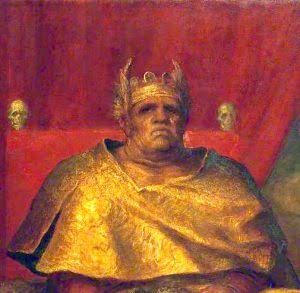
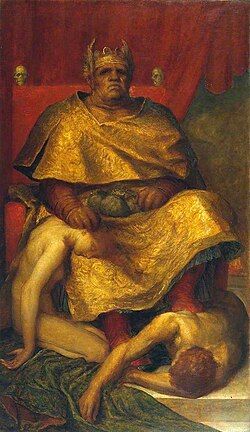
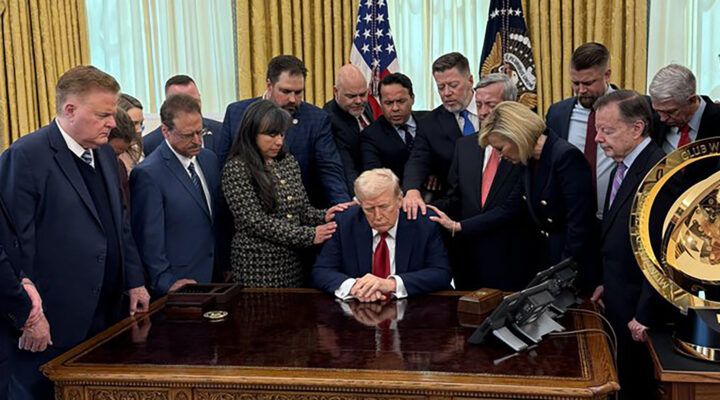

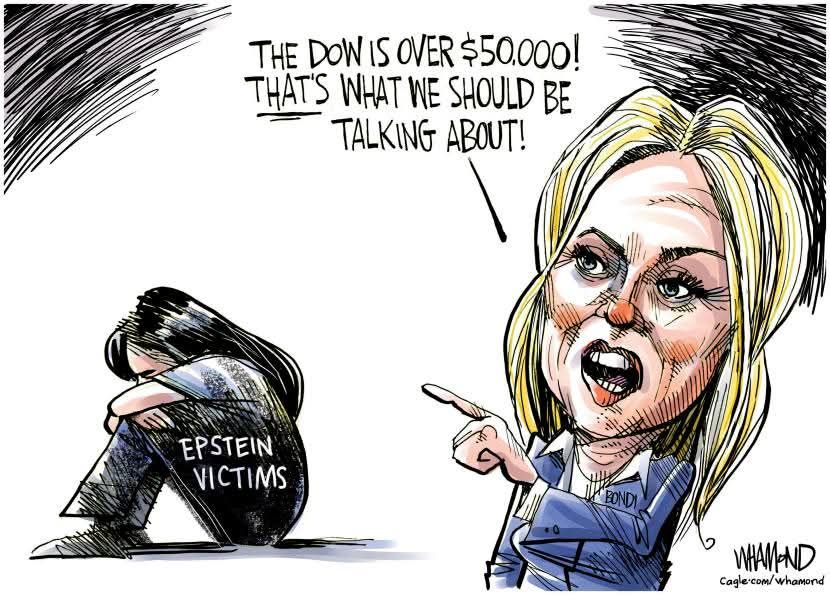
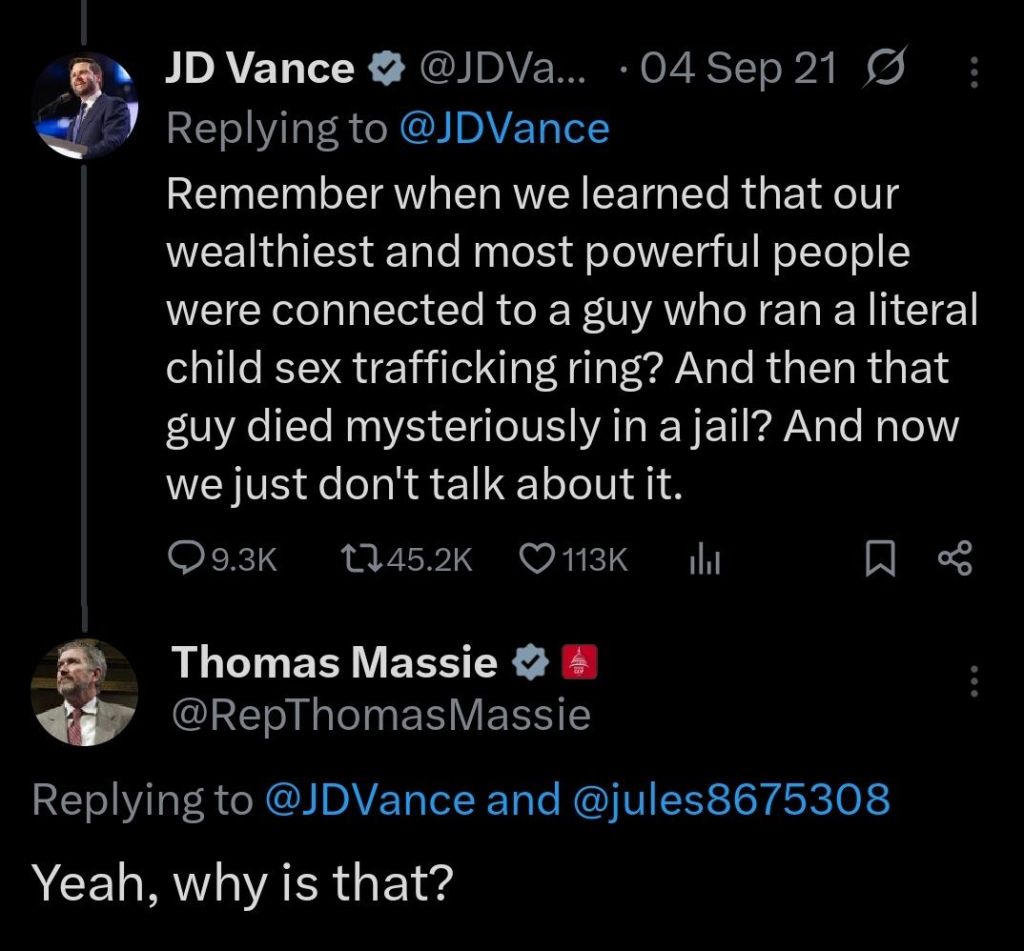
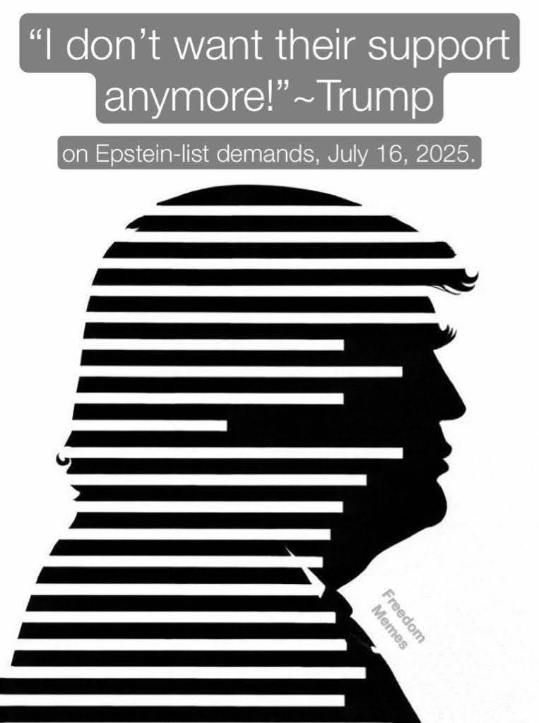



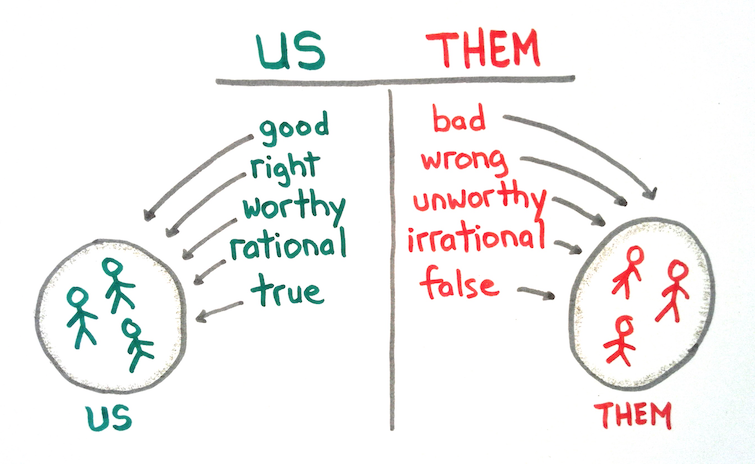

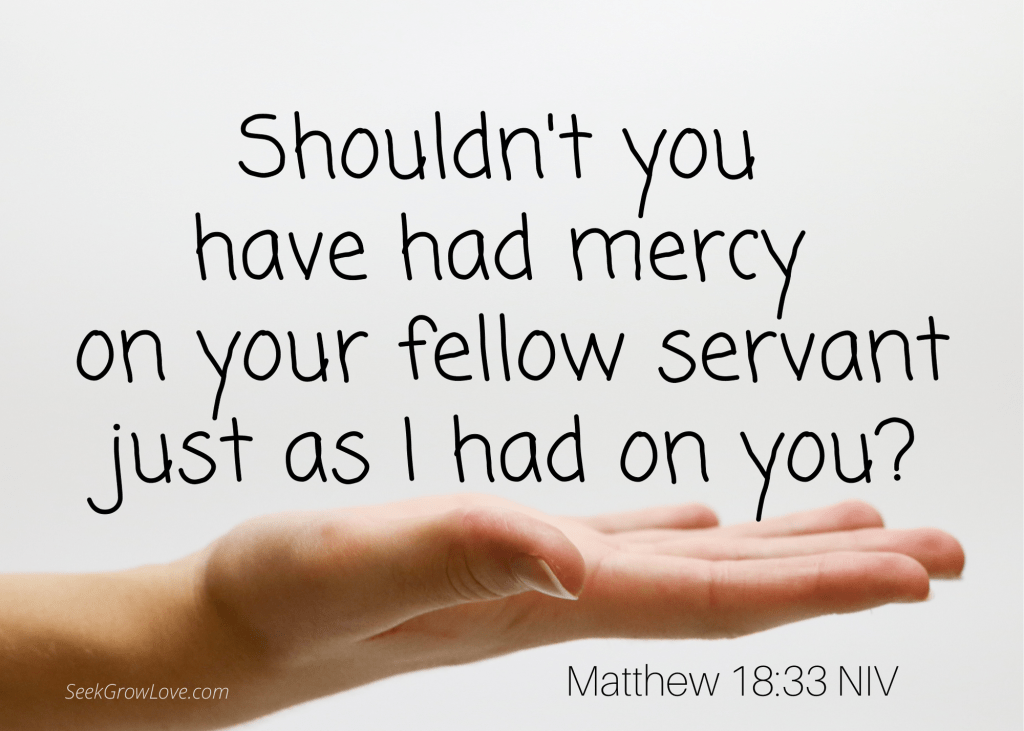










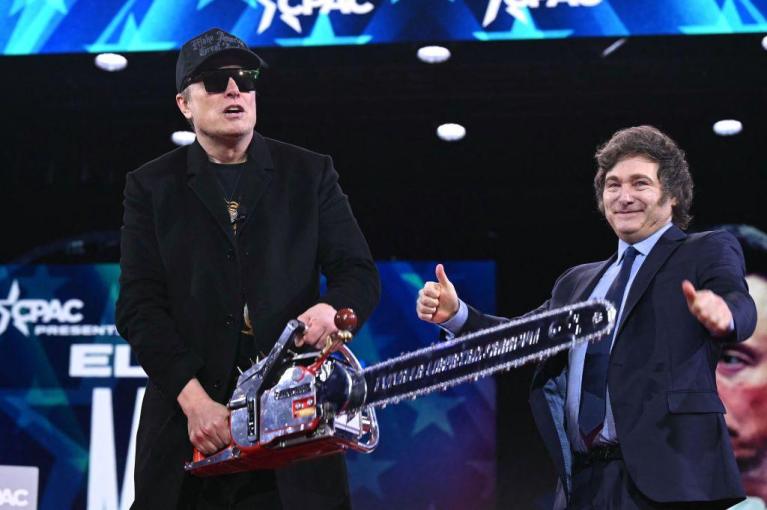






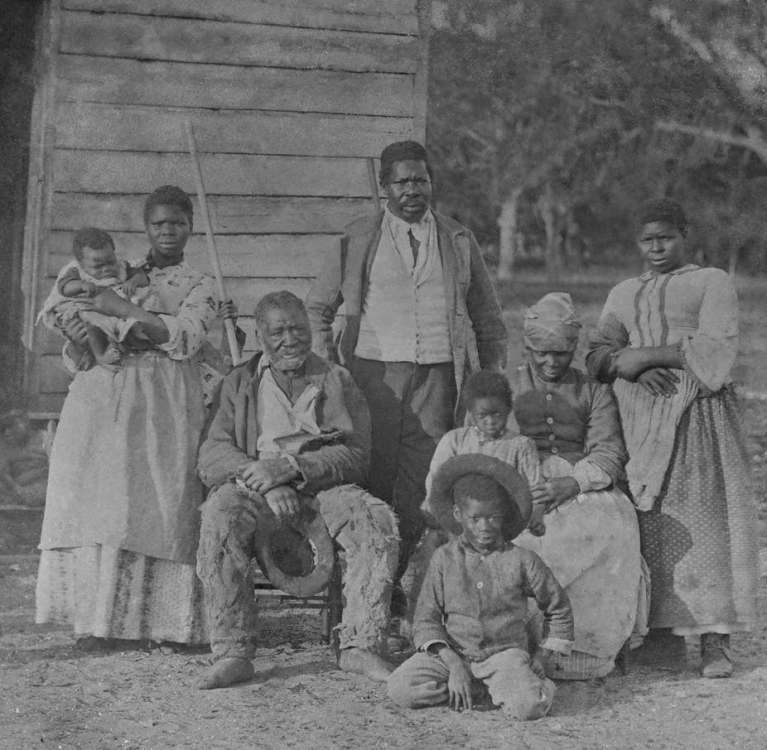

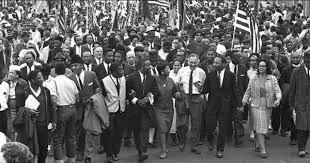


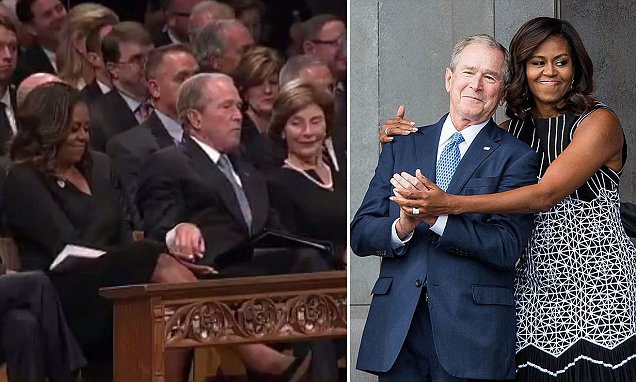
 Irregular Ideation